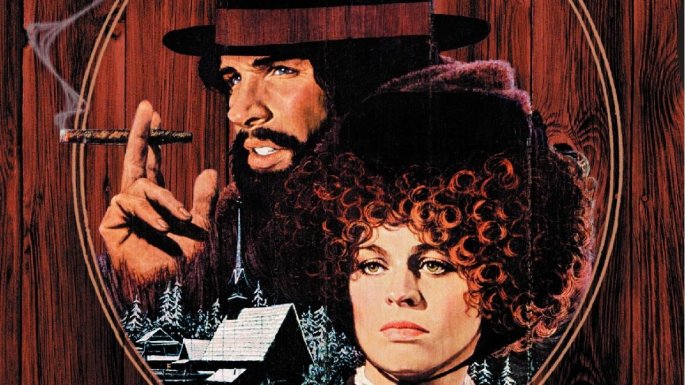
MCCABE AND MRS. MILLER (1971) – A REVIEW BY RYAN MARSHALL

vlcsnap-2016-12-04-11h04m09s156.png

Surely a seasoned connoisseur of the silver screen can relate the experience of watching a film to emotional responses which seem to transcend the medium all-together. For instance, certain films may have a distinctive smell; others might even allow one to taste something either delectable or truly putrid on the tip of their tongue. Robert Altman’s MCCABE AND MRS. MILLER, a whiskey-soaked indictment of American idealism filtered through the abstracted gaze of a hazy opium den, truly has the best of both worlds – the film smells strongly of musk and is bitter to the taste but nonetheless warm once it’s in you. It has the benefit of seamlessly evoking homeliness and absolute desolation in equal measures; not once is one allowed to truly sit back and take in the spectacle on a base level, but if that’s not somehow oddly ingenious in its own right, then I’ll be damned.

John McCabe (Warren Beaty) arrives in Presbyterian Church, Washington as a stranger, but soon establishes himself as a legend of his own distinct variety. A gambling man with a detrimental love affair with the bottle, McCabe is immediately met with suspicion on the part of the townspeople, who suspect he’s really a gunslinger that shot one of their own over a card game some time ago. Nevertheless, it’s his reputation – coupled with his intense personality – that allows McCabe to be seen as a leader among loners and losers in this quiet little Northwest town. It is here that he aspires to establish a brothel, the first step in doing so being the acquisition of three women from one of the neighboring towns.

vlcsnap-2016-12-04-11h00m37s494.png

This, of course, will hardly be substantial in the long run. Along comes another stranger, Constance Miller (Julie Christie), who proposes that the two become business partners. It’s an offer that McCabe simply can’t refuse, and they’re all the better for it; it’s not long before three girls turns into about a dozen and the establishment is doubling as a bathhouse. As rewarding as this venture appears to be, the attempted intervention on the part of a nearby mining company indicates there may be trouble ahead for both business and personal pleasure alike.

Only a select few films have a kind of palpable density that the viewer feels right in the gut, and as it turns out Altman has made quite a few of them. Throughout the course of just two hours, man himself is challenged (the tragedy of masculinity suppressing all which stands in its path), and everything – land and life alike – has a dollar value. For instance, when McCabe continually refuses the offers from the mining company’s shady representatives, they send over a trio of bounty hunters to seal the deal. Afraid for his life but unwilling to leave the town and business he helped start, McCabe turns to his lawyer for advice, but is instead treated to a spiel that basically amounts to the company’s safety being favored over McCabe’s. The poor bastard’s response is genuinely haunting: “Well I just, uh…didn’t want to get killed.”
vlcsnap-2016-12-04-11h01m11s299.png

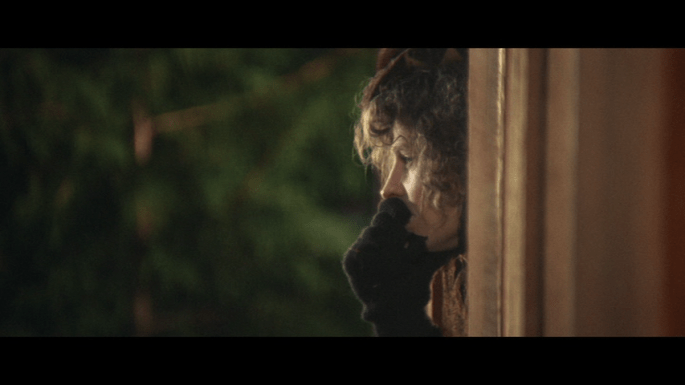
This is a film that soars, perhaps even more-so than the average Western (MCCABE is revisionist). Altman’s uncanny genius can be traced back to his modesty, quite an appealing quality in any artist, though given the sense of scale and impeccable attention to detail present in his work it’s almost a bit amusing. And yet, even though there are moments of genuine humor, no doubt provided by McCabe himself, the character remains a tragic one; one whose deepest flaws would appear to be almost entirely of his own making. The man is an enigma and a half to the naked eye. And Mrs. Miller, who as it turns out has a bit of an opium habit, is essentially the product of an unnecessarily harsh world dominated by the opposite sex, a world in which her expertise doesn’t seem welcome. And thus, the romanticism of the genre is stripped from Altman’s warped worldview, and in its place a new kind of grandeur emerges.

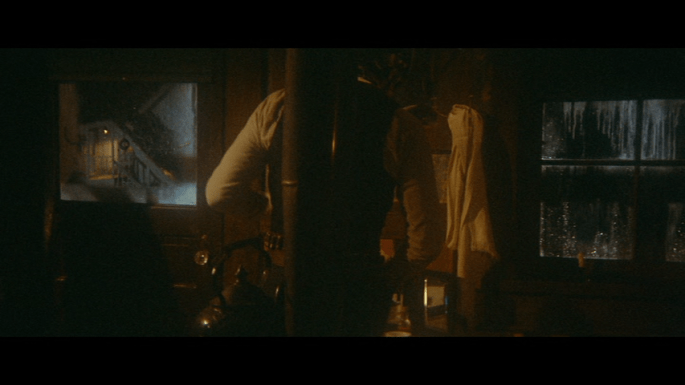
It goes without saying at this point, forty-something years after the fact, that Vilmos Zsigmond’s cinematography is absolutely note-perfect. The world in which the tortured, titular souls occupy is one largely confined to dark rooms and dusty bars; and the town’s exteriors couldn’t possibly be any rougher. There’s an inherent bleakness to it, and yet when there is any semblance of light shining bright at the end of the tunnel, it does not go unnoticed. Not only does this feel absolutely distinctive in terms of its genre, Altman and Zsigmond go the extra mile to find beauty in even the most deliberately obscured of images. Form is no longer so well-defined and the rules no longer apply in the same way that they used to.

vlcsnap-2016-12-04-11h02m07s361.png

Altman’s films tend to have rich, multi-dimensional soundscapes in which the abstraction of sonic perception gives way to a new language of its own. Here, no spoken word is free of the director’s unique grasp. Conversations are always overlapping to the point where the subject becomes more important to the viewer than the content, which is ultimately an effective method of conjuring up such an off-kilter atmosphere. Lou Lombardo’s editing is equally as inventive – time feels almost nonexistent in this town after we’ve spent a considerable amount of time there. The focus shifts between characters both integral to the central relationship and generally insignificant, adding to their collective mystique. Altman challenges us to embrace this very quality head-on, to return to a sort of exhilarating ambiguity that audiences of today have all but shunned.

The frontier unveils new angles from which to exquisitely immortalize it and the frontiersmen themselves remain largely the same. The cinema of transcendence is alive and well, drinking bourbon by the fireside, mumbling incoherently under its bearded breath. The lovely, brooding songs of Leonard Cohen allow it – and us – to drift off into a state of near unconsciousness; a state from which we’d hardly like to return. MCCABE AND MRS. MILLER is a subtly colossal achievement, especially in the positively brilliant final twenty minutes, a film of dreamy, universal resonance. It’s a world you could settle into for twice – perhaps even triple – the length we’re provided with. “I know that kind of man, it’s hard to hold the hand of anyone who is reaching for the sky just to surrender. And then sweeping up the jokers that he left behind, you find he did not leave you very much, not even laughter.”
vlcsnap-2016-12-04-11h02m46s213.png

BLOOD FREAK (1972) – A REVIEW BY RYAN MARSHALL

vlcsnap-2016-11-24-14h39m30s115.png

Brad Grinter’s BLOOD FREAK is a consistently bewildering acidheaded cinematic turkey; in theory, it’s a real piece of shit, but in practice, its many moralistic contradictions and aesthetic misjudgments give it a flavor that is somehow anything but dry. A select few films are permitted to get by on their boundless imaginations alone, and this is one of them – a steaming pile of 70’s counterculture and pent up anxieties, to which Grinter’s film is hardly the solution, but you can’t help but commend him for trying.

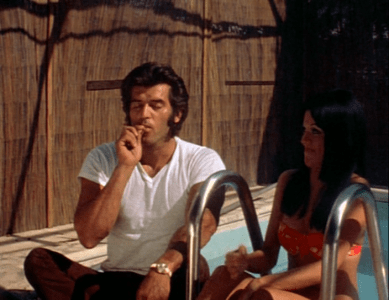
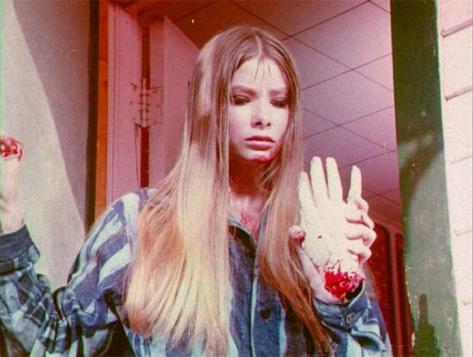
On a sunny day, Vietnam vet Herschell (Steve Hawkes) spots a pretty young thing named Angel (Heather Hues) whose car has broken down on the highway, and promptly whisks her away on his motorbike. Angel takes him back to her house, which she shares with her promiscuous sister, who offers Hershell some pot upon his arrival. At first, he refuses, but eventually gives into temptation after the sister seduces him one day by the pool. Herschell finds himself with an immediate addiction (!).

vlcsnap-2016-11-24-14h39m48s529.png

Herschell takes a job at a local turkey farm, where a couple of bumbling scientists are testing experimental chemicals on the livestock. They require a human guinea pig for this operation, and bribe Herschell into participating by promising to replenish his stash little-by-little. However, the effects of devouring the chemically altered meat prove to be nightmarish after Herschell suffers a seizure and enters a violent, hallucinatory state.

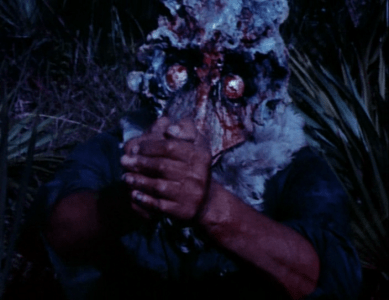
Without spoiling too much in regards to this bold new narrative direction, the film’s most memorable sequences reside after this point – any research on the film will surely lead to inspiring images of a horrible life-size papier-Mache turkey head. So that’s where this film goes; that is to say, way off the deep end. The entire last act is a hysterical collage of grotesque regurgitated sound effects and aimless animalism as Herschell carves his way through a series of sexual deviants and junkies.

vlcsnap-2016-11-24-14h40m24s543.png

This can be most obviously read as an anti-drug PSA disguised as a cheapo psych-out horror picture, which is particularly amusing when one takes note of the director’s frequent appearances throughout the film in which he chain-smokes as he comments on the action. To think that Grinter’s tongue might be planted firmly in his cheek might be giving the director the benefit of the doubt, as the way in which he handles this material is almost characteristically incompetent. For instance, it is heavily implied throughout – and later confirmed – that Herschell suffers from PTSD and is self-medicating as a result. The film ignores the poignancy of the subject and goes straight for shock value; and let’s not even begin to discuss its puerile vision of rampant drug culture.

It’s an outsider view of just about everything it claims to stand for, which proves to be quite problematic – but it is precisely these kinds of seemingly innocent miscalculations that make it so consistently entertaining. The opening scene assumes a strange kind of schizophrenic rhythm that Jess Franco might have admired and then never follows up on it, the writing is a special kind of awful, its treatment of women is even more pedestrian now than it was back in the day – and yet there is so much enjoyment to be derived from the experience, in spite of patches which veer dangerously into Dullsville. The filmmakers can’t even seem to pull focus most of the time and yet they’ve emerged with a work of exceptional amateurism that would put most professionals to shame. Most seasoned viewers won’t appreciate it, but the sleaziest among us will continue to rejoice.


OUIJA: ORIGIN OF EVIL (2016) – A REVIEW BY RYAN MARSHALL


ouijagallery1-5769ed28e7f63-1[1].png

2016 has certainly shaped up to be a productive year for Mike Flanagan, whose 2011 Lovecraftian indie ABSENTIA effectively thrust the director into the spotlight, with a couple of his most recent releases being the Netflix-distributed home invasion thriller HUSH, about a deaf woman defending her cabin in the woods from a sadistic stranger, and the fantasy-horror yarn BEFORE I WAKE, which after being delayed for nearly two years enjoyed a limited theatrical run earlier in September.  One could say the filmmaker – born and raised in Salem, Massachusetts – is at the height of his powers at the moment. There is, however, a third and final film in this sequence, and it might just be the best of the bunch.

OUIJA: ORIGIN OF EVIL is billed as a sequel to the supposed stinker of similar namesake from 2014, and months prior to its release, Flanagan was already quite open as to how he felt about that film. It was a career move that was sure to turn a couple heads, but anyone who knows anything of the director’s past work knows that he goes all in or not at all, and his commitment to the project left little room to doubt that it was one which allowed his creativity to flourish.

Ouija-Origin-of-Evil-Photo-2[1].png

Los Angeles, 1967; a family of three – Alice (Elizabeth Reaser) and her two daughters, teenage Lina (Annalisa Basso) and Doris Zander (a truly superb Lulu Wilson) – runs an in-house fortune telling business which involves scamming customers through séance. Alice would be the first to admit that it’s all a hoax, but she enjoys feeling that they’ve providing clients with some closure in regards to their personal grief.  One day, she decides to add an Ouija board to the family’s professional repertoire, which immediately piques young Doris’s curiosity. Unfortunately her sporadic use of the device unearths more than few skeletons in the family’s collective closet, one being the absent father figure, who Doris claims she speaks to through the board.

His spirit is hardly the last or the most malicious to enter through the doors which lie between our world and the one(s) beyond. Mother and eldest daughter go through their own separate arcs – with a local priest and much younger romantic interest from school, respectively – though Doris undergoes a transformation of a far more sinister nature, one which is tragically beyond her control.

Ouija-Origin-of-Evil-5[1].jpg

ORIGIN OF EVIL opts for a slow-burn approach, which surely benefits the film’s more dramatic aspirations. The number of jump scares could barely be counted on one hand, and while there’s some obvious CGI employed whenever Doris looks into the mirror world of the dead, this too is done rather tastefully; these brief shots feeling much like the invasive spirits which haunt the narrative rather than studio-imposed diversions. Besides, they exist in such an exquisitely crafted portal. Michael Fimognari’s cinematography is simply outstanding, with most of the film showered in foreboding, ethereal light and the rest adorned with meticulous sleaze and grime. There’s beautiful, phantasmagorical imagery here fit for a Bava or a Fulci, which can never be a bad thing, and the film is perhaps best approached as a cinematic fairy tale of the variety which those filmmakers often dabbled in. Ultimately, a stronger ending could have been applied, but every good/great film should be allowed a fault or two.

Once again, Flanagan is deeply fascinated with the deconstruction of the American family, though his point of view doesn’t seem to be one rooted in cynicism. His latest, much like the earlier OCULUS (2013), is more about what keeps us together as opposed to what tears us apart; which secrets should remain unheard of and which ones we should more openly discuss amongst ourselves. The way in which Flanagan relates paranormal experiences to emotional discharge is subtly moving, and there’s also an understated feminist streak which runs throughout his work thus far. Here is a genre director who understands all too well that horror films should inspire tears before fits of laughter, and that most simply do not work without some semblance of resonance. While he’s not trying to reinvent the wheel, the director’s intrinsic technique and empathy is so consistently impeccable that one can believe – at least in the moment – that he might as well be doing so.

screen-shot-2016-06-23-at-11-02-56-am1

THE ALCHEMIST COOKBOOK (2016) – A REVIEW BY RYAN MARSHALL

vlcsnap-2016-11-08-20h01m33s296.png

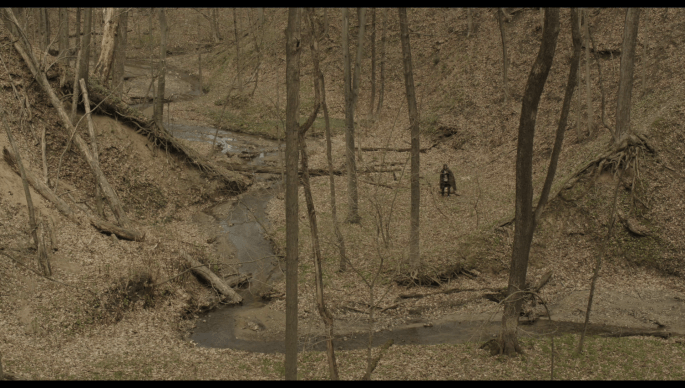
The forest has always been an essential breeding ground for cinematic insanity, and it’s not hard to imagine why; after all, the things closest to us but which we have really have only begun to understand are among the most terrifying. Writer/Director Joel Potrykus uses the woodlands to summon a consistent air of dread in his latest genre-defying curio, THE ALCHEMIST COOKBOOK, though it’s hardly the sole location herein whose deep-seeded hallucinatory horrors are so cleverly uprooted throughout the film’s tight, disconcerting narrative.

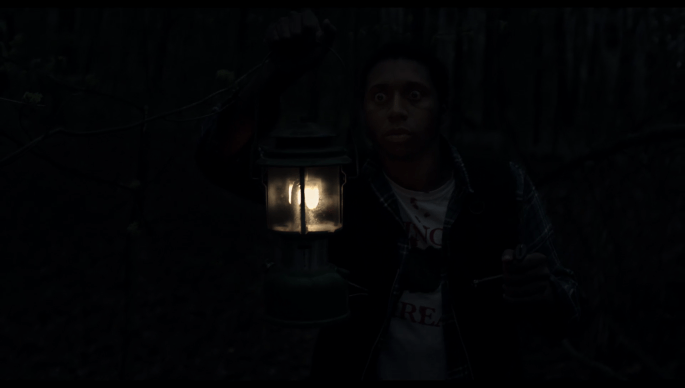
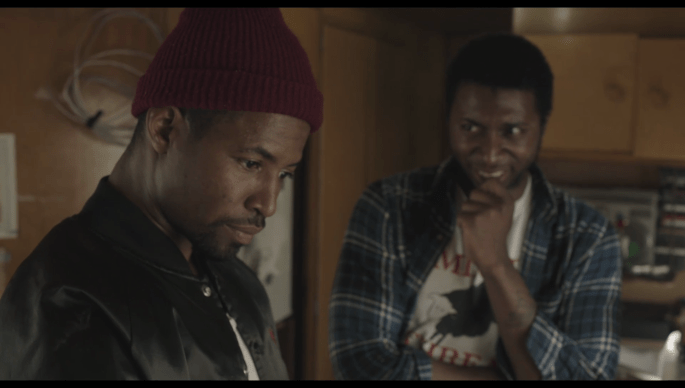
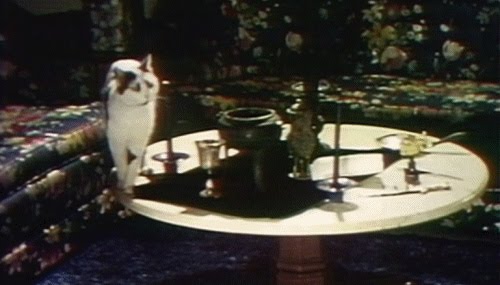
Ty Hickson, a relative newcomer with only a few credits to his name, stars as Sean, a mentally unstable young man who lives in a trailer somewhere in the woods where he can be alone with only himself and his cat Kaspar to practice alchemy as a means of acquiring a fortune. It’s clear that Sean’s pill-popping may be the source of his wild ambition, but at the very least he’s committed, and his friend Cortez (a hilarious Amari Cheatom) visits often to ensure that he’s got plenty of food, tools, and has his prescription refilled to boot. As good of a friend as Cortez is, he is far from perfect, and one day he forgets to bring the meds.

vlcsnap-2016-11-08-19h52m34s710.png

Before we can even begin to settle down within the pitch-perfect representation of Sean’s unbalanced psyche, he’s dabbling in black magic as a means of speeding up his process; which of course could potentially be the final nail in the coffin for our tragically delusional friend. It’s at this point that the mood shifts from that of a breezy and often hilarious hang-out pic (in which one of the two people involved only sometimes shows up) with subtle macabre flourishes to a genuinely disturbing body horror film, and it’s the seemingly effortless way in which the narrative alternates between the two – and others as well – that makes it so unforgettable.

The Michigan-based Potrykus prefers to work with restrained budgets and unhinged characters, challenges and limitations which seem to have worked in his favor thus far (this is his third feature, after 2012’s APE and 2014’s BUZZARD). The simplicity of the build-up benefits the lasting ambience of the truly haunting payoff; it’s ultimately more effectively horrifying than the majority of straight genre efforts. In Sean’s phantasmagorical fantasy world, the forest is very much alive with beastly bellowing, low growls, and big splashes (in the wetland areas). No animal, not even a seemingly innocent possum, can be trusted other than the faithful feline, who should be commended for the magnitude of the madness he puts up with here. Everything with any semblance of purity is reduced to savage animalism in the end, and perhaps that is what the film is really about – going backwards through forced progress. Sometimes, we must let nature take its course, for it works in mysterious ways.

vlcsnap-2016-11-08-20h01m22s551.png

Potrykus dares to find beauty in Sean’s plight, and the fact that he does so in spades is no easy feat. The character’s misery is entirely of his own making, though the implication seems to be that there’s still time for Sean to redeem himself. There’s also a great deal of humor to be wrought from Sean and Cortez’s interactions, with one scene in particular involving the consumption of cat food being a prime example of pure, thoroughly awkward observational comedy. Absurdism runs through this whole strange exercise, though there’s an honest sadness in Sean’s eventual transformation. We’ve been so up close and personal with the unlikely protagonist leading up to this point that there’s absolutely no reason why we shouldn’t be made to witness his ultimate decline on a similarly intimate scale. We grow to like the guy – a lot – in spite of his flaws, though luckily this feels more like fate than outright punishment.

Empathy is the key and love is the spirit. THE ALCHEMIST COOKBOOK is certainly a strange one by any conventional standards, but it’s just not that simple. There is real humanity here, both in its passionate ode to the benefits of solitude itself and its singular tale of a man running out of nature and losing himself to what’s left of it. Its commitment to staying well within the boundaries of its protagonist’s headspace brings to mind the similar triumphs of John Hancock’s LET’S SCARE JESSICA TO DEATH, the effects of which are genuinely devastating. Potrykus is more than just one of the most singular minds in contemporary American independent cinema; here, he’s solidified himself even further as one of the most important voices for the outcasts of the silver screen and the damned spaces they occupy. His latest is akin to a waking nightmare – of a similar essence to the abandoned dinghy in the middle of the pond that just begs to be investigated further – and yet it brings such profound joy.

vlcsnap-2016-11-08-20h02m14s483

MESSIAH OF EVIL (1973) – A REVIEW BY RYAN MARSHALL

The true poetry of the macabre requires the thorough perusing of a far out cosmic language, a séance to effectively make contact with the phantasms inherent in our reality that have over time inspired the ones we see in literature or on the screen. Horror films often make for the most compelling alchemic excursions because they dance so closely with such demons, unafraid to create friction in order to exorcise them. These are our nightmares. They don’t always make sense, and they don’t only come at night. Yet, they are undoubtedly a significant part of what makes up our very being. A man devoid of fear – especially that which he does not openly discuss in some fashion – is not one worth trusting.

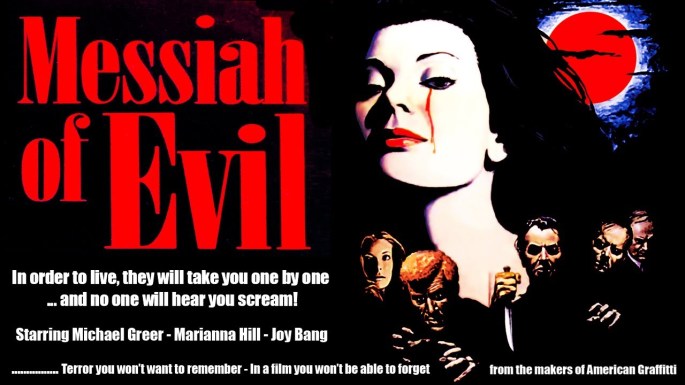
Some of the most subtextually rich and socially redemptive genre cinema can be exhumed from the 1970’s – a time when the aftermath of the Vietnam War left our world at large, and more specifically America, with spectacularly apocalyptic imagery – and one of the most coveted gems to rise from that particular pile of ashes is MESSIAH OF EVIL, a truly terrifying take on the undead from the scribes behind INDIANA JONES AND THE TEMPLE OF DOOM and AMERICAN GRAFFITI (among others), Willard Huyck and Gloria Katz. This is the kind of stuff you might put on for “easy late night viewing” but will soon regret doing so as there’s nothing “easy” about the film’s approach to otherworldly dread.

messiah-of-evil

Beautiful, young Arletty (Marianna Hill) arrives at the coastal resort town of Point Dune in search of her father Joseph Lang (Royal Dano), an artist with whom she has lost contact over the years. Although he is nowhere to be found when she arrives, his house – its walls adorned with paintings of strange shadow people – is open and Arletty decides to continue her search the next morning. This leads her to a trio of drifters shacking up in one of the local motels who are listening intently to an old boozer (Elisha Cook Jr.) babbling on about some mad local tale when she finds them, and who appear to be dysfunctional company to say the least.

The three nevertheless follow Arletty back to her father’s estate and make themselves at home, with their suave male leader Thom (Michael Greer) seducing her soon after, to the disapproval of his female companions. Only when Laura (Anitra Ford) splits and heads into town – where she is picked up by a creepy albino man in a red truck with a penchant for eating live beach rats – is the sinister nature of Point Dune made somewhat clear. Without spoiling too much, lack of hospitality is hardly scratching the surface. It would be in one’s best interest to not wait around too long for all of the answers; some simply don’t come.

messiah-3

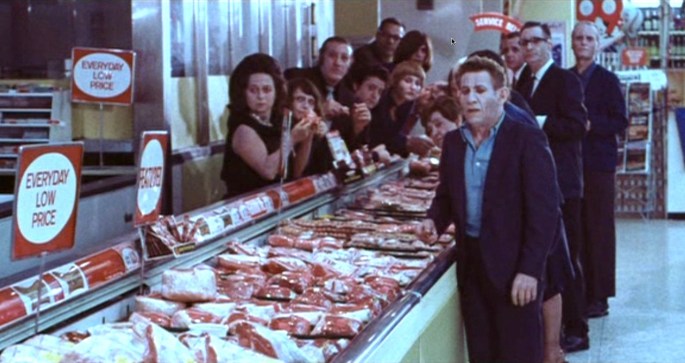
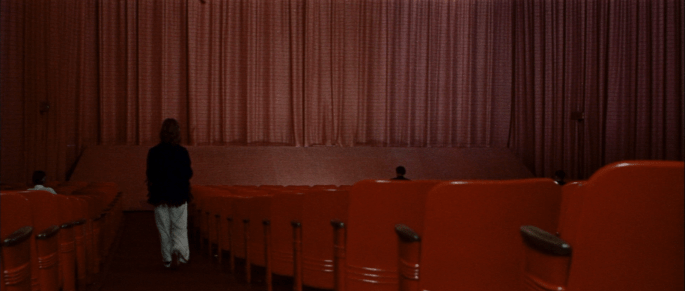
What follows after a spectacular sequence set in a mostly desolate supermarket is a series of individually compelling moments, such as a clever riff on Hitchcock’s THE BIRDS involving Thom’s other companion Toni (Joy Bang) in a movie theater and another where Arletty’s father returns only to attack her. The townspeople are seen gathering at the beach during the witching hour to stand by campfire, staring up at the moon, and the first sign of warning when Arletty first arrives in town is an attendant at a gas station shooting off into the night at some unseen entity(his response is truly spine-chilling: “Dogs…stray dogs. Has to be. Has to be dogs.”); from the get-go, there’s something not quite right about Point Dune, and everyone seems to be harboring some kind of secret. How else would one sustain such a sparse – though in this context, rather convenient – narrative?

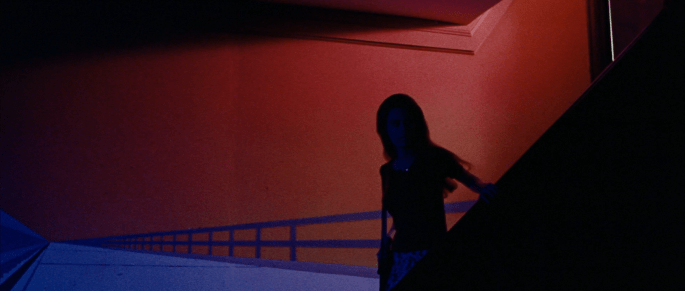
Huyck and Katz took more than few pages from a certain Howard Philips Lovecraft’s book for their very own cinematic creation, which comes off kind of like the late author’s THE SHADOW OVER INNSMOUTH on acid. Joseph Lang’s bizarre diaries, in which he speaks of a strange affliction that has befallen him as of late, and will soon begin to affect Arletty as well, may explain what’s going on along the coast; it’s an effective device that is unfortunately posited alongside by Arletty’s own voiceovers, which for the most part don’t benefit the storytelling. Nevertheless, the soundscape is consistently intriguing – for the most part, this feels like it was scored and lensed in another dimension entirely. Then there’s the cinematography from Gloria’s brother, Stephen Katz, who went on to lens a little movie called THE BLUES BROTHERS; absolutely spellbinding stuff, and arguably what makes the film. Both scribes were fresh out of film school when they made their demented debut, and as such, they were more inspired by European art-house than anything else; and it shows. The colorful widescreen compositions bring to mind the likes of Mario Bava, and even Hammer’s own Terence Fisher, with touches of Godard and Antonioni.

messiahofevil2

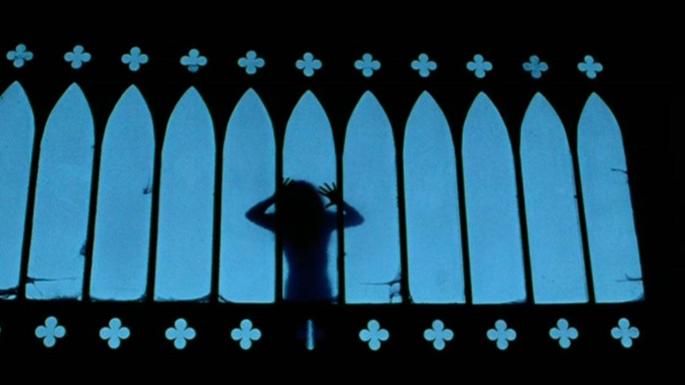
The filmmakers utilize the disturbing paintings inside Joseph Long’s house well, with the silhouettes always hanging over the various characters as they occupy its many hallways and bedrooms, giving off the impression that nowhere is truly safe.  It may be one of the most visually ravishing of all American horror films. Willard, interviewed in Stephen Thrower’s great book NIGHTMARE USA, has gone on record saying that MESSIAH OF EVIL was intended to be his vision of Los Angeles as he saw it after hours. In this case, it’s a rather bleak but no less phantasmagorical one; not a land of opportunity but one that carries with it the putrid stench of death, one that is (for lack of better word) haunted. Many of the undead extras were unemployed aerospace workers at the time and as members of a tightly-knit community they seem to wander around tragically, aimless – but no less capable of acting on their carnal, cannibalistic urges.

Ultimately, this is genuinely exquisite, though imperfect; there’s room for improvement in the casting department, with some dialogue coming off as rather stilted and less than subtle, the edges are overall kind of rough in spite of the sheer grandeur which they contain, and the electronic score – while mostly in service of the weird atmosphere – is often distracting during key scenes which could have benefited from a little more silence. Still, this is one of the most consistently creepy, thoroughly intoxicating and rewarding genre outings of its time; Lovecraft adaptations are admittedly a mixed bag, but by evoking shades rather than drawing directly from the author, Huyck and Katz have made (somewhat unintentionally) one of the best in the lot. It’s like entering another world entirely. Surrender is essential, adoration is an option; they’re coming here, they’re waiting at the edge of the city, they’re peering into windows at night, and they’re waiting. No one will hear you scream.

messiahofevilc1c

I DRINK YOUR BLOOD (1970) – A REVIEW BY RYAN MARSHALL

One look at David E. Durston and one might guess that he would be the least likely person to have directed one of the most genuinely shocking horror films of the 1970’s, and one brief glance at the truly ridiculous synopsis for his crowning cinematic achievement, I DRINK YOUR BLOOD, might cause one to anticipate that the sum will not indeed be greater than its parts. Billed during its time alongside I EAT YOUR SKIN, a voodoo cheapie straight out of the 60’s, this is the sort of film that we only think we know going in, although most viewers will soon discover that this is not the case. This is a curio and a half, an invigorating subversion of genre filmmaking that is as delightfully demented as it is thoroughly engaging. It wears its sleaze on its sleeves, devoid of any real pretentions; all thrills and chills with little time for filler.

idrinkurblood3

We open on a naked fireside ritual being held somewhere in the woods amongst a group of hippies with a penchant for the dark arts, led by the exotic Horace Bones (Bhaskar, an Indian performance artist). They kill a chicken and drain its blood into a goblet before spotting a local girl (Iris Brooks) sneaking a peek at the action from between some trees, who is then chased down and raped by a couple of their men. Devastated, she drags herself back into the sleepy town of Sally Hills the next morning, where she’s taken into the care of her kid brother Pete (Riley Mills) and the owner of the town bakery, Mildred (Elizabeth Marner-Brooks).  Her grandfather comes over to check on the poor girl and decides that these rowdy characters must be dealt with immediately.

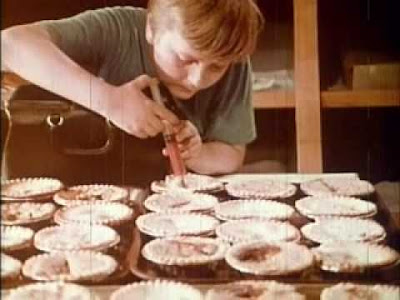
Meanwhile, the Manson-esque cult makes themselves at home in one of the town’s many abandoned hotels, where they run rampant hunting rats and destroying what’s left of the furniture. The grandfather grabs his shotgun and heads out the door in search of the group, but when he finds them, they take him down and he is force-fed LSD before returning home. Unable to stand by whilst his grandpa is in the throes of a bad trip, Pete takes the gun and goes out into the woods to do some snooping of his own. While exploring the woodland, Pete spots a rabid dog that charges at him, but he’s quick to shoot and after killing the wild animal, he takes some of its blood in a syringe. And what, do you imagine, he does with it? Why, what any other reasonable young fellow would – meaning that he injects the blood into some meat pies back at the bakery, which are then sold to the hippies.

idrinkyourblood

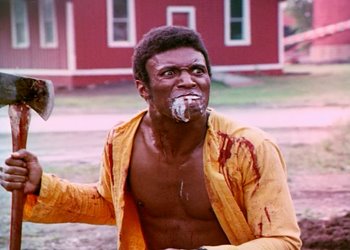
Everyone but Andy (Tyde Kierney), the suspicious and insecure local kid who somehow got mixed up in the group’s nasty business, digs in to the pies and you can probably – emphasis on PROBABLY – imagine where it’s going from there. What ensues is nothing short of sheer lunacy. Psychopathic – not to mention hydrophobic – hippies running rabid around a US ghost town, foaming at the mouth and spreading their disease far and wide. Durston goes all the way, trying his damned hardest to offend as many parties as he possibly can – religious folks, animal lovers, anyone with the tiniest glimmer of hope in the Good Old American Way – and he gets the job done with a more genuine style and class than one might expect.

Jacques Demarecaux’s work here (as cinematographer) should be commended, certainly more than it has been in the past, with his ethereal and startlingly naturalistic compositions complementing the film’s shamelessly nasty contents. Sometimes, filthy movies are shot beautifully, and this is one of them. However, it’s Durston’s willingness to manipulate tone and audience expectations that makes this a significant cut above the rest and it’s interesting to note that it doesn’t immediately register as a dark comedy for most viewers. This nevertheless appears to be the intention, or so the unforgettably over-the-top dialogue (“Let it be known, sons and daughters, that Satan was an acid head!”) and performances, totally psyched-out self-aware soundtrack (credited to Clay Pitts, who has yet to be found), blatant disregard for scientific fact and frequently amusing editing would suggest.

321

Sure, it all seems quite mean-spirited, but deep down it is the work of a man whose roots and interests were not necessarily in the macabre, and whose sole desire is to entertain. The tonal shifts may prove to be a bit much for some, alternating between hysterical hippie hangout and sad, disturbing body horror once the pies have been consumed, but they are undoubtedly what make up the film’s distinctive identity. For all their inherent crassness, one feels something akin to sympathy for the deadly deadbeats by the end of their separate ordeals, although it’s understood that they’ve made their own problems up to this point. As hard as it is to watch them destroy one-another, it does make for some spectacular set pieces, such as a sequence which has a mute Lynn Lowry wielding an electric meat carver, and another where Horace squares off against a fellow rabid Satanist, Rollo (George Patterson) in an axe-sword fight. There are many others, but one should embrace all the secrets and ask questions later.

The residents of Sally Hills are like lost souls occupying a space where time does not apply. Mildred looks as if she’s just walked off the set of a porno film, Pete’s an overly moralistic little shit who is most likely based on Durston himself, and the construction workers are an ugly bunch who show their true colors once the epidemic is well underway. A kind of hazy ambience hangs over the film, infusing it with a surreal sense of danger which in turn ensures that it never feels too relaxed. There is authentic tension here, and the pacing could not be more perfect; as mentioned before, there’s little time left for wandering around aimlessly. This is a spectacular entertainment as well as a surprisingly transcendent one and there even seems to be a running commentary about the deconstruction of the American Dream, but perhaps that’s all just as a result of context. It’s nothing that is explored in great detail, but these are the kinds of themes that can make or break a movie like this just by showing up (or not).

i20drinkyourblood201-0

We feel as if we’re seeing something we shouldn’t, and the emotions that such an experience arouses from deep within are conflicting to say the least, but healthy nevertheless. The grime oozes consistently from this one – reach out and touch it and you might just learn something. I DRINK YOUR BLOOD revels in its absurdism and artifice, playing more like a perverted piece of performance art than a silver screen serenade, and also works well as an invaluable time capsule. Some films skate by on that alone, but luckily Durston’s opus has plenty more going for it. This is quintessential viewing for the insane, the unstable, and the amoral; it may be the closest some come to sheer filth without actually involving themselves directly. The title may be misleading, as there is no drinking of the liquid red at any point and this is certainly no vampire tale, but make no mistake – this is a groovy good time, an important entry in the unofficial “psych” horror sub-genre that is less about mind-melting visuals and more about the essence of psychedelia.  Exploitation cinema doesn’t get much better. “Drink from his cup, pledge yourselves. And together we’ll all freak out!”

SEASON OF THE WITCH (1973) – A REVIEW BY RYAN MARSHALL

untitled-1_12673281701

George A. Romero is – or at the very least once was – the kind of socially conscious filmmaker the horror genre is in dire need of these days. His early films are the most blunt, angry, and effective in his oeuvre; though few would deny they are rough around the edges, their energy and ambition is nonetheless infectious. Sandwiched between NIGHT OF THE LIVING DEAD, Romero’s little-seen sophomore effort (1971’s THERE’S ALWAYS VANILLA, a romantic comedy), and 1973’s THE CRAZIES is SEASON OF THE WITCH (known as JACK’S WIFE when it was in production, and before the distributor excised half an hour from its run-time), a surprisingly thoughtful musing on contemporary witchcraft, repressed sexuality and the patriarchy; an endlessly fascinating, mostly successful marriage of talky, sleazy soap opera aesthetics and surreal psych-out horror.

Joan Mitchell is a bored housewife facing a mid-life crisis. Her husband Jack has little time for intimacy, there’s a considerable distance she feels between herself and their daughter Nikki, and she has recurring nightmares in which Jack aggressively pays her no mind and she envisions herself as a pale-faced old hag. The psychotherapist she’s been regularly seeing feeds her the same old crap in response to her attempts to understand these dreams (“The only one imprisoning Joanie…is Joanie.”), Nikki’s seeing more action in her week than Joan surely has in years, and things are just overall rather drab.

595

If nothing else, Joan’s got her circle of friends – a tightly knit community of fellow housewives who seem to share many of her anxieties. One evening at a dinner party, there’s talk of a new woman on the block that practices witchcraft. Joan, along with her closest friend Shirley, seeks her out and gets a Tarot reading, which surely opens up a couple of doors for them both. As Jack goes away on business, leaving her to her own devices, and terrible nightmares – in which a masked assailant breaks into the house and rapes her – continue to plague Joan’s mind, she dabbles in the occult as a way of reclaiming her sanity.

It wouldn’t be revealing too much to say that this is a film about – many things, but most importantly – a woman transcending her role in the household and discovering a new identity that has, in fact, been with her all along. Sexual identity, as is the case when Joan starts an affair with a teacher at Nikki’s school who had previously seduced her daughter as well and finds solace in the young man’s spirit, and personal identity go hand-in-hand. There’s also an emphasis on the pointlessness of the so-called “necessities” of life when one doesn’t truly believe in them, and at the beginning of this tale, Joan doesn’t believe in much of anything.

witchtools1

As evidenced in the opening dream sequence, Romero gives it you straight in regards to what the themes are here – to a fault, it could be argued, as Joan wearing a leash and collar, led on by Jack, and being locked inside a cage is a bit much – but regardless of how obvious they may be, they remain as relevant now as they were then. There’s a lot more dialogue than action, to be sure, but this is the kind of film where all the talking somehow manages to get us somewhere in the end, somewhere that feels on a whole satisfying and even intellectually stimulating. Audiences didn’t embrace the film upon its initial release, though Romero can hardly be faulted; marketed as some of kind of softcore porno in its severely cut form as HUNGRY WIVES, it would be difficult to make something this smart and genuinely challenging seem exciting to purveyors of provocation. Romero’s original 120-minute version may have been left on the cutting room floor but what resurfaced in 2005 with the help of the good folks at Anchor Bay seems like a damn fine representation of his intentions in its own right. We’ve changed with the times, and the time for SEASON OF THE WITCH is now. Better late than never, as they say.

At the very least, this is an ambitious cinematic cocktail, and for the most part it works. No doubt most people won’t find it to be all that visually stimulating, but if it really is about what you do with what you’ve got, Romero is a miracle worker. As cinematographer and editor as well as writer/director, he establishes an intoxicating rhythm early on that luckily remains consistent throughout – there are some really neat tricks employed during the post-production stage, as well as some creative camera movements which keep the proceedings from becoming mundane, even when the story doesn’t seem to be moving forward. This is a chilly film, perfect for viewing during the Fall season, and once Donavan’s titular song blares over an occult shopping spree, Romero’s unique alchemy has all but won you over. It’s very much of its time – the fashion, the unquestionably ugly décor, the hep terminology – and appreciation may vary based on one’s tolerance of this kind of stuff, but a thoughtful viewer will surely find plenty to chew on here, if not even more to swallow.

2632699948_ff45f27beb1

THE HOUSE WITH THE LAUGHING WINDOWS (1976) – A REVIEW BY RYAN MARSHALL

vlcsnap-2016-10-01-08h10m11s101.png

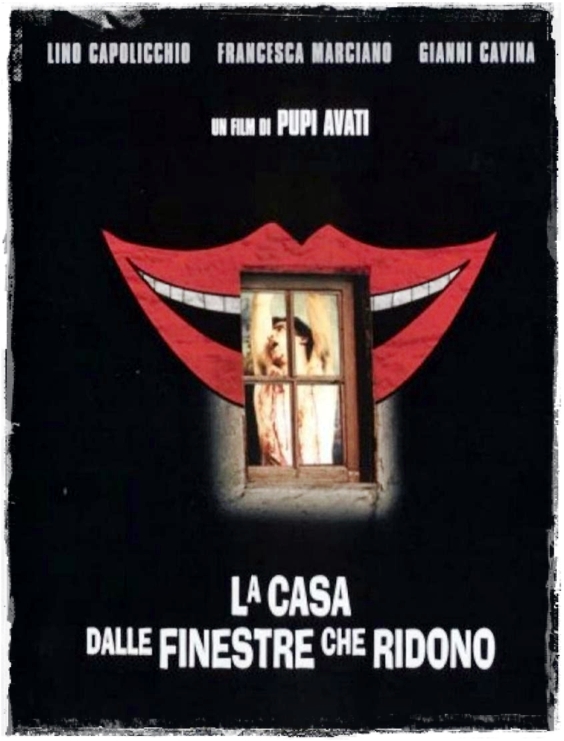
I must have been thirteen or fourteen at the time, and I don’t remember too much about what my world was like then, with the exception of it being a lesser variation of what it is now. If Argento, Fulci, and Bava are the more obvious names who introduced me to the black leather and brighter blood which would eventually shape my definitive creative conscious, director Pupi Avati opened up different doors entirely with his magnificent THE HOUSE WITH THE LAUGHING WINDOWS, a brilliant subversion of the Giallo formula with heavy doses of folk horror and genuine social-political subtext.

The Gialli that I am particularly fond of have more in common with THROUGH THE LOOKING GLASS than the standard crime narratives of the yellow paperback novels from which they derive their title, and as such, this is as important an entry as SUSPIRIA, Fulci’s THE PSYCHIC, or Sergio Martino’s delectably psyched-out masterpiece ALL THE COLORS OF THE DARK. What is perhaps most immediately intriguing is the placement of this particular rabbit hole in a twisted, though ultimately familiar semblance of reality. By association, the Giallo is a heightened affair, but Avati is skillful in how and where he engages with the fantastical.

vlcsnap-2016-10-01-08h06m37s379.png

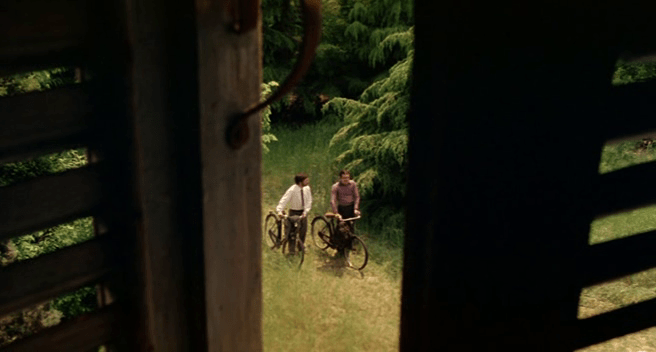
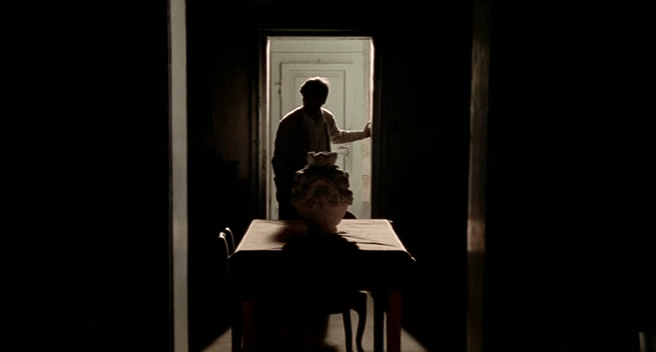
The log-line for this one is refreshingly simple: a man, Stefano (Lino Capolicchio) arrives at a small, seemingly quiet villa on business, tasked with restoring a fresco of (what at least appears to be) Saint Sebastian in the town’s church. Soon after arriving, however, things take a sharp turn for the macabre as our hero receives anonymous threatening phone calls and gets kicked out of his hotel to make room for another guest; a guest who never shows up, and was never booked to begin with. He then moves into an old house in the woods which he shares with only an elderly woman upstairs and although she never seems to leave her bed, movement is explicitly heard at all hours of the night. A dark secret seems to hang over the village, one the locals would prefer to keep from the knowledge of the general public. After the sudden murder of a friend who seemed to have some answers, Stefano decides to do some amateur detective work of his own which will ultimately drive him to madness.

But will curiosity kill the cat? When one is watching a Giallo – and a good one, to boot – all cards are on the table. As a long-time admirer of films that depict the deterioration of a mind in unison with depicting an industry, culture, or world at large on its way out, I find Avati’s film to be utterly fascinating. Here we have the classic descent-into-madness narrative, a staple of the genre, unfolding beside a positively post-apocalyptic landscape; the villa, with all its abandoned ambitions and lost souls, is most likely intended as a commentary on post-War Italy and how certain communities struggled to escape their past. Stefano’s various romantic flings with school teachers and conversations with drunks, bat-shit crazy altar boys, and of course the old woman upstairs reveal a tight circle of damned spirits, only a handful of whom dream of escape, though most only wish to keep a vicious cycle going for as long as it possibly can.

vlcsnap-2016-10-01-08h07m48s091.png

It’s quite interesting, or at least it might be to certain readers, to note that in the course of a career spanning nearly half a century, Avati only made (to my knowledge) about half a dozen features that could be branded as horror films, the most widely-acknowledged of which are this one and the equally exceptional ZEDER (aka REVENGE OF THE DEAD). Skimming through an extensive filmography such as this, it seems Avati has covered just about every base he can, returning to the realm of the macabre time and time again, but mostly at the helm of much lighter, though I’m sure no less thoughtful fare. It is clear that while he is not technically a “genre” director, Avati has a penchant for brooding phantasmagoria; a dark side that only shows itself when deemed absolutely necessary – which in turn makes for some of the most consistently engaging tales of terror on the market.

Pasquale Rachini’s photography is a real treat; I have always loved how the camera finds raw beauty early on, and throughout, in the wide lavish wetlands and partially destroyed old houses featured around the villa. A sense of purest reality is created, and then soon shattered, as day becomes night and lighting becomes more evocative, locating what lurks behind and between the shadows as well as what creates them in the first place. And yet, it will seem rather understated to those for whom “Giallo” is defined only by 70’s-era Argento (DEEP RED, SUSPIRIA, etc.), but alas, I believe it is as stunning as anything the genre has to offer. And who could forget to mention Amedeo Tommasi’s score, which swings effortlessly between nail-biting tension and fleeting romanticism, and remains shamefully unavailable to the general public to this day. One can only hope somebody, anybody, will rectify this sooner than later; it really is fantastic.

vlcsnap-2016-10-01-08h10m51s237

Some films just feel as if they were made for you, and at their best, Gialli have that precise effect on me. THE HOUSE WITH THE LAUGHING WINDOWS, for all its WICKER MAN-esque outsider horror, nevertheless feels like home. This may seem like a bit of an odd notion to those who seldom dance with the devils of celluloid, but if it happens that you do so more often than not, you will know exactly what I mean. Danger and mystery alike can be so invigorating, and Avati has conjured an atmosphere of dread so palpable that a knife (of any kind) simply wouldn’t cut it. Further proof that some of the genre’s best offerings come from those who don’t necessarily specialize in but nonetheless retain an honest appreciation for its seductive allure; one of many horror films that is more or less about watching horror films, and luckily, we are spared the usual contradictory moralism and regrettable air of superiority. Nothing but love emits from these frames. Love, blood, sweat, tears, purple flowers, tape recorders, and architecture with eyes and ears acute enough to catch even the lowest whisper.

ENTERTAINMENT (2015) – A REVIEW BY RYAN MARSHALL

entertainment1-e1438447113791

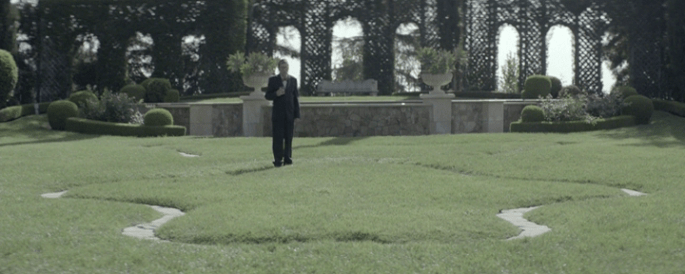
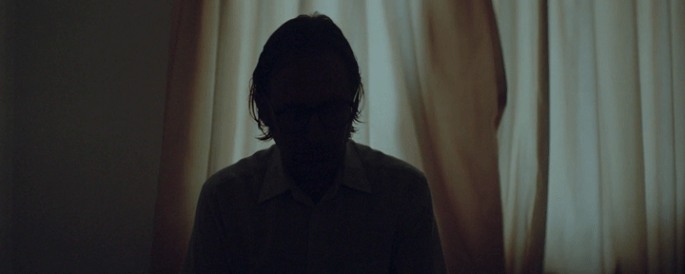
A 40-something man wearing thick glasses and an expression of general indifference enters an earth-bound airplane, the interiors of which are wide and desolate. He squats down in the middle of the abandoned vessel and stares out of one of its many windows. Once back outside, it is revealed that the man is on a tour of an aircraft boneyard. So begins ENTERTAINMENT, the fourth feature from writer/director Rick Alverson (and first since his excellent Tim Heidecker-starring break-out, THE COMEDY). A man, deteriorating slowly by the day, walks alongside the remains of the world and its industries, which are disappearing at a much more alarming rate – an integral theme introduced in this first sequence that will compel the rest of the sparse though affecting narrative to come.

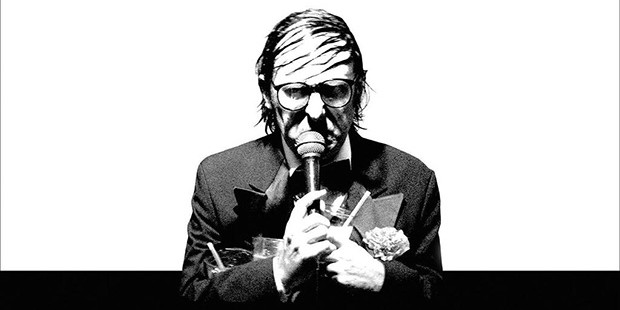
Gregg Turkington stars as the man in question, a comedian whose name is only vaguely hinted at a couple of times, but who we can nevertheless assume is intended to be Turkington’s most widely-known persona Neil Hamburger, who is touring the Mojave Desert playing shows in the seediest of venues, bringing along a clown (Ty Sheridan) as his opener and attracting only pure vitriol along the way. But to be fair, the comedian himself invites such outrage; his act is straight-up anti-comedy, and any form of unwanted audience participation is met with projections of his own ugliness. Let’s put it this way: one can hardly blame the woman (Amy Seimetz) who throws her drink onstage following a tirade of the most toxic variety for which she is the sole target.

vlcsnap-2016-09-28-22h26m56s115.png

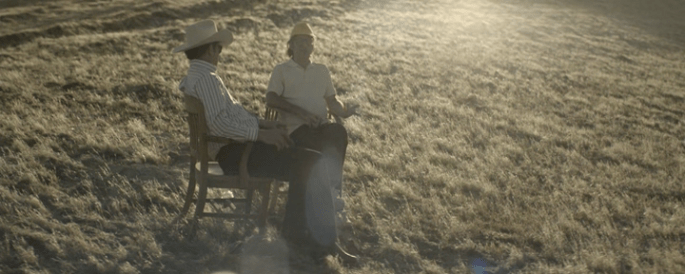
But this is a Rick Alverson film, and predictably, what we see of Turkington offstage is far more disturbing than what he exhibits to the public. The frequent, unanswered phone calls to his daughter, awkward visits with his cousin (John C. Reilly), dream visions of himself as a cowboy in white, and addiction to late-night Mexican soap operas hardly scratch the surface of this man’s complex psyche. There are insights into what lies within that will keep even the most seasoned horror fanatic up at night, including but not limited to nocturnal encounters with strange men and pregnant women in sleazy restrooms. One may never feel truly at ease in a public place such as this ever again. Where Hitchcock claimed hotels, showers, and mothers, Alverson’s got bathrooms, backyard pools in the Hollywood hills, and comb-overs.

It would be difficult for me to not at the very least admire the director’s unique, even necessary vision. Based on the two features of his I have seen, his approach can be surmised as pushing comedy – and indeed, the notion of what is “entertaining” and what is not – to its breaking point, pushing it so far in that very direction that it becomes an utterly horrifying spectacle. It’s a bit more difficult to pinpoint this one than as was the case with the director’s earlier work, coming off much like a Lynchian examination of self-exile and untreated mental illness, but therein lies the key to accessing its madcap brilliance. It’s not easy, but it is genuinely distinctive.

vlcsnap-2016-09-28-22h26m05s068.png

Lorenzo Hagerman handsomely lenses the comedian’s trek across the barren wasteland, his stunning widescreen frames capturing not only the desert landscape in all its expansiveness and the insignificance of man when posited  within it but also the subtle grandeur of Turkington’s naturalistic features when wallowing in the utter dourness of solitude. A single frame can contain so much sadness and even some kind of cosmic terror, absolutely fitting for a film with this much to say but which appears, on paper, to be so much more simplistic than it actually is. Alverson’s history as a musician serves him well once again, with the film’s pivotal moment arriving a little over the halfway point when the comedian ventures out to the middle of the desert to record a video with a couple of young(er) YouTubers, but walks away – into what else but complete and utter nothingness – before the camera can even start rolling. Leah Devorah’s “Animals in the Zoo” scores this scene, which encapsulates what the film is really about as well as its last frame does, and it is one of the most personally affecting I’ve happened upon in recent memories. Without going into too much detail, it leaves me speechless and then some.

ENTERTAINMENT delivers on what we claim to expect out of most movies but in a consistently unconventional manner. It has a few awkward laughs, it’s got bucket loads of tension (Michael Cera’s brief appearance inspires enough pure discomfort to supply an entire, separate film on its own), and even features a sort of empathetic melancholy. I think the reason it won’t sit right with a lot of people is because it approaches cinema as a mirror into the soul, and dares to reveal things about ourselves that we would never hope to admit to. We react because deep down, we understand, and Alverson knows it. Oh, does he ever.

vlcsnap-2016-09-28-22h24m23s594

This is as important a study of depression and suppressed anxiety as any, portraying the inevitable breakdown following the latter of the two with such painful realism that it may be wise to take a couple breathers throughout. I sure needed them. As much as this is initially structured to be some kind of endurance test committed to celluloid, it offers more than enough points of resonance to justify the amount of patience that it requires. Many will surely dismiss it as being a film about nothing, or merely a critique of showbiz and the plight of the artist, which is about as redundant as you can get. Alverson’s cinema is about vicious cycles contained within a distinctively American context; the dream is dead, as are we, but we’re still here. Lost souls, wandering about, searching for purpose, and surrendering to ourselves when we find nothing.

The inverse of THE COMEDY until it isn’t; one senses the comedian feels some kind of regret for his actions both on and off the stage, unlike Heidecker’s Swanson who feels nothing at all because he doesn’t have to, but like that character he feeds the void rather than challenging it. The “Animals in the Zoo” scene is perhaps the most difficult because it seems for once that Turkington may be looking inward, and yet in the end he chooses to ignore the notion, and thus “order” is restored. Alverson’s characters have always scraped by sluggishly, only this time, he finds real sadness in the excursion. This is a largely subconscious work of art, open to a certain number of reasonable interpretations that will no doubt transform across a variety of individual spectators, and one with a substantial enough emotional palette to support the full weight of its cynical outlook on the world as we know it. There’s plenty of truth here, and very little of it is pretty. It isn’t often that a non-genre outing is significantly more effective than the majority of horror films, but here we are. At the end of time, the end of emotional honesty, the end of entertainment itself; this is what Trish Keenan must have meant when she pondered where youth and laughter go. And like the late Broadcast vocalist also said, let them know.

vlcsnap-2016-09-28-22h22m28s151.png

VIVA (2007): A Review by Ryan Marshall

pressbook_outside

An homage, when executed with the most shallow of intentions (that is, to pay tribute without any sort of recognizable personal stamp), can potentially be a deeply disastrous affair. Truth be told, just about anyone can spread their fanaticism far and wide, but it takes a particularly gifted individual to balance immeasurable admiration with a more comprehensive understanding of his/her obsessions. Anna Biller’s VIVA belongs to a long line of exploitation throwbacks that have turned up in recent years – a candy colored excursion back to a time when the idea of corrupted innocence was genuinely invigorating – and immediately it looks to be the kind of extra-cutesy affair that you either love or hate depending on your own tolerance for the kind of material it seeks to evoke. In spite of whatever complicated feelings one might have, there’s an undeniable hook from the first frame onwards, which is that Biller’s at the very least got the “look” and “feel” down to a tee; unmistakably the result of countless years spent thrifting, crate digging, and existing almost entirely in her own world.

I’m the kind of guy who appreciates a true sense of craftsmanship when it comes to production design in film (and even more-so with an intended period piece), so Biller’s commitment to recreating the sleaze and cheese of 1960’s/70’s sexploitation is an immediately imposing quality. Every last aspect of sound and sight, from the pictures hanging on the walls to the occasional (and only slightly jarring) continuity error, exists for the sole purpose of total immersion. Taking a closer look at her filmography thus far, the writer/director (plus costume designer, editor, actress, producer, animator, musical contributor, etc.) seems to have a very unique (and so far successful) brand which seeks to revisit the kind of lucid technicolor dreamscapes that once graced the silver screen with their distinctive phantasmagoria, but with an added intellectual twist which allows the material to be studied under the microscopic lens of today’s comparatively tame social-political landscape.

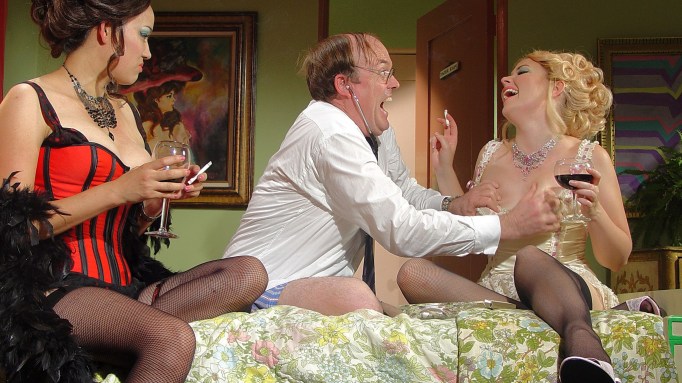
“This is a story about a housewife during the sexual revolution. The time is 1972, the place is Los Angeles, and the people are ORDINARY.” The situation at large: Barbi (Biller) enjoys, or rather submits to a stay-at-home life with her husband in and out on various business trips and the neighbors, Mark and Sheila, serving as a constant reminder of the mundanity of her sexuality as of late. But one day, Barbi ventures far outside of her comfort zone, pursuing a career in modeling, which leads to an unlikely encounter with a vivacious hair stylist that prompts her man to walk out on her. Instead of confronting the crippling emptiness she experiences in light of his absence, Barbi goes out on the town with Sheila (whose husband has also left her) where they take up new lives as call girls. Nudist hippie camps, flamboyant art snobs, the allure of showbiz, and crazy drug-fueled orgies – there’s truly something for everyone out there.

085_2048x1152

But of course, this exhilarating new world is not quite all it’s cracked up to be; the girls are of the belief that they are escaping the constricted roles of the household through all the glitter and glam, when in fact the men of this so-called “high life” are no less intolerant and negligent than their respective spouses. Where their husbands merely laughed until their faces were red or extended their skiing vacations an extra full month, these savage beasts are content to buy and sell them out or worse yet, take their abusive tendencies to more regrettably hands-on territory. Yet, Barbi proves time and time again that she is much stronger than she appears; the toxic cycle seems never-ending and the web of overbearing masculinity is a powerful obstacle, but what this tale ultimately suggests is that progress is not an all-together impossible dream.

Speaking strictly of surface-level pleasures, this covers just about anything that could be found on the unofficial sexploitation checklist, which is a modest achievement in its own right – but brewing beneath is something far more interesting and – ultimately – important. This is indubitably a feminist film, and one which is refreshingly fearless in how it pronounces itself as such; a simple but poignant story of a woman breaking free of both internal and external boundaries and learning to exist as her own separate entity. Aesthetically, Biller crafts a language that is entirely her own, in spite of her many prominent influences; if this can be compared to anything, it’s the early works of John Waters (FEMALE TROUBLE and DESPERATE LIVING, especially). Much of it is gleefully over-the-top, often hysterical, but whilst wallowing in the filth, Biller gracefully unearths honest, ugly truths when it comes to female representation both on and off the screen, though it’s her auteurist touch – her fetishistic attention to detail and supernatural gifts as a visual artist – that really allows the bigger, more progressive ideas to shine.

But most importantly, it’s just great entertainment. At two hours, there are brief moments when one feels the narrative meandering ever so slightly, although it’s safe to assume this is simply by design – either way, the film is never anything less than effortlessly engaging. Spectacular musical numbers, a vibrant color palette, the casual celebration of excess (a surplus of sex, drugs, and mood music can be found here for those inquiring) and even a mind-bending animated sequence (designed by Biller herself, to the surprise of, well, absolutely no one) ensure that it keeps finding new ways to surprise the viewer at every turn, and the cast deserves a special mention as well for keeping the material consistently amusing without overstepping into grotesque self-parody. The scene with the hair stylist, in particular, is of a (hilarious) nature that would make the aforementioned Waters green with envy; it’s positively absurd, and gleefully filthy, without abandoning the heart of the picture. Impressively, it’s one of many things that remains perfectly in-tact throughout.

VIVA is about as cool, collected and smart as feature debuts get – signifying all at once a compelling introduction to a singular obsessive cinematic conscience and a passionate call to action for those interested in the sexual politics of yesteryear and yesterday, and how from them we can derive lessons to be applied to contemporary values. It’s fresh, endearing and poetic in its artful trashiness – it’s very much the movie I needed at this particular time in my life. If ever there was further proof of the values inherent in actively searching for hidden gems within the grimiest and most effectively transgressive crevices of cinema, it can be found here, deep within the pulsating portal of pop-art progressiveness that is Anna Biller’s beautifully bat-shit psyche.