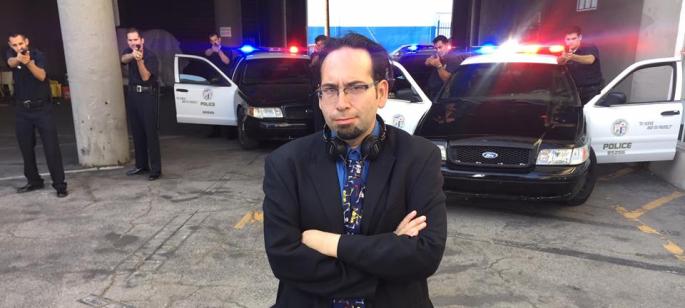
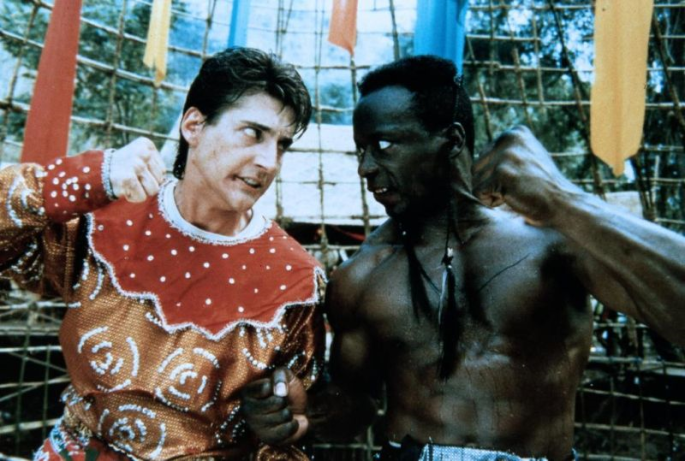
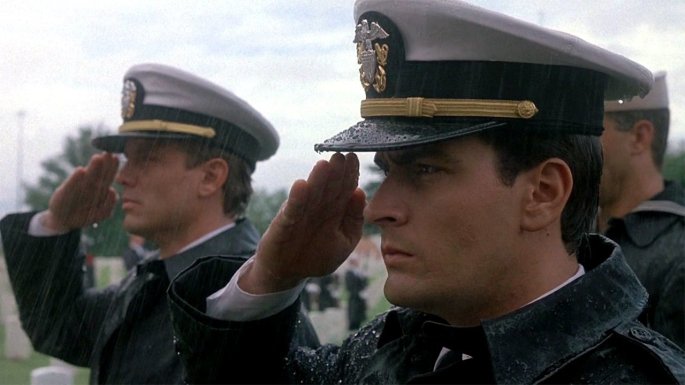
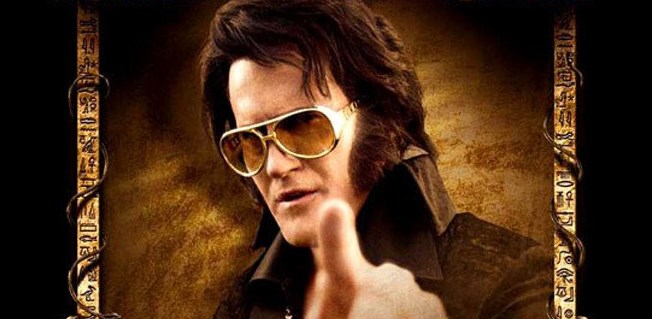
Writing with Fire: An Interview with Matthew Greenberg by Kent Hill

Chatting with Matt felt like getting together with a buddy you’d been out of touch with for too long. He is an explosion of wit and joy; even though he works in a town that can at times be a realm of foreboding dread.

“I failed at everything else,” he said, when I asked him how he came to be an adventurer in the screen trade. Matt has felt the highs and the lows – he has climbed up the mountain that is the film industry, slipped, and started climbing again. Yet, even with broken fingernails, he has managed to pen a wild array of movies. They’ve a little of everything in them that a growing boy needs as part of his complete breakfast: from faceless killers to fire-belching dragons to spooky hotel rooms. They may in part be “significantly different” from the scripts he turned in, but if you listen to Matt, that same exuberance and enthusiasm he carries for his work manages to make the final cut.

He came to Hollywood with enough money to buy a plane ticket (that got him there) and a car. Since then he has made it – in place where momentum is everything and the decisions handed down from the hierarchy don’t always make sense. From that place where all the leaves are brown and skies are grey, Matt showered me with tales of his journey through the savage land known as Hollywood and how with a genteel parlance, you may perhaps survive.

Ladies and gentlemen, I give you, Matthew Greenberg…


Rogue One: A Star Wars Story: A Review by Kent Hill

This slideshow requires JavaScript.

So another December has come and with it comes another Star Wars movie. The reviews begin. Kevin Smith raves about it, calling it Empire Strikes Back great. In his brief thoughts following the premiere which he attended, Smith makes mention of what are really the highlights. This is an excellent chapter in the Star Wars saga. There are great tie-ins which link this film to those that have come before. Vader is badass in this movie and then there is the ending . . . that ending.

Now, unlike the case of The Force Awakens, this film has not enjoyed a triumphant reception. Those that have distaste for it are talking sooner rather than later. Before seeing the film today, I took note of some of the positive/negative stances. One thing I marked was a comment regarding the resurrection of a certain character from the original trilogy. I will not spoil this for anyone, but the review to which I refer, made the statement that the arrival of this character on screen (with the help of effects, cause he bought the farm a while ago) was something that took them out of the movie. I am going to take arms against this statement (which you may read more about if you wish here: http://geektyrant.com/news/review-disney-and-lucasfilm-play-it-safe-with-rogue-one-a-star-wars-story). Me personally, and I am referring to the pair of instances which the technology is used in the film, I feel this is one of the better examples of this type of effect used thus far in movies and remind the learned gentlemen for the prosecution of the creepy, expressionless faux-young Jeff Bridges in the lamentable Tron sequel as a better example of something that disconnects one from a film.

Still, what about the film itself? Is it Empire Strikes Good? I read Harry Knowles’ review this morning too. He though, has a tendency to gush, going so far as to list the things that he liked best. You need to be wary when film writers take such actions. The reason being? There was stuff they didn’t like in between those things they did.

Rogue One is the story of the story before the Star Wars we all grew up with – and I refer to those of us who grew up before they started using the “Episode” system. It finds the brains behind that moon that is no moon but a space station, living out his life in peace and harmony with his family. Then the empire shows up and ruins everything, as it is their want to do. From this pastoral opening we following our heroine Jyn Erso (Felicity Jones) as she is recruited by the rebels (they are rebels aren’t they?) to track down Forest Whitaker, because rumour has it, that he has received word from Jyn’s dad, Mads Mikkelsen, about a super-weapon the empire is about to unleash.

So the Star Wars story moves along, and at times it is a slow boil. There is a good comradery among the cast, along with levity and heavy-handedness in equal measure. There are also lots of droids and aliens, which are always fun to hang out with in a time of great tyranny. This film paints the best portrait of the galaxy far, far away in the wake of the rise of the empire as we know it. It’s a grimy hit-run-hide type of universe, where heroes are few and all hope seems lost.

But wait, maybe not. Though the rebellion has its own dark undercurrent of distrust and personal agenda, we find out (what those of us who are children of Star Wars already know) there is a weakness to this battle station. It soon falls to the good guys to decide what they are going to do with this intel.

When faced with a planet killer, some guys run and some guys stay. The guys that stay join with our ragtag band of heroes on their veritable suicide mission. Their objective: to retrieve the plans of the Death Star in order to exploit the flaw in its design.

This is when Rogue One finds its wings, and all of a sudden I found myself in a film that felt more like a Star Wars movie than The Force Awakens did.

The final act of the film is bold, brilliant. At one point I think I heard Sam Elliot’s voice from The Big Lebowski in my head saying: “I didn’t like seeing Donnie go.” I was looking for shots from the trailers that I liked, but I found them to be absent from school today. I thought it was a good ending which brought to mind the old chestnut: those who live by the sword shall die by the sword. I also read in those reviews from earlier today, that the characters were thinly drawn. This would imply they are like most characters in modern movies, which is to say you don’t really give a shit whether they live or die. But I cared, not for all concerned, but for some. When things finally went south, I can genuinely say I was moved by their passing.

So, is Vader badass? Yes. That’s all I’m going to say on that score.

The film looks beautiful, though please again be wary, especially when reviewers make mention of this early in their critique. Praise for the photography and locations are often code for: it looked good, but that’s all it did.

The score by Giacchino is sombre and at times melancholic, but it lifts, and there is a nice peppering of Williams which will make you smile as ever.

And thus we come to that ending. Go see it. Go see it. The best thing about the ending is you can go home and watch the story continue, unlike last year’s Star Wars where we’ll have to wait a while yet to find out what Luke is going to say, or not say, or just keep on glaring, or fart , or something like that.

Did this dude in the audience like Rogue One? He did, he did indeed. He will be going again, that is a given. The cast and crew, all involved, have made a good Star Wars movie. It’s not Empire Strikes Good, but filmmaker Mike Mendez (Big Ass Spider, Don’t Kill It), whom I interviewed recently, said it best. During our chat we talked about Spielberg and Mike’s love of Raiders of the Lost Ark. He (Mike) considers this the perfect film. He caught lightning in a bottle, and I’m paraphrasing Mike here, but Mike went on to say that as talented as Spielberg is, he doubts he could ever duplicate something like Raiders. The same could be said of this, the third coming of Star Wars. I watched it begin in the 70’s, I was there for explosive hype of The Phantom Menace. I was there last year when the force decided to wake up again.

My point is this. The lightning has already been caught. It was captured a long time ago in a galaxy far, far away. They will never be able to recapture that lightning, but so far the Star Wars we are getting is calling down the thunder and Rogue One roars across the sky. It reminds us, yet again, of that brilliant lightning that brightened our world a long time ago…

GO SEE IT!

Big Ass Sensation: An Interview with Mike Mendez by Kent Hill


This slideshow requires JavaScript.

Mike Mendez is like the filmmaking equivalent of Harry Nilsson – you’ve either heard of him or you haven’t. I was still peddling videos to the cinematically ignorant in the happy hamlet of Bumfuck, Nowhere, when I happened across Mendez’s first feature Killers. It was an audacious debut, in this dude in the audience’s opinion, and it made me want to see more from Mike.

Of course the road to success in the film business is plagued with many pitfalls and perils and as you’ll read in our interview, Mike has seen his share of peaks and valleys, of floods and droughts. Still he remains a filmmaker with a style and his work reflects the sense of fun that he gets from watching the films that have inspired him to his trade, as well as the fun that he has in the actual crafting of his movies.

From spooky convents to the exploits of the a demon-hunting Dolph Lundgren, Mike Mendez is a survivor and has fought to earn the recognition that he, again in this dude in audience’s opinion, richly deserves. He is a seasoned independent voice that you just can’t pigeon hole and whether he is directing bimbos or big ass spiders, it’s all making movies – and Mike loves making movies

It is my pleasure to introduce Mike Mendez…


KH: So Mr. Mendez, can I call you Mike?

MM: Sure, Mike is super-fine, that’s great.

KH: Mike thank you for talking to me on behalf of podcastingthemsoftly.com. I am a big fan of your work so it is a real treat. I’ll try not to geek out till the end.

MM: Well thank you – no please geek out all you want, I really appreciate it, I’m a pretty obscure filmmaker so I’m super appreciative when anyone’s even heard of me, so that’s great.

KH: Well it is long into the whole Sharknado thing that my wife, knowing I have penchant for B movies, said hey you are going to love this, there’s a movie called Lavalantula. What’s it about I asked? Oh it looks like giant spiders that spit lava so I was like, gotta check it out. Not only was it fantastic but I loved how you assembled the cast of Police Academy to be in it?

MM: Yeah. When did you see that, how was it released in Australia?

KH: We bought the DVD.

MM: Okay, because that one was a weird one for me cause it was like, it’s a TV movie so it was like I don’t necessarily think of it as my movie, it’s just sort of like the first time a TV network had said hey, we like what you do, can you do that for us and a little bit of a marriage between my independent filmmaking and the powers that be that make Sharknado, so I was a little bit of them and a little bit of me, but ultimately that was like to serve the network, to give them what they wanted, but I’m happy that people reacted to it. For me, I wasn’t really sure if I wanted to do it because I just made a giant spider movie but, you know, it’s one of those decisions where I could hang around my apartment all summer long or I can reunite the cast of Police Academy and have them fight lava-spiders, and that seemed like a fun thing to do. So once Guttenburg got involved it was like okay, I think I can have fun with this.

KH: I must have done really well cause I know there’s a sequel in the wind?

MM: Arh, they made it, it already aired here in the US, 2 Lava 2 Lantula. I have nothing to do with it, I must confess, but a wonderful filmmaker Nick Simon took the reins and Guttenberg and Michael Winslow came back and they did their take on the very serious subject matter.

KH: No, I was great, cause I had seen your other movies and I thought arh, it’s great you were directing it cause I loved the premise and thought you would make something great of it, which you did.

MM: Oh, thank you.

KH: So now, let’s set the way-back machine, if you will, and talk about your journey Mike – have movies always been your thing?

MM: Yeah, yeah – I’m mean, I love movies are more and more as my life went on I realised how much I love films and it’s sort of like a lot of people would love to be out partying or drinking, and there’s nothing wrong with that, that’s always a good time too, but I find in some ways I’m that much happier in a dark room watching movies maybe with a beer or two, but I have always loved film and I started making movies with my friends when I was really young, I was like 10 years old, just started playing around with Dad’s video camera and that turned into just sort of a hobby, I went to an all-boys school, all-boys Catholic School and there were no girls, no drinking or nothing to illicit in those days, so that was my entertainment, that’s how I passed the time making these silly movies with my friends, and that kinda continued through college and pretty soon it was kinda clear to me that that was the only thing I had any – the slightest ability to do, cause if I didn’t do that I didn’t know what I was going to do, so I had to focus and try to get my first independent film off the ground.

KH: So you studied in film in college or did you go to a film school?

MM: Well, I mean, I use the word college in a very loose term, we have community colleges here which pretty much anyone can go to, the idea is kinda to get your basic education before you go to a proper school, so I went the local school called Pasadena City College and, but that was okay I mean Robert Rodriguez has a quote that everything you need to learn about filmmaking you can learn in 10 minutes and you know, that’s a slight exaggeration but the basic principle of that is true, so I felt I didn’t need the fancy school or college, or maybe I should have I don’t know, but I figured I just need to learn the basics and learn how to use the equipment, how to expose film and all that kinda stuff, and we just sort of continued making our independent gorilla stuff and then from there you just sorta learn by experience.

KH: Did you read his book, Rebel without a Crew?

MM: I did. Sure, Rebel without a Crew sure, absolutely, it was very inspirational at the time when I was going out to make my first feature.

KH: Yeah, I was the same. I remember reading it coming out of high school, not knowing how the hell I was going to get anywhere, cause there are not a lot of film schools out this way and there weren’t any universities that offered film at the time. So it was great. I read it and thought, we don’t need film school, we just need lawyers, guns and money.

MM: Right, totally.

KH: I do remember from my days working in a video store, the cover of your early film Killers?

MM: That was my very first feature, that was something we did by just pooling a little money together, and credit cards and whatnot and we just shot that, completely gorilla, and that was our attempt at a first feature and we were very lucky that we got into the Sundance Film Festival which I think, I tell people, I don’t think you can do that now, I don’t think, I mean maybe, but I think festivals have become so much more about who’s in it and what are the odds you’re going to get acquired at the festival and what kind of prestige does it bring and you know, and I’ll give Sundance a lot of credit and they still are to a certain degree, interested in discovering new talent and new voices and so I think at that time it was very true and we made or VHS tape and put it in the mail, sent it away, and by some miracle we got in, so that was pretty spectacular.

KH: So you went from there to Bimbo Movie Bash?

MM: Yeah. In between, while being in post on the first movie, I had a friend who worked at Full Moon Films and that was the first time I could make like a real pay check, that real pay check was $300 a week, but I was like 21 so, it like was like oh my god, I’m getting paid and the movie is a piece of shit but, it didn’t go our way at all cause ultimately there’s no movie in there, we didn’t film anything, it was an editing job and the idea was to kind of take – I was inspired by Woody Allen’s What’s Up Tigerlily? – which is a movie that they had purchased and was redubbed, and that was the approach I wanted to take with this, and then Charlie Band decided after seeing the first week of our cutting, you know, I can’t really sell it if you guys dub it so you have to use the original voices and that made it like a million times harder now, so now we’re stuck with clips of a bad movie kind of strung together and so we did it and, you know, I gotta be honest I wish my name was not on it as a director but you know whatever, we were young and paid and I was excited to be working on something at that time but it’s anything I’m not particularly proud of or happy with, but those are humble beginnings.

KH: From there we move to The Convent and Gravedancers?

MM: Yeah, The Convent was something that came after Killers, that was the same company that purchased Killers, who needed to make an independent horror film, they had a horror film and they allowed me a lot of leeway, me and the writer Todd Anderson, they kinda gave us leeway to do what we wanted and it just seemed fun to me to do a demonic nun movie. So that was fun, and I had a really great time and again, that got into Sundance, and that was the one I kinda consider that put me on the genre map. I feel Killers was a little too small, some people were aware of it, but The Convent was picked up by LIONSGATE and that sort of made an awareness for me, and Gravedancers sadly was – I was trying to get a bunch of movies made at that time and it wasn’t for another six years before I could get something done and it was something I was very excited about, to attempt to do a more serious horror movie and so it was an incredibly long, painful process to get it made and you know, some movies go well and some movies don’t but I unfortunately count that one, you know, nothing went our way, everything was a struggle, everything was a fight and, you know, I had a movie in mind, we didn’t really get there, you know, I’m okay with it, I think its fine, but it’s not quite what I wanted it to be and more frustrating is that it just kinda brought my career to an absolute standstill, it put the brakes on and, you know, I could not move out of there for another six years cause no one else would give me a chance…

KH: Really, that’s a drought?

MM: Yeah. But what really hurts is it’s six years before Gravedancers and six years after, that’s twelve of me not me not making movies, wanting to make movies and not being able to and so it wasn’t until these producers that I knew, that had recommended me for this project at the time that was called Dino-Spider and I was like FUCK! I really don’t want to be doing this kind of thing, it’s not really the type of movie – and I went out and had a really long hard think and had to really realise where I was – and was sort of like look, you know, if someone gives you a chance to make a movie it’s an opportunity, and just because in my mind it just sat as a direct-to-video, lowbrow movie, something that is crappy, it doesn’t mean it has to be, and that’s largely up to me and so I really kind of dug deep and really tried to think about okay how, how would I make a SyFy Channel type movie, how would I make it different, how – what is the type of movie that I want to see and from that was born Big Ass Spider and it’s funny how these things that you expect, like okay, I’ll do this and no one will know about it and whatever, and end up, in a lot of ways, changing your life. And so Big Ass Spider kind of gave me that jump start back into making movies again.

KH: I’ve gotta ask, you’re in California, the epicentre if you will – you went through that big drought – it doesn’t seem as though, being close to the action as you are, that’s it’s any easier to get films made?

MM: Yeah I am in the epicentre of where they make moves, and I couldn’t be any further from the industry it felt like, you know, when no one cares, when no one wants to make movies with you, I mean, you’re stuck in the phantom zone, you’re essentially invisible. I mean, I do encourage people who want to make movies, yeah, LA’s a good place to be, but when you’re starting out and making independent films especially, with technology the way it is now, I mean you really can be anywhere. I just came back from an amazing festival in Austin called Fantastic Fest and they just premiered a movie today called Bad Black which was made in Uganda, you know, made by the villagers in Uganda and they’ve been doing stuff from a while now, and you know what’s crazy is the budget of this film was like $60 and apparently, I wasn’t there today but I was reading on Twitter, everybody loved it, everybody thought it was absolutely crazy so, that is like inspirational and man you can be anywhere in the world, I mean we’re talking about guys who erase their old movies cause they can only afford a thirty gigabyte drive, as they make new ones they have to kinda get rid of the old stuff, we’re talking bare bones, they have to make their own guns, they’re doing their own effects and doing their own stunts, you know, that more than anything I can say or talk about is the true independent spirit of making movies.

KH: So Big Ass Spider marked a return to prominence for you. Often I find, when I mention your name folks go, Oh yeah he’s the Big Ass Spider guy.

MM: Yeah. It seems like I’ve had a few careers, you know, like the Killers/Convent/Gravedancers guy, and now I feel like I have a whole new career and some people, like yourself, are aware of all of it, and they’re like no, no, he’s been doing this a while, so now I’m on like leg 2.

KH: I remember when I informed the lads at the website that I was going to interview you, having posted some of the posters from your movies; one of the comments was, I didn’t know he’d made anything since Big Ass Spider, so I guess it must be one way or the other, people either know your catalogue or single films?

MM: It’s sort of fascinating cause I feel like I have a fan base for each movie like Killers has its own following, Convent has its own following, Gravedancers has its own following, Big Ass Spider has its own following, Tales of Halloween has its own following so it’s weird in that it’s sort of segmented and there aren’t many people that come up to me about the whole body of work, they come up going, hey I love that movie, I love this movie, they love, you know, it’s kinda weird – I mean, I don’t mind, just love that people are reacting to it and liking it, that means the world to me and so – but it is odd you know, but I’m happy people are seeing the stuff.

KH: You seem to do well, for my money, with this whole comedy/horror thing. Looking at Big Ass Spider and Lavalantula, though you were a gun for hire on that one, you seem to have found a niche with this stuff?

MM: It’s my true voice, you know, that’s the thing, that’s just me you know, I don’t want to say that, obviously it’s hard work, but I’m not trying to do it, that’s just sort of what comes out. So now I’m in a little bit of an existential crisis because I just premiered my newest movie literally a few days ago at Fantastic Fest, which also falls into the comedy/horror kind of thing. So do I think, do it stick with or do I really try to challenge myself to do something really scary or something really straight, action or whatever you know, and I don’t know.

KH: So what were the films that influenced you as a young man – what are your default movies?

MM: Well my favourites are, you know, I don’t know, everyone says picking like your favourites is impossible, your top 5, but I can do it: my favourite movie is Raiders of the Lost Ark, Evil Dead 2, The Exorcist, this is where I throw people, Pink Floyd’s The Wall, then I run into a problems cause it could go any number of ways, I could go Jackson’s Dead Alive, or if we go with musicals and go Baz Luhrmann, you know, Moulin Rouge, I love experimental filmmaking to a certain degree, I love kind of bold filmmaking. So all those kind of things are my big influences.

KH: So Raiders was the movie that got you hooked?

MM: I was probably, I was already hooked already, it’s just something – that movie is sort of perfection, even for Spielberg, I don’t think he could even replicate it, there are movies like Blair Witch Project or Texas Chainsaw Massacre that I kinda think are lightening in a bottle, all the timing kinda worked out, and those movies are special cause everything worked out. Spielberg is an incredibly talented filmmaker but I kinda think he also caught that lightening in a bottle; the right moment in his life, the right actor, you know, the combination of Lucas, in my opinion they never even came close again to capturing that . . .

KH: Well Crystal Skull pretty much affirms that?

MM: Right, yeah, totally and I think everything just lined up, I mean Harrison Ford was the perfect age and looked the perfect way and Spielberg had something to prove cause he was coming off of 1941 and it was a flop and, you know, there’s just a manic energy to it – that movie’s just fucking perfection, it’s just great and I think, it’s probably weird that I feel this way and I wonder if it will continue but I think in everything I do, there’s a little Raiders of the Lost Ark and a little Evil Dead 2, which to me, I’m okay with that, that’s fine.

KH: Hey that’s a pretty sweet blend, the best of two worlds.

MM: Yeah I feel – the new one with Dolph Lundgren Don’t Kill It is very much an Indiana Jones meets Evil Dead 2, you know, I don’t have the budget or the schedule that they do but that’s the closest I’ve come to doing an Indiana Jones type character in an Evil Dead 2 type world.

KH: Great. So, then we come to Masters of Horror, a documentary you worked on. What was that like?

MM: That was amazing, you know, that helped a little bit in the break between Convent and Gravedancers those six years, I did do that documentary which was something like a movie in itself. It was something that we did for Showtime, a channel here, and Universal and it just kinda fell in my lap you know, it was supposed to be a DVD but the partner kinda got shut down and we had shot all these interviews with all the greats and for me it was, I mean, I was getting paid to have deep, long talks with all my heroes and with one of my good friends Dave Parker. So we were able to talk to pretty much everybody we wanted – we didn’t get to talk to Argento one on one, I mean we did interview him, but we had to send someone to Italy to interview him. There’s a few that I would have liked to have gotten, I would have like to have gotten Raimi and Cronenberg perhaps but who we got means so much now cause some of these people are no longer with us, you know, we got to spend an afternoon with Wes Craven, we got to spend a lot of time with a lot of our heroes, we got to spend some time with John Carpenter – before, as he was emerging we sort of called, we think Guillermo del Toro going to be something one day – at that time he was doing Blade 2, he was coming off of Mimic, but we felt like he was going to be something special. So we talked to Guillermo del Toro, we talked to John Landis, we talked to Rick Baker, we talked to Tobey Hooper, so we really kind of took the essentials of who are the masters of horror, and again yes Cronenberg and Raimi should have been in there too, but they weren’t interested in participating, but, other than that I think we got the giants, you know, Romero, Tom Savini, we got the giants of the genre, and we got to spend time, and it was a great time making that documentary, it’s really special to me. If anything I’m a little sad that the best place to find it is YouTube, because the company we made it for became defunct and no one really cared, and all the film clips in it you had to license every two or three years, so it would be a fortune to relicense all that stuff so it’s kinda drifting out there in the ether, you know, and even though I’m against piracy and downloading stuff, if you can’t find a movie and that’s the only way to get it, I think that’s okay.

KH: That’s a shame cause it’s a great document, cause like you mentioned, we don’t have Craven anymore and you got del Toro before he exploded – so it’s a shame it’s not widely available, not to say that stuff on YouTube isn’t widely available but still . . .

MM: Yeah, but no one thinks to go there and look for it, people would rather have it streaming or downloading, sadly it will never happen, you know, the best we can do is attempt to remaster it one day or something, but it would be illegally you know, cause I think at the time they spent a lot of money licensing those clips cause it was for Universal so, I know we’ll never be able to get that again.

KH: Now we come to Tales of Halloween which you had a part in?

MM: Yeah, a big part really, cause that was me and friend, Axelle Carolyn, we kind of made that film together, even though it’s an anthology and even though it has ten filmmakers, I still feel like I put all the work I would into one of my features into it, cause we did it from top to bottom, we got all the funding for it, we got all the filmmakers together for it, now that was very easy because, you know, living here in Los Angeles, one of the wonderful things is that through networking and things of that nature, you start to meet each other and you start to become friends with people whose work you admire so really, essentially, the people in Tales of Halloween are just close friends and spirit of comradery and the spirit of hey, we’re young, we can do this, let’s do it just because – it wasn’t financially profitable for any of us, we all did it for free – but we all did it because we love the genre and because we love making films and because we all cared about each other as friends and we wanted to work together and kinda the logic behind it was kinda the Justice League or Super-Friends. We would stand stronger together, than any of us would by ourselves and, at the end of the day; it’s something I am immensely proud of. Again, it’s a very niche film, you know, it’s not for everybody, but we made it for a very particular audience and that audience is hard-core horror fans you know, because there are so many shout-outs to other movies, there are so many cameos by horror icons, you know, it’s kinda like a horror film festival in a movie, like a little 90 minute Halloween party on your television screen you know, so that was a lot of fun, that was something we finished last year, it just came out last year, we just here, here in the US released a beautiful 4 disc Blu-Ray that is pretty cool. It’s got a lot of special features and a lot of our other short films, just cause it was like a showcase and we thought let’s put stuff on here and see if people dig it.

KH: Then there was Lavalantula which I told you I was alerted to by my wife. The premise was enticing as it was and then you throw the Police Academy thing into the mix – but the other little addition I liked, and I only remember seeing him in flicks as a kid, but he was in Son in Law and the Sandlot Kids . . .

MM: Yeah Patrick Renna.

KH: Yeah. I was like, that’s great, that’s the kid from Son in Law.

MM: Yeah. I’ll tell you a very quick, funny story of why he’s in the movie. I would see him at my local Starbucks and I was like, IT’S THE KID FROM SON IN LAW and, you know, Sandlot, and we were looking for someone for the role and I did and random stab in the dark and we contacted his agency and had him come in – but it’s all because all because I would see him at Starbucks.

KH: (laughter) That’s fantastic. That’s great.

MM: (laughter)

KH: So you had a bit of fun on Lavalantula as a hired gun and then we come to The Last Heist?

MM: Yeah, and The Last Heist sadly is rock bottom for me, it is by far the worst movie making experience for me, and I’ve said what a bad time I had on Bimbo Movie Bash and un-proud I am of that – that’s nothing compared to how much I fucking hate The Last Heist. Yeah, cause it’s funny, you know, how sometimes things don’t go your way and this was, you know, a case where, it’s weird cause I couldn’t make a living just directing for a long time with the big gaps in between movies . . .

KH: I noticed among your credits you’ve done a lot of editing?

MM: Yeah I kinda got in the habit of editing for TV but largely it was so I wouldn’t have to (A) be poor and (B) I won’t have to make movies because I had to make movies, but I was on such a roll between Big Ass Spider, Tales of Halloween and Lavalantula and the Dolph Lundgren was coming up, I had like a hole in my schedule, I had free time there – and I love to work and I love making movies, so I got a call from these producers saying hey, you know, we have a three picture deal and we’re doings these movies and we doing one in 4 weeks, and I’m like really, 4 weeks, and they told me the storyline, and I really liked the storyline. It was about a bunch of bank robbers that rob a bank and there’s a serial killer in there, and the serial killer starts taking out the bank robbers and I’ve always wanted to make a movie like that, like I legitimately had a story in my head that was similar to that. So I okay, this is an opportunity, what’s the budget, and they’re like $200,000. Now $200,000 is about what I made my first feature for that we all pooled together money as kids twenty years ago, you know, now technology is more advanced and you can do a lot more with it, and I’m like, are you fucking kidding me, $200,000, you’re going do it 4 weeks with $200,000. So they kinda threw up a challenge, oh you don’t think you can do it, and I tend to, sometimes it really helps, but sometimes it really hurts me, I have a very positive, can-do attitude, and I’m alright, alright let’s do it, I’m excited, let’s do a movie like guerrilla-style and try and make it the coolest and bloodiest and rawist thing we can, and they had Henry Rollins for it, and that was cool to me – so two weeks into it, and there was only four weeks preproduction – two weeks into preproduction it becomes very evident that they can’t afford to get a bank, and it’s a bank robbery movie. And I’m like, are you kidding guys, what the fuck, that’s the minimum, it’s like that’s the base thing you need for a bank robbery movie. So they’re like no, no, we got this great deal on this building and we can dress it up, make it look like a bank, or we can say it’s this security facility and here’s my mistake and what I will regret forever – the next words out of my mouth should have been, that’s great, I quit – but I didn’t cause I had a can-do attitude about it, and I went to the location and I kinda saw it in my head how it could work and I heard this kinda music in my head and saw how it’s all going to come together so I thought okay. So we went and shot the movie in 15 days and, funnily enough, the experience of shooting the movie was actually fun, like we had a really great time and, you know, playing cops and robbers for three weeks, and I said okay, this is cool, didn’t say a lot, and this is partly the reason that infuriates me so much; I put in a lot of my money, well not a lot of my money, but you know – they couldn’t afford decent masks, so I paid for those, they couldn’t afford Steadicam, so I paid for that so I was putting in, and they were paying me a joke of money anyway – so it’s like, if you’re doing something for this low you’re really doing it for just artistic satisfaction, but these motherfuckers I will say, when I did my edit, they just took it and felt that just because they had the right as producers they could do whatever they wanted to it, and they recut it, and they took out all the violence, and they took out all the blood, and they took out the music and they put in the shittiest fucking score they wanted and the shittiest colour correction, the shittiest effects and they cut it weirdly so it has no rhythm anymore and I don’t recognise it. I think it is an atrocious fucking train-wreck of a movie, and I hate that my name is on it, and to this day I’ve only seen twenty minutes of it, and just from watching the twenty minutes of it, and I fucking hate this and I can’t stand it and comes as no surprise to me it has a zero on Rotten Tomatoes and if you go to IMDB and look you at the messages of how people refer to it as a student film or give it a one out of ten, and they’re right, they’re 100% right, that’s a piece of shit and I absolutely hate it, but, what can you do about it. I asked, I told them in a not-so-nice way, that I didn’t want my name on it, I’m not, in the US we have a thing called the Director’s Guild of America which kinda protects you, I make such low budget movies I am not a member of that, I do not have that protection, so they were like whatever, your name is going to help us sell it to some territories in Germany and stuff, so we’re going to keep it on here. So it is an embarrassment that I, you’ll note, you can look, other when we started production and like pictures of me on set, like on my Facebook stuff, I have never done any promotion for that movie or any, you know, any press for that movie and this is probably actually only the second time I’ve talked about it publically, I’m about to get warmed up to do all my Don’t Kill It press soon, so I will tell the story again, so it’s one of the those ones, if I could erase anything off my IMDB, it used to be Bimbo Movie Bash, but this one hurts me more and is the one I find far more offensive.

KH: Wow – that’s an incredible story. That’s why I love to talk to you guys cause there is a lot folks just don’t know, or don’t consider that goes on behind the scenes.

MM: Yeah, and it’s my own fault for doing it and saying yes to it, and it will always be on my resume and people will go, what the fuck happened to him? What the hell is this?

KH: I definitely get a sense from following the careers of filmmakers that there is definitely that old adage at play, you know, some animals can sense evil, and watching the movies sometimes, you, knowing the director’s work well, get the feeling that other hands have been at work?

MM: Yeah that’s the thing. Any time you see edited by me and somebody else, that probably means that somebody else came and cut it, you know, because I like to edit my movies and not have anyone touch them, you know, and so this was a case where I was really unhappy with what they tried to bring, and they were telling me, we’re making it better Mike, it’s better, and of course then you get a zero on Rotten Tomatoes, and it’s like yeah, wow, you guys really showed me. But I’m the one that has to suffer for it, the one that has to live with it. So that sucks. Did it come out in Australia?

KH: It did, and this goes back to what I was saying. Knowing the style and the qualities you inject into your movies and then seeing something that is completely alien to those qualities but it has your name on it, you know that something must have been rotten in Denmark.

MM: Yeah, and what really bums me out is that it didn’t have to be that way, you know, it’s such a small movie and it’s such a small thing, it’s like, what did you have to lose by letting me make it, and by no means again, it was a super low budget movie with a short schedule, it was never going to be a masterpiece but I was okay with it. There’s a version that existed that just had a certain rhythm to it, I was kinda trying to do the opening of The Dark Knight for like the whole movie, it had a certain pace to it and a certain cutting style, it had a very electronic score, and so a lot of stuff was cut to that electronic score, but they just put like shitty action movie over it, so it looks like its badly edited, so again, and I’m not exaggerating, in those twenty minutes that I’ve seen there’s no less than fifty things I never would have said fucking okay to, whether it’s a shitty voice-over or shitty stock footage or just the way its edited, and those twenty minutes I’m like, I wouldn’t do that, I wouldn’t do that, I wouldn’t do that. And so, at the end of the day, I know I was there and I know I said action and I know I had a lot of sway as to what this movie is –but I don’t feel like I directed it, I don’t recognise it, I don’t know what that is. The only way I know I had something to do with it is cause my name’s on it.

KH: And Joe Multiplex doesn’t take all of this into consideration, indeed, why should he, but, I watched that Warcraft movie the other night, I couldn’t get over how many producers were on it, and it still turned out to be a clusterfuck since we’re being honest.

MM: Right, right. The director seems very proud of it, and I don’t know if he’s just toting the company line, but he seems very proud of it. In my case I felt that the best thing was not to talk about, not to promote it, let it come out, let it get shitty reviews and then hopefully it would just fade away – but now that it’s been out a little while, now I feel I can yeah, that piece of shit aint mine, you know, and I don’t know if that’s the right thing to do, I know that it was on Netflix and I know that is now starting to fade away, so I hope that movie fades away to the bottom of the ocean and no one ever sees it again, and if anyone has seen it, then I apologise again from the bottom of my heart.

KH: Anyway, we’ll move away from something unpleasant and onto something I’m very excited see and that’s Don’t Kill It!

MM: Alright!

KH: I don’t know if we’ll get to see it in theatres here?

MM: Realistically it is a Dolph Lundgren demon-hunting movie; I would expect you’ll find it on VOD or on Blu-Ray in the first quarter of next year, but, you know, I’m hoping that a lot festivals will pick it up and that it will at least get to be seen in the big theatres that way, cause still, even though we live in a kind of VOD world, I still like to make movies for a theatrical experience and I like to make movies that are for an audience so people can get into it and cheer and that kind of thing – and we just had first screening at Fantastic Fest in Austin and that was a blast and we’re about to do it all again in Spain at Sitges in like two weeks and yeah, I’m really excited about it all.

KH: Yeah, I’ve been following it, and once I saw the early photos and then the trailer I was hooked. I also loved that picture; I think it was from round at your house with Dolph standing next to Castle Greyskull?

MM: Right yeah, I’m a big toy geek or a big geek in general, and so part of the fun of it was I could have set up a screening for Dolph at some office or something or like that but, you know, fuck it, he’s coming here and he’s gonna play with his Ivan Drago action figures and, you know, he’s a good sport about it, I think he was like “what the fuck!” (laughter) I got a big kick out of it.

KH: And Dolph, he’s a nice bloke is he?

MM: Yeah, yeah totally, he’s a good guy, we got along great. I hope we will do it again soon either as a sequel to this movie or do something else but I’m more than happy to work with Dolph again – we get each other. Or let me put it this way; we respect each other enough to let each other work and do their thing.

KH: How did you manage to get him for the movie?

MM: We went after him yeah, there’s a couple of people that we had in mind because the character was kind of an older, grizzled guy and you had to look for someone that’s been around the block instead of looking for a young guy, so that kinda opened it up to some interesting possibilities. So we thought about Ron Perlman or someone like that, then the idea of Dolph came up, and I really liked the Expendables, I thought he was a stand-out in it and I think, you know, that reminded me there’s a screen presence to him, that there was still something very cool about him – I’m not going to say I necessarily agree with some of the movie choices he’s been making of late – but I still felt no, he’s still got it man, and I felt if we did it together it could kinda be something special and something exciting and I think it seems to be working , I think people are kinda liking the combination of the kinda horror/comedy of me and Dolph Lundgren kind of playing against type sort of. He’s not the crazy psycho, he’s not the tall, silent type, he actually never shuts up, you know, and I think that was a lot of fun for him.

KH: Well it’s a break from the straight to DVD actioners he’s been doing?

MM: Yeah, and he’s never done a horror thing really, you know, the closest he’s done to it was I come in Peace, which is a little more sci-fi but, you know, he’s never really done a horror thing so that’s cool.

KH: Well, I mean, for our generation he’ll always be He-Man?

MM: Right, sure, absolutely or the original Punisher.

KH: Sure. But I’m looking forward to Don’t Kill It I gotta tell ya, but like you said I might have to wait for Blu-Ray or a festival might pick it up here?

MM: Yeah, I hope so, I would very much like that to happen, I would like as many festivals as possible to pick it up as they can, but we’ll see. That would be groovy.

KH: Well sir, as a fan first and foremost it has been a pleasure talking with you today.

MM: Hey thanks so much man, it’s been fun, and you have a good day.


That was Mike Mendez ladies and gentlemen; a really cool filmmaker and equally cool guy. I trust, if you’re a fan as I am that the impending release of Don’t Kill It is firmly centred in your mind, but, if you are new to the cinema of Mendez, then I urge you to get out there and take advantage of his awesome catalogue. As you would have noted, Mike’s fantastic doco on the masters of horror you’ll find over on YouTube, but from his early films to is latest (Mike might want you to avoid The Last Heist, but it’s your call), you’ll find them on VOD or DVD & Blu-Ray. So do yourself a favour and get out there and see what a Big Ass Sensation Mike Mendez truly is.
 

“LET THE GIRL GO!”: Remembering King of the Kickboxers with Loren Avedon by Kent Hill


Error
This video doesn’t exist


The whole story of how I came to love King of the Kickboxers is something I am still working on. But what will say here dear reader is that I have of late been afforded greater insight into the making of the movie than I had ever hoped to obtain. For behind each of these movies are multitudes of individual artists and craftspeople that in many ways go to war to bring the images that we finally witness to the screen.

I first contacted participating members of the Seasonal Film family when compiling my anthology Conquest of the Planet of the Tapes. Now most folks aren’t unaware of the Seasonal catalogue, but it has its place in cinema history – the golden age of the martial arts/action movie. One of the main players involved was a gentleman named Keith W. Strandberg who served as writer and producer on the films which began with the movie that brought Jean-Claude Van Damme into public consciousness: No Retreat, No Surrender.

In time, two films would continue the NRNS series in the form of Raging Thunder and Blood Brothers. In acknowledging these I sought the participation of martial arts legend Keith Vitali (star of Blood Brothers & Superfights) and Loren Avedon. Loren has close to a three decade long career as a martial artist and is a 5th Dan black belt in Tae Kwon Do and 8th Dan black belt in Hap Ki Do. He received his big break when he was contacted by producer Roy Horan about a three picture deal with Seasonal. Aside from the NRNS series he would also star in the film King of the Kickboxers.

Now I must be careful here not to go ballistic and write the whole story, however, once upon a time I found myself on an 18 day bus trip through the wilds of Indonesia. It was clear from the first day we had been royally screwed by the company who was coordinating the adventure and so we spent a majority of the trip on the bus. There were three video tapes on that bus to help pass the time. One was Speed, the second was Michael Jackson’s Moonwalker, and the third was a film called King of the Kickboxers. It was fun, funny and had awesome fight sequences. Needless to say it quickly became the default movie on the bus and during the course of those 18 days I saw it many, many times.

So what is it about King of the Kicboxers that is, to me, so enduring? I suppose one could say that it was because of all the Hong Kong actioners and television (MONKEY every afternoon) I saw as a kid. KOTK, as with all the Seasonal productions, were among the first western audience films to employ the eastern style of filmmaking. Sure the reason for this is that they were co-productions and had American and international performers, but the way in which the productions were carried out and the methods employed during filming were right out pages of the eastern action movie play book. I guess the short answer is I just have a tremendous affection for straight to video movies like this. They came thick and fast once upon a time; lots of junk. Amongst all that product thought there were gems to be found. This was one such precious stone.

I recommend you take a look at KOTK before listening to the above interview, as I believe it will give you a better insight. But if you are already a fan of all films Seasonal and are like me, a devotee of KOTK, then press play above and listen along as the star of the show takes us behind the scenes of a movie that may have been forced upon me initially, but which now I watch over and over with both a warmth nostalgia and ever-increasing fondness.

I have interviewed Loren in greater length than what you will hear – but that is for other purposes. I thank him here publicly for his time and friendship and for assistance in the writing of a book whose time has come.

I CARE JACKSON!

PS: If you would like to listen me and Video Night Podcast honcho Michael Cook talk more about Seasonal Films then take a stroll down action lane:

http://l.facebook.com/l.php?u=http%3A%2F%2Ftraffic.libsyn.com%2Fretrorocketentertainment%2Fkent_hill_martial_arts.mp3&h=lAQEb7lVr&enc=AZP5xIKsNJA9393FuLN_0CRR63RNo24q4f3Ntja1kxHpk3O8jLkIIWJLJIHr5QR-BjFhgIAY24YMxMP1sdTRhpmzuy2NxAVH7–wN208pZ5630CyqkayHBSRN9pCenTU_6a5UCpvgMzEbJK5446ZKblHsSEpSwMZ8MCV8CGZ6BS26fpn8P3pwOeQx4c4t6155wklsv2-4qZ3Yiu27pJkqPWd&s=1


The Screenwriter of SEAL Team 6: An Interview with Chuck Pfarrer by Kent Hill

This slideshow requires JavaScript.


When I think of the film Navy SEALs nowadays, that line of Randal’s from Kevin Smith’s Clerks is usually the first thing that pops into my head(I hope Chuck will forgive me):

Randal Graves: They never rent quality flicks. They always pick the most intellectually devoid movies on the racks.

Low I.Q. Video Customer: OOOOH! NAVY SEALS!

If this is Mr. Smith’s point of view on the movie then so be it. After this thought fades away though, I find myself placing Navy SEALs up there with all those glorious military/action movies from the 90’s like Fire Birds, Flight of the Intruder, Under Siege, Hunt for the Red October, the Iron Eagle films, just to scratch the surface.

The film’s writer, Chuck Pfarrer was the perfect choice to pen such a movie – Chuck, you see, used to be a Navy SEAL. After graduating from military school plus two other colleges he went through Basic Underwater Demolition/SEAL training (BUD/S). Over the next eight years he racked up an impressive military career serving as a military advisor, training NATO forces, an executive officer of the SEAL Team assigned to the Multi-National Peacekeeping Force, before ending as Assault Element Commander at the United States Naval Special Warfare Development Group (DEVGRU), formerly known as SEAL Team 6.

Then Chuck went and did a crazy thing – he became a screenwriter.

With movies like Darkman, Barb Wire, Hard Target, The Jackal, Virus and Red Planet, plus uncredited writing on Arlington Road, Second Nature, Sudden Impact and The Green Hornet, as well as being author and creator of graphic novels for Dark Horse Comics, and writer/ producer on interactive full motion videos – all this on top of being a bestselling author – Chuck Pfarrer has traded one distinguished career for another.

Still the man remains humble and I was delighted to hear during one of our chats, that he refers to himself (as I do) as merely a scribbler. He has been busy promoting his new book Philip Nolan: The Man without a Country, but he has taken time out to have a chat about adventures in the movie business.


KH: Sir, it is a privilege for you to take time out of your busy schedule to chat with me?

CP: Thanks, Kent, for asking me.

KH: I am a big fan of both your fiction (Killing Che) as well as your non-fiction (Warrior Soul), but round these parts we talk about movies, so we shall focus on your screenwriting days if that’s okay?

CP: It’s absolutely true that screenwriting gets all the sizzle.

KH: So how did you get started in Hollywood?

CP: Oddly enough, I sold a couple of screenplays while I was in the navy. They didn’t go anywhere but they did get optioned and that encouraged me to try my hand after I got out of the Navy. When I left the SEAL Teams I was going to go to medical school to be a psychiatrist.  While I was waiting for acceptance into medical school, I sold a screenplay about Ernest Hemingway and I thought, probably naïvely that I should go to Hollywood and give screenwriting a try.  I got lucky and sold another screenplay based on my experience in the SEAL Teams. It became the movie Navy SEALs and based on that screenplay Sam Raimi hired me to write the film Darkman.

KH: Did the impact of Warrior Soul help when it came to shopping Navy Seals around town?

CP: Actually, I didn’t write Warrior Soul until I was pretty deep into my Hollywood career.   When I first sold the screenplay for Navy SEALs an editor at Knopf wanted me to write a book about the SEAL teams.  I refused because no SEAL had done that yet.   Richard Marcinko was the first SEAL to write about our community. Before that, no one in the Teams had written about being a SEAL. Navy SEALs are so famous now it’s hard to imagine that just about 10 or 15 years ago the community itself (and the government that hires us) considered the entire program too secret to write about.  With Warrior Soul I was only the third SEAL to write about SEAL Team Six, and I did so only after my commanding officer Bob Gormley wrote his book Combat Swimmer.  I didn’t want to be the first SEAL to write about SEAL Team Six.

KH: What was selling that first script like?

CP: The first screenplay I sold was actually about Ernest Hemingway’s life in Cuba. I sold that while I was still on active duty as a Navy SEAL. I co-wrote it with a great friend of mine, Richard T. Murphy, who was then in the MFA screenwriting program at NYU.  To our shock, our screenplay was nominated for Focus award and William Morris signed us both.  We suddenly found ourselves as working screenwriters.  It was especially strange for me because with that signing, I became the only Navy SEAL with a William Morris agent.

KH: You have created graphic novels, but your first clash with the comic book style world was working on Darkman?

CP: It was great working with Sam Raimi on Darkman. He’d recently finished The Evil Dead and had a really good idea about what he wanted to see in Darkman. Sam’s style is big and brash, and his films move by leaps and bounds. Sometimes it was a bit of a fight with Universal to make sure Sam got what he wanted.  In the end the battles were worth it.  We were all very happy with how the film came out and it was really a great honor to work with Sam, and a lot of fun.

KH: Let’s talk Hard Target, and your debut as an actor, you are Douglas Bender; killed in the film’s opening scenes?

CP: I was in New Orleans working with John Woo to make the movie, which was pretty unusual for a screenwriter but there were some small tweaks in the script that needed to be made as we went along. We were about three weeks from the wrap of the movie when John came to me and said, “I want you to play Douglas Binder”.  At that point in the draft we were shooting there really wasn’t much about the character Binder. As a victim, Binder had been basically a chalk mark on the sidewalk.   John and I went out to dinner and John told me about the 10-minute opening scene he had decided to do about the murder of Douglas Binder. It involved almost 10 days of shooting.  Binder winds up getting hunted all over the city of New Orleans, shot at, stabbed with arrows, run over by motorcycles, blown up and finally shot through with a cross-bow.   All very exciting — that is, until I wound up doing all of my own stunts. At the end of it I was black and blue. John Woo was also a director with a really clear vision and worked in a very collaborative way with the writer to get exactly what he wanted on the screen.   Working with John was a privilege.   He’s really an amazing and extremely creative guy.

KH: You now cross paths with another comic-book style piece in Barb Wire. Tell us of that experience?

CP: That was a nightmare. I had written a series of graphic novels for Dark Horse and they came to me and wanted me to do a rewrite on the script. I read it; it was bad, and I passed.   They came back and asked again.  I kept declining and the “negotiations” finally reached the point where the money they were offering was absolutely ridiculous and I said yes.   I had just finished the shooting script for The Jackal and I thought what the hell.  I thought I would be just another anonymous pencil trying to make the script into something.  The script was so bad I thought I could make it better, but I was wrong. It turned out that by the time I started working on the screenplay for Barb Wire, the previous writer had already submitted paperwork to take her name off the movie.  The fine print of my contract prohibited me from taking my name off the final product.  No matter what I came up with for the script, the notes from the studio never allowed me to make any real changes to improve it.   I thought the whole thing would go away, but the movie got made, it came out, and it was a train wreck.   And my name was on it.  It’s funny now.   The movie they made was so bad it even got a Razzie award.  It just goes to show that you should never do things you don’t believe in, and you should always read the fine print of your contracts.

KH: Bruce Willis is The Jackal. How did this gig come across your desk and did you have the opportunity to meet Bruce?

CP: I was at Universal and finishing up a three-year deal. The studio came to me and told me they had just bought the rights to The Day of the Jackal and asked me if I wanted to write a remake. I said no. However, the studio gets what it wants.  Eventually, they twisted my arm and I said yes.   During the time I was writing it they were vacillating a bit about calling it a remake.  I submitted the script and they were actually very happy with it.  We went right into preproduction.   I thought that they were no longer going to call it a remake, but simply just set it up as a brand-new movie.  Wonderful, I thought.  There won’t be any blowback from fans of the original film.  When they cast Bruce Willis and Richard Gere I was even happier because I realized they were going to make a serious movie out of it.  On most of my movies, I wind up training the actors how to use firearms, how to shoot and move, etc.  Diane Venora, who played the Russian investigator, worked for about a week with me on the LA SWAT Team range in LA.  I didn’t work very much with Bruce—his schedule was full right up until shooting.  I saw him on the set, of course, and talked to him as we worked.  But to me the biggest thrill on The Jackal was getting to work with Sidney Poitier– probably the only time in my career that I was ever star struck.   He was a joy to work with, a craftsman, a professional and a gentleman of the old school. Just to add it too—he did his own stunts!

KH: Virus I thought was a great movie and Donald Sutherland was delicious in his role. The film is based on the graphic novel of your creation?

CP: I pitched Virus to Universal at the beginning of my three-picture deal and they passed on it.   So I went ahead and wrote the series of graphic novels using the idea for Dark Horse.   They wound up selling 400,000 copies.   I went back to the studio armed with the four graphic novels, and the studio saw the potential, and told me to write it. Virus was made on the cusp of the age of digital filmmaking.   It was a story about bringing to life machines infected with a digital “Virus”, machines that could replicate themselves and use human tissues. It called for some really complicated effects.   The studio spent millions building the machines used in the movie.  The digital image technology just wasn’t there yet.  And there were some huge hurdles for the filmmakers to get over.  To be honest, I didn’t care very much for the movie.  I was rewritten and I didn’t think that the real human drama of the “events” came through.  

KH: Writing comics and also video games; was it a case of something you always wanted to do, or is it an opportunity seized upon?

CP: I was approached by Tusmani Media just after we made Virus to make interactive movies. They had a new technology that allowed them to vary story paths in video and they asked if I’d be willing to write them a script.   We did Flash Traffic and then Silent Steel.  Again, this was on the cusp of the digital age—we did some heavy-lifting.  It was really interesting for me to write scripts with multiple outcomes.   They weren’t shooter games—they were interactive thrillers.   We were doing things then that no one had ever done.   Now with GTA and products like it, “interactive” stories happen every day.  It was really great to help take that from theory to reality. There are still things yet to be done with the technology. 

KH: You got Val Kilmer to the surface of the Red Planet which was shot in my neck of the woods, Australia?

CP: It sure was. We were originally going to shoot it in Namibia.  I was going to direct it, but the studio went in another direction, and I was thrown a bone as Executive Producer.    The original script was called “Alone”, and like “The Martian”, it was about one guy, alone on the surface of Mars.  It was the studio that added three other guys.  I guess the original screenplay was the way to go. Fifteen years later someone shot something very like the original script and it was extremely successful.   One of the big frustrations about being a screenwriter is that your work passes through other “creators”.  When they improve the work, it’s great; when they drive it off a cliff, the easiest thing to do is blame the original writer!

KH: Like Bill Goldman, do you have any interesting tales that have not surfaced from the Screen Trade?

CP: Bill Goldman said it all. Almost everything he said in the book happens everyday to screenwriters in Hollywood.   Sometimes working in the process is great; sometimes it is a complete stick in the eye.   Part of it is the way the Guilds are set up.  If a director is hired for a film, that’s it—he is the director.  When a writer comes up with an original screenplay and the studio buys it, the studio is free to hire a dozen other writers to “improve” the screenplay. It is interesting what is happening now in TV. Writer/creators have the power to maintain their original idea—and that has been an epic move to correct the abuses that happen in feature film. When the studios hire a writer-creator to run a show, the vision gets to the screen.     That has changed series TV but feature films are going to stay as frustrating as ever.

KH: I found you have done uncredited script work or punch-ups as it is sometimes referred on scripts like Arlington Road, Sudden Impact, Green Hornet. How does this work come to you and is it tiresome to do such work and yet remain uncredited?

CP: It’s just part of the job. Sometimes it’s a lot like being a session player on an album.  You are hired as a technician a lot of times to come in and “punch up” the dialogue or get the plot sorted out.   The problem with changing anything in a screenplay is that it soon becomes very, very complex.  A small change in act one reverberates though the entire movie.   The crediting process through the writer’s guild is also complex.    For the most part, I think it is pretty fair.  I know the process is as honest as it can be.   In most cases, when I do a rewrite, I don’t ask for credit.   Arlington Road and Green Hornet are examples of work I did without credit. With Second Nature I didn’t even know they were shooting the script–and a lot of what I did went into it. 

KH: You’ve not had a film out since Red Planet; are you still developing scripts and what is the status of your latest film Crash Site?

CP: I have a few things in development– the effort goes on. As far as Crash Site is concerned, it is no longer being developed by ALCON. It is in turn around, in the hands of another producer. But I am working mostly now as a novelist.   I have a historical novel, Philip Nolan: The Man without a Country, that just came out from the Naval Institute Press, and I am working right now on a thriller.   It has been amazing to me how differently writers are treated in publishing and in screenwriting.  In publishing, the writer is the creator, and in screenwriting the writer is an expendable commodity.    The important thing—always—is to create believable characters and put them into interesting plots.   That’s the joy of the process for me.  That, and entertaining the people who see my movies or read my books. 


Again I offer my thanks to Chuck, for not only his generosity, but for taking the time out of busy schedule for this interview. He is a gentleman and a scholar, as well as being a truly unique and interesting character whose life and career are to be marvelled at.

All the films he has written are widely available on DVD and Blu-Ray. Below I have placed links to his books so that you may see for yourselves that he not simply a screenwriter or a novelist – but a great writer in general…

https://www.amazon.com/Philip-Nolan-Man-Without-Country-ebook/dp/B01CN2L7VI/ref=sr_1_1_twi_kin_2?s=books&ie=UTF8&qid=1480462242&sr=1-1&keywords=chuck+pfarrer

https://www.amazon.com/Warrior-Soul-Memoir-Navy-SEAL-ebook/dp/B000FC0XZK/ref=sr_1_3_twi_kin_2?s=books&ie=UTF8&qid=1480462242&sr=1-3&keywords=chuck+pfarrer

https://www.amazon.com/SEAL-Target-Geronimo-Inside-Mission-ebook/dp/B006BDDU4S/ref=sr_1_4_twi_kin_2?s=books&ie=UTF8&qid=1480462242&sr=1-4&keywords=chuck+pfarrer

https://www.amazon.com/Virus-Graphic-Novel-Chuck-Pfarrer/dp/1569713170/ref=sr_1_6?s=books&ie=UTF8&qid=1480462242&sr=1-6&keywords=chuck+pfarrer

Frogtowns and Fiascos: An interview with Randall Frakes by Kent Hill

This slideshow requires JavaScript.

Hell comes to Frogtown was like nothing I had seen up to that point. It was near midnight when my cousin Rick and I were watching it. He insisted we had to wait till all the grown-ups in the house were asleep.

This was a common occurrence of the times. Although I remember the day we were watching Robocop and my mum came past the room right as the guy robbing the convenience store was firing at the tech-resurrected Murphy screaming: FUCK ME! FUCK ME! FUCK ME! My mother said she was concerned about the language, but Rick always had a way of smoothing it over: “We’re not listening to the swear words Aunty Jen, we’re just digging the robot.”

Though the night we were checking out the adventures of Sam Hell, Rick insisted it had to be a stealth mission. “It’s got sexual references and boobs in it, as well as a mutant frog with three dicks” he said. I admit I failed to see understand his fear. After all there were boobs aplenty and these mysterious sexual references in most of the sword and sorcery videos I’d watched already. (Though I confess I had yet to witness and mutant frog with three dicks, I didn’t see it as something taboo, after all we’re talking about something completely implausible.)

“What did your Mum have to say about that?” asked Rick.

“I just followed your lead,” I said, “and told her I was only interested in the cool creatures and the sword fighting.”

He smiled and slapped me on the back.

Thus the movie began, and what a movie – truly unique and splendid.

For the uninitiated, Hell comes to Frogtown is a story set in a post-apocalyptic future where mutant frogs are considered a general nuisance and men are infertile. Enter Sam Hell; (Rowdy Roddy Piper pre They Live and Immortal Combat) he is conscripted by the powers that be to make love to complete strangers in a hostile, mutant environment. That on top of hooking up with the sexy Sandahl Bergman (All That Jazz) and Cec Verrell (Runaway plus a lot of TV) to go on a mission to the fabled Frogtown to rescue a bunch of kidnapped chicks from the nefarious Commander Toty and his three snakes. When Sam isn’t having his wedding tackle fried by Spangle (Bergman) and tellin’ the froggies to eat lead, he has to contend with Count Sodom/Captain Devlin (that’s right kids its Conan’s Dad), William Smith.

But the hero saves the day, gets the girls, stomps the frogs and goes off to impregnate the masses; a soldier’s work is never done. It is a romp with everything on offer: comedy, action, nudity, the dance of the three snakes and much more.

When I was putting together Conquest of the Planet of the Tapes I reached out to Frogtown scribe Randall Frakes, a thirty year veteran of the film business. He was cool and quickly agreed to write a piece for the book (which you may sample below.) Randall has had many adventures in the screen trade; from making an earlier short with future Oscar winner James Cameron (his friend and frequent collaborator), to working in the effects department on Corman movies, to his collaborations with the late, great Zen-Filmmaker Donald G. Jackson and most recently playing a part in the fiasco which was Empires of the Deep. He remains constant as well as persistent and was very kind to take the time to have a word with me for PTS:

KH: Was working in the movie business always your dream and what film did you see which got you hooked?

RF: Yes, from about the age of seven, after I saw Robert Aldrich’s 1956 adult war movie “Attack!” starring Jack Palance and Eddie Albert. It is brutal, honest and intense.

KH: Can you tell us how you got into the business, or broke in?

RF: James Cameron and I made a short film that was one scene from the first script we wrote together, called XENOGENESIS.

KH: Like a lot of aspiring filmmakers of the period you went to the Corman School of movie-making?

RF: I did, only in the sense of working in Corman’s special effects department as a cameraman, doing shots for BATTLE BEYOND THE STARS, ESCAPE FROM NEW YORK, and GALAXY OF TERROR. I tried to get a project going with him, but Roger has little sense of humour or satirical irony where his movies are concerned and I was at a stage where I really could not take the movie business all that seriously, so nothing ever came of it.

KH: You are good friends and have collaborated in one form or another with Jim Cameron during the course of his career?

RF: Yes, he calls me “his hip pocket guy,” and “Hollywood’s best kept secret.” I have been an official and unofficial story consultant on most of his projects, including the AVATAR sequel.  I also co-wrote the screen story for “TRUE LIES.”

KH: You were very gracious in writing a piece for my book about the glorious thing that is Hell Comes to Frogtown. You worked a number of times with Donald G. Jackson?

RF: Oh yes, on “ROLLER BLADE”, its sequel and ghost writing a few other titles. He loved avante garde films with little or no plots.  He called it Zen Filmmaking, and he was good at it.  But I am more traditional, influenced not so much by underground comics or the beat generation, but more so by Howard Hawks, Alfred Hitchcock and Delmer Daves.  We did not jell well on most of the projects, because we were always instinctively fighting each other’s styles, but we synchronized fairly well with Frogtown.

KH: You have spoken about what happened on Frogtown probably more than you care to, but, are there any revelations that have not surfaced that you can share?

RF: None, really. I am amazed I could remember the things I do.  That was a long time ago, in a galaxy far, far away!

(You can read Randall’s contribution to Conquest of the Planet of the Tapes: Straight to Video 3 here: https://podcastingthemsoftly.com/2016/08/14/excerpt-from-conquest-of-the-planet-of-the-tapes-straight-to-video-iii-when-hell-came-to-frogtown-by-randall-frakes/)

KH: You have worked steadily through the 90’s and into the new millennium with credits like Blowback, Devil’s Prey, Instinct to Kill, Groupie. How has it been working as a screenwriter over the years and how if at all has the landscape changed as far as selling scripts?

RF: The spec market has totally tanked. It is all assignment writing.  And to make a living at that, you need to form alliances with a mafia of producers, a group who regularly make movies based on novels, plays or songs or old TV shows (pre-branded, in other words) and who like your work and are always handing you off to another producer friend after finishing the last assignment.  Today it is really rough for an original and vital new voice to get traction in this town.  Not impossible, but VERY difficult.

KH: I read a great article recently about Empires of the Deep. I love grand tales of hubris. Can you share your side or your experience on the production?

RF: The short version is I gambled and lost. I could not convince the Chinese producer that he was wrong and I was right.  He used very little of what I wrote, and what he did use, he realized it poorly.  And I believe it was not a translation or cultural clash problem.  The guy was just a dolt.

(If you would like to read more about Empires of the Deep, this is a good in-depth piece: https://magazine.atavist.com/sunk)

KH: Do you have any great tales from set on any of the films you have worked on?

RF: Generally, I write ‘em and then move on as fast as I can to the next one. No one really wants a writer around on the set, and it’s mostly boring and frustrating to be there unless you are directing, so I have little contact with the actual picture-making process.  I tell stories.  That excites me.  Watching my characters and dialogue butchered by well-meaning but superficial changes is not so much fun.

KH: I have been trying to get a toe in the Hollywood pond for years. As a veteran of the business, what advice would you give to those still climbing the mountain?

RF: Make a short or a feature on your own dime, that is startlingly different and yet somehow familiar. Something with a strong “hook,” like clever lyrics to a hit song.  Then post it somewhere online and hope it gets noticed and wins some awards.  Then get an agent and write the best damn screenplay ever written and attach yourself as director.  Hey, it worked for Cameron, but that was a long time ago, when people who still cared about quality story-telling were producing movies. Not like now, where many of the people making movies are from the point-and-shoot video game generation, and know little about real people, real situations and real human psychology.

KH: Do you have any projects of your own that have gone unmade which you have long wished to see come to the screen?

RF: Only about fifty. Kidding, more like five.  One way or the other, I will get them made.  The key word to surviving in this town is PERSISTENCE.  You have to have a ton of it.

KH: I remember back a ways we were chatting and you mentioned you were in talks with some folks who wanted to remake Hell comes to Frogtown with Dwayne Johnson – can you comment on the status of the project. That Rock, he wants to remake everything?

RF: He doesn’t, it’s his agents who want him in branded projects that they believe have a chance to be successful. The remake is stymied for the moment due to lack of clarity about the legal remake rights . . . who has them and are they willing to make the sequel? That is being investigated as we speak.

KH: Well thank you sir. From this great admirer of your work and for contributing to my book I proffer you my humble thanks?

RF: My pleasure.


That was Randall Frakes everybody. If you haven’t heard the name you may have at least seen the films he has written; the novelizations and or listened to his great commentary with Donald G. Jackson on the Frogtown DVD.

If you haven’t . . . now’s the time.

The Adaptations & Cinematic Adventures of Joe R. Lansdale by Kent Hill


This slideshow requires JavaScript.


It has often been my custom to seek out and devour everything an author has written, once said author’s work has completely overwhelmed me.

My first brush with the man from Nacogdoches came in the form of a chap book in one of those slowly disappearing, (at least in Australia anyway) dust-ridden book exchanges, where the yellowing pages of the regarded and discarded writers of ages are stowed.

The store that I frequented, I often did so with my Grandmother, while still a boy. She (my Grandmother) was the most voracious reader in the family, and would go to the store often after reading a great pile of books to exchange them for new ones. Gran would always ask the proprietor to save some of the credit from her returns for me, to pick up an armful of comic books.

It was on a rainy day in February, three summers and a thousand years ago it seems, that I went to the old store by myself, ready with a pile of freshly digested comics, ready to swap them for more.

As I scanned the racks I saw, at far end of one of the shelves, wedged between two war comics, a thin, slightly discoloured book entitled: On the far side of the Cadillac Desert with Dead Folks. Now, that title alone is a grabber – I don’t give a shit what you say. Eagerly I dove in and found myself so entranced that it took the hand of the proprietor, shaking on my shoulder, to break the spell the story had on me. Turns out I had been standing there for a good forty-five minutes reading.

Without hesitation I handed over the comics in my other hand and said I wanted nothing but the thin, little volume. The owner tried to tell me I could take it plus the comics, but I had neither need nor interest for comics that day. I shoved the Dead Folks into my pocket and cycled home as fast and as recklessly as I could – once there, I read the incredible find over and over, till the weekend faded away.

Some weeks later, and after countless repeated readings of the Cadillac Desert, I found myself beset by another grey and rainy Saturday. I was rushing into the city library via the side entrance. My breath was all but gone as I had been racing, narrowly escaping the oncoming downpour. Dripping on the carpet with my hands on my knees I looked up, as my breath returned, at the bottom shelf of the aisle closest to me. I remember clearly staring at the row of books there and noticing that they were all by the same author; the guy who penned my current obsession, Dead Folks. I snatched up as many books as my library card would allow me to leave with. My first encounter had been powerful, but now my love affair with Lansdale was really about to take flight.

Okay, I know this is a film website, so when Joe finally granted me the opportunity to interview him, I knew we would be chatting about those works of his that had found their way from words to pictures.

Like most writers of his calibre, Joe has had several of his works adapted for the screen; one of the more famous of these being Don Coscarelli’s Bubba Ho-Tep. But it does not end there, with Elvis and JFK taking on a through-the-asshole-soul-sucking-mummy, no sir. Joe’s work has a natural cinematic inflection in its voice and has been, and is continuing to find its way to audiences via the medium of film and television.

What follows is my encounter with the ultimate mojo-storyteller himself, as we examine, albeit briefly, those works of his that have found new life, beyond the printed page.


KH: Some writers are quite precious when it comes to certain of their works being adapted, some often resistant at first when those movie folks come a knockin’, are you one such author?

JL: I’m mixed. If I have involvement in it as a producer, I want that to be taken seriously. They can do what they want, but I prefer they listen to me before they decide. I understand how it works, that said, I had one instance where I was banned from the set because I thought they were messing it up. Most of that seemed to have come out in the wash. Also, sometimes you get caught up in the moment when you are involved because I’ve spent years with certain books and characters and then someone comes along who is a hired hand that suddenly knows more about your characters than you do, and knows that, and doesn’t want you to have any say because they can’t go their own way. In fact, you hear, books and movies aren’t the same thing, as if you don’t know that, but most changes in books come out of pure neglect, and the fact that people making the films often don’t want it to be credited to the original creator. All things are changed, but frequently, this idea that they have to be changed a lot, overrides common sense. I also feel like dialogue wise I know how my characters talk better than they do. Creators ought to be more involved. There’s a place where you have to step aside. If I just option or sell something and didn’t make a producer agreement up front, then I’m going to let that one go. It may not have anything to do with liking is less or more, it’s just, for whatever reason, one where I made the agreement up front not to be involved. If they want to do what they want to do, then I want to be paid adequately. One reason I like independent films, they are frequently more interested in it being what you want it to be. Hollywood is a machine, and it’s an age-old thing that they don’t like the writers who create the works, because they know more about them than they do.

KH: Do you exert or do you have creative stipulations when your work is adapted for the screen?

JL: Sometimes I do, but you can’t always, and sometimes you just take the money and go on. It also depends on how much bullshit I’m up to standing at the moment. I might be working on something else that has my full attention, and there just isn’t time or energy to bother with it, but I have turned down many things because I didn’t like the folks involved. You learn as you go.

KH: When I read the foreword Coscarelli wrote for your collected Drive-In books, I have been curious as to how much development was done on his attempt to make a film version?

JL: Not much was done. It has had interest now and again over the years, once by Greg Nicotero, but nothing came of it. He got involved with the Walking Dead and that took all his time.

KH: You seem to have a solid collaborative rapport with Don, he having made Incident on and off a mountain road and Bubba Ho-tep?

JL: Don did an excellent job. Both things he did were very close to the originals. He gets me.

KH: So you were you pleased in both cases with these adaptations?

JL: I was pleased.

KH: It has been documented that you wrote a script for an animated Jonah Hex plus you have you written for the comic, what did you think of the Jonah Hex that finally made it to the big screen with Josh Brolin in the title role?

JL: You know, I haven’t seen it. I read the original script which was much closer to the comic I wrote, and I liked that, but that’s not the one that got made. There are so many reasons things can foul up. I don’t know if it did, not having seen the film that got made, but I can attest to liking that original script quite a bit. Sometimes everything can be done right and it can still go wrong.

KH: You’ve had some short films made of your work, The Job and Drive-In Date which you also scripted. How did these productions come about?

JL: I no longer remember, to be honest.

KH: Then we come to Christmas with the Dead and Cold in July, films independently financed. Was that a necessity or you not want too many studio cooks in the creative kitchen?

JL: That really had to do with the fact my son wrote the script, which I liked a lot, based on my story. My wife and I put up money for it. It’s low budget, and those roots show, but it’s fun.

KH: I’ve heard the wind talk of Bill Paxton and his hankerin’ to adapt The Bottoms. If you can tell us, what is the status of that project?

JL: Bottoms is supposed to happen next year, and it looks as if it will right now, but I never say go until it’s go time. But it looks good.

KH: Aside from what has been written, has there been any other of your works that have been optioned both recently and in the past?

JL: A lot. Dead in the West was optioned a number of times and bought by a French company that never made it, and won’t let anyone collaborate with them on it. No idea what went on there. Big Blow Ridley Scott has, and I wrote a screenplay for it, but it has interest in being made from time to time, but so far it hasn’t happened. Numerous short stories have been optioned, so many I’ve lost count. The Drive In, as I mentioned, The Pit is under option, Edge of Dark Water, The Thicket with Hollywood Gang and Peter Dinklage. I’m working to direct one of my stories myself, as a feature. It’s called The Projectionist and is based on a long story coming out in December in In Sunlight and In Shadow, edited by Lawrence Block, all the stories based on Edward Hopper paintings. We’ll see what comes of that.

KH: Are you pleased with the adaptation of Hap and Leonard the series?

JL: I loved the first season of Hap and Leonard, and I haven’t seen the second, but I’m hopeful. I love the actors in it.

KH: The first piece of yours I ever read was the chap book release of On the far side of the Cadillac Desert with Dead Folks. I think this would make a great flick, has anyone ever posed the question of adapting it?

JL: On the Far side had an option once, but nothing came of it, and there are bites now and then, but none that hang on.

KH: Have you ever been commissioned to adapt the works of another author or to produce an original work for the screen? (Aside from the TV scripts you are credited with.)

JL: I’ve been approached about it, but have passed. I did write a screenplay for a French director once. He had an idea he presented to me, but we parted over creative differences. He had an imaginary idea in his head that he didn’t manage to pass on to me, or I failed to understand what he was passing. I really shouldn’t have gotten involved with it. I thought it might be fun, but had my worries early on, and I was right. It wasn’t a good idea and I shouldn’t have gotten involved.

KH: You have published screenplays like those in Shadows West, any of these ever peaked filmmaker interest?

JL: Yes. But nothing came of it.

KH: Are there any stories or novels of yours you hope will ever make it to the big screen?

JL: Paradise Sky, but I’d be nervous.

KH: Most writers have selected movies which were an inspiration for certain of their works or the body of their writing in general. What and who are some of the films and filmmakers that have fuelled you?

JL: Fiction has primarily fuelled my writing approach, but certainly I’ve learned from many movies, too many to name. Directors like John Ford, John Houston, Sam Peckinpah, Clint Eastwood, The Coens, Don Siegel, so many.

KH: Well sir, once again, from this very big fan it has been a pleasure.

JL: You’re welcome.


Champion Joe is the only one of my literary idols not currently pushing up daisies. He continues to be a hero, whose new work I wait for with baited breath, an inspiration to whom I have dedicated my own work to, and a writer that I hope will fuel future cinematic adaptions I assure you, I’ll be first in line to see.

If you don’t know the man – then you should know the man!

http://joerlansdale.com/

Thunder Levin: An Interview by Kent Hill


Error
This video doesn’t exist


It was because of a whacky-clips-from-the-internet-show called The Soup that I first became aware of  the glorious thing that is Sharknado.

Near the end of the show there played a short clip of Ian Ziering of all people, cutting himself free from the guts of a shark with a chainsaw. I was, I must say, smitten from the beginning. Then I saw that this instant phenomenon was showing for one night only at a local cinema. I was there with bells on – what a hot ticket.

It was dizzying, ditzy and deliciously good. I saw it again, soon after, on the Universal Channel which had a great programming night called Mockbuster Mondays, where it played along with its director’s, Anthony C. Ferrante, Two-Headed Shark Attack.

Sharksploitation was in full swing, and of course, based on the strength of the overwhelming popularity of the first, hot on its heels would come The Second One. They are up to 4 now, with a 5th on the way. I had contacted Anthony during post-production on Sharknado 3 about writing the foreword for my anthology The Sequel: Straight 2 Video, which he graciously agreed to do. The book came out at the same time as Oh Hell No! – and coincidently, I too was well into my own third instalment Conquest of the Planet of the Tapes.

I reached out at that time to Sharknado scribe Thunder Levin to be a part of the filmmaker commentary which ran throughout the span of the Conquest. He, unfortunately, was busy at work on a script. In the weeks that followed there soon came an announcement on my news feed of Sharknado 4. “So that’s the script he was busy with,” I thought, smiling at the prospect.

At long last, and in the wake of The 4th Awakens, I was finally able to sit and have a chat with this multi-talented gentleman, who did the hard yards in Hollywood for quite a number of years before he became part of the creative team that would bring to the world the perfect storm – seeing sharks and tornadoes come together in the coolest possible way.

So, ladies and gentlemen, I give you Thunder Levin. Enough said…

Is that your first name or your last name?: Remembering Deathstalker 2 with Jim Wynorski by Kent Hill

This slideshow requires JavaScript.


Dear PTS reader,

In my brief period in writing for this site, I have enjoyed the privilege of interviewing a number of actors, directors, writers and a composer I admire. But this time out of the gate, I must tell you that I was completely star struck when at long last I was gifted the opportunity to sit down and interview my hero Jim Wynorski.

Not only that, but we talked about one of his many movies which is right up there with my favourites of all time, Deathstalker 2. Now, I know what you’re thinking. There are, I’m sure, those film lovers out there that will look at this and say: “Deathstalker 2, yeah that’s a milestone in the history cinema.” To those of you who are not true believers, I tell you this: one man’s trash is another man’s treasure . . . and Deathstalker 2, I treasure, in fact the only thing I treasure more than Deahtstalker 2 is my wife. Like my wife, Deathstalker 2 is truly one of a kind. I watched every cheap little sword and sorcery flick there was growing up, and Deathstalker 2 struck me as the first subversive sword and sorcery flick. It has all of the hallmarks of a sword and sorcery film, just as Jarmusch’s Dead Man has all the hallmarks of revenge westerns. But unlike the brilliant starkness of Jarmusch’s film, Wynorski (who completely reworked the script with star John Terlesky) takes off the brakes and lets the irreverence thunder as hard as fast as he can push it.

In the film’s commentary track (featuring Wynorski, Naples and Terlesky) John “Deathstalker” Terlesky makes a comment about how there are two guys down in Australia who watch the movie every Friday night. I don’t know about the other guy, but just as Back to Future 2 forecast the Cubs winning a World Series, Terlesky was half right, cause I don’t know the other guy, one Australian does kick back and watch this gloriously cheap little barbarian movie every Friday night. In fact, any chance I get.

I first got a hold of Jim when I saw he was on Facebook. I had just had my second book DeathMaster: Adventures in the 39th Uncharted Dimension come out, and it was dedicated to him. I was at first humbled when he accepted my friend request and two; he gave me his address, allowing me to send him a copy of DeathMaster. The second time I reached out was to have Jim’s input in my Straight to Video anthology series. He couldn’t make the first volume, but graciously wrote the blurb for the rear cover of The Sequel: Straight 2 Video. Sadly Jim’s mum passed away during this period, so the book is in part dedicated to her.

Now I’ve never been much of a gambler, but when I have put all the money on black, whatever I win, I leave the table soon after. I thought I’d reach out to Jim again, looking to him to write an introduction to my new book (and my tribute to Deathstalker 2) Sword Dude 2. Again he graciously worked something up and after this I asked, since by then I was writing for PTS, if I could do an interview with him. He sent me his number and we set a date.

If you have not seen Deathstalker 2, then I urge you to do so, if cheap little barbarian pictures tickle your fancy. You can read this beforehand; there is nothing here that will really spoil the experience for you. I also urge you to seek out the new Blu-Ray release of the film. But if you can’t get that, at least try for the Shout Factory release which has commentary and all of the scenes, including the tyre – if you watch it you’ll see what I mean.


KH: Jim you’ve done so many films, it would probably take us a while to cover them all?

JW: Oh my god, you can’t do that – you can’t do that, it would take too long.

KH: Yeah I know, so figured we’d talk about one that’s dear to my heart…

JW: Deathstalker2?

KH: That’s the one. You read my mind.

JW: Okay, what would you like to talk about?

KH: Well I figure best to start at the beginning. This was your third film, so how did the DS2 gig come your way?

JW: Well I had just finished Chopping Mall for Roger Corman and I think he had a four picture deal in Buenos Aires, to make four pictures there, or maybe it was five. I was the last one, and he wanted to make Deathstalker 2, and I said sure, I’ll go down there, you know, Buenos Aires. So, I flew to Argentina and I brought some good friends with me, John Terlesky, Monique Gabrielle, Toni Naples and I had hired John Lazar because he had been in Beyond the Valley of the Dolls. So I got there, and the script was awful, I mean the script was by this guy Neil Ruttenberg and it was awful, it was just – it was bad, so I decided to start from scratch and rewrite it with John, and we kinda did our version of It Happened One Night which is a Frank Capra movie from the thirties that had won an Oscar. And, so I wrote two parts in for Monique because it gave me an extra person, I needed a lot of people who could speak English and, so by creating a dual role for Monique, I created yet another character and every night, John and I would go back to the hotel and rewrite new stuff and shoot it over the next couple of days – and that’s how it came to be.

KH: I noticed on the screenwriting credits there’s a name, R.J. Robertson . . .

JW: R.J. Robertson was a good friend of mine who . . .

KH: I notice he worked on some other scripts with you like Beastmaster 2, Think Big and movies like that?

JW: Yeah he wrote a lot of stuff, he’s passed on now but he was a very good guy and he helped me construct the plot line for Deathstalker 2. Cause I really had thrown away the script by Neil Ruttenberg, but he had to get credit, so that’s why that happened.

KH: Noticed when I’d watched DS2 for the thousandth time, I don’t know I’ve lost count, I noticed in your commentary of the film, you commented on the sets down there, and they do look very familiar, like a lot of those sword and sorcery pictures made at the time use and reuse those sets?

JW: Yeah same sets. I had them do new signage and you know, I think at the very beginning it says “Boobs for Food,” “Open 24 hours,” you know, all that stuff was added by John and I when we were doing the movie. But the sets were pretty much trashed, you know, the sets were pretty much trashed by the time I got there, cause I think I was the last guy to use them before they got torn down.

KH: Yeah, cause a lot of those pictures made at the time like Wizards of the Lost Kingdom and Sorceress, which you had a hand in the script on that one didn’t you?

JW: Yeah I did, but that was not shot in Argentina, that was shot in Mexico.

KH: Okay Mexico hey. It just looked to me that some of the castle interiors looked vaguely familiar…

JW: Well they were used in a picture called Amazons, I think the original Deathstalker was also shot on those sets, Warrior and the Sorceress was shot on those sets, you know – there was quite an array of films made down there.

KH: Something I always been curious about – you obviously had the freedom to rewrite the script – did you enjoy the same freedom during the shooting, for instance, was there a producer around giving you a hard time?

JW: Well we had a producer and he was very upset that I kept changing stuff . . .

KH: Is this Mr Isaac, Frank Isaac?

JW: Yeah Frank Isaac, he was very upset because I kept – he had the original script translated, and we kept changing it and, finally he got so angry about it he called Roger Corman, and Roger Corman’s family came down and Roger watched dailies and said, “This is fine, keep going.” So when Roger got back to California, I called him one day and I said I want you to send down the biggest lady wrestler you can find, and he did, then we shot that great stuff with Queen Kong – and again, we were using sets that were just there – I saw that they had a small arena and I said I’m gonna write a scene for that okay, so that’s how it became the Queen Kong scene.

KH: You just looked at what was there and figured out how to make it work?

JW: That’s right.

KH: Because, as you have mentioned in other interviews and in your commentary, the original script was very heavy-handed – trying to be on par with the Conan movie?

JW: Yes it was, it was trying to be a Conan movie, and I just said, you know, not what I want to do and I want to be entertaining and I had John who was very, very personable, and I had Toni and Monique and John (Lazar) and Queen Kong, when she was there, and some of the Spanish actors spoke English very well, and they were very happy to do something different.

KH: After watching your films for so long, a lot of the actors you had in Deathstalker 2 have consistently worked with you on other films. Monique was in Return of Swamp Thing and Munchie, John was Chopping Mall and Hard Bounty and Little Miss Millions?

JW: Yep, I like to use the same people over and over again. Yeah and I was going out with Monique at the time so that’s why she did the film.

KH: She was very good in Deathstalker 2, didn’t have much dialogue in Return of Swamp Thing but again displayed a range?

JW: She was versatile. As I recall I was going out with her from 1985 till 1991, so that was like six years there, so she was in a lot of my movies during that period.

KH: She was a Penthouse Pet as well wasn’t she?

JW: Yes she was.

KH: In 1982 wasn’t it?

JW: You know I don’t recall. I met her in 85 just before I went to Argentina, and I had been going out with Toni Naples, and that relationship was kind of ending, so, you know, I took Toni, and I took Monique and John and we had a great time.

KH: I love how you open your commentary of the film and introducing Toni Naples by saying and introducing the beautifully big breasted Toni Naples wearing something very low-cut.

JW: (laughter) Well that’s what she was wearing that day and I said okay, look forward to doing this commentary with you.

KH: It was a great commentary. Another actress you had in Deathstalker 2, who also appeared in a number of these sword and sorcery movies was Maria Socas?

JW: Maria Socas was/is a very sweet person, she was trying to do the role serious and finally I just said play it serious and we’ll do comedy around you so, you know, it was a lot of fun to work with her, I’m still friends with her on Facebook, and she looks pretty good for her age.

KH: I remember John Terlesky in the commentary claiming she was a very heavy smoker; in fact something along the lines that all the Argentinians were on four packs a day?

JW: Yeah, everybody smoked four packs a day, I’m pretty sure I said, you people are gonna die quickly, because they were smoking a lot and, you know, I didn’t care, but they never had a moment without a cigarette in their hand so, you know, I didn’t want any cigarettes in the movie so, it worked out, we had fun, it was a good time.

KH: What was it like directing Arch Stanton?

JW: I don’t understand the question.

KH: I believe that was your part in the film, you are credited as Arch Stanton, the dying soldier?

JW: Oh. I’m the guy that was raping Monique that gets shot with an arrow, so that’s my role.

KH: Your little Hitchcockian cameo?

JW: Exactly, exactly.

KH: You’ve touched on it briefly in the past, we know the sets were trashed, but what were the rest of the conditions like, for instance, your lodgings during production?

JW: Well we stayed at a very nice hotel that was empty on weekdays. It was a big hotel that was very popular on Friday, Saturday and Sunday, so everyone would come up from Buenos Aires to this hotel. They had a bowling alley, they had a swimming pool, they had everything you wanted, and they had good food on nights that, well, we were alone there too. Some nights we called it the Overlook because it was like The Shining hotel on weekdays.

KH: Obliviously it was a low budget film so were the choices you ended up making purely to facilitate that fact that there was no money for certain things?

JW: Well the Argentine people, producers, where out of money, they didn’t want to spend any money on this production, and it was difficult to get them to pony up a little money for extras or anything, but, you know, Roger kept calling up and saying, you owe me this, give it to the guy – and again, we were trying to be fun, without spending a lot of money and I think we got away with it, a lot of people enjoyed the movie because it doesn’t take itself seriously at all. It’s a comedy with action.

KH: I noticed Roger is uncredited as a producer on a string of these sword and sorcery films but obliviously he had a soft spot for the genre?

JW: Yes he did, yes he did. He was upset that he didn’t do the first one, that he didn’t do Conan, he should have done Conan, but he didn’t, someone else did it and he said I’m gonna copy it, so that’s what he did.

KH: So the shoot, how long were you down there for?

JW: I think I was down there six weeks.

KH: That’s reasonably swift.

JW: And had a lot of fun, you know, on weekends we would take the girls into Buenos Aires, stay out all night and have a good old time. It was a lot of fun, LOT OF FUN. I’m still good friends with Toni but Monique has disappeared, don’t think she’s even on Facebook. So I don’t know where she is or what she’s doing.

KH: She worked pretty steadily though, not just on your films, but also television?

JW: She worked till about 91, and that’s when we broke up and she moved to Florida and then I don’t know where she is now. It’s very sad that she did that because she had a good career, she could have used it, you know, she could have done more. I was very sad when she disappeared.

KH: Her role in Deathstalker 2 really gives the impression that she could have gone on and been a great comedienne?

JW: She was very good, you know, she was very happy when the reviews came out and they said how funny she was and, cause it took a lot from me to get her to do that stuff. You know, she had more apogee for playing the evil queen, but I said you have to play yourself, which is very sweet and you have to play as a funny, you know, waif, and she did, she did a good job.

KH: You worked with Leonard Solis or Leonardo Rodriquez Solis on the picture. He filmed a number of these kinds of films including the first Deathstalker?

JW: Yes, he spoke very good English and he was a good DP. He had a guy that also shot for him, I forgot his name (the guy Jim is thinking of is Marcelo Pais), he had a guy that also shot for him and, you know, we had a good time. I mean, there was a point where we shooting and there was a tyre, a bald tyre, in the middle of some lake and they just recently put out a Blu-Ray, and they took that shot out.

KH: They took the tyre out hey?

JW: They took the tyre out. I laughed when I saw it. They pushed in on the shot so you wouldn’t see the tyre. (laughter)

KH: That’s a shame, kinda like that tyre in there.

JW: But I wanted that tyre right there and since you’re a fan of the movie you probably have the DVD with the extra scenes on it right?

KH: Sure do.

JW: All right, so you’ve got it all.

KH: I think the tyre should stay in the picture.

JW: I did too. But that’s not my doing. The Blu-Ray looks phenomenal by the way.

KH: Yeah I can’t wait to see it I’ve ordered mine.

JW: It’s sold out already.

KH: Really?

JW: It’s sold out.

KH: I’ve ordered mine and it always takes a couple of weeks to get to the great southern land.

JW: I gotch ya, all right well I hope you enjoy it.

KH: Yes very much look forward to, anyway, that brings us to the edit – when you finally got to cutting, how much control over the shaping of the finished product?

JW: I had complete control.

KH: Final cut?

JW: Yeah.

KH: So at what point – I know you’ve said in your commentary that scenes from the original were added for length?

JW: Well we cut everything, everything we had we cut. I mean, we made a long version of the picture, and then I went in and I took stuff out that I thought slowed the film down – and then they found the footage and put it back in for the DVD.

KH: So the version we’ve seen, that’s a cut your happy with?

JW: Yes, yes, the Blu-Ray version is the good version.

KH: Okay, I just heard you say on the commentary whenever they put in the shots from the original Deathstalker …

JW: No I put those in. I put those in.

KH: Just wondered…

JW: I put those in, cause I wanted to beef up the film – and in the USA, we shot the scene in the bar with the girls dancing naked, that was shot in the USA. I’m in that scene too, I think there’s a big bar fight and suddenly there’s two people trying to strangle each other and one of them is me, and we also shot the scene with Toni Naples, it’s not even Toni Naples it’s another girl doing the topless bit. So that was all shot in the USA after the fact.

KH: I was just curious that the cuts that exist, they are your director’s cuts?

JW: Yes. The version that came out on VHS originally and the version that came out on laserdisc, that’s my cut. And then the new Blu-Ray is also my cut.

KH: I was always curious to know of the various cuts I’ve see, which of those you were happy with?

JW: I happy with the one that’s out right now, the Blu-Ray, and there’s another version that’s just a DVD from Shout Factory and that’s also my version.

KH: All-righty, so after the cut, did you have a premiere somewhere?

JW: It came out on video, no premiere.

KH: No black tie affair?

JW: No, no. I’ve shown it in theatres because I have a 35mm print, and I’ve shown it to appreciative audiences that fell in love with the VHS years ago, but it never really had a theatrical release.

KH: The man who is credited with editing Deathstalker 2 is Steve Barnett?

JW: Yes, Steve Barnett.

KH: It is the only film he is credited as editor; most of his work seems to be that of a production supervisor and has gone on the work on some big movies since?

JW: Yep, he and I put that film together because the Spanish editor Silvia Ripoll had done such a shitty job that we had the original negative and everything sent back up to the US, and I sat with Steve for what must have been a month and a half recutting the picture because it was so badly cut by this woman in Argentina.

KH: Chuck Cirino, who you’ve also worked with quite a bit, wrote the score?

JW: Yeah Chuck Cirino has done a lot of scores for me over the years.

KH: So for him to write the score did he have to wait till the film was finished or was he looking at footage as you went through production?

JW: No, I sent him a script and he composed all the music before I started shooting.

KH: Wow, so it was a Leone/Morricone type deal?

JW: Yeah Leone. I wanted that score in the movie and that’s how it happened. He scored the music before I left for Argentina based on the script – and it was only when the film came back, he can back with a few more little versions like when the midget is playing the theme on the guitar or on the sitar or whatever that thing is – that is something that Chuck composed after the fact. But most of that music was done prior to shooting. It was very good.

KH: I don’t suppose you did like Leone did and play the music on the set?

JW: No, no, no, we didn’t play it on the set.

(At this point Jim shared a great anecdote, but dear reader; I regret to inform you that it was for this fan’s ears only.)

KH: Any other great anecdotes that haven’t surfaced?

JW: Oh, no, I guess all the really great ones I can’t tell you because they all involve . . . you know . . . too much revelation but, Kent, it’s been great talking with you, do you have one other question if you want, I can do one other question then I have to go.

KH: Okay, I guess, looking back on the film, which I know you have already done a number of times, what are your up-to-the-minute feelings looking back on Deathstalker 2?

JW: What are my up-to-the-minute feelings, I really don’t have that many up-to-the-minute-feelings – IT’S THIRTY YEARS AGO KENT! THIRTY YEARS AGO! But I remember it fondly okay, I remember it fondly, I was, you know, going crazy down there, I had a good time, I was, I was, I was just having a good old time – there was so many pretty girls around you didn’t know where to look next so, anyway – that’s what I remember.

KH: Well thank you Jim, it’s been a real pleasure, I have wanted to talk with for such a long time, it’s been a blast.

JW: It was nice talking to you, good luck with all your work and I’m glad you like Deathstalker 2 and I’ll be watching for you on Facebook, okay?

KH: No worries Jim, cheers.


Jim Wynorski, ladies and gentlemen, still the man I want to be when I grow up, and my favourite of the 101 movies that he has directed.

I found him to be every bit as courteous and exacting as I had imagined. I am so grateful to him for the films he has made which have in turn, inspired the stuff that I’ve written. I was also able to thank him for his contributions to my work as I again look forward to sending him a copy of my new book that I, having missed out like Corman did with Conan, in being able to make a picture like that myself . . . well like Roger I just thought I’d copy it, and do my own version of that cheap little barbarian movie that I love so very much…


COMING SOON: A SKY SO FULL OF SHARKS: AN INTERVIEW WITH THUNDER LEVIN BY KENT HILL


BMX Bandits & The Headman’s Daughter: An Interview with Brian Trenchard-Smith by Kent Hill

Error
This video doesn’t exist


I have a pair of cousins with whom, during my formative years, I watched a selection of movies that, without the restriction of the parental guidance that was recommended, I might not have seen till much later in my cinematic education. Thus it was during one of our all night video marathons, I happened to see a little movie titled Turkey Shoot.

I found it frenetic, funny – a great beer and pizza movie – or soda and potato chips I should say, in case my mother reads this. The director, whose name I would enthusiastically relay to my friends, after watching the flick again a number of times, was Brian Trenchard-Smith. A name not easily forgotten – so much so that when I next strode those long crimson carpeted aisles at my beloved video store, I looked for his name, for more of his work, soon discovering a treasure trove of great films: The Man from Hong Kong, Deathcheaters, Stunt Rock, Dead End Drive-In, Frog Dreaming, and Day of the Panther just to name a handful. I am not ashamed to admit I love the Leprechaun movies and Brain also helmed a pair of those.

Back in the middle of all these discoveries I came across his film called BMX Bandits. It like so many films during that period of my life became something I would revisit constantly over the years to come. It is the film that brought Nicole Kidman to public consciousness as well as, I believe, is a movie that was at the forefront, as far as having guys robbing banks in novelty masks. It is also the film that boasts one of my favourite lines of dialogue: “I’m not going into that cemetery dressed as a pig.” It has the brilliant photography of a future Oscar winner, a rip-roaring chase sequence, a delightful moustache-twisting villain, comedy aplenty as well as being playfully sinister at times.

Being a fan of all of Brian’s movies it was tough, before asking him for a sit-down, to decide which film to focus on. I admit I had fantasies about taking an hour to indulge in production tales from Leprechaun 4 but I, in the end, opted for my sentimental favourite.

We began our discussion with Brian’s new book, The Headman’s Daughter which, once I finally get a shot to kick back and read it, I’ve a feeling that his unique, sometimes crazy, often thrilling cinematic voice will come to life on the printed page.

So find a comfortable chair and listen along as we talk about a brilliant filmmaker’s literary birth on top of the movie that Quentin Tarantino weathered a storm of discontentment over, after he confessed before an audience that he liked it better than The Goonies.

Ladies and Gentlemen, I give you the one and only, Brian Trenchard-Smith . . . .