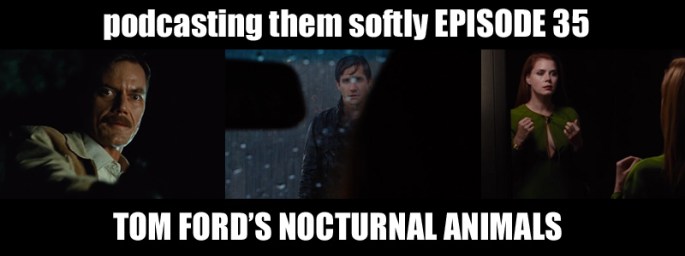
Join Frank and Tim, as they discuss one of the very best films of the year, Tom Ford’s NOCTURNAL ANIMALS!
Join Frank and Tim, as they discuss one of the very best films of the year, Tom Ford’s NOCTURNAL ANIMALS!
 Tim and Nick were delighted to talk with Dan Mirvish, independent filmmaker and co-founder of the infamous Slamdance Film Festival. We discuss his entry into the business, how Slamdance came about, and his new book, The Cheerful Subversive’s Guide to Independent Filmmaking, which is a must read for any up and coming auteurs.

This truly is a remarkable film. It is made with so much delicate care and craftsmanship, the entire two hours and nineteen minutes is fluid and seamless. It’s the picture that feels like Denzel Washington has been working his entire career to not only make, but perfect.
Set in a dilapidated Negro ghetto in 1954, Washington is the tough and oblique patriarch of a family suffocated by their hopes and washout of the American Dream. Viola Davis not only gives her career best performance, as Washington’s steadfast wife, she easily gives one of the best performances in recent cinematic memory.
While the performances and Washington’s perfection behind the camera are a sight to behold, the cinematography by Charlotte Bruus Christensen, production design by David Gropman, and editing by Hughes Winborne are so perfect, they go unnoticed. As the film progresses, whether it is a performance, an aesthetic, or a technical aspect, they work in such unison that nothing stands out, the score does not out perform the editing nor does the writing outshine Davis.
The narrative strikes a hidden chord between being timeless and culturally and politically relevant. It’s a tough story about a (black) working class family that deals with the conventional setbacks of life, yet they have their own uniquely complex set of hurdles that are undoubtedly self inflicted.
FENCES is truly the epitome of a Best Picture. Everything, and I mean everything, is perfected in the film. It has all the ingredients to be that Best Picture, but what makes the film surpass the run of the mill, end of the year Oscar bait, is at its core it is filled with an unmatched amount of heart about what it is to be a family.

The deconstruction of the alpha male has never been so fierce as it is in GLENGARRY GLEN ROSS. The entire film is one pitfall after pitfall of brazen machoism being shed, and the true colors of all the characters are blatantly glowing by the end of the film. They are men who strive to be the best, without having any idea what that really means.
David Mamet is one of America’s most seminal playwrights, and James Foley has always been a filmmaking champion in regards to slow burning character studies. Mix both these auteurs with the greatest cinematic ensemble ever, and what we have is a masterclass of filmmaking in any and every aspect possible.
The blistering dialogue and fiery performances are so powerful that after each dialogue exchange we’re left completely gobsmacked by what we’ve just witnessed. Regardless of how many times you’ve seen the film, how many times you’ve quoted Alec Baldwin’s punchy lines; the film is still as fresh and potent as your first viewing.
The film strikes a very fine balance bewteen tearing down the archetypal 20th century man, yet shadows as a cautionary tale of how hollow and empty all these characters are. Beneath the ego and big talk, these are all men who have put up the ultimate eminence front (it’s a put on). They are all incredibly sad and broken people, who have lived lives of emptiness, regardless of the charade of their salesmen banter.
This film remains the benchmark for an acting ensemble. Jack Lemmon, Al Pacino, Alec Baldwin, Ed Harris, Alan Arkin, Kevin Spacey, and Jonathan Pryce all feed off each other so well, it is an awesome experience to absorb. There have been fantastic ensembles before this film and after this film, but there will never be an equivalent calibre of actors together on screen ever again.
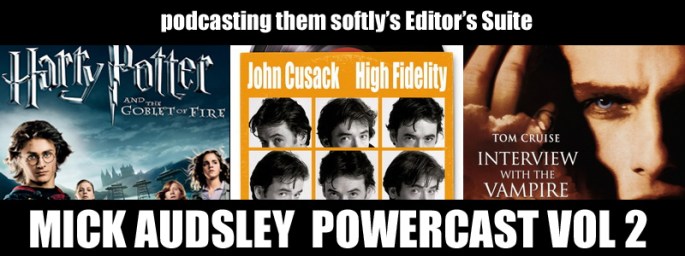
Join Nick and Tim with volume 2 of chatting with feature film editor, Mick Audsley!
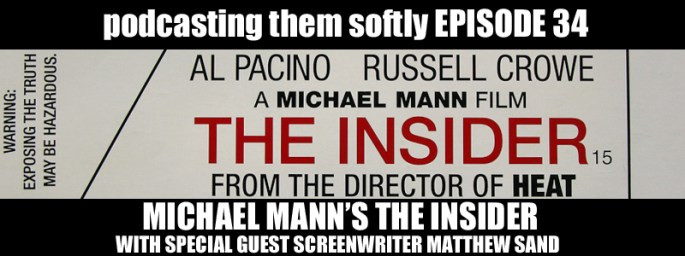
 Join Nick and Frank with returning guest, screenwriter Matthew Sand (DEEP WATER HORIZON), to discuss Michael Mann’s THE INSIDER as well as the process between writing fiction and non fiction. We also discuss at length the genre of topical films, and how beholden the writer should be to the truth, and how much creative freedom the writer and film should take.
I.T. is that hard R thriller that has dark twists and turns, creating a rewarding moviegoing experience in a genre of film that has been sorely lacking. The film packs a punch and takes itself places that are as shocking as they are refreshing in an era of oversaturated gloss and CGI.

Clocking in at a lean 95 minutes from filmmaker John Moore and screenwriters William Wisher and Dan Kay, the film doesn’t overstay it’s welcome, and tautly finishes to a mysterious, yet rewarding ending.
Pierce Brosnan has gone through an interesting period post Bond. He’s dabbled a little in the spy/action genre, but he’s also stepped back and played many anti-Bond roles, and this film is certainly one of them. Brosnan takes on the role, in a such a restrained and psychical way, he throws enough shade that leaves us questioning the integrity behind that dashing and dapper businessman.

The narrative wraps itself in the culturally relevant world of cyber attacks and lack of personal privacy and security in our post 9/11 world. Brosnan plays a self-made aviation tycoon who in personal financial strain, opts to make his business public, launching a new app that is essentially Uber for the ultra rich seeking quick travel via private jets.
His business and personal life are flipped, as he becomes victim to a sociopathic intern who turns any and all smart devices that Brosnan and his family use against them. It’s a slick story, that knows the terminology and world it lives in, without ever running the gambit of ever over explaining anything.

Perhaps the strongest suit of the film is an airtight screenplay, and a Tangerine Dream esque score by Tim Williams that creates an atmosphere of digital age threat and paranoia. I.T. is a very good adult oriented thriller crafted so well, with such attention to detail, that it’s a film that stands incredibly high on its own originality.
I.T. is currently streaming on Netflix.
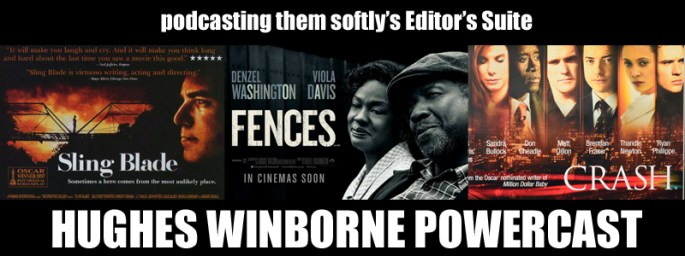
 Podcasting Them Softly is honored to present a discussion with feature film editor Hughes Winborne! Some of his credits include the Marvel blockbuster Guardians of the Galaxy, The Help, The Pursuit of Happyness, The Great Debaters, and Sling Blade. He won the Academy Award for his editing work on the 2005 film Crash, and this winter, his latest project, Fences, re-teams him with director and star Denzel Washington — the film looks absolutely fantastic and we can’t wait to see it. We hope you enjoy this informative and entertaining chat where we found out more about Hughes‘ process, his experiences, and some his inspirations. Enjoy!
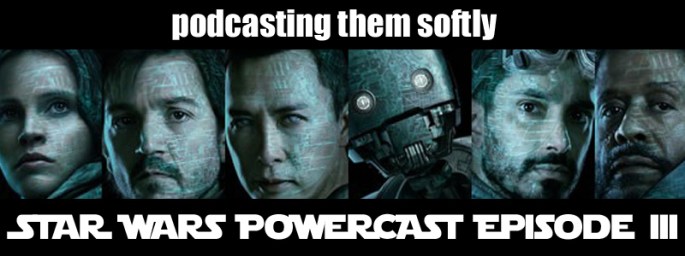
ATTENTION SPOILERS. SPOILERS. SPOILERS. Frank and Tim FINALLY did another STAR WARS podcast. This time we speak about the new standalone film, ROGUE ONE: A STAR WARS STORY. We dive in deep about the emotional impact, the cinematic influences, and where Disney takes the STAR WARS brand from here!
ROGUE ONE: A STAR WARS STORY is the most important film to enter the STAR WARS canon to date. While the initial reaction and hype has this billed as one of the best films of the series; that’s a bit of a loaded statement. Yes, the film is fantastic, it’s unlike anything we’ve seen from the cinematic universe before, but after the shock and awe wears down; it will still be a top tier film, but somewhere behind EMPIRE STRIKES BACK and A NEW HOPE. ROGUE ONE is important for an array of reasons, but most importantly the films serves as a bridge between the film series as well as other mediums of the STAR WARS canon.
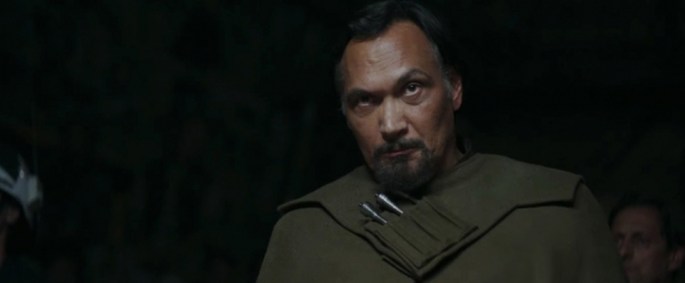
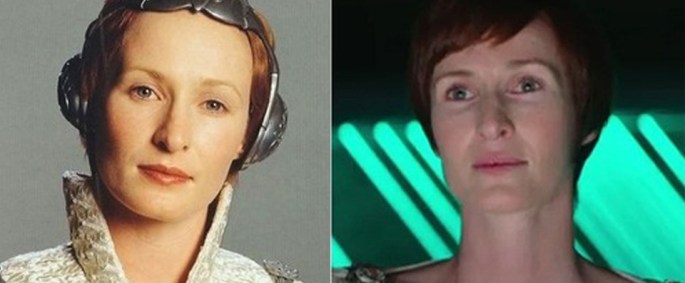
Jimmy Smits’ reprisal as Leia’s father and Rebel leader highlights a very important purpose. Smits authenticates the prequel trilogy for those diehard fans that have disdain and immediately dismissal of them. Smits as well as the reprisal of Genevieve O’Reilly as Republic Senator and successor to Bail, Mon Motha, legitimizes aspects of the prequels, as well as Disney further proving that they are not going to shy away from Lucas’ “controversial” trilogy. O’Reilly would have been easy to recast, most of her scenes were cut from REVENGE OF THE SITH, and she isn’t particularly a well-known actress to the populous outside of STAR WARS diehards. Both of these characters biggest roles can be found within the CLONE WARS series, were both parts are voiced by different actors.
Both these actors are great in their respective roles, and are given much more to do than any of us originally thought. Smits has his most lengthy role to date, as does O’Reilly; and they are both important aspect of Disney’s bigger picture of what they plan on doing moving forward beyond the safe haven of the saga films. Along with Vader and the CGI reconstructed Peter Cushing as Grand Moff Tarkin, the most important job these actors had was anchoring the film within the universe that so many of us hold so dear.
Forest Whitaker’s turn as Saw Gerrera, the Colonel Kurtz esque defrocked Rebel, might be the boldest move yet by Disney. The origins of Gerrara lay within George Lucas’ concept for a live action STAR WARS show titled UNDERWORLD, an unproduced project that was originally announced in 2005. Gerrera then made his first appearance in a four episode arc of the fifth season of animated series CLONE WARS. Gerrera was a very grey shaded resistance fighter who used whatever methods possible to fight off the Separatists.
When it was first announced that Whitaker was playing a character we’ve already seen in the SW universe, rumors swirled of Captain Panaka from THE PHANTOM MENACE, Dash Rendar from the non-canonized novel SHADOWS OF THE EMPIRE. Then it was quickly announced who he was playing, and many of us quickly booted up Netflix to rewatch the four episode arc. So, why did Disney do this?
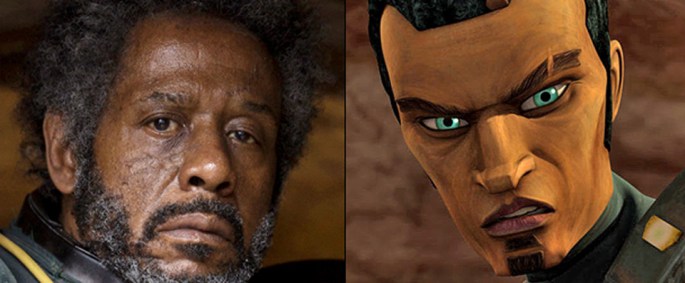
Validity.
By doing this, Disney opens the door to make cinematic crossovers. Bring characters to screen who we’ve seen before in novels, animated TV shows, or comics. It was heavily rumored that bounty hunter Cad Bane was going to make an appearance in ROGUE ONE. That ended up not being the case, but I imagine we’ll see him and other fan favorites (Ahsoka, Hondo, Thrawn) make cinematic appearances in the near future.
Lastly, the inclusion of Gerrera was a very nice and symbolic gesture to the creator, George Lucas. In reality, Gerrera is an inconsequential character in the SW universe. His part in the film could have just as easily had an original name with no prior connection, and it would not have lessened the impact of his character in the slightest. For as ridiculously controversial the creator, George Lucas, has become amongst SW diehards, Disney showing him direct tribute with the addition of Saw Gerrera was an incredibly gracious gesture. After all, without George Lucas, we wouldn’t have ROGUE ONE.
 Podcasting Them Softly