Hope everyone enjoys!
Author: Frank Mengarelli
I have always been Frank.
Frank’s Thoughts on Mark Pellington’s I MELT WITH YOU 2011
I am a Man
Now I remember
I am divorced
I can’t get hard
I love my wife
I don’t love her
I lie to myself
My mother is dead
I’m rich
I’m a failure
We forget
I am the bread winner
I am married
I am a failure
She left me
I’m under 50
I’m just like my father
I’m nothing like him
I’m over 21
I can fuck
My kids need me
I’m losing my hair
I need glasses
I am afraid
I love you
I MELT WITH YOU is one of my absolute top five films of all time. I have two top five films, one made up of my favorite films, and one made up of the best films that I have seen. I MELT WITH YOU is in both top fives. I would like to preface this post by saying that this film is incredibly hard to watch. It is an in your face, fast burning film that does not pull any punches what-so-ever, and the film takes dark leaps that you don’t think it will. This is a film, that last time I checked has an 11% on Rotten Tomatoes and was dubbed the worst film of 2011. That’s all bullshit. The problem with I MELT WITH YOU is that the director, Mark Pellington (ARLINGTON ROAD, THE MOTHMAN PROPHECIES), uses this film as a mirror, and holds it inches from your face. What you see in the reflection is real, raw and the unapologetic truth about who we are, and what we hide from others and ourselves.
I equate the film to being very THE BIG CHILL esq, the plot of the film is about four middle aged friends, Richard (Thomas Jane) who is a “failed” writer and now a high school English teacher, Jonathan (Rob Lowe) a high-end general practitioner who is taking money in exchange for prescriptions, Ron (Jeremy Piven) a fraudulent investment banker, and Tim (Christian McKay) an artist who has lost his soul mate in a crash he caused, and these four have gotten together for a weekend every year since they all graduated college together. The weekends are loud, drug induced and partying that makes THE WOLF OF WALL STREET look like a PG rated film.
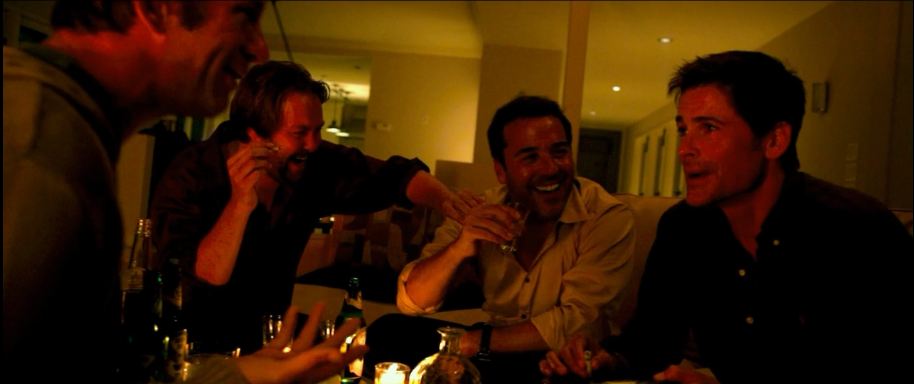
The first act of the film is laugh out loud funny, with the four friends partying their ass’ off and reminiscing about old times. The chemistry the four actors have is absolutely paramount, and looks and feels incredibly genuine and the comradely overflows through the screen, and you feel like one of them, hanging out, taking pills and drinking whiskey. It’s all fun and games. A great time.
There are many messages, themes and realities this film conveys, but at the bottom of all that is the foundation of love. These men love each other more than anything, it’s a bond that is not easily achieved, and can never be broken. They love each other, regardless of their individual failures and successes, it doesn’t matter. The four of them are always there for one another. Nothing will ever change that. Nothing will ever change the love and support they have for one another, until it does.

The second act of the film takes an incredible, and I mean incredible, dark turn. Everything in the film is turned upside down, causing the characters to deal with the reality of what happened, and the bigger picture of the reality of a pact they made when they graduated college together. This causes them to reexamine who they are, what they’ve become, and how far away they are from who they once were. How they didn’t stay true to themselves, and became hypocrites.
Richard (Jane) is the realist and the leader of the group. He was in love once, it didn’t work out, and spent the rest of his life having sex with a vast amount of women. Richard is the idealist, reminding the rest of the friends who they once were, who they have become, and why they haven’t stayed true to themselves, and each other, and he reinforces the pact they made, signed with their blood.
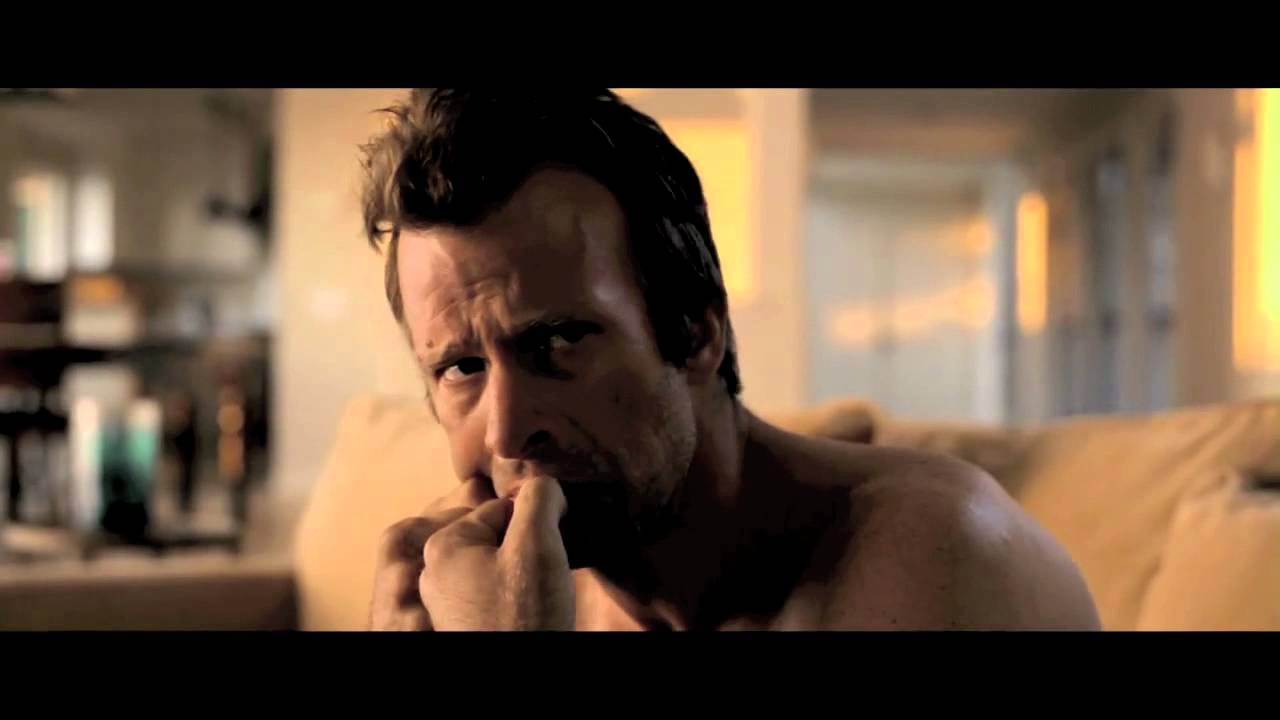
Jane gives his finest performance, and that is saying a lot, from BOOGIE NIGHTS to THE MIST, he is always incredible and has an emotional depth and range to bring any character he plays to life. Fleshes them out, and makes them real. Jane’s affability rolls over into his character, where he’s the “cool” high school teacher. His students like him, and we like him.
Rob Lowe gives his finest dramatic performance as Jonathan, the broken doctor who set out to help people, make them better, give them hope. He turns into the biggest hypocrite of all, and sells prescriptions to his wealthy patients, and loses himself, and the oath he took, and somewhere before that, loses his wife and son. His wife is remarried and their son calls the stepfather Daddy. Jonathan is a broken man who has lost his way, much like the rest of them, slowly going through life without any progressive momentum.
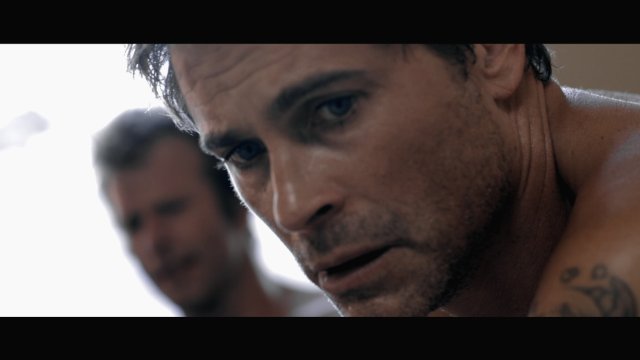
The four actors: Jane, Lowe, Piven and McKay give soul bearing performances. I can’t think of many ensemble casts that not only provide the best they can be as an actor, but also showing us an incredible emotional range. This film is truly special, and it is remarkable in every way possible. I’ve been watching films seriously for the past fifteen years, and there has not been a film that is grounded in reality and as heavy, deep, moving and self reflective as I MELT WITH YOU. After all this film is about the purest form of love, and these four love each other so much, they stop the world and truly do melt with each other.
This film is available to stream on Netflix and Amazon Prime.
Episode 4: Steven Soderbergh’s KING OF THE HILL Top five Sam Rockwell and Keira Knightley
Enjoy everyone!
Episode 3: Bob Fosse’s STAR 80 and top 5 of Eric Roberts and Ellen Barkin
Episode 3 guys! Enjoy!
Frank’s thoughts on STAR 80

STAR 80 – 1983. Dir. Bob Fosse. With Eric Roberts, Mariel Hemingway, Carroll Baker, and Cliff Robertson
In STAR 80 Bob Fosse chronicles the true story of the short rise and fall of Playboy Playmate Dorothy Stratten. She was the embodiment of a Playmate: wholesome, naive, and the perfect girl next door. Mariel Hemingway (granddaughter of Ernest) plays Stratten and Eric Roberts, in a star making performance, portrays Dorothy’s boyfriend turned husband Paul Snider who kills Dorothy (I didn’t spoil anything, it’s told to you in the opening). Snider is a self obsessed small time hustler who is always looking for the perfect opportunity to strike it big. Snider accidentally stumbles upon Stratten while she’s working at a Dairy Queen in Vancouver and it’s love at first sight for Snider. Their relationship soon blossoms as Snider spoils Stratten with attention and lavish gifts. Snider then begins taking nude pictures of Dorothy, and sends them to Playboy. Dorothy is soon after summoned to the Mansion but there’s one road block – her Mother (played to perfection by Carroll Baker). Snider pleads with Mrs. Stratten to allow her daughter to travel to the Playboy Mansion and become a Playmate. She refuses, because she can see through Snider’s phoniness. She knows that Snider’s love for her daughter is more opportunity than real love. The film has interviews with characters from the film, chronicling Dorothy and

Snider’s life (as Fosse previously did in LENNY) and the film cross cuts between Dorothy’s story and to current time where we see Snider naked in their bedroom covered in blood. The film itself is edited much like ALL THAT JAZZ with Alan Heim returning as Fosse’s editor. The film is a pleasant mixture with the way it flows between ALL THAT JAZZ and LENNY. The murder scene consists of Snider speaking a monologue of contempt, self loathing, hatred and jealously of Dorothy’s stardom. It’s very Shakespearian the way the film allows Roberts to convey his emotions to the audience, allowing him the inner dialogue with the audience while he stands alone, bloody and naked in the room he murdered Dorothy in. It reminded me much of Richard III or Iago’s sadistic monologue from OTHELLO.
Eric Roberts brings down the house in this film.
STAR 80 is a true story, some events and characters are slightly fictionalized which gave the studio a blanket to help prevent a lawsuit, which didn’t stop Hugh Hefner from suing for deformation of character. Veteran actor Cliff Robertson (Uncle Ben from Raimi’s

Spiderman franchise) plays Hugh Hefner. Robertson doesn’t necessarily look like Hefner, but his mannerisms and delivery tricks you into thinking it really is Hefner. The way Hefner is portrayed is that of a father figure, yet he’s just as much of an opportunist as Snider. Fosse explores, as he did in LENNY and ALL THAT JAZZ, the dark side of show business and humanity. He glamorizes it to a certain extent, but the pitfalls that are shown bring the film to a much darker and deeper emotional feel.
As Dorothy expands her horizons with Playboy and films, Snider begins to be left in the dust. He’s Dorothy’s self proclaimed manager and is sucking money from her to buy cars, houses and other materialistic items. He buys a vanity license plate for their new car entitled: Star 80. Snider is convinced that he and Dorothy is the new power couple and proposes marriage to Dorothy. Hefner is skeptical of Snider and sees him as a low level pimp and hustler and warns Dorothy about him and his intentions. As Dorothy’s star rises, Snider is convinced that he is rising along with her – until he realizes that he’s not ascending with Dorothy and he begins to become jaded and bitter.
Dorothy’s huge break comes from film director Aram Nicholas (who is a fictionalized version of Peter Bogdanovich director of THE LAST PICTURE SHOW and PAPER MOON) who is played by Roger Rees. As Dorothy spends more time in New York with Aram and less time with Paul who’s still in LA, she begins to see things more clearly. She is sucked in by Aram’s thoughtfulness, charm and attention. She begins to drift closer to Aram and further away from Paul. Paul begins to suspect something is amiss, and hires a private investigator and buys a gun. The way Bogdanovich is displayed in the film is much like Hefner and Snider. They are sweet men at first, and then they begin to manipulate Dorothy for their benefit and personal gain. Quick note: Bogdanovich was dating Dorothy at the time of her death, and then proceeded to marry Dorothy’s younger sister (of whom was 29 years younger than Bogdanovich) after Dorothy’s death. This is the main reason that caused the fast decline of Bogdanovich’s career.

Dorothy leaves Paul and moves in with Aram. She files for divorce and Aram begs Dorothy not to see Paul anymore. She agrees, but gets sucked back in and goes to see Paul one last time to propose him half of everything she’s worth so they can finalize their divorce. Dorothy returns to her old home with Paul, and the entire home is covered in pictures of Paul and Dorothy. Paul is at his weakest and most vulnerable point. He begins to beg Dorothy not to leave him, he threatens to kill himself (as I watched this scene, do we all think this when we are at our weakest?) and Dorothy begins to feel sorry for him, she touches him and he pushes her. He becomes spiteful and angry and yells at Dorothy with envious anger. The bedroom in the film that is the scene of Dorothy’s death is that actual bedroom she was murdered in.
It’s interesting how the film is structured; it’s almost as if Snider is the lead character. During my research of the film, I found an interview with Eric Roberts where he stated that Fosse told him that he decided to make Snider the main focus of the film, because if Fosse himself wouldn’t have become famous – he would have become Paul Snider. Damn Fosse – that’s honesty!
The climax of the film is much like ALL THAT JAZZ, but where as climax is a beautiful sadness; STAR 80’s is graphically violent and disturbing. This film should have been nominated across the board. Best Picture, Director, Adapted Screenplay (Bob Fosse for basing his film on Theresa Carpenter’s “Death of a Playmate” article), Best Actor: Eric Roberts, Actress: Mariel Hemmingway, Best Supporting: Cliff Robertson and Carroll Baker, and Alan Heim for Best Achievement in Editing. This was Bob Fosse’s follow up to ALL THAT JAZZ and his final film. ALL THAT JAZZ will always remain as Fosse’s masterpiece and as a filmmaker Fosse never had one misstep, and STAR 80 is my new staple for a filmmaker’s swan song. What makes this film even more interesting is that Fosse and Hefner were friends in real life, and there was a rumored love triangle between Fosse, Hefner and Stratten. As I said earlier Hefner sued for the way he was portrayed in the film. This film banished Fosse and Hefner’s friendship.
What I love about Bob Fosse is that he just doesn’t give a fuck.
Episode 2: Michael Mann’s HEAT and Top Five Mark Ruffalo and Jessica Chastain performances.
Episode 2 is now up. Thank you everyone for listening! Hope you enjoy!
Frank’s Thoughts on Michael Mann’s HEAT
When it comes to Michael Mann, who is one of my absolute favorite filmmakers, his most epic film is undeniably HEAT. When it comes to overt machoism mixed with an incredibly gritty street film, it doesn’t get any better than this film. Only Michael Mann could bring together Robert De Niro and Al Pacino in a film like this.
Playing off the clout of Pacino and De Niro, Mann creates this layered film, showing two men who are essentially the same, yet took two different life paths. Both men have a foundation of honor and respect, and live by the code of the street, yet their paths have crossed, and there will only be one that comes out on top.
The fact De Niro and Pacino share two scenes throughout this long film, further solidifies Mann as one of the world’s best living filmmakers. Mann also used the “less is more” technique in my favorite film of his, MANHUNTER. In that film, Mann rarely shows us Hannibal Lecter, creating a more effective character. The fact that Pacino and De Niro share two scenes, and in the grand scheme of the film they are rather brief, works tremendously well. It all builds to a shattering climax between the two of them.
Mann’s authorship is making a visual striking film using overt color tones to each of his films. Mann loves color, because he knows with his audience, everything is seeing. With HEAT, the entire film is layered in blue tones. There are not any vibrant shades of blue, the blue tones are dark, and darker.
In this film, what do the blue tones tell us? How do they make us feel? The way I view the film, through different shades of blue, are two major themes. Masculinity and authority.
Al Pacino, Robert De Niro, Val Kilmer, Jon Voight, Tom Sizemore, Danny Trejo, Dennis Haysbert, Ted Levine, Henry Rollins, Tom Noonan, Wes Studi and William Fitchner are all masculine actors, and all bring gravitas to this film. In HEAT, we’re living in an alpha male world, and there is little room for anything less. From the start of the film, we see an incredible armored car robbery by bad men in hockey masks, adding to their size.
Cut to Pacino’s introduction, where he’s making love to his wife. Pacino is the alpha in his relationship, and is apathetic to his marital problems, because where his fire lies is with other alphas. Whether working with them (Levine, Wed Studi) or chasing them (De Niro and his crew).
Val Kilmer’s marital problems parallel Pacino’s. I imagine Kilmer being the younger, more flamboyant alpha. Of course, all of them are seen in different shades of masculine blue.
Authority is the other major theme, not necessarily the authority of law enforcement, but authority of a code of the streets. Honor, respect, loyalty. While these two groups of hard men are on opposite sides of the law, they both live by the same code, and have nothing but admiration and respect for one another.
Pacino and De Niro are the same man, but on flip sides of the same code. They both know who they are, and what they want, and they’re secure in it and admire one another for it.
I have much more to say about this film, and if you’re reading, you’ll just have to wait for our next podcast this Sunday.
First Podcast up! Episode 1. Killing Them Softly, Top Five William Hurt/Glenn Close
Our very first podcast is up for publication guys! Hope you enjoy it!

