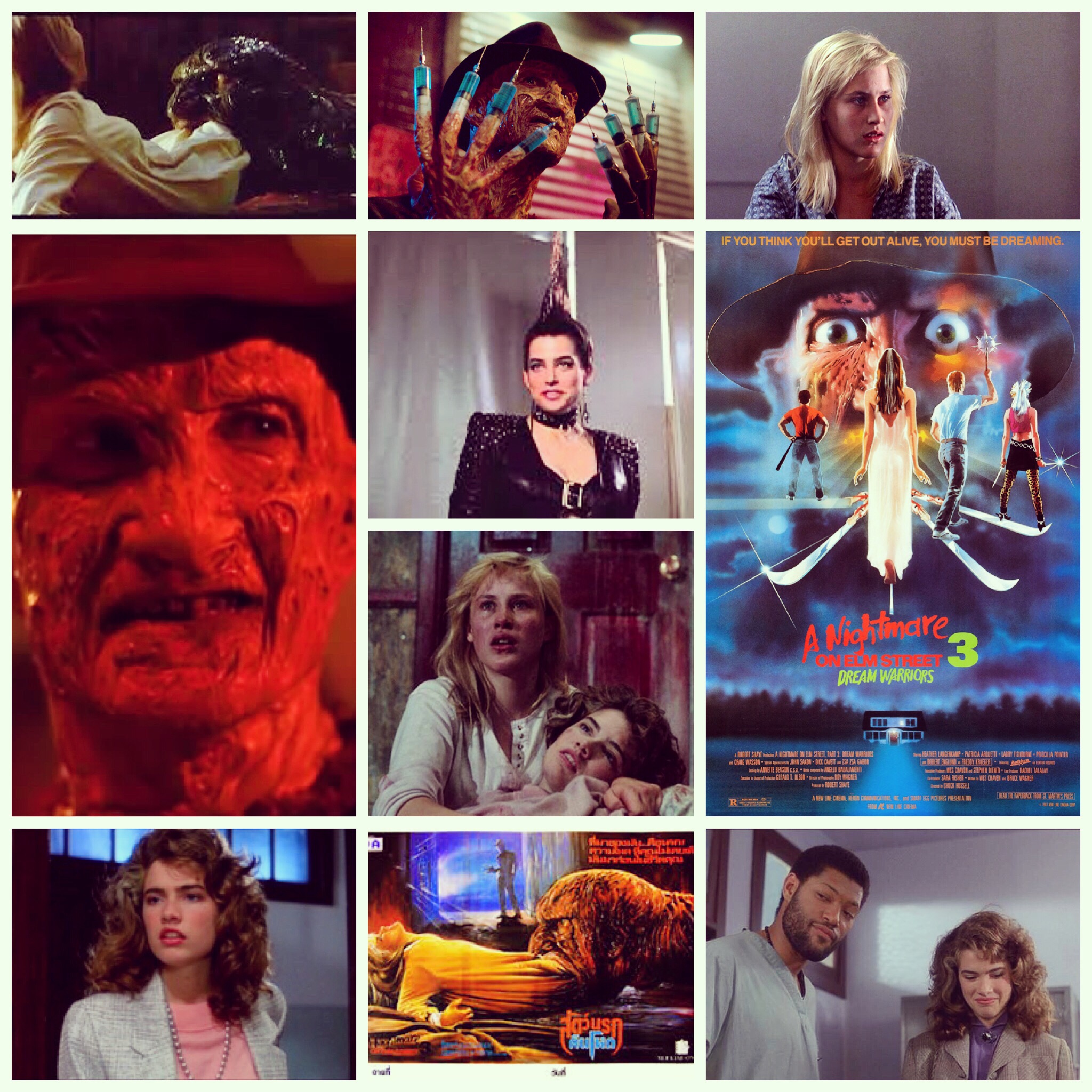
Although billed as pure horror, A Nightmare On Elm Street 3: Dream Warriors strays into fantasy as well and is a pure blast of fantastically diabolical special effects when it’s working in either genre. Around the middle of the franchise marks the place where Freddy Krueger began to turn into more of a cartoonish wise-guy from his original mainly silent phantom, but he’s still pretty foreboding here, as Robert Englund puts energetic work into both his funny and frightening sides. The cool thing about this flick is it’s ‘Goonies’ style aesthetic; several youngsters, committed to a mental facility for their insomniac ‘delusions’, do dream battle with Freddy, and it’s one of the few instances in a slasher film where victims get to fight back in some capacity, and as a unit. Patricia Arquette is wonderful as Kristen, leader of the pack and a fiercely vulnerable spirit, while a young Laurence Fishburne plays the kindly head nurse. It’s also a treat to see Heather Langenkamp return as brave Nancy Thompson, still out for Freddy’s head. The effects are dazzling, from Freddy’s remodelled syringe needle glove in one scene, to a giant pac-man version of his head attempting to eat a live person whole in another, it’s just imagination run wild in dreamland. The kills are still sufficiently gory too, if punctuated by his now classic growling one liners (“Bitch!”). It’s safe to say this is the best in the franchise barring the first film, it’s quite a bit of fun. Oh, and for a good hearty laugh, nothing beats the Dick Cavett/Zsa Zsa Gabor cameo featuring a priceless interruption from Freddy.
-Nate Hill
Author: natewatchescoolmovies
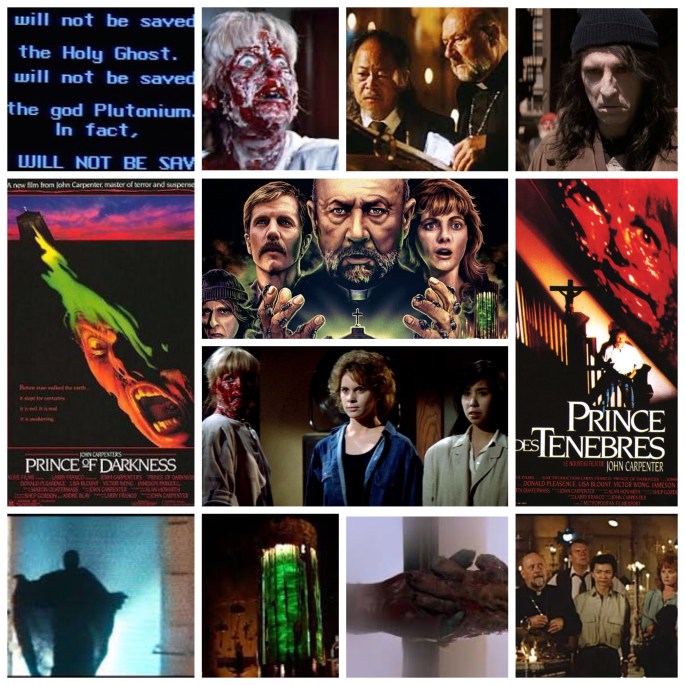
John Carpenter’s Prince Of Darkness
Trust John Carpenter to constantly subvert expectations, aim for innovation and simply just please the crowds throughout his career. Prince Of Darkness is, at first glance, a creaky ol’ fright fest, and it is that, but there’s also a cheeky little irreverent streak to it as well, a borderline atheist flourish that you wouldn’t normally find in a flick about summoning up the devil. Carpenter lays the atmosphere on thick, especially with a reliably spooky electronic score and a pace that burns slow and steady. Deep in the crypt of a church there lies a large glass vial containing swirling green matter, a pseudo scientific/spiritual cocktail that contains the “anti god”, a denizen composed of backward atoms that wants to break out and raise a little hell. Grim faced priest Donald Pleasence will prevent this at any cost, and hires a team of underpaid undergrads led by a crusty professor (Victor Wong) to research it, camping out in the church for kicks. You can imagine how this goes, and there’s a refreshingly old school ‘Body Snatchers’ vibe as various characters fall victim to the creeping dark forces. There’s also mind-stimulating, sci-fi ideas at work too though, including an intriguing time travel prospect and a deft little jab at religion via the story’s trickier elements. Carpenter, although hailed as a master of horror, is no simpleton when it comes to ideas, and he flexes his cerebral muscles nicely here. Ambient, gooey, smart, provocative, a terrific little fright fest that leaves you wanting more.
-Nate Hill
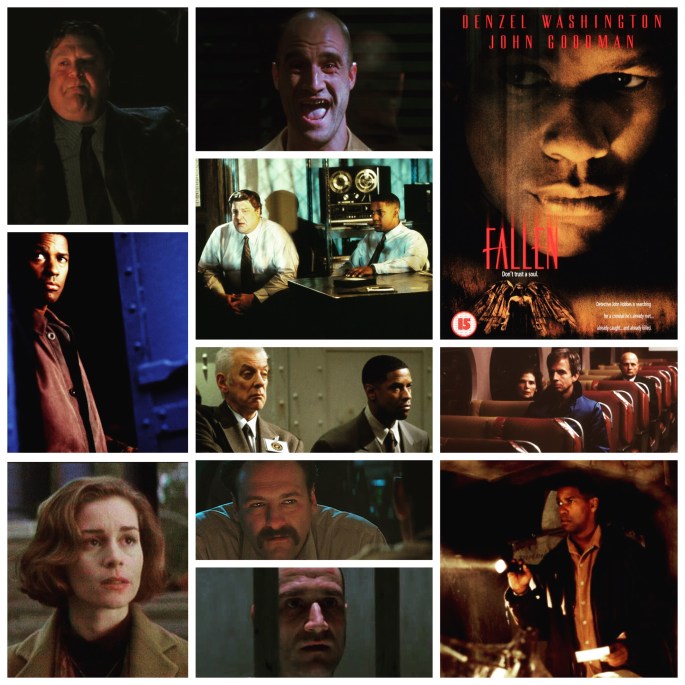
Gregory Hoblit’s Fallen

A demon angel. A Badass Denzel Washington. Tony Soprano singing the Rolling Stones. Creeping psychological dread. Browned, burnished production design. A deliciously mean spirited, ballsy twist ending. All this and more can be found in Gregory Hoblit’s Fallen, an atmospheric spook-house of a flick that gets tone, fright and suspense just right. Nestled in that sweet spot of the 90’s where detective stories often had a neat supernatural twist (The Prophecy is another dope one), it’s a film that demonstrates the power of storytelling and atmosphere done right, like a campfire tale that cops tell their youngsters. Denzel is Hobbs, a detective who oversees the graphic execution of serial killer Edgar Reese (Elias Koteas, terror incarnate), a monster he once caught. Case closed, right? Not so much. Soon after he kicks the bucket, one or more copycat killers show up, and once again the crimes happen under Hobb’s watch. Coincidence? Paranormal? It’s a neat, eerie game of cat and mouse with an antagonist who possesses a few unearthly methods of skulking around in the dark. Hobbs is helped by his two colleagues, salt of the earth John Goodman and hothead James Gandolfini, bumps heads with the obstinate police captain (Donald Sutherland), and runs into his foe at every turn, each time in a new vessel which gives the actors, right down to extras, an opportunity to have some devilish fun. Embeth Davidz is her usual withdrawn self as a woman with ties to the killer’s past, and watch for Robert Joy and Gabriel Casseus as well. Composer Dun Tan’s unearthly drone of a score compliments the drab shadows, oppressive nocturnes and threatening frames of the film eerily as well, creating a mood-scape that drips ambience. The end is an acidic kick in the nuts, and I admire a film that has the stones to chuck in such a shock tactic, embracing the dread that has been built up to that point with one last sardonic, hopeless cackle. Film noir to it’s roots, subtly mystical, a perfect one to settle down with as we move into the Halloween season.
-Nate Hill
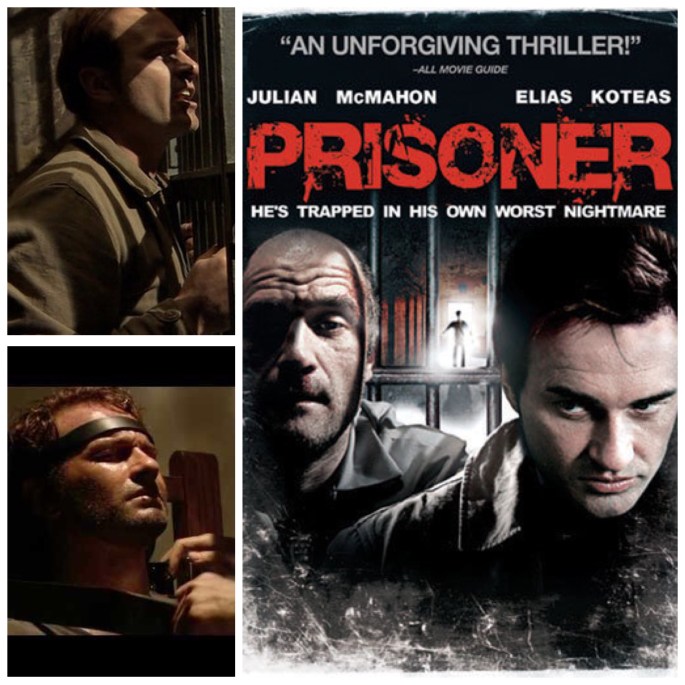
Indie Gems: Prisoner

Prisoner is a rough, disturbing little psychological thriller about a potential prison film, or rather the lonely location scouting sessions of controversial, much disliked Hollywood auteur director Derek Plato (Julian McMahon). He’s an arrogant prick of a dude whose newest film has him scouring abandoned penitentiaries for that perfect location. He’s alone, curiously, until all of a sudden… he’s not. Out of nowhere appears the mysterious Jailor (Elias Koteas), a frightening man who forcefully imprisons Plato, mentally berates him and forces the man to look back upon his long and quite unpleasant past in both the film industry and his disaster of a personal life, prodding him with intimate questions and accusations. This is essentially a chamber piece with the two actors being the only ones who appear in the present timeline, which is punctuated by hazy flashbacks to his life before. McMahon carries himself nicely, handling a well worn arc with charisma and giving off an authentically unlikeable vibe early on. Koteas is a beast of an actor and could scare the pants off of real life convicts, as such he steals the show with a brutal, galvanizing performance. Now, these types of films usually head towards conclusions we’ve seen before, and I won’t spoil anything except to say that although I was satisfied with the way the ending did rise up to meet the rest of the film, some won’t be and may find it cliched, but hey, that’s life. Nevertheless, it’s a taut little mind game by way of a character study, clocking in well under ninety minutes, a sleek little piece that leaves the viewer no time to lag or lolly-gag as it trundles along through it’s intense story beats. Cool stuff.
-Nate Hill
John Maybury’s The Jacket

The Jacket is a curiosity of a film, and didn’t stand out for many critics when it came out, but for some reason it’s stayed in my thoughts for years since and has become one of my favourites, of any genre. Moody, cold, desolate and sketchy, it’s an at once alienating and life affirming piece that puts you front and centre with the kind of crushing loneliness one must feel when the mind becomes broken, and then wraps us in a comfort blanket with the notion that forces unknown to us, and some not so mysterious (human contact is touched upon), one might extricate themselves to a better situation. Adrien Brody is confusion incarnate as haunted gulf war vet Jack Starks, a gaunt silhouette of a soul who suffered a head wound, the neurological fallout of which has left gaps in his perception of reality and a jagged sense of cohesion. Shipped off to a nightmare of a mental facility run by Kris Kristofferson, whose character almost certainly shouldn’t be left in the care of troubled minds as his idea of treatment consists of pumping patients full of untested pharmaceuticals and shunting them into a morgue drawer. This is where, by unexplained phenomena, Jack is able to bounce forward in time from his drab 1999 timeline over to a slightly less drab 2007, where he meets Jackie (Keira Knightley), a girl who might have ties to his past. The film sounds high concept, almost Sci Fi, but the way it’s composed is anything but. The supernatural elements are shown frankly and never overblown, gilding the psyche of the characters in a more internal, psychological fashion, especially when Brody is in that drawer and all manner of bizarre subconscious phantasms dance before his vision, before he’s whisked off to the future. All the characters but one are listless, withdrawn and somber, from Jennifer Jason Leigh’s sympathetic, forlorn doctor (she’s terrific here) to Kristofferson, who provides grizzle and a welcome depth where other actors would have gone the straight up Dr. Frankenstein cop-out route. Daniel Craig is the one live-wire who breaks the mold, and I enjoy his early career work before he calcified into the stoic 007 template. He’s a treat here as a rambunctious fellow patient and spirit guide to Starks. Appearances from Brad Renfro, Kelly Lynch and Stephen MacKintosh are notable as well. There’s a despondent, bleak blanket over much of the film, a coldness brought through in broad strokes by director John Maybury, whose distinct European approach to filming (multiple extreme closeups, subtle voiceover, trippy experimental effects) helps the mood really soak in. There’s a contrast at work too though, amidst the film’s themes of loneliness and unrest there shines through a deep emotional warmth, a reassuring grasp on the reins from Brody’s character to seize back a life that was taken from him, and wake up from his nightmare, with help from those around him. A willingness to keep going, to change the course of one’s life when it swerves off track, explored quietly, underplayed in harmony with the seeping discomfort hidden in many of the frames. Part Hollywood thriller, romance, art house flick and psychological horror show, there’s just no other film like it.
-Nate Hill
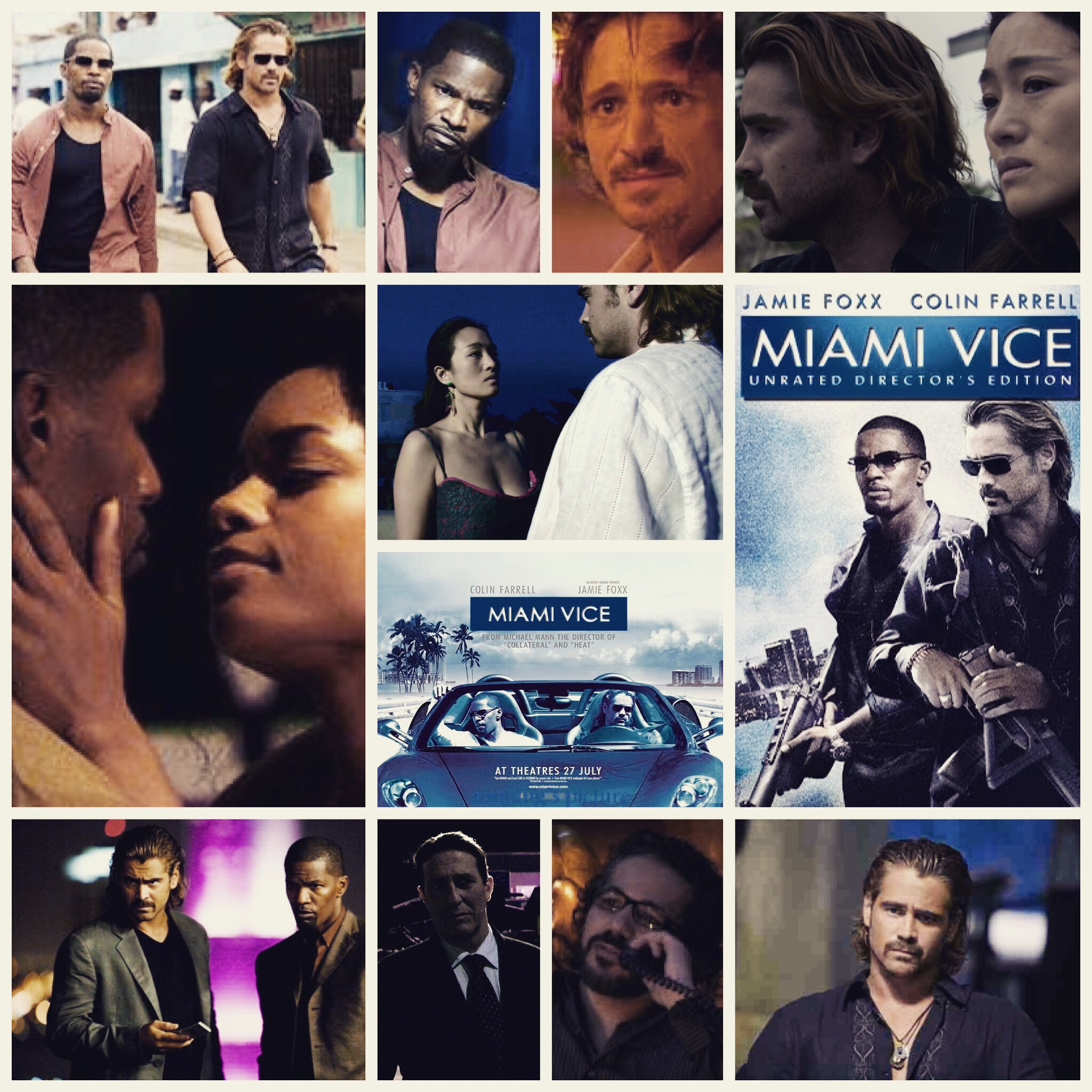
Michael Mann’s Miami Vice

Michael Mann’s Miami Vice is a lot of things. Hypnotic, sedated mood piece. Thrumming, rhythmic action picture. Deeply romantic. More going on underneath it’s surface than what you see onscreen. Masterful crime piece. Showcase for digitally shot film. Restless, nocturnal urban dream. One thing it is decidedly not, however, is anything similar to the bright ‘n sunny, pastel suited 80’s cable TV show of the same name, also pioneered by Mann, at a more constricted and likely very different point in his career. A lot can be said for the show though, it’s instantly iconic and was one among a stable of crimeprimetime™ (The Equalizer and Crime Story did their part as well) to give many actors their break, actors who we take for granted as stars today. Mann’s film version is a different beast entirely, a likely reason for the uneasy audience reception. Let’s be clear: it’s one of the best films of the last few decades. Colin Farrell and Jamie Foxx make a deliberately moodier, more dangerous Ricardo and Tubbs, and their high stakes undercover work is set against an austerely fatalistic Miami that bares little resemblance to travel brochures, let alone the tv show many were used to. Their story starts one of two ways, depending on whether or not you view the extended director’s cut, which is the version I’d choose as it sets up tone before throwing you into a hectic nightclub sting operation they’ve got going, which is hastily interrupted by the exposure of a CI snitch (John Hawkes in a haunting cameo). This sets them on course to take down a powerful Cuban drug syndicate run by a scarily calm Luis Tosar and hotheaded maverick John Ortiz. Farrell gets involved with a girl from their fold, of course (Gong Li is a vision), a romance that has grown on me over the years, while Foxx is involved with beautiful fellow cop Naomie Harris, yielding heart wrenching moments in the final act. Darting in and out of the story as well are Tom Towles, Justin Theroux, Isaach De Bánkole, Eddie Marsan, Barry Shabaka Henley, Tony Curran and Ciaran Hinds, all vital cogs in a well oiled, momentous machine that doesn’t drop it’s pulse for a second. Composer John Murphy piles on the mood with his mournful score, highlighting evening boat-rides, shadowy shoot outs and outdoor nightclubs with a top tier soundscape, while cinematographer Dion Beebe works tirelessly to get shot after shot looking mint, not an easy task with a film this energetic and particularly lit. From start to finish it’s to the point as well, Mann has no interest in useless exposition, mapped out play by plays or cheesy moments. Everything careens along at a realistic pace and you’re on your own if you can’t keep up or make sense of the off the cuff cop jargon. There’s stillness too though, in a torn up Farrell watching his love disappear on the horizon, Foxx looking on from beside a hospital bed or simply either of them glowering out at the skyline from a rooftop pulpit before things Heat up. Like I said, do the extended version and you’ll get that terrific opener to set you up, instead of being thrown in the deep end right off the bat. Either way though, Miami Vice is one for the ages.
-Nate Hill
B Movie Glory: Xchange

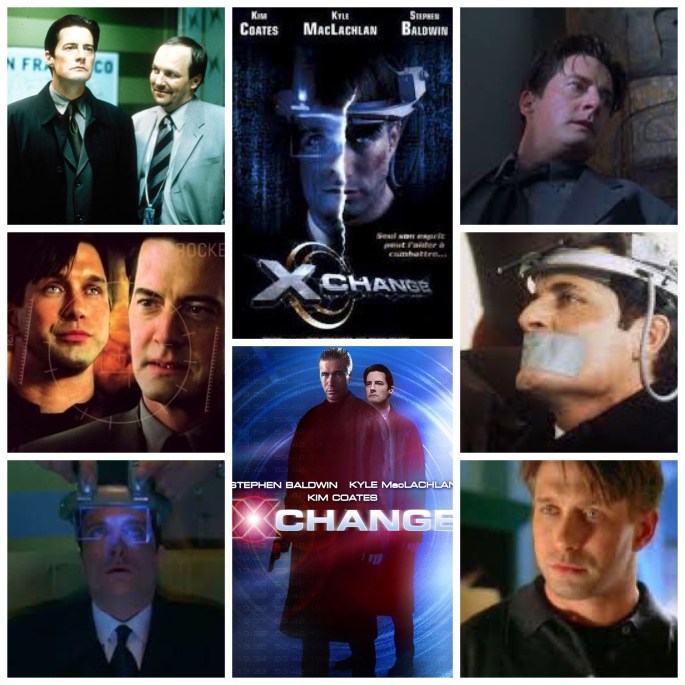
Imagine Face/Off, but cheaper and the ‘face off’ concept replaced by actual body/soul teleportation and you have Xchange, a fairly decent, pretty silly little low grade, high concept SciFi piece with some decent actors (barring Stephen Baldwin, that hamface) and a story that makes you think, albeit not too strenuously. Somewhere in the nearish future, a company called Xchange has patented a weird body mind swapping doohickey that allows instantaneous teleportation via swapping my out with another person’s body over at your destination. Of course a method like this attracts trouble, in the form of terrorist Kyle MacLachlan, who wants to do all sorts of mean things with the technology. A counter agent (Kim Coates) hunts him down, and a random blue collar worker (Baldwin) unwittingly gets caught up in the espionage, finds himself trapped in a clone’s body whilst the terrorist and agent switch places, and… yeah. Something like that. I’m sure the movie makes more sense than this review, but I may have been under the influence of certain things when I watched it. MacLachlan and Coates are a funny pairing, as one is obviously suited as the villain (Kim), while the other always seems to play upright types (shades of Agent Cooper here). Kyle gets to be mean for about five minutes right in the opening, before the ol’ switcharoo goes down and then Kim flexes his all too familiar, and always entertaining villain muscles, which seems to be a calculated casting choice by the powers that be. I remember this being not half bad, but any film with Baldwin (exception for The Usual Suspects) just sinks a bit simply by having him around to stink it up with his presence, although the other two do just fine with their roles. Definite late night cable background noise when everyone else is passed out.
-Nate Hill
The Hitman’s Bodyguard

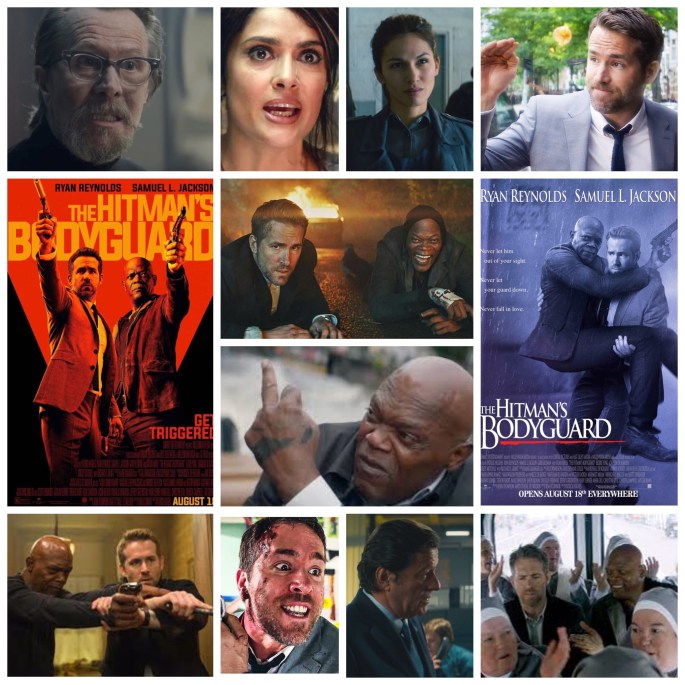
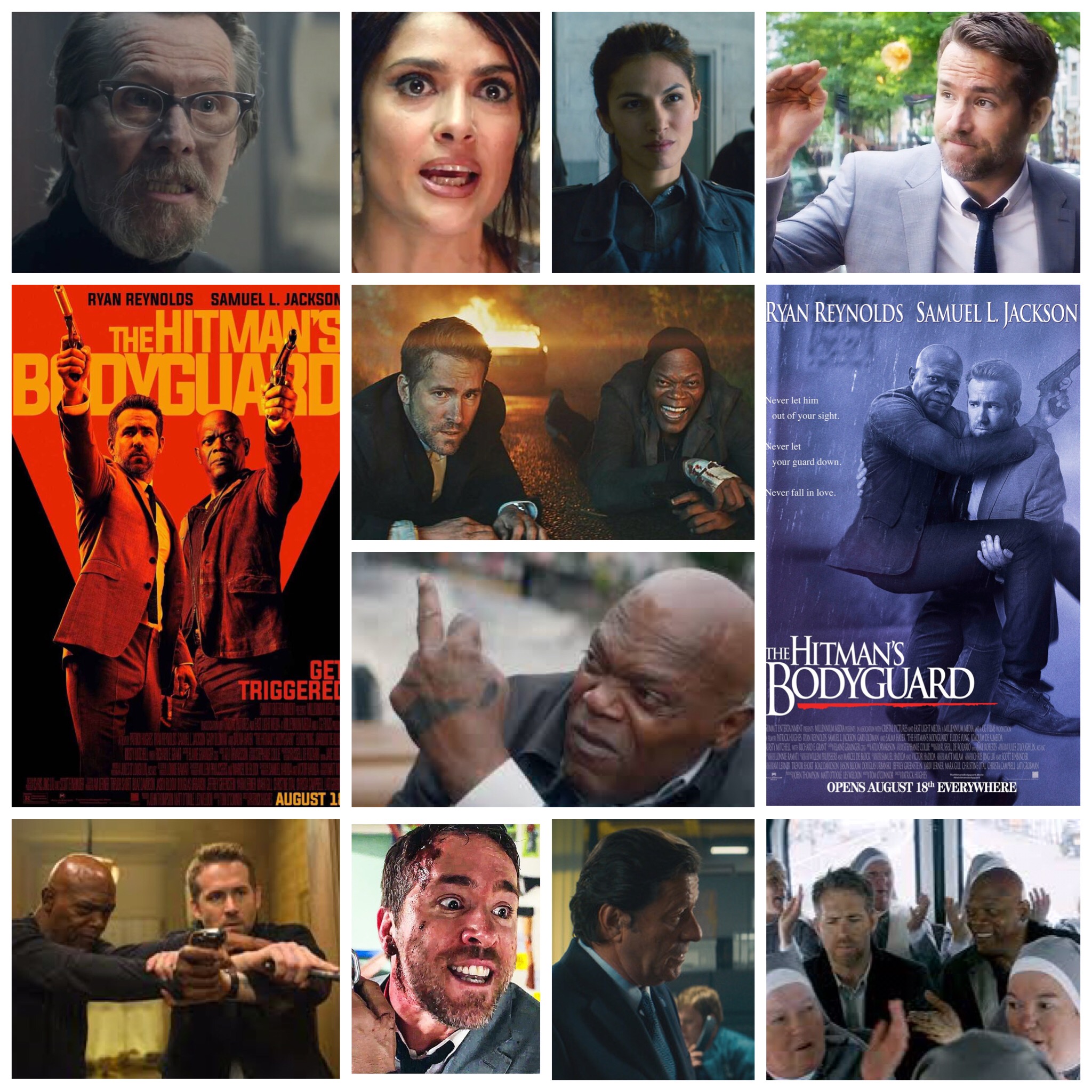
It’s refreshing to see that the R rated action comedy thrives in Hollywood, especially when there’s entries as balls out entertaining as The Hitman’s Bodyguard. I’ve read reviews saying that it’s a one joke affair, and while the crux of it does rest upon the cantankerous relationship between profane, shoot-from-the-hip contract killer Darius Kincaid (Samuel L. ‘Mothafucka’ Jackson) and uptight punk private security expert Michael Bryce (Ryan Reynolds), there’s plenty of enjoyable tomfoolery afoot as a sideshow to their circus of a jaunt across Europe. The pair are perfect actors for a buddy comedy, both overly colourful in their own work and boosting each other’s energy levels to the max when onscreen together. The serviceable writing is also given the shot of obvious improv between them, which helps a lot too. Reynold’s Bryce is reluctantly tasked with shadowing Kincaid and protecting him from endless hordes of goons and Interpol stormtroopers, out to get him before he testifies at the world court against the former Belorussian president, a tyrannical, pro genocide monster played by Gary ‘scary’ Oldman, who indeed gets a couple very frightening moments to chew scenery. Bryce’s former flame (Elodie Young) is an Interpol hotshot who he resents for maybe ruining his career, and Kincaid’s wife (a riotous Salma Hayek, spewing profanity faster than bullets) is in the clink to try and smoke him out. There’s welcome character actor Joaquim De Almeida as Interpol’s casually corrupt deputy director, and a coked out cameo from Richard E. Grant too, to round out the impressive cast. The action comes at you non stop, plus they’ve milked their R rating and then some, with countless headshots, impaling, explosions, bloodletting, car chases and one exhaustive fight scene set in a hardware store where Reynolds finds some gruesomely inventive uses for various power tools. There’s even a bit of poignancy among all the cavalier carnage, as we see a somber backstory for Jackson give a bit of weight to the character. His carefree reckless abandon causes delicious friction with Ryan’s buttoned up, flustered manner, and the two are flat out hilarious. ‘Get triggered’, boasts the poster slogan, and indeed this is a flick that couldn’t care who it offends or irks, free in it’s own hyper violent world of beautifully implausible, brutally excessive violence and set pieces, and it’s some of the most fun at the theatre this year so far.
-Nate Hill
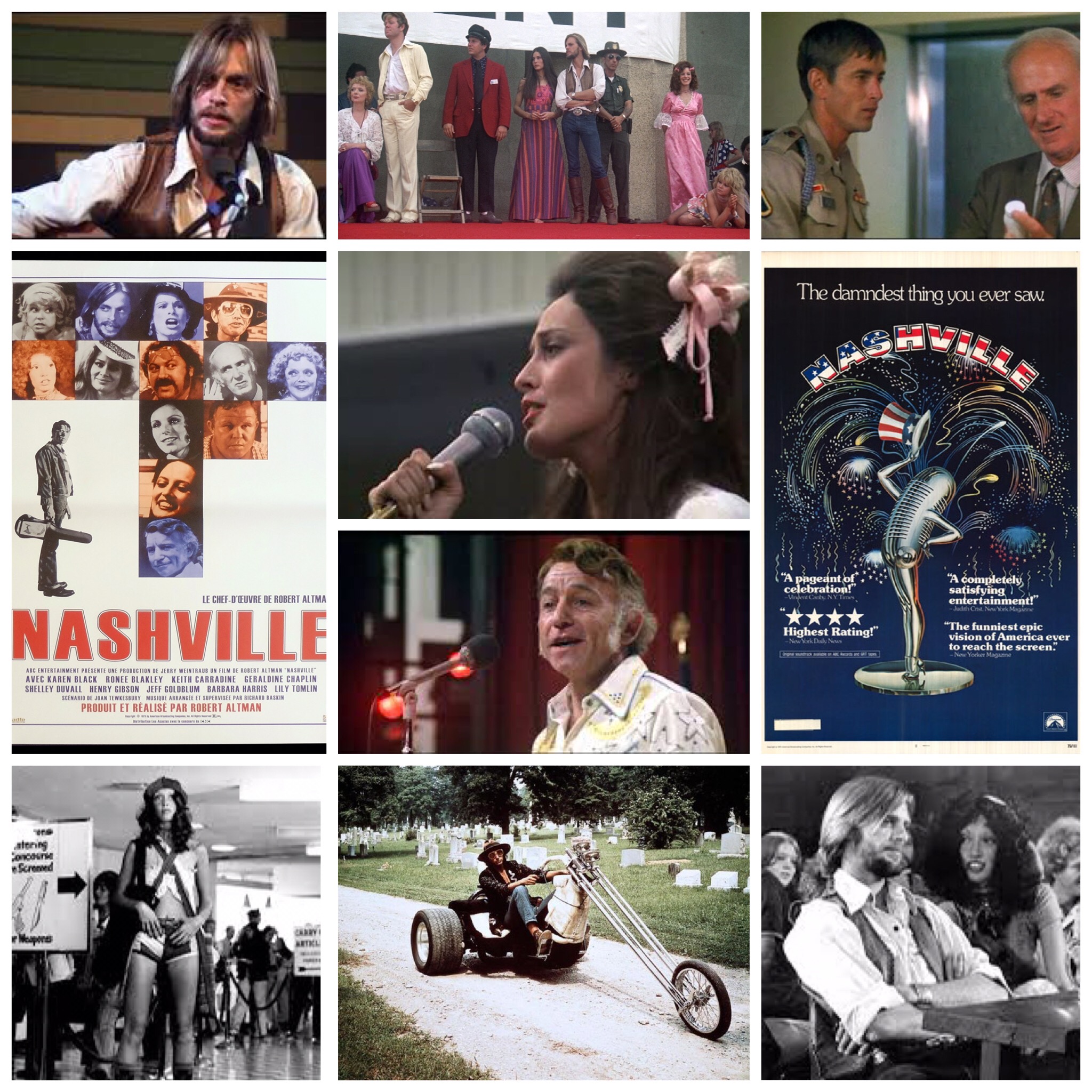
Robert Altman’s Nashville

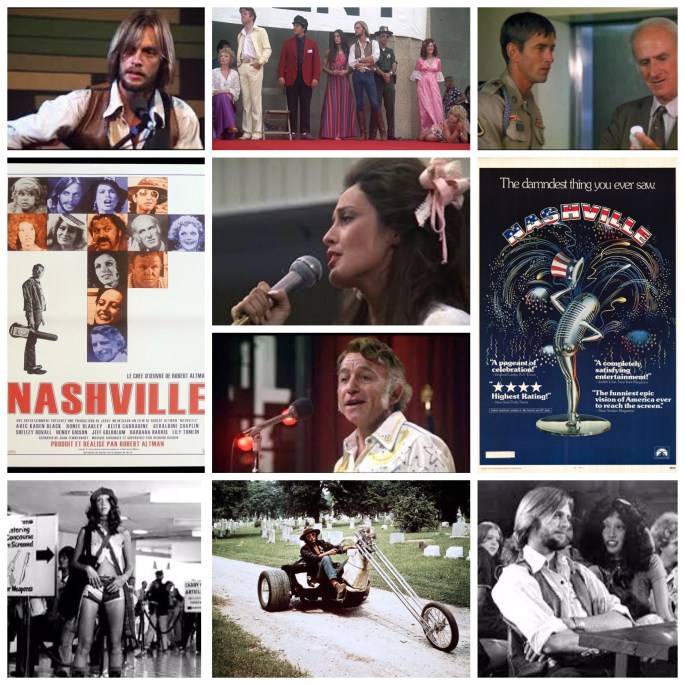
You wouldn’t think that a disorganized little ensemble piece revolving around a country music festival could go on to become a silver star classic in cinema, but this is Robert Altman’s Nashville we’re talking about, and it’s a stroke of sheer brilliance. Structured with the same haphazard screenplay blueprint (or lack thereof) of Richard Linklater’s Dazed & Confused (which I’m almost positive was hugely influenced by this), it’s a raucous little celebration of music and mayhem without a single lead character or central storyline. Every person is important to the kaleidoscope of a story, from Ronee Blakely’s troubled angel starlet to Jeff Goldblum’s early zany career tricycle riding cameo. It’s less of a narrative with forward surging momentum than it is a big old sequinned wheel of fortune you spent n at your leisure, each stop containing some story or vignette revolving around country music, be it sad, joyous, ironic or just plain peculiar. Henry Gibson, that oddball, plays an Emcee of sorts, Scott Glenn is the mysterious military private, the late Robert Doqui coaches a hapless wanna be songstress (Barbara Harris), Keith Carradine charms all the ladies as a suave guitar playing crooner stud, and the impossibly eclectic cast includes brilliant work from Lily Tomlin, Ned Beatty, Michael Murphy, Elliott Gould, Julie Christie, Keenan Wynn, Allen Garfield, Geraldine Chaplin, Karen Black and an adorable Shelley Duvall. There’s something thoroughly lifelike about a sprawling story like this, as were treated to moments, episodes and unplanned exchanges between people as opposed to a contained, streamlined narrative. Things happen, and before we’ve had a chance to process it, were whisked away to the next page of the book like roulette, and every story in the film is a gem, not too mention the music and sly political facets too. A classic, get the criterion release if you can.
-Nate Hill
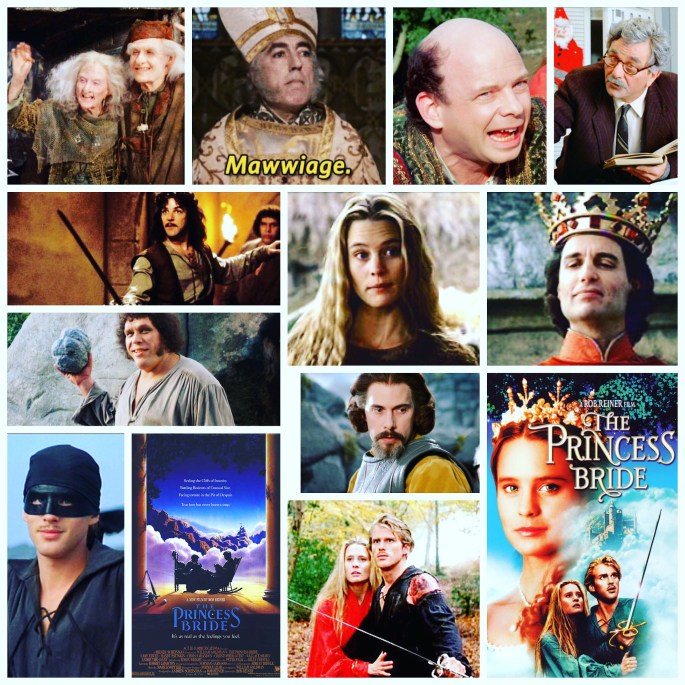
Rob Reiner’s The Princess Bride

Rob Reiner’s The Princess Bride is so beloved and intrinsically bedded into our collective cinematic psyche that it’s almost less of a film these days than it is a lifestyle or cultural flourish, something that comes up in conversations as a given, an immediately relatable phenomenon in any dinner table banter or house party scenario. It also happens to be a great film in itself, full of instantly iconic idiosyncrasies and sincere storytelling that harkens back to the days of Grimm’s brothers and such. Populated by a pithily eclectic cast, and more than a few cameos, it’s a film one can watch as a kid all starry eyed at the fairytale intrigue, then revisit again as an adult and treat oneself to the raunchy bits we missed as youngsters. We all know the story so I won’t rehash it except to say that it’s the classic storybook fantasy given a decidedly more modern twist, especially with the dialogue. I’ll also add that it’s one of the few Hollywood fairytales to retain the grim, often perversely violent and scary elements that fables of olden times were known for. That water torture thingy (how does that work anyways?) used to scare the shit out of me as a kid, and who could forget the gruesome rodents of unusual size? Cary Elwes and Robin Wright light up the screen as Princess Buttercup and Wesley (he’s a lot more fun as the Dread Pirate Zorro Roberts though, isn’t he), on the run from evil Prince Humperdinck (lol) played by a preening Chris Sarandon, and his nefarious six fingered henchman (Christopher Guest) who slew the father of ruthless Spaniard Inigo Montoya (Mandy Patinkin), as we’re reminded sixty million times throughout. Damn, I said I wasn’t going to go all into plot, didn’t I? There’s just such a delicious host of characters running about the place, it’s hard not too. Andre The Giant scores as, well, a giant of course, Wallace Shawn is a scheming little shit who gets his comeuppance (inconceivable!!), Billy Chrystal shows up as a sort of goblin, looking like a walnut with cotton candy taped to it, and all this hooplah is read to a youngster (Fred Savage) home sick from school by a snarky Peter Falk, a la Neverending Story. It takes a special kind of film to earn endless revisits from us, the viewer, and be ushered into the exclusive classics club. This one should be used as example of how to flawlessly achieve those things though, via an engaging, smartly written story with actual tangible stakes, just the perfect amounts of humour and silliness, some darker aspects to pluck away at the morbidness in all of us, and of course a romance right at it’s core. Timeless.
-Nate Hill