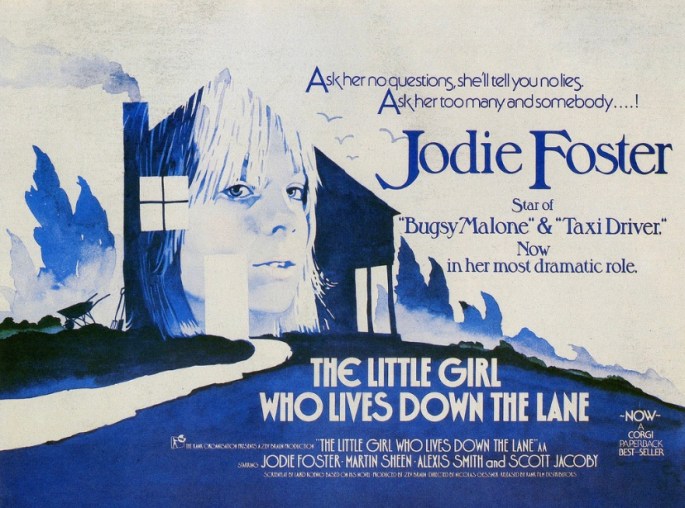
The Little Girl Who Lives Down The Lane

Jodie Foster had an interesting and edgy first leg of her career, with The Little Girl Who Lives Down The Lane being one of threw weirdest thrillers I’ve ever seen and certainly the strangest project shes been attached to that I’ve come across. Foster, age 13 or so here, plays Rynn, a girl living alone in a drafty house in a desolate Maine village that manages to be frightening and picturesque in the same stroke. The film doesn’t tell you right away why she’s alone but instead shows us a regular onslaught of visitors to her house who range from benign to eccentric to downright dangerous. Her landlady (Alexis Smith) is an overbearing bitch, the local police officer (Mort Shuman) is kind and compassionate and a teenage magician (Scott Jacoby) is someone she finds companionship and even romance with. The real trouble is in Martin Sheens violent, creepy sex offender who has a habit of showing up while she’s alone and getting real rapey on her. So who is this girl, and who thought up such a bizarre, unwieldy concept for a film? Well, as illogical, clunky and tasteless as I can’t be, I still found it pretty compelling, for Foster’s ethereal performance, for the sheer lunacy of its central premise, and I appreciated it in a sort of ‘dream logic meets modern fairytale’ way, which I’m not sure if the filmmakers were going for instead of a straightforward horror/thriller approach (it doesn’t work at all from that angle) but let’s just pretend that was their intention. Either way it’s a curio worth checking out simply for the audacity of the thing, and for Foster completists making their way through the cobwebs of her early career genre stuff. Also fun fact for David Lynch fans, the man directly references this film in his Twin Peaks: The Return and it’ll be fun for any avid Peaks fan to figure out why as they clamber through this narrative.

-Nate Hill
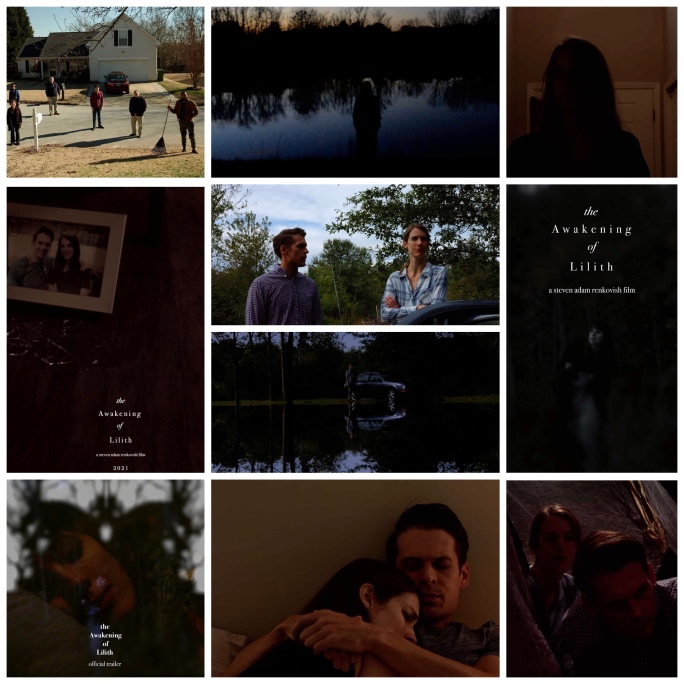
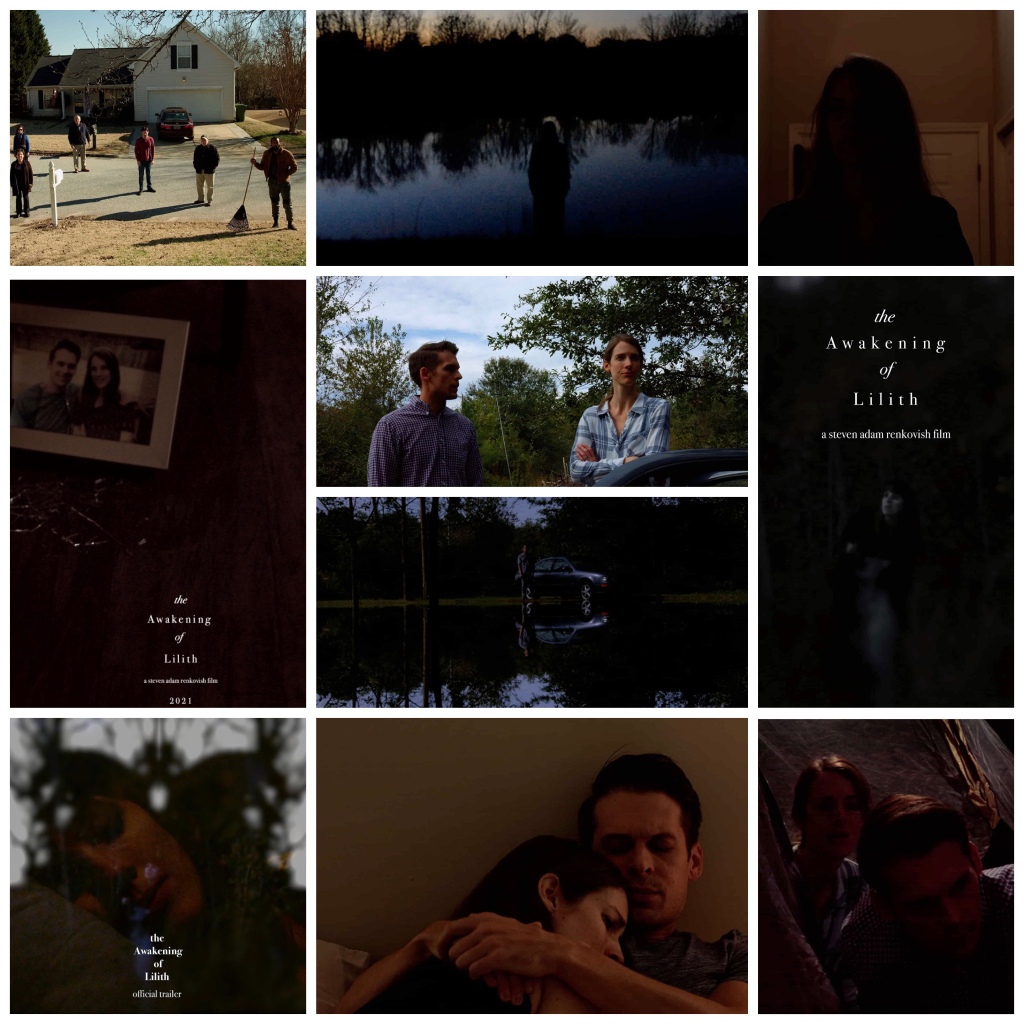
Steven Adam Renkovich’s The Awakening Of Lilith

Grief. Mental illness. Turbulent family dynamics. A battle to maintain one’s identity amidst a myriad of struggles both internal and external. These are deep, difficult themes to work through in film and it’s so often that we see them not done proper justice, not explored in a fashion that feels fair, realistic or respectful and overall misses the mark. Steven Adam Renkovich’s The Awakening Of Lilith is a film of strength, assuredness and striking meditative intuition that approaches these themes from a refreshingly, staggeringly mature and relatable standpoint, between his his strong, hypnotic direction and an otherworldly, deeply instinctive lead performance from Brittany Renée as Lilith, a woman lost in the darkest corners of her own mind following a shrouded tragedy that we learn more of bit by bit. I always think of depression, anxiety and any mental illness as a relationship between space and time: these affliction are spaces we wander into, for an indeterminate amount of time, and while you are in them it quite literally feels like you will never, ever make it out; it’s like tunnel vision in fog. Lilith and her fiancée Noah (Justin Livingston) both suffer from variations on this and we see in flashbacks the strain it puts on their relationship as they try to work through their issues, individually and as a couple until… well, until we get back to present day Lilith, living with the fact that Noah, for reasons made agonizingly clear, is not around anymore. Lilith is not only navigating life without him but everyone else in her life who is not properly there for her including a coldhearted mother (Mary Miles Kokotek) and some friends who don’t quite have the proper empathy to support her. Renkovich’s script approaches the subject of mental illness with a precision, understanding, blunt realism and compassion that is all too rare in cinema overall, and the medium is immediately stronger with his feature debut voice in it. He uses eerie, haunting sound design and blurred, Rorschach-test like imagery to disorient and draw us into Lilith’s tempestuous and confusing internal landscape with terrific support from Seth Anderson’s often terrifying, frequently beautiful and always atmospheric score. Renée is a revelation as Lilith, possessive of the kind of old world poise, timeless anachronistic aura, clearly annunciated, carefully thought out expression and ethereal essence that is so rare in human beings and is always a truly special quality for an actor to have. She imbues Lilith with the kind of resolute, lonely sadness of someone who is used to living in their head and fiercely facing their demons in implosive silence. Livingston as Noah plays it a bit more clipped but underneath the curt vernacular we see someone who is sensitive but has never been allowed to outwardly own it, who guards a hurt so deep it’s clear he’s only ever allowed Lilith in to share it, a dynamic that both strengthens their relationship and puts it to ultimate test. My favourite scene is the two of them in a camping tent, together beyond the world; Lilith gives him a gift that has immense personal meaning to her and their bond is so deep the silence in the air around them can hear it, it’s a wonderful moment that’s made all the more affecting and heartbreaking when you look at their arc overall, accented in finality by a gorgeous ending credit song sung by Renée herself that leads you out of the narrative perfectly. There is a lot to unpack here for a film that clocks in just under 90 minutes, and I’ve only just brushed the surface of this textured, complex, beautifully crafted piece. Wondrous film.

-Nate Hill

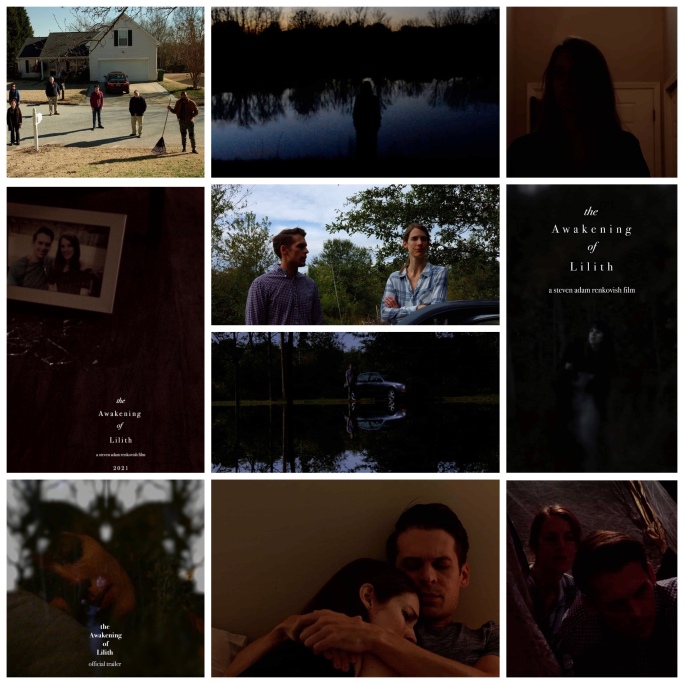
Steven Adam Renkovich’s The Awakening Of Lilith

Grief. Mental illness. Turbulent family dynamics. A battle to maintain one’s identity amidst a myriad of struggles both internal and external. These are deep, difficult themes to work through in film and it’s so often that we see them not done proper justice, not explored in a fashion that feels fair, realistic or respectful and overall misses the mark. Steven Adam Renkovich’s The Awakening Of Lilith is a film of strength, assuredness and striking meditative intuition that approaches these themes from a refreshingly, staggeringly mature and relatable standpoint, between his his strong, hypnotic direction and an otherworldly, deeply instinctive lead performance from Brittany Renée as Lilith, a woman lost in the darkest corners of her own mind following a shrouded tragedy that we learn more of bit by bit. I always think of depression, anxiety and any mental illness as a relationship between space and time: these affliction are spaces we wander into, for an indeterminate amount of time, and while you are in them it quite literally feels like you will never, ever make it out; it’s like tunnel vision in fog. Lilith and her fiancée Noah (Justin Livingston) both suffer from variations on this and we see in flashbacks the strain it puts on their relationship as they try to work through their issues, individually and as a couple until… well, until we get back to present day Lilith, living with the fact that Noah, for reasons made agonizingly clear, is not around anymore. Lilith is not only navigating life without him but everyone else in her life who is not properly there for her including a coldhearted mother (Mary Miles Kokotek) and some friends who don’t quite have the proper empathy to support her. Renkovich’s script approaches the subject of mental illness with a precision, understanding, blunt realism and compassion that is all too rare in cinema overall, and the medium is immediately stronger with his feature debut voice in it. He uses eerie, haunting sound design and blurred, Rorschach-test like imagery to disorient and draw us into Lilith’s tempestuous and confusing internal landscape with terrific support from Seth Anderson’s often terrifying, frequently beautiful and always atmospheric score. Renée is a revelation as Lilith, possessive of the kind of old world poise, timeless anachronistic aura, clearly annunciated, carefully thought out expression and ethereal essence that is so rare in human beings and is always a truly special quality for an actor to have. She imbues Lilith with the kind of resolute, lonely sadness of someone who is used to living in their head and fiercely facing their demons in implosive silence. Livingston as Noah plays it a bit more clipped but underneath the curt vernacular we see someone who is sensitive but has never been allowed to outwardly own it, who guards a hurt so deep it’s clear he’s only ever allowed Lilith in to share it, a dynamic that both strengthens their relationship and puts it to ultimate test. My favourite scene is the two of them in a camping tent, together beyond the world; Lilith gives him a gift that has immense personal meaning to her and their bond is so deep the silence in the air around them can hear it, it’s a wonderful moment that’s made all the more affecting and heartbreaking when you look at their arc overall, accented in finality by a gorgeous ending credit song sung by Renée herself that leads you out of the narrative perfectly. There is a lot to unpack here for a film that clocks in just under 90 minutes, and I’ve only just brushed the surface of this textured, complex, beautifully crafted piece. Wondrous film.

-Nate Hill

B Movie Glory: Crossworlds

Direct to video horror/SciFi stuff starring Rutger Hauer is basically my bread and butter so I was very excited to see Crossworlds drop on Amazon prime after trying to score a DVD for years, to no avail. An inter dimensional travel flick with Hauer as a sort of Gandalf/Jedi/salt of the earth time machine mechanic hybrid sounds like a dream come true but unfortunately this one just never seems to be able to get it up past lukewarm, and I fear that budget is mostly the reason. It’s clear that this thing didn’t have all that many bucks thrown at it to play with and in a SciFi with this snazzy of a concept you just need to have impressive effects and better world building. Hauer’s sarcastic sage warrior is on a quest with a younger protege (Andrea Roth) to recruit a human college kid (Josh Charles) from our world and use his birthright talisman to thwart an evil organization from using it to combine all the parallel dimensions of the universe into one big ‘dimension gumbo’, thus eradicating the natural borders of the cosmos and promoting utter chaos. That sounds way cooler in writing than it does in the actual film too and unfortunately most of it is just running, chasing, clunky fight scenes and undercooked exposition without any real substance or flow. Charles as the lead is about as vanilla and lacking in charisma as they come, which hurts the film, while Hauer is wonderful as ever playing up the curmudgeonly aspects of his character and rocking a duster trench-coat like the badass he is. Roth I’ve always been fond of and she’s great too but the role is underwritten and she seems bored for most of it, while a very young and very drunk Jack Black steals a scene or three as a loud mouthed college bro. The film finds some torque when Stuart Wilson shows up as the scheming villain; Stuart is an actor who is pretty much incapable of boring or subpar work (much like Hauer) and he makes this guy someone you love to hate and turns every flatly written line into a mischievous flourish. But he nor Hauer can ultimately save this from the muddled doldrums it consistently wanders into and it’s frustrating because there’s a crackerjack premise somewhere in there that was just given half assed treatment both in the screenwriting phase and in production/execution and it shows. Perhaps one day someone with more money and a clearer vision will give this another shot.

-Nate Hill

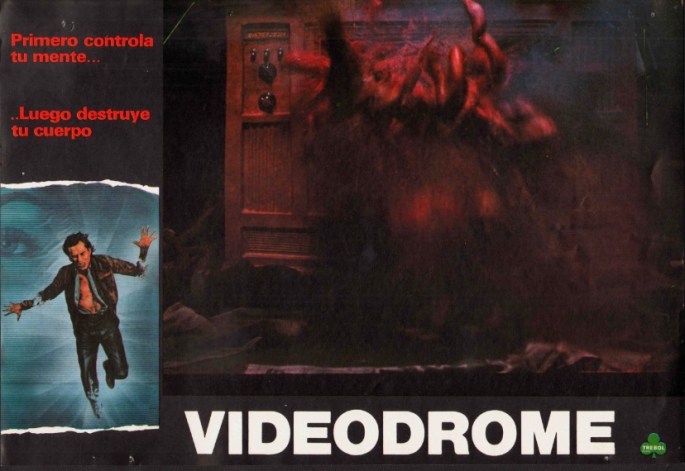
David Cronenberg’s Videodrome

David Cronenberg’s Videodrome is a film I had slept on since I was a teenager and saw it it ominously leering off the shelf of Blockbuster with stark, gooey VHS cover art that promised a nearly sentient looking narrative and atmospheric horror experience that perhaps I wasn’t ready for, because I always passed it by. I’m kind of glad I waited until now to see it because I was fully able to appreciate what a rich, textured, detailed and seemingly impenetrable but inexplicably profound piece of art it is, not to mention just a gorgeously gonzo exercise in some of the absolute fucking BEST practical effects I’ve ever seen in cinema. James Woods is Max Renn, a freewheeling television producer whose time slot is dedicated to violence and scum because, as he cavalierly rationalizes it, that’s what people want to see. One day he discovers a mysterious scrambled signal broadcasting a show just about violence, murder and torture, a show that seems to be a bit too close to the real thing. His search for the origin and producer of this bizarre output takes him on a horrifying cosmic journey of mind-melding, body mutilating chaos as the signal begins to change both his external anatomy and internal mindscape. He hooks up with fellow TV host Nicki Brand (the great Debbie Harry) whose own dark impulses for boundary pushing S&M only further add to his unsettling environment. The plot is a dense, surreal and difficult spiral of reality shattering techno-horror, spectacularly splattery special effects and an editing process that aims to disorient while also keeping the viewer mesmerically rapt to the screen to see how it all plays out. There’s an undercurrent of warning regarding the psychological implications of technology and pornography that feels eerily ahead of its time, a commentary on the hypnotic and dangerous application of VR (WAY ahead of its time) and all sorts of elements woven together for a totally immersive, beautifully retro-futuristic experience. It also just knows how to have a blast at the simple level of being a visually effective horror film and believe me when I tell you that these FX are for the ages and might never be topped; from torso invading genitalia chasms to glistening prosthetic weaponry crudely fashioned onto human limbs to a TV set that lives, breathes and gives birth to roiling deformities behind the screen that serves to remind us of the worrying self awareness and startling agency we project onto and bestow unto technology. One of the finest horror films I’ve ever seen.

-Nate Hill

Anthony Scott Burns’s Come True

Sometimes a film just effortlessly and uncannily combines several elements that just resonates with me and lands as an all time favourite on the first time watch. In the case of Anthony Scott Burns’s Come True it’s the gorgeous mix of SciFi/horror, analog/VHS inspired aesthetic, dream and REM sleep centred storytelling, surreal artistic visuals and the synth dripping, supersonic original score by Electric Youth that just makes this film something so special I don’t even have the words. The story concerns a runaway teenager (Julia Sarah Stone) who sleeps on playground slides (theres a metaphor in there somewhere), lives a restless nomad life and suffers from paralyzing nightmares. She agrees to participate in a sleep study for cash by a shady group that has patented technology that maps and visualizes people’s dreams onto video screens, but this only seems to exacerbate her nightmares and literally give them the power to cross over into waking life. That’s just the diving board from which we plunge into a roiling subconscious abyss of daring, unapologetically strange narrative and atmospheric substance and it soon becomes clear that director Burns, although meticulously in control of his craft and vision, wishes to let this story run completely wild and go off the edge of the map, which is a great fit considering this is a film about dreams. Some folks will undoubtably dismiss this as confusing and inaccessible but for me it pierced a frequency in my psyche that few films are able to tune into and is just the perfect soul food for my warped perception and taste in film that always hungers for the different, the weird, the boundary pushing. Actress Stone has an ethereal, pixie-like aura to her that lends itself nicely to the overall vibe. We are treated to numerous extended dream sequences which are all shot through this sort of of perpetual POV forward propulsion movement, a technique that tricks us into thinking we are ourselves moving directly into both our TV screens and the dreams themselves, then we are presented in horrific inevitable fashion with the powerful antagonistic forces on display in dreamland and it feels just about as terrifyingly tactile and immersive as being in our own dream worlds, a genius filmmaking choice really, not to mention all of the dazzlingly surreal, stark monochrome imagery and artistic flourishes along the way. Electric Youth kind of got screwed in their first original score which was for a film called ‘Breathing’ that for whatever reason was never finished or released, but their wonderful work on it can still be heard on Spotify. Here they get another shot and go absolutely synthwave ballistic for an original composition that is so beautiful your ears will bleed neon and you’ll hear it in your own dreams. It brings the story to life in ways that transcend traditional narrative at times and lures you into its world until you are transfixed right up until the ballsy twist ending that will have some people rolling their eyes and some people’s minds blown, I thought it capped the story perfectly. I don’t often use the M word but to me, and my sensibilities of what I look for in film, this is a flat out masterpiece.

-Nate Hill

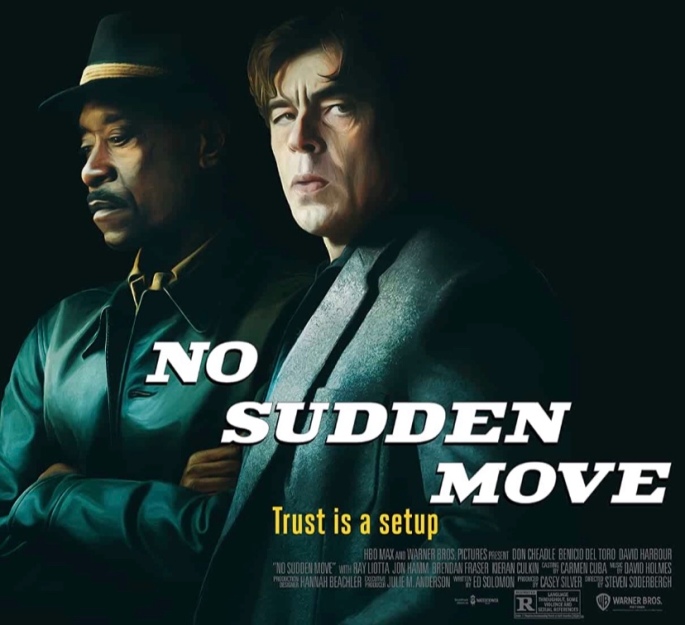
Steven Soderbergh’s No Sudden Move

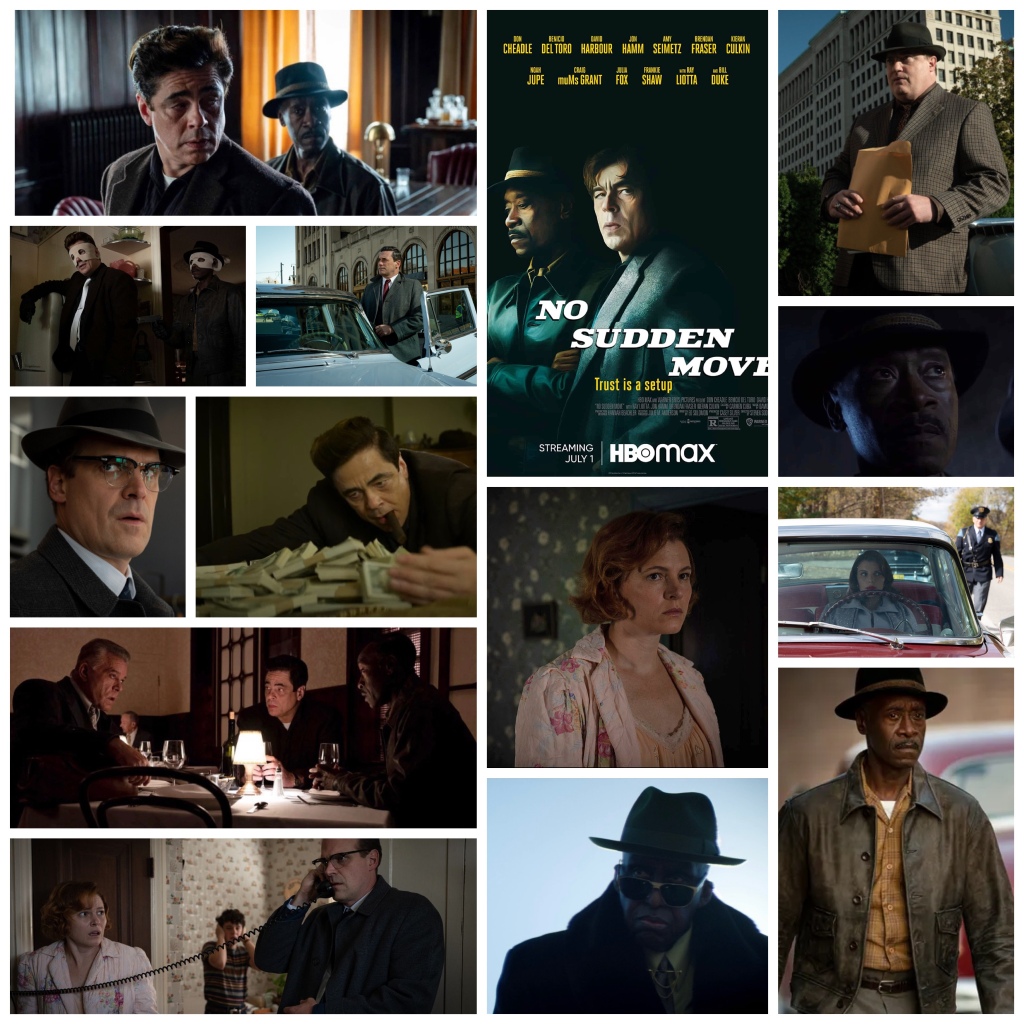
Steven Soderbergh’s No Sudden Move contradicts its own title by showing up out of nowhere all of a sudden, with an ensemble cast for the ages, a snazzy 50’s production design vibe and one of those deliriously convoluted marble maze narratives where things make just as much sense as they don’t. The film is honestly a lot more low key, subdued and laconic than you might expect from all of these moving parts, let’s more Out Of Sight than Ocean’s 11, more burnished, modest caper games than ritzy, tongue in cheek sizzle. Don Cheadle plays an aimless Detroit ex-con who is hired by a shady mob figure (Brendan Fraser) to babysit the family of a twitchy executive (David Harbour) while he retrieves something of great McGuffin-esque importance from a safe at his work. Alongside him are two less level headed operatives played by a greasy Benicio Del Toro and Rory Culkin, who collectively escalate the proceedings into a dangerous powder keg of betrayals, backstabbing and hopeless incompetence. Others orbit their situation including Ray Liotta as an appropriately volatile mobster, Julia Fox as his philandering wife, Jon Hamm as a keen federal agent, Amy Seimetz as Harbour’s stressed out wife, Bill Duke as an all powerful underworld kingpin and a sly cameo from an A lister (that I won’t spoil) as a cheerfully corrupt automobile industry magnate. The cast are all exceptional with everyone really keeping it on a low, laconic burn save for perhaps Liotta who has to get fired up at least once in every movie per his contract and Harbour who is cast pricelessly against type as a spineless fuck up. The narrative is a shifting puzzle box that requires adderall level attentiveness to fully absorb which I wasn’t giving it and as such was a bit fuzzy on some of the particulars but it was nonetheless lots of fun to watch these quaint, colourful characters mosey around old Detroit and have some good old fashioned noir fun.

-Nate Hill

Viggo Mortensen’s Falling

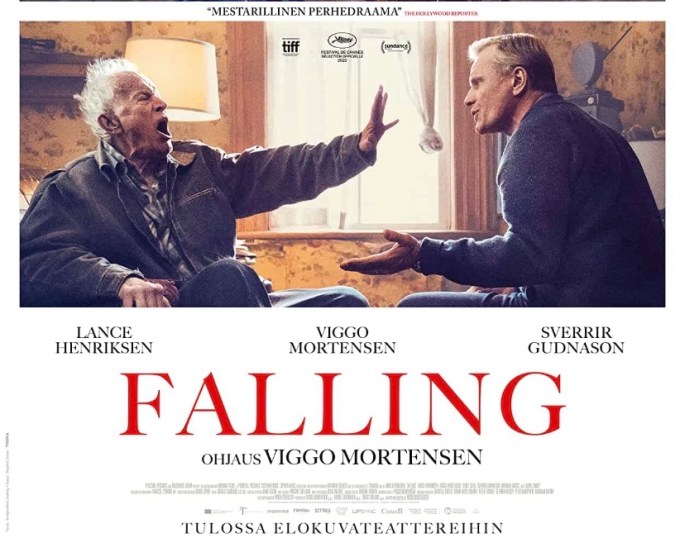
I love to see it when a cherished and talented actor makes their debut as a director, especially if they absolutely nail it, and Viggo Mortensen’s Falling is an astonishingly terrific first time effort behind the camera, in front of it and collaborating with one of cinema’s most prolific and underrated character actors, the mighty Lance Henriksen. Mortensen paints a deeply personal and seemingly autobiographical portrait of a stormy father son relationship here, a dynamic put to the absolute test in its twilight years as dementia throws a curveball. Henriksen is Willis Petersen, a conservative, sexist, crass, bigoted, bitter, flint-edged old goat whose emotional problems and inability to properly communicate made life extra tough on his wife and two kids growing up on a farm in chilly upstate New York. He is now a snowy haired senior citizen who can barely remember what day it is, and journeys with his grown up son John (Mortensen; patient, restrained, meticulously pensive until the breaking point) to live with him, his husband (Terry Chen) and their young daughter (Gabby Velis) in sunniest California. Willis is utterly and completely out of his element in this setting, while John, his family and the rest of the city do their best to ignore, endear and diplomatically deflect his brittle onslaught of angry, bigoted, rude and altogether inappropriate behaviour. Willis is a tough cookie to love or care for, especially in this golden age of hyper-tolerance, but Henriksen, in an absolute career best tour de force, makes him not just another angry old man but a human being who is so scared of dying, losing his memories of life and slipping away from the life affirming groove of his routine that he’s lashing out at basically everyone around him. Except for his young granddaughter, his relationship with her is perhaps the only genuinely warm-hearted and easygoing interaction he allows himself to inhabit. Mortensen masterfully edits together their present day life in Cali with picturesque, auburn laced and earthen flashbacks to Upstate NY where we see a young Willis (Sverrir Gudnason) raise John and his sister, struggle to be there for them without letting his flaws run amok and navigate through two marriages, one to the children’s sensitive mother (Hannah Gross) and later to another (Bracken Burns). Laura Linney gives a reliably focused and mesmerizing turn as Willis’s grown up daughter, who does everything she can not to get emotionally compromised by her father’s issues, and there’s a sly cameo from Viggo’s longtime pal David Cronenberg as a stoic butt doctor whose scene with Willis highlights some of the films coarse black humour, often at the expense of his son’s homosexuality as John himself looks on in almost unfathomable patience. It’s easy to condemn and dismiss a difficult character like Willis, but Mortensen’s complex direction and Henriksen’s volcanic yet finely shaded nuance refuse the viewer in drawing such hasty, narrow conclusions. Mortensen’s surreal editing, fluidly washed transitions, the wonder of the natural world and the magic of music to remind us that human beings are never just one thing and that a seemingly lost, scared and downright mean old man is still capable of compassion, patience and a modicum of self reflection, even in the eleventh hour. This is an astonishing film and a staggering debut for any filmmaker of any background with a central performance by Lance that anoints his entire epic career with that one last minute entry to crown it all, he and the film overall are truly magnificent.

-Nate Hill

Undercover Blues

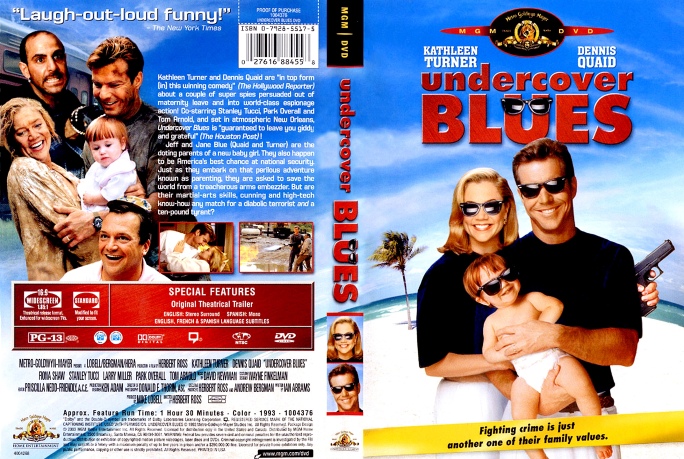
Undercover Blues is about as light, breezy and fluffed out as a film can get, to its own detriment in fact. I love a good lighthearted comedy but unfortunately this one tries to be so carefree and leisurely that it comes across as… well just that, something that feels like it’s trying too hard to achieve it’s vibe instead of just naturally arriving there. Dennis Quaid and Kathleen Turner play former spies who are on vacation in New Orleans, trying to escape the espionage life for awhile so they can raise their baby. When a chance encounter with a hopeless mugger named ‘Muerte’ (Stanley Tucci in a performance that has to be seen to be believed) puts them in the spotlight of their former boss (Richard Jenkins) they are tasked with finding and taking down an easily distracted Euro-trash villainess (Fiona Shaw) who is selling plutonium rods to terrorists.. that’s the loose version anyways, the film doesn’t really have much of a grasp on the reins of its own plot. Pretty soon two dogged detectives are after them, played by Obba Babatunde and the always scene stealing Larry Miller who is doing a voice/accent here that is so bizarre he sounds like he walked out of the looney toons. There really isn’t too much romantic chemistry between Quaid and Turner save for one brief scene and for all their cavalier swashbuckling and attempts at charisma they seem curiously lifeless. Tucci is anything but though as this ridiculous petty criminal, barking out childish threats with a priceless Spanish accent and spicing up the proceedings with his coked up manic energy. Watch for familiar faces including Tom Arnold, Jan Triska, Marshall Bell, Dennis Lipscomb, Saul Rubinek, Chris Ellis, Olek Krupa and a very young Dave Chapelle. I wish I liked this more but it just didn’t have substance or anything to grab ahold of. It’s fine to have easy breezy, fluffy action comedies but there’s still gotta be an interesting story, strong character dynamics and a genuine sense of danger or I’ll just lose interest. This was a great big meh. If you want to see how an effective lighthearted New Orleans caper with Quaid is done, check out The Big Easy with him and Ellen Barkin, an absolutely wonderful romance cop flick that feels genuinely laidback without having to try SO damn hard to convince us it is, like this pot of watered down gumbo.

-Nate Hill

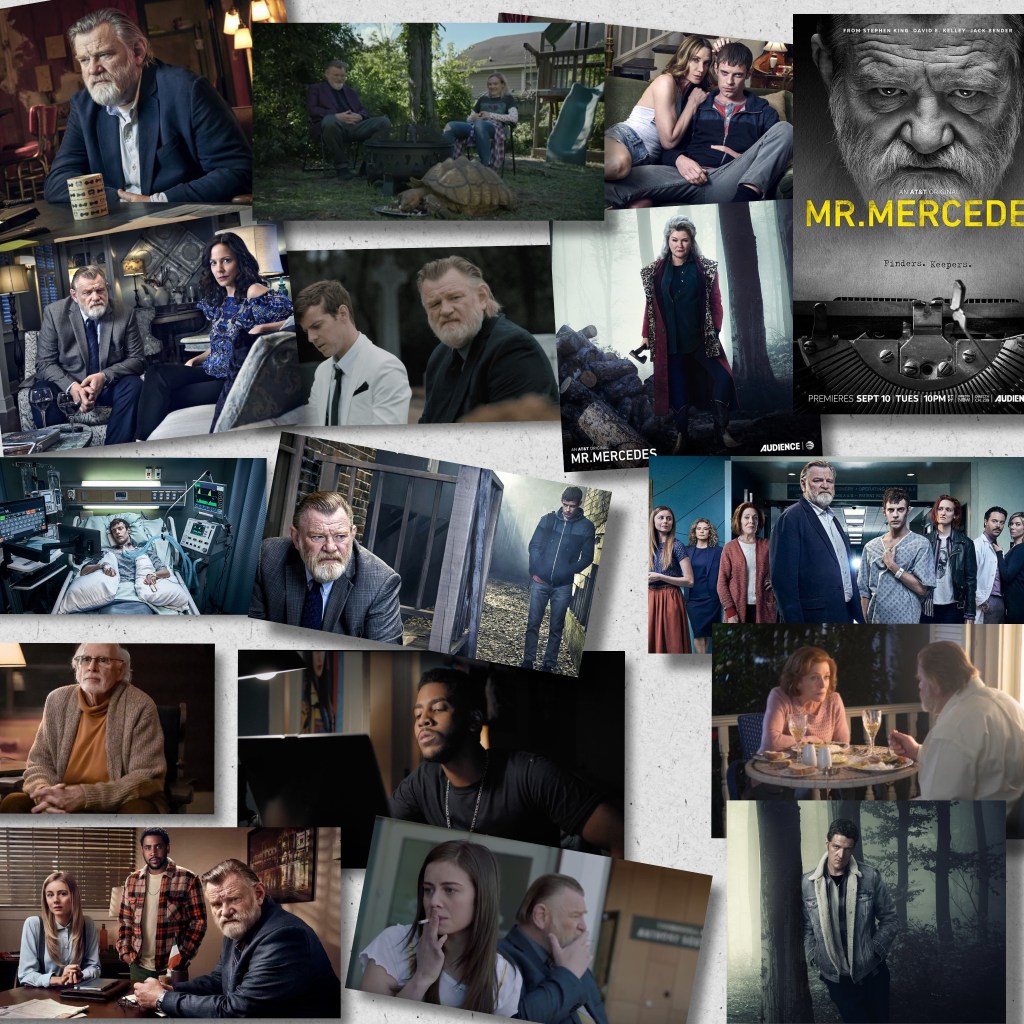
Stephen King’s Mr. Mercedes

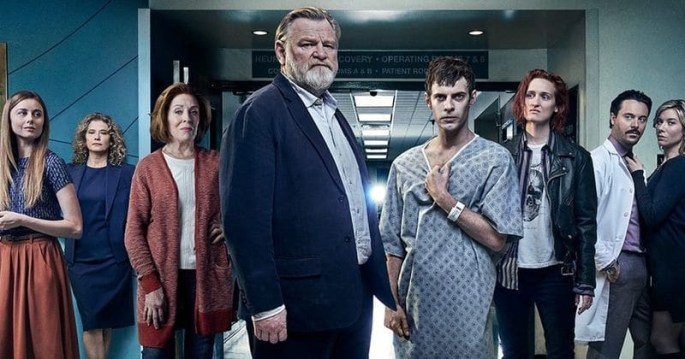
I had been dimly aware for some time that a Stephen King book called Mr. Mercedes had been adapted into a series, and I was vaguely versed in the plot being about a detective hunting a serial killer who kills people with the titular automobile. What I *didn’t* know was that this is a whole trilogy based deeply around the detective character, a cantankerous old school Irish cop named Bill Hodges played by Brendan Gleeson in what has to be the performance of his career. What I most definitely did not expect is what a deep, dark, psychological sprawl this saga was going to be, it’s much much more than just a cop versus killer thing and goes to places of boundless imagination, starkly nauseating horror, effective humour and the kind of development and dynamics that have me deeply missing these characters now that I’ve finished the whole series run. Hodges is a retired detective in a run down, really sad suburb of Ohio who never caught a demented maniac called Mr. Mercedes, who brutally ran the car through a crowd of people at a Jobs Fair and killed several including a mother and her newborn. That’s the kind of crime that haunts an entire town, with Bill at the epicentre of it all, and when the killer starts to taunt him, send him mocking emails and threaten those around him he loves, the hunt is on again. I’m not sure what I can say about all three seasons without spoiling too much so I’ll keep it vague but I do want to outline some of these wonderful characters. Bill isn’t alone in his fight and as the story unfolds he very organically puts together this team of family, friends and people he cares deeply for that all help in some way to bring this monster down. They include his neighbour, computer genius and lawn mowing guru Jerome (Jharrel Jerome), his other neighbour and longtime high school teacher Ida (Holland Taylor), his former partner on the force Pete (Scott Lawrence), the wonderful, anxiety ridden and cosmically intuitive Holly Gibney (Justine Lupe) and many, many others. The killer himself is a twisted up piece of work named Brady Hartsfield (Harry Treadaway) and this isn’t a spoiler as the show starts off showing you exactly who he is and how he operates, a sad little freak with a booze soaked mom (Kelly Lynch at her most disheveled) who likes to bang him, he’s someone you could almost feel sorry for if he wasn’t such a little snot-fuck psychopath. Stemming out from Brady are some equally despicable antagonists including damaged goods asshole Morris (Gabriel Ebert), revered author and mean spirited local legend John Rothstein (Bruce Dern) and many other characters dotting the collective moral compass played by the likes of Mike Starr, Brett Gelman, Nancy Travis, Jack Huston, Glynn Turman, Mary Louise Parker and Star Trek’s Kate Mulgrew as quite possibly one of the most reprehensible villains King ever dreamed up, just the vilest bitch ever. I love a good King story because he often starts off with a concept so simple, so primal, so elemental, and builds from there to places you could never have dreamed: a gunslinger travelling across a desert, a writer caretaking a derelict hotel for the winter, or a cop hunting a vehicular mass murderer. The first season shows us exactly that, and by the time the show ends you’ve travelled worlds both inside and outside the mind, met hundreds of characters of every variety and experienced a story not limited to the bounds of what’s considered narratively traditional but exists outside the box in every sense of the term. He’s also uncanny at creating, devolving and nurturing characters that you care deeply for; his writing and Gleeson’s performance as Bill Hodges is one for the books, just this brittle old Irish goat with a pet tortoise in his backyard, a heart of gold in there somewhere beneath all the whiskey fury and years of hurt and frustration who learns to find himself again and take down some true evil, not only one of the finest characters I’ve seen put to the screen but a true force of good and one of the key lynchpins of light and love in the expansive Stephen King multiverse. Sensational experience from beginning to end.

-Nate Hill