Neil Labute’s The Wicker Man

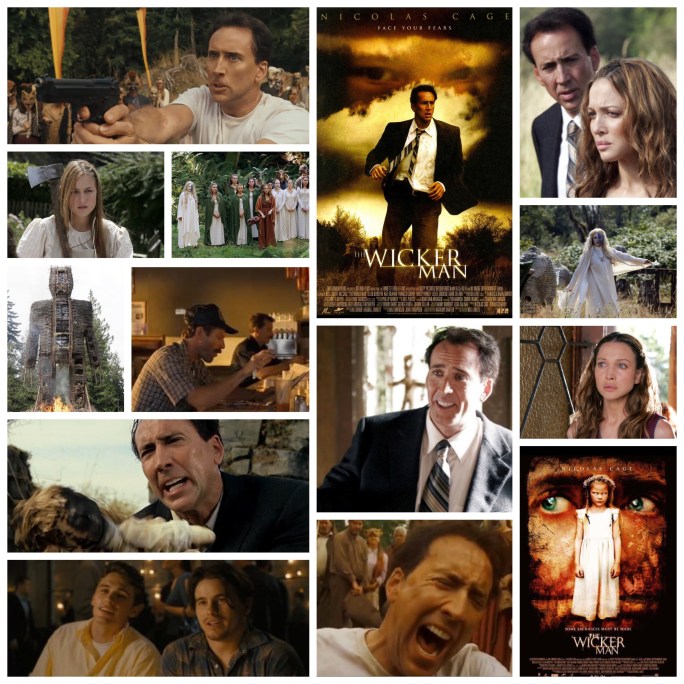
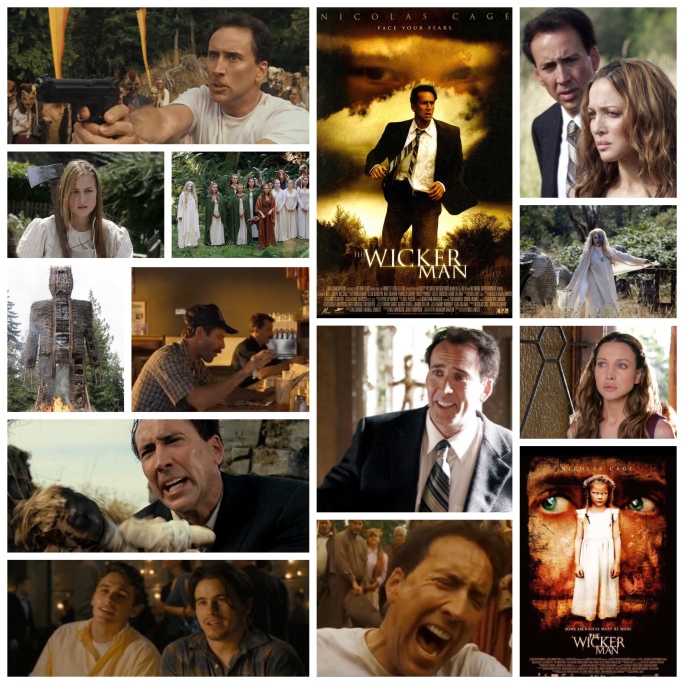
You know the funny thing about The Wicker Man is that I actually found it really scary and disturbing. This was when I saw it at a younger age and the film has now since become a legend among legends among bad movies, something people use for meme stock, draw examples from on how to make a wretched flick or put on simply to laugh and throw rotting produce at. But there was just something about helpless Nic Cage stuck on Bowen Island (lol) with a bunch of creepy cult chicks who resent a man being on their turf and some fucked up rituals that he gets to witness first hand that. The isolation and hopelessness of this scenario really got to me but I’m not sure if it would still have the same effect, it’s been over a decade. In any case this is a shit film, full of bizarre performances and not even just Cage either. He plays a cop looking for an alleged missing girl on the island, on which his ex wife (Kate Beahan) coincidently also lives. There’s obviously some foul play around and he becomes consistently more frustrated, freaked out and lets his inner Cage come out to play. Ellen Burstyn must have not had her reading glasses on when passed the script because she’s actually trying here as the affable but slightly sinister matriarch of these neo-pagan kooks. Others are played by solid actresses like Leelee Sobieski, Frances Conroy, Mary Black and Molly Parker but none make impressions beyond caricature. I’ll tell you who I do remember though is James Franco and Aaron Eckhart in virtual walk on bits, it’s bizarre seeing them in roles so tiny, Aaron as a random diner patron and James as some off duty Sheriff. Wonder what the story behind the scenes is there, maybe they both had a multi picture deal, both saw the dumpster fire on the horizon and loopholed their way into inconspicuous participation. This film is a mess and ends in an unpleasant, bloody cascade of ugliness and violence, but it’s also hilarious in how heavy handed and tone deaf Cage’s performance is. He spends much of it simply running around the island in a suit yelling at people. Everyone always goes on about the “not the bees!!” scene and it is admittedly gold, but my favourite moment has to be when Cage, finally good and fed up with everything, calmly marches into a room, stares one of the sisters straight in the eye and spectacularly one punches her out cold. It’s an out of left field moment of volcanic hilarity worth a few rewinds or immortalization in GIF format.

-Nate Hill

Brian De Palma’s Snake Eyes

I love those films that revolve around a feverish, high profile celebrity boxing match, whether the stakes are placed on the fight itself or on the characters spectating. There’s a sense of intrigue and danger to that kind of sporting event that makes for great mood setting and story establishment. In Brian De Palma’s Snake Eyes, Nicolas Cage and Gary Sinise find themselves pulled into a shadowy assignation attempt on the life of the Secretary of Defense as a fight rages just past ringside in Atlantic City (Vegas Lite).

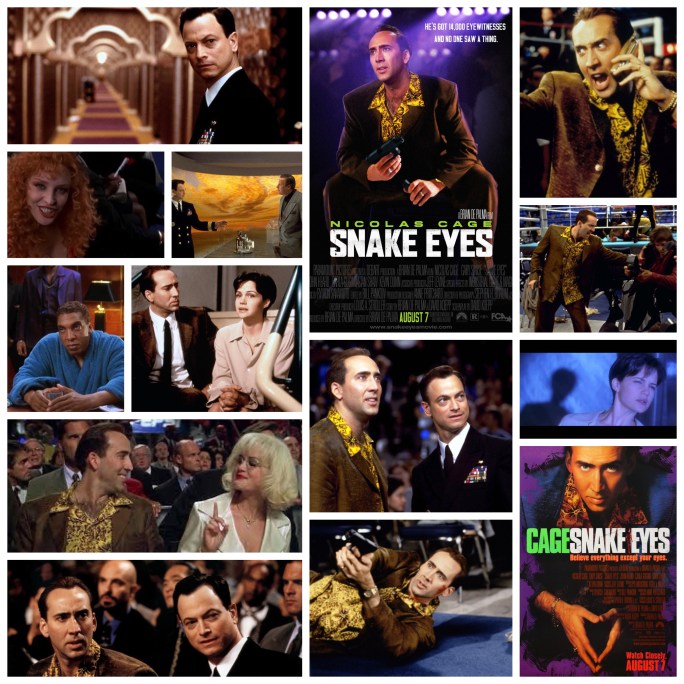
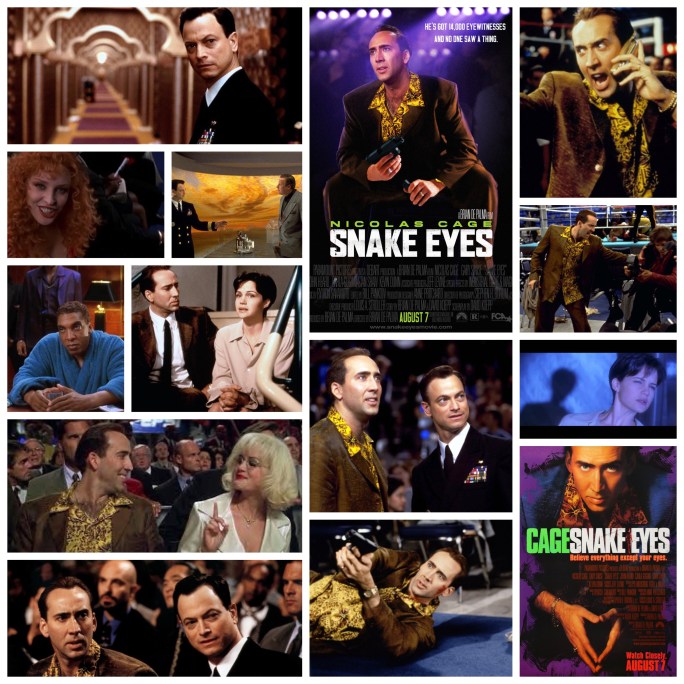
The character dynamic between the two actors here is superb; Cage is Santoro, a cheerfully corrupt detective who dresses like a pimp, ruthlessly schmoozes his way into profitable exchanges and has hopes of one day being the mayor simply due to the fact that he’s well connected. Sinise is Commander Dunne and couldn’t be cut from a more different cloth, he’s a buttoned down, modest, even toned military man who resents Santoro for being such a merciless showboat but has reconciled that with the fact that they grew up together. After the chaotic assignation, they’re tasked with interviewing any and all witnesses and let me tell you in an arena that crowded and fired up, this is no easy task. Stan Shaw (remember him from Fried Green Tomatoes?) is terrific as Lincoln Tyler, the hulking prizefighter who clearly knows something based on the dark, sheepish looks he casts around when being interrogated. Others involved include Carla Gugino as a mysterious operative, John Heard as a fast talking politician, Kevin Dunn, Michael Rispoli, Luis Guzman, Mike Starr, Peter McRobbie, Tamara Tunie and more.

I’ve heard claims that this film builds into a third act that’s bombastic and ridiculous, but hello people, this is a Brian De Palma film and the guy is in love with overblown sensationalism. That’s not to say he doesn’t have tact or skill in building slow suspense either. He has a way with long, uneasy tracking shots (I’ve always thought he’d be a great helmer for a Michael Myers Halloween film) as characters pursue each other through detailed, densely populated environments. There’s an extended sequence set in a hotel here where a baddie searches for a witness with cold resolve that’s among the best thriller set pieces I’ve seen anywhere. Of course it gets kind of WTF in the third act but I love that turn of events just as much, it adds a level of political paranoia that rises above simply a few people conspiring to take out a leader they don’t like, and the fun is in watching each hilarious new piece of the puzzle land with a boom n’ crash. I’ll tell you one thing, although I could have guessed early on who the mastermind behind all this hubbub is, I would have *never* in a million years guessed why or how it plays out or the reasons behind the whole thing, and you have to give De Palma and screenwriter David Koepp mad props for pulling that off. Plus the thing just has energy, adrenaline, personality and fucking awesome visual panache to spare. Great film.

-Nate Hill

Guillermo Del Toro’s Hellboy II: The Golden Army

A new Hellboy film opens this week and the reviews are… not great, to put it nicely. I’ll probably end up seeing for myself to give it a shot but honestly my heart is still with Guillermo Del Toro and Ron Perlman’s vision and I still wish we could have seen their trilogy capped off with a third entry instead of being obnoxiously shunted off to another iteration so soon.

After a brilliantly Lovecraftian introduction to this world, Del Toro returned with Hellboy II: The Golden Army and he brought back with him all the fairytale-esque visual grandeur he could muster for a sequel that is decidedly more esoteric but no less awesome than the first. Perlman was born to play the role and you have to champion Guillermo for sticking by his side and not backing down through damn near a decade of negotiations with studios who were tossing around hilarious suggestions like Nic Cage and Vin Diesel (good lord I shudder to think). Perlman *is* Hellboy and rocks every revolver slinging, cigar chewing, monster smashing minute of his screen time. This time he and the gang are contending with angry Elf Prince Nuada (Luke Goss), who resents humans for neglecting the fantastical in their modern age and wants to unleash the powerful golden army upon their world, obliterating it for good. As much as that kindddd of makes a bit of sense from his perspective it’s still not a constructive solution to his concerns and therefore his twin sister Nuala (Anna Walton) takes issue with his extremism and defects to Hellboy’s side. It’s a raucous ride of jaw dropping practical effects, enthralling world building and way more commotion than the eerie first film, but that works too. Doug Jones returns as fish-man Abe Sapien, this time without the strange ADR of David Hyde Pierce overtop his own chords, Selma Blair is lovely once again as spirited firestarter Liz Sherman, Jeffrey Tambor further cultivates droll comic relief as the FBI handler dude, John Hurt briefly reprises his role as paternal Professor Broom and newcomer Seth Mcfarlane is welcome to the fold, playing a German ghost that lives in some kind of early 1900’s scuba diving kit. Del Toro always has a wicked flair for effects, he never just throws CGI at a wall and expects it to stick, there’s always a meticulous process in bringing his creatures alive and this film is full to the brim of wildly imaginative wonders. Goss and Walton are so good as Nuada and Nuala that they almost deserve their own spinoff film, they’re darkly charismatic and soulful in an otherworldly way, their performances accented by beautiful hair & makeup.

I have to say I’m more a fan of the first film than this, but it’s less of an issue of quality and more of aesthetic; I’m in love with the dark, moody, Lovecraft atmosphere punctuated by the rogue nazi element, it seems to have more roots in horror and works for me more as an overall feeling, but really they’re both fantastic films and on the same level. Also the first one has Kroenen, who is possibly the coolest and scariest comic book villain ever put to film.

I’m not one to gloat when something flops or gets bad reviews out of the gate but I can’t help feeling a smidge of bitter glee at the fact that this reboot no one really asked for is now being bitten on the ass, seemingly because it actually does suck. For years and years the fans (myself included) hoped and prayed for a third Del Toro/Perlman Hellboy film to complete this wonderful story, and what do they do? Go out and hire a bunch of new stock, switch up the creative aesthetic completely and expect people to buy it. No sir. That’s not to detract from David Harbour, Neil Marshall, Ian McShane or Milla Jovovich, they’re all brilliant artists who have now just become collateral damage to a production that sounds suspiciously rocky. I’ll definitely check out the film they’ve made and give it a fair shot but I have to say that not one trailer or piece of marketing has me remotely excited, and that’s independent of my love for the first two films. Perhaps one day Ron Perlman will sit in that makeup chair for six hours again and give us that magic we miss so much, with Del Toro at his side. Perhaps this new apparent swing and a miss will make that happen quicker, who knows. Until then we can revisit the first and Golden Army to our hearts delight, they’ve aged gorgeously and are both great films.

-Nate Hill

Woody Allen’s Midnight In Paris

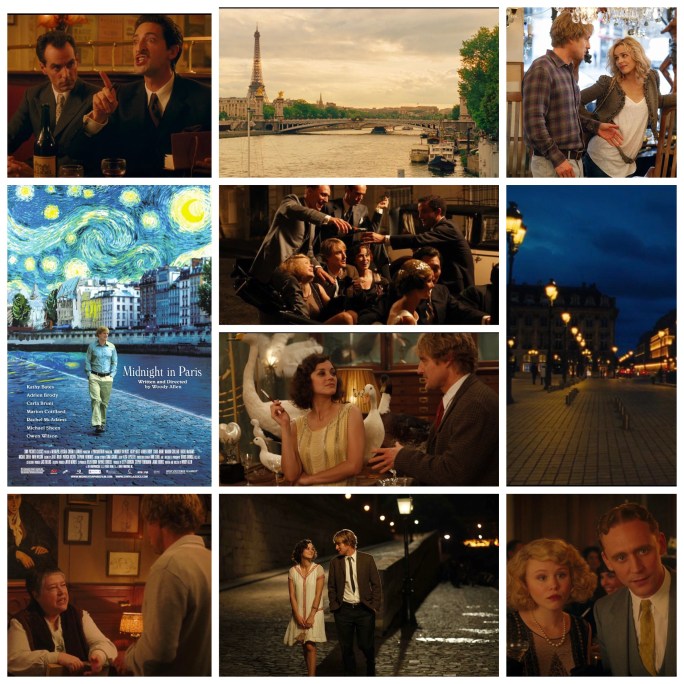
Do you ever find yourself feeling drawn to or nostalgic for another time period? Like somehow even though you’ve never been, you feel like you miss being there? Owen Wilson has a case of this in Woody Allen’s Midnight In Paris, a charming, brilliant piece that comes across as a ‘small’ film but has some big and deep ideas to discuss with you, the viewer. Wilson is Gil, a hapless wannabe screenwriter who looks up to the literary giants of yesteryear as he meanders around present day Paris with his fiancée (Rachel McAdams) and her family. He keeps going on about “Paris in the 1920’s in the rain” and how lovely it would be to see, hear and feel that for real. Her head is nowhere close to the clouds as his though, she subtly resents his whimsical daydreaming and yearns for suburban sprawl once they tie the knot. Now it’s impossible to really review this film without spoiling the enchanting central premise, so here goes: as he takes dreamy walks around Paris, he discovers that every night at precisely midnight he’s able to quite literally time travel back to the 1920’s. This puts him in close contact with aforementioned writers he considers titans and soon realizes are people just like him. I don’t know much about the figures portrayed here or whether the actors embody them truthfully, but they sure do a grand job of bringing their scenes alive. Kathy Bates is a robust Gertrude Stein, Corey Stoll dryly intones Ernest Hemingway, Adrien Brody is great very briefly as Salvador Dali, Tom Hiddleston as Fitzgerald and so it goes. This could have easily been a high concept, Owen Wilson In King Arthur’s Court style time travel film where the lessons learned are never all that striking or below the surface, but Allen wants to dig deeper. What is it about nostalgia that holds so much power over us? Would it be healthy or productive to live out those fantasies for real, and how would one come out of it? Gil finds a modicum of answer to these questions when he meets restless Adriana (Marion Cotillard, wonderful as always), but there’s a certain portion of theme here that lies in mystery, especially when her side off this phenomena comes into play, a thought provoking venture that I won’t go into here. The production team has wrought such a well lit, meticulously costumed Paris of the 20’s that you almost feel like they somehow tagged along with Gil each night and just filmed the thing there, it’s that good. The story rises up to meet it, and honestly as I type I can’t think of one single thing I disliked about this film. It’s engaging, never too simplistic nor too impenetrable, the actors are all clearly having the time of their lives (check out scene stealers Kurt Fuller and Mimi Kennedy as McAdams’s kvetchy parents) and there’s just this charm over the whole thing that’s irresistible.

-Nate Hill

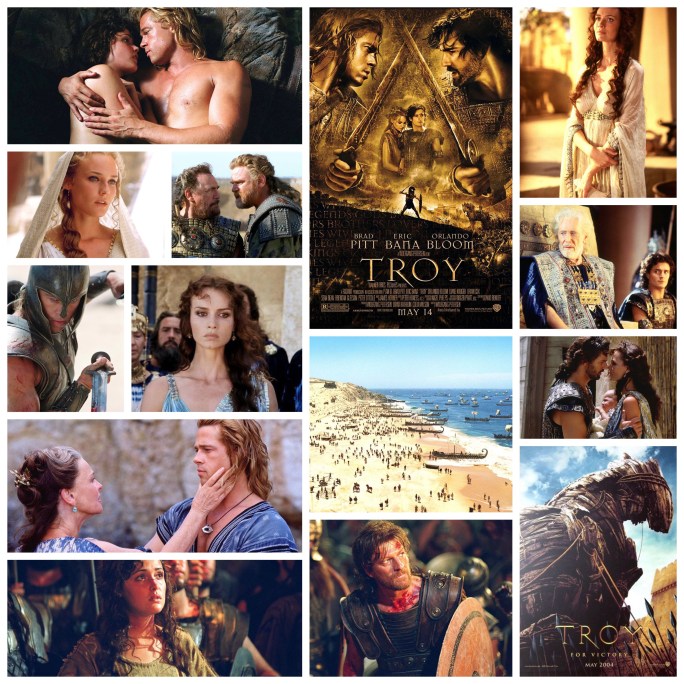
Wolfgang Petersen’s Troy

What’s the first R rated film you ever saw in theatres? For me it was Wolfgang Petersen’s Troy, a gorgeous piece that has since stuck with me not just for the fact that it left a vivid, bloody impression on my young psyche but also because it’s quality filmmaking, no matter what anyone might tell you. Never mind the fact that Brad Pitt doesn’t quite fit the old world aesthetic or is out-acted by almost everyone in the film including the host of classically trained professionals he’s surrounded by. There is a lot to love here, starting with a narrative that is kind of not so common in big budget Hollywood; there are no real good guys or bad guys here, just people making decisions that lead to war. We witness compassion on both sides of the army, and cruelty too, but there are no clear cut heroes or tyrants, it’s all politics or emotion. This makes it pesky choosing who to root for but so much more fascinating once the swords start swinging and you have stock on either side.

Pitt may not have the accent down as mythical warrior Achilles but he sure gets a striking look going, streamlined physicality, epic spear throws and concise, satisfying sword fight choreography that he obviously put a lot of work into. Eric Bana is just as impressive as Trojan prince Hector, a rational, anti-war guy who resents his younger brother Paris (Orlando Bloom, wooden as ever) for basically screwing things up as badly as you possibly could. The romance between him and Helen (Diane Kruger, radiant) never feels authentic and definitely is not developed enough to start a war of this magnitude, but their relationships aren’t where we place out investment here anyways. It’s Hector, his princess (Saffron Burrows will break your heart) and their infant son as well as Achilles’s protectiveness over his cousin Patrocles (Garett Hedlund) that win over our emotions and make us care.

The siege on the beach of Troy is a nervous spectacle set up with anticipation in the air as a single bell rings out, signalling ships on the horizon. As spectacular as the war is cinematically I found myself wishing it wasn’t happening just because of the suffering inflicted on either side. It’s not a pleasant or glorious set of battles and no one really wins but rather comes to a collective bitter end, which is another unique factor here. Look at this cast they’ve assembled too, with bold turns from Sean Bean as Odysseus, Peter O’Toole as King Priam of Troy, Brendan Gleeson as the petulant king of Sparta and a loathsome, fantastic Brian Cox as the greedy warlord Agamemnon. Rose Byrne is soulful as the young Trojan priestess who serves as concubine to Achilles until he actually catches feels, and watch for James Cosmo, Tyler Mane, Julian Glover, Nigel Terry, Vincent Reagan and a quick cameo from the great Julie Christie, still beautiful as ever.

Petersen mounts an impressive production here, full of horses, ships, elaborate sets and gorgeous costumes, brought alive by James Horner’s restless, melancholy score. The set pieces are fantastic too, the best of which involves Pitt and Bana in a ruthless one on one fight to the death, each angry and lunging with sword and spear while their people look on, its well staged and genuinely suspenseful thanks to the hour plus of character building before. I couldn’t give a shit whether this is either historically accurate or follows the literature closely at all, that’s not the point for me in going into something like this. I want to see immersive, brutal battle scenes that thrill and I want an overarching story that makes me care about said battle, so every spear throw and image of carnage holds some weight beyond itself. Actors like Pitt, Bana, O’Toole, Reagan and especially Burrows sold me on it and had me legit worrying what will happen to them so that when the dust settles and the very tragic, depressing outcome is apparent, you are haunted by it after. It sure had that effect on me at age eleven or whenever. Great film.

-Nate Hill

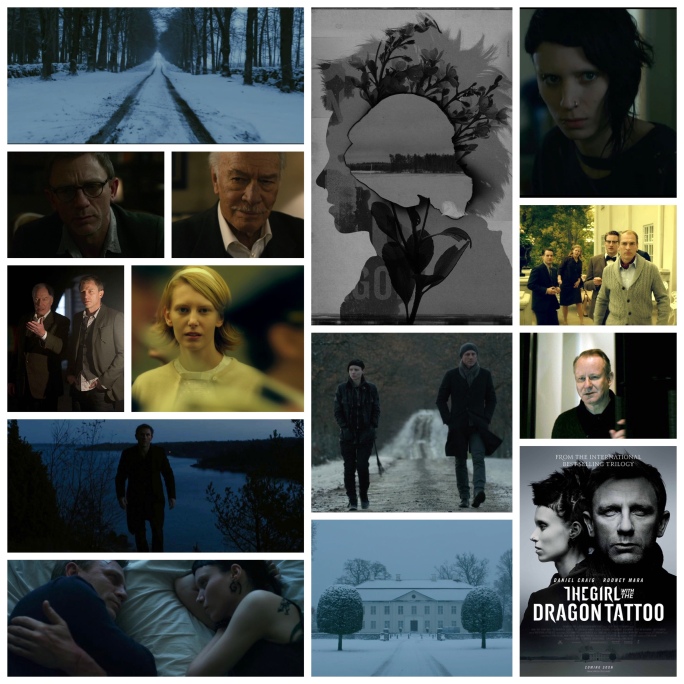
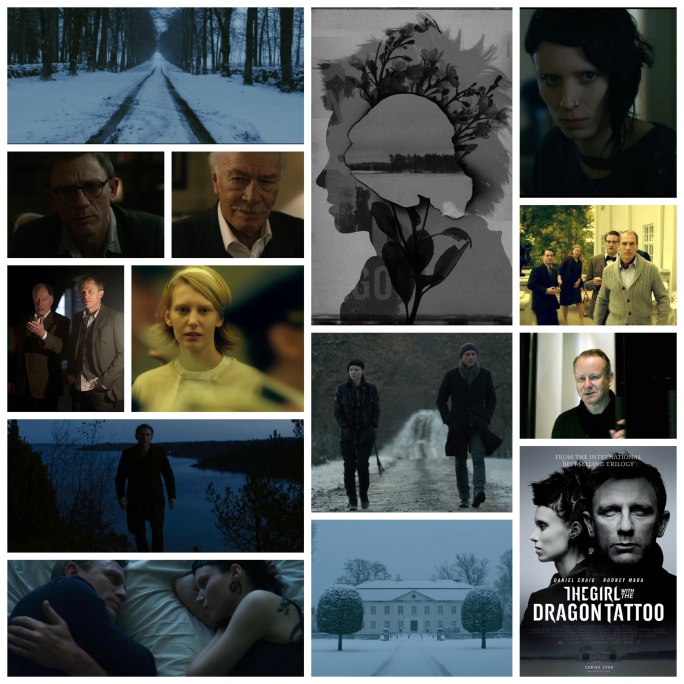
David Fincher’s The Girl With The Dragon Tattoo

If you think about it, the source material for a story like The Girl With The Dragon Tattoo is the perfect kind of thing for director David Fincher to have a whack at. It’s dark, kinky, and riddled with detailed clues, any of which could spell survival or a scary end for the two protagonists, and there’s an overall misanthropic edge as well. Not to say that Fincher deliberately picks dark, fucked up projects in his work, but there’s a definite gravitation towards the macabre, he has an eye for it. I love this film a lot, it’s among my favourites in his stable and I think he improved on not only the book by Stieg Larsson, but also made a better film version than the first adaptation. The original was serviceable but in a mystery like this I feel like atmosphere is key, and Fincher provides enough to get lost in. This is a story spanning decades, outlining years of dark deeds and unearthing secrets buried within secrets and as such it should feel eerie, ambient, be lit in ways that evoke the passage of time and have a soundscape that not only freaks you out but guides your focus and has you searching for clues right alongside the heroes. I feel like he definitely has those boxes solidly checked off.

Rooney Mara makes a more detached, colder Lisbeth Salander than Noomi Rapace’s hot blooded take and you could argue all night who was better in the role, but I don’t think that’s really the point. What matters is Mara is a fantastic Lisbeth, emotionally complex, seemingly shut off yet injecting pockets of warmth in where you least expect it and losing none of the caged animal or ruthless survival instinct that is so important to the character. Daniel Craig has the perfect jaded half smirk to play a guy that enters the story disgraced and surrounded by scandal, I think he rocks his role too and the chemistry between both is as tangible as the spooky Swedish ambience that Fincher turns them loose in. There’s a killer out there, one who has been operating with relative impunity for many years and right under the nose of the spectacularly dysfunctional Vanger family, whose industrialist patriarch (Christopher Plummer, excellent) enlists Craig’s help in finding the truth. His daughter went missing from their secluded island home some thirty years before as we see in dreamy flashbacks where Julian Sands steps in for Plummer. Craig’s Mikael and Mara’s Lisbeth are a pair of introverted workaholics who both come from rocky pasts and understand the kind of risk involved with this type of work, but neither are prepared for the brand of sick horrors that revolve around this mystery. Fincher carefully casts the film with impressive talent including Joely Richardson, Steven Berkoff, Robin Wright, Yorick van Wageningen, Goran Visnjic, Donald Sumpter, Embeth Davidzt, Alan Dale, Geraldine James and scene stealer Stellan Skarsgard as another key member of the Vanger family.

One of the most effective aspects of the film is the original score by Trent Reznor and Atticus Ross, a subtle atmospheric composition that brings on feelings of dread, unseen danger and anticipatory anxiety wonderfully. As Craig’s car snakes along the long driveway of Plummer’s extravagant yet isolated mansion, a strange warble of tubular bell style music fills the snowy air, giving off incredibly creepy vibes and in turn giving me chills every time. Fincher cranks up the dial on violence and sex about as far as one could in a Hollywood film and as such you get some deeply disturbing scenes to sit through, especially involving Lisbeth’s deranged legal guardian, who really made me question the foster system in Sweden. None of it is glorified though and all serves to tell this dark story in the most affecting way. There’s a shadowy blanket over the film, everything seems frosty and frigid thanks to the cinematography from Jeff Cronenworth, as if there’s some spell of dark magic laying over the land and protecting those hiding within it as Lisbeth and Mikael race to find them. This is a perfect tale to get transported away by, a nightmarish yet strangely picturesque mystery to get lost in like a snowy night, until you arrive at the wrong doorstep alongside our heroes and then the real thrills begin. Great film.

-Nate Hill

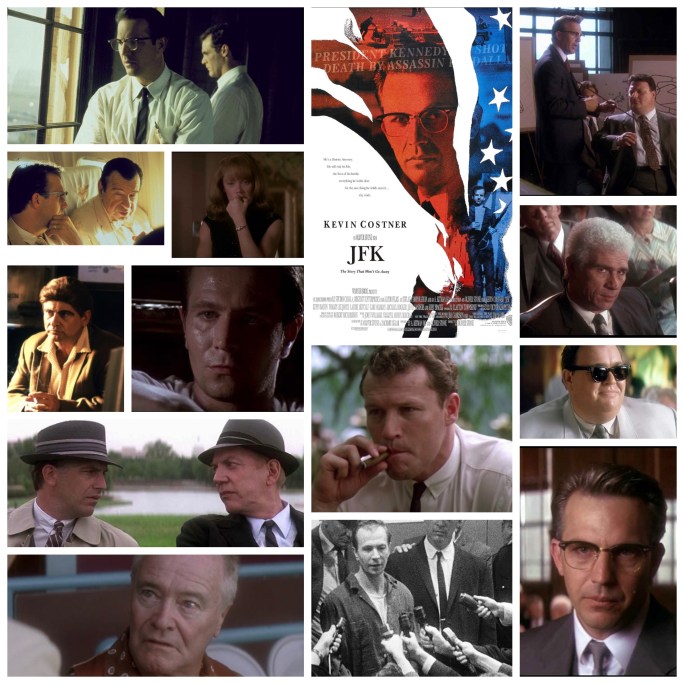
Oliver Stone’s JFK

I’m not so much for political films but Oliver Stone’s JFK is an engrossing, obsessive, feverish and altogether brilliant piece of clandestine intrigue and I loved every minute of its impossibly long runtime (the director’s cut runs well over three hours). It might be excessive to take such an indulgent amount of time for one story to play out but Stone is fixated on every single aspect and detail of his narrative, scrutinizing the dark corners of shadowy politics, leaving no stone unturned and the result is a film that draws you in so close that at times the effect is breathless, a surging momentum full of moving parts, characters and secrets all unfolding in a mammoth production.

Stone has taken the real life investigation of New Orleans District Attorney Jim Garrison, used it as a launching pad and blasted off into his own theories, queries and plot turns. Kevin Costner is excellent and uncharacteristically vulnerable as Garrison, an idealistic family man determined to shine a light on the truth until he realizes he and his firm are in over their heads. This thing has one of the most jaw dropping ensemble casts I’ve ever seen assembled, right down to supporting turns, cameos and walk-ons populated by recognizable faces. Costner and his team are the constant, a dogged troupe that includes varied folks like Laurie Metcalf, Wayne Knight, Jay O. Sanders, Gary Grubbs and the always awesome Michael Rooker. We spend the most time with them as they discuss theories at length, argue in roundtable fashion, interview witnesses and it all feels eerily as if every discovery they make leads to ten more even more unnerving ones. Others show up throughout the film and when I say this is a cast for the ages I’m not even kidding. Jack Lemmon does paranoia flawlessly as a nervous informant they visit, Gary Oldman is a super creepy Lee Harvey Oswald, Joe Pesci impossibly rambunctious as oddball David Ferrie, Tommy Lee Jones and his poodle wig are icky as a corrupt US Senator and that’s just the start, there’s great work from everyone under the sun including John Candy, Walter Matthau, Sissy Spacek, Vincent D’onofrio, Kevin Bacon, Martin Sheen, Pruitt Taylor Vince, Edward Asner, Frank Whaley, Brian Doyle Murray, Bob Gunton, Lolita Davidovich, John Larroquette and more. Donald Sutherland is pure showstopper as a mystery man who has an epic, sixteen minute long tinfoil hat monologue that is so well delivered and perfectly pitched that we don’t even really notice what a massive enema of exposition it is simply because he and Stone keep up the energy levels and, in turn, us riveted.

That’s the thing here, I went in expecting perhaps something intriguing but maybe a little dry in places or bits that might lag because it is, after all, a three plus hour film revolving around politics. This is Stone though, and the way he films it is taut and immersive the *entire* way through, which is just so fucking impressive. He plays rogue agent with the facts, using established suspicions to draw one wild conclusion after another until we aren’t sure if everyone we see onscreen perhaps had something to do with JFK’s death. That’s his goal here though, he seeks not to provide concrete answers (how could he) but instil the kind of creeping dread, mounting uncertainty and fear that I imagine gripped the nation for years following this event. Conflicting conspiracy theories, clues that lead to nothing, unexplained and admittedly suspicious witness deaths, it’s all here and it all makes for one damn good mystery film.

-Nate Hill

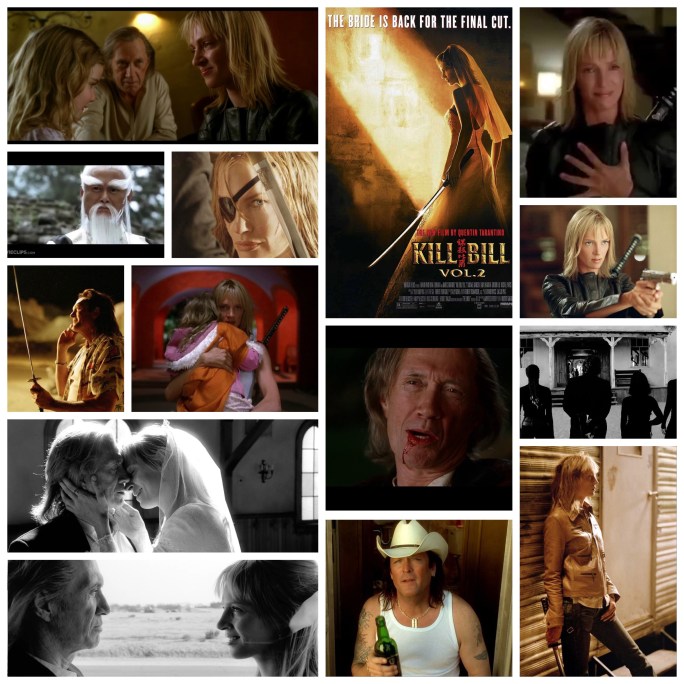
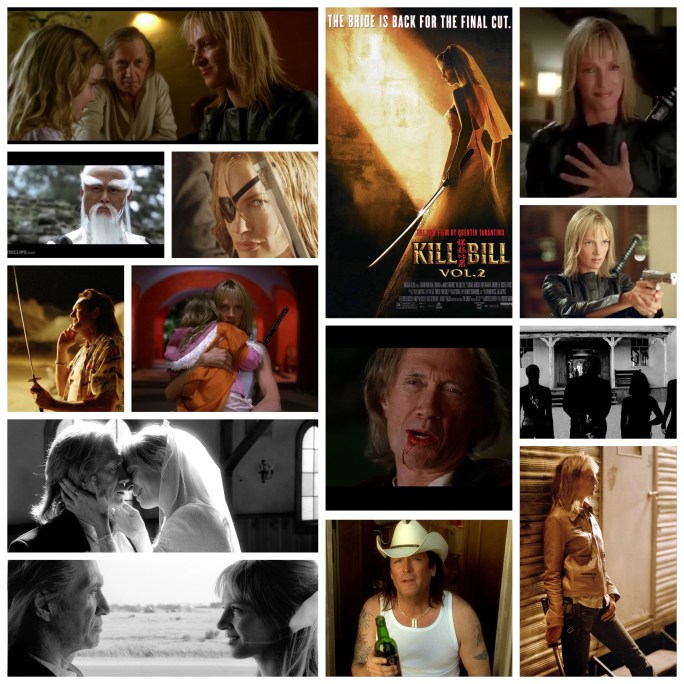
Quentin Tarantino’s Kill Bill Volume 2

Roger Ebert observed about Quentin Tarantino’s Kill Bill Volume 2 that although it takes place in a heightened reality that’s removed from the realism of our own, the human behaviour and emotions explored couldn’t be more real or more relatable. That insight is precisely why it is my favourite Tarantino film and in particular I think that the last half hour or so is the best, most thoughtful and intuitive thing he’s ever directed in a career that for the most part hasn’t dug that deep in such a way.

Every filmmaker must duck expectations and adapt or fall victim to self parody and repetition, and the guy understands this well. Volume 1 is a thrilling love letter to samurai films, peppered with sword fights, hectic editing and celebrates movement, choreography and synergistic expression. With this film though he moves inward, not just showing us the extreme actions of these characters, but why they’re doing them. The first film opens with the how, as Bill (David Carradine) tenderly puts a loaded gun to the temple of The Bride (Uma Thurman) and pulls the trigger. This film shows us what led to that, and the consequences yet to come, why indeed she feels the need to Kill Bill. It’s a beautiful story that’s acted to the nines by Thurman and Carradine, both giving their career best. The samurai vibe is somewhat present again but here the tone is that of a spaghetti western. Anyone who knows or loves this genre (pauses typing and raises hand) is familiar with the aesthetic: languidly paced shots, long glances lingered on by a camera that moves slowly, stolidly. Orchestral significance placed upon seemingly mundane or small gestures and measured, introspective performances. It’s all here, from the glorious wide shots of the California desert to the laconic inwardness of Michael Madsen’s Budd to the Morricone strains that Quentin loves to sample.

The Bride continues her quest stateside, taking on Madsen’s lowkey deadly cowboy, tussling with Daryl Hannah’s treacherous banshee Elle Driver, punching her way out of a sealed coffin six feet deep and even finding time to stop in for a quick visit with Michael Parks, sneakily playing a different role than Volume 1. Madsen is off the chain spectacular as Budd, a gruff, sadistic badass who has seen better days and seems done with life until she brings out the fire in him once again. His quiet scene with Carradine outside the rundown trailer is a showstopper, as is his priceless expression when chewed out by an asshole boss (Larry Bishop, providing the funniest moment in either of the two films). Tarantino brings out the best in Madsen and this is their finest collaboration, proving in tandem what creative forces both or them are.

This is the Uma and David show when it gets down to it though, their eventual confrontation is what we’ve been anticipating since the beginning, but he doesn’t quite give us what we expect. They meet at a quiet Mexican villa, she sees her daughter for the first time and the words spoken between them cut deeper than any of the physical blows, of which there are barely any. Both The Bride and Bill know exactly what their respective actions have done to them both individually and as a couple, and that there’s no going back from a betrayal like that. The fascinating thing, for me at least, is seeing how despite this anguish and hatred, they are still very obviously in love with each other, something that isn’t easy to get across without spelling out, but these actors nail it. I love the writing here, the body language, the time and attention spent on exploring the pathos, I think it’s Quentin’s showcase sequence and the one that dispels anyone from thinking of him only as ‘that guy who makes violent movies.’

He often works with his pal Robert Rodriguez and most people might immediately think of GrindHouse or Sin City but this is my favourite of their collaborations. Robert isn’t seen or present behind the camera but he composes an original score that is heartfelt, evocative of the western genre and altogether a brilliant composition, particularly the cues around Madsen. This is unique in the fact that it’s the only film Tarantino has made using a score in a career of distinctive soundtrack choices.

From the stunning opening sequence shot in dreamy black and white and aching with palpable yet guarded emotion to the intense, exhaustive training montages with warrior Pai Mai (Gordon Liu, also showing up in a different role) to the blood n’ dust takedown of Elle and Budd in the bone dry desolation out west to the final showdown and reconciliation of sorts with Bill, this is a fantastic story and one hell of a piece of filmmaking on every level. The two Volumes are so very different and I noticed the other day that although I’ve seen both probably hundreds of times, I’ve never watched them back to back. They are separate entities, two sides of the same coin. Bill tells The Bride that her side ‘always was a little lonely.’ The same goes for Volume two, there are less characters, more time spent on emotion and a slightly mournful feeling that the frenzy of Volume one just didn’t have time for. I love this portion of the story the most, I’ve always felt just a tiny bit more at home in Volume 2, and I will never have anything but absolute love for it.

-Nate Hill
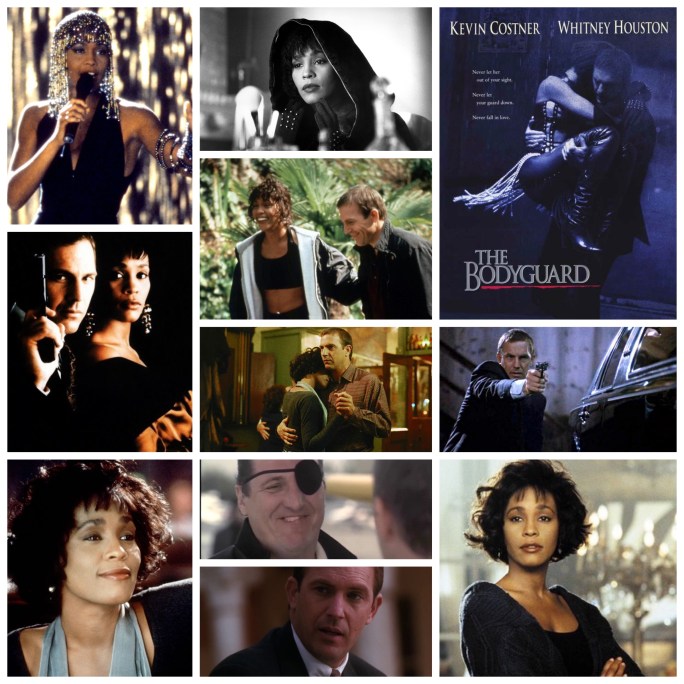
Mick Jackson’s The Bodyguard

I really wanted to like The Bodyguard, and I even convinced myself during it that it’s a better film than it is, but at the end of the day i had to reconcile that it’s just messy, unfocused and doesn’t sell us enough on the story. By now everyone know what’s up here: sombre, serious personal bodyguard Kevin Costner is hired to protect free spirited, social butterfly pop star Whitney Houston from any assailants or stalkers. She’s reluctant at first, he’s a paranoid micro manager who uneases her entourage. There’s a rapport that leads to romance, and they fall in love. Once the stakes are high, an elusive, dangerous stalker begins to make moves on her, threatening everyone’s life and the romance we are supposed to care deeply about. But…do we? There is a modicum of natural chemistry between the two, but it isn’t allowed to bloom organically and ends up both choked and smothered by an overelaborate thriller baseline full of ludicrous plot turns and sensationalistic stuff. Their affair is periodically put on hold by threats, the faux academy awards, a trip up north to visit Costner’s father (Ralph Waite) and other diversions but in a film with this much potential I expected much more time spent solely on these two, their interactions and what they mean to each other. The thriller elements are played up to maniacal heights and I really wish they would have calmed their shit with it, I know that’s part of the deal here but they’re trying to be In The Line Of Fire or something and it’s laughable. The film finds some footing in Houston, who gives a fantastic performance and the best work in sight here, but neither Costner, the script or the overall resulting film rise up to meet her. She’s soulful, vulnerable and full of life while everyone around her seems sort of vaguely confused and preoccupied with nothing in particular, apart from Mike Starr who shows signs of life as a loyal member of her posse. The thriller machinations aren’t believable and a character who is purported to be so keen and intelligent as Costner is here would have realistically figured out the identity of the killer an act earlier than he does here, but the plot requires him not to until the very last minute, frustratingly so. Don’t even get me started on the ending that is so not earned by a well cultivated relationship that came before, or the super awkward, random final shot that had me laughing but not in a good way. Worth it for Whitney, it’s obvious here why she a superstar and she has the acting chops to back up that beautiful voice, but she really deserved a far better film than this.

-Nate Hill

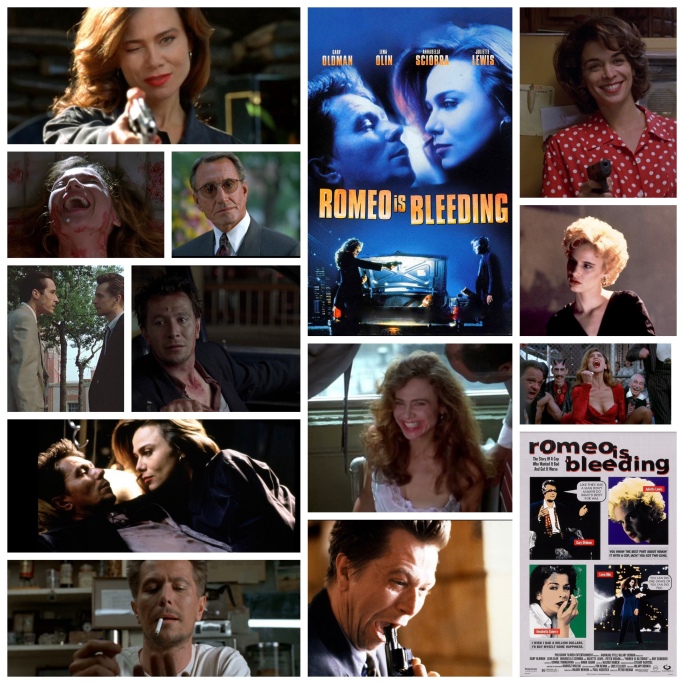
Peter Medak’s Romeo Is Bleeding

Somewhere out there in an anguished desert enclave along one of the many desolate stretches of American highway is Jim Dougherty (Gary Oldman), stranded in exile at a lonely rest stop cafe as Peter Medak’s brilliant, haunting neo-noir Romeo Is Bleeding opens.

Jim, as we learn through forlornly narration, was once a spectacularly corrupt NYC cop named Jack Grimaldi, a man who got too ambitious in the worst way and learnt every lesson the hardest possible fashion he could. Jack was a greedy, scheming piece of work who two timed his loyal wife (Annabella Sciorra, fantastic) with a ditzy cocktail waitress (Juliette Lewis) and did his best to upend everything the department works for by playing it against the mafia with increasingly disastrous results, stuck on a hollow treadmill chasing dollar signs. But his wife and mistress weren’t the only women in his life, as he soon meets Mona Demarkov, a seductive Russian contract killer played by Lena Olin in a performance that is to be applauded, feared and lusted after in equal measures. Mona is the wild card, the hurricane that upends an uneasy equilibrium Jack has toiled sweatily to set up like a house of cards, ready for her to blow down. Dumped in his lap by the Feds to babysit until mob operatives arrive to kill her, she manipulates, seduces and torments Jack within moments, but she’s only just begun. She escapes into New York and leads everyone on a terrifying goose chase of bloody mind games and gangland espionage, threatening to tear both organizations, not to mention Jack’s sanity, to pieces.

Oldman has never exuded the specific kind of sweaty desperation he showcases here, he’s got three women too many, nasty mafia Don Falcone (a quietly dangerous Roy Scheider) breathing over his shoulder and fellow cops inches away from sniffing out the rat in plain sight. Gary somehow comes across as likeable despite all this heinous behaviour, like a lost puppy who wandered into the wrong cave. Olin really lets loose with her work, she’s a villain not just for the noir hall of fame but for the ages, a murderous black velvet spider on a wanton spree of anarchic, sociopathic, psychosexual destruction and loving every minute of it. They’re supported by an epic roster of talent including Will Patton, David Proval, Larry Joshua, James Cromwell, Ron Perlman, Tony Sirico, Stephen Tobolowsky, Dennis Farina as a gregarious mafioso and the great Michael Wincott as Jack’s underworld pal Sal who turns on him like a jackal when things get out of control.

Many people seem to see this as an interesting yet ultimately flawed piece with uneven tone and what have you, but I couldn’t disagree more. For me this is pretty much as close to perfect as a film can get. Jim sits out there on the lonely byways of some forgotten region and recounts the tale of Jack, there’s such a beautifully mournful melancholy to his story, a true tragedy and cautionary tale laced with grit, jet black humour and an ever so subtle fairytale vibe. Writer Hilary Henkin spins a wild, surreal and slightly self aware screenplay here, while Mark Isham’s creepy, music box infused score gives off bushels of atmospheric portent. I feel like this is another one that was maybe ahead of its time, or perhaps just an acquired taste. I’m happy to see it has a budding cult following these days because it really deserves people’s time, it’s one of the very best crime films of the 1990’s and one of my all time favourite stories out there.

-Nate Hill