STEVEN SODERBERGH’S CONTAGION — A REIVEW BY NICK CLEMENT

2

Directed with his usual brand of stylish, cold, clinical detachment, Steven Soderbergh’s riveting virus thriller Contagion is a thinking person’s horror film, a genre piece that defies genre in more than a few ways, never giving into cheap Hollywood sensationalism or resorting to hackneyed plot twists. With basically everyone in town in a juicy supporting role, Soderbergh surgically raced through Scott Z. Burns’ streamlined, startling, and sensational screenplay, never resting for a moment, aided immeasurably by Cliff Martinez’s pulsating electronic score, which happens to be one of my absolute favorites from recent years. This is procedural cinema at its finest – no bloat, no bull, just the facts – so if you’re into this sort of thing (Zodiac, All the President’s Men, Shattered Glass), it’ll knock you sideways and leave you wanting more. The final moments sting with sly irony, Soderbergh’s always incredible sense of cinematography and editing was fully on display (Peter Andrews and Mary Ann Bernard POWER), and the fact that the movie never once opted for the sentimental (smartly and believably, nobody is safe in this movie…as it should be!) makes the nastiness of the briskly moving plot all the more chilling. Contagion was part of that glorious final roll of movies (The Girlfriend Experience, The Informant!, Haywire, Magic Mike, and Side Effects – my lord!) that Soderbergh embarked on before he began work on the brilliant TV series The Knick, and I really hope that his extended absence from the big screen comes to an end very soon. He’s always been one of the sharpest, most erudite of filmmakers, and his beyond eclectic filmography will always fascinate me; I’m just being greedy — I want more! Contagion takes the virus-thriller tropes and shakes them up, looking at the societal and medicinal ramifications from a plausible angle, with all of the film’s collaborators striving to make something timely, topical, and relevant. I think it’s a great, un-showy, deeply troubling look at what will happen when a virus strain comes along and takes us all by surprise. Because you’re living in denial if you think something like this can’t – or won’t – happen at some point in the future.

4

MICHAEL MANN’S COLLATERAL — A REVIEW BY NICK CLEMENT

2

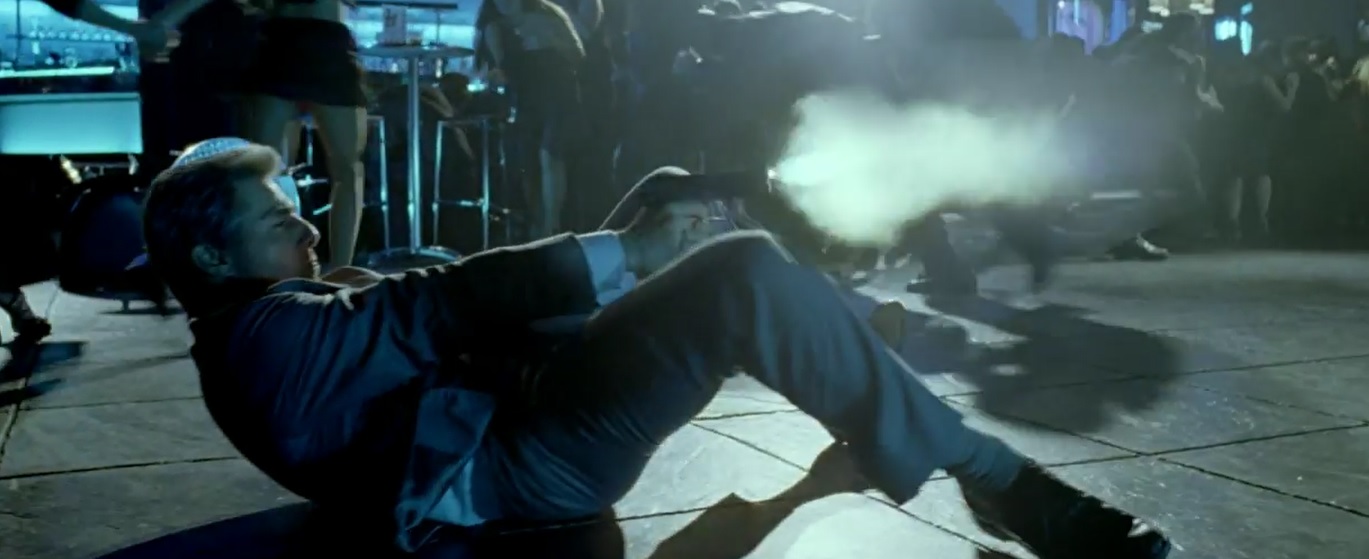
Collateral is a laser-precise action thriller, that as per usual for macho auteur Michael Mann, also stops to pause for the introspective moment from time to time, certainly more than your average studio shoot ‘em up. This was a theatrical five-timer for me, and it’s a movie I’ve revisited numerous times on DVD and Blu-ray; Mann knows this rough, urban terrain better than anyone else at the moment. Breathlessly written by Stuart Beattie (with uncredited rewrite work by Mann and Frank Darabont), this was one of the key films to bust down the gate for big-budget studio actioners to get the digitally-shot treatment. Cinematographers Paul Cameron and Dion Beebe collaborated with Mann on the intensely stylish visuals, with nocturnal Los Angeles giving off a totally unique vibe that’s dangerous and exotic and alive with endless possibility; I love how digital cinematography allows the viewer to see far off into the distance. Tom Cruise gave one of his most magnetic performances as Vincent, a hitman made of steely discipline and possessing seemingly air-tight internal logic. Jamie Foxx, as Max the cabbie, made for an unexpectedly great co-star, with his initial timidity turning into reluctant bravado by the final act, in an arc that felt honest considering the circumstances. The dynamite supporting cast has showy turns from a greasy Mark Ruffalo, the always commanding Bruce McGill, a priceless Javier Bardem doing some excellent storytelling, a sharp Jada Pinkett Smith, edgy Peter Berg, the soulful Barry Shabaka Henley, and the sagacious Irma P. Hall, with awesome cameos by resident ass-kicker Jason Statham and the spunky Debi Mazar.

The Statham bit at the airport, in particular, is a real hoot; Mann isn’t known for being a “fun” filmmaker, and in this one wink-wink moment, you get the sense that he was enjoying himself in a way he normally doesn’t. James Newtown Howard’s moody score pulsates with electronic-synth-sexiness, with all of the physical locations choicely selected for maximum atmospheric effect. And honestly, enough can’t be said about the downright hypnotic cinematography in this film; shot after shot is absolutely striking in ways that are hard to describe. Memorable moments include a roaming coyote shambling across a lonely Los Angeles city street, a phenomenally staged and extra-lethal Korea town night-club shootout, and that fantastic encounter between Cruise and Henley at the jazz-club, which culminates in both verbal and visual poetry which highlights the chiaroscuro quality of the dimly lit interior. The back and forth dialogue between Cruise and Foxx during the various cab rides sting with acidic bite, with both actors getting more than one moment of serious emoting amidst all of the violent showdowns and confrontations. This was an extremely disciplined effort for Mann, and however minor some people may find it amongst the rest of his sensational filmography, it’s one of those endlessly re-watchable films that paid attention to all of the aspects of the medium, resulting in a rock-solid genre entry that feels a cut above from the norm.

3

JOHN PATRICK SHANLEY’S DOUBT — A REVIEW BY NICK CLEMENT

2

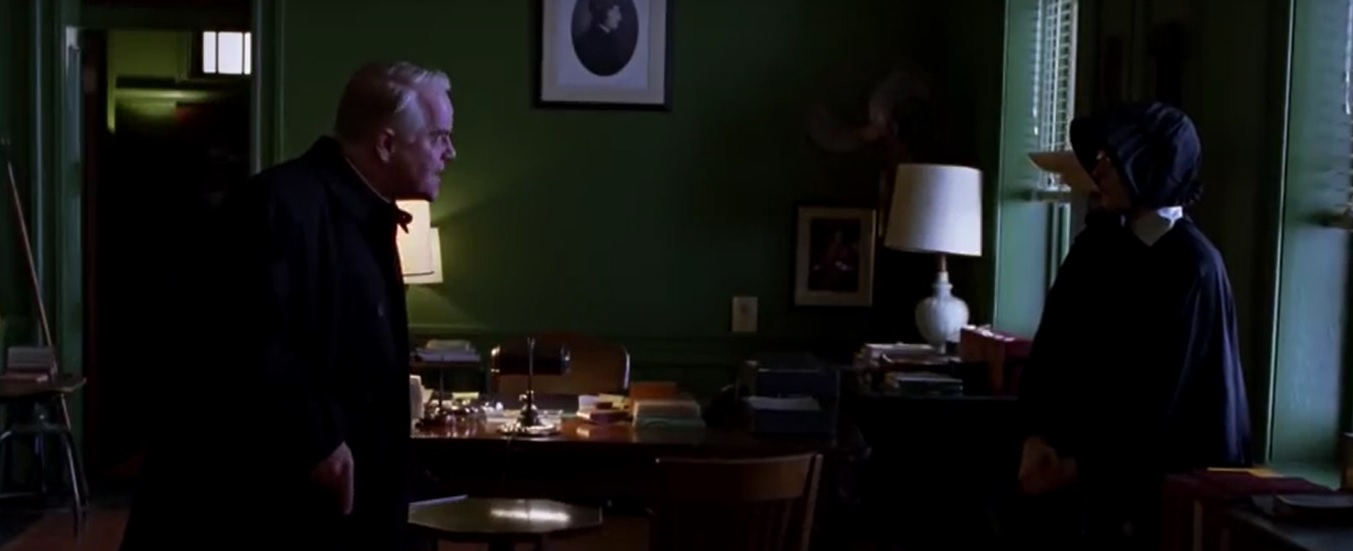
Doubt is an impeccable piece of filmmaking. From the Oscar-nominated writing to the air-tight direction to the spellbinding performances, it’s a precision-tooled work from a master storyteller who has an amazing grasp on what he wants to say. Adapted from his Pulitzer winning play of the same name, writer-director John Patrick Shanley crafted one of the most thought-provoking films from 2008 with Doubt, a piece of work that scorches the nerves because of how vital and possible all of it feels. Set in the 1960’s at a NYC Catholic school, Doubt tells the story of a priest who is accused of improper behavior with one of his altar boys. Philip Seymour Hoffman, forceful as ever, is Father Flynn, a seemingly good and decent man who takes a liking to the only black student/altar boy in the school. The scarily intense Meryl Streep is Sister Beauvier, the main accuser, who teams up with another nun, the fragile Sister James, played by Amy Adams, in order to try to bring Flynn down. Sister James is the one who thinks that something improper has occurred; she doesn’t have definitive proof but she merely thinks that something bad has happened. Shanley asks his viewers to make a decision at the end of the film as to who was right, who was wrong, who was lying, and who was telling the truth. This is a hard film to review without spoiling because there’s little to no fat on the bones of the story, with each scene feeding into the one previous and the one following. Every piercing line of dialogue is important to the overall narrative and every moment in each of the three central performances are so integral to the film’s outcome that it becomes a tricky movie to discuss without giving everything away.

And then you have an emotionally shattering Viola Davis, who stole some heartbreaking scenes as the altar boy’s deeply concerned mother; there’s not a false note played by any of these superlative performers, all of whom were bestowed with Oscar nominations for their riveting portrayals. With Doubt, what I think Shanley was trying to get his audience to ask themselves is: How do we really know what goes on behind a closed-door? Is it enough to simply think that someone has done something wrong before you attack their character? What is a person’s moral compass made up of, and how do we truly know the people we work and live with? How do we decide who is right and who is wrong when all of the facts aren’t made clear? Working with the legendary cinematographer Roger Deakins, Shanley brought an appropriately chilly visual aesthetic to the film, with Deakins stressing grays and browns and darkly lit interiors with tons of Dutch angles and long takes that maximize the dramatic potency of every face-off between the verbally sparring actors. Every line of dialogue crackles with authority, especially when spoken by Hoffman and Streep, and Adams, in the film’s most layered role, did excellent work, painting a portrait of a confused woman who may or may not have started something she has no way of ever controlling. And most importantly, Shanley knew exactly how to wrap up his story, and during the film’s final, stinging moments, you’ll be left with a lot of fodder for discussion after the final credits have rolled.

3

NORMAN JEWISON’S MOONSTRUCK — A REVIEW BY NICK CLEMENT

2

Nobody makes effortless romantic comedies like Moonstruck anymore. Beautifully written by John Patrick Shanley (who won the Oscar for Best Original Screenplay) and wisely directed by Norman Jewison, this film is funny, heartfelt, genuine, and so perceptive of Italian culture it almost hurts. Cher was fantastic in a role that netted her a Best Actress Oscar (that hair!), Nicolas Cage was at his wild-eyed and passionate best, and the entire supporting cast just nailed every single opportunity that they were given, especially Olympia Dukakis (who took home the Oscar for Best Supporting Actress), Vincent Gardenia, Danny Aiello, and John Mahoney. Jewison was one of those steady and sturdy filmmakers who never seemed to get the credit he deserved, despite winning awards and almost always garnering critical acclaim; was it that he wasn’t a “Hollywood” guy that kept him off to the side a bit? He always seemed interested in tackling important social and/or political issues within the narratives of his films (he was also a prolific producer), and he was seen as a filmmaker who was able to turn the potentially inaccessible into something commercial.

Moonstruck was one of his more classically structured films, an effort that played to the conventions of its genre but one that enjoyed poking fun at the tropes. Shanley’s rich and frequently hysterical screenplay touched upon ideas of love, chance, and the importance of family, and at no time did the writing ever get overly sentimental or cloying, a trap that befalls many films of this ilk. Moonstruck opened on December 18, 1987, and immediately became a massive theatrical hit, spending 20 weeks in the top 10 of the box office, and grossing close to $100 million. And it’s remained a popular favorite for years due to the simple fact that it just flat-out works on every level. It’s romantic without being sappy, sexy without being puerile, and intelligent without being pretentious. Nothing was forced, the film was never vulgar just to be vulgar, there was a terrific sense of New York City running all throughout, while the low-key manner in which the plot unfolded should be held as an example for this variety of storytelling, which tends to get overstuffed and too complicated for its own good at times. I also hope that the people who created My Big Fat Greek Wedding are sending weekly royalty checks to Shanley and Jewison. “Snap out of it!”

3

GUS VAN SANT’S MILK — A REVIEW BY NICK CLEMENT

1

In 2008, eclectic filmmaker Gus Van Sant released two films: Paranoid Park, a challenging and formally adventurous indie, and the more classically structured but no less emotionally stirring biopic Milk. I’ve long been fascinated by Van Sant’s interesting and unpredictable career, and his film about San Francisco politician Harvey Milk, who was the first openly gay politician in the U.S., remains as powerful now as it did when I first viewed it almost 10 years ago. Sean Penn delivered a splendid performance as Milk, and everyone around him, including James Franco, Josh Brolin, Emile Hirsch, and Diego Luna all offered fantastic supporting turns. Dustin Lance Black’s sharp screenplay was heavily researched, the dialogue intelligently written, and the film carried a sense of the tragic almost from the beginning. Shot by the incomparable cinematographer Harris Savides, the film had a vibrant and period-authentic aesthetic, which helped to solidify the time and place of the socially combustible narrative. Harvey Milk stood up for the entire gay community in the United States when nobody else dared to speak up for what they knew was right. This made him both loved and hated; wherever he went and whatever he did, his actions provoked passionate responses from everyone who crossed paths with him. The level of conviction that Penn brought to the role of Milk was remarkable, as he fully jettisoned any lingering elements from previous performances, totally embodying the man in both body and spirit. Here was a man who decided that enough was enough – it was time to set things right for himself and everyone like him. Penn breezed through the film with likable ease, and because death hangs over the proceedings so ominously, there was genuine sadness when he met his ultimate fate.

The other actors were all up to the task as well. Franco, playing Milk’s lover and first campaign strategist Scott Smith, gave one of the best performances of his career; combined with his hilarious turn in Pineapple Express, 2008 was a banner year for Franco. Penn and Franco, from the first scene, generated real on-screen chemistry, making their relationship all the more special and affecting. Brolin was absolutely gripping as the confused and desperate Dan White, a man who may or may not have been gay himself, giving a chilling performance as a person unable to understand the potential differences in other people; it’s a role that could have been oppressively one-note, but Brolin brought layers of emotion and mental complexity to the role. Hirsch registered strongly as Cleve Jones, one of Milk’s political strategists, and Luna, playing Milk’s emotionally troubled boyfriend Jack Lira, brought skittish, nervous energy to every scene he appeared in; you never quite know what will happen when he appears on screen. Van Sant has led an extremely idiosyncratic career as a filmmaker, and after embarking on some seriously avant-garde works (Elephant, Gerry, Last Days, and the previously mentioned Paranoid Park unofficially form a rather brilliant quartet of minimalistic storytelling), it appeared as if he wanted to prove that he could still deliver a more traditional and commercially friendly piece of filmmaking, and that he did with this engaging, wholly engrossing time capsule. And in working with Savides for the fifth time on Milk, Van Sant seamlessly blended archival footage with vivid re-creations of San Francisco in the late 1970’s; the atmosphere that this film possesses feels tangible. It’s sort of like a visually thematic cousin to the work that Savides did on David Fincher’s masterful serial killer/journalism thriller Zodiac. Danny Elfman’s score was never intrusive yet offered wonderful moments of musical inspiration while Elliot Graham’s fluid editing kept the two-hour run time moving along at a swift but unhurried pace. As far as biopics go, this one is at the top of the pile.

2

LUCIEN CASTAING-TAYLOR & ILISA BARBASH’S SWEETGRASS — A REVIEW BY NICK CLEMENT

1

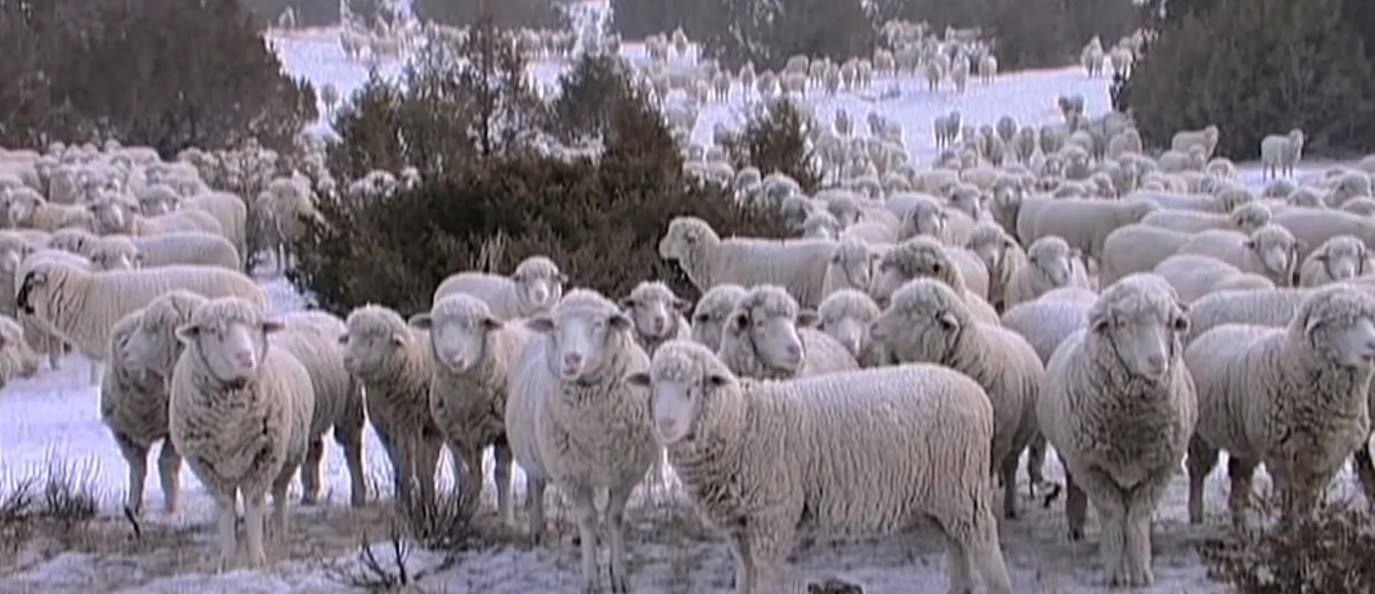
Sweetgrass is one of the most beguiling documentaries I’ve ever encountered, a piece of visual anthropology that I can’t compare to anything else. It’s a piece of work that will likely alienate most viewers, but for those with patience and an interest in spare, direct storytelling, this exploration of sheep herders in the Montana wilderness will leave a major impression. While capturing the rituals of the shepherds as they herded their livestock through the Beartooth Mountains, the filmmakers covered stunning landscapes, and braved dangerous weather and the threat of various wild animals, including bears and wolves. As the shepherds make their journey, the film depicts the hardships that they face in their age-old occupation, which seems largely outdated in 21st century America. The film is from the husband and wife filmmaking team of Lucien Castaing-Taylor and Ilisa Barbash, who also created the strangely haunting fishing trawler documentary Leviathan, so if you’ve seen that film, you’ll know what to expect from Sweetgrass. No dialogue, no pandering, no overt messages or speechifying; what you see is what you get.

My thing with cinema is this: TAKE ME SOMEWHERE I’VE NEVER BEEN. Well…I’ve never herded thousands of sheep through rocky and treacherous terrain, and I likely never will. But this film gives you an astonishing sense of how difficult this job is. Honestly…this documentary is a masterpiece of execution, showcasing simplicity at its finest, and offering up stark majesty on a genuinely grand scale. It’s also, intended or not, a deeply hysterical portrait of potential madness, and while the film takes a harshly unsentimental gaze at the shepherds and their animals, it’s never depressing or degrading. Werner Herzog and Terrence Malick would lose their minds over this piece of work, and I’m sort of shocked that Herzog didn’t get to this material first. Sweetgrass is an amazing deconstruction of the demands of the American cowboy and a stunning revelation into the bonds between human and animal. At various points, the camera literally stares into the souls of some of these animals, and it’s in these quiet moments that the viewer might have a religious experience, especially if they’re an animal lover; I was personally left agog by the entire effort. Sweetgrass is definitely up there with Winged Migration as one of the most fascinating animal documentaries that I’ve come across.

2

MARTIN SCORSESE’S CASINO — 20th ANNIVERSARY REVIEW BY NICK CLEMENT

6

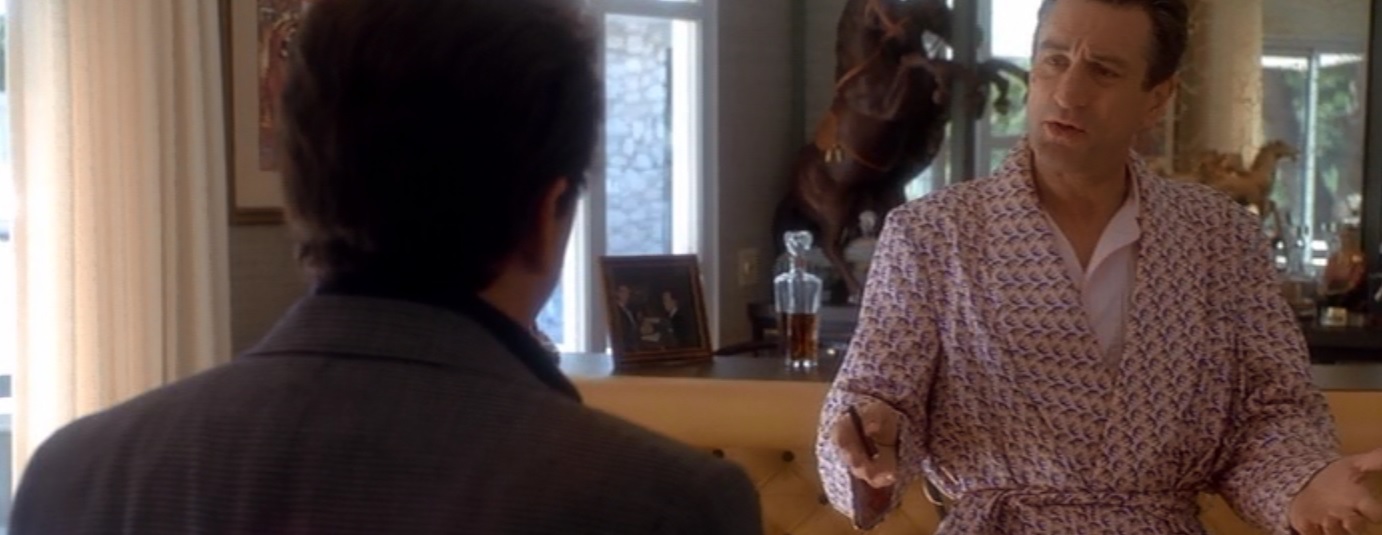
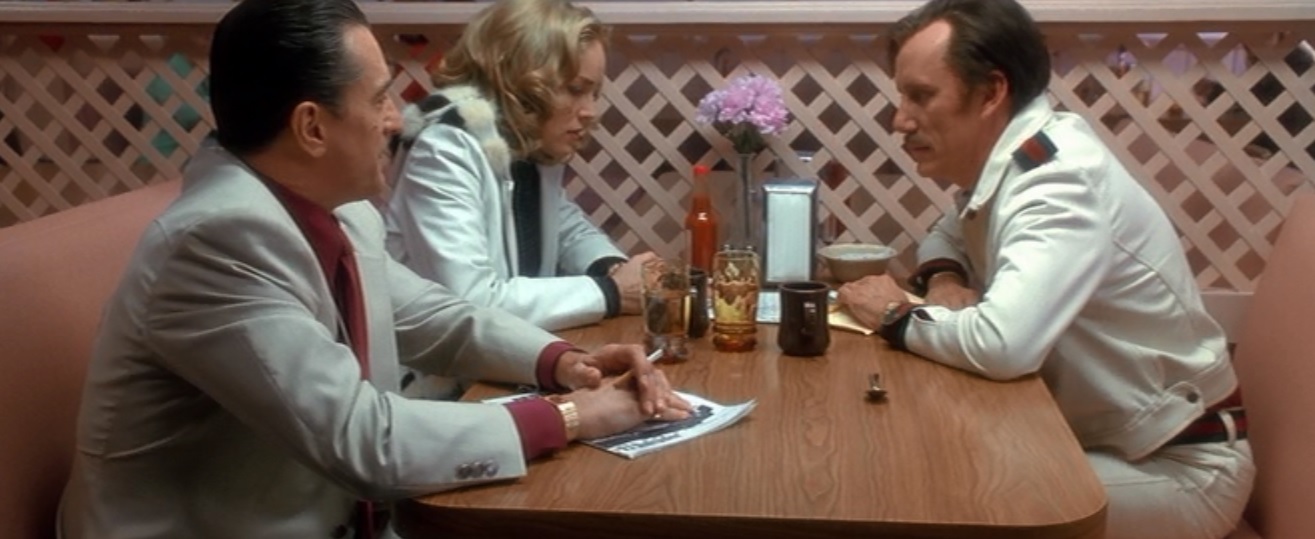
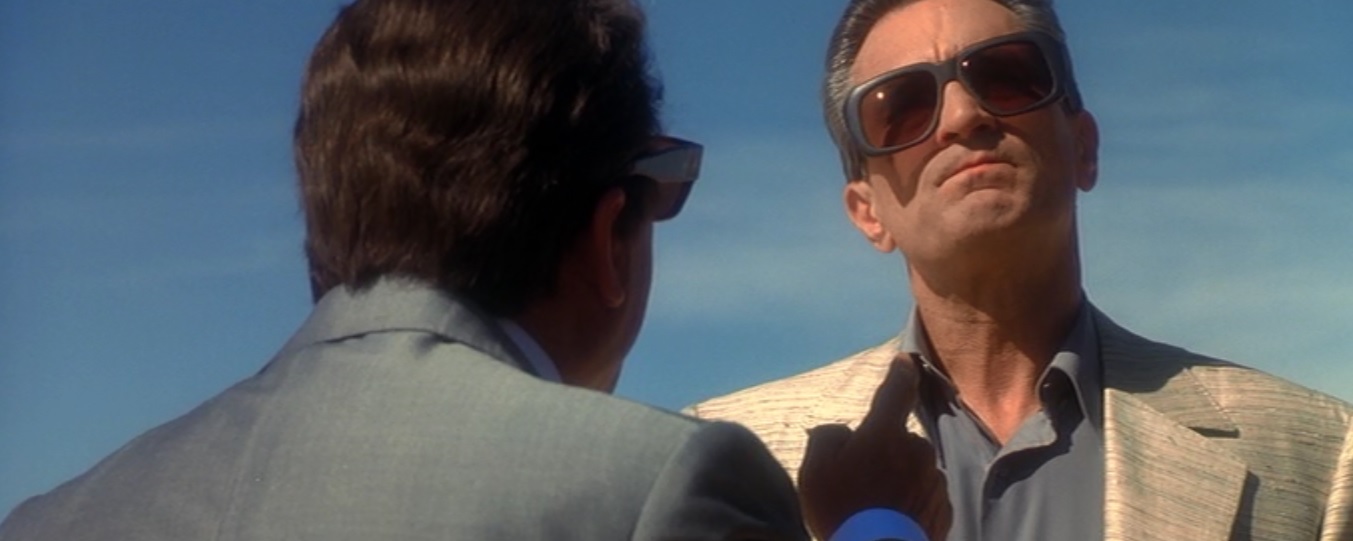
It’s crazy to think that later this month, Casino will be turning 20 years old. I’ve seen this film roughly 5,380 times and I’ll likely see it another 5,380 times more. It’s a fabulously engrossing saga of Las Vegas sin and sleaze from the very first masterful frame all the way until the last. Some have called it Goodfellas Gone West, and that’s not far off, but stylistically, the two films are very different, while of course sharing some similar traits. Casino is epic, where Goodfellas stressed the intimate, and it’s the smart way that Scorsese and his writers pulled all of the small and big pieces together that they were able to concoct a packed narrative that still remained coherent. Cinematographer Robert Richardson was in full-on flamboyant mode here, with massive crane shots, huge camera-arm movements, with as dynamic of a sense of how to shoot in widescreen that can possibly be referenced. The film is truly massive in both visual scope and story structure, with one element complimenting the other, as Scorsese ladled on the blood, profanity, and gangster tropes that everyone would expect from the master of this particular milieu.

2

There’s a journalistic sweep that encompasses much of Casino, with Richardson’s always-searching camera gliding over the action, covering the various back-room deals and violent confrontations with extreme, flashy style. Scorsese was obsessive in the details both large and small during Casino, which allowed Richardson the chance to gaze his camera upon the glitz and glamour that Las Vegas exudes. There’s a mind-boggling amount of three to five minute long stedicam shots in this film, which gives off an observational quality from moment to moment. It’s sort of ridiculous to be honest. Richardson lit Sharon Stone like a goddess in this film, always showing off her eclectic wardrobe and sexy make-up to maximum effect; do you think she had 10,000 costume changes? Everyone in the cast was just perfect, with De Niro and Pesci doing their best “one-two” with each other, while Richardson and Scorsese caught all of the sly moments from these two supreme actors which helps make this film what it is – an obsessive study of excess and greed and power. There’s even a Smothers Brother in this film!

87

There’s a level of verisimilitude that Richardson and his crew brought to this film, from the practical locations to the fully decked out sets to all of the character actors and “faces around the tables” that help to produce a tableaux effect – it’s a perfect distillation of a bygone era. And then there’s also the freewheeling sense of visual flamboyance (this is Vegas after all!) that Casino possesses, which separates it from other genre entries, and it felt like the next logical step for Scorsese in terms of his fascination with this subject matter. This was one of those movies that blew the doors off my cinema-mind 20 years ago, an example of what I’d like to call bravura filmmaking. Casino is akin to an out of control but still somehow in control locomotive that just never wants to stop moving. “An equal amount of blueberries in each muffin” POWER.

3

WILLIAM FRIEDKIN’S THE EXORCIST — A REVIEW BY NICK CLEMENT

2

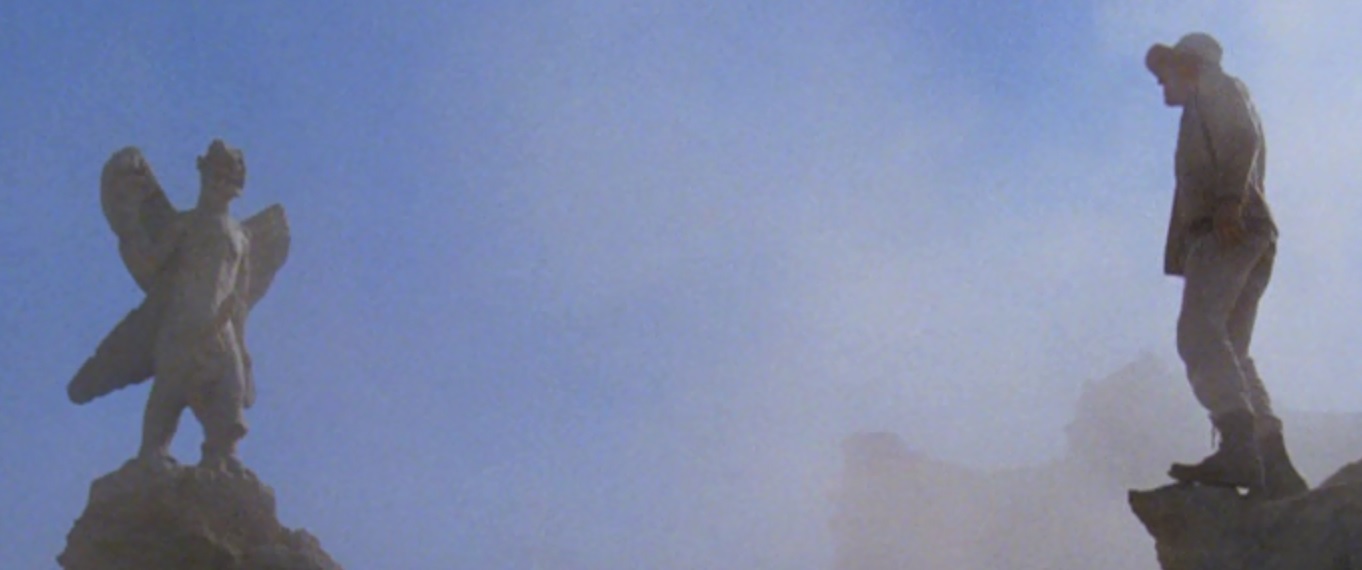
I’m not huge on horror movies. But The Exorcist is brilliant, and easily one of my all-time favorite films in any genre. This movie actually kind of scares me, every time I watch any portion of it, no matter the time of day. It certainly gets under my skin; it’s relentlessly thrilling and so ruthless in its force and skill that it’s become one of those films that I study in terms of the nuts and bolts of its construction. I’m not a believer in the idea of real-world demonic possession, but, the scenario certainly has made for more than a few memorable cinematic experiences, but William Friedkin’s beyond intense vision is truly the stuff of nightmares. Owen Roizman’s carefully measured cinematography puts you on edge immediately, as the nearly wordless opening 20 minutes plunges the viewer into an exotic world with very little context, as Max von Sydow’s priest character unearths something terrible out in the desert. Ellen Burstyn was sensational as the actress/mother struggling with almost every facet of her life, with her biggest problem being that her young daughter Regan, the show-stopping Linda Blair, has caught the eye of the Pazuzu, an ancient demon. Jason Miller’s tortured performance as Father Karras is some of the most emotionally affecting work in this genre that I’ve come across; admittedly I’m no aficionado of the horror world, but Miller’s acting in this film has always resonated with me, and has always seemed to be a cut above for this sort of fare, which can tend to be overplayed for big, obvious moments. There’s a reason this movie has endured as long as it has – it’s truly horrific in all the right ways, vulgar and nasty, never afraid to go to some truly dark and disturbing places, while still paying respect to classic genre tropes. The Exorcist feels perfect from scene to scene, with each performance totally nailed by the incredible ensemble, and all of the craft elements aligning to create one of the most visceral and truly horrifying visions of cinematic terror that’s ever been presented.

3

GEORGE CLOONEY’S GOOD NIGHT, AND GOOD LUCK — A REVIEW BY NICK CLEMENT

1

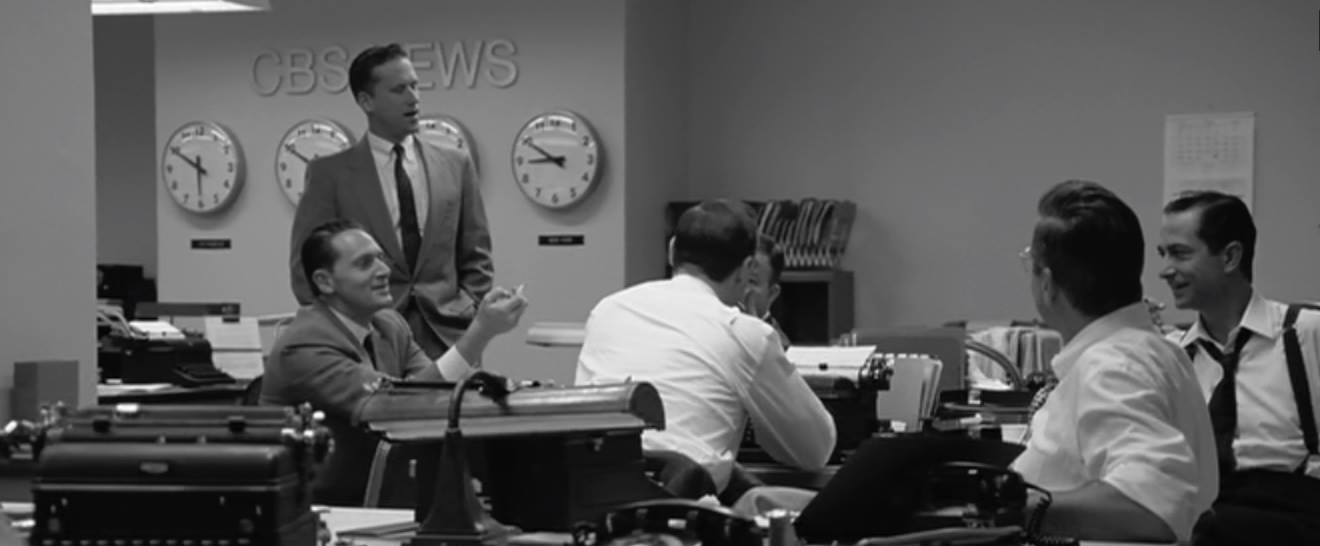
I love the mood and rhythms of George Clooney’s magnificent Good Night, And Good Luck. This film has so much classy style and verbal sophistication that it’s always a pleasure to revisit, and it’s loaded with an utterly obscene cast that included David Strathairn, Jeff Daniels, Robert Downey Jr., Patricia Clarkson, Tate Donovan, Matt Ross, Tom McCarthy, Grant Heslov (who also co-wrote the tack-sharp script with Clooney), Robert John Burke, Ray Wise, Robert Knepper, the always awesome Reed Diamond, and Frank Langella. Cinematographers must jump at the chance to shoot in black and white (or have their images digitally converted to the format), and Robert Elswit’s gloriously beautiful work in the monochromatic style is beyond shimmery and old-school-wonderful to take in. The film recounts the period in which Senator Joseph McCarthy began his absurd quest to expose Communists in America, while CBS News icon Edward R. Murrow (the elegant Strathairn in the performance of a lifetime) dedicated himself to highlighting the indecencies being perpetrated by McCarthy’s crooked Senate “investigation.” Clooney’s film discussed morals and ethics, both on the journalistic and human side of life, and by shooting in black and white, Elswit was able to convey simple truths of good vs. evil, and correct vs. wrong. The smoky atmosphere made up of the constant sight of lit cigarettes added ambience and texture to the old-fashioned yet still slightly heightened pictorial quality. There’s an intimacy to the images in this film, with the 1.85:1 aspect ratio used smartly and efficiently; Elswit always understands the importance of utilizing the space within the frame regardless of how wide he shoots any given film. The agile and varied aesthetics in Good Night, And Good Luck perfectly mixed with the smoky and shadowy black-and-white lensing, and when combined with the vintage 16mm news material which showcased McCarthy and other real life members from this exciting chapter of American History, a sense of almost surreal verisimilitude is achieved. And as usual, when a production looks and feels as realistic as this one did (the TV-set detail and period appropriate studio/camera equipment is remarkable) it’s that much easier for the filmmakers to create a distinct and believable visual atmosphere. It’s no surprise that Elswit was nominated for an Oscar for this evocative piece of work, while the film in general was bestowed with six Academy Award Nominations, including nods for Best Picture (Heslov), Best Director (Clooney), Best Actor (Strathairn), Best Screenplay (Clooney and Heslov), and Best Art Direction (James D. Bissell and Jan Pascale). Top to bottom, from first frame to final shot, this is a terrific piece of storytelling and moviemaking.

2

TODD FIELD’S LITTLE CHILDREN — A REVIEW BY NICK CLEMENT

1

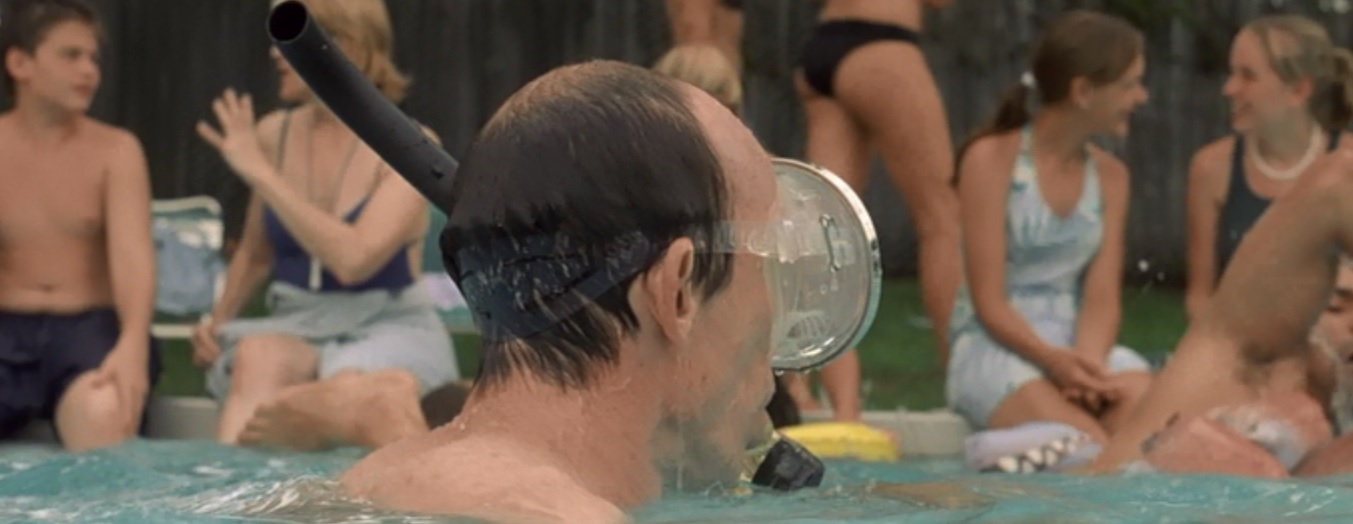
Incisive writing. Sharp performances. Astute direction. Todd Field REALLY needs to work more, because between Little Children and In the Bedroom, the guy has demonstrated serious filmmaking and storytelling chops. He also gets MASSIVE POINTS for portraying the mysterious piano player in Eyes Wide Shut. Patrick Wilson is one of the most underrated actors out there and he’s dynamite in this movie. Kate Winslet, as always, is terrific, and Jennifer Connelly is her typically moody and gorgeous and dramatic self, all furrowed brows and emotionally fragile beyond belief. But it’s Jackie Earle Haley who completely steals the show. His heartbreaking portrayal of a man struggling with intense inner demons was a rich characterization that hit lots of multilayered notes of sadness, and the way he used his expressive eyes to convey his mental anguish was nothing shot of extraordinary. The scene at the pool is an all-time classic of suburban satire, shot and acted as if it were the set-piece of a horror film, but saying so much about society that the moment becomes two-fold in its meaning. Noah Emmerich has yet another memorable supporting role; how many times has this guy spiced up a movie?! The cinematography by Antonio Calvache is slick and precise and designed with an almost Kurbickian level of attention to detail, and there’s an Incredibly effective score from Thomas Newman. This is yet another filmed adaptation based on the novelistic work of Tom Perotta (Election, The Leftovers), and here, Perotta received an Oscar nomination along with Field for their writing duties. And the dryly humorous voice-over that narrates the film was an added bonus; this aspect of the film, while contentious with some, is what separates it from others in this well-traveled milieu of white picket-fence satire. Little Children fits snugly in the realm of “diseased suburbia Connecticut movies,” where the seemingly all-American and successful family unit is placed under an intense microscope, resulting in all manner of scrutiny. Husbands and wives are having affairs, there’s a potentially reformed pederast living down the street, and the façade of the perfect life is shattered via the daily rituals that all of the characters pretend to be living up too. Field is an incredibly literate filmmaker, mixing dark comedy with biting social commentary, resulting in a work that feels like a poison-pen letter to the ideas and notions of perfect domestic bliss and harmony.

2