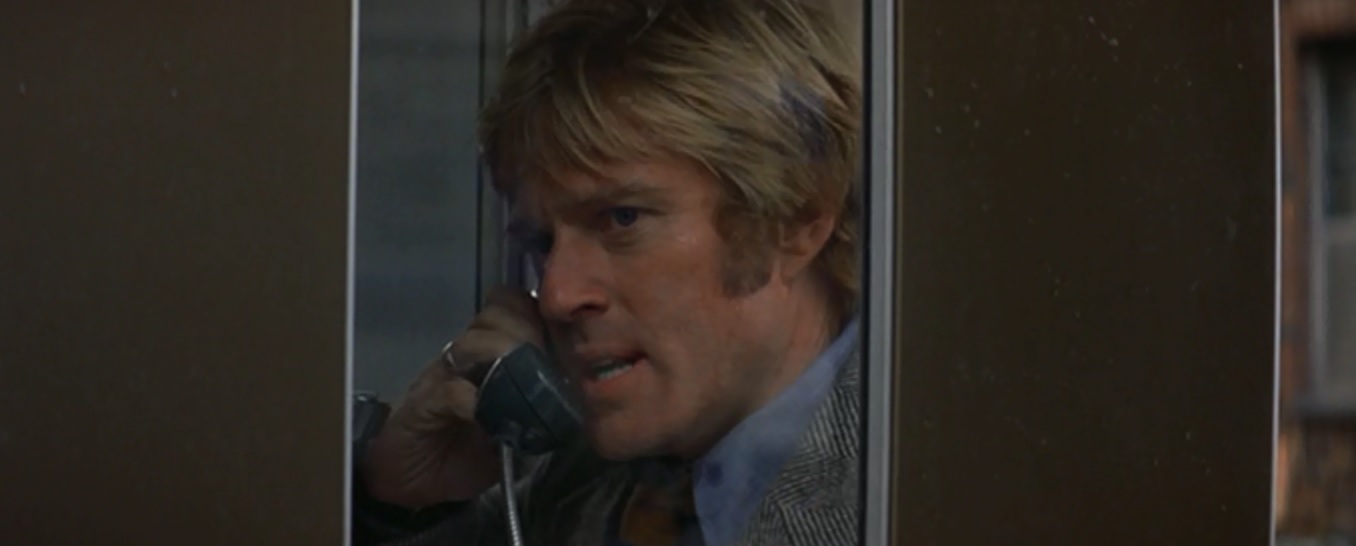
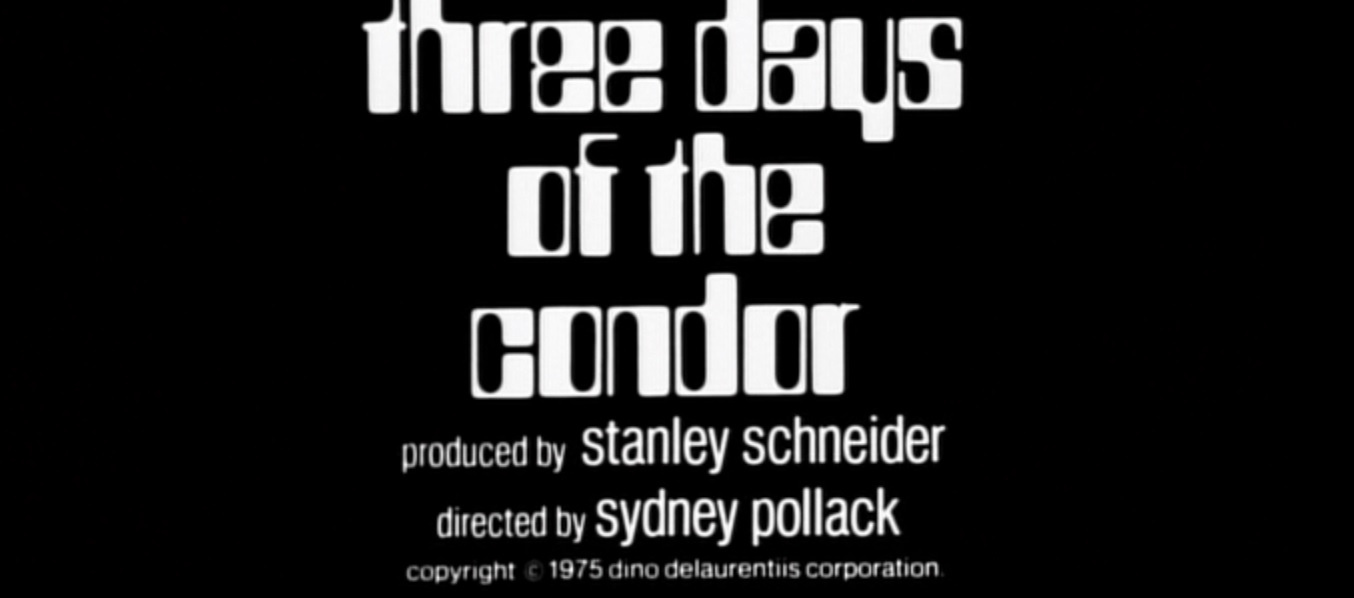
Lethal, cold, smart, and totally gripping, Sydney Pollack’s classic spy film Three Days of the Condor is a top-class genre entry, benefitting from its post-Watergate, paranoia induced atmosphere, with a charismatic star turn by Robert Redford as CIA codebreaker Joe Turner, an unassuming worker-bee who comes to the office one morning and finds all of his co-workers executed. Totally alarmed by the situation, Turner flees the scene, and reports the incident to his duplicitous bosses, who then set a menacing hitman, played by the legendary Max von Sydow in a silently ruthless bit of acting, to dispatch of him. Who, if anyone, can Turner trust, and will it be possible to escape the nefarious clutches of crooked government agents? Lorenzo Semple Jr. and David Rayfiel’s lean and graceful screenplay cut away any sense of narrative fat in favor of forward moving plotting with credible dialogue and exciting bursts of violent action. The supporting cast, including a gorgeous Faye Dunaway, Cliff Robertson, Addison Powell, and John Houseman, all provided excellent counterpoints to Redford’s leading-man heroics, which never end up going over the top, which keeps the film relatively grounded for the genre. Dave Grusin’s moody score provided an ominous tone right from the start, and as usual, Owen Roizman’s crisp and clean cinematography exerted a clarity and visceral force that kept everything in the moment and tension-filled, while Don Guidice’s expert editing made terrific use of jump-cutting, while also demonstrating a clear understanding of how long to keep any given scene going; this film feels needle-point precise. This is a film that has aged like a fine wine, and one that’s always worth a revisit.
Author: nlclement
DAN GILROY’S NIGHTCRAWLER — A REVIEW BY NICK CLEMENT
Unnerving. Unforeseeable. Unforgettable. Writer/director Dan Gilroy’s thrillingly caustic media satire Nightcrawler shows some seriously vicious teeth, taking you on a dark and twisted trip through nocturnal Los Angeles, all shot in 2.35:1 Mann/Refn-vision by the obscenely talented Robert Elswit, with James Newton Howard’s moody synth-dominated score pounding away in the background. Jake Gyllenhaal is utterly brilliant as Lou Bloom, a diseased creature of the night, appearing in virtually every scene, totally live-wire, spewing rapid fire dialogue with sociopathic glee. Shades of Travis Bickle abound in his portrayal of a freelance videographer hustling from crime scene to crime scene trying to sell his gruesome and exploitive footage to the highest buyer. This is the best performance of Gyllenhaal’s career so far, and over the past few years, he seems incapable of not being thoroughly excellent in whatever he appears in (Brothers, Source Code, End of Watch, Prisoners, Enemy, Everest; still need to see Southpaw). It’s great to see Renee Russo in a substantial role again, as she brings sass and class to her role as a beleaguered news producer. She gets to cut a nasty portrait of what it might be like to run a struggling local news station in the big-city that’s fighting for a piece of the ever-competitive ratings pie. Original movies from a single voice seem less and less common these days, and as Nightcrawler races through its propulsive and lurid narrative, you begin to realize that you’re watching something that’s playing by its own sick and cynical set of rules, unafraid to peek at the nastiness that’s running through our cities, news outlets, and members of society. This is an instant classic that defies expectations, and a film that’s gotten richer and richer on repeated viewings. Hopefully Gilroy has a new project on the horizon sooner than later…
STEVEN SPIELBERG’S BRIDGE OF SPIES — A REVIEW BY NICK CLEMENT
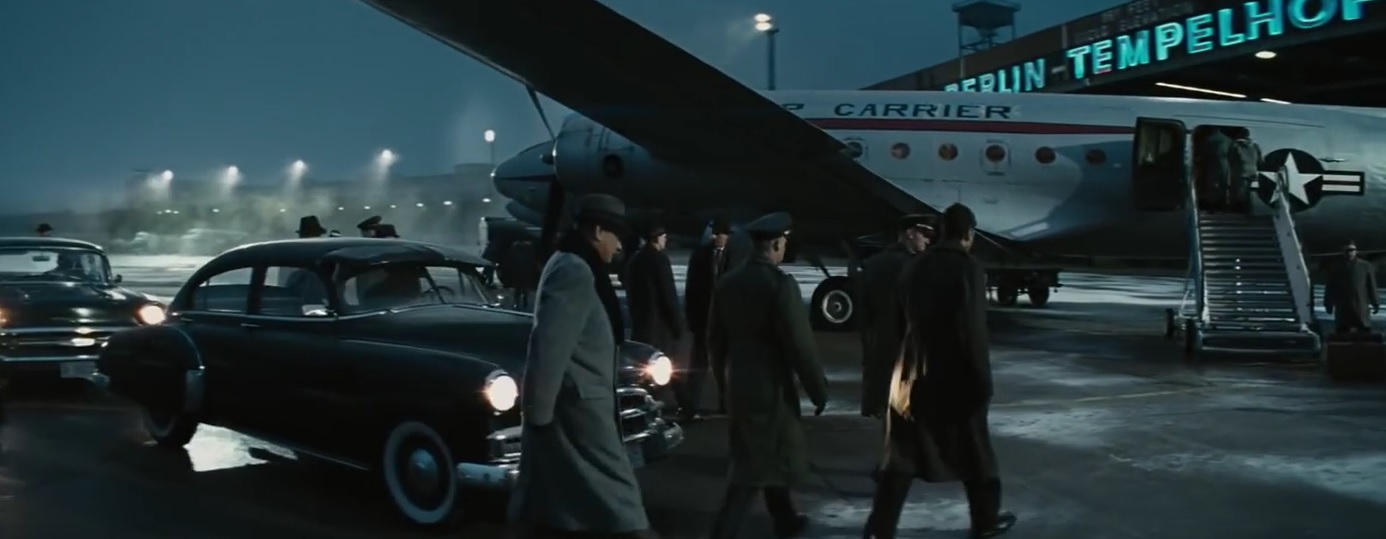
Steven Spielberg’s Bridge of Spies is a good story that’s well told, thoroughly absorbing, and spectacular in terms of production values. Tom Hanks and Mark Rylance are wonderful, with the latter putting on a subtle acting clinic for the ages, and the former reminding us how consistently excellent he is as our American everyman. The screenplay often times tells when showing would have been enough, but that’s The Beard for you from time to time, and it’s interesting to note the screenplay involvement of the Coen brothers on this project. There’s nothing surprising in terms of the plot – the film is based on a true story so there’s not much that could or should have been changed, and while the film never becomes as suspenseful as it might have liked, there’s a reliable, old-fashioned quality that comforts the viewer with a sense of solid familiarity. Janusz Kaminksi, as usual, shows off his stuff as cinematographer, bathing the film in blues, greys, blacks, shadows, snow, and his customary shafts of blinding, white light streaming through windows; this film feels cold and shivery, with the extraordinary production design by Adam Stockhausen totally evoking the bombed out ruins of post WW-II Germany, just as the Berlin wall was being constructed. There’s a magnificent shot in this film of a character riding his bike along the edge of the wall, showing the hectic maneuverings of everyone involved on a political, military, and social level, as the camera catches small bits and pieces of visual information that helps to paint a portrait of impending sadness. The narrative focuses on a POW/spy swap between the Americans and the Russians during the peak of the cold war, and Spielberg, as usual, knows exactly how to get the proper mileage out of his studied locations, fantastic mise-en-scene, and performances that are never less than splendid. Bridge of Spies the sort of film that The Beard could have directed with one armed tied behind his back, and that’s not a knock, but rather, a statement that suggests supreme confidence with this sort of historically rooted material; this is his genre and he knows how to deliver the expected goods.
THOMAS VINTERBERG’S FAR FROM THE MADDING CROWD
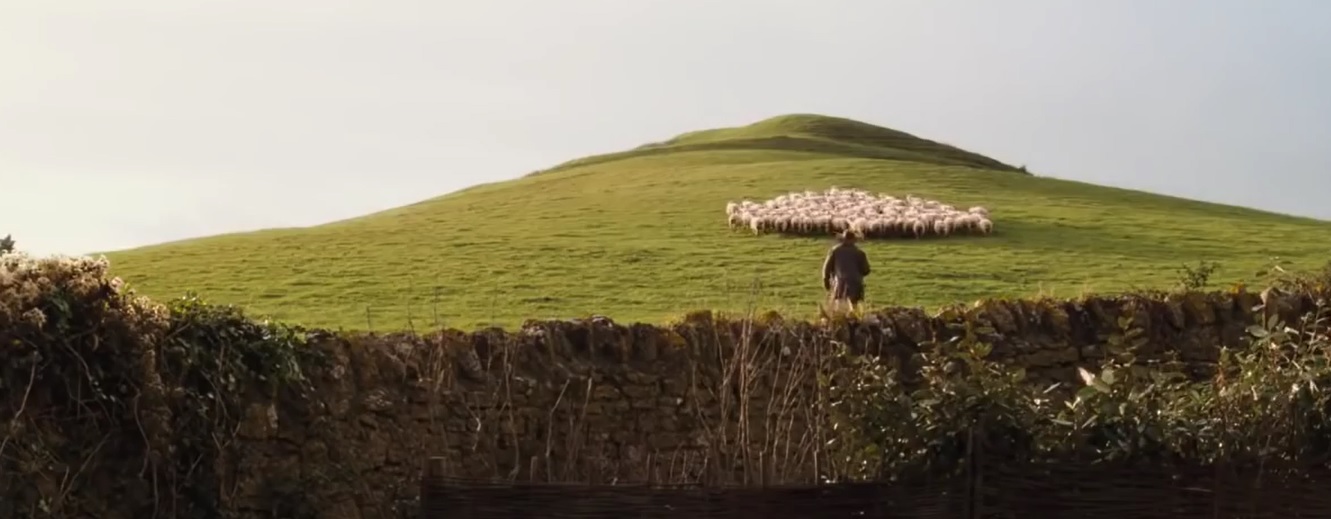
Charlotte Bruus Christensen is the true star of Thomas Vinterberg’s exquisitely produced film version of the classic Thomas Hardy novel Far From the Madding Crowd. Christensen is a camera artist that I’ve previously not been aware of, but now my attention is on full alert. Her work here is the definition of painterly and sumptuous, with one shot after another that feels museum worthy, utilizing lush color, a terrific sense of composition, and more than a few instances of natural light that felt like the actors and crew were filming at some very extreme or odd hours in an effort to capture the organic beauty of the landscape. I’m always ready to get swept up by intoxicating cinematic imagery, so I have to say, this one immediately grabbed me from that perspective. The film itself is a solid soap opera, anchored by the radiant Carey Mulligan, playing an interesting if emotionally prickly character that makes a bunch of mistakes along the way to potential happiness. The trio of suitors who all come calling for her are played by Michael Sheen (perfectly square), Jim Sturgess (perfectly sleazy), and Matthias Schoenaerts (perfectly hunky). All three men get some quality moments, and the script changes perspective a few times which I found clever, but this is certainly Mulligan’s story, and she, rather expectedly, handles it all with class and charm. There are some WTF? moments of character motivation and there’s a haphazardly directed scene involving Juno Temple missing her wedding (I know these were the days before texting but c’mon!), but overall, this is an enjoyable, comforting piece of costume drama, splendid in all area of production value (the costumes and set decoration are divine), but really bolstered by the magnificent eye of a cinematographer who took full advantage of the pristine landscapes, over-cast British skies, and lots and lots of sheep. Did I mention there’s tons of sheep in this film? Be still my heart.
DANNY BOYLE’S STEVE JOBS — A REVIEW BY NICK CLEMENT
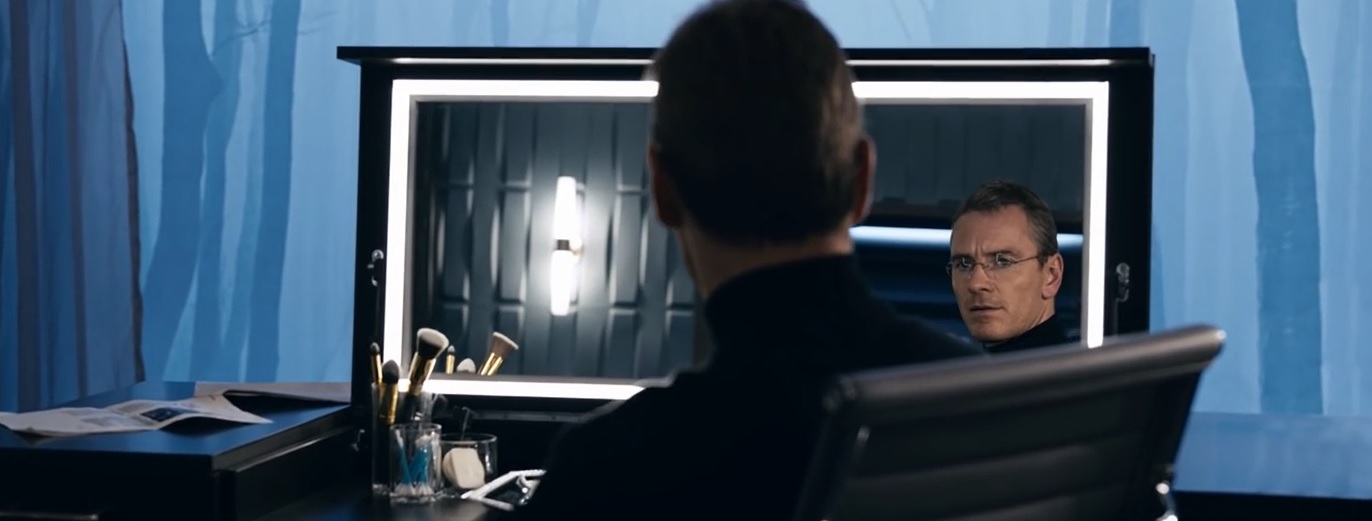
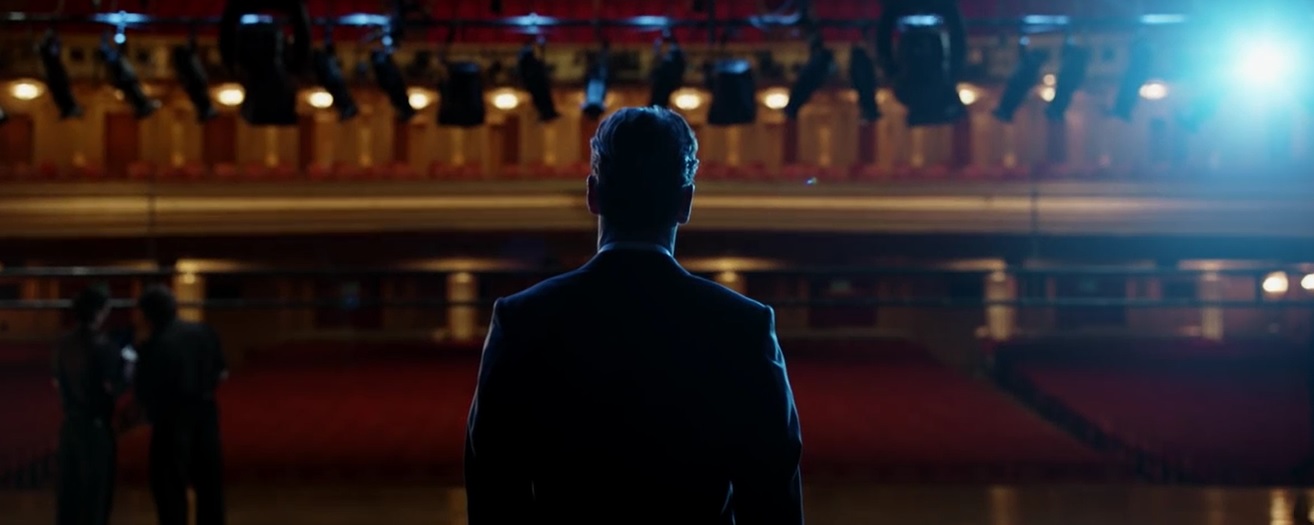
Danny Boyle’s riveting and unconventional biopic Steve Jobs is a complete knock-out from start to finish, and as bracingly un-Hollywood as this sort of material is going to get. This is laser-precise filmmaking, acted with extreme gusto, written with absurd skill, and shot and cut in a manner that suggests erudite style without ever feeling ostentatious. Aaron Sorkin’s classic rat-a-tat-tat dialogue is on full display from the opening scene, never relenting for two crisp and clean hours of storytelling; it’s an audacious screenplay in terms of structure, and overall, the film feels like a concert or a three act play, with maestro Boyle handling the glorious conducting. Some people are going to say that the film has been designed to never have any payoff – this couldn’t be further from the truth. It’s just that Boyle and Sorkin upend our expectations (especially for the genre) and give us something we haven’t seen before. By framing the picture in three acts and showing the final 40 minutes leading up to three iconic product launches — the original Macintosh in 1984, the NeXT in ’90, and the iMac in ’98 – there’s a purposefully restrictive quality to the storytelling and filmmaking that might have been detrimental to the overall finished product had the endeavor not been in control by shrewdly talented filmmakers.
The hectic, emotionally turbulent, sometimes painful, and always awkward interactions that Jobs had with his creative/business team and family members make up the bulk of the picture, with a remarkable supporting cast all getting their chance to shine (Kate Winslet, Michael Stuhlbarg, Seth Rogen, Katherine Waterston, and Jeff Daniels are all fantastic). But it’s the Michael Fassbender show all the way, with this marvelous actor appearing in almost every single scene, giving a tour de force performance as a man driven to greatness by something I’m not sure he could ever fully explain or understand. Alwin Kuchler’s intensely stylish yet never ostentatious cinematography still gets to show off some trademark Boyle visual flourishes (Dutch angles, sped-up film speeds, saturated color, projected images that give off a trippy vibe), but this is a decidedly tamped down Boyle in comparison to his Tony Scott-esque aesthetics that were on display in Slumdog Millionaire, Trance, and 127 Hours. The decision to shoot each act in a different medium (16mm for Macintosh, 35mm for NeXT, high-def digital for iMac) is nothing less than a sensational aesthetic conceit which heightens the already slightly surreal quality to the narrative.
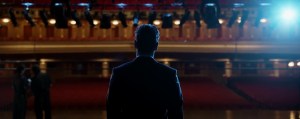
And most crucially, the filmmakers, never at any point, try to soften their lead character’s dick-ish-ness, and it must be said that Fassbender is absolutely remarkable as Jobs, crafting a portrait of extremely flawed yet obscenely brilliant human being who likely learned too late (if this film is to be believed) in life that sometimes you should be a bit nicer to others. You sort of have to wonder why so many people stuck with him for so long, to go off what’s presented in this film. Yes, he was a genius, a true iconoclast who revolutionized the world we currently inhabit. But he did so at an intense personal cost to his own personal well-being, creating just as many enemies as friends, with many people likely realizing that they had no choice but to stick it out with working for Jobs, because no matter how egomaniacal he was, you could pretty much bet that he’d come out on top at the end. And make no mistake about it – the line of the year so far is: “I’m poorly made.” This is a film that I’m already jazzed to revisit, and it represents everything I want to see in a film.
REED MORANO’S MEADOWLAND — A REVIEW BY NICK CLEMENT
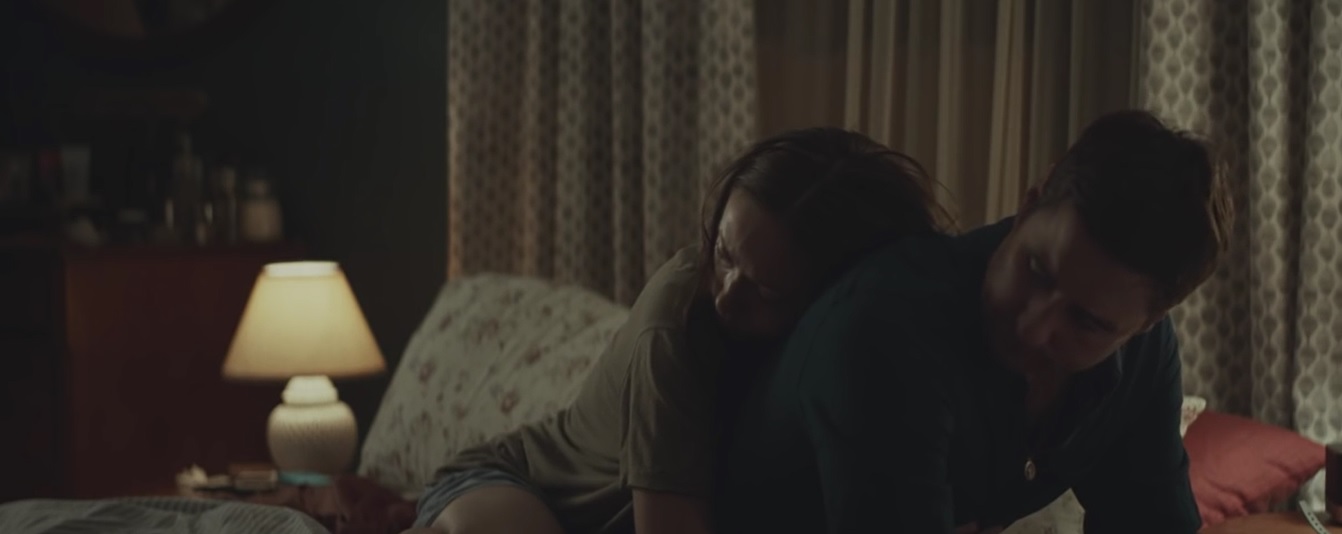
Credit must be given to director Reed Morano with her feature film debut Meadowland – she’s taken incredibly dark and troubling material and turned it into an inherently compelling, extremely raw, and often times painful cinematic experience, one that’s wholly engrossing, but that will test the strength of most viewers. Given that the film is essentially a study of hopeless denial and deeply repressed anger during the aftermath of a child’s disappearance, this demanding (and draining) piece of work isn’t going to be for everyone. But for those of us interested in thought provoking, intensely modulated dramas that ask questions about ourselves as individuals, then this will be the perfect antidote to whatever CGI laden blockbuster is currently littering moving screens. Morano, an accomplished cinematographer on such films as The Skeleton Twins, Frozen River, and Kill Your Darlings, gets in close to her characters with her intimate cinematography, which is almost all hand-held, yet shot in 2.35:1 widescreen with an emphasis on off-kilter angles, extreme close-ups, and side of the head framing that evokes the introspective beats of a Michael Mann film.
Centering on a husband and wife (an excellent Luke Wilson playing a NYC cop and a never better Olivia Wilde as an inner city teacher) exactly one year after their son was abducted at a gas station, the film sticks very close to its two central performers, allowing peripheral characters to shake up the proceedings; the estimable supporting cast includes a recently busy Kevin Corrigan (funny and effective in this year’s romantic dramedy Results), Giovanni Ribisi (love seeing him!), John Leguizamo (always solid and edgy), Elisabeth Moss (quick but effective), and Juno Temple (always spunky and sexy). But the film belongs to Wilde and Wilson, who both cut all-too-convincing portraits of parents pushed to their emotional edge, with Wilde going especially deep all throughout this nervy, focused story of loss and potential acceptance. The final moments, from a directorial standpoint, are very bold, as it’s clear that Morano wants the audience to think for themselves and realistically accept the facts that have been presented for us.
There’s nothing “easy” about Meadowland, and in that sense, this film will likely challenge those who are looking for simple, digestible storytelling, which this is anything but. Meadowland aims to explore the awkward moments between friends and family members after a traumatic incident; nobody knows quite what to say, what the boundaries are in any given situation, or how the directly affected individuals are truly feeling inside. The thoughtful script by Chris Rossi might rely on some familiar storytelling tropes (support groups, personally-inflicted pain, children with learning disabilities) but it all feels organic to the environment and sadly, all too believable, considering that these are real struggles that people face every day. Not a film for the overly sensitive or for those who need their art spelled out for them, Morano has crafted a hard-hitting piece of cinema that has emotional resonance as well as arresting visual style. Available on Itunes and screening in limited release in theaters.
NICOLAS WINDING REFN’S BRONSON — A REVIEW BY NICK CLEMENT
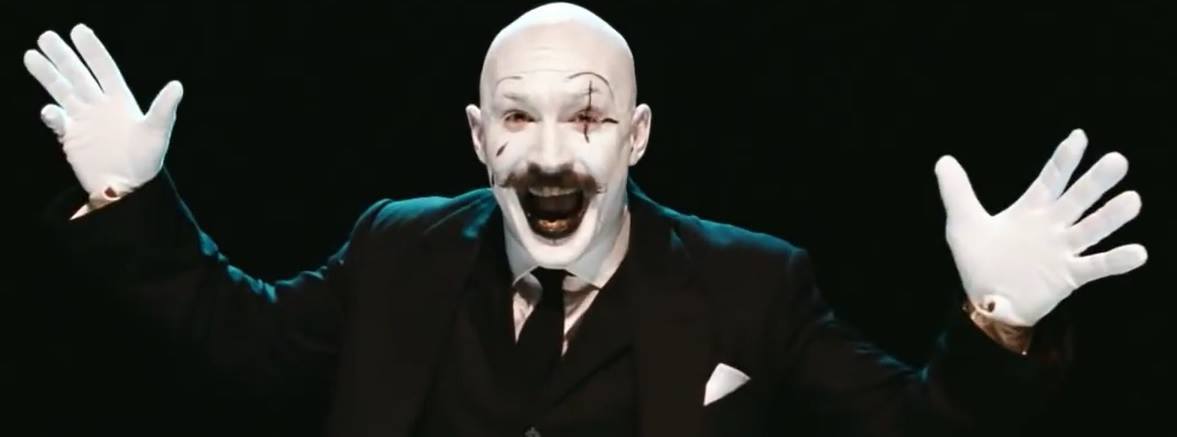
Bronson was the film that brought director Nicolas Winding Refn and actor Tom Hardy into my cinematic sights, and since then, I’ve followed both artists with intense fervor and anticipation. This film is like nothing else I’ve ever seen, and even if it blends elements from other films within its framework, the overall originality of the entire endeavor is wild to watch unfold. The film uses a highly stylized structure consisting of surrealistic performance art, abrupt flashbacks, and jarring tonal shifts which makes sense given the extremely heightened aesthetic. Hardy stars as real life British convict Charlie Bronson, aka, The Most Violent British Criminal Ever, a man given to massive fits of rage and stunning moments of primal, animalistic physical violence. The film is a crazy, bloody, kinky kaleidoscope of his oversized life, showing him in an out of the slammer, trying to adjust to the outside world, falling in love, getting mixed up with a variety of wacky side characters, and always spinning back on Bronson’s violent tendencies in almost every situation that he faced. Hardy is extraordinary, giving quite literally one of the best performances I’ve ever seen from any actor in any film. This is a forcefully bizarre movie, and he carries the entire thing, appearing in almost every scene, and letting it all hang out (literally and metaphorically), giving a ferocious performance of astonishing energy and personal chaos. His character is so unpredictable and so unstable that the viewer is constantly left to wonder what will happen next. All of the supporting performances are stellar and help contribute to the zany mood of the entire piece.
And then there’s the eccentric, eclectic soundtrack, featuring numerous classical opera pieces, as well as stuff from The Pet Shop Boys, Doris Day, and David Cassidy, all of which adds to the dense sonic layers of the soundtrack. I love how Refn brilliant subverts your expectations at almost every turn with this perverse movie. He knows you’ve seen other prison films and biopics, and I love how he defiantly refuses to play anything safe in this movie, which is probably the best overall piece of work in his already sensational career. He downplays the customary visual language of this particular genre, going for something more aggressively stylish and baroque than usual, and I love how he’s constantly undermining the inherent masculinity of Bronson as a character and the thugs that he encountered. The way Refn views his psychologically complex lead character suggests that he’s both in awe of Bronson, and totally in fear of him. Macho posturing is elegantly skewered all throughout, with the interesting layer of homosexual social commentary thrown in to spice things up, and also demonstrating the interesting duality to Bronson’s unique persona. Refn is constantly provoking his audience with every film he makes, always throwing multiple layers at you, and it seems to be his M.O. as a filmmaker to challenge whatever genre he’s working in, and it’s going to be extremely exciting to see how he develops as a filmmaker.
DAVID AYER’S FURY — A REVIEW BY NICK CLEMENT
Fury is a reminder of how hellish life must’ve been like for guys suffering through tank warfare during WWII. This is another film that’s been making the HD movie channel rounds of late, and I always stop on it for a few beats, because it thoroughly kicks ass at almost every opportunity. Embracing the gung-ho spirit of old-school Hollywood action flicks, writer/director David Ayer has considerably upped his game as a big league filmmaker with this ruggedly fashioned, butt-kicking trudge through the rain-soaked and bombed-out battlefields and cities of late WWII combat in Germany. The film carried the hardened spirit of a late-era John Wayne movie or something that Fuller or Peckinpah would have fancied, with just as much anti-war sentiment as pro-American image making. The Americans are good and Nazis are bad – it’s the same template Hollywood has used for eons, and for good reason: Who doesn’t like some dead Nazis? This is a purposefully blunt and graphically violent combat picture that, while stopping from time to time for a moment of reflection (the scene at the dinner table with the women is the best in the film), is mainly about how awful war truly is, and how utterly unnerving it must’ve been to be in one of those Sherman tanks.
Brad Pitt can do no wrong – he’s our Movie Star of the Moment and he owns this picture. Here, he’s gruff and grizzled, leading a surly band of supporting actors (Shia LeBeouf as the introspective one; Michael Pena as the wise-ass; Logan Lerman as the rookie; and a skeevy Jon Bernthal as the potentially unstable wild card), and he completely carries the film on his manly shoulders. Lerman shines as the rookie gunner who needs to learn quick how to adapt, there’s fine supporting work from LaBeouf and the rangy Pena, but it’s Bernthal (the numerous scene stealer from The Wolf of Wall Street) who makes the biggest impression playing an emotionally broken, simple-minded, shell of a man who has seen too much combat for one lifetime.
The measured, gritty cinematography by Roman Vasyanov made excellent use of the claustrophobic confines of the tank interiors and favored clear spatial geography over frenetic shaky-cam aesthetics, while the bombed-out, lived-in production design went a long way in creating a dangerous, volatile atmosphere. Fury is muddy, gray, damp, and messy, always tense which can be a hard thing to sustain, and focused on presenting a mostly unrelenting narrative that bows to Hollywood conventions from time to time but still stays true and honest to what it would have been like to be in this horrific situation. My one complaint might be the slightly overbearing musical score; sometimes less is more but I get what Ayer was going for – maximum, direct impact. I also appreciated the refreshing lack of noticeable CGI. While not an earth-shattering entry into the war genre, Fury is dependable, entertaining, and effectively brutal when it comes to showcasing the bloody battles that tank operators went through. The ending doesn’t go all Hollywood which was also a plus, and while one might question the final outcome slightly, it makes enough sense within the scenario that Ayer created while still leaving you with enough of a lump in your throat. “They’re young. And alive.”
ALEXANDER PAYNE’S NEBRASKA — A REVIEW BY NICK CLEMENT
Simple. Sly. Subtle. Sensational. I’ve run out of words that begin with the letter “S” that describe Alexander Payne’s Nebraska. This film keeps popping up on EPIX HD and every time I notice that it’s on I end up watching it from wherever it’s at in the narrative. The colorized version was an interesting experiment, and I can see why Payne would be interested in trying to see how the film would play in a desaturated color zone, but this film truly feels as if it’s living in black and white; there was no other option. I’ve loved every movie that Payne has put his name on – everything always feels just right, as if there were no other options for him (it’s a very similar feeling I get while watching work from the Coen brothers). Bruce Dern breaks your heart slowly and deceptively in the lead role of a lifetime, June Squibb stole every single scene that she appeared in, and Will Forte hit notes of surprising emotional depth that I didn’t know were in him as a performer. This is the sort of movie that might hit home too hard for some people; as always, Payne wraps his dark story with an abundance of dry humor, this time courtesy of debut screenwriter Bob Nelson, whose sardonic touch fits perfectly with the shivery, monochromatic cinematography of long-time Payne collaborator Phedon Papamichael. Bleak yet filled with lots of heart, achingly sad yet strangely upbeat, honest when it needs to be, and frequently laugh-out-loud-funny, this is yet another small gem from one of America’s best and most consistent filmmakers.
CARY FUKUNAGA’S BEASTS OF NO NATION — A REVIEW BY NICK CLEMENT
Cary Fukunaga’s African child soldier drama Beasts of No Nation is tough-medicine cinema, yet most definitely not the film I was expecting. I haven’t been able to stop thinking about it in one way or another after viewing it last weekend, and it’s a film I’m likely to revisit rather soon, thanks to Netflix running it as a streaming option on their site (Landmark Theaters, the only chain that’s theatrically presenting the film, doesn’t operate in my area). In Beasts of No Nation, it’s the sheer force of the filmmaking that immediately struck me; it’s clear that Fukunaga is an admirer and student of Mann and Malick, as his film echoes both Heat and The Thin Red Line on more than one occasion, be it from a sonic or image standpoint. The film is violent, but not as violent as you might expect, and I’m wondering if the film should have been even more upfront and explicit with its atrocities, but I think it’s the artistic subversion from the expected norm that is most startling during the film’s numerous sequences of bloody carnage and combat. And make no mistake – you’re definitely treated to some disturbing moments of emotional and physical abuse – it’s just handled in a more experiential manner. In a sense, Fukunaga has made an existential journey film starring an eight year old, and as such, there are sequences that feel incredibly impressionistic at times, literally like seeing life and all of the horrors that it can offer through the fleeting glimpses of a person too young to fully comprehend all of the details. My parents are here one minute…and gone the next. I’m all alone in the jungle…until I’m not. There’s someone here who wants to take care of me…but I don’t truly understand the methods to his madness. Fukunaga explores the notion of lost generations, children stripped of their familial identities, never to have them returned to any sort of normalcy.
It’s no surprise that Idris Elba is startling and fantastic as the corrupt ring-leader of the child soldiers, and it’s truly scary to watch him operate in this film. From one moment to the next, you can never truly predict his behavior, and the way Elba interacts with the children has a stinging realism that makes the film’s most harrowing moments all the more potent. Child actor Abraham Attah, making his feature film debut as Agu, is nothing short of spectacular, but not in the traditional sense of what you expect from a movie star or even an amateur phenomenon; he has the smarts, the poise, and seemingly the understanding of the material to make the toughest scenes in the film all the more challenging and rewarding to observe. Shot on location in Africa, this film has a fevered, nightmarish quality, with many of Fukunaga’s lush and beautiful images (he also operated as his own cinematographer) leaving a lasting impact that will be hard to shake for days. From the sight of grenades being duct taped into the mouths of prisoners to the surreal moments with the burning embers of tree branches that have been blasted by rockets from helicopters, Beasts of No Nation envelopes the viewer with a tactile sense of place and unnerving atmosphere, with gun shots consistently heard off in the distance, and bullets casually flying overhead. Dan Romer’s dynamic soundtrack builds to some nearly overwhelming crescendos of orchestral music, while the fluid editing keeps the two hour and 15 minute runtime moving at a very fast clip without ever feeling rushed. This isn’t a film to watch and immediately snap off a quick judgement; it needs to marinate and simmer and become fully processed after viewing, as it’s a film that dares to look at a subject that we only get soundbytes of from our meaningless mainstream news cycle. There’s also a faint whiff of racism in that Fukunaga was reportedly turned down by every major studio, with only Netflix having the temerity to finance and release this long-in-the-coming work of punishing art. Beasts of No Nation finished on a note that I never expected, and offers a journey of purposefully draining dramatics in an effort to shock and rattle the viewer. Ignoring this film shouldn’t be an option.