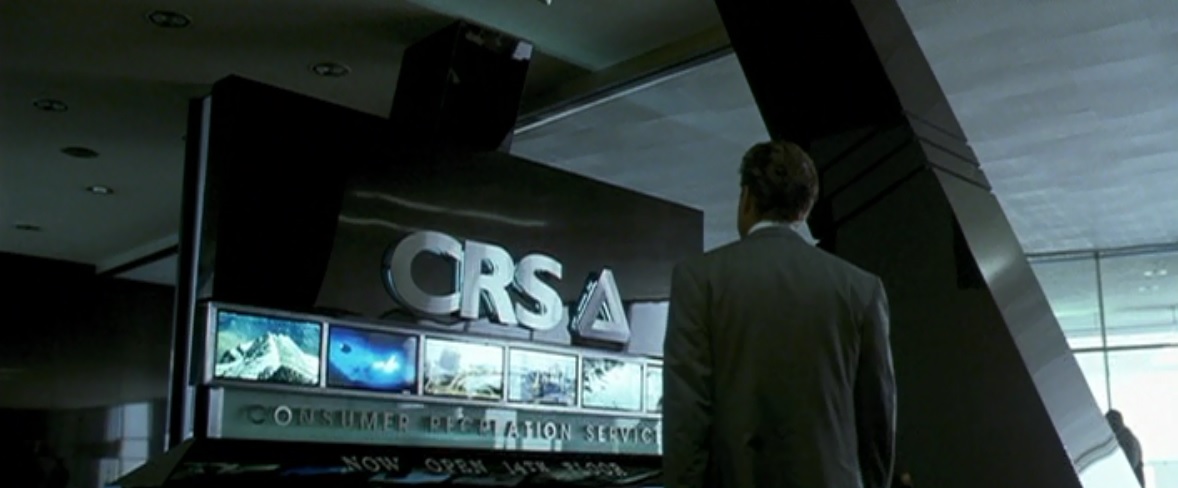
The Game is my FAVORITE film by David Fincher. I’m not saying it’s his BEST (between Seven and Zodiac I’m still undecided), but make no mistake, the one I keep coming back to the most over the years is this underrated 1997 effort, which coming two years after Seven, seemed like the next logical step for this dark hearted magician of the cinematic arts. Released to mixed reviews (with ardent supporters) and indifferent box-office (just under $50 million domestic), it’s a film that was ahead of its time, both aesthetically and narratively, offering one of the sleekest overall visions of nighttime paranoia ever crafted (it seriously looks like it was shot yesterday!), while showcasing a mentally twisted and ever-shifting narrative complete with a whammy of an ending that has remained one of the most divisive movie moments in the history of the medium. Yes…the history of the medium. I’m going there. Anytime you bring up The Game in conversation, the chat tends to drift towards that mind-fuck of an ending, and while some love to complain about the implausibility of it, that’s the whole genius part of the entire endeavor – it’s a film that LOVES its own impossibility, and while vigorously contrived in every conceivable way, it’s been done for its own maximum impact when put into context with the bigger picture. It can’t be denied that the bitter social commentary that runs throughout the entire picture is equally matched by the Hitchcockian level of glee that Fincher had with running his mega-star (Michael Douglas, in one of his absolute best performances, as the amazingly named Nicholas Van Orton) through the emotional and physical gauntlet. Sean Penn is devious in a supporting role as Douglas’s brother (a part originally intended for Jodie Foster), who gives his big bro the ultimate birthday gift – a gift certificate to a mysterious company called CRS, short for Consumer Recreation Services. After a darkly hilarious encounter with a CRS representative (the late James Rebhorn, master scene stealer), Van Orton’s “game” begins. Or…did his game “begin” the moment the film started? And what’s with Deborah Kara Unger and all these sketchy people popping up? And why won’t my briefcase open and why can’t I access my credit cards and why am I being shot at? And by the end of the film, is it even over? If I am being coy with describing the plot, well, that’s by design, because while the film has definitely caught on with a rabid cult following over the last 18 years, there are still plenty of people out there who might not be familiar with this utterly perverse, wickedly entertaining film. I’ve literally seen this movie at least 100 times; no exaggeration. It used to run on a loop during the college years, it would play as background noise as I’d be writing term papers, and after two theatrical viewings back when I was 17(!), I immediately knew it was going to be an important film for me for years to come. There’s something so sinister, so Parallax View-y about John Brancato and Michael Ferris’s script that I just adore, and I’ve become obsessed with studying the edges of the frame on recent viewings, looking for even more clues that I’ve still yet to discover. On the technical side, the film is remarkable, with Harris Savides’s sensational and deeply burnished cinematography setting the ominous tone right from the start, with slippery camera movements and perfect compositional choices. James Haygood’s faultless and beyond crisp editing keeps the pace riveting and tight all throughout which gives the entire film an immaculate quality, while the awesomely eerie score from Howard Shore envelopes the images with sinister delight. And who can forget the use of Jefferson Airplane’s immortal White Rabbit being blared on the soundtrack when Douglas comes back to his staggering mansion (Jeffrey Beecroft’s astute and moneyed production design is lush and rich with texture) to find it decorated in glow in the dark spray paint graffiti lit by black-light? And again, there’s that ending, which I have to say, has got to be one of the most challenging finishes, both mentally and thematically, to any movie that I’ve ever come across. The Game can be seen as so many things – a film that denounces suicide, a film that is honoring Hitchcock, a film that satirizes and scolds the confident and controlled business class that runs our major cities, a film that holds a mirror up to our fears and anxieties while constantly picking at what bothers and frustrates us the most. The Game has long been one of my absolute favorite pieces of cinema, and that will likely never change. It’s a movie that has provoked constant debate and passionate discussion all throughout the years, and it’s one that I look forward to revisiting for years to come, as there are rarely films this watchable, this visually stimulating, and this thought provoking all in one heady package.
Author: nlclement
GABE POLSKY’S RED ARMY — A REVIEW BY NICK CLEMENT
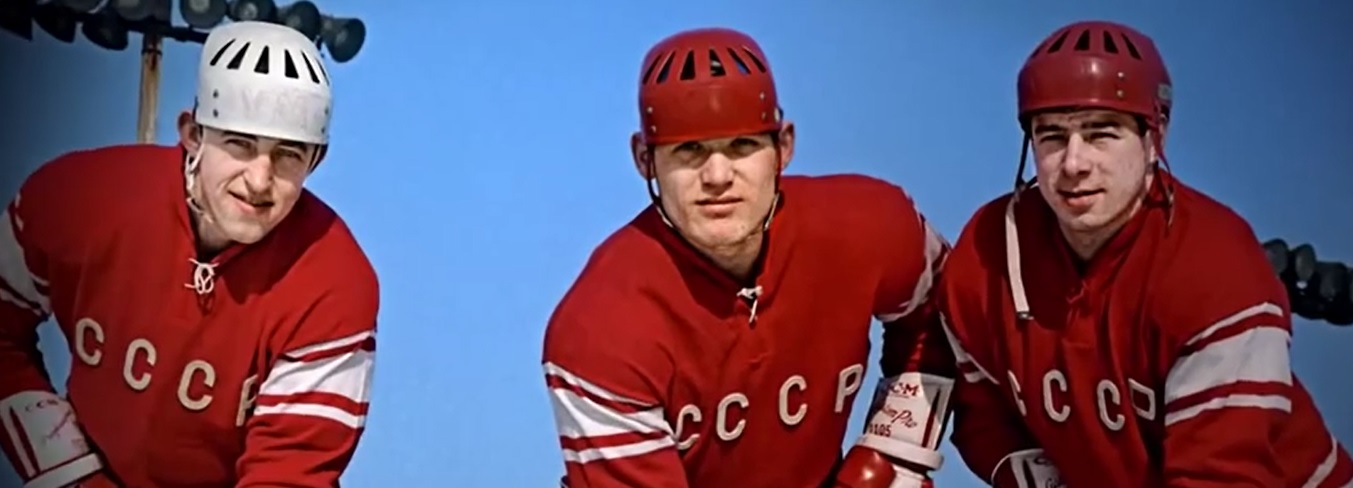
Fascinating on a historical level, riveting when it comes to the sport being discussed, and compelling in a deeply humanistic fashion, Gabe Polsky’s terrific documentary Red Army examines the intense Cold War relationship between Russia and America, and the various hockey players that were caught up in an international saga of greed, hubris, and outright dictatorship. Literally kept as slaves by their country, Russian hockey players back in that time period were revered by all and had to adhere to an intense training schedule that kept them away from their families for long periods of time. All of their insane treatment is detailed in this sad and scary film that highlights just how difficult it would have been to be playing under the Russian coaching regime back in the 80’s. Red Army primarily focuses on legendary defenseman Slava Fetisov and how he and his various teammates navigated the politically charged waters of worldwide sport during a time of immense uncertainty and volatility. Fetisov is quite the character, and while he provides tons of amazing information and anecdotes, on more than one occasion someone should have reminded him that he was there to make a documentary, not just to have his ass kissed; there are NO off limits questions when you’re the front and center focus of someone’s film. That being said, the exciting hockey footage that Polsky intercuts with his intelligent question and answer sessions with some of the era’s biggest stars commands the audience’s attention, and this is easily one of those movies where if you’re not a fan of the milieu, you’ll still enjoy the film because of how well-crafted it is on a formal level, and how interesting it is as a history lesson. And for any hockey fan or current or player (I was lucky enough to lace up for 15 years), this will be a fabulous way to spend 80 minutes. And if you’re of a certain age, the names and faces on display will bring back waves of emotion and nostalgia. I know it did for me. Mike Vernon POWER in there, too.
ERIC RED’S COHEN & TATE — A REVIEW BY NICK CLEMENT
Eric Red’s glorious late 80’s actioner Cohen & Tate, which served as his directorial debut, is a pulpy, bloody blast which features enough child endangerment to choke a full grown horse. Written by Red with his usual brand of genre smarts and directed with lots of grit and sturdy proficiency, the film stars Roy Scheider and Adam Baldwin as deranged assassins who are tasked with kidnapping a 9 year old boy who had previously witnessed a mob killing, and which proves to be their potential undoing. After an absolutely wild and grippingly staged opening sequence where the kid’s parents are gunned down while under witness protection by the FBI, intrepid little Travis Ross (a priceless Harley Cross) attempts to elude his captors, but is eventually nabbed by the two psychopathic killers, but not after being thrown into all manner of distress and turmoil that would leave any child utterly scarred for life. There is a bracing, casual sense of evil glee that permeates the fringes of this film, with Red clearly getting a kick out of seeing so much violent and visceral insanity unfolding in front of a prepubescent protagonist. Because make no mistake, while Scheider and Baldwin are top billed, they are most definitely bad guys, one more than the other, and the true hero of his cult classic is the child. And in the realm of the R-rated action movie, I can think of only a few where a kid is put through the ringer the way Cross was here. And then there’s the hilarity that comes with the overall ineptitude of Cohen and Tate themselves as professional killers; they’re constantly getting lost and are frequently outsmarted by a child who would probably give Kevin MacCallister a run for his money in the shenanigans department. Red’s usual sense of cinematic nihilism is on full display, and Scheider clearly had a ball with his no-bull-shit character which afforded him the chance to add yet another extremely memorable tough guy to his arsenal of legendary screen performances. There’s a Walter Hill vibe during certain stretched of Cohen & Tate, and while it doesn’t hit the existential notes that Hill so often explored, there’s a crisp and effective brittleness to the entire picture that hints at the hardscrabble nature of a low-budget effort such as this one. Bill Conti’s terrific and weird and extra suspenseful score punctuates the entire film with perfectly timed jolts of excitement, and Victor J. Kemper’s nighttime dominated cinematography looks extra crisp and slick via Shout! Factory’s special feature loaded Blu-ray release. This is film that’s ripe for rediscovery and reconsideration for fans of this sort of ass-kicking entertainment.
ACTOR SPOTLIGHT — JAKE MACAPAGAL IN METRO MANILA — BY NICK CLEMENT
Jake Macapagal is the heart and soul of Sean Ellis’s blistering and propulsive crime thriller Metro Manila. In a riveting performance, Macapagal stars as Oscar Ramirez, devoted husband and father, a man looking to better his life and the life of his family at all costs. Working as a poor farmer isn’t making ends meet, so Oscar and his family pack up whatever belongings they can before heading off into the dangerous, exotic, and totally unpredictable mega-city that is Manila. Upon arrival, the harsh realities facing Oscar and his wife and children are apparent from the outset, and it’s the way that Macapagal brings the perfect amount of confidence and vulnerability to the role that makes Oscar as compelling as he is. This is a first-rate piece of acting, most of it deeply internalized, with burrowed emotion popping out in explosive moments of visceral intensity, especially during the positively engrossing final act, which finds Oscar making one desperate decision after another in order to set up his family for life. The chemistry he demonstrates with his on-screen wife, Althea Vega, is palpable and complex; he knows that both he AND she need to “do what they have to do” in order to help their familial unit, so it’s even more heartrending when Macapagal registers the realization of what his wife has been up too during her work hours (I’ll leave this plot development for the audience to discover). This is one of those out of the blue performances that showcased an actor that I was not familiar with, and the way that Macapagal brought this character to life is something I’ll never forget. I only hope that Hollywood casting agents take note of his fierce drive and dedication, as it’s obvious that while watching Macapagal in action during the increasingly hardcore events of Metro Manila, he’s a talent to pay attention too and to hope to see more of in the future. Metro Manila is available to stream via Amazon HD, and a Region 2 Blu-ray and DVD have been made available for the international market and those of us with Region Free Blu-ray players.
SEAN MULLIN’S AMIRA & SAM — A REVIEW BY NICK CLEMENT
Sean Mullin’s sweet yet cuttingly cynical romantic dramedy Amira & Sam hits all the right notes. I love that this film went with its heart in the final act. Martin Starr kills it here – if you’re a fan of his deadpan comedy stylings from HBO’s Silicon Valley then you owe it to yourself to see him all cleaned up and looking crisp and buff in this funny, touching, sad, and finally hopeful little gem that knows exactly what to do during its 85 minute run time. Mullin brings his well-earned real life experiences to the film, so it’s no surprise that the narrative stings with truth and believability despite the mis-matched romance at its center. That the film believes in the power of love is its greatest virtue, as Mullin has created two fully fleshed out characters in a relatively short amount of time, lending credence to the notion that great chemistry can propel any cinematic relationship forward even in the briefest amount of time. It’s also an awesome “New York” movie, with a terrific sense of place and atmosphere, which brings a welcome verisimilitude to the project which might feel unexpected considering the low budget. If you’re not familiar with this movie, please seek it out.
The story hinges on Sam (Starr), an Iraq war veteran who by chance meets Amira (Dina Shihabi), the beautiful niece, and illegal immigrant, of his wartime translator who has relocated to New York. Through a series of potentially life altering circumstances, Sam is asked to hide Amira after a run-in with the NYPD, while an unexpected romance blossoms between the two lost souls. Their “meet-cute” is wonderful, the chemistry that Starr has with Shihabi is palpable, playful, and sexy, and I loved how Mullin threw in pointed jabs about the messed up immigration system that continually plagues America. This is a film that wants to say something about our current social and political landscape, and that it does, with smarts, clarity, and force. And Mullin’s sensitivity towards veterans is noticeable from the outset, and while never condescending, he paints a portrait of Sam as a man who is still reeling from his experiences and who hopes to overcome any psychological turmoil that me might be expecting. Paul Wesley’s scummy supporting performance (he was also excellent in Before I Disappear) acts as a comment on young greed run amok in our post 9/11 landscape, and I love how Mullin seemingly isn’t afraid of mixing the topical with the tried-and-true conventions of the romantic comedy. And while the film is funny, there’s a dramatic center to the entire picture that lends it credibility. Laith Nakli (perfectly pensive) and David Rasche (perfectly to the point) also offer strong supporting performances.
Feeling like a cousin in some respects to Tom McCarthy’s The Visitor, this is a film that operates on a few levels, with comedy masking some rather upsetting notions of estrangement, and while what happens in the final moments might strike some as unlikely, I believed it because of how well defined the central relationship was and because Mullin clearly has an affinity for his characters (he also wrote the original screenplay, which seemingly feels based on some of his life experiences to go off the Wikipedia page). But when you cut to it, the bleeding heart of this movie rests in the two wonderful performances from Starr and Shihabi, who both inhabit real people in an increasingly stressful yet hopeful situation, one with no easy answers and no pat resolutions by the time the narrative has come to a conclusion. Without spoiling anything, the final moments of this small gem are absolutely perfect, encapsulating all of the ideas and themes that Mullin has worked to convey throughout his story, and while their road might be fraught with uncertainty, you’re always rooting for Amira & Sam, which is a pleasure for the audience. This is one of those small, under the radar movies that deserves to find an audience!
Damián Szifron’s WILD TALES — A REVIEW BY NICK CLEMENT
I mean honestly…who the hell actually ENJOYS going to weddings? Well…if the wedding in question is anything like the one featured in the off the wall black comedy Wild Tales, well then send me an invite! Brutally funny, graphically violent, incredibly transgressive, and all together brilliant, Damián Szifron’s Oscar nominated film from Argentina will grab you by the throat and not let you out of its demented grasp for two hours. Feeling at times like an insane hybrid of Falling Down, Sightseers, Fight Club, and other notable films where violence and comedy are skillfully mixed, Wild Tales is concocted of six separate stories all focusing on the themes of revenge, fate, and anger, with sharp social commentary thrown in all around the edges. The film opens with a perverse bit of airborne madness, and the following segments go on to feature a hit and run that’s treated like some sort of sick joke, a nighttime diner that becomes the scene of something truly nasty, a car towing company that will think twice about carelessly scooping up automobiles in the future, a road rage incident that goes above and beyond what can ever be expected, and the ultimate wedding from hell which is showcased in all its fucked up, psychosexual glory. Seriously – I loved every moment of this sick and twisted movie, and I can’t tell you how many times I laughed out loud over what I was witnessing. So many times this film took me by surprise, and while I could guess where some of it was headed, the end result was never able to be guessed in advance. Executive produced by Pedro Almodovar and starring a bevy of actors and actresses who all go for broke, Wild Tales manages to be over the top yet somehow believable given the extremely heightened style and scenario, and even after one viewing, I know I’ve seen something very special. This one is worth buying sight unseen as I can almost guarantee that if you like it on any level, you’ll want to revisit it sooner than later…I can’t wait for more!
HOWARD FRANKLIN’S THE PUBLIC EYE — A REVIEW BY NICK CLEMENT
Howard Franklin’s 1992 effort The Public Eye is an interesting sort-of-neo-noir with an awesome performance from Joe Pesci who was hot off his Oscar winning turn in Goodfellas. Produced by Robert Zemeckis, this is a lavishly appointed period piece loosely based on the exploits of New York Daily News photographer Arthur “Weegee” Fellig, with Pesci playing a dramatized version of the famed nightcrawler (Lou Bloom eat your heart out!) Co-starring Barbara Hershey, Stanley Tucci, Richard Schiff, Jerry Adler, and Dominic Chianese(!), the film is an entertaining drama with lots of style and robust performances. Peter Suschitzky glossy cinematography was a perfect fit for the sordid material (bloody crime scenes, nocturnal shenanigans, the flashing of camera bulbs) and Mark Isham’s dynamic score sets the mood at all times. A box office flop despite solid reviews (Ebert was a notable four star fan), it’s one of those movies that I would consistently see at Blockbuster back in the day but for some reason never rented it. As it was on HBO HD, I recorded it, and found it to be immediately engagaing, something I probably wouldn’t have responded too as a teenager, but something I’m glad I had a chance to finally see. Franklin’s eclectic credits also include the screenplays for Ridley Scott’s underrated Someone to Watch Over Me, The Name of the Rose for Jean-Jacques Annaud, and co-writing/co-directing duties on the classic Bill Murray comedy Quick Change.
ROBERT TOWNE’S WITHOUT LIMITS — A REVIEW BY NICK CLEMENT
Without Limits is a very solid film. Co-written with Kenny Moore and directed with class and integrity by Robert Towne and benefiting immensely from Bill Crudup’s method performance as Steve Prefontaine, this is a strong, inspirational sports film that delves into the human psyche just as much as it looks at Prefontaine’s tremendous skill as an athlete. Shot with un-showy elegance by Conrad Hall, one of the true masters of light, Without Limits transcends its customary narrat…ive approach with excellent dialogue and a great roster of supporting performances including Donald Sutherland as Prefontaine’s ambitious coach and future Nike pioneer Bill Bowerman, the adorable Monica Potter as the love interest, Jeremy Sisto, Matthew Lilliard, Dean Norris, Billy Burke, William Mapother, and a FANTASTIC cameo from William Friedkin in the opening section. Randy Miller’s triumphant score hits all the expected, uplifting notes without ladling on extra, unnecessary sentiment, and I loved how smooth the film felt on an emotional arc level; Towne was always a master at crafting the perfect flow with his material. A massive failure at the box-office, this $25 million production grossed less than $1 million in cinemas, which makes even less sense when one factors in the fact that it was a “prestige project” with Tom Cruise as the main producer. How and why this movie was buried I’ll never understand. For his magnetic and amazingly committed performance as Prefontaine, Crudup should’ve been nominated for Best Actor, and it struck me while watching the film last night just how versatile and underrated of an actor he is. I submit the following films as insane evidence of his range and eclectic taste in material: Watchmen, The Good Shepherd, Dedication, Almost Famous, Big Fish, Blood Ties, Public Enemies, The Hi-Lo Country(!), Sleepers, Mission: Impossible III, and Monument Ave. Some of the roles were bigger than others, but in every film, he’s cut a dynamic portrait of whatever character he’s taking on, and I personally think his work in Watchmen is extraordinary and unforgettable. Without Limits is one of those quiet, unsung movies that deserves more recognition and a higher profile, especially considering it’s another underrated directorial effort from the legendary Towne (Ask the Dust, Tequila Sunrise, and the unseen by me Personal Best are his other credits). Note: Not to be confused with the 1997 effort Prefontaine, from doc specialist Steve James, with Jared Leto in the titular role.
MOORHEAD/BENSON’S RESOLUTION — A REVIEW BY NICK CLEMENT
Before this year’s terrific genre-bender Spring, Aaron Moorhead and Justin Benson crafted Resolution, a super low-budget psychological thriller that embraces genre elements while cleverly subverting your expectations. Much in the same way they did with Spring, these guys demonstrate a serious command of atmosphere and unique style, while also allowing their frightening scenario to play out with a sense of intelligence and mystery and black humor. The action centers on Mike (Peter Cilella, effective), who travels to a remote cabin to visit his friend Chris (Vinny Curran, hyper and messy) who has been smoking crack and generally acting a fool. Mike handcuffs Chris to a pipe inside the cabin in an effort to get him straight and sober. Little does he know that druggies will be coming to look for Chris, and that the cabin they’re staying in doesn’t belong to them, in more ways than one. Then, all sorts of strange stuff starts to happen – think Cache meets The Ring meets Cabin in the Woods on a micro budget – and while the final sequence certainly evokes the supernatural, I’d hesitate to call this film a “horror” movie in the traditional sense. Much like Spring, the multi-hyphenate talents aren’t content to play it simple, as they clearly seem to be interested in elevating their material with a level of cerebral attention that will have me coming back for more in the future. It’s a cool 90 minutes of sketchy cinema, and having viewed it after Spring, I can see how their second effort feels like an even more logical next step after this. I’m expecting great things from this interesting duo…
PAUL MAZURSKY’S HARRY & TONTO — A REVIEW BY NICK CLEMENT
They don’t make ’em like Harry & Tonto anymore. This film is note-perfect in every scene. Paul Mazursky always cut to the heart of things and this sort of movie is directly up my cat-loving, cinematic alley. I’ve watched this film a few times and each time I love it even more and I find new things to get excited about. Sentimental and very effective at making you cry but never not without honest intent and clear-eyed purpose, Harry & Tonto is about the power of the human spir…it, about the enjoyment of interaction with others, and how there can be an intrinsic bond between a person and a feline that can make the heart grow in exponential ways. But for every moment where you feel that Mazursky might be going for the emotional jugular too often, you never forget that the entire piece was done with such honesty, and each scene feels real and tangible, so there’s no sense in trying to resist. And to think that Art Carney beat Al Pacino (The Godfather Part II), Dustin Hoffman (Lenny), Jack Nicholson (Chinatown), and Albert Finney (Murder on the Orient Express) at the Oscars for Best Actor back in the day – look at that murderer’s row of talent! And guess what? Carney’s role of an old man travelling the country with his orange tabby cat by his side as he looks to reconnect with family members may not have been the flashiest of sexiest choice in the room, but it’s a performance that encapsulates all that’s potentially good about a person, and how there are some of us who are inherently kind and favor an different view of the world than the rest of us. Mazursky was always interested in what it was to be a human being, and how the circumstances around his characters dictated their motivations and decisions, rather than arbitrary plotting setting the mood and tone. Harry & Tonto is an absolutely wonderful movie that deals with the human condition in a very humble and gracious way, and the film is yet another reminder that the 70’s produced some of the absolute best American films ever crafted. And then there’s the cat! Ohhhh that cat! You just can’t believe what they got that cat to do, or, more accurately, what the cat gave them and allowed them to film. It’s just incredible to observe, and I think it’s VERY clear where the Coen brothers got their inspiration for the cat in Inside Llewyn Davis. And you know what else I loved about this movie? Every single actor who had a speaking part got to display a believable character. You got to know everyone in this film, doesn’t matter if it’s only for a moment, or if the character is just someone sitting on a bus eating a sandwich. The way the film was constructed allowed for the smallest bits of character to float to the surface, creating a rich tapestry of people, places, feelings, and memories. If you’re not familiar with this rarely discussed movie then you owe it yourself to check it out!