XAVIER DOLAN’S MOMMY — A REVIEW BY NICK CLEMENT

11402437_10204849208566246_4113844386718528745_o

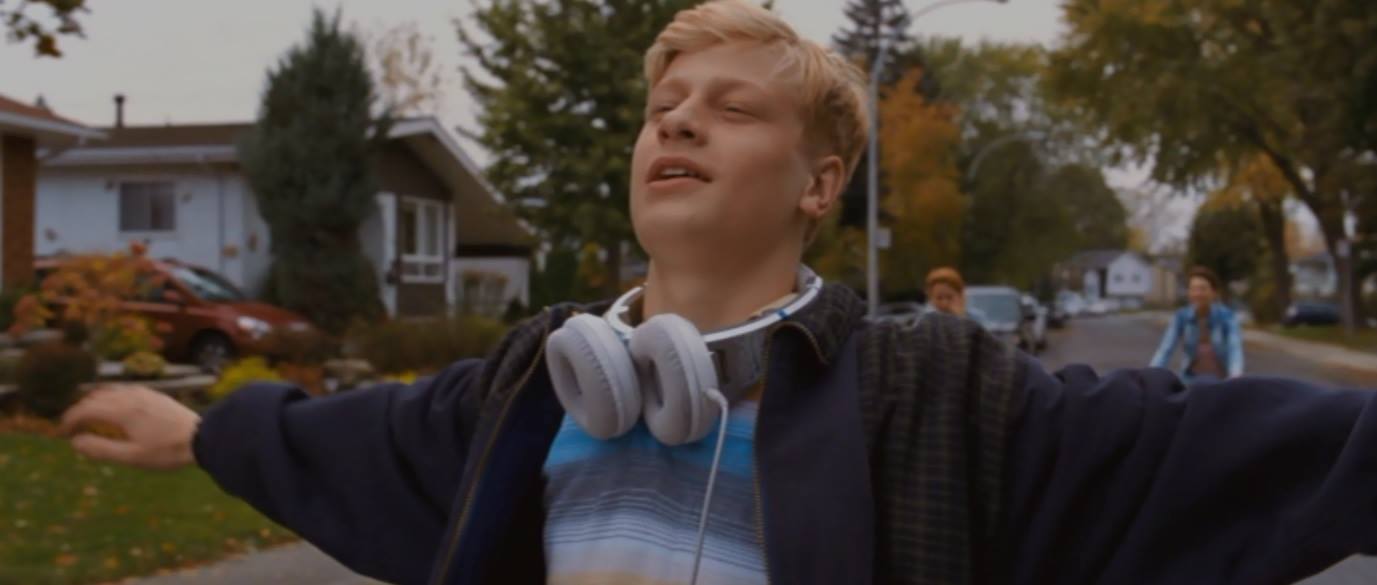
Wholly cinematic, formally audacious, and made with a clear passion for expanding upon the notion of what constitutes “personal cinema,” Xavier Dolan’s emotionally draining film Mommy is a tour de force for everyone involved. Films like this will definitely provoke some sort of response from the viewer, and whether it’s a good or bad reaction will depend on how open you are as a viewer to be put in the middle of a sad family dynamic that might hit too close to home for some. This is an often times painful domestic drama that unflinchingly stares directly into the face of familial madness without offering any easy solutions to the various problems that are highlighted during the beyond intense two hour and 20 minute runtime. Shot in a perfect square aspect ratio of 1:1, this unusual format allows for the harsh yet gorgeous visuals to gather an extraordinarily intimate head of steam, bringing the audience extremely close to the action, with characters often times busting out of the confines of the frame. And then, during two flights of fancy that strongly tie into the film’s central themes of freedom and regret, Dolan’s film opens up into 1.85:1, allowing a breath of fresh air for everyone, including the audience, as we continue to observe a tragic situation getting all the more dangerous as it progresses. The three central performances are staggering, and it’s a crime that the Academy didn’t pay any attention to this incredibly confident piece of cinema, one that challenges the viewer at almost every turn, asking them to go on an unpredictable ride with loose-cannon characters that can never be tamed. A general plot description: The phenomenal Anne Dorval stars as Diane, “Die” for short, a saucy, widowed mother who is totally consumed and overwhelmed with the struggle of raising her mentally troubled and sometimes physically violent son Steve (Antoine Olivier Pilon, in a mesmerizing performance of anger and rage). Diane and Steve have a strange, sometimes borderline questionable relationship; think Cyrus but even more oedipal. Along comes an odd and possibly sick (mentally or physically it’s never explained but there’s just something…off about her…) neighbor named Kyla (the intriguing Suzanne Clément) who forms a unique bond and friendship with both Diane and Steve, which leads to some truly unexpected developments and moments of harsh truth for everyone involved. I’ve never seen a film like Mommy, it kept me on the edge of my seat wondering where it was headed next, Dolan’s filmmaking chops totally smacked me upside my head, and I’m now forced to track down the other four films that this 25 year old filmmaker has made over the last five years. This is an unforgettable piece of storytelling and filmmaking.
11425534_10204849208366241_9158441925428720927_o

WAYNE KRAMER’S RUNNING SCARED — A REVIEW BY NICK CLEMENT

RS2

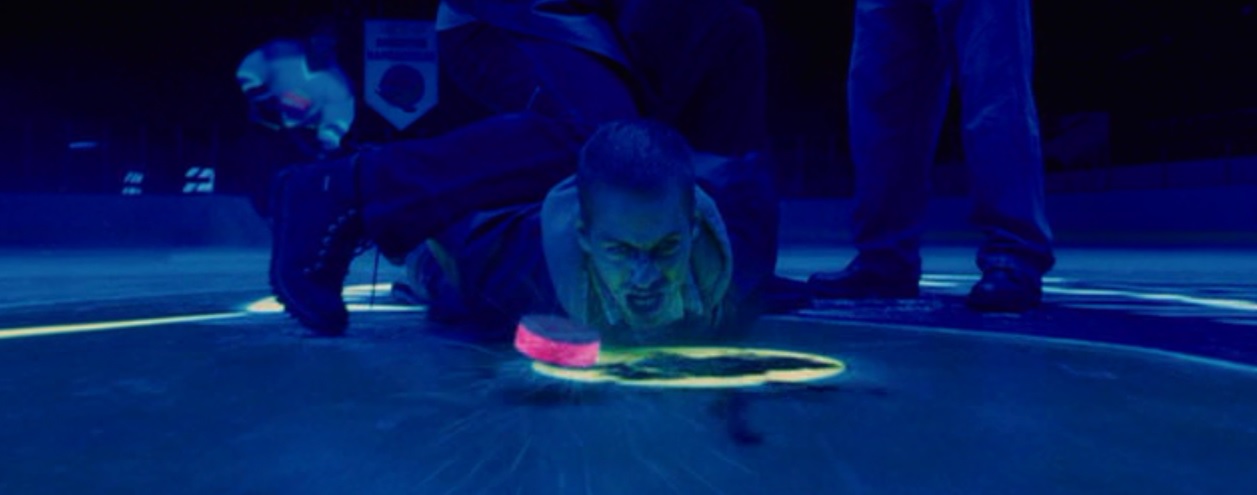
Running Scared is off the wall, go-for-broke-cinema. You feel like an outlaw while viewing it. Directed with ferocious energy by the fiercely independent and tremendously gifted writer/director Wayne Kramer, this cult favorite was released to both critical adoration and hostility (the Ebert & Roeper episode is a BONAFIDE CLASSIC, with Roeper truly showing how much of an ignoramus he can be), and represented a total switch-up in terms of filmmaking style and intent from his earlier, far more reserved picture, the Las Vegas-set romantic drama The Cooler. This film was part of the mid-2000’s trend of cubist action pictures made by filmmakers looking to advance the form of the extreme action picture (Tony Scott’s Domino, Joe Carnahan’s Smokin’ Aces, and Michael Davis’s Shoot ‘Em Up are other notable entries in this subgenre with more recent stuff like Carnahan’s Stretch and Kramer’s Pawn Shop Chronicles also serving as welcome additions). Running Scared made a splash with adventurous audiences in 2006, and it ranks as one of the premiere R-rated actioners of the last 15 years. It’s a supremely stylish hybrid that goes to some truly creepy and insane places on a narrative level while never stopping in the aesthetic explosion department, treating the camera and editing bay as if they were the ultimate toys at a filmmaker’s disposal – as it should be in my estimation. I fucking LOVE this movie. LOVE IT. I was blown away in the theater when I first saw it, and was immediately obsessed with the aggressive stylings and forceful dramatic content that sometimes borders on an overt political statement (Fuck You, Pedophiles!) Running Scared takes elements from the traditional cop film and mixes them with super-dark magical realism (truly the nastiest kind), gritty 70’s flourishes, and modern violence ‘n mayhem which results in an intoxicating brew of kitchen-sink-cinema. This film won’t be for everyone, but for those looking to take a walk on the wild side, look no further.

Ebert’s famous review of Running Scared said it all: “Speaking of movies that go over the top, ‘Running Scared’ goes so far over the top, it circumnavigates the top and doubles back on itself; it’s the Mobius Strip of over-the-topness. I am in awe. It throws in everything but the kitchen sink. Then it throws in the kitchen sink, too, and the combo washer-dryer in the laundry room, while the hero and his wife are having sex on top of it.” HA! I couldn’t have said it any better myself, Roger. Damn I miss your passion. Running Scared is a joyous celebration of all things wild and wooly, with an incredibly engaging and increasingly frenzied lead performance from the late Paul Walker, a terrific supporting turn from Vera Farmiga as his strong willed wife, and tons of great character actors showing off their gruff faces and getting into some seriously nasty shoot-outs (Chazz Palminteri, Johnny Messner, Karl Roden, John Noble, Ivana Milicevic, David Warshofsky POWER, Arthur J. Nascarella, Bruce Altman, Elizabeth Mitchell, and Michael Cudlitz are all extremely memorable). The narrative pivots on a gun used in the murder of a corrupt cop; it’s up to gangster underling Jimmy (Walker) to dispose of the weapon in question without it ever being found. But when the gun goes missing thanks to Jimmy’s 10 year old son and his snooping best friend, all hell breaks loose, and he’s on the run looking for the pistol while trying to evade the dangerous crosshairs of crooked cops, psycho pimps, child killers, and the Russian mob. I’m not saying anything more than that on a story level as this film will surprise ANYONE who checks it out. There’s simply no way to see the various events coming before they arrive in this unhinged piece. This is a dangerous, perverse, adult-oriented flick, replete with seriously graphic violence, hot sex, full female frontal nudity, and the exquisitely liberal use of my favorite word: “Fuck.” And without spoiling it, the way Kramer used Farmiga’s character in the second half of this film deserves major praise. In far too many films, the role of the put upon wife can feel like an afterthought. Not here. In the film’s most controversial bits, she gets to “take out the trash” in a vigilante-esque fashion that feels both emotionally bracing and incredibly cathartic for anyone who feels that societal garbage needs to be wiped out.

The cinematographer James Whitaker goes berserk, filming the action in jagged, extreme close-ups and ultra-slick Steadicam to create a sense of danger and immediacy while upping the visceral ante considerably in all of the brazenly bloody shoot-outs and pummeling beat-downs. Arthur Coburn’s astute editing treats each shot like a piece of the increasingly crazy puzzle that this film ultimately resembles, with staccato editing patterns to match the increasingly heightened visuals. Mark Isham’s sinister and incredibly effective score still haunts me on a weekly basis, with that great theme song used in all the right moments. And again, I have to go back to one of my absolute favorite elements of this movie, which is all of the stuff with Farmiga’s character, and what she gets to add to the story on an overall emotional level. Thanks to Kramer’s inventive screenplay, the thankless role of the “on-looking wife” has been given some heft and texture instead of being relegated to the sidelines, especially after so memorably introducing her. Kramer found ways for the narrative to involve her in interesting and complex ways, giving her character her own arc, and giving the film a menacing edge it might not otherwise have had. And yet another thing I LOVE about this movie is how the various scumbags truly get what they deserve in this outrageous world that Kramer created. You can’t truly take this movie seriously but that doesn’t stop it from being anything less than outlandishly entertaining. It’s a constantly shifting piece of storytelling and is filled with twists and turns, and when you think about EVERYTHING by the conclusion, you’ll notice that some of what happens didn’t NEED to happen, but it did because of the daring bravura of Kramer’s nightmarish vision. That the film was shot in Prague and set in New Jersey only adds to the unique flavor of the entire piece. This was Kramer unleashed, experimenting with form while still paying heed to the satisfying conventions of genre. If this is a film that has escaped you, do yourself a favor and check it out. But be prepared for something cranked up to 100!

RS1

WAYNE KRAMER’S THE COOLER — A REVIEW BY NICK CLEMENT

2

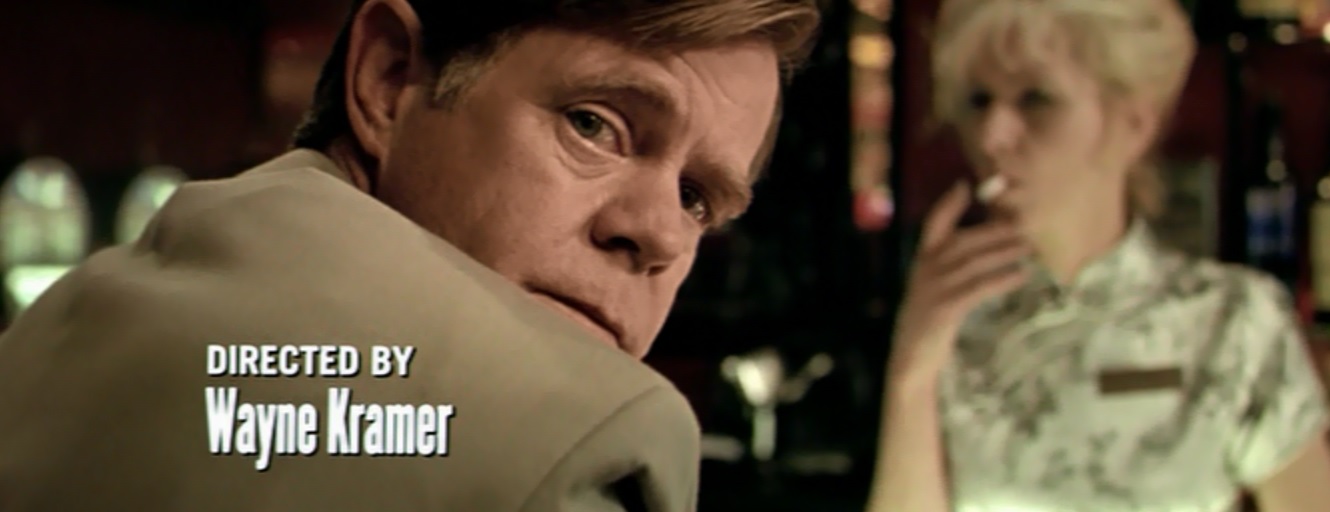
In 2003, director Wayne Kramer made a snappy and punchy calling card picture The Cooler, a Las Vegas fairy tale explicitly made for adults starring William H. Macy and Maria Bello as lost souls and unlikely lovers who have to make some big life decisions in order to better their personal situations. In the highly entertaining story concocted by Kramer and co-writer Frank Hannah, we’re introduced to lovable loser Bernie (Macy in one of his best performances), an old-school casino “cooler” who is under the sway of his ruthless boss Shelly (an Oscar nominated and totally nasty Alec Baldwin), who uses Bernie’s perpetual bad luck as a way of turning the tides on hot-streak gamblers. Bernie has been smitten with cocktail waitress Nathalie (a terrific Maria Bello) for a while, and before you know it, the two of them have started up a passionate and extremely sexy affair that threatens their safety. Once Bernie starts to fall in love, his loser-ways begin to fade, with his cold-touch seemingly disappearing right before his eyes. And most importantly, Bernie is done with being Shelly’s casino pet, and has told him that he’s got one week left on the job right at the start of the film. Shelly’s not impressed with this bit of news. But stuff gets really complicated when Bernie’s screw-up son tries to rig a game and make off with a huge score at the craps table, thus resulting in some broken legs and a promise by Bernie to make good on his son’s debt. Kramer and Hannah’s dialogue is vulgar and peppy, and Arthur Coburn’s energetic editing was in perfect tandem with the casually stylish camerawork from James Whitaker which made great use of the casino floor and all of the trappings of the house. Mark Isham’s awesome, saxophone-dominated score hits all the perfect notes of Vegas sleaze and heartfelt romance, especially as the love affair between Bernie and Nathalie blossoms. Much was made at the time of the on screen nudity on the part of Bello and Macy, as their sex scenes have an unforced authenticity that makes the various sequences feel all the more real and passionate. Macy, everyone’s favorite loser, is perfect here, all vulnerability and awkwardness, while Bello makes you care in all the right emotional moments, while also getting a chance to show off her confidently sexual side as an actress, which would be further explored in David Cronenberg’s A History of Violence and the intensely disturbing Downloading Nancy from director Johan Renck. But it’s Baldwin who steals the picture every time he turns up, delivering a deliciously evil performance where he’s able to spout off some pungent, hard-nosed dialogue while cutting a convincing portrait of a guy stuck in the past with no understanding of the future. This is an intensely romantic film at times, one that believes in the notion of fate and chance and luck, and while the ending might strike some as overly convenient given the harsh plot developments, I absolutely loved the way Kramer and Hannah went with their hearts and decided to end their picture. They’re happy to run their characters through the ringer but they’re also clearly in love with them, which extends to the performances and the overall zest of the filmmaking. Ron Livingston, Paul Sorvino, Shawn Hatosy, Estella Warren, and Arthur J. Nascarella provided colorful and memorable support, and the entire film has a cool-factor that’s hard to put into words. A Blu-ray release is long overdue for this gem in the subgenre of Las Vegas crime dramas.

4

HAROLD BECKER’S THE ONION FIELD — A REVIEW BY NICK CLEMENT

1535598_10204832321664084_295119838747247989_n

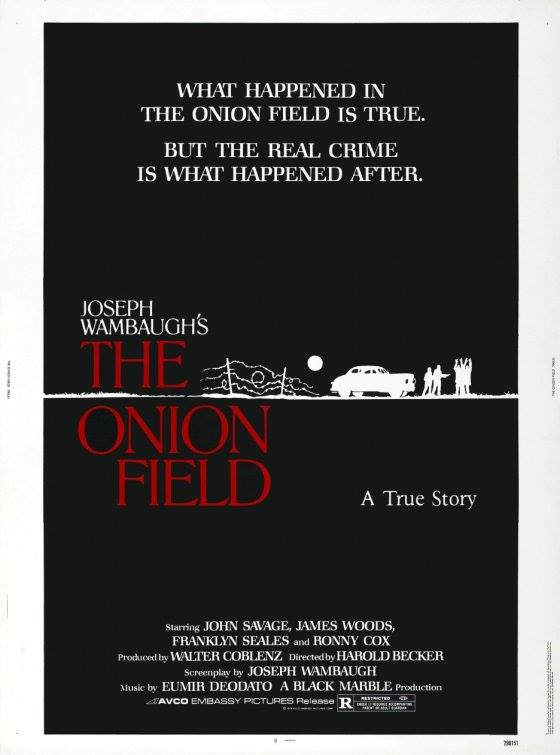
The Onion Field is an upsetting, highly detailed, true-crime movie directed with class by Harold Becker in his second big-screen effort after The Ragman’s Daughter. Released in 1979 and starring an impressive cast of up and coming talent including an incredible John Savage, a tragic Ted Danson, and a live-wire James Woods in one of his all-time skeeviest performances, the film centers on the murder of Los Angeles police officer Ian Campbell (Danson), and how his partner Karl Hettinger (Savage) miraculously escaped but never got over the intense feelings of guilt and despair brought upon by the sudden and violent tragedy. Woods plays Gregory Powell, the unremorsefully evil shooter, with a shifty and sweaty Franklyn Seales portraying his accomplice, Jimmy Smith. Joseph Wambaugh adapted his own book for the screen, and he painted a complicated picture of a variety of people thrown into each other’s orbit after a terrible crime and how the ramifications of the situation multiplied for everyone involved. The opening tracking shot through a tree-lined 1963 Los Angeles suburb immediately sets the tone, with Eumir Deodato’s score swelling on the soundtrack, as the initially easy going performances from Savage and Danson give way to nervous suspense the moment Woods and his goons enter the picture. Wambaugh’s multilayered screenplay also tackles the desperate attempts by Powell and Smith to get off of death row, which they successful accomplish, and while Smith was released in 1982, I find it interesting (and sort of awesome) that, according to some rumors, Powell developed some form of cancer while in the joint, and was never given the time of day by jail doctors, in effect letting him (hopefully) painfully suffer up until the bitter, miserable end. Becker handles the murder sequence in chilling fashion, with the Bakersfield onion field location shot in striking and ominous moonlit shadows by cinematographer Charles Rosher, Jr., who provided the picture with a smooth and confident visual style. This is tough-goings moviemaking, centering on a cold-hearted tragedy, and how some people become overwhelmingly affected by violent loss. Savage was sensational as Hettinger, cutting to the core of what would have troubled the real life detective, as one is left with the impression that while hope is glimpsed at by the finale, it was a long road to full recovery. Ronny Cox provides memorable support. The film has just been released on Blu-ray by Kino and the picture and audio quality is top shelf.

BRIAN DE PALMA’S FEMME FATALE — A REVIEW BY NICK CLEMENT

2

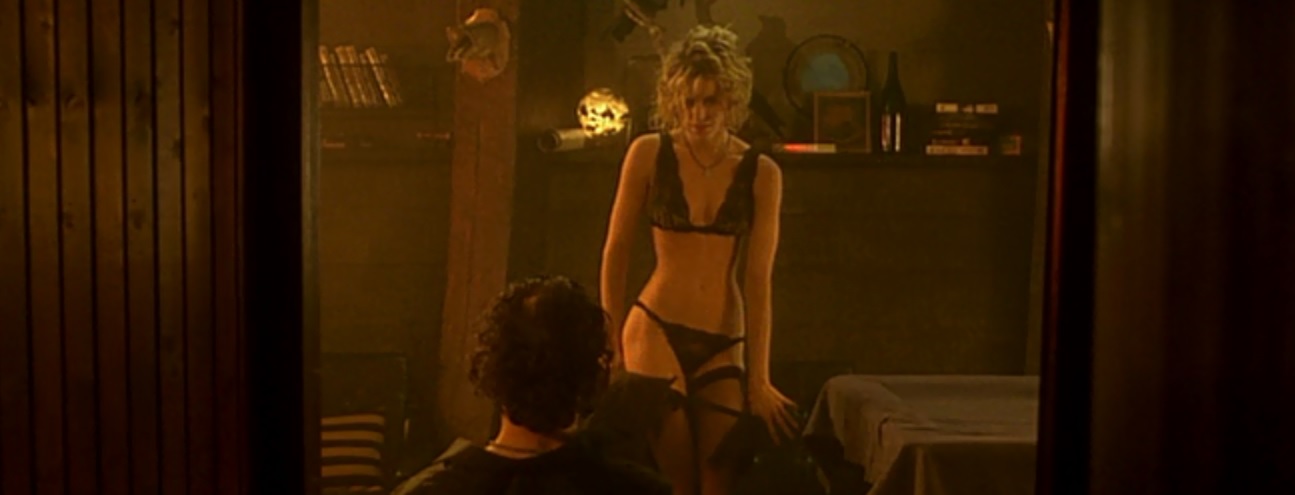
Femme Fatale is VINTAGE De Palma – elegant, sexy, totally twisted, and in love with itself and the endless possibilities and conventions of classic noir filmmaking. This is a staggering work of pure cinema, a work that knowingly winks at itself and an entire genre that it looks too for inspiration. De Palma has crafted a neo-noir that feels like it’s paying tribute to the history of film in general, in love with its sultry leading lady, in love with film noir, in love with sex, in love with violence, in love with its own self-reflexive movie-movieness, and most especially, in love with SUPREME cinematic style. I’ll never get tired of re-watching this brilliant piece of work from the Master of the Macabre and I’m perfectly content to have become wholly obsessed with it. It’s my favorite Brian De Palma movie of all time, and that says a lot, because if you know me, you know I worship at the Altar of Brian D. If you’ve never seen the trailer, I highly urge you to check it out, as it’s one of the best, boldest coming attractions ever put together for a movie. But a trailer is only a trailer, and as incredible as it is, it can’t prepare you for the full thing. From the almost totally dialogue free opening sequence lasting nearly 30 minutes and featuring a steamy sex scene and complicated diamond heist during a gala screening at the Cannes Film Festival with Ravel’s Bolero playing on the soundtrack, you know you’re in the hands of a filmmaker who is in total control of his kinky, dreamy, exacting vision. Thierry Arbogast’s smooth, gorgeous, and strikingly composed cinematography is the stuff that dreams are made of; how this film has been ignored on the Blu-ray format is mystifying and insulting. Femme Fatale centers on a perfectly cast Antonio Banderas as a sleazy paparazzi who is tasked with photographing the alluring wife of a senator, played with icy, devilish glee by the stunning Rebecca Romijn, a character that’s clearly been molded on classic femme fatales from yesteryear, most especially Barbara Stanwyck in Double Indemnity and countless confused Hitchcockian heroines. And to be honest, for a supermodel with ZERO major acting experience before this film, Romijn was fantastic. Sure, some of her dialogue is stilted, but that might have been De Palma’s intention, and the way that De Palma uses the visual language of filmmaking all around his lead actress shows that he understood how to utilize her in this fearless performance. She’s asked to do a French actress, play multiple “characters,” and showcase an almost unparalleled level of overt sexiness that’s normally shied away from in a major motion picture. The strip tease scene is an absolute all-timer, with De Palma and Arbograst literally making love to her with the camera. Banderas has rarely been this loose and sympathetic on screen, giving a terrifically seedy performance as the greasy paparazzo that gets caught up in a serious web of intrigue with a variety of morally questionable characters. But there’s WAY more to the twisted plot than just that, and I’d be an immense ass to spoil ANY of this wonderfully nasty and playfully hot ‘n bothered thriller, as it’s a film that was clearly made with a grinning and cackling De Palma behind the director’s monitor. Everything about this shifty, tricky, and smashingly sexy movie screams “look at me” in all the best ways that tour de force cinema often can — this was De Palma reminding everyone that he’s still capable of knocking it out of the cinematic park and into the silver-screen freeway. Few films have the same technical bravura that De Palma shows off in Femme Fatale; the almost wordless initial 30 minutes are some of the most gorgeous and inventive bits of visual storytelling that have ever graced the screen, and the entire narrative tips its hat to numerous classics from the past, while allowing for De Palma to get extra modern with the nudity and violence and language. Femme Fatale is the epitome of a multiple viewings movie, because in order to unlock all of its secrets, you need to give yourself up to the wild game that De Palma is playing. You get split screens, tons of slow motion, flashbacks, flash-forwards, dopplegangers, mistaken identity, double crossing, identity theft, and every other sly and over the top narrative and aesthetic trick that De Palma can come up with. This is De Palma’s ode to cinema, ode to women, and ode to a genre that he smashed and elevated every time he took it on.

10

JOE CARNAHAN’S NARC — A REVIEW BY NICK CLEMENT

11402598_10204826957209976_3221049851773473091_o

Narc is easily one of the best cop movies ever made. Or at least that I’ve seen. Go ask William Friedkin – he’ll agree. Joe Carnahan has made six feature films; two of them have been four star masterworks, this being one, The Grey being the other. Ray Liotta and Jason Patric were totally on fire in this film, with Carnahan playing off Patric’s famous performance in the similarly visceral and intense undercover cop thriller Rush, and Liotta playing the tough guy with a heart, even if it takes the entire film to expose it. This is a brutal, unflinching film, pretty much right from the beyond thrilling opening sequence that makes the best use of jittery hand-held camerawork that the style has to offer. After a tragic shooting, detective Nick Tellis (Patric, filled with internalized rage and bottled-up tension) gets assigned to work with detective Henry Oak (Liotta, positively bristling with anger), who is embroiled in an investigation over the death of his partner, an undercover officer who had been helping him put the pieces together to a series of drug related murders. What follows is a convoluted yet engrossing tale of secrets, lies, betrayal, corruption, and more than a few bloody, one-on-one showdowns between characters who constantly swing back and forth between being sympathetic and downright evil. Narc operates in a world of greys; there’s not much room for black and white, and there are some moments in Narc that will push people’s buttons. Carnahan is interested in taking the audience on a hellish, passionate ride through the Detroit underbelly, and he’s constantly able to surprise and excite his audience because his multilayered screenplay has it all – great characters, great twists, great dialogue, and the opportunity for two macho actors to cut searing portraits of men pushed to the breaking point. Cliff Martinez’s electronic, ambient score heightens the tense mood in every scene, Alex Nepomniaschy’s gritty and gorgeous-ugly cinematography gets up close and personal to all of the nasty action, while the perfectly seedy production design from Greg Beale and Taavo Soodor brought a down and dirty atmosphere to the entire picture. The final act is almost overwhelming in its emotional implications on the part of various characters, while the central mystery feels more like an elaborate MacGuffin when put into context with the overall scope of the story and the layered themes that are deeply explored all throughout. Tom Cruise was one of 23 credited producers on this brilliant effort from Carnahan, a filmmaker who has had the oddest of careers, as he’s managed to bounce back and forth between stylishly frivolous (yet undeniably entertaining) action films and intense character studies. Filled with graphic violence, nasty drug addicts, frenetic chases, and all sorts of moral and thematic ambiguity that bolsters the plot and character dynamics, Narc still is one of the hardest hitting police thrillers ever crafted.

11411867_10204826955809941_7373943235004000436_o

Ana Lily Amirpour’s A GIRL WALKS HOME ALONE AT NIGHT — A REVIEW BY NICK CLEMENT

2

I’m not vampire movie sort of guy, but when I watch them, I want them to be in luscious black and white, showcase California doubling for Iran, feature a cast I’ve never seen before, take me on a journey that I could never have anticipated, have a Sergio Leone/Ennio Morriocone-esque musical score, and generally kick my cinematic ass six ways from Sunday for a tight hour and 40 minutes. A Girl Walks Home Alone at Night did all that and then some. Wow. This is such a cool, different, wildly entertaining movie with a fabulous sense of aesthetics that has seemingly been designed for genre fans and curiosity seekers alike. Directed with intelligence, patience, and consummate style by Iranian-American filmmaker Ana Lily Amirpour, the movie has been described by its maker as a “Vampire Spaghetti Western,” and that description is not far off from the truth. If I’m going to watch something in this vein, it needs to be bold and different; I’m not looking for gothic programmers that litter the multiplex every other week. And this film, if anything, is bold and different, while being thought provoking, funny, romantic, and extremely suspenseful. Because I didn’t know ANYTHING about this film (hadn’t even seen a trailer), the story was of total surprise to me, and I want it to be that way for you too, if of course you haven’t seen it yet or are not familiar. If the vampire milieu isn’t your normal cup of cinematic tea, take a chance on this one. I’m glad I did. Amirpour is a SERIOUSLY gifted filmmaker to pay attention too, with a follow up project that sounds beyond tantalizing – per Wikipedia: “A post-apocalyptic cannibal love story set in a Texas wasteland” featuring a “muscled cannibal who breaks the rule ‘don’t play with your food.’” “It’s Road Warrior meets Pretty in Pink with a dope soundtrack…very violent…very romantic…like El Topo meets Dirty Dancing.” SIGN ME UP!!!

1

GREAT MOVIE ALERT – SPRING! SEE IT ASAP! – A REVIEW BY NICK CLEMENT

2

I’ve been beating the cinematic drum for Justin Benson and Aaron Moorhead’s science-fiction romance Spring for the last three months and I’m not going to stop anytime soon. It’s a great movie, one that took me completely by surprise, and on repeated viewings, it’s only gotten stronger. It’s an uncanny genre hybrid that announces a seriously talented team of filmmakers to look out for in the future. Podcasting Them Softly is proud to announce that next Monday, we’ll be dropping a Special Edition Podcast with Benson and Moorhead as they discuss their fantastic film with us. We couldn’t be any more excited to share this terrific chat, and as a warm up, here’s a re-post of my review. The film is available at Amazon, Best Buy, and streaming services. SEE THIS FILM!

SPRING – 2014 – Benson/Moorhead

The less you know about the sublime genre bender Spring the better off you’ll be. This is an incredible, unnerving piece of romantic drama science-fiction, a film that’s as rich in atmosphere as it is in layered character development, with a dash of speculative fantasy, a ton of honest heart and emotion, and some truly icky and spectacular special effects. Spring feels like the trippy after effects of Richard Linklater and H.P. Lovecraft getting together to combine talents and forces. Multi-hyphenate wonder-boys Justin Benson (co-editor, co-producer, co-writer, co-director) and Aaron Moorhead (co-editor, cinematographer, co-producer, co-writer, co-director) borrow the walking and talking aesthetic from Linklater’s Before Trilogy, and fuse elements of psychological and physical horror that would make Cronenberg proud; this film is as thought provoking as it is visually arresting, and it’s a piece of work that will likely hold up extremely well over multiple viewings. If you know anything about me as a film lover, you’ll know that it takes a lot for me to get really excited about a “horror” movie, and while Spring is certainly horrific, it has so much more on its mind than just grossing out the viewer with cheap gore and lame gotcha! scares. When the ideas are this exciting, the performances this involving, and the filmmaking this confident, you can’t help but take notice.

Evan (the unassuming and quietly awesome Lou Taylor Pucci) has just lost his mother to cancer in the film’s painful opening scene. To get over the loss, on a whim, he decides to go to Italy, just to get away from it all, see something new, in an effort to gain some new life experience. He lucks into an apartment at an ancient olive farm run by a very old farmer (a perfect Francesco Carnelutti, exuding both mystery and poignancy and slight menace), and while walking around this picturesque village he’s found himself in, he has a chance encounter with the alluring and sexy Louise (Nadia Hilker, in a truly startling performance that will both transfix and scare), who just so happens to be more than just the prototypical Italian beauty. From there, a romance is born, the two budding lovers stroll around and get to know one another, but under a unique set of circumstances. I hesitate to reveal ANYTHING more than this. Pucci and Hilker have tremendous chemistry with one another, and both are asked to run a gamut of emotions, and I have to say, I loved every single creative choice made by this film, from the ambient, Social Network-esque score, to the consistently stylish imagery, to the reliance on practical special effects which were then augmented (not dominated) by CGI. There’s humor, there’s sex, there’s sadness, and by the end, there’s something that approaches the magisterial. I’m telling you — Spring is so much more than just a sexy-female-monster movie.

I think what I loved so much about Spring was that it was constantly subverting my expectations, especially the glorious finale, which reminded me very much of Gareth Edwards’ similarly low-budget creature feature Monsters. Both films expertly juggled tones (Spring has some great and unexpected humor during the final stretch) and created a fantastical landscape that was believable enough in its own realm. If you’re going to go out on a limb with your story, the filmmaking and storytelling chops have to have a certain integrity, and that’s why I loved Spring so much — it felt so confident, so assured, so totally all of a piece. The gauzy, dreamy, 2.35:1 cinematography immediately engrosses the viewer, and Moorhead’s ability to convey terror through silent, ominous shots of the Italian landscape is terrific. I loved how he was constantly juxtaposing the inherent beauty of the Italian coast with all of this nightmarish imagery. I love it when a genre film is able to surprise, when it takes the framework of something you’ve seen before, flips some switches, and turns the narrative around on itself so that everyone is surprised, the viewer and the actors in the film. The way Spring concludes made me clap in my living room — that’s how much I loved the final beats. This is the kind of film for anyone who is looking for something a bit unusual, something that’s not interested in playing by the normal cookie-cutter set of rules. It’s easily one of the best films of the year.

3

TERRY GILLIAM’S FEAR AND LOATHING IN LAS VEGAS — A REVIEW BY NICK CLEMENT

f

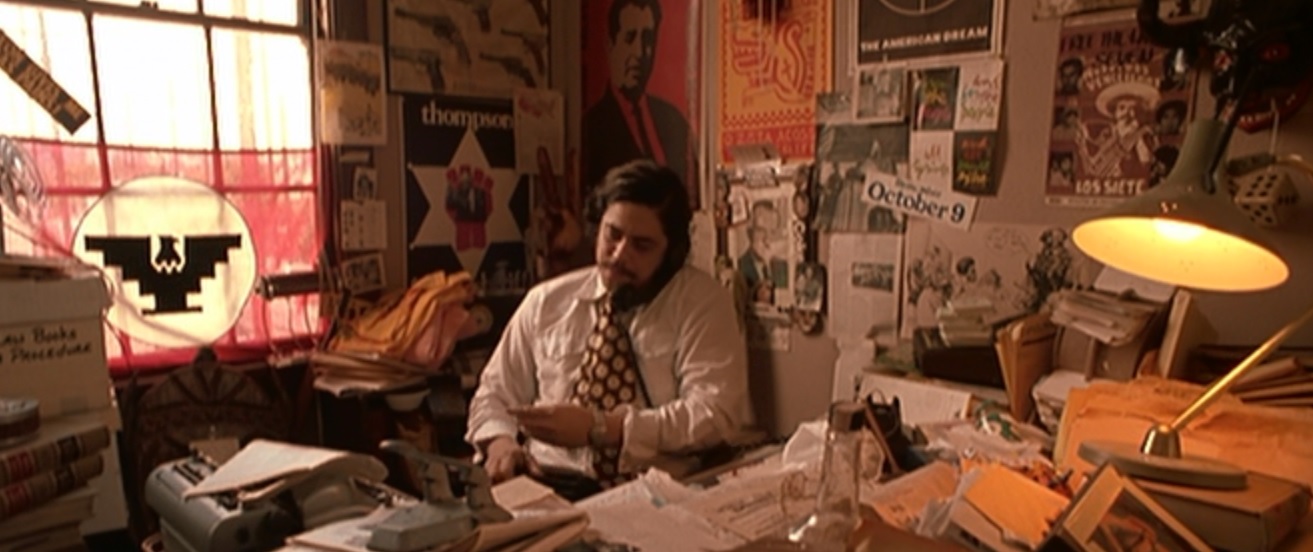
A landmark of cinematic excess and a monument to extreme personal waste. What begins as a festival of bad behavior rapidly becomes a volatile carnival of wild transgressions by its conclusion. An ode to the beast within. Chaotic, loud, obnoxious, and utterly unhinged, the film adaptation of the iconic novel Fear & Loathing in Las Vegas is Terry Gilliam on two bags of grass, 75 pellets of mescaline, five sheets of high-powered blotter acid, with a half a salt shaker of cocaine on the side, and some other goodies lined up and ready to pummel the senses. Aggressive doesn’t begin to cover this masterful piece of work – it forcefully shoves your face into a kaleidoscopic realm of drug-fueled hyper-insanity, all beautifully stitched together by Hunter Thompson’s indelible prose and the gonzo filmmaking energy of Gilliam and every single one of his collaborators. The obscenely gifted (and one-eyed) cinematographer Nicola Pecorini should have won every award back in the day for his work on this aesthetically ground-breaking piece of cinema. Scene after scene, shot after shot, one is left with a buzzing sensation in their eyes, as the restless camera never stops prowling, swerving, or gliding, producing waves of cinematic euphoria that have rarely been achieved. Few other narrative films have shown the LSD experience for what it truly can be (James Toback’s Harvard Man has an EXCEPTIONAL trip-out sequence as does Larry Clark’s Bully and Gaspar Noe’s Enter the Void – DMT in that one…) and you can tell that Gilliam was eager to explore how he could visually convey the monumental bingeing and drugging that Dr. Gonzo and his Lawyer would embark upon. Johnny Depp and Benicio Del Toro give career-topping performances, never once not feeling 110% committed to the maximum absurdity unfolding all around them. Depp studied Thompson’s mannerisms for months before shooting and the effect that their personal relationship had on his performance can be intrinsically felt at all times. Del Toro had to go off of stories and memories for his bit of methodically uncontrolled madness as Thompson’s animalistic partner in crime, and everything he brought to this film – the fat stomach, the out of control hair, the demonic glint in his eye – added up to creating a truly gluttonous monster of a man. I can remember buying a ticket for this film, back in high school, on the Sunday of its opening weekend, and the cashier remarking incredulously: “Are you sure?! We’ve had a lot of walkouts and angry people…” Seriously, only a fool would go into this movie blind; I hope that the people who bolted early were so shocked and appalled by what they’d seen that they’ll never forget it for the rest of their lives. This isn’t a movie for everyone; in fact, I’d say that there’s a limited audience for this film and other works like it — you need to WANT to be surrounded by drunk and high people for an extended period of time, so as a result, the asinine levels of drug and alcohol fueled debauchery that occur will be a turn off to many, many people. I’ve long been fascinated with Thompson and Gilliam as artists, and this project seemed like a natural fit for Gilliam to tackle considering his anarchic view on life, and how Thompson’s original text sought to challenge every single notion of what everyone felt was normal and acceptable. This is top 10 material of all time for me, a movie I could watch every single day of my life, and it’s something I’ll never grow tired of exploring, debating, and obsessing over.

11

SEAN MULLIN’S AMIRA & SAM — A REVIEW BY NICK CLEMENT

1962174_10204806717063985_580569642043856742_o

Sean Mullin’s sweet yet cuttingly cynical romantic dramedy Amira and Sam hits all the right notes. I love that this film went with its heart in the final act. Martin Starr kills it here – if you’re a fan of his deadpan comedy stylings from HBO’s Silicon Valley then you owe it to yourself to see him all cleaned up and looking crisp in this funny, touching, sad, and finally hopeful little gem that knows exactly what to do during its 85 minute run time. The story hinges on Sam (Starr), an Iraq war veteran who by chance meets Amira (Dina Shihabi), the beautiful niece of his wartime translator who has relocated to New York. Through a series of potentially life altering circumstances, Sam is asked to hide Amira after a run in with the NYPD, while an unexpected romance blossoms between the two lost souls. Their “meet-cute” is wonderful, the chemistry that Starr has with Shihabi is palpable, playful, and sexy, and I loved how Mullin threw in pointed jabs about the messed up immigration system that continually plagues America. Feeling like a cousin in some respects to Tom McCarthy’s The Visitor, this is a film that operates on a few levels, with comedy masking some rather upsetting notions of estrangement, and while what happens in the final moments might strike some as unlikely, I believed it because of how well defined the central relationship was and because Mullin clearly has an affinity for his characters (he also wrote the original screenplay, which seemingly feels based on some of his life experiences to go off the Wikipedia page). Paul Wesley (perfectly prickish), Laith Nakli (perfectly pensive) and David Rasche (perfectly to the point) all do strong supporting work. This is one of those small, under the radar gems that deserves to find an audience!

10448671_10204806717343992_8080670605920168240_o