Wherein Nate and Tim chat with the distinguished actor and writer who brought Sheriff Cable to life in Twin Peaks: Fire Walk With Me.

Wherein Nate and Tim chat with the distinguished actor and writer who brought Sheriff Cable to life in Twin Peaks: Fire Walk With Me.
Wherein Nate and Tim discuss their favorite Twin Peaks characters and speculate on some of the upcoming new additions.

As anyone named Kirk Cameron can tell you, Kirk Cameron’s got it all figured out. A faded sitcom star from the 80s, he’s remade himself into something of a one man cinematic cottage industry; thanks to an aggressive religiosity he’s pumped out a variety of ‘films’ that are light on things like acting and production value but heavy on evangelical finger-wagging. His smug mug is actually the perfect front for a denomination known for a general tenor of “I’m right and you’re wrong” moralizing and agonizing mental gymnastics applied in the service of proving the Bible to be an inerrant history of civilization. I’m cautiously optimistic that his wins—previous film Fireproof brays that it’s “the most successful independent movie in history!” on the DVD case—will result in some right wing sugar daddy bestowing a few million on him that results in cavemen riding dinosaurs across the silver screen, but until then we are left with the no budget likes of Kirk Cameron’s Saving Christmas, a holiday classic in only the loosest sense of the term.
Kirk Cameron’s Saving Christmas is actually a narrative film in only the broadest definition of the form. Our hero starts the proceedings by directly addressing the audience in his best Bing Crosby mode, fireside and pontificating about the complexities of rectifying the Christ in Christmas with the supposed pagan trappings that the holiday has picked up over the years. We’re then introduced to Cameron’s brother in law, toting the leaden name Christian, of course, and told he hates the crass commercialization of this most serious of holidays (most theologians worth a crap would tell you that Christ’s resurrection, celebrated on the equally heathen-stained Easter, is actually the one you should keep your eye on). He marches out of a Christmas party set in a bland suburban McMansion and populated with an ethnically diverse group that doesn’t appear to actually know each other to pout about all of this in his car. Kirk follows him out to set him straight with 40 minutes of bizarre speechifying. The good news is that viewers who find themselves flummoxed by complicated plots can ease right into this low mileage beauty and hit the road; there’s actually no story, so to speak, aside from what I’ve described. We are treated to about two scenes of what might be considered a subplot with a jive-talkin’ co-worker of Christian’s who is about two steps up from a full blown minstrel show, but otherwise it’s just Kurt explaining away Christmas trees and Saint Nick as righteous biblical figures, wholly appropriate to the message. It’s a bizarre exercise, delivered with relentless sincerity, weak stabs at humor and no attempt to actually entertain the audience.
Before you know it, 55 minutes have passed and Kirk’s run out of sermon, and out of movie. The pair pull themselves back inside for an extended dance sequence and a bit more speechifying to drag the exercise towards something approaching feature film run time, but nobody’s fooled. While I don’t begrudge anyone their faith or their right to make a living, Cameron and his cohorts have left a rather large stain on the venerable holiday film genre, much as his Left Behind series did on the disaster flick and Fireproof on the romance movie. It’s not an understatement to call Kirk Cameron’s Saving Christmas a war on film itself, and I can only recommend its viewing if alcohol and sarcastic company are both in plentiful supply.
Wherein Twin Peaks supergeeks Nate Hill and Tim Fuglei discuss their discovery of the series and film, David Lynch fandom, favorite moments and more.

The new, final trailer for Star Wars: The Force Awakens currently has Geek Nation enthralled, and few fantasy fans of a certain age range (say, 6 to 80) can think about much else between now and Christmas, but another giant in the genre field has a new film out, just in time for Halloween, that should make those whose tastes tilt into all things horror feel a warm tingle and a pleasant chill. Guillermo del Toro, the Mexican fantasy master, here again has followed a pattern familiar to his devoted followers: One project gets within a hair’s length of life only to wither away, so he quickly pivots and creates something different, new, wholly beholden to his obsessions, and largely satisfying, assuming expectations are calibrated accordingly. His adaptation of H.P. Lovecraft’s At The Mountains Of Madness seemed all but ready to shoot three years ago, but then the studio support disappeared and the bottom fell out. Del Toro then managed a neat trick, reviving the spirit of another faded dream project (Mary Shelly’s Frankenstein) to fuse with his own original story of gothic mystery, the evocative and lovingly crafted Crimson Peak.
With its R rating and mist-shrouded spirits on full display in the advertising campaign, you can’t help but be surprised to find Crimson Peak is a restrained and often familiar story—especially if you know the many movies that the filmmaker gladly nods to, from Hitchcock’s Rebecca to Wise’s The Haunting to any number of other entries (even the relatively recent Angels and Insects gets a significant shout out or two). The film is at once refreshing and staid, as the patience to settle into a story long on character and short on gore is an almost striking change of pace from most modern horror entries, yet as the yarn unravels you can’t help but be left with the desire for an unexpected twist or a truly shocking scare. Neither of the latter are in evidence here. I won’t lie—you will be exposed to several standard jump scares, although even in that department del Toro seems less interested in yanking the viewer around in their seat unexpectedly and more dedicated to giving them a bloody nostalgia bath.
And there is blood red, crimson more specifically, around ever dark corner of the film, from the delicious oak interiors of high society Buffalo NY to the oozing red clay that Tom Hiddleston’s Thomas Sharpe is quietly desperate to mine from his property in England, the last sliver of hope he has to continue a once-successful family name. We come to meet Sharpe when he solicits the support of wealthy American developer Carter Cushing, whose daughter Edith (Mia Wasikowska) is the hero of the tale. A frustrated writer of gothic ghost stories inspired by her deceased mother’s foreboding spectral visitations, she serves as a plucky and talented stand in for some of del Toro’s favorite writers–an early exchange with a petty social rival is telling, when she compares Edith to “Jane Austen, who died alone.” Edith shoots back, “I’d rather die like Mary Shelley, as a widow.” We also meet Sharpe’s sister Lucille, played with a coolly contained lunacy by Jessica Chastain, whose pitch black period costumes and demeanor leave little to the imagination as to what role she’ll play in the proceedings. Thomas and Edith fall into a forbidden yet clearly telegraphed love, and Edith, heir to a fortune, finds herself across the pond in the dilapidated and almost ridiculously creepy Allerdale Hall. Del Toro saves his best production design for the mansion, with archways lined with knifelike appendages, a ceiling with a rotted hole that doesn’t merit the attention of the maintenance crew due to the atmospherically convenient falling leaves and/or snow in the main hall it provides, and, of course, restless spirits with tales to tell. Edith is quickly sucked into the mysteries and madness of the manse, known as Crimson Peak due to the red clay that seeps into the snow around the place during the winter. Without spoiling the details, things are actually quite as they seem—supernatural, deadly, and dangerous to both the new and longstanding inhabitants of this mad circle. Fans of previous del Toro ghost story success The Devil’s Backbone will find some familiar notes being struck as the finale unfolds with plenty more blood and a now-standard but welcome reversal of the age old “damsel in distress rescued by the handsome hero” trope.
The cast is game, the sets are exquisite and there’s barely a shot to be found in Crimson Peak that won’t entrance the eye. The CG spirits are a solid step above most such things found in the digitized age of horror thanks to del Toro’s deft directorial decisions, either in sound design, visual conception or placement in the frame, but ultimately don’t raise the viewer’s blood pressure above what a strong appreciation for the care that went into bringing them to life on celluloid would merit. Ultimately, that’s the impression we’re left with as the credits roll—a talented filmmaker, beloved to genre fans around the world, putting together a love letter to some of his favorite early films and stories, but never quite transcending the realm of tribute with the innovation on display in earlier films such as the authentically haunting Devil’s Backbone and the periodically transcendent Pan’s Labyrinth. It’s a delight to have Guillermo del Toro swimming in the darker corners of his obsessions yet again, where he clearly feels the most comfortable, but next time out it would be refreshing to see him rely more on his mad imagination than his esteemed influences.

The schedule for the 2015 Mile High Horror Film Festival is bursting with quality programming all day and deep into the night, but a double feature on Friday afternoon/evening was my primary target as soon as I viewed the calendar: The Descent with director Neil Marshall in attendance, and The Shining with Joe Turkel (Lloyd The Bartender) and Lisa and Louise Burns (The Grady Daughters) conducting a Q&A session prior to the show. Arguably the best horror film of the 2000s followed by arguably the greatest horror film of all time, with these creative forces behind them in the house? No question I’d be at both, and each was fantastic. The Descent and The Shining have important similarities, such as masterful senses of tension and locations that are crucial to the proceedings, but couldn’t be more different otherwise—a monster movie enclosed in darkness, gore and stone versus a brightly lit ghost story floating through spacious, impeccable halls. A naturalistic, tough and large female ensemble; a stylized nightmare with few (living) souls inhabiting it. Still, the two stand on equal footing because the purity of vision in each is unquestionable, and not a moment is wasted in taking the viewer on their respective dark journeys.
Neil Marshall’s The Descent is celebrating its 10 year anniversary, and one could see the pride and enthusiasm the filmmaker still has for discussing this gem by his effusive Q&A immediately following a fully attended afternoon screening. He started by addressing the “alternative ending” controversy, stating that the UK received the real finale so he wasn’t as worried about its reception overseas, and the test screenings indicated US general audiences preferred something more upbeat, so he allowed Lionsgate to show the truncated cut here with the condition that they gave it the widest release possible, ultimately on over 2,000 screens. He also pointed out that his original vision is the happy one; Sarah’s ending up with her daughter (played by Marshall’s niece) was the only version of peace she would ever find.
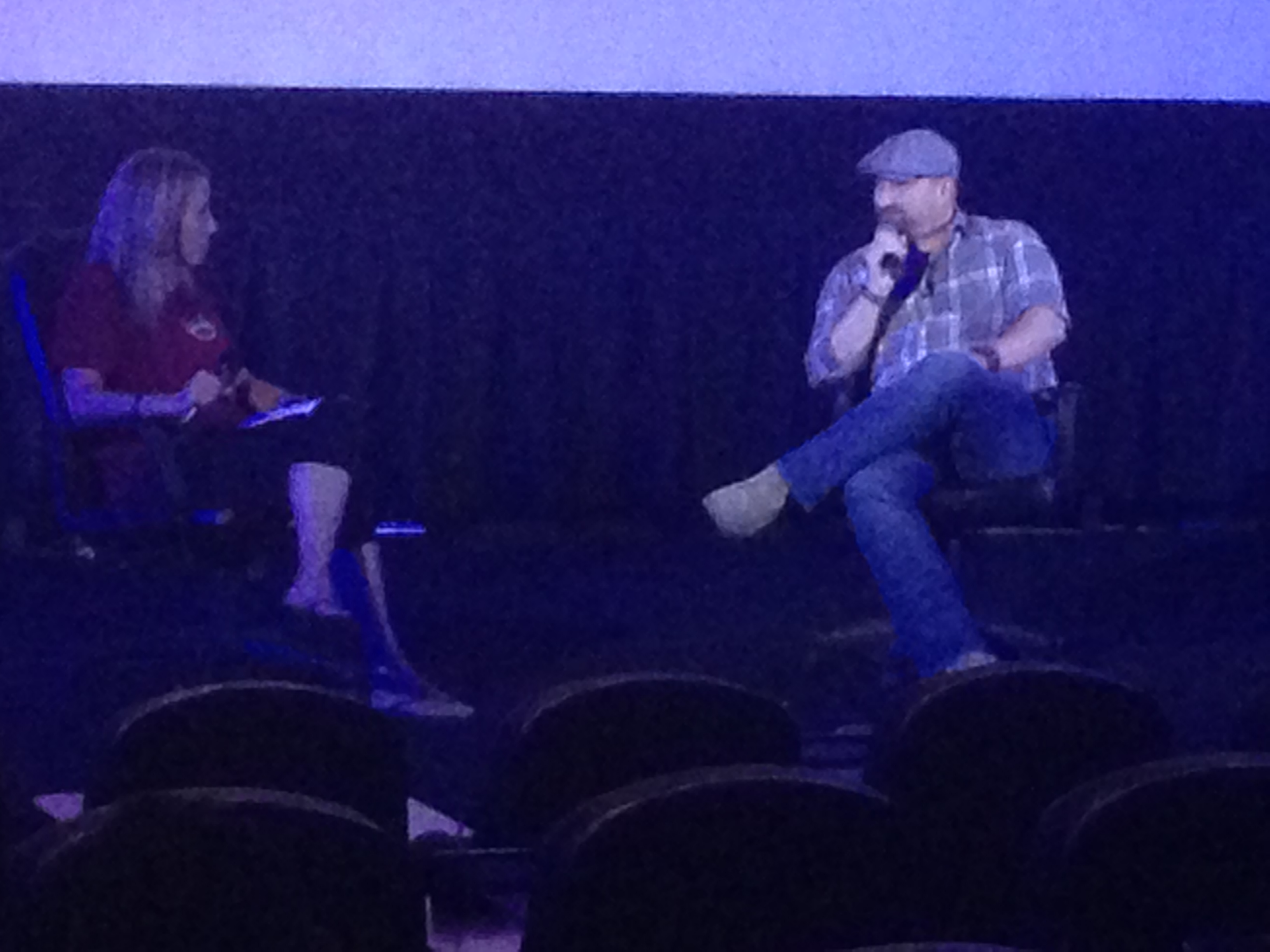
The director continued by discussing the origins of the story and its early reception. He originally wanted to expand an earlier student film revolving around space zombies called Brain Death into a feature, but was told it would be too expensive at a meeting to pitch producers and was asked to come up with something else. Remembering a challenge he’d heard in the press about his debut, Dog Soldiers, not being scary enough, he determined to make the scariest film he could imagine, got on a train immediately after said meeting and let his mind wander. By the time he’d returned home several hours later, he’d figured out a little-used location in horror to exploit with a cast almost completely devoid of testosterone. The script felt more like a novel as he quickly entered extended sequences of little to no dialogue, and the stark descriptions within scared everyone who read it. One of his producers labeled it “too relentless!” and asked him to let them out of the cave; Marshall’s response? “They didn’t get to leave the boat in Jaws! They didn’t get to walk away from The Nostromo in Alien!” He knew keeping the heroes trapped was key.
A brief discussion of the technical details revealed a fun anecdote or two, including the time one of the “crawlers,” as he referred to them, sprained his ankle on set and was taken to the emergency room—in full costume. Marshall continues to be proud that barely any CGI was used, not to mention the fact that they’d built sets so effective the viewer couldn’t tell the entire film was shot on sound stages at Pinewood Studios with a few exteriors shot in Scotland (apparently real caves fill with fog fast when humans are around and the slippery surfaces ensure repeated, dangerous falls). He even pointed out a variety of obscure references to be found in the film, some as subtle as a shot of a sleeping Beth with her arm over her head nodding to Deliverance. When asked if Alfred Hitchcock’s influential hand could be felt anywhere on The Descent, Marshall balked at the notion yet then teased the audience that the next film he’s working on is his “Hitchcock Homage,” but spilled no further beans. For broad influences he called John Carpenter the biggest and mentioned The Thing, Alien, Deliverance and The Shining as specific touchstones.
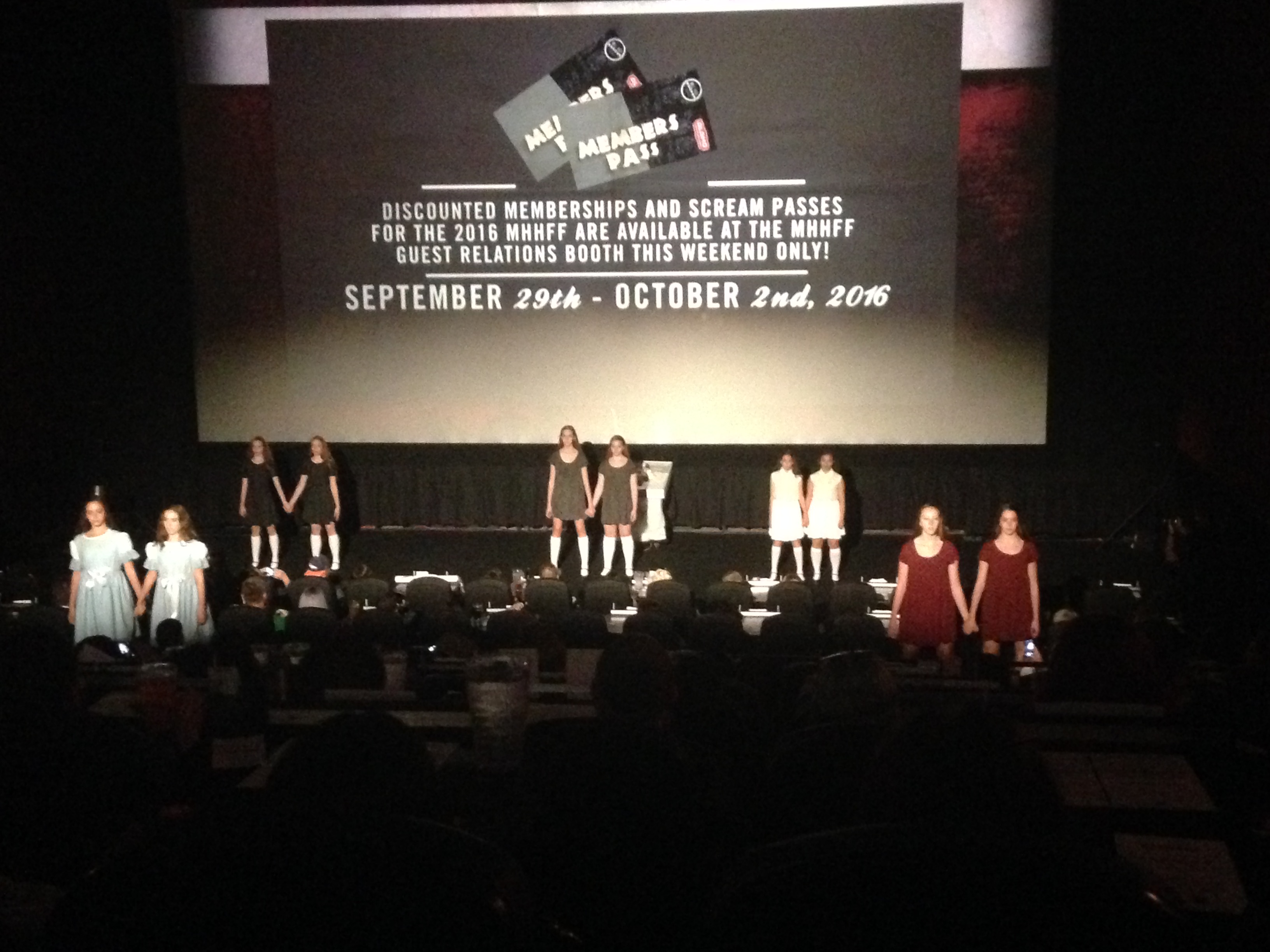
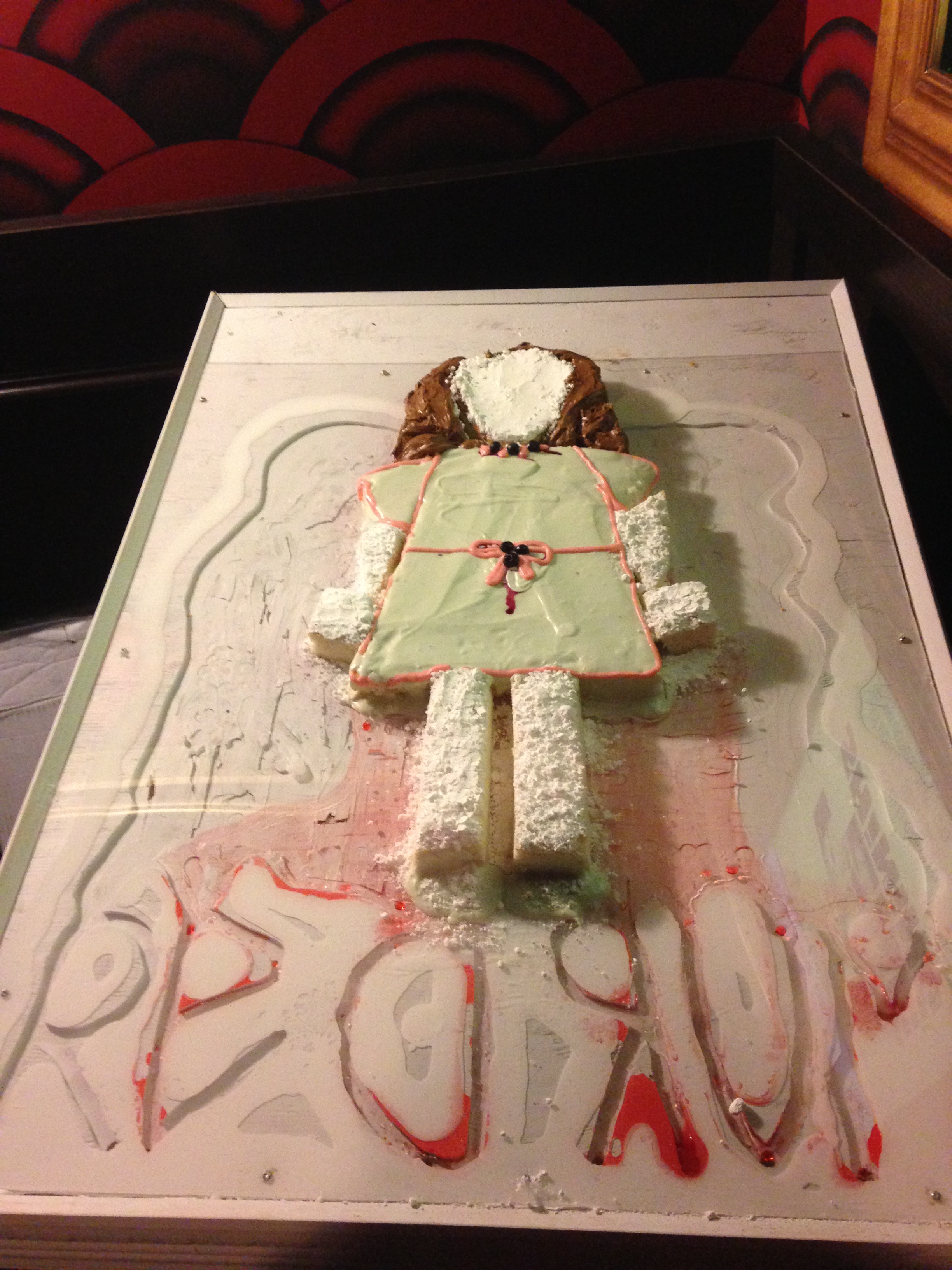
Turning to that particular Kubrick masterpiece, the MHHFF and Alamo Drafthouse Littleton pulled out all the stops to celebrate the picture and set the mood for a 35mm projection with several cast members in attendance to discuss the famous filmmaker and their memories of the production. Initial events, including several twin-themed dance partners interspersed throughout the crowd and a Redrum cake that doesn’t belong on any child’s birthday table, gave way to the honored guests of the evening. Joe Turkel, spry and clearly excited for his chance to discuss fellow Brooklyn kid and longtime friend Stanley, was joined by Lisa and Louise Burns, the British twins who interestingly played sisters of different ages in their indelible, iconic scenes as the Grady girls. Joe was quick to point out that he’s the rare actor who appeared in three Kubrick productions (the others being The Killing and Paths of Glory), and often mentioned how he and the director bonded over their love of the Yankees and Joe DiMaggio, the latter having passed away a day after Kubrick himself did. Turkel also pointed out the ‘director’s bible’ that Stanley had with him on all three sets where they worked together, in increasingly dog-eared, underlined and battered form, a text by the great Russian filmmaker Vsevolod Pudovkin called Pudovkin on Film. He went on to describe the director’s demeanor as always quiet and respectful, but yes, famously thorough and prone to many takes. He claimed the shot of Jack Nicholson walking past strewn-about balloons and entering The Gold Room with a ghostly party in full swing was done no less than 180 times. As Kubrick asked for each new take, the camera angle or lens or lighting would always be slightly altered. Turkel once asked him, “Are you ever satisfied with just one take?” Kubrick smirked and responded “Oh yes! Many times!”
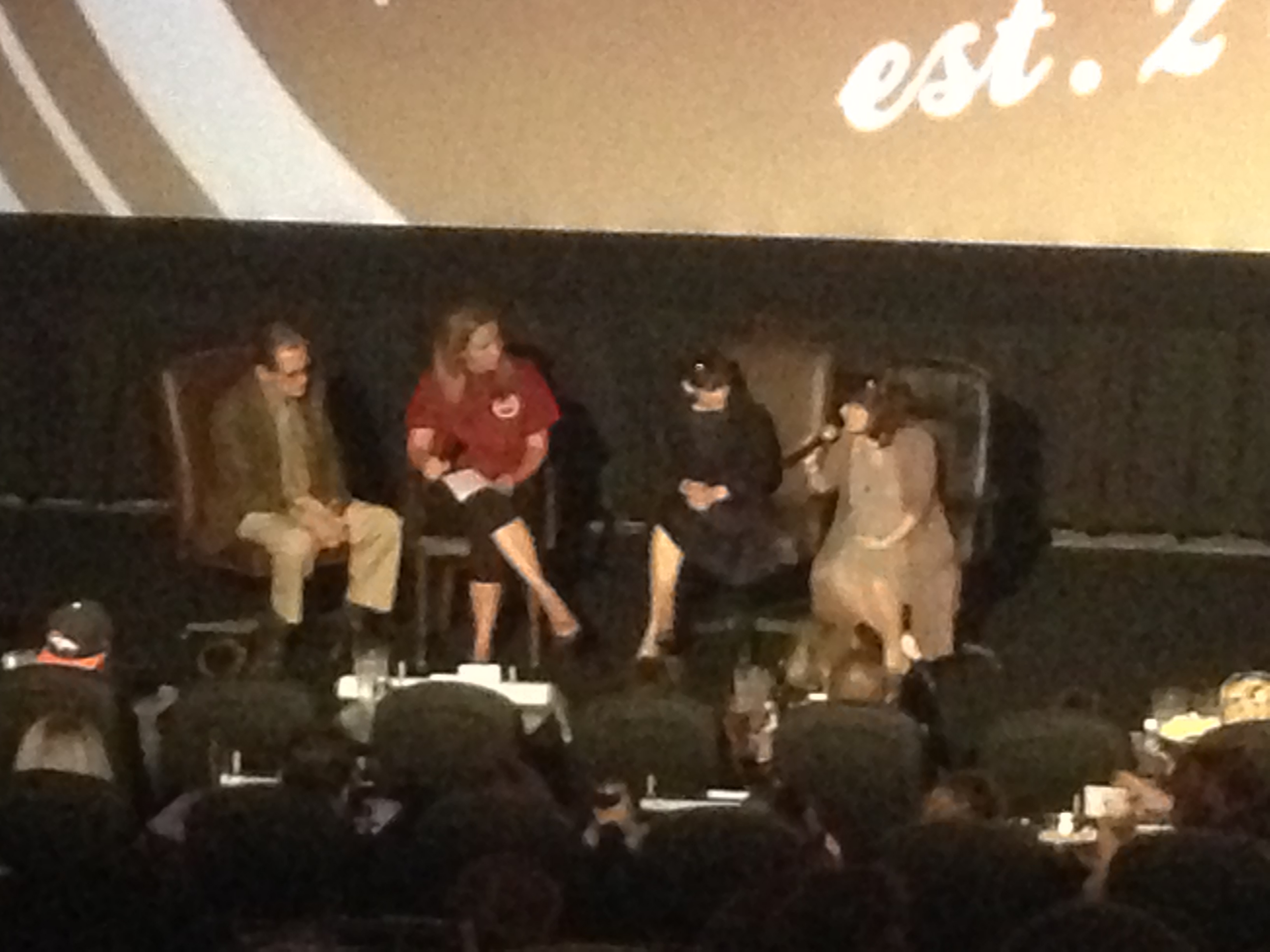
The soft-spoken Burns sisters didn’t have the same relationship with Kubrick but, like Turkel, had many memories of the director being warm, friendly and accommodating, even during the lengthy portions of their work. They didn’t have a specific take count on any of their scenes, but recalled that his getting the single shot he ended up using of their bloody bodies in the hallway took three full days, during which they were awfully cold. Kubrick personally went and retrieved a space heater for them when they complained, and when their birthday arrived he halted the shoot for several hours in order to throw them a proper party, wherein he presented them with an autograph book filled in by cast and crew. Speaking further about the director’s personality and demeanor, Turkel insisted he was a plain-spoken kid from Brooklyn (he preferred everyone call him Stanley, not Mr. Kubrick, not Stan) who wasn’t a hermit but understood his celebrity would require him to be increasingly beholden to anyone he met, so he chose to limit how many new people he brought into his life. Discussing the film itself, Lisa and Louise didn’t actually see it until they were in their 20s, and due to UK censorship the version they saw was a full half hour shorter than what audiences in other countries enjoyed. Turkel pointed out how strange this was considering The Shining is far from a violent picture; outside of Nicholson’s brutal ax murder of Scatman Crothers’ Dick Halloran, there is almost no physical conflict portrayed. As a result, the Burns sisters didn’t realize what a horrifying picture it was until much later. Joe Turkel claimed to have only seen it 5 or 6 times, but said his enjoyment deepens with each viewing. He took a quick shot at the original author’s negative take on the film and the resulting 1990s television miniseries version, which in his words “bombed” by not focusing on the psychological horror that Kubrick presented in masterful form. The actor then shared two quick stories, one about how he and a friend ran into a struggling Nicholson at the horse races in 1961, when that performer was considering leaving Los Angeles and returning to New York City but stayed after Turkel’s friend repaid Nicholson some money he owed him with their gambling winnings (“I saved his career!”), and another about his last day on set. Insisting Stanley was a warm man but not prone to physical contact, he walked up to Turkel, put his hand on the actor’s shoulder and said “you know, so far you’re the best thing in this movie.” Joe Turkel responded by saying “Thanks Stanley—so don’t wait another 40 fucking years to cast me again!” Kubrick smiled, walked away, and that was the last time the two spoke.
Finally, the 35mm print rolled for the audience, and as with most great films it felt like a first viewing all over again to share the experience with an anonymous audience in the dark. On a quick personal note, I must recommend that if any organization such as the Mile High Horror Film Festival or the Alamo Drafthouse gives you the opportunity to enjoy either of these films in a theater, take advantage of it. The Descent’s darkness flows off the screen and effectively envelops you, and The Shining’s still-stunning sound design, visuals and atmosphere trap you, the viewer, in the Overlook Hotel just as it did Danny and his family all those years ago. Seeing the two films this past Friday with these talented artists present to tell their stories made for a unique, revelatory and unforgettable day for the horror fans in attendance.
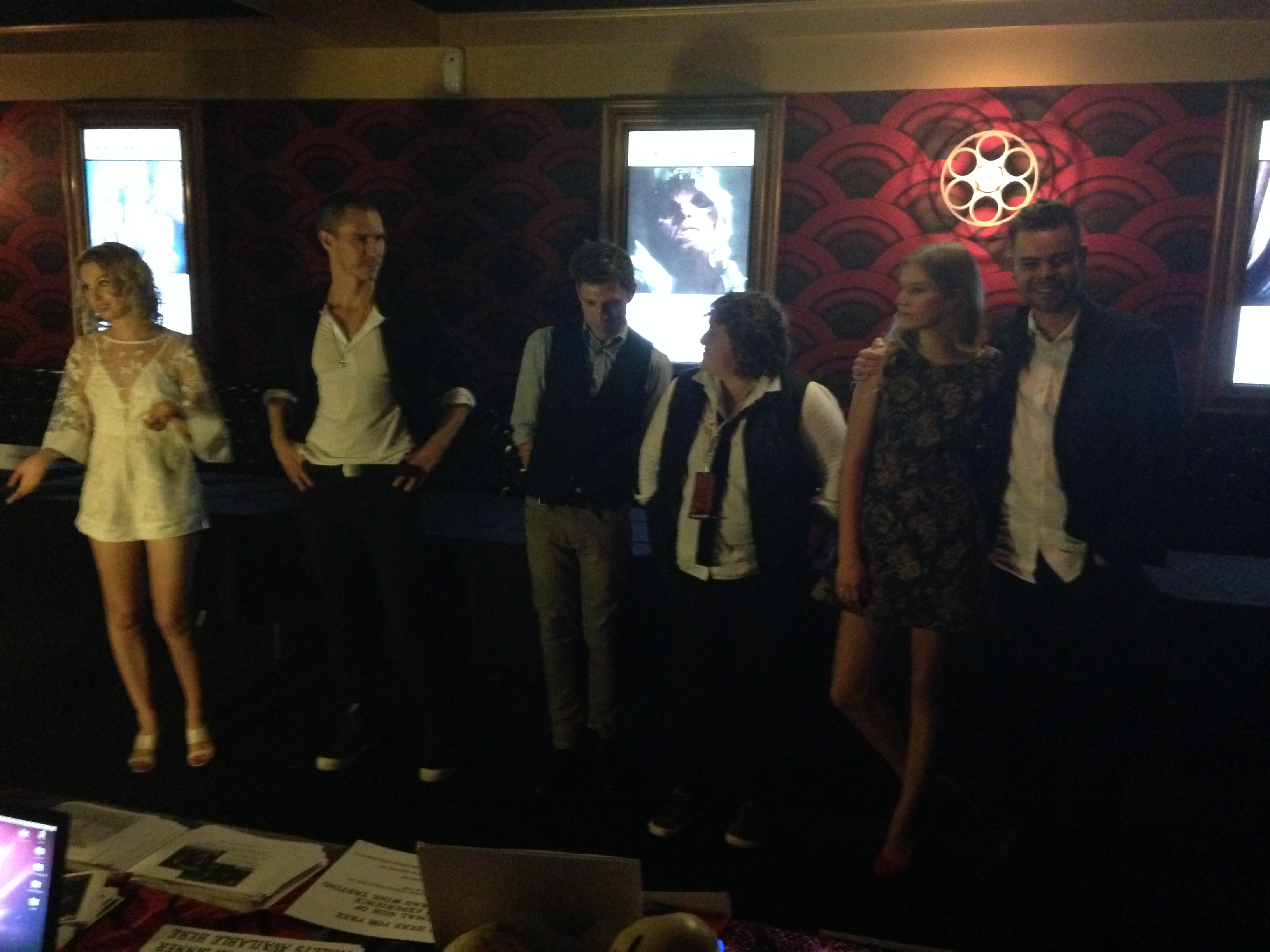
The 2015 Mile High Horror Film Festival kicked off yesterday with a real treat (including a few tricks) for fans—the world theatrical premiere of Even Lambs Have Teeth, a modestly budgeted joint US/Canadian production that follows the adventures of two young women who become entangled with a corrupt town and its evil pastimes. Stars Kirsten Prout, Tiera Skovbye, Garrett Black and Jameson Parker were in attendance, along with producers Adrian Salpeter and Elizabeth Levine. The actors themselves had not seen the finished product and in fact had only viewed snippets here and there since the quick shoot completed last November outside of Vancouver, BC, so it was a first viewing for practically everyone in the packed crowd at the Alamo Drafthouse Littleton.
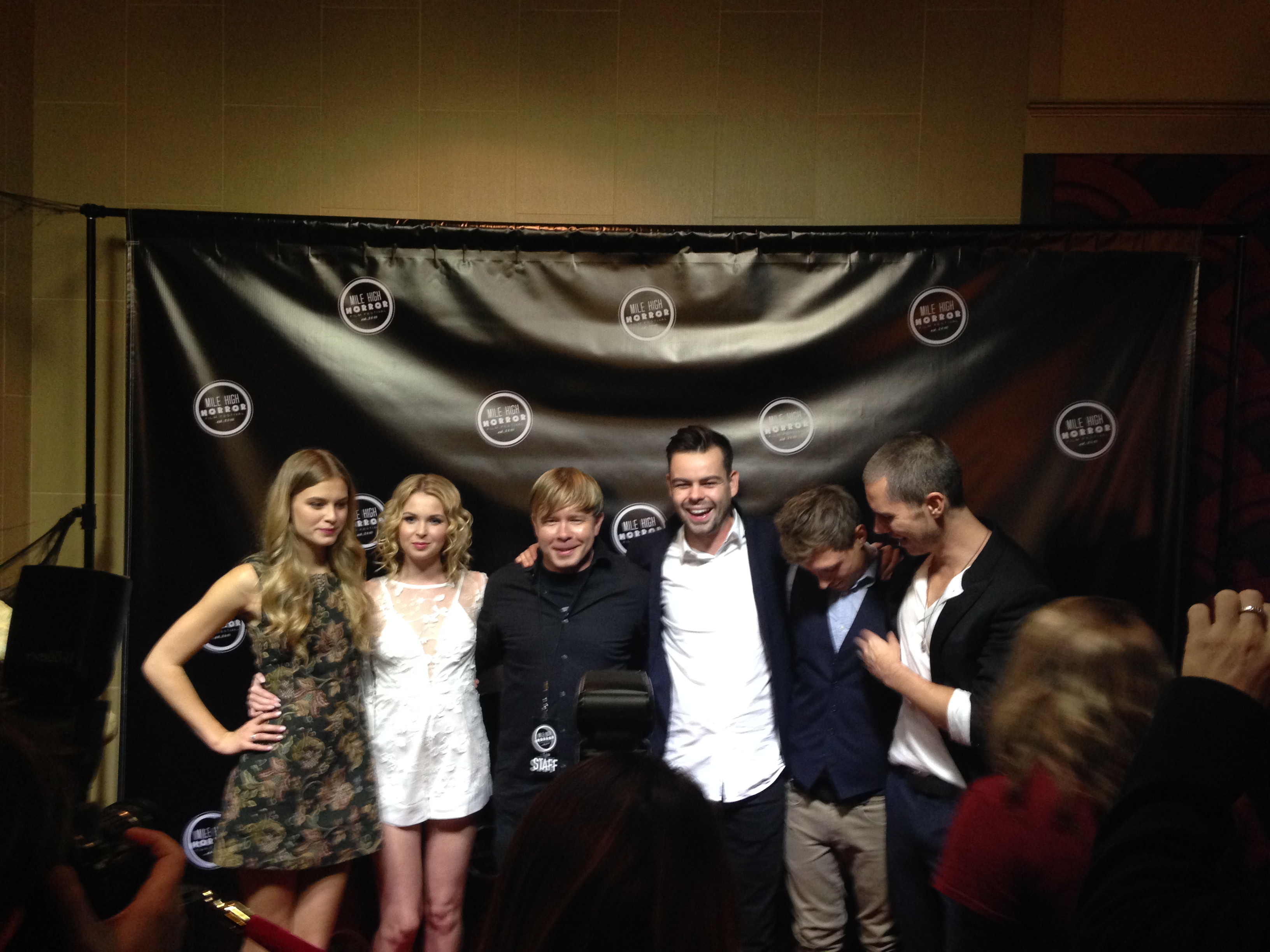
The story is a simple, dark tale, with a pair of fun loving friends preparing to go work on a Community Supported Agriculture farm in rural Washington State to earn enough money for a blowout shopping weekend in New York City. Not surprisingly, the plan goes awry almost immediately as the sexually adventurous Sloane (Prout) convinces the more conservative Katie (Skovbye) to catch a ride to the farm with a couple of handsome young strangers who promptly take them on a nightmarish detour. The following horrors and the road to revenge/redemption the women find themselves on will bring to mind many touchstones of the genre that horror fans will be familiar with: I Spit On Your Grave, Last House On The Left, and even Deliverance were mentioned by the post-screening panel, as well as The Deer Hunter and Kill Bill. While this all sounds familiar—and make no mistake, many elements of the film are—the material is consistently elevated by strong performances across the board, both by the female leads and their antagonists. Sloane and Katy are instantly likeable and relatable, which puts you firmly next to them whether they’re locked in a storage crate or piloting a pickup on a lengthy parade of revenge around the countryside. The autumnal menace of the Pacific Northwest that’s been used to such great effect in everything from Twin Peaks to The X-Files is on full display throughout, and writer/director Terry Miles always has a creepy villain, a trope-flipping jolt, a dash of humor or a gonzo explosion of violence waiting around the corner—often all in the same scene.
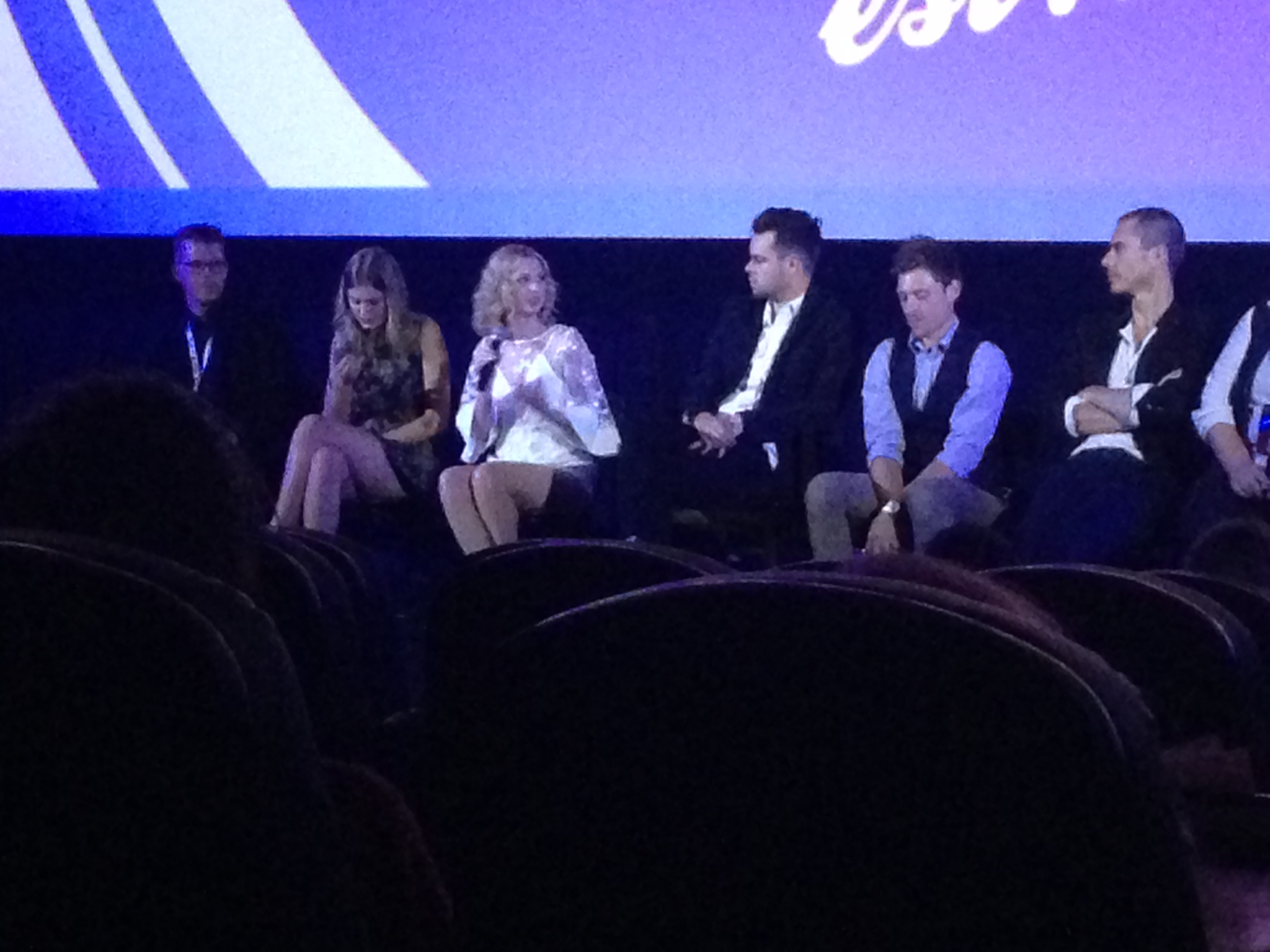
During the Q&A session following the screening, we learned that this is Miles’ first horror film, he’s usually been associated with more straightforward drama productions. It shows in his handling of the characters, who always feel genuine no matter what their particular motivations are. It was a tight three week shoot in drizzly, cold weather with few Hollywood perks on hand, but the cast bonded quickly (perhaps despite themselves; Prout and Skovbye initially hated each other but that faded fast and they now appear to be the best of friends) and supported each other through some difficult scenes. It was roughly shot backwards chronologically so the women were allowed to develop a sense of empowerment before undergoing the damaging sequences in the first half of the film, although to the filmmakers’ credit those scenes are often underplayed and left to the imagination. There is a distinct sense that there was no desire to do too deep of a dive into the violent onscreen character humiliation seen in the likes of Hostel and several other previously mentioned films. Producers Adrian Salpeter and Elizabeth Levine shared some insight into independent movie production, stating that horror is a great genre to work in because it translates around the world much better than others such as comedy, hence an easier sell to investors and distributors. As final advice to any filmmakers impressed by the results of this small production, Levine said “start with $20,000 and a great group of loyal people, and go to work!” All in all, a promising work from a young group of talented people.
Follow Even Lambs Have Teeth on Twitter at @lambshaveteeth

The Mile High Horror Film Festival in Littleton, CO is just over a week away, and I’ll be covering several of the biggest screenings over the course of that weekend for Podcasting Them Softly. Starting as a small offshoot of the Denver Film Society in 2010, it has rapidly turned into a world class destination for horror fans and filmmakers and is gearing up for its biggest year yet. I was fortunate to speak with MHHFF founder Tim Schulz, himself a successful filmmaker (“Chasing The Shadows,” a feature length documentary on the paranormal, as well as several celebrated shorts), about this year’s events:
I’m ashamed to admit this is my first Mile High Horror Film Festival, can you tell me a few basics such as how it started, how long you’ve been involved and how it’s grown?
I am a founding member. We started in 2010, when there was nothing like this in Colorado. I’d been to many other film festivals such as SxSW and Sundance and wanted to see something genre-focused like that happening here in Denver. The size of the program and attendance has just snowballed every year since then.
You just announced Jack Black and Co. will be here to premiere Goosebumps next week, it’s one of the biggest studio horror releases of the fall. How does this fit in with the rest of the more adult-oriented programming?
We really try to do diverse programming throughout the festival, hopefully we’re offering genre films for everyone. We’re very excited to host the Colorado premiere with the cast in attendance, it is nice to have something screening that you can take the whole family to.
MHHFF started working with the Denver Film Society but now the festival is put on in partnership with Alamo Drafthouse, how is that relationship working out?
It’s worked out very well, we’ve been working with Alamo for the last two years now. We had some great screenings at DFS venues for the first three years, but Alamo offers the food and drink experience during the film that’s special, and they also make a wonderful fit because they cater to film festivals and special events that are unique and creative, they always think outside the box to create something tailored to the film buff. Take the special menus: For the upcoming screening of The Shining, they’ve created a Red Rum cocktail. In years past they’ve done amazing pre-show menus and events, such as having Doug Bradley (Pinhead from Hellraiser) tear a roasted pig hanging from a meat hook apart to make sandwiches for fans. The following year, Gunnar Hansen (Leatherface from The Texas Chainsaw Massacre) did the same with his chainsaw!
Is it difficult to bring this level of talent and notoriety in the horror genre to Littleton?
Like I said, it’s snowballed every year and gains more respect and credibility around the world with each successive festival. We are extremely grateful for this.
I see you have an LGBT panel for this year’s festival, who’s involved and what can we expect?
We are glad to have writer Jeffrey Riddick, one of the creators of Final Destination and a longtime supporter of the Festival, he’s been a judge for many of the years we’ve been in business and he’ll be on the panel with plenty to say. Bailey Jay is a transgender model and podcaster for Fangoria, she will be involved via Skype. The panel will be moderated by Keith Garcia, a well-known fixture in the Denver film community who is currently working on a documentary called “The Heels Have Eyes.” Discussion will be wide ranging based on some direction from Keith and audience questions, and should involve current trends in the industry, working in the genre, and plenty more.
Is the live music programming something new?
We’ve done music in the past but this is the first time we’ll have it running simultaneously with the film festival screenings. We’ll have music running from the early screenings through to 2 a.m. Ari Lehman (Jason Voorhees) will be there with his band First Jason, and there will be plenty of local metal bands in attendance too, like Arise in Chaos and Eye of Minerva. We have Denvers’ Chimney Choir, more of a folk act, and Viretta, an indie rock band. We’ll have hip hop represented with Wheelchair Sports Camp. The Festival is really trying to provide a lot of variety for fans, and an experience that extends outside of the theaters. We’ll have music, tarot card readings, autograph sessions, artists and other surprises.
Not to play favorites, but what are some of the events you’re most looking forward to?
I’m a huge fan of The Shining, and I’m really excited about our screening with Joseph Turkel (Lloyd the bartender) and Lisa and Louise Burns (The Grady Twins). I believe this is the first time the three of them have been together since the original shoot, and Lisa and Louise rarely make it over from the U.K. so it will be a special night.
Even Lambs Have Teeth has its world premiere at the Festival on Thursday, have you seen it?
I have seen it, and really enjoyed it. Excellent production values and some over the top gore…I don’t want to give any spoilers but it’s got some great twists and turns. We’re very excited to have the lead performers, Tiera Skovbye and Kirsten Prout, as well as the filmmakers in attendance.
Finally—Freddie or Jason?
I have to go with Jason since we have two in attendance!
The Mile High Horror Film Festival runs from October 1-4 at the Alamo Drafthouse in Littleton. For ticketing information please visit http://milehighhorrorfestival.com/ or http://drafthouse.com/calendar/denver
 Podcasting Them Softly