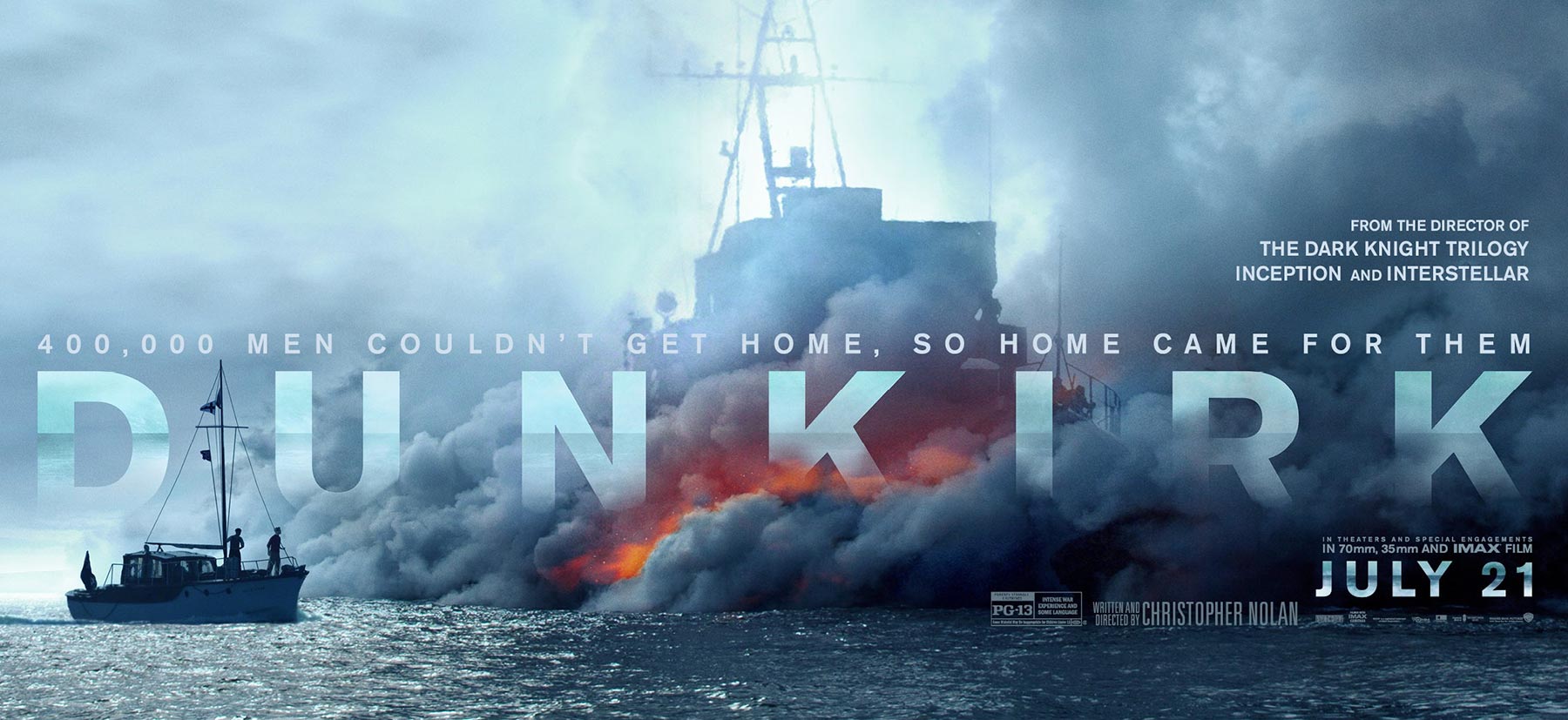
Frank, Tim, and Jason discuss Christopher Nolan’s latest film, DUNKIRK, and his filmography in general. Just to be forewarned, they do get into a yelling match over a few of Nolan’s films. But hey, it’s all about their cinematic passion, right?
Frank, Tim, and Jason discuss Christopher Nolan’s latest film, DUNKIRK, and his filmography in general. Just to be forewarned, they do get into a yelling match over a few of Nolan’s films. But hey, it’s all about their cinematic passion, right?

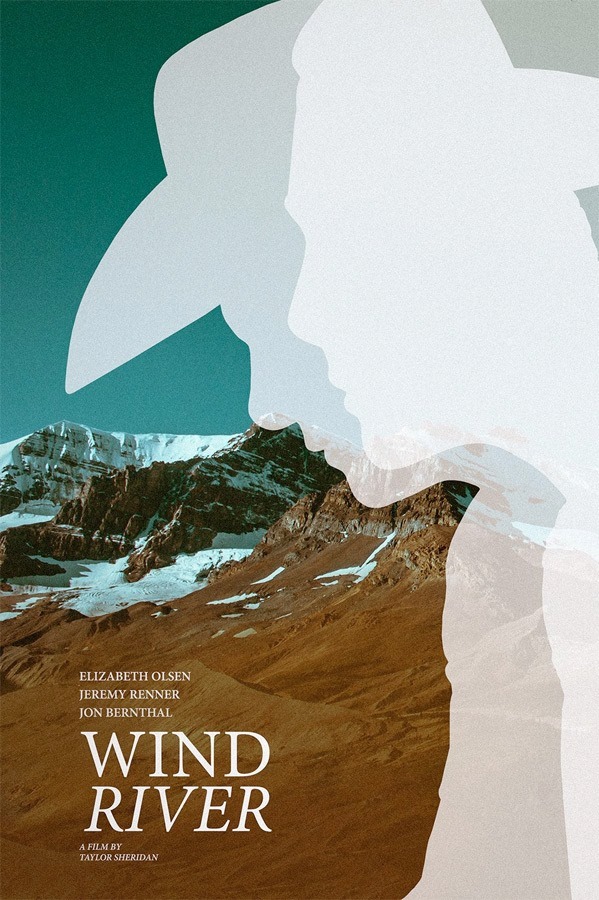
Wind River is masterful, utterly immaculate filmmaking, almost suffocating in its greatness by the time its powerful conclusion unfolds. Written and directed by the extremely talented storyteller Taylor Sheridan, who in the past few years has scripted the one-two punch of Sicario (for Denis Villeneuve) and Hell or High Water (for David Mackenzie); I’m happy to report that he’s as good of a director as he is a writer, though I’ll likely skip his torture-porn debut Vile from 2011. Wind River, to my eye and from where I sit, is virtually faultless, with a rock-solid narrative built upon deep swells of familial emotion and discord, and punctuated by smart, sudden violence and unwavering tension (especially during the final act) that isn’t over-done or gratuitous. And the layered themes of isolation, depression, and societal anger that Sherdian embeds in his narrative only solidifies every ounce of the story.
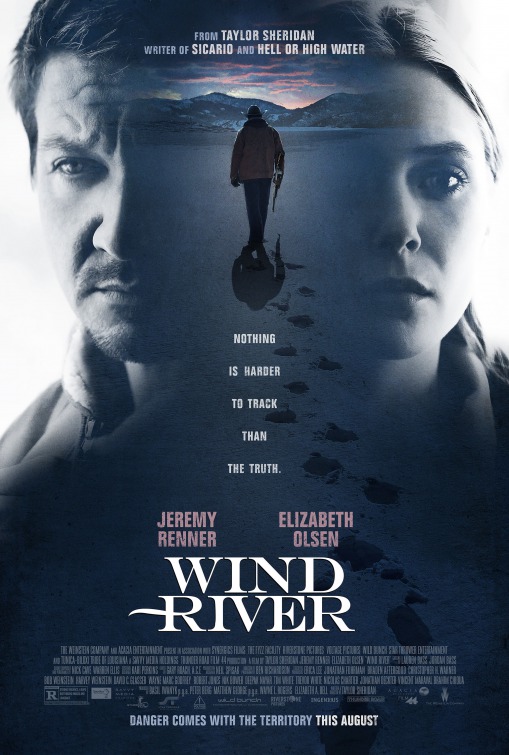
The film tells a dark and tragic story with a snowy, lyrical touch; it’s a murder mystery/whodunit but one that’s elevated because of Jeremy Renner’s intensely focused and realized performance, and everything else around him in terms of the ace supporting performances and gritty production values. Elizabeth Olsen is the out-of-her-depth FBI agent (nice nod to The Silence of the Lambs, in more ways than one) assigned to investigate a rape/murder on a Native American reservation in Wyoming, with Renner playing a fish and game officer who “hunts predators.” He’s more than happy to help her out when his assistance is requested in finding who’s responsible. I absolutely loved every single second of this film and I can’t wait to see it again and again, just as I felt with Sicario and Hell or High Water.
Sheridan’s innate ability of cutting to the chase and creating vulnerable characters who can still rise to the occasion is something I’m very much in awe of; his narratives are of the zero-fat variety, eschewing boring exposition, instead relying on their visuals to tell the story, with a sense of all forward momentum and characters being born out of situation without ever sacrificing the small details. Wind River is a deceptively simple film that isn’t interested in pulling the rug out from underneath you at the end, but rather, more interested in being focused and made with a determination to tell such a hard-lined story without softening any edges; it’s positively engrossing.
Nick Cave and Warren Ellis’ brooding and poetic music is in perfect tandem with the somber, stark visuals conjured up by cinematographer Ben Richardson, who previously shot Beasts of the Southern Wild and The Fault in Our Stars, and delivers some of the best work of the year in any movie that I’ve seen. Every single shot counts in this chilly and ultimately sad movie, and the editing by Gary D. Roach is strict and sharp, with a tense atmosphere felt all throughout. This is an exemplary thriller and a movie that will undoubtedly feature into my favorites of the year. And of course Peter Berg (Deepwater Horizon, Friday Night Lights, Patriot’s Day) was an executive producer; this guy is top-shelf all the way. And it goes without saying, I’ll follow Sheridan ANYWHERE he goes as a filmmaker; he’s one of the most exciting “new” voices in years.
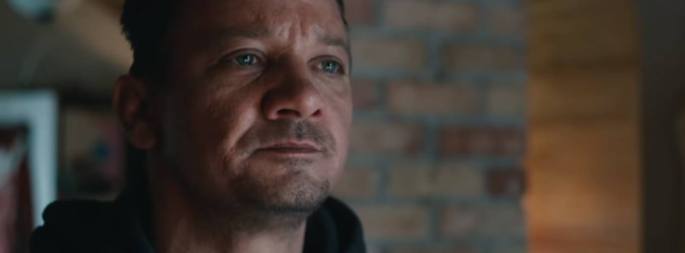


David Cronenberg’s Spider is a prickly, unsettling plunge into the frays of mental illness with all the subtleties of a bad dream whose source is hard to pin down. As a disoriented, emotionally shellshocked Ralph Fiennes shambles into a residency at a halfway house in London, he’s reminded of the past, and begins to brush away layers of cobwebs that hide more than a few nasty secrets from his upbringing. Raised by his wayward father (Gabriel Byrne) and haughty mother (Miranda Richardson, also showing up in a dual role), Spider, as she nicknamed him, began to lose his grip on reality at a very young age, resulting in an eerie tragedy. Or did it? That’s the key to Cronenberg’s vision here, the kind of blood chilling uncertainty that one sees a mentally ill person struggle through. Spider’s grip on the past, and his own present coherency is as tenuous as the lingering webs that gild both his memory, as well as the shrouded nooks and crannies of the desolate borough of London he aimlessly shuffles through, the empty rooms and lived-in corridors of his childhood home practically mirroring those of his mind. Fiennes is scarily good in the role, abandoning any researched mimicry to full on effortlessly sink into the psyche of this poor disturbed man, organic and believable. Byrne is solemn and somber as ever, just as complicated as his progeny yet burdened with the also torturous yoke of sanity, while Richardson is electric in both her roles. Stage stalwart John Neville babbles his way through a turn as a fellow resident of the halfway house, while Lynn Redgrave plays it’s stern matron. Dank, destitute and lost is the tone they’ve gone for here, with no Hollywood safety net to rescue both viewer and protagonist from the scintillating curves of a narrative that has no light at the end of it’s tunnel, a brave choice by Cronenberg, and stunning work from everyone who brings the tale to life, such as it is. Be ready to put on a Disney flick after sitting through the nail biting gloom of this one.
-Nate Hill
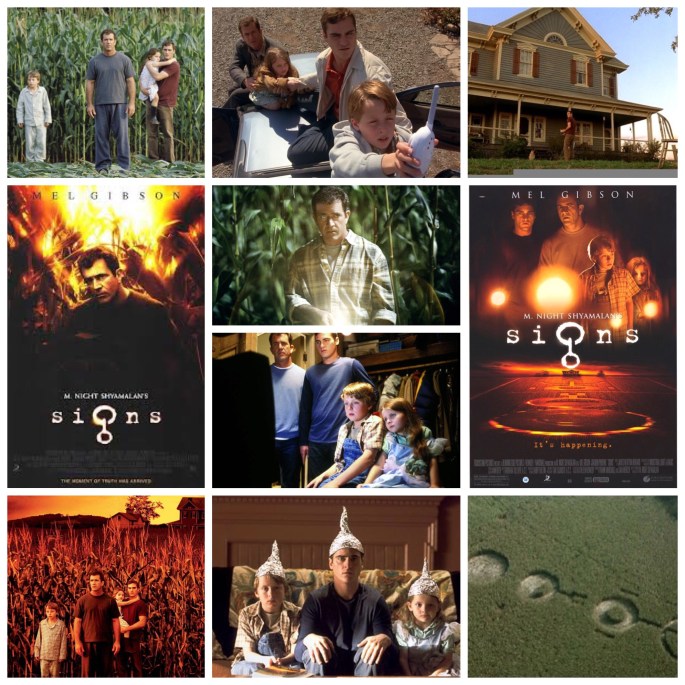

As much as M. Night Shyamalan’s Signs is a brilliantly structured ScFi suspense yarn that’ll give your ticker a run for it’s money, it’s just as effective as a touching exploration of faith and hopelessness, the warring notions that there is either someone or something out there looking out for us, or more distressingly, there is not. One need only watch Mel Gibson’s staggeringly well pitched performance as a man bereft of belief in anything beyond the tangible to feel as alienated as he and his beloved relatives do when a sneaky, marauding band of extraterrestrials take up residence on their remote farm, leaving vast crop circles all about the place. As a dimly paced, impossibly eerie invasion narrative grips us from the forefront, we’re also somewhat primally aware of the story of a once steadfast man, already ruined by personal tragedy, come apart at the seams and start to lose his last vestige of belief in anything beyond our world. Gibson’s wide eyed desperation is almost scarier than the otherworldly beings themselves, which is saying a lot considering these are some of the most unnerving alien critters ever seen on film. A farm is the perfect oasis of desolation to set these events in, and the nocturnal romps through the corn in search of these beasties will make your heart skip a few hundred beats in apprehension. Gibson abides there with his ex baseball pro bro (Joaquin Phoenix) and two adorably deadpan children (Rory Culkin and a very young Abigail Breslin). There’s a deep sense of coziness that is violently uprooted when these unwanted guests show up, an idyllic tranquility tainted by an unknown element most foul, raising the stakes nicely, leading up to the claustrophobic finale. The proceedings almost have a dream logic to them, as if this whole deal is happening on a plane removed several degrees from ours. Characters interact in peculiar, staccato fashion, certain elements here and there don’t sound or feel like they’re… “real”, for lack of a term that doesn’t exist. Whether by choice or happy accident, Shyamalan unsettles us far beyond being spooked solely by the aliens, who aren’t seen in full till way later in the film anyhow. There’s just a hollowness to Gibson’s plight, a restless gnawing anxiety fighting at the whites of his eyes as he struggles to find the light that has left his path. The ending is a perfectly etched out cap to his arc that sideswipes you with emotional heft you never knew the film had in it, and a thoughtful, planned out story beat that takes some contemplation to fully absorb. On the surface, Shyamalan’s work here is a restless sea, but there be dragons roiling underneath, internal demons that extend farther than the excellent science fiction storyline and touch upon ideas much more disturbing: the endless fear of what comes after death, and who is really out there watching us, besides cornfield dwelling lizard-men. Great stuff.
-Nate Hill

Steven Soderbergh is back to directing feature films with the recently released southern-fried heist-comedy Logan Lucky. This is an enjoyable late-summer offering with a busy plot, featuring one narrative strand that could’ve been jettisoned with no overall harm being done to the movie. I’m surprised that this little pisser of a film wasn’t a tad tighter from a construction stand-point, because there’s a certain point where you feel the movie is going to satisfactorily end, and it doesn’t, and I’m not sure what purpose the final scene is trying to establish, other than a thoroughly needless sequel? But regardless of these minor quibbles, I laughed a lot and hearty with the red-neck humor and there’s some very witty dialogue in Rebecca Blunt’s debut screenplay (whether or not Blunt actually exists is something that Soderbergh the clown can only answer…), and as usual, Soderbergh’s frequent aesthetic collaborators, director of photography Peter Andrews and editor Mary Ann Bernard, did very strong work with some great individual shots and some super-sharp cuts respectively. After directing every single episode of the totally dynamic but way-too-short-lived Starz series The Knick (one of my favorite TV shows ever), I can’t wait to see what else Soderbergh has up his cinematic sleeve; I really hope he doesn’t pull a phony-retirement again.

The starry cast is a roll-call of big-time talent just cutting loose and having a blast with the wink-wink material, with Daniel Craig running away with the movie at all times, while Channing Tatum and Adam Driver both anchor the piece with laid-back charm and many moments that tickle the funny bone. The jaunty, jazzy and playful score by David Holmes is a constant pleasure, adding lots of background flavor to the entire piece, to say nothing of the jamming classic rock selections that litter the soundtrack. However, an intervention must be staged on behalf of Katherine Waterston; her short hair-cut, also recently seen in the woeful Alien: Covenant (even more egregious there) has GOT TO GO, as it’s not very flattering. Look out for child-actress and total scene-stealer Farrah Mackenzie who nails her role as a Little Miss beauty pageant contestant (“Nobody likes a fat girl”); this entire portion really solidifies the emotional relevance of the story. Katie Holmes and Riley Keough look trashy-hot in their bit parts, and even if the film feels decidedly minor in the grand scheme of Soderbergh’s brilliant career, it’s still a joy to have a low-tech movie that’s this much FUN getting a theatrical release, even if ticket-buyers shrugged their shoulders and turned a blind-eye to it on opening weekend. Their loss, and that’s a shame, because this one enjoys pleasing itself and the audience in equal measure.

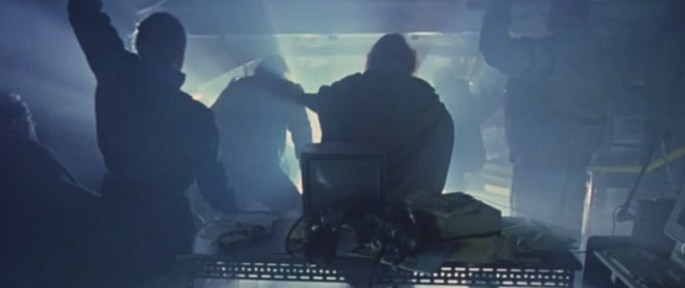
James Cameron’s epic sci-fi film The Abyss is absolutely incredible, a film that has gained in reputation over the years, and one that I really wish I could see on the big-screen some day. The recent news that Cameron is finally begining to prep this film (not to mention True Lies…) for Blu-ray makes me very excited. Ed Harris is absolutely riveting as a deep sea diver who encounters an alien species at the bottom of the ocean, while Mary Elizabeth Mastrantonio and Michael Biehn were all fantastic in super-intense supporting roles. The underwater photography is breathtaking, the overall cinematography package by veteran lenser (and sometimes director) Mikael Salomon is positively stunning on every single aesthetic level, and Alan Silvestri’s exciting and emotional musical score ratchets up the drama and tension and suspense in every afforded moment.
A fleet of dynamic film editors including Conrad Buff, Howard E. Smith, and Joel Goodman (with no doubt an army of assistants) all collaborated with sterling results; this film is so slick and beautifully cut that it’s pure joy to watch it with the sound turned off. The entire production is beyond fascinating to read about; check out the IMDB and Wikipedia for some truly insightful stuff. The Abyss, arriving in theaters in 1989, was definitely made on the cutting-edge (as all Cameron productions are), but couldn’t rely on extensive CGI which was still in its infancy in terms of the dominating type of special effect. SO MUCH of this film was done practically, with massive sets and real stunt-people and just absurd production values all over the place. And yet, somehow, it only reportedly cost $50 million to produce. Mind-boggling. I also think the Special Edition/Director’s Cut is better than the theatrical version.
***ALERT – THE PURSUIT OF DB COOPER AIRING IN HIGH-DEFINITION ON EPIX MOVIE CHANNEL!!!***
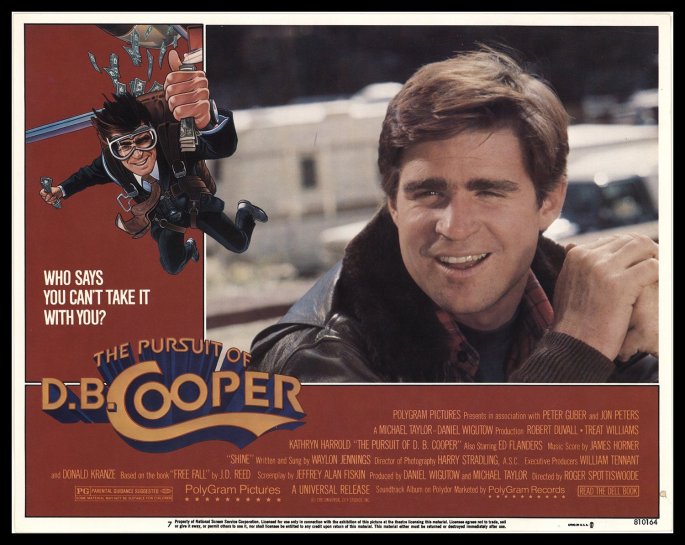
While I was scrolling through the various movie channels and setting my weekly recordings, I noticed that on Tuesday at 3am this week, the EPIX HD movie channel is airing the long-lost cult item The Pursuit of D.B. Cooper. Being a child of the 1980’s, there are more than a few under the radar gems that always made me smile or that kept me entertained for one reason or another. Based on the novel Free Fall by J.D. Reed, The Pursuit of D.B. Cooper was one of those titles that I found myself watching on cable (or was it HBO?) repeatedly, never truly understanding it, but enjoying it nonetheless.

I did purchase a Region B DVD of the film (no American disc release has ever occurred, to my knowledge), but was disappointed that the photography had been cropped from 1.85:1 to 1.33:1. The transfer also looked to have been processed in bowls of urine, with the image looking overly yellow in numerous spots. Which is a damn shame because Harry Stradling’s cinematography, in general, is consistently eye-catching, and the film itself is a raucous and totally crazy little adventure that took a real man and real situation and turned the entire thing into the equivalent of story you’d tell or hear at a campfire, or an urban legend that takes on a mind of its own. It’s the truest idea of what a “cult movie” is, or should be, and the behind the scenes rigmarole that accompanied the production is fascinating in its own right. Kino-Lorber or Shout! needs to grab this one and finally release it on Blu-ray; it’s just waiting for the boutique label treatment.
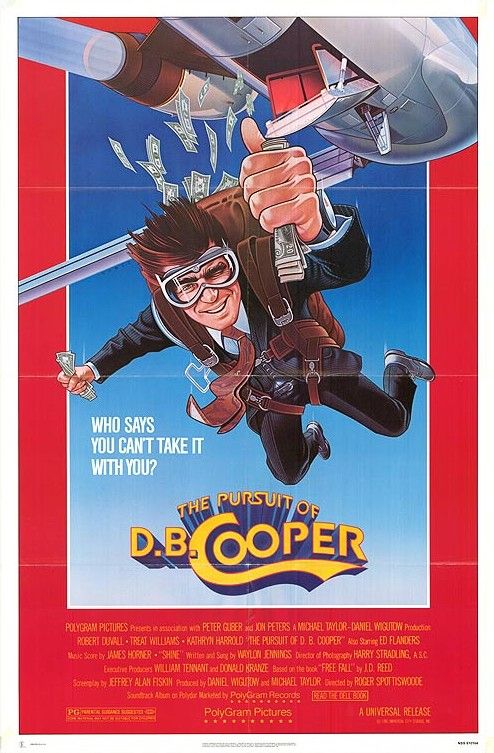
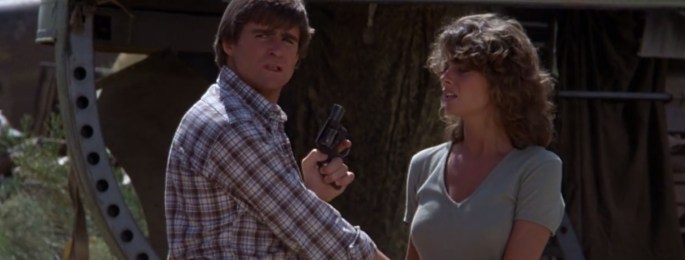
The film has somewhat recently been added as a rental option on Amazon and YouTube.Released in 1981, the narrative centers on wild-man aircraft hijacker D. B. Cooper (Treat Williams in a unique role), who made off with $200,000 in 1971 after leaping from the back of a plane over the Pacific Northwest. The script imagines what it would have been like for Cooper to hide out and attempt to evade capture by law enforcement. Jeffrey Alan Fiskin’s incident packed screenplay fictionalized most of what happened during Cooper’s escape (because who really knows?), and there’s a certain zippiness to the plotting which keeps a bouncy tone and pace; Fiskin’s other scripting credits include the brilliant and undervalued Cutter’s Way, Tony Scott’s pulpy thriller Revenge, and the gritty Amazon crime series Bosch.
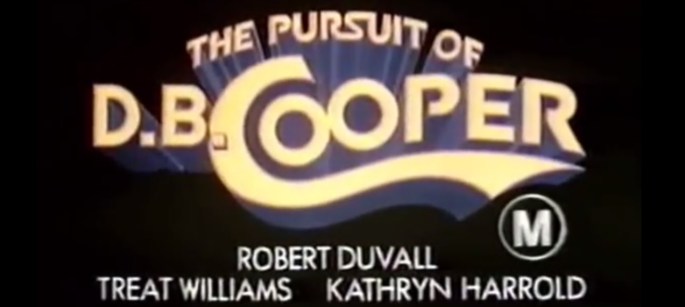
John Frankenheimer was The Pursuit of D.B. Cooper’s original director, and would later denounce the entire production. He was replaced by TV journeyman Buzz Kulik just before shooting began. Then, after the movie was well into production, Kulik was fired, and replaced by final collaborator Roger Spottiswoode, who would be the only director to receive an onscreen credit. The film has an interesting, sort of ramshackle visual aesthetic, heightened by a jaunty, honky-tonk-ish score by James Horner. The performances by Robert Duvall (as an insurance investigator) and Williams anchor the film with a level of class and conviction, Kathryn Harrold was a total knock-out, and while the overall lightheartedness of the entire endeavor is apparent from frame one, the various action scenes are briskly shot, cut, and executed, especially the opening sequence complete with a real sky-dive done before the era of CGI laziness kicked in.
Twenty years ago this week, audiences were scared out of their wits with Paul Anderson’s sci fi-horror-fetish film, Event Horizon. Plagued by production problems and studio interference, Anderson’s film ended up as maimed as most of the victims in the film (if you haven’t seen it yet, I don’t know if I blame you, but I would ask what you’re doing this reading this . . . . WATCH IT!)
I’ll be doing a more formal review in the coming weeks, but I wanted to get a marker out there . . . a warning if you will.
Fine. If you won’t take my word for it . . .

“Vacate…

… I want off this ship.”

“You can’t. She won’t let you.”

I was fortunate to grow up with films like The Never Ending Story, Labyrinth, Gremlins, and Explorers. To me, these zany films allowed me to explore my own dreams, to follow my passions, and to realize that the world is a much bigger, but not as scary a place as I thought it was. These days, films are less focused on dreams and more on conquering our fears.
Yet, every once in a while, a film comes along that dares to explore the things that defined my childhood film experiences; a film that is so zany, so unbelievable that it just has to be seen with your own eyes.
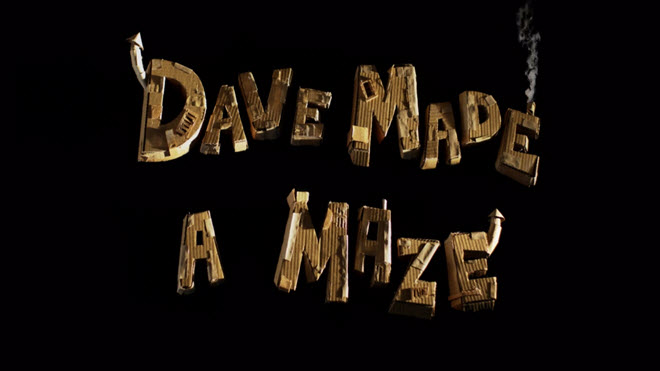
Here enters writer-director Bill Watterson’s debut feature, Dave Made a Maze, a film that made the festival circuit earlier this year and has entertained, delighted and surprised so many festival goers, and is now in a limited theatrical release.
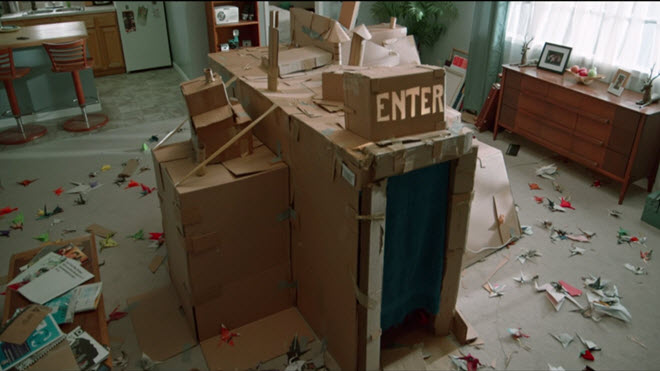
Dave (Nick Thune), a struggling artist seeks to create something significant. Dave lives with his girlfriend Annie (Meera Rohit Kumbhani) in a small one-bedroom apartment. His problem is that he never finishes anything that he starts and he decides one day to build a cardboard fort, becoming trapped in the self-evolving maze leaving Annie and their friends to effect a rescue.
Developed on a micro-budget, Watterson made something really special out of literally nothing more than a few sheets of cardboard and some tape. The acting is really what carries the film and sells the premise. Thune is brilliant as the misanthropic Dave. Kumbhani was absolutely hilarious as the deadpan Annie. She is Dave’s rock and yet, is tired of his lack of follow-through. As his rock though, she understands the importance of what Dave started and why he needs to complete his quest.

The heart in Watterson and co-writer Steven Sears’s script comes from the supporting cast. The cynical Gordon (Adam Busch) is more talk and less about action (no wonder why he’s a perfect best friend for Dave), Greg (Timothy Nordwind) and Brynn (Stephanie Allynne) want to be able to brag about this experience, and documentarian Harry (James Urbaniak), along with his two-man film crew, are determined to make the whole experience more frightening than it actually is.
The motley rescue crew ignores Dave’s warnings and what follows is a hilarious reality check in a cardboard world where they need to find an exit strategy, quickly.
The amount of detail that went into creating the visual look of the film is staggering and it shows in both the cardboard creations and the practical special effects. This film is very much a throwback to ‘80s PG – rated movies with tongue-in-cheek references to Raiders of the Lost Ark.
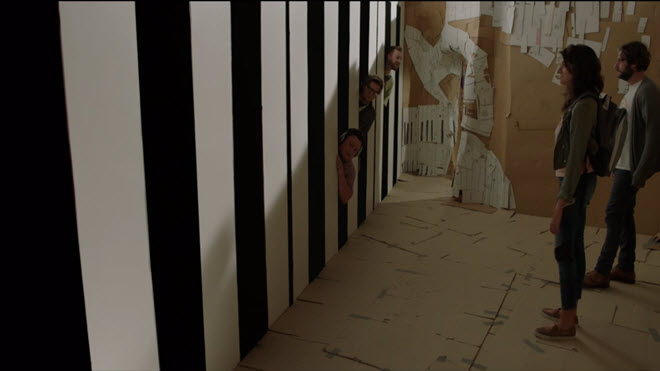
The references are where this film’s imagination shines. Sure, there are unexplained inconsistencies in the story. So long as imagination and dreams flow, life’s inconsistencies are bound to show up some times.
Now playing in theaters, sit back, relax and take it all in. Life will never be the same after you’ve seen Dave Made a Maze.
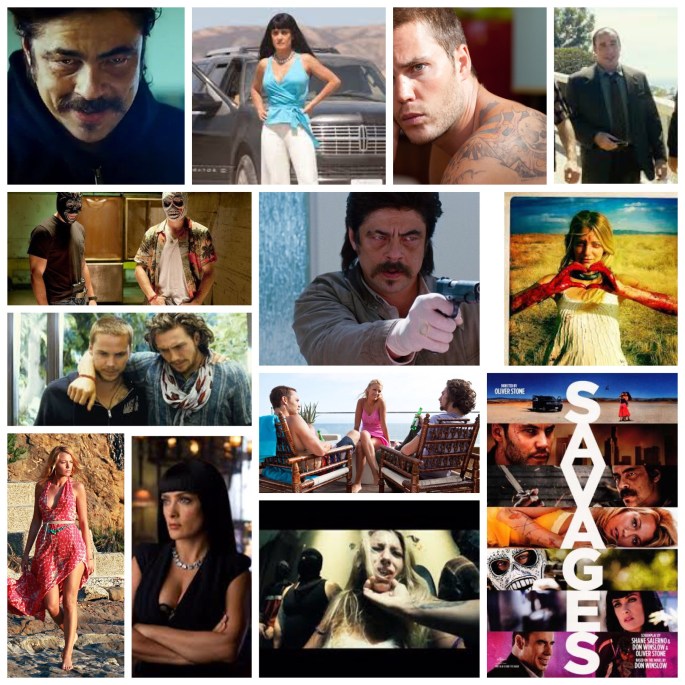
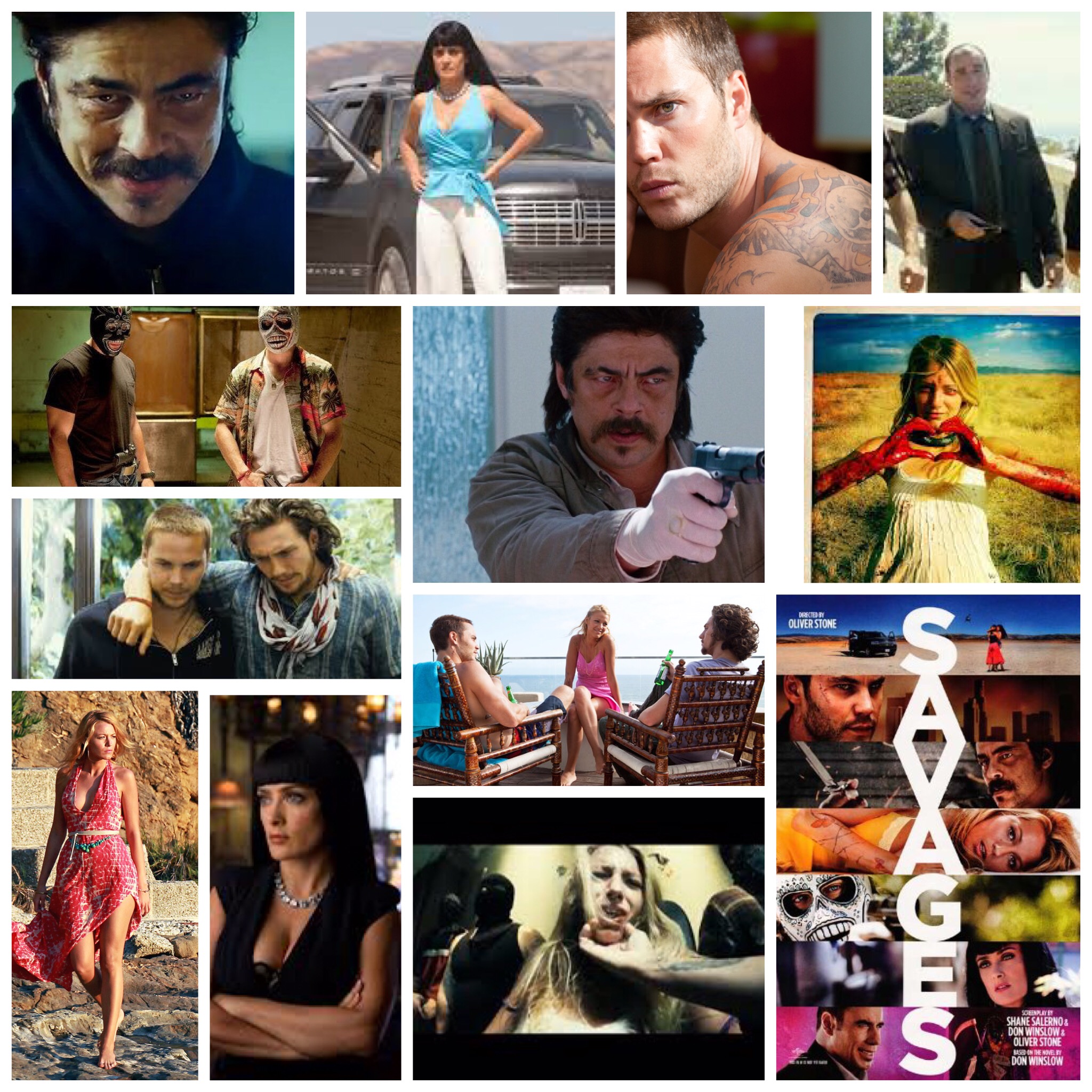
Oliver Stone’s Savages is the best film the man has made since the early 90’s, and reminds us of what colourful, bloody, hectic, Mardi Gras shock & awe blistering good times the man is capable of bringing us. His political/war films are all well and good, but for me the lifeblood of this filmmaker lies in his sun-soaked pulp n’ noir toolbox, the ability to spin grisly, darkly romanticized genre campfire yarns that exist eons away from the geopolitics of our plane. Savages is so whimsical it could float right out of our grasp on a cloud, if it weren’t so heavy and heinous at the very same time, and it’s in that careful balance of heart, horror and humour that the film comes out on top, despite a relative cop-out of an ending that can be forgiven when the package as a whole is considered. Based on a novel by Don Winslow, this is an odyssey of cartels, violence, love most pure, drugs, guns, California dreaming and a cast having more fun than they have so far in their collective careers, and I do mean that. The film opens with grainy, harrowing camcorder footage of sinister cartels beheading innocents to set an example, and that’s just the start of it. Pan over to Cali paradise where angelic Ophelia (Blake Lively in a beautiful, vulnerable performance) lives with the two loves of her life, gentle hippie Ben (Aaron Tyler Johnson) and hardened Afghan vet Chon (Taylor Kitsch), two brotherly marijuana barons who provide the west coast with the finest bud the region has to offer. They live in harmony, both in love with Ophelia, existing as a functional little romantic trifecta tucked away on the sun-dappled coastline, until darkness finds them in the form of the power hungry Baja Cartel, who want a piece of their impossibly lucrative action. Although spearheaded by a fiery Salma Hayek, it’s Benicio Del Toro’s Lado who strikes fear into hearts, a ruthless, casually sadistic enforcer who’s not above the lowest brands of violence and degradation. Del Toro plays him with a knowing sneer and a grease-dripping mullet, a positive scourge of everything pure and good in his path. Ben and Chon are thrown into a world of hurt when he kidnaps Ophelia, held as a ransom so the boys play ball with Hayek’s plans for aggressive expansion, promoting all out guerrilla war-games between both factions. John Travolta does his wired up thing as a cheerfully crooked DEA underboss who is their conduit to all things intel related, and Emile Hirsch their surveillance expert. This is a film of both bright light and terrible darkness, and it’s easy to get swept up in the hypnotically wistful current before the film turns evil loose and gut punches it’s audience. The visual tone is crisp and endlessly colourful, and Dan Mindel’s cinematography doesn’t shy away from the overt nature of the brutality, especially when Hayek’s right hand accountant (Damien Bechir) is gruesomely tortured by Lado, and during a daring highway ambush that showcases both Chon’s merciless tactical resolve and Ben’s fragility, both driven to staggering extremes by their love for Ophelia. Stone has always had a flair for eye boggling excess, dastardly deeds done under a baking hot sun and garish, over the top characters that would be right at home in a cartoon if they weren’t so tangibly present, especially in Del Toro’s and Travolta’s cases, it’s a beauty of a thing to see them both chow down on the scenery here and riff off of each other in a quick scene where they share frames. Many folks were underwhelmed by the work of the three young leads, but they couldn’t have been better, really, especially Lively, who’s wounded soul brandishes a sword and shield of sunny disposition even when faced with utter hopelessness, a lilting poetry to her hazy narration that threads the tale together in fable form. Commerce is chaos here too, as we see how the south of the border drug trade encroaches on many individuals who don’t yet understand the evil emanating from that region, and are rudely awakened. There’s so much going on in this film, it’s so vibrantly alive in every facet, a showcase example of the bruising, beautiful power that movies have over us.
-Nate Hill
 Podcasting Them Softly