DAVID LEITCH’S ATOMIC BLONDE — A REVIEW BY NICK CLEMENT

1
What a shame that audiences, and males from the age of 17-100 in general, would rather play tiddly-winks and video-games or whatever else it is that they’re doing than go out and support something as ridiculously cool and sleek as Atomic Blonde. This movie both IS and ISN’T what they’ve been selling in the propulsive ads. YES: You get extra-sexy Charlize Theron locking-lips with other gorgeous women and shooting lots of people in the face. BUT: You also get a plot that’s more in line with Tinker Tailor Soldier Spy than a routine Bond/Bourne mission (Atomic Blonde positively trounces Spectre, and I found it even more enjoyable than Jason Bourne). All of this should excite anyone who enjoys watching R-rated action films and beautiful women fooling around with other beautiful women. In all honesty, the action genre has sort of been leading up to this gigantic piece of cool-blue silliness, and because the director David Leitch (John Wick, the upcoming Deadpool 2) and writer Kurt Johnstad (300, Act of Valor) have such an uncommonly game star in Theron, who was seemingly up for anything, the entire film takes on both a satirical bent and a traditional explosion of slickly choreographed fighting sequences that have been shot and cut for maximum visceral impact. The film is based on the 2012 graphic novel by Sam Hart and Antony Johnston, and there’s certainly a neo-superhero vibe to the entire piece, just as you’d find in the John Wick films and The Raid and its unrelentingly insane sequel.
2
We’ve seen this plot before (a list of undercover operatives goes missing and bodies start dropping and nobody can be trusted) but it doesn’t matter, because the scenery is so wild, the atmosphere is so sexed-up, and the action is totally insane, especially during one particular set-piece, which shouldn’t be totally spoiled, except to say that it’s the best of its type in a very long time, and the most violent piece of action scenery from Hollywood in many years, coming close to certain parts of The Raid 2. Everyone in the having-fun-and-collecting-a-paycheck supporting cast are all aces, especially James McAvoy as Theron’s sketchy contact, John Goodman as an FBI agent, Til Schweiger, Eddie Marsan, Toby Jones as Theron’s handler, and the gorgeous Sofia Boutella as Theron’s love interest. The convoluted but still coherent plot is more dense than you’d expect, but it essentially serves as a clothes-hanger for the action-sequences. But because all of it has been done seemingly for real, and because Theron seems so committed (she produced and developed the project for five years), the entire piece feels less cynical than one might imagine. When I first heard of this film, I couldn’t believe what I was hearing – an ultra-violent spy thriller with Charlize Theron kissing girls on the side? And yes, while the heterosexual gaze is quite in evidence during this film, there’s something both progressive and illuminating about its wants and desires as a piece of wide-audience entertainment. But I guess it scared too many people off, as the box-office results haven’t been too impressive, despite solid critical support.
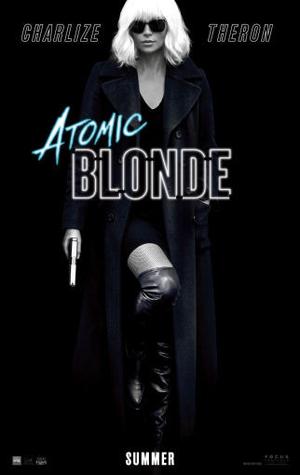
ABL_Tsr1Sht19_1Name_RGB_1
Aesthetically, the film is lightning-quick and exceedingly photogenic, with all department heads getting a chance to show off in a big way and yet on a somewhat limited budget (reports indicate that $30 million was spent bringing this tale to life). Jonathan Sela’s smart widescreen lensing opts for long-takes and spatially-aware wide-shots which allow the viewer to understand where all of the various threats are coming from, while also creating a balletic-mystique that harkened back to some of the bravura camerawork found in John Woo’s Hard Boiled. Sela has also shot Transformers: The Last Knight, John Wick, and Law Abiding Citizen, and will be calling the shots from behind the camera on Deadpool 2. The nearly 10-minute one-take fight must be seen to be believed. The pulsating musical score by Tyler Bates (Watchmen, Guardians of the Galaxy) amps up the tension, especially in tandem with the razor-sharp editing by Elisabet Ronaldsdottir (John Wick, Contraband), who opts for clean-cutting instead of an overly-frenetic approach to the mise-en-scene. The cold-war setting also gives the film a chilly, silvery-blue visual palette, with production designer David Scheunemann (working again with Leitch on Deadpool 2, art director on Inglorious Basterds and Cloud Atlas) giving the film a crumbling texture which makes thematic sense within the time period. It’s a fabulously designed movie, and if you’re looking for some fantastic summer movie fun, look no further than Atomic Blonde.
3

Prieto’s ‘Kidnap’ Is A Timely Film

Halle Berry demonstrates time and again how magnetic her presence is on the silver screen.  She made her feature film debut in Tony Scott’s The Last Boy Scout in 1991.  She has won an Academy Award for her lead performance in Monster’s Ball and has been a Bond Girl, the epitome of actresses the world over.

It is safe to say that she is an established actress and entitled to make her own passion projects.

Unfortunately, the ‘passion’ and ‘project’ did not congeal in her latest film, Kidnap.

As the film opens, we meet waitress Karla Dyson who is as witty as she is stressed.  She is hurried, with a sense of purpose while her son Frankie sits patiently at the counter, waiting for his mom to be relieved so that they can spend the day at the park.

Knate Lee’s script starts out quite strong as we get glimpses into Karla and Frankie’s lives.  Karla is painted as a tough-as-nails mom while Frankie is bubbly and outgoing.  They are struggling through a bitter custody battle following Karla’s divorce from Frankie’s father.  Karla has a rather frank conversation with Frankie about making friends with his dad’s girlfriend.  Lee uses this point to paint stability in the fractured family while Prieto’s use of home videos over the opening credits goes to reinforce how far Karla will go to protect Frankie.

Once they get to the park, Karla becomes extremely distracted leading to the crux of the film’s story.  The interesting thing about the actual kidnapping is that Lee and Prieto intentionally force us to watch it along with Karla.  Circumstances force Karla to chase after the abductors.  As solid as the chase is, it is fraught with unnecessary camera angles.  Within these camera angles, Berry projects her way through the chase, demonstrating her determination, but it falls short.  It is important to note that Berry’s performance is as strong as it has ever been and her determination shined through.  In addition to her performance, her hair stylist deserves kudos too.

Lee introduces so many characters and story threads that come figuratively out of the swamp that they either get jumbled up or get lost amongst the never-ceasing chase.

Speaking of the never-ending chase, director Luis Prieto manages to put the tension into overdrive fueled by a red Chrysler Town and Country ripping through the Louisiana Bayou.  Someone at Chrysler is probably figuring out just how to market the Town and Country’s brains over the brawn of a third generation Ford Mustang.  Or else they’re trying to reassure worried moms that their products really can’t maneuver as quickly as depicted in the film.

Prieto and cinematographer Flavio Martinez Labiano find ways to distort the image with odd camera angles making it appear as if they were trying to extend Karla’s perseverance, but instead became distracting.  Labiano did manage to capture a number of gorgeous overhead and aerial shots really enhancing the Louisiana Bayou that is very rarely seen.

The stunts really shine here and Andy Dylan’s stunt team does deserve recognition.  It’s very rare for a film to contain so many driving stunts, even with the budget this film had.  The non-driving stunts also had a physicality about them that rivals a number of action movies.

Kidnap is a valiant effort to tell a modern take on the state of families and society in general.  While it is very clearly a B-level movie, Berry’s convincing performance carries the film so far before it completely deteriorates, overwhelmed by a projected chase and a number of missed opportunities.

Kathryn Bigelow: Five Favorite Films

In their continuing series, Kyle and Ben sat down this week to discuss their five favorite Kathryn Bigelow films.  When you’re simmering over the controversy that is sure to arise from her latest film Detroit, reflect on this journey through her earlier works.

1200.jpg

Near Dark

960.jpg

BEN: It’s funny.  I hadn’t seen this film prior to this year, but I’m glad I got to experience it on a theater screen.  Bigelow’s take on vampires is every bit as fun as Schumacher’s The Lost Boys.  Where Schumacher intentionally brought in a sexual overtone, Bigelow demonstrated her action chops while managing to combine a dramatic story.  Her characters feel real, thanks to her relationship with James Cameron.  Many of the actors he successfully used in prior films make an appearance here including Lance Henriksen, Jeanette Goldstein, and Bill Paxton.  Their respective performances really drive the dangerous side of vampirism.  Adrian Pasdar is Caleb, who unfortunately falls in love with Mae (Jenny Wright) and as their love grows deeper, Mae’s dark secret comes to light.  Tim Thomerson, who made a splash in smaller movies like this, plays Caleb’s dad.  His relentless concern is really the driving force in this film.  I thought it was a lot of fun to see Thomerson and Henriksen square off in the finale.  The film is dated and cheesy, but it cemented Bigelow’s status as a cult-action director with interesting stories to tell.

KYLE: I don’t think it’s cheesy so much as a product of its time.  Bill Paxton gives one of the best performances of his career in this.  I love how it fuses the western genre with the bloated vampire catalogue to create an unforgettable experience.  It’s also shot remarkably well given the time.  One of my favorite parts is that the word “vampire” is never said, yet the viewer instantly knows that this is a vicious band of predators.  This was also Bigelow’s feature debut and it is the template for all of her films.  She’s a filmmaker who is interested in relationships and characters, and how the often overlooked ingredients are usually glossed over in favor of spectacle.  It’s what makes Near Dark work so well.  My only complaint is that the finale is a tad…abrupt given the setup, but regardless, this is a cult classic for all time.

Point Break

1300bef086df7be0993d1419961b5a66da70ca0666f3df6a526dd3c24c4e75bd.jpg

BEN: I was too young for this movie, but the allure of this film was just overwhelming.  It still is.  Based on W. Peter Illiff and Rick King’s story, Bigelow’s action sense combined with dramatic tension truly drive this poetic cult classic.  Where she tried to bring in a troupe of actors in Near Dark, here she starts fresh with Keanu Reeves, Patrick Swayze, Gary Busey, and Lori Petty.  The story is amazing, Donald Peterman’s cinematography is truly unmatched as he had to combine a wide range of shots from aerial jumps to bank heists and a lot of foot chases with handheld cameras.  As dramatic and action-oriented as the film is, it is just plain fun.  The actors all looked like they had a blast, especially Gary Busey:  “I don’t know why the agency has to have me train some snot nosed quarterback punk named Johnny Unitas.”  I could go on gushing, but you get the idea.

KYLE: Quintessential 90’s action.  The homoerotic (over)undertones are pure bliss.  I think one of my favorite things is the aesthetic.  Bigelow takes the surfer, California subculture, and builds it into a living organism.  I love how she takes classic crime and noir tropes and updates them for the 90’s.  It is also a testament to her skill how she is able to use both Reeves and Swayze’s well known flaws to her advantage.  This is a wonderful example of a director understanding the limitations of her cast and using them as strengths.  Busey is the standout, bringing his usual captivating insanity to bear and his performance is wonderful throughout.

Strange Days

fiennes-bassett-strange-days.jpg

BEN: Before Virtual Reality exploded, Bigelow gave us Strange Days.  I hate to say this, but I don’t remember the movie very well.  I know I saw it when it first came out on home video and I know that the cast is a veritable who’s who.  I remember it being a bit noir-ish in its Sci-Fi approach.  Ralph Fiennes really lit the screen up while Angela Bassett just drove the story.  I also remember Matthew Leonetti’s camerawork, especially the POV shots during the SQUID sequences.  This was Bigelow’s biggest commercial failure at the box office and from what I understand it nearly derailed her career.  I guess I need to see it again.

KYLE: I think this is Bigelow’s greatest film.  The entire intro sequence is some of the best camerawork I’ve seen in her films.  It is most definitely a neo-noir and probably the best science fiction noir since Blade Runner.  I also see a lot of parallels with Detroit, which I’m screening tomorrow.  Fiennes is just outstanding as the underdog and I love how there’s not a lot of action.  His chemistry with Bassett is remarkable, and as you mentioned, she’s the center of this formidable machine.  Juliet Lewis and Tom Sizemore are also amazing additions, with some of the best performances of their rocky careers.  It’s also a great dystopian film that is extremely relevant of the current climate in America.

The Hurt Locker

maxresdefault.jpg

BEN: As with James Cameron, Bigelow started to form her own troupe of actors, namely Anthony Mackie and Ralph Fiennes.  She also would continue to use real-life situations, as she did in Strange Days, to influence her future narratives.  And, thus we begin her working relationship with Mark Boal, a freelance journalist who used his real-life experiences to write the script.  Set during the Iraq War, The Hurt Locker features Jeremy Renner, David Morse, and Guy Pearce as part of an Explosive Ordnance Disposal team who are trapped by insurgents.  Boal’s story and Bigelow’s direction focus on the psychological trauma which results from the stress of combat.  The film would go on to win best director for Bigelow and best picture for the film, a distinction that Bigelow holds as the first and only woman to have won both.  Barry Ackroyd’s cinematography firmly places us in the middle of the action without losing the sense of perspective.  It’s been awhile since I’ve seen this one too.  I guess I’m due for a revisit.

KYLE: My favorite scene is when Renner and Mackie are trapped by snipers and Mackie is on the Barrett.  When Renner gives him the capri sun to drink, virtually ending their feud through an act of camaraderie is something you don’t see often in war films.  That is the genius of this film.  On the surface it’s a war film, but truly, at its heart, it is about the trauma that our armed forces experience every day when in combat.  The cinematography is outstanding.  You are, as you mention, right in the thick of things.  I remember not breathing for the duration of my screening and I was thinking about the film, about its implications on modern warfare, for days after.   While it’s not my favorite of hers, I think it might be her best made film.

Zero Dark Thirty
zero-dark-thirty-2012-04.jpg

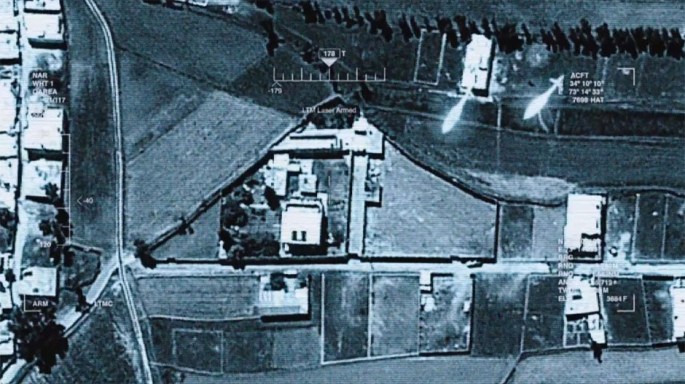
BEN: And this is why I enjoy these conversations, Kyle.  Your insight into these films is spectacular.  Our final film is a doozy and it created such a firestorm over its authenticity with the federal government at the time of its release that Julian Assange probably could have leaked it and it would have attracted less attention than Bigelow received for Zero Dark Thirty.  Again written by Boal, who used information he had gleaned from a speech given by former CIA director Leon Panetta during a ceremony is the story of a fictional CIA agent played by Jessica Chastain who is on the hunt for Osama bin Laden after gaining new intel which spurred on the real-life incursion which brought the Al-Qaeda Emir down.  Jason Clarke, Joel Edgerton, James Gandolfini, Edgar Ramirez, Mark Strong, and Kyle Chandler co-star.  Greig Fraser’s cinematography in the desert is amazing as are his nighttime shots, especially the hand-held action during the final raid.  Thirty represented Megan Ellison’s first major production credit as her Annapurna Pictures independently financed the movie.  This film created quite a controversy with audiences as well, but it was well-received and was recognized with Bigelow’s second directorial Oscar nomination.  Chastain would win the Best Actress Golden Globe and cemented her work in A Most Violent Year, Interstellar, The Martian, and last year’s spectacular Miss Sloane.  She is as tough as they come.

KYLE: I think Jason Clarke was robbed of a supporting nom.  His scene with the monkeys is heartbreaking, and a simple, quiet symbol of the madness of covert warfare.  Chastain is cold, but intimidating in every scene.  I love how the entire film is an extended procedural, with the payoff being the hand held madness of the compound raid.  Hand held apparently plays a big part in Detroit, and I can’t wait to see it.  I think the aspect of this one that works so well is how it is very removed.  Outside of the chilling intro, with actual calls from victims in the towers, the entire film is sterilized; presenting a possible narrative on how the most wanted man in the world was captured.   This is Bigelow at her finest.  Meticulous, artful control and searing, unapologetic presentation.

BEN: Thank you for the amazing insight, Kyle.  A pleasure as always.  Next week we celebrate the life of Jeanne Moreau and a special review of Jaques Demy’s The Umbrellas of Cherbourg.

KYLE: I’m looking forward to it!   Also, a shout out to K-19: The Widowmaker.  While it didn’t make the list, it’s a fun film for sure.  See you next week!


960 (1).jpg

ANDREW BERGMAN’S THE FRESHMAN — A MINI-REVIEW BY NICK CLEMENT

3

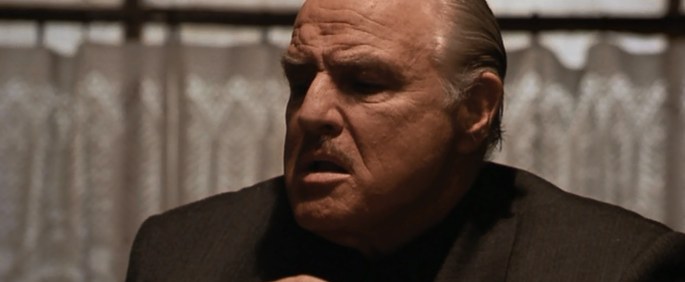
I could watch the hysterical comedy The Freshman any day of the week; it’s just one of those comfort-zone comedies that hits its targets, doesn’t over-extend itself, and knows how to land joke after joke with sly comic timing from everyone in the stacked cast, most especially Matthew Broderick and Marlon Brando, in what’s easily his funniest performance outside of The Formula. Written and directed by Andrew Bergman (Soapdish, The In-Laws, Blazing Saddles, It Could Happen to You, Honeymoon in Vegas, Striptease), The Freshman was released in 1990, and was a solid hit with both critics and audiences, but I get the sense that this one really caught on in the Blockbuster-era. It also looks very handsome because William A. Fraker was calling the shots as cinematographer, and he basically did nothing but excellent work his entire career. Also, TriStar Pictures POWER and scene-stealing Bruno Kirby POWER. And let’s not forget about that damn Komodo dragon! And honestly, it’s worth repeating – Brando is a RIOT in this movie, cleverly sending-up his immortal role from The Godfather, with everyone in the cast totally in on the joke and running wild with it. If you’ve not seen this one in a while, it’s definitely worthy of rediscovery.

1

“The Dark Tower” Crumbles Under Its Own Weight

For as long as I can remember, films adapted from Stephen King’s novels or short stories have resulted in either outright classics or box office failures that eventually turn into cult classics. I confess that I have not read his novels, but I have been enamored with the films that have come from his novels over the years.  Those films that resonated with me have done so because they have something to say.  They may not say it perfectly; they may not be very well-acted or well-told stories, but their message is always clear.

Unfortunately, Nikokaj Arcel’s The Dark Tower is a poorly framed hodgepodge of all three of the attributes I just mentioned. It is a semi-well-acted film, full of really interesting characters that have little to no life in them.  The antagonist is the Devil incarnate played by Matthew McConaughey.  As ‘The Man in Black,’ McConaughey is a gate-keeper of sorts, trying to tear open a dimensional wall between his pseudo-future world and our present day world where his agents are taking kids who he has deemed special.

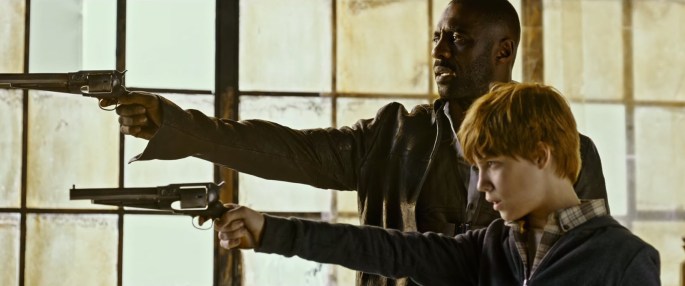
In the real world, New York City is experiencing unusual earthquakes, shaking the city to its core.  The 11-year old Jake Chambers played by Tom Taylor, has lifelike dreams of people and events he’s never witnessed, yet they are as real to him as the world around him. He is able to capture these dreams in a sketchbook, but his fellow students and his parents believe he is hallucinating, forcing them to send him to a special clinic that they believe can help him.  After a rather unique escape, Jake finds a house which he saw in his dreams.  The house is a portal to the Mid-World, where The Man in Black is awaiting him.  As Jake makes his way into the Mid-World, he happens across Roland Deschains, better known as the Gunslinger, played by Idris Elba.  The Gunslinger, the last of his kind, is on a quest that fills his heart with rage.

It is this rage that Akiva Goldsman, Jeff Pinkner, Anders Thomas Jensen and Arcel tap into. Unfortunately, the overly limp characters don’t translate into a coherent story.  It was as if the four screenwriters pulled elements from several 1980’s fantasy films and 1960’s Spaghetti Westerns to create a visual background for these characters. Despite the incoherent nature of the story, the visuals were as good as any other film, but they were not enough to overcome the other elements in the film. Tom Holkenborg’s score created background noise, creating an environment rather than supporting the characters and their motivations, which is a shame because he is known for bombastic scores in similar style films.

McConaughey was fascinating to watch, his creepiness came through loud and clear, but it doesn’t serve the character very well; he is too boisterous to be moody, though I imagine he was selected for the broodiness he exudes in his Lincoln commercials. Elba plays rage quite well, but Arcel’s direction doesn’t allow him to fully transition from a “man of action” to being a mentor/protector for Jake.  Taylor seemed the most wooden, both in his approach to the role and his acting though he did loosen up by the end of the film.  The strongest moment is when Elba’s Roland recites the Gunslinger’s Creed as he and Jake bond.  The moment is not truly earned, but it emphasizes each character’s respective motivations later in the film.  McConaughey’s moment comes in the middle of the film when he visits Jake’s family.  His performance here is classic McConaughey, conveying so much through his looks and his actions rendering him less creepy.  If only for a moment.

Since I hadn’t read the novels before seeing the movie, I can’t speak to their true influence on the film. It was obvious that the screenwriters tried to cram in as much as possible into one movie with the intent of creating a universe of filmic stories.  Unfortunately, the sheer lifelessness in this film has sealed the dimensional gateways shut.  Though it does appear that a television series is being developed, which is the proper platform for something of this magnitude.

For a film that spent 10 years in various stages of development, it shows. There is a lot of potential created in various moments and yet, they go nowhere because none of the moments are truly earned.  If they do develop a television series and create some of the backstory that was missing here, I think I would be interested enough to catch it, but as a standalone film and an entry to another cinematic universe, it does not work.


The James Bond Series: DIE ANOTHER DAY

dad_poster

James Bond is back with Frank and Tom thoroughly discussing Pierce Brosnan’s final cinematic outing as James Bond, DIE ANOTHER DAY. They also discuss Daniel Craig’s tentative return for Bond 25, Pierce Brosnan’s tenure, and a bit about Brosnan’s post Bond career. Enjoy!

TAMARA JENKINS’ THE SAVAGES — A REVIEW BY NICK CLEMENT

1

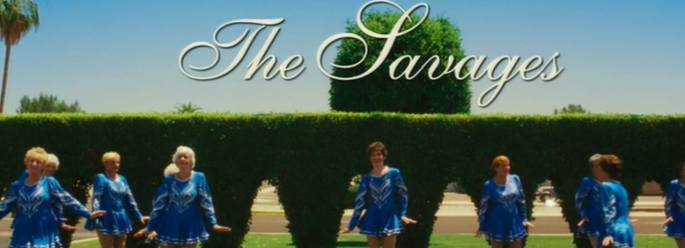
The Savages is one of those dark comedies which nails a perfect balance between sad and funny, but make no mistake, at times, this is a painful movie to view, as it examines the loss of a parent’s faculties in an upfront and explicit manner. Why has it taken writer/director Tamara Jenkins (Slums of Beverly Hills) a decade to get her next film made (she’s got Private Life set for release later this year)? As usual, Philip Seymour Hoffman was great – when was he not? But it was Laura Linney who stole the entire show. In movie after movie, performance after performance, Linney has proven to be an exceptional actress, absolutely one of my favorites. I submit to you the following titles: Dave, Searching for Bobby Fischer, Primal Fear, The Truman Show, You Can Count On Me, The Mothman Prophecies, Mystic River, Love Actually, P.S., Kinsey, The Squid and the Whale, Breach, John Adams, Hyde Park on Hudson, The Big C, and The Fifth Estate. She’s appeared in even more than that, and each time, she’s been fully committed, extremely emotional, and always engrossing to watch. In The Savages, I’m tempted to say she provided us with her best performance yet, and in my opinion, that says a ton about her work as an actress. Every time Linney appears in something, whether it’s on the small or big screen, the material is instantly elevated, and she’s got this interesting mix of sass and smarts, and sex appeal without being too “much” with any one particular thing. I’m a huge fan.

2

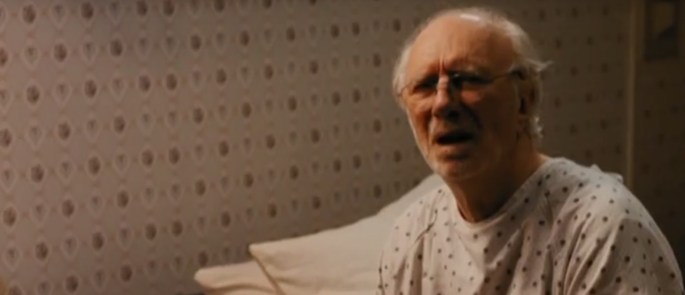
The film, which has Hoffman and Linney playing brother and sister, is an extremely sharp and poignant story about siblings who have to take care of their ailing father after the death of his girlfriend. Their dad, a tough old S.O.B. played to perfection by Philip Bosco, is suffering from delusions and early Parkinson’s disease. It’s a brilliant performance, actually; never resorting to actor-ish ticks and convulsions or histrionics, Bosco downplays the physical, in favor of the emotional, and the results are devastating, yet somehow never fully depressing. It’s all in the fine details, and this film is a subtly tricky one; you’ll have to see it to know what I mean. There’s no guns or car chases or explosions or bad guys or plot contrivances that get you to the next scene. It’s not glossy or slick, as Jenkins favors chilly winter and gloomy skies over a Michael Bay sunset finish. But this is a film that’s generously written, honestly acted, and modest yet strikingly confident with its direction. And it’s also extremely funny, which helps, because at times, it’s a spoonful of tough love medicine that many, many people will find too close for comfort. But as cinema, The Savages is a small gem, and a film clearly made because everyone involved felt an inherent need and desire to make it happen.

4

NICK’S NOTES: RIDLEY SCOTT’S BLADE RUNNER

5

Ridley Scott’s iconic sci-fi classic Blade Runner is one of those motion pictures where its legacy and lore nearly outweigh the finished product itself. Notice I said nearly. This is an all-consuming piece of cinematic art, a film that blew my mind open as a kid, and has continued to haunt and fascinate me as an adult. Seeing Blade Runner projected in 70mm as a 12 year old really did change the way I viewed movies; I knew I had never seen anything like it before and that it was special. It was also one of the first letterboxed double-VHS sets that my family rented from Blockbuster and that just meant it was “better” than any old VHS tape that was laying around. I nervously anticipate Denis Villeneuve’s follow-up, as the imagery on display in the trailer looks eye-scorching (Roger Deakins is the 2049’s cinematographer), but I’d by lying if I said that I’m very wary of long-in-the-works sequels to classic films that are separated by decades. There’s something both handmade and revolutionary about Scott’s original work, and that’s an aspect that can never be replicated. From the mind-blowing visuals that Scott and director of photography Jordan Cronenweth crafted in tandem with the trendsetting production design and art direction by Lawrence Paull and David L. Snyder respectively, to say nothing of the grand and operatic musical score by Vangelis, Blade Runner is an aesthetic masterpiece that feeds into a layered, deeply thoughtful, and engrossing narrative that gives weight to the flying cars and rain-soaked streets and neon-holograms and every other stylistic trick that Scott and his artisans had up their sleeves. It’s a phenomenal movie and an effort that easily ranks as one of Scott’s absolute best, and I’m normally not a “best” and “worst” type of person.

6

Dean Koontz’s Phantoms 


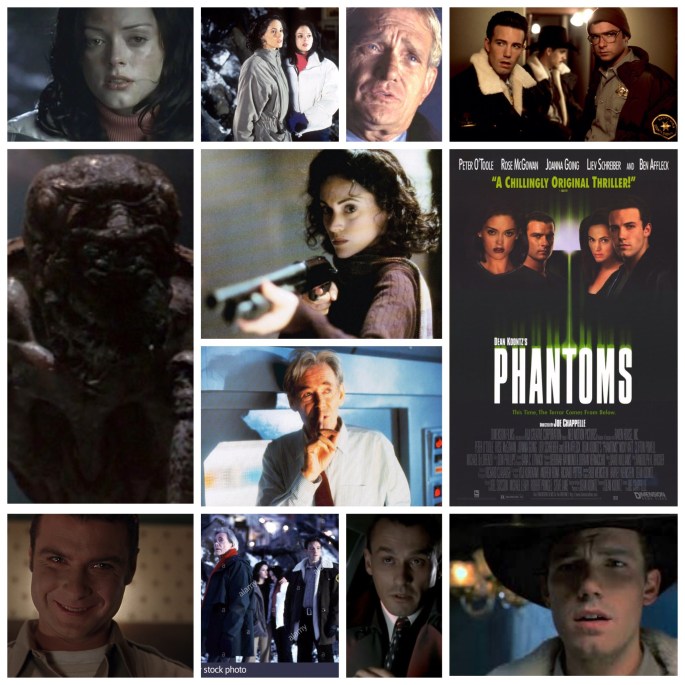
Dean Koontz’s Phantoms is one of those that I was really stoked on for years and would recommend at the drop of a hat… until I got around to reading the book. Koontz’s novel is brilliantly paced nocturnal nightmare fuel, detailed, imaginative and specific in it’s thrills and chills. This film is a brisk, truncated version of that story, not only that but it takes severe liberties and deviates quite a bit from the tale, resulting in a film that bears little resemblance to the book. It’s good on it’s own, for sure, atmospheric and freaky on terms that don’t include the big picture, but when seated alongside the novel it pales like the large number of paralyzed corpses that pop up all over an eerie abandoned village somewhere in the Midwest. Two sisters (Joanna Going and Rose McGowan) drive into town expecting to visit kindly relatives, and find only death and desertion instead. They wander about, plagued by visions and radios that play spooky old timey music of their own accord, spine tingling in this context. The only townsfolk they find are starched cadavers, killed by some unseen force that watches, waits and refuses to be defined. It’s in this first act that the film is scariest, achieving impressive levels of dread through isolation and uncertainty. As soon as Sheriff Ben Affleck and his shitkicking deputies shows up, the effect dims a bit and degenerates into schlocky survivalist gimmicks, still entertaining yet not as effective as the opening. Things get downright silly when the FBI delegates a crusty old professor of cryptozoology or some such farfetched endeavour (a peppy Peter O’ Toole) to come on over to town, analyze the mystical menace and.. well that’s about it from him. Clandestine hazmat teams are dispatched, Body Snatchers/The Thing homages ooze all over the place and the film putts along in standard horror gear, never getting near to as good as it was in the first twenty minutes or so, let alone the quality of the book. Liev Schreiber is memorable as one of Affleck’s boys who goes a little nutty, Bo Hopkins and Robert Knepper score points in cameos as cheeky G-Men, and there’s work from Clifton Powell Nicky Katt. For what it is it ain’t bad, just expect to be a little deflated if you watch this first and then go check out the book, because there’s no kind comparison to make. 

-Nate Hill

John Frankenheimer’s Dead Bang


John Frankenheimer’s Dead Bang makes no apologies for the straight up, down n’ dirty, violently obnoxious ninety minutes of rural crime mayhem it throws at you, containing no lofty subtext, tongue in cheek send ups or heady plot twists, purely and simply Don Johnson wiping out a gang of backwoods white supremacists and pissing off every superior officer along the way. A cop film to it’s roots, it’s a refreshing little diversion for Frankenheimer, who is known for taking on genre outings with ambitious undertones. Johnson is a flippant big city cop sent to the sticks to smoke out some neo-nazi assholes who are running guns, killing folks and all that fun stuff. He’s paired with a hysterically fussy FBI handler (William Forsythe, cast against type and loving it), and at odds with the psychotic ringleader of this gang (real life drill instructor Frank Military, also a solid actor), who proves to be quite a fly in the ointment. The action is rough and tumble and thoroughly R-rated, the villains are formidably nasty and Johnson’s cheeky super cop is wearily exasperated most of the time, out for the count but just gripping the edge as he hunts these yokels and deals with red tape including a department appointed shrink (Bob Balaban) who he hilariously mocks for looking like the Monopoly Guy in the film’s funniest bit, a riotous interlude. There’s scattershot work from Penelope Ann Miller, Mickey Jones, Michael Jeter, Tate Donovan and Garwin Sanford as well. Not a well known effort from firebrand Frankenheimer (I’ve heard some unbelievable stories from this set) but a really enjoyable shoot em up that deserves a far better rep. 

-Nate Hill