ANDREW DAVIS’ THE FUGITIVE — A REVIEW BY NICK CLEMENT

3

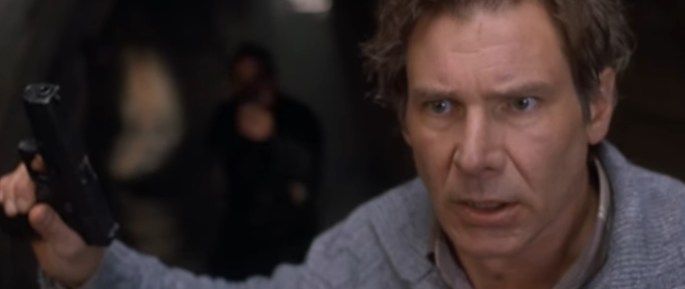
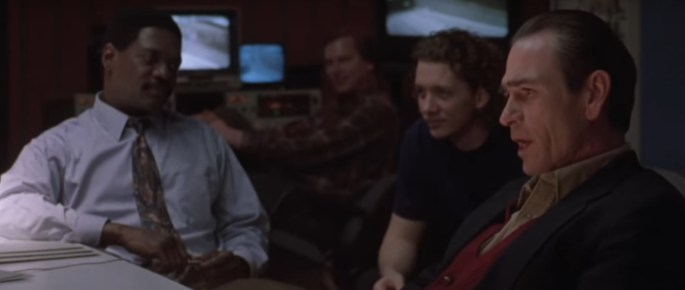
Classy action-dramas like The Fugitive are a tough breed to find these days on movie screens; it seems nearly insane that this film was nominated for Best Picture in 1993, not because it’s not fully awesome, but rather, this genre would NEVER be paid attention to by members of the Academy in our current cinematic climate. Harrison Ford delivered a quintessential movie star performance, eliciting sympathy right from the outset, and allowing the audience to embark on his journey with him, rather than feeling like a spectator. There’s a great supporting cast including Sela Ward, Joe Pantoliano, Jeroen Krabbe, Julianne Moore, and Andreas Katsulas. The fantastic Tommy Lee Jones of course won the Oscar for Best Supporting Actor, the film was a massive financial success, and a decent pseudo-sequel following Jones’ character was released in 1998.

2

The Fugitive is easily the best film that filmmaker Andrew Davis ever directed, as it was extremely well-crafted on a technical level with ace cinematography by Michael Chapman and a terrific score by James Newton Howard, while Jeb Stuart and David Twohy’s smart and logical screenplay never went too far over the top, instead playing it realistic yet exciting, and always making sure we cared deeply about Ford and his paranoid plight. Apparently, when the film was in various stages of development, Michael Douglas, Kevin Costner, Nick Nolte, and Alec Baldwin were all considered for the Dr. Kimble role, while Gene Hackman and Jon Voight were both thought of for US Marshall Gerard. The film is notable for extensive location shooting in and around the city of Chicago and in the state of North Carolina. “I didn’t kill my wife!” “I don’t care!”

1

“Don’t be afraid.” – A review of The Grey by Josh Hains

You’re watching the opening titles click along, Open Road, Scott Free, the works all rolling through their frames in eerie silence. You think for a fraction of a second that maybe something bad will happen, maybe one of those wolves you’ve seen advertised will erupt into the frame and tear someone’s throat out and perhaps scare the hell out of you. It would be a most opportune time for a jump scare. Instead, wolves bay at the moon, their howls long and bone chilling. I think the howling is more frightening.

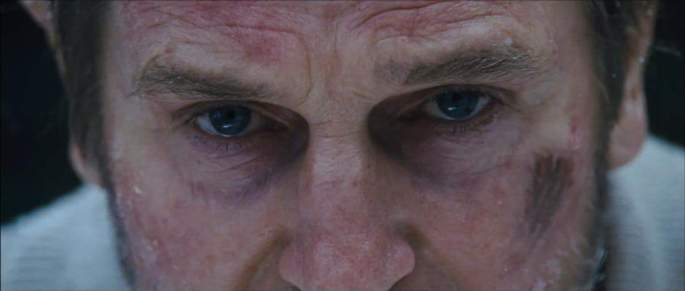
John Ottway (Liam Neeson) narrates the opening scene, conveying a “I-don’t-give-a-damn” no nonsense, cynical mindset. He drifts through the cold night like the ghost of someone who died with unsettled demons. A hopeless, broken man. So broken is he that Ottway contemplates and nearly commits suicide, his mouth firmly around the barrel of his rifle until the baying of wolves cuts his actions short. This understandably drawn out sequence is juxtaposed with marksman Ottway shooting a lone wolf that charged some oil drillers, a job he seems born to execute. Ottway respects the animal enough to stay with it until death, almost comforting the creature until its final breath.

A plane ride to Anchorage for oil rig workers on leave (Ottway amongst them) reveals seven more characters of worth, each one playing a significant role in the plot of the film. Flannery (Joe Anderson), the young reckless hick, scared out of his mind, nervous, panicky. Diaz (Frank Grillo) the cynical ex con with a penchant for the f-bomb and bar fights, and his pal Hernandez (Ben Bray). Lewenden (James Badge Dale), presumably a family man. Hendrick (Dallas Roberts), the sympathetic and rational religious mind of the group. Talget (Dermot Mulroney), the gutsy father. Burke (Nonso Anozie) the welcomed comedic relief in several key scenes. The plane they’re travelling in crashes, delivering easily one of the most terrifying on-screen plane crashes you’ll ever encounter on film; it’s the stuff of nightmares and fever dreams.

Ottway soon takes charge, seemingly the most experienced man in the group, making the decision to leave the crash site after Hernandez’s mangled body is found the morning after the sudden and brutal wolf attack that led to his death. The forest a few miles away will provide richer shelter against the harsh, unrelenting winter weather, and might work in the group’s favour against the wolves. Superficially,  The Grey is about a group of men the world seems to have discarded, “men unfit for mankind”, struggling against unfathomable odds. It’s a classic action adventure with elements of horror, but there’s more to this movie than just teeth and death.

The surviving men find opportunities for conversations that bring to light their wants and desires in life. Obviously, we learn the most information about our hero John Ottway, some though deep philosophical thoughts he seems to have been holding onto for ages, and some throughout the movie in the form of brief flashbacks with his wife. Though they are depicted as group at nearly all times, director Joe Carnahan (and co-writer Ian MacKenzie Jeffers, who also penned the short story Ghost Walker that The Grey is based on) understand perfectly how to treat each character as an individual guided by their own unique desire to survive this horrific ordeal, and live to tell about it. The performances across the board are all great, though Grillo and Neeson seem the most natural, helping maintain the grounded atmosphere the movie carries. Neeson deserved more praise upon release than he ever received for giving such a moving, raw performance.

At the end of the movie (*spoiler alert* for those who haven’t seen The Grey over the past five years) Ottway is alone, freezing, desperate, and significantly more broken than he was when we first encountered him, reflecting on those who fell before him by looking through their collected wallets (the real wallets of the cast). Soon realizing to his dismay that he has found the den belonging to the wolves that have relentlessly hunted him, he reflects upon the passing of his late wife, told through one last heartbreaking flashback, her final words giving him the strength to press forward and fight for his life. After taping a knife and broken bottles to his hands as the alpha wolf approaches him, he delivers the lines to an anonymous poem he mentioned to the group earlier that sat in his father’s office when he was a boy. The screen cuts to black, and we’re left stunned and profoundly moved.

Our only clue as to what went down between man and beast lies in promotional material, a brief glimpse of which is shown in a nightmare Ottway has and nowhere else, not even on the Blu-Ray’s deleted scenes. A post credits scene shows Ottway is alive, resting on the presumably dying alpha wolf, though it remains unclear if he is mortally wounded or just worn out, exhausted.

While the misrepresentation of the final product in the promotional materials irked many, it didn’t bother me like I thought it would because I still understand that the sequence (as awesome as it likely is) didn’t fit the tone of the rest of the movie. Liam Neeson slashing and stabbing a territorial wolf sounds like an epic fight for the ages, but that makes about as much sense as having Roy Scheider repeatedly stab the behemoth shark in Jaws to death while clinging to its dorsal fin. In a movie built on a foundation of callous logic and reasoning, that ending just wouldn’t have sat right in our stomachs, and I’m content with that.

poem1


Edge Of Tomorrow


-Nate Hill
Tom Cruise, dare I say, has been making really decent stuff these days, some of which is downright brilliant. Oblivion had its moments, carried on wings of an M83 score that was better than the film itself (hello Tron Legacy syndrome), Jack Reacher was solid badassery all round, but Edge Of Tomorrow is just pure class and could almost be considered an instant classic. I waited a long time to finally see it, because in most cases a pg-13 sci fi blockbuster starring Tom would be cause for me to cruise right on by in the Netflix/on demand lineup and pick something else. The reviews were uncommonly good though, and so I inevitably went for it. I’m sorry I waited, because it’s flat out spectacular. What makes it so? Well, it is everything I described above. A sci fi, blow ’em up blockbuster starring Tom Cruise, packed to the gills with action, aliens and stuffed with more Independence Day fireworks than you can shake a stick at. The catch? It has the plot, script and character development to match. This is one seriously thought out story, with heroes who don’t start off that way, conflict among the ranks of characters and genuine, honest to god arcs. You can hurl all the cash you want at a film and blow up as much shit as you can, but if you don’t have those core elements of story in place, and well so, you’ll end up with a hollow piece of vapid space garbage (like that Independence Day sequel). No, this one earns its stripes, opening up during a chaotic intergalactic war between humans and a formidable alien race, who are winning fast and stamping out any hope for our race. Cruise plays a weaselly military PR puppet who talks shit but has never seen a moment of actual combat, until he’s thrown directly into it by chance, with neither skills nor experience to keep him afloat. Stuck in a Groundhog Day esque time loop (I won’t spoil the how and why, but it’s a wicked smart premise that logically plays out), our coward gradually gains what it takes, day by day, to become a hero and save the planet. It takes a lot of dying and starting over though, each day beginning in the same fashion, the possibilities ripe for him to finally get that perfect round and win the day. Emily Blunt, that adorable badass, plays the most adorable badass thus far in her career, a resilient and vulnerable valkyrie who’s rage at the marauding fiends burns through terrifically, providing moments of grit, warmth and humour as needed. Bill Paxton plays a gung-ho military honcho with the same gee whiz charm that made Pvt. Hudson (Aliens, for you plebs) so memorable, and Brendan Gleeson does a third act encore as another General who takes a fair bit of convincing to get onboard with their plan. It’s so much fun you never want it to end, the high concept used for all it’s worth, supported by truly inspired creature design, detailed steam punk style weaponry and old school Hollywood fanfare rationed out in deliciously measured portions, resulting in that perfect recipe, an effects driven crowd pleaser with the brains to back it up. Who knew they could still make that? It’s a thing of beauty. 

PTS Presents Writer’s Workshop with MARK PROTOSEVICH

protosevich-banner

mark-protosevichWe’re very excited to be joined by screenwriter Mark Protosevich, who we are huge fans of.  Mark’s credits include THE CELL, I AM LEGEND, POSEIDON, OLDBOY, screen story for THOR, the unproduced follow-up to BATMAN & ROBIN, and the upcoming FLASH GORDON directed by Matthew Vaughn.  We go in depth with Mark, talking about his writing process, his love for cinema, and his journey to becoming a writer.  We hope you enjoy, this was an amazing chat!



Review of LOGAN (2017):

Hugh Jackman, Patrick Stewart, Dafne Keen, Boyd Holbrook, Stephen Merchant. Directed by James Mangold. Rated R. 137 minutes. 2017.

(This review was originally published at Joel on Film.)

The Logan of Logan is beat-down, bruised, and utterly, completely resigned to the fact that the world has no use for him anymore. The film that features him, the third solo venture for the superhero, takes on a similar attitude, although there shouldn’t be sense here of selling the film short. This is not a grim or oppressive movie, even if the cinematography is rugged and the tone is mournful. The terrific thing about the screenplay by Scott Frank, Michael Green, and director James Mangold (who directed another of the spin-offs featuring Wolverine and returns here with a far superior take) is that it exists entirely on the level. There isn’t any silliness here, other than the inherent kind that has spawned any of the comic books that inspired these characters.

Even that kind of silliness has been forcibly mutilated into something repellant this time, as the adventures shared by Logan, once known as Wolverine in happier times, have become the source of stories that will eventually become legend and then, no doubt, myth. They’ve even been given their own Dead Sea scrolls in the form of comic books, which Logan thumbs through with disbelief, coming upon the stories of the deaths of his old friends that have been re-worked into histrionics and spectacle in the frames of the graphic novels. His dismissal of them as tripe is a sort of roundabout commentary: If Logan was real, as this film undoubtedly treats him, then these scenes of destruction were tragic, not worthy of the distancing effect that drawing them into a comic book might have.

It’s 2029, and Logan, once (and, reportedly, never) again played by Hugh Jackman in his best performance as the character, is one of the last remaining mutants. An event, unstated but referred to in hushed, reverent tones, wiped the planet of the rest, but perhaps Logan’s ability to heal himself from quite literally any injury or affliction gave him a genetic immunity. Whatever the case, he has isolated himself and Charles Xavier (Patrick Stewart), his old mentor and teacher who is now nearing three digits in age, along the Texas-Mexico border, guarded by an albinic mutant named Caliban (Stephen Merchant) who can track other ones. Logan is now protective of his old protector, who has contracted a degenerative brain disease that, coupled with his telepathic abilities, has caused the government to categorize his brain as a weapon of mass destruction.

Logan, who has taken to driving around clients in a limousine that will inevitably be used as a getaway vehicle at some point, is implored by a stranger (played by Elizabeth Rodriguez) to protect a young girl named Laura (Dafne Keen) from forces who would kill the woman and kidnap the girl. A quick escape is necessary, and so Logan and Charles are to escort the girl to a safe zone in North Dakota, while shaking off the head of the facility organizing the abduction, Dr. Rice (Richard E. Grant), and the henchman-in-charge (played by Boyd Holbrook, who nicely chews the scenery with his exaggerated Southern accent). It turns out, though, that Logan isn’t so special even now, as Laura exhibits many of his traits and the villains showcase their own weapon, which is another kind of callback to Logan’s past. Some of the material with these villains is a bit routine, but thankfully it’s window-dressing here.

The film is also the first to feature a treatment of Logan’s superpower as a genuinely threatening weapon of brute force, with his signature knuckle-blades slashing and dicing and stabbing with appropriately gruesome results. The action sequences hit with the requisite strength of Mangold’s considerate staging, which makes sense of movement and geography while glorying in the quick-cutting style that enhances Logan’s combative abilities. Every confrontation between Logan and Rice’s minions is swift and brutal and pile-drives most of the action sequences that dominate the PG-13 superhero landscape these days. Fortunately, there is more on the mind of the director and his fellow screenwriters in Logan, which has more on its mind than tedious plot. There’s a sense of weary tragedy here, and that’s more than enough to set this film apart from and above the same, old same-old.

We Are the Flesh

We Are the Flesh

2017.  Directed by Emiliano Rocha Minter.

we-are-the-flesh-2016-movie-emiliano-rocha-minter-1


Transgressive cinema is a mixed bag, and most assuredly not for everyone.  Emiliano Rocha Minter’s We Are the Flesh is an exceptional entry into the genre and a resounding assault on any sense of discretion or restraint.  This is a prime example of offensive cinema.  Featuring non-simulated sexual acts, otherworldly cinematography, and visceral depictions of necrophilia and cannibalism, this is a film that is not for the faint of heart, pushing the boundaries of art versus pornography while delivering a scathing commentary on the degradation of Mexican culture by way of institutional corruption.

The premise involves a sibling couple that stumbles into the lunatic playground of a hermit within the heart of a post-apocalyptic city.  In exchange for food and shelter the brother and sister are forced to participate in an escalating series of deviant sexual escapades that coalesce into an oedipal nightmare.  Yollotl Alvarado’s renegade camerawork is the entire filthy ordeal.  Bathed in sleazy sepia and primordial crimson, every frame of this film is a traumatic experience rendered with bodily fluids.  The compositions, once the initial shock passes, are outstanding, clearly displaying Minter’s classical film roots while evolving into a nascent orgy of sex and violence that does not relent.

we-are-the-flesh-site-image

If there is a flaw, it is the heavy handedness of the social references as the film lasers in on Mexico’s seething discord which results in disproportionate amounts of “telling” versus the brilliance of the film’s “showing”.  There are patches of dialogue and an unspeakable rendition of the national anthem that may be interpreted differently based on the viewer’s cultural background, but the intent is undeniable and the ramifications are disquieting and accusatory.  Manuela Garcia’s art direction is a direct representation of these concepts, depicting a masking tape womb in a poisoned world, filled with horror and lust in equal amounts.  Maria Evoli’s performance as Fauna is the standout, displaying uncharacteristic courage and inhuman sex appeal that carries the disjointed narrative to its insane resolution.


Available now on a stunning, blu ray release by Arrow Video.  This is a one of a kind film that quite frankly is not for anyone who is easily offended or repulsed.  Featuring soul tainting visuals, purposefully repugnant content, and a delirious story about the wholesale slaughter of a country’s innocence, We Are the Flesh is a unique offering in an adult only genre.  If you’re brave, and extremely open minded, this film “might” be for you, but be warned, you cannot unsee the dark wonders this movie has to offer.


Highly (But Extremely Cautiously) Recommend.

images

MICHAEL DAVIS’ SHOOT ‘EM UP — A REVIEW BY NICK CLEMENT

2

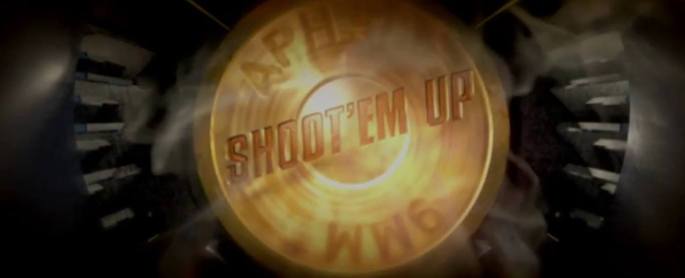
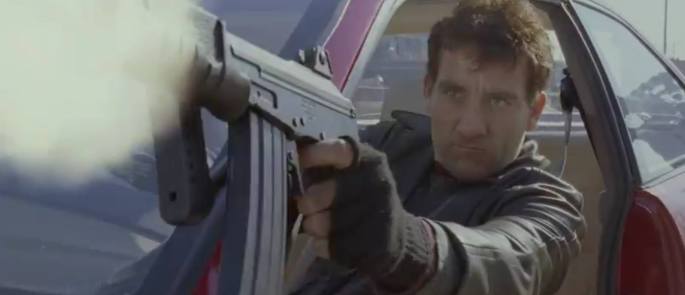
Shoot ‘Em Up is a wildly silly R-rated cartoon of a movie, tremendously fun and berserk and made with low-budget zeal and ingenuity. Playing like a Looney Tunes adventure on a few hits of PCP, this is pure comic-book-movie shenanigans, but instead of superheroes from another galaxy, the characters in this oddly eccentric actioner bounce off one another with crazy glee and nasty aplomb.  There’s a lactating hooker (Monica Bellucci, bless her gorgeous soul), an infant mixed up in a barrage of bullet-riddled set—pieces, a mid-coitus shoot-out that’s both sexy and stupid in equal measure, and enough barking-mad scenery chewing from Paul Giamatti, as one of the most incompetent villains in the history of action movies, to choke a horse. Clive Owen basically reprised his role from the BMW Films series, this time with a carrot fetish (you’ll see!), as a take-no-nonsense Driver who shoots first, steps on the gas second, and rarely has time to ask questions. Pseudo-amateur filmmaker Michael Davis famously got this film made by showing New Line execs the entire movie via hand-drawn pre-viz artwork, and it’s a shame that someone with this level of creativity hasn’t been allowed to work since (the movie flopped big time at the box office despite mostly positive reviews).  Peter Pau’s aggressively stylish cinematography is a constant eye-scorcher, making the film feel larger than its modest budget likely allowed. There’s a careening sense of insanity to Shoot ‘Em Up, with the film’s wicked energy level never stopping for a moment.  Make no mistake – this film is complete junk-food-cinema, but it’s so happily absurd about its own existence that it’s tough to not go along with it, as it’s an endeavor that managed to talk the talk and walk the walk when it comes to extreme, outlandish thrills.

1

MARTIN BREST’S GOING IN STYLE — A REVIEW BY NICK CLEMENT

3

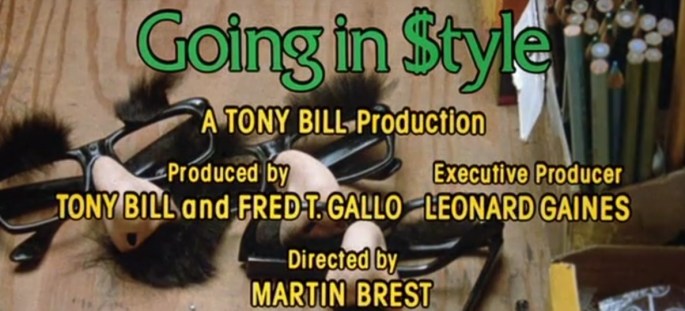
Because Going In Style had been out of print on DVD for so long (WB Archives released it last summer), I’m always scanning Turner Classics in the hopes that it will be listed as an upcoming feature presentation, as I’ve still yet to pull the trigger on a disc purchase. Twice in the last year and a half they’ve aired this wonderful, charming and extremely entertaining if melancholy little film, and I really hope that a boutique Blu-ray label will finally release this as a special edition in the near future. Martin Brest’s 1979 dramedy was always one of those “Holy Grail” movies for me growing up as a budding cinemaniac, an early effort from a fabled filmmaker that I had so much interest in seeing that it was almost driving me crazy that I hadn’t. Back in the day, my local Blockbuster didn’t carry it, so it became extra annoying that it remained so out of reach. But after two viewings, I can say that it was worth the wait, and it reconfirms my feelings that Brest’s banishment from Hollywood is one of the most egregious wastes of talent that I can think of.

2

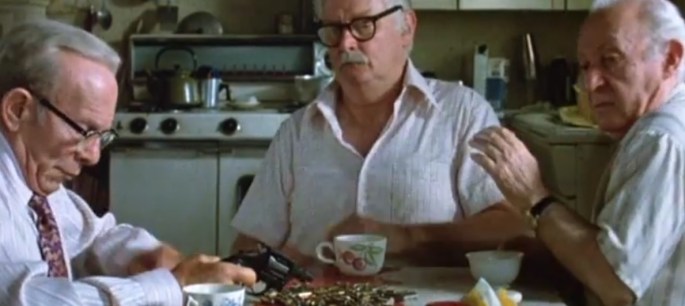
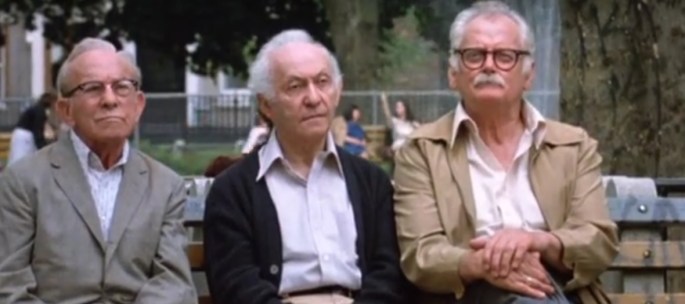
This is such a funny, endearing movie, made with that special late-70’s tone and style that’s so distinctive and personal feeling. Starring George Burns, Art Carney, and Lee Strasberg as three cranky retirees who decide to rob a bank on a whim (their pension checks suck and they figure that they’ll either get away with it or get free room and board in the slammer until they die) as they assume nobody will ever expect three old geezers wearing Charlie Chaplin nose-and-glasses disguises would be crazy enough to attempt a stick-up. They carry out their plan, but what happens next should be left for you to discover, because this film packed much more in than I ever expected. As always, Brest stressed the human qualities of life, going for simple but extremely effective humor, some terrific moments of introspection, and a quiet, unassuming style that’s in perfect tandem with the graceful nature of the narrative. The three central performances are all perfect, and Michael Small’s bouncy, energetic score amps up the film’s playful, soulful, and earnest qualities at every moment.

1

Logan

To say that the Logan/Wolverine and Professor X characters have been as important a part of my comic book superhero upbringing as Christopher Reeve’s Superman is an understatement.  The beauty of the ‘X-Men’ film franchise is that their stories have been nuanced in such a way that meanings are hidden within meanings, a strong suit of Bryan Singer. James Mangold takes it to the next level in “Logan”.

Set in the near-future, an aging Logan is scraping an existence, staying off the radar.  With his wit and intellect, he is as razor sharp as ever: in the opening scene, his futuristic looking Chrysler 300C limo is being jacked by a street gang when he warns them to stop, with violent consequences.  One doesn’t mind the violence, as it seems natural for the character.  It is not over the top.  Reminiscent of Martin Riggs, it was obvious that Hugh Jackman relished in his final opportunity to play the role; a gruff, aged version of the character.

A now-senile Charles Xavier, played with stunning brilliance by Patrick Stewart, is tended to by Caliban, one of the last mutants.  Stephen Merchant plays Caliban with a twinkle in the eye, giving a sense of humility, grounding both Logan and Xavier.

The screenplay by Scott Frank (“The Wolverine”), Mangold, based on his screen story and Michael Green  (“Green Lantern”) is well-paced, stopping for a breath every once in a while.  The introduction of Elizabeth Rodriguez as Gabriela is a welcomed bit of mystery as she tries to get Logan to help her with her daughter, Laura, offering to pay him to take her to safety. Although there is a sense of urgency in her actions, Gabriela’s motivations are not immediately raised, increasing the tension.  When an encounter with Gabriela goes wrong, Logan is forced to take Laura in and back to the compound, drawing the attention of Boyd Holbrook’s tatted-up Pierce.  Reminiscent of Robert Patrick’s T-1000, Pierce is a simple character:  relentless.  Here there is more emotion in his interaction with all of our heroes.  Yet, like Logan, Pierce is a pawn in a game.

Making her feature film debut, Dafne Keen is a more than capable actress, conveying a sense of emotion through her eye movements.  Her interactions with Pierce’s goons at the compound are fluid and deadly.  Mangold captures the essence of a child-adult relationship between Logan, who isn’t fully grown up and Laura, who has had to grow up much sooner than most realize.  Throughout all of this, Xavier is still a key figure trying to make sense of his decaying world, a triumph for Stewart

All throughout the film, references are made to classic westerns, including Mangold’s own “3:10 to Yuma” remake from a few years back.  Each of the characters is a desperado in their own way.  And, much like Cameron’s “T:2,” “Logan” is equally as violent.  A key to the references is in John Mathieson’s stunning cinematography.  A glowing example of this is the shelter we find Xavier living in.  Round, metallic and rusting, Mathieson is able to capture glimpses of dusty light from the rusted-out holes, while still maintaining the depth of the rotund ceiling.  His nighttime work is equally as impressive.  Aided by the rapid fire editing team of Michael McCusker and Dirk Westervelt, an ambush on a farm home and the ensuing chase through a corn field are all deftly handled, loganimaxposternever muddling the characters or the action.  McCusker and Westervelt make mince-meat out of the 137-minute running time, giving us time to catch up with the characters, but never losing sight of each of their importance.

“Logan” is every bit as operatic as last year’s “Deadpool”.  There are some minor quibbles, not enough to dissuade or detract from the narrative.

James Mangold’s “Logan” is stunning in its violence and breathtaking in its depth; it
holds no punches.  Yet, it remains introspective and retrospective and is as well-nuanced as the likes of Singer’s narratives from 17-years ago.  If this is Jackman’s last turn as the character, he is going out on a very high note.

See this Highly Recommended on as big a screen with the loudest audio you possibly can.  You won’t regret it.

SAM PECKINPAH’S BRING ME THE HEAD OF ALFREDO GARCIA — A REVIEW BY NICK CLEMENT

3

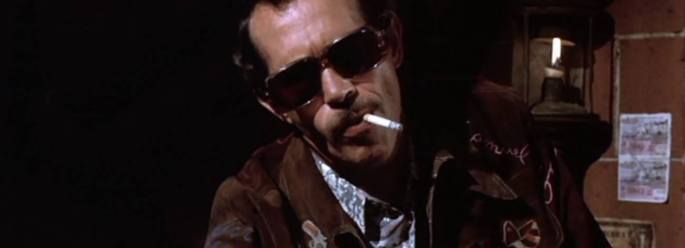
This is a tough, unrelentingly nasty film – no wimps allowed. From many accounts that I’ve read, Sam Peckinpah was battling alcohol addiction during production of Bring Me the Head of Alfredo Garcia, so as a result, the rough and boozy quality that the film possesses feels all the more authentic and bracing. Warren Oats delivered a staggering performance of ugliness, instability, and wasted melancholy. As usual for Sam the Man, gritty violence is in abundance, with his fascination for rape and sexual violence still very much intact and on sad, brutal display. He was a complicated man who made troubling films, and Bring Me the Head of Alfredo Garcia is easily his bleakest, most nihilistic effort, even more so than Straw Dogs, chiefly because there’s ZERO chance for reflection by the time Alfredo Garcia’s narrative has come to a close. I’m a Student of Sam, and having seen nearly all of his films, I can easily state that this one is likely my favorite. I’m not sure what that might say about me, but there’s something so unique about Alfredo Garcia which allows it to stand out from the pack.

2

And given that Peckinpah’s filmography is peppered with underrated gems and seminal classics, it can be a daunting task to try and single out one as your “favorite.” There’s a tragic sense of desperation that hangs all over this sadistic film, with Oates conveying an inherent disheveled sloppiness that worked in perfect tandem with the raggedy, exploitation-y filmmaking that still reached the typically operatic heights of Peckinpah’s ultra-violent, revisionist Westerns and thrillers. Oates is playing such an un-remorseful character that it becomes easy to notice the seething rage that accompanies much of the narrative, from the open contempt for women, to the shockingly direct use of violent force that everyone seems capable of delivering throughout the course of this sordid story. And when coupled with an ending that is beyond any sense of hope and which plunges straight into a hellish abyss of death, Alfredo Garcia will likely feel too morally, ethically, and spiritually repugnant for many viewers. The action centers on a crime boss who tortures his pregnant teenage daughter in an effort to find out who has knocked her up. Once the boss, known simply as El Jefe, determines that it was his underling and possible successor who has impregnated his daughter, El Jefe offers a $1 million bounty to whoever can “bring me the head of Alfredo Garcia.”

6

Oates plays a habitually cocked and extra-skeevy piano player and broken-down bar manager in Mexico City named Bennie, and after hearing about the potential reward, he goes looking for Alfredo Garcia. Upon learning that Alfredo has died in a car accident a few weeks prior, he sets off to find the body and remove the head so that he can get paid. Along the way there are double crosses, multiple murders, and all sorts of depraved acts of psychological violence, all carried out with a matter of fact bluntness that really pushes this movie into a very different category. Bring Me The Head of Alfredo Garcia feels like the sort of film that could never get remade, even in the independent landscape (despite repeated attempts), because it feels so singular and so much a product of inner artistic turmoil that came from a clearly personal place. As you might expect, at the time of its release, the film was a critical and commercial failure, but over the years, it has gained a rightful cult reputation as a movie that pushes buttons to the extreme.

1