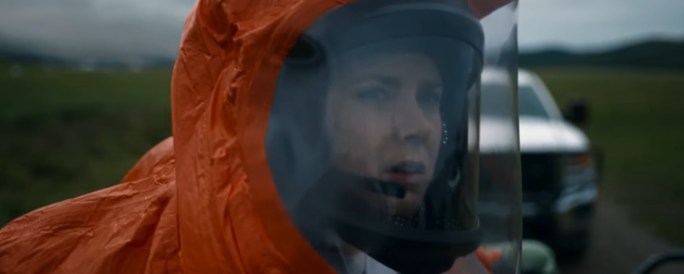
ARRIVAL — A REVIEW BY NICK CLEMENT

1

Arrival is cinema I crave – a thought-provoking, somber yet stylish, and thoroughly cerebral piece of storytelling within one of my favorite milieus, and produced independently of the major studios, thus feeling resolutely unconcerned with satisfying endless rounds of notes and enduring creative compromises that could have potentially sabotaged the crux of the piece as well as the emotional wallop it delivers well after the fade to black. Telling a legitimate story about actual people rather than CGI/spandex superheroes, the writing favors pragmatic decision-making and reactions, instead of going for the bombastic or over the top. The filmmakers have concocted a narrative that weaves a scholarly sense of linguistics into its eerie, otherworldly implications, which makes the film stand out even more. Hot-shot director Denis Villeneuve (Incendies, Prisoners, Enemy, Sicario, the upcoming Blade Runner 2049) and genre specialist screenwriter Eric Heisserer (this past summer’s surprise horror hit Lights Out) have retooled the original short story by author Ted Chiang into an intelligent science fiction tale that not only intelligently explores what first contact with an extraterrestrial species would most likely resemble, but also contains a full dose of the mind-bending and unexpected.
4

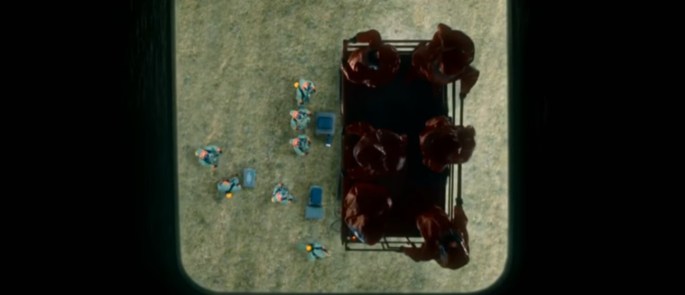
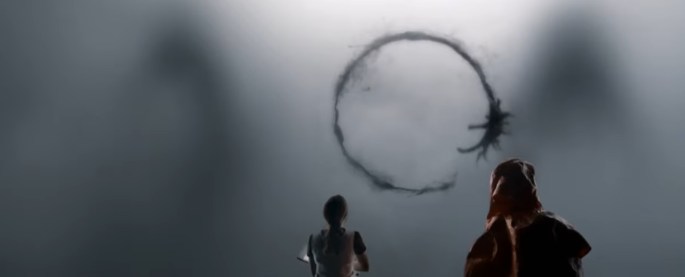
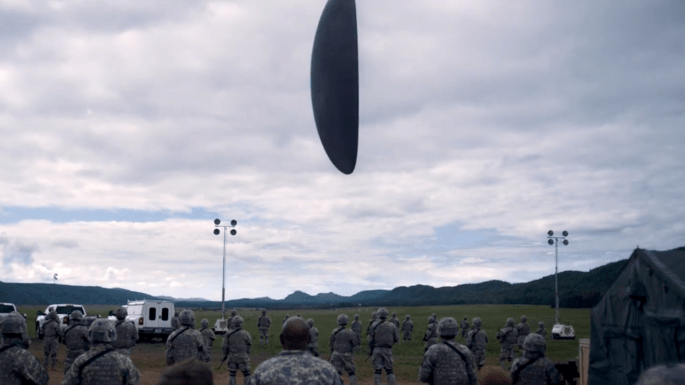
I wouldn’t dream of spoiling anything about this film, as it was my top choice to see for the rest of the year, but I will state that my seriously inflated expectations were easily met if not surpassed. The brilliant Amy Adams (one of my favorite on-screen talents) plays an emotionally guarded college professor reeling from the death of her young child and separation from her husband. She’s a master of various languages, someone who can decipher various dialects at a moment’s notice, so it’s only natural that she gets recruited by the government in an effort to communicate with some recently landed aliens. They’ve arrived in 12 seemingly random spots on Earth, in oval-shaped hovering monoliths that sit just above the ground (or water), with a door opening every 18 hours so that teams of scientists can attempt to speak with the ship’s occupants. Jeremy Renner is sly and compelling as always as Adams’ tack-sharp sidekick, Forest Whitaker turned in reliably strong work as a top military commander, and Michael Stuhlbarg brought just the right amount of realistic hostility that a stressed out CIA agent might be projecting during a once-in-a-lifetime situation such as this.
11

Heisserer’s script perfectly balanced the need for the audience to connect with Adams’ psychologically fraught character as well as our demand for something new and exciting, and because Villeneuve is such a strong image maker with a tremendous feel for mood, texture, and atmosphere, every shot inside the ship is goose-bump inducing and always photo real. The film has been given a smoky and full-bodied visual sheen by rising star cinematographer Bradford Young (A Most Violent Year, Selma, Pawn Sacrifice), who has an absolutely tremendous eye behind the camera. The creepy, almost mournful score by Johann Johannsson feels oh-so-right in every single moment, both big and small, while the final act really sticks the landing, offering up visceral excitement which feeds into the story rather than overtaking it with needless special effects. The cold and mysterious alien ships provide adequate menace and ample intrigue, with some fantastic special effects work employed in a few key sequences; the less you know going in about the specifics the more fun this trip will be.
2.jpg


Villeneuve has been a director-on-fire of late, tackling various genres and injecting all of his work with the same sense of smarts and polish that Christopher Nolan brings to the table; he’s ready to bust out at the seams and I have a feeling that Blade Runner 2049 is going to turn heads. Arrival certainly feels spiritually connected, to some degree, to Nolan’s magnum opus Interstellar. Less overtly showy than Nolan’s exquisite cosmic journey so as a result more subtle and nuanced, Arrival instead has been designed to consistently upend most of your expectations; not only do the final moments send you out of the theater still trying to fully process everything that you’ve just seen, but it’s all been crafted with a sense of quiet elegance, both in Heisserer’s emotionally involving dialogue and Villeneuve’s sublime sense of visual aesthetics. Arrival is the movie I’ve been waiting to see for a long time, a thoughtful meditation on first contact that never forgets the human element at its core, uninterested in blowing stuff up just because it can, as fascinated by the unknown as it is rooted in something universal and important.
3

The Handmaiden – A Review by Kyle Jonathan

The Handmaiden

2016.  Directed by Park Chan-wook.

hero_handmaiden-2016-1

One of the most remarkable things about watching films is when you get entranced by the world within the story.  Park Chan-wook’s erotic noir, The Handmaiden, is a sterling example of storytelling made possible by an elaborately constructed environment filled with mysterious pleasures and unspeakable evil.

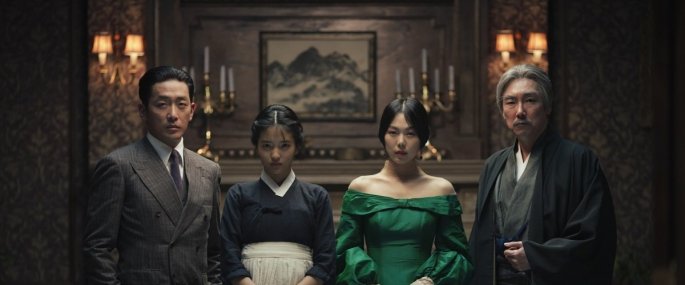
Petty thief Sook-hee is handpicked by the Count, a Korean grifter looking to get rich posing as a noble during the 1930’s Japanese occupation.  The con involves Sook-hee serving as a handmaiden for Lady Hideko, a despondent heiress who is rumored to be engaged to her reclusive uncle Kouzuki, a purveyor of rare and deviously risque literature.  Sook-hee is to assist with ensuring Hideko falls in love with the Count so that they can marry, allowing her partner to have the lady committed to a sanitarium, and leaving him as the sole inheritor of her immense fortune.  Told over three painfully detailed acts, depicting conflicting points of view, The Handmaiden unfolds into a sexual free fall, in which unbridled passion, tenuous loyalties, and unsettling truths converge into a graphic parable on the cost of desire.

tumblr_o6rtkypjxl1qidyw2o8_1280

Chan-wook adapted the script from Sarah Waters novel Fingersmith.  The first act is deliberately slow, introducing the players and casually drawing the viewer into the anachronistic world of Hideko’s sinister household.  While the narrative slightly drags during the overlong introduction, there are endless details whose relevance, once revealed, shows the genius of Chan-wook’s malicious design.  Ryu Seong-hie’s art direction is meticulous and engaging, with the composition of antique relics and unusual sexual devices hiding danger and wonder in equal amounts.  Sang-gyeong Jo’s costume design is a temporal paradox, blending the modern suits of the faux nobility with the pristine kimono’s of the Japanese elite.  Every item, location, and character has an alluring quality, with each individual element concealing an abyss of shadows waiting to be explored.

Chung Chung-hoon’s cinematography has a conspiratorial vibe, capturing various scenes from different angles, with each representing a different player in the macabre contest.  Featuring some of the most vivid sex scenes ever filmed, the camera hovers and spins over top of the couplings, mimicking the heady dizziness of sexual release.  This a gorgeous film populated with gorgeous people, and Chung-hoon encompasses every sexual encounter with an uncomfortable lingering eye that perfectly encapsulates the beauty of forbidden consummation.

tumblr_od8ek1qcfv1uxevtuo1_1280

Kim Min-Hee as Hideko and Kim Tae-ri as Sook-hee give excellent performances, completely submitting to Chan-wook’s vision, but also giving each of their roles a personal touch that is vulnerable and empowering throughout.  Ha Jung-woo as the Count delivers a wonderfully subtle turn, whose fatalistic tendencies deliver one of the best surprises.  Cho Jin-woong’s portrayal of the uncle evokes a skin crawling reaction in every scene, simulating a monstrosity in human guise, desperate to shed his skin and revel in the darkness underneath.

While the Hitchcockian influences are undeniable, The Handmaiden defies ordinary constraints due entirely to Chan-wook’s trademark panache.  Taking a base concept of deceit and infusing it with sexual audacity and unsettling insinuations, this is a film that uses every technical aspect to create a poisoned fairy tale, in which normal conventions are inverted so that the viewer is never able to predict the outcome as the story unfolds in three very unique segments, where  atypical archetypes are the weak sister and the underdog is the apex.

handmaiden3

In theaters now, The Handmaiden is one of 2016’s most artistic films.  Featuring beautifully unabashed sex scenes, a dream like world filled with wonder and terror, and a host of strong performances, The Handmaiden delivers on every level.  A potent love story, a noir mishmash of betrayal and violence, and subtle critique on the Japanese occupation of Korea, this is a film that will arouse and repulse in equal amounts, everything that Park Chan-wook’s brilliantly vicious filmography is known for.

Highly recommend.

handmaiden_poster1a

GEORGE ROY HILL’S BUTCH CASSIDY AND THE SUNDANCE KID — A REVIEW BY NICK CLEMENT

3

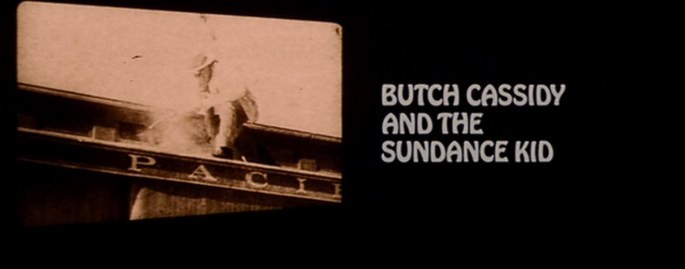
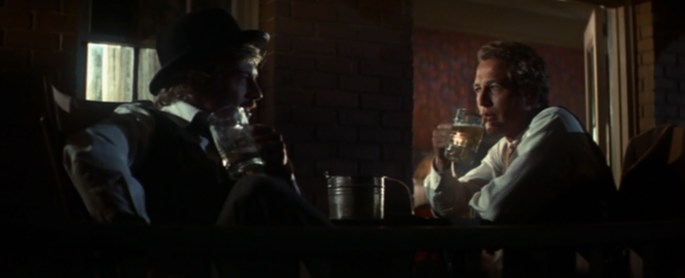
So smooth, so classy, so effortlessly entertaining. Butch Cassidy and the Sundance Kid is a revered film for many reasons, not the least of which, is that it contains two of the most charismatic performances of Paul Newman and Robert Redford’s career, and George Roy Hill’s direction was so crisp and clean that the film hardly has a chance to stop and admire it’s breezy charms and subtly elegant visual sense. William Goldman’s poetic yet salty dialogue rolls off everyone’s tongues with a sense of true joy for the spoken word, Conrad Hall’s majestic widescreen cinematography shows off amazing vistas without sacrificing the visual intimacy we crave because of how much we like the characters, and the action scenes are perfectly integrated into the story, never feeling forced or unnecessary.  All of the elements came together on this film, and in general, Hill’s output was rather sterling and consistent, with Slap Shot and The Sting as other major standouts.

2

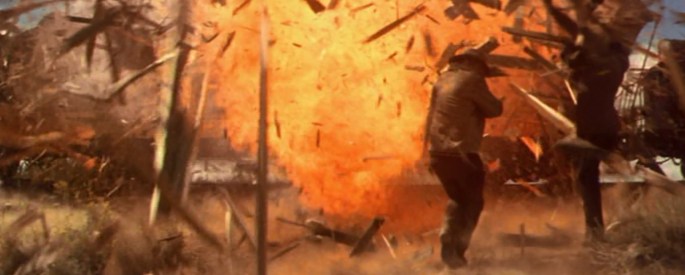
It’s also got some of the best stunts and one of the greatest explosions of all time, with those two particular stuntmen really earning their day rate for standing that close to the detonated train doors. Burt Bacharach’s playful and eclectic score set a jaunty tone that also shared the possibility for danger, while co-star Katharine Ross projected smarts, beauty, and grit, matching the two legendary leading men every step of the way. And then there’s the iconic finale, which says so much with so little, instilling a sense of grace to match its inherent sadness. Costing $6 million dollars in 1969, the film would become a smash hit and critical favorite, grossing well over $100 million in theatrical ticket sales and won four Oscars, before becoming one of the most ubiquitous films in the history of cable television. Richard Lester’s vastly underrated sequel, Butch and Sundance: The Early Years, would be released ten years later.

1

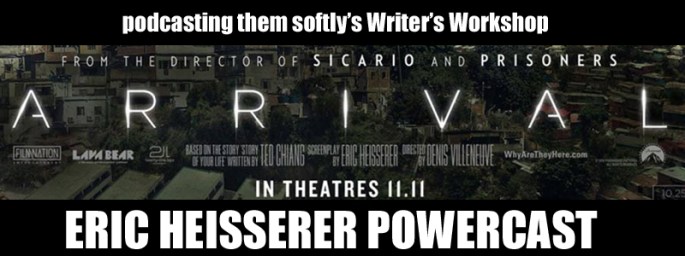
PTS Presents Writer’s Workshop with Eric Heisserer

arrival-powercast

unnamed-1Podcasting Them Softly is beyond thrilled to present a chat with screenwriter Eric Heisserer, whose new science fiction film, Arrival, hits theaters this weekend! Riding a wave of stellar reviews and showcasing the directorial talents of Denis Villeneuve (Prisoners, Sicario, the upcoming Blade Runner 2049), Arrival has all the makings of an instant genre classic, and we were honored to be invited to take part in the official media junket for the first time. We’d like to extend an extra special thanks to the publicity departments of Sony Pictures and Paramount Pictures, Lauren Woods at PMKBNC, and Eric himself for making this happen! Hope you enjoy this fast but informative discussion about one of our most anticipated films of the year!
Arrival – A Review by Kyle Jonathan

Arrival

2016.  Directed by Denis Villeneuve.

screen_shot_2016-08-16_at_10-25-44_am-0

A slow burn science fiction epic, Arrival is one of the most artistic big budget films to ever be produced.  Featuring an unforgettable lead performance, jaw dropping visual effects, pitch perfect sound design, and somber, one of a kind cinematography, Arrival is a cerebral and extremely relevant film experience.

Twelve alien spacecrafts descend upon Earth, spread across the globe in a random configuration.  The American military recruits language expert Dr. Louise Banks and physicist Ian Donnelly to communicate with the aliens in order to discover if their intentions are hostile.  The pair slowly decipher the extraterrestrials’ complex language, in which visual symbols are used in place of traditional phonetics.  As Louise delves deeper into the alien dialect, she begins to experience a form of transcendence that not only holds the key to the alien’s agenda, but also a contains a power that could either redeem humanity or utterly destroy it.

arrival4

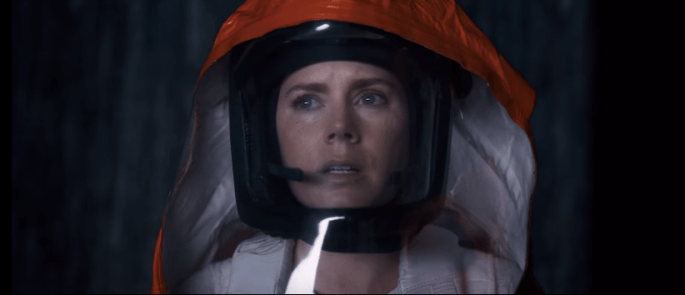
Amy Adams gives the performance of her career as Louise.  This is a heavy film. packed with imagery and subtext that could have overshadowed a lackluster performance and Adams’s immense capabilities shine not only in her delivery, but in her total commitment.  She portrays Louise as an outsider, a master in communication and yet a novice in human connection.  As the narrative progresses, the viewer can’t help but identify with her creative weariness, a scientist who believes there is always a non aggressive option, even in the face of annihilation.  She’s supported by Jeremy Renner, who does an excellent job as her academic opposite.  It’s one of the many things about Arrival that is so telling.  When the scientists disagree, they are respectful and use their contrasting viewpoints to find a consensus, offsetting Forest Whitaker’s army officer, whose focus is on the threat.  He takes what could be an opposing force and portrays his character as a concerned collaborator, willing to give science a chance, but always remaining pragmatic.

Bradford Young’s cinematography is pure visual splendor, showcasing a remarkable understanding of a larger than life undertaking.  The shot of the initial approach to the vessel is breath taking, capturing fog as it tumbles across a vista, gorgeously symbolizing the mutual confusion of first contact.   There is a transitional shot involving Louise’s memory, offset by orange emergency lighting that has to be seen to be believed. The shots outside the craft are filled with deep blues and thick shadows, mimicking the  fear of the human world.  The interior of the ship is framed with mind bending angles as the team ventures inside and then saturated with ghostly whites and institutional blacks, using color to evoke the strangeness of the visitors.

arrival-2016-screen2

Isabelle Guay’s art direction portrays the otherworldly vessel without complicated gadgetry and ominous corridors, allowing the camera to focus on the interactions.  It is this simplistic and respectful approach that makes it work.  Once the parley begins, the attention is on the participants, with Sylvain Bellemare’s sound design stealing the focus.  Repetition and subtext are key with alien sounds vibrating through the speakers, echoing within the viewer’s mind as they try to piece together the mystery.  Johann Johannson’s score is an intimate companion, being a force unto its self when the action requires and then delicately receding, like the memory of a first kiss   Ryal Cosgrave’s sublime visual effects present the alien dialect with beautiful inky characters, while his vision of their physical form is one of the most unique creature designs ever attempted.

Eric Heisserer’s script, based on the award winning short story by Ted Chiang, will capture gold this awards season.  This is an intoxicating, patient film that respectfully holds the viewer’s hand while also giving them room to explore their own conclusions.  Using the base concepts of communication and alienation as a means to combat inter species conflict, Arrival teaches, but never lectures.  It uses the narrative to present the universal concepts of acceptance and tolerance through a scientific filter but never goes beyond the essentials, remaining accessible to the audience if they are patient with the slow release story design.  There are a few elements related to natural human paranoia that are used to add tension that could have been excised, but their presence only enhances the feeling of desperation that pervades throughout the final act.   While astute viewers will see the conclusion coming long before it happens, Arrival is an experience where the journey of discovery is paramount over the summation.

arrival-2016-scifi-film-trailer

Debuting in theaters today, Denis Villeneuve’s Arrival is one of the best films of 2016.  Continuing his amazing streak of thought provoking and challenging movies, Villeneuve proves that he is more than capable of delivering greatness.  His control over the potent elements is evident in every frame, with the final product being one of the most thought provoking and genuinely heartfelt films in recent memory.

Highly, highly recommend.

arrival-title

DANIELS’ SWISS ARMY MAN — A REVIEW BY NICK CLEMENT

3

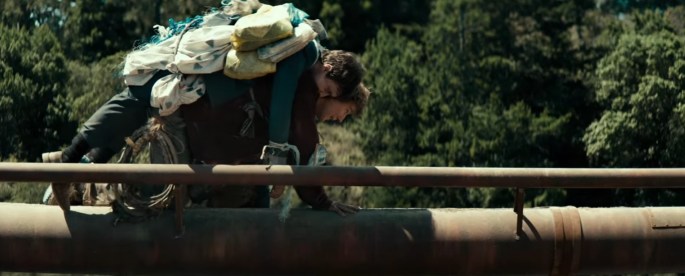
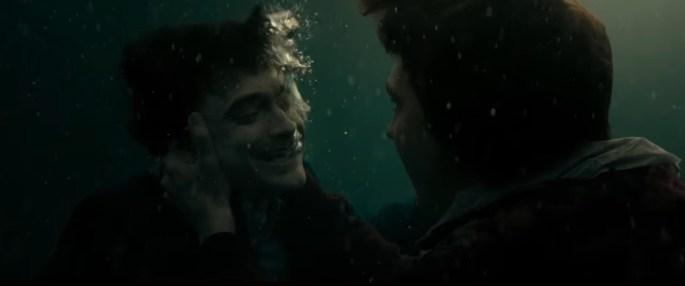
The final line of dialogue in Swiss Army Man sums up the entire viewing experience: “What the fuck?” This is one of the most visually inventive and thematically odd films I’ve seen in years, and despite the concluding 15 minutes not truly working for me, the previous 75 minutes are pure stony bliss. I’ve also never seen a film concentrate as much on farts and farting as this one did. Seriously. Farting, and how people react to their own farts and the farts of others, is a topic that’s explored in great depth during this film. If you’ve seen the trailer, then you know what to expect, as this is one instance where the marketing department didn’t hide what was in store from the viewer. In fact, stop reading this now, go watch the trailer, and you’ll likely know just from those two and a half minutes if this wild and crazy piece of work is going to be up your cinematic alley, or if you’re better off just smelling your own farts for effect instead.

2

I don’t want to discuss too much about what this idiosyncratic film is about, because, I suspect that this film will be about a great many things to everyone who checks it out. All I can say is that Paul Dano and Daniel Radcliffe were both fantastic (especially Radcliffe), the in-camera practical effects defy logic, the cinematography is stunning, and I caught whiffs of Where the Wild Things Are all throughout (Dano is basically an older version of Max from that story). The directors, who go by Daniels (they both share the same first name), seem to be totally insane and happy about it, as this is a flick that PROUDLY marches to the beat of a VERY specialized and specific drum. It’s also got a really catchy theme song. I wish that it had all wrapped up in a different manner, but regardless, this is something I can see myself revisiting more than once. I mean – you get to see a fart-powered human Ski-Doo – how cool is that?!

1

Night of the Slasher – A Review by Kyle Jonathan

Night of the Slasher

2016.  Directed by Shant Hamassian.

nots2

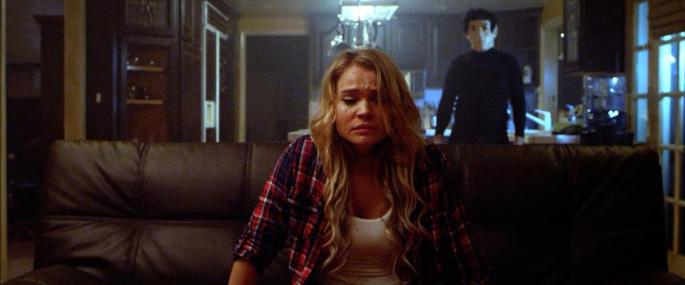
Night of the Slasher is a wickedly sharp homage to the unstoppable killer genre that dominated 80’s American Cinema.  Using a one shot approach and ten minutes and change, Night of the Slasher manages to outshine other masked killer clones with excellent craftsmanship, a surprisingly emotional lead performance, and a script that not only hones in on the essence of stalker horror, but is also a brilliant revision of the Final Girl concept.

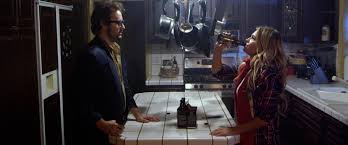
Teenager Jenelle begins her night by dancing, half naked and alone in her house.  She then embarks on a metaphysical checklist, engaging in various risque activities, each of which is an ingredient used to summon a relentless manifestation of slasher flick villainy.  Using her suicidal bravado and quick thinking, Jenelle confronts her tormentor in a desperate showdown, hoping to break free from a prison of cliches.

download

Eli Tahan’s jittery cinematography captures the entire film with the appearance of one continuous take, abandoning traditionally slow transitions by rapidly moving the camera between different vantage points, deftly following Jenelle’s panic stricken point of view while perfectly harmonizing with Simon Michel’s synth infused score.  Using what is absent from the viewer’s perspective, Hamassian’s editing gives the killer an ethereal quality as he seems to vanish into thin air and then reappears just as suddenly, charmingly emulating the quasi-mystical attributes of prolific 80’s boogeymen.  Hamassian’s script has virtually no dialogue, relying on the outstanding body work of Lily Berlina as Jenelle and Adam Lesar as The Killer.

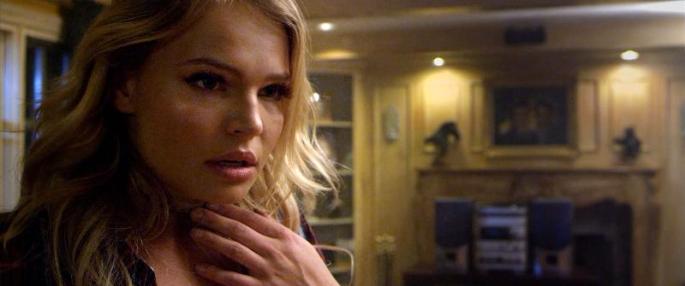
While Berlina’s physical work is outstanding, her approach to the subject matter is remarkably original.  Her Jenelle has been brutally victimized, but she has no interest in being a victim.  She is adroitly aware of her predicament, and rather than surrender to hopeless platitudes or sexual exploitation, she grabs the horror conventions by the throat and viciously fights back, furiously taking control of a destiny that has classically been a foregone conclusion.

nots_lily_berlina_still

The entirety of Night of the Slasher could play as the intro to a longer film, except Hamassian has a more devious goal, completely obliterating tradition and giving the viewer just enough to whet their appetite.  The conclusion comes abruptly, and there’s a telling look by one of the characters that is shockingly resonant, a perfect summation for an ultimate love letter to the genre, featuring an outstanding choice for The Killer’s mask that will have Carpenter fans cheering in their seats.

Available now on Vimeo, Night of the Slasher is now eligible for an Academy Award nomination for Best Short Film.  By Using every possible second to maintain a tense atmosphere, portraying its female protagonist as aggressively competent, and through the use of a wonderfully original approach, Night of the Slasher is essential viewing for horror fans.  Even if horror is not your preferred genre, fans of creative approaches to tired subject matter will find something to marvel at in this bravely self aware renegade.

Highly Recommend.

night-of-the-slasher-banner

BARRY JENKINS’ MOONLIGHT — A REVIEW BY SPECIAL GUEST CRITIC DOUG COOPER

1

You’ll hear it mentioned as a story within the story – Moonlight is the tale of how black boys turn blue. And you’ll watch it unfold as the film follows its main character, Chiron (pronounced Shy-rone), through three formational periods in his life. Through his childhood, where he goes by the nickname “Little”. Through his teenage years, where he’s attempting to live by his given name, Chiron. And through the beginning of his adult years, where he’s built a persona under the nickname “Black”. The film follows his struggles through these phases and through his own self-discovery – it’s a coming-of-age story built around his desire to love and be loved. And while that may sound familiar, the film is anything but.

Moonlight is a movie that begs to be talked about outside of the traditional movie talking points. We can discuss the performances – all of which are fantastic. Like, how Naomie Harris, as Chiron’s mother, brings dignity and warmth to a role that might’ve felt unforgivable in lesser hands. Or, how Mahershala Ali, as a drug dealer named Juan, is the embodiment of unflappable cool until he wants to devastate you by letting it all come crashing down. Or, how Janelle Monae’s portrayal of Teresa is hilarious and how Andre Holland as Kevin is so effortlessly charming it’s hard to understand why he hasn’t been a movie star for the last 10 years. Or, certainly about Trevante Rhodes, who playing the adult “Black”, might be the most remarkable of all, as he consistently captures a lifetime of confusion and pain in smallest flicker of his eyes. We can talk about the way Barry Jenkins’ kinetic direction and James Laxton’s gorgeous cinematography gaze upon their subjects with such palpable joy and compassion. Or, we can talk about the way Nicholas Britell’s score brings grandeur and universality to the most intimate of stories about this singular human being.

All of these things are more than worth mentioning. And still, what stood out to me was that old, familiar story. One with a conceit I was sure I’d seen a hundred times, and yet, as I was transported into the world of Moonlight, it was clear the film resembled nothing I could find in my own memory. Not only because of the quality of its pieces, but also because it was a story that I had simply never been told – one of a young black man trying to understand and cope with his own homosexuality in the face of a world that didn’t want to allow him to be himself. And one so fully-realized and understood by its makers that by the time you reach its climactic scene inside a tiny diner in Liberty City Miami, and Barbara Lewis coos the chorus to “Hello Stranger”, you might feel like just that – a stranger. I know that for me, I had never been to this place with these people before. But, I also knew that’s what made Moonlight a revelation.

Because, why? Why had it taken me so long to get here? As a lover of movies and someone who watches almost everything, almost every year, why had it taken so long for me to sit alongside these two characters as they enjoyed the “Chef’s Special”, or stand between them as they made eyes from across the room and music poured from the jukebox? As the song would put it, “It seems like a mighty long time.”

Wesley Morris, the Culture Critic for the New York Times – who also happens to be a gay black man, and probably the voice in film best suited to speak on the experience of watching Moonlight – recently wrote about 10,000 words (I’ll be honest, I didn’t count) for New York Magazine on the recent film history of the penis. Specifically how that recent history, reflects a much older history about the fear of black male sexuality – or more specifically – the black penis. And if that sounds like a somewhat daunting and uncomfortable read to some, well, I would guess that’s kind of Mr. Morris’ point. Because, as he intuits, it’s the same sentiment that probably kept a film like Moonlight from being made. The fact that having a conversation about this topic makes a certain sect of the population extremely uncomfortable (i.e. white people, i.e. white men, i.e. me – if I’m being really, REALLY honest with myself) is the very reason we have to discuss it. It’s the very reason we need a movie about it. And it’s what makes his piece the perfect complement to Moonlight and required reading for someone like me to understand the film on a deeper level.

3

Just like a really long article on black male sexuality may get flipped over in the pages of New York Magazine, Moonlight is a film that might be dismissed by some simply because of its subject matter. But, just like the choices made in Jenkins’ storytelling, or the lengthy word count of Morris’ article – it’s also how both are simultaneously working on two levels – telling us that if you don’t want to read this much about the sexuality of black males, or, for that matter, watch a movie that might be about it, then you probably have the most to gain from doing either. Because, if you’re going to Moonlight expecting a film that’s explicitly about black sexuality, you won’t find it – the film is too smart and upends those expectations by making it not really about that at all (and never even showing it on screen). Moonlight, instead, is about how repression can keep us from something we all so desperately need – affection. And by normalizing and humanizing that universal desire through a vaguely semi-biographical personal history, Jenkins seems acutely aware of the meta-story roiling beneath the main story of his film.

It’s a meta-story that I’m sure wasn’t the focus of Jenkins’ efforts – but as various cues unfold through the course of film – it’s one that I have to believe was playing out in the back of his mind.  Because, not unlike the music cues playing in the background of several scenes – from the aforementioned “Hello Stranger”, to starting a movie about a young black man with “Every Nigger is a Star”, to a chopped and screwed version of “Classic Man” that rattles the trunk for a confused “Black” – Jenkins upends too many film tropes and social stereotypes for me to believe he didn’t know exactly what he was doing.

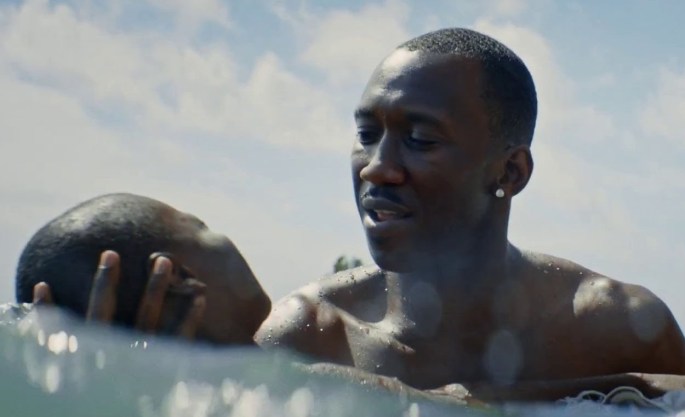
Just take the scene you might see in the trailer for the film, where Mahershala Ali’s Juan teaches a young Chiron how to swim. Juan could have easily been portrayed as the familiar, inner-city, drug dealing archetype. But, archetypes are not life and this is a film about just. So, while Ali lives inside that utterly believable side of his character, there’s also another side of him that’s just as present – the one that recognizes something different inside a young boy and chooses to care for him and defend him just because. When Juan helps “Little” learn how to swim in the Atlantic, it’s a familiar and universal metaphor for life that’s twisted by challenging the societal stereotypes about African-Americans and water, while also being deepened by the humanity and multi-dimensional nature of the characters taking part in it.

It’s this mastery of multi-level storytelling where Moonlight truly excels for me. Because while saying so much, it never feels like a movie that’s trying to make a point – be it political or otherwise – at the expense of its story, its world, or the characters who are living in both. Not once.

On some level, Jenkins is surely aware that the structures that forced him to go outside the Hollywood system to make Moonlight are the same structures that forced the main character of his film to suffer most – structures that turned a kid named “Little” who loved to dance into a lost man named “Black” who felt forced to trap. He knows that his character lives in the same world in which the movie about him was made – a world that tried to keep him from expressing one of the most fundamental aspects of his being.

So, I definitely get that Moonlight isn’t a Marvel movie. Meaning, I’m not going to sit here and act like it has anything approaching that level of commercial appeal. It’s an art house film – plain and simple. But, with per-theater averages that are breaking records, maybe the film industry would be better off pursuing films that were less like the blockbusters that are so consistently plain and simple. In a year so dishearteningly wrought with recycled ideas and overflowing with unwanted sequels, Moonlight seems like a powerful condemnation of mainstream Hollywood’s current mode of operation. Why recycle ideas from the 70’s, 80’s, 90’s, and even the 2000’s, when we’ve learned so much and come so far since then? And why make a sequel to a film that people didn’t care about the first time, when there are stories out there that take us to places in the world that we have never been and could learn to care about so deeply? The film is an unflinching reminder that maybe we’d all be better off if we showed those that are different what Chiron was searching for all along – a little love.

2

WALTER HILL’S SOUTHERN COMFORT — A REVIEW BY NICK CLEMENT

3

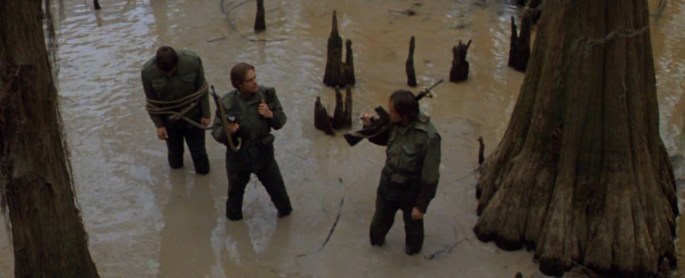
Walter Hill is one of the manliest directors of my lifetime, or any lifetime. He’s made a career out of telling tales of gunslingers, cops, criminals, and loners, and I instinctively respond to his particular brand of tough guy cinema. Southern Comfort is one of my favorite efforts from Hill, a totally nasty and rather disturbing tale of backwoods terror; it would pair extremely well with Deliverance on a double bill. Released in 1981, the film was co-written by Hill, Michael Kane, and David Giler, and features a surly and macho cast consisting of Powers Boothe, Keith Carradine, Fred Ward, Peter Coyote, T.K. Ward, Franklyn Seales, Lewis Smith, Les Lannom, Brion James, and Sonny Landham, and concerns a group of Louisianan Army National Guard members who are doing routine weekend combat drills in the bayou, and who become the prey of a band of local Cajuns who aren’t impressed with fatigue-clad and rifle-toting visitors in their backyard.

2

After a misunderstanding leads to a murder, all hell breaks loose, with the added twist that the good guys are carrying guns loaded only with blanks. This is a rather terrifying actioner, with a final sequence of violent confrontations that definitely get the blood pumping and the pulse racing. Setting the film during the latter portion of the Vietnam War also added a level of subversive topicality to the narrative, while the film has a purposefully grimy visual style courtesy of cinematographer Andrew Laszlo, which stressed the damp and grubby environment. It genuinely hurts when people get shot and stabbed in this movie; not a moment in the fleet running time is wasted. Despite the film not making much money in theaters, it has certainly attained the label of cult classic, and was somewhat recently released on Blu-ray by Shout! Factory. Apparently, the Iranian government heavily edited and altered the film’s narrative for release in that country, turning it into an anti-American military statement.

1

OUIJA: ORIGIN OF EVIL (2016) – A REVIEW BY RYAN MARSHALL


ouijagallery1-5769ed28e7f63-1[1].png

2016 has certainly shaped up to be a productive year for Mike Flanagan, whose 2011 Lovecraftian indie ABSENTIA effectively thrust the director into the spotlight, with a couple of his most recent releases being the Netflix-distributed home invasion thriller HUSH, about a deaf woman defending her cabin in the woods from a sadistic stranger, and the fantasy-horror yarn BEFORE I WAKE, which after being delayed for nearly two years enjoyed a limited theatrical run earlier in September.  One could say the filmmaker – born and raised in Salem, Massachusetts – is at the height of his powers at the moment. There is, however, a third and final film in this sequence, and it might just be the best of the bunch.

OUIJA: ORIGIN OF EVIL is billed as a sequel to the supposed stinker of similar namesake from 2014, and months prior to its release, Flanagan was already quite open as to how he felt about that film. It was a career move that was sure to turn a couple heads, but anyone who knows anything of the director’s past work knows that he goes all in or not at all, and his commitment to the project left little room to doubt that it was one which allowed his creativity to flourish.

Ouija-Origin-of-Evil-Photo-2[1].png

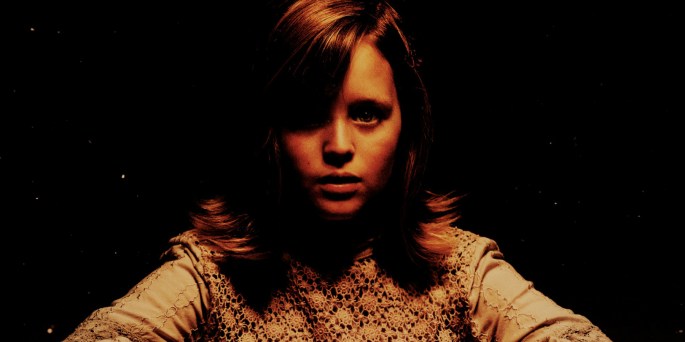
Los Angeles, 1967; a family of three – Alice (Elizabeth Reaser) and her two daughters, teenage Lina (Annalisa Basso) and Doris Zander (a truly superb Lulu Wilson) – runs an in-house fortune telling business which involves scamming customers through séance. Alice would be the first to admit that it’s all a hoax, but she enjoys feeling that they’ve providing clients with some closure in regards to their personal grief.  One day, she decides to add an Ouija board to the family’s professional repertoire, which immediately piques young Doris’s curiosity. Unfortunately her sporadic use of the device unearths more than few skeletons in the family’s collective closet, one being the absent father figure, who Doris claims she speaks to through the board.

His spirit is hardly the last or the most malicious to enter through the doors which lie between our world and the one(s) beyond. Mother and eldest daughter go through their own separate arcs – with a local priest and much younger romantic interest from school, respectively – though Doris undergoes a transformation of a far more sinister nature, one which is tragically beyond her control.

Ouija-Origin-of-Evil-5[1].jpg

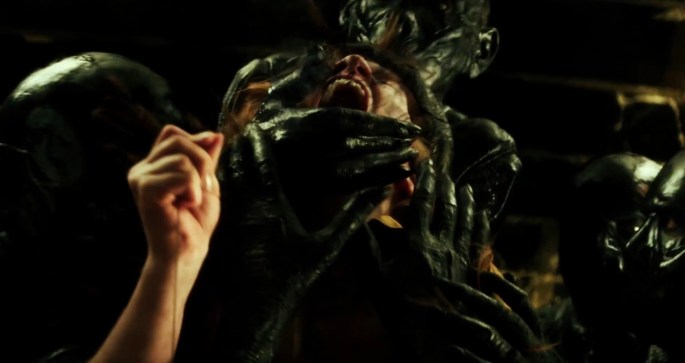
ORIGIN OF EVIL opts for a slow-burn approach, which surely benefits the film’s more dramatic aspirations. The number of jump scares could barely be counted on one hand, and while there’s some obvious CGI employed whenever Doris looks into the mirror world of the dead, this too is done rather tastefully; these brief shots feeling much like the invasive spirits which haunt the narrative rather than studio-imposed diversions. Besides, they exist in such an exquisitely crafted portal. Michael Fimognari’s cinematography is simply outstanding, with most of the film showered in foreboding, ethereal light and the rest adorned with meticulous sleaze and grime. There’s beautiful, phantasmagorical imagery here fit for a Bava or a Fulci, which can never be a bad thing, and the film is perhaps best approached as a cinematic fairy tale of the variety which those filmmakers often dabbled in. Ultimately, a stronger ending could have been applied, but every good/great film should be allowed a fault or two.

Once again, Flanagan is deeply fascinated with the deconstruction of the American family, though his point of view doesn’t seem to be one rooted in cynicism. His latest, much like the earlier OCULUS (2013), is more about what keeps us together as opposed to what tears us apart; which secrets should remain unheard of and which ones we should more openly discuss amongst ourselves. The way in which Flanagan relates paranormal experiences to emotional discharge is subtly moving, and there’s also an understated feminist streak which runs throughout his work thus far. Here is a genre director who understands all too well that horror films should inspire tears before fits of laughter, and that most simply do not work without some semblance of resonance. While he’s not trying to reinvent the wheel, the director’s intrinsic technique and empathy is so consistently impeccable that one can believe – at least in the moment – that he might as well be doing so.

screen-shot-2016-06-23-at-11-02-56-am1