M. NIGHT SHYAMALAN’S THE VISIT — A REVIEW BY NICK CLEMENT

3

The Visit is a hoot. Combining odd humor and effective doses of familiar horror tropes, writer/director M. Night Shyamalan dropped this film in theaters just about a year ago, and it did strong business and was met with favorable reviews. And I can see why. It’s a fun movie. Nasty, clever, silly, and funny in equal doses, the narrative pivots on the sadistic notion that your otherwise pleasant grandparents might be up to some really bad stuff in their seemingly comfortable country home. Working with the brilliant cinematographer Maryse Alberti (Creed, The Wrestler, Velvet Goldmine), Shyamalan actually created a legitimate reason for the found-footage presentation that he offers up, and as a result, the jittery camerawork coupled with fast edits can’t help but unnerve the viewer in more than one instance, even if a few lapses of logic prevent the film from feeling truly air-tight. The performances are all extremely well done by the two annoying-on-purpose kids (Olivia DeJonge and Ed Oxenbould) and the sinister elderly couple (Deanna Dunagan and Peter McRobbie), with everyone getting their own individual moment(s) to shine while creating a hostile and potentially dangerous vibe as a group. Kathryn Hahn bookends the piece and is her usual awesome self. But it’s the level of humor in The Visit that really took me by surprise, as I’m always a big fan of movies that mix tones and aren’t afraid to be a little different. I hope the solid success of this film is merely a warm up to Shyamalan’s upcoming chiller, Split, because just from the trailer, that one seems loaded with promise.

2

DAVID ANSPAUGH’S RUDY — A REVIEW BY NICK CLEMENT

2

I could cry just THINKING of this movie, let alone watching it from start to finish or in bits and pieces or for just 30 seconds. The amount of personal triumph that is explored and honored in this rousing true life football story can never be underestimated; underdog stories are rarely this emotionally rewarding and dramatically effective. Directed with heart and soul by David Anspaugh (Hoosiers) and written with grace by Angelo Pizzo, the film features a splendid performance from Sean Astin as the titular hero, a guy deemed too small by so many, but who had the courage and determination to never back down from any challenge. The final scene of this film leaves a massive lump in my throat, and I can’t help but cheer and sob when Rudy leads his fellow teammates out of the Notre Dame dressing room and onto the field, in front of thousands of screaming fans. There’s a ridiculous cast featuring then-up-and-coming actors like Vince Vaughn and John Favreau, with old pros Ned Beatty, Robert Prosky, Jason Miller, and Charles S. Dutton providing solid anchors for everyone in the robust ensemble. Oliver Wood’s naturalistic cinematography hits all the perfect notes on the field and off, while the tremendous musical score by Jerry Goldsmith goes beyond inspiring and into realms of the sublime. The film states in a text crawl that as of the time of the film’s production, no other Fighting Irish team member has been carried off the field since that happened to Rudy Ruettiger – I hope that this is still the case.

1

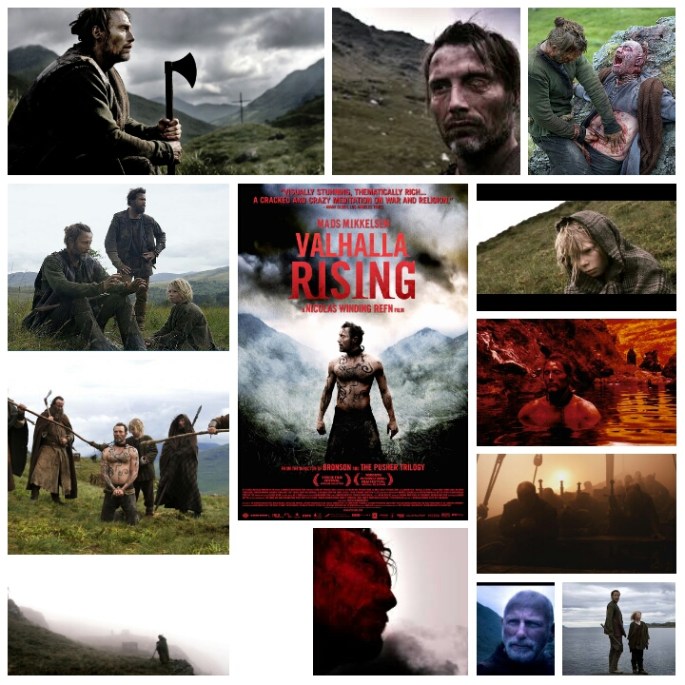
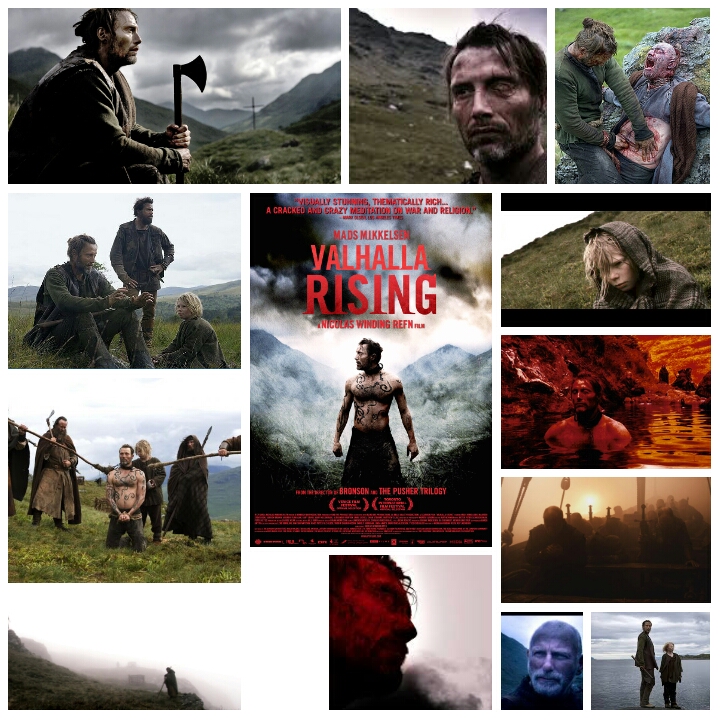
Nicolas Winding Refn’s Valhalla Rising: A Review by Nate Hill 

I would hazard a statement and say that Valhalla Rising is Nicolas Winding Refn’s most inaccessible film, to wider audiences. Despite the bleak, impenetrable horror of Fear X and the repulsive, Freudian filth of Only God Forgives, there’s just something so bare and primordial about Valhalla, a skeletal narrative that serves as a haunted shell for a story that is essentially the ‘anti story’, an acrid, backwards battle poem existing in a vacuum of space where genre tropes should be at play, and are mournfully absent. A lot of films set in ancient times just feel the need to give the proceedings a modern flourish, adding humour, bravery and many elements we identify with and are used to seeing. The reality is those times were probably not like that at all, and resembled a level of anthropological alienation that would confuse us. Refn casts exactly that kind of cloak over his film here, bringing us a dark, hollow world where primitive despair swirls about in the mists of the British Isles and the ocean far beyond. Refn is first and foremost concerned with his protagonists, striving to make them unique and challenging. The meek, confused griever playing detective (John Turturro in Fear X), the lonely, pent up vigilante (Ryan Gosling in Drive) and the bawdy, childish, anarchic brawling bull in a China shop (Tom Hardy in Bronson) were endlessly fascinating, but here he takes it a step further into the overgrown netherworld of the human psyhe. His outlet of exploration is a mute, feral Scandinavian warrior, simply called One Eye (Mads Mikkelsen), who is ready to inflict throat ripping, bone snapping carnage at the drop of a hat. This isn’t someone who kills for his own gain or goals though, and it’s in that characteristic that One Eye is different from every other lead in Refn’s tales. All the rest were forceful, extremely aware beings who were out to achieve clear cut goals, even if one of them was just to create as much self destructive chaos as possible. One Eye is a slave, someone’s property, and lays down the carnage hammer only when instructed to by his Saxon owners. This unfolds in a jarring opening act that you’ll need a strong stomach to fight through. The violence is scarily realistic and lands with the same sickening thud that skulls make when Mikkelsen bashes them on the jagged outcroppings of rocks which populate this austere terrain. As two warring clans squabble about who deserves sovereignty over One Eye’s terrifying talents, circumstances lead to his departure from the moors of Britain, on a boat captained by a Scottish warlord (the exceptional Gary Lewis) and with the companionship of a mysterious young boy (Maarten Stevenson). The boat drifts in a lilting trance for miles on end, seemingly headed nowhere, and it’s here that Refn let’s both his characters and audience off the leash and sends us headlong into the crushing blackness of a narrative that is maddeningly impossible to decipher. To try and think it out is to fail right off the bat; One must let this type of story wash over you and discern it’s meaning using the unconscious modes of thought that human beings have sadly forgotten amidst a flurry of science, reason and technology. The voyage across this sea is one out of time, out of mind and beyond rationality, and the land that lays at the far end of the crimson sunrise is one even more foreboding and secretive than the rocks they left behind. Encounters with a strange tribe, moody passages of time where One Eye seems to drift between dimensions of thought and animalistic contemplation, dimly perceived exchanges of dialogue that seem lost and misplaced among the pressing gloom, it all flows by like the fog on the water, making sense as an element existing in it’s place in nature, but unable to be reconciled by our minds, which always need to have the safety net of a “why” to break the great fall of the unknown. Sometimes there’s no explaining, no categorizing, because to do so is arrogant. Sometimes it’s just naked perception and acceptance, if you can bring yourself to that place. Refn can, and what’s more, he can create such feelings, which is what makes him so important as an artist. He understands the uncharted places on the territory of human experience, waiting to be mapped out like the strange new world One Eye and the boy visit, a world which may as well be a different planet to their eyes. It’s in this inaccessibility that he gives us what, although is certainly not his most enjoyable or commercially viable film, is definitely the one that says the most, if you possess and are willing to use the tools necessary to experience it. Difficult. Psychological. Troubling. Hypnotic. Beautiful. Masterpiece.

PTS Presents ARTISAN’S WORKBENCH with CHAD KEITH

chad-keith-powercast

unnamedPodcasting Them Softly is thrilled to present a discussion with production designer Chad Keith! Chad‘s newest film, Loving, from writer/director Jeff Nichols, hits theaters this weekend in limited release, with more cities being added each week to its nationwide roll-out. Some of Chad‘s other superb credits include this year’s absolutely incredible Midnight Special, Kumiko The Treasure Hunter (a PTS fave!), Take Shelter, Begin Again, At Any Price, Martha Marcy May Marlene, and Goodbye Solo. Chad has also worked on various short films, including Plastic Bag, from executive producer Werner Herzog and director Ramin Bahrani, and if you haven’t seen this little gem, head on over to YouTube and check it out, as it’s absolutely remarkable and thought provoking. This was a total treat and honor to be joined by Chad for a chat, and we hope you all enjoy!

SYLVESTER STALLONE’S RAMBO — A REVIEW BY NICK CLEMENT

3

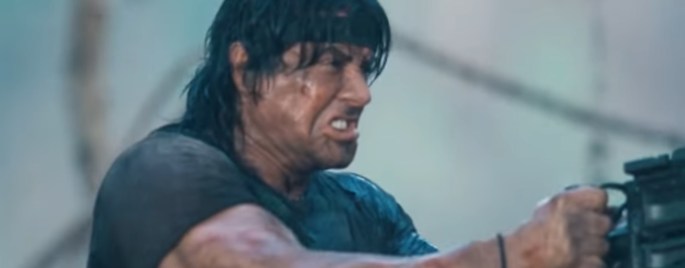
Sylvester Stallone’s blood-soaked 2008 Rambo reboot is an ultra-violent, nearly pornographic action flick that has very little else on its mind other than showing what happens when human beings are ripped apart by an assortment of small, medium, large, and extra-large fire arms, and in one particular instance, a rather famous knife. Seriously. There is an obscene amount of combat violence in this movie, all of it rather stunning to be hold, and if it becomes sort of computer-gamey because of all of the CGI blood-hits (what happened to good old fashioned squibs?), it’s no less rip-roaring and absurdly entertaining. The story that Stallone presents makes it easy to enjoy the carnage, as the baddies are beyond grotesque, rooted in some form of reality, and truly deserve what’s coming to them. The narrative hinges on Rambo being hired by a church pastor in an effort to save innocent missionaries who have been taken hostage by corrupt Burmese military units. And of course, there’s only one man who can save the day, and he’s more than ready for action.

2

You must give Stallone credit where credit is due – he refuses to give up as an actor and director and seems to be having genuine fun every time you see him up on screen. The plot of Rambo might be threadbare, but the action scenes are ridiculously gory and beyond over the top, at times begging to be immediately replayed as some of the individual moments of bloodletting are jaw-dropping. As captured by cinematographer Glen MacPherson, the film has a rough and tumble visual aesthetic, with lots of shutter retention and shaky-cam, which gives it a visual immediacy to match the insanity of the action scenes, which allows it to stand apart from the mostly PG-13 competition. People are SHREDDED in this pissed-off and hot-blooded actioner, with Stallone taking out his creative (personal?) aggressions on an enemy that more than deserves what’s coming. Whenever this one pops up on the HD movie channels, I can’t help but stop for a moment and check it out, as this is a movie that talks the talk and walks the walk.

1

OREN SHAI’S THE FRONTIER — A REVIEW BY NICK CLEMENT

1

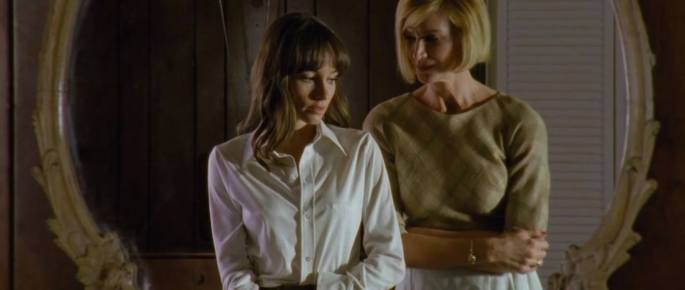
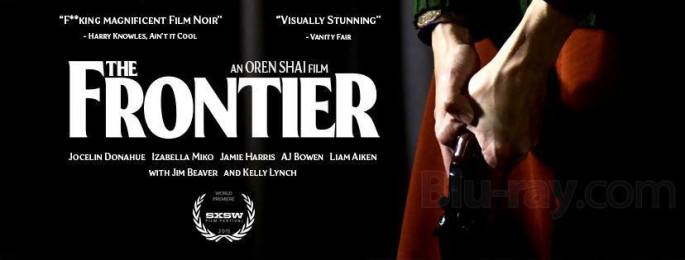
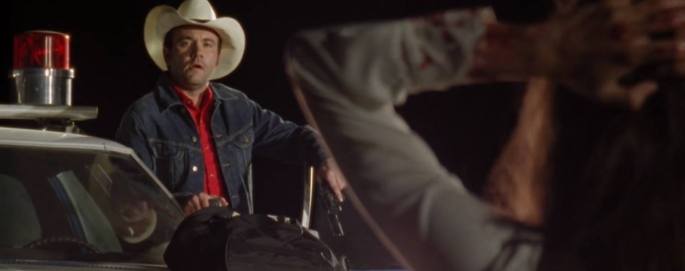
Sometimes, a film sneaks up on you and takes you completely by surprise. That’s what happened when I viewed The Frontier, a very stylish neo-noir/contemporary western mash-up from director Oren Shai. The less you know about this crafty, twisty, and totally terrific gem the better, as it offers up narrative surprises to match its extremely sharp sense of aesthetics. Clocking in at an extra-tight 83 minutes, the screenplay concocted by Shai and Webb Wilcoxen tips its hat to various genre staples while presenting its own brand of down and dirty atmosphere and attitude. The story pivots on the actions of Laine (the excellent and striking Jocelin Donahue), a loner who drifts into a desert town and stumbles into a plan to rip off some cash from a group of volatile thieves who have taken up refuge at a sketchy motel run by a potentially duplicitous owner named Luanne (Kelly Lynch in an out-of-nowhere performance of complete control and command).

4

What happens next I will leave for you to discover, but I will allow that the juicy scenario cooked up by Shai and Wilcoxen is thick with danger and potential violence, while various characters shuffle in and out of view, resulting in a film that feels compact yet bursting with possibilities. The supporting cast of Izabella Miko, Jim Beaver, Jamie Harris, A.J. Bowen, and Liam Aiken all turn in solid performances that perfectly fit the menacing milieu. On an aesthetic level, The Frontier is nearly impeccable, with extra-precise lensing coming from cinematographer Jay Keitel, who chose to shoot the project on 16mm film, and a creepy yet eclectic musical score composed by Ali Helnwein. The spare yet efficient production design by Lindsey Moran stresses open space and confined quarters, making great use of physical locations that project a sense of unease which adds another layer to the piece. Shai also co-edited the picture with Humphrey Dixon, and as a result, you get the sense that every single shot came out as fully intended by the director.

3

And I really enjoyed observing how Shai and Wilcoxen subverted numerous expectations all throughout, starting with having a female lead in a role that 99% of the time might have gone to a male; the film is all the more successful and enjoyable because of this one simple decision. The film keeps you in its grasp all the way until the absolute final shot, and feels uncompromised at every turn. After making its premiere at the 2015 South by Southwest Film Festival, indie specialist Kino Lorber acquired the film for release in cinemas and on physical media. The Frontier is currently playing in limited theatrical release, and will be available to stream via iTunes, Amazon, VUDU, and Hulu starting November 8th. The Blu-ray and DVD are available for pre-order, with a December 6th street date. This is a fantastic piece of pure cinema that casts its spell immediately, never looking back, and staying true to its convictions all the way until the cut to black.

2

Dario Argento’s Suspiria: A Review by Nate Hill 

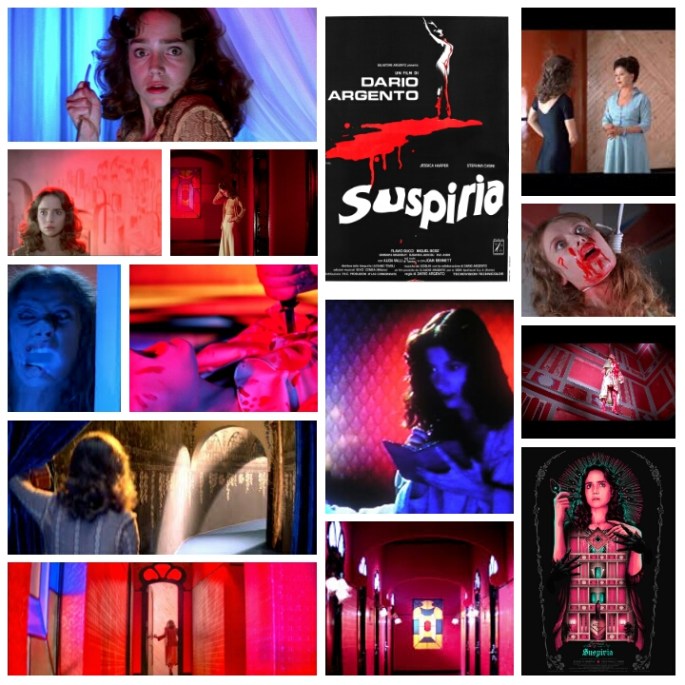
How to describe Dario Argento’s Suspiria. A psychedelic, multicolored mood piece. Free from the bonds of rationality. Surreal and incoherent, using dream logic to disorient the viewer and lull us into a subconscious fugue state, swept away by the color and light, all shot through a prism of dazzling underworld enchantment, a fairy tale designed to shock and shake, and all the while presided over by Goblin’s rhythmic, haunting score, bewitching the proceedings even further and pushing the atmosphere of the film to elemental heights. No other horror film I’ve ever seen has had quite the same unique, spellbinding effect on me as this masterpiece. The opener still stuns, a kaleidoscope of stained glass splattered in blood, a jarring murder scene that is as beautiful as it is grotesque, setting the stage for the madness yet in store. You know those dreams where you’re making your way through some corridor, drenched in fear and awaiting some doom that’s just up around the bend, but suddenly you get there and nothing seems to make sense, circumstances are now different and all attempts to extricate yourself seem hopeless? That’s the kind of nightmare that young American ballet student Suzy Banyon (Jessica Harper) finds herself in. Arriving in Germany to a prestigious dance academy, she gets a fleeting look at some poor girl running from… something, far off in the woods. That being her introduction to the school isn’t a good sign, and it doesn’t get any better. The stern headmistress (Allida Valli would give Miss Trunchbull the creeps) is overbearing and nasty, the rest of the occupants strange and withdrawn, and something seems to live inside the walls, watching Suzy from unseen perches, with evil intent in store. Maggots, a possessed dog, witches, a serial murderer and homicidal German cooks don’t even begin to describe the gauntlet of terror she fights through. Well, they do, but the film really isn’t about those things, they’re just the walls of the gingerbread house, plain, right angled and sensibly threatening. The real horror and unease comes from atmosphere, the icing, sprinkles and decorative splendour on said house. Argento has always given more effort towards atmosphere and ambience, in favor of things like acting, story or editing. It can be silly sometimes, but in Suspiria’s case it really doesn’t matter much, because the hellish haunted house he fashions is worth every second of your attention. There seems to be a starkly colored hue pouring in through every window and behind every door, the academy itself is an ornate and impossibly detailed dark gem of architecture and artistry, the sets put together like a dizzying labyrinth funhouse of brightly lit orifices and shadowed alcoves where nothing seems to be in it’s rightful place, disorder and abstraction reigning supreme. And then there’s the score. Now one of the most iconic janglers in the horror genre, the trancelike nocturnal lullaby by Goblin is a riff that instantly stands your hairs up and sucks you right into each frame, accenting the colours, shapes and hallways with organic precision, as if the dark forces inside the academy were somehow generating this music of their own accord. I also note another track by the group that makes an appearance, a wheezy death cry called ‘Sighs’, signalling that witches are nearby and consequently upping the unease factor a few more notches. This is a film that seems to come straight from the unconscious mind, a technicolor patchwork quilt stitched together with bizarre ideas, supernatural mysteries and otherworldly hysteria, with only the briefest threads of logic woven in, almost as if to further throw us off balance, to tease us with a scenario that seems like it will play out ‘normally’, only to toss us right back into the deep end, back into bizarro world with Suzy and all the forces of the night, clamoring to get her. This is unquestionably Argento’s best, and most complete film, a maniacal masterpiece of gorgeous sights and sounds, a trip to atnother realm via our world, and a horror piece unlike any other.
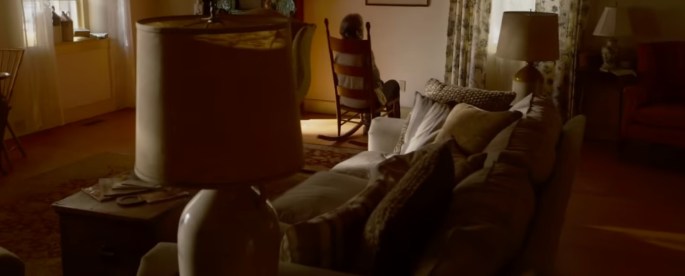
LUCA GUADAGNINO’S A BIGGER SPLASH — A REVIEW BY NICK CLEMENT

3

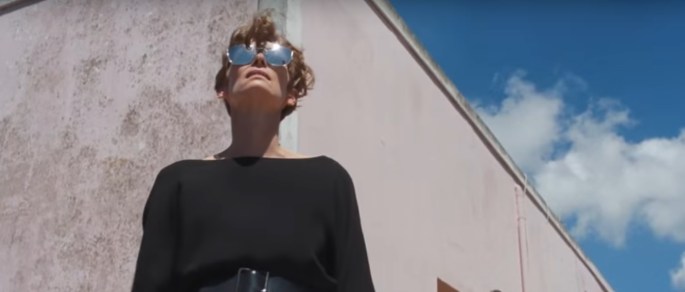
A Bigger Splash is one of those films where the primary interest is in exploring mood, atmosphere, and style before anything else. This is a movie about textures, surfaces, and bodies, and how people give off vibes (positive or negative) just by occupying the same space as others, without having to say much at all. In fact, the absolutely mesmerizing Tilda Swinton turns in a nearly wordless performance as a laryngitis afflicted rock star that is hiding away with her hunky photographer/filmmaker boyfriend (Matthias Schoenaerts) off the gorgeous coast of Italy, looking to escape the madness of her exhausting profession. But then, coming on like a gale force hurricane, a rowdy and rather obscene friend from the past (the incredible Ralph Fiennes) shows up looking for a place to crash with his sexy daughter (Dakota Johnson). What all goes down is less important from a plot stand point and more interesting and involving on an aesthetic level; while I didn’t see the darkly funny final scene coming whatsoever, I found the script by David Kajganich to move in surprisingly expected fashion, never truly offering up any major surprises, but remaining fully engaging all the same. All of the performances are extra delicious, with Fiennes portraying one of the most obnoxious cinematic creations that I’ve come across in a while, while Swinton loses herself, yet again, in another transformative performance that takes on a variety of interesting angles due to her uniqueness as a human being; this is her ode to David Bowie. Schoenarets and Johnson both make for sexy eye-candy, while it’s interesting to note just how many individual shots linger on exposed flesh; there’s an earthy, sensual quality to the film that feels almost tangible, with an open sense of sexuality that was refreshing.

2

So what it might lack in originality from a story stand point, the director, Luca Guadagnino, makes up for when it comes to his high sense of style. This is a work that’s completely aware of the fact that it’s a “movie-movie,” which allows it some creative freedoms not normally seen. I don’t think I’ve seen a movie in recent memory that willfully breaks the 180 degree rule as often as A Bigger Splash does, while it was interesting to note how Guadagnino and his exceptional cinematographer Yorick Le Saux (The Clouds of Sils Maria, Only Lovers Left Alive, Swimming Pool) placed the actors directly in the middle of the frame, often looking straight into the camera, thus providing a sense of heightened artificiality that’s bracing to observe and tonally adventurous. His previous film, I Am Love, was another collaboration with Swinton, and while I preferred that effort to A Bigger Splash, his newest feels like a logical extension, as it’s yet another film with a dreamy and seductive atmosphere that feels as if it’s been painted in vivid brushstrokes. Kajganich’s script also revels in black comedy, and the actors are all up the task, playing characters that move to the beat of their own drums, never fully understanding anyone else but themselves, which results in a mildly detached feeling while observing all of the action, which has the potential for violence and suspense.  The film is based on the 1969 movie La Piscine, and derives its title from the famous David Hockney painting from 1967. A Bigger Splash is now available on Blu-Ray, DVD, and various streaming platforms.

1

NANCY BUIRSKI’S BY SIDNEY LUMET — A REVIEW BY NICK CLEMENT

3
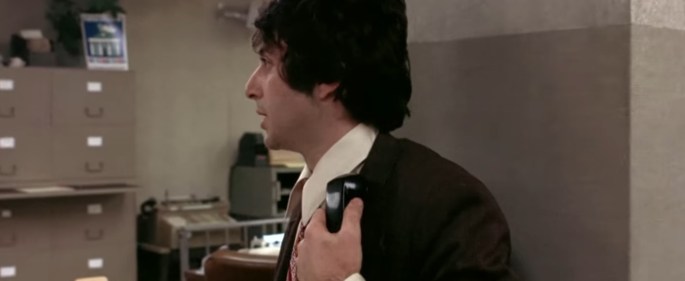
The immediately engrossing documentary By Sidney Lumet is going to be best appreciated by serious fans of his large and impressive body of work. Similar to this year’s more exuberant filmmaker study, De Palma, director Nancy Buirski wisely puts the focus on the director himself, but instead of being a blow by blow account of each film on Lumet’s distinctive resume, the documentary explores the various recurring themes that can be found in nearly all of his films, and how his upbringing shaped him into the storyteller that he would become. Despite never having won an Oscar for Best Director, his films amassed 46 nominations, with six wins, while Lumet would work tirelessly into old age, with 2007’s Before the Devil Knows You’re Dead being the final of 44 movies over 50 years in the business. And if he didn’t hit a home run every single time he released a picture, you could count on his efforts to be intellectual and serious-minded, never intentionally playing for the cheap seats, and always interested in character and story before sensation or artifice. In fact, Lumet might have been one of the more pragmatic and realistic big-screen directors of his day, less flashy than other “New York filmmakers” like Martin Scorsese and Spike Lee, but no less impassioned about that special city that never sleeps and the various people, places, and things that make it up. He got the city, and the city got him.
2
Lumet was a filmmaker with the sights and sounds and smells of New York City running through his veins, with a large number of his films taking place in and around the state, always knowing how best to capture the daily grind of one of the most iconic cities on the planet. Shot in 2008 before Lumet’s death, By Sidney Lumet smoothly cuts back and forth between fascinating talking-head footage of the legendary director recounting his life and work, with smartly chosen film clips from some of his better and slightly lesser known (and appreciated) pieces of work, which results in a brisk hour and 40 minutes of wise discussion, personal and professional introspection, and info-packed entertainment.
Some of my personal favorite efforts from Lumet would include Dog Day Afternoon, The Hill, The Offence, Before the Devil Knows You’re Dead, Power, Fail-Safe, 12 Angry Men, Prince of the City, Night Falls on Manhattan, and The Verdict. There are films of his that I’ve not yet seen, and titles that beg to be revisited. When someone leaves behind this many cinematic offerings, it can become rather daunting when trying to track down each and every movie. But when you consider Lumet’s output (nearly a film per year since he got his start in 1957), it’s a body of work that deserves the fullest sense of recognition and respect. In 2005, the Academy would rightfully bestow him with an Honorary Oscar for his life’s work. By Sidney Lumet, which was produced by RatPac Entertainment, is currently playing in limited theatrical release, and is set to air on the PBS program American Masters on January 2, 2017.
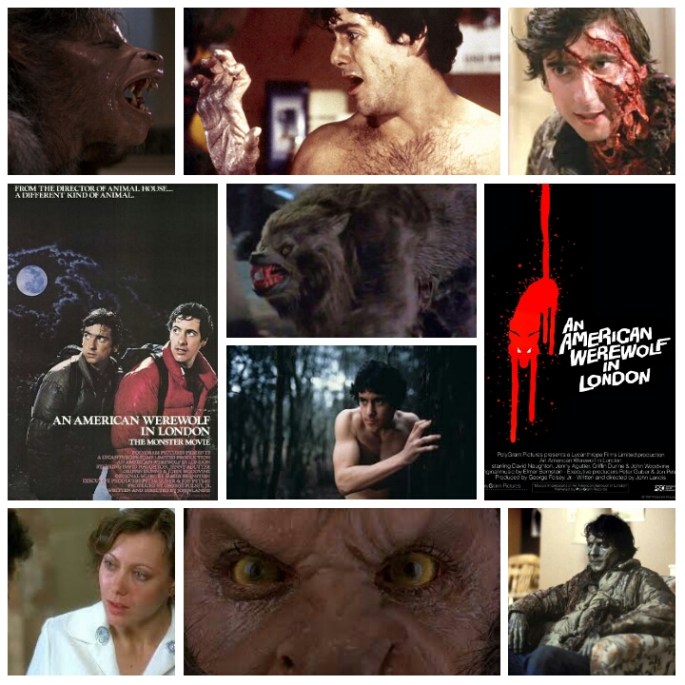
1

An American Werewolf In London: A Review by Nate Hill 

John Landis’s An American Werewolf In London has what is the most impressive human to wolf transformation sequence I’ve ever seen. You can dump your wallets out and buy all the CGI effects at hand, and none of them will ever match the tactile weight that practical effects have, the combination of hair, putty and latex that assures you there is *something real* on screen, and not the hollow timbre of computer driven wizardry. Everything in the film builds up to this shock and awe moment, and up until then it’s a fairly low key, atmospheric affair in which you never quite see the beast that kicks off the inciting incident. Griffin Dunne and David Naughton play the two American backpackers who find themselves wandering the moors of northern England, positive there is some kind of creature hunting them. The crusty locals avidly deny any such presence, but aren’t convincing and furtively shift their gaze, clearly not being honest. Sure enough, Naughton is attacked and bit one night, and he begins to exhibit those good old symptoms. The change happens all at once and is quite startling; this isn’t a sleek, aesthetic werewolf either, it’s a lumbering behemoth, all fur fangs and fury, storming about the cobbled streets of London like a coked out grizzly bear out running zookeepers. We only get to see him in London for a brief and chaotic end scene, but it’s worth it, taking the slow, misty nocturnal buildup and switching to broad daylight, revealing what was unseen before and bringing it jarringly down to earth. I can’t speak for the sequel, as I’ve never seen it, but this one remains one of the most well crafted, fun werewolf films you can find, and my personal favorite.