JAMES GRAY’S WE OWN THE NIGHT — A REVIEW BY NICK CLEMENT

1

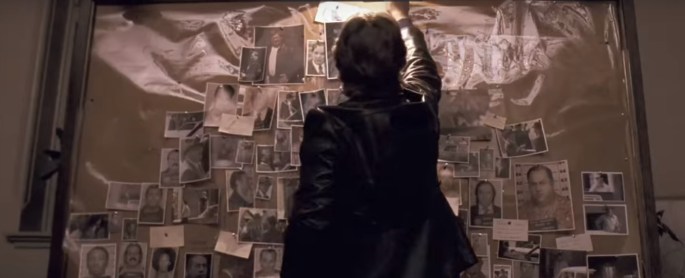
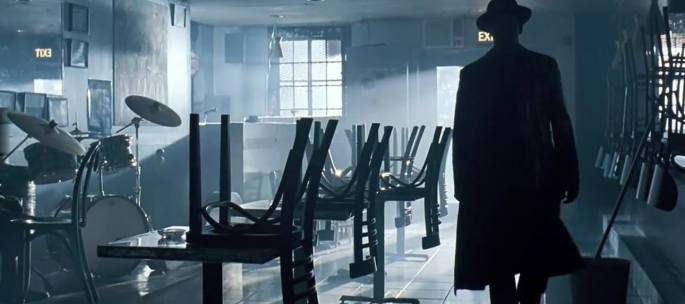
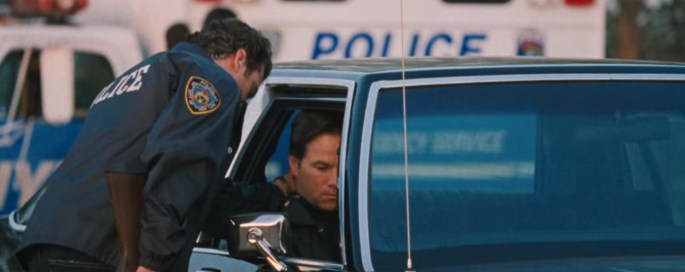
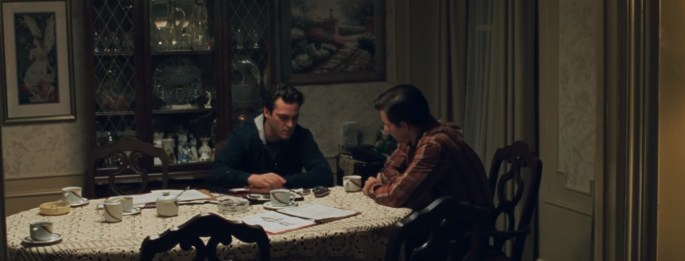
I love cop films. It’s one of my favorite genres. I respond instinctively to the films of Martin Scorsese, Michael Mann, Sidney Lumet, Brian De Palma and many others who have explored the time-honored traditions of cops, criminals, familial love, good and evil, and moral ambiguity. James Gray, the director of Little Odessa, The Yards, Two Lovers, and 2014’s criminally underrated The Immigrant, is one of my top directors to keep an eye on. He’s a New York filmmaker through and through, and while critics have been slightly cool to him on these shores, his reputation in Europe has cemented him as one of the most distinct voices in cinema working today. He loves the trappings and traditions of old-school American genre films, constantly showcasing ethically compromised lead characters, honest and corrupt cops, Russian mobsters, declining families, and hot-headed male characters. The Yards seemed to have been channeling The Godfather in its shadowy depiction of the bonds that bring families together, and how those same bonds and rip a family apart. Some of that same thematic ground is explored in We Own the Night, which is easily Gray’s most commercial picture to date, and while the film isn’t perfect, there is much to recommend in this stylish, dangerous, hot-blooded crime thriller. A simple story of two brothers on opposite sides of the law, We Own the Night is refreshingly un-self conscious and square; it’s a crime film that tells an A-to-B-to-C story that you’ve seen before but not through this prism. Joaquin Phoenix, in another blistering performance, is a nightclub manager named Bobby, whose top-cop father Burt (Robert Duvall, sage as always) has little use for. Eschewing the family calling of becoming a police officer, Bobby would rather swagger through a night club, blow a line coke off his girlfriend’s ass, and mix-it up with drunken clubbers. Bobby’s brother, Joseph (Mark Wahlberg, well cast in these types of roles), is a hot-shot in the police force, making a name for himself as the leader of a strike team set to take down the Russian mobs who have started to take over the drug trade in the city. It just so happens that the club that Bobby manages is owned by the Russian mob, and it’s not long before Bobby is forced to choose sides. He can either work with the police in taking down the group of people that employ him, or subvert the police and his family by staying loyal to the gangsters. Mix in Eva Mendes as Bobby’s smoking hot girlfriend (the film’s opening scene is genuinely sexy and quite startling in its overt sexuality) and you’ve got the requisite ingredients for a gritty cop thriller, which is exactly what We Own the Night becomes.


2

Gray has structured his tale through three amazing set pieces — a coke-house raid/shootout, an astounding car-chase during a pounding rainstorm, and a near operatic climactic shootout set against the burning, extra-tall weeds of New York. Gray handles the various action sequences like a skilled vet (there’s more “action” in We Own the Night than in Little Odessa and The Yards put together). But it’s the tremendous car chase that warrants special praise. Shooting the entire sequence with a subjective camera and no artificial music, the audience only knows as much as Bobby during this harrowing chase, as the camera never leaves the back seat and front seat of the car. We peer through the front windshield as the wiper blades clear away the torrential downpour, allowing glimpses of a jack-knifing tractor-trailer truck and other vehicular destruction. With gangsters firing shotguns at Bobby’s car, the scene is all white-knuckles and sweaty palms. You’ll be even more amazed to know that all of the rain was created with computers, as the seamless blending of all of the different elements in this bravura sequence is simply astonishing. It truly is a car chase that you’ve never seen before. The shootout/raid that precedes the car chase is violent, gritty, and nasty–exactly what a shotgun fueled shoot-out would be. And the ending exudes a dreamy quality that ratchets up the tension to considerable effect. The film isn’t perfect. There’s one major plot development that’s a bit hard to swallow, and some of the dialogue is a bit on the nose, but never bad. The themes that We Own the Night explores are familiar yet thrilling; after all, when will stories about loyalty and deception ever feel new again? The story has an old-school feel to it, which may be the reason why by the end of the film, you may feel that all you’ve been watching is a standard issue cops and robbers actioner. But the conviction of the performances, especially that of Phoenix, help to conceal some of the story cracks with passion and energy. And one big surprise involving Wahlberg’s character was a welcome addition to the narrative. In the end, We Own the Night may be a tad predictable, but that fact takes nothing way from the overall entertainment value. Gray seems to take his time in between projects, but I’m really hoping his output remains steady. He has a laid-back, unfussy style with a clear understanding of character and plot mechanics. And what he lacks in originality during We Own the Night he more than makes up for with his vivid shooting style (the excellent, gritty cinematography is courtesy of the talented Joaquin Baca-Asay) and his unwavering dedication to making everything seem atmospherically alive and immediate. The 1980’s setting peppers the film with a seedy flavor that you don’t normally get a chance to see on screen. Rather than reinventing the genre with narrative tricks like The Departed or upping the style ante to the extreme the way Michael Mann’s Miami Vice did, We Own the Night is content to be a solid entry in a classic genre, a film that shares more in common with Sidney Lumet’s oeuvre than anything else. See it for Phoenix’s intensely animalistic performance and the directorial verve that Gray displays all throughout.
3

Red 2: A Review by Nate Hill 

More of the same, baby. That’s a good thing in this case as we rejoin ex assassin Frank Moses (Bruce Willis) and his merry band of morons for another set of high caliber swashbuckling, this one even sillier than their first picnic. The key is in the deadpan humour, which is served up with all the relish needed to make something so fluffy work. Most of the eclectic cast is back for second helpings, and the ones who caught bullets are replaced by even more bankable names and familiar faces here. Moses, his girlfriend (Mary Louise Parker, finally aquiring her sea legs when it comes to warming up to the carnage) and loony old friend Marvin (John Malkovich) find themselves thrown headlong into an arms race to find a deadly super weapon before it’s either detonated or aquired by very dangerous people. Leading them along is a frazzled ex MI6 spook and mathematical genius (Anthony Hopkins in silly mode) who has seriously lost his marbles. On their tail is scary CIA psychopath Jack Horton (Neal McDonough nails yet another heinous villain role) who brandishes his silenced pistol with the same verve he uses to flash that icy grin, the last thing you see before the shooting starts. Helen Mirren returns, as does her beau, played again by Brian Cox and his teddy bear worthy russian accent. Other newcomers include Korean superstar Byung-Hun Lee as an agile and pissed off assassin out to get Moses, Catherine Zeta Jones as a foxy russian femme fatale and Professor Lupin himself David Thewlis as a snooty arms dealer called The Frog, but not for te reasons you might think. When actors of such skill and notoriety show up in these, it really makes everything else worth it, even if the plot is somewhat up in the clouds, and the mad das, rat race tone can get a bit too loopy. These pros always keep it grounded when they need to, both with shooting and acting prowess. This one can’t quite keep up with how much fun it’s predecessor was, but it’s certainly more than adequate, especially to see Hopkins, a man of trademark gravitas, give an out of left field (and his mind, really) turn worthy of Jim Carrey and not without a few disarming third act surprises.

PETER BERG’S THE RUNDOWN — A REVIEW BY NICK CLEMENT

1

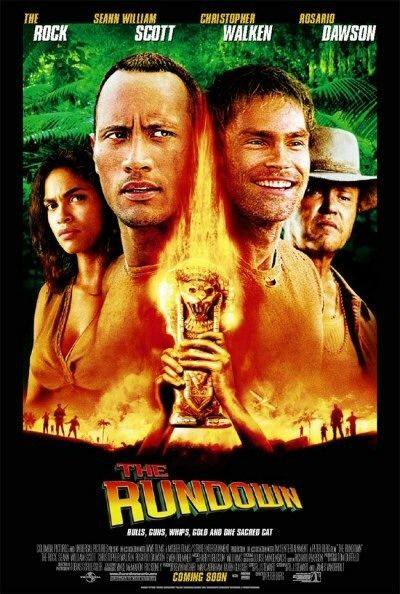
Peter Berg’s The Rundown is as good as PG-13 actioners are likely to get. High on style and made with a considerable amount of tongue-in-cheek humor, this was Berg’s first “big” Hollywood production, and still stands as an extremely entertaining piece of nonsense that deserved to do more than $48 million domestic. Starring The Rock before he was THE ROCK, this is the type of movie that has become a fan favorite because of DVD and cable airings; I wouldn’t be surprised if a sequel got made now that The Rock is a brand-name institution. Co-starring funnyman Sean William Scott (where’s he hiding?), the extra-sexy Rosario Dawson, and Christopher Walken in a wildly over the top bad guy performance that rivals his scenery-chewing in Kangaroo Jack, the fast moving plot escalates from the very beginning, with the exotic action set in the jungle, and involving a bounty hunter tracking down his boss’ AWOL son. The energetic script by James Vanderbilt (Zodiac, White House Down) is essentially a clothesline to hang various action set-pieces, all of which were shot and cut with tremendous zest in bold saturated colors and full 2.35:1 widescreen; Berg’s fairly-regular cinematographer Tobias Schliessler and editor Richard Pearson combined aesthetic forces and crafted an extremely slick and beautiful looking movie.

The jokes land more often than they miss, Berg’s muscular sense for action was on early display (and which would lead to future efforts like The Kingdom, Hancock, Lone Survivor, and this week’s new release, Deepwater Horizon), and again, Walken tore into each scene with hilarious gusto; he knew he was making an ass of himself in an otherwise disposable studio programmer, and he never looked back after his first utterance of hammy dialogue. His “Tooth Fairy” monologue is absolutely priceless, and I really get a kick out of the “passing of the torch” moment between Arnold Schwarzenegger (in a sly cameo) and The Rock during the opening beat-down set inside a busy night club. The trip-out by campfire sequence was an unexpected delight, as well; hallucinogenic drug humor is always a plus from where I sit. The Rundown is a mostly forgotten about flick that got saddled with a crappy late September release, and if it were to come out now in exactly the same fashion, it would likely become an instant blockbuster. Also, one of Walken’s henchmen utilizes a massive whip as his chief weapon of choice; huge fan of the whip as you rarely see it get busted out during modern action flicks. A small thing to be sure, but very memorable.

RIDLEY SCOTT’S AMERICAN GANGSTER — A REVIEW BY NICK CLEMENT

0.jpg

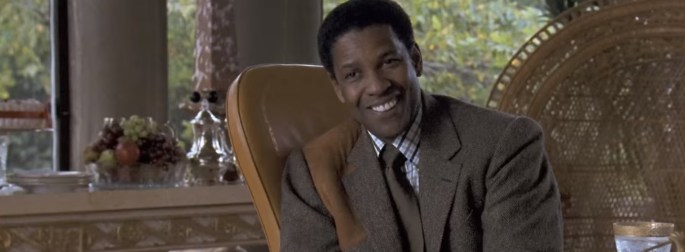
Directed by Ridley Scott, produced by Brian Grazer, written by Steven Zaillian, and starring powerhouse actors Denzel Washington and Russell Crowe, it would have been a shocking surprise if American Gangster had turned out to be anything less than a juicy piece of entertainment. I’m a huge fan of this expansive piece of storytelling, and despite mostly favorable reviews and big box office, I think it’s one of Scott’s most underrated movies. Everything from the top-notch production values, the larger-than-life story, the salty dialogue, and the sly, cool aesthetic of Scott and master cinematographer Harris Savides (Zodiac, The Game, Birth, Elephant) all combined for a thrilling true-crime saga that was never dull and never sagged once during its close to three hour run time. Denzel Washington, in a thoroughly commanding performance, portrayed Frank Lucas, a smart and classy businessman whose business, it turns out, is heroin. Lots of it. Lucas, who for years was a driver and protégé to Harlem’s original gangster number one, Bumpy Johnson (a sneering Clarence Williams III), takes over the drug trade in New York City after Johnson drops dead from a heart attack.

1

However, Lucas has bigger plans than Johnson could have ever imagined. After recruiting what seems to be almost all of his extended family from North Carolina (mother, brothers, cousins, etc.) and relocating them to Harlem and surrounding areas, Lucas, in an effort to avoid using a middle-man in his drug operation, used a family connection stretching to the jungles of Vietnam, and traveled to the heart of darkness himself, striking a deal with a heroin manufacturer to bring the drug from the jungles of Southeast Asia to the streets of New York. The potency of this heroin was twice as strong, and with the absence of the middle man, half the cost. This bold maneuvering was made possible by crooked military personnel, who shipped the drugs back to the states in a variety of methods, most notoriously, in the coffins of dead American soldiers. It’s all too wild to be true, but it is, and the way the filmmakers bring you into this constantly shifting and unfolding world is nothing short of fully engrossing.

2

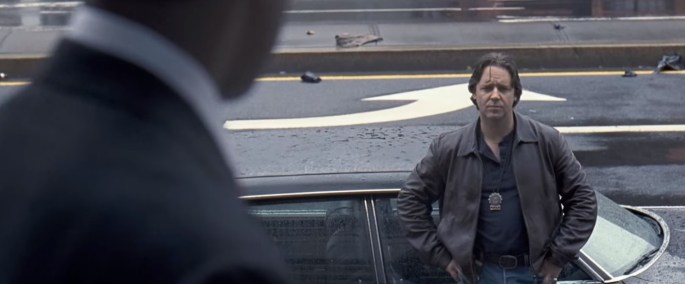
Running on a parallel track to Lucas’s story is the account of honest-cop Richie Roberts, smoothly under played by bull-dog performer Russell Crowe, in another excellent piece of manly acting. Roberts is the classic case of great cop but bad husband/father. Going through a messy divorce and child custody hearings with his ex-wife (Carla Gugino, super sexy as always), Roberts is as much of a screw up at home as he is a great, truthful cop, one working in an otherwise almost totally corrupt police force. The fact that he doesn’t keep $1 million in unmarked drug-money that he finds in a dealers car, something he easily could have done without every getting caught, instead opting to turn it in as police evidence, is enough to mark him as suspect by his fellow police officers, which doesn’t help him as he moves into the tricky waters of New York City’s drug scene. Roberts catches wind of the new drug trade in the city, and takes it on obsessively. Battling a seriously crooked fellow officer named Trupo, played with menacing glee by Josh Brolin, Roberts is almost a one-man task force; not only is he hounding the drug dealers, he has to watch his back for deceitful detectives who’d rather take bribes than make arrests.

3

The brilliance of Zaillian’s screenplay is the way that the personal and professional lives of Lucas and Roberts mirror each other, while also being total opposites. Lucas is a family man, the kind of guy who takes his mother to church on Sunday and eats breakfast with all of his brothers. But he’s also the kind of guy who’ll shoot a rival dealer in the head in broad daylight. He’s even not afraid to threaten his brothers and cousins to make a point. Roberts, on the other hand, is a terrible dad and husband, but he operates incredibly as a cop and he loves his job. He even makes time to study for and then take the bar exam. I was reminded of Michael Mann’s masterwork Heat with the back-and-forth of these characters; similar to Robert DeNiro and Al Pacino’s characters, Washington and Crowe are basically the same people, separated by opposite sides of the law, but brought together by a common goal—what they know best.

4

American Gangster, working almost as two movies in one, allows its two stars to meet, only at the end, also similar to Heat, in a terrific sequence where the two men have an intelligent conversation, rather than a bloody smack-down. Zaillian, no stranger to expensive, populist fare (he’s written Hannibal, Clear & Present Danger, and Mission: Impossible, among many others) is also a master words-man and social commentary purveyor (other credits include A Civil Action, Schindler’s List, All the King’s Men, and Gangs of NY) and the balance that he brings to both stories in American Gangster is measured and smart. Cohesive and engrossing, the story’s dense narrative moves at a fast clip, due also in part to Pietro Scalia’s dynamic film editing, introducing the audience to a bevy of colorful characters and various locations (jungles, city streets, drug houses) in a coherent, unhurried fashion that still carries pep and verve.

5

Scott directed with energy and 70’s pizzazz, but never became show-offy or garish. Less overtly stylish than his work in films like Gladiator, Prometheus, Black Hawk Down, The Counselor, and Hannibal, Scott gave American Gangster a shadowy, smoky, rich look, with the immaculate production design by frequent collaborator Arthur Max becoming a major asset as well. Taking cues from such crime films as Brian De Palma’s Scarface and The Untouchables, Martin Scorsese’s Goodfellas, and Francis Ford Coppola’s The Godfather, Scott took this familiar genre and spiced it up a bit, never forgetting about the fascinating procedural at the heart of the story. This is confident, gripping direction of an ambitious script which never loses sight of its tight focus, even when its grander world view is so vividly displayed. And it was nice how Scott infused the film with enough vibrant period detail for two movies, but never allowed his obsession with realistic surroundings to interfere with the intimate moments of his layered plot. He also staged a bravura drug raid/shootout that is the very definition of awesome. Bloody but never gory and gritty at all times, it’s a stunning piece of action directing that ranks up there with the best of these types of set pieces. This is the kind of big-ticket filmmaking that only a craftsman of Scott’s stature could create.

8

Romance & Cigarettes: A Review by Nate Hill 

Romance And Cigarettes is the strangest musical you’ve never heard of. Strange as in awkward, because most of the songs are just too overdone and absurd to work, but I’ll concede that that very quality makes them unforgettable, if for not quite the same reasons the filmmakers intended. Going for a sort of pseudo Jersey Boys look, they set their cluster of stories in working class New York City, focusing on a number of hot blooded Italian American scamps and the mischief they get up to, all set to a raucous medley of musical numbers, some pleasant and others pretty darn tone deaf. James Gandolfini plays Nick Murder, a rowdy blue collar construction worker who finds himself between a rock and a hard place when his long suffering wife Kitty (an even rowdier Susan Sarandon) finds out about his secret mistress Tula (kinky Kate Winslet). This seems to be the last straw for Kitty as far as their marriage goes, and it all erupts into a series of volcanic confrontations and spats as only New Yorkers can spectacularly stage. In Kitty’s corner are her three handful daughter’s (Aida Turturro, Mary Louise Parker and adorable Mandy Moore) and her helpful Cousin Bo (Christopher Walken). Nick turns to a co worker Angelo (Steve Buscemi), is scolded by his stern mother (Elaine Stritch) and receives advice from an ex military tough guy (Bobby Cannavle). The film sides with both parties for one long and often chaotic look at marriage, infedelity and extremely short tempers, peppered with songs that, like I said before, are hit and miss. Walken has the best bit (doesn’t he always?) when he gets to a rip roaring riff on Tom Jones’s ‘Delilah’ that jazzes up the film quite a bit. Not destined to go down in history as one of the best musicals ever made, but worth it for the spoofy fun had by the impressive cast. 

NED BENSON’S THE DISAPPEARANCE OF ELEANOR RIGBY: HIM/HER — A REVIEW BY NICK CLEMENT

2

Seriously. I’m convinced that The Weinsteins buy movies just to buy them, waiting to see how the cinematic climate and early awards season shakes out, and if a film they own doesn’t fit their agenda, well, they just bury it. Ask James Gray how he feels about The Immigrant. Ditto Jean-Pierre Jeunet over his latest unsung gem T.S. Spivet. Another recent casualty: Ned Benson’s unabashedly romantic and deeply emotional two-parter The Disappearance of Eleanor Rigby: Him and The Disappearance of Eleanor Rigby: Her. This is an ambitious dual effort, focusing on the painful seven year marriage of Connor (a magnificent James McAvoy in the best performance of his career) and Eleanor (the radiant and spellbinding Jessica Chastain who appears incapable of hitting any false notes), who are reeling from the somewhat recent death of their child. Eleanor suddenly tells Connor that she needs some time to herself to think about her life and to see how she really feels about where things are headed for them as a couple. Confused and scared and still clearly in love, Eleanor is clearly having some sort of internal crisis, and Chastain plays these moments with careful grace and quiet authority. Reluctantly, Connor allows her some space, but not without still keeping tabs on Eleanor, always in an effort to win her back. McAvoy wears an openly bleeding heart all throughout the story, never giving up on the woman he loves, but still allowing for the notion that the two of them are in a tough spot as a couple.

3

The kicker of this project is that there are two films that roughly tell the same story, hence the subtitles Him and Her. Each film is an hour and 40 minutes, with the Him section telling the events through Connor’s POV, and vice versa. Fascinatingly similar to Showtime’s groundbreaking double narrative TV series The Affair, The Disappearance of Eleanor Rigby is mysterious with its facts, allowing little tidbits of info to be carefully parsed out to the viewer, forcing the audience to fill in some blanks before the complete story is put into full perspective. And if the final moments don’t spell the ending out explicitly, the story ends exactly the way it should, because in life, there are no easy answers to the hardest of situations. Both Chastain and McAvoy are achingly sad and believable in their emotionally taxing roles, in love and lust one moment, at each other’s throats the next. Chemistry is something often talked about between two actors, and there’s no mistaking the palpable bond that Chastain and McAvoy displayed here. Movies about troubled marriages can be tough to watch when they are this raw and open and sincere, and credit must be given to Benson – this was his first film and he’s made an enormously challenging and deeply rewarding pair of works that were unfairly banished from theaters.

1

Why bother buying this movie if you were never prepared to release it the way the artist intended? It’s certainly not a traditional project, and it would have required extra care in terms of marketing, but something this well done and richly observed deserved way more fanfare and acclaim. The only way one can view the two separate films, I believe, is by purchasing the Blu-ray set, as The Weinsteins decided on splicing the two efforts together for their totally half-assed and disinterested theatrical release. Calling the combined film The Disappearance of Eleanor Rigby: Them, the film simply doesn’t have the same sort of power when viewed as a spliced effort. The novelty of the project stems from the ability to see the story from two different angles, allowing every moment to be fully fleshed out, which is new and exciting and allows for a more observational viewing. I absolutely can’t wait to see what Benson’s next film is, and I hope the lack of exposure his first film received doesn’t dissuade him from working again in the near future.

1

MARTIN MCDONAGH’S IN BRUGES — A REVIEW BY NICK CLEMENT

1

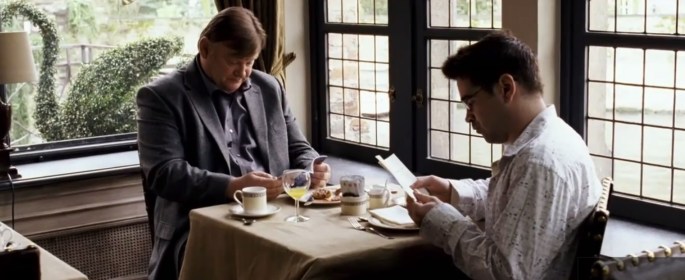
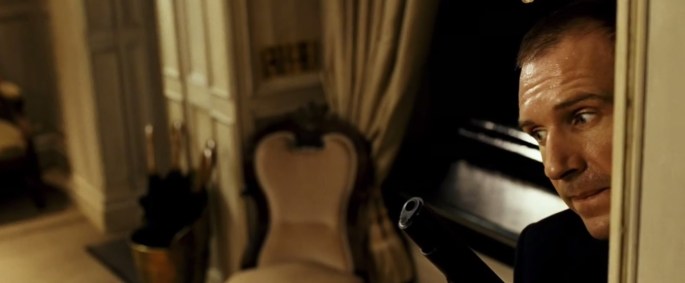
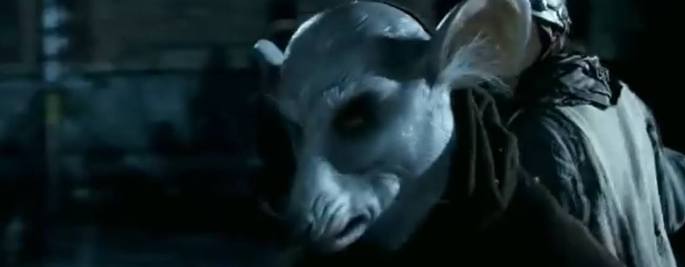
Martin McDonagh’s directorial debut In Bruges is a nasty, unpredictable piece of noir-soaked entertainment that pokes holes in the hit-man-on-the-lam genre while also displaying a wickedly funny sense of humor and a deathly serious sense of morality. McDonagh, an acclaimed playwright (The Pillowman, A Behanding in Spokane) directed from his own original screenplay, and crafted a David Mamet-esque big-screen debut with this tough-talking, wise-cracking, and happily bloody crime film that threatened to spiral out of control in the last act but didn’t thanks to some terrific performances and a surreal narrative. It’s the sort of movie that loves its own movieness, a work that’s steeped in tradition while also feeling uniquely original. It’s a debut that instantly noted the arrival of a talented new filmmaker, and if his follow up, Seven Psychopaths, wasn’t as fully realized, there was still a lot of demented fun to be had; it comes close in some ways to matching the anarchic spirit of Oliver Stone’s underrated U-Turn. If you saw the misleading trailer for In Bruges you might be under the impression that it’s an action film first and a dark comedy second. In reality, it’s the other way around; Focus Features cut together some dishonest previews trying to lure people in with the promise of constant gun fire and violence.
3

Colin Farrell, in what’s possibly a career best performance (his work in the trifecta of The New World, Ask the Dust, and Miami Vice is beyond underrated), is Ray, a Dublin-based hit-man who has just botched his first job. He’s accidentally killed a child after taking down his intended target, a priest. He and his partner Ken, the always fantastic Brendan Gleeson, are told by their wild-man boss Harry (Ralph Fiennes, snarling and utterly amazing) to hide out in Bruges for roughly two weeks, or until he deems it’s safe to come back to Ireland. So the two men, in tried and true buddy movie form, get a hotel room in the ancient city and start doing some sight-seeing. They visit art museums, take a boat tour, and experience some night life. Then, Harry comes calling, and he’s pretty pissed off. The way an independent movie-shoot, a horse-tranquilizer abusing little person, a smoking-hot French drug dealer (Clemence Posey, so sexy), and a bizarre nihilist with a unique fashion sense all figure into the plot are things I will let you discover.

5

The climax, which is what the bullet-filled trailer is predominantly made up of, echoes back to Hitchcock while simultaneously calling to mind Guy Ritchie and Quentin Tarantino. It’s a heady mix of action, pathos, and jet-black humor that brings In Bruges to its satisfying conclusion. There is nothing cookie-cutter or “safe” about In Bruges, and the bold, surreal story turns that it took always keep me massively buzzed as a viewer. We’ve seen tales like this before so in order to make it fresh, McDonagh was required to have some fun with his characters and the plot. And fun he certainly had. He also showed himself to be quite capable, yet never show-offy, with his visual style, creating an excellent sense of atmosphere and dread. Making great use of the medieval, gothic city of Bruges, McDonagh and his ace cinematographer Eigil Bryld dreamt up a nightmarish landscape that perfectly suited the damaged psyches of the morally conflicted hit-men. These are men who live by codes, no matter how off-putting or morally reprehensible those codes may be, and the visual flourishes that went along with the thematic underpinnings were in perfect synch.

44

Politically incorrect at almost every opportunity and gleefully profane (there are lots of F-words), In Bruges carries a subversive, casual disdain for Americans that was aggressively funny. McDonagh, who is Irish, has created characters who speak their minds, no matter how rude, racist, or inconsiderate they may sound. Farrell, who is best when playing tightly coiled characters with live-wire intensity buried underneath, was given some fantastic one-liners that he delivered with a great sense of humor. A stand-out scene, taking place in a restaurant where Ray gets into it with an American couple, is one of the funniest (and meanest) scenes in recent memory, displaying true attitude that makes sense rather than just being thrown in for shock value. Fiennes, doing his best Ben Kingsley-in-Sexy Beast-riff, stole every scene he appeared in; what a rush it was to see this typically reserved actor chew the scenery with such gusto. And the older, regal Gleeson hit perfect notes of melancholy and wisdom that was well-balanced in terms of his hot-tempered partner. This film was a massive surprise when I first saw it back when I was living in Los Angeles, and over the last few years, it’s a title that I’ve come back to on any number of occasions. It’s currently streaming on Netflix, and the Blu-ray looks absolutely fantastic.

2

Episode 30: Alan J. Pakula’s KLUTE with Special Guest FRANCINE SANDERS

ep-30

We welcome back Frank’s former film professor Francine Sanders to discuss Alan J. Pakula’s masterpiece KLUTE.  We talk in depth about the film, and also cover some of Pakula’s other films.  We hope you enjoy!

GAVIN O’CONNOR’S JANE GOT A GUN — A REVIEW BY NICK CLEMENT

3

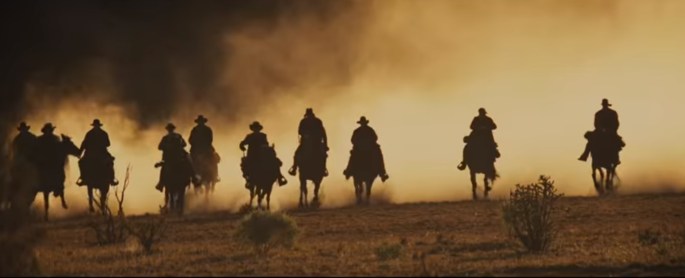
Other than the misleading title which suggests some sort of revisionist feminist twist on the old west milieu which never comes to pass, I’m not so sure what the problem was with Jane Got A Gun. This is that supposedly “bad” outlaw revenger that came and went this past winter, getting beat up by “critics” who were more interested in rehashing the lengthy behind the scenes turmoil that the project endured and the ensuing bankruptcy of distributor Relativity Media, rather than the solidly entertaining final product. There’s nothing game-changing about Jane Got A Gun; it’s a line drive up the middle with the hitter taking second base standing up. Sometimes a film doesn’t need to hit a grand-slam; sometimes it’s just fine to be well made and competently written and traditional. And to be honest, I’ll take ANY movie I can get that’s set in gunslinger territory. Gavin O’Connor’s sensible direction never went above and beyond the call of duty, and he was able to whip up some evocative shots with his skilled cinematographer Mandy Walker (Australia, Shattered Glass), while the tight editing by Alan Cody never wasted a moment. Everyone in the cast gave a committed and believable performance, with producer-star Natalie Portman and Joel Edgerton sharing some fine chemistry. Ewan McGregor made for a vicious baddie, and Noah Emmerich, Rodrigo Santoro, and Boyd Holbrook all offered up good support. The Blacklist-approved script, originally written by Brian Duffield with input from Anthony Tambakis and Edgerton, moves in a straightforward manner, totally unfussy and to the point, with terse dialogue and lots of opportunities for violent confrontation. The plot isn’t anything you haven’t seen before — a woman enlists the help of her bad-ass former lover to protect her home as a band of outlaws are coming for her and her husband, who has already taken a bullet in the gut.

2

This is yet another bad-luck item for director O’Connor, a classical director with a slew of underrated credits on his resume, including the Olympic hockey drama Miracle (which made some decent coin), the rough-house cop film Pride & Glory with Ed Norton and Colin Farrell (and a script co-written by Joe Carnahan), and the absolutely sensational MMA drama Warrior, which features Tom Hardy, Nick Nolte, and Edgerton in a trio of fabulous, method-y performances. O’Connor is attracted to quality material, he’s a strong visual storyteller, and he lands big stars in all of his projects; it would be nice if one of them would strike box office gold. This fall’s upcoming hit-man thriller The Accountant, with Ben Affleck, looks to be a return to the glossy, 90’s-styled, star vehicle movie for adults, and I’m hoping it delivers on the promise of its exciting trailer. But what a shame about the entire situation that Jane Got A Gun faced; it was never given a chance to succeed, and when the Weinstein company released it this past January, it bombed on a spectacular level, grossing $865,572 on its opening weekend from roughly 1,210 theaters. It would limp to a $3 million domestic total, making it the worst wide release opening in the history of The Weinstein Company. Currently streaming on Netflix, this is a movie that will satisfy almost anyone who gives it a chance, and if you’re a big fan of westerns like I am, this will definitely serve up a nice slice of undemanding yet enjoyable genre entertainment.

1

Well Documented by Kent Hill


This slideshow requires JavaScript.

It’s late at night here in the land Down Under, and as usual, I have just finished watching a movie. It has been a good week for it, watching movies. While my wife binge-watches her Supernatural, I have had the pleasure of watching two truly astounding portraits. One was De Palma and the other Life Itself.

I find myself as unable to speak at the end of this heart-breaking adventure through the life of the great watcher, Roger Ebert, as I remember being after coming out of the theatre seeing Braveheart. My Scottish blood was up that night, and I felt a pride for my heritage that any gift I might have with the English language shall come up short trying to relate it to you. It is my own trials of these last weeks that move me now as I witness the last days and last deeds of Ebert.

I recently had a health scare and am on medication to try to tame these issues. But they pale in comparison when I look had the degeneration of the mighty critic, whose battles with his friend Gene Siskel I enjoyed so often. It was not who was right or wrong about the films that moved me, but simply, the passion they exuded for this medium which is for me also, a life’s grand obsession.

We see Roger struggle in his final times, his end of days with a determination that is the embodiment of courage. Some may call it foolish courage, but fools and heroes are one and the same. To see him, as I have in myself early this week, have the frustration of his trials be swept away by a moment of enthusiasm and inspiration (in my case for this new gig that is writing for PTS.) When a filmmaker I approach to have a chat about their work gets back to me suddenly and I find myself throwing all else aside, taking to the keyboard, readying my thoughts so as not to waste what time I may be granted; so that this precious audience with another of those whose work has coloured my dreams and set fire to my desire to be a doer as well as a watcher is not squandered.

I am so moved I am grateful to my wife for interrupting me as the credits roll on the Ebert portrait. She wants to show me a defining moment on her Supernatural, and its helps to let the lump in my throat sink, as the building thoughts of the scare I have sustained, the thoughts of my father’s debilitated state after his stroke some years back all were climbing to the surface.

This is more than just a documentary about a film critic. It is a look into a life. It is a look at what drive can do for those with the will, with tenacity to not only chase their dreams but also not to stop until they are realised. We hear Ebert, though aided electronically to communicate, still fighting the good fight; this man Herzog proclaims the good soldier of cinema.

The equal to his film is the aforementioned De Palma – in this dude in the audience’s opinion – a long overdue tribute to a master that came to prominence with likes of Spielberg, Lucas and Coppola. The soft but blunt speaking student of Hitchcock sits centre stage to talks candidly of his work, his influences, shit behind the scenes and the personal life that was going on around and outside the set of his films.

From his early days working with a very young De Niro, to being there the eve the music of Bernard Herrmann fell silent, to the joy of The Untouchables and Mission Impossible, to the crushing blows of Bonfire of the Vanities and Casualties of War (one of my personal favourites of his films.)

I wish there were more master classes like this with the filmmakers I revere. I went to film school and was often taught by instructors who knew well their fundamentals, but then I watch something like this and feel as though I was ripped off. You sit and listen to this man as he breaks it down. His films, his methods, his reflections and it’s like the best lecture on making movies you have ever sat through. There was honestly many moments that I felt guilty somehow that I wasn’t taking notes.

I was pleased indeed that De Palma spoke a little longer on some films more than others. Grateful I was that these chapters were on the films of his I have watched over and over as my passion for them dictates. Though I do wish he had talked a little longer on the others, the likes of Mission to Mars, which I thought at the time and still do, was a really bizarre choice for him to helm. But I find I am satisfied – more so than I was with the Milius portrait (which I still loved mind you) for skipping over Farewell to the King, my favourite of all his movies.

Needless to say I have watched De Palma more times this week than Life Itself, being how I just received it in the mail today. Normally I would have watched it again before writing something about it, and you’ll forgive me, but I was just so moved by it I just had to fire up the keyboard and knock this out before sleep over takes me.

There are two things I walk away from these films with.

One, those that have truly mastered the art of the moving image, whether it is by making them or writing and informing an audience with a critical eye and a passionate tongue; these kinds of people know that it is a privilege to do what they do for a living. As Kubrick I believe said best: though it can be like writing War and Peace in a bumper car at an amusement park, when you finally get it right – nothing else comes close to it.

And two, these are the music makers and these are the dreamers of the dreams, as it was once said. Those of us that are still out here striving for a day in the sun must take heart and look to these examples of giants in the industry. We are not yet giants, but we must climb atop the shoulders of such, then and only then can we see the heights and know them for their glory, till giants ourselves we shall one day become.

I’m going to bed now. You seek out these films and watch them.

I pray you do.