Greg Harrison’s November 


Greg Harrison’s November is one of those frustratingly opaque, reality bending sketchy thrillers where a metaphysical shudder is sent through someone’s fabric of existence, in this case that of photography professor Courtney Cox. Driving home late one night, her husband (James LeGros) runs in to a Kwik-E-Mart to grab her a snack right at the same moment a burglar (Matthew Carey) brandishes a gun, and then open fires. After he’s killed, you feel like the film is in for a run of the mill grieving process as she visits a therapist (Nora Dunn). Events take a detour down Twilight Zone alley though when a spooky photograph shows up amongst one of her student’s portfolios, a snapshot of that very night at the store, apparently zoomed in on her husband. Who took it? Is the man actually dead? Will the film provide the concrete answers that some viewers so fervently salivate for in these types of films? Not really, as a heads up. As soon as things begin to get weird, they pretty much stay that way for the duration of the exceedingly short runtime (it clocks in under eighty minutes!). Cox’s character revisits that fateful night from many different angles and impressions, either reliving it, recreating it or simply stuck in some sort of alternate time loop chain. There’s a policeman played by Nick Offerman who offers little in the way of help, and she’s left more or less on her own through this fractured looking glass of garbled mystic confusion. The tone and aesthetic of it are quite something though, a jerky, stark Polaroid style mood-board that evokes ones like The Jacket and Memento, with an art house industrial touch to the deliberately closeup, disoriented visuals. It’s a bit maddening from the perspective of someone only looking for answers, and if that’s why you came, you’ll be left wringing your hands and losing sleep. If you enjoy the secrets left unravelled, and are a viewer who revels in unlocked mysteries left that way, recognizing the potent energies distilled from unexplained ambiguity, give it a go.

-Nate Hill

Joel Schumacher’s Blood Creek


A Joel Schumacher helmed horror flick starring Michael Fassbender as a deranged, occult obsessed Nazi zombie vampire, hunted by Lincoln Burrows from Prison Break. Sounds like a flick from an alternate dimension that doesn’t exist, right? Well it’s out there, tough to find as it was somehow buried around it’s 2009 release, and relegated to a relic before it was even a decade old. Shame, because it’s a ton of warped, bloody fun. Officially titled ‘Blood Creek’ on iTunes, it can also be found as ‘Town Creek’ or simply ‘Runes’ elsewhere, but like they say, a rose by any other name. Fassbender is all kinds of scary in a black and white prologue as a Nazi occult agent who shows up at a rural American farm to study ancient Nordic runes which may hold the key to resurrection of the dead. His chilling work initially is nothing compared to the balls-out, gory makeup covered incarnation he gets to prance around in later though. In present day, two brothers race into the foggy backwaters to stamp out this evil, and they’re played by an intense Dominic Purcell, as well as Superman himself, Henry Cavill. Not a whole lot of time is spent on character development for all involved, the film choosing instead to jump headlong into a notably gory free for all, banding together with the poor German family who has had to deal with this psycho for almost a generation on their farm. At a crisp ninety minutes, there ain’t much time for anything but action and gore, with a few scarcely scattered, breathless moments of exposition that were already made clear in that prologue, the one interlude of the film that isn’t soaked in adrenaline. Hats off to Fassbender under all that chatty, gooey makeup, his physicality is really menacing, and who else gets to play a Nazi vampire zombie who pounds a metal stake into his own forehead to make room for an emerging third eye? Truly a villain for the ages, had the film been allowed to gain any notoriety. And what other film can boast a sequence in which Purcell eagerly blasts zombified, rabid horses with a shotgun, chunks flying all over the barn? Such are the levels of disturbed imagination on parade. Poor Schumacher though, really. This would’ve been his first good film in awhile back then, and the studio goes in for the kill on every single marketing front, not even giving it decent room to breathe on DVD. At least it’s still floating about on iTunes, where any horror fan would be rewarded with a rental.

-Nate Hill

The Raymond Benson Auteur Series: David Lynch Part II

screen-shot-2017-05-28-at-11-58-13-am

Raymond, Tim, and Frank finish their discussion about David Lynch’s filmography. They cover WILD AT HEART to TWIN PEAKS: THE RETURN. Please visit Raymond’s website for more information on his latest novel and where to order it!


Gore Verbinski’s A Cure For Wellness 


Gore Verbinski’s A Cure For Wellness is a tricky one to pin down or feed readers a review that will point in either direction. Parts of it are sleek, beautiful, scary beyond words and terrifically staged. Others are bombastic, out of left field and completely unwarranted. During the head scratching climax I found myself wondering aloud, ‘how did we get from where the film started off to… *this*??!’. It’s senseless, meandering and probably a bit too long as well, but despite all that, I kind of loved the damn thing, eels and all. When you see the name ‘Gore Verbinski’ as director, you know that the film you’re about to see is going to have a few distinct qualities: lengthy, ambitious, stuffed with ideas both visual and auditory, offbeat and usually in no way similar to the last film he did. He’s the king of variety, I love his work a ton and think he’s one of the most under appreciated directors out there. This is his stab at a grand old horror picture, and while he admittedly doesn’t get everything right, there’s much wonder to behold and keep the viewer mesmerized. I don’t believe I’ve seen a more visually sumptuous horror flick since Guillermo Del Toro’s Crimson Peak. This largely takes place in the Swiss Alps, and shot after shot is just cold beauty and immersive vistas, a beautiful terrain surrounding the facility where a young businessman (Dane DeHaan, who I’ve never really been a fan of, but his weird spindly goblin aura suits the material here) ends up, trying to extricate a senior member of his company back to New York for a life and death merger. Life and death are also key components of this establishment, or more-so the latter, as he will find. The place is an eerily calm self help retreat run by icy, devilishly charming Director Volmer (Jason Isaacs eating up scenery with ferociously measured relish). There’s foul play afoot, which is glaringly obvious from the moment the young man steps through the front door. That’s the thing about this film, or much of it anyways, there’s no surprises or unpredictability to be had. We know the sinister path of these types of shockers quite well, and it all seems so familiar. Then when the third act rolls around, we wish we didn’t hope for something deviating from that path, because the narrative pretty much sets the path on fire, runs off the map into it’s own deranged subplot that will shock, if not awe. The film has some truly icky moments, one involving eels and a dubious looking plastic tube that’s a squirmer for sure, and the sickly atmosphere in the air all about this hellhole in the heavenly mountains. There’s fine acting to be seen, not just from terrific Isaacs but also ethereal looking Mia Goth as a creepy young waif who’s presence the plot hinges on later. The end ramps up for something that ditches the clinical body horror and heads right into old school, Hammer Films style horror a la Frankenstein or something kinkier, and while jarring, I’d be lying if I said I wasn’t entertained or giving it the aghast slow clap of sheepish approval simply because the film had the balls to *go* there, without a care spent on whether we wanted to see such absurdities or not. I admire such brazenness in film. A curiosity of a flick, seemingly cobbled together from ideas that don’t always quite mesh, but are still fun to bear witness to. A mess, but a hot one, and a damn good looking one too, if all over the place. 

-Nate Hill

Breakheart Pass


Breakheart Pass is a wicked tough, badass Charles Bronson action vehicle steeped in the macho charm on the 1970’s, and filled with ever changing photography as a train hurtles across the Nevada and Idaho mountains during a snowy winter. Onboard is John Deakins (Bronson), a dangerous outlaw being transported as prisoner to a remote, well guarded fort somewhere deep in the wilderness. Deakins isn’t who he seems though, and neither is anyone else onboard for that matter. When a murder occurs, he takes it upon himself to wage a bloody crusade on everyone else in order to find the truth about what’s going on, and the truth about their frozen voyage. Bronson is nails tough, doing some deliriously sketchy stunts and engaging in blessedly R rated, pretty intense violence for 70’s standards. The cast is stacked, other passengers include Ed Lauren, David Huddleston, Richard Crenna, Charles Durning and Ben Johnson as the ruthless federal marshal in charge of Deakin’s transport. A rock solid genre picture, thrilling, decked out in western production design and filled with savage, bullet ridden, bone breaking set pieces. 

-Nate Hill

Larry Fessenden’s Wendigo


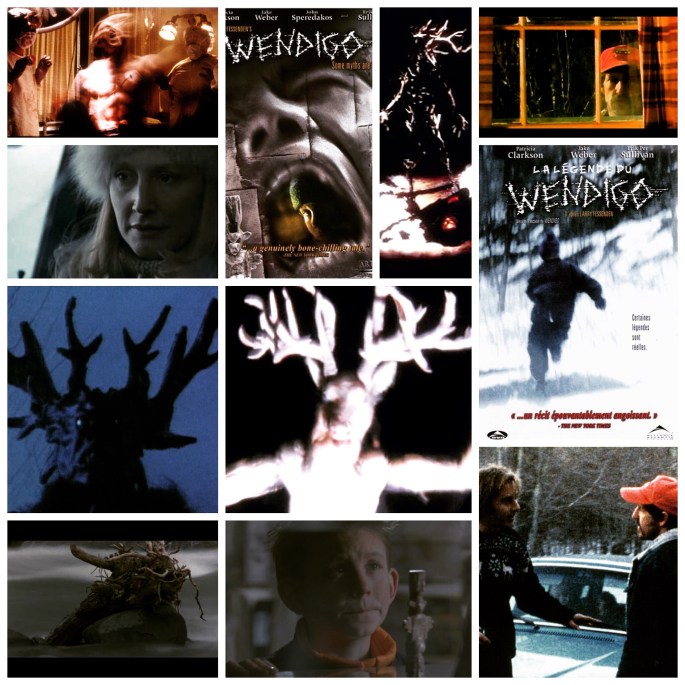
Larry Fessenden’s Wendigo is a film that has stuck with me since I saw it years ago, a glowing textbook example on how to create chilly, effective and engrossing horror on a minimal budget, to maximum creepy effect. Set in the snowy drifts of Upstate New York in the dead of winter, a stressed out family heads up to a remote cottage for a rest. Following an accident, a dead deer and the subsequent altercations with angry locals, things take a turn for the supernatural as some dark force takes up residence on the cottage grounds, shaking the family to their collective core. There’s an old legend out there about a spirit called Wendigo, a vengeful ghost that latches onto traumatic events, haunting those involved often right to their graves. These poor people awakened it, and it won’t go away. Jake Weber, Patricia Clarkson and Dewey from Malcolm In The Middle are great as these folks, compelling in their sense of confusion and dread. The creature is rarely seen, save for a single stark image that I haven’t forgotten since: after the car accident, the child looks a ways up the road and sees it standing there, a freaky spectre, all shadows, antlers and such. Spooky stuff. 

-Nate Hill

Jaco Van Dormael’s Mr. Nobody 


Ever see a film that you actually can’t really, properly describe to someone? You often hear “it’s hard to describe”, but you know those ones where you really do find yourself short of a five second cocktail party summary, left with nothing to compare it to and no way to impart the contents in quick, succinct jargon? Jaco Van Dormael’s Mr. Nobody is exactly that type of film, an experience so dense, disorienting and thought provoking that one needs at least a few months after the initial viewing alone to ruminate, mull it over and meditate on what was seen before even a word of analysis is offered. On surface level it’s about a man named Nemo Nobody, played by Jared Leto in a jaw dropping, multifaceted encore of a performance. Nemo is over a hundred years old, the last mortal on an earth of now immortal humans, and he recounts his life, or many lives, rather, to a journalist. That’s the diving board that vaults into an intricate narrative full of love, grief, joy, tragedy and the peculiarities of being human. We see Nemo at hundreds of junctures of his life, penultimate crossroads where he could make either choice, but if he makes neither of them, can then see both outcomes, how they carry forward his trajectory into the future towards more crossroads, more lives, more decisions, like the infinitely branching tributaries of an ever flowing river. How would one make a film like this work onscreen, you ask? Well, not easily. The thing runs almost three hours and often gets a little caught up in itself, especially in the midsection, but it’s sheer ambition and uniquely structured storytelling carry it on wings of light, spanning through a hundred years and countless events that Nemo sees passing. He has three loves, or at least three the film focuses on: luminous Ana, played by an excellent Juno Temple and then Diane Kruger as she gets older, mentally unstable Elise (Sarah Polley) and Jean (Linh Dan Pham), all of whom help shape him or have key parts to play along the branches of his tree of life. There’s a lynchpin event from his youth upon which it all hinges though; faced with the decision to move away with his mother (Natasha Little) as her train leaves, or stay behind with his father (Rhys Ifans), the boy begins to run, but also looks back. This nano-moment is the key to eternity here, the introspective Big Bang that gives way to our story. At times the film lags, and the slack could have been pulled tighter during the development of the three relationships, but the first and third acts that bookend the whole thing move along like the forces unseen around us, using cinematic tools to compose a symphony of motion, music, scientific pondering and emotional resonance. No other film is like this one, and my attempts to describe it above still just don’t even scratch the surface of the dreams found within its runtime. There’s only a few other ones out there that have aspirations as cosmic as this one, and most, including this, have made it into my personal canon of favourites. Darren Aronofsky’s The Fountain, The Wachowski’s Cloud Atlas and Terence Malick’s Tree Of Life are such films, and Mr. Nobody now sits at their table. 

-Nate Hill

B Movie Glory: The Surgeon aka Exquisite Tenderness


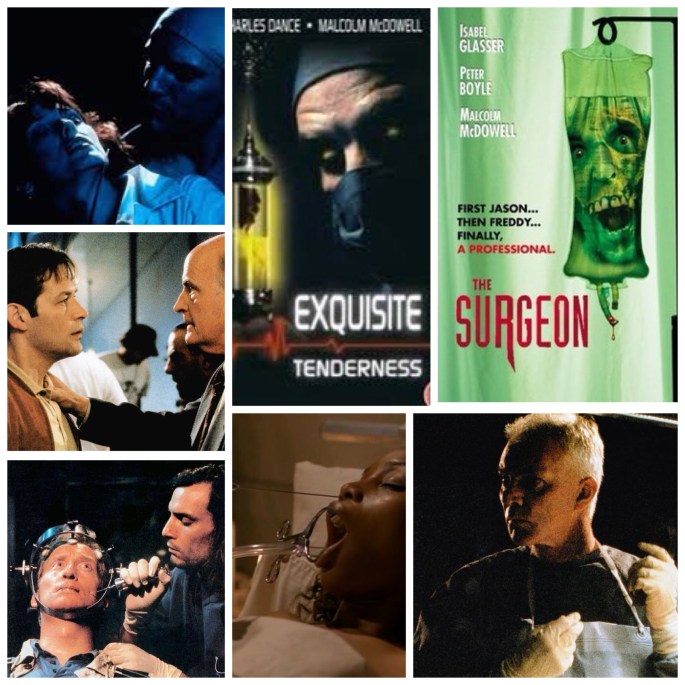
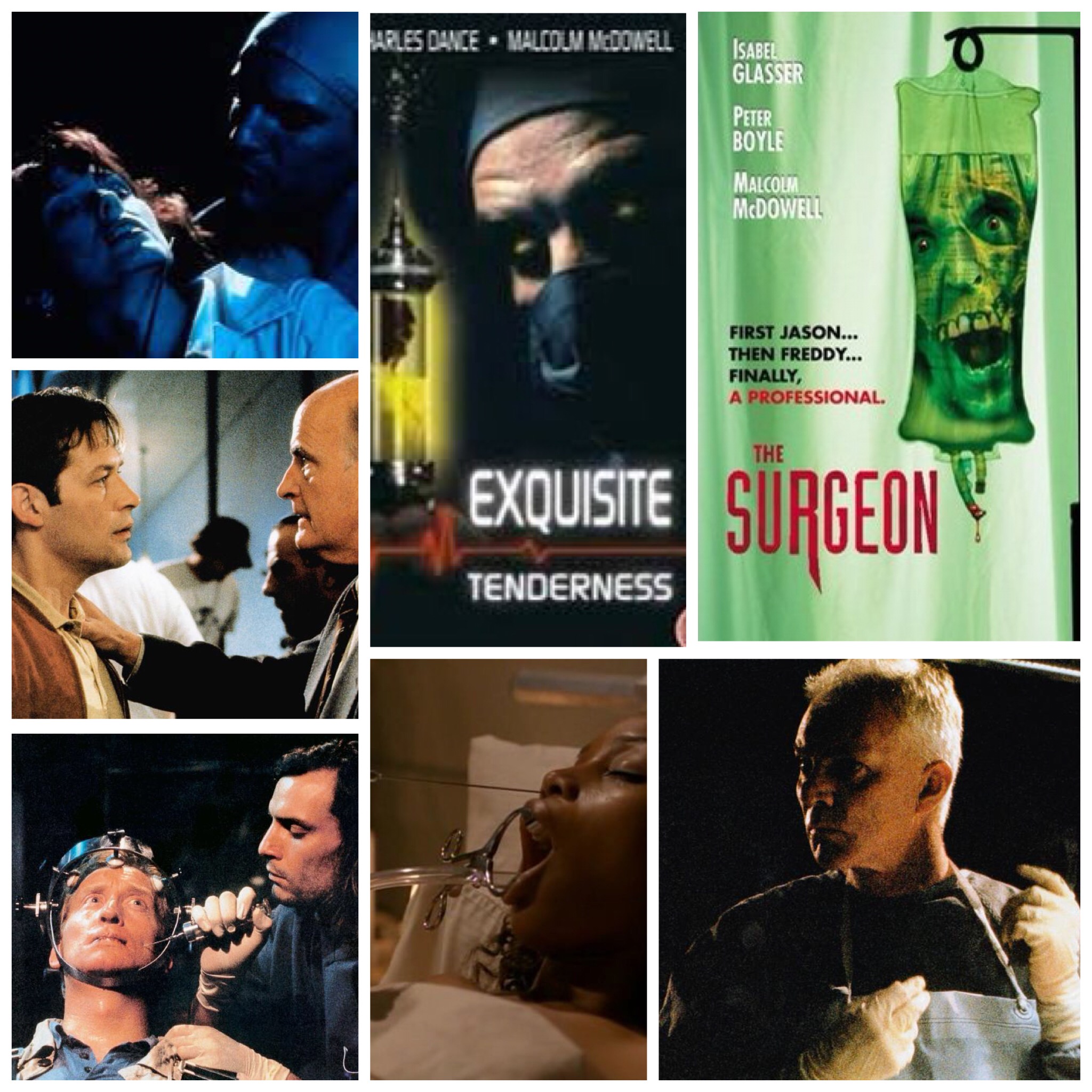
The Surgeon is an overlooked little hospital horror chiller that’s worth the price of admission just for the opening scene alone, a spooky black and white prologue in which a young boy witnesses a surgery gone horribly wrong, all set to that cheery ‘Lollipop Lollipop’ song, quite a memorable way to kick your film off. After that it’s fairly standard, as he grows up to be a scalpel wielding slasher who roams the wards of a huge hospital, killing patients, doctors and undergrads at leisure. Two intrepid doctors in training played by Isabel Glasser and James Remar are onto this beast and gradually begin to realize there’s foul play afoot, and the demented surgeon, played by Sean Haberle, continues his stealthy rampage throughout the halls. Malcolm McDowell is also there for a bit, sorely underused as an arrogant, short lived doctor who likes to trial weird drugs on chimpanzees in the basement. Peter Boyle chews scenery as a bumbling detective, Charles Dance has a fun bit and it all hurtles along like the B movie it is. That opening though, quite a well accented bit with the song, and an eerie setup for the schlock to follow. The film’s actual title on IMDB is Exquisite Tenderness, which was rebranded for DVD release as The Surgeon, which is slightly less.. European of them than the original one, but it does suit the low grade silliness. Decent stuff, for what it is. 

-Nate Hill

Alan Parker’s Angel Heart 


No other film has the seething elemental power of Alan Parker’s Angel Heart, a detective story propelled by a murder mystery, all the while cradled in the sweaty, unnerving blanket of a satanic horror story. Get the extended unrated cut if you can, as it cheerfully amps up both the queasy gore and kinky sex in spades. The time is postwar 1940’s, the setting New York, or at first anyways. Shabby private detective Harry Angel (Mickey Rourke) is hired by sinister clandestine gentleman Louis Cyphre (Robert De Niro) to find a missing lounge crooner named Johnny Favourite, for nasty reasons shrouded in thinly veiled threats. Harry is stalled at every turn, kept just out of the loop on every plot twist and soon seems to be a magnet for violence, troubling hallucinations and all the eerie hallmarks of a case he should have stayed far away from. The grisly clues lead him from Brooklyn to the smoky ghettos of Harlem, then south to voodoo soaked swamps of Louisiana and beyond, chasing illusory information and feeling more like the hunted than the hunter with each step. The film feels at times like a shrinking steel cage of unease and dread, a trap that closes in on both Harry and the viewer until the soul crushing revelations of the final act have been laid bare. This is hands down the best work Rourke has ever done, and it’s priceless listening to him try and to downplay it on the DVD commentary, classic ice cool Mickey. De Niro is the kind of quietly dangerous that leaves a deadly vacuum in the air of each scene, underplaying evil expertly and laying down more mystic mood by simply peeling a boiled egg than most actors could with a twenty page monologue. Ex Cosby Show darling Lisa Bonet sauces up her image here as a Bayou voodoo princess with ties to the mystery, and the steamy, no holds barred sex romp she has with Rourke has since become the stuff of legend, a feverish cascade of blood and other bodily fluid that almost gave the MPAA a coronary. The one area this film excels at most is atmosphere; there’s something intangibly wild about everything we see, hear and feel on Harry’s journey, from the supernatural tinged, noirish hues of Michael Seresin’s cinematography to the haunted, hollow tones of Trevor Jones’s baroque, restless original score, everything contributes to forging a world in which we feel enveloped in and can’t quite shake after, like a bad dream that creeps out into waking life for a while after the night. Angel Heart is a horror classic, a blood red gem amongst genre fare and one in an elite group of films that are pretty much as close to perfect as can be. 

-Nate Hill

John Carpenter’s Halloween

Halloween

1978.  Directed by John Carpenter.

download.jpg

Plausible nightmares are one of the most engrossing forms of horror.  John Carpenter’s legendary film Halloween, uses a simple premise, devoid of supernatural influence, to construct a muted Giallo homage that uses outstanding compositions and wonderfully understated performances to present a homespun tale of suburban terror.

On Halloween night in 1963, six year old Michael Myers repeatedly stabs his sister to death with a kitchen knife.  Michael is then placed in a mental hospital and his therapist, Dr. Loomis spends the next 15 years trying to heal the child’s fractured sanity.  On Halloween night in 1978, Michael escapes from the sanitarium and returns home to resume his unfinished killing spree.  He sets his sights on Laurie, a teenager who is having a party with several of her friends.  Loomis pursues Michael, planning to set a trap, however Michael has other plans in store for this very special All Hallows’ Eve.

download.png

Carpenter’s direction uses artistic discretion and eerie lighting effects to masterful ends, presenting the events of the film as a possible reality in which the blurred and obscured backgrounds are filled with true evil, and it is their contrast with the red blooded American victims that is so unforgettable.  Jaime Lee Curtis does an admirable job as one of the first incarnations of the American “scream queen”, but even her role is subdued.  Carpenter outright refuses to allow anything to rise to the level of parody, imprisoning the teenage cast  in a pubescent purgatory.  Starting a long held horror film tradition of the victims being the ones to engage in substance abuse and sex, Halloween’s brilliant narrative conceit is that its killer is not overly intelligent, but simply opportunistic and inhumanely relentless.

Long time collaborator Dean Cundey’s cinematography captures the precise blocking of the cast with vivid close ups that use blurred backgrounds to present Myers as a spectral force.  Shadows and light are manipulated in such a fashion that even the most innocent looking hallway is presented as a diabolic jack in the box waiting to unleash it’s malicious payload anytime a character deigns to walk down one alone.  One of the best scenes involves a looming shot of a crowd of mental patients in a field at night, their white gowns wandering aimlessly through a rainstorm, partially illuminated by a car’s fluttering headlights, giving the viewer a taste off the atrocities that Michael endured to make him the monster that he has become.

download (1).jpg

Made on a shoestring budget, Carpenter’s quiet mastery of every element of this film is what makes it so cherished.  From Carpenter’s iconic, character-like score to the dime store William Shatner mask that Michael dons prior to his rampage, Halloween is a film in which small, intimate details meld together into a murderous magnum opus.  Light on the blood and heavy on the suspense, Carpenter’s control is meticulous.  Considering that many of Halloween’s influences and contemporaries were exploring the boundaries of the medium and creating visual mind benders and extreme splatter features, Carpenter’s minimalist approach was the perfect counterbalance, appealing to mainstream audiences with an organic and morbidly possible story line.

Available now for digital rental, this is a film that requires no selling.  An all time trick or treat classic, Halloween is the best film ever made for the October holiday season.  A stripped down horror epic whose paramount craft is the result of its astute director, the incomparable John Carpenter.

Highly.  Highly Recommend.

download (2).jpg