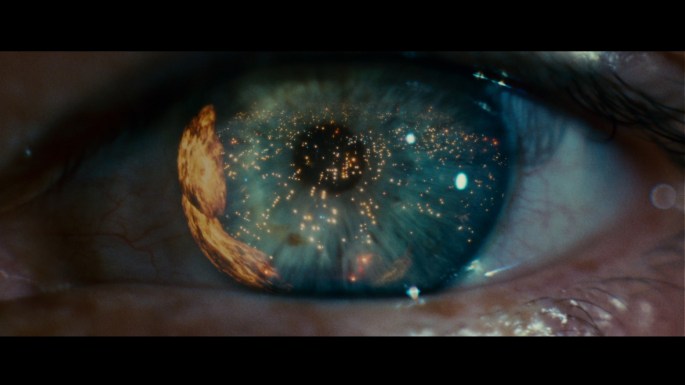
The Boring and the Beautiful…

Blade-Runner-2049-trailer-human-chambers

I was late to the movie. I hate that. Not a parking space in sight and having to walk a bloody mile on a hot and humid day.

The cool interior of the cinema gave me comfort and, hoping the number of trailers and commercials they usually play these days was at its regular maximum and still going on as I purchased my ticket for Blade Runner 2049 – I was hopeful. But no, I missed a bit of the start.

But what struck me right off the bat as I took my seat and wiped the sweat from my brow, was the tail end of something I had seen before – something that had at one time been intended for the first Blade Runner but never used. It was a part of the most excellent Dangerous Days documentary which was included with the release of The Final Cut some years ago. It was a scene meant to open the Scott masterwork. “Soup boiling in a pot,” Hampton Fancher had said.

blade-runner-2049-6

But I missed most of it, so I can’t really be sure. But the tail end I saw looked spookily reminiscent of those unused storyboards for that unused opening.

I have stated before that I am forever wary of a film that is, for the most part, praised to the heavens for its cinematography. Deakins should have taken home a statue long before now, but I’d say that it is a safe bet he’ll have one in his swag this time when awards season rolls ‘round.

Yes 2049 is stunning to look at. But what else is there? There’s the rub.

No one ever mentions Pinocchio when they talk about Blade Runner. It is a theme I believe that lies somewhere near the heart of it. The search for reality, for what makes us real, feel real, think real, act real. The first film was about the search for what defines us as human. This second seems preoccupied with the acceptance of what is, coupled with the desire to be more, or all you can be.

Blade-Runner-2049-Car

It is a dusty, hazy, wet, baron, bleak world Villeneuve conjures. And don’t misunderstand, I like long movies. The last of this ilk I really enjoyed was the often dismissed The Assassination of Jesse James by the coward Robert Ford, ironically also photographed by Deakins.

The smooth and languid pace is belied by the thumping, buzzing and humming of Wallfisch and Zimmer. In some parts it could be a Tibetan monastery and in others the inside of a sawmill. This doesn’t dance over the top of the story of Lars and the Virtual Girl as nicely as I think Vangelis would have played. And the mystery of the bones was interesting if not as, I thought, compelling as the complicated splendour of the story of a boy and his hologram, Joi and Joe. Hey, Robin Wright is in another movie, thanks Wonder Woman.

Blade-Runner-2049-trailer-2-36

Jared Leto is visually impaired and kind of sadistic, also throwaway, but his robo-chick assistant is better. She is sinister in a quiet, cool way, and she can be devastating while getting her nails done.

Eddie Olmos makes a sheep.

Look I know this is blunt and cynical. I fell asleep a couple of times watching this. I can’t drink the pretentious Kool-Aid, I’m sorry. There were parts that genuinely had me. The idea that, and I may be totally wrong here, Dr. Ana Stelline, The Memory Maker, used K’s memories to help her find Dad Ford, I like that. But I may be wrong about it. But consider the end of Scott’s film. Deckard sees unicorns, Gaff leaves him a unicorn. K’s dying in the snow, inside Stelline is conjuring snow?

blade-runner-2049-trailer-1

The thing is this. Time made Blade Runner the masterpiece it is. It was not venerated when it first came out. Sure there were the makings of those who would grow up and tell the rest of the fan base, “See, told you so!”

Will that happen with 2049? Truth is I’ve seen things you people wouldn’t believe . . . sorry, had to do it. But seriously – this scenario I remember seeing before. It was in Hiroyuki Ochi’s 1995 Armitage III: Poly-Matrix (English language version featuring the voices of Kiefer “Lost Boy” Sutherland & Elizabeth “Showgirl” Berkley). Check it out and I challenge you not to find the comparisons.

blade-runner-2049-ford-dog

2049 though, yes, I will watch it again. It is the kind of film you should not be tired while watching. After all I want to see that opening in full; even though I get the feeling it will not have that beautiful simplicity of those unused now recycled storyboards. I hope there is a good extras package with the release. I don’t hold out hope for something as elegant and all-encompassing as Dangerous Days, after all, it took 20 years for that to form out of what was, became and eventuated out of the original Blade Runner.

A couple of my learned colleagues in this film writing game have made such pronouncements as, and I’m paraphrasing: “this is the cinematic event of the century,” and “at least they tried this time, that should be respected.” Yes they (The Movie Gods) did try, they gave it a bloody good go at trying to bring forth a sequel to stand next to, if not shoulder to shoulder, with an iconic piece of filmmaking and yes, it should certainly be respected. But did they ultimately succeed?

Blade-Runner-2049-trailer-breakdown-37

The cinematic event of the century – well – for me the century isn’t over and I probably won’t be around when it is so I’m going to jump in with a Castaway reference here and say: “Who knows what the tide will bring.”

Time has prepared them. That was a line, a comment, from the Dangerous Days documentary that was ringing in my head when I came out of the theatre to begin the long sweaty trek back to my car. Time has prepared them. It was in reference to what we witnessed all those years ago when another film with Blade Runner in the title was new in theatres. It took time, the ultimate critic some say, to forge that film and see it take its place in the pantheon of great cinema.

Perhaps another look at another time might alter my thinking, but, for right now this is where I’m at.

blade-runner-2049-movie-screenshots

I wanted a Batty monologue as K passed away. I wanted David Peoples to pick up the pen and maybe have Gosling add his bit to it as that familiar music played.

There is a version of Batty’s final words that I recalled on my way back to the car.

“with sweat in my eyes watching the stars fight on the shoulder of Orion. I’ve felt the wind in my hair, riding test boats off the black galaxies and seen an attack fleet burn like a match and disappear. I’ve seen it . . . felt it!”

19d1e9a9bb992636f47a2195c1f63224

Maybe today I saw it, but I just wasn’t feeling it?

Will Blade Runner 2049 be lost in time, like tears in rain?

Perhaps time will prepare me?


Still, as ever, happy viewing…

The Dude in the Audience.

bhbh


“I’ve seen things you people wouldn’t believe.” A review of Blade Runner The Final Cut – by Josh Hains 

I remember the first time I saw Blade Runner: The Final Cut as if it happened earlier this week, and not four or five years ago. I believe it was 2014 when I watched it, but I could be wrong. I’d recorded the movie on my DVR off the Movie Channel, it was early one morning sometime after 9 am, and I thought I’d see what all the fuss regarding this cut was about. Prior to this, I had seen the Director’s Cut and The Theatrical cut in full once each, and bits and pieces of both of those cut multiple times on TV over the years. I didn’t think much of Blade Runner prior to this occasion. I could appreciate the craftsmanship of the movie, and liked it, but it didn’t have the profound impact on me that I had heard others talk about. I felt underwhelmed, let down, disappointed. I wanted to love the movie the way others did, but just couldn’t. Then I saw The Final Cut. 

It’s easy to say that from frame one I was hooked, and it’s even easier to use all kinds of elaborate and colourful words to express how beautiful those opening moments are. But I’m being honest when I tell you that The Final Cut made my jaw drop right from the first frame, and from there on I was hooked like a fish. That Vangelis score had been humming in my ears for nearly three minutes by the time the plumes of fire billowed across the L.A. cityscape, flying cars screamed toward the building of the Tyrell corporation, before the flames danced in the eye of the Blade Runner called Holden, and my jaw fell in awe at the sublime sight of it all. 

35 years later I expect you may know the plot of Blade Runner by now. Rick Deckard (Harrison Ford), a Blade Runner for the LAPD, is tasked by Bryant and Gaff (M. Emmet Walsh and Edward James Olmos, respectively) with tracking down and retiring (killing) four Nexus 6 replicants (human-like androids that are deemed illegal on Earth), including Roy Batty (Rutgers Hauer), who seeks his maker for longer life, as Nexus 6 replicants only have a four year life span. The very nature of this particular job causes Deckard to call into question his own morality and identity, the meaning of life itself, and his own existence. 

Sci-fi neo-noir detective stories are few and far between, but the best of them (including Blade Runner and it equally terrific sequel Blade Runner 2049, both written by the brilliant Hampton Fancher) will stick around for a long time coming, and it’s not because of their plots, which always start out seeming overly complex, but wind up being rather simple once you’ve pieced them together properly. I know that what has caused Blade Runner to stay with me like dirt under my fingernails doesn’t have anything to do with plot, story, or even for the most part, acting. No, what’s stayed with me for so long has always been the feeling I get while watching the movie. Between the gorgeous cinematography and haunting synthesizer induced score, I simply find myself in awe of the sublime nature of the sights and sounds of this Blade Runner world. 

When a replicant is fleeing Deckard midway into the movie, crashing through large panes of glass while blasts from Deckard’s police issue sidearm crash into her body while the melancholic Vangelis score chimes in your ear, I feel the same sense of awe that fills my body and mind that the opening sequence also gives me. Or later, when Roy Batty is delivering a brief monologue about things he’s seen, beautiful amazing things we couldn’t possibly fathom described so simply yet so elegantly, as if pulled from a work of poetry, I once again find myself swept up in awe. 

A good movie can show and tell you various things that will surely entertain you in many ways, but a great film has the power to make you feel something profound. Sometimes we remember a movie for a great iconic quote, or a stylish well choreographed action sequence, or a barrage of snappy conversational dialogue, or even a heap of gut busting jokes. But what tends to stick with us more are are the feelings we get while we watch them. Jaws puts us on edge, anticipating what’s to come with whitened knuckles until we jump out of our seats frightened by the shark erupting from the bowels of the sea. No Country For Old Men makes us care deeply for Llewellyn Moss and Sheriff Ed Tom Bell, and when they could be in peril (especially the former), we fear for them, our bodies tense just like when we watch Jaws, and then we ease when they survive the latest potential threat. 

Blade Runner makes me fearful for the safety of Deckard, makes me hope that Deckard can retire the replicants and survive the day, then settle down and try live some semblance of a normal life with the replicant he grows to love (and is supposed to retire) named Rachael (Sean Young). It makes me want to follow Deckard around around this futuristic Los Angeles and take in every sight and sound the master Ridley Scott doesn’t show us. When Roy Batty says; “I’ve seen things you people wouldn’t believe. Attack ships on fire off the shoulder of Orion. I watched C-beams glitter in the dark near the Tannhauser gate.”; I believe him, and I wish I could have been there to bear witness to those visual wonders of their beautiful nightmare world. 

Seeing what becomes of Deckard and Los Angeles in Blade Runner 2049, I think I will wish even more now with future viewings of Blade Runner, that I could have joined Deckard and Batty in seeing these unbelievable sights of that world at that specific time, for those moments have truly become lost in time. Like tears in rain. 

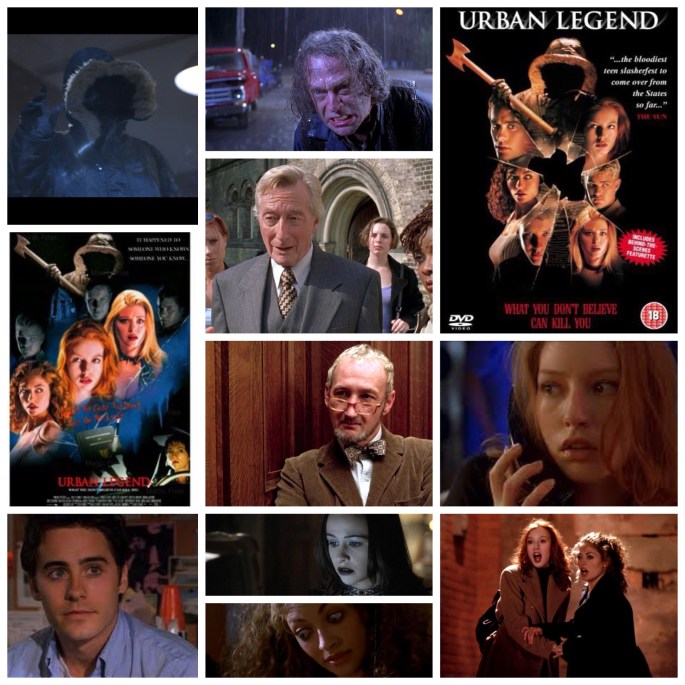
Urban Legend

Urban Legend is pretty much like Scream, but a lot less meta and a bit more atmosphere, unfolding as you’d expect it to, with a group of college kids getting killed in bizarre circumstances that all relate to half whispered local myths. One of their professors is Freddy Krueger himself, Robert Englund, and who better to lay down the tongue in cheek groundwork than such a familiar face and expressive, dynamic presence like him. Looking back on this it’s fairly shocking how terrific of a cast it has and how it’s been mostly forgotten in the annals of slasher archives. Jared Leto, Alicia Witt, Rebecca Gayheart, Joshua Jackson, Tara Reid, Natasha Gregson Warner and Danielle Harris headline as the varied campus rats, with Harris a standout as the obnoxious bitchy goth stereotype, far from her timid Jamie Lloyd in the Halloween films. There’s a prologue cameo from horror vet Brad Dourif as well as appearances from Loretta Devine, Julian Richings, Michael Rosenbaum and a priceless John Neville, getting all the best lines as the college’s salty Dean. The kills are all done in high 90’s style, the story takes a Scream-esque twisty turn in the third act and as far as atmosphere goes, it pretty much outdoes the ol’ ghostface franchise. Spooky good time. 

-Nate Hill

Denis Villeneuve’s Blade Runner 2049: Thoughts from Nate Hill


As I settled in to watch Denis Villeneuve’s Blade Runner: 2049 in a thundering imax theatre, I truly did not know what to expect. I’d successfully avoided spoilers up until that point, done a scant bit of reading hither and thither on a surface level, and obviously been privy to the mind boggling, overwhelmingly positive buzz that’s been flowing forth since the first critics were screened. ‘Masterpiece’, ‘Movie even of the century’ and ‘instant classic’ were some of the lofty adulations that were being hurled around right out of the gate, and it’s not often a sequel to such a long worshipped, culturally influential bombshell of a science fiction film has been welcomed so eagerly and almost unanimously praised. There’s been a gulf of time between Ridley Scott’s 1982 neon fever dream, which is indeed a masterpiece and one of my favourite films of all time, and the shoes to fill have never, ever been bigger. So, does it live up to the original? Is it better? Worse? Pandering fan service or bold pioneer trek into new galaxies of thematic and tonal exploration? The answers to those questions are somewhat more complicated than yes, no or similar succinct absolutes. I can say, however, that Villeneuve’s near three hour machine-dream is one of the most beautiful, ambitious, thoughtful, well wrought films I’ve ever seen, a staggering achievement in all arenas and indeed a piece of cinema they’ll be talking about for years to come. It’s a masterpiece on its own terms, blending elements of the original which we all loved, but bravely surging forward into it’s own brand new chapter of this world, a little bleaker and more austere than the poetic lullabies of Scott’s L.A., yet no less wondrous or sumptuous a creation. This is a world where quite a bit of time has passed since the initial story, and the environment these characters dwell in has shifted along with it. Los Angeles is wearier, emptier and less of a gong show than we remember, yet the buzzing life that we recall catching fleeting glimpses of between monolithic, impossibly gigantic skyscrapers is still there, that endless nocturnal hum has thrived through into a new age. So too have replicants, now far more advanced, under the label and stewardship of Niander Wallace (Jared Leto) and his mega corporation. Ryan Gosling plays a young blade Runner, a profession, it seems, that has not run out of supply in demand. Under the very stern watch of LAPD Captain Joshi (Robin Wright, terrific) he navigates a meticulously paced detective story that, yes, eventually leads him to missing former Blade Runner Rick Deckerd, played by Harrison Ford in one staggeringly well pitched performance. That’s all I’ll really be specific about in terms of plot, because it’s a gorgeously wrapped present that should be opened corner by corner, inch by inch until the viewer has actively and emotionally seen the big picture, a thoughtful process that challenges the audience and should be the standard not just for science fiction, but for big budget films in general. While Blade Runner 1982 was a visual and musical feast for the senses and still maintains that edge over it’s sequel, 2049 has a cerebral and multifaceted patchwork quilt of themes, questions and notions that play across the screen like a ballet of auroral, magnificent wonders, layered, ponderous cinema with an emotional weight and resonance that took me right off guard, a quality that although present in 1982, wasn’t quite as developed as what we get here. Hans Zimmer’s score is every bit the thundering piece you’d expect and is brilliant, a slightly industrialized departure from the lyrical, ethereal tones of Vangelis, but equally as captivating. I could go on, but I’ll let you see the thing for yourself and paint your own picture. I’ll say this: Blade Runner 1982 is the rainbow coloured light shone through a prism, abstract, illusory and trancelike. 2049 is the prism itself, the source of the light and the place where it’s understood from a more conscious, waking-life perspective, and that’s the closest I can get to explaining just how different these films are from each other. One is a dream poem, the other is a deep methodical meditation, but both are vital halves of the mythology. However you look at it, Villeneuve’s 2049 is astounding, achingly beautiful work on every level, not to mention the work of everyone’s favourite unsung maestro, cinematographer Roger Deakins. This is an important film, as it may just hasten the exodus of brainless big budget fluff and help Hollywood enter a golden age of well crafted, intelligent blockbuster films once again. One can dream.

-Nate Hill

“You’ve never seen a miracle.” A spoiler free review of Blade Runner 2049 – by Josh Hains 

I can understand why there are some people out there who don’t like this movie. In 1982 Blade Runner wasn’t made for the masses. It was an expensive arthouse sci-fi neo-noir detective story that critics loathed and most couldn’t make heads or tails of. Only over time and through multiple cuts did the movie gain the legendary cult status it carries today. Blade Runner 2049 feels cut from the same cloth. It’s not for everyone, there are those who have seen it and don’t like it, and there will be others who join them over time. Like its predecessor, it’s not an easily accessible movie that everyone can sink their teeth into and enjoy. It’s less easily categorized by younger overtly politically correct audiences that brand everything in sight with unnecessary dehumanizing labels, and given the reputation of its predecessor, it doesn’t much matter who loves or hates it. This movie is for Blade Runner fans, made by a man who calls Blade Runner his favourite movie, likely to grow into a legendary cult status just like Blade Runner before it. It’s better this way.

Blade Runner 2049 follows K (Ryan Gosling), a Blade Runner for the LAPD. It’s his job to track down Nexus 8 replicants and retire them, and he’s quite good at it. He uncovers information that could spark a war between replicants and humans, and sets out to find the long missing, rumored dead Rick Deckard (Harrison Ford), the legendary Blade Runner from the original film. That’s as far as I’ll get into plot details, it’s obviously better to know little about the actual plot of this movie, despite the plot being pretty easy to piece together. Anyone familiar with film noir ought to know by now that the plot of a noir is never the focus. In noir, plot is a McGuffin, something we the audience chase, much like Sam Spade trying to find the Maltese Falcon, and while the pieces usually fit together rather nicely by films end (unless we’re talking about Night Moves, the 1975 Gene Hackman starring noir detective yarn), the plot is never why you watch a noir, such is the case here.

For the last few years it has said a lot to me when I can count the number of problems I have with a movie on just one hand. In the case of Blade Runner 2049, there were two performances that felt culled from a totally different, and weird, movie. But I chose to overlook those while I was watching the movie, because one performance occupied just one scene, while the other only took up three long scenes (it might have been four, but I could be wrong). Nothing else sticks out in my mind.

Roger Deakins has outdone nearly his entire filmography of gorgeous, spellbinding cinematography, save for The Assassination of Jesse James By The Coward Robert Ford, which still might be his finest work to date. With the exception of the two performers who will go unnamed, the rest of the cast provided their best performances to date, especially Gosling, Ford, Ana de Armas, and Dave Bautista. And Denis Villeneuve, working from a great script by original Blade Runner screenwriter Hampton Fancher, and Michael Green (watch American Gods, the Starz series he collaborated on with Bryan Fuller and author Neil Gaiman), and with original director Ridley Scott producing, has crafted a worthy sequel to Blade Runner that captures everything I love about the original yet also feels new, fresh, and exciting.

I don’t know if there’s a such thing as a perfect movie. Maybe there is, and if that’s the case then I’ve seen quite a few. Lawrence Of Arabia, The Godfather Part II, Jaws, and L.A. Confidential, to name a few. And if there’s no such thing as a perfect movie, and if that should be the case then I’ve seen ample imperfect movies that somehow seem perfect amidst whatever flaws others have found in them. I could complain about the first roughly two hours of 2049 feeling like one drawn out (but so damn good) tease leading up to everything I really wanted to see (which takes place in the third act of the film), but I enjoyed all of it so much, so why bother?

When the year started and I had the first teaser trailer for Blade Runner 2049 to watch on a loop, I hoped it would live up to my own expectations. I wasn’t hoping for a movie that would blow my mind six ways to Sunday and change my life somehow. I wasn’t hoping for some easily categorizable, digestible, flawless masterpiece. All I wanted and hoped for was a sequel that would feel like the natural progression of the story I love so much in Blade Runner, that would look born from the same universe yet unique to itself, and would make me feel the way I do when I watch Blade Runner: The Final Cut: awestruck, mesmerized, subtly moved. What I watched Sunday night did exactly that for nearly three hours, and won’t soon be lost in time, like tears in rain.

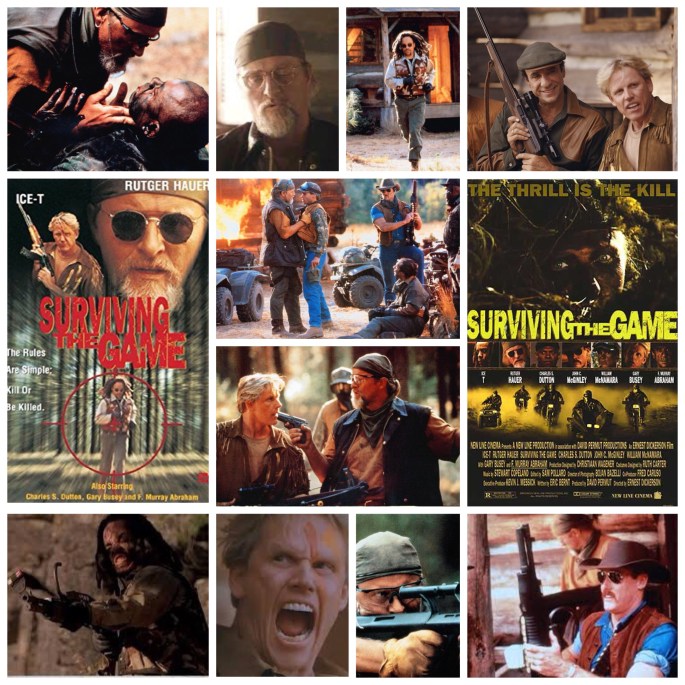
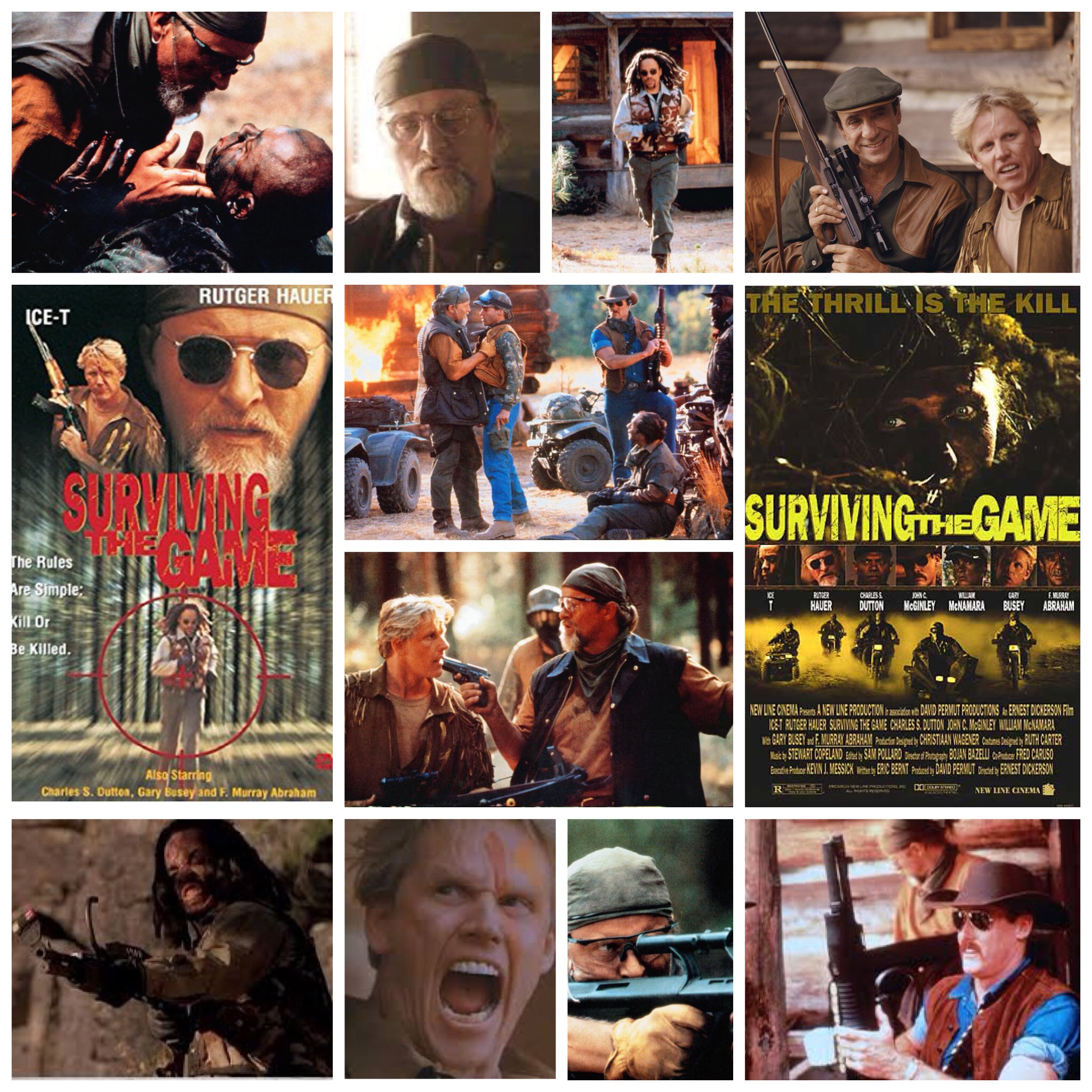
B Movie Glory: Ernest Dickerson’s Surviving The Game


There’s a whole bushel of ‘Most Dangerous Game’ films out there, tweaked versions of the same motif in which human beings are hunted for sport, and often large sums of money as well. Surviving The Game is probably the most bombastic and excessive one (John Woo’s Hard Target is the way to go if you want something slicker), but it’s a hoot of a flick, a dingy, mean spirited exploitation piece with an eccentric cast and thrills right up to the last scene. Ice T stars here under a giant heap of dreadlocks, playing a grumpy homeless man who is approached by an alleged social worker (Charles S. Dutton, intense) and offered help in the form of some vague rehab program way out in the woods. Soon he’s out in the woods at the remote retreat run by a sinister ex military Rutger Hauer, joined by other oddballs from all walks of life including F. Murray Abraham and a hopelessly coked out Gary Busey, who chews enough scenery that those giant teeth of his actually go to good use. This is no sabbatical though, as Ice soon finds out, and before he knows it he’s scrambling through the wilderness for his life as Hauer & Co. pursue him with a giddy amount of heavy artillery. The film isn’t interested in the morality or ethics of it’s concept, it’s here for a down n’ dirty romp and not much else, as long as you’re in popcorn mode you’ll get a kick out of it. Hauer is intense as ever, with some inspired costume choices and that ever present half smirk that signals danger and violence aren’t far off the horizon. Busey is certifiably, completely off his head, spouting monologues that weren’t even in the script (Hauer’s autobiography provides hilarious behind the scenes insight) and staring down everything that moves in true loosey Busey fashion. Throw in a manic John C. McGinley as well and you’ve got just about as much crazy as the film can handle. The combat hunting scenes really are impressive and thrilling, well staged stunts against a wilderness backdrop and raucous gunplay all round. An oddball of a flick, in the best way. 

-Nate Hill

Pet Cemetary II


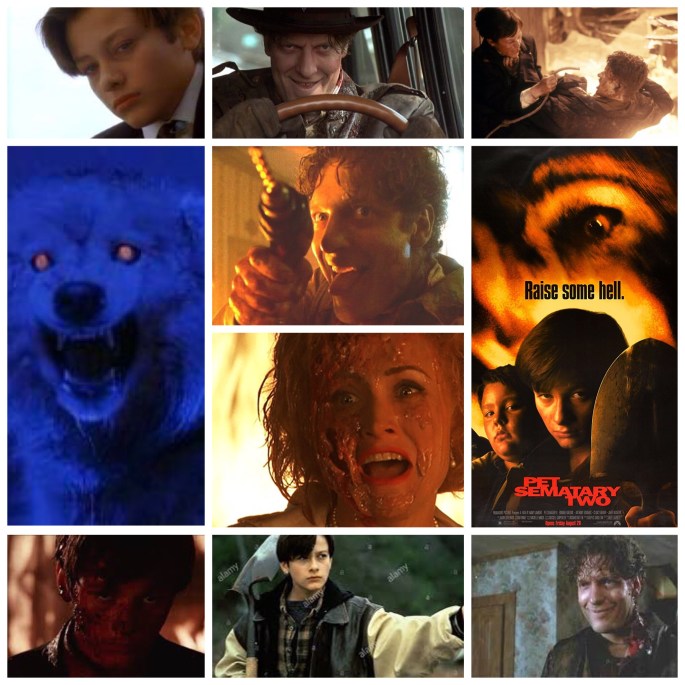
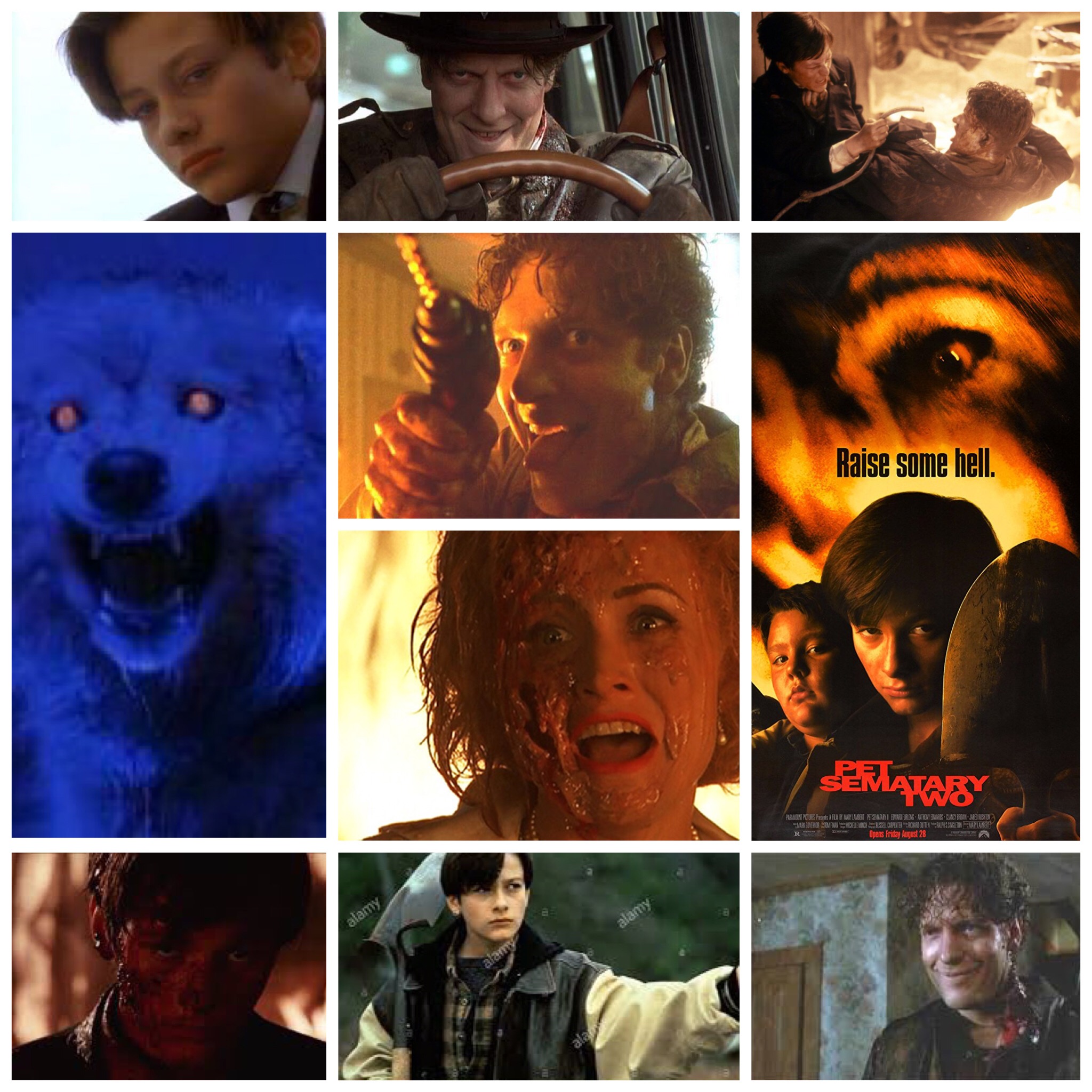
Pet Cemetery II never gets much love or accolades, and while the first isn’t a bad effort, the sequel kind of blows it out of the water by being just bonkers crazy in general. Edward ‘John Connor’ Furlong plays an unfortunate youngster who stumbles into the same macabre Indian burial ground, causing all manner of havoc in his small town. The real asset the film has is actor Clancy Brown, a huge talent who has an utter ball as Sheriff Gus Gilbert, a nasty prick who gets much worse when some ghostly entity takes up residence inside him and stirs shit up. Imagine the farmer with the alien in him from the first Men In Black only more scarily rambunctious and you’ll have some idea. Brown’s performance is a deranged opus of physical comedy and hyped up lunacy. “ Why did you dig up my mom’s body?” asks his bewildered stepson (Jason McGuire) “Because I wanted to fuck her!!” growls Clancy in retort. Such is the demented level of dark comedy that gets served up alongside the gore, which in itself is plentiful as well. It’s a sequel and as such isn’t based on a Stephen King book like the first, but it still manages to finds a writing groove and gruesome set pieces, including a spectacularly ooey gooey third act. Cool stuff.
-Nate Hill

Stephen King’s Gerald’s Game


Stephen King’s Gerald’s Game is exactly what horror/thrillers should aspire to be: devilishly well written, engagingly acted, crisply directed and scary enough to wake the dead. Presented on the Netflix platform with their trademark lack of marketing (they tend to hurl out content willy nilly, sans fanfare), it’s just shown up and is already one of the best horror films I’ve seen all year. Carla Gugino and Bruce Greenwood give encore performances and the best work of their careers as a couple who make their way to a cottage in the country, trying to spice up the ol’ marriage. When Brucie has a nice heart attack mid-foreplay (he popped a few of those magic blue pills), Carla is stuck handcuffed to the bed in the middle of nowhere, with no one for company except a mangy stray dog that begins to take chunks out of dead Bruce. So begins a fiercely internal, visceral psychological survival story, a brutal chamber piece that delves into her twisted childhood, troubled marriage and churns forth a tale to curl the pain on the cabin walls. There’s hallucinations, inner monologues, squirm-inducing gore, elliptical mind games and a pseudo-twist ending that had me shuddering into the couch. Gugino has never been more intense, believable or varied in her work, turning this character into something potent and tangible, bringing her past trauma and fight for survival to screaming life. Greenwood is smart, witty and so darkly funny it’s tough now to picture him as the stoic, emotionally shut off archetype he usually has embodied before this film. Additional work from ET’s now eerily grown up Henry Thomas and Twin Peak’s ginormous Carel Stryucken (terrifying here) adds class and distinction. The show belongs to Carla and Bruce, and what a show they put on, feasting on the rich, textured dialogue and playing sandbox in the story that uses depth, character and genuine menace to lasso us right in. In a year that’s seen at least one King novel unforgivably bastardized, and one other given the solid yet flawed and incomplete treatment, it’s reassuring to find one that comes up pretty much perfect in every way. Kudos to Netflix, the two leads and everyone else involved. 
-Nate Hill

The Last Word with Stuart Fink

Image result for the last word poster


Stuart Fink

Frank is joined by screenwriter Stuart Fink to discuss his latest film, THE LAST WORD staring Shirley MacLaine and Amanda Seyfried. The film was directed by Podcasting Them Softly’s very first guest and one of Frank’s all-time favorite filmmakers, Mark Pellington. THE LAST WORD is an incredibly sweet and heartfelt film that is currently available to stream on Amazon Prime.

B Movie Glory: Stephen Norrington’s Death Machine 

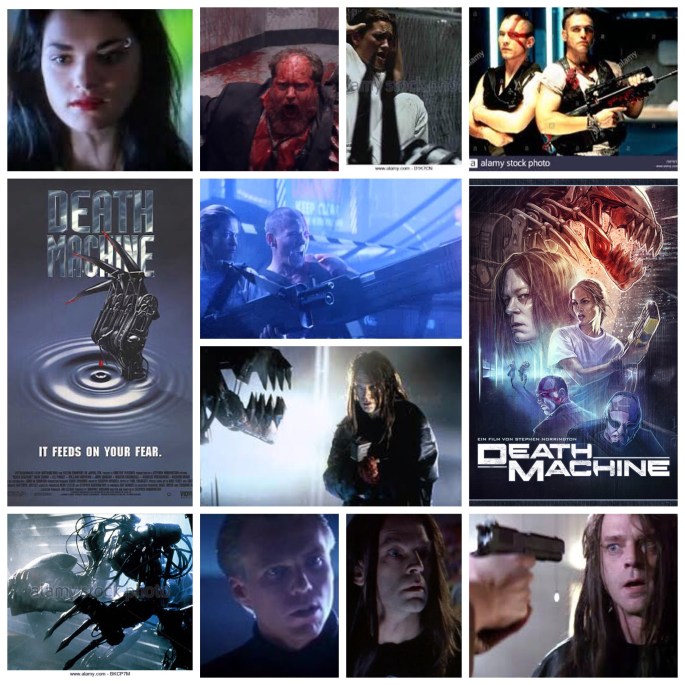
Stephen Norrington’s Death Machine whips up a knowing, near meta grind-house schlocker that harvests names, ideas and actors from other well know horror classics and churns out a wonderful little pastiche that’s clearly in love with every project influencing it, as well as the genre. In a giant m, imposing corporate high rise, the collective minds of future tech enterprise brainstorm the next best thing, but all of the are bested by creepy, psychotic designer Jack Dante (Brad Dourif) an antisocial lunatic who has designed an appropriately razor-adorned monster equipped with cunning AI, primed to tear the building, and everyone in it, to shreds. This includes the looney board of directors who all bear names lovingly similar to that of various creative minds in the horror/sci-Fi industry. Scott Ridley (The always maniacal Richard Brake), Sam Raimi (The Machinist’s master of everything unsettling, John Sharian) John Carpenter (William Hootkins) and even a pair of characters called Weyland and Yutani, all references are here and they’re not subtle whatsoever, part of the film’s charm. Dourif’s moniker is no doubt based on Gremlin’s pioneer Joe Dante, and speaking of Brad, he’s a flat out beastly delight as he turns loose a mechanical nightmare of a creation for all to be sloppily slaughtered by at some point. Bureaucracy is lampooned between decapitations and corn syrup gore, the film is never short of dark humour to garnish it’s violent pandemonium. The film is displayed a lot like Alien, and the creature itself looks not unlike a bionic xenomorph with the ability to change into all sorts of elaborate shapes, all the better to hunt you down through the tight crawl spaces and narrow ducts that made up most of 1989’s cinematic architecture. Director Norrington would go on to make his own horror classic in 1998’s Blade, and here he earns his stripes as both a vetted disciple of the genre and a thrifty low budget wizard. Watch out for Rachel Weiss, of all people, as a random board member who’s seen briefly. A howlin’ good time. 

-Nate Hill