JAMES SCHAMUS’ INDIGNATION — A REVIEW BY NICK CLEMENT

indignation_xlg

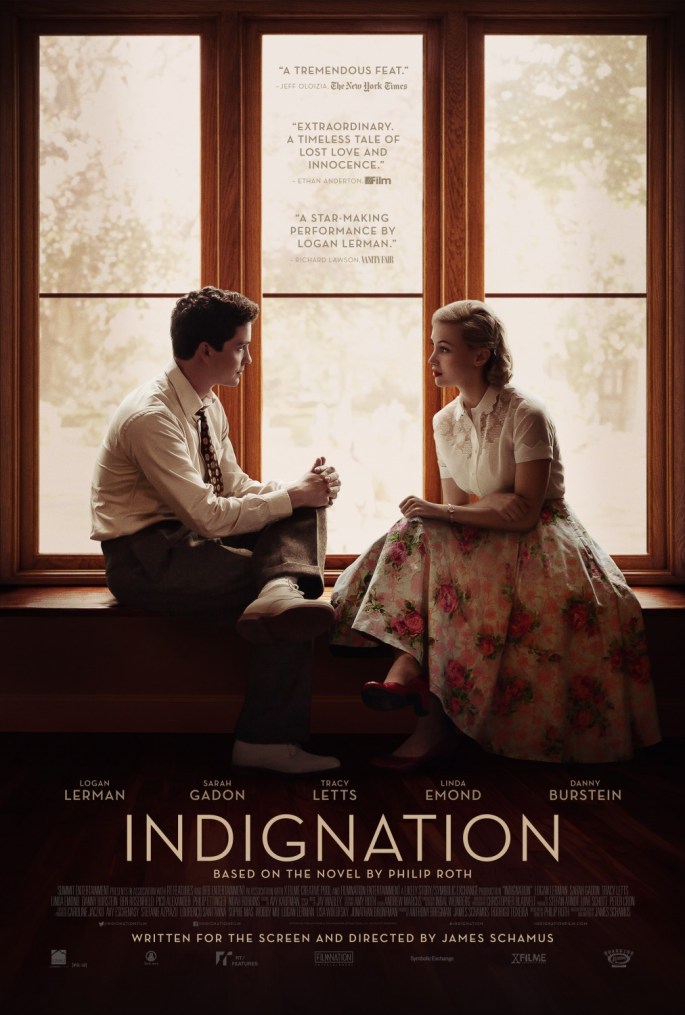
Next up on Did You Have Any Idea This Was Made And Released? is the confident and excellent 50’s-set drama Indignation, from producer/writer/scholar James Schamus, who made his directorial debut with this adaptation of Philip Roth’s novel of the same name. Schamus has, for the last 20 years, been Ang Lee’s main creative collaborator, and also found time to run Focus Features; it’s no surprise that he’d choose an intelligent and classy piece of material such as this for his first foray into full-fledged feature filmmaking. Logan Lerman, again excellent after strong work in Perks of Being a Wallflower and Fury, makes a commanding impression as a young Jewish college student, the son of a Kosher butcher, who leaves New Jersey for Ohio, and immediately has problems settling into campus life. The early scenes project a wonderful sense of time and place, which then fluidly leads into the rest of the story.
3

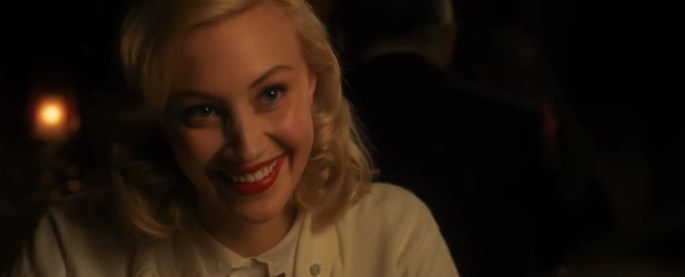
His bumbling roommates aren’t a good fit, he’s got an overbearing Dean of students (played by the tremendous and invaluable Tracy Letts), his parents are a mess, the Korean War is escalating, and he catches the eye of a sexually forward and potentially troubled female student played by Sarah Gadon (very pretty but a little dramatically flat) who changes his life forever after a very saucy (especially for the time) first date. The societal humor that’s on display during the various sexual entanglements is often very, very funny. But just you wait until the film’s dramatic centerpiece arrives in the form of a one on one confrontation between Lerman and Letts; this staggering bit of acting between the two thespians runs for close to 15 minutes and becomes nearly overwhelming by its conclusion. With rat-a-tat dialogue and the two performers heatedly reciting their lines, it’s hilarious, smart, stinging, and hugely entertaining to observe.

2

So why didn’t Indignation, which was “released” by Roadside Attractions and Summit Entertainment in the head-scratching summer movie season last year after being acquired at Sundance, have any sort of visibility in the marketplace? Beyond the fact that it’s a film that would likely appeal to a narrow audience (especially these days), I can’t figure out why the distributors didn’t even TRY to do something with this strong piece of cinema; it wasn’t even worth a fall release date as opposed to be being buried in late July? Because it should have grossed way more than the $3 million domestic that it did, and it’s much better than its 82% Rottentomatoes score (if the film opened with the Marvel logo it’d be in the 90’s). This should have been aggressively marketed to upscale audiences, with a simultaneous push onto VOD platforms at the time of its theatrical release.

1

All of the craft contributions were splendid, with period-fantastic art direction and production design by Derek Wang and Inbal Weinberg respectively; painterly cinematography that stressed dark hues from Kelly Reichardt’s favored director of photography Christopher Blauvelt; patient editing by Andrew Marcus which allowed various scenes to unfold at a smart pace for maximum dramatic impact; and a superb musical score by Jay Wadley that tied everything together.  But because the film didn’t have massive stars and nobody showed up in superhero spandex, nobody saw it, or has even heard of it. Schamus demonstrated a natural hand as a storyteller with this project, and I hope it’s financial failure doesn’t dissuade him from working again in the helmer’s chair. The title of this film is very fitting for the themes explored within the emotionally tricky narrative, and for how I feel about the direction that cinema in general is currently headed.

1

Michael Mann’s Heat

Heat

1995.  Directed by Michael Mann.

heat-1200x520

Recently re-released with a stunning 4K transfer, Michael Mann’s acclaimed L.A. crime saga Heat is arguably not only one of the greatest films in his formidable filmography, but also the pinnacle of full throttle storytelling.  Featuring a duo of searing performances by screen icons Al Pacino and Robert DeNiro, Mann’s trademark urban visuals, and one of the greatest action sequences ever filmed, Mann’s epic treatment of professional thieves and the dedicated lawmen who hunt them transports a Samurai mindset into the modern world in a hail of bullets.

Neil leads a crew who takes down high profile scores.  After a job goes wrong, Neil is put into the crosshairs of Vincent Hanna, an obsessive detective whose life is dedicated to the pursuit, that culminates in a daring day time heist and a subsequent shootout in which no one is safe.  Expanding upon his script from a failed TV pilot, Mann builds a straightforward world of good and evil before pulling the lines uncomfortably close.  Packed with memorable dialogue and unforgettable confrontations, Heat dances around the inevitable showdown of its two leads before annihilating any sense of predictability in the climax.  The diner scene between Pacino and DeNiro is remarkable, forgoing the ease of tension by focusing on the basic similarities between two souls who are mirrored, yet set apart only by circumstance.

Heat_UnPopular-Opinion_1

This is the brilliance of the film.  Mann weaves an outstanding ensemble across multiple storylines, some of which are purposefully left hanging to give the viewer a grounded sense of the playing field, complete with sidewalk demons and lost souls looking for meaning from friends, family, and personal ethics.  Discipline and the adherence to code, both tangible legalities and metaphysical ideals, are the marrow of Mann’s exposition.  Val Kilmer, Tom Sizemore, Danny Trejo, William Fichtner, Henry Rollins, Ashley Judd, Mykelti Williamson, Dennis Haysbert, Tom Noonan, Jon Voight, Diane Verona, Amy Brenneman, Hank Azaria, Jeremy Pivens, and Xander Berkely fill out the supporting cast, but it is Natalie Portman who shines with a handful of scenes.  Her performance is the ultimately casualty, the real world consequences for the actions of those who live beyond the law and those who are consumed by it.  Relationships are a key component, given an ample amount of time to establish that both sides of the coin are people, despite their choices, adding an undercurrent of humanity that strengthens the narrative by presenting the characters as flawed, but genuine souls with dreams waiting to be shattered under the LA sun.

Eliot Goldenthal’s score, combined with a fantastic soundtrack musically narrate the drama, using Mann’s patented masculine deconstructionism to create an entity unto itself.  Moby’s God Moving Over the Face of the Waters in the finale is both beautifully tragic and perfectly applied, an auditory summation of the ultimate neo-tragedy that Mann has created.  Deborah Lynn Scott’s costume design has a vintage, minimalist quality, presenting both cop and robber as natural affixtures to the world on display.  Heat is a free range compound where killers and flawed saints play cat and mouse games while reality perseveres, unaware of the dangerous stakes being sought out and the way that each character is perfectly accessorized is a welcomed conspirator.

heat-02

Dante Spinotti’s cinematography has a wonderfully layered quality, capturing the moments between the action with Mann’s trademark blue hues and fevered close ups.  Los Angeles is portrayed as a metropolitan Gemini, a twinned persona of complicated domesticity and unrelenting violence.  This idea is constantly explored, but the payoff is in the legendary shoot out that begins the final act.  There has never been a more technically proficient display of gunplay ever committed to film.  The sound design and mixing are a blessed mixture of panic and fury.  The actors, particularly Kilmer’s unrestrained focus, show military tactics that are perfectly executed in a manner that affects the viewer on a base level.  These are dedicated experts of their trades, challenging one another over a lifetime of personal devastation in the name of said commitments and the result is simply unforgettable.

Ultimately, Heat is a stalwart member of top tier American cinema. The new release is available on Amazon for less than eight dollars and is without a doubt worth every cent.  Heavy on exposition, grandiose on the action, this is everything a crime thriller should be.

Highly.  Highly Recommend.

heat-title-1995


B Movie Glory: Slow Burn


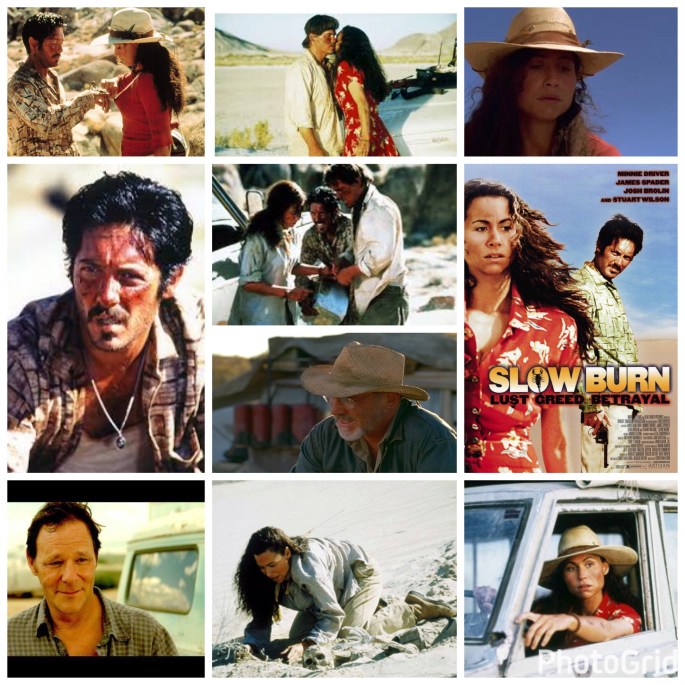
Slow Burn is.. odd, to say the least. Living up to its title, it pretty much goes nowhere, tagging along with James Spader and Josh Brolin as they stumble around in the desert, both hitting on treasure hunter Minnie Driver, who constantly outwits them. This kind of lower budget, steamy stuff just seems to have a licence to languish, in the sense that story is of little concern, it’s more about mood and episodic character interaction than anything else. Spader and Brolin are doing the ‘Of Mice & Men’ shtick here, playing two hapless escaped convicts, one a sharp tongued weasel (Spader) and the other a dimwitted lug (Brolin). They’re kind of lost, in both perpetual arguments and the vast Mojave around them, when they run into Driver, whose presence, and the idea that there’s a whole whack of diamonds buried out there somewhere, inevitably stirs things up. The diamonds belonged to her parents, and there’s hazy scenes relating back to a tragedy involving her gypsy father (Chris Mulkey, briefly) and a mysterious character played by Stuart Wilson who serves as pseudo-narrator as he wanders around out there too. Got that? It’s ok, they barely explain it better than I just did, I’ve seen the thing twice and I’m still not sure how it all adds up either. Sweat, sand, sensual looks snuck between Brolin and Driver, dreamy atmosphere, threats of violence from Spader’s overacted, crazy eyed moron, a treasure hunt and general lack of cohesion is all you’ll find out here in this desert. Good for an absent minded watch or for background noise, not much else though. 

-Nate Hill

Review: Gray’s ‘Lost City of Z’ is a visual feast for the ages.

First featured on The Movie Revue, contributing critic Brian Wallinger and editor Ben Cahlamer sit down to discuss James Gray’s astounding The Lost City of Z.

BEN CAHLAMER:  Brian, thanks for joining me today.

BRIAN WALLINGER:  It’s my pleasure, Ben.

BC:  Is it safe for me to say that you enjoyed Gray’s effort overall?

BW:  Yes.  This 2016 release, based on the 2009 novel is a taught and tense adventure set in the jungles of Brazil.  All throughout the film lays an undiscovered land where danger lurks around every corner.

BC:  I too found the story telling to be riveting and adventuresome, filled with stunning locations and brilliant technical achievements.  I especially liked the acting in the film.

BW:  Both Charlie Hunnam and Robert Patinson are the true stars of the film, executing clear and sharp performances.

BC:  Hunnam as Percey Fawcett, British officer-turned-explorer and Patinson as Henry Costin were stunning, especially Patinson, who just completely immersed himself in his role.  Hunnam has a commanding presence about him, but Gray kept him in check.  Both performances are extremely strong.  They are complimented by several smaller roles featuring Ian McDiarmid of Star Wars fame, Franco Nero, Angus Macfayden, who has been nothing short of brilliant in both John Wick films, Sienna Miller who plays Nina Fawcett, Percey’s faithful wife,  and Tom Holland as Jack Fawcett. What did you think of Gray’s directorial efforts?

BW:  The direction proves that Gray is not yet a truly masterful film maker, but he surely is on the path to greatness.  The film has an uneven balance in its run time and with the overall script.

BC:  I confess to not having seeing his previous directorial efforts, but I found his direction here to be top notch, especially for something that is so reflective of glorious epic adventure films and characters of the past, such as The Bridge on the River Kwai or even, Raiders of the Lost Ark.  I didn’t have an issue with the run time, and as a matter of fact, I found it to be necessary to tell the full story.  John Axelrod’s editing kept the film’s pacing even. I felt as if I was watching a younger version of Indiana Jones thanks to Hunnam’s acting, Gray’s direction and his screenplay, based on David Grann’s novel of the same name….

BW: …The story is based on actual events depicting several attempts at an expedition ultimately leading to an unsolved mystery.

BC:  Yes, indeed.  It was David Grann’s debut novel, based on his 2005 visit to the Kalapalo Tribe that set the stage for his novel and this film effort.  The level of detail in all of the characters is a combination of the entire production’s efforts.

BW:  You have hit the nail on the head, Ben.  There is a unique style and theme that pays homage to classic adventure films you mentioned: a form that has since gone unnoticed, yet through this film, finds a breath of new life.  I found the cinematography to be visually stunning, providing a sincere essence of the peril the characters faced.

BC:  YES!  Academy Award-winning Darius Khondji’s work here is astounding, and is a hallmark of this film.  His use of shadows and light are simply stunning.  I recently watched Fincher’s Se7en on a cinema screen and fell in love with Khondji’s work there too.  He is just a magician with light in any setting and I’m looking forward to seeing his work on the upcoming Okja.

BC:  Any other thoughts, Brian?

BW:  The film has several minor technical flaws but is so much fun and sincere to its convictions that I can forgive them.  I’m Recommending The Lost City of Z.

BC:  This film was stuck in development hell for a very long time at Paramount.  I’m really glad that it got picked up by Amazon and Bleecker Street.  Although its box office was not very strong, word-of-mouth should propel this film into the minds of many moviegoers.  I also am Recommending this film. Thank you for joining me today, Brian.

BW:  Thank you, Ben.


BILLY WILDER’S THE APARTMENT — A REVIEW BY NICK CLEMENT

1

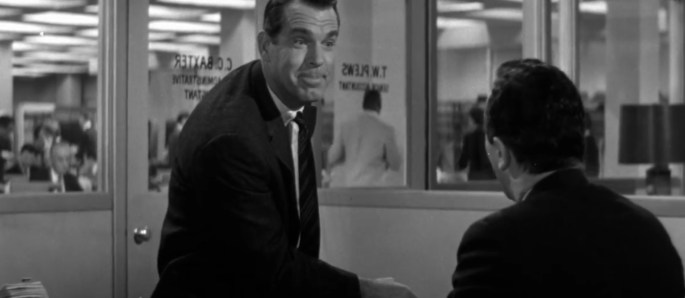
Released in 1960, Billy Wilder’s The Apartment stands as one of the filmmaker’s greatest works, a motion picture written with intelligence, directed with style, and preformed with vitality by its splendid cast, which included Jack Lemmon, Shirley MacLaine, Fred MacMurray, Ray Walston, David Lewis, Willard Waterman, David White, Edie Adams, Hope Holiday, and Jack Kruschen. Few modern romantic comedies have ever reached the heights of this film, which despite being over 50 years old, doesn’t feel dated; there’s a truthful sense of humor and life running all throughout this film’s narrative bones with the sexually thematic underpinnings never losing their bite.

apartment_ver3

Wilder and co-screenwriter I.A.L. Diamond struck a superb combination of drama and laughs, while never forgetting to ground the story in something emotionally substantial. The idea that Wilder followed up Some Like It Hot with The Apartment is sort of mind-boggling; a director would be lucky to make a film that’s half as good as either of those, let alone release them back to back. The excellent musical score by Adolph Deutsch perfectly matched the on-screen action which was captured in a studious manner by cinematographer Joseph LaShelle; the patient but never slack editing was handled by Daniel Mandell.

2

And then there’s the titular location itself, beautifully designed by Alexandre Trauner and Edward Boyle, which certainly becomes its own character as a result of the various people occupying the space. This film really has it all; the aesthetics were in line with the themes, Lemmon was in full swing, and the end result is intoxicating. Grossing $25 million back when money was real, The Apartment garnered 10 Academy Award nominations, and won five, including Best Picture, Best Director, Best Screenplay, Best Editing, and Best Art/Set Decoration. In 1968, the film received a Broadway spin-off called Promises, with Neil Simon, Burt Bacharach, and Hal David collaborating on the stage project.

3

HBO’s Witness Protection 


The sad thing about HBO original films is that they air pretty quick and without notice, then are scarcely heard from again, despite having really good stories and production design to boast, with no theatrical crowd to ever share them with. Witness Protection is one among many of these, a brilliant, surprisingly thoughtful mobster melodrama starring Tom Sizemore in a rare and commanding lead role. He plays Boston area gangster Bobby ‘Bats’ Batton here, a wiseguy who gets a rude awakening one night when a violent attempt is made on his life by rival crime factions, striking at home while his family are there. His lifestyle has inadvertently put those he loves in danger and now there are consequences, as grimly outlined by Forest Whitaker’s sympathetic FBI agent. Bobby, his wife (Mary Elizabeth Mastrantonio is so great, why isn’t she in stuff anymore?), son (Shawn Hatosy) and young daughter (Sky McCole Bartusiak, who famously died young a few years ago) are relocated into the witness protection program run by the Feds, given new identities, their lives uprooted and their future uncertain. Now, I searched for this film for years (it’s near impossible to find) thinking there’d be some kind of actuon intrigue angle, a few gunfights as his enemies tracked him down, but such is not the case. This is a mature film, a meditation on what it takes to change who we are when our choices endanger the lives of those we are supposed to protect. Bobby is a man of violence who grew up in a certain way, and he has transformed that into his livelihood. But it’s also a risky creed to cling to, and eventually a line is crossed, the line between balancing a chaotic life, or letting it run away from you. He’s forced to change, to show honesty and the will power to go straight, and this causes intense strain on the relationships with each of his family members, both individually and as a group. It’s equal parts fascinating, heartbreaking and hopeful to see a family go from one extreme to the other, and every facet of the situation is explored in a script that feels authentic and unforced. Sizemore and Mastrantonio deliver powerhouse work that stuns and stings, inhabiting uncomfortable moments of personal anguish with gravity to spare. This one isn’t your typical crime drama, and is all the better for it. 

-Nate Hill

STEPHEN GAGHAN’S GOLD — A REVIEW BY NICK CLEMENT

1

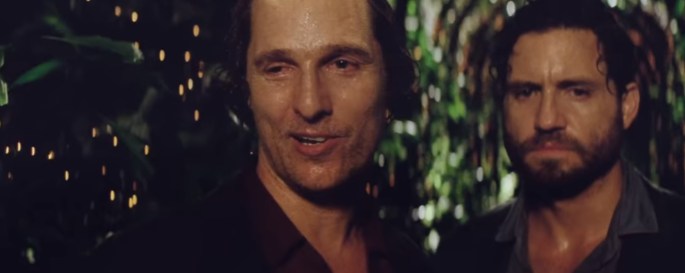
Stephen Gaghan’s Gold is a wild if familiar, sort-of-true-story saga about modern gold prospectors who risk it all in the Indonesian jungle for the pursuit of extreme fortune. Matthew McConaguhey’s over-sized and maybe-too-method performance is the big reason to see this film; if you’re a fan of him as an actor then his oily, greasy, bloodshot, and nearly constantly cocked performance will be a big hoot. Edgar Ramirez gives his usual fine support, and there’s a bunch of familiar faces in the background. But this is the McConaguhey show all the way, with the actor gesticulating like a mad-man while rocking a tragic receding hairline, his puffy face covered in flop sweat in almost every scene, and looking thoroughly toxic and grotesque in nearly every instance; he’s a personal pigsty and I thought it was priceless to observe. Robert Elswit’s fantastic widescreen cinematography is the other big standout in Gold; he’s one of the best, most varied shooters in the business and Elswit gives every sequence of this film a really cool visual atmosphere with some really thoughtful camera angles.

2

Patrick Massett and John Zinman’s zig-zagging and incident-packed script feels at times borrowed from other “process” narratives and there’s certainly a whiff of cliché running throughout the film’s narrative bones, but I thought this was a raggedly stylish movie that had a certain boozy bravado that kept in interesting if never truly special. It reminds of The Wolf of Wall Street and Blow but lacking some of the pizzazz and amoral laughs those films provided. And when you go and read about the real scandal involving the Canadian mining company Bre-X, you can see how some of the more outlandish moments that happen in the film actually occurred in real life, and how other bits of insanity were jettisoned maybe out of fear of being perceived as too over the top. Daniel Pemberton’s blustery score certainly added some oomph; ditto the tunes on the 80’s-centric soundtrack. Various director and star combos were attached at various stages, while the finished film elicited mixed critical reviews and tepid theatrical box office returns. Gold is now available on Blu-ray/DVD and streamable through various providers.

3

The Lure

The Lure

2017.  Directed by Agnieszka Smoczynska.

Screen-Shot-2017-01-12-at-13.22.26

A sublimely bizarre horror musical, The Lure blends kaleidoscopic visuals with an ’80s pop sheen to present a delirious, female focused coming of age tale.  Flittering between genres, Smoczynska’s euro glitz bonanza unleashes a plethora of themes into its carnival of flesh; however, this is a film that is having far too much fun to be world altering.  Featuring uncomfortable sexual truths beneath blood tinged fish scales; this is currently one of the most unique offerings of 2017.

Carnivorous Mermaids Silver and Golden become enamored with a rock band they encounter on a beach.  They return with the group to a strip club where they become exploited performers, causing the sirens to drift apart, one towards embracing her predatory nature while the other longs for humanity.  Robert Bolesto’s script is purposefully shallow; however, the direction elevates the material into an euphoric trip through the development of female sexuality as an allegory for the mistreatment of immigrants.  Young women as objects of lust for salacious old men is nothing new, but the presentation defies any sense of surrender to the tropes that often trap a film like this in rehashed mediocrity.  The weakness of the lyrics, in which the girls communicate their fledgling desires, would easily rebuke, yet the viewer is helplessly enraptured by the pastel world to which they’ve been submerged.

the-lure-banner-1

Marta Mazurek and Michalina Olszanska deliver a pair of entrancing performances.  While their respective arcs are telegraphed, they do solid work with each side of their aquatic yin and yang.  Their committal to the lyrical abandon is both uncomfortable in a John Waters way (hat tip to a colleague) and intermittently hilarious.  The choice of the ’80s time period initially seems awkward, but once the musical numbers begin, the framework of parasitic indulgence and material obsession becomes perfectly clear.  While there are no doubt some cultural touches foreign audiences may miss, viewers can no doubt commiserate on a decade of cocaine fueled abandon.

Jakub Kijowski’s cinematography is elegant through its instability, perfectly emulating the raw kinetics of puberty through dazzling shots of the night club and its denizens.  Warm blues and reds flood the interior while the outside world is framed in an alien, institutionalized manner to extrapolate on the girl’s curiosity with their new surroundings.  The Lure is a story about extremes, where the blood is bright crimson and the villains are especially sleazy and it mostly works.  Marcin Charlicki’s visual effects bolster over the top antics with intriguing displays of body horror and abrupt violence, entwining the soft terror with Smocynska’s refutation on committal.  The end result is something unique, but undoubtedly divisive.

the-lure-slice-600x200

Available now for digital streaming with a looming Criterion Collection release to come, The Lure is an inverted Alice in Wonderland head spinner.   Its immediately apparent lack of depth is overcome through outlandish visuals and bristling compositions of musical ardor.  If you’re looking for a truly unique film that eschews subtlety in favor of jackhammer presentation, The Lure Will not disappoint.

Highly Recommend.

The-Lure-Header

MATT REEVES’ DAWN OF THE PLANET OF THE APES — A REVIEW BY NICK CLEMENT

1

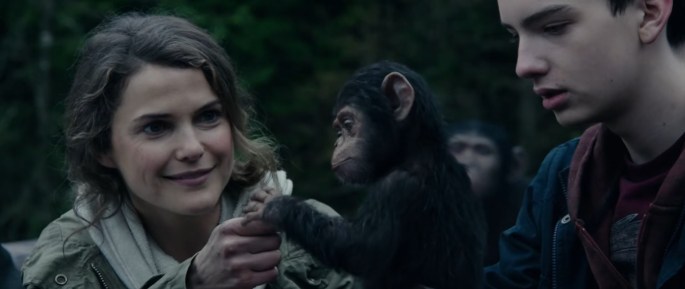
One of the only CGI-dominated franchises that I personal care about at the moment, the recent rebooting of Planet of the Apes has been spectacular, with both films delivering supreme, photo-real visual effects and narratives that feel topical and human and never anything more than they have to be. This summer’s upcoming War for the Planet of the Apes looks truly epic and is one of the few movies that I’ll actually spend $6 to see in a theater. And while not as emotionally affecting as Rise of the Planet of the Apes, Matt Reeves’s 2014 sequel Dawn of the Planet of the Apes, is an aesthetically robust, smarter-than-normal summer blockbuster that considerably upped the ante in the visual effects department. Completely and flawlessly realized in each and every shot (minus the opening with the antelopes and the phony-looking bear), the apes are startling in their movement and fur patterns, wholly consuming in the face (especially in the eyes), while conveying true weight and scale when compared to the humans.

2

Andy Serkis as Caesar and Tobby Kebbell as Koba were the clear standouts of this film, with their motion-capture work taking on magnificent shape and scope, with intimate details to match the bigger moments. And because of their prowess as actors underneath their digital monkey suits, I’m able to stay completely invested and engrossed in the story and the action, as the screenwriters wisely decided to spend far more time with the apes than with the humans. Jason Clarke and Keri Russell were solid but sadly Gary Oldman was mostly wasted after a few effective scenes in the beginning; why cast him if you aren’t going to take full advantage? Small quibbles aside, Dawn of the Apes is an excitingly dark and grim popcorn flick with some great rain-drenched cinematography from Michael Seresin, and features more than one “how’d-they-do-that” stedicam shot, and some positively surreal action when the shit hits the fan in the final act. And besides, this film has apes riding horses while firing machine guns, which is always something one should see.

3

B Movie Glory: Night Trap


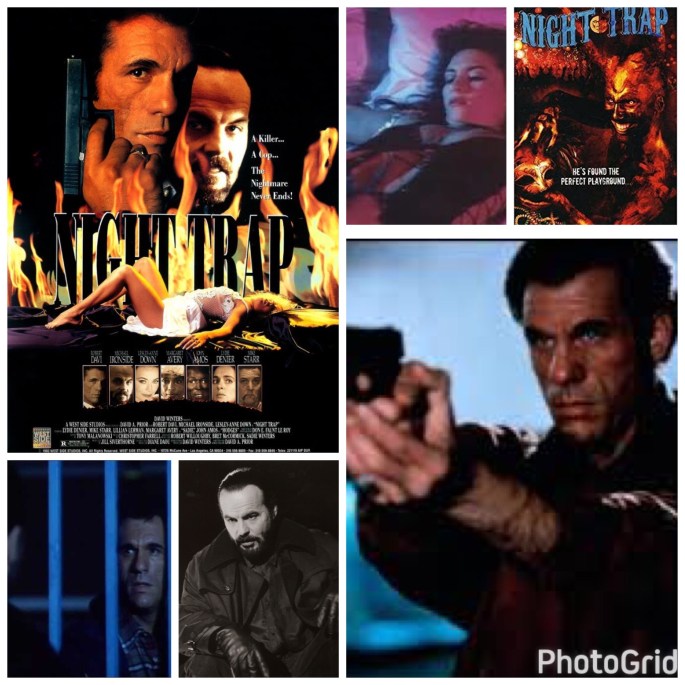
Night Trap is so old, obscure and out of print that I had to order an Amazon copy just to make sure it was even real, and not some dream I had as a kid. It’s real enough, and a glorious helping of low budget supernatural tomfoolery at that, with two charismatic character actors headlining. Robert Davi, in a rare lead role, plays a headstrong New Orleans cop who is hunting down a serial killer (Michael Ironside) that appears to have sold his soul to the devil in exchange for invincibility and a host of freaky deaky evil superpowers. Davi’s father was also a cop who pursued Ironside, and the monster likes to taunt both of them, leaving a trail of bodies in the hectic celebration of Mardi Gras. There’s a million of these type of movies, and they’re all across the board in terms of quality. It comes down to script and actors, really, as there’s never enough money to make any real visual magic. This one has a mile wide mean streak though, Ironside’s villain is a full on moustache twirling, nightmarish fiend and the veteran tough guy plays him as such. Matched against Davi, another notorious badass, it’s a B movie royal rumble that hits high notes of intensity, schlock and pulpy, violent delirium in all the right cues. Fun stuff if you’re a fan of these actors, and can actually locate a copy. 

-Nate Hill