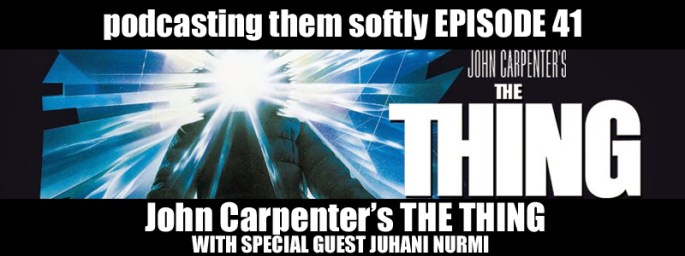
Frank and Tim are joined with screenwriter Juhani Nurmi to discuss their favorite John Carpenter film, THE THING.
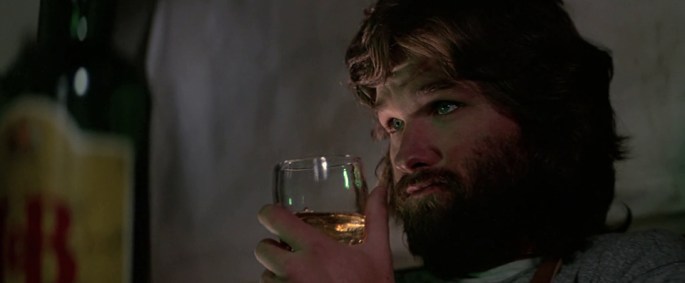
Frank and Tim are joined with screenwriter Juhani Nurmi to discuss their favorite John Carpenter film, THE THING.
A documentary directed by Tony Shaff. No MPAA Rating. 97 minutes. 2017.
Garry and Caroline Myers loved kids, and they loved kids so much that they wanted to create a magazine directed toward children that would have a sense of respect for their level of intelligence and capture the time in which they lived. The year was 1946, so of course the decision to create such a magazine must be informed by the social, cultural, and political sphere of an Earth still recuperating from a world war and amid the advent of the Boomer generation. The creation of Highlights for Children, a publication that would come to be known by the first word of its title, is the subject of 44 Pages, a documentary that tracks the construction of the magazine’s June 2016 issue.
The structure of the documentary is simple and, admittedly, not very cinematic in any inherent way. We are introduced to the major players in the publishing group, such as the current editor-in-chief Christine French Cully. We meet the various copy editors and illustrators who put in the daily work of a nine-month process to build a single issue. We learn only a little about these people beyond how fate has led them to work for Highlights, the publishing company that has taken its name from the magazine they work tirelessly to foster into the more-than-respectable brand that it is now.
We are also witness to the process of the creation of an issue of Highlights, which begins at ground level with thousands of fiction and non-fiction manuscripts the staff combs through, determining what could belong in an issue and what, sadly, must be left out. Much of the documentary’s most potent material comes from our glimpses into these submissions. One child sends a drawing of the attacks of September 11, 2001, something that disquiets the copy editor who receives it. The “Dear Highlights” feature, which publishes a letter per month from children with genuinely pressing concerns, regularly turns up a plea for help in domestically volatile situations (although such letters are not published, of course) or in socially uncertain ones.
The publication’s aim from the old days remains in the current climate: to be respectful of the intelligence of children in a way that can contribute to their emotional growth but also to be respectful of the social mores that dictate the family model of today. The struggle to remain relevant is also a pressing matter of the heart for many of these people. The path to such relevance is slow: We see the first illustration featuring a same-sex couple arriving in February 2017 (after the production of this documentary was completed), while a growing interest in scientific articles is relatively recent, a direct response to children worrying about climate change.
Much of director Tony Shaff’s method is dependent upon talking-head interviews, which are interspersed with archival photographs and behind-closed-doors footage of the staff at work. The simplicity of the method works because the result is a fascinating study of process. We also get a clear, if rather simplified, picture of the impact of Highlights, which has and will hopefully continue to be considerable. 44 Pages is certainly modest, but the documentary is also an affecting tribute to a beloved brand that stands out by sheer force of will.
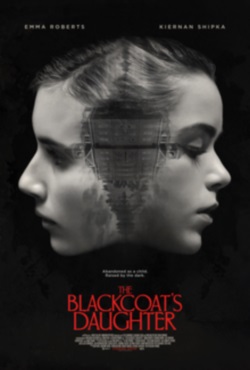
Kiernan Shipka, Lucy Boynton, Emma Roberts, James Remar, Lauren Holly. Directed by Osgood Perkins. Rated R. 93 minutes. 2017.
Here is a film that could quite possibly show up in a dictionary as an illustration of the term “slow-burn.” The Blackcoat’s Daughter is a puzzle movie whose pieces are put into place with patience and caution until a climax must allow the audience to put them together. Even so, it’s more than a little frustrating how director Osgood Perkins’s screenplay plays its cards a bit too early for the ultimate revelation to be much of a surprise. At some point in the puzzle, its solution becomes quite clearly the only one that makes sense, and then a sense of inevitability sets in. With that inevitability also comes a sense of routine. It’s subtle, but once the observant viewer pinpoints said sensible solution, every piece of the puzzle that we receive feels obligatory.
The film concerns events that surround three young women and the strictly religious institution that houses or has housed all of them at some point. Kat (Kiernan Shipka in a phenomenal performance) has been defined by trauma from a young age, after she and her father found her mother dead in a mangled and totaled vehicle on an icy street. Rose (Lucy Boynton) has more typical, teen-aged concerns on her mind, such as the consequences of a fling with a fellow student that potentially left her with an STD. Joan (Emma Roberts) is a mysterious visitor into their midst, finding herself at the school on its winter break after hitch-hiking with a married couple (played by James Remar and Lauren Holly) who are a bit mysterious themselves. It seems a dark force is at work in this small town of Bramford.
It is important to tiptoe around the film’s events because so much of it is dependent upon a third act in which all of the relevant details are either called into question or made irrelevant by a screenplay that wants desperately to jerk its audience around. The performances alleviate some of the film’s troubles, with Shipka leading the charge in an unnerving role that demands a lot from the actress. Boynton and Roberts are also good in reactive roles that are ultimately informed by the events of a climax that folds in on itself twice and redefines what we are supposed to have learned. The puzzle-like framing of the narrative is both innovative, in how it consistently restructures itself, and increasingly trivial, as the restructuring is built around a mystery that becomes less involving the weirder the story becomes.
The film’s ultimate impact comes from an atmosphere almost entirely provided by Perkins and cinematographer Julie Kirkwood’s staging, framing, and compositing of sequences to be the eeriest that they can be. The snowy exteriors and blank, suffocating interiors are attractively captured and certainly reflect the hopeless goings-on in the school and around it. Unfortunately, the craft is wasted on a film that becomes a parlor trick with a last-minute bait-and-switch that undermines any and all of the good will that the film has built up in its solid foundation in characters. There are various questions to be asked during The Blackcoat’s Daughter, but the one that we ask upon the end-credits roll is the most telling and important: Is that it?

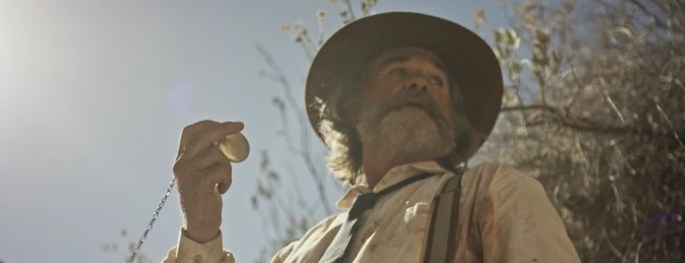
Bone Tomahawk is a gruesome western-horror hybrid that has ice-water running through its cinematic veins. Terse, blunt, and very, very cruel, the film was written and directed by S. Craig Zahler (who also contributed to the creepy musical score), and clearly shows a filmmaker in total command of his story and craft. The phenomenal ensemble cast includes Kurt Russell, Patrick Wilson, Richard Jenkins, Matthew Fox, David Arquette, Michael Pare, Fred Melamed, James Tolkan, and Sid Haig, with everyone strutting their gruff and macho stuff. Cinematographer Benji Baski’s strong visual sense is a huge plus, the costumes by Chantal Filson are appropriately grubby and lived-in, and the desolate production design by Freddy Waff aids in the overall sense of menace that the script affords. The film pivots in the third act into truly nightmarish territory, which might lose some viewers, but for those with strong stomachs and an affinity for down and dirty narratives, this will be a shock to the system, and a reminder that unpretentious and thoroughly ass-kicking genre filmmaking still exists just outside the margins of the Hollywood studio system.

I am not exactly sure why I’ve become so obsessed with the lethargic 1973 odd-ball flick The Day of the Dolphin. Directed by Mike Nichols, written by Buck Henry, and starring a visibly annoyed George C. Scott as a dolphin trainer/scientist who has to deal with a shady group of terrorists who steal his prized dolphins with the intention of using them as a vessel for bombs in order to kill the president while he’s on his yacht, the film seems to want to be multiple things at on…ce, with not one particular strand ever feeling fully formed. Paul Sorvino shambles around in the background as some sort of covert government operative, George Delerue’s score is rather amazing, William Fraker’s widescreen cinematography is strong and always visually interesting, and yet, there’s so little true suspense ever generated, and the entire film just feels silly rather than serious, which I can’t imagine was the intention by the creative team.
And yet, I’m still drawn to this movie like bees are drawn to honey, and I just can’t fully articulate why this is. Roman Polanski and Franklin Schaffner were at various points considered for the directing job, while Nichols apparently claimed that filming The Day of the Dolphin was extremely challenging. Reviews were mixed and the film was a non-starter at the box-office but it certainly worth watching, if for nothing else than observing the seemingly irritated George C. Scott and some really fun footage of dolphins splashing around in the water. This is film is currently OOP on DVD (very expensive copies can be found on Amazon) and oddly enough, there’s a seemingly new listing for a new DVD release, but without a street date listed at Amazon. The Day of the Dolphin is ripe for a Blu-ray from a boutique label, like Criterion, Kino Lorber, Shout! Factory, Olive, or Twilight Time.

When I was a kid, I had grand adventures on the bridge of the Starship Enterprise, battling the Klingons. Sometimes, I would become general manager Ben, setting up a ‘front desk’ in my parent’s basement pretending to check people in to my ‘hotel’, or even being the debonair James Bond. At the same time, I had an insatiable desire to rule the world. At least that’s what my inside voice told me. Of course, when I open my mouth, something completely different than what I thought comes out. It’s never a good combination. Just like Tom McGrath’s animated comedy, The Boss Baby.
Narrated by an adult Tim Templeton (Tobey Maguire), he is as carefree as any seven-year-old only-child (Miles Bakshi) ever has been; something his parents (Jimmy Kimmel, Lisa Kudrow) reinforce in him. From swashbuckling adventures on the open sea to fantastic moon landings, young Tim’s mind can take him to any place or any time. When his parents announce that they’re about to have another child, his overactive imagination goes into overdrive trying to win back their affection from the Boss Baby (Alec Baldwin).
McGrath’s Baby gets its inspiration from many sources. If you’ve seen the teaser trailer, you immediately recall oft repeated bits from James Foley’s Glengarry Glen Ross. The featured sequence in the trailer was not greatly expanded on in the actual movie; combined with the lead-in sequence, the huddled meeting between Baldwin’s Boss Baby and other neighborhood kids and the ensuing chase is a hoot.
Themes of family, friendship, trust, love and sharing are all inherent in Michael McCullers’s script. The threadbare plot fumbled because it is strung together by a series of vignettes leading to an in effective climax. This is coupled with an ineffective villain, voiced by Steve Buscemi. The problem wasn’t with Buscemi’s voice acting, but a character with a familiar exposition that has been seen many times before.
All of this made for a rather frustrating experience. Some of the sequences will seem familiar; others were filled with the requisite poop jokes. After all, we’re talking about a baby. Like Amy Heckerling’s Look Who’s Talking, there should be something smart and funny about a talking baby. Boss should have been even funnier with talking baby who craves sushi and a macchiato while carrying around a briefcase. It just doesn’t pan out.
What does pan out is the stunning animation; something that DWA is extremely proficient at. And, that’s truly the strength of this film. McGrath understands his framework, allowing the characters and the voice talent to shine. Hans Zimmer and Steve Mazzaro deliver the goods with the score.
If anything, Tom McGrath’s familiar The Boss Baby reinforces the fact that I am indeed not nuts. I’m crazy for listening to my inner Alec Baldwin.
Opening this Friday in theatres, The Boss Baby is reluctantly Recommended.


Now let’s be real, there’s only one good Crow film. They were just never able to catch that midnight magic again, though they tried, with four more films and a dud of a tv series. Each of the sequels is nearly the exact same as the first, in terms of plot: a man is killed by feral urban thugs, only to be resurrected one year later by a mysterious crow, blessed with invincibility and begins to work his way through the merry band of scumbags in brutal acts of revenge, arriving at the crime lord sitting atop the food chain, usually a freak with vague ties to the supernatural or occult. All the films in the series are structured that way, but only one deviated and tried something slightly different with the formula. City of Angels, the second, is a boring, almost identical retread of the first, it’s only energy coming from a coked up Iggy Pop. Wicked Prayer, the fourth, had a premise with potential aplenty, and turned out so maddeningly awful I’m still dabbing the blood from my eye sockets. Salvation, however, is the third entry and almost finds new air to breathe by altering the premise slightly. Instead of lowlife criminals, it’s a posse of corrupt police detectives who frame an innocent dude (Resident Evil’s Eric Mabius) for crimes they themselves committed, fry him to a crisp in the electric chair and get off scott free. His girlfriend (Jodi Lyn O’Keefe) is also killed in the process. Now, not only is it cops instead of criminals, but the arch baddie at the top of the pile is the police commissioner, who has occult written all over him. *Not only* that, but he’s played by Fred Ward, who is brilliant in anything. While nowhere near an iota of the atmosphere or quality of the first film, this one works better than any of the other sequels, thanks to that spark of an idea that changes the game ever so much. The detectives are a nice and skeevy bunch too, played by the reptilian likes of William Atherton, Walton Goggins and others. Ward wears the starched, proper uniform of an authoritative figure, but his eyes gleam with the same secrets and dark magic we saw in the two other previous underworld kingpins, Top Dollar (Michael Wincott) and Judah Earl (Richard Brooks), but it’s that contrast that takes you off guard and makes things more intriguing. And as for Eric, does he hold his own with the others who’ve played the role? Mabius he does, Mabius he doesn’t, you’ll just have to watch and see. He definitely knocks Vincent Perez out of the park, that silly Frenchman. Real talk though, no one will ever dethrone Brandon Lee, not even whatever piss-ant they get for the remake that’s been hovering on the fringes of preproduction for the last half decade. On top of it all we also get Kirsten Dunst, of all people, as a sympathetic attorney who works alongside Mabius to clear his name, as he clears the streets of no-good crooked cops. So there you have it. If you ever find yourself meandering around the kiosks in blockbuster, and see the Crow films lined up on the shelves like emo ducks in a row, the first film will naturally already be rented out. Where then to turn? You can certainly do worse than this one.
-Nate Hill
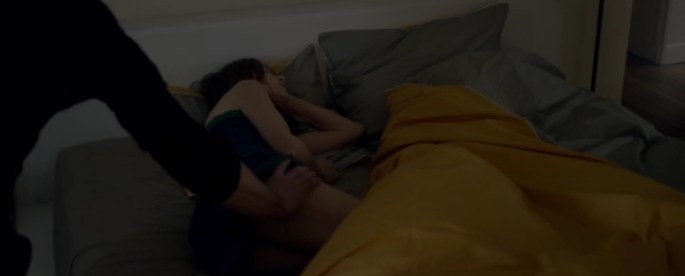
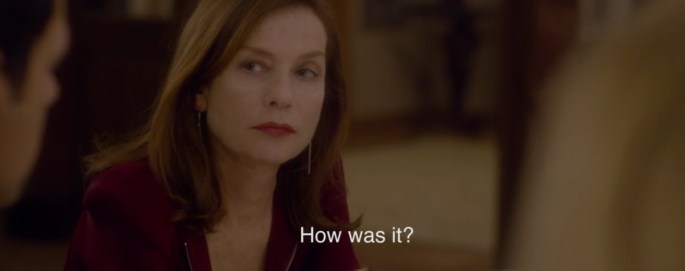
Last year, people kept saying stuff like “Paul Verhoeven is BACK with Elle!,” and yes, true, he had a new movie get released last year, and it is in fact a brilliant piece of work on multiple levels, but I’d argue that he never WENT anywhere in the first place. Hollywood simply became uninterested in making his brand of films, and instead of whoring himself out for the all-mighty pay-check, he decided to do other things, and get European financing for the cinematic stories that he’s felt inclined to tell after his last studio production, 2000’s Hollow Man (2006’s Black Book and Elle are his only two films in the last 17 years). He’s always been a premiere satirist, and is a filmmaker who has a tremendous sense of craft and command over his directorial choices. And with Elle, he’s made his most provocative film in years, with the truly amazing Isabelle Huppert dropping a challenging and empowering performance, playing a hugely complex character where nothing can ever truly be fully understood.
David Birke’s mischievous, witty, and psychologically probing screenplay, which was an adaptation of Philippe Djian’s novel Oh…, never lets anyone off the hook, and paints an exasperatingly dark portrait of a woman whose life is forever altered by the past, and who is trying to make sense of a very strange future. Stephane Fontaine’s shadowy and elegant cinematography made terrific use of subjective camera placement, and in one notable moment, got old-school-swervy in a way that recalls Verhoeven’s past cinematic glories. Job ter Berg’s exacting editing only allows for the perfect amount of visual information to be given in any given sequence, establishing a perfect rhythm with Anne Dudley’s unnerving and mysterious musical score. Oh yeah, and the film is also unexpectedly and darkly funny, which was easily the most surprising element to a film that has a lot of surprises in store for the viewer; if all you’ve seen is the trailer, then there’s plenty of stuff that will take you off guard, not the least of which being the film’s perverse sense of black comedy.


If you ever find yourself in conversation with Tom Hardy at some cocktail party (one can dream), Minotaur is the film you bring up to both flabbergast and embarrass him, if only for your own amusement. It’s one of those low budget sword & sorcery schlock-fests that the SyFy channel used to broadcast at two in the morning on sleepy Saturday nights, to serve as background noise for whatever hedonistic shenanigans are going on in the living room. It’s Tom’s first ever starring role, and therefore should never be forgotten, like those old camcorder tapes of kids learning to ride sans training wheels for the first time. The story borrows from the legend, adding its own lurid, t&a soaked flair that only SyFy can get just right. Tom plays the son of a Viking chieftain (a brief Rutger Hauer), who goes looking for his true love, one among a few of the village’s youngsters who get kidnapped every year by a freaky pseudo African tribe of weirdos who sacrifice youths to the mythical Minotaur, residing in rocky catacombs beneath their city’s surface. Led by supreme weirdo Deucalion (Candyman’s Tony Todd, hamming up every scene), who fervently wants to impregnate his own hot sister (chill, dude), and oversees this theatrical occult ritual with obscene relish. This is one of those creature features where you barely see the beast for the first two thirds of the film, save for a quick snaggle of fur or fang rushing by in the shadows, and suspiciously looking like a bearskin rug cello taped to antlers and a hobby horse. Hardy does get an eventual confrontation with the Minotaur late in the game and deep in the maze, providing a few schlocky moments that are worth the ride, but it’s silly stuff most of the time, scraping the bottom of a barrel that does lower than the maze of the bull. Totally tagging Tom in thee blog post though in hopes that he sees this and it brightens his day just a bit.
-Nate Hill

Breakdown is a top-notch thriller that Hitchcock would have loved, and a film I’ve watched a ton of times and will never get tired of revisiting. This is easily director Jonathan Mostow’s best film; it’s extremely tense stuff, with a nasty, economical, and devious screenplay that he co-wrote with Sam Montgomery. Kurt Russell’s fantastic performance is one of my personal favorites from this most versatile and underrated actor, and the invaluable 90’s character actor J.T. Walsh dropped one of his signature baddie performances, but note how his character is shaded just enough; this guy was so great in everything he appeared in and always a treat to watch. Kathleen Quinlan was perfect as the damsel in distress. This is a nightmarish thrill-ride, shot with verve and energy by Douglas Milsome, crisply edited by Derek Brechin and Kevin Stitt, with a logical-enough finale, even if it doesn’t plumb the depths of darkness in the way that something like the original The Vanishing did. This is one of the more underrated studio thrillers from the late 90’s, and a title that’s way overdue for a Blu-ray upgrade. Basil Poledouris’ supremely effective and riveting musical score is the icing on the cake.

 Podcasting Them Softly