Fantastic Beasts and Where to Find Them – A Review by Kyle Jonathan

Fantastic Beasts and Where to Find Them

2016.  Directed by David Yates.

fb_cc_trl_1232

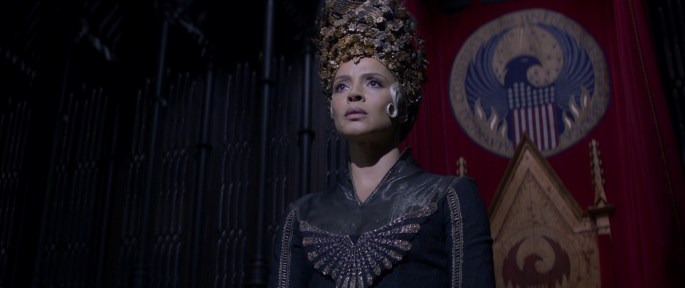
David Yates returns to the Harry Potter universe with a delightful prequel that focuses on the adult wizarding world of America.  Featuring gorgeous visuals, unforgettable costuming, and a terrific ensemble performance, Fantastic Beasts and Where to Find Them provides an enchanting atmosphere, populated with mythical creatures, devious villains, and some surprisingly dark subject matter that abandons it’s intriguing set up in favor of a cataclysmic superhero finale.

Newt Scamander is a protector of magical beasts who arrives in New York City with a mysterious agenda.  Some of his collection escapes from his bewitched suit case and begin to wreak havoc on the city, increasing tensions among the magical community who are desperate to remain unknown to ordinary humans.  A wizard detective named Graves is investigating a series of supernatural disturbances that he believes are being perpetrated by one of the escaped creatures.  Newt, along with a human bystander named Jacob set about recapturing the animals before they’re harmed by the paranoia of the American wizards.  Their quest takes them through the heart of an esoteric metropolis where they’re joined by new comrades and challenged by unspeakable darkness.
597409861

Eddie Redmayne does an outstanding job as Newt, portraying him as the consummate outsider.  It’s a refreshing take on the awkward loner, with Redmayne communicating pain and wonder in equal amounts, without ever turning nasty.  He’s a mischievous and misunderstood explorer whose pursuits have left him isolated, but not cold.  Katherine Waterston does an admirable job as one of his sidekicks, but many of her scenes are so rushed that its difficult to identify with her until the film gets through it’s clunky first act.  However, once it does, this film shines, with Phillipe Rousselot’s spellbinding cinematography coming alive.  There are some outstanding compositions, especially during the sequences inside the magical headquarters, with a daring escape scene stealing the thunder.

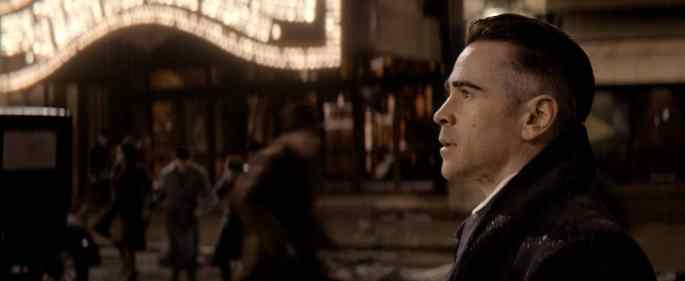
Dan Fogler has the comic relief portion, starring as the human who is unwittingly drawn into the wizards’s reality.  One of the best parts of his role is how his character is a summation of everything great about the golden age of America and it never feels forced.  Alison Sudol stars as a telepathic love interest who outshines her classic good looks with empathy and wit.  These are desperate times, despite them not involving He Who Will Not Be Named, and the film does a great job at making things count by focusing on the social issues of a city tearing itself apart.  Colin Farrell’s Graves is under cooked, due to the nonsensical script.  When it’s brilliant, it’s brilliant, but the moments in between are confusing and often hard to follow due to the sound editing.  Despite this, once it becomes apparent that the focus is on adult wizards who are proficient in their trade, many of the conveniences of the narrative are forgivable.

fantastic-beasts-trailer-comic-con-006-1280x533

Coleen Atwood’s costume design is one of the strongest elements, easily transporting the viewer to an alternate 1920’s.  Every character’s ensemble is top notch and perfectly at home in the chaos.  David Allday’s art direction bolsters the roaring 20’s veneer by sprinkling mystifying artifacts throughout, with a sequence inside an arcane speakeasy being the centerpiece.  Music icon James Newton Howard’s score is the final touch, using the familiar notes of the franchise to create a foundation for an entirely new vision that mimics the child like awe of Newt’s perspective.

There are stumbles in the set up, but once it calms down, Fantastic Beasts and Where to Find Them becomes one of the best films in the series.  If there is a flaw it’s in the climax, which forgoes the academic problem solving of the central act for a CGI bonanza, complete with city destruction and dazzling light effects.   The subplot that leads to the final showdown is shallow and tacked on, but this is easily forgotten thanks to the amazing work of the central quartet, whose actions would gain them an instant invitation to Dumbledore’s Army.
154

In theaters now, Fantastic Beasts and Where to Find Them is a worthy entry into one of the most popular film franchises of all time.  Featuring a touching lead performance, crisp visuals, and a softball ending, this is a film that reminds the viewer, what it’s all about: Telling an engrossing story that allows the audience to have a memorable and enjoyable time in a world that appears different from their own, but also a place with hope, goodwill, and heroes to root for.

Recommend.

fantastic-beasts-and-where-to-find-them-fantastic-beasts-and-where-to-find-them-39391160-1920-1080

CASINO ROYALE – A Review by Frank Mengarelli

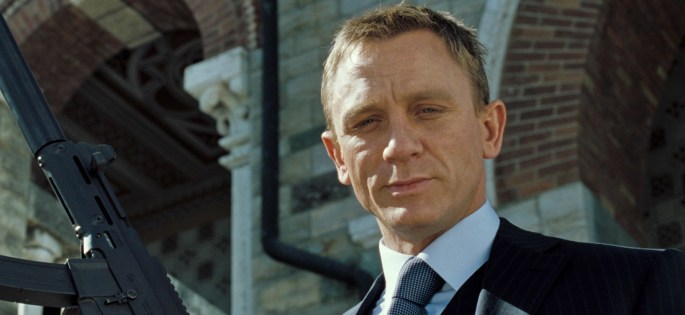
CASINO ROYALE created a new dawn in film. Not only was it a swift and needed step away from the loathsome DIE ANOTHER DAY, it also created a template on how to not only reboot a mainstay franchise, but do it with such gravitas and clarity that the franchise itself feels anew and reinvigorated.

Daniel Craig was more or less unknown to the masses. He had appeared in LAYER CAKE, Sam Mendes’ ROAD TO PERDITION, and a handful of small, independent European films. Craig quickly proved his naysayers wrong (including me, who was a staunch lobbyist for Clive Owen).

15171105_10101764991360447_8928362091842123284_n

Craig’s blonde hair and blue eyes may not have been akin to what James Bond is supposed to look like, but his swagger, attitude, and brutish demeanor brought absolute justice to the biggest standing franchise in film history.

While the film was updated to the current digital age, and reflecting our current pop culture obsession with the addition of Texas Hold’em, the film remained grounded in it’s original source material. Validating every word that Ian Flemming wrote in his 1953 novel.

15056248_10101764991375417_4451374157011421381_n

While now, the Texas Hold’em arc may seem silly considering the fad has long been removed from ESPN and the mainstream of American culture; essentially that’s what a Bond film is. It had always been a reflection of our present day culture.

Enter into the fold Mads Mikkelsen, Jeffery Wright, Eva Green, Giancarlo Giannini, and Jesper Christensen; the film stayed true to casting an exotic array of worldly cinematic actors, while retaining Judi Dench’s M, GoldenEye’s Martin Campbell and seminal Bond scribes Neal Purvis and Robert Wade – the film remained grounded within the cinematic world of James Bond whilst taking the franchise in a much needed and welcomed new direction.

15138500_10101764991410347_1710031093922958170_o

ROBERT ROSSEN’S THE HUSTLER — A REVIEW BY NICK CLEMENT

2

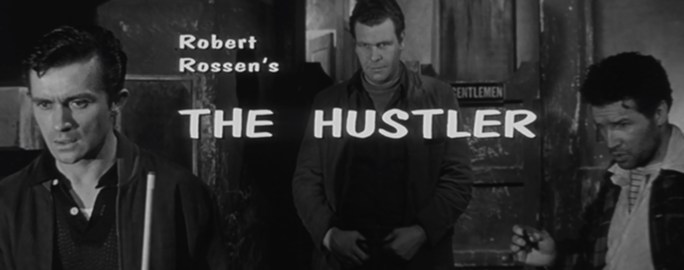
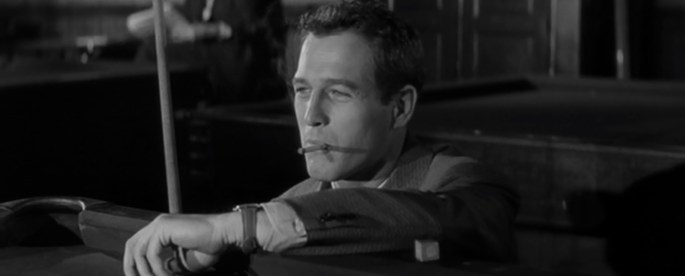
Robert Rossen’s silky-smooth 1961 drama The Hustler contains one of Paul Newman’s finest screen performances, and is easily one of the most subtly complex stories about gamesmanship and the art of winning, losing, and knowing when you’ve met your match. Based on Walter Tevis’ 1959 novel and adapted by Rossen and Sidney Carroll, the pool hustling narrative packs both a visceral and emotional punch, with a sterling supporting cast doing some extra-fine character work, including George C. Scott, Jackie Gleason, Piper Laurie, Michael Constantine, and Murray Hamilton. Eugene Shuftan’s extremely stylish cinematography made excellent use of the monochromatic visual style, with perfectly chosen angles employed during the various pool matches, and knowing exactly when and where to opt for close-ups. The music by Kenyon Hopkins unobtrusively sets a great mood for the picture, matched by legendary editor Dede Allen’s smart and sharp cutting. The fact that Rossen and his collaborators never went over the top with the material, instead staying true to real life, has made this film the classic that it has become. Infamous boxer and nightclub owner Jake LaMotta appears briefly as a bartender. A huge success with critics and audiences, The Hustler would receive nine Oscar nominations (winning two), while Martin Scorsese would later helm the sequel The Color of Money, which brought back Newman as Eddie Felson and paired him with a young hot-shot played by Tom Cruise.

1

Billy Lynn’s Long Halftime Walk – A Review by Kyle Jonathan

Billy Lynn’s Long Halftime Walk

2016.  Directed by Ang Lee.

billy-lynns-long-halftime-walk-slice-600x200

One of the most talented directors working today, Ang Lee’s latest is a war story that focuses on the soldier’s personal plight and the impossibilities of returning to a country that cannot fully comprehend their experiences.  Billy Lynn’s Long Halftime Walk is an awkward epic, using slick visuals and first person points of view to keep everything within Lynn’s conflicted mind.  A largely wooden cast and shallow script are overcome by the sheer scope of the picture, delivering an emotionally resonate film that forgoes preaching in favor of intimacy.

Billy Lynn is an Army Specialist who received the Silver Star for an act of bravery in Iraq.  As a result, his squad, the Bravos, become national heroes and are sent on a US tour to bolster support for the armed forces.  The tour ends on Thanksgiving, with the Bravos being the guest of honor at a professional football game in Dallas, including their participation in the half time show.  What follows is Lynn’s recollection of the war interwoven with his current dilemma on whether to return to the fight or abandon his unit in order to heal his traumatized soul.

billy-lynns-screencap1

This is the first film to be shot at 120 FPS in 3D at 4k resolution.  Lee’s choice to unleash the technical fuselage on a dramatic film is controversial, with only a handful of theaters in the country able to show it in all of it’s splendor.  The result on a conventional screen is nothing short of breathtaking.   John Toll’s formidable camera work has a surreal quality, bolstered by the electronic wizardry.  Even the most innocuous items are so saturated with color that it’s difficult to focus on any one thing for too long.  There’s some wonderful reverse shots and close ups that are framed as if the viewer is Lynn, giving the proceedings a video game feel that takes some time to get used to and Lee never seems to settle down.  The combat scenes are the centerpiece, with Drew Kunin’s sound mixing adding depth to the visceral carnage. Every gunshot and explosion cascades off of the screen, putting the viewer into a figurative harm’s way.

Jean-Christophe Castelli’s script is double edged.  On one hand, the characters, for the most part, have a cardboard quality that is compounded by the optical kinetics.  None of the soldiers appear real, and yet that is part of the design.  The heart of the story is how veterans return as ghosts, faded images of the people they were before the bloodshed, haunting the national focus during war time and then receding to the fringe of social awareness until another news cycle summons them once again from the darkness.  Newcomer Joe Alwynn is the best surprise.  Lynn is a role that doesn’t require a lot of vocal effort.  Everything hinges on body language and Alwynn’s pathos is both heartbreaking and familiar.  Kristen Stewart continues to show her prowess with her portrayal of Lynn’s defiant sister.  What could have easily been a cliche’d social justice caricature is transformed into a believable rebel, who no matter what remains loyal to her sibling.

screen-shot-2016-10-27-at-9-37-56-am

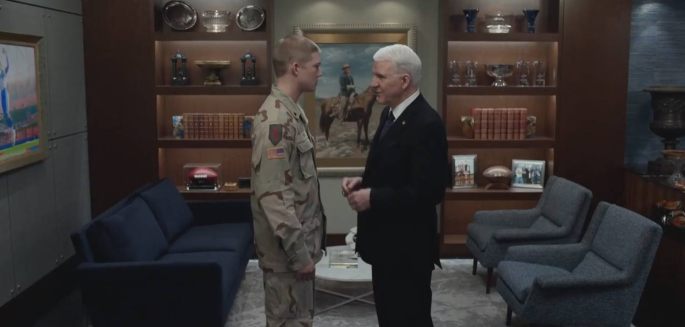
Garett Hedlund does solid work as Lynn’s superior.  One of the more disturbing aspects of this film is how it depicts post traumatic stress disorder.  Hedlund, more so than any other character, embodies the danger that hides in the wounded hearts of those who have experienced the nonstop life or death situations of war.  The amazing Steve Martin has a villainous role as a sports tycoon looking to buy the film,rights to the team’s ordeal for a paltry amount, simulating the sensationalism of war by the corporate elite.

In theaters now, Billy Lynn’s Long Halftime Walk is a unique film that doesn’t quite hit the mark.  It’s refreshing focus on the personal tribulations of American soldiers is endearing for its lack of politics, but is also unable to overcome to obtuse script and odd pacing.  Despite these flaws, it is a technical wonder and a genuinely human film that treads through familiar territory with a complacent sense of self.  It doesn’t offer anything new, but what it does provide is a lush viewing experience that focuses on a level of brotherhood few non combatants will ever truly understand.

Recommend.

billy-lynns-long-halftime-walk-trailers-posters

Hell Or Highwater: A Review by Nate Hill 

Hell Or Highwater is an acrid, mournful little tumbleweed lullaby sung at the American southwest, a tale of hard times and desperate men infused with the laconic nature of the area and given the spare yet hard hitting writing skills of Taylor Sheridan, who also penned the equally bleak Sicario. I wasn’t quite sure what time period he was going for here until Jeff Bridges’s salty Texas Ranger brandishes a smartphone, signifying the present. I imagined an 80’s throwback, but I suppose the vacuous dereliction hanging about the rural West has only gathered with time, in a place where time has curiously seemed to halt dead in a financial sinkhole where not much of anything in the way of hard earned success can flourish. Chris Pine and Ben Foster play brothers and partners in crime, in the thick of a statewide bank robbing spree which gets progressivly more dangerous, all to save a piece of property from the big banks threatening to foreclose. They’re not evil men, they’re not even bad men because Sheridan’s script doesn’t allow such stark delineation. They are men forced to make decisions, just like any other, yet in times like these one’s decisions are often of an extreme nature, out of self preservation or desire to protect one’s family. Pine is the introverted one, and the actor disappears into the role with ease and scruffy calm that contrasts his usal golden boy charm. Foster is the live wire, a man who functions on mostly instinct alone, lives in the moment and reacts like an animal from situation to situation. Quite the actor he is, and hasn’t been let completely off the chain since 2004’s Hostage. Here he fills the screen with intensity and much needed humour. The two have love for each other that occasionally peeks through the cloud of trouble they’re flying in, the film adament in showing us their damaged humanity through the desperation of their actions. Bridges is crusty and jaded, the badge and gun serving as his only family other than the uneasy camaraderie he has with his younger partner (Gil Birmingham), a man he berates solely because he seems incapable of proper human interaction, no doubt a result of decades on the job, wandering through the desolation of the desert hunting men who have broken their lives and wishing he ever had one of his own to begin with. There’s an emptiness to this tale, a lonely ambience punctuated by many a beautiful song from both Nick Cave, T Bone Burnett and more, whose downbeat lyrics only pile on the mood thicker. The film wants to examine the need to go to extreme measures in times of strife, but holds us in our seat long after the deed is done to show us the ramifications, both negative and positive, of such actions. The result isn’t pretty, but it’s damn well beautiful and one of the best films I’ve seen so far this year. 

PTS Presents Director’s Chair with Terry McMahon

mcmahon-powercast

terry-mcmahonPodcasting Them Softly is beyond excited to present a conversation with filmmaker, actor, and teacher Terry McMahon! Terry‘s two feature films, Charlie Casanova and Patrick’s Day, are some of the best pieces of cinema to come out of Ireland in recent years, with Patrick’s Day making a big splash over the last two years as both a brilliant piece of cinema and enduring conversation piece. Terry‘s a filmmaker who is interested in society, people, and how we all relate and communicate with one another, and his keen eye and sharp voice can be seen and heard in everything he does. An actor, producer, writer, and director, Terry is a true talent, which was solidified when Patrick’s Day, which premiered at the 2014 South By Southwest Film Festival, was nominated for 9 Irish Film and Television Awards, and winning three, for Best Screenplay, Best Sound, and Best Actor for Moe Dunford. Terry also made an appearance in Christopher Nolan’s Batman Begins, and serves as an acting coach for Dublin-based performers. We hope you enjoy this informative, passionate, and humorous chat with one of the biggest personalities that we’ve had the pleasure of speaking with thus far!

WERNER HERZOG’S INTO THE INFERNO — A REVIEW BY NICK CLEMENT

3

Leave it to the ultra-eccentric and always ambitious Werner Herzog to take his audience directly inside of active volcanoes at various points on the globe, as his latest documentary, Into the Inferno (currently streaming on Netflix), peers into the smoky-hot abyss while simultaneously commenting on the world all around us, drawing parallels to exotic jungle tribes and the people of North Korea, all in an effort to show us how corrosive certain aspects of life can be, and how the effects from global change can be felt everywhere. Herzog’s regular (and rather fearless) cinematographer Peter Zeitlinger again demonstrates an unflinching eye behind the camera, showing the audience surreal sights and sounds (the engrossing and at times haunting musical score goes a long way in this film) that echo throughout your consciousness long after watching; Herzog and Zeitlinger have long understood the power of the sustained image, and some of the shots of the erupting magma take on an almost otherworldly effect. Working with volcanologist and co-director Clive Oppenheimer, Herzog and his creative team have yet again provided audiences with a distinctive sociological piece of entertainment that simultaneously appeases our desires to see new things and learn about ideas of humanity that might not be so upfront or obvious.

2

Dirty Harry – A Review by Kyle Jonathan

Dirty Harry

1971.  Directed by Don Siegel.

dirty-harry-lb-2-1

Iconic.  Controversial.  Misunderstood.

Don Siegel’s legendary cop saga, Dirty Harry, is an abrasive and uncompromising bare knuckle brawl.  Built atop a turgid city in distress and featuring one of Clint Eastwood’s most memorable performances, Dirty Harry strips away peaceful reflection, opting to depict a world in violence is not only appropriate, but welcomed.  An unapologetic imagining of one man’s obsessive hunt for a serial killer and one of the most revered films of the 70’s, Dirty Harry is a perfect marriage of blue collar grit and heart stopping action.

A serial killer known as Scorpio is terrorizing the streets of San Francisco.  Inept bureaucrats and bumbling police administrators are baffled and turn to Inspector Harry Callahan, an infamous detective, to bring the assailant to justice.  Paired with a Latino detective, Callahan pursues Scorpio across a variety of locales and tension wound scenarios, in which both the hunter and the prey switch roles numerous times.  As the violence escalates, Callahan’s disdain for the system forces him to abandon conventional means in order to stop the killer, leading him to forsake the badge and embrace the trappings of his dubious nickname.

dirty-harry-opening

Clint Eastwood’s performance has been unfairly categorized as a macho cop vehicle.  One of the best things about Eastwood in this film is how his Harry always seems inconvenienced.  He begins as a believer, who is always being interrupted by the nonstop corruption and villainy of the city he’s sworn to protect.  He stops a bank heist while absently chewing on his lunch.  During a ransom delivery scavenger hunt, Harry meets a myriad of miscreants, each of which he approaches with a tired sense of concern, desperately wanting to be left alone to pursue true evil, and yet unable to stop himself from policing.  Yes, he has catchy lines and always exudes an aura of coolness, but it’s the vulnerable outsider that brings everything home.

John Milius worked on the Zodiac Killer inspired script, which portrays San Francisco as a false haven.  On the surface, the city is populated by the beautiful and hard working masses, living in relative harmony while the rest of the nation fractured over Vietnam.  Underneath the veneer, the police perpetuate bigotry and the system ultimately fails those it seeks to protect.  Callahan’s colleagues shame his tactics and yet continue to call on him when the situation demands a forceful response, enriching the theme of necessary transgression when confronted with darkness outside human understanding.

dirtyharry33

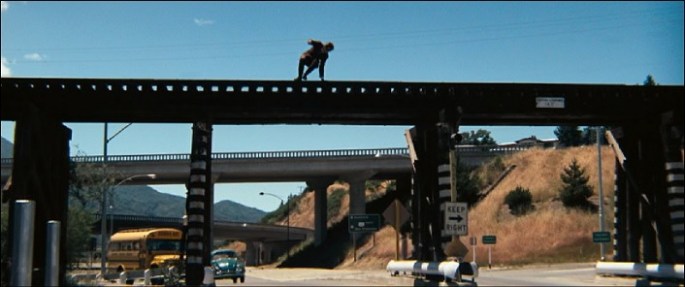
Lalo Schifrin’s unique score combines jazz, creepy voice overs, classic rifts, and free love rock into a eclectic knife that cleaves through the smog, with memorable melodies that are still used in television and other mediums today.  Glenn Wright’s costume design is often overlooked, giving Harry a modern hounds tooth blazer, a symbol of his devotion to justice.  Bruce Surtees’s brash cinematography features some amazing shots of the nightlife, using aerial photography and stark contrasts to set the dark city apart from it’s sunshine counterpart.  There is a wide shot of Eastwood on elevated train tracks that is sublime, and the following sequence, in which Harry jumps onto a moving bus was performed by Eastwood himself.

Everything about Dirty Harry is a perfect convergence.  Siegel’s patented directorial genius shines in every scene, using a wealth of technical expertise and a phenomenal central performance to create a singular cinematic endeavor.  Available now for digital rental, Dirty Harry is an overwhelmingly American film, revered for it’s tough guy mystique and misjudged for its unrepentant brutality.  Underneath the blood and bullets lies one of the more thoughtful cop films of the 70’s,right down to its heartbreaking finale.  A slimmed down neo noir in an uncomfortably tight package, Dirty Harry is an essential piece of American crime cinema.

Highly Recommend.

dh04

BARRY JENKINS’ MOONLIGHT — A REVIEW BY NICK CLEMENT

3.jpg

Moonlight is bravura filmmaking and storytelling, a thrillingly cinematic exploration of identity, sexuality, and repressed desires. From the startling and engrossing opening Steadicam shot all the way until the absolutely perfect final image, writer/director Barry Jenkins crafts a narrative, from an original story by Tarell Alvin McCraney, which feels personal, honest, tragic, and uniquely uplifting. This film has been rapturously received by critics, and rightfully so, as it’s an important piece of work at a very important time in society, and while focusing on something specific and largely absent from movie screens in wide exposure (the black gay experience), its themes are universal and will hit hard for many people, regardless of race or sexual orientation. Progressive, introspective, and directed with extreme care by Jenkins, Moonlight is the type of film that will be seen as a rallying cry for some, and deserves to find the widest possible audience, as its message is one that feels authentic and enormously human. James Laxton’s bold and beautiful widescreen cinematography absolutely simmers with visual possibilities, with Jenkins totally embracing aesthetic artifice without projecting a self-conscious sense of false importance; the emotional power of the material matches the expressionistic shooting style so as a result, there’s a harmonious quality to the entire piece.

2

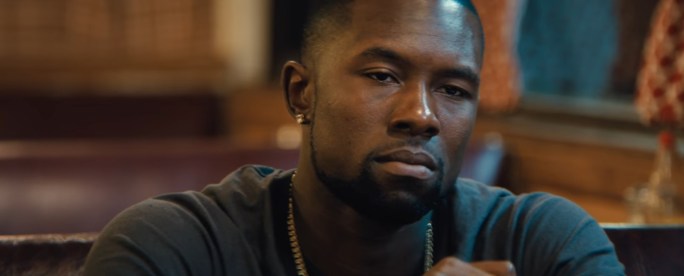
The film revolves around a young man named Chiron who has been dealing with an extremely dysfunctional home life (his mom is an addict and dad is absent), living in the rougher parts of Miami and just trying to get through each day. The narrative has been broken into thirds, with each chapter highlighting a particular moment in time (middle-school, teen-years, and manhood), while painting a portrait of a changing world and the various issues that a gay black man would face while living in the ghetto. The cast is sensational from top to bottom, with Trevante Rhodes, André Holland, Janelle Monáe, Ashton Sanders, Alex Hibbert, Jharrel Jerome, Naomie Harris and Mahershala Ali all delivering richly drawn portraits which helps to create an organic flow to the time-jumping story. Rhodes, in particular, is spellbinding in his ability to project bottled up feelings and intense vulnerability, with his buff physique masking his warm and open heat at his center. Holland, so incredible on the Cinemax series The Knick, shows up in the final act and steals all of his scenes with a quiet sense of melancholy and grace. And I love how Jenkins consistently subverted expectations all throughout, starting with the tense opening bit, showing characters to be more than meets the eye on more than one occasion, and allowing the audience to fill in the blanks during some key sexual moments which make them all the more powerful. Leave it to go-to-indie distributor A24 to be the ones to get this earth-shaker out there.

1

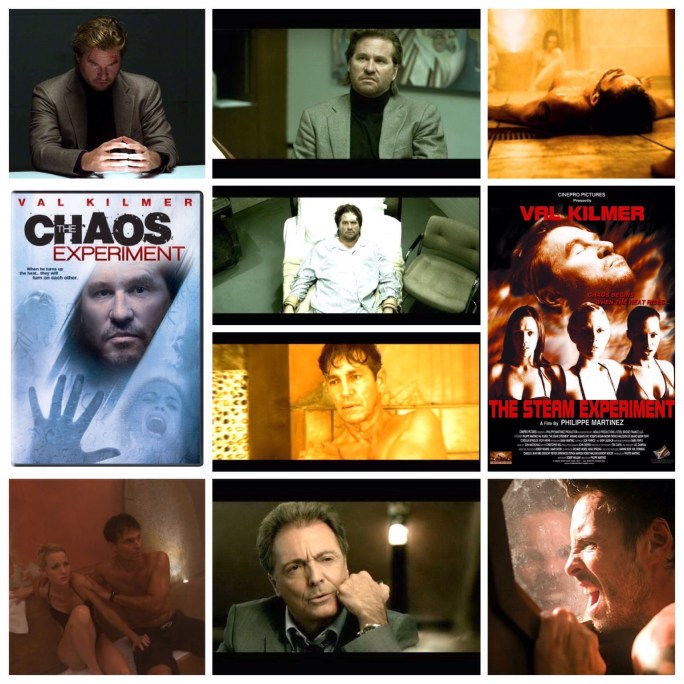
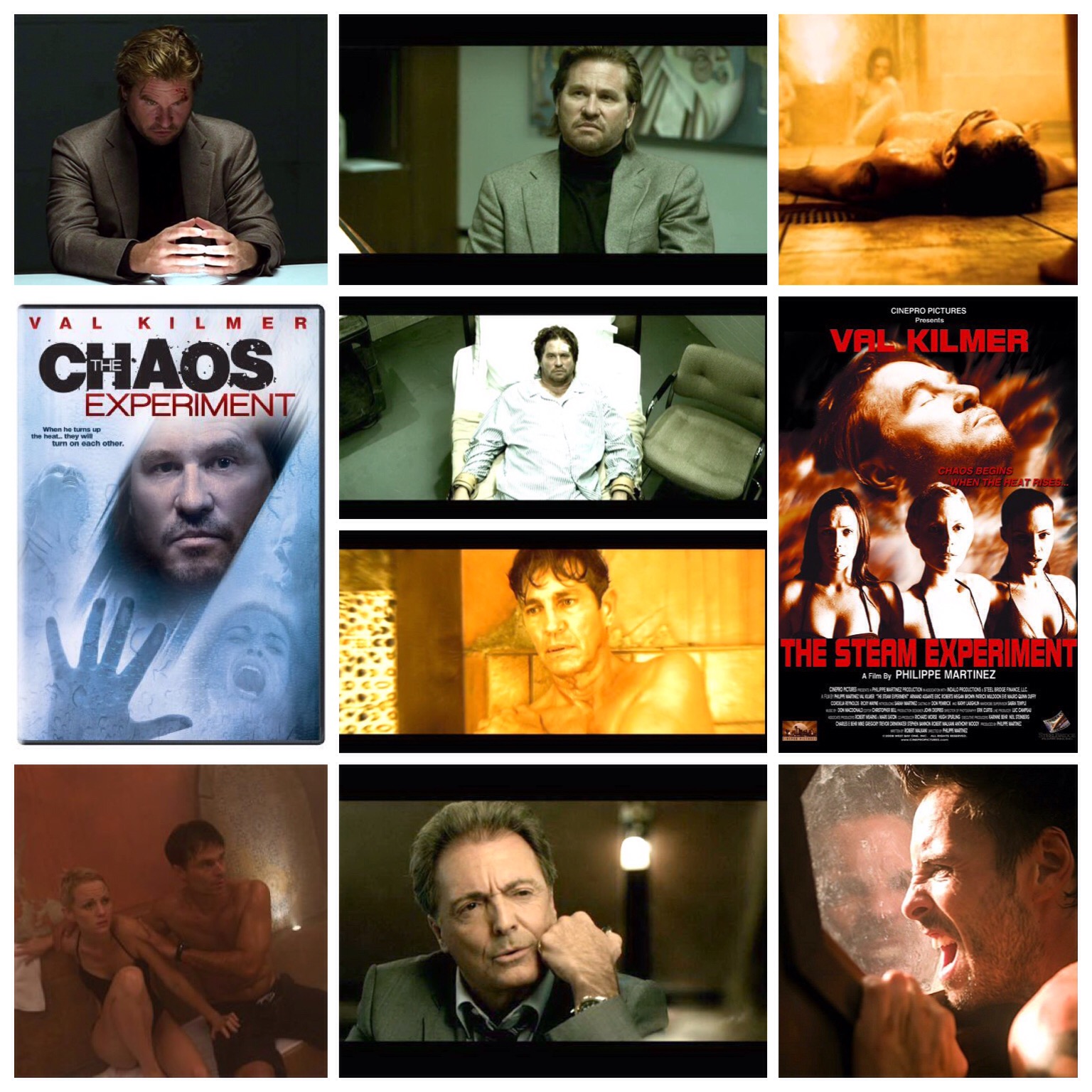
B Movie Glory with Nate: The Steam Experiment 


What’s the best way to raise awareness about climate change and the melting of the polar ice caps? In The Steam Experiment, it’s to lock a bunch of people in a swanky new spa and steam room and crank up the heat until they start to panic and suffocate, of course. Well at least according to half mad scientist Val Kilmer, it is. Tired of his global warming research being rejected and scoffed at, he comes to some fairly… extreme conclusions as to what should be done, and actually goes through with his plans, the absolute madman. Setting his experiment under the pretence of a high end spa getaway for a few lucky contest winners to test out his brand new prototype ‘ultra spa’, he shuts them all in and threatens to turn that heat dial up wayyy past safety standards and boil the poor suckers alive inside, if the local paper doesn’t publish his material for all to see. Radical? Yes. Ridiculous? Definitely. It makes for one shit show of a film though, and awful one, no doubt, but pretty legendary just for being able to boast a plot line in which Val Kilmer kills people with a steam room. One of the unwitting participants in this sick charade is Eric Roberts, who seems equally terrified of being trapped in this type of mucky film as he is of being stuck in the room itself. An irritating police detective played by Armand Assante hunts Kilmer down and tries to talk him out of carrying his steamy threats through to their sweaty end, but old Val is stubborn as a mule, and keeps that heat coming on, as fast and hard as the cliches, stale cookie dialogue and eyebrow raising plot turns. He approaches the role cloaked in near catatonic depression, reaching a point where he’s not even sure what he’s doing anymore, giving the film a feeling of trailing off into an aimless, clamouring conclusion where no one knows what’s up, and Assante won’t stop laughably grilling him for answers and mugging the camera, that enthusiastic Italian mess of a man. A pressure cooker of mediocrity, a disaster that ends melting down just as hard and fast as those ice caps that cause poor Val such sociopathic anxiety. Did I use enough puns in my review?