Ben Stiller’s The Cable Guy: A Review by Nate Hill 

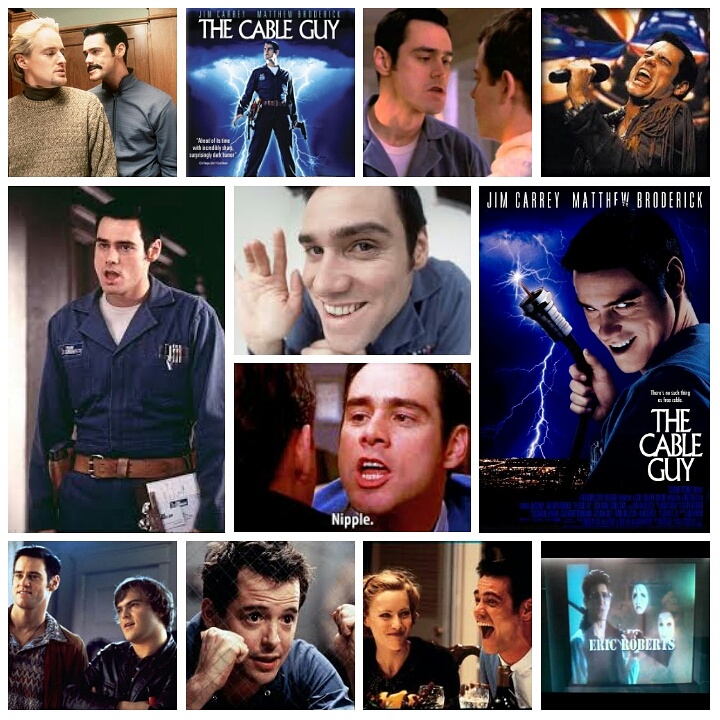
What do you get when you combine acid tongued social satire, unnerving physical comedy, borderline horror/stalker elements, endless pop culture references and an abrasive yet pitiful protagonist from your worst nightmare? Ben Stiller’s The Cable Guy, that’s what you get. And yes, before the hands go up, I do consider Jim Carrey’s lonely, disturbed TV repairman Chip to be the protagonist of the film, mainly because he’s eternally more interesting than Matthew Broderick’s bland, lifeless performance as the poor average joe who becomes victim to his ‘friendly’ courtship. Chip is one part neglected child, two parts borderline psychotic with a dash of manic obsessiveness and a pinch of terrifying delusional behaviour. Doesn’t quite sound like a comedy, does it? It almost isn’t. Stiller’s vision is so pitch black that it takes a few well timed sympathetic beats from Carrey, infused with his googly charm, to make it work. It’s mostly a walk on the scary side though. Broderick has the misfortune of having Chip show up to look at the television, and the guy takes an immediate, unsettling shine to him, going to great and terrible lengths to solidify an unrequited bromance that is a complete one sided fabrication. Stalking, interfering, framing him for god knows what, roughing up a smarmy gent (Owen Wilson is hilarious) who horns in on his girl (Leslie Mann) are but a few of the life shattering misdeeds that Chip carries out, all under the pretense of the buddy system. He’s essentially Frankenstein’s monster that has grown up from a child left to his own devices, fuelled by a lonliness which has long since pickled into something sad and destructive, both to himself and others around him. Carrey plays him like a champ, never cheaping out or holding back, always willing to go there and show us the extreme degrees on the temperature of the human personality. Damn, I make it sound so dark, don’t I?  It is, but at the end of the day we’re talking about a comedy starring Jim Carrey and directed by Ben Stiller, so there’s still the inherent comedic vibe that both of them bring, just drenched in tar this time around. Call it character study, stalker drama, a lifetime movie gone horribly awry or anything in between, whatever it is, it’s some stroke of demented genius and holds up well today. Watch for Jack Black, Ben Stiller, Janeane Garofalo, Andy Dick, Joel Murray, David Cross, Kathy Griffin, Charles Napier, Bob Odenkirk, Kyle Gass  and a pisser of a cameo from Eric Roberts as himself in a facepalming television melodrama. 

Ace Ventura: Pet Detective: A Review by Nate Hill 

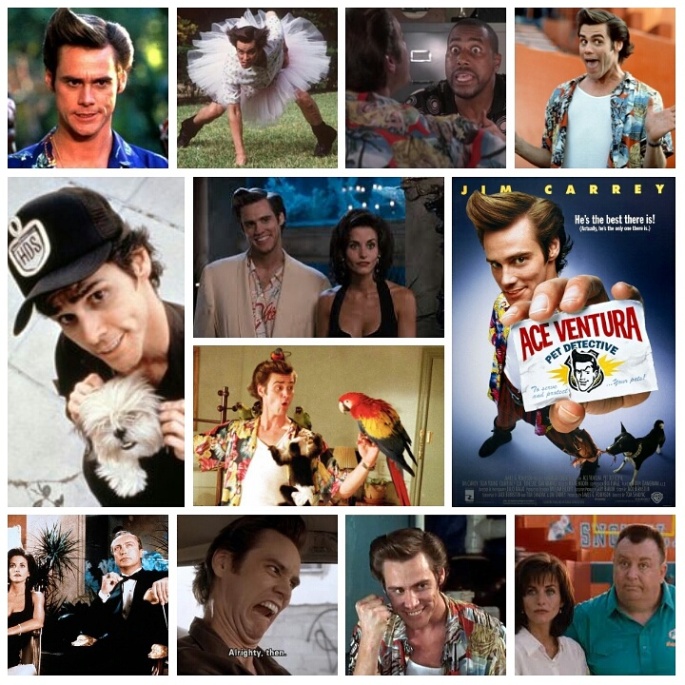
Ace Ventura: Pet Detective shouldn’t really be as funny as it is. It’s random, head scratching and just deeply juvenile, and happens to be one of the funniest films ever made. Why? Jim Carrey. The man is spun gold on camera, and he sells every outlandish minute of this gonzo Looney Toons goofball of a flick. It really wouldn’t work without him. I mean, could you imagine, say, Dustin Hoffman, or John Travolta trying to pull of this kind of malarkey? Ok, I did just laugh really hard picturing that, so it would be funny, but only in an embarrassing way. No, it had to be Carrey, and he’s an engine of unbridled comic mania the entire way through. One acting technique involves basing your performance off of the mannerisms of an animal, and I’ve heard that he chose a cockatoo as the blueprint for Ace. The head bobs, squirrelly movements and that epic, instantly recognizable ocean crest of a hairdo. Makes sense, and I couldn’t unsee it after hearing that. Ace is probably the most eccentric, beloved character Carrey has ever fashioned, and for good reason. He’s like a cannon loaded with jokes, quips, pop culture references, personal space invading antics, a complete lack of inhibitions, a treasure trove of rubber faced muckery and a deep love for any and all creatures of the animal kingdom. Those are pretty much all of the qualities one should look for in a human being. I say that now, but I feel like after spending ten minutes with the guy I’d look for the nearest exit. Ace is on the case, when he’s not goofing off, which is always. Somehow he finds time to search for the missing mascot of the Miami Dolphins, an actual dolphin named Snowflake. The story dimly unfolds in the background of all his tomfoolery, and includes Dan Marino, a suspicious billionaire (Udo Kier, whose exasperation at Carrey’s behaviour looks very un-faked), and an ice queen of a Police Chief played by Sean Young, with an arc that  goes to some pretty disturbing places for this kind of light fare. He also finds time to have hot jungle love with Courtney Cox,  and speak to people through his asshole like a deranged Muppet, among many other things that will have you questioning why you’re watching it, only to realize it’s like your twentieth viewing and you have no plans to ever stop. It’s Carrey’s show, and he takes it into orbit, never letting the mania subside for a nanosecond. He’s borderline certifiable, which comes in handy when he has to infiltrate a mental facility, because the guy halfway to belonging there anyway. There’s just so many cherished little moments, mannerisms and scenes that don’t ever get old, for those of us that love this character. Carrey shaped the landscape of comedy a lot during this portion of his career, and the mile markers that he released stand tall and undiminished to this day, bringing hilarity to all. The sequel is genius too, and one of those rare follow ups that is just as solid as the first. 

SEMI-PRO – A REVIEW BY J.D. LAFRANCE

Will-Ferrell-in-Semi-Pro-will-ferrell-11769585-853-480

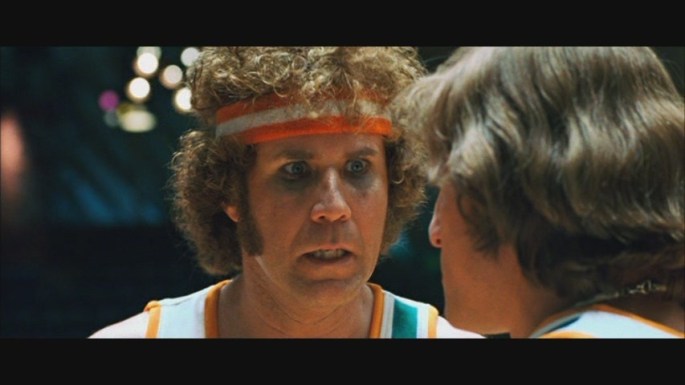
Semi-Pro (2008) proved that Will Ferrell is no longer bulletproof at the box office. The film was not well-received by the critics (nothing new for Ferrell) but failed to connect with his fans like Anchorman: The Legend of Ron Burgundy (2004) and Talladega Nights: The Ballad or Ricky Bobby (2006) did. On paper, Semi-Pro must’ve seemed like a sure-fire hit: mix the dumb guy humor from Anchorman with the underdog sports team of misfits from Slap Shot (1977) and sprinkle all sorts of popular culture references from the 1970s. So what went wrong?

Jackie Moon (Ferrell) is the ever-confident, terminally clueless owner, head coach, and star player (if you can call him that) of the Flint Tropics, an ABA basketball team that might be dissolved when the league merges with the NBA. Only the four best teams will make the cut, which is not good news for Jackie’s team. They are awful, averaging an attendance record of 91 people a game. The lone exception on the team is Clarence “Downtown” Malone (Andre Benjamin) who actually has a shot at making it to the NBA. The Tropics are so bad that one of the local commentators reads the Classifieds section of the newspaper during one game.

In order to improve the team’s chances, Jackie trades their washing machine for Ed Monix (Woody Harrelson), a physical player not above punching out his opponents. The Tropics certainly have their work cut out for them. Not only do they have to start winning on a regular basis but they also have to average 2,000 people every home game. So, Jackie thinks up all kinds of hair-brained schemes to fill seats, including jumping the team’s cheerleaders on roller-skates and wrestling a grizzly bear.

For the first half of Semi-Pro, the comedic beats, or rhythm, is just not there. At the very least, it is inconsistent. Many jokes fall flat and are just not funny. The two color commentators Lou Redwood (Will Arnett) and Dick Pepperfield (Andrew Daly) steal every scene that they are in with their raunchy repartee (much like Jason Bateman and Gary Cole did in Dodgeball: A True Underdog Story). Then, a funny thing happens in the second half. The film actually gets better. There are a few serious moments, mostly dealing with Monix and his ex-girlfriend (Maura Tierney), and once the Tropics get their act together, the film picks up momentum.

Will Ferrell plays the same type of character we’ve seen in countless films – the clueless confident guy with a touch of arrogance. To be fair, he’s got it down to a science now, but it is getting a tad predictable. One gets the feeling that Ferrell is trying to recapture the magic of Anchorman, complete with the 1970s setting. Unfortunately, Semi-Pro is nowhere near as funny despite an excellent premise. Aside from Will Arnett as his usual snarky self, Woody Harrelson is quite good as a washed-up former NBA player looking for redemption and hoping to rekindle his relationship with an ex-flame.

Semi-Pro isn’t a total train-wreck by any stretch and it does have its genuine moments of hilarity but doesn’t quite deliver as well and as often as it should. If you can make it through the first half of the film, where the filmmakers struggle to find the right mix of humor and drama, you’ll be rewarded for a much more satisfying second half that pays off your patience for sticking it out.

PTS PRESENTS: WRITER’S WORKSHOP WITH PETER CRAIG

CRAIG POWERCAST

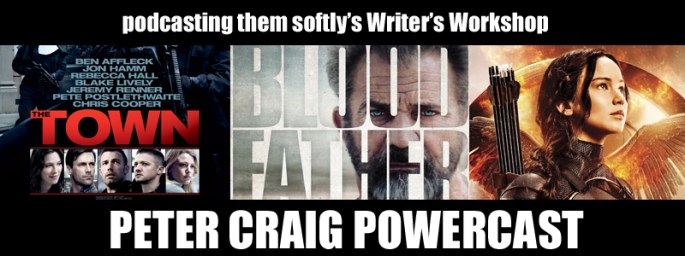
Peter CraigPodcasting Them Softly is thrilled to present an exciting chat with the extremely talented author and screenwriter Peter Craig. Peter collaborated with Ben Affleck and Aaron Stockard on the screenplay for the blockbuster crime movie THE TOWN, and hitting screens this weekend is his latest project, the Mel Gibson action thriller BLOOD FATHER, which finds Gibbo back in total ass-kicking mode, with the film serving as an adaptation of Craig‘s original novel. Other co-screenwriting credits include THE HUNGER GAMES: MOCKINGJAY PART 1 and 2 for director Francis Lawrence, which he tackled with writer Danny Strong, as well as drafts for the hotly anticipated sequels to both TOP GUN and BAD BOYS for super-producer Jerry Bruckheimer. He’s an accomplished novelist, with titles that include THE MARTINI SHOT and HOT PLASTIC, while the future holds some interesting big screen work, with an adaptation of Homer’s ODYSSEY, an adaptation of Lynsey Addario’s memoir IT’S WHAT I DO for producer Steven Spielberg, and a really cool sounding submarine action film called HUNTER KILLER with Gary Oldman and Gerard Butler. This was a serious treat and total honor to be joined by Peter for a discussion on his work – we hope you enjoy!

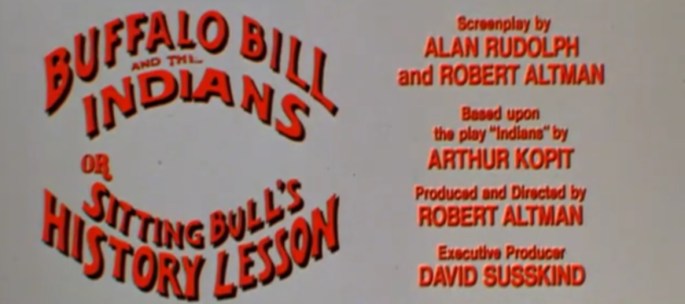
ROBERT ALTMAN’S BUFFALO BILL AND THE INDIANS, OR SITTING BULL’S HISTORY LESSON — A REVIEW BY NICK CLEMENT

1

Only Robert Altman would have had the wily nerve to release his cynical, ultra-revisionist Western oddity Buffalo Bill and the Indians, or Sitting Bull’s History Lesson on the bicentennial anniversary of the United States. Casually ripping apart the longstanding and totally absurd notions of white nobility and the violent Native American savage, this is a darkly comical, defiantly strange movie with a careening tone and a hazy, sometimes murky visual style that relied heavily on long shots with multiple characters in the frame, all of whom were talking at once, without any close-ups to establish whose voice belongs to who. Shot by Altman regular Paul Lohmann, I can think of few other films that walk, talk, and breathe like this one, and in tandem with Peter Appleton and Dennis M. Hill’s adroit editing, Buffalo Bill and the Indians, or Sitting Bull’s History Lesson displays a dreamy vibe that just has to be experienced for full effect. Altman’s bold and challenging use of sound and overlapping conversations has always been a point of discussion, but in this film, it may have reached its apex in terms of the use of multiple and simultaneous audio tracks.

4This rascally effort features an eclectic supporting cast, including Will Sampson, Harvey Keitel, Geraldine Chaplin, Burt Lancaster, and Ned Buntline, with everyone allowing the irreplaceable Paul Newman ample room to run away with the movie in various spots. He was absolutely terrific here playing Buffalo Bill, taking the myth out of the man, and layering him in tragic, alcoholic glee. Co-written by Altman with frequent collaborator Alan Rudolph and adapted from the play Indians by Arthur Kopit, the film took on an episodic, farcical approach to the material, and arriving immediately after his much celebrated Nashville, my guess is that critics and audiences didn’t know what to do with Altman’s newest at the time of its release. Focusing on the wild, behind-the-scenes antics of the famous travelling Wild West Show, which was organized by Buffalo Bill and became a massively successful source of entertainment despite showcasing staggeringly inaccurate historical recreations, Altman and Rudolph were able to lay waste to the traditional idea of the hero in the wild West, presenting Buffalo Bill as a larger than life clown and drunkard, only interested in self-satisfaction and purveying a false sense of self-importance and legend. This is a phenomenally ambitious, wholly original, and totally unique item in the legendary filmography of one of America’s greatest and most influential filmmakers.

2

Me, Myself & Irene: A Review by Nate Hill 

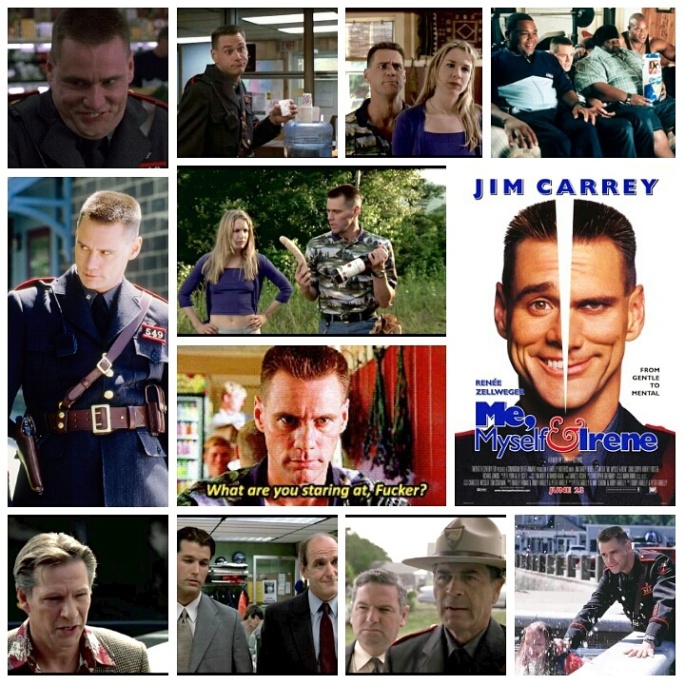
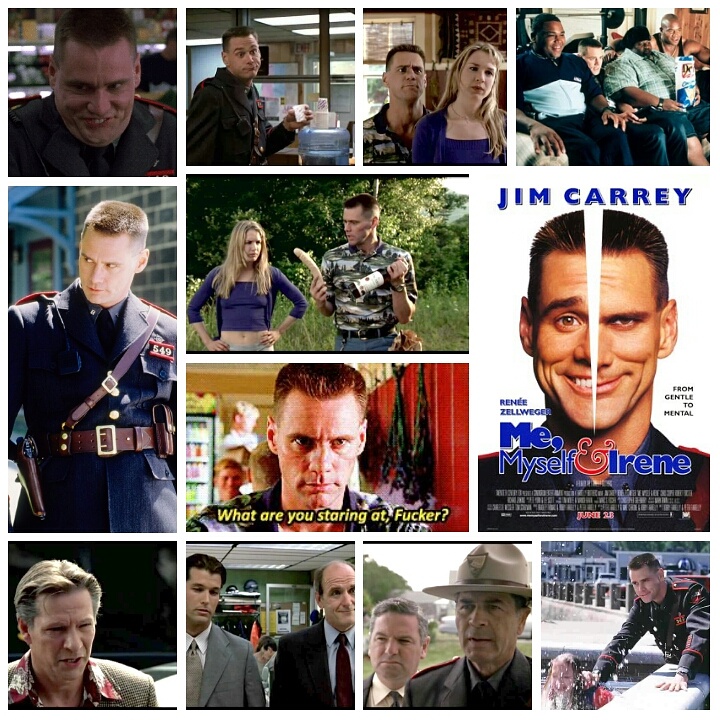
Probably the most ridiculous outing the Farrelly brothers have ever taken us on, Me Myself & Irene cares not a whiff who it offends, how many eyes are rolled or how badly the scales of humour are tipped, or rather yanked, in the direction of extremely bad taste. With the exception of Stuck On You where they played it safe, every dirty little flick in their career is a testament to the utmost raunch in film, the very definition of lowbrow humour and never not flat out totally hilarious. Obesity, dates gone wrong, Amish people, conjoined twins, bowling, physical disability, they’ve tackled every scatalogical venture you could dream up. This time it’s mental illness, in a completely unapologetic depiction that will leave most people red faced, either from fuming or laughing their asses off. Jim Carrey plays Charlie, a meek little pussy who spends one day with his newlywed bride, before she’s whisked away by a black midget played by Tony Cox, who gets all the black midget roles, that little bastard. Charlie has a knack for never standing up for himself, and letting anyone walk all over him. He’s a Rhode Island State Trooper with no balls to back up his badge, and is pretty much the laughingstock of the town. All this bottles up and reaches a boiling point, resulting in a classic Carrey meltdown of rubbery expressions and spastic gutteral incantations. Emerging from the mess is Hank, Charlie’s abrasive, dysfunctional and borderline psychotic alter ego, a result of what the film imagines multiple personality disorder just must be like. Hank causes all hell, and the first time he shows up is the funniest bit in the film, an extended montage of hair raising antics that oddly seems to sum up the Farrely’s career. Charlie/Hank then get caught up in some intrigue involving beautiful Renee Zellweger, back when she was still Renee Zelweger. The scattershot story is just a playground for Carrey though, and this is some of the edgiest R rated mayhem he’s ever caused, guaranteed to arch the backs of some of the more, shall we say… *sensitive* folks we have to deal with running around these days. Charlie has three loudmouth black sons that were dumped in his lap, and they’ve now grown into profane geniuses who love their pops to bits, and it’s here the film finds its only bit of heart amidst the crass vulgarity. The baddies are the classic slimy Farrely cretins, a dirty cop played by Chris Cooper, and an unsavory golf club owner (Daniel Greene). Robert Forster makes a welcome appearance as Charlie’s Trooper boss, and keep a look out for Anthony Anderson, Cam ‘Sea Bass’ Neely, Richard Tyson, Lenny Clarke, and the always hilarious Richard Jenkins. Like I said, this is likely the lowest rung of the ladder in everyone’s career, but it’s a splendidly offensive, colorfully trashy piece of gross out bliss, and definitely the dirtiest of the Carrely team ups. Where else can you see Jim stare a five your old kid down and growl “What are you staring at, fucker?”

CARLOS – A REVIEW BY J.D. LAFRANCE

Carlos

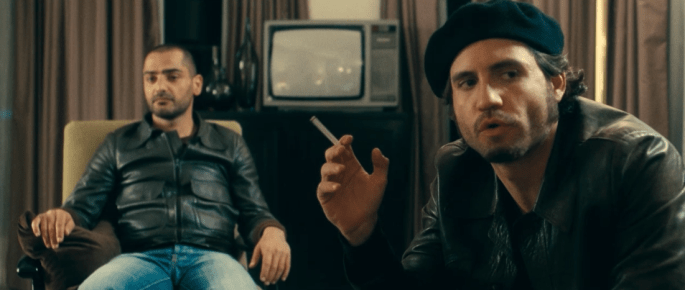
Notorious international terrorist Ilich Ramirez Sanchez a.k.a. Carlos the Jackal came to prominence in the 1970s and 1980s with several politically-motivated bombings, kidnappings and hijackings in Europe and the Middle East. He eventually became a popular culture icon with thinly-disguised depictions in films like Nighthawks (1981) and gracing the cover of Black Grape’s debut album. His image was used as a cultural touchstone rather than an accurate depiction. Incredibly, it wasn’t until Olivier Assayas’ ambitious, five-and-a-half hour miniseries Carlos (2010) that the man and his times were finally done justice. Assayas wisely doesn’t pass judgment on Carlos but rather depicts how he influenced the political climate and how it, in turn, influenced him. Far from a stuffy history lesson, Carlos is an epic political thriller with a charismatic performance by Edgar Ramirez as the infamous terrorist.

Carlos is presented in three, feature-length episodes that track his rise to power and notoriety; the man at the peak of his powers and his greatest triumph; and his inevitable decline and capture. Early on, Assayas establishes his take on Carlos (Ramirez), presenting him as a vain man who, at one point, is seen admiring his own naked body in a mirror to the strains of “Dreams Never End” by New Order. We also see him espouse his personal philosophy, that true glory is “doing one’s duty in silence. Behind every bullet we fire, there will be an idea because we act in harmony in our conscience.” And initially, he seems to adhere to this but once he becomes a superstar among international terrorists, he embraces and cultivates his inflated reputation.

In the first episode, Assayas shows Carlos’ clumsy attempts to impress Wadie Haddad (Ahmad Kaabour), co-founder of the Popular Front for the Liberation of Palestine (PFLP), with a bungled assassination and a failed bombing. This segment builds towards an intense showdown between French domestic intelligence agents and Carlos at one of his girlfriends’ apartment in Paris where we see just how dangerous he is when cornered. The second episode starts off literally with a bang as Carlos and his group arrives at the OPEC headquarters in Vienna and take oil ministers from all over the world hostage in 1975. This was his highest profile operation done at the height of his powers.

By the end of the second episode, Carlos has been kicked out of the PFLP and he starts up his own terrorist organization, effectively becoming a mercenary. The third episode tracks his inevitable decline as he wages a war of terror on France in the early to mid-‘80s after they arrest his wife and a close associate. It’s costly battle for both sides but more so for Carlos who can no longer rely on his reputation to get jobs or find safe haven in countries that used to be sympathetic towards him. He becomes more vulnerable to attacks because he has more to lose, chief among them a family.

Edgar Ramirez’s magnetic presence really comes across early on as he exudes the cocky confidence of the man and conveys his complete commitment to the cause he espouses so brazenly. The actor has Carlos’ terrorist swagger down cold, showing us the smooth ladies’ man with his perfectly coifed looks and stylish attire. Known prior to Carlos mostly for his strong supporting turn in Tony Scott’s Domino (2005), he finally gets to be front and center, playing the role of a lifetime: a larger than life historical figure in a sprawling epic. Assayas and Ramirez’s fascinating take on Carlos is that he viewed himself as a kind of rock star, a charismatic personality who clearly saw himself as someone of importance, destined to do great things. This is evident in the way Carlos idolized and emulated Che Guevara during the OPEC raid, sporting the iconic revolutionary’s trademark beret and scruffy facial hair look as if making a statement. Also, the rock star analogy is further explored in the use of post-punk music along with the third episode, which could be seen as Carlos’ “fat Elvis” period of decline. Ramirez commands every scene he’s in, especially the OPEC raid where he prowls around rooms and hallways, expertly orchestrating this attack in order to get what he wants.

In an intriguing break from tradition, Assayas eschews a traditional orchestral score for source music, predominately post-punk rock. The opening track is “Loveless Love” by the Feelies, which sets the tone of the film. As the song builds so does the tension of the scene it plays over – that of Carlos attempting to assassinate a pro-Israeli businessman in England. Assayas also uses a few tracks by Wire, one by A Certain Ratio and a memorable action sequence scored to “Sonic Reducer” by the Dead Boys. The attention to period detail and architecture is also excellent as Assayas takes us on a perverse travelogue through Europe and the Middle East with Carlos as our guide.

With its color-coded sequences and its objective direction that is slick and confident, Carlos resembles Traffic (2000) and Syriana (2005). These films are all ambitious and expansive in scope as they expertly blend personal politics with bigger political movements. Carlos is a towering achievement, a fascinating study of a man who was a reflection of the times in which he lived in and is embodied by Ramirez’s powerful performance spanning several decades. Assayas’ film is very relevant to our times as it examines the complex machinations of international terrorism with the agendas of terrorist groups clashing with that of the governments of countries all over the world. Carlos sees the struggle of the oppressed against imperialist regimes as a war that he helps fight. With the end of the Cold War, he is marginalized and considered a relic from a bygone era. Assayas has crafted an incredible film that is smartly written, well-acted and masterfully directed.

NEVELDINE/TAYLOR’S CRANK 2: HIGH VOLTAGE — A REVIEW BY NICK CLEMENT

1

Crank 2: High Voltage is absolutely insane. On purpose and by design. You likely already know if this bit of madcap lunacy is in your cinematic wheelhouse; those unfamiliar with the first installment are not likely to take this challenge. The plot here is the same as the original: Indestructible hitman Chev Chelios (Jason Statham) has to keep his heart pumping fast enough to overcome a ridiculous affliction, with the conceit here being that his own heart has been removed and replaced with an artificial one that requires electricity to operate. The gonzo-splatter filmmakers, Mark Neveldine and Brian Taylor (the first Crank, Gamer), are sadists of the first order. Here’s a random checklist of some of the cartoon-like atrocities that are displayed in this breakneck action movie: Anal-violation via shotgun; elbow-caps hacked off with machete; close-quarter machine gun shoot-outs; 10,765 old-school squibs being detonated; graphic and near pornographic sex scenes; gratuitous female nudity; Godzilla-style beat-downs (in the film’s most inspired sequence); casual racism; casual homophobia; casual misogyny; pitch-black humor – this equal opportunity offender has something hysterical and repugnant for every member of the extended family! I am able to easily award this amazing piece of trash four outta four stars. Four Big Ones. The film itself knows that it’s bonkers, and everyone involved in the making of it knew that it was bonkers. It doesn’t give a fuck what you think of it, and most enjoyably, it makes sense on its own terms. Extreme cinema like this lives in its own bubble, and I love these types of modern grindhouse efforts, as they typically all feature explosive stylistic ingredients that push various formal boundaries.

2

Sure, it’s nothing more than an R-rated Wile E. Coyote cartoon where nothing makes any logical sense. But the sheer energy and low-tech skill that Neveldine/Taylor brought to the table is simply staggering. Working with the daring and resourceful cinematographer Brandon Trost, the filmmakers shot this off-the-wall movie with 20, $1000 consumer-grade camcorders (or so I’ve read), resulting in a Tony Scott-on-a-sheet-of-acid aesthetic that will send anyone with any sort of spastic disorder into bouts of epileptic shock. The rogues gallery supporting cast is incredible, with the likes of Dwight Yoakam, David Carradine, a totally tripped-out Bai Ling, Corey Haim, Art Hsu, Reno Wilson, the amazing Efren Ramirez, and a snarling, extra-bad-ass Clifton Collins, Jr. as one of the chief baddies. Oh, and MAJOR shout-out to super-hottie Amy Smart, who again proved herself to be a champ on all fronts. She’s basically topless THE ENTIRE FILM, and her racetrack love scene with Statham is probably one of the longest, funniest, and wildest bits of simulated movie sex ever put on film. And what can you say about Statham that hasn’t been already said? He’s become his own brand, and even if I’m not in love with all of his actioners, when he wants to rip it up with full-force, he’s more than capable, and in the Crank films, he was able to cut totally loose and go for broke. Again – you’ll likely know before reading this review if you want to see this film. Is this the greatest movie ever made? No. But it’s an unqualified success based on its ambition, and no matter how depraved their vision may be, Neveldine/Taylor were clearly operating with a singular vision with this one.

3

JOHN FORD’S MY DARLING CLEMENTINE — A REVIEW BY NICK CLEMENT

1

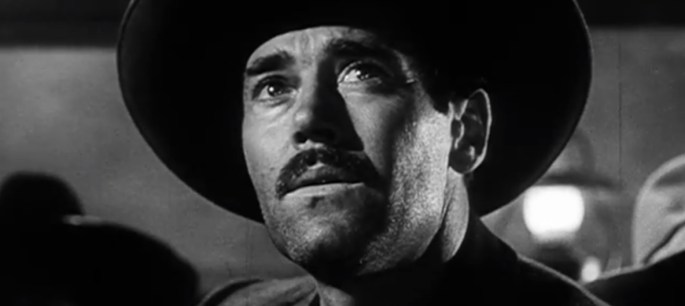
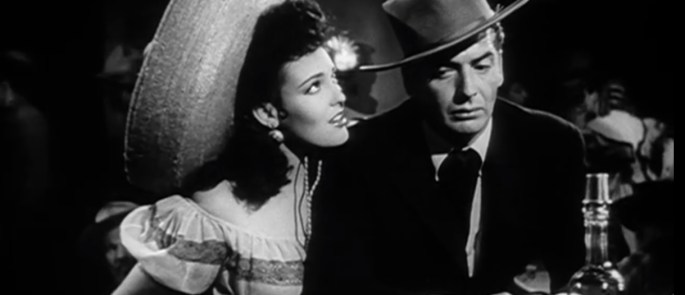
My Darling Clementine will always be my favorite motion picture from legendary director John Ford. There’s something so simple and elegant about the film, and the somewhat recently released Criterion Collection Blu-Ray features a stunning digital transfer, no blemishes to speak of, the shimmery and wonderfully detailed black and white cinematography filling the 1.33:1 frame in all its Academy-ratio glory. Despite the compromised post-production process, the film still stands as one of Ford’s most assured and distinctive works, the funereal tone creating a dreamy and melancholic atmosphere to the old west proceedings. Henry Fonda’s performance was laid-back brilliance, always allowing the story to come to him, instead of trying to dominate each scene with blustery acting techniques.

3

Victor Mature’s work as the alcoholic Doc Holliday is the stuff of cinematic dreams-come-true; it’s one of my favorite performances of all time and every time you observe his work in this film you are able to find new, sad grace notes. Light on gun-slinging but rich in subtleties and character, the movie sort of feels at times like an anti-Western, which is interesting given that it was made during the genre’s full swing and not during the revisionist period. Kevin Costner tipped his hat to My Darling Clementine repeatedly in his underrated 2003 film Open Range, which also features a gripping and deadly shoot-out at the finish. I love contemplative westerns where the dialogue is rich and the relationships are complex – My Darling Clementine fits that bill while also providing unforgettable imagery and projecting a quietly lethal sense of finality.

2

B Movie Glory with Nate: Double Team 

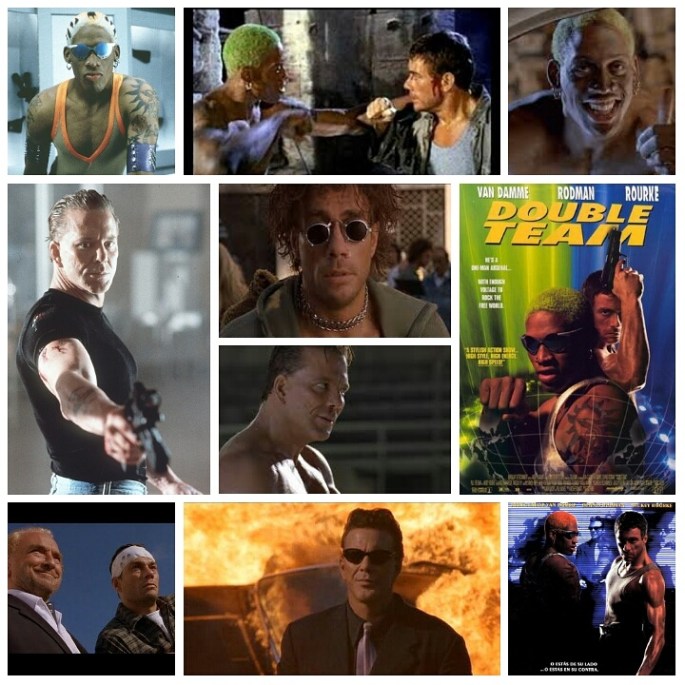
Double Team has to be seen to be believed. Hell, even the poster does. It exists in that delirious wasteland of the late 90’s action genre, a place where anything can, and does go. As the genre evolved, the scientists deep within Hollywood’s labs were trying out endless mind boggling action star team ups, even using a few celebrities that had never had a film to their name. In this particular twilight zone we get Jean Claude Van Damme and Dennis Rodman sharing a spotlight. There’s a pairing for ya. Van Damme plays a counter terrorist expert who miserably fails in preventing an attack from dangerous villain Stavros (Mickey Rourke), and is sent to The Colony, where disgraced agents are branded with all the snazzy technology the 90’s had to offer, after which being sent back into duty. He needs inside helps to track down Stavros, and finds it in beyond eccentric arms dealer Yaz (Rodman), a whacko who mirrors the man’s overblown real life persona. Together they make a run at Rourke, fireworks ensue, blah blah. It’s a crappy flick made noticeable by the strange presence of Rodman, and marginally watchable by Rourke, who actually gives Stavros the tiniest glint of surprising gravity, despite how downright silly the whole enterprise is. Loaded with cheese, dated special effects and clichés, it ain’t no picnic, but worth a glance during an inebriated late night channel switching blitz.