ROBERT ALTMAN’S BREWSTER MCCLOUD — A REVIEW BY NICK CLEMENT

1

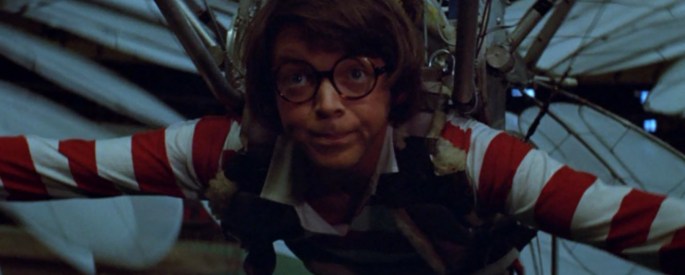
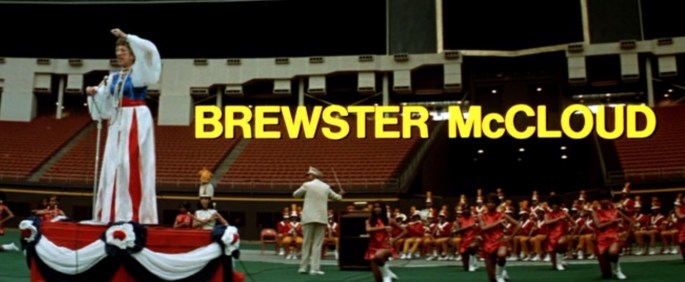
Absolutely one of the more peculiar and beguiling films that I can think of and absolutely the product of the 1970’s, and in particular, the fertile and restless mind of filmmaker Robert Altman, the strange and silly and all-together funky Brewster McCloud feels like a movie that was willed into existence by a group of very stoned people all looking to make one of the ultimate “How Did This Get Made” feature films. Released in 1970 and starring a pre-Harold and Maude Bud Cort as the bizarre titular character, the plot revolves around a possible lunatic living in the Houston Metrodome who is building a pair of mechanical wings in the hopes of taking flight. Right from the beginning when the MGM lion roar is replaced by René Auberjonois’ voice saying “I forgot the opening line,” you know you’re in for something weird and wacky.

2

And because Altman had just had a massive hit with M*A*S*H (his next film would be McCabe and Mrs. Miller), he was essentially allowed to make whatever film he wanted, and thankfully, his eccentric sense of humor and overall oddball leanings helped to birth Brewster McCloud with screenwriter Doran William Cannon and dual cinematographers Jordan Cronenweth and Lamar Boren. Mix in a serial killer plot, Michael Murphy as an obsessed cop, kooky Shelley Duvall as Cort’s possible love interest, sexy-strange Sally Kellerman, a crazy car chase, and one of the more surreal endings to a movie that I can think of, and you have the genuinely whacked-out Brewster McCloud, a film that could never get made today, or really, at any other point than when it was. Also, take special note of the various Wizard of Oz references scattered all throughout the picture.

3

TOKYO DRIFTER – A REVIEW BY J.D. LAFRANCE

641022096879472221-tokyo-drifter-neon-banner.full

Seijun Suzuki made his name in Japan with hard-boiled B-crime films during the 1950s. By the 1960s, he took traditional Yakuza stories and juxtaposed them with an extreme Andy Warhol-esque pop art look that gleefully pushed genre conventions. He started to break away from convention with Youth of the Beast (1963) and then fused the sensibilities of Samuel Fuller with the aesthetics of Douglas Sirk with Story of a Prostitute (1965). Tokyo Drifter (1966) is a film that eschews narrative logic for playful abstraction and the results are quite unlike anything at the time or since.

Tetsuya Hondo (Tetsuya Watari) is a Japanese gangster trying to lead an honest life as the syndicate he belonged to dissolved itself and went legit. The only problem is that they borrowed money from their rival – Yoshii – and now they’ve come to collect. In the film’s striking washed out black and white prologue, Tetsu is beaten up by the Yoshii syndicate when he refuses to work for them, which, as it turns out, is a test to see if he’s actually gone legit. Out of loyalty to his former bosses, Tetsu decides to help him pay off the debt that is owed. However, complications arise when yet another rival syndicate kills Yoshii and takes over collecting the debt.

Tokyo Drifter has a striking ‘60s pop art look with a nightclub’s walls saturated in purple; a scene with a singer accompanied by a piano in a yellow room and is visited by a man in a red suit, while phones in various rooms in various places are primary colors. These vivid contrasts in color, coupled with the hep jazz soundtrack, make for a very unusual gangster film. Suzuki uses color and composition of the widescreen frame masterfully, like how he places his actors in a given frame.

Tetsuya Watari’s Tetsu is the epitome of ‘60s mod culture cool with his stylish suits, good looks and fashionable existential angst. It also doesn’t hurt that he’s pretty good with a gun. The pop art style that influenced Tokyo Drifter can also be seen in films like Modesty Blaise (1966) and In Like Flint (1967) but Suzuki’s film fearlessly pushes genre conventions further than either of these examples as he experimented with color and composition to a fascinating degree.

Stephen King’s Firestarter: A Review by Nate Hill 

Film versions of Stephen King novels can be a tricky thing. Often they’re half assed,  clunky miniseries (ever tried to sit down and watch The Langoliers??), and when they’re given the lofty cinema treatment, he has famously turned his nose in the face of Kubrick’s might. I feel like Firestarter escaped unscathed, and still holds to this day, if a bit achingly retro now. It’s a thriller perceived in a childlike manner by its young protagonist, Charlie Mcgee (Drew Barrymore). Charlie can start fires with her mind, and certain shadowy agencies just can’t wait to get their hands on her. Her father (David Keith) once participated in some scary drug testing related to telekinesis back in the day, and some of whatever altered his DNA has been passed on to her. He will do anything to protect her, as the two frantically race across the country to safety, pursued by forces working for Hollister (Martin Sheen), a spook with too much power and nasty ideas about what to do with it. Also on their trail is pseudo spiritual whacko John Rainbird, who wants to absorb Charlie’s abilities, man what a freak. Rainbird is a native American in King’s novel, so white haired yankee boy Scott is an odd choice, but he does a fine job all the same. Two things are what makes this one really stand out in a special way. Tangerine Dream provides yet another ultrasonic, elemental synth score that has since become legendary. It accents the story in an almost fairy tale like way, gilding the danger with a fable style sound, but never stamping out the real menace. Barrymore is the other leg of the table, giving one hell of a fierce and vulnerable performance for such a young girl, her childlike honesty a prism for the audience to see the evil around her through innocent eyes. It’s great stuff, and one of the most solid King adaptations out there. Now there is a sequel (not sure if the man wrote a second book?) called Firestarter 2: Rekindled, which pales in comparison and runs about 45 minutes too long (!), but it’s worth a look for the casting of Marguerite Moreau as a grown up Charlie, Malcolm McDowell taking over from Scott as Rainbird, and Dennis Hopper as well. 

PTS Presents DIRECTOR’S CHAIR with DAVID MICKEY EVANS

DME POWERCAST

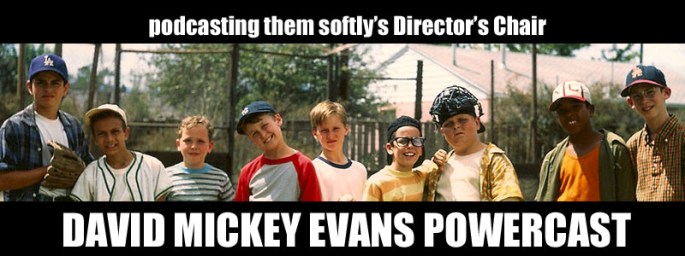
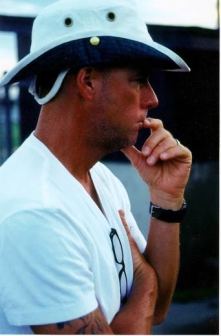
DMEPodcasting Them Softly is extremely excited to present a chat with special guest David Mickey Evans, the writer, director and the narrator’s voice of the heartwarming classic baseball movie THE SANDLOT, and writer/producer of the cult family classic RADIO FLYER.  He has contributed to the BEETHOVEN family movie series, and also wrote, directed and narrated THE SANDLOT 2.  His recent novel, THE KING OF PACOIMA, is a fascinating expansion on the RADIO FLYER universe he created, and really hits a lot of intense notes of emotional and personal reflection. His work has skillfully combined childhood magic with real world trauma, something that had been largely missing on screen since 1960’s era cinema, and he helped to break the mold of cliched cuteness that was inherent in family fare all throughout the 1980’s. He’s also a prolific script doctor on a wide variety of films, which is always an area of great fascination for us.  A true movie lover, Evans is a major baseball fan, so it was a lot of fun to pick his brain over his favorite big screen tales from the diamond. It was an honor to have David on the show, and we hope you all enjoy!

BEN AFFLECK’S THE TOWN — A REVIEW BY NICK CLEMENT

1

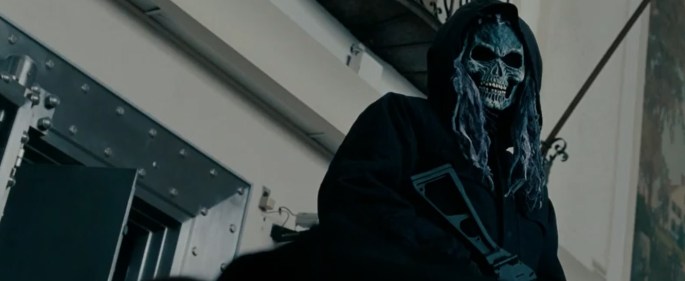
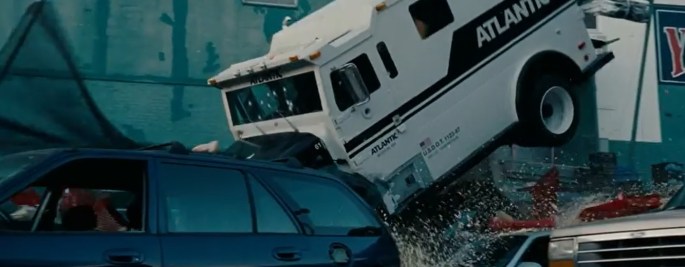
I am a huge fan of hot-blooded crime cinema, and one of the better recent genre entries is most definitely Ben Affleck’s high-voltage cops and robbers drama The Town, which proved that his extra-sharp directorial debut Gone Baby Gone was no fluke. Adapted with foul mouthed gusto and extra atmospheric flavor by screenwriters Peter Craig, Aaron Stockard, and Affleck from the Chuck Hogan novel Prince of Thieves, and directed by Affleck in minor-Michael Mann mode, this film became a big audience favorite in the fall of 2010, paving the way for Affleck’s Oscar-winning Argo a couple of years later. The action pivots on a group of dangerous but disciplined bank robbers led by Affleck, in what’s likely a career best performance, who operates a mostly solitary life, until he falls in love with one of his hostages that he takes during a daring mid-morning heist. Will he be able to call it quits with his criminal life, and is it possible for a good woman to love a bad man? It’s also got terrific action sequences and a dynamite car chase through the narrow streets of Boston that is genuinely hair-raising, furthering underscoring how truly rare it is to get a piece of R-rated, cracker-jack entertainment like this one that never insults intelligence levels at any point.

2

The deep supporting cast was absolutely incredible, with Jeremy Renner receiving an Oscar nomination for his pugnacious yet sympathetic work as Affleck’s volatile #1 buddy and partner in crime, Jon Hamm as a dogged FBI agent hot on their tail, and the sexy and sweet Rebecca Hall as Affleck’s somewhat reluctant love interest (what an amazing run of films she had with The Prestige, Frost Nixon, Vicky Christina Barcelona, Please Give, Red Riding 1974, Iron Man III, Closed Circuit, Everything Must Go, Transcendence, and most recently, The Gift). Filling the edges of the pulpy narrative are Blake Lively doing her best white-trash-hot routine as Affleck’s townie plaything, Chris Cooper, Titus Welliver, Victor Garber, and a scene-stealing Pete Postlethwaite as a local crime boss with a penchant for flowers. Affleck has released two different director’s cuts which are even more expansive with the character beats and various arcs and which feature darker endings, while all versions of the film showcase Robert Elswit’s ground-level yet totally electrifying camerawork, especially during the extra-loud and intense shoot-outs, which certainly tip their hat to Mann’s benchmark masterpiece Heat. Originally developed as a directing project for Adrian Lyne, the film was shot on location in Boston, and became a sizable box office hit around the world. This is a very satisfying piece of work in all respects.

3

Best Men: A Review by Nate Hill 


Best Men is the most charming, dainty and innocuous movie about bank robbing that you’ll ever see. It’s premise revolves around a wedding party that unwittingly gets roped into a heist, but they’re all solid folks, including the perpetrator, and all just want the best for the happy couple they are celebrating for. Therein lies both the comedic and the touching moments, of which there are many, supplied by a diverse and very capable cast. A troupe of best men accompany a groom (Luke Wilson) on the way to his matrimonial bliss. One among them is a hotheaded adrenaline junkie named Billy (Sean Patrick Flanery, never more adorable). Billy has knack for robbing banks whilst reciting Shakespeare. Demands, commands, profanities. All in the Bard’s tongue. He brazenly holds up a rural branch and drags his friends in, including two others, an ex military stud (Dean Cain) and a squirrelly, pussy whipped Andy Dick. They soon find themselves trapped in the bank with law enforcement prepping a siege outside their front door and Wilson’s determined Bridezilla (a feisty Drew Barrymore) marching straight into the crime scene to furiously give her fiancé what for. Billy also has severe daddy issues, which probably led to him lashing out in such a theatrical fashion in the first place. Coincidentally, the local sheriff (Fred Ward) happens to be his Poppa, and the two face off in scenes which undermine the lighter tone and dig for pathos that’s worth pausing for. They’re threatened by a gung ho FBI agent (Raymond J. Barry) who wants to blow them to kingdom come so he can go to lunch. They also find themselves sequestered in the bank with a sketchy Viet nam vet played by a wicked funny Brad Dourif in quite the commanding little supporting turn. Amid the screwball roughhousing, him and Cain find a few aching moments of truth relating to Cain’s sexual orientation, and his shame regarding it. I love a light, harebrained comedy, but I love em even more when they take deep breaths between fits of lunacy to gift their characters with some gravity that makes you feel something besides your sides splitting. This ones sadly forgotten, and you should all give it a go, it’s a gem. 

Finding Dory: A Review by Nate Hill 

While Finding Dory is not the same magic that Nemo was back in 2004 (it’s hard to catch that kind of lightning in a bottle twice), it’s safe to say it’s it’s own awesome little movie, and as far as a sequel goes, passes with flying colors. It’s more or less structured the same way as the first in terms of plot, adding it’s own twists, new characters and a core message that relates to previous themes while intrepidly covering new ground. My only complaint is I wish it were longer. It seemed to be over in a flash, even for a reliably slim Pixar running time. It would have been nice to have an extra 15 or 20 minutes to flesh out a few scenes, and elaborate a bit more on one particular character. Even so, what we get is completely charming and inspired. It starts off pretty much where we left off, with Nemo, Marlin and Dory living happily on the reef, intercut with scenes featuring an infant Dory who is most likely the cutest little thing to ever be seen in a Pixar movie. It’s revealed that a long time ago she was separated from her parents (Eugene Levy and Diane Keaton), and has grown up lost, adrift and afflicted by her relentless memory disorder. When an interaction triggers memories of them, she sets off with Marlin and Nemo in tow, on a merry quest across the ocean to connect with her roots. A great deal of this one is spent in a Sea World like habitat, which is another change and leaves room for many more new jokes and creatures. An octopus named Hank (Ed O Neil) begrudgingly helps her out, as well as a nearsighted whale shark (Kaitlyn Olsen), and as beluga (Ty Burrell) whose echo location is busted, providing one of the best jokes. There’s also a couple of exuberant seals played by Idris Elba and Dominic West, a few returning familiar faces and an epic cameo by a huge star, dead panning the voice of the aquarium tourist announcer in classic Pixar good humour. The film stresses the importance of acceptance and resilience, putting forth the idea that someone with a debilitating condition can in fact find their own unique method of coping, and achieving their goals despite the symptoms of their ailment. Trust Pixar time and time again to take mature, lofty themes and mold them into totally relatable fables that never preach, and are distilled to a point where the little ones can absorb them right alongside their parents. Like I said before, the film needs a bit more padding in its narrative to feel complete, which may materialize in an extended dvd version. What we have here is brilliant enough though, and didn’t disappoint. 

Dark Blue: A Review by Nate Hill 


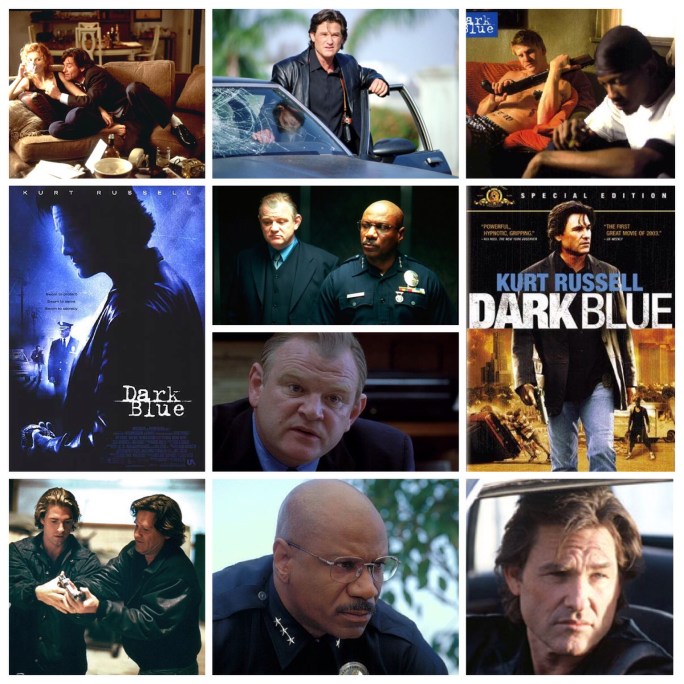
Dark Blue is the overlooked performance of Kurt Russsel’s career, and also the best. It’s also a film that brilliantly examines corruption, lies, brutality and abuse of power through a thoughtful narrative lens and via a powerfully moving story . So why then was it received with an unceremonious cold shoulder? Life is full of mysteries. I was too young to see it when it came out, or pay attention to the buzz surrounding it’s release, but I fell in love with it when I was older, and it remains one of my two favourite LA cop films, alongside Training Day. Kurt Russell throws himself headlong into one of the fiercest and most complex character arcs he has ever been in as Eldon Perry, an LAPD detective who comes from a long lineage of law enforcement. Eldon is a corrupt cop, but the important thing to realize about them is that they never consider themselves to be the bad guys which they are eventually labeled as. To him he’s on a righteous crusade, led by Captain Jack Van Meter (a purely evil Brendan Gleeson), a quest to clear the streets using any means necessary in his power. Eldon is blind to to the broken operative he has let himself become, questioned only by his wife (Lolita Davidvitch) and son, who are both thoroughly scared of him. The film takes place during the time of the Rodney King beating, with tensions on the rise following the acquittal of four LAPD officers. Ving Rhames is resilient as Holland, the one honcho in the department who isn’t rotten or on his way there, a knight for the force and a desperate loyalist trying to smoke out the corruption. Perry is assigned a rookie partner (Scott Speedman) and begins to show him the ropes, which include his patented brand of excessive force and intimidation. As crime ratchets up and a storm brews, Perry realizes that his blind trust in Van Meter and his agenda has been gravely misplaced, and could lead to his end. It’s a dream of an arc for any actor to take on, and Russell is seems is the perfect guy for the job. He fashions Perry into a reprehensible antihero whose actions have consequences, but not before a good long look in the mirror and the option to change the tides and find some redemption, before it’s far too late. It’s not so common anymore for crime films to cut through the fat of intrigue and action, reaching the gristle of human choices, morality and the grey areas that permeate every institution know to man, especially law enforcement. Working from a David Ayer screenplay based on a story by James Ellroy (hence the refreshing complexity), director Ron Shelton and everyone else onboard pull their weight heftily to bring this difficult, challenging, sure fire winner of a crime drama to life. Overlooked stuff.

A MIGHTY HEART – A REVIEW BY J.D. LAFRANCE

hero_EB20070621REVIEWS70621002AR

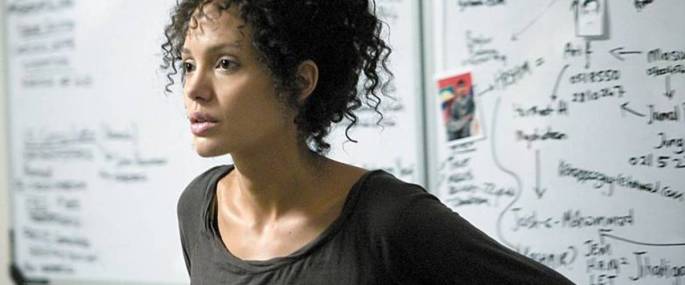
Ever since Angelina Jolie won an Academy Award for her memorable role in Girl, Interrupted (1999), she has gradually gotten further and further away from the kinds of roles that won her that coveted accolade in the first place. And so it was with some anticipation that she would be returning to more challenging, interesting work with A Might Heart (2007), an adaptation of the memoir by Mariane Pearl about the kidnapping and death of her husband, journalist Daniel Pearl. Of course, there were the usual fears that this would merely be a vanity project for Jolie – a desperate attempt to reclaim Oscar glory yet again. However, the wild card thrown into the mix was the presence of British filmmaker Michael Winterbottom. He has the reputation of being something of a maverick, adept at all kinds of genres, be they literary adaptations (The Claim), period pieces (Tristram Shandy: A Cock and Bull Story), biopics (24 Hour Party People) or politically-charged docu-dramas (The Road to Guantanamo). However, he also has the habit of turning them on their head in a way that polarizes critics and audiences. If anyone could get Jolie to shed her movie star persona it would be him.

The film is set in Pakistan as Daniel (Dan Futterman) is doing a story on the Taliban for the Wall Street Journal. One day, he goes off to interview a religious leader and never comes back. When he doesn’t return later that night, Mariane (Angelina Jolie) checks his email and tries to track down his contacts but with no success. The next day he is still missing and she starts calling anybody she can think of, eventually bringing in the local police. The film becomes an intense, Michael Mann-esque police procedural as local law enforcement, led by Captain (Irrfan Khan), turn the city upside down questioning anyone connected with Daniel or who helped set up the interview he was going to.

The Department of Justice and Diplomatic Security Service special agents are called in and a representative by the name of Randall Bennett (Will Patton) meets with Mariane in order to get her side of the story. She is also a journalist and does her own digging into the case. In a few days, she receives an email from the kidnappers who claim that Daniel is a CIA agent posing as a journalist while the local newspapers claim that he’s a Mossad agent just because he also happens to be Jewish. Mariane finds herself drowning in the political quagmire that is Pakistan as the authorities question Daniel’s methods and motivations.

Angelina Jolie does an excellent job as a woman barely keeping it together in the face of such uncertainty, not knowing if she will ever get to see her husband alive again while also dealing with being pregnant on top of everything else. She wisely underplays the role, resisting the urge to come on too strong by being showy and instead immersing herself in the part. Winterbottom helps her out, like in one scene where Mariane allows herself a moment to let it all out and break down. He refuses to go for the easy money shot close-up of Jolie’s teary, anguished face and instead opts for a long shot, letting her body language speak volumes about how she’s feeling.

Winterbottom’s hand-held camera careens through the crowded, claustrophobic streets of Karachi much like in the opening scenes of The Insider (1999) when Al Pacino’s character meets with the leader of the Hezbollah. Winterbottom creates an immediate, immersive experience as the sights and sounds of the city are everywhere. He also keeps everything grounded in reality with minimal use of music because of its ability to easily manipulate our emotions. A Mighty Heart feels like a personal project for Jolie but never seems like a vanity project because one never feels like she is grandstanding but rather is passionate about the subject matter and doing justice to it.

John Singleton’s Rosewood: A Review by Nate Hill 

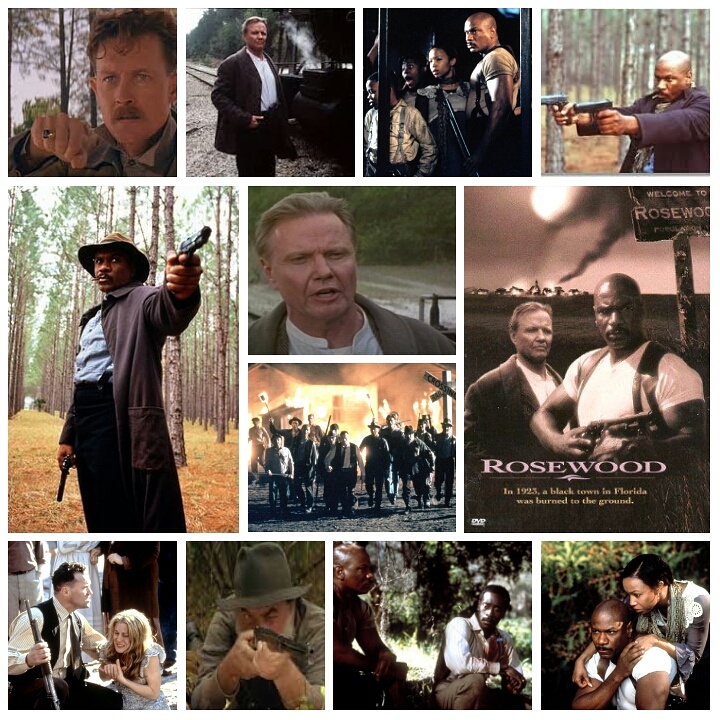
John Singleton’s Rosewood is a partly fictionalized, greatly dramatized retelling of one of the largest lynchings and subsequent conflicts in American history. The time is 1923, the place is Rosewood, a small southern town populated largely by African communities. When borderline insane local housewife Fanny (Catherine Kellner) is caught in the midst of a violent sexual fling, a young black man accidentally stumbles upon the scene. Being the crazy bitch she is, she melodramatically pins it on him, inciting the wrath of the town. The real culprit was of course a white dude, played briefly by Robert Patrick before fleeing the county for good. Because of this selfish misdirection, every white man and his mother now wants the boy hung, and it escalates with the speed of a prairie fire until a full scale race war rages through Rosewood. A lone mercenary called Mann (Ving Rhames) happens to be around and lends his quickdraw talents to the townsfolk who are being hunted. The sheriff (Michael Rooker) is somewhat of a pushover, and unable to quell the mob anyway, especially when it’s led by a rabid Bruce McGill, who is scary and then some. The only white boy who has anything but ropes or torches to offer these poor folks is a kindly store owner played by Jon Voight, who shelters a group of them on his property, much to the mob’s anger. Voight’s character is odd; when we meet him he is in heated coitus with one of his shopkeeps, a young African girl. It’s later revealed that she’s afraid of him. Despite this dark piece of his arc, Singleton treats him as a hero, begging the question, were there scenes cut that elaborated on his relationship with her? Such imbalances in tone can be found in the story as well: much of the film is treated with a combination of severe melodrama and true crime drama, speckled here and there with jarring little bits of pulp that feel like they’re from a Django type flick. Wouldn’t have been the narrative mix I would have used, but perhaps Singleton’s hand slipped and too much of an aspect fell in which he only ever meant as a subtle garnish. Nevertheless, it’s very solidly made, wherever it sits on the genre map, with all the actors, particularly the African townsfolk, shining nicely. It’s disturbing as well, with the black body count reaching sickening heights and the racist fever at a vicious spike in temperature. It’s a scary scenario when the hunters greatly outnumber the hunted, and mass deaths are imminent, especially when such anger is involved. Sympathy is earned in spades from the viewer, as well as the urge to look away at least a few different times. I haven’t done my research on the real story so I couldn’t tell you where it falls on the authenticity charts, but I suspect a great deal of it has been exaggerated for effect and impact. In that, it succeeds, if faltering in tone a few times to puzzle the viewer, before getting back on track.