BERT GORDON’S THE FOOD OF THE GODS — A REVIEW BY NICK CLEMENT

Food_of_the_gods

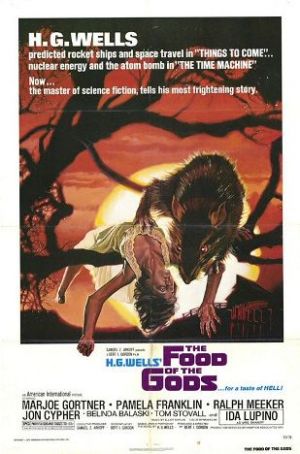
Undoubtedly one of the silliest, most aggressively ridiculous movies I’ve encountered, The Food of the Gods was released in 1976 and was mildly based on the H.G. Wells novel The Food of the Gods and How It Came to Earth. Written, produced, and directed with lunatic glee by shlock-master Bert Gordon, a conossieur of rear projection giant-themed C-movies (Village of the Giants, Attack of the Puppet People, The Amazing Colossal Man), The Food of the Gods centers on a mountain town that experiences a series of attacks by mutated animals that have ingested a mysterious substance, and it happily lurches from one scene to the next with an amazing grasp of its own idiocy firmly intact. Each performance is terrible in its own special way, the directing is haphazard, the “special effects” are bargain-basement atrocious and absolutely hilarious to behold, and the musical score and sound effects completely bonkers. And yet the movie remains a pisser all throughout, exactly because of how shitty-amazing it is as a whole. The finale involving a siege of plus-sized rats attacking a house followed by cinema’s chintziest flood has to be seen to be believed. Everyone HAD to know what a piece of crap they were all making, and when they all saw the finished effects work and the stupid looking killer animals on display (THOSE CHICKENS POWER), they hopefully all had a laugh. The final moments are actually fairly dark and clever. A Samuel Z. Arkoff Production of an American International Pictures Release.

food-of-the-gods-poster

GLENGARRY GLEN ROSS – A REVIEW BY J.D. LAFRANCE

glengarry1

One of the dangers in adapting a stage play into a film is that you won’t be able to break out of the theatricality inherent with so many plays. Fortunately, film director James Foley seemed to be acutely aware of this when he decided to take on Glengarry Glen Ross (1992), an adaptation of David Mamet’s Pulitzer Prize-winning play of the same name with the screenplay written by the man himself.

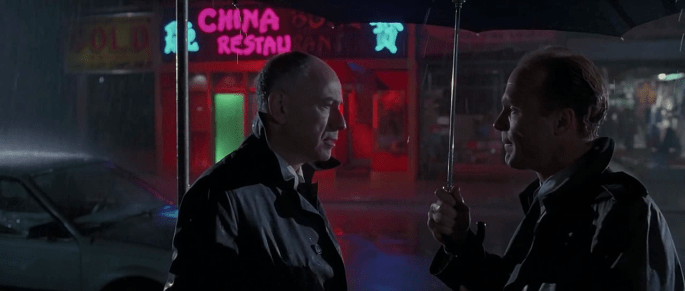
Right from the start, Foley keeps things visually interesting by bathing the film in Giallo-esque lighting that would make Dario Argento proud. Cinematographer Juan Ruiz Anchia photographs two salesmen talking in adjoining telephone booths, bathing them in white and blue light respectively with contrasting red in the background. Not only are these colors of the American flag and thereby making a subtle allusion to the notion that this story is a damning indictment of Capitalism, one of the principles that made the United States what it is today. The two men bitch and gripe to each other about the potential clients they have to cold call and then turn on the charm once they get them on the phone. Welcome to Mamet’s cutthroat world of real estate sales populated by desperate, often cruel men that are driven to make as much money as they can, consequences be damned.

One night, an office of down-on-their-luck salesmen are given the pep talk from hell by a ruthless man named Blake (Alec Baldwin), an executive sent by their bosses Mitch and Murray, on a “mission of mercy” as he sarcastically puts it. He starts off by telling them that they’re all fired. They have a week to get their jobs back by selling as much property as they can. He gives them an additional incentive: first prize is a new Cadillac El Dorado, second prize is a set of steak knives and third prize is, as he puts it, “you’re fired.” If the salesmen do well they will get the new Glengarry leads and the promise of better clients and good money.

Blake delivers an absolutely punishing speech as he belittles them (“You call yourself a salesman, you son of a bitch?”), is downright insulting (“You can’t close shit, you are shit! Hit the bricks, pal and beat it because you are going out!”), and demoralizing by even questioning their manhood. He throws in all sorts of “encouraging” words, like “Get them to sign on the line which is dotted,” and “Always be closing.” Alec Baldwin delivers a blistering performance as Blake. His character was not in the original stage play, Mamet wrote him specifically for the film. In his brief amount of screen time, Baldwin dominates the screen against the likes of Ed Harris and Jack Lemmon as he delivers a devastating monologue with ferocious intensity. At one point, Dave Moss (Ed Harris) asks him, “What’s your name?” to which Blake replies, “Fuck you! That’s my name. You know why, mister? ‘Cause you drove a Hyundai to get here tonight. I drove an $80,000 BMW. That’s my name.” Blake is an icy motivational speaker that only motivates the salesmen out of fear of being unemployed, making this scene eerily relevant to our times as that is also the prime motivator for most people trying to hold down a job in our current economic climate.

If there was ever a film that deserved an Academy Award for best ensemble cast then this is it. Glengarry Glen Ross features a dream collection of acting heavyweights: Jack Lemmon, Al Pacino, Kevin Spacey, Ed Harris, and Alan Arkin. Pacino plays the slickest salesman of the bunch – Ricky Roma, a smooth-talking, well-dressed bullshit artist of the highest order. This is evident in the scenes where Roma spins an incredibly long and convoluted story, seducing a mild-mannered middle-aged man named James Lingk (Jonathan Pryce). It’s a marvel of acting as we watch Pacino do a spectacular verbal tap dance around the actual pitch until the last possible moment when he’s got the guy’s complete and utter confidence – even then he presents the land he’s pushing as an opportunity as opposed to a purchase, preying on Lingk’s insecurity. It’s a brilliant bit of acting as Pacino commands the scene with his mesmerizing presence. Jonathan Pryce is also excellent as he portrays a weak-willed man susceptible to Roma’s polished charms.

Harris plays Moss as an angry man pissed off at the lousy leads (i.e. clients) and is plotting to defect to a rival, Jerry Graff. George Aaronow (Alan Arkin) is a nervous guy unable to close a sit (pitching a client in person) and seems keen on Moss’ plan to steal the new Glengarry leads and sell them to the competition. John Williamson (Kevin Spacey) is the office manager, a pencil pusher that shows little remorse in what happens to his staff. He’s a smug son-of-a-bitch who takes a particular interest in Shelley “The Machine” Levene’s (Jack Lemmon) plight. Levene is an older salesman trying to make enough money to pay off mounting medical bills for his sick daughter, which colors everything he does.

glengarry3Levene is a pathetic character desperate to keep his job and still capable of a slick sales pitch (in a nice touch, he often refers to an imaginary secretary named Grace while calling a potential client on the phone), it’s just his judgment that’s off as he finds out with devastating consequences later on in the film. Jack Lemmon somehow manages to make him sympathetic. We see both sides of Levene in a scene where he tries to sell property to a man (Bruce Altman) in his home. The man is not interested and despite Levene’s desperate attempts, asks him to leave. It is an increasingly uncomfortable scene that is hard to watch as the man finally and firmly rebuffs Levene. Your heart really goes out to Lemmon’s character as he dejectedly walks back out into the pouring rain, looking very much like a drowned rat. It is to Lemmon’s incredible skill as an actor that he makes you care about such a pitiful man.

Director Foley successfully transfers Mamet’s play to the big screen by creating atmospheric visuals. There is a somber mood that permeates almost every scene. The first half of the film takes place at night during an oppressive rainstorm. Anchia’s rich, textured cinematography is the key ingredient in giving Mamet’s play a cinematic look. He relied on low lighting and shadows with blues, greens and reds for the first part of the film. The second part adhered to a monochromatic blue-grey color scheme. All the locations are given their own distinctive color scheme, in particular, the hellish red/navy blue of the Chinese restaurant that the salesmen frequent. The overall atmosphere is dark, like that of a film noir.

And then there is Mamet’s trademark hard-boiled dialogue or “Mamet speak” as it is known. It has a sharp, staccato quality to it that cuts right to the point with characters often interrupting each other or their dialogue overlapping as evident in the scene where Moss tells Aaronow of his plans to rob their office. One thing that is evident in Glengarry Glen Ross is just how good Mamet is at writing amusing dialogue. For example, at one point, Williamson asks where Roma is to which Moss replies, “Well, I’m not a leash so I don’t know, do I?” Mamet’s characters talk like they are thinking about what they are going to say next as they are saying it — much like in real life.

David Mamet’s play was first performed in 1983 at the National Theater of London and won the Pulitzer Prize in 1984. That same year it made its United States debut in the playwright’s hometown of Chicago before moving to Broadway. Shortly thereafter, producer Jerry Tokofsky (Dreamscape) read the play on a trip to New York City in 1985 at the suggestion of director Irvin Kershner who wanted to make it into a film. Tokofsky then saw it on Broadway and contacted Mamet. The playwright wanted $500,000 for the film rights and another $500,000 to write the screenplay to which the producer agreed. Washington, D.C.-based B-movie producer Stanley R. Zupnik was looking for A-list material and co-produced two previous Tokofsky films. Zupnik had seen Glengarry Glen Ross on Broadway and found the plot confusing. He also knew of its reputation in Hollywood as being a commercially difficult project but figured that he and Tokofsky could cut a deal with a cable company.

During this time, Al Pacino and Alec Baldwin became interested in Glengarry Glen Ross but without any concrete financing both Kershner and the actors dropped out for various reasons. Pacino had originally wanted to do the play on Broadway but was doing another Mamet production, American Buffalo, in London at the time. Director James Foley read the script in early 1991 and was hired to direct only to leave the project soon afterwards. By March 1991, Tokofsky contacted Baldwin and practically begged him to reconsider doing the film. The producer remembers, “Alec said: ‘I’ve read 25 scripts and nothing is as good as this. O.K. If you make it, I’ll do it.’” This prompted Foley and Pacino to get back on board with Jack Lemmon agreeing to do it as well. Foley and Pacino arranged an informal reading with Lemmon in Los Angeles.

From this point, Foley and Pacino had subsequent readings with several other actors. Lemmon remembers, “Some of the best damn actors you’re ever going to see came in and read and I’m talking about names.” Alan Arkin originally wasn’t interested in doing the film because he didn’t like the character he was asked to portray but fortunately his wife, manager and agent pushed him to do it. Tokofsky’s lawyer called a meeting at the Creative Artists’ Agency, who represented many of the actors involved, and asked for their help. CAA showed little interest but two of their clients – Ed Harris and Kevin Spacey – soon joined the cast.

Due to the uncompromising subject matter and abrasive language, no major studio wanted to finance Glengarry Glen Ross even with actors like Pacino and Lemmon attached. Financing ended up coming from cable and video companies, a German television station, an Australian movie theater chain, several banks, and, finally, New Line Cinema over the course of four years. Because of the film’s modest budget of $12.5 million, many of the actors took significant pay cuts do it. For example, Pacino cut his per-movie price from $6 million to $1.5 million. This didn’t stop other actors, like Robert De Niro, Bruce Willis, Joe Mantegna, and Richard Gere from expressing an interest in the film.

Once the cast was assembled, they spent three weeks in rehearsals. The budget was set at $12.5 million with filming beginning in August 1991 at the Kaufman Astoria soundstage in Queens, New York and on location in Sheepshead Bay, Brooklyn over 39 days. Ed Harris remembers, “There were five and six-page scenes we would shoot all at once. It was more like doing a play at times [when] you’d get the continuity going.” Arkin said of the script, “What made it [challenging] was the language and the rhythms, which are enormously difficult to absorb.” During principal photography, Tokofsky and his producing partner Zupnik had a falling out over credit for the film. Upon the film’s release, Tokofsky sued to strip Zupnik of his producer’s credit and share of the producer’s fee. Zupnik claimed that he personally put up $2 million of the film’s budget and countersued, claiming that Tokofsky was fired for embezzlement, which seems rather ironic considering the subject matter of the film. To date neither one of them has gone on to produce another film with the lone exception of The Grass Harp in 1995 by Tokofsky.
glengarry2It takes a certain kind of personality to sell something that people don’t need but convincing them that they do. There is a whiff of pathetic desperation to Mamet’s salesmen. It seems like their best days are behind them. It’s a vicious circle of sorts – they can’t get access to new, potentially good clients unless they close some of their old ones and they are all deadbeats. These salesmen will say and do anything to keep their job, which begs the question: is that what it takes to be a good salesperson? Ed Harris believes that the film is “about the evils of the free enterprise system. You’ve got these guys selling bogus real estate and they’re upset because they can’t sell it.” The film is a rather timely one as it addresses tough economic times, something that we are experiencing now. One of the reasons Mamet’s characters have such a hard time selling these properties is because nobody has any money and what they do have they’re holding onto it. First performed on stage in the “Greed is good” 1980s, Glengarry Glen Ross was a scathing indictment of the free enterprise system. The film was made in the early 1990s when the economy was doing well and now it has become relevant once again in the lean and mean post-9/11 New Millennium.
B Movie Glory with Nate: Beowulf

  
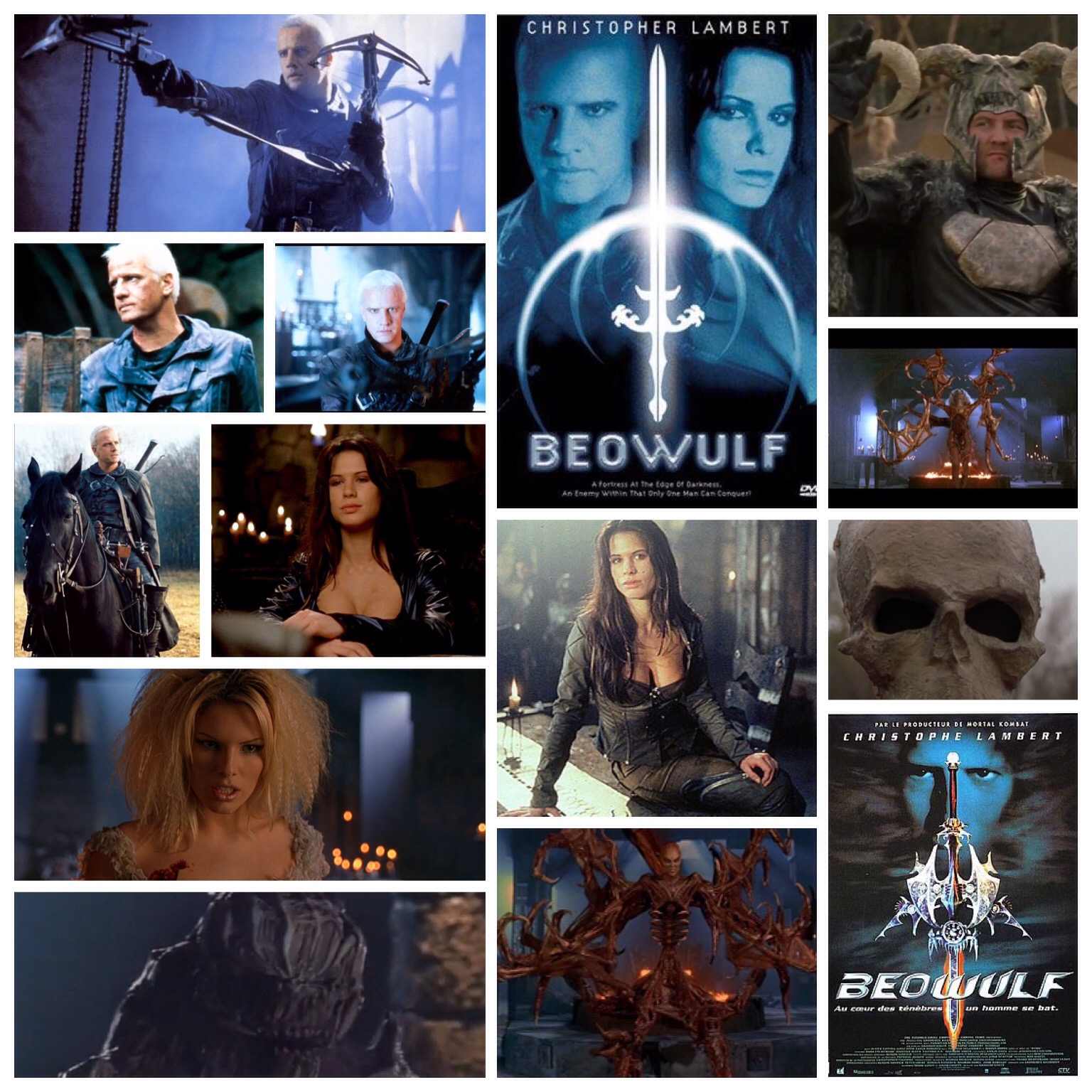
There are three main films concerning the myth of Beowulf. The best, a wickedly good Robert Zemeckis motion capture version starring Ray Winstone, a lower budget one with Gerard Butler that hovers right around the average mark, and a third one starring Christopher ‘Highlander’ Lambert, and let me tell you this one defies any classification. It’s set in a time that seems like a blend between both past and future, a sword and sorcery realm that’s speckled with steam punk technology and very weird production design that looks post modern, yet not. Beowulf, played by the reliably daffy Lambert (an actor of little talent who has grown on me over the years by his craggy reserve alone), is a lone warrior with a bleach blond hair dye job and some neato gadgetry in his weapon arsenal. I know, it sounds like I’m making this up. Haven’t even gotten to the best part yet, which is the upbeat German techno score that ramps up the Euro feel of the whole thing to soaring heights of absurdity. Despite all that silliness, the film somehow works, and not just as a schlocky write off either. It’s resolve lies dutifully in the firmament of its creative aesthetic, and doesn’t skip a single odd duck of a beat the whole way. The monster Grendel which Beowulf must face off against resembles something of a cross between the Predator and Killer Croc, a scaly, spiky behemoth that rips through the little villages in the region like a tornado of teeth and claws. It’s mother is even weirder: appearing to men in the form of actress Layla Roberts, (who looks suspiciously like a porn star) before morphing into a massive elaborate demon thingy that looks like a final boss from Starfox. Lambert is joined in his fight by sexy warrior Kyra (Rhona Mitra), and led on by King Hrothgar (Oliver Cotton). It’s Beowulf like you’ve never seen before, a Krull esque, beyond the Stars sci-fi rendition that you’ll either be in tune with or won’t, either love, hate or just be super confused by. It’s bonkers, and I love it. 

A Chat with Actor Mark Acheson: An Interview by Nate Hill 


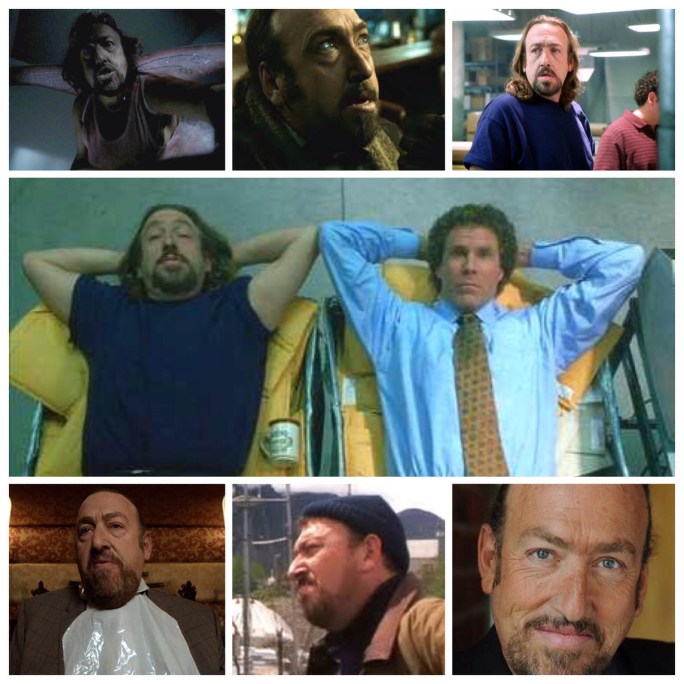
Very excited to bring you my latest interview, with actor Mark Acheson. Mark has played countless distinct characters in film, including the mailroom guy who befriends Buddy in Elf, the thug who attacks Rorschach in Zach Snyder’s Watchmen, Moses Tripoli, the head of the North Dakota mob in FX’s Fargo, and more. He has also appeared in John Mctiernan’s The 13th Warrior, Reindeer Games, The Chronicles Of Riddick, Hot Rod, She’s The Man, 3000 Miles To Graceland, Crossfire Trail and more. Enjoy! 

Nate: When did you first know that you wanted to pursue a career in acting?
Mark: My first play I performed in grade 7 at age 11. My school loved the bad boy character and suddenly I was popular. I was hooked from then on.

Nate: Some actors/films/filmmakers who have inspired you in your own work?
Mark: I always loved movies and television and my idea of the perfect actor is Daniel Day Lewis who I think is unrecognizable from role to role. That to me is true acting.

Nate: Fargo: How was your experience with that show? Any stories from set?
Mark: Fargo was perfect. I remember the incredibly talented Noah Hawley who wrote the script always on set polishing constantly. I was very proud that our episodes won three Emmys including best miniseries and best casting by Jackie Lind who is truly a force of nature.
Nate: Watchmen: your experience working with Snyder, and on the film?
Mark: Zach was the youngest and possibly one of the most gifted directors I have ever had the pleasure to work for. He was relaxed and made the set even more so.

Nate: Some of your favourite roles you have played so far in your career?
Mark: So many great projects I have been lucky enough to be in but working with Will Farrell in Elf had to be the best. I have been recognized all over the world from that one small part. Director Jon Favreau let us ad lib everything. Will is a genius!!
Nate: You went to Langara College’s Studio 58. I myself went to their somewhat new subsidiary program called Film Arts. How do you find that theatre training has affected your work in film? Do you still do any stage work? 

Mark:  I entered theater school at age 15 and it changed my life. To play Lenny in Of Mice and Men. Gave me my start as a pro and my first agent. I miss the stage very much especially Shakespeare which I enjoyed so much. Sadly these days stage is too infrequent and too much of a time commitment.
Nate: The 13th Warrior: excellent, underrated film with a notoriously troubled production. How was your experience working on it?

Mark: This was originally titled Eaters of the Dead. Difficult set. Schwarzenegger was originally booked but fought the studio about shooting in Canada. He was getting ready to run for governor. Best part was to meet and work with Omar Sharif. Such a film legend and an even nicer man.
Nate: Your dream role?

Mark: After acting for almost 50 years my dream is just to keep working. I love it all especially the variety.
Nate: Any upcoming projects, cinematic or otherwise, that you are excited for and would like to talk about?

Mark: I currently have 4 projects in the can including Lewis and Clark for HBO airing this Christmas but I am barred from any pics or descriptions until they air. July I will start another movie that looks like alot of fun but as usual I will be killed like I was on two shows last week. Just making a living dying.

Nate:  Thank you so much for your time, and the opportunity to chat. Best of luck in the future!
Mark:  Thanks again Nate. All the best. Your interest makes all the struggle and auditions I didn’t get worthwhile.

MICHAEL RITCHIE’S DIGGSTOWN — A REVIEW BY NICK CLEMENT

diggstown

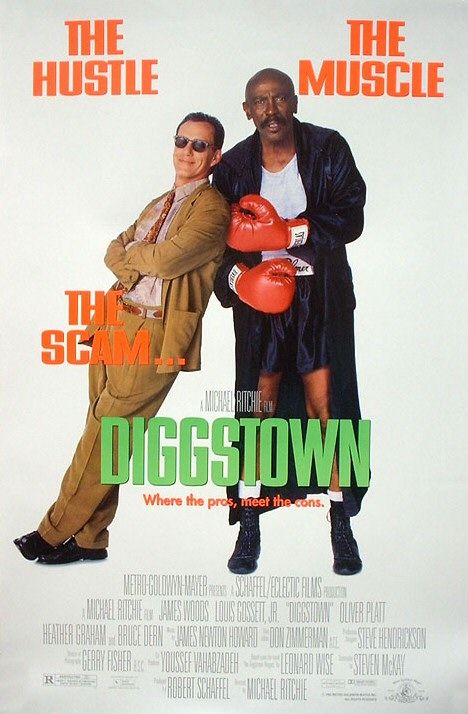
Diggstown represented a minor but still fairly sweet comeback for filmmaker Michael Ritchie, who had an impossibly amazing run of movies in the 1970’s, only to see his great fortune totally abandoned in the 1980’s with minor exceptions. Also known as Midnight Sting, this extremely funny and always clever little comedy bombed miserably at the box office when it was released in August of 1992, grossing less than $5 million, despite solid critical reaction. Seriously, just take note of these films that Ritchie dropped during his glory period in the 70’s: Downhill Racer, The Candidate, Prime Cut, Smile, The Bad News Bears, Semi-Tough, and An Almost Perfect Affair, which is the only one of that group that I’ve not seen (rectifying this fact very soon.) That’s a remarkable string of feature films, mixing genres and styles, with something new and fresh to say with each narrative. And then, I can only suspect drugs and liquor took their toll, because how does one go from those insane heights to these dastardly lows: The Island, Student Bodies, The Survivors, Wildcats, The Couch Trip, and The Golden Child?

If nothing else, Diggstown reminded audiences that Ritchie still “had it,” as he got great performances out of a surly and macho cast, with James Woods delivering a sly and extrenely entertaining performance as a slick criminal who seeks to concoct a boxing scam in a small pugilist-obsessed town down in Georgia. Louis Gossett Jr. was absolutely fantastic as Woods’ old friend who gets roped into the humorous and potentially dangerous scheme, while Bruce Dern provided menacing support as the local baddie who runs the town with an iron fist and who is feared by everyone. Oliver Platt, Heather Graham, Jim Caviezel, and Randall “Tex” Cobb rounded out the solid cast. Diggstown features a jaunty musical score by James Newton Howard, low-key cinematography by Gerry Fisher (The Exorcist III, Highlander), and snappy editing by Don Zimmerman (Cobra, Ace Ventura: Pet Detective); it’s a studo comedy with some personality. After Diggstown, things got even worse for Ritchie, with a career ending string of bombs including the woeful Cops and Robbersons, The Scout, The Fantasticks, and A Simple Wish. Similar in some respects to the artistic trajectory of Hal Ashby, Ritchie’s filmography will continue to fascinate for years to come, as it includes some of the most severe highs and lows that I can think of for a filmmaker.

STAR TREK II: THE WRATH OF KHAN – A REVIEW BY J.D. LAFRANCE

startrek3

People tend to forget how much was riding on Star Trek II: The Wrath of Khan when it was released in 1982. Star Trek: The Motion Picture (1979) was considered to be a big bore and not really indicative of the television series. The powers that be wanted to make sure that the next film would not repeat the previous one’s mistakes. So, they removed series creator Gene Roddenberry and replaced him with veteran T.V. producer Harve Bennett. He proceeded to watch the entire run of the original series and decided to dust off a classic villain and give Admiral James T. Kirk (William Shatner) a decidedly personal stake in this new mission.

Early on in the film there are two crucial exchanges between Kirk and his two closest friends. In observance of his birthday, Captain Spock (Leonard Nimoy) gives Kirk a copy of Charles Dickens’ novel A Tale of Two Cities (Spock refers to Kirk’s fondness for collecting antiques) and the latter quotes the famous opening passage, “It was the best of times, it was the worst of times,” to which Spock replies, in reference to this day, “Surely the best of times?” This bit beautifully encapsulates the film as a whole, featuring the crew of the Enterprise at their best and at their lowest. Wrath of Khan is often regarded as the strongest film of the franchise – “Surely the best of times,” indeed.

The second important exchange happens between Kirk and Dr. McCoy (DeForest Kelley). The latter gives the former 400-year-old reading glasses and we get a glimpse at his living quarters – full of the antiques Spock alluded to in the previous scene. Kirk is surrounded by reminders of the past and is staring down yet another birthday. “It’s about you flying a goddamn computer console when you want to be out there hopping galaxies,” McCoy tells him. He encourages Kirk to take command of a starship again before he gets too old.

I love these early scenes because they not only allow us to get reacquainted with Kirk and co., featuring quiet, human moments that give us insight into Kirk and his friendships with Spock and McCoy, but they also establish the themes of friendship and mortality that will feature prominently later on. The opening scenes with Kirk confiding in Spock and McCoy are like revisiting old friends you haven’t seen in a while and there is something enjoyable and reassuring about seeing these veteran actors dusting off and slipping so easily back into their iconic characters. There is a shorthand and a familiarity between these characters because the actors have so much experience playing them.

Most contemporary films would do away with scenes like this, viewing them as extraneous and unnecessary, but on the contrary they are vital to getting us invested in Kirk’s dilemma of getting old and becoming obsolete vs. going back out there and mixing it up in outer space once again. “Galloping around the cosmos is a game for the young,” Kirk says early on and it is the film’s central theme as it pits two aging enemies against each other. The film openly acknowledges the age of the cast, in particular Kirk, who comes face to face with his own mortality. The film even starts off on a playfully cheeky note as the entire Enterprise bridge crew are killed off in a battle simulation.

Before Kirk makes a decision, fate intervenes and forces his hand. Khan Noonien Singh (Ricardo Montalban) and his crew manage to escape the desolate planet prison that Kirk banished him to many years ago and decide to exact revenge on his most hated enemy. He kidnaps two key crew-members from the U.S.S. Reliant (while also marooning its crew and commandeering the ship) and steals Project Genesis, a device that will take a lifeless planet and bring it violently back to life. Carol Marcus (Bibi Besch), an old ex-flame, and her son David (Merritt Butrick) – that resulted from their brief union – are the primary architects of Project Genesis. They send out a distress call, which Kirk and the crew of largely inexperienced cadets on the Enterprise intercepts, unaware that Khan has set a trap for them.

startrek2I also like how this film is steeped in classic literature, from John Milton’s Paradise Lost to Herman Melville’s Moby Dick. Spock gives Kirk a copy of A Tale of Two Cities by Charles Dickens. The book’s famous opening lines, “It was the best of times, it was the worst of times,” is cited and its hero dies to save his friend, sly foreshadowing to the end of Wrath of Khan. On two occasions, Khan paraphrases Ahab in Moby Dick, most memorably in that classic scene where he conveys his passion for wreaking vengeance on Kirk: “I’ll chase him round the moons of Nibia and round the Antares maelstrom and round perdition’s flames before I give him up.” I appreciate a science fiction film that isn’t content to merely throw around technical jargon, but also allude to classic literature, both thematically and quoted by its characters. It makes sense because characters like Kirk and Khan are mythological in nature themselves.

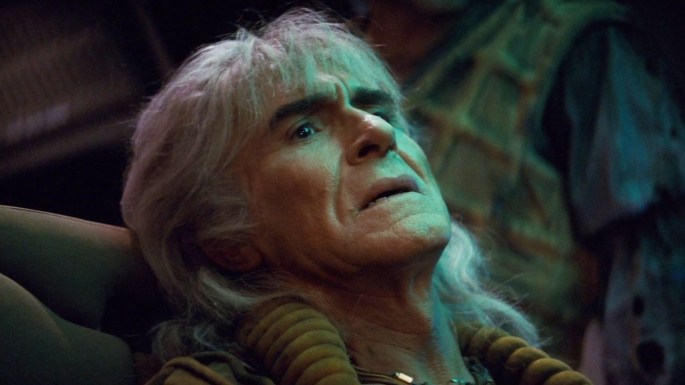
The scene where we first meet Khan gives Ricardo Montalban a chance to savor the moment as he relishes every word like a fine meal, giving the dialogue a unique spin as only he can. Khan is an aggrieved villain with an axe to grind – years of hatred for Kirk. He has the cunning intelligence to devise a trap in which to ensnare his old foe. Montalban’s take on Khan is a deliciously evil one and there is no doubt that he is more than a formidable match for Shatner’s Kirk. Khan isn’t out to rule the galaxy. No, this is a personal vendetta against Kirk and he’ll stop at nothing to get his revenge. Khan is on a mission of vengeance, plain and simple, and after hearing him recount the hardships he and his people endured it is hard not to – I wouldn’t say sympathize, but understand what motivates him. He’s seen his wife and 19 of his people die. He’s had years to brood over what happened and what he’d do to Kirk if given the chance. Once he gets control of the Reliant, Khan strikes back, hurting the Enterprise crew in a way so that Kirk gets a taste of what he’s been through and this makes their battle a very personal one with a lot at stake for both men.

The Wrath of Khan may be William Shatner’s finest moment in the Star Trek franchise as Kirk wrestles with his own mortality and must confront and conquer his self-doubts. He also must deal with an old nemesis, which makes the battle personal for him as well. Shatner does a nice job conveying these initial doubts about getting back into the Captain’s chair, then his joy at being back in a mission, then anger as he is tricked by Khan, and finally grief of the toll the battle takes on him and his friends. The veteran actor has to convey a wide-range of emotions and does so with his usual dramatic flair. Even better, we get to see who can overact more, Shatner or Montalban, as they take turns chewing up the scenery with melodramatic gusto complete with some great, spirited exchanges and some insanely quotable dialogue. It’s not just what is said but how it’s said that makes it so memorable. They are both acting hams, fond of … dramatic … pauses and sudden outbursts of emotion, but both clearly bring the best out of each other. Part of the enjoyment that comes from this film is watching these two go at it, holding nothing back, just like their characters.

The veteran cast from the show inhabits their roles with the ease and confidence that comes from years of practice. It helps that the main cast portray characters with detailed backstories thanks to the T.V. series and so there is all of that baggage for them to draw on, not to mention their complete familiarity with their respective roles. All Kirk and McCoy have to do is exchange a knowing look between each other to suggest more than any dialogue could. The screenplay draws on the Enterprise crew’s long-time camaraderie by raising the emotional stakes, making this mission a very personal one for Kirk and whose outcome will not only impact him, but also his mates. The nature of friendship is explored in Kirk’s yin to Spock’s yang. They complement each other because together they provide the right mix of instinct and logic. This balance is in flux in The Wrath of Khan when Spock reminds Kirk that “the needs of the many outweigh the needs of the few,” to which Kirk adds, “or the one.” These are words that will gain importance at the film’s climax as they come back to haunt the characters.

startrek1In The Wrath of Khan, Kirk is forced to face two people from his past – one hostile and one he used to be romantically involved with – both of whom will dramatically change his life in unexpected ways. Only by defeating Khan can Kirk overcome the doubts that plagued him at the beginning of the film. Kirk is a man of action who relies heavily on his instincts. Engaging a like-minded adversary like Khan reawakens these tendencies where they had been inactive after the events of Star Trek: The Motion Picture. Director Nicholas Meyer keeps the film moving at a decent pace, but knows when to let things breath for nice, character-driven moments that provide important motivations for future actions later on in the film. There’s a reason why The Wrath of Khan is considered the best film with the most compelling story in the series: it pits the Enterprise crew against a truly formidable opponent, features thrilling spacecraft battles, and has an incredibly moving finale. Surely the best of times.
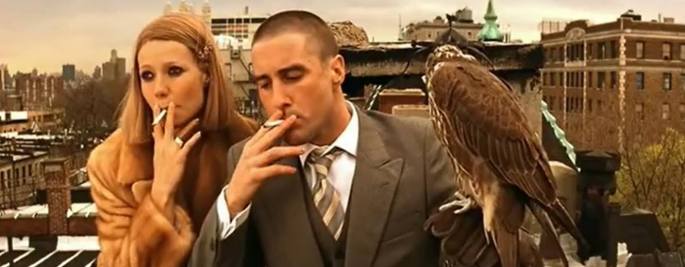
WES ANDERSON’S THE ROYAL TENENBAUMS — A REVIEW BY NICK CLEMENT

1

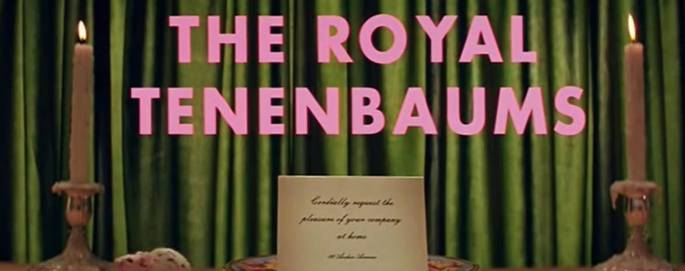
It’s a daily struggle to decide which Wes Anderson film is my favorite – Rushmore or The Royal Tenenbaums. I’m a massive fan of Anderson’s cinematic dollhouse aesthetic, and even if I prefer the early years to the more recent pictures, each film he’s made has been lovingly crafted and filled with a particular brand of imaginative, melancholic whimsy that feels distinctly him. The Fantastic Mr. Fox is a beguiling creation and a total laugh riot, while The Life Aquatic with Steve Zissou remains one of the most all-around enjoyable films I can think of (I’m due a revisit…) But the maturity on display is what strikes me when I revisit The Royal Tenenbaums, and I get such a kick of how it feels like Anderson riffing on Orson Welles’ The Magnificent Ambersons (such a superb, grossly undervalued motion picture).

3

The film hit that sweet spot with all of the members of its starry cast because each role was tailor made to their specific qualities as performers, a trait that marks each and every movie that Anderson has made. Gene Hackman, to my knowledge, was never this loose or funny in a movie (with the possible exception of Superman IV: The Quest for Peace), and the crusty old man of the house that he portrays was totally in line with his apparently no-bullshit philosophy on life. Ben Stiller, Owen Wilson, Luke Wilson, Gwyneth Paltrow, Angelica Houston, Danny Glover, Seymour Cassel and Kumar Pallana – each and every one of them were given numerous moments to shine, earning our respect, our laughs, and our tears. Alec Baldwin’s tickle-your-ribs narration seals the deal.

4

Robert Yeoman’s colorful and precise cinematography nailed Anderson’s uncanny sense of mise-en-scene, while the musical score by Mark Mothersbaugh was nothing short of marvelous. This film hits some very intense peaks and valleys from a narrative standpoint, looking at familial dysfunction and deep-rooted darkness with a dryly hilarious sense of humor, and I can’t help but notice something new each time I watch it. It’s also got some EXCELLENT Mescaline humor. Coming after the quirkfest of Bottle Rocket and the more polished but no less eccentric Rushmore, The Royal Tenenbaums still stands as Anderson’s finest work overall, his most complete, and the film that well and truly announced a very particular cinematic worldview from a truly sly and exuberant voice.

2

ULU GROSBARD’S WHO IS HARRY KELLERMAN AND WHY IS HE SAYING THOSE TERRIBLE THINGS ABOUT ME? — A REVIEW BY NICK CLEMENT

1

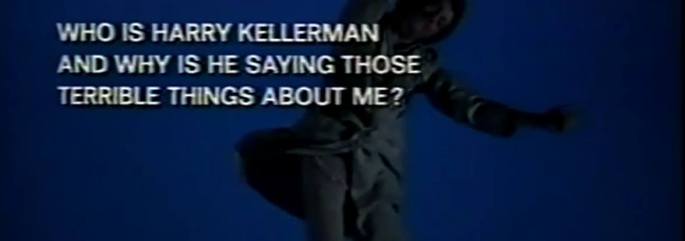
I wonder how many times the Birdman guys watched Who Is Harry Kellerman and Why Is He Saying Those Terrible Things About Me? Released in June of 1971 – the idea that this was a summer movie(!) – this is one of the strangest movies I’ve seen in a long time, and I am constantly intrigued by all of its ingredients, and I find myself returning to it more frequently than not. A stream of conscious narrative that jockeys back and forth in tone and intent, I have a feeling that cocaine might have been a large part in this film getting made back in the day. Directed by Ulu Grosbard, written by Herb Gardner, and starring Dustin Hoffman in one of his loosest, weirdest roles, the film’s suicide-obsessed structure is one of those “all in one day” stories, but this time, what’s happening on screen can never fully be trusted because of the dreamy nature to Victor Kemper’s stony visuals and the oblique nature of the storytelling. Hoffman plays a paranoid rock music composer who is having a really bad week due to a mysterious man named Harry Kellerman who has been spreading lies and rumors about him.

3

What follows is a shaggy-dog story of a man losing his grip on reality, while the witty script continually sends pointed zingers in the direction of the entertainment industry. The ending is beyond bold to contemplate and would be unthinkable in our post 9/11 world, and the film’s got some extremely quirky credits (Shel Silverstein did the musical score) and a hippie-tinged soundtrack that gives off some funky-good vibes. I’m pretty sure that critics had no idea what to say about this movie when it was released and that audiences were annoyed and baffled. Barbara Harris was fantastic in her handful of scenes with Hoffman, who for his part, created a wobbly portrait of a fractured man, resulting in a turbulent inner core to the film. Jack Warden has some memorable scenes opposite Hoffman has his shrink. A Cinema Center Films production in association with National General Pictures. Who is Harry Kellerman also holds the distinction of having the longest title to a movie that was nominated for an Oscar, with Harris receiving a Best Supporting Actress nod.

2

David Fincher’s Zodiac: A Review by Nate Hill

  
David Fincher’s Zodiac is the finest film he has ever brought us, and one of the most gut churning documentations of a serial killer’s crimes ever put on celluloid. Fincher has no interest in fitting his narrative into the Hollywood box or sifting through the details of the real life crimes to remove anything that doesn’t follow established formula. He plumbs the vast case files and sticks rigidly to detail, clinging to ambiguity the whole way through and welcoming the eerie lack of resolution we arrive at with open arms. That kind of diligence to true life events is far more scary than any generic, assembly line plot turns twisted into stale shape by the writer (and studio breathing down their neck, no doubt). No, Fincher sticks to the chilling details religiously, starkly recreating every revelation in the Zodiac killer case with the kind of patience and second nature style of direction that leads to huge atmospheric payoff and a hovering sense of unease that continues to make the film as effective today as the day it was released. A massive troupe of actors are employed to portray the various cops, journalists, victims and pursuers involved with the killer during the 1970’s in San Francisco, the film unfolding in episodic form and giving each performer their due, right down to the juicy cameos and bit parts. Jake Gyllenhaal plays Rob Graysmith, a news reporter who becomes intrigued and eventually obsessed with the cryptic puzzles which the Zodiac taunts the bay area with by sending them in to the paper. Mark Ruffalo is Charlie Toschi, dogged police investigator who is consumed by the hunt. The third leg of the acting tripod is Robert Downey Jr as Paul Avery, another journalist who takes the failure in capturing the killer a little harder than those around him. The film dances eerily along a true crime path populated by many people who veered in and out of the killers path including talk show host Melvin Belli (a sly Brian Cox) , another intrepid cop (Anthony Edwards), his superior officer (Dermot Mulroney) and so many more. For such an expansive and complicated story it’s all rather easy to keep track if, mainly thanks to Fincher’s hypnotic and very concise direction, grabbing you like a noose, tightening and then letting you go just when you feel like you have some answers. While most of the film examines the analytical nature of the investigation, there are a few scenes which focus on the killings themselves and let me tell you they are some of the most hair raising stuff you will ever see. The horror comes from the trapped animal look in the victims eyes as they try rationalize the inevitability, with Fincher forcing you to accept the reality of such acts. One sequence set near a riverbank veers into nightmare mode. Every stab is felt by the viewer, every bit of empathy directed to the victims and every ounce of fear felt alongside them. It can’t quite be classified as horror outright, but there are scenes that dance circles around the best in the genre, and are the most disturbing things to climb from the crevice of Fincher’s work. They’re nestled in a patient bog of studious detective work, blind speculation and frustrating herrings, which make them scarier than hell when they do show up out of nowhere. Adding to the already epic cast are Jimmi Simpson, Chloe Sevigny, Elias Koteas, John Carroll Lynch, Donal Logue, Pell James, Philip Baker Hall, John Terry, Zach Grenier and a brief cameo from Clea Duvall. I think the reason the film works so well and stands way above the grasp of so many other thrillers like it is because of its steadfast resolve to tell you exactly what happened, urge you to wonder what the missing pieces might reveal should they ever come to light, and deeply unsettle you with the fear of the undiscovered, something which never fails to ignite both curiosity and dread in us human beings.

Zach Snyder’s 300: A Review by Nate Hill

image

Tough. Muscular. Operatic. The very definition of epic. I remember sitting in the theatre during Zach Snyder’s 300 and being just floored and knocked flat on my ass by the violence, spectacle and music on display, and that was just the first ten minutes. It’s a historical war film unlike any other, and like it’s sister film Sin City, it jumps right off the boldly crafted pages of Frank Miller’s novel with all the movement and spirit of a motion picture, while still retaining the fluidity and distinction of a comic book. The sheer force of it will trample your senses into glorious oblivion, whisking you away for two thunderous hours of sound, fury and unrepentant battle. Like any sensation of the week, it gained haters who claim it isn’t the winner everyone’s says it is, or that it hasn’t stood the test of time. They’re either trying to go against the grain to be the ‘cool minority’, or they’re just negative nitpicking nellies. No matter. In 300’s case, they are resoundingly off key whenever I hear them bash it, and just dead wrong. It has stood the test of time, a process I measure by the ebb and flow of my desire to watch older films again and again. I often revisit this one, and marvel at it anew each time. The story follows the battle of Thermopolye, in which three hundred well trained, ridiculously combat savvy Spartan men faced off against a Persian army numbering near a million, led by their arrogent weirdo of a king, Xerxes  (a very scary Rodrigo Santoro). They do this to protect their land and their people, a splinter group of sorts that takes up arms when the Spartan senate refuses to act. The battle is a relentless storm of blood, arrows, decapitated limbs, howling barbarians, wanton carnage and mass slaughter. It doesn’t feel half as savage or heavy as my description sounds though, thanks to the poise and purpouse of the narration penned by Miller, and the extravagant, thought out choreography that includes a whole lot of beautifully satisfying slow motion that has become Snyder’s trademark tool. Love it or hate it, I think it flairs up an action terrifically, especially ones as chaotic and hellbent as these. The Spartans are a wonder to see in action, virile death dealers with a full bore love for the heat of combat and a blatant, cavalier attitude in the very face of death. David Wenham is a force of gravity as Dilios, who provides the rousing narration and kicks ass as Butler’s second in command. Butler makes a commanding Leonidas, his presence everything that you’d want to see in a king, from nobility, to necessary belligerence, to an overwhelming love for his kingdom that is present in every step, every spear throw, every furious war cry. A cheeky Michael Fassbender and Vincent Reagan round out the platoon nicely, and they all have wicked cameraderie that makes their bond in battle stronger. Lena Headey is fiercely attractive and devilishly competent as Queen Gorgo, with a love for Leonidas and their son that cuts through the brutality and gives it purpouse. Dominic West goes against type as Theron, a sniveling, traitorous bitch boy of a Senate member who aims to usurp Sparta and send everything to high hell. The cast goes on with memorable turns from Peter Mensah, Robert Maillet and the legendary Stephen Mchattie. Composer Tyler Bates churns out a score that soars, scorches and bellows forth a primal auditory symphony. This was Snyder first flexing his muscles after his visceral remake of Dawn Of The Dead that barely hinted at the wonders in his career to come. Here he presents a staggering visual aesthetic that he would go on to use in his masterful adaptation of Watchmen, the sadly misunderstood, excellent Sucker Punch, and his DC Comics films which are unbelievable. It all started here with flash and flourish, a jaw dropping sword and sandal typhoon of a film that will give your adrenal gland a workout and your sound system a good old thrashing. In a word: Epic.