
Megaforce (1982) is one of the most nakedly jingoistic might-means-right movies to come out of the Ronald Reagan era. Directed by legendary stuntman Hal Needham (Smokey and the Bandit), it is an astonishingly so-bad-it’s-good action movie that brilliantly epitomizes the kind of excess that was synonymous with the 1980s. The poster’s tagline says it all in a nutshell – “Deeds not words.” Hell, yeah! In some respects, Megaforce was a response to many of the gritty, downbeat genre films of the 1970s. It also signaled a new decade where America proudly flexed its military muscle all over the world. It is also a laughably bad movie but entertainingly so.
The opening voiceover narration sets things up for us. Megaforce is in fact, “a phantom army of super elite fighting men,” and whose mission it is “ to preserve freedom and justice battling the forces of tyranny and evil in every corner of the globe.” The opening credits play over triumphant synthesizer music courtesy of Jerrold Immel (Knots Landing) that sets the cheesy tone right from the get-go and also wonderfully, and instantly, dates the film.
We meet the bad guys – a paramilitary army from Gamibia with one of them anal retentively reciting his country’s manifesto while their leader Gurerra (Henry Silva) looks on in boredom. He just wants to blow shit up, which his army of tanks does – attacking a power station in the peaceful Republic of Sardun. Hopelessly outgunned and outmaneuvered by the Gamibia army, Sardun, not wanting to risk an international incident send Major Zara (Persis Khambatta) and General Byrne-White (Edward Mulhare) to find and enlist the help of Megaforce
They meet their contact out in the middle of nowhere. He introduces himself as Dallas (Michael Beck), a good ol’ cowboy type who takes them to his hidden base in a beat-up Ford Bronco. Three armored motorcycles that show off their prowess by popping wheelies and shooting balloons out of the sky eventually greet them. Director Hal Needham captures this all in loving close-ups and slow motion shots that comes across as porn for military vehicle enthusiasts.
Zara and Byrne-White meet Commander Ace Hunter (Barry Bostwick) in all of his spandex jump-suited glory. He’s the leader of Megaforce and not above hitting on Zara who, naturally, takes an instant dislike to him because, y’know, he’s a loose cannon. Barry Bostwick, the terminally square Brad in The Rocky Horror Picture Show (1975), is the last person I’d expect to play an action hero but there he is with fantastically blond blow-dried helmet hair as if channeling Barry Gibb. To his credit, he realizes that this is all silly nonsense (I mean, how could you not?) and has fun with the role.
Megaforce resides in a massive underground complex full of experimental vehicles and gear stolen from other countries. This army of mercenaries is made up of experts from all over the world. Ace and Zara continue to flirt like crazy, admiring each other’s chests and comparing their combat experience and even sharing an intimate moment skydiving, all to jarring romantic music right out of an elevator. I know I always like to treat a lady to a death-defying jump out of an airplane as a form of seduction. That Ace is one smooth operator. He and Zara’s “romance” is laughable at best, with their meet-cute dialogue, clumsily written by the writing team of James Whittaker, Albert S. Ruddy, Needham, and Andre Morgan, and their bizarre goodbye gesture that consists of kissing the thumb and then giving the thumbs up sign to each other. Of course, it doesn’t help that Bostwick and Persis Khambatta have zero chemistry together.
Edward Mulhare, known mainly for his role in the popular television show Knight Rider, plays the stereotypical fussy Brit with a posh accent and haughty attitude until Ace impresses him with knowledge of military tactics. After the career high of The Warriors (1979), it was all downhill from there for Michael Beck who went on to appear in the Olivia Newtown-John opus, Xandau (1980) and Megaforce before settling into a career of roles mostly on T.V. He seems to be having fun in this film and I wonder if he envisioned playing Dallas in a series of sequels that sadly for him never happened. Persis Khambatta, who had been touted as the next big thing prior to appearing in Star Trek: The Motion Picture (1979), further damaged her career in this film by playing eye candy. At first, Zara appears to be a feisty feminist but after a bit of verbal sparring with Ace she is more than happy to sit on the sidelines while the boys go off and play army with their expensive toys.
The movie’s grand finale has to be seen to be believed as Ace and his team punch a hole through Gurerra’s tank army in an orgy of explosions and lingering close-ups of guns firing and missiles launching. If that wasn’t enough, Ace escapes Gurerra’s army in a motorcycle that flies! While this sounds great and was the coolest thing when I was nine-years-old, it looks pretty ridiculous now. And just before Ace does this, he delivers the movie’s classic and most memorable line: “The good guys always win – even in the ‘80s.” If that doesn’t sum up most action films in this decade then I don’t know what does.
Director Hal Needham got the idea for Megaforce from Bob Kachler, the man who got him sponsors for his racing cars. He suggested it could be a television series, but Needham said, “It’ll never make a series, but it’ll make a helluva feature.” Needham and producer Albert S. Ruddy hired a writer to produce a screenplay and afterwards felt that it had some good ideas, but they ended up completely rewriting it in order to make the film funnier and have more action. Needham saw it as “kind of a version of James Bond done with a helluva lot less budget and no Roger Moore, but it was a high tech, good ‘right wing’ film and I thought it was kinda interesting.” They were able to procure funding from Hong Kong film production company Golden Harvest.
Needham and Ruddy approached Mattel Toys and worked with them in designing the look of the vehicles in the film. William Frederick took the designs and engineered the actual vehicles used in Megaforce, which were dune buggies and motorcycles rigged up with weapons and armor. It took him 9-10 months to build 30 them. According to Frederick, Mattel designed the exteriors and made them look “racy” while he designed the interiors to make sure they worked. When Needham asked if they were functional, Frederick fired a missile off of one of them and it blew a hole through the outside wall of the studio! So much smoke was generated from the explosion that the fire department came. During filming, the United States military sent out people to observe Frederick’s vehicles in action for a week out in the dry lakebeds in Nevada. Needham said, “And, if you go back and take a look at Desert Storm, there’s a pretty good resemblance to my vehicles.”
To do all of the riding scenes required in the film, Needham hired approximately 50 drivers for three months. According to those who worked on the production, he used real M48 tanks and armored personnel carriers. One driver said, “I’ve worked on a lot of war movies. Megaforce was as much like going to war as I can remember.” An interview with one of the stunt drivers gives an indication of Needham’s directorial style. During filming, when he wasn’t getting what he wanted, Needham would jump on or in a vehicle and show a stunt driver what to do. “Hal jumped on one of the bikes and went flying down the road who knows how fast and clipped one of these things [two-foot-deep furrows left by the tanks] and got off so hard that it took the production assistant an hour and a half to find his Rolex watch.” This incident delayed filming for approximately a week while Needham recuperated. It was a harbinger of things to come as several drivers were injured over the three-month shoot. Special effects expert Cliff Wenger Sr., who provided the film with its numerous explosions, remembers Needham coming up to him with an idea for a new ending: “They rewrote the script all the way through. I mean, what we shot and what the original script is, there is no comparison whatsoever.” Needham described to him what would eventually be in the final cut and asked Wenger if he could do it in three days.
Megaforce’s ending cries out for a sequel – however, it only grossed $5.6 million at the box office, not even recouping its then-pricey $20 million budget. Needham must’ve taken its failure hard as he barely mentions the movie in his recent autobiography. Years passed and the movie slowly acquired a modest cult following, which included a pair of famous fans – South Park creators Trey Parker and Matt Stone who have not only name-checked it in an audio commentary for one of the episodes of their show, but also mentioned it in passing in an interview they did with the alternative music band Ween. However, they paid the ultimate homage to Megaforce with their own film, Team America: World Police (2004), an action film parody using marionettes and which owed a lot to Needham’s movie, right down to the flying motorcycle.
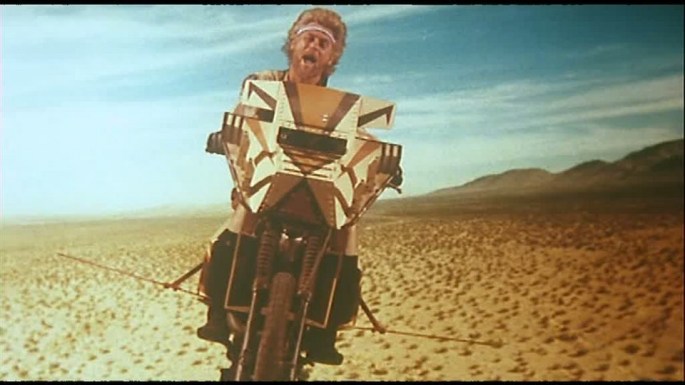 Megaforce is the best movie in the world… when you’re a nine-year-old kid with no critical faculties and just want to see stuff blow up, like I did back in 1982. As a kid I loved this movie for the simple reason that it was a live-action version of the T.V. cartoon/toy I was obsessed with at the time – G.I. JOE: A Real American Hero. Both feature a secretive army populated by specialists armed with hi-tech gear, fighting evil all over the world. They eventually made a live-action G.I. JOE movie in 2009 (with a sequel on the way) but, for me, it pales in comparison to Megaforce, which for all of its inherent cheesiness feels like it was the product of a deluded madman – Needham – and not a badly made by committee, CGI-heavy advertisement for toys.

 Podcasting Them Softly is thrilled to present our latest addition to Cinematographer’s Corner — a chat with veteran director of photography


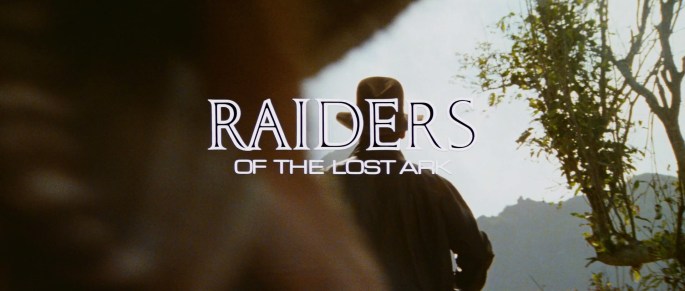
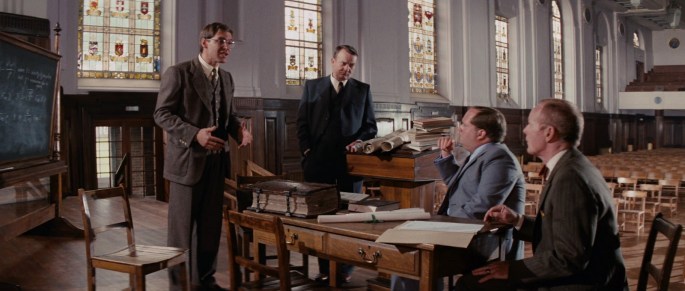 Kasdan’s ability to engage us in the obligatory exposition scene is evident early when Indy and his friend and colleague Marcus Brody (Denholm Elliott) meet with two military intelligence officers about the location of an old colleague of Indy’s – Abner Ravenwood – who might have an artifact – the headpiece of the Staff of Ra – that will reveal the location of the Ark of the Covenant, which the Nazis are eager to get their hands on. Indy and Marcus give the two men a quick history lesson on the Ark and its power. Marcus concludes with the ominous line about how the city of Tanis, that reportedly housed the Ark, “was consumed by the desert in a sandstorm which lasted a whole year. Wiped clean by the wrath of God.” The way Denholm Elliott delivers this last bit is a tad spooky and is important because it lets us know of the Ark’s power, his reverence for it, and why the Nazis are so interested in it. This dialogue also gives us an indication of the kind of danger that Indy is up against.
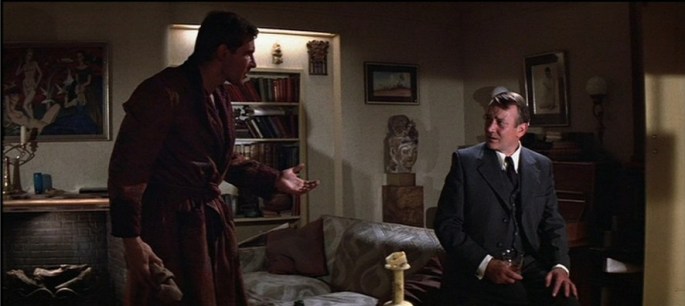 This segues to a nice little scene right afterwards at Indy’s home between the archaeologist and Marcus. He tells Indy that the United States government wants him to find the headpiece and get the Ark. As Indy gets ready they talk about the Ark. The camera pans away from Indy packing to a worried Marcus sitting on a sofa and he reveals his apprehension about what his friend is going after: “For nearly 3,000 years man has been searching for the lost Ark. It’s not something to be taken lightly. No one knows its secrets. It’s like nothing you’ve ever gone after before.” Indy shrugs off Marcus’ warning but his words, accompanied by John Williams’ quietly unsettling score, suggest the potential danger Indy faces messing with forces greater and older than himself.
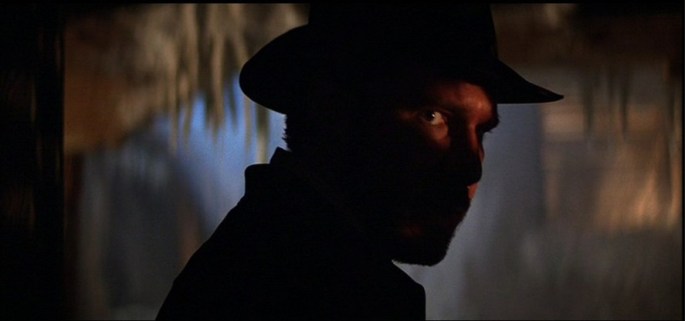
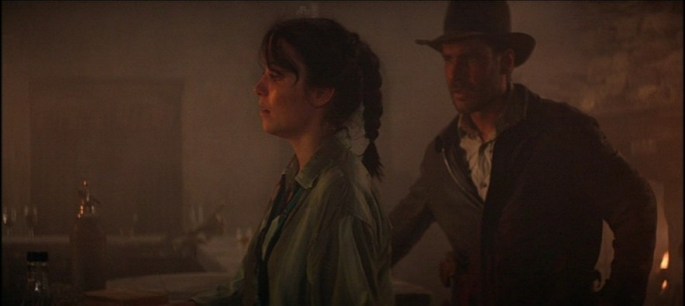 Kasdan also does a great job hinting at a rich backstory between Indy and his ex-love interest, Marion Ravenwood (Karen Allen). When they are reunited at a bar she runs in Nepal, she is clearly not too thrilled to see him, giving Indy a good crack on the jaw. Marion alludes to a relationship between them that went bad. She was young and in love with him and he broke her heart. To add insult to injury, her father is dead. All Indy can do is apologize as he says, “I can only say sorry so many times,” and she has that wonderful retort, “Well say it again anyway.” Harrison Ford and Karen Allen do a great job with this dialogue, suggesting a troubled past between them. In a nice touch, Spielberg ends the scene with Indy walking out the door. He takes one last look back and his face is mostly obscured in shadow in a rather ominous way as he clearly looks uncomfortable having had to dredge up a painful part of his past.
 Indy and Marion have another nice scene together after they’ve retrieved the Ark from the Nazis and are aboard the Bantu Wind, a tramp steamer that will take them to safety. Marion tends to Indy’s numerous wounds and says, “You’re not the man I knew ten years ago,” and he replies with that classic line, “It’s not the years, honey, it’s the mileage.” It starts out as a playful scene as everything Marion does to help hurts Indy’s world-weary body. In frustration she asks him to show her where it doesn’t hurt and he points to various parts of his body and in a few seconds the scene goes from playful in tone to romantic as they end up kissing. Of course, Indy falls asleep – much to Marion’s chagrin. Kasdan’s dialogue gives Spielberg’s chaste, boyhood fantasy serial adventure a slight air of sophistication in this scene as two people with a checkered past finally reconnect emotionally.
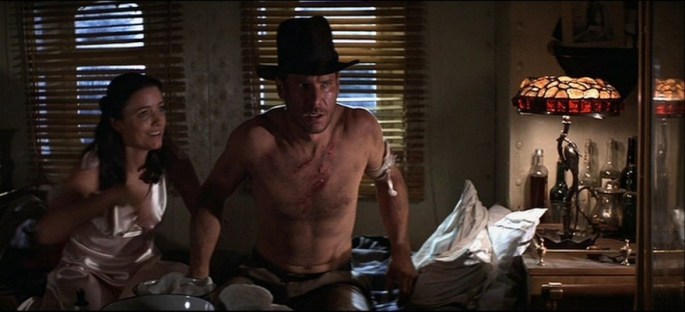 For me, Raiders is still the best film in the series. The pacing is fast but not as frenetic as today’s films. There are lulls where the audience can catch its breath and exposition is conveyed. In many respects, it is one of the best homages to the pulpy serials of the 1930s and a classic example of when all the right elements came together at just the right time. This film has aged considerably well over time and each time I see it, I still get that nostalgic twinge and still get sucked in to Indy’s adventures looking for the lost Ark.



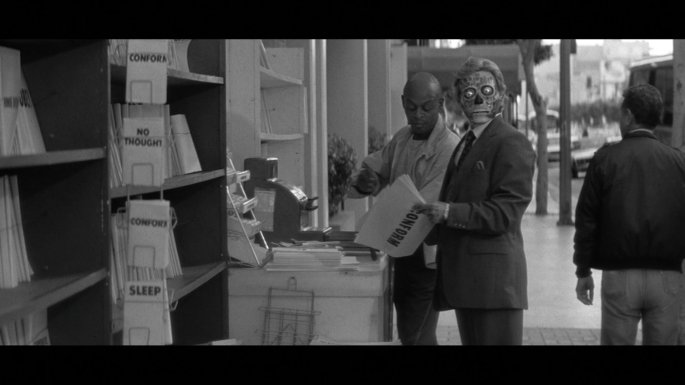 Carpenter sees the commercial failure of his film as a result of “people who go to the movies in vast numbers these days [who] don’t want to be enlightened.” It’s a shame because They Live is far from being an overtly preachy film. On the contrary, it is always exciting and entertaining first, and a scathingly social satire second. However, the director sees the real tragedy to be the lack of humanity in society. “The real threat is that we lose our humanity. We don’t care anymore about the homeless. We don’t care about anything, as long as we make money.” If They Live is about anything, it’s a strong indictment against the capitalist greed that was so fashionable in the 1980s. It’s sentiment that still exists. This makes Carpenter’s film just as relevant today as it was back in 1988.
 Podcasting Them Softly