CAPTAIN AMERICA: THE WINTER SOLDIER – A REVIEW BY J.D. LAFRANCE

4110469-1460867178-img19

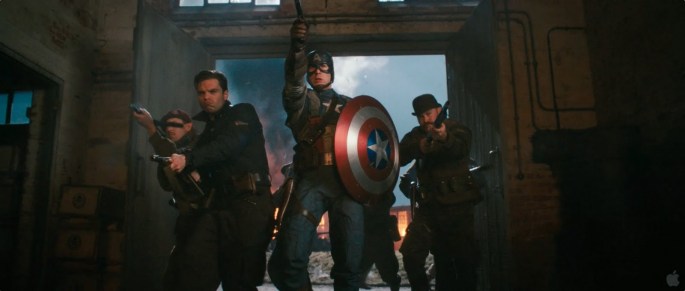
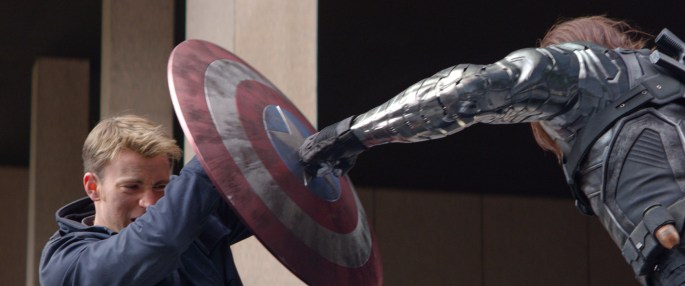
When we last saw Steve Rogers a.k.a. Captain America (Chris Evans), he had just helped save New York City from an alien invasion and was still acclimatizing himself to modern life having been frozen in ice since World War II as chronicled in Captain America: The First Avenger (2011). The sequel, The Winter Soldier (2014), takes place two years after the events depicted in The Avengers (2012) and sees Cap working as an agent of S.H.I.E.L.D., a top-secret spy organization that, among other things, deals with the fallout from the adventures of superheroes like Iron Man and Thor. However, as hinted at in The Avengers and the television show Agents of S.H.I.E.L.D., there is something rotten at the core of the spy organization and Cap soon finds himself not only embroiled in a vast conspiracy, but also confronting someone from his past he thought had died in the war. The result is a fantastic fusion of the super hero movie with the conspiracy thriller.

Cap and Black Widow (Scarlett Johansson) are now a team and as the film begins they intercept a covert S.H.I.E.L.D. ship in the Indian Ocean that has been hijacked by Algerian terrorists led by French mercenary Batroc the Leaper (Georges St-Pierre). In a nice touch, the filmmakers manage to transform Batroc, who was a pretty ridiculous villain in the comic books, into a bit of a badass. Afterwards, S.H.I.E.L.D. director Nick Fury (Samuel L. Jackson) lets Cap in behind the scenes, showing him three Helicarriers armed with state-of-the-art jet fighters that are linked to spy satellites created to anticipate global threats in a program known as Project Insight.

Cap is not at all comfortable with Fury’s secret project and the notion of creating a climate of fear that potentially robs people of their basic freedoms. However, when Fury suspects something is wrong with Project Insight he voices concern to senior S.H.I.E.L.D. official Alexander Pierce (Robert Redford). Immediately afterwards, Fury is attacked on the streets of Washington, D.C. by S.H.I.E.L.D. operatives and an enigmatic figure known as the Winter Soldier (Sebastian Stan). Fury barely escapes and finds Cap before being gravely injured. It’s up to Cap and Black Widow, along with the help of Sam Wilson (Anthony Mackie), a war veteran and post-traumatic stress disorder counselor that Cap befriends early on, to uncover the corruption rampant in S.H.I.E.L.D. and stop it.

Chris Evans does an excellent job of reprising his role of Captain America and providing layers to a character that is essentially a super strong boy scout who comes from a simpler time. He is now immersed in a convoluted conspiracy where he doesn’t know who to trust. As a result, he has to do a bit of soul-searching, which Evans handles well. He also has nice chemistry with Scarlett Johansson, especially when Cap and Black Widow go off the grid together and try to find the Winter Soldier. There’s a hint of sexual tension going on as two people with wildly different backgrounds and approaches to life are forced to look out for each other. Johansson finally gets some seriously significant screen-time than she did in Iron Man 2 (2010) and The Avengers and it’s nice to see her character fleshed out a bit more as well as giving her plenty of action sequences to kick ass in.

A film like this, which intentionally raises the stakes in comparison to the first one needs a credible threat that makes us feel like Cap and his allies are in real danger and the Winter Soldier does that. He rarely speaks, but looks cool and is extremely dangerous so that we anticipate the inevitable showdown between him and Cap. He isn’t some anonymous bad guy, but something of a tortured soul and the screenplay by Christopher Markus and Stephen McFeely (who also wrote the first film) offers some tantalizing details of his backstory and how it ties in with Cap’s past.

Markus and McFeely have crafted a solid script that is well-executed by directors Anthony and Joe Russo. They establish just the right rhythm and tone with well-timed lulls between action sequences that are used wisely to move the plot along and offer little moments of character development that keep us invested in the characters and their story. For example, there is a nice scene where Cap goes to an exhibit dedicated to his World War II exploits at the Smithsonian, which succinctly recaps his origin story in a rather poignant way that reminds us of his internal conflict of being stuck in the past while living in the present. One way he deals with this is befriending Sam and they both bond over being war veterans – albeit from very different eras. In addition, the script features several well-timed one-liners and recurring jokes that add moment of much-welcomed levity to an otherwise serious film.

The action sequences are exciting and expertly choreographed with the exception of the opening boat siege, which takes place at night and involves way too much Paul Greengrass/Jason Bourne shaky, hand-held camerawork. Once the filmmakers get that out of their system and Cap takes on Batroc, the camera settles down and is a decent distance from the combatants so that we can see what’s going on. There is also an intense car chase involving an injured Fury in an increasingly bullet-ridden SUV that has the feel of the exciting car chase in William Friedkin’s To Love and Die in L.A. (1985) and a little later Cap takes out an elevator full of S.H.I.E.L.D. agents intent on neutralizing him that evokes an elevator scene in Brian De Palma’s Dressed to Kill (1980). The fights between Cap and the Winter Soldier are fast and frenetic, but never confusing as they convey the frighteningly deadly speed of the latter’s moves, so much so that I really felt like Cap was in some serious danger.

Drawing elements from writer Ed Brubaker and illustrator Steven Epting’s 2005 “Winter Soldier” storyline in the comic book, this film has a decidedly darker tone than The First Avenger as our hero is nearly killed on several occasions and his world is shaken to the very core as he uncovers all sorts of ugly secrets. In this respect, The Winter Soldier is reminiscent of paranoid conspiracy thrillers from the 1970s and this is acknowledged with the casting of Robert Redford who starred in two of the best films from that era – Three Days of the Condor (1975) and All the President’s Men (1976).

It is refreshing to see a sequel that isn’t merely content to rehash the first film. Where The First Avenger was essentially a mash-up of a super hero movie and war movie, The Winter Soldier is super hero movie and a political thriller with events that are a major game changer for the Marvel Cinematic Universe. In the past, S.H.I.E.L.D. had been the connective tissue that linked several of the films together that led up to The Avengers. It should be interesting to see how the events depicted in this film set the stage for Avengers: The Age of Ultron (2015). That being said, The Winter Soldier has its own self-contained story that is engrossing with a lot at stake for our hero and this in turn gets you invested in what is happening to produce a rare super hero movie with heart.
MIGUEL SAPOCHNIK’S REPO MEN — A REVIEW BY NICK CLEMENT

1

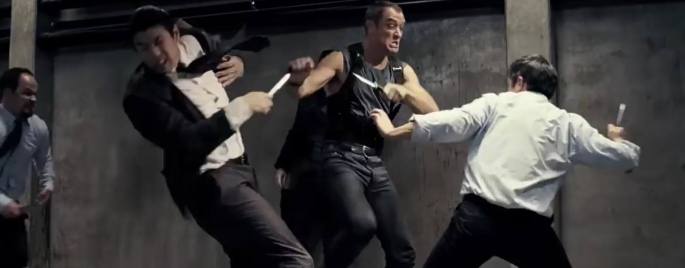
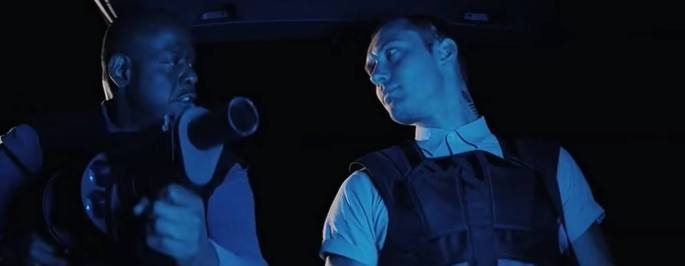
Repo Men is a sneaky, cheerfully violent, and occasionally kinky sci-fi flick that totally bombed in theaters for no good reason other than piss-poor marketing and zero confidence from the distributing studio. Why make movies if you don’t have any faith in the material?! Centering on a future world where artificial limbs and fresh internal organs can be purchased via credit, this is a gory, nasty, extremely funny movie that flirts with disreputability at almost every turn, featuring an anti-hero for a protagonist, and all sorts of colorful baddies lurking around every corner. The kicker of the plot: What if the amoral repo man tasked with taking back, by any means necessary, the body parts his clients can’t pay for, all of a sudden became a victim of his own profession? The third act twist is trippy and unexpected and awesome, Jude Law was superb in a very forceful and physical performance, and overall, the material feels decidedly fresh and unique and creative. I’m a big fan of when a film mixes tones, and this B-movie with A-production values does that often.

2

Original novelist Eric Garcia was given the opportunity to adapt his own work for the screen with co-scripter Garrett Lerner, and while helmer Miguel Sapochnik certainly demonstrated an extremely strong sense of cinematic style, he’s been in feature director’s jail for the last few years, instead turning to high-profile television direction. It’s a shame, because this film has distinct personality and lots of nifty special effects that served the story, rather than dominating it. I have a feeling that Paul Verhoeven would absolutely LOVE this film, as Repo Men carries a casual cruel streak and a layer of social satire that makes the proceedings all the more robust. The solid supporting cast features Forest Whitaker as Law’s totally badass partner in crime, Liev Schreiber at his smarmiest as their morally bankrupt boss, Alice Braga as Law’s love interest, Carice van Houten, John Leguizamo, and RZA. The vibrant yet gritty cinematography by Enrique Chediak is a major highlight, as is the crisp editing by Richard Francis-Bruce. Shot for a reported $32 million, this film looks three times as expensive. The unrated version features even more badassery.

3.jpg

B Movie Glory With Nate: The Harvest

 
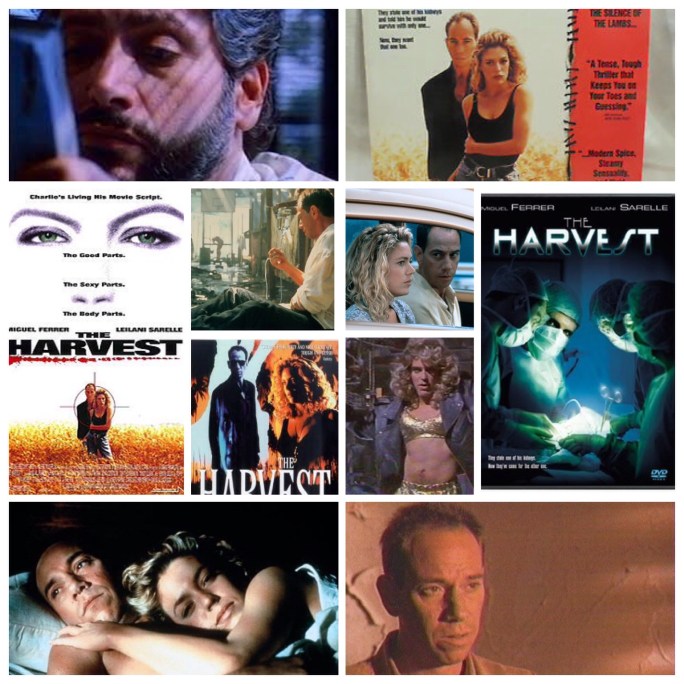
The Harvest is the very definition of a hidden gem that one stumbles upon while watching late night cable and sits through to the end just because it’s such a wickedly nasty little thriller. Erotic and steamy, dangerous, very darkly funny are qualities that all reside within a terrific script that has one kicker of an ending that’s quite the chuckle inducing payoff. No one wants to have their organs taken while on vacation in some sketchy South American country, let alone consider the thought of it. Hard luck screenwriter Charlie Pope (an intense Miguel Ferrer in one of his few lead roles) falls right into that unthinkable scenario. He’s sent to Mexico by his bad tempered boss Bob Lakin (a sleazy Harvey Fierstein, who REALLY needs to be in more movies), and marinates in the sweatiness trying to get some work done. After a hot and heavy night with a gorgeous local babe (Leilani Sarelle) he wakes up with the mother of all hangovers and is horrified to find that one of his kidneys has been removed. From there it’s a stomach churning mad dash to figure out where the smugglers have gone, and evade the, at the same time, because they’re coming to try and get his other one and silence him forever as well. It’s an uncomfortable little piece of white knuckle trash, but it’s made with solid flair and like I said, the script is top shelf stuff. Ferrer is the running man here, trying to keep one step ahead of some very dangerous people, his bountiful acting talent putting us right there with him. Fierstein is always a gravel voiced gem, and gets two penultimate scenes that spin the plot on its cogs, both which will have you laughing uncomfortably. There’s also an early career appearance from George Clooney, who is Ferrer’s cousin. His credit here, and I’m not even making this up, is ‘Lip syncing transvestite’. How’s that for a leg up in the industry. Lowbrow, gut churning black comedy mixed with the exotic fish out of water thriller makes for a neat little piece of genre bending, grotesque shocker fun. 

Robert Atman’s The Gingerbread Man: A Review by Nate Hill


Robert Altman’s The Gingerbread Man isn’t the director’s best, but it’s worth a looky-loo just to see this solid cast cavort around in a sweltering Georgia atmosphere and play out a narrative that’s part sultry seduction thriller and part hard boiled whodunit. I remember watching it and going ‘meh, I’ve seen this type of thing a thousand times and this one didn’t raise the bar at all.’ I’m thinking now that perhaps my mindset was in the wrong space, and that Altman set out to simply bring us the romantic murder mystery in its purest form, without deviation or higher ambitions. In that case he’s made a neat little potboiler with a suitably ludicrous ending, some truly effective red herrings and a really great troupe of actors, so,e going nicely against type. The multitalented Kenneth Branagh plays suave Georgia lawyer Rick MacGruder, who finds himself in deep trouble when he has an affair with sexy, slinky and shady Mallory Doss (the very underrated Embeth Davidz). She’s a good enough girl, but she has a backwoods nutcase of a father named Dixon (Robert Duvall being uber strange and loving every second of it) who is stalking and threatening her. Dixon is a bedraggled, cult-leading swamp rat and Duvall plays him to the frenzied hilt of uncomfortable ticks and unkempt theatrics. MacGruder, being smitten with Mallory, is of course compelled to use his legal and personal power to help her, and concocts a convoluted scheme involving a subpoena to Mallory’s belligerent ex husband Pete Randle (a cranky Tom Berenger blusters about in the third act). This of course sets off all kinds of back door motivations and sweaty double crosses that are hard to keep track of until all is revealed in the final act, prompting a collective audience reaction of “huh??”. It’s all in good fun though and at times it seems like Altman is deliberately dipping into B movie territory just to shirk his high art mantle and spice up this gumbo with some trashy, lowbrow flavour. I say bring it, that’s exactly the way to my heart. Writing this review I’m now realizing I probably like this film way more than my ending statement might suggest, but sometimes we need to hash it all out on paper (or in this case a cramped iPad keyboard) to reevaluate our perception of a certain piece. The cast gets juicier, with Robert Downey Jr. doing a quick bit as Macgruder’s slick buddy who works as a private investigator for the law office, Daryl Hannah and Famke Janssen as Rick’s jilted wife as well. It’s based on a John Grisham novel, and Altman seems to be the first director to adapt his work with a ramped up style and personal flair that goes beyond the academic thrills on the page. This one feels heightened, sultry and oh so sweaty in the way that only a southern set thriller can be. Cool stuff. 

MICHEL GONDRY’S HUMAN NATURE — A REVIEW BY NICK CLEMENT

1
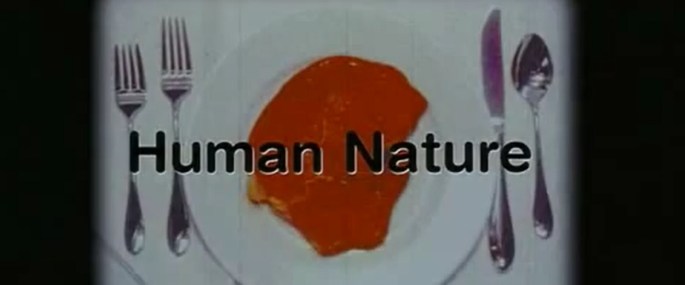
Completely and utterly absurd and often hilarious, Human Nature was the first collaboration between writer Charlie Kaufman (Anomalisa, Being John Malkovich, Synechdoce, NY) and director Michel Gondry (Eternal Sunshine of the Spotless Mind, Mood Indigo, The Science of Sleep). To call this film bizarre or self-conscious would be an understatement; while it’s coherent and certainly adds up by its conclusion, I can think of few other R-rated fantasies like this one. The film is basically a sex-farce about the animalistic urges that we as humans suppress on a daily basis, as well as a pointed observation on the role of outward beauty in society and how people judge others on superficial levels. Almost beyond description, the film juggles three story major story strands which result in an extremely heady brew. Rhys Ifans (so scary in Enduring Love, so funny in Notting Hill) is a feral man, raised as an ape by his father, who has been living as one with nature for almost his entire existence. Patricia Arquette, in a rather fearless and vanity-free performance, is a woman suffering from abnormal hair growth all over her body; she’s never been with a man and has zero self-esteem. Tim Robbins is a virginal, up-tight behavioral scientist who is trying to teach a pair of mice common table manners; eat with a fork, pull out the chair for your friend, etc. He thinks that if he can teach table manners to mice, he’ll be able to teach table manners to humans.
2
In his world, we’ve all become slobs with no idea of proper etiquette. Hysterical flashbacks show how his 50’s era parents drilled order and OCD-styled tendencies into their son. Robbins and Arquette meet through a mutual friend and sparks fly, while Arquette conceals her hairy secret from him. One day while walking in the woods, they come across Ifans, who knocks himself out while trying to run away from them. Robbins, ever the intrepid scientist, sees this as a major opportunity. He takes Ifans back to his laboratory and puts him into a large, glass-walled box. Forget the mice; now he has a human experiment! How a strange love triangle develops between the three characters will be up for you to discover. If all of this sounds mildly mentally insane, well, I’m not surprised. But coming from genuine artists like Gondry and Kaufman, the film is a whimsical endeavor. And while Human Nature will like prove to be challenging film on some levels for many people, it can hardly be denied that it’s stunningly unique, and very smart about humans, and, well, nature. Gondy’s cinematic DIY-aesthetic was in its infancy here, with visual motifs that would become frequently explored in subsequent films. The scenes alone of the mice eating with forks are worth a viewing. And one scene, in which Robbins teaches Ifans how to behave at an opera, is a true pisser. This is a fun, strange film that I promise you won’t forget.
3

CAPTAIN AMERICA: THE FIRST AVENGER – A REVIEW BY J.D. LAFRANCE

cptamerica-trailer-197

The popular comic book superhero Captain America had his debut in March 1941 courtesy of Joe Simon and Jack Kirby who created him as a patriotic symbol in response to the actions of Nazi Germany in the years leading up to the United States’ involvement in World War II. Like any enduring comic book icon, Cap has undergone all kinds of changes over the years but as had few cinematic incarnations. He first appeared on film in a 1944 serial and then in a 1990 film that was so ill-conceived that it was released direct to home video in North America. One problem with the character is that his costume does not translate well to a live-action film. It didn’t help that at the time of the 1990 version, Marvel Comics, which owned the character, had little interest in cinematic adaptations of its titles until X-Men (2000) proved to be a surprise hit.

Since then, they’ve had a spotty track record with their properties. The Blade and Iron Man series were very successful but both Daredevil (2003) and Ghost Rider (2007) were box office and critical failures respectively. Part of the problem is the talent attached to these films. Getting the right director and cast that understand the characters and the worlds they inhabit is crucial and explains why the first two X-Men films were so good. For Captain America: The First Avenger (2011), the powers that be wisely hired Joe Johnston to direct. Since it was decided that the film be set during World War II who better to recapture that old school action/adventure vibe then the man who helmed The Rocketeer (1991) and Hidalgo (2004)? For the pivotal role of Captain America, Chris Evans was cast. He already had experience with superhero films playing the Human Torch in the awful Fantastic Four films and, as a result, was understandably reluctant to take on another comic book adaptation. The question remained, how would such an earnest, idealistic character translate in our cynical times and would movie-going audiences be able to relate to him? Judging by its opening weekend box office haul, quite well indeed.

Steve Rogers (Chris Evans) is a skinny weakling who just wants to do his part for his country during wartime but he’s wracked with too many health problems to join the army. So, he volunteers for a risky top-secret experimental program known as Project Rebirth run by Colonel Chester Phillips (Tommy Lee Jones at his crusty, ornery best) and Peggy Carter (charmingly played by Hayley Atwell). Rogers may not be physically strong but he’s brave, determined and willing to sacrifice himself for the greater good. Dr. Abraham Erskine (Stanley Tucci) and playboy inventor Howard Stark (Dominic Cooper) conduct the actual procedure that transforms Rogers into the perfect physical specimen, a Super Soldier complete with superior strength and agility.

Instead of putting him on the front lines where he wants to be, Rogers dons a corny costume (that pokes fun at previous cinematic incarnations), dubbed Captain America, and ordered to sell war bonds to the American public in a lame dog and pony show. While entertaining American troops in Italy, he hears that his best friend Bucky Barnes (Sebastian Stan) has been captured by Hydra, a research wing of the Nazis who are so ambitious that they split from the Germans for playing it too safe. With Peggy and Stark’s help, Rogers disobeys orders to rescue his friend and 400 prisoners of war. Meanwhile, Hydra leaders Dr. Arnim Zola (Toby Jones) and Johann Schmidt (Hugo Weaving) have discovered the Tesseract, a cosmic cube endowed with powerful magical energy that they harness so that it can be used to not only win the war but also take over the world. Schmidt was the first recipient of the Super Soldier formula and it transformed him into the Red Skull, a hideous-looking evil genius.

Hugo Weaving brings a suitably creepy menace to the role of the power hungry Red Skull aided in large part by the impressive and appropriately garish makeup job. Hayley Atwell is downright delightful as the brassy dame Peggy Carter who is more than capable of taking care of herself. The chemistry between her character and Rogers is nicely realized with snappy, slyly flirty dialogue reminiscent of a Howard Hawks film. The screenplay, written by Christopher Markus and Stephen McFeely, does a nice job of developing their relationship over time, keeping their romance simmering just under the surface for most of the film until its tragic conclusion that carries a surprising emotional resonance because we’ve become invested in them. After all kinds of supporting roles over the years, Chris Evans finally gets to prove that he has the chops to carry a big budget blockbuster. He brings a no-nonsense charisma to the role and conveys Cap’s idealism without coming across as forced or phony.

Joe Johnston brings the same old school Classic Hollywood vibe he brought to The Rocketeer complete with a refreshing lack of cynicism and irony as he delivers a straightforward action/adventure tale. And like with that previous film, he includes all sorts of nice comic book touches, like the introduction of the Howling Commandos, a ragtag group of soldiers that fought alongside Nick Fury in the comics and fight with Cap in the film. In particular, the actors who play Dum Dum Dugan (Neal McDonough) and Gabe Jones (Derek Luke) bear an uncanny resemblance to their comic book counterparts right down to how they look and act. Unlike Zack Snyder (Watchmen, Sucker Punch), who imposes too much of his personal style, Johnston understands that the film’s style should service the story – anything else is a distraction. He even employs Snyder’s trademark “speed-ramping” technique but in a way that fits seamlessly with the action sequences, which are exciting and expertly choreographed, devoid of schizophrenic editing. You always know who is fighting whom and where. Captain America may not reinvent wheel in terms of the comic book superhero genre but it doesn’t have to. It is a crowd-pleasing popcorn movie with nothing else on its mind but to tell an entertaining story.

WERNER HERZOG’S ENCOUNTERS AT THE END OF THE WORLD — A REVIEW BY NICK CLEMENT

1.jpg

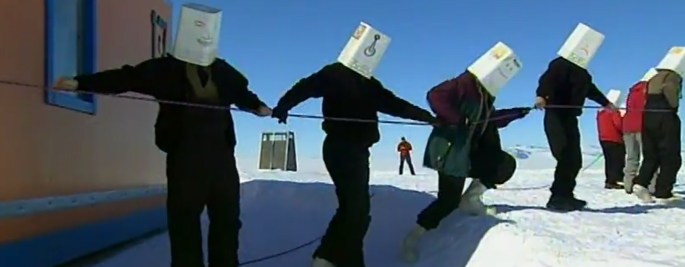
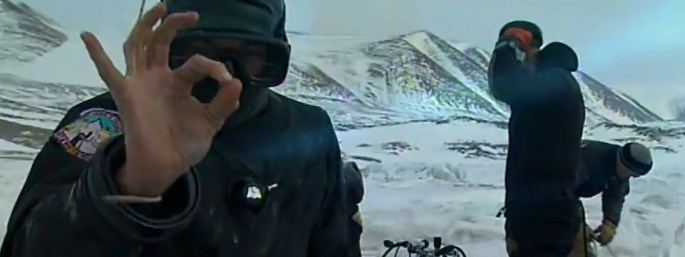
This is an endlessly fascinating documentary. Engrossingly directed (as usual) by the legendary Werner Herzog, Encounters at the End of the World is a film of stunning, haunting beauty, a picture that does something that so few films are capable of these days – it shows you something new and different. Herzog and a crew of less than five (including long time cinematographer Peter Zeitlinger) traveled to Antarctica and documented life on the South Pole. You get to swim under the frozen slabs of ice, which have been staggeringly captured by brave underwater cameramen, and what you get to see under the ice is nothing short of transfixing. Mixed with the eerie, otherworldly sounds of communicating seals, the footage provides an extraterrestrial quality; it’s like you’re looking at life on a completely different planet. You also get introduced to the many eccentric people (scientists, workers, environmentalists, cooks, etc.) that populate the South Pole. While there aren’t that many people who live there in total, each and every one of them interviewed by Herzog seems like a surreal piece of work.

2.jpg

Herzog, a filmmaker known for his brazen sense of humor and a subversive sense of irony, is appalled by the presence of such commercial items as an ATM machine and a gym/spa on the icy tundra. He is a filmmaker, like Terrence Malick, who has always been interested by the ways that man and nature interact and intersect. Herzog has gone to great geographic lengths throughout his career. Whether it’s the Amazon (Aguirre the Wrath of God, Fitzcarraldo), Laos (Little Dieter, Rescue Dawn), Alaska (Grizzly Man), Kuwait (Lessons of Darkness) or at the McMurdo Research Station in this film, he seems entranced by the many exotic qualities that different regions can provide for him as a filmmaker. There are also visual and thematic references to two earlier Herzog docs, The White Diamond and The Wild Blue Yonder. Herzog, who operated one of the two high-definition cameras on the shoot, emphasizes how desolate, alone, and brutally cold the South Pole is. He didn’t go there to make a warm and fuzzy penguin movie ala March of the Penguins (he even states so at the front end of the doc) but yes, you do get some penguin footage. You also get to hear Herzog ask a penguin specialist about the potential existence of gay penguins. Trust me, it’s priceless.

3


House Of Sand And Fog: A Review by Nate Hill

image

House Of Sand And Fog is an emotional thunderclap in ways you won’t see coming, leaving the viewer gutted after a finale that feels spare and detached yet wracked with emotion in the same moment. You feel haunted after witnessing the story unfold, and I was particularly affected by Ben Kingsley’s determind, tender performance for days after my viewing of the film. He plays an Iranian man, a proud man who was a Colonel in the air force in his home country, and has been forced to work construction labor jobs in America to support his family, and to keep up the appearances of their lifestyle. When neglected taxes force a troubled woman (Jennifer Connelly) out of the house she grew up in, Kingsley sees an opportunity to buy the the property for a fraction of what it’s worth, essentially leaving Connelly homeless. She has a history of alcoholism and instability, and this unfortunate situation really worsens her condition, leading to angry and confrontational behaviour towards Kingsley. He has no ill will towards her, he’s simply trying to make a better life for his family whom he loves very much. His wife (Shohreh Aghdashloo) is still very much rooted in Iranian culture, and much of what’s going on goes over her head. There’s also a cop (Ron Eldard) who strikes up a reckless romance with Connelly and tries to strong arm Kingsley into selling the house back to her, pretty much reasoning with his dick instead of his brain. This is a film that refuses to take a side, showing us unblinking and compassionate views of both people within the conflict, and never lifting a judging eyebrow. It’s a sad, sad turn of events and the film wants to show us the tragedy, but it does so with the utmost care, and always has a loving hand in presenting it’s two lead characters. Connelly is heartbreaking, showing us the burning humiliation that frays her spirit to the last sinew. Kingsley is flat out brilliant in the kind of performance that holds up for decades to come. He rightly won an Oscar for his galvanizing turn that breaks hearts and opens tear ducts. Ron Eldard is the only piece that doesn’t fit, because he’s usually not fund in this type of stuff. He’s really talented as an offbeat character actor, but just seems out of place here playing it straight, and it also doesn’t help that his character is just damn unlikable. Aghdashloo is the third leg of the acting table, and her work earned her an Oscar as well, she is plain superb. Be careful of what mood you’re in when you give this one a go, it’s pretty devastating. It’s also powerful cinema, and a story that could happen to anyone, anywhere in the world, giving us something real to latch onto and connect with.

PUNCHLINE – A REVIEW BY J.D. LAFRANCE

MSDPUNC EC010

The harsh reality of stand-up comedy is that for every Jerry Seinfeld that makes it, there are hundreds of comedians who don’t. There are comedians who work dead end jobs during the day and spend the rest of their time working comedy clubs in the hopes of getting that “big break” on a late night talk show or a role in a film or a television sitcom. Some of them have what it takes but most do not. David Seltzer’s film, Punchline (1988), is dedicated to and about these men and women who try to make us laugh. It also explores the dedication, the discipline, and the sacrifices that must be made in order to make it.
Steven Gold (Tom Hanks) is a struggling medical student who moonlights as a stand-up comedian. It quickly becomes evident that he is lousy at the former and excels at the latter. And yet, when he is given a chance at the big time, he cracks under the pressure. Lilah (Sally Field) is a dedicated housewife that also yearns to be a comic. She has the raw talent but not the command of craft that Steven possesses. At first, he doesn’t give Lilah the time of day but slowly they bond and he teaches her the fundamentals of stand-up comedy. “All you need is the right gags,” Steven tells her, and he’s right. Once Lilah has some decent material she discovers her natural gift of making people laugh. An uneasy friendship develops between the two and the personal conflicts they must resolve: Steven’s desire to make it big vs. his inability to do so and Lilah’s love of comedy vs. her love for her family.

David Seltzer wrote the first draft for Punchline in 1979 after becoming fascinated by comedy clubs while looking for someone to play a psychiatrist on a T.V. pilot that he was writing. He had a development deal with the movie division of ABC. Originally, the tone of the film was more good-natured a la Fame (1980) with more characters and less of an emphasis on Steven Gold. Bob Bookman, an executive, sponsored the script but left for Columbia Pictures. He bought the screenplay because Howard Zieff (Private Benjamin) was interested in directing it. When Zieff lost interest (he ended up doing Unfaithfully Yours in 1984), the script was buried for years.

In 1986, producer Daniel Melnick found the screenplay for Punchline among twelve other scripts collecting dust in the vaults of Columbia Pictures. Seltzer’s screenplay had gone through three changes of studio management because the executives didn’t like the mix of comedy and drama. They also didn’t like the Steven Gold character because they thought he was, according to Melnick, “obsessive, certainly self-destructive and could be considered mean-spirited.” The studio couldn’t get a major star to commit to the material and so Melnick decided to make the movie for $8 million and with no stars. Interim studio president Steve Sohmer didn’t like that idea and sent the script to Sally Field, who had a production deal with Columbia. Field agreed to star in and produce the film. Once she signed on, the budget was set at $15 million.

Field didn’t mind sharing the majority of the screen time with Tom Hanks and taking on the role of producer because, as she said in an interview at the time, “as a producer I am not developing films in which I can do fancy footwork. I don’t have to have the tour de force part.” New York comic Susie Essman and sitcom writer Dottie Archibald coached Field. The writer also served as comedy consultant for the film, recruiting fifteen comics to populate the comedy club Steven and Lilah frequent. Field’s research often mirrored her character’s as she remembered working “for about six months to find where Lilah’s comedy was, which is what my character was going through. So it was actually happening to both of us.” As one of the producers on the film, Field found working behind the scenes very demanding, disagreeing with Seltzer about the content of Lilah’s act and how much of it should be in the final cut. The filmmaker said, “Sally had a high degree of opinion and certainty about things. She ain’t the flying nun.”

Two months before the Punchline went into production, Hanks wrote a five-minute stand-up act and performed it at the Comedy Store in Los Angeles. As Hanks recalled, “It was pure flop sweat time, an embarrassment. That material lasted 1 minute 40 seconds, and it had no theme.” Hanks tried again and again, sometimes hitting three clubs a night. It took a month before the actor “didn’t sweat like a pig” on stage. By that point he had enlisted an old friend and comedy writer Randy Fechter and stand-up comic Barry Sobel to help him write his routine. Hanks ended up performing more than thirty times in clubs in Los Angeles and New York City.

The first half of Punchline is a fascinating look at the inner workings of stand-up comedy and what it takes to make it. In this respect, Seltzer’s film is an unflinching portrayal of this profession. As Steven tells Lilah, “It takes every night, six clubs a night, all night. It takes working stag parties and elk club parties where you’re opening for a fucking accordion player.” It is this kind of dedication that is clearly needed in order to be successful. Stand-up comic Sobel felt that the atmosphere of the film’s comedy club was very authentic. “There’s a lot of desperation in the movie on the part of a lot of the comedians, which I feel is on the nose of what it is to be a stand-up.”

The film’s weakness lies in Lilah’s family life. Except for a wonderfully choreographed sequence where Lilah has to rush to get dinner ready for her husband (John Goodman) and his guests before they get home, the moments that feature Lilah with her family are where Punchline loses its energy and becomes a maudlin drama. This aspect of the film just isn’t as fascinating as the parts dealing with the art of stand-up comedy.

Punchline
‘s best moments are when Steven’s manic presence dominates the screen. Tom Hanks’ characterization deftly shows how tragedy and comedy are entwined. In one scene, his character has a gig at a hospital where he entertains a group of patients and doctors. Hanks is genuinely funny as he works the crowd, making fun of people’s injuries so that they forget their own pain for a moment. The beauty of this scene is watching how Hanks interacts with his audience and how convincing he is as a stand-up comic. For the actor, the allure of doing stand-up comedy was “walking into a room of 400 people and taking them wherever you want for 20 minutes. Steven is god of his universe as long as he’s got a microphone in his hand.”

Hanks is also able to show us the darker side of his character in a brutal scene where he has a shot at being discovered and ruins it. Steven does his act at a club with a talent scout watching only to realize that his father, whom he fears and loathes, is in the audience. The look on Steven’s face before he does his act says it all — he knows he’s going to blow it but goes on anyway. The scene is so painful to watch because it is in such a sharp contrast to the hospital scene. To a deafening silence, Steven starts talking about his relationship with his father before breaking down and crying in front of the audience. It is an emotionally powerful scene that is tough to watch and one that the film is never able to surpass.

And this is due in large part to Hanks who goes all out with his performance by showing such a wide range of emotions that swing from euphoria to bitter resentment. It’s an unusual role for Hanks who usually plays nice guys. As the actor recalled in an interview, “He’s not a lovable goofball. His difficulties don’t make him a nicer character or a more sympathetic character but they do make him a darker character.” Under Steven’s very funny facade lurks a self-destructive, jealous person who will do anything to succeed. Is this what it takes to make it as a comedian? The film never really answers this question. Instead, it is left up to the audience to decide one way or the other.

Chairman of Columbia David Puttnam wanted to release Punchline during the Christmas of 1987 but the film wasn’t ready. Puttnam eventually left and Dawn Steel moved in and decided to release the movie after Big (1988) became a huge hit. Punchline grossed a respectful $21 million in the United States.

The best comedy is about yourself, your life, what you know, and finding what is funny in that. Punchline taps into this truism by showing that comedians not only comment on their own lives but what they see around them as well. This film is at its best when it shows us the inner workings of the stand-up comedy profession and how tough it really is. There is a ring of honesty to these scenes that the rather sappy happy ending cannot diminish.

ALEX COX’S WALKER — A REVIEW BY NICK CLEMENT

walker cc


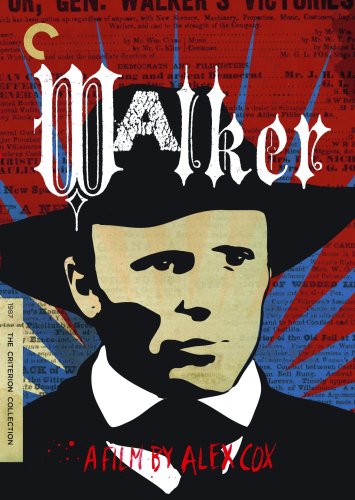
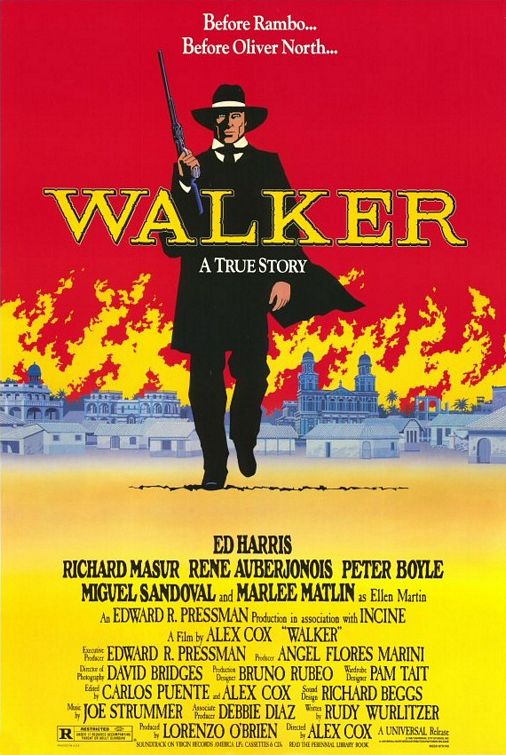
Walker is one of the most interesting and easily the most surreal biopic I can think of, still oddly topical and relevant to this day, directed with volatile energy and a shifting style by maverick indie filmmaker Alex Cox (Sid & Nancy, Repo Man, Straight to Hell). The film was an epic flop at the box office when it hit theaters in 1987, and it caused Cox to retreat into extremely personal filmmaking for the better part of the rest of his career. Starring Ed Harris as William Walker, an American mercenary/sociopath who took Mexico by storm in the 1850’s and eventually installing himself as President of Nicaragua before he’s overthrown and eventually killed, the film is extra unique and shreds the conventional notion of what should be expected from a biopic. Harris was absolutely stunning in Walker, with the fiery material playing to his extreme passion and intensity as an actor, and towards the final act most especially, you catch these glimpses of total madness behind his eyes that only a certain group of actors are able to deliver. With a script by Rudy Wurlitzer (Two-Lane Blacktop, Pat Garrett and Billy the Kid), the film takes on the style of an “acid-western,” with Cox incorporating Pekinpah-esque slow-motion during the explosive and often violent action sequences, and providing a tone that feels genuinely freewheeling and like nothing else I’ve seen for the genre. It’s also extremely funny in spots, but for reasons that aren’t typical or expected. The film was shot on location in Nicaragua while the Contra War was raging on, while the filmmakers included all sorts of details that defied period logic, including helicopters, magazines, weapons, a Zippo lighter, and even a car. Featured in the supporting cast are Peter Boyle, Richard Masur, Rene Auberjonois, Sy Richardson, Xander Berkeley, Marlee Matin, Miguel Sandoval, Blanca Guerra, filmmaker Alfonso Arau (Like Water For Chocolate), and musician Joe Strummer, who also provided the score.

walker