ANT-MAN: A Retrospective by Joel Copling

Rating in Stars: ***½ (out of ****)
Cast: Paul Rudd, Michael Douglas, Evangeline Lilly, Corey Stoll, Bobby Cannavale
Director: Peyton Reed
MPAA Rating: PG-13 (for sci-fi action violence)
Running Time: 1:57
Release Date: 07/17/15

Ant-Man contains all the usual ingredients of the superhero movie (Indeed, it also contains many of the same things that have made the so-called Marvel Cinematic Universe so creatively tired lately), but it’s in the way screenwriters Edgar Wright, Joe Cornish, Adam McKay, and Paul Rudd rearrange and, in a roundabout way, mock them that the movie finds its pretty considerable success. This is the best introduction to a hero we’ve seen yet in this universe (and, if you’re into ranking things, the second-best movie overall that Disney and Marvel have overseen these past seven years). Mark it down to a mixture of the kind of wacky fun that most of these movies have been missing and a serious approach to the mythology that, finally, is starting to feel lived-in.

But yes, all the usual plot elements are here. We have the Everyman with a hero complex and a unique past: Scott Lang (Rudd) was the well-meaning dad to daughter Cassie (an impossibly cute Abby Ryder Fortson) before wife Maggie (Judy Greer, one of our brightest comic actresses again semi-wasted here in a wife role) remarried to policeman Paxton (Bobby Cannavale) and Scott himself became a career criminal, ending up in the slammer for three years. The film begins as he is finally released–only to procure and then lose a job with a popular ice-cream chain.

We have the Hero’s Destiny, which is here for Scott to be an expendable soldier/guinea pig for Dr. Hank Pym (Michael Douglas), a billionaire scientist who, in 1989, was attempting to discover how to shorten the distance between the atoms (or something). In the present, he is emerging from what seems to be reclusive period in solitude, having handed the company down to his protege Darren Cross (Corey Stoll) years ago; Hank’s daughter Hope van Dyne (Evangeline Lilly) is some sort of head of research, too. Cross has perfected shrinking technology that Hank gave up on years ago, except without the knowledge that Hank’s suit, which shrinks its wearer to the size of a bug, is still active.

Enter Scott into this whole thing, because Hank thinks the technology is dangerous and simply wants to fight fire with fire. From here, we get the usual superhero shtick: Scott trains to become a hero dubbed “the Ant-Man” much to his chagrin by “communicating” with the counterpart insect, which does give us a cool sequence where he fights with another, cameoing Avenger. When the climax comes, director Peyton Reed’s shifting perspective of big-vs.-small takes over in creative ways (such as the battleground of Scott’s final encounter with someone in a different, also-tiny suit called the Yellowjacket being a Thomas & Friends train set or a particularly thrilling battle with a suitcase that turns LifeSavers hard candies and an iPhone into deadly weapons).

This all combines to make this one of the better films in this dominating franchise and just simply an enormously clever ride on its own terms (Even the sequences juxtaposed into the end credits, a phenomenon that has now dominated the franchise’s way of imparting important plot details regarding the whole she-bang, are better than they’ve been in ages). The actors all gel rather wonderfully with their characters (Rudd in particular has a way of making Scott’s abrasiveness likable, and who knew the actor we needed in these movies was Douglas, who hasn’t been this strong in years), and even when the pieces of the puzzle connect exactly where one expects them to, Ant-Man succeeds rather hugely at making us grin too much to care too deeply.

AVENGERS: AGE OF ULTRON: A Retrospective by Joel Copling

Rating in Stars: ** (out of ****)
Cast: Robert Downey Jr., Chris Evans, Mark Ruffalo, Scarlett Johansson, the voice of James Spader
Director: Joss Whedon
MPAA Rating: PG-13 (for intense sequences of sci-fi action, violence and destruction, and for some suggestive comments)
Running Time: 2:21
Release Date: 05/01/15

It’s not that this so-called cinematic universe about myriad superheroes is, perhaps, growing too large for its own good (The knowledge that the final installment in the series will be split into two parts, releasing in 2018 and 2019, might be nirvana for its fan base, but for the rest of us, it’s a worrisome thought, given the number of characters with which it will, by then, need to deal). It’s not that the films themselves have, with a single exception, followed the same basic formula of “Well-meaning hero + generic villain = finale in which they inevitably face each other.” It’s that the stakes in writer/director Joss Whedon’s Avengers: Age of Ultron feel almost entirely insular.

This was not so in 2012’s “The Avengers,” which, for all its difficulty rallying a troupe of disparate heroes together and maintaining a singular personality, at least embraced those many personalities and giddy action sequences into an infectious blend. Here, things are more functional, purposed to push forward a plot that, miraculously, at least makes some sort of sense but feels entirely existent within itself until the end of the third act (and, of course, excepting the usual, mid-credits sequence with the end-game villain against whom these quirky characters must work when all is said and finally done). The result is a slight confection of diverting action sequences that lead to other diverting action sequences and rarely pause long enough to hear what the characters are saying (another stark difference from the first film, which basically simmered in its appealingly written and performed exposition dump).

The Avengers themselves have grown into their roles as world-savers and chemistry as bickering, friendly rivals, and each has his or her own issue this time around. Tony Stark (Robert Downey Jr.) is still sort of suffering PTSD from his previous adventures with this group as Iron Man; he and Bruce Banner (Mark Ruffalo), who becomes a hulking rage monster when rankled, have been dabbling with Loki’s scepter, which exhibits artificially intelligent behavior, and accidentally create Ultron (voice of James Spader, who is wonderfully vindictive and sarcastic in this role) in the process (He wants to control the world by eradicating it of humans, because that makes sense). Bruce and Natasha Romanoff (Scarlett Johansson), aka Black Widow, start up an entirely inconsequential romance that goes nowhere and serves no purpose. Clint Barton (Jeremy Renner), aka Hawkeye, has a secret family (Linda Cardellini fills the Concerned Wife role, but at least it’s Linda Cardellini).

Whedon’s screenplay fails to do that for characters like Thor (Chris Hemsworth), who is just a big, lovable demi-god with a hammer, and Steve Rogers (Chris Evans), who has almost always been as dull as his Captain America alter-ego. Returning but smaller characters (Don Cheadle and Anthony Mackie appear briefly as Tony and Steve’s compatriots, James Rhoades/War Machine and Sam Wilson/The Falcon, and Samuel L. Jackson has another extended cameo as Nick Fury, head of the now-dissolved S.H.I.E.L.D. organization) receive even less to do, and new ones (Ultron might be a curious contradiction at first, but he’s ultimately just a metal brute with an evil plan, while Aaron Taylor-Johnson and Elizabeth Olsen’s appearances as a set of oddball twins with their own, supernatural powers are entirely because of the plot) suffer, as well.

Only some of the film’s attempts to deepen the characters beyond the face value of the thing for which they stand really work. The action sequences are only as fun as they’re allowed to get when Tony, in the famed Hulkbuster suit, and Bruce, in glorious, green form, duke it out as a kind of dueling machismo takes over. The climax is mostly underwhelming (though a new hero excites both in his Frankensteinian creation and in the way he makes everyone else completely redundant) and certainly derivative of the first film’s blowout. Avengers: Age of Ultron does very little that is distinctly wrong; it just reeks of not being very distinctive.

A BETTER TOMORROW II – A REVIEW BY J.D. LAFRANCE

abettertomorrowii02

After the smash box office success of A Better Tomorrow (1986) in its native country of Hong Kong and other Asian territories, the film’s producer Tsui Hark convinced its director John Woo to quickly crank out a sequel imaginatively titled A Better Tomorrow II (1987). The two men had a contentious relationship during production and this spilled over during the editing phase where they argued over the length of the film. It got so bad that a mediator had to step in, allowing Hark and Woo to each edit a half of the film. The end result is a flawed yet fascinating mess of a film that divided Woo fans but helped popularize what became known as the Heroic bloodshed movie, a genre of Hong Kong cinema distinctive for its overtly stylized action sequences often involving excessive gunplay and melodramatic themes consisting of brotherhood, honor, duty, and ultimately redemption.

A few years have passed since the events depicted in A Better Tomorrow. Sung Tse Ho (Ti Lung) is recruited from prison to infiltrate and bust an international counterfeiting operation in Hong Kong. His target is Lung Si (Dean Shek), his former mentor. He’s asked to go undercover and investigate Lung but Ho refuses out of loyalty and the belief that his friend has retired from the business. So, his younger brother Sung Tse Kit (Leslie Cheung), now a police lieutenant, takes the job instead. He manages to impress Lung by helping his daughter in a dance contest.

When Kit’s wife Jackie (Emily Chu) visits Ho in prison upset and worried about her husband’s “secret mission,” he reconsiders the deal offered him. Ho is quickly reunited with Lung and finds out his mentor really has gone straight despite crippling debts and pressure from rival mob boss Mr. Wong (Ng Man-tat) to buy Lung’s shipyard. However, at a meeting with Mr. Wong, Lung is framed for the crime boss’ murder and so Ho puts his mentor on a boat to New York City. However, Lung’s beautiful young daughter is killed on orders from crime boss Ko Ying Pui (Shan Kwan), which, coupled with seeing the kindly priest that took him in and a little girl get killed by assassins, drives him off the deep end. Just how much more trauma can this guy take?

Before he’s about to be given electroshock therapy at a mental institution, Lung is sprung by Ken “Gor” Lee (Chow Yun-fat), the twin brother of Mark who was killed in A Better Tomorrow. It takes approximately 20 minutes before we’re introduced to Ken in a ridiculously drawn out scene where he rants about a plate of rice that a customer doesn’t like. It is a shameless bit of overacting even by Hong Kong cinema standards and I suppose is intended to show that Ken is just as wild and unpredictable as his brother. However, the scene goes on and on into self-parody and one has to give Chow Yun-fat credit for fully committing – or something like that. The overacting continues as Ken tries to get Lung out of his catatonic state. Of course, just as Ken makes a breakthrough they are attacked by assassins. Only in a Woo film would a bloody shoot-out snap a character out of his catatonia. Having survived yet another attack, Ken and Lung go back home to Hong Kong, team up with Ho and Kit and exact unholy vengeance on Ko and his army of crooks in what proves to be one incredible action set piece after another.

In keeping with the tradition of Heroic bloodshed movies, A Better Tomorrow II is essentially a soap opera for guys, albeit a bullet-ridden one. It features incredibly heightened emotions (see the rice scene) as the main characters constantly make life or death decisions. Their lives are continually in danger, which creates an intense bond – the hallmark of many Woo films, especially his Hong Kong ones. Around the one-hour mark the slow motion mayhem really kicks into gear as the Chow Yun-fat action hero we all know and love manifests itself when a gang of bad guys tries to kill Ken and Lung at a flophouse they’re hiding out in. Among the beautifully orchestrated carnage we get a breathtaking shot of Ken sliding down a flight of stairs while dispatching an anonymous baddie with two guns – an iconic image that perhaps best encapsulates what the Heroic bloodshed genre is all about. This stunt was also a warm-up for a similar one that would be pulled off in Hard Boiled (1992), Woo’s Hong Kong swan song.

The rice rant aside, Chow Yun-fat demonstrates why he was such a super star in Hong Kong. He gives off an air of effortless cool as the unstoppable action hero and Woo’s cinematic alter ego. He has loads of charisma and the camera really picks up on it in a big way. Ti Lung is also quite good as the conflicted ex-con that risks his life by going undercover to protect his brother. Leslie Cheung plays the tragic cop with everything to lose. His character has a pregnant wife yet constantly risks his life in order to take down Ko. Finally, Dean Shek is excellent as the father figure of the group and shows considerable chops as Lung goes from honest businessman to catatonic victim to ruthless avenger.

After the financial success of A Better Tomorrow, the film’s producer Tsui Hark wanted to capitalize on it by quickly making a sequel. Originally, the film’s director John Woo agreed but only if it was a prequel set in Vietnam. To him, it didn’t make sense to make a sequel because Mark, A Better Tomorrow’s most popular character, was dead. Woo came up with a story that depicted how the main characters in the first film became friends and got to where they were in life. This was ultimately rejected and he later used it in one of his most personal films Bullet in the Head (1990).

One of Woo’s good friends, actor Dean Shek was going through a rough patch in his career. He was no long popular with audiences and had gone to the United States with the intention of retiring. So, Hark and Woo met with Shek in America and convinced him to come back and make another film with them. This inspired Hark to come up with an idea for a sequel with Shek’s character Lung being coaxed back into action by his friends. Hark also came up with the idea of Mark’s twin brother Ken living in New York City. Woo wasn’t thrilled with these ideas because it ended any notion of his prequel idea but he wanted to help out Shek.

Problems arose during production when Woo came up with the idea of shifting the focus of the film to the two younger brothers – Ken and Kit – because he felt that they had a lot in common. The director shot several scenes with them working and talking together. However, when the film’s original cut ran almost three hours, Hark felt that the film was too long and that the focus should be on Lung. He wanted all of these additional scenes removed. Woo refused to make these cuts and so Hark secretly made edits only for Woo to then put the footage back in afterwards. A mediator stepped in and gave Hark and Woo one week to each edit a half of the film. The end result is a version of the film that neither men were happy with, especially Woo who considers it his least favorite of anything he’s done (Really? Has he seen Paycheck?).

Like many Woo films, A Better Tomorrow II examines themes of honor and loyalty. Ho goes to great extremes in protecting his mentor and his brother Kit as well. These guys are willing to face insurmountable odds and die for each other all in the name of friendship. But it is more than just friendship. When you’ve come so close to death as these guys have there is an unbreakable bond that connects them in a way that clearly fascinates Woo as he has explored it so many times in his films.

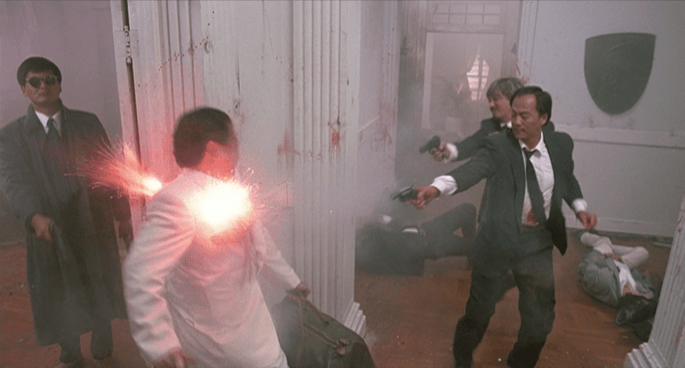
Sure, he lays the angst and melodrama on thick but in doing so raises the stakes in the action sequences. This was a pretty novel notion at the time. It makes the climactic showdown – where Ken, Lung and Ho are decked out in black suits (anticipating Reservoir Dogs by a few years) – that much more memorable because these guys have sacrificed so much that they’re due for some well-deserved payback and man, do they ever dish it out by staging a full-on assault on Ko’s compound with automatic weapons, grenades and, in one memorable bit, a samurai sword. But it is Woo’s trademark dual handgun action that is used the most and to greatest effect. A Better Tomorrow II takes the first film and ups the ante with more bloodshed and more melodrama for an installment that some prefer over the original. For a film that had such a troubled production, it is surprisingly coherent and in terms of its action sequences a classic of the genre. Woo would improve greatly on this template with The Killer (1989) and the aforementioned Hard Boiled before trying his luck in Hollywood with mixed results.

BILLY RAY’S BREACH — A REVIEW BY NICK CLEMENT

1
I always thought this was an excellent piece of work, a topical and paranoid political thriller that valued character and logic over needless action and manufactured heroics. Billy Ray is a smart and talented storyteller, and as usual, Chris Cooper and Laura Linney were both absolutely great. Cooper in particular turned in an anguished performance, and was robbed of Academy consideration. Why was this film released in February and not in October or November? But the biggest surprise was how good pretty-boy Ryan Phillippe was at playing a sketched-out, low-level office clerk who gets in way over his head with his secrets-stealing boss. The film has an appropriately ice-cold visual atmosphere (the brilliant Tak Fujimoto was the film’s ace cinematographer) and fleet pacing due to Jeffrey Ford’s tight editing, while the crispness of Ray’s intelligent screenplay, which he co-wrote with Adam Mazer and William Rotko, favors words over bullets as the ultimate weapons.
2
Ray has had a great career as a writer, with the underrated WWII drama Hart’s War and creepy serial killer thriller Suspect Zero ranking as two cool screenplay credits, while recently, he contributed to the underappreciated State of Play remake by Kevin Macdonald and penned the riveting Captain Phillips for action auteur Paul Greengrass. He’s also responsible for writing and directing one of the best journalism thrillers of all time, the highly engrossing Shattered Glass, which is woefully undervalued, and features conclusive proof that Hayden Christensen is capable of a great performance. Breach tells a true story and does it with confidence and smarts, taking the audience into a shadowy world of government mystery and personal betrayal, and with Cooper’s sturdy performance anchoring the entire piece and an emotionally wrenching finale, this is a ripped-from-the-headlines thriller that truly deserves a Blu-ray upgrade – get on it Universal!
3

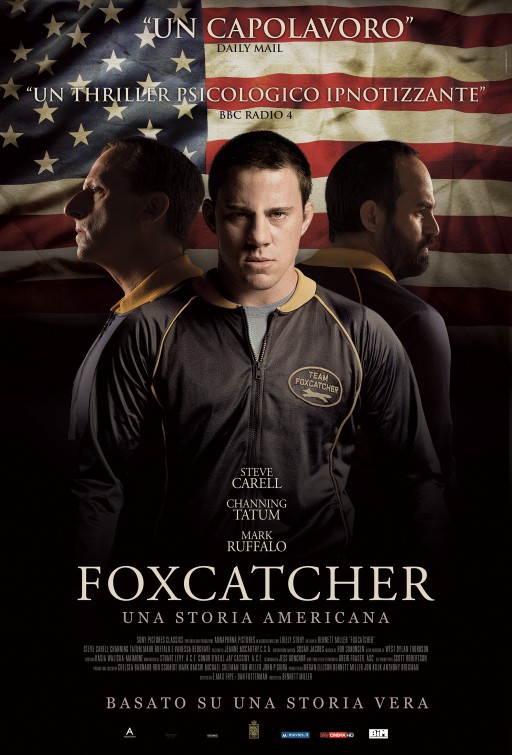
BENNETT MILLER’S FOXCATCHER — A REVIEW BY NICK CLEMENT

1
Foxcatcher is as chilling as true crime cinema can get. The vice-grip direction from the extremely erudite filmmaker Bennett Miller in tandem with a supremely cogent screenplay fashioned with scalpel-sharp dialogue from Dan Futterman and E. Max Frye creates a film that is unshakeable and grim. Funereal in tone and sad to the core, Foxcatcher is a richly textured masterpiece of filmmaking and storytelling, daring to explore America at its worst, never cheapening anything during its all-consuming, slow-burn runtime. This film will be massively off-putting for many people – a true bitter pill – but for those who have cinema running through their veins, this is the equivalent of a five course meal at a Michelin rated restaurant. With the clear and clean screenplay at his disposal, Miller captures the dark, rotted soul of the corrupted male psyche, utilizing a cold and detached directorial aesthetic that fully absorbs the audience. Greig Fraser’s quiet, measured, and totally unassuming cinematography unfolds in a deliberately patient fashion, and when paired with the creepy and subtle musical score by Rob Simonsen, this becomes a movie that uses its sly visual and sonic strengths to amplify the exactitude of its words.
2
Every time I watch the film I’m blown away by its power and ability to unnerve, as Fraser and Miller use empty visual space to convey the alienation of everyone in the narrative. The performances are astounding with the big-three trio of Channing Tatum, Steve Carell, and Mark Ruffalo providing transformative work, anchoring this exceedingly gripping tale of obsession, paranoia, ritualistic sport behavior, and blunt, psychological turmoil. Carrell imbues self-professed “patriot” John Dupont (ex-heir to the Dupont family fortune who hosted the 1988 wrestling team at his estate) with a staggering false sense of importance and pride; his consistent uttering that he’s “helping America” is one of the creepiest elements to the character of Dupont, and something that Carell does so well in the film. The fact that when you see Carell in this film and you never once think of Michael Scott from The Office – that’s a testament to how deep Carell went in his portrayal; the rest of his work as an actor will be judged against his menacing turn in Foxcatcher. He’s a sociopath to the extreme, bordering on outright psychopath. Yet, nobody calls him on it, none of his handlers or business managers or associates. Had they raised the obvious concerns than many clearly felt, they wouldn’t have gotten paid, but a life might not have been lost.
3
That’s one of the many key themes of Foxcatcher – how much is a person’s life worth? It’s a crime that Tatum wasn’t talked-up for Best Actor because, for me, he was Carrel’s equal in every way. Using his already physically intimidating body to maximum effect as 1984 Olympic wrestling gold medalist Mark Schultz, his jaw jutted out with a shuffle of a walk, Tatum forces the viewer to confront this socially awkward character head on. He’s a man in the shadow of his brother, the gold medal winning wrestler Dave Schultz, having never grown up with the love of a father, always looking for something – anything – to latch onto. Ruffalo plays Dave Schultz as a good and decent family man, and as always, is astonishingly natural, never hitting a false note, always nailing the little details just as much as the big scenes.
foxcatcher_ver11
As the film progresses, you watch as he begins to possibly understand the madness that he’s allowed himself to become a part of. The scene with Ruffalo being coached by the documentary filmmaker to say that he loved Du Pont and that Du Point was his mentor has got to be one of the more upsetting movie moments of the year. As Foxcatcher builds towards its inevitable conclusion, one is left with the impression that Miller wants us to examine the very fibers of what it means to be a “winner” and an American society obsessed and consumed with “winning,” and how people of high-net worth and little actual talent delude themselves into thinking that they are somehow entitled to greatness, without having to earn it. This is a phenomenally layered piece of work that cuts to the bone.
foxcatcher

GARETH EDWARDS’ MONSTERS — A REVIEW BY NICK CLEMENT

1

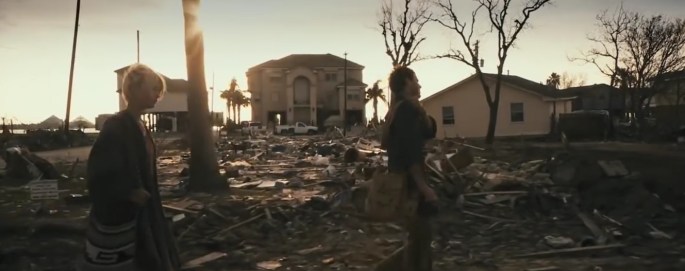
With a nifty premise and a low budget, the independent sci-fi drama Monsters plays around with the genre and has some serious fun, and clearly served as a major calling card for its creator. Written, photographed, designed (both visually and physically) and directed by then first timer Gareth Edwards (Godzilla, the upcoming Rogue One), Monsters is more of a romantic drama than the next Cloverfield or District 9, though the influence of both of those films can certainly be felt from time to time. But whereas Cloverfield was a hectic and adrenalin-pumping action picture and District 9 was a social and political allegory cleverly disguised as a buddy-action film, Monsters plays it quiet and small for the most part, allowing its two lead actors (the excellent Scoot McNairy and easy on the eyes Whitney Able) to develop solid chemistry and pull the audience into their predicament. What sets this film apart from the rest of the genre competition is that for as much excitement that was shown for the monsters themselves, the human side to the story was never skimped out on, and because of this, the emotional investment is that much richer.

2

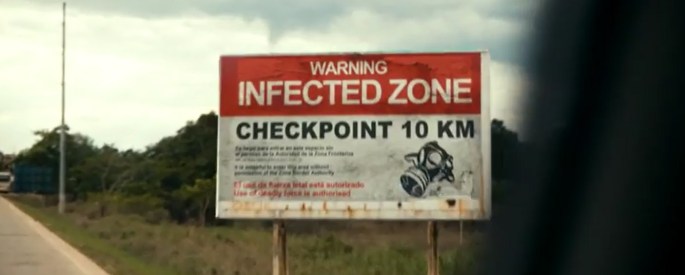
The narrative hook of Monsters is that a NASA space probe has crashed in Mexico and now there are various extraterrestrial lifeforms running amok all over the country, with the military fighting them to the death. Andrew (McNairy, one my favorite actors) has been tasked with delivering his boss’s daughter, Samantha (Able), back to the states, but in order to do so, the two of them have to risk their lives and trek through the “infected zone” where anything at any moment could pop out and eat them. Edwards was clearly working on a shoe-string budget for this type of material but was still able to deliver superb visual effects in a few key sequences; it’s amazing what home computers can do these days as most of this ingenious little film was crafted in his living room. But what made Monsters really stand out was its finale – I absolutely loved the final moments of this movie and where the story went and how it totally upended your expectations. Instead of going for the easy and the bombastic, Edwards went poetic and thoughtful, and in doing so, created a monster movie unlike any other.

3

Conviction: A Review By Nate Hill


Tony Goldwyn’s Conviction is a searing dramatic tale that’s heavily based on true events, and is essentially the underdog story boiled down to its most effective elements, with inspiration running throughout its truly remarkable storyline. Hilary Swank can be a force of nature in her work, and she’s dynamite here as Betty Anne Waters, a small town girl who is very close with her rambunctious sibling Kenny (Sam Rockwell), who grows up as the troublemaker of the two, running afoul of a nasty local police officer (Melissa Leo). When his next door neighbour is found stabbed to death, Leo sees it as her opportunity to get rid him for good, and tampers with evidence, until he is convicted. Guilty until proven innocent is the mantra with this difficult tale, and because it’s based on a true story that happened in real life, it unfolds at a snails pace of tragic events in which a satisfying outcome sometimes just seems out of reach. With Kenny in wrongfully convicted and rotting in prison while his wife and daughters edge towards moving on, Betty does the unthinkable: with no previous experience in college, let alone law, she decides to study for the bar exam, in order to eventually represent Kenny in court, and prove his innocence. It seems like something from a movie, and here we see it, but this is something that really, really happened, which to me is extraordinary and essential to make known. She persists through many obstacles both great and small, and with the help of a dapper senior colleague (Peter Gallagher), and a perky fellow law student (Minnie Driver) she passes the exam and sets out to defend her brother. It’s a rocky road, beset with the decayed and deliberately lost memories of years before, and the police officer’s longstanding belligerence. Unreliable witnesses, uncooperative testimonials and all sorts of stuff get in her way, but Betty ain’t a girl to quit or back down, a character trait which Swank seems to have been born to play, and is the lighthouse which guides this fantastic film along its track. Rockwell exudes burrowing frustration as a man in a position of incomprehensible sadness, hopeful yet resigned to his fate which has been orchestrated by evil, targeting him in wanton cruelty. Painful is the word for him here, and when Rockwell sets out for a mood in his work, you damn well feel it. Juliette Lewis briefly rears her head as a dimbulb witness who plays a part in Betty’s quest, as does Clea Duvall very briefly as another witness who seems to have no idea what she actually saw. Melissa Leo is an actress who is utterly and totally convincing whether she’s on the good or the evil side of the coin, holding the audience in rapturous awe with seemingly little effort. Here she’s so nasty it radiates off the screen, providing a core incentive for Betty’s struggle, whether or not the events actually played out like that. Director Tony Goldwyn is an actor himself and uses that experience to forge a film with respect and sympathy for its two leads. One of the more underrated films of 2010.

The Jungle Book: A Review by Nate Hill

image

Prepare your eyes for maximum bogglement, work out your abs so you don’t bust a gut laughing, and most importantly, dust off that childlike sense of wonder before going to see Rudyard Kipling’s The Jungle Book, boldly and lovingly retold by Jon Favreau in what is the most flat out exciting, adventurous film of the year thus far. The director pulls  off a balancing act between palpable tension, character interactions that come straight from the heart and land squarely in ours, and some of the most believable, jaw dropping CGI I have ever seen on screen. The animals look so impressive and lifelike that after seeing them I shelved away some of my inherent reservations about computer generated effects as a dominant force in a piece, and simply gave in. The atmosphere is lush, intoxicating and deeply detailed, with a naturalistic feel and tone. Young Neel Sethi is tasked with being the only fully human component, and is perfect. His interactions seem real and rehearsed, immersing the viewer further into the visuals. Mowgli is a young man cub, found on the edge of the jungle by the panther Bagheera (stately, compassionate Ben Kingsley) and given to a wolf pack to be raised by alpha Akela (Giancarlo Esposito) and Raksha (Lupita Nyong’o). Not all in the animal kingdom are receiving of this man cub, especially a terrifying Bengal tiger called Shere Khan, given the rumbling tones of Idris Elba, inspiring fear in animals and audience alike. He has a rocky relationship with man, and wants Mowgli dead. Bagheera takes him far into the jungle, where they are separated and Mowgli’s adventure truly begins. He wanders into the path of Kaa (a slithery Scarlett Johansson) a monstrous, seductive python, and is taken under the wing of Baloo, an adult Winnie the poo voiced by Bill Murray. Murray is one of the film’s great delights, and as soon as he shows up we forget about all the menace and threat which preceded his arrival, and are swept up into his affable, lounging lifestyle and brightly colored neck of the woods. Murray clearly ad libbed a lot of Baloo’s dialogue, and anything he didn’t he still gives that unmistakable, winking ‘Murray’ twinge that I so love. Mowgli’s adventure continues, as he stays one step ahead of Shere Khan and is visited by the king of the monkeys, a twenty foot tall, lumbering orangutan named Louie, voiced with demented, pithy glee by Christopher Walken. As soon as he showed up the laughs erupted from within me, and reached a manic peak as he belts out the ‘Oobie Doo’ song in priceless Walken fashion, his monkey mannerisms uncannily starting to resemble Walken’s own distinct visage. Many of the animals serve as differing parental figures to Mowgli, representing elemental factions of raising one’s young. Bagheera is cautious, doubting and skeptical. Baloo is the fun loving, lenient one. Even Shere Khan has a curdled paternal feel to him, like the brutal stepfather who is damaging to his offspring. Raksha is the unconditional mother, and that devotion comes out wonderfully in Nyong’o’s souful performance. The vocal performances are aided by the stunning effects; the CGI of facial features allow the actors work to truly extend into the realm of what’s visible, with real emotions displayed by the creatures, and not a single rendering that’s anything short of lifelike. The film evokes true wonder and primal excitement, escapism that takes itself seriously yet knows when and how to play, a dazzling technical marvel, a timeless story well told, all in one cinematic package that is not to be missed. Oh, and stick around for the credits, instead of Walken out of the theatre and missing a final musical treat.

THE LAST DETAIL – A REVIEW BY J.D. LAFRANCE

ld-one

Hal Ashby directed some of the best films to come out of the 1970s, exploding out of the gates with four motion pictures over five years. They were all quirky comedy-drama hybrids that, in terms of subject matter, couldn’t be more different and yet are united in the sense that they all feature offbeat protagonists. They focus on outsiders that exist on the margins of mainstream society, like the death-obsessed young man who falls in love an unflappable, optimistic septuagenarian in Harold and Maude (1971). In its own way, The Last Detail (1973) is a comedy tinged with drama and one that features marginalized protagonists in the form of two veteran United States Navy petty officers that have to transport a young sailor from Virginia to New Hampshire and end up learning something about themselves and each other along the way.

At the time, Ashby was coming off the commercial and critical failure of Harold and Maude when Jack Nicholson told him about The Last Detail. Then up-and-coming screenwriter Robert Towne had adapted Darryl Ponicsan’s novel of the same name with the actor (they were close friends) in mind. Nicholson was on an incredible run of classic film roles that started with Easy Rider (1969) and continued with two Bob Rafelson films – Five Easy Pieces (1970) and The King of Marvin Gardens (1972). His role in The Last Detail would yet again demonstrate his power and versatility as an actor, resulting in him being crowned Best Actor at the 1974 Cannes Film Festival.

Billy “Badass” Buddusky (Nicholson) and Richard “Mule” Mulhall (Otis Young) are assigned “chasers” duty, which involves taking a young sailor by the name of Larry Meadows (Randy Quaid) to Portsmouth Naval Prison. He’s been sentenced to eight years for trying to steal $40 from the Commanding Officer’s wife’s pet charity project. They have a week to do it, but Buddusky proposes that they can pocket more of the per diem and spend it on the way home if they get Meadows there as fast as possible. I like how the film settles into a character-driven groove with a series of colorful encounters that provide insight into these guys after efficiently setting up the premise.

Meadows is just a scared kid that did something stupid and pissed off the wrong person as a result. Meadows has hardly had any life experiences and will be denied the possibility of them for eight long years unless Buddusky and Mulhall do something about it. Not surprisingly, Buddusky’s original plan goes out the window as he and Mulhall bond with Meadows by getting him drunk, stoned and laid in one last hurrah before eight years of imprisonment.

The Last Detail continued Jack Nicholson’s fascination with angry outsiders that live on the margins. It was the start of a great run of like-minded characters, beginning with Easy Rider. It is interesting to watch the choices he makes as an actor in this role, from the way Buddusky seems to sarcastically chew his gum to the way he wears his sailor’s cap. Nicholson is equally adept at showing the anger that simmers under his character’s façade and the explosion of rage that occurs when provoked, like the famous scene where a bartender refuses to serve the three sailors, which is reminiscent of the even more well-known diner scene in Five Easy Pieces. Later on, there’s a nice moment where Buddusky explains why he gets so angry and how liberating he finds it to wail on someone that ticks him off. He even tries to pick a fight with Meadows. It gives us some valuable insight into Buddusky’s volatile nature. Nicholson also shows us moments where his character is a consummate bullshit artist, like when he, Mulhall and Meadows get invited to a party in New York City and he tries to impress a young woman (Nancy Allen) by romanticizing life in the Navy. He’s stoned and getting nowhere with this girl who looks like she’d rather be anywhere else. Nicholson effortlessly inhabits the role in a way that seemed to disappear through the late 1980s and beyond when he relied more and more on his movie star persona.

Fresh-faced Randy Quaid does a nice job of conveying his character’s clueless naiveté. He plays Meadows as a pathetic mess of a human being. With his young, soft face, the actor projects a kind of innocence, but his actions sometimes say otherwise. For example, on the train he tries to make a break for it and when caught breaks down crying. Quaid achieves just the right mix of awkwardness and an occasional sympathetic side to keep us interested in this bundle of contractions all the while holding his own against a flashy actor like Nicholson. Quaid exhibits character behavior that is intriguing to watch – so much so that we want to know more about Meadows. Why did he try to steal the money? Over the course of the film, Buddusky and Mulhall try to find out what motivates this kid. As they get closer to prison, Quaid shows how the inevitable weighs more and more on Meadows’ mind by facial expressions, which oscillate between contemplative and anxious.

Otis Young has the least flashiest role, but it is a crucial one as he provides the stable, calming voice of reason, trying to keep everyone on track. When Buddusky comes up with some wild idea or wants to diverge from their mission, Mulhall is the sober realist and this sometimes causes friction between him and Buddusky, but when they are presented with an outside threat they quickly close ranks.

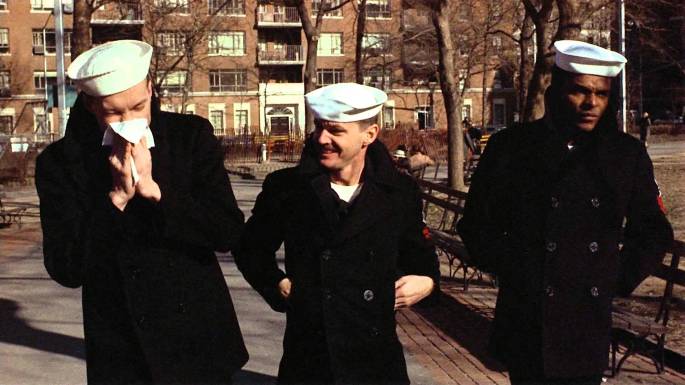
Robert Towne’s script hits us up with salty language right from the get-go, but it never feels false or forced because it rolls off the tongue so easily off someone like Nicholson who curses as naturally as breathing. I also like how the film is set during the winter months and you can tell that they actually shot it during that time by how you can see the actors’ breath in outdoor scenes. It looks so cold that it is almost tangible, most notably in a scene towards the end when the three sailors decide to have a makeshift picnic out in a snowbound park. They stand around freezing their asses off while trying to start a fire to cook hotdogs.

Producer Gerry Ayres had bought the rights to Darryl Ponicsan’s novel The Last Detail in 1969, but had difficulty getting it made because the studio was concerned about all of the bad language in Robert Towne’s screenplay, asking him to reduce the number of curse words. Towne told them, “This is the way people talk when they’re powerless to act; they bitch.” The screenwriter had refused to tone down the language and the project remained in limbo until Jack Nicholson, who was by then a bankable movie star, got involved. Towne, who was good friends with Nicholson, had written the role of Buddusky with the actor in mind.

Director Hal Ashby was in pre-production on Three Cornered Circle at MGM when Nicholson told him about The Last Detail, his upcoming project at Columbia Pictures. Ashby had actually been sent the script in the fall of 1971, but the reader’s report called it, “lengthy and unimaginative.” After looking at it again, he had warmed up to it. Ashby wanted to do it, but the project conflicted with his schedule for Three Cornered Circle. However, he pulled out of his deal, impressed by Nicholson’s loyalty, with MGM and took Nicholson’s suggestion that they work together on The Last Detail.

Ashby and Ayres read Navy publications and interviewed current and ex-servicemen who helped them correct minor errors in the script. During pre-production, Ashby worked with Towne on polishing the script and with Nicholson on his character. Ashby wanted to shoot on location at the naval base in Norfolk, Virginia and the brig at Portsmouth, New Hampshire, but was unable to get permission from the U.S. Navy. However, the Canadian Navy was willing to cooperate and in mid-August 1972, Ashby and his casting director, Lynn Stalmaster, traveled to Toronto to look at a naval base and meet with actors. The base suited their needs and Ashby met actress Carol Kane whom he would cast in a small, but significant role.

Nicholson was set to play Buddusky and so the casting of The Last Detail focused mainly on the roles of Mulhall and Meadows. Nicholson and Towne were friends with Rupert Crosse and felt that he would be perfect as Mulhall. Bud Cort, who had worked with Ashby on Harold and Maude, begged the director to play Meadows, but he felt that the actor was not right for the role. Stalmaster gave Ashby a final selection of actors and the two that stood out were Randy Quaid and John Travolta. Quaid had the offbeat and vulnerable qualities that Ashby wanted.

Shortly before principal photography was to begin, Crosse discovered that he had terminal cancer and Ashby delayed production a week so that Crosse could come to terms with the news and decide if he still wanted to do the film. However, a day before filming was to begin, Crosse had to pull out and Ashby and Stalmaster scrambled to find a replacement, quickly casting Otis Young as Mulhall. Ashby had tried to get Haskell Wexler, Nester Almendros and Gordon Willis as the film’s director of photography, but when none of them were available, he promoted Michael Chapman, his camera operator on The Landlord (1970). Ashby and Chapman worked together to create a specific look for the film that involved using natural lighting to create a realistic, documentary style.

Ashby decided to shoot The Last Detail chronologically in order to help the inexperienced Quaid and the recently cast Young ease into their characters. Quaid was indeed very nervous and wanted to make a good impression. Ashby kept a close eye on the actor, but allowed him to grow into the role. With the exception of Toronto doubling as Norfolk, the production shot on location, making the same journey as the three main characters.

The day after principal photography was completed; Ashby had his editor send what he had cut together up to that point. The director was shocked at the results and fired the editor. The director was afraid that he’d have to edit the film himself. Ayres recommended brining in Robert C. Jones, one of the fastest editors in the business and who had been nominated for an Academy Award for Guess Who’s Coming to Dinner (1967). Jones put the film back into rushes and six weeks later had a first cut ready that ran four hours. Ashby was very impressed with Jones’ abilities and trusted him completely.

However, the studio was not happy with the length of time it was taking to edit The Last Detail as well as the amount of bad language in it. Columbia was in major financial trouble and needed a commercial hit. Jones called Ashby while he was in London meeting with Peter Sellers about doing Being There (1979), telling him that Columbia was fed up. The head of the editing department called to tell Ashby that a studio representative was coming to take the film away. However, Jones refused to give up the film and Ashby called the studio and managed to smooth things over with them.

By August 1973, the final cut of The Last Detail was completed and submitted to the MPAA, which gave it an R rating. Columbia was still not happy with the film and asked for 26 lines with the word “fuck” in them to be cut. Ashby convinced the studio to let him preview the film as it was to see how the public would react. The film was shown in San Francisco and the screening was a success. Columbia decided to give the film a limited release to qualify for Oscar consideration with a wide release in the spring of 1974. Both Nicholson and Quaid were nominated for Academy Awards for Best Actor and Best Supporting Actor respectively.

For all of their fun and wild times – including picking a fight with some army soldiers in a train station washroom – Meadows’ fate hangs over them like an ominous storm cloud that occasionally makes itself known. While Mulhall wants to take Meadows straight to prison, Buddusky wants to show the kid a good time because it will be the last one he’ll have for eight years. Even though, by the end of The Last Detail, Buddusky and Mulhall do their job, you can tell that Meadows got to them, past their hardened Navy lifer exteriors. For them, Meadows represents how fucked up the system is – that someone could get punished so severely for such a minor crime. It’s not right, but there is nothing they can do about it, which ends things on a rather melancholic note of resignation that is refreshing for a film that started off as a comedy.

The Last Detail performed well at the box office and it has gone to become an influential film, representing one of Nicholson’s finest performances of the ‘70s. It was an excellent early role for Quaid and was also part of a fine run of films during this decade for the character actor. And finally, for Ashby it marked another great effort in a decade chock full of classics as he would go on to make, including Shampoo (1975), Coming Home (1978), and Being There.
ANDREW DOMINIK’S THE ASSASSINATION OF JESSE JAMES BY THE COWARD ROBERT FORD — A REVIEW BY NICK CLEMENT

jj2

Directed by Andrew Dominik, who had previously made the nasty Australian prison movie Chopper with that incredible performance from Eric Bana, The Assassination of Jesse James by the Coward Robert Ford, his second picture, was the complete antithesis of his first, an epic, lyrical, brooding, atmospheric western that distorted time and reality in a heightened fashion. Whereas Chopper was compact, tight, and extremely intimate, Dominik went in the complete opposite direction with this stylized drama, immediately showing that there was more than one layer to him as a filmmaker and artist. It might have been easier to expect a film of this power and force to come from a more established filmmaker; I just don’t think critics and audiences were prepared for what Dominik brought to the table with this grand effort. He must’ve gotten tons of big Hollywood offers after Chopper exploded on the scene in 2000, so it’s sort of telling that he waited seven years in between movies; he’s not a filmmaker to just go out and accept a “for hire” director’s assignment.

jj1

It’s obvious that he’s interested in telling stories that are personal, and I’m glad he waited for that length of time instead of rushing into something cheap and easy. And then to follow up this beyond underrated effort with 2012’s woefully neglected crime film Killing Them Softly?! The man’s work has been done no favors by skittish distributors and bean counting studio overlords. The Assassination of Jesse James by the Coward Robert Ford is a magisterial effort, the closest thing to a Terrence Malick movie that Terrence Malick never directed, echoing that legendary filmmaker’s glorious achievement The New World, while creating a striking ode to the lawless back country of Missouri and surrounding areas. There are stretches with no dialogue, a heavy emphasis on nature, and a poetic, meditative, lyrical tone complete with a “voice-of-god” narrator. Stark and crisp in its visual ideas, and always fascinating on an informational level, the film is languidly paced yet never boring or restless, with an overall aesthetic that begins to take the shape of an evocative dream.

assassination_of_jesse_james_by_the_coward_robert_ford

The Assassination of Jesse James by the Coward Robert Ford is essentially a psychological study of a murder and a murderer, and it doesn’t play to the many cliché western conventions that we’ve seen over and over again. Jesse James, played by an intensely focused Brad Pitt, is winding down his gun-slinging outlaw days in Missouri. His older brother, played briefly by Sam Shephard, has had enough of him, and James’s surly crew are growing tired and rightfully scared of their emotionally repressed boss, due to James’s increasingly erratic behavior. Local politicians and lawmen want James and his gang brought to justice, so they recruit the sketchy weasel Bob Ford (Casey Affleck, in a career making performance) to ingratiate himself into James’s gang with the hopes of bringing him down. James finds Ford awkward and odd, yet for some reason allows him into his life and home; the ideas of hero and celebrity worship are beautifully explored in many sequences. Meanwhile, the members of the James gang are all getting paranoid as they begin to feel that Jesse has them all in his sights; its house cleaning time and nobody will be spared. Not wanting to risk being ratted out, James sets out to kill every one of his followers so that nobody can double cross him. I am not spoiling anything to say that it’s too little too late, and by the time that Jesse’s fate is sealed, the audience is waiting with baited breath for the titular murder to take place on screen.

jj3

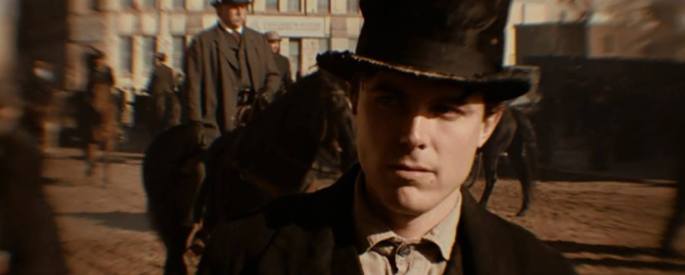
Affleck is absolutely amazing as Ford. It’s a highly specific, tightly coiled, slow burn performance that’s chilling to consider in all of its stratums. Before his work here, I didn’t know what to make of him as an actor, but that all changed while watching his magnetic performance in this film, and his other excellent performance from 2007 in Gone Baby Gone. He also did great work in the little seen Gus Van Sant film Gerry, which is absurdly undervalued. He had a very, very tough character to portray in The Assassination of Jesse James by the Coward Robert Ford, portraying a deeply unsympathetic man who the audience knows will end up killing Jesse James at some point in the narrative. Affleck brings a strung-out, beaten-down quality to the character of Ford, and as the movie progresses, you watch as he becomes more confident of himself, however false that sense of confidence may ultimately be, and how he starts to believe in his own madness and self-perpetuated lore. Just look at him as he spins stories and tall tales about Jesse James and his gang of outlaws; a quiet desperation seeps into the recesses of his eyes and it’s then you realize that Ford has been a lost soul for quite some time.

1

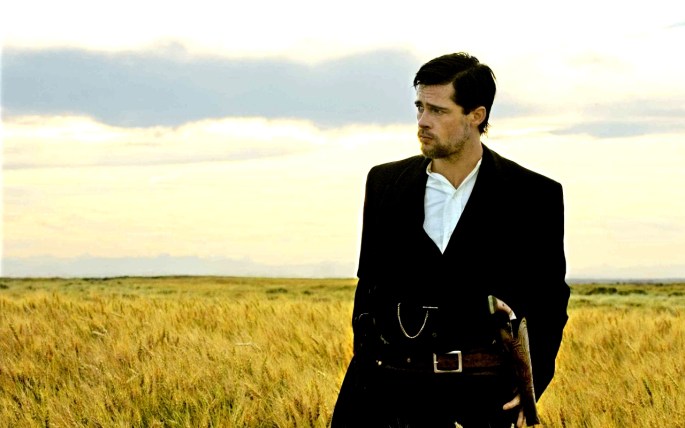
Pitt, owning the role of Jesse James totally and completely, brings a cocky swagger and a brutish masculinity to his performance that is awesome to behold. Prone to mumbling and not expressing his deepest thoughts, the character of James is a man of internal rage and sadness, and it’s easily one of Pitt’s most layered and interesting performances. For years, he’s been consistently underrated as an acting talent, with his overwhelming good looks having a tendency of blinding people from the fact that he’s got a reservoir of talent. And over the past few years, and sort of starting with his downtrodden work in this film, he’s been happy to subvert his pretty boy image in a series of down and dirty performances that keep pushing him further and further into character actor territory, despite the demands of the Hollywood star system. Just watch the way that Pitt slowly smokes his cigars and methodically moves his head and eyes from scene to scene in this film; it’s a wonderfully modulated performance that depends on silence just as much as it does explosive action. One scene, in which Pitt is seen sitting in a rocking chair in his back yard with a rattlesnake slithering over his forearm, is as creepy as it is profoundly majestic. There is a brazen, cavalier attitude to the performance; Pitt knows that Jesse was a psychopath and he doesn’t allow the audience the chance to warm up to him. Pitt is a movie star giving a totally un-movie star performance. In reality, Jesse James was a legend, a pseudo-celebrity before the era of tabloid magazines and paparazzi. So having an actor of Pitt’s stature playing him is a genius stroke of casting in and of itself.

007AJJ_Sam_Rockwell_022

The supporting cast is aces across the board, with Sam Rockwell registering best as Ford’s brother. This guy is so damn good—all the time—that it’s a crime he doesn’t get more attention. His work in Ridley Scott’s incredible conman flick Matchstick Men is still his finest performance, but he’s terrific here as well, providing sly comic relief and a sense of building anxiety that creates palpable tension within the gang of bandits. Mary Louise Parker, Paul Schneider, Jeremy Renner, Garrett Dellahunt, and a slew of excellent character actors round out the solid cast. What makes The Assassination of Jesse James by the Coward Robert Ford better than most films in the genre are the moral shades of gray that the characters exhibit. The film is basically about how one man comes to the decision to kill his idol, and in the crudest comparison, I guess maybe the movie is sort of like a stalker-thriller. Ford idolizes Jesse, wants to ride with him, wants to rob with him, and ultimately wants to be him. But the relationship that develops between the two men is awkward and volatile, giving off an un-easy feeling all throughout.

deakins

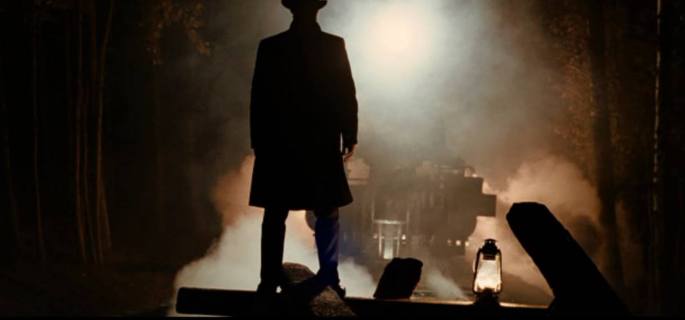
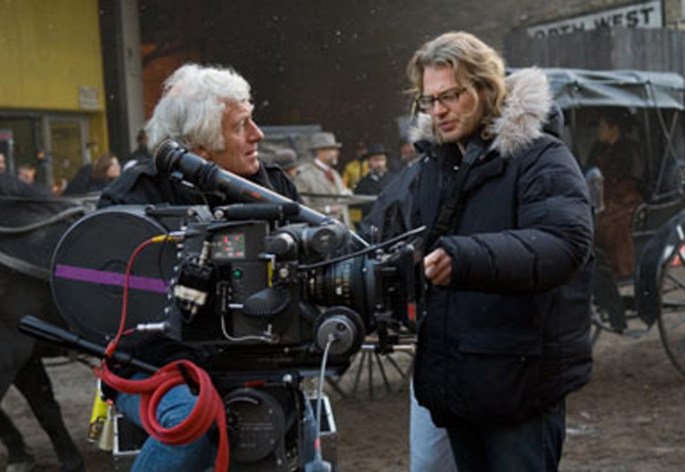
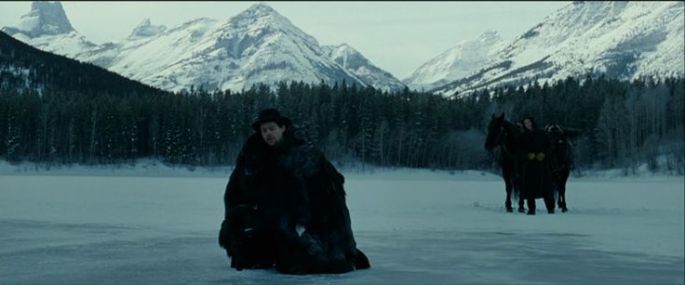
And then there’s the technical side to the film. The Assassination of Jesse James by the Coward Robert Ford has been put together with great style and tremendous atmosphere by the production team and crew. It’s a tone poem of sorts about a gritty, dark period in American history. It feels extremely intimate yet very epic due in large part to the stunning cinematography by Roger Deakins, who was double Oscar nominated in 2007 for his work here and on No Country for Old Men (he would lose the trophy to There Will be Blood’s Robert Elswit). Using what appeared to be natural light almost exclusively and an overall impressionistic shooting style composed of beautiful vistas, extreme close-ups, silhouettes, moonlight, train-light, and a gauzy effect similar to Robert Richardson’s brilliant cinematography in Snow Falling on Cedars, Deakins’s work here is simply astonishing. Every shot is perfect. No joke. I’m always attracted to the different ways that filmmakers can present their ideas through visuals rather than words, and with The Assassination of Jesse James by the Coward Robert Ford, Dominik and Deakins have earned their place in the company of some of the most striking visual teams to craft a major motion picture.

4

I fell in love with this film immediately. From the dry, matter of fact voiceover narration that runs over the entire movie to the obviously enormous attention paid to each and every shot, with moments of sublime beauty at almost every turn. It’s an art film set in the old west and when the story gets violent, it has moments of shocking brutality. In fact, one of the things that I loved about this film so much was the constant sense of dread and uncertainty that runs through each scene. Right from the start, you get the feeling that any character could meet their maker at any point. And that’s one of the things about the old West that made that time period so dangerous; people got killed in a heartbeat, over simple, mundane stuff. There are no big shoot-outs down at the corral and there are no crazily choreographed horse-chase sequences in this film. But when people get shot, it’s brutal and unflinching, not sensationalized or over the top, but rather grim and raw. Like what you’d see on HBO’s Deadwood. There are so many aspects to this film that I loved: the time Dominik took to tell his story, the gripping performances, the literate dialogue, the incredible scenery, and the breathtakingly perfect ending. The Assassination of Jesse James by the Coward Robert Ford is the kind of movie that makes me happy to be a film buff.

3