Passengers: A Review by Nate Hill

image

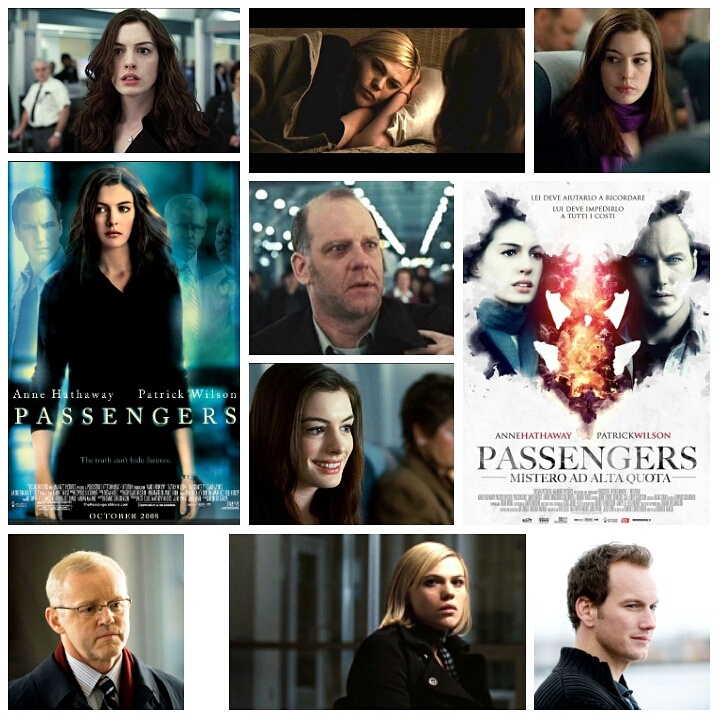
Passengers is a low key supernatural drama that came and went with little fanfare or attention back in 2008. Part of the reason for that could have been that it was marketed as a thriller, which is not so much the case. There is an eerie vibe to it, and certainly a paranormal component, but it’s quieter and much closer to the chest than advertising might suggest. It wasn’t reviewed very well, branded as predictable and derivitive. Some of its plot devices have been used before in the past, to be sure, but I greatly enjoyed the film and loved the way in which it’s story unfolds, told very well by its sturdy cast. Like Mark Pellington says, fuck the people, that’s why there’s 31 flavors. Anne Hathaway is excellent as Claire, a grief counselor who is tasked with looking out for a handful of people who have survived a catastrophic plane crash. She’s new to her profession, her eagerness laced with self doubt, yet she remains hopeful. All of a sudden, the patients in her cate begin to disappear mysteriously, and she starts to question the situation, as well as her own reality. The survivors are damaged and not fully willing to open up to her, collectively scared of some unseen threat. Claire has repeated run ins with a unknown and very distressed man (Andrew Wheeler, local vancouver actor and former teacher of mine) who has ties to the accident. It’s all hush hush and quietly unsettling, until we slowly begin to realize what’s actually happening, and the it changes gears and becomes very touching and thoughtful. Clea Duvall is great as one of the skeptical survivors, Patrick Wilson solid as always, and there’s work from Dianne Wiest, William B. Davis, Andre Braugher and briefly David Morse. Sure, this type of story has been done to death time and time again, draining new efforts of some of their effect, but if one comes along that gets it right, tells it’s story in a way that holds both my emotion and interest in its spell, I’m all ears. This one did just that.

SIN CITY: A DAME TO KILL FOR – A REVIEW BY J.D. LAFRANCE

sin-city2

In 2005, Robert Rodriguez adapted the comic book Sin City into a film with help from its creator Frank Miller who co-directed it. Convincing the veteran comic book writer/artist to come on board was a smart move on the filmmaker’s part as it assured that Miller’s luridly violent noir tales would be faithfully translated. This was achieved through a then-groundbreaking green screen environment that allowed Rodriguez to place his actors in Miller’s stylish world with a striking look comprised of black and white with strategic splashes of color. This innovative approach attracted a star-studded cast that included Bruce Willis, Mickey Rourke, Clive Owen and Benicio Del Toro among others. The final result dazzled audiences and was a commercial success.

A sequel seemed inevitable, but instead Rodriguez went on to team up with Quentin Tarantino on the box office misfire that was the Grindhouse double bill (2007) while Miller applied the Sin City aesthetic to a disastrous adaptation of Will Eisner’s comic book The Spirit (2008). Over the years, talk of a sequel surfaced occasionally with the likes of Johnny Depp and Angelina Jolie being mentioned in potential leading roles. Nine long years later and the stars (and money) aligned for Rodriguez and Miller to reunite with Sin City: A Dame to Kill For (2014). The film promptly tanked at the box office and received mixed to negative reviews. What happened? Did Miller and Rodriguez wait too long? A green screen-heavy film is no longer a novelty. Two cast members with characters in the film had passed away and some roles have been recast. The general consensus seems to be that they waited too long to make a sequel and interest in the film had waned.

Some might complain that A Dame to Kill For is just more of the same. As a big fan of the first film this is not necessarily a bad thing. After seeing Sin City, I wanted to see more of Miller’s stories brought to life. In addition to adapting A Dame to Kill For and the short story “Just Another Saturday Night” from the Booze, Broads, & Bullets collection, Miller created two new stories specifically for the film – “The Long Bad Night” and “Nancy’s Last Dance.” By doing this, he has given the fans a real treat by offering two stories where the outcome is not known and introducing new characters into this universe.

In “Just Another Saturday Night,” Marv (Rourke) wakes up amidst a car accident unable to remember how he got there. He proceeds to recall what happened via flashback on a snowy Saturday night. This segment is a nice way to reacquaint us to the brutal yet darkly humorous world of Sin City. “The Long Bad Night” introduces us to Johnny (Joseph Gordon-Levitt), a confident gambler who decides to take on Senator Roark (Powers Boothe), the most powerful man in the city, in a high-stakes poker game and gets more than he bargained for. It’s a lot of fun to see Joseph Gordon-Levitt square off against Powers Boothe, the former playing a young upstart and the latter an evil, influential man.

The centerpiece of the film is “A Dame to Kill For,” which features Dwight McCarthy (Josh Brolin) as a private investigator taking photographs of a businessman (Ray Liotta) cheating on his wife with a hooker (Juno Temple). When the man tries to kill her, Dwight intervenes. He has a tortured past, which involves keeping his homicidal impulses in check. Afterwards, Dwight gets a call from an ex-lover by the name of Ava Lord (Eva Green), a beautiful woman married to a very rich man. She’s in some kind of trouble and he finds himself drawn into her tangled web yet again. He soon runs afoul of her imposing bodyguard Manute (Dennis Haysbert) who proceeds to work him over. Realizing that he’s out of his depth and bent on rescuing Ava, Dwight enlists Marv’s help, which only complicates things in typical noir fashion.

In “Nancy’s Last Dance,” Nancy Callahan (Jessica Alba) is an exotic dancer still haunted by the death of her lover John Hartigan (Bruce Willis) and is obsessed with avenging his death by killing Roark, the man responsible for it. Over time, she’s counseled/haunted by Hartigan’s ghost, which drives her increasingly crazy.

Actors Josh Brolin, Joseph Gordon-Levitt and Eva Green slip seamlessly into the Sin City world. It helps that they have that old school noir look, especially Brolin with his chiseled tough guy features and gravelly voice – perfect for his character’s voiceover narration. In no time, the actor makes you forget that he plays a character once portrayed by Clive Owen. Gordon-Levitt is excellent as the young newcomer with a secret and manages to elicit sympathy for his ultimately doomed character. Green plays Sin City’s reigning femme fatale. The stunning actress has an alluring, exotic look and can turn a vulnerability on and off at will all the while playing a cold-hearted manipulator of men. Green gives key line deliveries the right venomous spin that makes Ava Lord a fearsome figure in this world.

It’s great to see Mickey Rourke return to the role of Marv, a character he inhabits so well. He brings a world-weary charm and a much-needed dose of dark humor to the film. Powers Boothe, who only had a minor role in the first film, gets a much meatier part in A Dame to Kill For and it’s a lot of fun to see him sink his teeth into such a deliciously evil character. Unfortunately, Jessica Alba is once again miscast as Nancy, the stripper with a heart of gold. While she looks the part, the actress doesn’t have the chops to pull off the tricky evolution of character that goes from sweet girl traumatized by the death of loved one to a revenge-obsessed vigilante. Miller’s stylized dialogue needs to be delivered a certain way. Some actors can pull it off and others can’t. Alba falls into the latter category and it becomes painfully obvious in her segment. Even her dancing is unconvincing.

While it no longer has the technological novelty factor as an incentive (shooting it in 3D really didn’t help either), there is certainly no other film out there that looks like Sin City. There have been a few imitators since, most notably The Spirit and Max Payne (2008), but the look of the film is so specific to its universe that few have dared to emulate it. Rodriguez has said that with the first Sin City he held back somewhat stylistically for fear that it would be too much for audiences. Emboldened by its commercial success, he took the look further and made it even more faithful to Miller’s comic book. So, there are things like Ava being rendered in black and white accentuated with red lips and green eyes, and visual flourishes like Marv recounting past exploits while a tiny car chase revolves around him, or the moody storm clouds that hang heavy in the cemetery where Nancy visits Hartigan’s grave. And why not? It’s not like the characters or the world they inhabit are based on any kind of reality. They exist in a hyper-stylized neo-noir universe drenched in atmosphere.

The dialogue in A Dame to Kill For is riddled with clichés and the characters are drawn from archaic stereotypes, but that’s the point. Miller is paying homage to the Mickey Spillane crimes stories he clearly idolizes. The film immerses itself in noir clichés and wears them proudly like a badge of honor, refusing to make any excuses for trading in them. There’s really nothing more to it than that, which may make the film seem instantly forgettable, but Rodriguez’s film never aspires to be art as it is unrepentedly sexual and violent with very few if any redeeming characters. The first Sin City film came out at the right time and tapped into popular culture zeitgeist. A Dame to Kill For is not so lucky, but you have to give Miller and Rodriguez credit for sticking to their guns and delivering another faithful adaptation of the comic book, which may only appeal to fans and probably won’t convert the uninitiated.

NOAH BAUMBACH’S THE SQUID AND THE WHALE — A REVIEW BY NICK CLEMENT

1

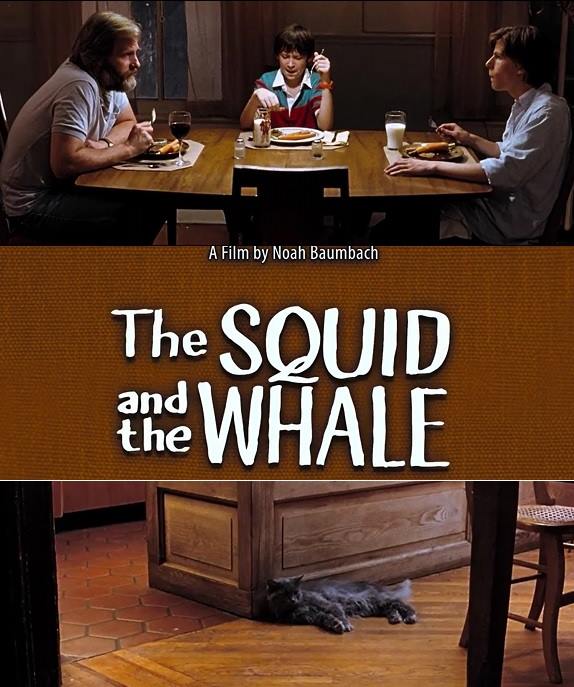
This film is a model of cinematic perfection. There’s not one wasted scene, one bad performance, or one false note. It all feels so heartbreakingly real and raw and honest. Noah Baumbach can sometimes be, especially in his earlier, darker films, an emotional sadist in disguise, and in The Squid and the Whale, he crafted one of the most painfully hilarious films I’ve ever seen. This is a work that I view at least once a year because it’s just so effortlessly brilliant, with an  acting ensemble that totally crushes the emotionally scarring material, and air-tight direction from Baumbach who clearly knew this story inside and out. Rumor has it that some of this script was informed by his real life upbringing, which if true, paints an even more distressing portrait of an artist working out his inner personal demons through his craft. Jeff Daniels was such a smart casting decision as the asshole father that it almost hurts to think about him in this film — he’s a monumental prick. Laura Linney was icy and incisive, painting a portrait of a woman fed up with all around her, longing for something that feels ever so slightly out of reach. Jesse Eisenberg as their oldest son was hugely effective here, and had terrific chemistry with Owen Kline, who played his fragile and damaged younger brother. The joke of casting William Baldwin as the tennis pro/lover to Linney was a stroke of comic genius (“My brother!” POWER), and the way Baumbach loaded every single scene with hostility, anger, and unexpected humor should be studied by all who are interested in black comedy and familial satire. This is a 100 Star Gem and a film that you should immediately track down if you’re unfamiliar. It is a masterpiece of filmmaking and storytelling.

B Movie Glory With Nate: The Last Stop

  
Agatha Christie takes a trip to the Pacific Northwest in The Last Stop, a chilly little indie B movie in which we have the pleasure of watching Adam Beach and Rose McGowan try to smoke out a killer amidst a group of people stranded in a remote motel during a blinding snowstorm. A welcome setup for intrigue indeed, if you’re into cozying up to these actors for a tense little 90 minute guessing game packed with just the right amounts of cheesiness and tension. Beach plays a local Sheriff who is stuck at the establishment while its Proprietor (the great Jurgen Prochnow, refreshingly cast against type) struggles with a guest overload as the storm gathers steam. Beach’s old flame (the ever alluring McGowan) has resurfaced in his life with little explanation. There’s also an obnoxious hustler (Callum Keith Rennie) a sleazy would be cowboy (Winston Reckert) and other disconcerting weirdos lurking about. Some are red herrings, some simply filler for the narrative, and all are entertaining, whether intentionally or not. The plot meanders in snowy, typically nonsensical b-movie form until it pulls itself together for a very grounded finale that seems misplaced given what came before, but welcome all the same. McGowan could dub a Korean pop song and still be riveting, and it kills me she isn’t in more stuff, but she’s made it clear that acting was never her first love. Nevertheless she’s great as both the most mysterious and fascinating character. Shades of The Hateful Eight, Eye See You with Stallone, and many a snowbound mystery. Fun stuff. 

Anamorph: A Mini Review by Nate Hill


Anamorph is a loving ode to the wilfully nasty serial killer flicks of the 90’s, obviously borrowing heavily from a few specific ones, the clearest example being Fincher’s Sev7n. It’s got the same dank, dispirited tone of that one, a restless urban nightmare wherein one lone detective searches for a heinous murderer that seems to elude him every step of the way, leaving increasingly grisly crimes in his wake. The detective here is Stan Aubrey (Willem Dafoe), a troubled fellow suffering from OCD, as if he didn’t have enough to handle, with a killer on the loose. Dusky New York streets are the predator’s playground, and he kills using some very elaborate, and very u settling techniques. Anamorphosis is a method used during times such as the Renaissance, where a painter would create a seemingly nonsensical sprawl with neither shape nor form, but when looked at through a tiny window of exposure (camera obscure), or from a painstakingly meticulous angle, a new image comes to light, in this case providing Dafoe with clues. Now this isn’t any Renaissance painter we’re dealing with, and he doesn’t use oil base, if you catch my drift. The crime scenes in this film are very, very horrifying and hard to watch, almost on the level of Sev7n. Dafoe gets help from his art fanatic buddy Blair (Peter Stormare), and tries to look after the troubled Sandy (a moody Clea Duvall), the relative of a deceased friend. There’s also work from Yul Vasquez, Scott Speedman, Don Harvey and the late James Rebhorn. Nasty stuff, this one, but stylish and well worth a late night watch with the lights low and your nerves on edge. 

SIN CITY – A REVIEW BY J.D. LAFRANCE

sin-city

Until recently, most adaptations of independent comic books were far more successful (and by successful I mean faithful to their source material) than long-running mainstream ones from the two largest comic book companies, Marvel and DC. One only has to look at examples, such as Ghost World (2001), American Splendor (2003) and Hellboy (2004) against the failures of Catwoman (2004), Elektra (2004) and Constantine (2005). So, why are the first three films more satisfying triumphs and the last three empty exercises in style? The answer is simple. In the case of the first three movies, the filmmakers wisely allowed the comic book creators direct involvement in the filmmaking process, whether it was working on the screenplay (as with Ghost World and Hellboy) or actually appearing in the movie (American Splendor).

In the past, the comic book creator was, at best, a peripheral presence in the filmmaking process, or not even included at all. With bigger, longer running series, like Spider-Man or Superman, it is much harder to include the creator because there is not just one but many who have worked on the comic book over the years. Where does the filmmaker even start in these cases? To be fair, with Iron Man (2008) began a great run of adaptations of Marvel Comics being successfully translated to the big screen but before it the examples were few and far between.

It only makes sense that if one is going to adapt a comic book into a film that it be faithful in look and tone to its source material. Otherwise, why adapt it in the first place? Of course, there is always the danger of being too faithful to the look of the comic and not being faithful to its content (characterization, story, dialogue, etc.) like Warren Beatty’s take on Dick Tracy (1990) — all style and no substance. It goes without saying that the next logical step would be to include its creator, if possible, in the process so as to achieve the authenticity and integrity of the source material. Filmmaker Robert Rodriguez took this notion to the next level with Sin City (2005) by having its creator Frank Miller co-direct the movie with him. In fact, Rodriguez is so respectful of Miller’s work that he not only has the artist’s name listed first in the directorial credit but also displays his name prominently above the film’s title.

Sin City
began as a series of graphic novels created by Miller. They are loving homages to the gritty pulp novels Dashiell Hammett, Raymond Chandler and Mickey Spillane and classic film noirs from the 1940s and 1950s. Miller’s world — the dangerous, crime-infested Basin City — is populated by tough, down-on-their-luck losers who risk it all to save impossibly voluptuous women from corrupt cops and venal men in positions of power through extremely violently means in the hopes of ultimately redeeming themselves. The movie ambitiously consists of three Sin City stories: That Yellow Bastard, The Hard Goodbye, and The Big Fat Kill with the short story, “The Customer is Always Right” acting as a prologue.

In the first story, Hartigan (Bruce Willis), a burnt-out cop with a bum-ticker and on the eve of retirement, is betrayed by his partner (Michael Madsen) after maiming a vicious serial killer (Nick Stahl) of young girls who also happens to be the son of the very power Senator Roark (Powers Boothe). The next tale features a monstrous lug named Marv (Mickey Rourke) who wakes up in bed with a dead prostitute named Goldie (Jaime King) and decides to get revenge on those responsible for killing the only thing that mattered in his miserable life. The final segment focuses on Dwight’s (Clive Owen) attempt to keep the peace in Old City when the prostitutes who run the area unknowingly kill a high profile (and also a sleaze bag) cop named Jack Rafferty (Benicio del Toro) and in the process risk destroying the precarious truce between the cops and the hookers that currently exists.

The three main protagonists are all well cast. Bruce Willis is just the right age to play Hartigan. With the age lines and the graying stubble on his face, he looks the part of a grizzled, world-weary cop with nothing left to lose. Willis has played this role often but never to such an extreme as in this film. Quite simply, Mickey Rourke was born to play Marv. With his own now legendary real life troubles and self-destructive behavior well documented, the veteran actor slips effortlessly into his role as the not-too-bright but with a big heart hero. British thespian Clive Owen is a pleasant surprise as Dwight and is more than capable of convincingly delivering the comic’s tough guy dialogue. As he proved with the underrated I’ll Sleep When I’m Dead (2003), Owen is able to project an intense, fearsome presence.

The larger-than-life villains are also perfectly cast. Nick Stahl exudes deranged sleaze as Roark, Jr. and cranks it up an even scarier notch or two once he undergoes his “transformation” as the Yellow Bastard of his story. Perhaps one of the biggest revelations is the casting of Elijah Wood as the mute cannibal Kevin. Nothing he has done previously will prepare you for the absolutely unsettling creepiness of his character. Finally, Benicio del Toro delivers just the right amount reptilian charm as Jackie-Boy. Not even death stops him from tormenting Dwight and it is obvious that Del Toro is having a blast with this grotesque character.

Miller’s pulp-noir dialogue may seem archaic and silly but it is actually simultaneously paying homage and poking fun at the terse, purple prose of classic noirs and crime novels of the ‘40s and ‘50s. Rourke, Willis and Owen fair the best with this stylized dialogue as they manage to sell it with absolute conviction. It helps that both Rourke and Willis have voices perfectly suited for this kind of material: weathered and worn like they have smoked millions of cigarettes and downed gallons of alcohol over the years.

Of the women in the cast, Jessica Alba is the only real miscast actress. Not only does she not look like her character, Nancy Callahan (who was much more curvy, full-bodied and naked most of the time in the comic) but she does not go all the way with the role and her line readings feel forced and unnatural. Fortunately, Rosario Dawson more than makes up for Alba as Gail, an S&M-clad, heavily-armed prostitute who helps Dwight dispose of Rafferty’s body. She looks the part and inhabits her role with the kind of conviction that Alba lacks.

Finally, somebody has realized that the panels of a comic book are perfect storyboards for a movie adaptation. With Miller’s guidance, Robert Rodriguez has uncannily recreated, in some cases, panel-for-panel, Sin City onto film. He has not only preserved the stylized black and white world with the occasional splash of color from Miller’s comic, but also the gritty, dime-novel love stories that beat at its heart. Fans of the comic will be happy to know that virtually all of the film’s dialogue (including the hard-boiled voiceovers) has been lifted verbatim from the stories and the sometimes gruesome ultraviolence has survived the MPAA intact.

If you think about it, Rodriguez’s career has led him up to this point. With the stylized, over-the-top action of Desperado (1995), the pulp-horror pastiche of From Dusk Till Dawn (1996) and the mock-epic Once Upon a Time in Mexico (2003), he has been making comic book-esque movies throughout his career. It was only a matter of time before he adapted an existing one. Cutting his teeth on these action movies has allowed him to perfectly capture the kinetic action of Miller’s comic. Seeing hapless thugs fly through the air at the hands of El Mariachi’s deadly weapons in Desperado foreshadows the cops being propelled through the air when Marv makes his escape in Sin City.

What Sky Captain and the World of Tomorrow (2004) did for the pulp serials of the 1930s and ‘40s, Sin City does for film noir. There is no question that Sin City resides at the opposite end of the spectrum from Sky Captain. While both feature retro-obsessed CGI-generated worlds, the former looks grungy and lived-in and the latter is pristine and perfect-looking. Sin City is absolutely drenched in the genre’s iconography: hired killers, femme fatales that populate dirty, dangerous city streets on rainy nights. It is the pulp-noir offspring of James Ellroy and Sam Fuller with a splash EC Comics gore. Ultimately, Sin City is a silly and cool ride and one has to admire a studio for having the balls to release a major motion picture done predominantly in black and white with the kind of eccentric characters, crazed violence and specifically-stylized world that screams instant-cult film.
Lee Tamahori’s Mulholland Falls: A Review by Nate Hill

image

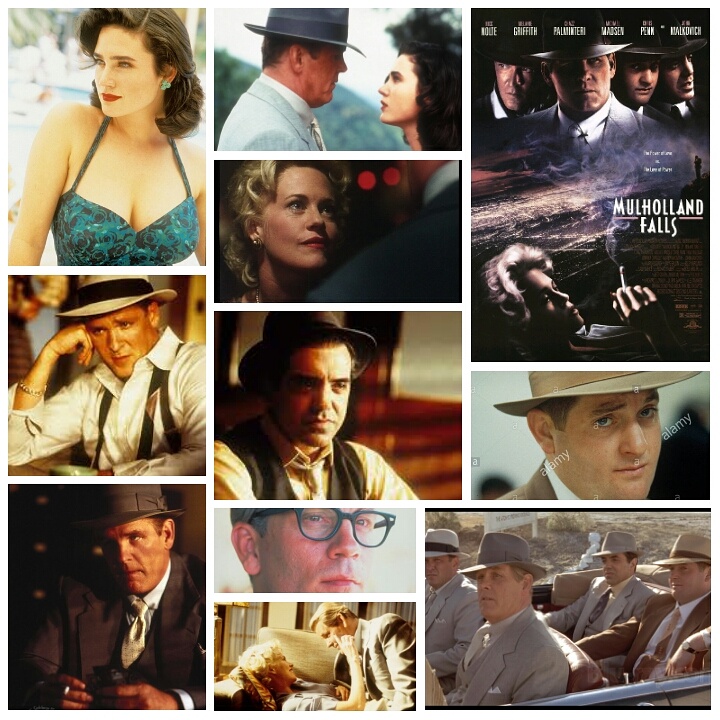
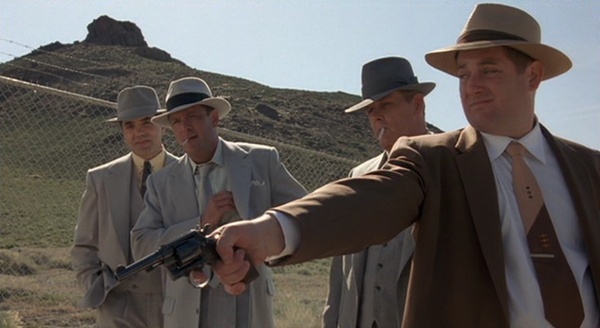
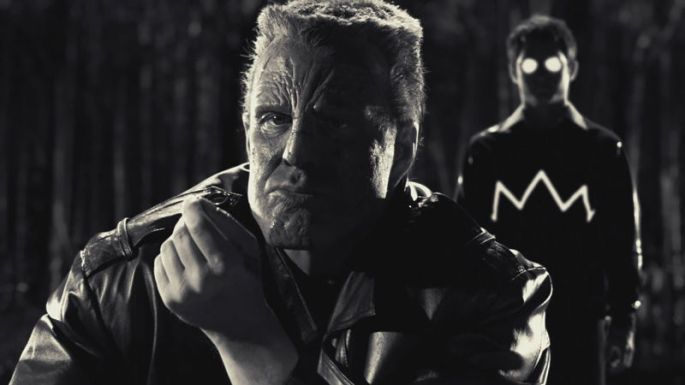
Lee Tamahori’s Mulholland Falls gets a bad rap in some circles for being boring and uneventful despite its charismatic cast and opulent setting that’s ripe for peppy action sequences. I think they are confusing boring with the concept of a paced and very slow burn, yet one with all the texture and richness of an action film, one that admirably decides to take the route of the old school noir, with loving care put into story and character, two elements which the action and violence live simply to serve, and not to take the driver’s seat against. Or it’s simply not some people’s cup of tea, which is totally okay too. Personally though, I love a good L.A. cop yarn that has a story to go with the toughness. This one bears striking similarity to 2013’s Gangster Squad, which also had Nick Nolte playing a 1940’s Los Angeles cop in charge of a squad that operates outside of the law. That film is pure cheese, all razzle dazzle and no plot. Mulholland Falls falls somewhere between Gangster Squad and L.A. Confidential; not quite up to delving into the serpentine intrigue of the latter, yet infinitely more interested in telling a worthwhile story than the former. And tell it does, in high flying style that only a crime film set in that time period can do. Nick Nolte plays Hoover, a whiskey voiced, take no prisoners LAPD badass who heads up an elite anti corruption task force that operates far outside the red tape and pretty much do what they want to stomp out corruption. His squad consists of Michael Madsen, Chris Penn and a scene stealing Chazz Palminteri as the oddball of the bunch, with serious impulse control issues. A straight up dream cast of tough guys, and although I’ll admit that Penn and Madsen are a tad underused, their presence alone boosts the film’s credentials into an epic pantheon. The film revs up with a kicker of an opening sequence in which the squad severely roughs up a troublesome mobster (an uncredited William L. Petersen). “This isn’t America, it’s Los Angeles” Nolte growls to him, stating the tone of perverse lawlessness which permeated the city back then. Soon he’s drawn into a tawdry scandal involving the murder of a young prostitute (Jennifer Connelly) who he previously had encounters with. The search leads him far and wide, crossing paths a sleazy photographer (Andrew Mcarthy), a dying air force tycoon (John Malkovich manages to ham it up even at his most laid back) and his stern lieutenant (Treat Williams). Nolte also has a poor jilted wife played nicely by Melanie Griffith in limited but effective screen time. The plot is hard boiled to the bone, with Nolte in one his most gruff mid career roles and loving every stressed out, rage fuelled second of it. The conclusion is his show, with a whacked out Palminteri in tow for a spectacular sequence set aboard a doomed military aircraft. The cast gets deeper, believe it or not, with Daniel Baldwin, Ed Lauter, Kyle Chandler, Titus Welliver, Louise Fletcher, Rob Lowe and Bruce Dern contributing gamely. This one’s got style on it’s side and then some, replicating a sense of time and place with the torque ramped up to near Sin City levels. Admittedly not perfect, but a pure and simple blast of a flick, in my opinion.

MULHOLLAND FALLS – A REVIEW BY J.D. LAFRANCE

600px-Mulfal-ctroop4

They say timing is everything and this certainly applies to the release and reception of movies. Case in point: Mulholland Falls (1996). Released a year before the very similar L.A. Confidential (1997), it was also a retro-neo-noir set in 1950s Los Angeles and featured a murder mystery leading to a vast conspiracy. However, Falls was promptly blasted by the critics and quickly disappeared from theaters while Confidential became the toast of critics and received awards from all over the world. So, what went wrong? Falls featured an impressive cast of solid character actors (it had more name actors than Confidential) and a critically acclaimed director with Once Were Warriors’ Lee Tamahori as opposed to Confidential’s Curtis Hanson who had only done adequate B-movies like The Hand That Rocks the Cradle (1992) and The River Wild (1994). Now that a few years have passed, Mulholland Falls has aged surprisingly well.

Set in 1953, the first image is one of a mushroom cloud from an atomic bomb explosion. It is one of the enduring images from that era and one that hangs like a shadow over the characters and events in the film. Max Hoover (Nick Nolte) leads a group of four cops known as The Hat Squad who do things their own way, like bullying out-of-town gangsters and dropping them off one of the deserted stretches of Mulholland Drive (aka “Mulholland Falls”) as a deterrent for setting up shop in L.A. One day, Max and his crew – Coolidge (Chazz Palminteri), Eddie (Michael Madsen) and Relyea (Chris Penn) – go out to a construction site to investigate the murder of a beautiful woman (Jennifer Connelly) who has been literally pressed into the ground. There is a shock of recognition on Max’s world-weary face. His connection to the dead girl and his subsequent investigation into her murder leads to a dangerous conspiracy involving the United States government and a mysterious General Timms (John Malkovich), head of the Atomic Energy Commission.

After the success of Once Were Warriors, Tamahori was offered many projects before finally choosing Mulholland Falls. Michael Mann was originally attached to the film but left at some point. One of the first things that is so striking about this film is the gorgeous attention to detail with vintage cars, suits and music from the period. This is enhanced by the gorgeous cinematography of the legendary Haskell Wexler who evokes classic film noir in every frame of Mulholland Falls. Tamahori assembled an impressive crew including the likes of production designer Richard Sylbert, who worked on Chinatown (1974) and The Manchurian Candidate (1962), and Wexler, who won an Academy Award for Who’s Afraid of Virginia Woolf? (1966) and worked One Flew Over the Cuckoo’s Nest (1975) and In the Heat of the Night (1967) amongst others.

Tamahori says that people within the industry were surprised that he hired veterans like Sylbert and Wexler and realized that Hollywood was being run by young executives: “It’s a kind of youth-oriented thing, and—blast, blam, blam, blam, make the action for the under-25-year-old crowd. Do this, do that, you’ve got to be on top, you have to be fast. They see age as being old and boring.” Mulholland Falls consciously eschews this approach for a slower paced, more thoughtful vibe that harkens back to films made before music videos and their kinetic editing changed the way films were made in Hollywood.

With his gravelly voice and weathered good looks, Nick Nolte is well cast as the conflicted tough guy, Max Hoover. If there is one significant problem with the film it is the lack of screen time given to the excellent members his crew. They are given little time to develop their characters with only Chazz Palminteri edging out the others. Palminteri plays Nolte’s best friend and second-in-command. He’s the most sensitive of the bunch (although, that’s not saying much) because he’s seeing a female psychiatrist and this makes him the voice of reason, often curbing Max’s more self-destructive impulses. Tamahori met Burt Reynolds and Tom Arnold for the role of Coolidge but felt that Reynolds was a little old for the role.

Little time is devoted to developing the chemistry between them. The filmmakers should have used The Untouchables (1987) as inspiration – although, the crucial difference is that in Brian De Palma’s film we see how Eliot Ness and his crew come together while in Mulholland Falls, Max and his group have been together for some time. Pete Dexter’s screenplay doesn’t do a good enough job making us believe that they are a tight-knit crew. That being said, the chemistry between Nolte and Palminteri begins to kick in towards the end of the film but it is too little, too late.

The casting of actresses Jennifer Connelly and Melanie Griffith is right on the money as they both have the voluptuous body type common to that era, especially Connelly who has curves in all the right places and that were also used to great effect in The Rocketeer (1991). Sadly, Connelly and Griffith aren’t given too much screen time but this does give Connelly’s character something of an ethereal, mysterious quality that is quite haunting and works well in the film.

John Malkovich essays yet another one of his cultured bad guy roles as General Timms. The first meeting between him and Nolte is good as we watch two different acting styles bounce off each other. Timms tries to dazzle Hoover with philosophical double speak while the cop plays dumb but subtly applies pressure on the scientist. What is so interesting about this scene is what is not being said. Watching this film again, I was struck by the eclectic cast featuring the likes of Treat Williams, Andrew McCarthy, Bruce Dern, Daniel Baldwin, William Petersen, and Rob Lowe.

There is somber tone that hangs over Mulholland Falls and the ending is refreshingly downbeat (unlike the very classic Hollywood ending of L.A. Confidential) evoking Chinatown of which it was most often compared to. Like any good noir protagonist, Max’s shattered life stays shattered. The murder has been solved but at a terrible cost to his own life. While Falls is a flawed film and certainly not as strong as Confidential, it is not an awful effort by any means and actually has a lot of merits. It is definitely worth another look if you haven’t seen it since it debuted or if you’ve never seen it before.

JEAN-MARC VALLEE’S DEMOLITION — A REVIEW BY NICK CLEMENT

demo

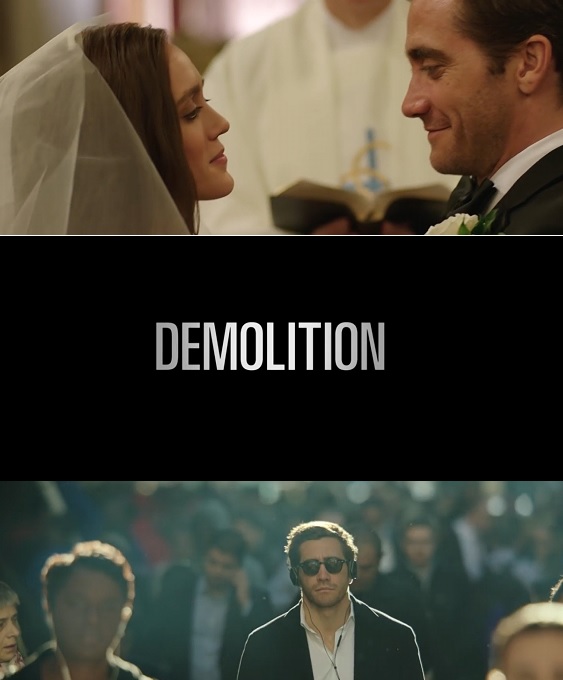
Demolition is “one of those movies.” I really admired this film, enjoyed it thoroughly, but only about as much as the filmmakers intended. This isn’t a happy or easy piece of work, which is probably why the critical response has been mixed, but I was struck by the honesty at play here, and how the screenplay presented an inherently flawed and rather unlikable lead character as the story’s entry-point, and how the film really centers on people in emotional flux, and how simple friendship can be the key ingredient to potential and hopeful catharsis. The more I think about the film, the more I really like it, but that’s not too surprising, because the director, Jean-Marc Vallee, has only made strong motion pictures (The Young Victoria, Dallas Buyer’s Club, and Wild) that are concerned with deep and complicated lead characters, and which allow for his actors to really cut loose and get invested in their roles. And in Demolition, the absolutely on-fire Jake Gyllenhaal delivers another robust, completely engaged and committed performance, this time as a young widower who has to actually learn to love his wife before he can begin to grieve. Bryan Sipe’s theatrical and movie-movie screenplay reminds in many instances of 21 Grams, and while not as overwhelming or pulverizing as Alejandro Gonzalez Inarritu’s picture, Demolition hits hard and often, with a tendency to show more than tell, which I really appreciated.

Vallee is a very visual filmmaker, given to quick-fire editing patterns in all of his work (the editing in Demolition reminds of the showier passages in Wild, which I loved), and here, by employing a very sleek visual aesthetic, he and his technicians were able to fully emphasize the money and the empty success that all of the characters have attained. Smoothly shot by Vallee’s regular cinematographer Yves Bélanger and crisply edited by Jay M. Glen who never allows a scene to go on too long, the film has a lightning-quick pace which is interesting considering the heavy dramatics that comprise the story. Chris Cooper is outstanding in his scenes with Gyllenhaal, and Naomi Watts is reliably effective as a woman who gets caught in Gyllenhaal’s orbit, and enters into a non-sexual, mutually beneficial relationship that helps the two of them get over some serious bumps in their lives. And in the film’s most surprising subplot, Gyllenhaal develops an interesting friendship with Watts’ son, played with sharp sass by Judah Lewis, which yields some unique laughs and moments of introspectiveness that were very surprising; all of this stuff could have served as the basis for an entirely different film. Demolition also contains one of the best and most subtle references to a likely college rapist in training, with the gross reminder that wealth and status can get you anything in this day and age. This is a purposefully frayed film with no easy answers, and because of that, I can certainly see how it won’t work for some. But for me, this is the sort of movie I’m always interested in experiencing.

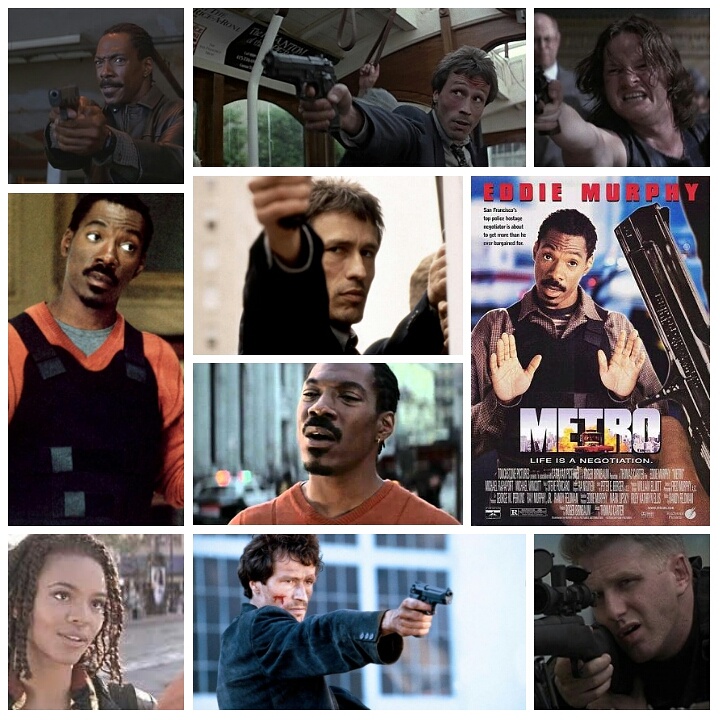
Metro: A Review by Nate Hill

image

The 80’s and 90’s saw the momentous rise of beloved funnyman Eddie Murphy within the action comedy genre, particularly the wise cracking cop niche. 48 Hrs kicked it off, the Beverly Hills Cop trilogy added to the snowball effect, and so it went. His manic charisma led to many a starring role, including the somewhat forgotten actioner Metro, one thats notable because it shows the actor in just as many serious situations as comedic ones. There’s a tether on his sense of humour here, which in other films has been set to roam and end up where it may, often halting entire scenes for his non stop antics to play out. Here he gets a few moments like that, but even more to get seriously angry and tough, most likely helped by the fact that he’s up against one of the most truly heinous villains he’s ever had to face. Here he’s Scott Roper, a fast talking, resourceful San Francisco hostage negotiator who flexes both brain and brawn in a tense opening confrontation with a loose-screw criminal (Donal Logue). We see right off the bat what an efficient dude he is, a nice precursor for the trying times ahead. He’s inhabits a world chock full of every necessary genre element: a cranky police captain (Denis Arndt), a sexy girlfriend (stunning British gal Carmen Ejogo), a fresh out of the academy rookie partner (Michael Rapaport, not given much to do) a recently deceased former partner (Art Evans) to avenge, slain by the obligatory arch criminal, in this case psychotic jewel thief Michael Korda (Michael Wincott). Wincott makes Korda a truly detestable guy. Vile, slithery and absent of any shred of remorse, killing his way through the city with Roper hot on his tail. And there you have it, every necessary element in place for a solid cop flick, and one that’s gotten very little attention over the years. There’s neat action set pieces including a showstopper set aboard a speeding trolley car, endearing bits of comedy now and then from Murphy and some savage violence that proclaims the film’s hard R rating proudly. Murphy and Wincott have a sizzling verbal dual, separated by prison glass that launches the scene into the stratosphere of intense profanity, with F bombs spewed off in rapid fire, tempers and talents of both actors in overdrive. Lukewarm reviews can be found all over for this one. Yeah its no 48 Hrs, but it earns it’s stripes and to me is one of Murphy’s very best, helped along quite a bit by Wincott’s snarling, evil presence. Great fun.