FLETCH – A REVIEW BY J.D. LAFRANCE

chevyfletchlives-xlarge

Has it really been more than 30 years since Fletch (1985) was first released in theaters? For my money, it is still the best film Chevy Chase ever made (with Caddyshack a very close second). I can put the film on at almost any time and still find it just as funny, no matter how many times I have seen it. And yet, it is too often dismissed as just another dated piece of 1980s pop culture. To be sure, the soundtrack is horribly dated (Stephanie Mills’ “Bit by Bit” anyone?) but this part of the film’s charm. It is also often cited as the rare highlight of Chase’s career that subsequently went downhill over the years. But Fletch has endured, thanks in large part to repeated broadcasts on television channels like TBS and rock-steady video rentals (with revenues of $24 million in the United States alone). So why does Fletch continue to inspire such a strong and loyal following after all these years? It is simple: insanely quotable dialogue, a colorful assortment of character actors and, of course, Chase’s inimitable, vintage smart-ass persona.

When he’s not avoiding his ex-wife’s attorney – Arnold T. Pants, Esq. (George Wyner) – Irwin “Fletch” Fletcher (Chase) is an investigative reporter who writes under the anonymous pen name Jane Doe for a Los Angeles newspaper. He is currently looking into the local drug trade on the beach and its links to police corruption when he is approached by Alan Stanwyk (Tim Matheson), a rich businessman who tells him that he is dying from bone cancer. He wants to pay Fletch $50,000 to kill him. After doing some digging, he finds out that Stanwyk is lying and may also have some kind of involvement in the city’s drug trade. His investigation ends up connecting these two seemingly unrelated plots for an exciting finale.

Fletch originated from a novel of the same name by Gregory Mcdonald. According to the author, the idea for the character came from hearing “from other people in the newsroom about other reporters doing these things for stories, and that gave me an idea. He was running around in my head for quite some time before I actually wrote the book.” The novel was very successful and soon Hollywood came calling. His Fletch books were optioned around the mid to late 1970s but the author had the option of approving the actor cast to play Fletch. Mcdonald remembers that “everybody from 12 to 72 in Hollywood wanted to play Fletch. But I kept throwing a monkey wrench into their plans.” He rejected the likes of Burt Reynolds and Mick Jagger when the studio mentioned Chevy Chase as Fletch. Despite never really seeing the comedian in anything, Mcdonald agreed to this choice. Years before, the comedian’s manager had recommended Mcdonald’s books to him but showed no interest in them or playing Fletch. However, when an old friend and producer Alan Greisman and screenwriter Andrew Bergman got involved, Chase agreed to do the film. Mcdonald sent him a telegram saying, “I am delighted to abdicate the role of Fletch to you.”

Chevy Chase started out as a satirical writer for the Smothers Brothers, National Lampoon magazine, and Mad magazine. He started acting in a comedy workshop called Channel One in Greenwich Village in New York City. Chase learned the art of comedy through improvisation during his stint at the workshop. “A laugh is a surprise,” he once said in an interview, “and all humor is physical. I was always athletic, so that came naturally to me.” Chase shows a stellar range of physical comedy in Fletch. His technique ranges from broader displays, such as the dream sequence when he imagines himself as the unusually aggressive L.A. Lakers star power forward (“6’5″, 6’9″ with the Afro”), to more subtle bits such as when he bangs his nose into a door, posing as the accident-prone Mr. Poon.

Andrew Bergman was hired to adapt Mcdonald’s book into screenplay form. He was only 26-years-old when Mel Brooks transformed his first script, “Tex X,” about a black militant cowboy, into Blazing Saddles (1974). The money Bergman made from that script allowed him to stay in New York City where he wrote The In-Laws (1979), a brilliant black comedy starring Alan Arkin and Peter Falk. Bergman went on to write several more screenplays for mediocre films in the ’80s before working on Fletch. Bergman remembers that he wrote the screenplay “very fast – I did the first draft in four weeks …Then there was a certain amount of improv, and something that we used to call dial-a-joke. Michael [Ritchie, the director] found this aircraft hanger, and called me and said we need a scene set in an aircraft hanger. So I wrote it that afternoon.” This, of course, became the scene where Fletch poses as an airplane mechanic by the name of G. Gordon Liddy and famously chastises the real mechanics that confront him about not using ballbearings. “It’s all ballbearings nowadays,” he says with hilarious mock-indignation. However, Mcdonald read the script was upset by how much it differed from his novel. He wrote the studio and listed his numerous issues with the script. Ritchie invited the author to the set of the film and then took him out to dinner where, according to Mcdonald, “Point by point, he showed me where I was wrong. I was beautifully chewed out.”

Director Michael Ritchie had much the same career arc as Bergman. He enjoyed success early on in theater and television, directing episodes of The Man From U.N.C.L.E. and Dr. Kildare in the 1960s, before breaking into feature films with Downhill Racer (1969) and The Candidate (1972) – both starring Robert Redford. After a successful run of films in the 1970s that included The Bad News Bears (1976), Ritchie directed mostly forgettable fare, like The Island (1983), until Fletch came along. According to actor Tim Matheson, Fletch was the first film Chase did after cleaning up a problem he had with drugs. Regardless, the studio hedged their bets and hired Ritchie to keep tabs on Chase. However, during principal photography, the director would do one take that adhered to the script and then another take where Chase was allowed to improvise. The comedian enjoyed the role and working with Ritchie as it allowed him to play a diverse collection of characters. He once said in an interview, “I love props, like wigs and buck-teeth and glasses. At one point I wear an Afro and play basketball with Kareem Abdul-Jabbar. There were some scenes where I didn’t recognize myself.”

Fletch is essentially a vehicle tailor-made for Chase. It plays to the comedian’s strengths; in addition to his affinity for physical comedy, the film is famous for showcasing his trademark deadpan smart-ass delivery of dialogue and his knack for playing a wide variety of characters – abilities he perfected on Saturday Night Live. Chase expertly juggles Fletch’s numerous aliases. From the likes of the absent-minded, Dr. Rosenrosen to Mr. Underhill’s racquet club “friend” John Cocktosten, Chase makes each one distinctive and hilariously memorable.

Fletch spends the film skewering all sorts of authority figures, from wealthy businessman Stanwyk to the scary chief of police Karlin (Joe Don Baker). He always has a snappy comeback for any given situation. For example, there is a scene early on where Fletch has a funny exchange with Frank (Richard Libertini), his long-suffering editor at the newspaper, about the identity of the reporter’s source to the drug trade going on at the beach. Frank asks Fletch for more information to which he replies, “Well, there we’re in kind of a gray area.” Frank asks, “Alright, how gray?” Without missing a beat, Fletch replies, “Charcoal?” Infuriated, Frank’s hand trembles with anger as he holds a pot of coffee to which Fletch responds by holding an empty styrofoam cup and shakes it also. I think that why the film appeals to so many is that in some way we wish that we all could walk through life like Fletch delivering smart-ass one-liners and getting away with everything. Chevy does it in such a casual, nonchalant way that seems so effortless. It was just a perfect marriage of Bergman’s script and Chevy’s knack for improvising and physical comedy.

Capitalizing on the immensely popular action comedy, Beverly Hills Cop (1984), Fletch adheres to the same formula: the maverick protagonist who has a problem with authority, the use of multiple disguises to get in and out of dicey situations for comedic effect, the obligatory car chase, and even the hopelessly dated synth-soundtrack by Harold Faltermeyer who seemed to be everywhere in the ‘80s, scoring major hits like the aforementioned Beverly Hills Cop and Top Gun (1986). His distinctive minimalist synth beats are the glue that holds the collection of forgettable ‘80s songs together. Fletch deviates in one significant aspect: Chase’s character never uses a gun (he also repeatedly gets the crap kicked out of him).

Another aspect of Fletch that makes it so unforgettable is the strong supporting cast. The film features character actors like Joe Don Baker as the slimy Chief of Police Karlin (who brings a wonderfully scary intensity to his role), George Wendt as the amicable drug dealer Fat Sam, Tim Matheson as the double-dealing bigamist Alan Stanwyk, M. Emmet Walsh as the probing Dr. Dolan, and a young, pre-Thelma and Louise (1991) Geena Davis as Larry, Fletch’s ever loyal co-worker. I’ve always harbored a cinematic crush on Dana Wheeler-Nicholson (playing Stanwyk’s wife, Gail) thanks to this film. Her first encounter with Fletch at the racquet club, decked out in a cute, white tennis outfit, is a memorable one. She essentially plays straight man to Chase (who doesn’t in this film?) and they have pretty decent chemistry together. One of the joys of the film is how Chase interacts with all these people and how they react to his flippant, off-handed remarks. Watch him in action in the hospital sequence as he confuses and befuddles the staff in order to get the information he wants (even offhandedly ordering a cup of fat and making a sly reference to Bring Me the Head of Alfredo Garcia) – it is not only what he says to them but, more importantly, how he delivers the dialogue that makes it so funny.

There are the little asides that are a constant source of amusement, like when researching Stanwyk’s past, Fletch comes across information about the man’s parents and their hometown. Chase deadpans, “that’s three names I enjoy. Marvin, Velma and Provo.” There’s also the recurring gag of Fletch running up an expensive tab on the Underhills, an obnoxious member of the racquet club that Gail frequents, and who Fletch overhears berating the waitstaff upon his initial visit. From that point on, whenever he gets a chance, Fletch orders all kinds of exotic foods and drink, sticking it to this arrogant jerk.

Since Fletch, Michael Ritchie continued as a director-for-hire on a number of movies that didn’t make much of an impact, except for Fletch Lives (1989) and the highly enjoyable James Woods con-man comedy, Diggstown (1993). Sadly, Ritchie died on April 16, 2001 from complications of prostate cancer. Andrew Bergman, on the other hand, enjoyed critical and commercial success with The Freshman (1990), which he wrote and directed, and also made two successful, box-office-friendly romantic comedies starring Nicolas Cage – Honeymoon in Vegas (1992) and It Could Happen To You (1994). Sadly, Chase’s post-Fletch career has not been as triumphant. He starred in Fletch Lives, which has its moments but let’s be honest, it is a pale imitation of the original. He has done a series of forgettable family-oriented films (Cops and Robbersons anyone?) that feature Chase on auto-pilot. Even the man himself admits, “I made about 28 movies and I think about five of them were good.”

More so than in any other film, Fletch is classic Chevy Chase. While he is in exceptional form in Caddyshack and National Lampoon’s Vacation, they do not showcase his unique talents as well as in Fletch. In every scene, Chase does a fantastic job carrying the picture with the right mix of comedy and drama. Fletch has aged surprisingly well over the years. The jokes are still funny and many of Chase’s one-liners are insanely quotable. So much so that it has become a cult film. In an interview for the New York Post, Bergman tried to explain its appeal. “It’s so bizarre, but Fletch strikes a chord. There’s a group of movies like that in the ‘80s, like Caddyshack, too, that captured a certain wise-ass thing.” Chase also looks back on the film with fondness. “It was at the height of my career in film, and it was as close to me as a person as any part I’d played.” Perhaps the most meaningful praise comes from Gregory Mcdonald himself: “I watched it recently, and I think Chevy and Michael Ritchie did a good job with it.” As Fletch would put it, “and a damn fine answer if I do say so my damn self.”
STAR WARS EPISODE I: THE PHANTOM MENACE – A Review by Frank Mengarelli

It’s no secret that many high brow cinephiles have their knives out when it comes to STAR WARS, but in particular the prequels.  To be fair, my film snobbery overflows onto big blockbuster franchises, but STAR WARS, all aspects of it; the films, the novels, the video games, collectibles are so ingrained in my life since childhood that it’s fair to say I will never have as much passion for anything as I do for STAR WARS.

image

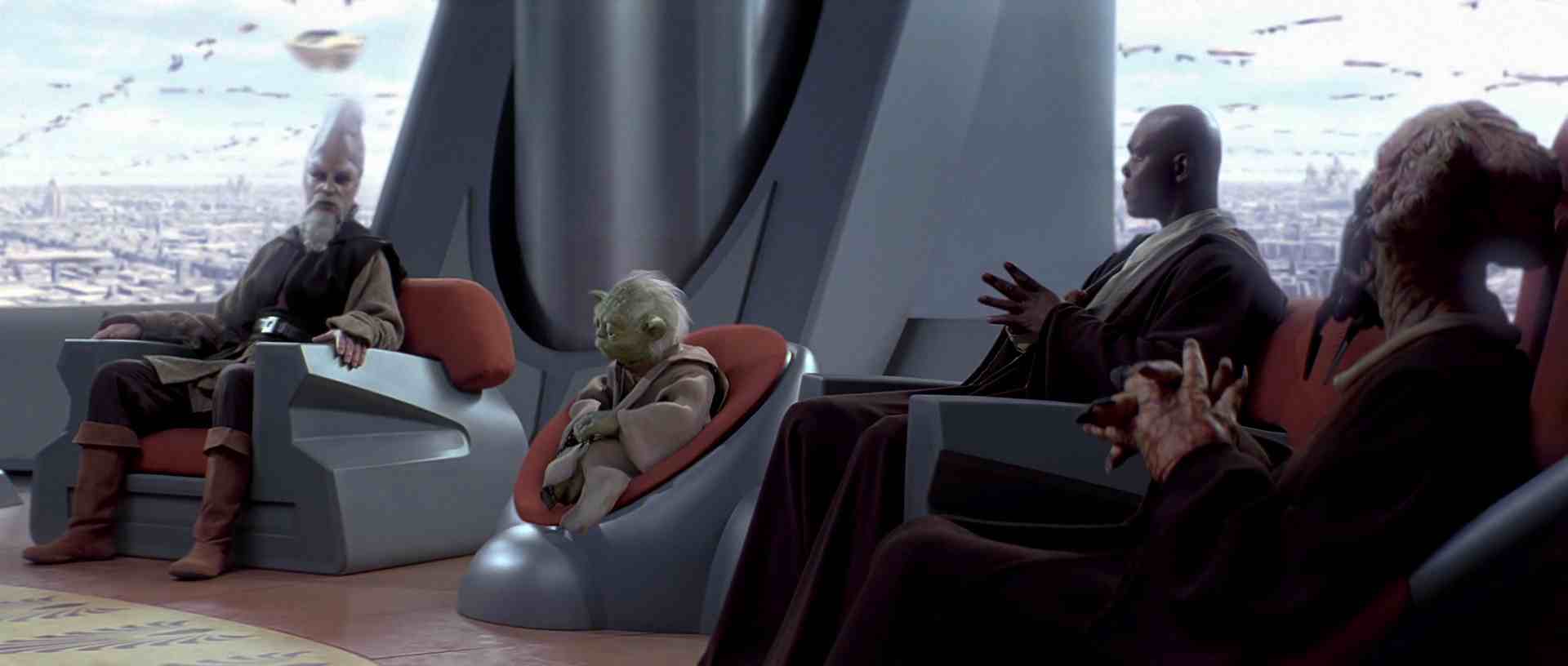
THE PHANTOM MENACE is a stark contrast from the original trilogy, and that’s exactly what it is supposed to be.  Yes, there are many missteps, including the casting of some actors, and the dialogue at times is lackluster and unintentionally laughable but there is so much more at stake when you look at the big picture.

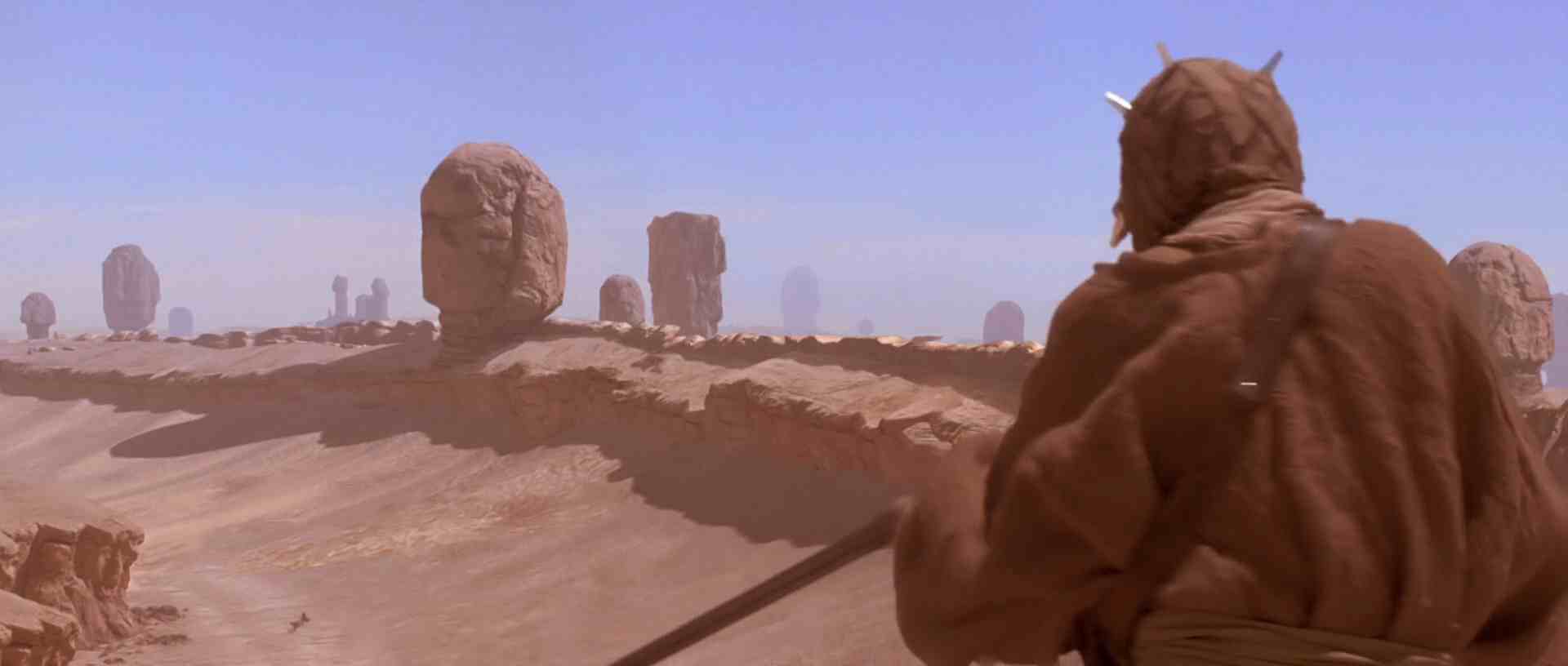
Set decades before A NEW HOPE, Episode I shows us the beginning.  We see a vibrant and fertile galaxy before the desolate dilapidation that the Empire brings to not only the aesthetics but also thematically in the original trilogy.  This is a time of prosperity, a time when the Jedi oversaw peace in the galaxy.

image

But.  This is also the beginning of the galaxy being divided in a full-out war.  Planets pitted against each other by fear and economics.  All the workings of seminal STAR WARS villain, Emperor Palpatine, who in Episode I is nothing more than the affable senator from the peaceful planet of Naboo.  His Sith alter ego, Darth Sidious, does all the dirty work.

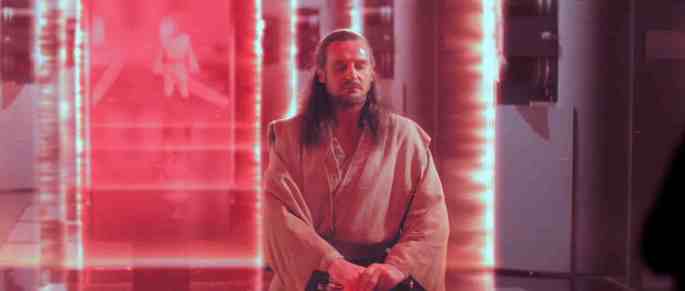
I know.  Jar Jar Binks is the go to hangup.  Yes, Jar Jar is annoying until you get over it and embrace him.  Liam Neeson as the Jedi Master who is the hierarchy of the Skywalker lineage more than makes up for Jar Jar.  As does John Williams’ AMAZING score, particularly DUEL OF THE FATES which loudly surrounds the greatest lightsaber battle in the STAR WARS saga: Qui Gon Ginn AND Obi Wan Kenobi versus fan favorite, Darth Maul.

Yes, THE PHANTOM MENACE is the weakest of the STAR WARS saga, but it is also a solid foundation of what’s to come after.  The chaos that engulfs the galaxy.  The tangible rise of Palpatine’s dark powers.  For all of Lucas’ faults, he does an excellent job guiding the camera through the birth of galactic turmoil.  His casting of Liam Neeson, Ewan McGregor, Samuel L. Jackson, and Terence Stamp are wonderfully perfect additions to the series, and his vibrant aesthetic is a pleasant contrast from the darkness of the original trilogy.

Deceiver: A Review by Nate Hill

image

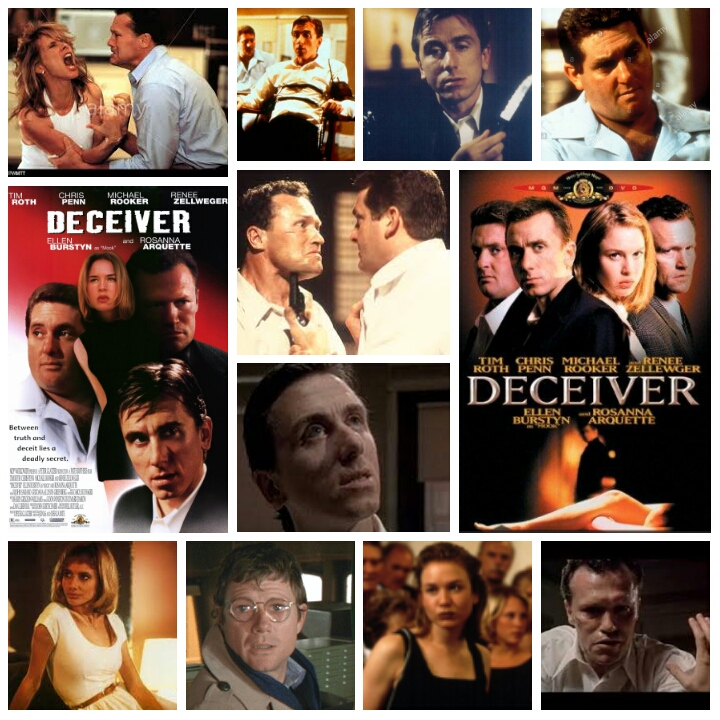
Deceiver is classic 90’s noir, with a dash of trashiness and a unique cast all suited to the bottom feeding material. It trips along in the same gutter as stuff like Basic Instinct, another film that is simultaneously aware and smugly indifferent to the fact that it’s scummy stuff. Almost every character is a reprehensible, unlikable twat, save for one surprise cameo. I may have just put you off the film, and to many who don’t see this type of thing as your cup of tea, please avoid it. But to those like me who appreciate a nice bit of grimy fun, well this is your ticket. Tim Roth plays Wailand , a wealthy and arrogent young heir to a textile mill. He is under suspicion for the brutal murder of a prostitute (Renee Zellweger) who was found in a park, cut in half. The two detectives who are tasked with hassling him seem almost as dodgy as he is, and when you look at the edgy character actors who play them it’s easy to see why. Detective Braxton (Chris Penn) is buried in gambling debt, owing a tidy sum to nasty loan shark Mook (Ellen Burstyn). Detective Kennesaw (Ann explosive Michael Rooker) is a rage fuelled whacko who is furious at his wife (Rosanna Arquette) for having affairs on him. Wailand has both the cunning nature to see this weaknesses in both of them, and the money to do something about it. This makes the detective’s job very hard, being stymied by their quarry every step of the way. Wailand also has mental issues including blackouts and strange episodes of personality alteration that Roth takes full advantage of in the scenery chewing department. It’s pseudo psychological mumbo jumbo that the actors play straight faced for a thriller that’s quite the endearing little flick. Rooker stands out with his trademark volatility that will put anyone’s nerves up to defcon 4. Roth has a ratty, evil looking face. Nothing against the dude, he just looks like he’d slit your throat in your sleep for a dollar. He’s great as suspicious characters, and has fun here being the wild card. Penn is his usual huff and puff self. Character actor Michael Parks has an awesome cameo as a psychiatrist with a monologue that almost lets the film wade out of cheese territory. Great cast, great flick.

Kalifornia: A Review by Nate Hill

image

Dominic Sena’s Kalifornia is a brilliantly vicious dark fable, a moody cautionary tale regarding the dangers of trust, the true nature of the sociopath and the ironic way in which demons sneak up on us while we are to busy looking for them with our backs turned. It’s also damn fine thriller filmmaking and fits nicely into a subgenre which I happen to be an avid fan of: the American road movie. The highways, byways and back roads of desolate rural USA have a bitter menace that clouds the air like the desert dust kicked up by many a vehicle on their way through. There’s endless possibility out there, for great and terrible evil, in a place where help is always a county away and opportunity looms on the horizon like the bloated California sun. From The Hitcher, to U Turn, to Thelma & Louise, to Duel and everything in between, it’s a setting that hums with cinematic potential. David Duchovney and Michelle Forbes play a yuppie couple who unwittingly wander into the path of extreme danger. Duchovney is a writer who is working on a book about American serial killers. Their journey takes them to many bloodstained locales where incidents took place. Eventually they decide to carpool with rugged redneck Earley Grayce (Brad Pitt), and his bimbo girlfriend Adele Corners (Juliette Lewis) whose IQ appears to be lower than the cut of her blouse. The two couples couldn’t be more different, yet get on well enough. Slowly it becomes clear that there’s something very off about Earley though, noticed keenly by Forbes’s intuition. Duchovney is enamored by the tumbleweed hick, and thinks he’s made a friend. He’s half right, and not even in the way he thinks. The film takes its time letting Earley’s true nature emerge, Pitt slowly detaches and unravels until the tarp is fully torn off and we see the sociopathic monster within. All set in abandoned clusters of former Americana and given slick, almost action movie direction from Sena, it’s not one to miss for any fan of a crackling psychological thriller. 

NOAH BAUMBACH’S WHILE WE’RE YOUNG — A REVIEW BY NICK CLEMENT

1

In film after film, writer/director Noah Baumbach continues to ask us to observe complicated, truthful, stressed out people who are looking for clarity in their lives and who make decisions that sometimes aren’t the best way to go. While We’re Young is incredibly funny without ever resorting to stupidity to earn those laughs, with a barbed screenplay that has one terrific line of dialogue after another, all of it witty and clever and all too knowing. The open contempt that’s ladled on our parent-child-obsessed society and the millenial generation was bracing and critical and hilarious. The final moments of the movie sting with the harsh truths of where the youth of today are headed. Without spoiling anything, this is the story of two couples, one in their early 40’s and the other in their early 20’s, and how their paths cross, and how everyone slowly realizes just how out of touch they all are with those around them. Ben Stiller is great here, doing more great work for Baumbach after his pained and stinging performance in the monumentally underrated Greenbergh, in total synch with the material, as was Naomi Watts, who delivered an emotionally complex performance which registers as one of her best. And Adam Driver continues to prove that he’s a reservoir of comic talent in so many unique ways, presenting a character that’s equal parts off-putting and weirdly engaging.

Cynical, intelligent, dry as the Nevada desert, and consistently funny both in a laughing-out-loud and LQTM manner, this is Baumbach’s finest overall effort since The Squid and the Whale (I’ve still not seen Mistress America but that disc is on its way from Netflix). I love how incisive his writing is, how he’s able to get great dramatic work out of Stiller, and how he loves to make us squirm in all the best ways. Oh, and it’s a total pisser to see Beastie Boy Adam Horovitz absolutely nail his supporting role. And it goes without saying, Charles Grodin POWER, as he completely steals every single scene he appears in. Thanks A24 for yet again providing us with another EXCELLENT movie that has something relevant to say, doing so with class and integrity. For me, this is a virtually faultless film, with one fantastic scene after another occurring, spiked with great writing and observant direction, a work that’s sad and funny in equal measure, with its finger on the pulse of a generation of people who don’t exactly know what to do with their lives.

Burn After Reading: A Review by Nate Hill

image

The Coen Brother’s Burn After Reading is the duo at their height of trolling the audience, a mood they seem to make some of the most devilishly funny films of their career. This one reminds me of long days full of running around, confusion and missed appointments, days where I get home and reach the end only to realize that for all the frenzy, nothing I did all day was really of any consequence. This film is sort of like that; a whole lot of clandestine nonsense and tomfoolery that adds up to.. well, not much of anything in the end. If that sounds like I’m being negative, I’m not. That’s part of the Coen’s charm and a core aspect of what makes this one so hilarious. It’s also full of complete dimwitted morons, which only adds to the chorus of lunacy. John Malkovich teeters on the borders of mania, scary and funny as ex CIA half wit Osborne Cox, in a performance so utterly Malkovich that he almost seems like some other actor parodying him. He’s got a cold hearted bitch of a wife (Tilda Swinton) who is fooling around with even bigger idiot Harry Pfarrer (George Clooney  is a riot) who is also fooling around with anything that has a pulse, being the squirrelly sex addict that he is. Cox has started a memoir (or, ‘mem-wah’, as Malkovich ludicrously intones it), the contents of which are on a disc that end up in the hands of yet even bigger idiots. Linda Litzke (Frances Mcdormand) and Chad Feldheimer (Brad Pitt) run a gym called Hardbodies (only the Coens, folks) and see the disc as ‘secret spy shit’ they could use to make a buck. That’s where the plot hollers off the rails into pure madness, as each and every character makes the dumbest possible decision  along the way. J.K. Simmons are gold as two CIA honchos who are more puzzled than the audience, Richard Jenkins trolls perhaps the subtlest of all, and the cast also includes Jeffrey Demunn, Olek Krupa and a meta cameo from Dermot Mulroney. Among the cloak and dagger chaos, the Coen take every chance they get to spoof and lovingly ridiculue society’s cringe inducing stereotypes, until you start to realize they’re levels of exaggeration aren’t all that over the top. Pitt is gold as the air headed gym rat, Clooney pure screwball, and Malkovich is a force of demented nature, his exentuated word pronunciations reaching a boiling point of absurdity here. This is up there with the Coen’s best, and certainly one of their funniest hours.

STAR WARS: EPISODE IV: A NEW HOPE – A REVIEW BY J.D. LAFRANCE

open-uri20150608-27674-lashgn_719bef9d

For many of my generation, the first Star Wars film (1977) was a defining moment of our childhood and so I always look back at it in a nostalgic way. I had the action figures, the coloring book, the calendar, the t-shirt, and so on – all part of the vast merchandising that helped build the George Lucas empire. But as a kid I wasn’t thinking about that – I loved the film and wanted to have everything associated with it, including the comic books and the novelization. The Star Wars I love is the original incarnation unmolested by Lucas’ awkward revisionist CGI makeover. The Star Wars I know and love has Han Solo (Harrison Ford) firing first. The film has been analyzed and written about extensively so I can only look at it from my perspective and offer various observations that always stick out in my mind whenever I watch it.

One of the reasons Star Wars works so well is because of a solid combination of engaging storytelling and groundbreaking (for its time) special effects. The coming-of-age story is as old as the hills and I’m sure that is part of the film’s appeal – its comforting familiarity. Young Luke Skywalker (Mark Hamill) leaves behind his life on a small, insignificant planet and becomes involved in an intergalactic civil war that involves rescuing a princess from the clutches of an evil empire. In the process, he grows up and becomes a man.

I still get goosebumps when I see that opening text, “A long time ago. In a galaxy far, far away…” And then, John Williams’ rousing score kicks in with a sudden blast from the horn section and we’re on our way. We get that iconic shot of the small Rebel Alliance spacecraft being pursued by an Empire Star Destroyer so massive it takes up at least three-quarters of the screen as it rumbles into view. We soon meet two of the film’s most endearing characters – C-3PO (Anthony Daniels) and R2-D2 (Kenny Baker), droids that have a sometimes slapstick-y love/hate relationship a la Laurel and Hardy. 3PO is the eternal pessimist as evident from his declaration early on, “We’re doomed.” Of course, this is as the Empire prepares to board the Rebel spacecraft. 3PO and R2 play well off each other – the former whines about danger and complains about the conditions of Tatooine (the planet they escape to), while the latter clearly has a purpose, a mission that he must complete with or without his long-time companion. They bicker like an old married couple and even on his own, 3PO still bitches about R2.

Has there ever been a cooler introduction for a villain than the one for Darth Vader (David Prowse)? Having boarded the Rebel ship by force, he emerges from the smoke to survey the damage done. We immediately hear his ominous breathing, that unsettling raspy respirator sound – awesome! We soon hear James Earl Jones’ booming, authoritative voice (later on the voice of CNN no less!) which, coupled with David Prowse’s intimidating physical presence and the brilliantly black armor, creates an instantly memorable bad guy, a real force of evil. Lucas constantly reminds us what a badass Vader is in scenes like the one where he deals with one of his officers who dares to scoff at the power of the Force compared to the power of Empire’s new battle station, The Death Star. Vader warns him, “Don’t be too proud of this technological terror you’ve constructed. The ability to destroy a planet is insignificant next to the power of the Force.”

Unconvinced, the guy foolishly insults Vader’s “sad devotion to that ancient religion,” and, in response, the Dark Lord merely raises a hand and chokes the man from afar. Vader coolly and ominously replies, “I find your lack of faith disturbing.” Now, how badass is that? It takes Peter Cushing’s bureaucrat Grand Moff Tarkin to step in and call Vader off. As evil as Vader is, Tarkin is on a whole other level. He destroys a planet populated by millions of innocent people just to make a point and teach Princess Leia (Carrie Fisher) a lesson. How nasty is that? Vader just chokes a few guys which pales in comparison to what Tarkin does.

I always found it fascinating how the Jawas are basically the used car salesmen of the galaxy and they even try to pawn off a faulty droid to Luke and his Uncle Owen (Phil Brown). Mark Hamill’s take on Luke is right on the money, playing the character as a teenager on the verge of becoming a young man – someone who would rather pick up power converters over at Toschi Station than haggle over the price of droids with Jawas. His uncle sees right through Luke and chastises him, “You can waste time with your friends when your chores are done.” This little moment is one of the reasons why Star Wars appealed to a younger generation – they could relate to Luke’s disinterest in chores and his frustration of being stuck on his uncle’s farm. Who would rather hang out with their friends than get stuck doing boring chores?

This is further reinforced in the scene where Luke talks to Aunt Beru (Shelagh Fraser) and Uncle Owen about transmitting his application to the Academy sooner rather than later but his uncle wants him to stick around for the harvest and another year. After Luke goes off in defeat, his aunt says, “Luke’s just not a farmer, Owen. He has too much of his father in him,” to which Owen replies, “That’s what I’m afraid of.” This conversation cleverly hints at earth-shattering revelations that come in the next film in the series, The Empire Strikes Back (1980). I just want to say how much I love the little moments of domesticity that Lucas shows here with Luke having a meal with his aunt and uncle or another scene where we see Aunt Beru (who I was always struck by what a kind face she has and what a gentle person she appears to be) preparing some sort of meal. It humanizes these people in a short amount of time so that we care about what happens to them later on.

What I also like about the story is that Lucas makes it personal for Luke. His only reason for staying was to help out his aunt and uncle but when they are killed by Imperial Stormtroopers, his life as a farmboy dies that day. He’s got nothing left to lose and his innocence has been taken away from him forever. Lucas makes sure that we understand just how horrible the Empire is with a lingering shot of the aunt and uncle’s still smoking, charred skeletons, which was pretty shocking to me when I first saw the film at a very young, impressionable age. This scene ups the stakes and reinforces just how ruthless the Empire is and how personal it has gotten for Luke.

The casting of Alec Guinness as Jedi master Obi-Wan Kenobi was genius on Lucas’ part. With his classic British accent, he gives his dialogue a classy spin, perfect for the expositional dialogue his character imparts throughout the film. For example, early on he explains the nature of the Force to Luke: “The Force is what gives a Jedi his powers. It’s an energy field created by all living things. It surrounds us, it penetrates us, it binds the galaxy together.” What a great way to describe the Force – it’s succinct and doesn’t give too much away, just enough to let our imagination fill in the rest.

One of the most memorable scenes in Star Wars takes place in the Cantina at Mos Eisley (a place that Obi-Wan warns Luke is a “wretched hive of scum and villainy.”), a bar where all sorts of strange and unusual creatures hang out. Of course, the purpose of this sequence is for Luke and Ben to meet and hire Han Solo and Chewbacca (Peter Mayhew) to rescue Leia, but it is also a fantastic showcase for a memorable collection of exotic-looking alien creatures. There’s one that looks a little like Cousin It from The Addams Family, one that looks like the Wolfman, one that kinda looks like a devil with two horns sprouting out of the top of his head, and so on. The diversity of these creatures is so fascinating that I just like rewatching this sequence to check out all of the various creatures. This sequence has gone on to inspire several other films, including Nightbreed (1990), Serenity (2005), and Hellboy II: The Golden Army (2008). The aliens in Star Wars don’t look cute and cuddly but strange and dangerous. Lucas reinforces this by having Luke bullied by two lowlifes until Obi-Wan steps in with his mad lightsaber skills.

How cool is Han Solo? We meet him haggling with Obi-Wan over the price of taking them to Alderaan and Han tries to impress his prospective clients with the speed and reputation of his spacecraft the Millennium Falcon. However, after their meeting, Han runs into Greedo, a bounty hunter collecting a sizable debt that the smuggler owes notorious gangster Jabba the Hutt. Han acts cool and casual, keeping Greedo talking while he quietly unholsters his gun and blasts the bounty hunter before he can shoot him. How badass is Han? Harrison Ford plays it so well – all cool and accommodating to Greedo so that he has time to get the drop on him. It’s this scene that establishes Ford’s character – is he a bad guy or a good guy? You’re never really sure until the end of the film and this is due in large part to Ford’s performance as a cocky smuggler who only looks out for himself.

I also like Han’s simple philosophy, like when he scoffs at the notion of the Force: “Hokey religions and ancient weapons are no match for a good blaster at your side … I’ve flown from one side of the galaxy to the other. I’ve seen a lot of strange stuff but never seen anything to make me believe there’s one all powerful force controlling everything. There’s no mystical energy field controls my destiny. It’s all a lot of simple tricks and nonsense.” He provides a lot of the film’s moments of humor, like when Luke tries to convince him to rescue Leia by appealing to his greed, or his constant bickering with her. As he tells Luke at one point, “Wonderful girl. Either I’m gonna kill her or I’m beginning to like her.” Han and Leia end up bantering like a couple in a vintage screwball comedy and this is carried over to an even more memorable degree in The Empire Strikes Back.

Another exciting scene is the one where our heroes escape the Death Star while Han and Luke man the Falcon’s laser cannons. Lucas uses editing and Williams’ stirring score to make this scene even more dynamic. It’s a nice warm-up for the climactic sequence where a squadron of Rebel Alliance X-Wing fighters launch an attack on the Death Star. Not only do the Rebels have to worry about the Imperial TIE Fighters, but also the battle station’s laser cannons. Also adding urgency to the assault is the ever-looming threat of the Death Star on the verge of eradicating the Rebel base located on the moon of Yavin. Luke finally gets to show off his piloting skills while many of his comrades are blown up. It doesn’t hurt that he’s aided by Obi-Wan’s disembodied voice and the Force. The use of models in this sequence gives it a more tangible quality, a realness that is missing from most CGI-heavy science fiction films nowadays. This sequence gets even more exciting when Luke and the surviving Rebel X-Wings descend into the trenches of the Death Star to bomb its weak spot. Lucas is able to convey a real sense of speed and urgency that is thrilling, especially when the Millennium Falcon comes from out of nowhere to give Luke the opportunity to destroy the Death Star.

Some feel that Star Wars looks dated and I would agree but for me that is a large part of its appeal, sideburns and all. Watching it instantly takes me back to when I first saw it and the rush of excitement and wonder that I felt as it unspooled before my eyes. It is one of those pivotal moviegoing experiences that I have never forgotten. While I think that The Empire Strikes Back is the better film in terms of story, pacing, characterization, action, etc., Star Wars is the film I enjoy watching the most for all of the reasons stated above. I think that a review in the now-defunct Sci-Universe magazine sums it up best: “even today, would-be sci-fi franchise-builders haven’t learned the lessons about what made Star Wars a cinematic landmark; compelling, but flawed, characters and attention to the smallest pieces of minutiae.”

ROGER MICHELL’S VENUS — A REVIEW BY NICK CLEMENT

1

Roger Michell’s Venus is a tender, beautiful little film featuring an exquisite performance from Peter O’Toole as an eternal ladies man who finally meets his match. Written with grace and sensitivity by Hanif Kureishi, who also collaborated with Michell on the similarly underrated Daniel Craig drama The Mother, O’Toole was provided with a terrific late career role as a veteran actor who spends his time hanging out with his buddy, played by Leslie Phillips. But when O’Toole meets his best friend’s grand-niece, the lovely if unrefined Jodie Whittaker, a spring snaps back into his step, as he spends his time courting her and trying to show her all that life has to offer. That this film examines a relationship, in all of its forms, between a very old man and a very young woman, some might question the intent of the storytellers, or the believability of the scenario being posed.

But because Kureishi’s screenplay was so compassionate and understanding of people’s inherent problems and desires, you’re able to relate to both O’Toole and Whittaker, and understand the mutual attraction that develops between the two people. Where it all goes is for you to discover, but I loved how this movie wasn’t content to play it fully safe, and I admired how it had the stones to present the story exactly how it was presented, seemingly unafraid by the idea that it might be deemed “icky” by some. Whittaker is excellent, sharing terrific chemistry with O’Toole, while communicating much with her expressive, soft face that amplifies her reactions to O’Toole’s numerous advances.

For comparison, one should really make this a double feature with 2003’s The Mother, as that film explores the shifting dynamics between a woman in her 70’s as she falls in love/lust with a man in his 30’s. I’ve long been a big, big fan of Michell’s filmography. Notting Hill is one of the better and more enjoyable romantic comedies of my lifetime, and Enduring Love is a totally brilliant piece of sinister work that far too few people have seen. Hyde Park on Hudson was naughty fun and Le Weekend was a total delight from start to finish, even if the narrative took a few dips into emotionally turbulent waters. And I’ve written in the past about my love for Changing Lanes, as morally complex, adult-minded, 70’s flavored dramas like that one are rare. And that’s why I’ve always responded to Michell’s work; he’s smart, he’s stylish, he’s thoughtful, and his movies don’t follow along the cookie-cutter dotted lines.

Hush: A Review By Nate Hill

  
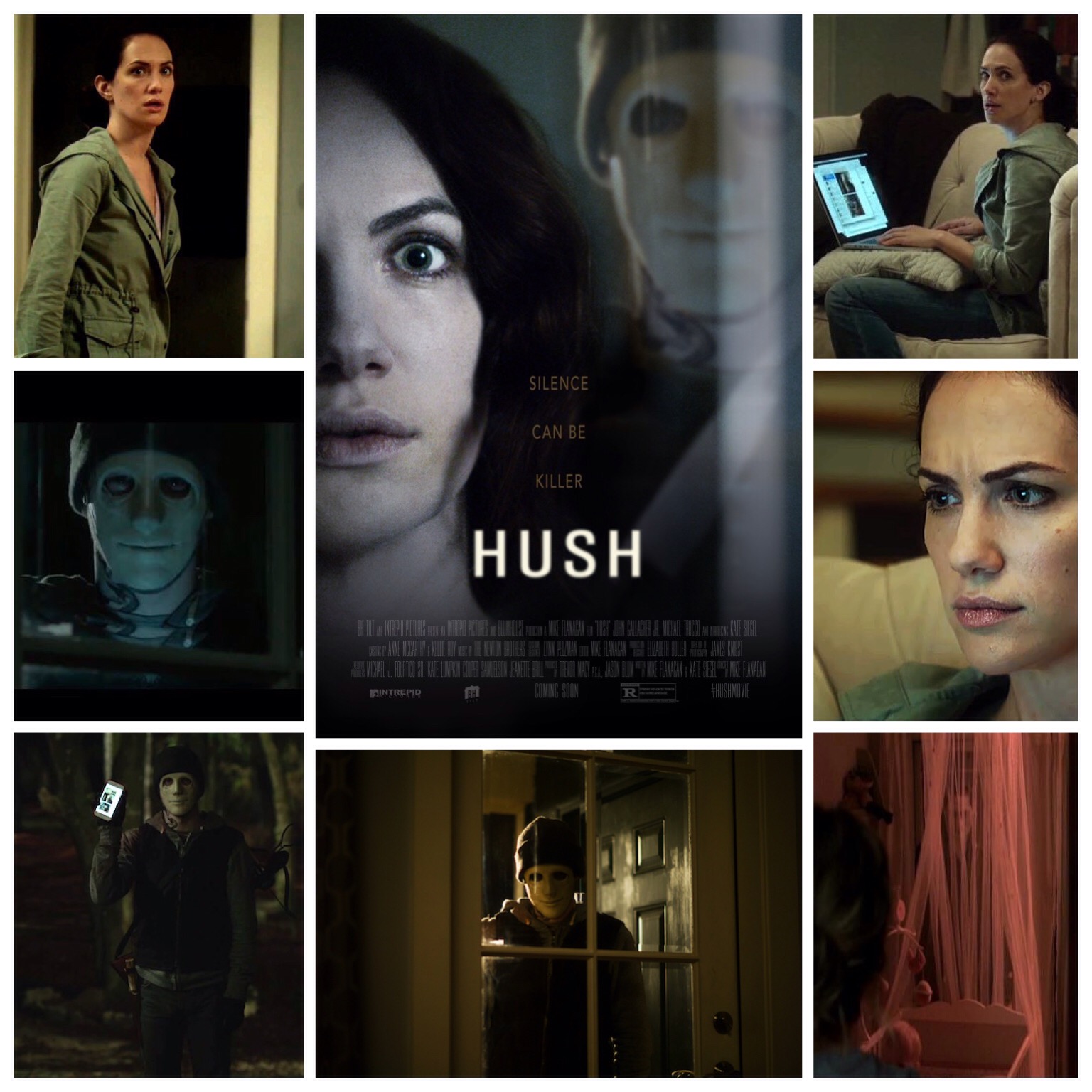
Well it’s arrived, folks. The first truly effective horror film of the year (that I’ve had a chance to see anyway). I was drowsily browsing Netflix and came upon Hush, sporting a snazzy poster and a premise ripped straight from the vintage horror flicks I grew up with. Compelled to give it a shot, I was rewarded with a slick, atmospheric and sturdily made exercise in suspense. It’s not often I feel true giddy tension while watching a thriller (even though most brashly guarantee it on the dvd cover), but this baby delivers in spades. It’s funny because the storyline is a identical to many movies of the past, and similar to countless more. The secret to success, obviously, is in the execution, and Hush is made with a caring love for a genre deeply ingrained in cinematic culture. Director. Mike Flanagan clearly loves horror films, and seems to want to rise above the primordial crust, calcifying his effort with a steady hand and fresh direction that gives even the most knowing plot turns a dose of torque using simple tools: a killer soundtrack, whiplash inducing editing and…and.. What’s the most important thing in any horror film? I’ve said it before and I’ll keep saying it: atmosphere. The setting finds us in a dusky, desolate area, where a deaf novelist (Katy Siegel) toils in isolation, churning out the trimmings of her next book on a laptop, content in her loneliness yet on the verge of unease stirred by cabin fever, restlessness or so,etching else. It’s not long before the film lands the first punch of many: a masked, crossbow wielding serial killer (John Gallagher spits on his previous good guy image, both terrifying, unrecognizable and superb) begins to stalk her with methodical menace, watching from the inky shadows of her home’s exterior while she cowers in terror. He catches on quick about her deafness and uses it against her, terrorizing her at every turn. Now, the film does use genre tropes to churn out its story, and anyone expecting something truly unique to pop out of the ether. Any be disappointed. But to those who yearn for solid, extremely well made horror entries to wade out of the muck and foretell the return to form of a genre that gets maybe two, three winners every year, can rejoice. This one comes up aces. Siegel is instantly likeable and gorgeous to boot, giving her protagonist a resilience that is actually believable, which can’t be said about every girl being pursued by a killer on screen. Gallagher is icky as the psycho, branded with certain idiosyncratic symbols of society which suggest that he’s a jaded outcast driven to sickening extremes by the hand he’s been dealt, given in to his dark impulses completely. For genre fans: this begs a watch and will likely be a highlight of the year. For casual viewers: fun, fun times and a vibe to get sucked in by. For non horror fans: just watch it anyway. 

B Movie Glory with Nate: The Courier

image

The Courier is a strange little flick that dabbles in the kind of pulpy narrative which the 80’s were famous for. One lone antihero sets out to deliver a package of enigmatic value to a recipient that is always one step ahead of him, proving to be quite elusive. Bad guys and gals hinder him at every turn and violence ensues, leading up to an inevitable confrontation and in this case a neat little twist that admittedly defies any sort of reason, yet is fun for the actors to play out and provides sensationalism, a trait that’s commonplace in such films. Jeffrey Dean Morgan is a haggard presence in any role, a guy you immediately feel rooted to in a scene. He gets the lead role here, playing an underground criminal courier, passing along dangerous goods from one cloak and dagger person to another. His latest task comes from his handler (Mark Margolis): Deliver an odd case to a reclusive criminal mastermind known only as Evil Sivle. Little information is given beyond that, but it soon becomes apparant that his mission is a cursed one, as he finds himself a hot target for all kinds of weirdos. German live wire Til Schweiger plays a dirty federal agent who hassles him with that campy charisma and narrow eyed theatricality that only he can bring to the table. Miguel Ferrer and Lilli Taylor are priceless as Mr. & Mrs. Capo, a pair of married contract killers who discuss their dinner plans whilst hunting their quarry, and have devised some truly vile torture methods involving culinary instruments. Yeah, it’s that kind of movie, where B movie mavericks are let off the chain and allowed to throw zany stuff into their otherwise pedestrian material that often borders on experimental. Morgan is assisted by a young chick (Josie Ho) who saves his ass more than a couple of times. Mickey Rourke shows up late in the game as Maxwell, a mysterious Elvis impersonator and Vegas gangster who plays a crucial role in Courier’s quest. Trust Rourke to take a derivitive, underwritten supporting character and turn the few minutes of screen time he has into utter gold that elevates his scene onto a plane which the film as a whole is sheepishly undeserved of. Morgan is better than the flick too, but he’s great in anything. He ducks the heroic panache of the action protagonist and dives into growling melancholy, his grizzly bear voice and imposing frame put to excellent use. This one got critically shredded upon release. Yeah it ain’t great, but it sure as hell ain’t terrible. Worth it for a cast that makes it work, and for that classic genre feel that can’t be beat.