THE ROBERT ALTMAN FILES: CALIFORNIA SPLIT (1974)

“You know, I know, rent means dough,

Landlord goin’ kick us in the cold, cold snow.

Rufus Rastus Johnson Brown,

What you goin’ do when the rent comes round?”

-Harry Von Tilden

“Pal… I’m gonna win!!!”

So says George Segal’s Bill Denny as he’s being flattened by the pressures of his overdue gambling debts, his irritated bookie, and being stuck in the unenviable position of having run out of personal items to sell for gambling money. It should also be said that he’s been on one hell of an impressive losing streak over the past couple of weeks. But, still, gripped by the kind of desperation that occurs when there are no options left, he says that he’s going to win a high rolling poker match in Reno as if it’s an absolute certainty. Given his circumstances, what the hell else is he going to say?

Robert Altman’s California Split is a film that understands that specific kind of desperation better than any movie I’ve ever seen. It also has a lot to say about dysfunction, camaraderie, semi-homoerotic male bonding, codependency, ennui, danger, disappointment, and, finally, the empty feeling one has after going jowls-deep into the depths of your own mania. For a small movie about two lost souls who luck out to find each other and enjoy a few eventful weeks together, California Split, one of Altman’s very best efforts, is alive in a way other films can only dream of being.

After randomly being seated at the same table at an L.A. poker club and then escaping the wrath of a fellow player who might as well wear a cape that says “sore loser,” Bill and Charlie Waters (Elliott Gould, never cooler than he is here) connect again in a nearby bar where Charlie’s infectious and quick witted assessments on basketball wagers win Bill over. Soon, they’re drunkenly staring over a graveyard of empty beer glasses and making low-stakes, bullshit bets as to whether or not they can name all seven dwarfs in their present condition. The evening ends with them getting beaten up, robbed of their winnings, arrested, and then, in the hazy, early morning hours, bailed out of jail by Gould’s call girl roommates (Ann Prentiss and Gwen Welles, both unforgettable and fantastic) which then leads to a fruitful, winning partnership.

There are many things going on under the surface but there truly is a sly romantic comedy at the heart of California Split. Sure it’s not very conventional but I’m not sure what other subgenre creates the kind of unfettered joy Bill and Charlie feel when they’re around each other. There are times that George Segal is smiling so widely, you can see all of his back teeth and fear that somehow the top half of his head may become unhooked from his lower jaw. As the movie rolls along, their relationship ebbs and flows as winning and losing streaks exchange hands leading to a temporary separation, a reconciliation, and one last big dance before finally breaking up. The film is set during the Christmas season but it’s not something the audience would notice given Altman’s insistence on keeping the two protagonists cloistered in the details of their own world and blinded by their mutual, raw enthusiasm for action and each other’s company.

The film immediately frames Elliott Gould’s flashy Charlie in stark contrast to George Segal’s more buttoned-down Bill. They come off as two very different guys but, in the granular, they really aren’t all that different. Charlie may seem like the wise guy motormouth who is careening toward disaster but it’s actually Bill who is on the path to rack and ruin. Charlie is just already there; a smooth-talking loser who takes life one day at a time and doesn’t even pretend to give a hang about a day job. He bets like a chaos agent and doesn’t seem to care whether he wins or loses. Bill, on the other hand, still keeps an office in the startup magazine for which he works though it’s not clear if he’s paid for writing, which we never see him do, or avoiding his boss (an impossibly young Jeff Goldblum), at which he’s more adept. And though it’s not explicitly telegraphed, the audience gets the sense that Bill’s failed marriage is probably still within view in the rear view mirror and that a reconciliation wouldn’t necessarily be completely out of the question.

But the screenplay by Joseph Walsh (who turns up as Sparkie, Bill’s bookie whose patience has finally run out) is less interested in the well-worn path of personal redemption when it comes its characters as, a recovering gambling addict himself, Walsh understands that the joys of the compulsive gambler are small, fleeting, and infrequent. After Bill runs a streak that nets $84,000, he goes into a semi-trance and shakily rids every pocket of its gambling chips as if he’s vomiting after a particularly impressive bender. Exhausted, he holds his head in his hands as the life is drained out of him. Even winning is painful and empty. “Don’t mean a fuckin’ thing, does it?” Charlie observes.

While he had churned out a few masterpieces in the previous four years, California Split cemented Robert Altman as one of his generation’s most observational filmmakers. Standing the tallest in a class that included Paul Mazursky, Jonathan Demme, and Hal Ashby, Altman reveled in the details and quirky inhabitants that (still) make America unique and special. Early in the film, the audience is treated to a mini-drama that erupts between a bottomless go-go dancer and her gambling addicted girlfriend which ends with the dancer having to borrow against her earnings just to get the girlfriend out of the bar. It’s a small moment that occurs courtesy of Altman’s penchant for overlapping dialogue and roaming camera but it comes alive and makes three-dimensional people out of who would be nothing more than glorified extras living on the edge of the frame in a lesser filmmaker’s work. Altman argues for an America being a country of Mom and Apple Pie as long as we understand that Mom is a hooker named Barbara who compulsively reads the TV Guide to unwind and Apple Pie is Froot Loops (or Lucky Charms, your choice) and beer. It’s an America of gambling superstitions, all night brothels, and Friday night prize fights. It’s an America choking on a cloud of cigarette smoke in tiny rooms with poor ventilation, watered down drinks at the racetrack, and lonely people perfumed in Shalimar. In short, it’s not Norman Rockwell’s America but, instead, an America that actually exists.

At the end of the film, Bill and Charlie go their separate ways with the former saying “I gotta go home.” But Charlie can see Bill even when Bill refuses to see himself. Charlie knows Bill doesn’t live anywhere outside the action and that he’s only pretending that he does. For there was probably a time in his life that Charlie admitted that he, too, had to go home only to realize that, sadly, he was already home. All of this is unspoken, by the way. It’s just that California Split is that rarity of a movie where the dialogue tells us plenty but the characters’ actions tell us more.


Joe Carnahan’s Boss Level

If I was mayor of FilmTown, I’d make the day a new Joe Carnahan film came out a national holiday. The guy is such a great storyteller and to me, each of his movies over the years is a solid gold classic, from the gritty Narc to the cult status Smokin Aces to the emotional masterpiece The Grey to the criminally overlooked Stretch. His new film Boss Level just dropped on Hulu and various other platforms for rental and let me tell you, it’s my favourite thing I’ve seen in awhile and most definitely of 2021 so far. The infusion of action and SciFi has always been a great love of mine and when done with wit, intelligence, inspiration and badassery it can be a truly special sub-genre. Frank Grillo stars as ex special forces soldier Roy Pulver, who finds himself in a curious metaphysical time loop on the day of his death: he wakes up, is immediately confronted with a host of eccentric and quite lethal contract killers, some of whom he is able to kill, and others not so much. The day is often a variation on the same template, but one thing remains unchanged: at some point, in some way, he always ends up dead. Who placed him in this purgatorial halo of mayhem? Does it have something to do with his ex girlfriend (Naomi Watts) who works at a mysterious physics research lab owned by a Machiavellian despot (Mel Gibson) hellbent on some nefarious agenda? Well of course it does but the fun is in seeing how, and how with each new day, or each new crack at the level as this thing is a terrific mirror board for video game concepts, he learns a little more, and gets a little closer to figuring out what’s happened, who has it in for him and why. Grillo is a great choice for an action hero because not only is he physically adept and imposing, he also has acting talent and charisma for days and just feels like someone you want to be around. He narrates the film in hilarious, touching and sardonic voiceover and makes Roy a terrific character creation. Gibson is in scenery chewing Bond villain mode, munching on a giant cigar and commanding hordes of minions like some dark god, while Watts is terrific as ever. Keep an eye out for Will Sasso, Michelle Yeoh, Annabelle Wallis, Quinton Rampage Jackson and Ken Jeong as a lippy bartender. This is a wonderful motion picture with balls to the wall ruthless gory action, absolutely hilarious and colourful dialogue (Carnahan has a way with words like no other), a SciFi concept that is just this side of silly yet still tantalizes the brain (the Osiris Spindle is such a cool idea) and feels intricate and trippy enough to keep us guessing and immerse us in the world. You know what really hit it home for me though? Roy is a real character with an arc who not only has to fix the dilemmas imposed upon him by an external antagonist, but fix his own heart and mend his own wayward tendencies, particularly in the relationship with his son (Rio Grillo, Frank’s real life kid) who he’s never seemed to find the time for, until now when all he has is one day, but a day that scintillates into eternity. There is real pathos in this story and for a 90 minute action film with this much destruction, mayhem, crazy characters, conceptual exposition and layered plotting it’s rare to find an emotional core emanating from it as well, but this one really has it all. Kinda like Source Code meets Groundhog Day with splashes of Bond and this exhilarating undercurrent of video game thematics, and also fiercely and singularly its own thing. Best film of the year so far.

-Nate Hill

Antoine Fuqua’s Shooter

I’ve always loved the absolute hell out of Antoine Fuqua’s Shooter, a mean, violent, very broad and totally enjoyable action flick with a western flavour woven in and some jaw dropping set pieces along the way. The story is like, beyond over the top, Mark Wahlberg is a near invincible force of nature, the villains are so intense they feel like they’ve walked out of a Walter Hill flick and the overall tone is just this side of tongue in cheek territory while still feeling like a legitimate thriller. Marky Mark plays an ex marine sniping guru who lives alone in the Canadian wilderness with his doggo until he’s lured back to Vancouver by his conniving former boss (Danny Glover) for a high profile political assassination. Basically blackmailed into it, he finds himself set up by his own people to take the fall for the job, betrayed, left for dead, the works. Also, as we observed in John Wick, don’t kill the dog of someone who can take out literal armies of goons and will come gunning for you and everyone in your employ. On the run he’s assisted by a rookie cop (Michael Pena) who intuits his innocence and the girlfriend (a smokin hot Kate Mara) of a former army buddy who he seeks shelter with. The villains here are truly spectacular and I must spend a portion of my review on them: Glover is so arch and evil he literally gets to say “I win, you lose” *twice* and he somehow pulls off a ridiculous line like that just because he’s Danny Glover and he’s smirking like he knows damn well what kind of script he’s waded into. His top lieutenant is a despicable, sadistic piece of work played by the great Elias Koteas in high style, all leering stubble, violent urges towards Mara and creepy charisma in spades. They all work for the the most evil US Senator in the country, a tubby, southern fried, amoral, genocidal maniac Colonel Sanders wannabe played by Ned Beatty, who doesn’t just chew the scenery, but strangles it with his bare hands while he’s at it. The cast is off the hook and also includes Tate Donovan, Mackenzie Grey, Rhona Mitra, Lane Garrison, Rade Serbedzija and a cameo from The Band’s Levon Helm. They just don’t make actioners like this anymore and even for 2007 this felt like a dying breed. Classic, melodramatic, hyper violent, neo-western revenge stuff that was huge in the 80’s and 90’s and I miss greatly. There’s a brilliant exchange of dialogue where Beatty and Glover marvel in desperation at Wahlberg’s refusal to back down or stop hunting them. “I don’t think you understand,” he growls at them: “You killed my dog.” It’s a great line sold 100% by Wahlberg and the film is full of spot on moments like that as well as visually breathtaking action sequences (that mountaintop standoff tho), a playful yet deadly tone and villains that would be at home in the Looney Toons. Great film.

-Nate Hill

Nikole Beckwith’s Stockholm Pennsylvania

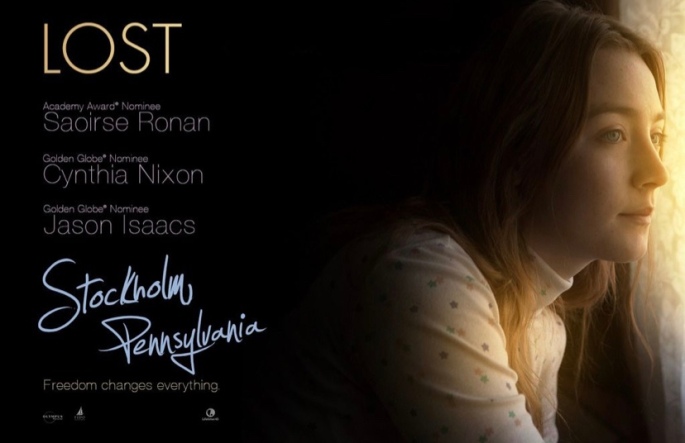
I struggled with Nikole Beckwith’s Stockholm Pennsylvania on several levels, despite it having a wicked strong cast and premise so full of potential I almost want to write my own version that does it more justice than this incredibly frustrating film. Saoirse Ronan gives a typically superb performance as Leia, a young woman who was kidnapped when she was very young by doomsday obsessed, ill adjusted Benjamin (Jason Isaacs) and raised in his captivity and care for over a decade. When she’s eventually found and freed, she returns to a life she barely has memory of, to two parents (Cynthia Nixon and David Warshofsky) who feel like strangers to her. Her life with Benjamin was never filled with abuse or horror or anything like that, beyond kidnapping her and filling her mind with all sorts of end of the world, anti-humanity nonsense he actually cared for her as his own kid and treated her decently, all things considered. So there’s this alienation from the real world, this wall of separation from parents who desperately try and reconnect with her and this strange bond with her captor who is still out there in jail, thinking of her. How does the script take this situation and evolve it into something challenging, believable and emotionally resonant? Well, it doesn’t really. Ronan, Isaacs and Warshofsky are terrific but Nixon gives this shrill, unpleasant and altogether inexplicable portrait of tyrannical maternal instinct gone wrong that curdles into her own version of holding Leia captive when she can’t reconcile that her daughter just isn’t the same person she used to be. I’m not sure what Beckwith was going for or drawing on with this original script, it seems as if she is deliberately trying to tell a knowingly obtuse, in-your-face uncomfortable story and the result is a maddening experience, or at least was for me. It’s a shame because the idea, setup and execution of the first act is really good and drew me in and then it just goes off the deep end appears to lose itself in histrionic, grim, unnecessary Mommie Dearest nonsense that feels like it walked in from a much lesser film, and as such it drags the whole experience down and you just feel emotionally depleted afterwards, with no reward, pathos, thought provocation or narrative satisfaction. An interesting experiment that needlessly nosedives and betrays both the audience and its characters to masochistic doom and gloom that doesn’t feel warranted.

-Nate Hill

Roman Polanski’s The Ghost Writer

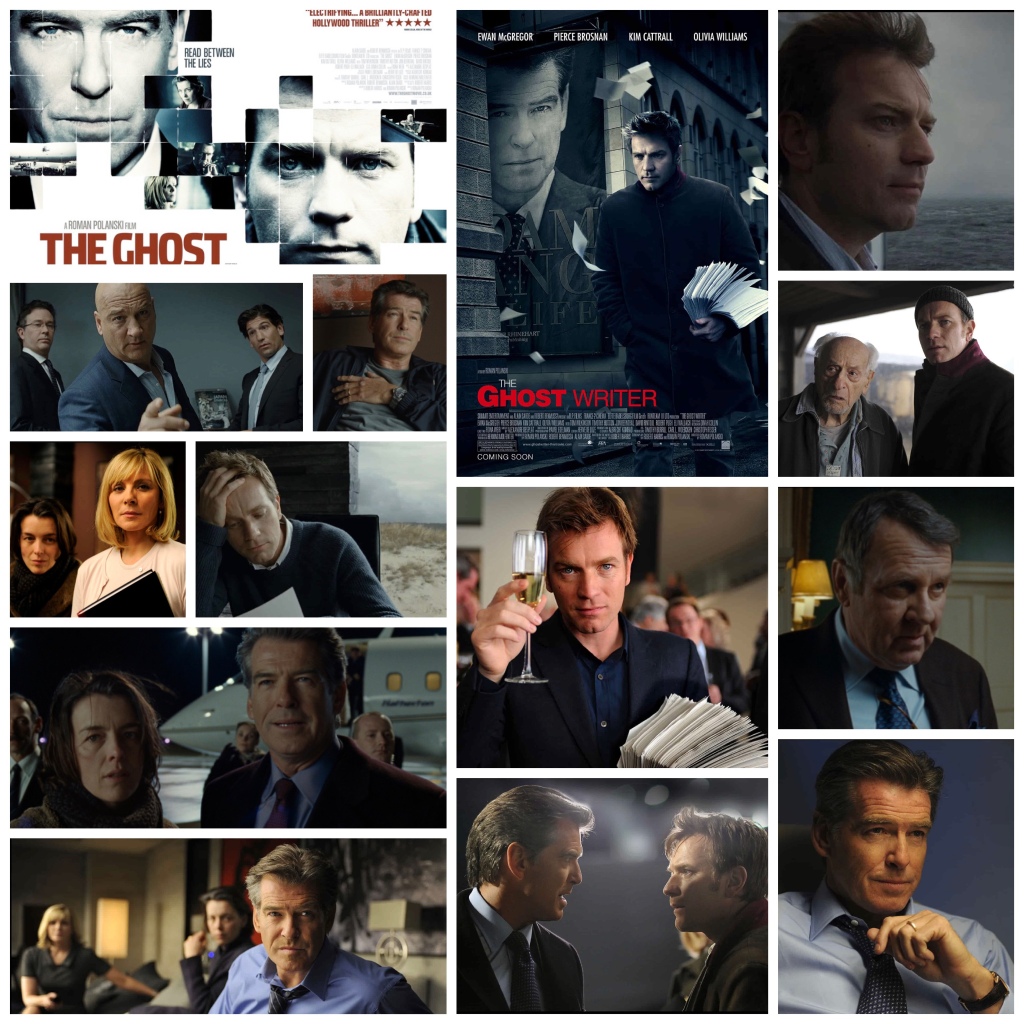
Roman Polanski’s The Ghost Writer is a tantalizing political l thriller with one powerhouse performance from Pierce Brosnan as the UK’s shadiest former politician, a galaxy of terrific supporting talent, some truly inspired bits of brilliantly orchestrated suspense, and Ewan McGregor too. He plays the titular ghost writer, a handpicked scribe first hired to unofficially pen the memoirs of Brosnan’s fiery former Prime Minister, an endeavour that turns into much more of an… involved position than anyone ever planned on. The moment he arrives at the man’s lavish Cape Cod private island residence, a nasty scandal springs forth in the media that forces him into hiding and causes McGregor to suspiciously question his past, both personal and professional. McGregor serves as kind of an audience proxy and gives a solid if unremarkable turn, but Brosnan removes the muffler and fires on all cylinders for a charismatic, cunning barnstormer of a performance, especially in the last act where his life and reputation are thoroughly unravelled. The supporting cast is wonderful, with Olivia Williams being the standout as Brosnan’s long suffering wife who teeters on the brink between loyalty and exasperation. Jon Bernthal is McGregor’s agent, Timothy Hutton and a startlingly bald Jim Belushi are bigwig fixers for Brosnan and there’s nice work from Kim Cattrall, Robert Pugh, a fossilized Eli Wallach and a subtle Tom Wilkinson as a mysterious lynchpin character. The film has a luxurious, over two hour runtime which allows you properly sink into the serpentine narrative full of murky political espionage, dirty secrets, sins of the past, clandestine shifts in power and some truly impressive Hitchcockian twists of fate. Much of the action is set on Brosnan’s beautiful Cape Cod island home, which is actually filmed in Germany and Denmark because, as we know, Polanski can’t go stateside but it looks and feels right just the same and provides a chilly, mist shrouded coastal atmosphere that suits the mysterious nature of this story unfolding. The ending is a kick right in the balls in several different ways and each character reaches the end of their arc with a ruthless, grim yet very appropriate sense of dark, poetic and karmic justice. Excellent film.

-Nate Hill

THE MICHAEL MANN FILES: STRAIGHT TIME (D. ULU GROSBARD – 1978)

By Patrick Crain

In the cinematic world of Michael Mann, there are two figures who loom the largest. The first and most obvious one is Jean-Pierre Melville, French auteur whose cool visual style, obsession with the relationships between cops and criminals, and strict attention to detail and precision all informed the majority of Mann’s work. The second giant figure in Mann’s universe is Edward Bunker, master criminal who was also a gifted writer and turned his own real-life exploits into fodder for crime-obsessed filmmakers such as Mann and, later, Quentin Tarantino. While one-time cop Dennis Farinia and one-time thief John Santucci both lent their expertise to Mann’s world and filled it with the kind of details only professionals can articulate, it’s hard to imagine a character more important to our contemporary and cultural understanding of the professional criminal via broad, poetic, and genius stokes than Edward Bunker, both folk hero and ground zero for the Michael Mann archetype. So great was Bunker’s presence in the world of Michael Mann that, in Heat, Jon Voight’s criminal fixer, Nate, was modeled in both look and voice after Bunker.

And so it is that Straight Time, Ulu Grosbard’s film from 1978 based off of Bunker’s semi-autobiographical novel, No Beast So Fierce, is derived from a screenplay by Alvin Sargent, Jeffery Boam, and Bunker, with uncredited passes by the incomparable Nancy Dowd and, in his first feature film gig away from the confines of television, Michael Mann. Starring Dustin Hoffman as Bunker substitute Max Dembo, the film displays in very stark terms the incredibly limited and stifling choices afforded to an ex-con while also revealing, in the case the viewer wasn’t aware before watching it, why recidivism is a thing that occurs with an unfortunate frequency.

Straight Time is mostly what one would consider now a “hangout movie.” Nothing really much happens in terms of plot outside the trajectory of Max’s transformation from ex-con to fugitive with unsparing, heartbreaking detail (and rewarding invested audiences by making them amateur penologists). We meet the ex-cons in Dembo’s universe in their flophouses, modest starter homes, and even their middle-class suburban digs. But punching time-clocks, the routine of raising a family on the straight and narrow, and hosting backyard barbecues hold no life for these people. They are loners at heart and not much different from Pike and his men in Sam Peckinpah’s The Wild Bunch; rudderless souls to whom civilization is just another prison.

Despite it going through a few more cycles before hitting the screen, much of Michael Mann’s work is still imbedded the screenplay. There materializes a familiar, doomed romanticism between Dembo and Jenny (a dazzling Theresa Russell) which will also show up in numerous Mann works. If the restaurant scene between Hoffman and Russell feels familiar, it’s because it’s a dry run for the James Caan/Tuesday Weld diner scene in Thief. Additionally, Max’s usage of “What’s to it?” sounds like he could have been James Caan’s cellmate as it’s a favored piece of phraseology of the latter. The timed bank heist, the criminal detail, and the Los Angeles locations all lend themselves easily to what would later become Mann’s sandbox.

However, this material isn’t uniquely Michael Mann’s and Grosbard does a brilliant job infusing it with his own visual style. Defused night lighting, hot dog stands populated with the flotsam and jetsam of the evening, and the gross interiors of sketchy dive bars slam up against the scenes set in the blazingly bright Los Angeles daytime where Max hustles in his attempt to go legit, which loads Straight Time with a cinematic tension that straddles film noir and slice of life.

Aside from containing Dustin Hoffman’s career-best turn and a (shoulda been) star-making performance from Russell, Straight Time also benefits from a deep bench of supporting players doing some of their best work. M. Emmet Walsh is absolutely repellant as Max’s sleazy parole officer, Gary Busey and Harry Dean Stanton are 100% authentic as ex-cons desperate for some kind of action, and Kathy Bates gives a beautiful, nuanced performance that amounts to about three minutes of screen time but stops the film short to remind the audience of the sad reality that is the life of an ex-con.

While his metier at the time was churning out scripts for television crime shows like Starsky and Hutch and Police Story, tangling with Edward Bunker’s material was likely a watershed moment for Michael Mann as he found a vessel in Bunker’s prose which could keep him invested in the gritty world of crime while keeping the slick, visual ideas he would pioneer completely intact. And, quite fortuitously, it would serve Mann well the following year as his debut television film as a writer and director, The Jericho Mile, was actually shot in Folsom Prison and Peter Strauss’s main character is nothing if not a dress rehearsal for James Caan’s Frank in Thief. It’s a less polished mesh of the poetic and the procedural than what would come later but it would show the true bones of a filmmaker whose exposure to the real deal would create a filmography that would both redefine the crime film and would set the pole position for the visual and editing style that would dominate pop culture in the 1980’s.

Underworld: Blood Wars

It’s rare to have your favourite entry in a franchise be the fifth sequel, but here we are. Underworld: Blood Wars is most likely the most imaginative effort in the franchise and does a few key things that the others don’t, which I’ll get to in a minute. As expected, the tireless war between vampires rages ever on, as aristocratic vamp elder Thomas (Charles Dance) waffles about on a proper battle plan while mutinous underlings grow restless in his ranks. On the Lycan side of things, new and more organized warlord Marius (Tobias Menzies) rallies the Wolf clans for an attack that poses real threat. Meanwhile Selene (Kate Beckinsale) is perpetually exiled from both races, existing on the fringes where she searches for the daughter she never new she had until Thomas begrudgingly asks for her help in the impending wars. It’s strictly politics and expository setup until the story really kicks off, which is when it becomes one for the books. The action, gore and choreography is wonderful as ever here but what really makes it stand out and what might be my favourite sequence of the whole franchise is Selenes breathtaking journey to the Arctic to request shelter with a mysterious coven of Nordic snow vampires. How cool is that??!! The whole franchise we have this his buttoned down, black leather bureaucrat baroque vampire aesthetic with muted colours and droll performances and suddenly theres this blast of inspiration in the mythology and we are treated to new facets of lore we feel Ike we already know so well. The Nordic clan have an ethereal elvish aura to them with very elemental costumes and an ice castle hideout that has an airy, artsy look to it, there’s just nothing else like them anywhere else in the franchise and I *loved* the creative choices made here. Additionally, Selene goes through quite an intense hurdle here battling Marius and at one point, without spoiling too much, she undergoes a sort of Gandalf The White visual transformation and character arc here complete with a fur adorned outfit, wintery white hair highlights and an epic Deus Ex Machina third act mix drop moment that had me cheering. There’s also genuine pathos in her quest to find her daughter, an emotional resonance that isn’t often found in this film, so often full of sound, fury, blood, bullets and fur. Breathtaking film.

-Nate Hill

Hellraiser III: Hell On Earth

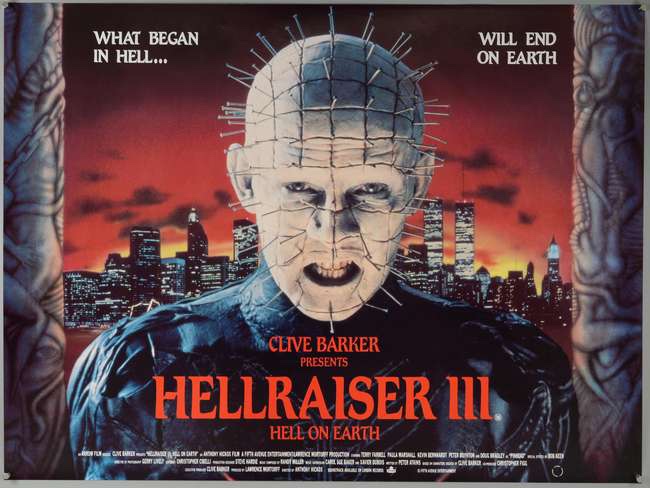
Often horror franchises will set out on one path, hang out with one set of characters for the first couple entries or so and then go back to the drawing board to shift gears completely, placing their action and mythology elsewhere in a different scenario. It gives fresh perspective, new characters and a chance for an atmospheric transference to a new environment, which I think Hellraiser III: Hell On Earth handles terrifically. The nightmarish Rubik’s cube has somehow made its way to a 90’s big city and is purchased by an obnoxious nightclub owning freak-show (Kevin Bernhardt) who uses its otherworldly aura to boost both his club’s atmosphere and his own bizarre sex life. The cube, embedded in a sculptured pillar, has a mind of its own though and soon Pinhead and his merry little gang escape from their stoney prison and wreak all madness and havoc throughout the city, starting with an impossibly bloody free for all at the club. One intrepid reporter (Terry Farrell) knows a good story when she sees one and begins to get embroiled in the Cenobites plan for citywide mayhem, along with her friend (Paula Marshall). Pinhead is fun in this one because it’s not like the first two where he just gets summoned from the cube and is there all ready to go, here he’s been trapped in that stone pillar for quite sometime and has a lot of pent up rambunctious energy and when he gets loose, he *really* unleashes hell. He’s got some… quite interesting homies in this one too, not the same peeps from the first two. There’s one cenobite with CD’s embedded into its head who chucks them around like ninja stars and amputated people’s limbs. Another one has a fancy camera on its face and uses filmmaker lingo as it kills people and as ridiculous as these two might seem initially, one must remember that the cube and the forces within seem to mirror human experience back at us with their shenanigans so it kind of makes sense in a way, plus I greatly appreciated such audacious creativity. Bradley gets to play both Pinhead here and the colonial era British explorer who he used to be for a nice touch of variation and duality. This one was a blast; stunning gore and visual effects, nostalgic 90’s aura, a wicked fun female protagonist and a playful tone that sets it apart from the first two.

-Nate Hill

THE ROBERT ALTMAN FILES: THE LONG GOODBYE (1973)

Philip Marlowe has been asleep. Whether it’s been a literal and continuous Big Sleep that has lasted since we last saw the man in 1946 is unclear. But there are clues scattered about which suggest that it is. First off, genius screenwriter Leigh Brackett is back with another adaptation of a Raymond Chandler opus just as she was all those years earlier when she was Howard Hawks’s scribbler of choice. But regardless of the initial and obvious familiarity, things are markedly different than the last time we saw Marlowe. For the hope and exuberance of postwar 1946 has given way to the cultural malaise of 1973, a time where the fabric of the country was disintegrating under the twin stresses of Vietnam and Watergate and everything we thought we understood about America was turned upside down and was perpetually under audit.

Robert Altman’s masterful The Long Goodbye was the first in a wave of neo-noir films that flooded the American cinemas in the 1970’s. Along with Roman Polanski’s Chinatown, Arthur Penn’s Night Moves, and Robert Benton’s The Late Show (produced by Altman and both cast and crewed by many of his regulars), these films took the antique formula of the dogged private eye and turned it on its ear by examining the current culture through the newly-minted, cynical lenses of the Boomer Generation or making a contemporary allegory out of an old-fashioned period piece. In all of the cases, there was a strong, moralistic tone regarding right and wrong that would crack as the film unspooled and the hero found that he no longer recognized the world he was in, a theme that cut deeply with the intended audience.

This is strongest and most evident in The Long Goodbye, which, not coincidentally, was the first of the bunch. In it, private eye Philip Marlowe is juxtaposed immediately with a cinematic fantasy. As “Hooray For Hollywood” scratches its way over the soundtrack and we survey the lodgings of one of pop culture’s most indelible and toughest detectives, we immediately sense that something has gone directly to seed. Instead of clean-lined Humphrey Bogart, we get fuzzy, wrinkled, and unshaven Elliott Gould. And instead of having to jump into his car in the middle of the night to solve a hot mystery under the darkness of the Los Angeles night, Marlowe’s cat simply wakes him up because he’s hungry and wants some food.

While the trip to the grocery store for the cat food supplies the film with its most potent allegory about trust, it also serves to crosscut an escape from the Malibu Colony by one Terry Lennox (Jim Bouton), lifelong buddy of Marlowe currently bruised and battle-scarred after a tussle with his wife, Sylvia. As he drives to Marlowe’s pad to request an emergency, middle of the night escort to Tijuana, Terry surveys the physical damage to his person; deep scratch on the face with a swollen and bruised hand. When Sylvia Lennox shows up beaten to death fifteen minutes into the film and Terry confesses to her murder in his own suicide note, Marlowe goes on a personal crusade to clear his friend’s name. In doing so, he mixes with an alcoholic writer (Sterling Hayden), the writer’s icy blonde wife (Nina van Palllandt), an equal opportunity mafioso (Mark Rydell), and a quack doctor (Henry Giibson).

Clad in a cheap black suit that never comes off his corpus and prowling about in his 1948 Lincoln Continental Cabriolet with a bottomless supply of non-filtered Lucky Strikes, Marlowe stumbles through blanched, early 70’s L.A. in a total haze. Still smart enough to sniff out phony amateurs and bumbling hoods, Marlowe never seems to understand the gravity of his current situation or the physical stakes involved. And in direct opposition to Howard Hawks’s The Big Sleep where Philip Marlowe seemed to glide through a studio-built Los Angeles with horny women throwing themselves at him without any effort on the part of Humphrey Bogart, Gould’s Marlowe can’t even negotiate a fruitful conversation with Mrs. Tewksbury, real estate agent to the rich and famous. “It’s ok with me,” a catchphrase he’ll employ throughout the film to signify his acceptance of any given situation without any shred of understanding, seems to fly out of his mouth with more frequency the closer the film gets to its conclusion.

What makes The Long Goodbye unique is that, like the other genre-blasting offerings by Altman, this is a detective film without much of a mystery at its center. Marlowe seems more intent on convincing himself of Lennox’s innocence than he really cares about clearing Lennox’s name and, like so many other Altman heroes, there is more than a touch of self-deception at play with Philip Marlowe. Lost in a landscape where ideals have become malleable, trust is transactional, and macaroni costs more than a quarter, Marlowe desperately builds a case out of the wildest of red herrings so he can continue to float along through life with his core values intact. Jack Nicholson’s J.J. Gittes is gutted by the larger graft that has seared him very personally and Gene Hackman’s Harry Moseby is frustrated at his inability to see three moves ahead of him but Philip Marlowe believes in a kind of idealistic clarity better suited for a time long since vanished, if it even ever really existed at all.

It isn’t until about the the middle of Alan J. Pakula’s Klute, itself ostensibly a whodunit about a call girl killer, that the film’s mystery is lifted and the audience knows the identity of the murderer well before the titular cop figures it out. In The Long Goodbye, the detail of Terry Lennox’s bruised hand being concealed by the driving gloves is something told to the audience but not Marlowe and it is a reveal that occurs before the opening credits end. In essence, Altman wants us to know that Marlowe will spend the rest of the film being played for a sucker and expending a ton of shoe leather just to get his heart broken. In a world that’s gone all wrong, Marlowe is all right. Unfortunately for him, he’s all wrong in a world where, by his own constant admission, it’s all ok with him.

Brad Anderson’s Fractured

Brad Anderson’s Fractured is not a good film, but it somehow manages to look, sound and feel like one. How, you may ask? It’s just one of those slick, dynamic thrillers that is absolutely engaging on a stylistic level, well acted, scary when it needs to be and very atmospheric… however, it has a manipulative, unfair zigzag of a narrative that insults both the audience’s deductive skills and overall intelligence and at times feels like they were making it up as they went along, and decided right in the middle of the third act which fork in the road they were gonna go with in terms of plot resolution. Not a good look from a screenplay standpoint. Anderson is a terrific filmmaker who is responsible for some of my dearest favourites in the horror/thriller genres including Transsiberian, Session 9, Stonehearst Asylum, Vanishing On 7th Street, The Machinist and a few fascinating if flawed efforts like The Call and now this film. Sam Worthington gives a solid performance as a frantic father desperately searching for his missing wife (Lily Rabe, wondrous as ever) and young daughter (Lucy Capri), when they disappear under mysterious circumstances at a county hospital the family goes to following a roadside medical emergency. He checks them in, they are rushed off downstairs to get MRI’s and… he never sees them again. All of the nurses, EMT’s and the charismatic duty doctor (always nice to see Stephen Tobolowsky) keep assuring him that he checked himself in alone and there never was a wife or a daughter in their hospital to begin with, which seems shady as fuck and causes him to launch a one man mission to find out what happened to them. There are some incredibly tense scenes of hospital espionage as he stealthily navigates corridors and stairwells, pursued by cops and security at every turn. The performances are great, the momentum is kept up nicely and it’s all very snazzy… but like I said, this one jerked my chain a few too many times as far as plot turns go and by the end I felt disappointed, exploited as a viewer and downright hostile at the experience overall. Is this guy just a lunatic and imagining he had a wife and kid, or are the hospital staff actually hiding something sinister? Well, the film waffles back and forth in embarrassingly melodramatic and implausible fashion between the two possible outcomes and when it comes time to level with us their way of going about it feels cheap, lurid and unfair to its lead, which is especially unfortunate for poor Worthington who *finally* gives a terrific performance and ends up betrayed by the script that doesn’t properly do the character justice. The fact that this is well made makes its glaring drawbacks all the more frustrating: if it were simply a shittily crafted film I could have just three pointer line tossed it into the trashcan, so to speak. But I enjoyed much of it from a style and tone aspect, so it makes the lack of proper backbone in story just sting way more. Meh.

-Nate Hill