B Movie Glory with Nate: Mutant Chronicles

image

Mutant Chronicles is a solid gem, as both a b movie and a legit exercise in bloody high concept fantasy. It’s got a sci fi vibe meshed nicely together with a grinding steam punk sensibility, and it’s pure visceral gold. The vague plot, as I best remember it: Some form of extraterrestrial intellegience takes up residence deep within the earth’s core, using a gigantic machine to turn humans into mindless, rabid killing machine with nasty, pokey, king crab looking things for limbs. The warring corporations who control the remaining resources on the planet commission a crew of dirty dozen style bad asses to venture deep into the earth, stopping the mutants and their makers, and silencing the evil contraption forever. Thomas Jane is Major Mitch Hunter, the stoic tough guy leading the group with grit and guts. He’s also searching for his missing superior officer Nathan Rooker (Sean Pertwee). Along with him is strong, silent monk Brother Samuel (Ron Perlman), his mute daughter (Anna Walton), and other assorted warriors including Benno Furmann and Devon Aoki. That’s pretty much all you get for a plot. The rest is screaming zombie esque hordes that ambush them at every turn and provide especially grisly action set pieces. There’s a really impressive journey in a rickety spaceship that looks like a cross between a hot air balloon and a toaster, and a cameo from an extremely bored looking John Malkovich. Jane and Perlman use their tough guy charisma to bring the story to life, and the special effects are pretty damn cool. This one has bite, imagination and buckets of gore, particularly in a frenetic finale deep within the earth’s interior. Great stuff.

RON SHELTON’S DARK BLUE — A REVIEW BY NICK CLEMENT

dark_blue

Kurt Russell gave one of his career best performances in Ron Shelton’s shamefully neglected cop film Dark Blue. Maybe it was because the film painted such an ugly, downbeat portrayal of the LAPD without any seriously commercial elements to balance the tone or resolution that it failed to connect with audiences (it grossed $12 million back in February 2003). Shelton’s twisty film, which was co-written by David Ayer (Training Day, Fury, Suicide Squad) and legendary crime novelist James Ellroy (L.A. Confidential, American Tabloid), involves police corruption, cover-ups, and murder, with the action set during the volatile final days leading up to the verdict in the Rodney King trial, with the narrative extending into the nightmarish rioting and looting that befell the city after the police officer’s controversial acquittal. Russell is fantastic as a morally corrupt cop who only knows how to play by his own set of rules, while the entire film carries a distinct whiff of retro cynicism and respect for 70’s cinema, all the way up to the grim finale. The supporting cast is phenomenal, with Scott Speedman, Brendan Gleeson, Ving Rhames, Jonathan Banks, Dash Mihok, Lolita Davidovich, and Michael Michele all offering vivid performances, while cinematographer Barry Petersen brought a gritty visual style that smartly utilized the hand-held camera aesthetic. Terence Blanchard’s serious, almost mournful score seals the deal. Less an action film and more of a character study, Dark Blue deserves to finally find a larger audience, and will likely be greatly admired by fans of this particular genre and the old-school stylings of Sidney Lumet when he was cranking out these scuzzy, visceral pieces of filmmaking.

THE DARK KNIGHT: A Retrospective by Joel Copling

Rating in Stars: **** (out of ****)
Cast: Christian Bale, Heath Ledger, Aaron Eckhart, Michael Caine, Maggie Gyllenhaal
Director: Christopher Nolan
MPAA Rating: PG-13 (for intense sequences of violence and some menace)
Running Time: 2:32
Release Date: 07/18/08

Upon donning the cape, cowl, and alter ego of the Batman, it’s very likely that Bruce Wayne never envisioned that his plan to return fear upon those who prey upon the fearful would be this much trouble. That becomes clear very soon into The Dark Knight, a thunderous sequel to 2005’s Batman Begins, which captures quite forcefully the old adage about good deeds. The symbol for the city of Gotham that the Batman was meant to be has now inspired copycats who resort to the use of shotguns while wondering how their method is any different from the real hero’s and chaos (of the systematic sort) in a city already long prone to it. Here is a symbol meant to inspire good; over there are the forces that would slowly chip away at the influence.

Bruce (Christian Bale) as the Batman has been keeping busy. The mob has been getting hundreds of thousands of dollars at a time from banks that have been infiltrated by their ranks (The opening sequence depicts a meticulous heist of one of these banks, and William Fichtner appears in a cameo as its manager, who is as unabashed to pull out a shotgun as the robbers). Different sects of the city’s mob (whose leaders are played by the likes of Eric Roberts, Michael Jai White, and Ritchie Coster) make deals behind closed doors–and even some of Gotham’s finest are among those on the mob’s payroll, although Lt. James Gordon (Gary Oldman) and the mayor of Gotham (Nestor Carbonell) represent the ones who haven’t been swayed by criminal influence.

Bruce as a public figure is enjoying the nightlife spoils of his wealth, inherited from the parents for whose deaths he still feels guilty, although the fact that popular new district attorney Harvey Dent (Aaron Eckhart) can be seen on the street and in the news with Bruce’s former flame, assistant district attorney Rachel Dawes (Maggie Gyllenhaal, filling in for a missing-in-action Katie Holmes), hanging off his arm forces Bruce’s faithful butler Alfred (Michael Caine) to remind him of the costs of becoming a masked vigilante who spends his nights beating the bad guys senseless. “Know your limits,” Alfred advises; “I can’t afford to know them,” is Bruce’s foreboding reply.

The plot within the screenplay, written by director Christopher Nolan and his brother Jonathan, is remarkably streamlined. We have the conflict raising its head almost immediately upon reintroduction to the central characters, we have the conflict being complicated by twists in the development of the series of events, we have the introduction to a new villain (Again, I will get to him in a minute) who introduces a new dynamic within the balance, and we have those dynamic action sequences (shot with stunning mise en scene by Nolan and cinematographer Wally Pfister, whose compositions are particularly striking here).

And now we get to that villain (who, by the end, is one of a pair, though clearly and distinctly the more dangerous one). He is known only as the Joker. He comes with custom clothing, primitive weaponry such as knives (which, he explains to one character, he prefers to guns because of the methodical way in which he can use them), and a simple request: The Batman must reveal his identity. Oh, and he’ll kill people if this doesn’t happen within his arbitrary time frames. Heath Ledger, who is terrifying here, plays the Joker as a man with both a lack of conscience and a pitch-black sense of humor (a “magic trick” involving a pencil, his reaction to a faulty detonator or to a mob boss suggesting that he thinks he can succeed without bodily injury to himself, his follow-through of the Batman’s plea to “let go” of a hostage).

He’s a villain for the ages because of how merciless he is without even feeling the need to be menacing, and the performance at the center of it is unnerving enough that one doesn’t remotely need to wonder why the Joker character is the Batman’s long-gestating nemesis. The climax, which has two layers to peel back (two boats full of hostages followed by a crisis on a more intimate level), also revolves around the other villain who crops up as a result of the Joker’s influence on the events. They’re far from predictable and manage to reflect the relentless forward motion of The Dark Knight into the territory of not merely a superhero blockbuster but a grand and thrilling crime drama.

THE MEAN SEASON – A REVIEW BY J.D. LAFRANCE

MSDMESE EC004
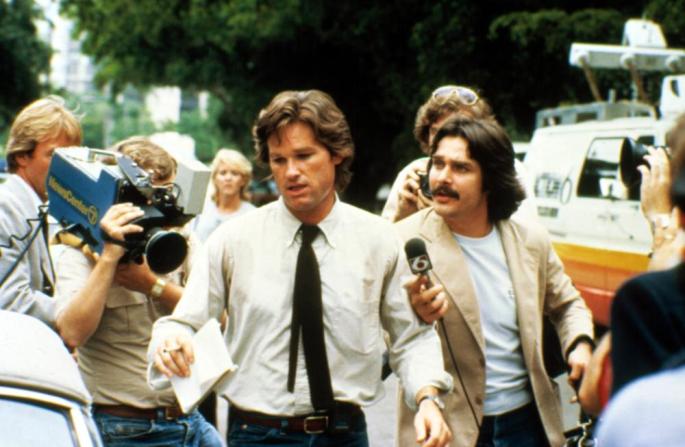
THE MEAN SEASON, Kurt Russell, 1985. ©Orion Pictures Corporation

The 1980s was quite a prolific decade for actor Kurt Russell. Sprinkled between the genre classics he made with director John Carpenter, the actor tried his hand at a wide variety of roles, from shifty used car salesman in the comedy Used Cars (1980) to a nuclear power plant worker in the docudrama Silkwood (1983) to a police detective in the neo-noir Tequila Sunrise (1988). Often forgotten during this busy decade is a nifty little thriller called The Mean Season (1985). Based on the bestselling 1982 novel In the Heat of the Summer by John Katzenbach, this well-executed film acts as the cinematic equivalent of an engrossing page turner.

Set in Miami during the hot, late summer months, the film opens with an urgent brassy score by the great Lalo Schifrin that plays over shots of stormy skies juxtaposed with the busy printing presses of the Miami Journal, foreshadowing how both will play a prominent role later on. Malcolm Anderson (Kurt Russell) is a veteran crime reporter that has just come back from hiatus/job hunting in Colorado. He’s burnt out, lacking both ambition and drive. He wants a change of pace and threatens to quite… again. But before he can bring it up, Bill Nolan (Richard Masur), his editor, assigns him to cover the murder of a young woman that has been shot in the head.

The crime scene sequence speaks volumes about Malcolm’s character. He’s covered the beat long enough to be on friendly terms with homicide detective Ray Martinez (Andy Garcia) but not his partner Phil Wilson (Richard Bradford). He also knows how to get the guy who found the body to open up and talk then has the decency not to use the man’s name in the article. Malcolm is also tactful and understanding with the mother of the murder victim, listening to the woman’s reminisces about her child while still getting what he needs for the article. This is in contrast to Andy Porter (Joe Pantoliano), the crime photographer who shadows Malcolm on his assignments and has no problem taking a picture of the grieving parent during a particularly vulnerable moment. This scene is important because it establishes that Malcolm is good at what he does and he is a decent person so we like and identify with him.

Malcolm finally confronts Bill about his desire to quit in a scene between veteran character actor Richard Masur and Russell. Bill tells Malcolm, “You haven’t been at this long enough to be as burned out as you like to think you are.” Malcolm feels like he’s seen and done it all but still hasn’t found his Watergate yet – the dream of all ambitious investigative reporters. Malcolm sums it up best when he tells Bill, “I don’t want to see my name in the paper next to pictures of dead bodies anymore.” The editor counters, “Now we’re not the manufacturer, we retail. News gets made somewhere else, we just sell it.” It’s a nice scene that is well-played by both actors as their characters touch on the nature of ethics in reporting the news. How far are they willing to go to get a story that makes their career? Malcolm is about to find out as he gets a phone call from the man (Richard Jordan) that killed the teenage girl. He admires Malcolm’s writing and wants the reporter to be his mouthpiece as he plans to kill again.

Bill is practically salivating at the possibilities while Malcolm’s ambition kicks in as he realizes that he’s found his Watergate. However, as the murders continue, Malcolm finds himself getting more involved in the story until he’s as much a part of it as the killer, which puts his life and that of his girlfriend (Mariel Hemingway) in danger.

While the set-up and plot of The Mean Season are nothing special – the reporter who gets in way over his head – both are executed well enough that you don’t mind and this is due in large part to the engaging performances of the talented cast that do their best to sell the material. Kurt Russell certainly comes across as a believable newsman. He’s got the lingo down and seems to know his way around the newsroom and the beat that Malcolm covers. The actor does a nice job of conveying his character’s transition from someone reporting on the news to the one making it. He also manages to get a chance to show off some of his action chops in an exciting bit where Malcolm races across town to find his girlfriend before the killer does. His frantic, desperate race is intense because the actor knows how to sell it, running full tilt over several blocks like a man possessed, and because we know more than he does. We know just how much danger his girlfriend is in.

Mariel Hemingway is good in the thankless girlfriend role. She and Russell have good chemistry together. They make a nice couple together and her character ends up acting as the voice of reason when Malcolm gets too involved. Hemingway does her best to avoid the damsel in distress stereotype but it is pretty easy to figure out how it’s all going to go down. She is part of a solid supporting cast that includes Andy Garcia as the dedicated cop that cares and Richard Bradford (The Untouchables) as his older, more experienced partner who thinks that Malcolm is a parasite. The aforementioned Richard Masur (The Thing) is also memorable as the opportunistic editor who just cares about selling papers. The great William Smith (Darker than Amber) has a memorable bit part as a pivotal witness that helps Malcolm and the cops track down the killer. He has only one scene with a decent amount of expositional dialogue to convey but he nails it.

Director Phillip Borsos (The Grey Fox) also does a nice job orchestrating the cat and mouse game between Malcolm and the killer thanks to the smartly written screenplay by Leon Piedmont. They manage to hit all the right notes and fulfill all the right conventions of the thriller genre – the grudgingly helpful cops, the ambitious reporter, the sociopathic killer, and so on – and stir it all up. Borsos employs no-nonsense direction like a seasoned studio pro, which lets the actors do their thing. I also like how he conveys a sense of place with the sweaty, summer weather, coupled with the impending hurricane that is almost tangible. It all comes to a head at the exciting and atmospheric climax when Malcolm confronts the killer in the Everglades.

John Katzenbach was a veteran crime reporter who based his debut novel In the Heat of the Summer on years of experiences and that of his colleagues. Producer David Foster, a journalism graduate, had been looking for a good screenplay about reporters for years. He came across the manuscript for Katzenbach’s novel and was impressed by it. He met with the author and they talked about how to accurately convey the life of a newspaper reporter on film.

In April 1984, Borsos and his crew arrived at the Miami Herald offices to study a typical day in the newsroom and on that day Christopher Bernard Wilder, suspected of kidnapping and murdering several young women, shot himself as the police closed in. The resulting flurry of activity at the Herald helped Borsos create a realistic newsroom atmosphere in his film. Katzenbach urged Kurt Russell to hang out with his fellow reporters in preparation for the film. To that end, Russell and Joe Pantoliano accompanied a reporter and a photographer from the newspaper to the scene of a grisly double murder in North Miami. Much like in the film, the actor found cameras were trained on him and later saw footage of himself on the evening news. In addition, Richard Masur spent days and nights on the Herald’s city desk.

Borsos’ previous film The Grey Fox (1982) did not make a profit and so to pay off his debts he agreed to direct The Mean Season. Unfortunately, he had creative differences with Foster over the tone of the film. According to Borsos, he wanted the film to look “somewhat stylized and slightly unreal, more what you would call a 1950’s film-noir type of picture.” In contrast, Foster wanted a more realistic-looking film as Borsos said, “Mr. Foster’s vision was more of action-packed thriller instead of a character-thriller.” It also didn’t help that the director resented the producer’s constant presence on the set. The newsroom scenes were actually shot at the Miami Herald late at night with several staff members used as consultants and extras. Russell and two fellow actors used three real newsroom desks that were outfitted with authentic-looking notepads, books, dictionaries and computer printouts. In addition, Katzenbach was frequently present during filming and acted as a consultant.

The Mean Season
is an entertaining film that falters a little bit at the end with a clichéd “twist” that sees Malcolm suddenly transform into an action hero but Russell does his best to make it work. At times, it feels like there are two kinds of films competing – the character-driven thriller that Borsos wanted to make and the action-packed thrill machine that Foster envisioned. The result is a sometimes uneven effort. Not every film has to try and reinvent the wheel by offering some novel take on the genre. There’s something to be said for a thriller that has nothing more on its mind then to entertain and tell a good story and that’s something The Mean Season delivers on both counts.

STEVEN SODERBERGH’S THE GIRLFRIEND EXPERIENCE — A REVIEW BY NICK CLEMENT

girlfriend_experience

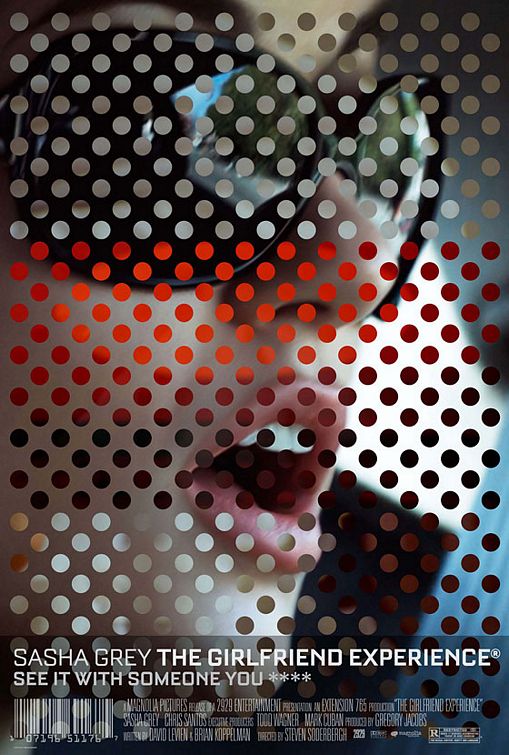
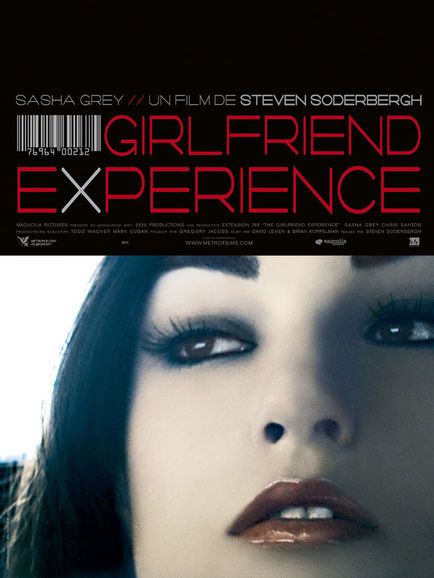
I love the icy-cool precision of Steven Soderbergh’s The Girlfriend Experience. Clinically directed with a purposeful sense of emotional detachment, this is a socially piercing study of sex, rules, expectations, and dominance, with an explicit thematic angle on how our bodies can be used for maximum advantage in almost every situation that we encounter. Written by the fantastic team of Brian Koppelman and David Levien, the film gained a fair bit of notoriety when it was released in 2009 due to the fact that Soderbergh cast former adult film star Sasha Grey in the lead role as a high-priced call girl making the rounds with her quietly rich clients. She’s strong in the film, not because she’s asked to do much in the way of simulated sex or nudity, but because she understood the chilly and sometimes soulless aspects to the narrative, and because Soderbergh was wise to tailor the film to her non-verbal strengths as an actress. She’s got an intense visual presence, and because The Girlfriend Experience is a study of outward appearances and how people react to them, her hardened physical nature helped to define many sequences and worked to create a sense of strength and confidence. Shot digitally by Soderbergh under his usual alias (Peter Andrews) and clocking in at a brisk 80 minutes, the storytelling and filmmaking are as sleek and sexy as the chic production design by Carlos Moore, with everything accentuated by extra-sharp editing by Mary Ann Bernard (another Soderbergh alias), with the ambient, minimalistic musical score by Ross Godfrey hitting all the appropriate notes. Look for film critic Glenn Kenny in a small but extremely humorous role as an escort “reviewer.” Slammed by some as merely an experiment, this is one of the more under the radar Soderbergh efforts, and it’s likely to get some press again soon, as Starz has a TV series that’s based on the film launching in April, with alluring actress Riley Keough in the starring role.

girlfriend_experience_ver2.jpg

In The Bedroom: A Review by Nate Hill

image

In The Bedroom is tough cinema, packed with the kind of substance and human drama that often drives casual viewers away, their psyches scorched by the lack of generic plotting and warm, fuzzy story arcs. To those who actively seek out realism, heartbreaking emotion and films which probe the complex corners of the human soul for answers that weigh heavier in your thoughts than the questions, this one is a treat. It lulls you in with an opening montage of summer romance, giving you no context of the challenging character arcs to come. We begin with Frank (Nick Stahl) a man barely out of his teens, in the midst of a passionate fling with Natalie (a fantastic Marisa Tomei), a woman far older than him who has two kids and a troublesome ex husband (William Mapother). Frank’s parents differ on their opinions as far as his relationship goes. His no nonsense mother (Sissy Spacek), calmly disapproves, while his loving father (Tom Wilkinson) encourages simply by sitting back and going along with it. Then, out of nowhere, the plot takes a sharp turn into tragedy. Frank is killed in a struggle involving the volatile ex husband, leaving everyone behind to grieve. This film isn’t content with a simple, standard grieving process. It insists on holding a steady, nonjudgmental gaze upon the parents, and the agonizing state they are left in. The killer is released on extended bail. The mother is torn apart knowing he is out there. The father actively downplays the devastation simply because he isn’t capable of letting out what’s inside him, twisting him in silent despair every moment of every day. Wilkinson is emotional dynamite, like a bleak cloud with flashes of sorrowful lightning beneath, a time bomb of implosive sadness. Spacek carries herself magnificently, especially in a third act verbal showdown with Tom that leaves you gutted and stunned. These two play their roles with uncanny precision, every movement and mannerism a roadmap leading straight to the core emotion, and shellshock of the tragedy, still being absorbed by their characters with every  frame we see. It’s a brave script for any group to undertake, and one which you must go into utterly prepared or you will either fall short of telling the story to its potential, or be consumed and disarmed by it, and arrive with a finished product with a tone deaf mentality. Not this one. Every aspect is treated with care, attention and focus by all involved, miraculously pulling this hefty piece off without a hitch. It’s often a struggle to sit through films that don’t make you feel all that great, films that tear off the superficial cloth that much of cinema is cut from, delving beneath for an unwavering look at what really goes on in this world of ours, be it large scale or intimate. It’s important to experience this occasionally though, as it can often teach you valuble truths and awaken parts of your perception that lie dormant during a lot of other movies. This one won’t hold your hand and provide an emotional blueprint for you to follow, but in being let off the leash, the experience may just be more rewarding. 

THE GOOD, THE BAD & THE UGLY – A REVIEW BY J.D. LAFRANCE

1aab7290a0f04dc1b8cef150794d358c

I’m not a huge fan of westerns. I could count my favorites on one hand but at the top of the list is Sergio Leone’s The Good, The Bad and The Ugly (1966), an epic story about three men’s pursuit of a chest of gold during the American Civil War. In fact, this film is one of my favorites of all-time. Instead of doing my usual in-depth examination of the film’s production, which has been covered in definitive detail in Christopher Frayling’s excellent Leone biography Something to Do with Death, I’ve decided to take a look at some of my favorite scenes.

The way Sergio Leone introduces the film’s three main characters says so much about them. Tuco a.k.a. The Ugly (Eli Wallach) is the film’s wild, uncontrollable id and the humanistic character of the three in the sense that he has all of the foibles and weaknesses that we all do. He is one of the most lethal, yet ungraceful characters in the western genre. His introduction sets up what a formidable opponent he is as he quickly dispatches three men come to kill him. Tuco crashes through a storefront window with a gun in one hand and a huge chunk of meat and bottle of wine clenched in the other, which perfectly captures the wild, untamable essence of his character. Not even a freeze frame that Leone employs at one point during this sequence slows Tuco down. He is a character of extremes.

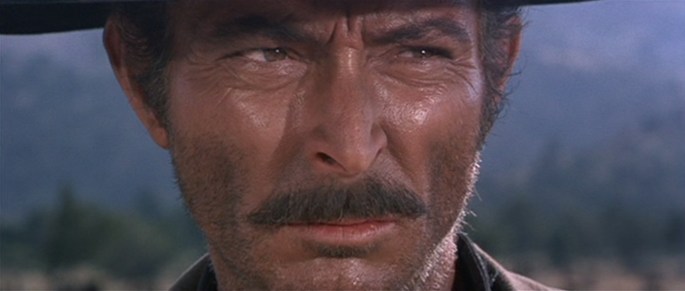
Angel Eyes a.k.a. The Bad (Lee Van Cleef) is a cold-blooded killer and Leone captures the menace in the man’s eyes in his first close-up. With this shot Leone establishes that Angel Eyes is pure evil. He visits a man that knows the identity of someone who helped steal a box of gold. He spends a few minutes staring the poor man down, never taking his eyes off him, even while eating, which has to be pretty damn unnerving. The film’s first bit of dialogue is finally spoken in this scene, ten-and-a-half minutes in (including opening credits), which demonstrates Leone’s mastery of visual storytelling. For me, the key bit of dialogue in this scene is when Angel Eyes tells the man, “But when I’m paid, I always see the job through.” He then proceeds to kill the man and his youngest son without hesitation. If that wasn’t bad enough, Angel Eyes goes back to the man who hired him and kills him too because the other man paid him to and, of course, he always sees the job through. There’s a fantastic last shot of Angel Eyes blowing out the room’s lamp and in doing so, disappears into the darkness with a bit of ominous scoring by Ennio Morricone.

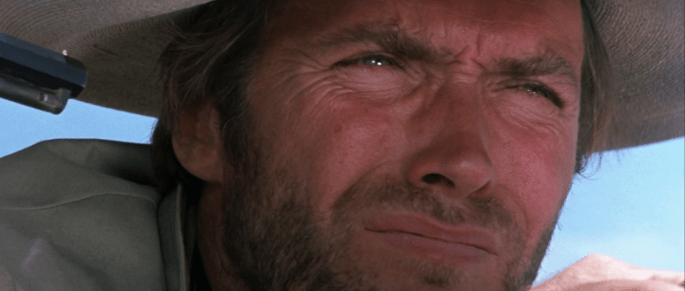
Blondie a.k.a. The Good’s (Clint Eastwood) introduction has to be one of the coolest in cinematic history. Three men capture Tuco, who is a wanted fugitive, and one of them says, “You know you got a face beautiful enough to be worth $2,000?” And then a voice off-camera says, “Yeah. But you don’t look like the one who’ll collect it.” Blondie then steps in view, coolly lights a cigar and guns down the men with brutal efficiency. Leone prolongs a shot of Blondie’s face as long as possible until we find out that he and Tuco have a deal. Blondie captures Tuco and brings him in for the reward money. He then rescues Tuco before he’s hanged to death and they repeat the process as the reward money increases. When Blondie brings Tuco in to the authorities, the fugitive lets loose a hilarious string of insults and curses directed at his captors. No one can quite say the word, “bastard” with the same kind of passion and venom as Eli Wallach does in this scene.

Later, as Blondie and Tuco split up the reward, the two men talk about the risks each takes in their endeavors. Tuco gives Blondie a warning that says a lot about his character: “Whoever double-crosses me and leaves me alive, he understands nothing about Tuco.” He laughs and in a nice bit, chews on one of Blondie’s cigar. I always wondered if that last bit was improvised by Wallach as it has a spontaneous feel to it. However, when Blondie decides to end his partnership with Tuco, he foolishly does not heed the outlaw’s warning and leaves him alive, even if it is the middle of nowhere. Blondie is a fool if he thinks that will kill Tuco, or maybe he just doesn’t care and figures that they will never meet again.

Angel Eyes witnesses Blondie and Tuco’s routine and responds to a woman who expresses relief that Tuco is being hanged by telling her, “People with ropes around their necks don’t always hang.” She asks him to explain and he replies, “Even a filthy beggar like that has got a protective angel.” Blondie is only heroic in an ironic sense. Leone underlines this notion at one point when he uses a faux angelical musical cue by Morricone to play over a shot of Blondie about to “rescue” Tuco from a hangman’s noose. Angel Eyes tells the woman, “A golden-haired angel watches over him.” Blondie is a mercenary but he does have his moments of compassion. He may be an efficient killer but unlike Angel Eyes he only kills when it is absolutely necessary or for profit.

Leone plays with our notions of good and evil with these three characters. Blondie isn’t truly good in the traditional sense but he is within the context of The Good, The Bad and The Ugly. Angel Eyes is truly bad, a pure killing machine in it only for the gold and not above repeatedly and viciously slapping a woman around in order to get information out of her. There is a glint in Van Cleef’s eye that suggests Angel Eyes enjoys making others afraid through physical intimidation. He is also very cunning and smart. He knows it would be pointless to torture Blondie when he is held captive at the Union Army Prisoner of War camp because he would never talk, as opposed to Tuco who will do or say anything to save his own skin.

Tuco is actually the film’s only sympathetic character. Sure, he is a liar and he’s crude but he also straddles the line between good and evil — at times he is one or the other — much like most people in real life. He is also quite smart as evident in the scene where he expertly assembles his own custom revolver. The others underestimate him and think that he’s stupid, but he’s quite cunning. If anything, he’s a survivor that repeatedly escapes death during the course of the film. While Angel Eyes is pure evil, Tuco is just out for himself and therein lies the crucial difference between the two characters.
tuco1
The Good, The Bad and The Ugly
is a marvel of editing. For example, the scene where Tuco and his three henchmen ambush Blondie is edited in such a way that there is an incredible amount of tension created from cutting back and forth from Blondie cleaning his gun, Tuco’s men quietly approaching his room, and the army marching outside. We are left wondering if the sounds of the army will make it impossible for Blondie to hear the approaching ambush in time and if he will be able to re-assemble his gun in time. Almost no music is used during this scene, just ambient sounds and this helps ratchet up the tension even more.

A lot of people forget that The Good, The Bad and The Ugly is also a devastating critique of the American Civil War. For example, there’s a scene where Angel Eyes walks through bombed out ruins and finds all kinds of wounded Confederate soldiers. He talks to their Commanding Officer who accepts a bottle of alcohol in exchange for information. We see this again when Tuco takes Blondie to a mission to nurse him back to health after nearly killing him in the desert. They go through a room full of wounded Confederate soldiers – more casualties of this costly war. There’s also Blondie and Tuco’s time spent at a Union Army P.O.W. camp where Angel Eyes poses as an officer who tortures prisoners for information. Finally, the harshest commentary on the Civil War comes when Blondie and Tuco are captured by the Union Army and meet the Captain who is a jaded drunk. He tells them about the “stupid, useless bridge” that his men fight over with the Confederate Army two times a day because it is a strategic spot, but he dreams of seeing it destroyed. And that’s just what Blondie and Tuco do in a brilliantly choreographed sequence. At this point, the Captain has been mortally wounded but before he dies, he hears the bridge detonating and gives a smile before dying. It was Blondie’s idea to blow up the bridge for the Captain and this act is not only a nice thing to do for the man but also allows him and Tuco to cross the river as the two armies leave, no longer having anything to fight over.

Even though The Good, The Bad and The Ugly is operatic on an epic scale it is the relationships between the three main characters that makes the film so good. In particular, the relationship between Tuco and Blondie is one of the film’s strengths. They often double cross each other and have a real love-hate relationship but at the film’s end, Blondie shows mercy for Tuco’s fate. It goes without saying that it is the talent of the three lead actors that makes these characters so interesting to watch. Clint Eastwood comes from the less is more school of acting and suggests a lot from doing or saying very little. In sharp contrast is Eli Wallach’s flamboyant, over-the-top performance as Tuco. If Eastwood is all about minimalism, then Wallach lets it all hang out. Finally, Lee Van Cleef is a confident, malevolent force of nature — the pure essence of evil.

One of Eli Wallach’s finest moments in the film is when he tries to get Eastwood’s character, who is near-death, to tell him the name on the grave that contains the chest of gold. Wallach goes through a whole range of emotions as Tuco tries every trick that he knows to get the name (including using a friendly approach, begging and even crying) but no dice. It’s a wonderful scene and one that shows Wallach’s range and skill as an actor. Even more revealing is the next scene between Tuco and his brother, which provides all kinds of insight into his character. Tuco’s brother condemns his sibling’s wicked ways and past, but Tuco replies passionately, “Where we came from, if one did not want to die of poverty, one became a priest or a bandit. You chose your way, I chose mine. Mine was harder!” For all of his bravado, this is a moment where Tuco shows a vulnerable side and it adds another layer to this fascinating character.

What I’ve always found interesting is that we never find out if Tuco could beat Blondie in a gunfight. At the film’s climactic showdown, Blondie beats Angel Eyes but he tricks Tuco by not having any bullets in the outlaw’s gun. Is it because he knows that Tuco is faster on the draw? Or is he simply hedging his bets knowing that he could outdraw Angel Eyes but that would leave him little time to shoot Tuco before he shoots him. Alas, we will never know. Living up to his moniker, Blondie doesn’t kill him even though he could. He messes with him a little bit by putting him in a hangman’s noose just like Tuco did to him earlier in the film. However, he gives Tuco enough slack so that he doesn’t die and leaves him some of the gold. Blondie can’t kill Tuco because, despite everything he does in the film, he is easy to like. Again, Blondie only kills when necessary. Of course this doesn’t stop Tuco from shouting out one more curse as a parting shot and a great way to end the film.

The three men system that Leone applies to The Good, The Bad and The Ugly is one of the best plot devices ever. While it’s true that Blondie is no saint he is as close to the traditional definition of “good” as you’re going to get out of a bounty hunter. Angel Eyes is pure evil and Tuco has worked with both of them so what does that make him aside from the “ugly” moniker? He has aspects of both Angel Eyes and Blondie. It’s true that Tuco robs a store for his gun but it is done from a perspective that makes is somewhat sympathetic. Tuco is like most of us, forever unable to decide if he’s all good or all evil. He allies himself to both so that he can call on either depending on the situation. Hence, his shifting alliances with Blondie and Angel Eyes. He knows that Blondie and Angel Eyes will never become a team because Angel Eyes is only using Blondie for the name on the tombstone and Blondie is just looking for a way out.
TGTBATU 04
I think that one of the things I love most about this film is how Leone takes his time and lets scenes play out, using editing only when necessary, when it fits the tone and mood of a given scene, like the aforementioned climactic duel where we get all of these insane close-ups of each man’s hands, eyes, guns and so on. The tension builds and builds for what seems like forever until you’re ready to go insane and yell at the screen, “shoot already!” And then, of course, it all plays out in a few seconds. How brilliant is that? The Good, The Bad and The Ugly is one of those rare films that works on several levels, some that only reveal themselves upon subsequent viewings. While many champion Once Upon a Time in the West (1968) as Leone’s greatest achievement, I have always felt that The Good, The Bad and The Ugly was the best thing he ever made – a perfect marriage of epic scale and an intimate, character-driven story.

SEBASTIAN SCHIPPER’S VICTORIA — A REVIEW BY NICK CLEMENT

victoria

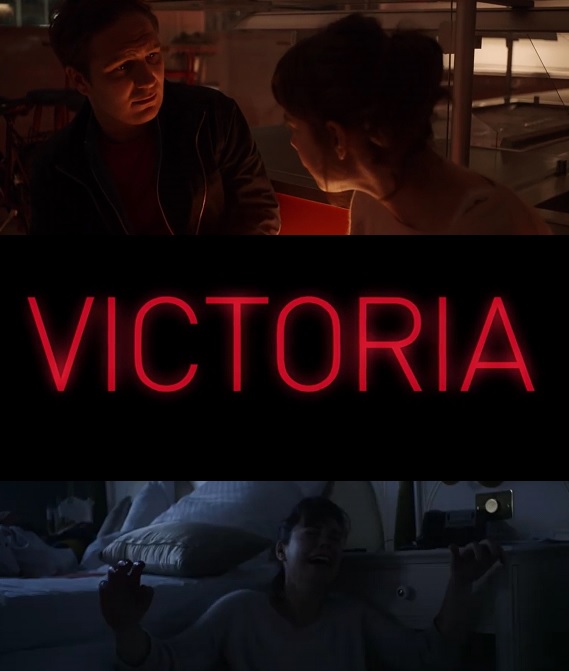
Astonishing on a technical level, the single-shot thriller Victoria is a high-wire balancing act of all the cinematic elements that keeps you guessing for two hours and 13 minutes. It’s all rather ridiculous and certainly contrived to within an inch of its life, but when the conviction of the filmmaking is this strong and when the wild-ride desire on the part of the storytellers is this evident, I’m able to set aside any thoughts of implausibility and just go along with it. And here, under the carefully planned and obsessively controlled direction of German filmmaker Sebastian Schipper, the audience is zipped off for a dizzyingly crazy night of crime and punishment, as we follow a young woman named Victoria (the fabulous Laia Costa) who somewhat reluctantly decides to partake in a bank robbery, only to see the heist turn south very quickly, with consequences that she likely never imagined. Set between the hours of 4:30am and 7:00am, the movie feels like an intoxicated blur right from the get-go, with Schipper plunging his audience into the madness of a techno-nightclub with strobe light-techniques that would likely give an epileptic some serious problems. From there, we watch as Victoria meets a random group of up-to-no-good guys, all of whom are wasted and horsing around in the street, some with criminal histories. After saying out loud, repeatedly, that she should just “go home for the night,” she lets her guard down, and joins the group for some unexpected life experiences.

Because Victoria was filmed in one, long, totally unbroken take, there’s a certain breathless quality to most of the film, while in spots, the pacing lags a bit, and you begin to wonder if some spiky editing might have punched up the ebb and flow of the aesthetic. But that was never an option here, clearly. This movie was designed as one of the ultimate one-take-wonders, and make no mistake, if you’re a fan of this sort of technical innovation, your mind will continually be blown over how it was all accomplished. And Costa, who gives a weirdly sympathetic performance despite making some questionable personal decisions, is absolutely mesmerizing to watch; just wait until her “big scene” occurs in the final moments — after all that running and physical exertion, her intense emotional breakdown feels even more pained and reflective. And, in an amazing and totally earned moment of generosity, the first credit to appear on screen after the fade to black was that of the film’s herculean cinematographer/camera operator, Sturla Brandth Grøvlen, who along with the rest of the determined crew shot three different takes of the entire film, with the filmmakers deciding to use the last attempt as the final version. Currently streaming on Netflix and available on DVD/Blu-ray.


The Boondock Saints: A Retrospective Review by Nate Hill

image

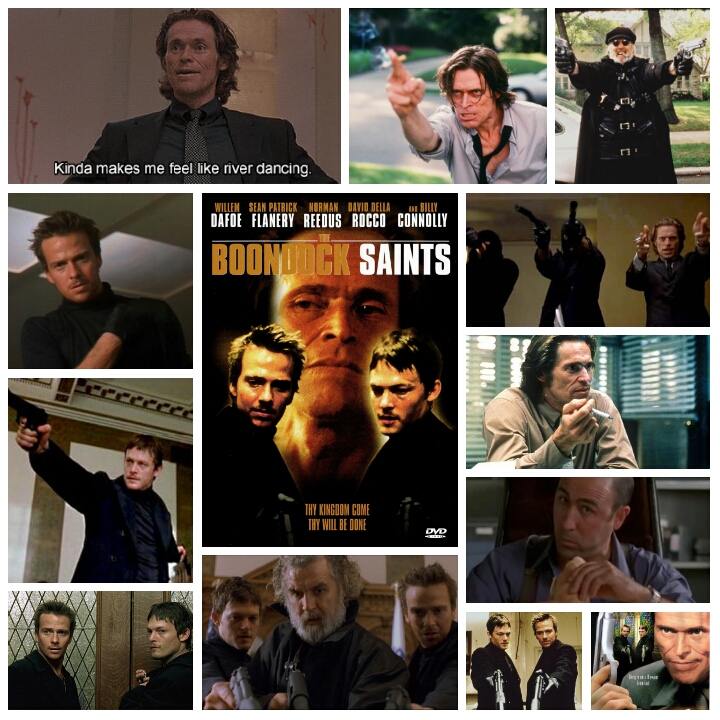
The Boondock Saints is an interesting movie for me, as it’s kind of evolved along with my consciousness as I’ve gotten older. Some films you initially dislike, yet they grow on you gradually until you see them in a new light. Some films you are crazy about right off the bat, yet over time the attraction dims and you realize you don’t really care for them anymore. And then there’s this one. While I can’t say I’ve grown to dislike it, because that’s just not the case, I will concede that as I’ve gotten older and new information on it has crossed my path, I’ve come to regard it in a new light. Also, the parts of my personality which went ape shit for anything pulpy and crime ridden back then have receded a bit as my tastes matured. But try as I might, I can’t bring myself to completely see it in a negative light, despite recognizing certain negative aspects of it which were once not so obvious to me. Saints is a tricky film because on the one hand you have the rabid fans who make up the cult following and have brought it the infamy it has today, as well as it’s sequel, which is really not that great. On the other hand you have the lofty monarchy of high film criticism, bashing it six ways to Sunday, the bad taste of it’s conception and production still on their tongues. Recently I watched the documentary Overnight (a biased film with its own glaring issues, but that’s another story), which chronicles the meteoric rise and fall of director Troy Duffy, who foolishly squandered a gift horse with immature and selfish behaviour, or at least that’s what the film shows. The film had the potential to be a big budget flick with huge stars involved and the backing of Weinstein. That never happened. Duffy’s ego swiftly sent the script into oblivion, until it finally got made years later for less than half the original offered budget, and landed in film purgatory before being squeaked into a meager distribution. A tragedy, say some. But.. is it though? Fate is a strange beast, and if everything went according to plan, we’d have a slick studio monster that might have been good, and no choppy, unique cult favourite to gain unprecedented momentum decades after its chaotic birth. Some food for thought. Anywho, on to the film. It’s low budget for sure and one can tell it’s made by a guy who’s never directed before, but it’s got a silly, cartoonish charm and cinematic flair for style that will keep you watching. Two rowdy Irish brothers named Connor (Sean Patrick Flanery) and Murphy (Norman Reedus) accidentally kill some scary russian mob soldiers in one of the most inventive scenes ever staged, and they discover they have a spiritual affinity for knocking off evil men. So, with no tactical experience whatsoever, they set out on a mission from God to end the lives of the Boston criminal underworld. Dragging their hapless, loveable buddy Rocco (David Della Rocco) along, its only a matter of time before the law tags them, and soon they have loony FBI honcho Paul Smecker after them. Willem Dafoe has to be seen to be believed in what is a career weirdest for him. He plays it like the Joker crossed with Bugs Bunny, never allowing an ounce of restraint or subtlety into the performance. I’d be interested to see the actor/director relationship which led to getting something this zany in the can. Smecker struggles morally, part of him believing the Saints to be a necessary force. They are faced with Italian mafia bosses including a scuzzy Ron Jeremy and Carlo Rota as Giuseppe ‘Pappa Joe’ Yakavetta, a ham fisted Don who wants the Saints gone. Rota is the only one who comes close to matching Dafoe’s maniacal energy, playing Yakavetta to unhinged, mustache twirling delight. Reedus and Flanery hold up their end with physicality and quite a lot of energy, making the McManus brothers two fun protagonists to hang around with. Billy Connolly shows up as Il Duce, an almost invincible assassin from hell who proves to be quite the obstacle for our boys. The concept for the film is relentlessly juvenile, and the action set pieces veer into silliness quite a bit and there’s a slapdash, haphazard feel to the whole thing, an unfinished varnish, or lack thereof to the whole process. It’s just such lurid, reckless fun though, filled with excessive profanity, comic book violence, laughable religious symbolism and deeply questionable morals that seem to have been penned by an eighth grader who’s just completed a John Woo and Charles Bronson marathon back to back. This is a movie that loves the fact that it’s a movie and acts accordingly, throwing everything it can get its hands on at you and yelling ” Look! Look how cool I am”. Is it cool? Up to you. It’s certainly one you won’t forget about. It almost ducks the ‘good film’ litmus test in the sense that you’d be wasting breath in claiming it’s a bad movie. It couldn’t care less about that, and the fans, of which I have to say I still am, seem not to either. It’s not really good, bad, terrible or anything. It’s just The Boondock Saints.

SKY CAPTAIN AND THE WORLD OF TOMORROW – A REVIEW BY J.D. LAFRANCE

Sky Captain and the World of Tomorrow empire state building

Sky Captain and the World of Tomorrow (2004) was a film bound to polarize audiences and critics alike. Loving homage or blatant rip-off? It really depends on whether you love or hate this movie. Personally, I was transported away to this cinematic dreamland for the entire running time. Kerry Conran’s labor of love is an unabashed tribute to the old pulp serials of the 1920s and 1930s (Doc Savage, Flash Gordon, etc.). It succeeds where previous pulp serial homages of the 1990s failed (The Shadow, The Phantom, Dick Tracy). Like those films, Sky Captain successfully captures the look and feel of these vintage serials but, most importantly, it also stays true to their spirit — something that these other films failed to do (The Rocketeer as the lone exception). The road to its creation is a fascinating one, from a black and white independent film to big budget movie released by a major studio.

A striking image opens the film: a gigantic zeppelin docks with the Empire State Building while the night sky is filled with lightly falling snow. The world’s top scientists have gone missing and ambitious newspaper reporter Polly Perkins (Gwyneth Paltrow in Lois Lane mode) is covering the story for The Chronicle. She meets secretly with the last scientist who hints at a top-secret project. She soon has an idea of just how important this project is as huge, flying robots swarm over the city’s skies. They begin attacking the city, turning cars over like tinker toys.

Before you can activate your Commander Cody decoder ring, Joe “Sky Captain” Sullivan (Jude Law) and his squad of fighter planes arrive to save the day. It becomes obvious that Joe and Polly have a history together. There is a sexual tension between them as they form an uneasy alliance: she shares information with him in exchange for an exclusive scoop on the source of the robots and the mysterious Dr. Totenkopf (Laurence Olivier). They are aided in their adventure by Joe’s trusty sidekick, Dex (Giovanni Ribisi), a whiz technician capable of inventing a deadly ray gun, and Captain Franky Cook (Angelina Jolie), Joe’s ex-girlfriend and commander of a squadron of flying fortresses.

Kerry Conran grew up on films and comic books of the ‘30s and 1940s and commented in an interview, “The stuff that was most visually striking were the covers of the ‘30s and ‘40s. The graphic images just in the covers, I thought, told stories on such a grand scale…The artwork of that era, they just dreamed up things on that level.” He and his brother, Kevin, were encouraged by their parents to develop their creative side at a young age. According to Kevin, their mom “didn’t buy us coloring books and have us color them in, she’d bring us blank pads of paper with pencils and you’d make your own picture and color it in, that sort of stuff, which didn’t seem like a big deal, but it sort of is. We always had a lot of support in that respect.” The Conran brothers were also influenced by the designs of Norman Bel Geddes who did work for the 1933 Chicago World’s Fair and designed exhibits for the 1939 New York World’s Fair. Geddes also designed an Air Ship that was to fly from Chicago to London. Another key influence was Hugh Ferriss, one of the designers for the 1939 World’s Fair and who designed bridges and huge housing complexes.

Conran went to CalArts, a feeder program for Disney animators and became interested in 2-D computer animation. While there, he realized that it was possible to apply some of the techniques associated with animation to live-action. He remembers trying to “use the computer that was just emerging as a technology that was viable for filmmaking, and use a technique that was used traditionally forever – you know, the blue screen – but taken to a real extreme conclusion.” Conran had been out of film school for two years and was trying to figure out how to make a film. He figured that Hollywood would never take a chance on him — an inexperienced, first-time filmmaker. So, he decided to go the independent route and make the movie himself.

In 1994, Conran set up a blue screen in his living room and began assembling the tools he would need to create his movie. He was not interested in working his way through the system and instead wanted to follow the route of independent filmmakers like Steven Soderbergh. Initially, the Conrans had nothing more than “just a vague idea of this guy who flew a plane. We would talk about all the obvious things like Indiana Jones and all the stuff we liked.” Conran spent four years making a black and white teaser trailer in the style of an old-fashion newsreel on his Macintosh personal computer. Once he was finished, Conran showed it to producer Marsha Oglesby, who was a friend of his brother’s wife and she recommended that he let producer Jon Avnet see it. Conran met Avnet and showed him the trailer. Conran told him that he wanted to make it into a film. They spent two or three days just talking about the tone of the film because, according to Avnet, he wanted to “make sure we were on the same page, because he was going to write it. It wasn’t written at that point.”

Avnet and Conran spent two years working on the screenplay and developing a working relationship. Then, the producer took the script and the trailer and began approaching actors. In order to protect Conran’s vision, Avnet decided to shoot the movie independently with a lot of his own money. “I couldn’t protect him from the studios. I prayed we could shoot the movie and then show it to the studios. And we’re lucky, they all wanted it.” The producer realized that “the very thing that made this film potentially so exciting for me, and I think for an audience, which was the personal nature of it and the singularity of the vision, would never succeed and never survive the development process within a studio.”

When it came to casting actors in the movie, Avnet used his connections and reputation and started “looking for people who fit the look, looking for people who had the right theatrical pedigree, if possible, looking for people who weren’t over-exposed.” In 2002, he showed Jude Law the teaser trailer and the actor was very impressed by what he saw. He remembers, “All I got at that early stage was that he’d used pretty advanced and unused technology to create a very retrospective look.” Avnet gave him the script to read and some preliminary artwork to look at. Law: “What was clear was also that at the center was a really great cinematic relationship, which you could put into any genre and it would work. You know, the kind of bickering [relationship]. I always like to call it African Queen (1951) meets Buck Rogers.”

Avnet wanted to work with Law because he knew that the actor had “worked both period, who worked both having theatrical experience, who worked on blue screen, who hadn’t hit yet as a major action star.” The actor had just come off doing Cold Mountain (2003) and was intrigued at going from filming on real locations to working on a movie done completely on a soundstage. Law recalls, “At the time, there was no money attached, and he [Conran] was a first time director. It took us a year and a half to put it together and even then, we didn’t have a studio deal.” The actor believed so much in Conran’s movie that he also became one of the producers and used his clout to get Gwyneth Paltrow involved. Once her name came up, Law did not remember “any other name coming up. It just seems that she was perfect. She was as enthusiastic about the script and about the visual references that were sort of put to her, and jumped on board.” Paltrow said in an interview, “I thought that this is the time to do a movie like this where it’s kind of breaking into new territory and it’s not your basic formulaic action-adventure movie.”

Giovanni Ribisi met with Avnet and, initially, was not sure that he wanted to do the movie but after seeing the teaser trailer, he signed on without hesitation. Angelina Jolie had literally come from the set of Tomb Raider: The Cradle of Life (2003) and agreed to work on the movie for three days. Despite her small role, she had conducted hours of interviews with fighter pilots in order to absorb their jargon and get a feel for the role.

Avnet went to Aurelio De Laurentiis and convinced her to finance the film without a distribution deal. Nine months before filming, Avnet had Conran meet the actors and begin rehearsals in an attempt to get the shy filmmaker out of his shell. Avnet recalls, “By the end of three days of rehearsals, I remember where he said something, describing the ice cave where the dynamite is, and I could see the actors looking really, really intently on him. I realized that he got them.”

Ten months before Conran made the movie with his actors, he shot it entirely with stand-ins and then created the whole movie in animatics so that the actors had an idea of what the film would look like and where to move on the soundstage. To prepare for the movie, Conran had his cast watch old movies, like To Have and Have Not (1944) with Lauren Bacall for Paltrow’s performance and The Thin Man (1934) for the relationship between Nick and Nora that was to be echoed in the one between Joe and Polly.

Working on a soundstage surrounded entirely by blue screens required a new way of looking at the acting process. Ribisi remembers, “The analogy that you say to yourself is it’s like doing theater or avant-garde theater. There’s just a stage and the actors and all of that. But no, it is different, and it’s something that actors are going to have to be getting used to and [they need to] develop some degree of technique for that.” Law echoed these sentiments: “It almost felt like make-believe playing, rather than limiting because I couldn’t see something specific.” Avnet constantly pushed for room in this meticulously designed movie for the kind of freedom the actors needed, like being able to move around on the soundstage.

Conran and Avnet were able to cut costs considerably by shooting the entire film in 26 days (not the usual three to four months that this kind of film normally takes) and working entirely on blue screen soundstages. After filming ended, they put together a 24-minute presentation and took it to every studio in June of 2002. There was a lot of interest and Avnet went with the studio that gave Conran the most creative control. They needed studio backing to finish the film’s ambitious visuals. At one point, the producer remembers that Conran was “working 18 to 20 hours a day for a long period of time. It’s 2,000 some odd CGI shots done in one year, and we literally had to write code to figure out how to do this stuff!”

Sky Captain
is an absolutely gorgeous looking movie filled with eye-popping visuals and drenched in atmosphere. Everything is bathed in a warm sepia filter and captured in a soft focus lens clearly meant to evoke the glamour of classic Hollywood cinema. Sky Captain is a marvel of set design and visual effects. The movie’s elaborate backgrounds were created through a series of photographic plates and 3D animation. By creating an entire world through CGI, Conran raised the bar on these kinds of films. Now, filmmakers are only limited by their imagination… and their budgets.

The problem with most films of these kinds is that the actors are often overwhelmed by the striking visuals. Fortunately, Conran has assembled a strong cast. Jude Law does an excellent job as the wisecracking, square-jawed matinée hero while Gwyneth Paltrow is his ideal foil, criticizing him at every opportunity but you know that it is done out of love. Law remembers that he “tried doing it like an American using 1930’s speak, but it felt like we were sending it up and what we wanted to do was to play it for real, so people didn’t think that we were making a modern version of a 1930’s movie.” Everyone is clearly enjoying breathing life into these archetypal characters. High caliber actors like Law, Paltrow and Angelina Jolie take these intentionally cliché characters and make them interesting to watch.

Sky Captain
has all the markings of a debut by a first-time filmmaker. There is a go-for-broke, let’s-cram-everything-in-this-one attitude that a first-timer has a tendency to adopt because they do not know if there are going to get another chance. Conran has said that his intention was to create something “almost innocent and fun, the things that inspired me in wanting to make movies, the qualities of why I wanted to go to the movies. You lose yourself and escape into a world that didn’t exist anywhere else but in the movies.” Sadly, Sky Captain failed at the box office thus insuring the unlikely prospects of a sequel. It is too bad because the movie presents a richly textured and detailed world with fun and exciting characters.