DAVID MACKENZIE’S PERFECT SENSE – A REVIEW BY NICK CLEMENT

1.jpg

Perfect Sense is a stylish, unnerving, and very underrated sort-of-apocalyptic drama/thriller with a very unique hook: Suddenly, everyone on the planet begins to have a meltdown of their collective senses. Everything that we take for granted, every single day, gets thrown into chaos; unexpected fits of rage, compulsive eating, spontaneous deafness, lack of ability to taste, and sudden blindness. Directed with extreme care and control by the interesting and talented filmmaker David Mackenzie (Starred Up, Spread, the upcoming and awesome sounding Comancheria from the writer of Sicario), Perfect Sense was an IFC release that went totally under the radar a few years ago, but it’s worth seeking out for its distinctive premise within a well-traveled subgenre, and to watch the riveting performances from Ewan Macgregor and Eva Green. They play a newly formed romantic couple who experience the strange and unprompted physiological breakdowns, and to watch them spiral out of control in front of each other feels oddly personal and all together surreal at times. The final moments of the film sting with intended irony and there’s a level of intensity to be found throughout this entire film that helps to ratchet up the emotional and visceral tension, especially during the numerous scenes of people suffering the sensory breakdowns. The sleek cinematography is courtesy of Giles Nuttgens and the chilling musical score was supplied by Max Richter. This is a very tough film to sum up in words, but trust me, I don’t think there are too many other films like this one out there, and if there are, I’d love to know about them.

JAMES PONSOLDT’S THE END OF THE TOUR – A REVIEW BY NICK CLEMENT


2.jpg

Thanks again to A24, we’ve been given another excellent film. The End of the Tour focuses on a long weekend in the life of deceased author David Foster Wallace, whose 1996 novel, Infinite Jest, became a literary sensation and cultural touchstone for an entire generation. Bolstered by two terrific performances by Jason Segel (as Wallace) and Jesse Eisenberg (as then Rolling Stone reporter David Lipsky), the film has been confidently directed by James Ponsoldt (who previously helmed the strong indies Smashed and The Spectacular Now) and sensitively written by Donald Margulies, who based his script on Lipsky’s best-selling memoir Although of Course You End Up Becoming Yourself. The action covers the period of time where Lipsky stayed at Wallace’s house, conducting a lengthy interview, in the aftermath of the Infinite Jest publicity and success. The film is very talky, very literate, very smart, and most of all, very sad, as death hangs over the entire film, and the wintry setting sets an immediately chilly tone that suggests isolation and mental despair. Wallace was a man who reportedly suffered some intense personal demons, and while this film is nothing like a traditional biopic, you definitely get the sense, in only an hour and 40 minutes, that he had a lot of inner turmoil to sort out, with feelings of inadequacy and self-resentment. But as played by Segel, he was also a man capable of great friendship, compassion (love the dogs), and keen humanistic understanding, able to decipher life’s strangest moments and put them into a thoughtfully arranged flow of words. Eisenberg does classic Eisenberg here, and as always, there’s something going on in those shifty and potentially deceiving eyes; he’s also the sort of actor who can really make dialogue sing. And because this film is almost solely dependent on its script, it needed to be strong, and the work here by Margulies is nothing short of beautiful, with line and after line hitting with dramatic force and resonating with poignancy. Visually, the film is solid if a bit solemn, but that was likely a creative decision; the flat, mid-America landscape seems a perfect atmospheric highlight. Danny Elfman’s score is unobtrusive but always effective.

1.jpg


KENNETH LONERGAN’S MARGARET

2.jpg

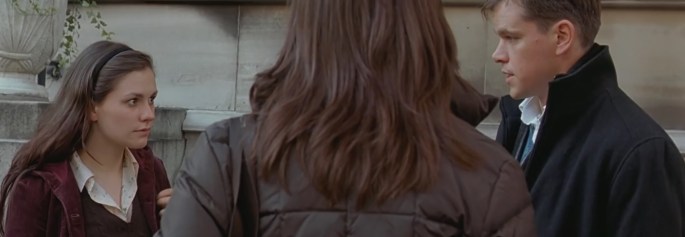
Fascinating, challenging, and totally not for those without patience and an interest in 70’s style filmmaking aesthetics and storytelling techniques, Kenneth Lonergan’s almost-never-released multi-character drama Margaret is a film that many don’t even know exists, and that’s truly a shame, because it’s as compelling and as powerful as cinema can get. Originally scheduled for release in 2007 but inexplicably shelved until 2011, Margaret is one of those movies that’s likely to appeal to viewers looking for an almost novelistic approach to their movies, as the film bounces around from place to place, person to person, which creates an Altman-esque tableaux of individual moments which begin to combine into something profound and touching. Lonergan’s lone previous directorial credit, You Can Count On Me, was a perfectly observed indie dramedy with black humor and lots of heart, featuring some stellar turns from Laura Linney, Mark Ruffalo, and Matthew Broderick. Whereas that film was small and intimate, with Margaret, he went large, and the results are no less impressive, but what’s important to note is that his sense of the small and personal didn’t dissipate with his sophomore directorial outing. Featuring a volcanic lead performance from Anna Paquin (never better, and I’m not the biggest fan overall), the film centers on a tragic city-bus accident and the aftermath that it creates. It’s a story about guilt, grief, acceptance, and finally, forgiveness, and nothing about the narrative is easy or simple. The film utilizes an Altman-esque sound design with tons of overlapping dialogue; Lonergan’s decision to also have the casual conversations of extras and peripheral characters audible on the soundtrack and audible to the main characters further heightens the anxious mood and frenzied atmosphere of this engrossing tapestry of people and events and places and emotions. The superb Mark Ruffalo pops up in yet another soul-searching supporting turn, and the film is enlivened with the likes of Matt Damon, Allison Janney, Kieran Culkin, Rosemarie DeWitt, Matthew Broderick, Olivia Thirlby, and Lonergan himself. We’ll never know exactly what happened behind the scenes with this film. The oft-rumored “Scorsese-Schoonmaker Cut” would certainly be interesting to see, but what we’re left with is a film of enormous ambition, a multilayered magnum opus from one of the best, most underappreciated voices that Hollywood has come across in years. Note: version screened was the 186 minute director’s cut.

1.jpg


Babe Pig, Rob Zombie and Tommy Pickles: A chat with actress E.G. Daily – By Nate Hill

I just had the chance to speak with incredibly talented voice actress E.G. Daily about her work and career. She is the girl behind Babe Pig, Tommy Pickles from The Rugrats, Buttercup from The Powerpuff Girls,  and Baby Mumble from Happy Feet, also lending her voice to shows and films such as Chalkzone, The Land Before Time, Pound Puppies, Recess, Clifford The Big Red Dog, Hey Arnold, A Goofy Movie, The Flintstones, The Little Rascals, Darkwing Duck and more. She also can be seen in Rob Zombie’s The Devil’s Rejects, and his upcoming horror film ’31’ which I’m very excited for. Take a look, and enjoy!
Nate: How did you get into acting? Something you always wanted to do or did you fall into it?
EG: Started as a kid, 8 years old had first agent …didn’t book till age 15, Laverne and Shirley…then it took off. Always wanted to dance and sing and write songs, then fell in love with acting …and actually worked hard for it…
Nate: Voice acting vs. Live action? What do you find different about the two, and which do you enjoy more?
EG: Voice acting is very freeing in that I can be anything … a boy, girl , old lady, ball, box, anything! And Im not relevant on my body so that is all very freeing ! On camera I get to dress up live in another realm … I get to be on a set, I get to get lost using my body to be someone else … and I love wardrobe ! I honestly can say I LOVE THEM BOTH. 
Nate: Playing Babe Pig. How was that experience for you? Do you like the first film better or the sequel? (I’m a huge fan of the sequel)
EG: I loved the first one, cause it was so simple. But the second was a little darker and very artsy …Liked them both for different reasons. Loved working with George Miller he’s amazing! 
Nate: What kind of preparation do you do before doing voice work? 
EG: No real prep for Voice over … just make sure I’ve gotten enough sleep and have FUN . Laughter actually warms up my voive …so when we laugh in sessions that is the best for my voice !  

As for singing …I do vocal warm ups! 

Nate: How was your experience playing Tommy Pickles on The Rugrats? 

EG: Tommy Pickles was my first Voice over Job so it was amazing, and I had never done animation so had no pre conceived ideas, just enjoyed it all.  Felt like I got to play!! Tommy was such a sweet character it was so precious to play him.

Nate: The Devil’s Rejects- how did you get approached to play Candy? How was your experience working with Rob Zombie and all the other actors?

EG: Devil’s Rejects… I was at my Voice over agents .. when they said we just got an offer for you to do a film….I asked to see the script and the role, and loved it and said yes I want to do it ! ! It wasn’t till I was leaving the office they said its a Lions Gate film. I was like oh great! Then the last thing they said was  “Ohhh, also its directed by Rob Zombie” That was the best part! 

Nate: You’ll also be starring in 31 directed by Rob Zombie. What can we expect from your character and the film itself?
EG: ”31” BAd ASS …My character SEX-HEAD is bad ass! And one of my favorites EVER. I cant say much about it . They arent even sharing pics of my character yet cause they are keeping her un exposed, I think cause she’s so cool! . Amazing project. Got lost in it.
Nate: Some of your favourite movies?
EG: Favorite movies …This is 40 …Bridesmaids … The Intern … Documentaries ….For now.
Nate: Thanks so much for your time EG!

HAL ASHBY’S BEING THERE — A REVIEW BY NICK CLEMENT

1

Masterpiece. I loved every single moment of this brilliant piece of work. I viewed this film once, roughly 25 years ago, and it went way over my head. Not this time. Yet another reminder of how skilled Hal Ashby was as a director. This is an endlessly funny, heartfelt, and genuine piece of work, a film that dips into the spiritual towards the end without ever being preachy or overly sentimental. The final shot and final spoken line of dialogue were note-perfect. Peter Sellers was extraordinary as Chance the Gardner, and everyone around him provided wonderful supporting work, especially Shirley MacLaine and Melvyn Douglas. Caleb Deschanel’s fantastic and darkly lit cinematography stressed wide master shots as opposed to an overabundance of close-ups, and as a result, one is left with a sense of the grand (especially when inside of that obscenely large mansion) while the screenplay stressed the intimate. As usual for an Ashby film, the tone was a perfectly calibrated mixture of quirky, dark comedy and straight forward drama, while Jerzy Kosinski’s wise and graceful screenplay, which he adapted from his own novel with uncredited assistance from Robert C. Jones, provided all of the characters with exceptional individual scenes and more than once chance to provide some big moments. This film is so sensitively observed at almost every turn, and it’s easy to see why it has inspired so many other films that have come after it; the Forrest Gump connection was something that sprung to mind very early, as the naiveté on the part of Sellers’ character seemed to be some sort of direct inspiration. There are so many fantastic bits in this film: Sellers leaving his house for the first time to the jazzy tune of Eumir Deodato’s remix of Also sprach Zarathustra and having any number of interesting encounters; the dryly hilarious meeting Sellers has with Jack Warden (portraying a flummoxed President of the United States); the entire subplot of various government agencies and media members trying to find background info on Sellers; MacLaine having a go with herself on that bearskin rug with Sellers passively watching TV in the background. I could go on and on with this film, as every scene felt true and correct, even with the overall plot straining credibility at times. But I didn’t care about that; the heart and soul of this movie is what makes it special. And in only two scenes, a crazy amount of Ruth Attaway POWER – her speech in the lobby of that long-stay hotel stung with piercing wit. Viewed via Blu-ray, and the transfer was spotless.

2

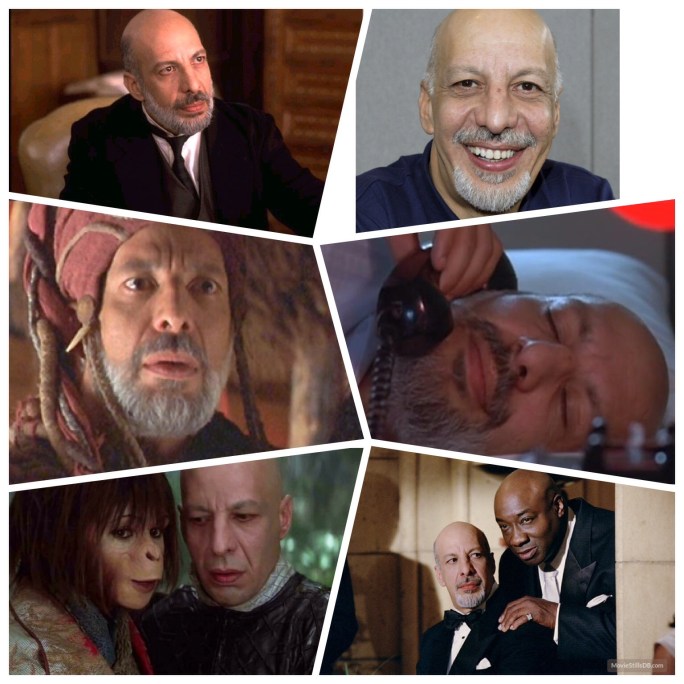
Playing Elektra’s Father and encountering The Mummy: A chat with actor Erick Avari

Proud to present to you my latest interview, with Erick Avari, an instantly recognizable, charming actor who seems to pop up all over the place. He has very memorable appearances in films including The Mummy, Independence Day, Planet Of The Apes, Stargate, Daredevil, Hachi: A Dog’s Tale, Paul Blart: Mall Cop, Mr. Deeds, The Glass House, The 13th Warrior and more. He’s also done work in television shows like The X Files, Madam Secretary, The Mentalist, NCIS: Los Angeles, Castle, Lie To Me, Burn Notice, Heroes, The OC, Alias and many more. Enjoy! 
Nate: When did you know you wanted to become an actor?
Erick: Age 14 (1966) It was something the late Fr. McGuire said in a class named “moral science” which was essentially a forum to talk about just about anything at all. While on the topic of an artists’ responsibility to society, and he astutely pointed out that societies have flourished when artists hold up a mirror to life and crumbled when artists stopped doing so. It seemed like a noble profession and the final nail in the coffin sealing my fate as an artist. If he were around today I’d have to ask if he thought Art imitates life or the other way around?


Nate: The Mummy: Care to speak a bit about your experience on this film?
Erick: Little bit of trivia. I was originally cast in the role Jonathan Hyde played and Omar Sharif was set to play the curator but two weeks before the shoot they called to say Omar had emergency hip surgery and so they were bumping me up to the role of the curator. It was a wonderful shoot! A couple of weeks in Marrakesh, a couple of weeks in London great cast and the most fun director to work with. It was magic. Made some lifelong friends and reestablished contact with some old. Who could ask for more?
Nate: Care to speak a bit about your years growing up in Darjeeling, India? It’s an area I’ve heard a lot about and would be fascinated to hear what you have to,say about it.
Erick: Funny you bring that up as just the other day some one posted a video of Darjeeling on Facebook and a flood of memories came pouring back. It is situated in one of the most beautiful parts of the world. Nothing like you might imagine India to be at all. Small tourist town nestled in the foothills of the Himalayas with the most spectacular views of the worlds highest mountain, Kanchenjunga. I believe natural beauty stimulates the creative mind and it’s no wonder the residents have always had an affinity to the arts. Growing up I was surrounded by music, dance, theater, literature and given my father owned and operated the only two cinema halls in town, I was a very popular kid on Saturdays when traditionally the two would flock to see the latest “flick” that was playing at either the Capitol Cinema or The Rink (formerly a roller skating rink).
Nate: You have probably the best line in the movie Independence Day, despite only briefly appearing in the first scene. How was filming that for you, and how did it end up that you were uncredited for it?
Erick: Another story behind that. That was Roland Emmerich and Dean Devlin’s way of saying thanks for my work on Stargate, shot the year before. Without going into too much detail but it was my first, “offer” and a very generous one to boot and I was overwhelmed with gratitude and though (mistakenly) and by not asking for billing I would be giving back in some stupid way. It was so wonderful to be appreciated and best of all, not having to go through the audition process. I can’t tell you how much of a joy that alone was but to be reunited with the same team even if it was for a week was heaven.
Nate: If you had to think of some of your favourite roles, in both film and theatre, what might they be?
Erick: Sir Richard in Jean Genet’s The Screens performed at The Guthrie theater in Minneapolis. One of the grandest productions on stage that I have been a part of (including King and I on Broadway) and perhaps the most acrobatic role physically I have ever undertaken. I ended up tearing ligaments in my ankle and finished the run on crutches. Best part, people thought the crutches were part of the play!

Vasquez in ’Tis Pity She’s A Whore at the Public theater with Val Kilmer, Jean Tripplehorn, Jarred Harris and on and on. Anyone who know the play knows that’s the run away role. Just loads of fun playing a smooth talking, eye gouging villain with an exit applause line designed to elicit applause to boot!

Nate: Daredevil: Nice to,see you pop in a comic book universe, playing Nikolas Natchios. How was your experience on that film?
Erick: I was completely charmed by Jennifer Garner and I had become friends with Michael Clarke Duncan over the 6 months we worked on Planet of the Apes together so that was …god I’m running out of superlatives but you have in fact touched on some wonderful moments in my career. Sufficeth to say, I miss Michael and feel he died way too young as he had so much to give to the world. He was a wonderful soul.
Nate: Tim Burton’s Planet Of The Apes: an underrated film for me, doesn’t deserve the negative reviews it’s gotten. How was your experience on this one?
Erick: I think a lot of people got robbed on that one starting with Rick Baker for make up. Tim Burton had a wonderful concept going into the film and we, the actors were so excited about where this one was going to go. It’s too bad there were too many opinions that had to be considered in the making of the film and it ended up to be a completely different animal (pun regretfully intended) and was perhaps one of the biggest disappointments of my career. 
Nate: Any upcoming projects you are excited for and would like to speak about?
Erick: I am returning to the theater, that is as soon as I find a job! I have been burning to get back to my roots and fortunately I am no in a position in my life where I can afford to do just that. There are roles in the cannon that I have been waiting to grow into and King Lear is at the top of my list. It will be a challenge that I will have to work toward but that is on my bucket list. Shylock is one I’d like another shot at as well and I could go on and on on that score. I am also transitioning into directing independent features and working to develop several projects. 
Nate: Films/Actors/Filmmakers that you admire and enjoy, and maybe have inspired your work?
Erick: I have learned so much from every director and actor I have ever worked with. I have been fortunate to have worked with some of the greats of our era and I was always cognizant of the fact that I was getting a free education every time at bat. I think you learn so much from just observing and being privy to the conversations that move the creative process forward. To mention Woody Allen and Lasse Hallestrom and leave out Mike Nichols (whom I worked with although my scene from Charlie Wilson’s war was cut) or many of the theater directors I’ve worked with would be remiss of me.
Nate: Thank you so much for taking the time to chat, and keep up the great work Erick!
RICHARD LESTER’S ROYAL FLASH — A REVIEW BY NICK CLEMENT


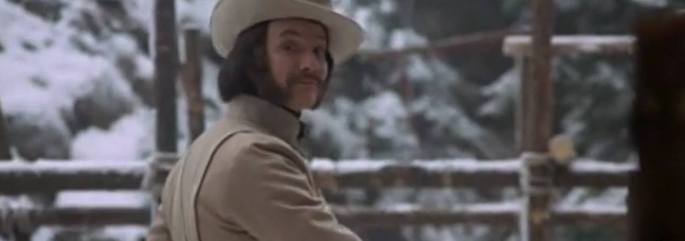
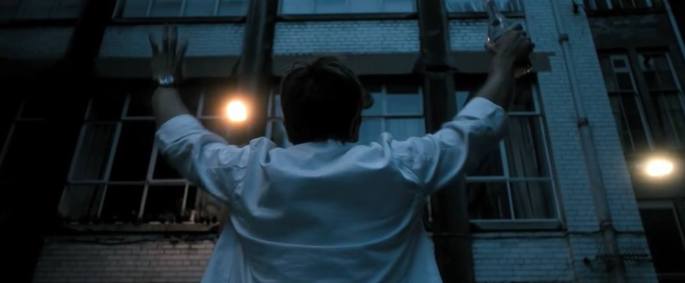
1I’ve long been a fan of the work of Richard Lester. Petulia, Juggernaut, Robin and Marian, Superman II, The Three Musketeers, and The Four Musketeers are films I adore, and I’ll admit to having a soft spot (mostly due to childhood nostalgia) for Superman III. He was a filmmaker who was always interested in mixing tones (especially comedy with action), and I love the chaotic, almost frenetic sense of mise-en-scene that his movies frequently exhibited. I’m eager to check out the films of his that I’ve missed; he was always a filmmaker you couldn’t truly pin down, and it’s no surprise that a subversive talent like Steven Soderbergh would hold Lester in such high regard. One of his most asinine pictures, the 1975 slapstick swashbuckler Royal Flash, is easily one of the most ridiculous movies I’ve ever seen. It’s wonderfully cheeky fun, super clownish at all times, very light and spastic, with a pricelessly funny lead performance from Malcom McDowell as Captain Harry Flashman, a sniveling and humorous Oliver Reed, and as usual, Lester totally filled the frame with so much detail and action and energy that it’s literally impossible not to enjoy yourself on some level with this bit of lunacy. It’s undoubtedly minor, but so entertaining and a further reminder that Lester was a filmmaker capable of balancing various qualities and ideas in his work. One minute, the film feels mildly amateurish, with weird sound work and sped up film processing and strange acting on the part of background extras, and then the next scene is one that’s gorgeously appointed, with terrific vistas and epic sweep and great use of light and composition (the great Geoffrey Unsworth was the cinematographer). McDowell plays a good-hearted rapscallion serving in the British army who blunders his way from one situation to the next, always appearing to be the victor, despite his oafish manner and continual stroke of good luck. Alan Bates shows up for some hearty laughs, and the film is just one gag after another involving duplicity, impersonation, revenge, sexual mischief, and tons of terrifically staged sword fighting and general fisticuffs. There’s also a gag atop a bridge that sort of defies technical logic, especially given the era that this film was produced during. The Twilight Time Blu-ray is crisp and clean and offers a solid assortment of extras. A true pisser of the likes we never get anymore, Royal Flash is tons of fun.
2

JOE DANTE’S MATINEE — A REVIEW BY NICK CLEMENT

1

I don’t understand how Joe Dante cajoled the Universal brass into completing his love letter to cinema, the 1993 film Matinee, after the film’s original producers went bankrupt, but I am glad he did, because it’s such a wonderful, unique, and all together joyous little gem that it stands to reason that in today’s movie climate, this film just doesn’t get made, let alone contemplated, by the major film companies. Dante’s film is a period piece set in Key West, Florida, centering on a William Castle-esque indie filmmaker played with jovial enthusiasm by a perfectly cast John Goodman, and set against the back drop of the Cuban Missile Crisis. Co-starring Cathy Moriarty, filmmaker and Dante collaborator John Sayles, Simon Fenton, then popular Kellie Martin from TV’s Life Goes On, Dick Miller (a longtime Dante buddy and good luck charm), Omri Katz, child star Lisa Jakub, and Robert Picardo (Dante’s other good luck charm!), Matinee is so many things: A wistful coming of age story, an ode to the inherent power of movie magic, and a spirited shout-out to old-school showmanship. Written by Jerico Stone and Charles Haas, the film contains a film-within-the-film called Mant, which is essentially a throwback to the pulpy sci-fi movies of yesteryear featuring a half-man/half-ant with outlandish practical make-up and special effects; it’s oh-so-clear that Dante must’ve been in cinematic heaven with these scenes, as all of the footage from Mant was shot to aesthetically approximate how those movies used to get put together. The acting on the part of the teen leads was decent (if a bit stiff at times), but that doesn’t matter, because this film’s heart is so massive, and it’s wildly evident that it needed to be made by these particular creative entities. Dante is one of those filmmakers who never got his true due as a premiere director of smart and funny and always inventive mid-budgeted studio pictures, a friend of Spielberg’s who also subscribed to the Amblin philosophy of subversive family entertainment; his terrific and continually underrated credits include Explorers, Small Soldiers, Gremlins, Gremlins 2, The ‘Burbs, Innerspace, and The Howling. The film also features a fantastic score from Jerry Goldsmith, splendid cinematography by John Hora, and perfectly timed comedic editing by Marshall Harvey. Seek this one out as my guess is that it’s escaped many, many people who would absolutely love it.

2

MARTIN SCORSESE’S RAGING BULL — A REVIEW BY NICK CLEMENT

2

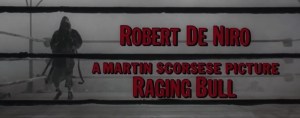
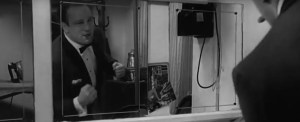
Raging Bull features one of the greatest performances that the screen has ever contained. It also happens to be a definitive American masterpiece, the sort of film that is unimpeachable in terms of overall quality and its standing in the pantheon of great cinema. This is a pulverizing film – emotionally, aesthetically, and narratively – and it leaves bruises, intentionally, while frequently stirring the soul. Martin Scorsese’s showy, studied, and totally commanding direction is a text book example of cinematic showmanship.  Paul Schrader and Mardik Martin’s intimate screenplay allowed for any number of moments – both big and small – to become immediate cinematic touchstones. Robert De Niro’s work as Jake La Motta will be rightfully revered until the final days of this planet; it’s a force of nature piece of acting in a film that makes the ground under your feet feel as if it’s moving. The stellar ensemble cast all gracefully dance around the edges of this tremendous motion picture, with Joe Pesci and Cathy Moriarty providing blistering support, with a stacked roster of faces and character actors coming and going, providing the film with a terrific sense of place and atmosphere. The combination of Michael Chapman’s electrifying black and white cinematography, which was stylistically heightened to suggest the intense speed and ferocity of the bouts in the ring, and Thelma Schoonmaker’s dynamic and propulsive editing, went a long way in providing the movie with such an urgent sense of violence, both during the numerous bloody bouts and the verbally explosive fights between La Motta and all of the people within his personal orbit. What more, at this point, can be said about Raging Bull that hasn’t been said? It’s one of those timeless classics that ages like a fine wine, and a true reminder of the galvanic force that De Niro possessed during his remarkable run in the vintage years.

4

OLIVIER ASSAYAS’ BOARDING GATE — A REVIEW BY NICK CLEMENT

2

I’m always wholly fascinated by this film, and it’s something I feel that’s worth revisiting every year because of how it uses aesthetics to drive the plot. Boarding Gate is genre-hopper Olivier Assayas (Carlos, Summer Hours, Irma Vep) doing a sort-of-Michael Mann-esque anti-thriller that’s more cerebral than crammed with action. It’s the kind of low-key head-scratcher that doesn’t make any ripples in the theaters, but that people end up discovering at home. It’s a naughty little film, with some kinky sex and bloody gun-play, all steeped in the traditions of the femme fatale and international crime noir. Not as interested in coherent plot developments or definitive answers, Boarding Gate operates in an almost dream-like state which heightens the actions of its sleazy characters. But what makes the film worth watching has more to do with what it doesn’t do, then what it does do.

3

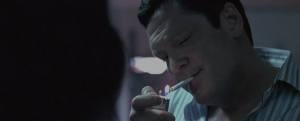
Asia Argento is Sandra, an ex-call girl with a history of drug problems and a taste for S&M. She’s working a legit job in Paris for some sort of international importer/exporter, while also conducting shady drug deals on the side. Her old lover, Miles (Michael Madsen), also happens to be her ex-pimp; the two have a very, very sordid past. She meets up with Miles again and it’s clear that there is still some heat between the two of them. What Miles doesn’t know is that Sandra is also carrying on an affair with her boss, the quietly mysterious Lester (Carl Ng), who runs his company with his wife Sue (Kelly Lin), who may be up to more than she lets on. Someone gets murdered and Sandra flees to Beijing, where she settles on the idea of opening some sort of nightclub. I may be missing something but that might be due to the way certain events in this film are explained. As the film nears its conclusion, Boarding Gate builds to an almost certainly grim finale; what finally transpires will be a surprise for most viewers.

4

Assayas is most interested in style, tone, ambiguous characters, and the chance to photograph his sexy leading lady in black lace panties while she brandishes a pistol. The fun that Assayas has with the ingredients of crime noir is presented right from the beginning. Argento, not the world’s most amazing actress, has a clear-cut physical confidence in front of a camera that is cold, hard, and real. In this respect, it’s not far off from the work done by Rebecca Romijn in Brian De Palma’s masterpiece Femme Fatale. Argento’s dialogue, much of which is delivered in a gravelly whisper, is heavy with symbolism and often feels a bit portentous. She pouts her lips, tilts her head, and genuinely looks like she’d be up for just about anything. She’s a true femme fatale that De Palma or Hitchcock would love. Madsen, who never met a slime-ball character he couldn’t ace in his sleep, is perfectly cast as Miles, a guy who’ll never be able to keep his shit straight. One scene between the two of them, involving oral sex and a leather belt, is perverted and hysterical in equal measure, while also being rather titillating. Cinematographer Yorick Le Saux bathes the film in hot, bright light that illuminates interiors with a slick, almost ghostly glow. And because the film operates in such a tentative mind-set with the characters making frantic decisions, there is a purposefully messy quality to the narrative that is both liberating and potentially frustrating to the viewer.

1

There were times when I wished I better understood what was going on during Boarding Gate, yet, I can’t honestly say I was ever truly confused or annoyed by Assayas’ deliberately opaque style. The film is more about what happens in between the big moments dictated by the necessity of plot, and less about the more obvious instances of action or spectacle. But the film’s final moments, which I totally loved, really sealed the deal for me. The ending of Boarding Gate might anger some viewers who are looking for a more overtly satisfying emotional conclusion to the story. It was here when I got the feeling that Assayas was attempting to channel the tone and mood of a Michael Mann film. This is a fun, dangerous, sexy thriller that’s well worth checking out. Available in America on DVD and streaming platforms; a Region B Blu ray is available from Amazon UK.