REED MORANO’S MEADOWLAND — A REVIEW BY NICK CLEMENT

4

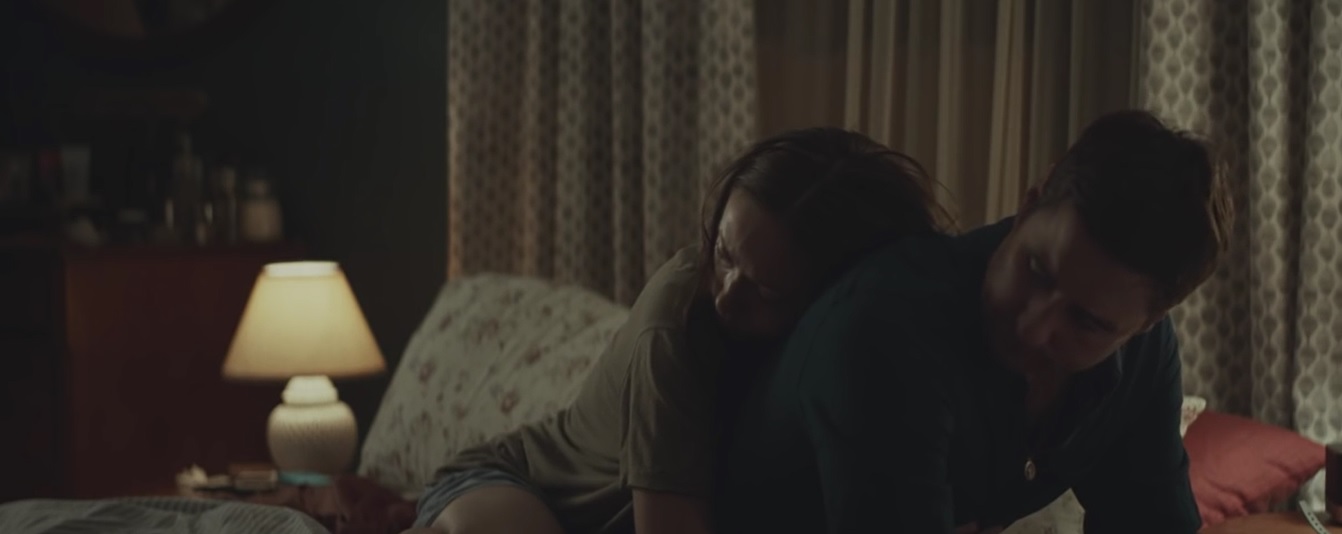
Credit must be given to director Reed Morano with her feature film debut Meadowland – she’s taken incredibly dark and troubling material and turned it into an inherently compelling, extremely raw, and often times painful cinematic experience, one that’s wholly engrossing, but that will test the strength of most viewers. Given that the film is essentially a study of hopeless denial and deeply repressed anger during the aftermath of a child’s disappearance, this demanding (and draining) piece of work isn’t going to be for everyone. But for those of us interested in thought provoking, intensely modulated dramas that ask questions about ourselves as individuals, then this will be the perfect antidote to whatever CGI laden blockbuster is currently littering moving screens. Morano, an accomplished cinematographer on such films as The Skeleton Twins, Frozen River, and Kill Your Darlings, gets in close to her characters with her intimate cinematography, which is almost all hand-held, yet shot in 2.35:1 widescreen with an emphasis on off-kilter angles, extreme close-ups, and side of the head framing that evokes the introspective beats of a Michael Mann film.

Centering on a husband and wife (an excellent Luke Wilson playing a NYC cop and a never better Olivia Wilde as an inner city teacher) exactly one year after their son was abducted at a gas station, the film sticks very close to its two central performers, allowing peripheral characters to shake up the proceedings; the estimable supporting cast includes a recently busy Kevin Corrigan (funny and effective in this year’s romantic dramedy Results), Giovanni Ribisi (love seeing him!), John Leguizamo (always solid and edgy), Elisabeth Moss (quick but effective), and Juno Temple (always spunky and sexy). But the film belongs to Wilde and Wilson, who both cut all-too-convincing portraits of parents pushed to their emotional edge, with Wilde going especially deep all throughout this nervy, focused story of loss and potential acceptance. The final moments, from a directorial standpoint, are very bold, as it’s clear that Morano wants the audience to think for themselves and realistically accept the facts that have been presented for us.

There’s nothing “easy” about Meadowland, and in that sense, this film will likely challenge those who are looking for simple, digestible storytelling, which this is anything but. Meadowland aims to explore the awkward moments between friends and family members after a traumatic incident; nobody knows quite what to say, what the boundaries are in any given situation, or how the directly affected individuals are truly feeling inside. The thoughtful script by Chris Rossi might rely on some familiar storytelling tropes (support groups, personally-inflicted pain, children with learning disabilities) but it all feels organic to the environment and sadly, all too believable, considering that these are real struggles that people face every day. Not a film for the overly sensitive or for those who need their art spelled out for them, Morano has crafted a hard-hitting piece of cinema that has emotional resonance as well as arresting visual style. Available on Itunes and screening in limited release in theaters.

3

NICOLAS WINDING REFN’S BRONSON — A REVIEW BY NICK CLEMENT

1

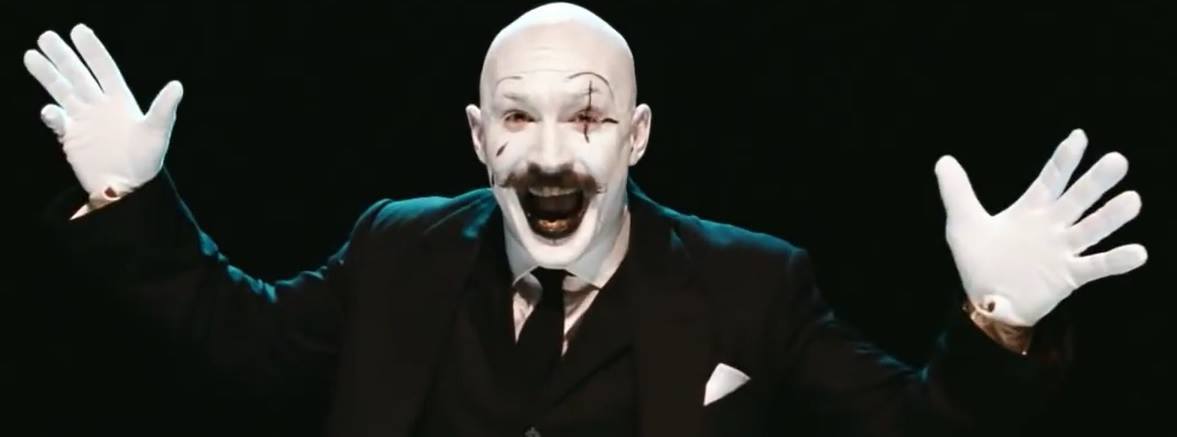
Bronson was the film that brought director Nicolas Winding Refn and actor Tom Hardy into my cinematic sights, and since then, I’ve followed both artists with intense fervor and anticipation. This film is like nothing else I’ve ever seen, and even if it blends elements from other films within its framework, the overall originality of the entire endeavor is wild to watch unfold. The film uses a highly stylized structure consisting of surrealistic performance art, abrupt flashbacks, and jarring tonal shifts which makes sense given the extremely heightened aesthetic. Hardy stars as real life British convict Charlie Bronson, aka, The Most Violent British Criminal Ever, a man given to massive fits of rage and stunning moments of primal, animalistic physical violence. The film is a crazy, bloody, kinky kaleidoscope of his oversized life, showing him in an out of the slammer, trying to adjust to the outside world, falling in love, getting mixed up with a variety of wacky side characters, and always spinning back on Bronson’s violent tendencies in almost every situation that he faced. Hardy is extraordinary, giving quite literally one of the best performances I’ve ever seen from any actor in any film. This is a forcefully bizarre movie, and he carries the entire thing, appearing in almost every scene, and letting it all hang out (literally and metaphorically), giving a ferocious performance of astonishing energy and personal chaos. His character is so unpredictable and so unstable that the viewer is constantly left to wonder what will happen next. All of the supporting performances are stellar and help contribute to the zany mood of the entire piece.

And then there’s the eccentric, eclectic soundtrack, featuring numerous classical opera pieces, as well as stuff from The Pet Shop Boys, Doris Day, and David Cassidy, all of which adds to the dense sonic layers of the soundtrack. I love how Refn brilliant subverts your expectations at almost every turn with this perverse movie. He knows you’ve seen other prison films and biopics, and I love how he defiantly refuses to play anything safe in this movie, which is probably the best overall piece of work in his already sensational career. He downplays the customary visual language of this particular genre, going for something more aggressively stylish and baroque than usual, and I love how he’s constantly undermining the inherent masculinity of Bronson as a character and the thugs that he encountered. The way Refn views his psychologically complex lead character suggests that he’s both in awe of Bronson, and totally in fear of him. Macho posturing is elegantly skewered all throughout, with the interesting layer of homosexual social commentary thrown in to spice things up, and also demonstrating the interesting duality to Bronson’s unique persona. Refn is constantly provoking his audience with every film he makes, always throwing multiple layers at you, and it seems to be his M.O. as a filmmaker to challenge whatever genre he’s working in, and it’s going to be extremely exciting to see how he develops as a filmmaker.

2

DAVID AYER’S FURY — A REVIEW BY NICK CLEMENT

1

Fury is a reminder of how hellish life must’ve been like for guys suffering through tank warfare during WWII. This is another film that’s been making the HD movie channel rounds of late, and I always stop on it for a few beats, because it thoroughly kicks ass at almost every opportunity. Embracing the gung-ho spirit of old-school Hollywood action flicks, writer/director David Ayer has considerably upped his game as a big league filmmaker with this ruggedly fashioned, butt-kicking trudge through the rain-soaked and bombed-out battlefields and cities of late WWII combat in Germany. The film carried the hardened spirit of a late-era John Wayne movie or something that Fuller or Peckinpah would have fancied, with just as much anti-war sentiment as pro-American image making. The Americans are good and Nazis are bad – it’s the same template Hollywood has used for eons, and for good reason: Who doesn’t like some dead Nazis? This is a purposefully blunt and graphically violent combat picture that, while stopping from time to time for a moment of reflection (the scene at the dinner table with the women is the best in the film), is mainly about how awful war truly is, and how utterly unnerving it must’ve been to be in one of those Sherman tanks.

Brad Pitt can do no wrong – he’s our Movie Star of the Moment and he owns this picture. Here, he’s gruff and grizzled, leading a surly band of supporting actors (Shia LeBeouf as the introspective one; Michael Pena as the wise-ass; Logan Lerman as the rookie; and a skeevy Jon Bernthal as the potentially unstable wild card), and he completely carries the film on his manly shoulders. Lerman shines as the rookie gunner who needs to learn quick how to adapt, there’s fine supporting work from LaBeouf and the rangy Pena, but it’s Bernthal (the numerous scene stealer from The Wolf of Wall Street) who makes the biggest impression playing an emotionally broken, simple-minded, shell of a man who has seen too much combat for one lifetime.

The measured, gritty cinematography by Roman Vasyanov made excellent use of the claustrophobic confines of the tank interiors and favored clear spatial geography over frenetic shaky-cam aesthetics, while the bombed-out, lived-in production design went a long way in creating a dangerous, volatile atmosphere. Fury is muddy, gray, damp, and messy, always tense which can be a hard thing to sustain, and focused on presenting a mostly unrelenting narrative that bows to Hollywood conventions from time to time but still stays true and honest to what it would have been like to be in this horrific situation. My one complaint might be the slightly overbearing musical score; sometimes less is more but I get what Ayer was going for – maximum, direct impact. I also appreciated the refreshing lack of noticeable CGI. While not an earth-shattering entry into the war genre, Fury is dependable, entertaining, and effectively brutal when it comes to showcasing the bloody battles that tank operators went through. The ending doesn’t go all Hollywood which was also a plus, and while one might question the final outcome slightly, it makes enough sense within the scenario that Ayer created while still leaving you with enough of a lump in your throat. “They’re young. And alive.”

2

CRIMSON PEAK: A REVIEW BY TIM FUGLEI

Crimson-Peak-poster

The new, final trailer for Star Wars:  The Force Awakens currently has Geek Nation enthralled, and few fantasy fans of a certain age range (say, 6 to 80) can think about much else between now and Christmas, but another giant in the genre field has a new film out, just in time for Halloween, that should make those whose tastes tilt into all things horror feel a warm tingle and a pleasant chill.  Guillermo del Toro, the Mexican fantasy master, here again has followed a pattern familiar to his devoted followers:  One project gets within a hair’s length of life only to wither away, so he quickly pivots and creates something different, new, wholly beholden to his obsessions, and largely satisfying, assuming expectations are calibrated accordingly.  His adaptation of H.P. Lovecraft’s At The Mountains Of Madness seemed all but ready to shoot three years ago, but then the studio support disappeared and the bottom fell out.  Del Toro then managed a neat trick, reviving the spirit of another faded dream project (Mary Shelly’s Frankenstein) to fuse with his own original story of gothic mystery, the evocative and lovingly crafted Crimson Peak.

With its R rating and mist-shrouded spirits on full display in the advertising campaign, you can’t help but be surprised to find Crimson Peak is a restrained and often familiar story—especially if you know the many movies that the filmmaker gladly nods to, from Hitchcock’s Rebecca to Wise’s The Haunting to any number of other entries (even the relatively recent Angels and Insects gets a significant shout out or two).  The film is at once refreshing and staid, as the patience to settle into a story long on character and short on gore is an almost striking change of pace from most modern horror entries, yet as the yarn unravels you can’t help but be left with the desire for an unexpected twist or a truly shocking scare.  Neither of the latter are in evidence here.  I won’t lie—you will be exposed to several standard jump scares, although even in that department del Toro seems less interested in yanking the viewer around in their seat unexpectedly and more dedicated to giving them a bloody nostalgia bath.

And there is blood red, crimson more specifically, around ever dark corner of the film, from the delicious oak interiors of high society Buffalo NY to the oozing red clay that Tom Hiddleston’s Thomas Sharpe is quietly desperate to mine from his property in England, the last sliver of hope he has to continue a once-successful family name.  We come to meet Sharpe when he solicits the support of wealthy American developer Carter Cushing, whose daughter Edith (Mia Wasikowska) is the hero of the tale.  A frustrated writer of gothic ghost stories inspired by her deceased mother’s foreboding spectral visitations, she serves as a plucky and talented stand in for some of del Toro’s favorite writers–an early exchange with a petty social rival is telling, when she compares Edith to “Jane Austen, who died alone.”  Edith shoots back, “I’d rather die like Mary Shelley, as a widow.”  We also meet Sharpe’s sister Lucille, played with a coolly contained lunacy by Jessica Chastain, whose pitch black period costumes and demeanor leave little to the imagination as to what role she’ll play in the proceedings.  Thomas and Edith fall into a forbidden yet clearly telegraphed love, and Edith, heir to a fortune, finds herself across the pond in the dilapidated and almost ridiculously creepy Allerdale Hall.  Del Toro saves his best production design for the mansion, with archways lined with knifelike appendages, a ceiling with a rotted hole that doesn’t merit the attention of the maintenance crew due to the atmospherically convenient falling leaves and/or snow in the main hall it provides, and, of course, restless spirits with tales to tell.  Edith is quickly sucked into the mysteries and madness of the manse, known as Crimson Peak due to the red clay that seeps into the snow around the place during the winter.  Without spoiling the details, things are actually quite as they seem—supernatural, deadly, and dangerous to both the new and longstanding inhabitants of this mad circle.  Fans of previous del Toro ghost story success The Devil’s Backbone will find some familiar notes being struck as the finale unfolds with plenty more blood and a now-standard but welcome reversal of the age old “damsel in distress rescued by the handsome hero” trope.

The cast is game, the sets are exquisite and there’s barely a shot to be found in Crimson Peak that won’t entrance the eye.  The CG spirits are a solid step above most such things found in the digitized age of horror thanks to del Toro’s deft directorial decisions, either in sound design, visual conception or placement in the frame, but ultimately don’t raise the viewer’s blood pressure above what a strong appreciation for the care that went into bringing them to life on celluloid would merit.  Ultimately, that’s the impression we’re left with as the credits roll—a talented filmmaker, beloved to genre fans around the world, putting together a love letter to some of his favorite early films and stories, but never quite transcending the realm of tribute with the innovation on display in earlier films such as the authentically haunting Devil’s Backbone and the periodically transcendent Pan’s Labyrinth.  It’s a delight to have Guillermo del Toro swimming in the darker corners of his obsessions yet again, where he clearly feels the most comfortable, but next time out it would be refreshing to see him rely more on his mad imagination than his esteemed influences.

ALEXANDER PAYNE’S NEBRASKA — A REVIEW BY NICK CLEMENT

nb2

Simple. Sly. Subtle. Sensational. I’ve run out of words that begin with the letter “S” that describe Alexander Payne’s Nebraska. This film keeps popping up on EPIX HD and every time I notice that it’s on I end up watching it from wherever it’s at in the narrative. The colorized version was an interesting experiment, and I can see why Payne would be interested in trying to see how the film would play in a desaturated color zone, but this film truly feels as if it’s living in black and white; there was no other option. I’ve loved every movie that Payne has put his name on – everything always feels just right, as if there were no other options for him (it’s a very similar feeling I get while watching work from the Coen brothers). Bruce Dern breaks your heart slowly and deceptively in the lead role of a lifetime, June Squibb stole every single scene that she appeared in, and Will Forte hit notes of surprising emotional depth that I didn’t know were in him as a performer. This is the sort of movie that might hit home too hard for some people; as always, Payne wraps his dark story with an abundance of dry humor, this time courtesy of debut screenwriter Bob Nelson, whose sardonic touch fits perfectly with the shivery, monochromatic cinematography of long-time Payne collaborator Phedon Papamichael. Bleak yet filled with lots of heart, achingly sad yet strangely upbeat, honest when it needs to be, and frequently laugh-out-loud-funny, this is yet another small gem from one of America’s best and most consistent filmmakers.

CARY FUKUNAGA’S BEASTS OF NO NATION — A REVIEW BY NICK CLEMENT

1

Cary Fukunaga’s African child soldier drama Beasts of No Nation is tough-medicine cinema, yet most definitely not the film I was expecting. I haven’t been able to stop thinking about it in one way or another after viewing it last weekend, and it’s a film I’m likely to revisit rather soon, thanks to Netflix running it as a streaming option on their site (Landmark Theaters, the only chain that’s theatrically presenting the film, doesn’t operate in my area). In Beasts of No Nation, it’s the sheer force of the filmmaking that immediately struck me; it’s clear that Fukunaga is an admirer and student of Mann and Malick, as his film echoes both Heat and The Thin Red Line on more than one occasion, be it from a sonic or image standpoint. The film is violent, but not as violent as you might expect, and I’m wondering if the film should have been even more upfront and explicit with its atrocities, but I think it’s the artistic subversion from the expected norm that is most startling during the film’s numerous sequences of bloody carnage and combat. And make no mistake – you’re definitely treated to some disturbing moments of emotional and physical abuse – it’s just handled in a more experiential manner. In a sense, Fukunaga has made an existential journey film starring an eight year old, and as such, there are sequences that feel incredibly impressionistic at times, literally like seeing life and all of the horrors that it can offer through the fleeting glimpses of a person too young to fully comprehend all of the details. My parents are here one minute…and gone the next. I’m all alone in the jungle…until I’m not. There’s someone here who wants to take care of me…but I don’t truly understand the methods to his madness. Fukunaga explores the notion of lost generations, children stripped of their familial identities, never to have them returned to any sort of normalcy.

It’s no surprise that Idris Elba is startling and fantastic as the corrupt ring-leader of the child soldiers, and it’s truly scary to watch him operate in this film. From one moment to the next, you can never truly predict his behavior, and the way Elba interacts with the children has a stinging realism that makes the film’s most harrowing moments all the more potent. Child actor Abraham Attah, making his feature film debut as Agu, is nothing short of spectacular, but not in the traditional sense of what you expect from a movie star or even an amateur phenomenon; he has the smarts, the poise, and seemingly the understanding of the material to make the toughest scenes in the film all the more challenging and rewarding to observe. Shot on location in Africa, this film has a fevered, nightmarish quality, with many of Fukunaga’s lush and beautiful images (he also operated as his own cinematographer) leaving a lasting impact that will be hard to shake for days. From the sight of grenades being duct taped into the mouths of prisoners to the surreal moments with the burning embers of tree branches that have been blasted by rockets from helicopters, Beasts of No Nation envelopes the viewer with a tactile sense of place and unnerving atmosphere, with gun shots consistently heard off in the distance, and bullets casually flying overhead. Dan Romer’s dynamic soundtrack builds to some nearly overwhelming crescendos of orchestral music, while the fluid editing keeps the two hour and 15 minute runtime moving at a very fast clip without ever feeling rushed. This isn’t a film to watch and immediately snap off a quick judgement; it needs to marinate and simmer and become fully processed after viewing, as it’s a film that dares to look at a subject that we only get soundbytes of from our meaningless mainstream news cycle. There’s also a faint whiff of racism in that Fukunaga was reportedly turned down by every major studio, with only Netflix having the temerity to finance and release this long-in-the-coming work of punishing art. Beasts of No Nation finished on a note that I never expected, and offers a journey of purposefully draining dramatics in an effort to shock and rattle the viewer. Ignoring this film shouldn’t be an option.

2

DUNCAN JONES’ MOON — A REVIEW BY NICK CLEMENT

1

Duncan Jones’ smashing directorial debut Moon, which he co-wrote with Nathan Parker, is exactly my type of science fiction film — thoughtful, stylish, mind-bending, narratively challenging, and totally consuming on both an emotional and aesthetic level. Sam Rockwell, easily one of our finest working actors, delivered what amounts to likely the top performance of his sterling career, portraying a worker-bee situated on the far side of the Moon, working to harvest a helium-based energy source which is being sent back to Earth to be used by its inhabitants as the planet is suffering from an oil crisis. But when something truly life-changing happens to Rockwell during his three-year stint all alone in space, the film takes on a sinister sense of misdirection, enveloping the audience in a story of a man losing his grip on his own sanity, with detours into cosmic introspection as well as the expected genre based thrills that have been slyly upended in most instances. Kevin Spacey’s creepy and dry voice work as Rockwell’s “trusted” robot companion GERTY was certainly indebted to the HAL character in 2001: A Space Odyssey, but Jones was too smart to attempt any sort of rip-off; his mechanical creation is certainly its own thing and the final act contains more than one surprise which I’d never reveal in a review. Following it’s premiere at the 2009 Sundance film festival, Moon received a very limited theatrical release before becoming an immediate cult item on DVD and Blu-ray, and it’s easy to see why — it’s the type of film that’s more interested in brainy ideas than empty, flashy action, with notions about identity and humanity and loneliness on full display, while fusing together an exciting, beat-the-clock scenario that plays out with escalating tension while never sacrificing anything in the intelligence department. The fact that this film only cost $5 million is staggering; massive kudos to production designer Tony Noble and cinematographer Gary Shaw for crafting a film that looks 10X bigger and fancier than its actual budget. Clint Mansell’s riveting score is also a major plus; he’s easily one of the finest film composers currently crafting music.

2

STEPHEN FREARS’ THE HI-LO COUNTRY — A REVIEW BY NICK CLEMENT

2The Hi-Lo Country is a very unique film, totally under the radar (where’s the Blu-ray?!), made with supreme skill and confidence by an eclectic group of collaborators, and anchored by two fantastic performances by Woody Harrelson and the eternally undervalued Billy Crudup. Set in post-WWII New Mexico, it’s a cowboy film, it’s a Western, it’s a family drama, it’s a romance, and there are more than a few grace notes contained in Walon Green’s poetic screenplay (based on the novel by Max Evans) which provides a lyrical sense of love and sweep for the time period and dusty locations. Directed with a classical sense of proportion and clear-eyed dramatics by the gifted British director Stephen Frears, the film also boasts Martin Scorsese as a “Presenter,” further adding to the name-brand quality of the filmmaking team. The stellar supporting cast includes Patricia Arquette as the woman who falls in love with both of the leads, a crusty Sam Elliot as the chief antagonist who feels right at home in this material, a baby-faced Penelope Cruz in one of her first English-language feature films, and the distinctive actor Cole Hauser in an early (and possibly best) performance as a sketchy acquaintance of both Harrelson and Crudup. Carter Burwell’s familiar orchestral notes lend an interesting aural texture to the film, with Oliver Stapleton’s honeyed and golden widescreen cinematography made excellent use of the vistas and endless desert and open-plain landscape. The film was barely released back in late 1998 (it grossed $166,000!), and curiously, critical reception was more mixed than might have been expected. But over the years, it’s been a film that’s always enticed me back for revisits; there’s just something so different and offbeat about this movie, which while trading off of expected conventions (both visually and narratively), feels like few other modern genre pieces that I can think of. This film is the very definition of a small gem, a work that’s begging to be re-discovered by a more appreciative audience.

11

OLIVER STONE’S ALEXANDER — A REVIEW BY NICK CLEMENT

1

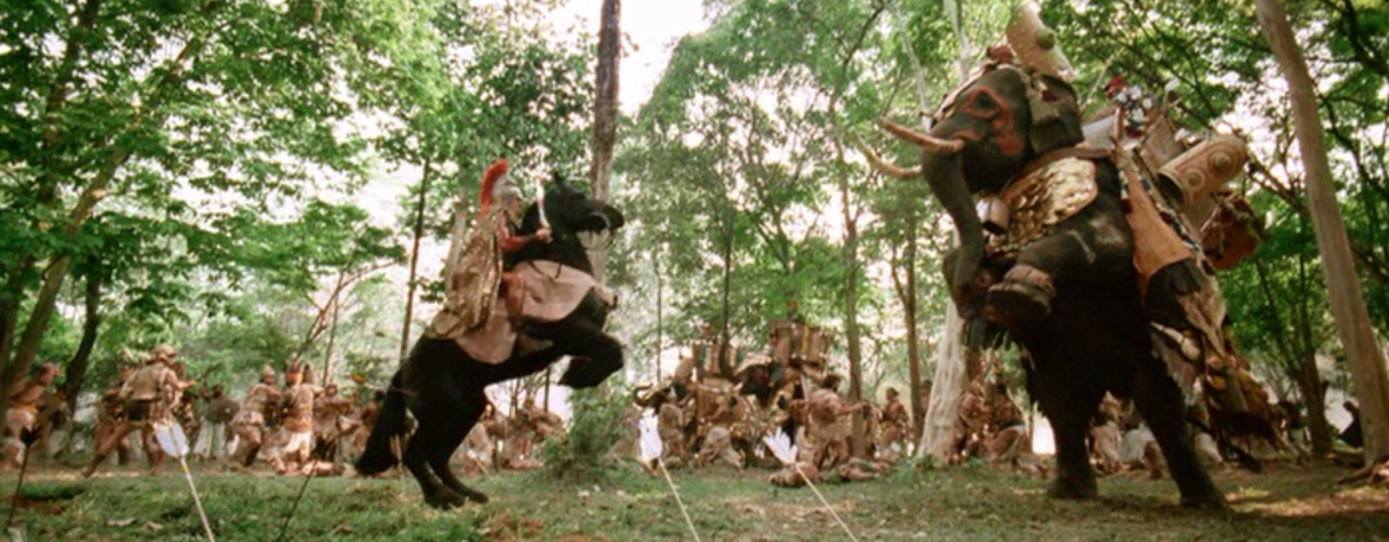
Bursting with over-sized ambition, ferocious amounts of energy, and fever-pitch emotion that’s never afraid to go over the top, Oliver Stone’s gargantuan period epic Alexander is one of the best modern evocations of ancient history that’s ever been crafted, and easily the most underrated film of Stone’s legendary career. I’ll never understand the unnecessary hate that was piled upon this remarkable achievement upon first release; I think it’s because Stone dared to challenge familiar genre ingredients that people were hesitant to the film’s many strengths, from the non-linear narrative to the positively overwhelming battle sequences that put every other depiction of cinematic “Sword and Sandal” combat to shame. In fact, I’ll go so far as to say that the “war-elephant” fight in the jungle, to say nothing of the massive Battle of Gaugamela set-piece, is the single greatest battle scene of its type ever captured on film – relentless, beyond bloody, and truly terrifying — it’s positively hellish to observe, with Stone totally flipping out, even going so far as to show what would happen if an elephant stepped on your face. Rodrigo Prieto’s muscular, hugely expansive, and utterly breathtaking widescreen cinematography is always a sensuous treat, the fired-up screenplay is filled with boisterous speechifying and juicy political intrigue, the immense and soaring musical score by Vangelis reaches for the stars, and the performances range from small to large from a ridiculously stacked cast.

Colin Farrell gave it everything and more and left nothing to spare in a performance that clearly grabbed him from the inside; just look at his eyes in some of the scenes in this film and tell me he’s not insanely aligned with his character. And then you have Angelina Jolie at the absolute pinnacle of her silver-screen hotness – a true serpent/vixen of a role for the ultimate cinematic cobra. Jared Leto, Christopher Plummer, Rosario Dawson, Anthony Hopkins, Val Kilmer and a plethora of “faces” all robustly spiced up the ensemble, while the extravagant and eye-filling production design by Jan Roelfs contributed to the verisimilitude of the entire film. Yes, it’s campy in spots, but likely intentionally so, as the various subtexts and themes are explored in an upfront fashion. But for the most part, this is a deadly serious tapestry of people, places, events, and moments, all patched together in that fabulously unhinged Stone fashion, where the storytelling and filmmaking demonstrates a live-wire spark. The dense script was highly interested in the various characters and their unique motivations, and there’s a sense of gusto to just about every facet of this film that never ceases to impress. This is bravura filmmaking, made by a master director who clearly possessed a true passion for the material, which makes the entire production feel all the more compelling. I saw this film twice theatrically, I own every permutation of the picture that’s been released on DVD/Blu-ray thus far, and I feel that Stone’s recent and most definitive cut is the absolute best that’s been offered. This is a project that Stone seemingly cannot let go of, a film that has driven one of our most challenging and distinctive filmmakers potentially insane.

2

10TH ANNIVERSAY REVIEW OF TONY SCOTT’S MASTERPIECE DOMINO — BY NICK CLEMENT

1

Without question or hesitation, I can firmly state that Domino is my absolute favorite Tony Scott film, the one I keep coming back to the most, and at 10 years old, I feel it’s time that this insanely undervalued pièce de résistance from one of our ultimate modern auteurs got the critical attention and audience credit that it truly deserved. Ahead of its time yet also fabulously au courant when the film was unleashed upon cinemas in 2005, Domino is a smashing entertainment, the perfect synthesis of Scott’s gritty yet slick, highly aggressive style that he developed in the 80’s and 90’s with The Hunger, Top Gun, Days of Thunder, Beverly Hills Cop 2, Revenge, The Last Boy Scout, True Romance, Crimson Tide, and The Fan, which then led to a decidedly expressionistic (and at times impressionistic) aesthetic in the mid to late 2000’s, with such works as Man on Fire, Beat the Devil, Agent Orange, Déjà Vu, The Taking of Pelham 123, and his final film, the hard-charging and incredibly entertaining Unstoppable, pushing his trademark visual flourishes to the absolute extreme. Sandwiched in between were his two “silver-blue sheen” political thrillers Enemy of the State and Spy Game, with the former sort of predicting our post 9/11 world climate, and the latter commenting on it in real-time. But for me, Domino is the *Toniest* Tony Scott film that the iconic filmmaker ever crafted.

2

Easily one of the most misunderstood, sadly maligned films of the last decade, Domino is due to gain a much-deserved cult following. It bombed at the box office, and with the exception of a few sharp critics (Ebert, Dargis, Strauss), people really attacked Scott over this distinctly personal and hyperactive piece of purposefully heightened cinema. And make no mistake, like an effort by Picasso, Domino is a work of collage-inspired art, maybe the first piece of true cubist-cinema ever crafted, leading a super-charged group with the likes of Running Scared by Wayne Kramer, Joe Carnahan’s Smokin’ Aces and Stretch, Michael Davis’ Shoot ‘em Up, and Edgar Wright’s Scott Pilgrim vs.The World, all of which feel spiritually and stylistically connected to Scott’s over the top yet highly artistic sensibilities. Simply put, Domino is one of the most visually elaborate and sophisticated movies ever created, and all of these efforts feel birthed from the seismic contribution that Oliver Stone’s breakneck masterwork Natural Born Killers brought to the forefront in 1994, with its unrelenting sense of visual dynamism, outlandish humor, graphic violence, experimental tone and structure, and an emphasis on constant forward momentum. It’s also more important to note that Scott went on record as saying that Domino was his most favorite film that he ever directed; at the end of the day, he got the movie made the way he wanted to make it, and that says a lot in our current bean-counting movie climate.

3

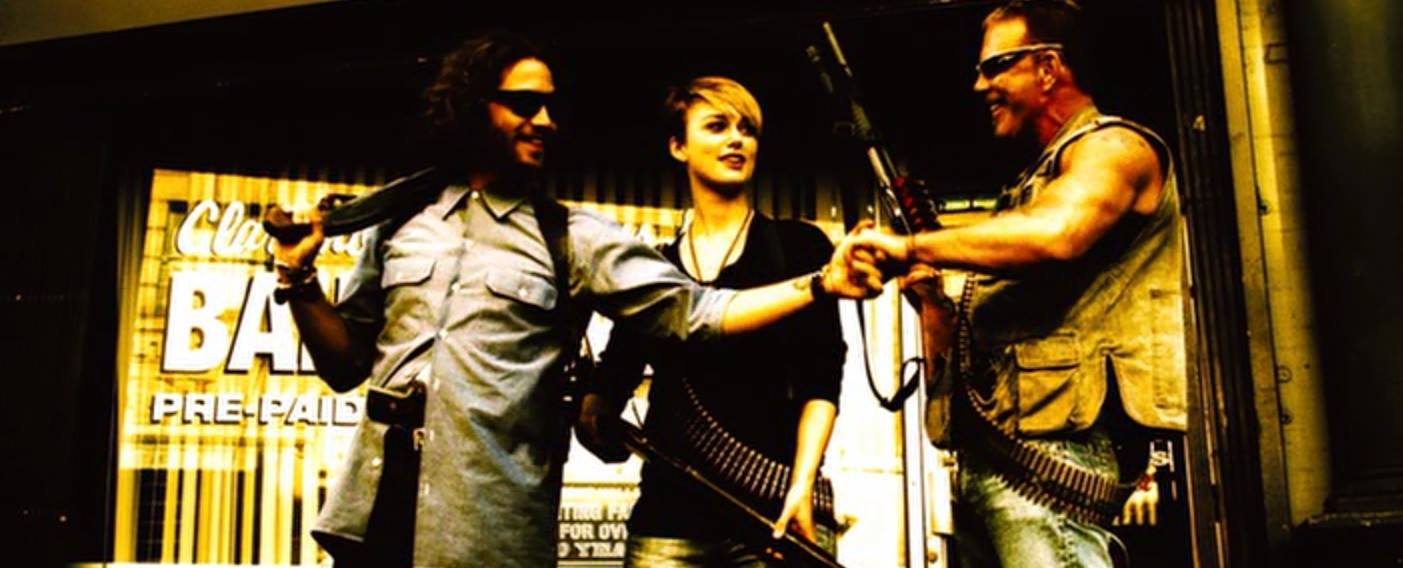
I know that this is Scott’s most divisive, most critically savaged film. Many people hate it. Some people, like me, consider it to be the apex of Scott’s razzle-dazzle career as a storyteller and stylist, with a wild cast of characters (Keira Knightley, Mickey Rourke, Edgar Ramirez, Mo’Nique, Christopher Walken, Dabney Coleman, Delroy Lindo and many others) who all throw themselves into the filmmaking process with gusto and unending enthusiasm for the lurid material. The film is a slightly insane, pseudo-biopic of infamous bounty hunter Domino Harvey (the fantastic Knightley) that exists primarily as a showcase for Scott’s obsession with style and form and, as per usual, a heartfelt narrative. What makes Domino work as a whole is that the story is as unhinged as the style, always complimenting each other, always doing this crazy cinematic dance. Also, many people forget that much of the film takes place through a cloud of mescaline, and most of the third act incorporates a hallucinogenic-trip aspect to the proceedings. And then there’s Domino herself – a wild, rebellious British model turned bounty hunter who wanted only to march to the beat of her own drum. The real Domino Harvey did in fact lead a crazy life, but it probably wasn’t as over the top as Richard Kelly’s crisscrossing and zigzagging script, which was based on a story co-created by The Last Seduction scribe Steve Barancik. The filmmakers make it clear upfront that they’ve taken liberties with the facts – there’s even a graphic that reads: “Based on a true story…sort of.” What I love most about Domino is how frenetic and in your face the filmmaking is, and how incredibly intricate the plotting becomes by the finale. Scott’s hyperventilating and exhilarating style would mean diddly-squat if it wasn’t in service to an exciting plot with characters you like and stakes that are high. Knightley shredded her good-girl image with her balls-out performance as the titular heroine; from the lap-dance scene to breaking Brian Austin Green’s nose to busting out the double machine guns during the finale, she grabbed the role and ran with it. Mickey Rourke’s recent career resurgence really began here, with a gruff and stern performance as Domino’s boss. And Edgar Ramirez, who would later blaze up the screen in the epic five hour terrorist biopic Carlos, busted out in a big way as Domino’s volatile partner, Choco, and the love story that develops between them is as soft and tender as the rest of the film is jagged and primal.

5

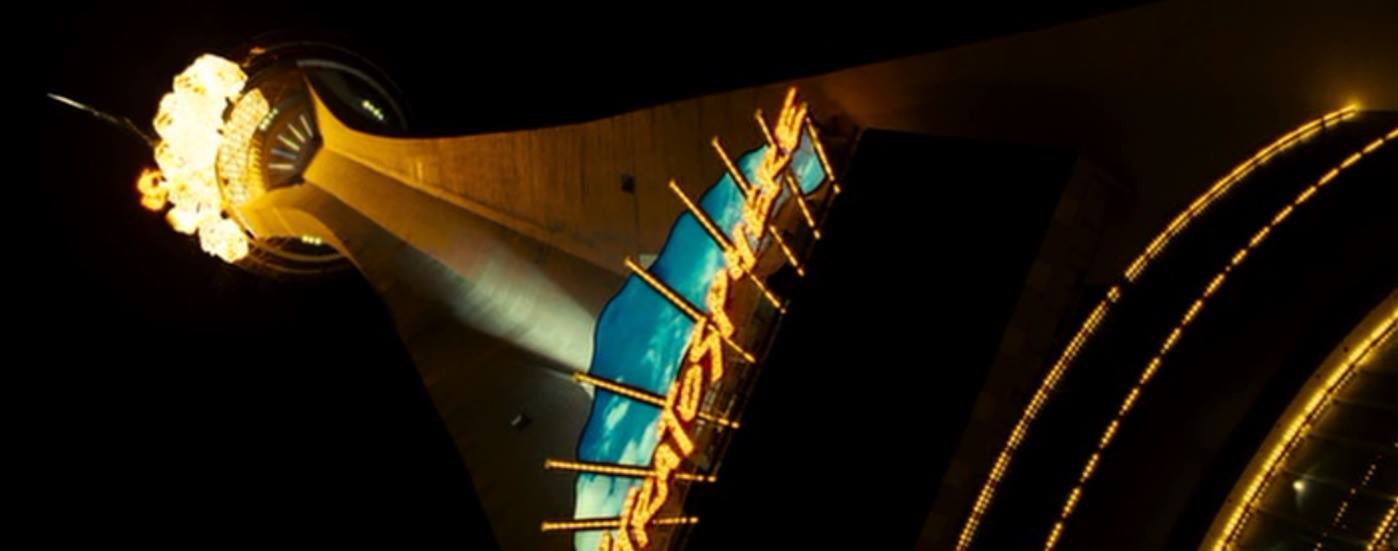
Many complained that Scott’s directorial tricks and kinetic editing patterns were a major problem in Domino. To those individuals I say: Go home and watch Driving Miss Daisy. First off, lest anyone forget, the film is framed through the P.O.V. of a main character who is tripping on mind-altering substances – that should be the first sign to the viewer that the film is going to be a bit off-kilter. Kelly’s labyrinthine yet still coherent screenplay is a marvel of ingenuity, character construction, and dense plotting with a couple of his customary satiric zingers thrown in for good measure. Daniel Mindel’s super-saturated, kaleidoscopic cinematography bleeds with intense color as the images jump off the screen, assaulting and overwhelming the viewer’s senses – it’s a hot-blooded cinegasm of technique, designed to get you off. Repeatedly. And when you take into consideration that Kelly’s off-the-wall but still rooted in reality screenplay frequently shoots off in various directions at any given point, always carrying the potential to spin wildly out of control, you have to applaud the zeal of all the people behind this crazy undertaking. Strip away all the pyrotechnics and the nonlinear structure and you’re left with a rather simple story of love, deceit, revenge, and emotional and physical catharsis. And let me tell you – if you don’t find it cinematically satisfying when Keira Knightley and Mickey Rourke and Edgar Ramirez are speeding down that elevator shaft in the Stratosphere hotel while the penthouse level is exploding from an I.E.D., well, I’m not sure what to tell you!

4

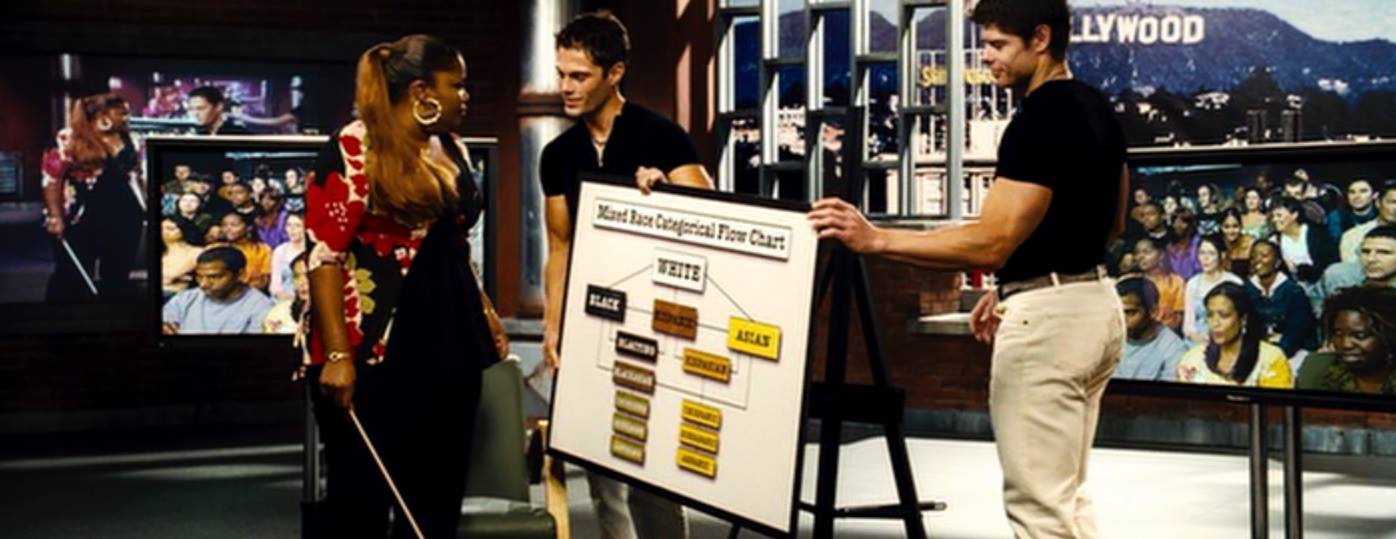
There are just so many glorious sights that this movie has to offer: The epic opening credit sequence which needs to be played at full volume blast, Christopher Walken stealing scenes as a lunatic reality TV producer with a serious “font issue,” Ian Ziering and Brian Austin Green destroying their 90210 celebrity personas in hilarious cameos, Tom Waits as a tripped-out roamer of the desert with some poetic and interesting notions regarding fate, Knightley giving a bra and panty lap dance to a gang member in order to get her crew out of trouble – this movie never stops chugging and churning, throwing stuff at the audience, egging them on for a visceral response. The Jerry Springer interlude with the unveiling of the “mixed-race flow chart” is still a pisser for the ages, and overall, the bizarre nature of the narrative can never really be pinned down, which is a huge part of the fun factor. This was Tony Scot unleashed, the moment where you felt Scott put ALL OF HIMSELF into making a movie. It’s that rare, expensive, personal project that only gets funded by private investors who then let the filmmaker do whatever it is that they want. Domino is Tony Scott’s undying love letter to cinema as a whole and stands as his immortal masterpiece. As Manohla Dargis of the New York Times said in her glowing review of the film: “It’s all the Tony Scott you could want in a Tony Scott movie.” Damn straight.