It must be exhausting being Danny Boyle. Judging by his frenetic yet coherent filmmaking aesthetic, he must never stop moving, thinking, twitching, or doing. He’s a restless artist, interested in telling propulsive stories through a break-neck sense of pacing and stylistic ferocity. His “kids movie” from 2004, the obscenely underrated Millions, is one of the edgiest, most subversive PG-rated efforts that I can think of, and a film that explodes with a creative burst of technical energy and narrative surprise. This delightful piece of work centers on eight year old Damian (the terrific Alex Etel), a Catholic school student who lives with his father (the wonderful James Nesbitt) and his brother Anthony (Lewis McGibbon, excellent), and whose mother has recently passed away. Then, one day, while allowing his active imagination to take center stage (he’s constantly having surreal discussions with various saints from throughout history), he has the happiest of accidents: A cash-stuffed duffel bag somehow lands directly on top of his cardboard fort, seemingly thrown from a passing train. Unsure of what to do with the money at first, Damian shows Anthony his discovery, and the two brothers decide to keep it a secret. Which proves hard. Very hard. And then, somewhat menacingly, they must contend with the original owner of the duffel bag, who has some very good reasons for wanting all of his money back. The exceedingly imaginative script was adapted by the writer Frank Cottrell Boyce (who also wrote the novel), who fills the narrative with surprise after surprise, tons of great dialogue, and a willingness to bend the expectations of a children’s film at almost every turn. This is the only Danny Boyle film not to be rated R (at least that I can think of off the top of my head) and yet it still feels totally within his cinematic worldview; this is a lightning-quick piece of storytelling that’s clearly in love with the endless possibilities that the medium can offer on a visual level. The tremendous cinematographer Anthony Dod Mantle shot the film in a gorgeous yet gritty fashion, injecting bold color and photographic expressiveness to convey feeling and mood. Etel’s dialogue-heavy performance is one of the best I’ve ever seen from a youngster on screen, and because Boyce’s smart screenplay is so deep where it counts, you come to adore both Damian and Anthony and their father, resulting in a film that feels extremely heartfelt while also clearly made with a zest for form and technique. This is easily one of Boyle’s best films and the one that gets the least amount of acclaim or attention.
Category: Film Review
TERRY MCMAHON’S PATRICK’S DAY — A REVIEW BY NICK CLEMENT
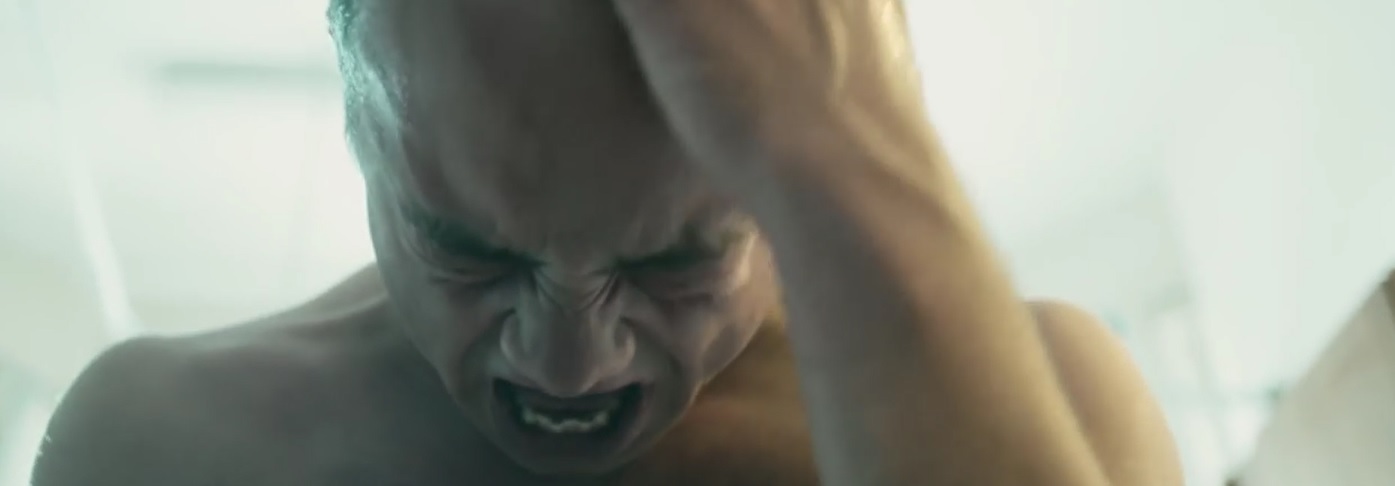
Terry McMahon’s blistering drama Patrick’s Day is unquestionably one of the best films I’ve seen all year. This Irish film, which debuted at various film festivals before finding general release earlier this year in its home country, deserves to find a wide audience here in the states, but thanks to a zero theatrical release (as far as I can tell) strategy and the lack of any streaming or physical media options, the only way one can see this is to do something illegal on the internet (which I don’t do) or own a Region Free disc player and purchase the Region 2 DVD from Amazon UK (which I did). Intelligent, romantic, deeply troubling, and all together devastating, few films that I can think of feel more timely or of the moment than this one; mental illness is a massive issue all around the world, and McMahon’s multilayered narrative takes a harsh look at parenting gone wrong and a system that consistently fails those that it’s looking to rehabilitate. It’s a shame that the awareness levels for this movie feel as low as they do – I talk about movies all day long, and if it weren’t for one of my FB buddies, Richard Finlay, I might not ever know about this tour de force hidden gem. Sometimes, the most potent and effective of films come from the places you’d least expect. Maybe it’s because I’m not familiar with the actors or that I didn’t know what to expect with this film that it hit me as hard as it did. Whatever the reason, when movies are your passion, and something this consistently thoughtful and daring comes along, you feel like screaming from the top of your lungs to all who’ll listen – this is a tough, draining, but essential piece of work.
The narrative centers on Patrick (the incredible Moe Dunford), a mentally ill 26 year old man who is out for his annual birthday amusement park excursion with his wildly overbearing mother Maura, the fabulously evil Kerry Fox. Patrick gets separated, and ends up back at the bar of the hotel where he and his mother are staying. There, he meets-cute with a suicidal flight attendant named Karen (the excellent Catherine Walker), an incredibly damaged person in her own right, who rather impetuously strips Patrick of his virginity, which opens up an entirely new world for the previously buttoned-up grocery store clerk. Mom is none too pleased with these developments, and the rest of the story hinges on her attempts to destroy the relationship that her son is building, despite the obvious sense that it might be something that’s helping him. Dunford is extraordinary as the titular character, evoking deep personal pain all throughout the movie, while still mixing in a sense of hopeful optimism that he might finally be connecting with another human being. Walker is vulnerable, a lost and drifting soul searching for meaning, and because the character has been written in a slightly cryptic fashion, she’s forced to use her body language and expressive eyes to convey some character beats that were not on the page. And in a performance that sits right next to Jackie Weaver’s brilliantly amoral work in David Michod’s crime drama Animal Kingdom or Hye-ja Kim’s sinister matriarch in Joon-Ho Bong’s exquisite thriller Mother, Fox is nothing short of mesmerizing as Patrick’s confused, pained, and ultimately misguided caretaker, never once realizing that her actions may be doing more harm than good. In one of the film’s more upsetting moments, Fox tares down a wall filled with framed pictures of Patrick from each of his birthdays from throughout the years, and it’s in this explosive moment that you finally realize that the overall toll that’s been taken on this woman is almost too much for one person to handle.
As a writer/director, McMahon clearly has a distinct point of view that he sticks with during the visceral and turbulent events of Patrick’s Day, and it’s clear to me that he’s definitely bothered by the idea that many people, from family members to the professionals who are supposedly “experts,” don’t do the proper things when it comes to taking care of those who are in need. Shot in a semi-subjective fashion by the fantastic cinematographer Michael Lavelle, the filmmakers draw the viewer into Patrick’s fractured psyche, and by shooting in a heightened, artistic fashion, the film carries a dream-like quality that extends all the way to the final shot, which might leave some viewers with more questions than answers. But as with all great art, it’s always best to leave people with something to think about and ponder rather than spell everything out for easy digestion and consumption. McMahon should be commended for never taking the cheap way out of any of the difficult corners that he puts his fragile characters in, always allowing the story to rationally unfold from scene to scene, even when the actions on the part of some of the characters make you wince with anger or even disgust. Who should say when someone else is allowed to fall in love? If a person has mental issues, does that mean that they aren’t capable of feeling love, or being loved by another person? And when is it ever acceptable to introduce rehabilitation methods, in this case shock treatment, in an effort to “fix” someone? Patrick’s Day will be a film that will test the limits of some viewers, as it goes to some dark yet truthful areas in search of enlightenment and answers, even if some of those answers will forever be out of reach. McMahon has crafted a brave and intimate and surprising piece of cinema, and I absolutely cannot wait to see what he does next.
THE WORK OF RUSS ALSOBROOK — BY NICK CLEMENT
Cinematographer Russ Alsobrook has had the chance to work in comedy and drama, both on the big and small screen, with credits that range from high-profile studio assignments to smaller, indie-minded hidden gems, always bringing a casual sense of style to all that he shoots. He’s cemented a close partnership with filmmaker Mike Binder, collaborating with him on the Hollywood satire Man About Town, the fantastic and deeply underrated post 9/11 drama Reign Over Me, and last year’s provocative Kevin Costner drama Black or White, as well as the HBO series The Mind of the Married Man. Knowing how to cover comedy is super important, as you need to understand timing on the part of the actors, as well as where to place the camera in order to get maximum laughs out of any given comedic moment. It’s no surprise that he’s been drafted by the Judd Apatow factory for two tours of duty (Superbad and Forgetting Sarah Marshall), with other credits including last summer’s Melissa McCarthy hit Tammy and the David Wain crowd pleaser Role Models. But Alsobrook is also that sort of talent who can jump from a funny sequence to one that’s totally dramatic, with total ease, making his work all the more textured and varied. He’s a unique talent in the sense that he clearly responds to comedic material and knows exactly how to frame a joke, but can also gravitate towards dramatic material with just as strong of a sense of place and unobtrusive style.
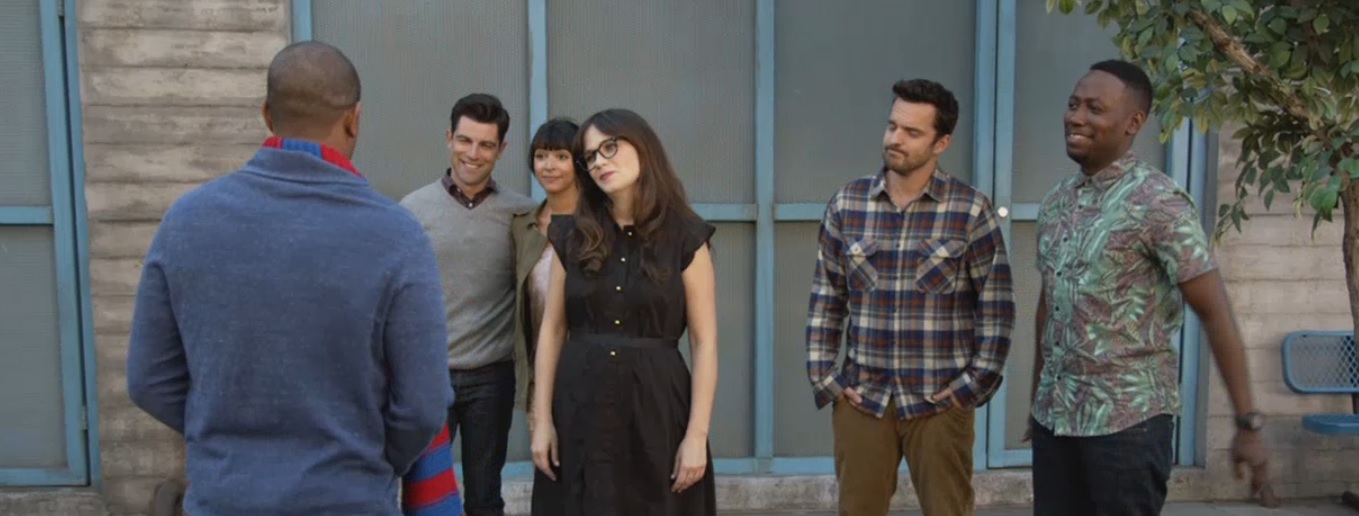
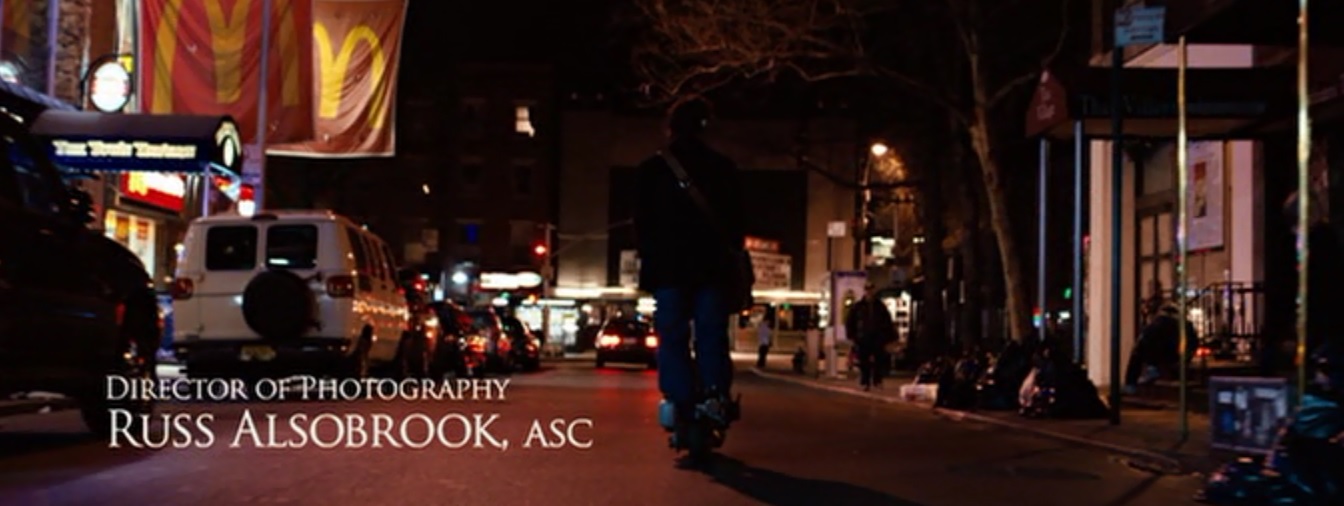
Reign Over Me is one of those delicate films with a tone that moves back and forth between funny and sad, and Alsobrook knew exactly how to get into the headspace of Adam Sadler’s emotionally damaged lead character. Just watch as Sandler floats through the nocturnal NYC streets on his scooter during the film’s opening segments, oblivious to all that’s around him, almost begging to be hit by a car. In these moments, Alsobrook’s grainy and dreamy digital cinematography captures the spiritual anxiety of a man who is at a serious crossroads in his life. The film is wildly undervalued, and Alsobrook’s elegant sense of style was a big part of the film’s success. One of his largest accomplishments as a craftsman has to be his continued work on the smash FOX comedy series The New Girl, which stars Zooey Deschanel alongside a terrific cast including Jake Johnson, Max Greenfield, Hannah Simone, Lamore Morris, and Damon Wayans Jr. There’s a sense of family on the show, and over the course of 98 episodes as cinematographer (and a bunch as director), Alsobrook has given the series a warm and fluid visual style that’s in perfect tandem with the playful material. And earlier this year, Alsobrook’s versatile work was seen on the big screen in Mike Binder’s thoughtful race relations drama Black or White, which starred a fantastic Kevin Costner as a hard-drinking grandfather trying to keep custody of his granddaughter. Alsobrook had a chance to shoot a multifamily portrait of life in Los Angeles, and be brought to the film a classy polish while never getting to ostentatious about his aesthetic, always the mark of an astute talent.
ROBERT ALDRICH’S EMPEROR OF THE NORTH — A REVIEW BY NICK CLEMENT
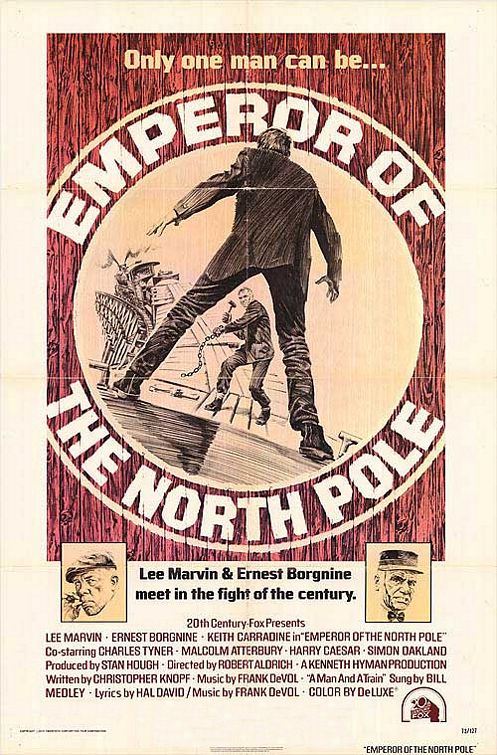
Emperor of the North, aka Emperor of the North Pole, is an exceedingly masculine film. You can smell the cinematic machismo dripping off of Lee Marvin and Ernest Borgnine all throughout this beefy action-adventure from man’s man director Robert Aldrich (The Dirty Dozen, The Flight of the Phoenix). Released in 1973, this stunningly photographed train adventure is set during the height of the great depression, and centers on a wise hobo named A-No.-1 (Marvin) who battles it out with a sadistic train conductor named Shack (Borgnine). Shack doesn’t allow any transients to catch a free ride on his train, and he’s more than happy to smash a bum in the head with his hammer and throw them under the wheels to their death. There is a rugged physicality to this film, and almost all of it feels authentic and shot on location on real trains. The crisp Oregon backdrops lend verisimilitude to all of the action, while the stunt-work is consistently ridiculous, with numerous leaps and tumbles and dust-ups all preformed organically and with a minimum of fuss. There’s a crude sensibility and rough disposition to this film at times, with Christopher Knopf’s straight forward and tough-talking screenplay (with uncredited story contributions by Jack London) containing some real gems of dialogue, with the final moments of the film carrying a witty and defiant streak of ironic, introspective humor. Keith Carradine’s memorably skeevy performance as Cigaret was his second overall, and he brought an uneasy charm to his role as that of a rookie train-rider who crosses paths with the taciturn Marvin, who utterly destroys as the surly A-No.-1. The supporting cast includes solid turns from Charles Tyner, Matt Clark, Liam Dunn, and Malcolm Atterbury, while Frank De Vol’s triumphant score pounds away during the action, but smartly relents in key spots. Cinematographer Joseph F. Biroc, a frequent Aldrich collaborator, really shot the hell out of this motion picture, with certain sequences sort of defying technical logic considering the era that the film was produced in, while the entire endeavor feels dangerous while looking beautiful.
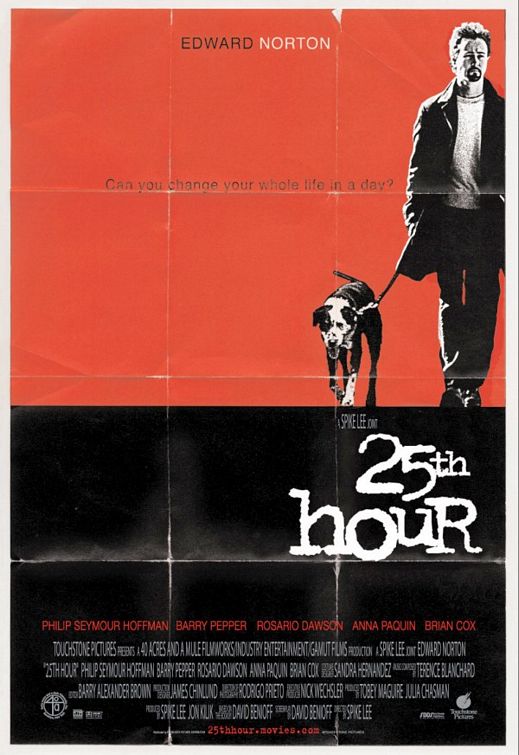
SPIKE LEE’S 25th HOUR — A REVIEW BY NICK CLEMENT
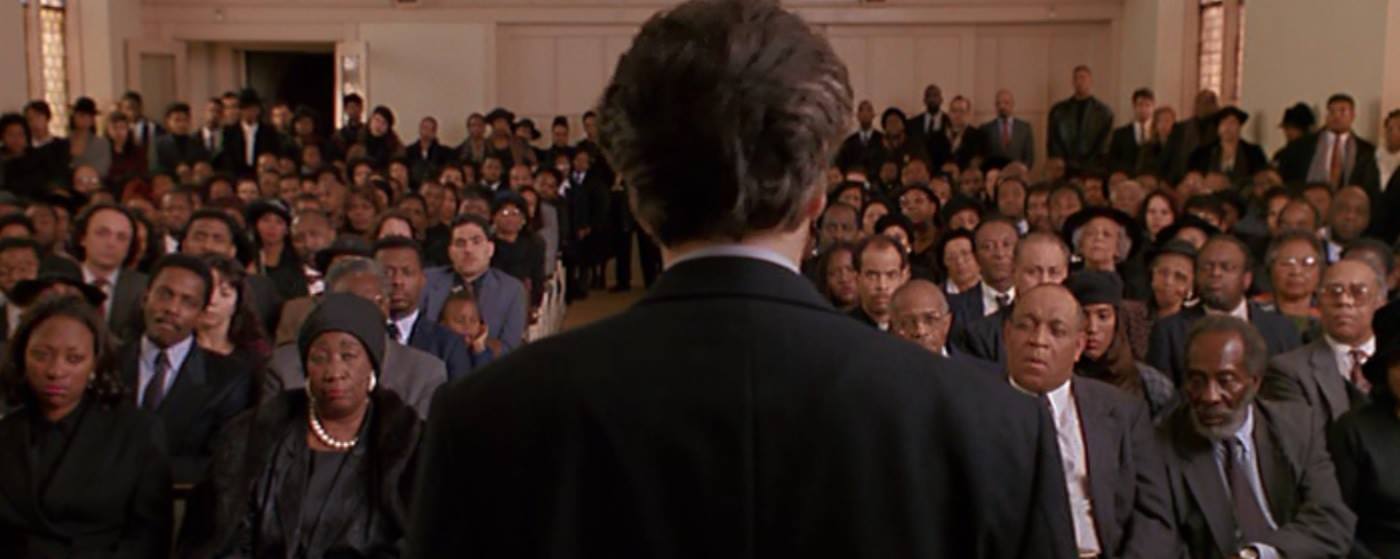
Angry. Vital. Reactionary. Honest. Masterpiece. Spike Lee’s 25th Hour, from a brilliant screenplay by David Benioff, is easily one of his best films, and unquestionably my personal favorite joint from this quintessential NYC filmmaker. Released in the shadows of 9/11, this searing drama features one of the greatest performances from Ed Norton in his entire career (which says a lot in my estimation), and incredible supporting turns from Philip Seymour Hoffman, Barry Pepper, Rosario Dawson, and Anna Paquin. One of the first films to directly confront the horrors of 9/11 both visually and thematically, Lee and Benioff crafted a ferocious film that rests on its riveting narrative and sexy-gritty visual style (the versatile Rodrigo Prieto handled the striking cinematography), with Terence Blanchard’s haunting score filling the background. Brian Cox is late-in-the-game devastating as Norton’s father, who has to contend with the fact that his son is about to head to prison for a major drug charge. The film pivots on Norton’s character getting pinched for dealing, and following him over the course of his last day of freedom, as he settles scores, examines friendships, and comes to terms with his girlfriend (the super sexy Dawson giving a rich and emotionally affecting performance). I can remember seeing this film opening night at the Hollywood Arclight back in 2002, with a totally sold out crowd, and the stunned silence at the end also contained a palpable level of tension that you could cut with a knife. The film gets under your skin, purposefully, picking at the ills of society like a bloody scab; Norton’s “Fuck You” speech in that bathroom mirror is still one of the most sensational bits of cinema that I’ve ever seen. I’d never spoil it out of context, as it’s truly a moment that needs to be experienced organically, but let’s just say that what flows from his mouth is shattering, pointed, and disturbingly true. The film was met with a somewhat muted critical response and it performed decently, for its budget, at the box office – more should have been made of this film at the time of its release. I think that people were too shell shocked to realized what they had been given, and over the years, my hunch is that many people have discovered this gem for what it is – a reflective cinematic mirror from a very specific time and place that tells a universal story against an uncertain backdrop of personal despair. It’s time that this film got the attention that it deserves, as it stands as a blistering piece of contemporary social commentary that feels cut from the open wound of a society struggling to find its footing. Available on Blu-ray. Buy it.
SYDNEY POLLACK’S THE ELECTRIC HORSEMAN — A REVIEW BY NICK CLEMENT
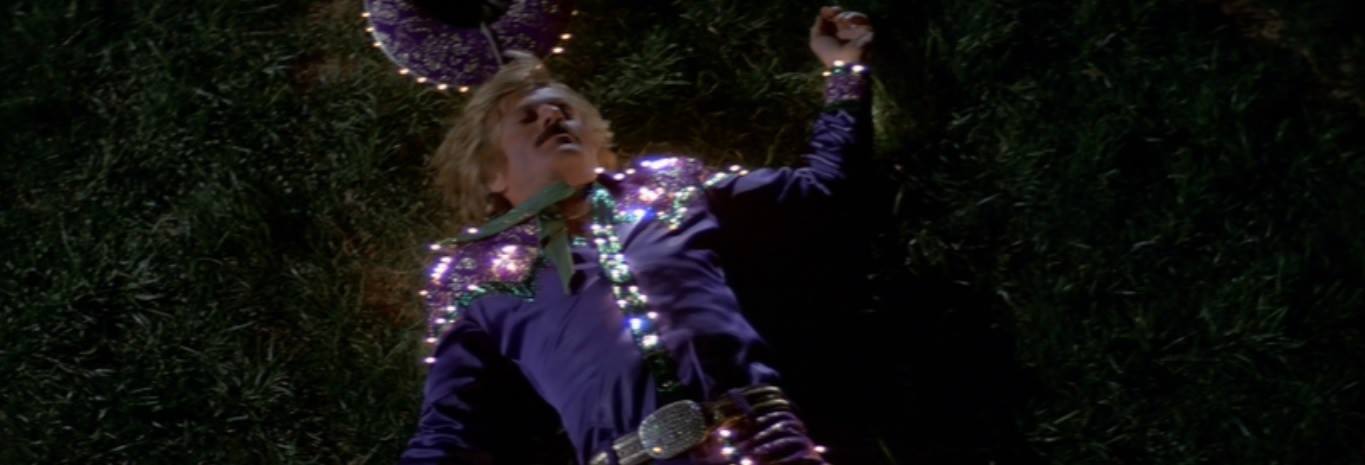
Sydney Pollack’s The Electric Horseman is my sort of 70’s, honkytonk, pseudo-Western fun. You get a sloppy drunk Robert Redford in the opening act, all glammed-out in his garish light-up outfit atop his horse, making kissy-faces and stealing glances with a sexy Jane Fonda, while a fantastic supporting cast including Valerie Perrine, Wilford Brimley, Allan Arbus, John Saxon, Nicholas Coster, and Willie Nelson (who provided the country western score and lots of sly laughs) peppers the background with flavor. Redford is a past his prime rodeo champion who has resorted to a humiliating job as a promotional pitch-man for a breakfast cereal company, making appearances in a tacky Las Vegas show. He’s then tasked with performing alongside a $12 million horse, which he later discovers is being drugged so that it would be complacent, and he high-tails it into the desert, disgusted by what he’s witnessed. Meanwhile, Fonda, playing an eager TV reporter, hears about the incident, and pursues Redford, looking for her big story. The movie is a comment about big corporations, a satire on the conventions of the western, and a genial romance between Redford and Fonda with some action-adventure thrown in for good measure. The Electric Horseman has an old-fashioned atmosphere and tone (even for 1979!) and it sort of shambles on to its happy but still bittersweet finale. Pollack’s solid direction keeps this oddly charming film watchable all throughout, while the peppy and romantic score from Dave Grusin immediately set a playful mood. Great cinematography by Owen Roizman.
HAROLD BECKER’S CITY HALL — A REVIEW BY NICK CLEMENT
Harold Becker’s excellent and supremely underrated 1996 drama City Hall is always a great re-watch and it definitely deserves a Blu-ray upgrade. It’s a comfort-blanket type film for me – I just like watching it. This came out during the “Screaming Mad” Al Pacino era (Scent of a Woman, Carlito’s Way, Heat, Donnie Brasco, The Devil’s Advocate, The Insider, Any Given Sunday) and his forceful, emotionally invested performance as the beleaguered mayor of NYC is one of his most underappreciated. Boasting a roster of big-gun studio screenwriters (Bo Goldman, Paul Schrader, Nicholas Pileggi, Ken Lipper), the dialogue is smart, the plotting is believable, and the themes are still topical. Also, it’s another fantastic instance of massive Character Actor POWER: Danny Aiello utterly owns his scenes, and then you have the likes of Martin Landau, David Paymer, Richard Schiff, Nestor Serrano, Larry Romano, Anthony Franciosa, Tamarie Tunie, Lindsay Duncan, and John Slattery(!) filling the edges with colorful supporting work. John Cusack and Bridget Fonda are solid if outmatched by the gusto of Pacino, who looked purposefully tired and haggard with a voice that sounded coarse and strained, which all added to the realistic nature of the character and his endless pursuit of justice. This is one of those sturdy, dramatically effective movies that didn’t register with critics or at the box office, and for some reason, still has never found the due respect that it deserves during its endless cycle on the cable channels and in DVD bins. It might not be brilliant, but it’s endlessly watchable, and as usual for Becker, there’s an unforced steadiness to his directing that keeps everything moving along at a brisk clip, aided by the classy stylings of cinematographer Michael Seresin. Boasts a superb score by Jerry Goldsmith.
GILLIAN ROBESPIERRE’S OBVIOUS CHILD — A REVIEW BY NICK CLEMENT
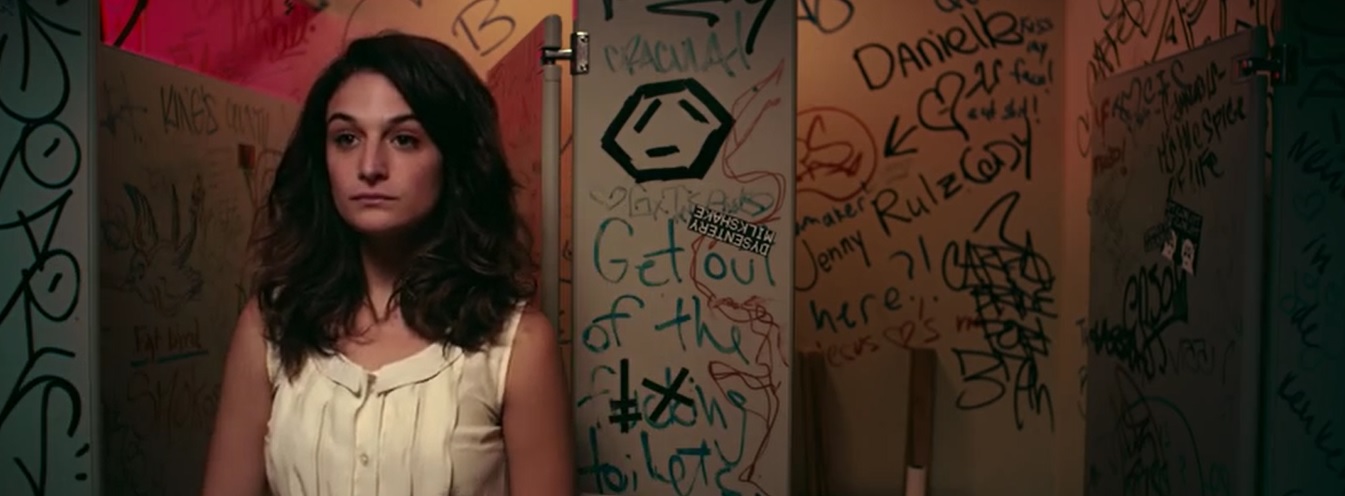
The 2014 comedy Obvious Child is one of the most realistically funny films I’ve seen in the last few years. On repeated viewings, it’s gotten better and funnier and I keep noticing how on point so much of the social commentary feels, especially within the context of our increasingly nutter-filled landscape that we all inhabit. Jenny Slate was absolutely outstanding and completely deserved an Oscar nomination for Best Actress, but sadly, that didn’t happen, as the Academy has an aversion to comedies, let alone ballsy ones like this. Long live the amazing people at A24 – without their taste and resources, the recent movie-going experience wouldn’t be anywhere near as impressive as it’s been. This is a wonderfully honest and often times darkly hilarious comedy that despite featuring one small plot contrivance seems perfectly calibrated over the possibly too brief running time (at 85 minutes, I could’ve spent more time with these characters in a few more scenes). But when artistic collaborators seem this tapped into their material, it’s tough to fault them for what they didn’t do. Slate stars as a down on her luck stand-up comic who’s miserable after being dumped by her boyfriend and losing her part time job and only real source of income. Then, things get extra complicated when she learns that she’s pregnant after a one-night stand with a too-nice-to-be-real potential beau, played by Gabe Liedman, who killed it on the later seasons of The Office (damn I miss that show!) Is she ready for a child when she doesn’t even have control over her own life? How can she break the news to a guy she’s just met? Obvious Child is the product of multiple female voices (co-writer/director Gillian Robespierre, co-writers Karen Maine and Elisabeth Holm, and exec-producer/star Slate) and combines a clear, linear narrative with uproarious improvised stand-up bits which Slate and Liedman absolutely nail with aplomb. A special mention must be paid to the film’s almost unique obsession with fart and poop humor; so simple yet so effective and so refreshing to see it used in a smart fashion rather than as random, scatological humor. And most importantly, I love how Obvious Child isn’t a “will she have an abortion or not?” ticking-clock type movie; the right to choose should always be left to the individuals responsible, with zero interference from any outside institution, which is the message that the creative team clearly and wholeheartedly endorses. Most importantly — this movie is just damn funny, with the humor coming from an honest, heartfelt place.
RIDLEY SCOTT’S BLACK HAWK DOWN — A REVIEW BY NICK CLEMENT
Black Hawk Down really was a tour de force for director Ridley Scott and his crew of technicians and actors. I’ve see this film so many times it’s almost laughable, but revisiting it just recently, I was struck by just how immersive of a film experience this really is, with few rivals. It’s the gold-standard for combat movies, and Scott’s uncompromising vision of urban warfare set precedents in the early 2000’s and has been constantly imitated ever since. Borrowing from cinematic touchstones like The Battle of Algiers and Saving Private Ryan, this was Jerry Bruckheimer’s stab at Oscar gold and he must’ve been livid when Scott was nominated for Best Director but the picture itself was short-changed in the top category. It’s the rare Bruckheimer picture to be taken truly “seriously” by critics, and one of the few pictures in his entire filmography that strived for something more than just “entertainment.” Scott and Bruckheimer made sure to stick to the core of Mark Bowden’s riveting and devastating book, and in doing so, created one of the most visceral pieces of action filmmaking ever constructed.
It’s a physically exhausting movie to sit through, harrowing all throughout, with a constant sense of dread and impending violence. With stunning spatial clarity and obsessive technical finesse, Scott and cinematographer Slawomir Idziak created a gorgeous yet brutal film that pummeled the audience with a sense of sustained cinematic intensity that few other films have matched (Peter Berg’s recent Lone Survivor and portions of Randall Wallace’s We Were Soldiers come close). I saw this film 10 times theatrically, a personal record for one movie. Granted, I saw it 5 nights in a row at my college campus theater (for free), but for me, this is one of the most exciting, most intensely realized portraits of warfare that’s ever been created. I also had the chance to work on this film during pre-production during my days as an intern at Jerry Bruckheimer Films – I’ll never forget the sight of Bruckheimer, Scott, and Joe Roth doing laps around the Santa Monica compound, smoking cigars, talking about the film. I had the experience to hang out with production designer Arthur Max quite a bit, and Scott would come into the room and check out all of the models and boards and plans, deciding where the helicopters would land, etc. Totally wild.
Tarsem Singh’s The Cell- A review by Nate Hill
Tarsem Singh’s The Cell is the kind of revelatory, mind blowing, breathtaking, once in a decade kind of fantasy film that is utterly unique, truly memorable and pure artistic creation. Singh utilizes so many visual elements and ideas that you get the notion that you are truly immersed in a human being’s subconscious inner realm, and not merely watching a film. It’s transcendent. Jennifer Lopez, in a performance of great empathy and serious emotional depth, plays a child psychologist who uses futuristic technology to literally enter the dreams of comatose patients and attempt to heal them. When a seriously disturbed killer (the monumentally talented Vincent D’Onofrio) enters a coma before the FBI can find his latest victim, she is hired to enter his mind to find out the location. A scary setup indeed. The first plunge into his mind is set up with a dread inducing soundtrack cue, and a sudden, Topsy turvy whirlwind of surreal images, sounds and stimuli which are truly eerie and intangible. The art direction, special effects and design of the spirit realm she ventures into are just something you don’t see in many films, because most people are afraid to think about that kind of raw, uninhibited subconscious content. Not Singh. He willingly explores the dark, mysterious side of the human mind and soul, with a complexity and understanding that is all to rare. For folks who find that too much surreal imagery and soul disturbing content makes them uneasy (hell, I’M one of those folks) those aspects are balanced out by the clean cut, very grounded in earth time plot line of Vaughn’s team helping him out from ‘earthside’, a standard cops vs. killer mentality to even out the strangeness. They even have a guy from CSI playing one of the cops. Vince Vaughn feels slightly miscast as the head fed, but James Gammon, Dean Norris, Dylan Baker, Marianne Jean Baptiste, Patrick Bachau and Musetta Vander all give stellar support. If you have a strong stomach (this film gets pretty brutal in ways you can’t imagine), and a wandering, artistically abstract mind for all things surreal and dreamy, definitely check this out.