JOHN PATRICK SHANLEY’S JOE VERSUS THE VOLCANO — A REVIEW BY NICK CLEMENT

joe_versus_the_volcano

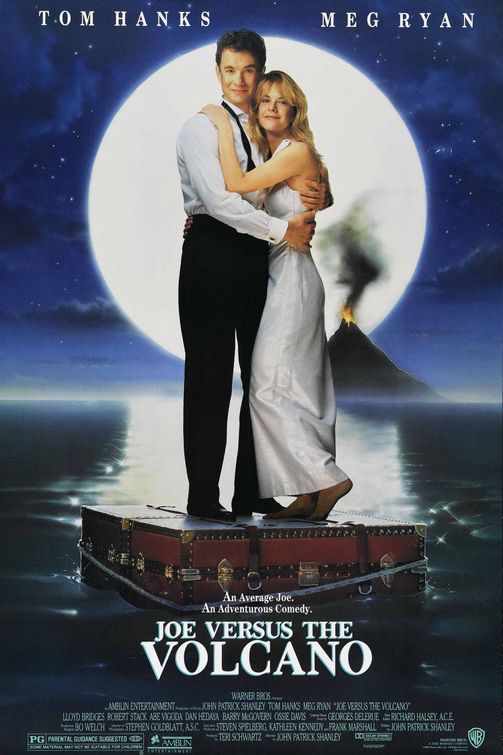
John Patrick Shanley’s Joe Versus the Volcano is a wonderful movie, the sort of project that defies description, and only comes along once in a great while. The fact that this movie was released in 1990 and that I can think of very little to compare it too must count for something. This was a film I watched repeatedly as a teen, but after a recent revisit, I’m struck by the film’s unique sense of heartfelt melancholy, as well as its confidence with balancing various tones and distinct performances.  This movie took chances with its narrative, wasn’t afraid to be a bit “out there,” and Shanley still grounded the entire piece with a level of realism that made the plight of Tom Hanks’s character all the more resonant. Shanley is an immense talent, and when looking at his collective body of work as a writer in all mediums, Joe Versus the Volcano stands out even more; it’s truly a piece of entertainment that marches to the beat of its own drum. While critics were mixed at the time, I would like to hope that there’s a lot of people out there who hold this smart, surprising, and extremely funny little gem of a movie close to their hearts, as it’s the sort of work that rarely gets released these days. I can’t imagine how much of a challenge it might have been to market this quirky film back in an era before the internet and large scale media saturation, where you could really pinpoint a niche audience and attack hard. This was yet another charming, offbeat effort that would attract a huge following during the heyday of VHS, and would further cement the star power of rising stars Hanks and Meg Ryan, who would go on to reteam in Sleepless in Seattle and You’ve Got Mail. Stephen Goldblatt handled the peppy cinematography; while Geroges Delerue’s playful score immediately set the mood. The insane supporting cast includes Carol Kane, Lloyd Bridges, Robert Stack, Abe Vigoda, Nathan Lane, Amanda Plummer, Ossie Davis, Dan Hedaya. An Amblin Entertainment release.
JOE WRIGHT’S HANNA — A REVIEW BY NICK CLEMENT

2

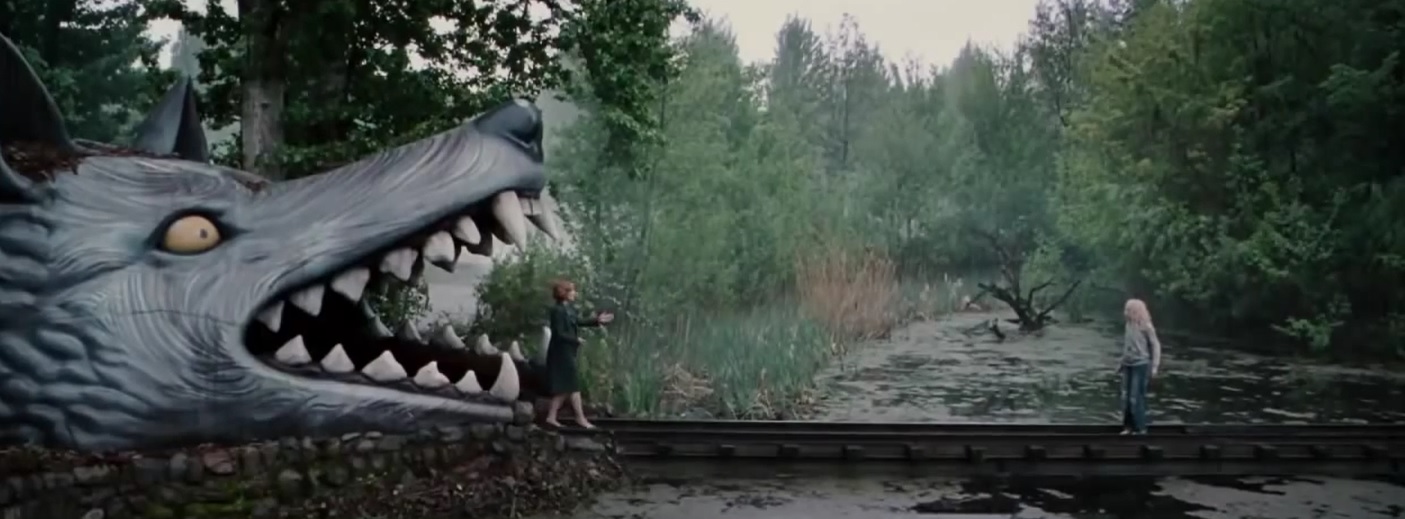
Joe Wright’s kinetic, artistic, sort-of-spy-thriller Hanna is so many things we’ve already seen but something totally and uniquely all its own, all at once. Take aspects of The Bourne Identity, Leon, Kick-Ass, Run Lola Run and then filter it through the prism of a Grimm’s Fairy Tale and you almost get an approximation of this strange, at times surreal, occasionally bewildering, entirely engrossing movie from Wright, who has consistently demonstrated a terrific ability to genre-hop (here doing an exceedingly stylish and physically impressive action film) after a classically confident start to his directing career (Pride & Prejudice, Atonement, and The Soloist came before; the obscenely underrated Anna Karenina followed, with Pan finding release this October). The plot is best not to be poured over too closely as there are definitely some holes and questions of logic (not to mention geography) but never mind — the film is a rush of motion, color, texture, violence, and pulsating sound (the restless, techno-themed score is by The Chemical Brothers and the fantastic cinematographer Alwin Kuchler handled the often stunning camerawork) which adds up to a blur of visceral excitement. The spectacular young actress Saoirse Ronan (Atonement, The Way Back) is positively stellar as the titular heroine, a 15 year old girl raised by her ex-CIA agent father (a customarily intense Eric Bana) to be a ruthless killer. Shielded all her life from the outside world, Hanna knows how to run, shoot, chop, and kill her way to safety. Enter the icy, dangerous Marissa (the always perfect Cate Blanchett), a government operative with a thing for silencers, razor-sharp red haircuts, and electronic toothbrushes (this movie has tons of quirks which always keeps it interesting). Marissa will stop at nothing to find Hanna — but why? Wright directs this visually expressive modern fairy tale with extreme panache, utilizing an attention grabbing blend of aesthetic tricks that spice up the picture, with Kuchler getting a chance to show off a few times during the set-pieces by shooting the action all in one take or in rough-and-tumble fashion. There’s an interesting mix of hand-held camerawork coupled with jagged editing patterns, that somehow fits perfectly with Wright’s traditionally fluid shooting style (a six or seven minute long steadicam fight sequence with Bana taking on a group of assassins is the movie’s obvious tour de force of technical virtuosity). Films like Hanna have been done before but never quite like this.

3

RIDLEY SCOTT’S BLACK RAIN — A REVIEW BY NICK CLEMENT

2

I can’t help but feel that big brother Ridley borrowed a lot from younger brother Tony on his 1989 film Black Rain, which feels more aesthetically and thematically inspired by stuff like The Hunger, Top Gun, Beverly Hills Cop 2, and the rushes he presumably saw while Tony was shooting Revenge, than Ridley’s own The Duellists, Alien, Blade Runner, Legend, and Someone to Watch Over Me. The excessive smoke-effects and highly atmospheric production design definitely shared some similarities to Blade Runner, but for me, Black Rain feels like the sort of super-slick yet still gritty high concept actioner that Tony would become famous for, while Ridley spent the years chasing prestige and clout. Michael Douglas was all leather-jacket-fucking-awesome in this film, Andy Garcia was terrific support, and I loved how the film blended elements of classic cop noir with the modernized Yakuza picture. Jan de Bont’s rough yet elegant cinematography was sensational, and really pops on the Blu-ray format, while Hans Zimmer’s evocative score sets the mood immediately, lending menace and intrigue to the highly textured visuals courtesy of Scott and de Bont. Norris Spencer’s detailed production design lent believability to every location; this film feels exotic in a way that I can’t really put into words. Violent, sexy, and hard-charging all the way through to the finale, this is one of three Ridley efforts that feel very “Tony” for me as a viewer (G.I. Jane and Body of Lies are the other two that also feel rock-and-roll-Tony), and it underscores the fact that when not trying to please the Academy, Ridley can really nail genre-based entertainment.

1

PTS PRESENTS DIRECTOR’S CHAIR WITH STEVE DE JARNATT

SDJ POWERCAST

SDJPodcasting Them Softly is proud to present a chat with cult filmmaker Steve De Jarnatt, the director of the 1988 head-trip CHERRY 2000, and the wonderful MIRACLE MILE with Anthony Edwards and Mare Winningham, which was released in 1989. Steve is also an accomplished short story author, with an inclusion in the 2009 edition of The Best American Short Stories for his work RUBIAUX RISING, and has also worked on TV hits such as ER, ALFRED HITCHCOCK PRESENTS, and LIZZIE MCQUIRE. An eclectic talent who knows how to effectively mix tones to create incredibly unique results, Steve‘s chat is filled with passion and insight, and we hope you enjoy it!

ROBERT ALTMAN’S MCCABE & MRS. MILLER — A REVIEW BY NICK CLEMENT

2

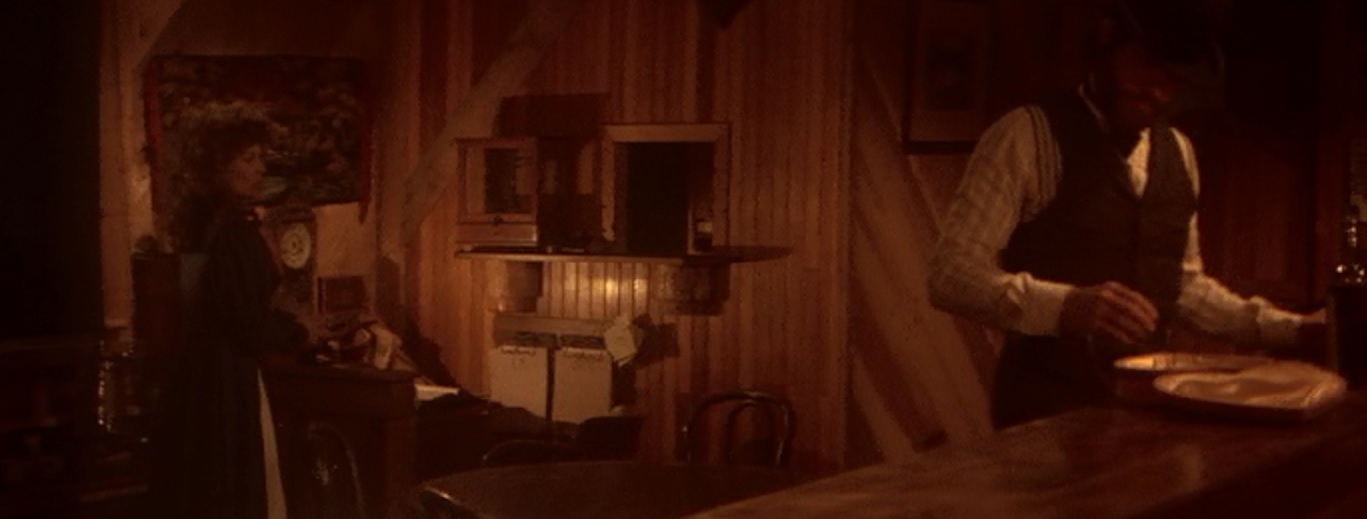
Robert Altman’s McCabe & Mrs. Miller is a film that feels preserved in amber. It’s a slow paced and bleak look at the inevitability of death, and I can’t seem to find one negative thing to say about this neglected work of art. Neglected in the sense that it’s not on Blu-ray; how the hell can this be? This film deserves nothing less than some love and restoration from The Criterion Collection, and it’s a further reminder of how versatile and unique a filmmaker Robert Altman was, especially when compared with today’s cook-cutter studio mentality. I love how this film isn’t really a “western” in the traditional sense, but it’s got the atmosphere and personality of one at times, and don’t get me started on the use of overlapping dialogue and ambient background noise – weak in the knees I get with this stuff. Warren Beatty and Julie Christie were both flawless here, subverting expectations and creating two lasting portraits of tough-love individuals who are more realists than anything else. Vilmos Zsigmond’s warmly fuzzy cinematography goes for wide shots mixed with slow zooms, creating a sense of openness while still retaining a certain level of intimacy, and never losing sight of the desolate and chilly landscape. The “flashing” technique that Altman and Zsigmond favored in post created a halo effect to the images, eliminating any color saturation, resulting in a picture quality that’s dreamy and opaque. Roger Deakins must have watched this movie 1,000 times before shooting The Assassination of Jesse James by the Coward Robert Ford. There’s an aesthetic chill that extends to the film’s themes as well, creating total package cinema, and it’s strikingly unsentimental in a way that most filmmakers could only have dreamed of achieving. Few other filmmakers would have been able to pull of the tricky balancing act that is McCabe & Mrs. Miller, yet Altman, ever the sly storyteller, managed to keep you engaged to a narrative that offers little in the way of conventional cinematic pleasure, and instead invites you to watch and listen as two exceedingly selfish yet practical people try and figure out how to survive life in some of the most unpredictable and unsparing of circumstances. A film like this NEVER gets made today.

3

FELIX HERNGREN’S THE 100 YEAR OLD MAN WHO CLIMBED OUT THE WINDOW AND DISAPPEARED — A REVIEW BY NICK CLEMENT

2

Co-written and directed by Felix Herngren, The 100 Year Old Man Who Climbed Out the Window and Disappeared is a strange one for sure! Some of the narrative may have been lost in translation (this is a Swedish import), but I was definitely able to grasp the busy plot and dizzying array of characters, places, and things. Allan Karlsson, played by Robert Gustafsson who is a massive star in Sweden, is a 100-year-old explosives expert, tired of being cooped up in his boring retirement home. So, on his 100th birthday, he just splits – he jumps out the window, shambles over to the bus station, inadvertently absconds with a gangster’s cash-filled suitcase, and then boards a bus for a small town where everyone and everything that he meets or touches gets messed up in one way or another. This is a bizarre movie, filled with sudden bits of graphic violence, playful comedy, moments of Jean-Pierre Jeunet whimsy and color saturation, and a sense of madcap in the final reel with lots of set pieces and outlandish happenings. Brick-Top from Snatch shows up as a head gangster who wants his suitcase back, all of the supporting performances are colorful and absurd, but the star of the show is Gustafsson as old-fogey Karlsson, whose life story is doled out in flashback, and resembles something out of Forrest Gump, in the sense that the narrative places him front and center during key bits of world history (Franco, Stalin, the Manhattan project, the construction of the Empire State building, and so much more) and the audience watches as he comically navigates his way through all of the madness. Again, this is a busy, sometimes frenetic movie, with an odd fixation on people getting blown up and lots of sequences of people getting shit-faces, and I definitely responded to the dark, ironic humor that filled the edges of the unique screenplay. I’ll leave you to discover how and why an elephant is required to get this story from A-to-B-to-C…!

3

HENRI-GEORGES CLOUZOT’S THE WAGES OF FEAR — A REVIEW BY NICK CLEMENT

2

The brilliant 1953 French film The Wages of Fear would become a template for at least two direct reinterpretations over the years while also inspiring countless filmmakers in terms of its themes and aesthetics — it’s not hard to see why. This inherently desperate tale of physical and mental survival can’t help but resonate with storytellers and audiences no matter the year or social climate, and it’s a further reminder that even with certain technical limitations, the film is one of the finest examples of adrenaline-fueled filmmaking and storytelling ever captured. Directed in a vice-grip fashion by Henri-Georges Clouzot and starring the fantastic Yves Montand, the film was based on the novel The Salary of Fear by Georges Arnaud (who controlled the rights to the property after it was released, and was the man who Friedkin reportedly spoke with when he was mounting Sorcerer), and depicts a group of rag-tag Europeans who are all brought together by fate to take on an exceedingly dangerous job: The transportation of nitroglycerine through the perilous mountains so that they can help with extinguishing the flames that were caused by a massive Mexican oil well fire. The film moves breathlessly from one sequence to another, with the final act of the movie packing a serious emotional and visceral punch. And the sad and cynical ending feels appropriate as it reinforces the grim, fatalistic qualities that have come before it; man’s sense of invincibility is always being challenged during The Wages of Fear, all the way up until the absolute final shot. The Criterion Collection wisely reinstated over 20 minutes of footage that were excised for the American release, and the picture and audio quality on their Blu-ray release leaves nothing to desire — it’s sharp as a tack. The Wages of Fear took the Palme d’Or at Cannes and the Golden Bear in Berlin and rests as one of the best and most influential films of any era.

9

WILLIAM FRIEDKIN’S SORCERER — A REVIEW BY NICK CLEMENT

11

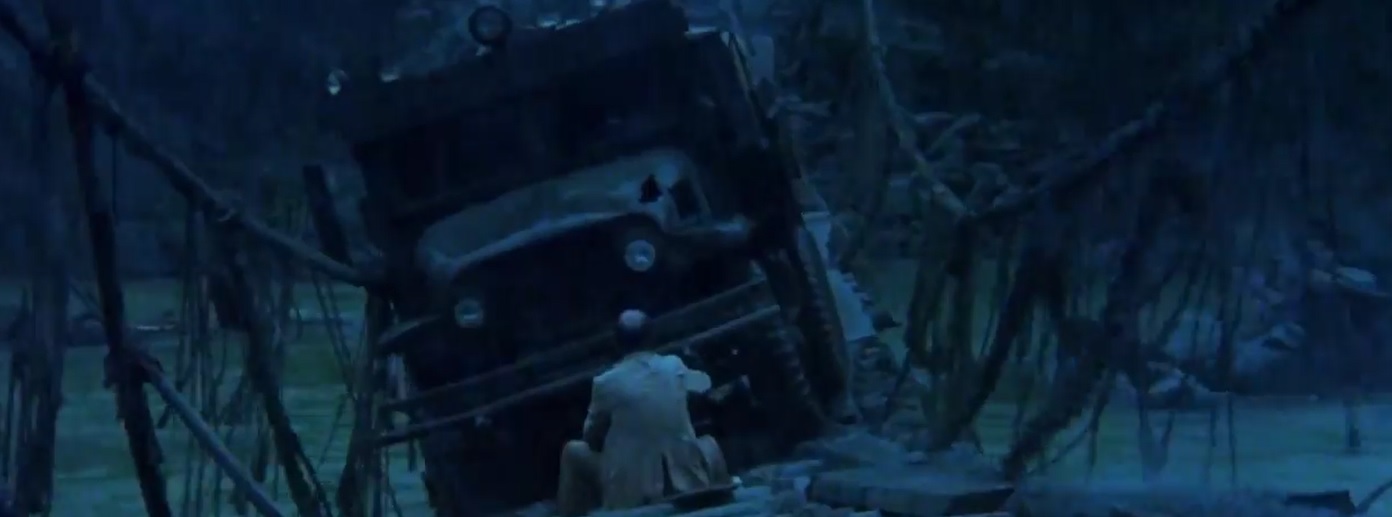
Few films have the same sense of cinematic muscularity that Sorcerer does, and a large reason for this overwhelmingly visceral quality comes from the laser-focused direction of William Friedkin. A majority of this rugged, dangerous action-adventure movie is told with no dialogue, with Friedkin wholly trusting the near hallucinatory images from his cinematographers and realizing that the most powerful expression that cinema can offer is how the visual language of storytelling unfolds for the viewer. Existential in its themes and beyond grand in its epic scope, this is a thrilling, unthinkable piece of filmmaking, showcasing a director who clearly felt that he NEEDED to tell this story. Like Coppola’s Apocalypse Now and Herzog’s Fitzcarraldo, there’s this overwhelming sense of bravado that one feels while watching Sorcerer, as the viewer can clearly tell that the story being told could only have come from the mind of an obsessed filmmaker at the head of the controls. Yes, moviemaking, by its organic nature and process, is a collaborative effort, with multiple individuals contributing so that the art form feels complete by its conclusion. But with something like Sorcerer, and more recently a film like JC Chandor’s All is Lost, there’s a singular sensation that washes over you while experiencing the narrative; there’s a limitless quality to the endeavor that makes it feel alive and unpredictable. Tangerine Dream’s hypnotic score creates a feeling of damn near intoxication, and when combined with the stark (and often violent) visuals, Sorcerer continuously reminds you that you’re in a world where anything is possible. Roy Scheider leads the stoic and masculine cast with gritty panache, while the rest of the supporting players feel as if they were plucked off the streets and dropped into a major motion picture, giving the film a level of verisimilitude that enhances each robust set piece. Friedkin based his cult classic on the 50’s French film Wages of Fear, taking the core plot points and infusing them with a sense of new-found awe and astonishment. The bridge sequence, to this day, defies logic and reasonability (it’s as insane as the hauling of the boat over the mountain in Fitzcarraldo) while the entire film begins to take the shape of a vivid and lush nightmare. You’re in the jungle driving a souped-up dump truck with lots of nitro stored in the back – I’m not sure if there could be anything more sketchy than that. One of those films that was misunderstood and shoved aside at the time of its initial release, the film has righteously become a cult, if not slightly lost, classic. And thanks to the somewhat recently released and absolutely STUNNING Blu-ray special edition, Sorcerer gets a chance to re-enter the cinematic landscape as one of the final films from the auteur driven period of studio pictures that placed an emphasis on the unconventional, while a filmmaker was pushed to their limits to unleash their magnum opus.

3

PTS PRESENTS ARTISAN WORKBENCH with CHARLES WILLIAM BREEN POWERCAST VOL. 1

CWB POWERCAST

unnamed (1)Podcasting Them Softly is extremely proud to present a chat with veteran production designer and art director Charles William Breen.  Charles has an extensive list of credits, having worked with Ridley Scott on BLADE RUNNER, Mike Nichols on POSTCARDS FROM THE EDGE, Richard Attenborough’s CHAPLIN, James Cameron’s TERMINATOR 2, Clint Eastwood’s THE BRIDGES OF MADISON COUNTY, Neil Labute’s YOUR FRIENDS AND NEIGHBORS and NURSE BETTY, and Barry Levinson’s DISCLOSURE, to name just a few. After getting his start at Universal Studios as a set designer after studying architecture at the world-renowned art and design school Cranbrook in Michigan, over the last 30 years he’s had the chance to work with some of the biggest names that Hollywood has to offer. One of his most distinctive credits was the 2006 gangster-musical hybrid IDLEWILD, from director Bryan Barber, with whom Charles has worked with many times on music videos. He was Emmy nominated for Best Art Direction in 1997 for HBO’s WEAPONS OF MASS DISTRACTION, and throughout the years, has applied his diverse talents to a strong and eclectic mix of work. We hope you enjoy this informative and passionate discussion!
HAL ASHBY’S HAROLD AND MAUDE — A REVIEW BY NICK CLEMENT

harold_and_maude

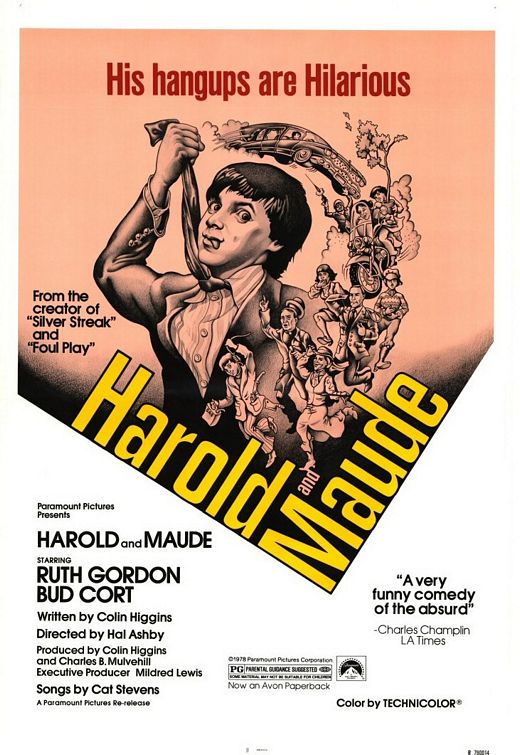
The effect that Hal Ashby’s Harold and Maude must have had over an entire generation of filmmakers is very much apparent – this feels like a precursor to every Wes Anderson movie ever made, and even has some of the same scrappy qualities to the works of David O. Russell, most notably Flirting with Disaster and Silver Linings Playbook. Bud Cort was extremely funny in a morose fashion as Harold, and Ruth Gordon was many things as Maude – hysterical, odd, kooky, heartfelt, and finally, totally unique. Their relationship is one built out of loneliness and desperation, and while some stuff happens that might seem over the top, I’m always able to buy into the notion that these two people were just waiting to find each other, so that their lives could finally achieve that spark they were looking for. This is a black comedy with a strange sense of humor that clearly paved the way for so much to come. Back during its initial release, critics seemed to have been mixed and audiences stayed away, but I’m not surprised how the film has developed such a rabid cut following in the years since. The soundtrack by Cat Stevens keeps things upbeat and sunny even when the narrative goes to some extra sad and dark places, and the screenplay by Colin Higgins deftly balanced all elements, with no small amount of help coming from graceful director Ashby, who always had a natural feel for his actors and a clear sense of place for his productions. John Alonzo’s cinematography was unfussy and patient with its compositions, and it’s a further reminder of how this great cameraman from a lost era was capable of working in any genre (other credits include Scarface, Chinatown, The Bad News Bears, Blue Thunder, and Star Trek: Generations). There’s also some terrific stunt driving which contributes to the humorous tone, with jokes coming in the most surprising of places, told visually in many instances, which keeps the film moving along with a sense of the unpredictable all the way until the perfect ending. Available on Blu-ray from the Criterion Collection.