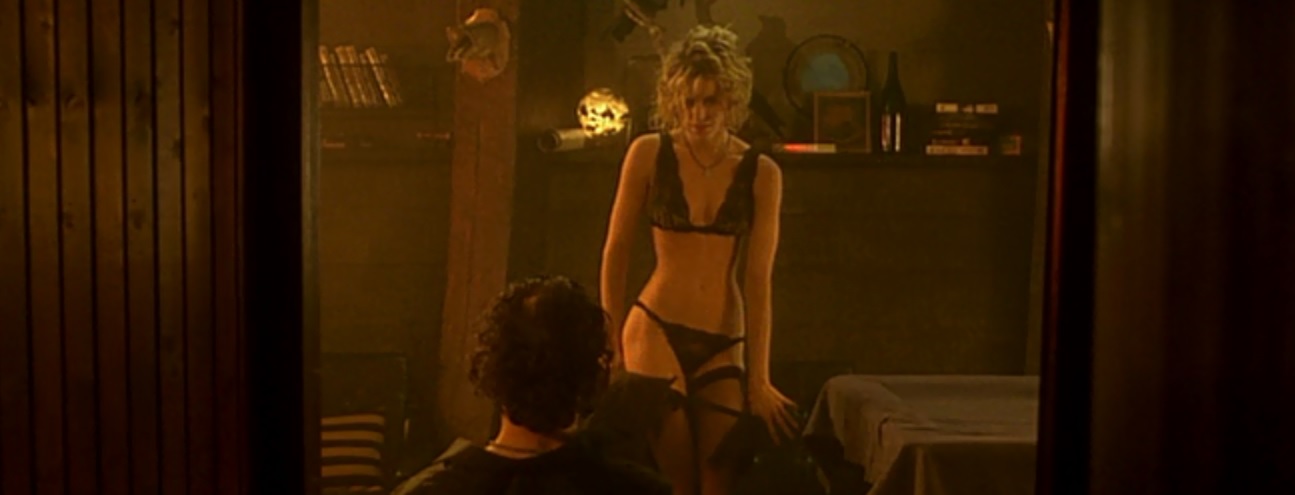
Damián Szifron’s WILD TALES — A REVIEW BY NICK CLEMENT

2

I mean honestly…who the hell actually ENJOYS going to weddings? Well…if the wedding in question is anything like the one featured in the off the wall black comedy Wild Tales, well then send me an invite! Brutally funny, graphically violent, incredibly transgressive, and all together brilliant, Damián Szifron’s Oscar nominated film from Argentina will grab you by the throat and not let you out of its demented grasp for two hours. Feeling at times like an insane hybrid of Falling Down, Sightseers, Fight Club, and other notable films where violence and comedy are skillfully mixed, Wild Tales is concocted of six separate stories all focusing on the themes of revenge, fate, and anger, with sharp social commentary thrown in all around the edges. The film opens with a perverse bit of airborne madness, and the following segments go on to feature a hit and run that’s treated like some sort of sick joke, a nighttime diner that becomes the scene of something truly nasty, a car towing company that will think twice about carelessly scooping up automobiles in the future, a road rage incident that goes above and beyond what can ever be expected, and the ultimate wedding from hell which is showcased in all its fucked up, psychosexual glory. Seriously – I loved every moment of this sick and twisted movie, and I can’t tell you how many times I laughed out loud over what I was witnessing. So many times this film took me by surprise, and while I could guess where some of it was headed, the end result was never able to be guessed in advance. Executive produced by Pedro Almodovar and starring a bevy of actors and actresses who all go for broke, Wild Tales manages to be over the top yet somehow believable given the extremely heightened style and scenario, and even after one viewing, I know I’ve seen something very special. This one is worth buying sight unseen as I can almost guarantee that if you like it on any level, you’ll want to revisit it sooner than later…I can’t wait for more!

3

HOWARD FRANKLIN’S THE PUBLIC EYE — A REVIEW BY NICK CLEMENT

public_eye

Howard Franklin’s 1992 effort The Public Eye is an interesting sort-of-neo-noir with an awesome performance from Joe Pesci who was hot off his Oscar winning turn in Goodfellas. Produced by Robert Zemeckis, this is a lavishly appointed period piece loosely based on the exploits of New York Daily News photographer Arthur “Weegee” Fellig, with Pesci playing a dramatized version of the famed nightcrawler (Lou Bloom eat your heart out!) Co-starring Barbara Hershey, Stanley Tucci, Richard Schiff, Jerry Adler, and Dominic Chianese(!), the film is an entertaining drama with lots of style and robust performances. Peter Suschitzky glossy cinematography was a perfect fit for the sordid material (bloody crime scenes, nocturnal shenanigans, the flashing of camera bulbs) and Mark Isham’s dynamic score sets the mood at all times. A box office flop despite solid reviews (Ebert was a notable four star fan), it’s one of those movies that I would consistently see at Blockbuster back in the day but for some reason never rented it. As it was on HBO HD, I recorded it, and found it to be immediately engagaing, something I probably wouldn’t have responded too as a teenager, but something I’m glad I had a chance to finally see. Franklin’s eclectic credits also include the screenplays for Ridley Scott’s underrated Someone to Watch Over Me, The Name of the Rose for Jean-Jacques Annaud, and co-writing/co-directing duties on the classic Bill Murray comedy Quick Change.

ROBERT TOWNE’S WITHOUT LIMITS — A REVIEW BY NICK CLEMENT

10984993_10204882392115814_4955646486758907132_n

Without Limits is a very solid film. Co-written with Kenny Moore and directed with class and integrity by Robert Towne and benefiting immensely from Bill Crudup’s method performance as Steve Prefontaine, this is a strong, inspirational sports film that delves into the human psyche just as much as it looks at Prefontaine’s tremendous skill as an athlete. Shot with un-showy elegance by Conrad Hall, one of the true masters of light, Without Limits transcends its customary narrative approach with excellent dialogue and a great roster of supporting performances including Donald Sutherland as Prefontaine’s ambitious coach and future Nike pioneer Bill Bowerman, the adorable Monica Potter as the love interest, Jeremy Sisto, Matthew Lilliard, Dean Norris, Billy Burke, William Mapother, and a FANTASTIC cameo from William Friedkin in the opening section. Randy Miller’s triumphant score hits all the expected, uplifting notes without ladling on extra, unnecessary sentiment, and I loved how smooth the film felt on an emotional arc level; Towne was always a master at crafting the perfect flow with his material. A massive failure at the box-office, this $25 million production grossed less than $1 million in cinemas, which makes even less sense when one factors in the fact that it was a “prestige project” with Tom Cruise as the main producer. How and why this movie was buried I’ll never understand. For his magnetic and amazingly committed performance as Prefontaine, Crudup should’ve been nominated for Best Actor, and it struck me while watching the film last night just how versatile and underrated of an actor he is. I submit the following films as insane evidence of his range and eclectic taste in material: Watchmen, The Good Shepherd, Dedication, Almost Famous, Big Fish, Blood Ties, Public Enemies, The Hi-Lo Country(!), Sleepers, Mission: Impossible III, and Monument Ave. Some of the roles were bigger than others, but in every film, he’s cut a dynamic portrait of whatever character he’s taking on, and I personally think his work in Watchmen is extraordinary and unforgettable. Without Limits is one of those quiet, unsung movies that deserves more recognition and a higher profile, especially considering it’s another underrated directorial effort from the legendary Towne (Ask the Dust, Tequila Sunrise, and the unseen by me Personal Best are his other credits). Note: Not to be confused with the 1997 effort Prefontaine, from doc specialist Steve James, with Jared Leto in the titular role.

MOORHEAD/BENSON’S RESOLUTION — A REVIEW BY NICK CLEMENT

2

Before this year’s terrific genre-bender Spring, Aaron Moorhead and Justin Benson crafted Resolution, a super low-budget psychological thriller that embraces genre elements while cleverly subverting your expectations. Much in the same way they did with Spring, these guys demonstrate a serious command of atmosphere and unique style, while also allowing their frightening scenario to play out with a sense of intelligence and mystery and black humor. The action centers on Mike (Peter Cilella, effective), who travels to a remote cabin to visit his friend Chris (Vinny Curran, hyper and messy) who has been smoking crack and generally acting a fool. Mike handcuffs Chris to a pipe inside the cabin in an effort to get him straight and sober. Little does he know that druggies will be coming to look for Chris, and that the cabin they’re staying in doesn’t belong to them, in more ways than one. Then, all sorts of strange stuff starts to happen – think Cache meets The Ring meets Cabin in the Woods on a micro budget – and while the final sequence certainly evokes the supernatural, I’d hesitate to call this film a “horror” movie in the traditional sense. Much like Spring, the multi-hyphenate talents aren’t content to play it simple, as they clearly seem to be interested in elevating their material with a level of cerebral attention that will have me coming back for more in the future. It’s a cool 90 minutes of sketchy cinema, and having viewed it after Spring, I can see how their second effort feels like an even more logical next step after this. I’m expecting great things from this interesting duo…

3

PAUL MAZURSKY’S HARRY & TONTO — A REVIEW BY NICK CLEMENT

11147148_10204867836991945_8516880964877285491_o

They don’t make ’em like Harry & Tonto anymore. This film is note-perfect in every scene. Paul Mazursky always cut to the heart of things and this sort of movie is directly up my cat-loving, cinematic alley. I’ve watched this film a few times and each time I love it even more and I find new things to get excited about. Sentimental and very effective at making you cry but never not without honest intent and clear-eyed purpose, Harry & Tonto is about the power of the human spirit, about the enjoyment of interaction with others, and how there can be an intrinsic bond between a person and a feline that can make the heart grow in exponential ways. But for every moment where you feel that Mazursky might be going for the emotional jugular too often, you never forget that the entire piece was done with such honesty, and each scene feels real and tangible, so there’s no sense in trying to resist. And to think that Art Carney beat Al Pacino (The Godfather Part II), Dustin Hoffman (Lenny), Jack Nicholson (Chinatown), and Albert Finney (Murder on the Orient Express) at the Oscars for Best Actor back in the day – look at that murderer’s row of talent! And guess what? Carney’s role of an old man travelling the country with his orange tabby cat by his side as he looks to reconnect with family members may not have been the flashiest of sexiest choice in the room, but it’s a performance that encapsulates all that’s potentially good about a person, and how there are some of us who are inherently kind and favor an different view of the world than the rest of us. Mazursky was always interested in what it was to be a human being, and how the circumstances around his characters dictated their motivations and decisions, rather than arbitrary plotting setting the mood and tone. Harry & Tonto is an absolutely wonderful movie that deals with the human condition in a very humble and gracious way, and the film is yet another reminder that the 70’s produced some of the absolute best American films ever crafted. And then there’s the cat! Ohhhh that cat! You just can’t believe what they got that cat to do, or, more accurately, what the cat gave them and allowed them to film. It’s just incredible to observe, and I think it’s VERY clear where the Coen brothers got their inspiration for the cat in Inside Llewyn Davis. And you know what else I loved about this movie? Every single actor who had a speaking part got to display a believable character. You got to know everyone in this film, doesn’t matter if it’s only for a moment, or if the character is just someone sitting on a bus eating a sandwich. The way the film was constructed allowed for the smallest bits of character to float to the surface, creating a rich tapestry of people, places, feelings, and memories. If you’re not familiar with this rarely discussed movie then you owe it yourself to check it out!

11084219_10204867836791940_9028132520954862963_o

XAVIER DOLAN’S MOMMY — A REVIEW BY NICK CLEMENT

11402437_10204849208566246_4113844386718528745_o

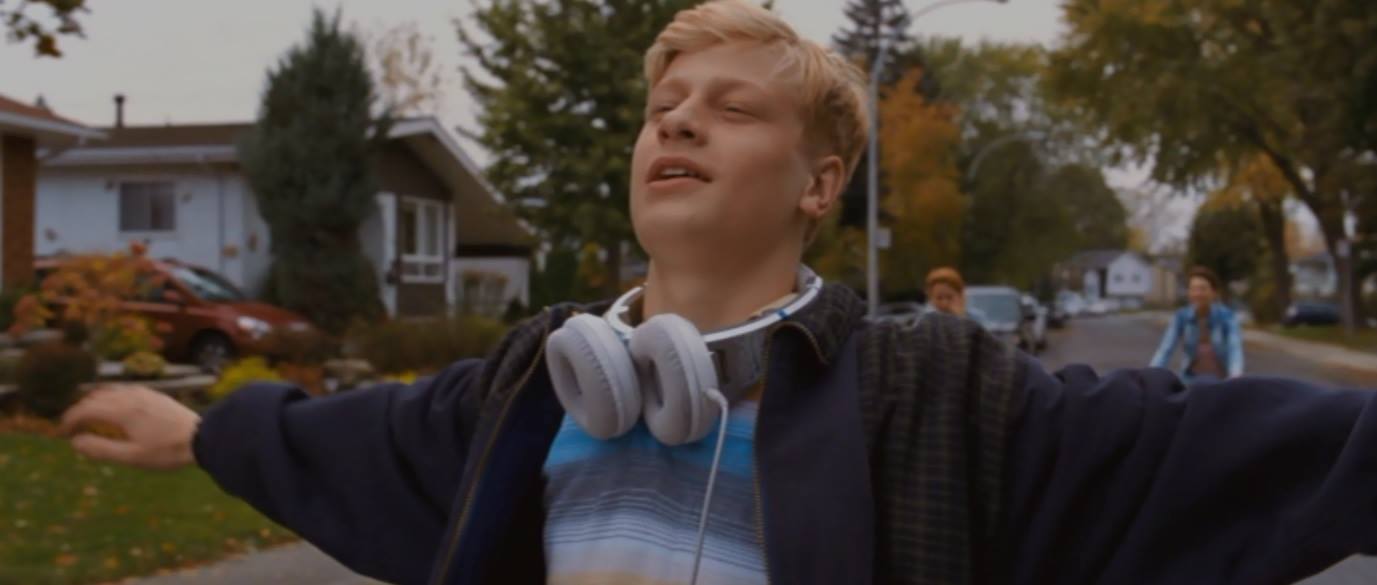
Wholly cinematic, formally audacious, and made with a clear passion for expanding upon the notion of what constitutes “personal cinema,” Xavier Dolan’s emotionally draining film Mommy is a tour de force for everyone involved. Films like this will definitely provoke some sort of response from the viewer, and whether it’s a good or bad reaction will depend on how open you are as a viewer to be put in the middle of a sad family dynamic that might hit too close to home for some. This is an often times painful domestic drama that unflinchingly stares directly into the face of familial madness without offering any easy solutions to the various problems that are highlighted during the beyond intense two hour and 20 minute runtime. Shot in a perfect square aspect ratio of 1:1, this unusual format allows for the harsh yet gorgeous visuals to gather an extraordinarily intimate head of steam, bringing the audience extremely close to the action, with characters often times busting out of the confines of the frame. And then, during two flights of fancy that strongly tie into the film’s central themes of freedom and regret, Dolan’s film opens up into 1.85:1, allowing a breath of fresh air for everyone, including the audience, as we continue to observe a tragic situation getting all the more dangerous as it progresses. The three central performances are staggering, and it’s a crime that the Academy didn’t pay any attention to this incredibly confident piece of cinema, one that challenges the viewer at almost every turn, asking them to go on an unpredictable ride with loose-cannon characters that can never be tamed. A general plot description: The phenomenal Anne Dorval stars as Diane, “Die” for short, a saucy, widowed mother who is totally consumed and overwhelmed with the struggle of raising her mentally troubled and sometimes physically violent son Steve (Antoine Olivier Pilon, in a mesmerizing performance of anger and rage). Diane and Steve have a strange, sometimes borderline questionable relationship; think Cyrus but even more oedipal. Along comes an odd and possibly sick (mentally or physically it’s never explained but there’s just something…off about her…) neighbor named Kyla (the intriguing Suzanne Clément) who forms a unique bond and friendship with both Diane and Steve, which leads to some truly unexpected developments and moments of harsh truth for everyone involved. I’ve never seen a film like Mommy, it kept me on the edge of my seat wondering where it was headed next, Dolan’s filmmaking chops totally smacked me upside my head, and I’m now forced to track down the other four films that this 25 year old filmmaker has made over the last five years. This is an unforgettable piece of storytelling and filmmaking.

11425534_10204849208366241_9158441925428720927_o

WAYNE KRAMER’S RUNNING SCARED — A REVIEW BY NICK CLEMENT

RS2

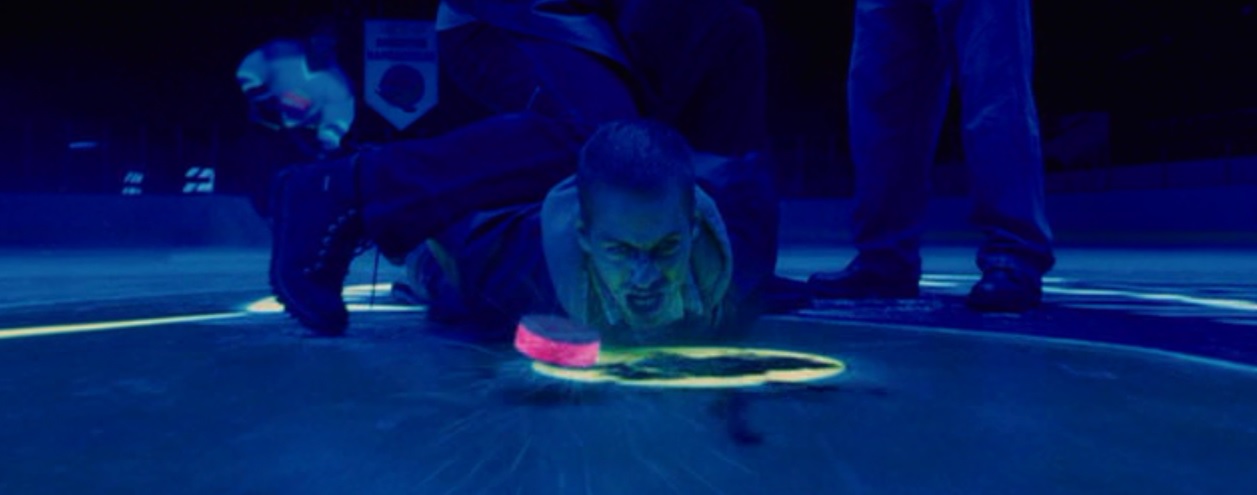
Running Scared is off the wall, go-for-broke-cinema. You feel like an outlaw while viewing it. Directed with ferocious energy by the fiercely independent and tremendously gifted writer/director Wayne Kramer, this cult favorite was released to both critical adoration and hostility (the Ebert & Roeper episode is a BONAFIDE CLASSIC, with Roeper truly showing how much of an ignoramus he can be), and represented a total switch-up in terms of filmmaking style and intent from his earlier, far more reserved picture, the Las Vegas-set romantic drama The Cooler. This film was part of the mid-2000’s trend of cubist action pictures made by filmmakers looking to advance the form of the extreme action picture (Tony Scott’s Domino, Joe Carnahan’s Smokin’ Aces, and Michael Davis’s Shoot ‘Em Up are other notable entries in this subgenre with more recent stuff like Carnahan’s Stretch and Kramer’s Pawn Shop Chronicles also serving as welcome additions). Running Scared made a splash with adventurous audiences in 2006, and it ranks as one of the premiere R-rated actioners of the last 15 years. It’s a supremely stylish hybrid that goes to some truly creepy and insane places on a narrative level while never stopping in the aesthetic explosion department, treating the camera and editing bay as if they were the ultimate toys at a filmmaker’s disposal – as it should be in my estimation. I fucking LOVE this movie. LOVE IT. I was blown away in the theater when I first saw it, and was immediately obsessed with the aggressive stylings and forceful dramatic content that sometimes borders on an overt political statement (Fuck You, Pedophiles!) Running Scared takes elements from the traditional cop film and mixes them with super-dark magical realism (truly the nastiest kind), gritty 70’s flourishes, and modern violence ‘n mayhem which results in an intoxicating brew of kitchen-sink-cinema. This film won’t be for everyone, but for those looking to take a walk on the wild side, look no further.

Ebert’s famous review of Running Scared said it all: “Speaking of movies that go over the top, ‘Running Scared’ goes so far over the top, it circumnavigates the top and doubles back on itself; it’s the Mobius Strip of over-the-topness. I am in awe. It throws in everything but the kitchen sink. Then it throws in the kitchen sink, too, and the combo washer-dryer in the laundry room, while the hero and his wife are having sex on top of it.” HA! I couldn’t have said it any better myself, Roger. Damn I miss your passion. Running Scared is a joyous celebration of all things wild and wooly, with an incredibly engaging and increasingly frenzied lead performance from the late Paul Walker, a terrific supporting turn from Vera Farmiga as his strong willed wife, and tons of great character actors showing off their gruff faces and getting into some seriously nasty shoot-outs (Chazz Palminteri, Johnny Messner, Karl Roden, John Noble, Ivana Milicevic, David Warshofsky POWER, Arthur J. Nascarella, Bruce Altman, Elizabeth Mitchell, and Michael Cudlitz are all extremely memorable). The narrative pivots on a gun used in the murder of a corrupt cop; it’s up to gangster underling Jimmy (Walker) to dispose of the weapon in question without it ever being found. But when the gun goes missing thanks to Jimmy’s 10 year old son and his snooping best friend, all hell breaks loose, and he’s on the run looking for the pistol while trying to evade the dangerous crosshairs of crooked cops, psycho pimps, child killers, and the Russian mob. I’m not saying anything more than that on a story level as this film will surprise ANYONE who checks it out. There’s simply no way to see the various events coming before they arrive in this unhinged piece. This is a dangerous, perverse, adult-oriented flick, replete with seriously graphic violence, hot sex, full female frontal nudity, and the exquisitely liberal use of my favorite word: “Fuck.” And without spoiling it, the way Kramer used Farmiga’s character in the second half of this film deserves major praise. In far too many films, the role of the put upon wife can feel like an afterthought. Not here. In the film’s most controversial bits, she gets to “take out the trash” in a vigilante-esque fashion that feels both emotionally bracing and incredibly cathartic for anyone who feels that societal garbage needs to be wiped out.

The cinematographer James Whitaker goes berserk, filming the action in jagged, extreme close-ups and ultra-slick Steadicam to create a sense of danger and immediacy while upping the visceral ante considerably in all of the brazenly bloody shoot-outs and pummeling beat-downs. Arthur Coburn’s astute editing treats each shot like a piece of the increasingly crazy puzzle that this film ultimately resembles, with staccato editing patterns to match the increasingly heightened visuals. Mark Isham’s sinister and incredibly effective score still haunts me on a weekly basis, with that great theme song used in all the right moments. And again, I have to go back to one of my absolute favorite elements of this movie, which is all of the stuff with Farmiga’s character, and what she gets to add to the story on an overall emotional level. Thanks to Kramer’s inventive screenplay, the thankless role of the “on-looking wife” has been given some heft and texture instead of being relegated to the sidelines, especially after so memorably introducing her. Kramer found ways for the narrative to involve her in interesting and complex ways, giving her character her own arc, and giving the film a menacing edge it might not otherwise have had. And yet another thing I LOVE about this movie is how the various scumbags truly get what they deserve in this outrageous world that Kramer created. You can’t truly take this movie seriously but that doesn’t stop it from being anything less than outlandishly entertaining. It’s a constantly shifting piece of storytelling and is filled with twists and turns, and when you think about EVERYTHING by the conclusion, you’ll notice that some of what happens didn’t NEED to happen, but it did because of the daring bravura of Kramer’s nightmarish vision. That the film was shot in Prague and set in New Jersey only adds to the unique flavor of the entire piece. This was Kramer unleashed, experimenting with form while still paying heed to the satisfying conventions of genre. If this is a film that has escaped you, do yourself a favor and check it out. But be prepared for something cranked up to 100!

RS1

WAYNE KRAMER’S THE COOLER — A REVIEW BY NICK CLEMENT

2

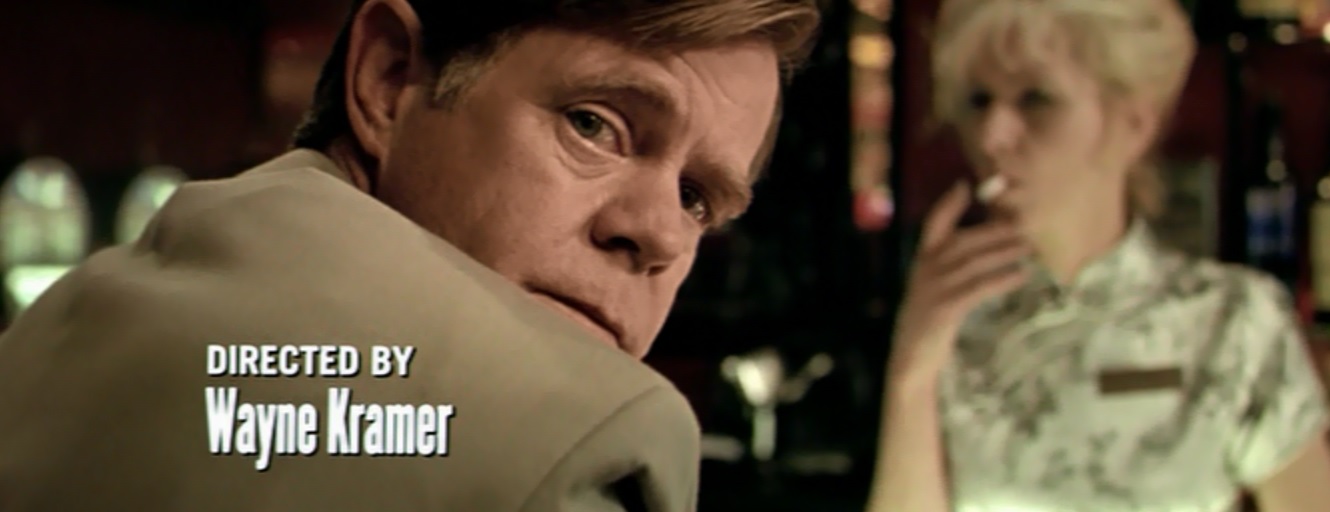
In 2003, director Wayne Kramer made a snappy and punchy calling card picture The Cooler, a Las Vegas fairy tale explicitly made for adults starring William H. Macy and Maria Bello as lost souls and unlikely lovers who have to make some big life decisions in order to better their personal situations. In the highly entertaining story concocted by Kramer and co-writer Frank Hannah, we’re introduced to lovable loser Bernie (Macy in one of his best performances), an old-school casino “cooler” who is under the sway of his ruthless boss Shelly (an Oscar nominated and totally nasty Alec Baldwin), who uses Bernie’s perpetual bad luck as a way of turning the tides on hot-streak gamblers. Bernie has been smitten with cocktail waitress Nathalie (a terrific Maria Bello) for a while, and before you know it, the two of them have started up a passionate and extremely sexy affair that threatens their safety. Once Bernie starts to fall in love, his loser-ways begin to fade, with his cold-touch seemingly disappearing right before his eyes. And most importantly, Bernie is done with being Shelly’s casino pet, and has told him that he’s got one week left on the job right at the start of the film. Shelly’s not impressed with this bit of news. But stuff gets really complicated when Bernie’s screw-up son tries to rig a game and make off with a huge score at the craps table, thus resulting in some broken legs and a promise by Bernie to make good on his son’s debt. Kramer and Hannah’s dialogue is vulgar and peppy, and Arthur Coburn’s energetic editing was in perfect tandem with the casually stylish camerawork from James Whitaker which made great use of the casino floor and all of the trappings of the house. Mark Isham’s awesome, saxophone-dominated score hits all the perfect notes of Vegas sleaze and heartfelt romance, especially as the love affair between Bernie and Nathalie blossoms. Much was made at the time of the on screen nudity on the part of Bello and Macy, as their sex scenes have an unforced authenticity that makes the various sequences feel all the more real and passionate. Macy, everyone’s favorite loser, is perfect here, all vulnerability and awkwardness, while Bello makes you care in all the right emotional moments, while also getting a chance to show off her confidently sexual side as an actress, which would be further explored in David Cronenberg’s A History of Violence and the intensely disturbing Downloading Nancy from director Johan Renck. But it’s Baldwin who steals the picture every time he turns up, delivering a deliciously evil performance where he’s able to spout off some pungent, hard-nosed dialogue while cutting a convincing portrait of a guy stuck in the past with no understanding of the future. This is an intensely romantic film at times, one that believes in the notion of fate and chance and luck, and while the ending might strike some as overly convenient given the harsh plot developments, I absolutely loved the way Kramer and Hannah went with their hearts and decided to end their picture. They’re happy to run their characters through the ringer but they’re also clearly in love with them, which extends to the performances and the overall zest of the filmmaking. Ron Livingston, Paul Sorvino, Shawn Hatosy, Estella Warren, and Arthur J. Nascarella provided colorful and memorable support, and the entire film has a cool-factor that’s hard to put into words. A Blu-ray release is long overdue for this gem in the subgenre of Las Vegas crime dramas.

4

HAROLD BECKER’S THE ONION FIELD — A REVIEW BY NICK CLEMENT

1535598_10204832321664084_295119838747247989_n

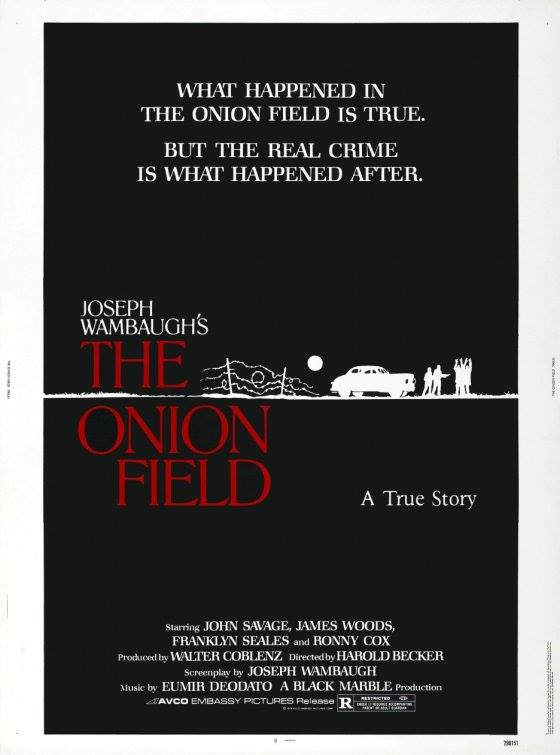
The Onion Field is an upsetting, highly detailed, true-crime movie directed with class by Harold Becker in his second big-screen effort after The Ragman’s Daughter. Released in 1979 and starring an impressive cast of up and coming talent including an incredible John Savage, a tragic Ted Danson, and a live-wire James Woods in one of his all-time skeeviest performances, the film centers on the murder of Los Angeles police officer Ian Campbell (Danson), and how his partner Karl Hettinger (Savage) miraculously escaped but never got over the intense feelings of guilt and despair brought upon by the sudden and violent tragedy. Woods plays Gregory Powell, the unremorsefully evil shooter, with a shifty and sweaty Franklyn Seales portraying his accomplice, Jimmy Smith. Joseph Wambaugh adapted his own book for the screen, and he painted a complicated picture of a variety of people thrown into each other’s orbit after a terrible crime and how the ramifications of the situation multiplied for everyone involved. The opening tracking shot through a tree-lined 1963 Los Angeles suburb immediately sets the tone, with Eumir Deodato’s score swelling on the soundtrack, as the initially easy going performances from Savage and Danson give way to nervous suspense the moment Woods and his goons enter the picture. Wambaugh’s multilayered screenplay also tackles the desperate attempts by Powell and Smith to get off of death row, which they successful accomplish, and while Smith was released in 1982, I find it interesting (and sort of awesome) that, according to some rumors, Powell developed some form of cancer while in the joint, and was never given the time of day by jail doctors, in effect letting him (hopefully) painfully suffer up until the bitter, miserable end. Becker handles the murder sequence in chilling fashion, with the Bakersfield onion field location shot in striking and ominous moonlit shadows by cinematographer Charles Rosher, Jr., who provided the picture with a smooth and confident visual style. This is tough-goings moviemaking, centering on a cold-hearted tragedy, and how some people become overwhelmingly affected by violent loss. Savage was sensational as Hettinger, cutting to the core of what would have troubled the real life detective, as one is left with the impression that while hope is glimpsed at by the finale, it was a long road to full recovery. Ronny Cox provides memorable support. The film has just been released on Blu-ray by Kino and the picture and audio quality is top shelf.

BRIAN DE PALMA’S FEMME FATALE — A REVIEW BY NICK CLEMENT

2

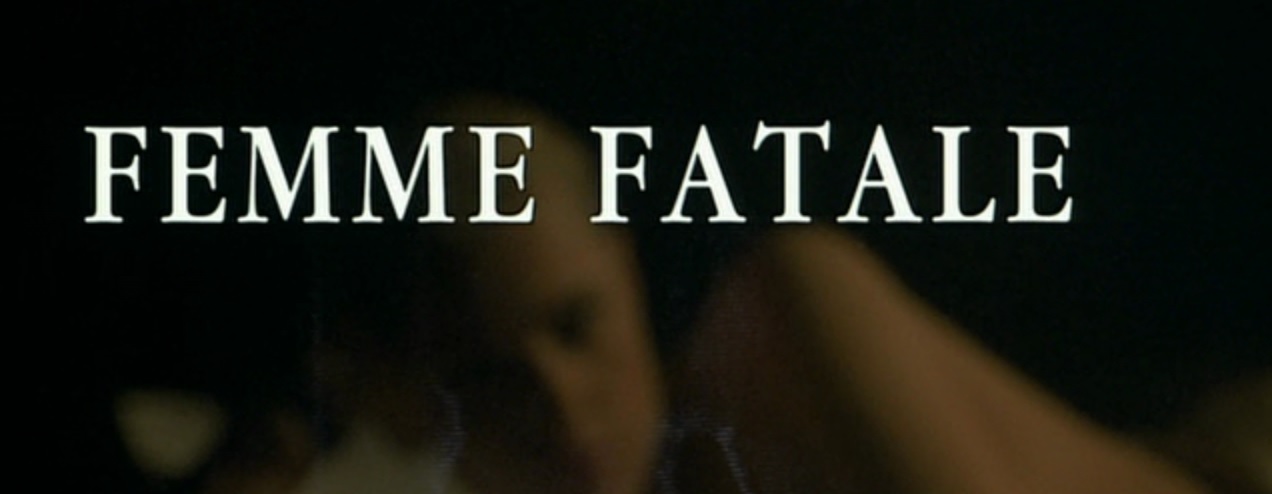
Femme Fatale is VINTAGE De Palma – elegant, sexy, totally twisted, and in love with itself and the endless possibilities and conventions of classic noir filmmaking. This is a staggering work of pure cinema, a work that knowingly winks at itself and an entire genre that it looks too for inspiration. De Palma has crafted a neo-noir that feels like it’s paying tribute to the history of film in general, in love with its sultry leading lady, in love with film noir, in love with sex, in love with violence, in love with its own self-reflexive movie-movieness, and most especially, in love with SUPREME cinematic style. I’ll never get tired of re-watching this brilliant piece of work from the Master of the Macabre and I’m perfectly content to have become wholly obsessed with it. It’s my favorite Brian De Palma movie of all time, and that says a lot, because if you know me, you know I worship at the Altar of Brian D. If you’ve never seen the trailer, I highly urge you to check it out, as it’s one of the best, boldest coming attractions ever put together for a movie. But a trailer is only a trailer, and as incredible as it is, it can’t prepare you for the full thing. From the almost totally dialogue free opening sequence lasting nearly 30 minutes and featuring a steamy sex scene and complicated diamond heist during a gala screening at the Cannes Film Festival with Ravel’s Bolero playing on the soundtrack, you know you’re in the hands of a filmmaker who is in total control of his kinky, dreamy, exacting vision. Thierry Arbogast’s smooth, gorgeous, and strikingly composed cinematography is the stuff that dreams are made of; how this film has been ignored on the Blu-ray format is mystifying and insulting. Femme Fatale centers on a perfectly cast Antonio Banderas as a sleazy paparazzi who is tasked with photographing the alluring wife of a senator, played with icy, devilish glee by the stunning Rebecca Romijn, a character that’s clearly been molded on classic femme fatales from yesteryear, most especially Barbara Stanwyck in Double Indemnity and countless confused Hitchcockian heroines. And to be honest, for a supermodel with ZERO major acting experience before this film, Romijn was fantastic. Sure, some of her dialogue is stilted, but that might have been De Palma’s intention, and the way that De Palma uses the visual language of filmmaking all around his lead actress shows that he understood how to utilize her in this fearless performance. She’s asked to do a French actress, play multiple “characters,” and showcase an almost unparalleled level of overt sexiness that’s normally shied away from in a major motion picture. The strip tease scene is an absolute all-timer, with De Palma and Arbograst literally making love to her with the camera. Banderas has rarely been this loose and sympathetic on screen, giving a terrifically seedy performance as the greasy paparazzo that gets caught up in a serious web of intrigue with a variety of morally questionable characters. But there’s WAY more to the twisted plot than just that, and I’d be an immense ass to spoil ANY of this wonderfully nasty and playfully hot ‘n bothered thriller, as it’s a film that was clearly made with a grinning and cackling De Palma behind the director’s monitor. Everything about this shifty, tricky, and smashingly sexy movie screams “look at me” in all the best ways that tour de force cinema often can — this was De Palma reminding everyone that he’s still capable of knocking it out of the cinematic park and into the silver-screen freeway. Few films have the same technical bravura that De Palma shows off in Femme Fatale; the almost wordless initial 30 minutes are some of the most gorgeous and inventive bits of visual storytelling that have ever graced the screen, and the entire narrative tips its hat to numerous classics from the past, while allowing for De Palma to get extra modern with the nudity and violence and language. Femme Fatale is the epitome of a multiple viewings movie, because in order to unlock all of its secrets, you need to give yourself up to the wild game that De Palma is playing. You get split screens, tons of slow motion, flashbacks, flash-forwards, dopplegangers, mistaken identity, double crossing, identity theft, and every other sly and over the top narrative and aesthetic trick that De Palma can come up with. This is De Palma’s ode to cinema, ode to women, and ode to a genre that he smashed and elevated every time he took it on.

10