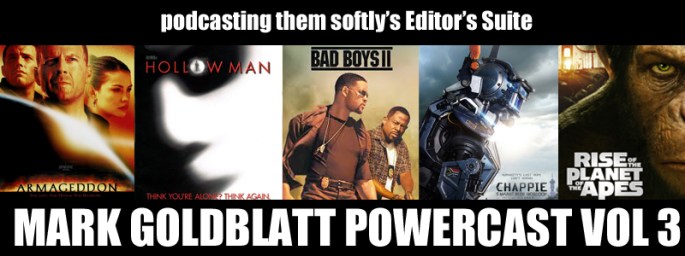
Podcasting Them Softly is incredibly excited to present PART 3 of our epic conversation with veteran film editor Mark Goldblatt! Up for discussion — his work on ARMAGEDDON, DETROIT ROCK CITY, PEARL HARBOR, XXX, BAD BOYS 2, CHAPPIE and much, much more! This is yet another fabulous and informative chat with a true legend in the industry. We can’t thank Mark enough for his time that he spent chatting with us! We hope you enjoy!
Podcasting Them Softly is honored and extremely excited to present a discussion with feature film editor JimHelton. Jim‘s big screen credits include Blue Valentine, The Place Beyond the Pines, and this September’s The Light Between Oceans — all of which were directed by Derek Cianfrance. It’s very clear that Jim has forged a unique and intense artistic relationship with Cianfrance, who ranks as one of our favorite filmmakers currently working, and throughout this extremely informative chat, we discuss how their unique partnership came to be born. Jim has also worked on a variety of short films and documentaries, and also edited the indie dramedy Lovely By Surprise and the street-racing action thriller Quattro Nozza. He also contributed to the dynamic soundtrack for The Place Beyond the Pines, as music is a big passion for him, which is something we also had a chance to discuss. He even crafted the extremely memorable title sequences for Blue Valentine. Jim‘s work is smart, stylish, and extremely disciplined and we’re thrilled to add him to our Editor’s Suite series. We hope you enjoy!
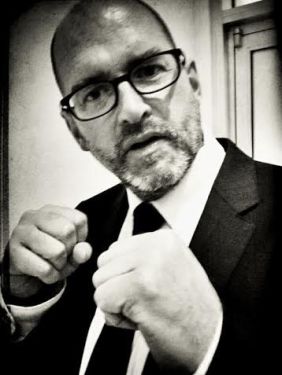
Podcasting Them Softly is beyond thrilled to present a chat with the tremendous screenwriter and filmmaker DanielWaters. His legendary writing credits include Heathers, Batman Returns, Demolition Man, Hudson Hawk, and The Adventures of Ford Fairlane, while he’s directed two features based on his own scripts — the underrated Happy Campers and the dark romantic comedy Sex & Death 101 with Simon Baker and Winona Ryder. He also collaborated with his brother Mark Waters, the director of Mean Girls, on 2014’s Vampire Academy. Daniel has one of the most unique and idiosyncratic voices to ever work in the big-budget blockbuster arena, and clearly Heathers is an eternal classic that so many generations of audiences have latched onto as a key title. We hope you enjoy this informative and passionate discussion about Hollywood, the art of screenwriting, and our collective love for movies in general. And hey, maybe you’ll finally find out what those three seashells in Demolition Man were really meant for!
Podcasting Them Softly is extraordinarily excited to present a chat with cinematic legend PeterHyams! An esteemed director, screenwriter, and cinematographer, Peter is extremely well known for the science fiction thriller Outland with Sean Connery as well as the Connery thriller The Presidio; the fake-moon landing actioner Capricorn One which has somehow escaped the clutches of the current remake craze; 2010: The Year We Make Contact, which was the daring sequel to Kubrick’s original classic 2001: A Space Odyssey; the action comedy Running Scared with Gregory Hines and Billy Crystal; the influential thriller The Star Chamber with Michael Douglas, which consciously or unconsciously served as a blueprint for David Fincher’s The Game; Timecop and Sudden Death, which are two of action superstar Jean Claude Van Damme’s best films; horror thriller and audience favorite The Relic with Tom Sizemore and Penelope Anne Miller; the cult classic Stay Tuned with John Ritter; and the Arnold Schwarzenegger vs. The Devil showdown End of Days. You can also hear us talk excitedly about one of Peter‘s early efforts, the trendsetting cop film Busting, with Elliot Gould and Robert Blake, and discuss how that film began to give a particular genre a new and modern feel. Peter has had a tremendous career, and we were beyond lucky and honored to have him as a guest on the show. We hope you enjoy this momentous discussion!
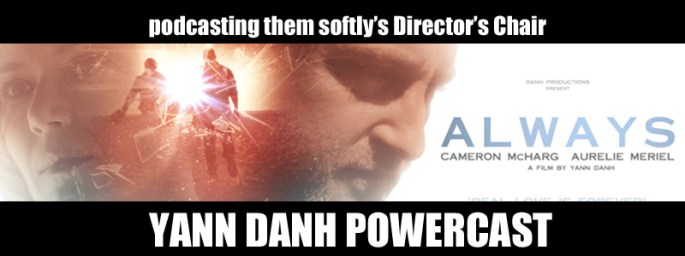
Podcasting Them Softly is excited to present a chat with filmmaker YannDanh. Yann has been working in his native country of France on a variety of interesting projects over the last few years and has compiled an extremely impressive list of stylish and thought provoking short films. Efforts like Always and At All Costs announced a major talent to look out for, with both films winning awards at various film festivals around the world. He’s recently sold a script to CSI creator Anthony Zuiker, and has a new project called Implaccable which we hope to learn more about. All of his work can be seen at his personal Vimeo page. We hope you enjoy!
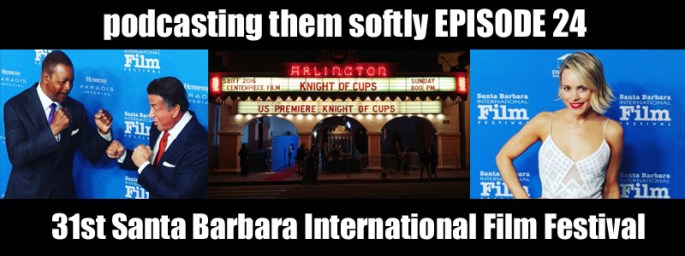
Our coverage of the 31st Santa Barbara International Film Festival is up! This has been our first red carpet coverage, and included are interviews with actors James Morrison, Michael Keaton, Rachel McAdams, Carl Weathers, film historian Leonard Maltin, filmmakers Benjamin Cox of STEREOTYPICALLY YOU and Tom McCarthy of SPOTLIGHT, producers Marcia Nasatir (THE BIG CHILL, COMING HOME, IRONWEED) and Sarah Green (THE NEW WORLD, THE TREE OF LIFE, TO THE WONDER, KNIGHT OF CUPS) and executive director of the Santa Barbara International Film Festival Roger Durling. We then dive in, head first, into Terrence Malick’s new film KNIGHT OF CUPS which had it’s US Premiere, and was the Centerpiece film at this years fest. We would like to thank Roger Durling and the staff of the SBIFF for accommodating Podcasting Them Softly at the festival this year. To find out more about the SBIFF please click here.
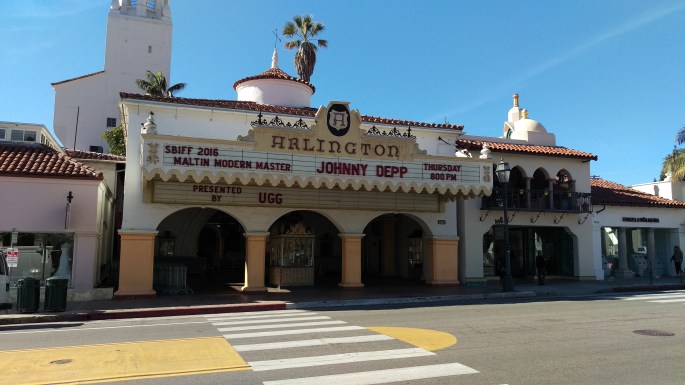
Everyone was waiting. Leonard Maltin was waiting, Roger Durling was waiting, Scott Cooper was waiting, the press was waiting, and the giant mob of screaming fans were waiting. Johnny Depp was running late, and nobody cared. Depp arrived thirty minutes late. He was set to receive the Leonard Maltin Modern Master Award from BLACK MASS director, Scott Cooper as well as participating in a much anticipated Q&A with Leonard Maltin.
He arrived in a black Cadillac SUV and once he exited he instantly disobeyed his handlers and went directly to the vast mob of his fans. He took his time signing autographs, taking photographs, and shaking each hand he could. Depp then moved to the red carpet, timidly keeping away from the press yet posing for a gracious amount of time for photos against the sleek SBIFF backdrop. He posed with Scott Cooper and then he quickly was moved to the end of the press line, but I caught his attention:
“Mr. Depp, one quick question: DONNIE BRASCO, ONCE UPON A TIME IN MEXICO, and SWEENEY TODD. Which is your favorite role?”
He put his hand up to his mouth, held his chin, stared right at me through his blue Michael Mann tinted glasses and said,
“I don’t know. That’s difficult, man.”
Depp was quickly moved into the Arlington Theatre and the floodgates opened and everyone rushed in. Once the gorgeous Arlington Theatre settled down, the dapper Roger Durling took the stage and he spoke graciously, thanking everyone for being there and thanked Johnny Depp for coming.
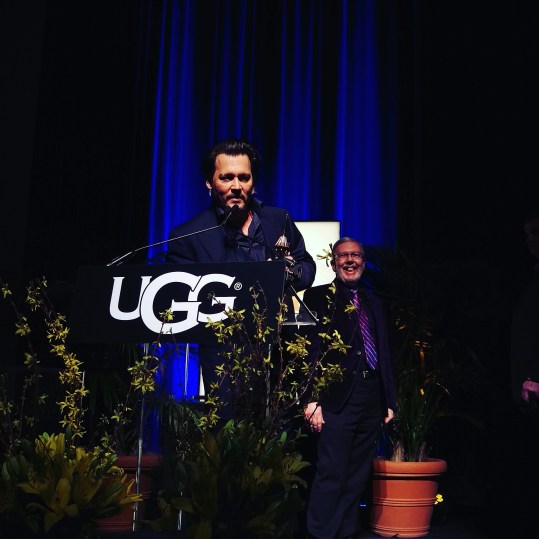
Maltin then took the stage and he introduced Depp and an excellently edited highlight reel played. Watching a brief highlight of Depp’s career doesn’t do it justice, yet you can’t help feeling overwhelmed by his truly epic career.
Depp walked out, and the theatre erupted with applause and screaming. Depp shyly smiled. To this day, Johnny Depp is the epitome of cool. He was wearing socks with hemp leaf patterns and for about the first hour and a half of the Q&A, he meticulously hand rolled a perfect cigarillo. He then lit it and took the rest of the Q&A slowly smoking it. In California, and pretty much anywhere else, it is illegal to smoke in a public venue, but who is going to tell Johnny Depp to stop smoking?
Depp is a very sweet guy, he’s incredibly humbled. Whenever Maltin would bring up a film, whether it was one of Depp’s blockbusters or a seminal undercard performance, the audience would clap and Depp would smile and thank the audience.
The Q&A with Leonard Maltin was almost three hours long and it was wonderful. I was able to ask Leonard Maltin two quick question on the red carpet, I asked him to pick between DONNIE BRASCO, ONCE UPON A TIME IN MEXICO and SWEENEY TODD. Maltin paused for a moment and said DONNIE BRASCO. I then asked him what his favorite underrated performance of Depp’s was and he said, without hesitation, DON JUAN DEMARCO.
It took about an hour for Depp to warm up and get comfortable. He was incredibly candid about his career. He spoke frankly about how he’s a musician, who happened to become an actor to pay the rent. He spoke in depth about what a horror he was, and sometimes still is, on film sets. Maltin asked him about his relationship with Leonardo DiCaprio on the set of WHAT’S EATING GILBERT GRAPE. Johnny Depp just started laughing.
“You know, I respect Leo a lot. He did so much work and research and preparation for that role,” and a sly smile arose on his face, “and I tortured him.”
The audience started laughing, and Depp stopped, and looked at the audience,
“No, really, I did. He liked video games. No Leo, I won’t give you a drag of my cigarette while you hide from your Mom.”
Depp briefly spoke about his work with John Waters, saying how Waters was the only filmmaker he knew who made a film based on a title. He said Waters came up with the idea of PECKER, solely for the fact that when it would be advertised it would be: John Waters’ PECKER Coming Soon.
When Depp was asked about his casting in EDWARD SCISSOR HANDS and his long and awesome collaboration with Tim Burton, Depp started laughing. He spoke about how he didn’t want to even meet with Burton, he knew he wouldn’t get the part, but his agent Tiffany talked him into it. Depp recalled walking into a diner to meet Burton. He had no idea what he looked like. He scanned the diner and saw a guy “whose hair looked like a hardware store exploded, and I knew I had to talk to him. Even if he wasn’t Tim, I still had to talk to him.” The man with the exploded hair was Tim Burton, and that was the beginning of one of the greatest collaborations in cinema history.
Leonard Maltin beamed as he showed a clip of DON JUAN DEMARCO and then asked him about that film, and working with Marlon Brando. Depp settled back in his chair and smiled, and spoke about his abundant love and admiration for Brando. He said he was a father, mentor, brother, essentially a gigantic blanket that meant the world to Depp. When Maltin asked Depp to describe what he learned from Brando, he paused looked down, and then back up at Maltin and said: justice.
Maltin asked Depp about the only film he directed, THE BRAVE that premiered at Cannes in 1997 and featured Marlon Brando in a prominent role. Maltin asked when we could see it. Depp asked the audience who wanted to buy it. He then went on to speak about the reason he shelved the film was because he didn’t want to play the distribution game, and he wanted to retain control over it.
In 2004, when Brando died, Depp was devastated and he was receiving offers about releasing THE BRAVE. He was told it was a prime time to release the film, it was an unseen Brando performance, and now was the time to release it. That’s the moment when Depp decided to put the film under lock and key. He was returning justice back to Marlon Brando. Maltin then said that releasing it now wouldn’t be an exploiting Brando’s death. Depp then said he would show THE BRAVE at the Santa Barbara International Film Festival next year, and shook Maltin’s hand on it.
So in theory, next year, Johnny Depp will be premiering his unicorn of a film, THE BRAVE, at the 32nd Santa Barbara International Film Festival. That remains to be seen, but seeing Depp speak, in depth, for three hours about his remarkable career was amazing. After the Q&A was over, Depp went back outside to all his screaming fans and took more photographs and signed as many autographs as he could. Johnny Depp is not only one of cinema’s best actors, but he’s truly a class act.
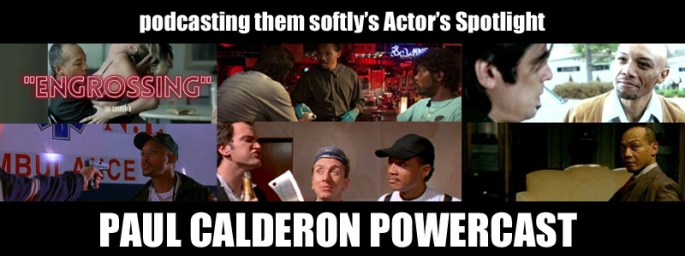
Podcasting Them Softly is honored to present a chat with veteran actor PaulCalderon, who has appeared in a wide range of some of our favorite films and TV shows for close to the last 40 years. Paul has worked with filmmakers such as Quentin Tarantino, Abel Ferrara, James Mangold, Alejandro Gonzalez Innaritu, Steven Soderbergh, Spike Lee, Sydney Pollack, Harold Becker, Sydney Lumet, and Arthur Penn, to name only a few, with credits including Pulp Fiction, King of NY, Bad Lieutenant (which he co-wrote with Ferrara), Welcome to New York, Q&A, Sea of Love, Copland, 21 Grams, Out of Sight, Clockers, and The Firm. His massive list of television credits include Boardwalk Empire, Hostages, Law and Order: Criminal Intent, How to Make It In America, Miami Vice, and an epic run on the daytime soap One Life to Live. He’s also no stranger to the theater, having appeared with Robert De Niro in Cuba and His Teddy Bear. He also runs his own acting school, which you can find out more about at his website www.paulcalderon.net.Paul is a founding member of the Touchstone Theater, The American Folk Theater, and The LAByrinth Theater Company, as well as being a member of the Actors Studio since 1984. A consummate NY character actor all throughout his career, Paul brings energy and edge to every performance in every project, and we’re extremely excited present this interview! We hope you enjoy!
The schedule for the 2015 Mile High Horror Film Festival is bursting with quality programming all day and deep into the night, but a double feature on Friday afternoon/evening was my primary target as soon as I viewed the calendar: The Descent with director Neil Marshall in attendance, and The Shining with Joe Turkel (Lloyd The Bartender) and Lisa and Louise Burns (The Grady Daughters) conducting a Q&A session prior to the show. Arguably the best horror film of the 2000s followed by arguably the greatest horror film of all time, with these creative forces behind them in the house? No question I’d be at both, and each was fantastic. The Descent and The Shining have important similarities, such as masterful senses of tension and locations that are crucial to the proceedings, but couldn’t be more different otherwise—a monster movie enclosed in darkness, gore and stone versus a brightly lit ghost story floating through spacious, impeccable halls. A naturalistic, tough and large female ensemble; a stylized nightmare with few (living) souls inhabiting it. Still, the two stand on equal footing because the purity of vision in each is unquestionable, and not a moment is wasted in taking the viewer on their respective dark journeys.
Neil Marshall’s The Descent is celebrating its 10 year anniversary, and one could see the pride and enthusiasm the filmmaker still has for discussing this gem by his effusive Q&A immediately following a fully attended afternoon screening. He started by addressing the “alternative ending” controversy, stating that the UK received the real finale so he wasn’t as worried about its reception overseas, and the test screenings indicated US general audiences preferred something more upbeat, so he allowed Lionsgate to show the truncated cut here with the condition that they gave it the widest release possible, ultimately on over 2,000 screens. He also pointed out that his original vision is the happy one; Sarah’s ending up with her daughter (played by Marshall’s niece) was the only version of peace she would ever find.
The director continued by discussing the origins of the story and its early reception. He originally wanted to expand an earlier student film revolving around space zombies called Brain Death into a feature, but was told it would be too expensive at a meeting to pitch producers and was asked to come up with something else. Remembering a challenge he’d heard in the press about his debut, Dog Soldiers, not being scary enough, he determined to make the scariest film he could imagine, got on a train immediately after said meeting and let his mind wander. By the time he’d returned home several hours later, he’d figured out a little-used location in horror to exploit with a cast almost completely devoid of testosterone. The script felt more like a novel as he quickly entered extended sequences of little to no dialogue, and the stark descriptions within scared everyone who read it. One of his producers labeled it “too relentless!” and asked him to let them out of the cave; Marshall’s response? “They didn’t get to leave the boat in Jaws! They didn’t get to walk away from The Nostromo in Alien!” He knew keeping the heroes trapped was key.
A brief discussion of the technical details revealed a fun anecdote or two, including the time one of the “crawlers,” as he referred to them, sprained his ankle on set and was taken to the emergency room—in full costume. Marshall continues to be proud that barely any CGI was used, not to mention the fact that they’d built sets so effective the viewer couldn’t tell the entire film was shot on sound stages at Pinewood Studios with a few exteriors shot in Scotland (apparently real caves fill with fog fast when humans are around and the slippery surfaces ensure repeated, dangerous falls). He even pointed out a variety of obscure references to be found in the film, some as subtle as a shot of a sleeping Beth with her arm over her head nodding to Deliverance. When asked if Alfred Hitchcock’s influential hand could be felt anywhere on The Descent, Marshall balked at the notion yet then teased the audience that the next film he’s working on is his “Hitchcock Homage,” but spilled no further beans. For broad influences he called John Carpenter the biggest and mentioned The Thing, Alien, Deliverance and The Shining as specific touchstones.
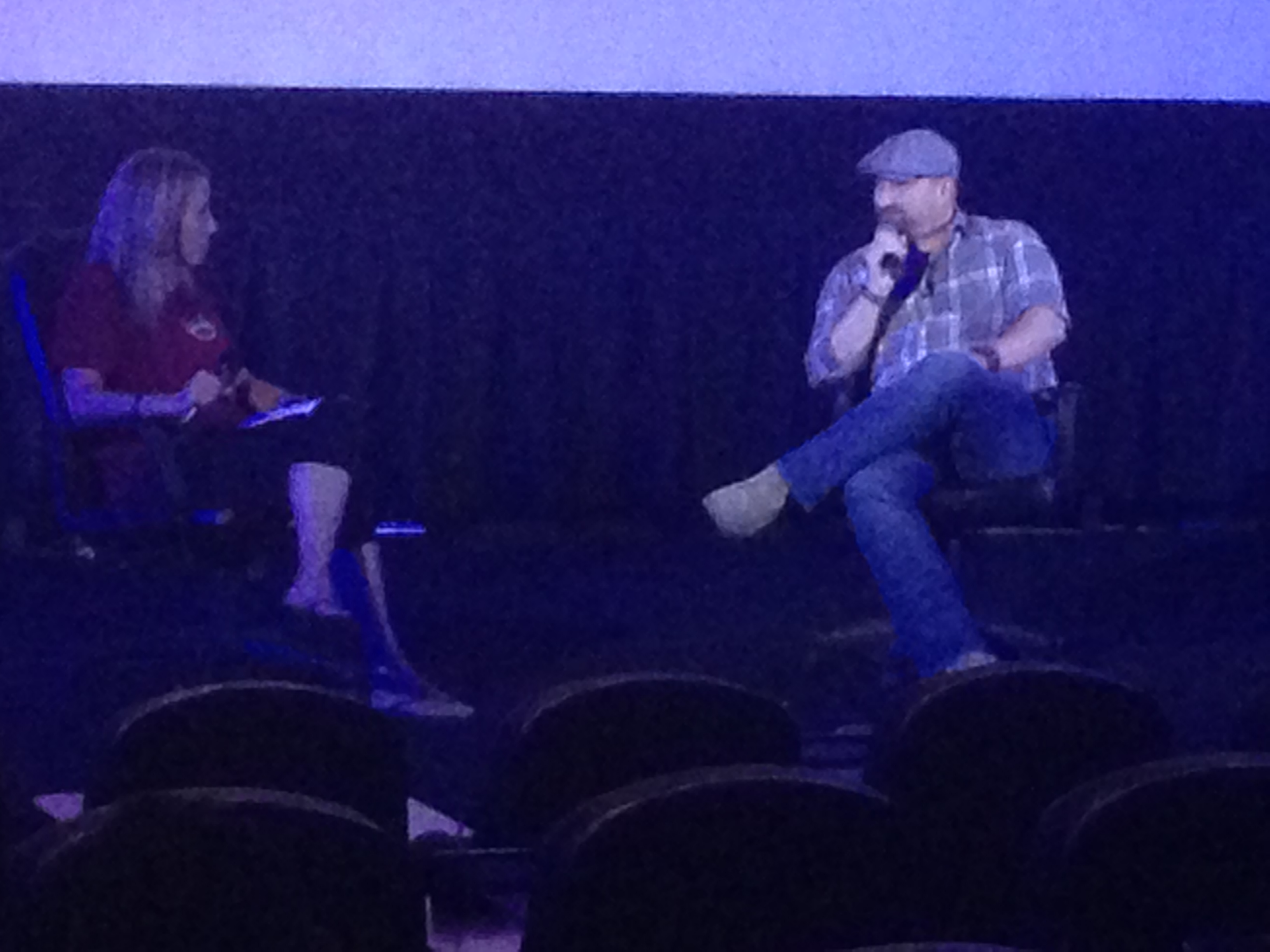
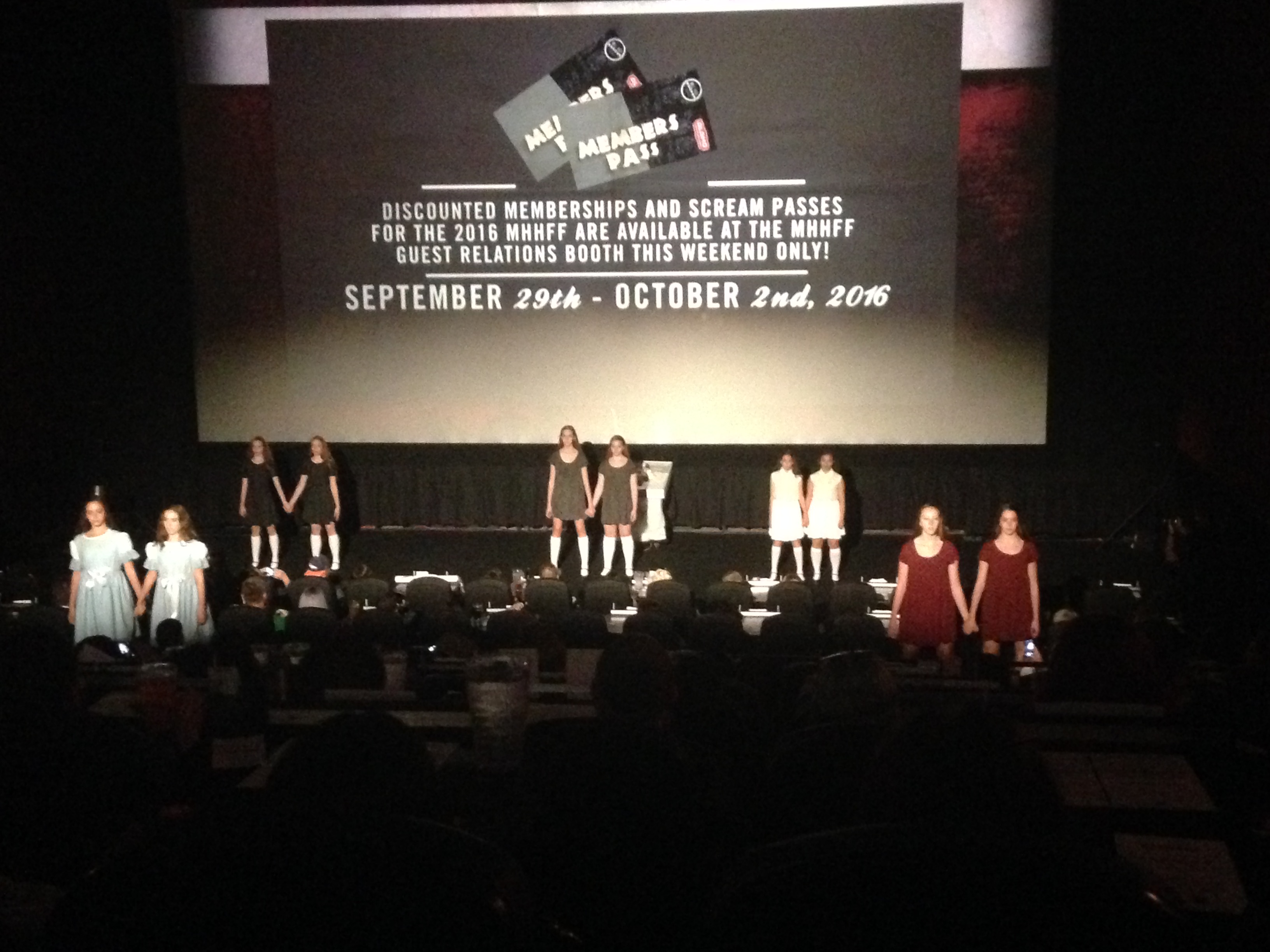
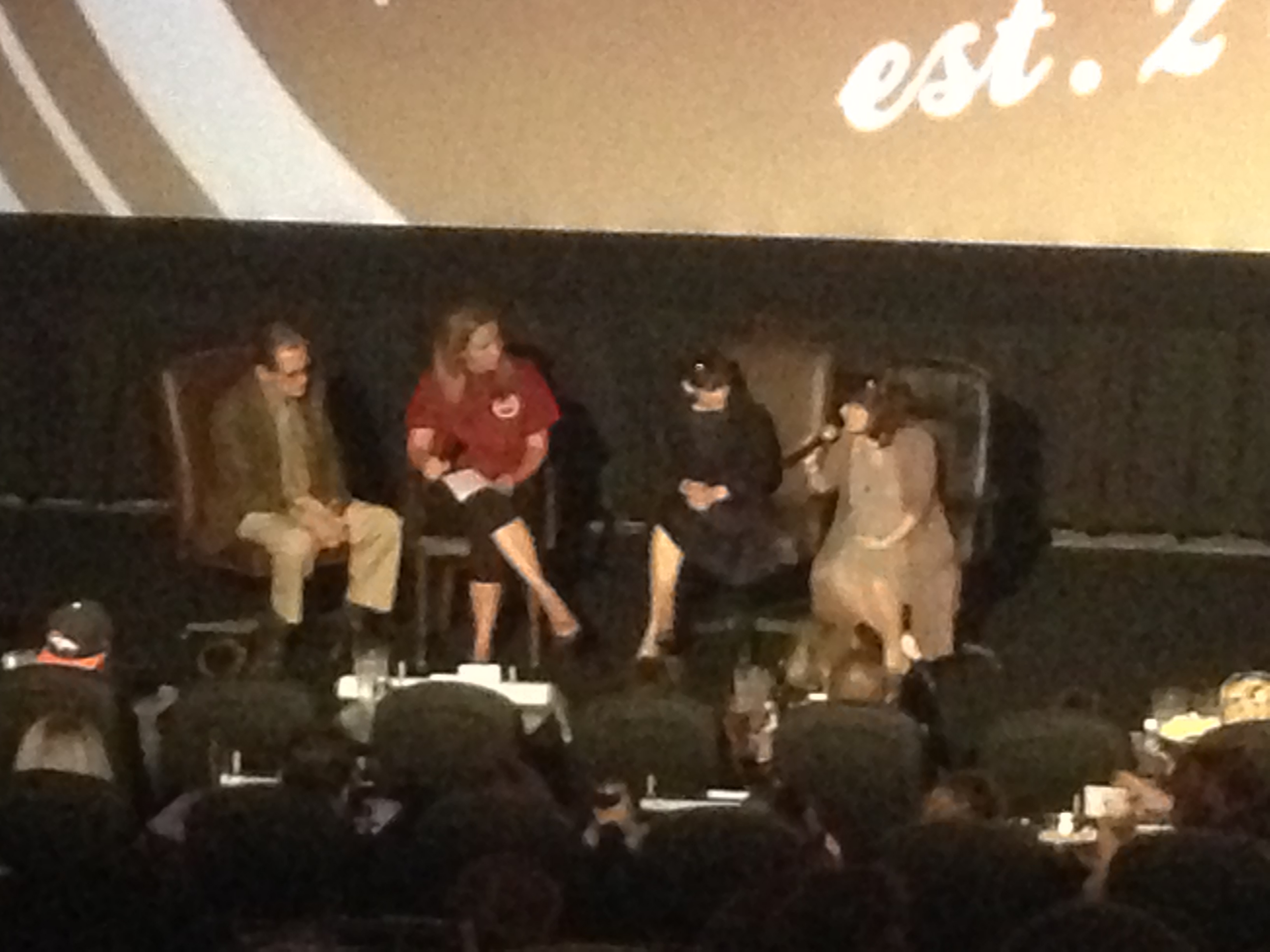
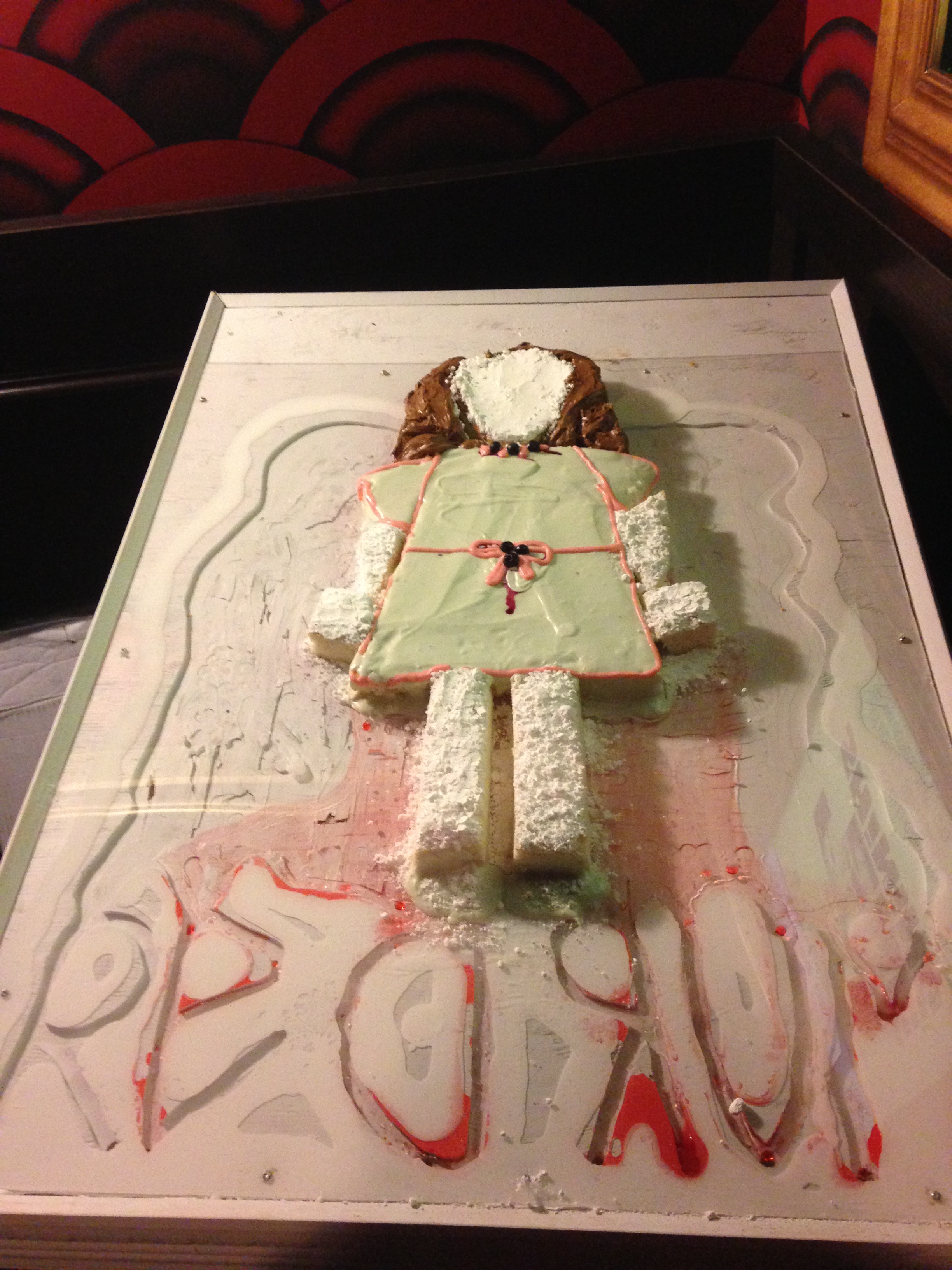
Turning to that particular Kubrick masterpiece, the MHHFF and Alamo Drafthouse Littleton pulled out all the stops to celebrate the picture and set the mood for a 35mm projection with several cast members in attendance to discuss the famous filmmaker and their memories of the production. Initial events, including several twin-themed dance partners interspersed throughout the crowd and a Redrum cake that doesn’t belong on any child’s birthday table, gave way to the honored guests of the evening. Joe Turkel, spry and clearly excited for his chance to discuss fellow Brooklyn kid and longtime friend Stanley, was joined by Lisa and Louise Burns, the British twins who interestingly played sisters of different ages in their indelible, iconic scenes as the Grady girls. Joe was quick to point out that he’s the rare actor who appeared in three Kubrick productions (the others being The Killing and Paths of Glory), and often mentioned how he and the director bonded over their love of the Yankees and Joe DiMaggio, the latter having passed away a day after Kubrick himself did. Turkel also pointed out the ‘director’s bible’ that Stanley had with him on all three sets where they worked together, in increasingly dog-eared, underlined and battered form, a text by the great Russian filmmaker Vsevolod Pudovkin called Pudovkin on Film. He went on to describe the director’s demeanor as always quiet and respectful, but yes, famously thorough and prone to many takes. He claimed the shot of Jack Nicholson walking past strewn-about balloons and entering The Gold Room with a ghostly party in full swing was done no less than 180 times. As Kubrick asked for each new take, the camera angle or lens or lighting would always be slightly altered. Turkel once asked him, “Are you ever satisfied with just one take?” Kubrick smirked and responded “Oh yes! Many times!”
The soft-spoken Burns sisters didn’t have the same relationship with Kubrick but, like Turkel, had many memories of the director being warm, friendly and accommodating, even during the lengthy portions of their work. They didn’t have a specific take count on any of their scenes, but recalled that his getting the single shot he ended up using of their bloody bodies in the hallway took three full days, during which they were awfully cold. Kubrick personally went and retrieved a space heater for them when they complained, and when their birthday arrived he halted the shoot for several hours in order to throw them a proper party, wherein he presented them with an autograph book filled in by cast and crew. Speaking further about the director’s personality and demeanor, Turkel insisted he was a plain-spoken kid from Brooklyn (he preferred everyone call him Stanley, not Mr. Kubrick, not Stan) who wasn’t a hermit but understood his celebrity would require him to be increasingly beholden to anyone he met, so he chose to limit how many new people he brought into his life. Discussing the film itself, Lisa and Louise didn’t actually see it until they were in their 20s, and due to UK censorship the version they saw was a full half hour shorter than what audiences in other countries enjoyed. Turkel pointed out how strange this was considering The Shining is far from a violent picture; outside of Nicholson’s brutal ax murder of Scatman Crothers’ Dick Halloran, there is almost no physical conflict portrayed. As a result, the Burns sisters didn’t realize what a horrifying picture it was until much later. Joe Turkel claimed to have only seen it 5 or 6 times, but said his enjoyment deepens with each viewing. He took a quick shot at the original author’s negative take on the film and the resulting 1990s television miniseries version, which in his words “bombed” by not focusing on the psychological horror that Kubrick presented in masterful form. The actor then shared two quick stories, one about how he and a friend ran into a struggling Nicholson at the horse races in 1961, when that performer was considering leaving Los Angeles and returning to New York City but stayed after Turkel’s friend repaid Nicholson some money he owed him with their gambling winnings (“I saved his career!”), and another about his last day on set. Insisting Stanley was a warm man but not prone to physical contact, he walked up to Turkel, put his hand on the actor’s shoulder and said “you know, so far you’re the best thing in this movie.” Joe Turkel responded by saying “Thanks Stanley—so don’t wait another 40 fucking years to cast me again!” Kubrick smiled, walked away, and that was the last time the two spoke.
Finally, the 35mm print rolled for the audience, and as with most great films it felt like a first viewing all over again to share the experience with an anonymous audience in the dark. On a quick personal note, I must recommend that if any organization such as the Mile High Horror Film Festival or the Alamo Drafthouse gives you the opportunity to enjoy either of these films in a theater, take advantage of it. The Descent’s darkness flows off the screen and effectively envelops you, and The Shining’s still-stunning sound design, visuals and atmosphere trap you, the viewer, in the Overlook Hotel just as it did Danny and his family all those years ago. Seeing the two films this past Friday with these talented artists present to tell their stories made for a unique, revelatory and unforgettable day for the horror fans in attendance.


 Podcasting Them Softly is honored and extremely excited to present a discussion with feature film editor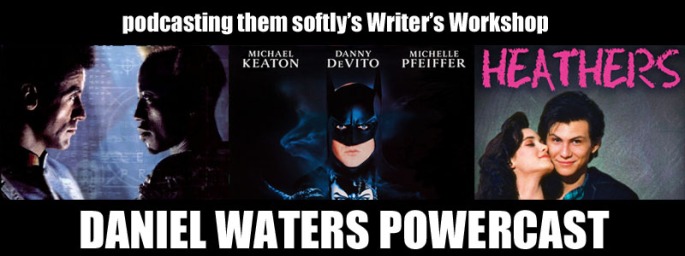
 Podcasting Them Softly is beyond thrilled to present a chat with the tremendous screenwriter and filmmaker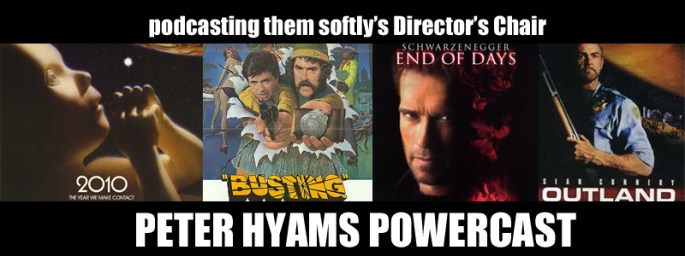
 Podcasting Them Softly is excited to present a chat with filmmaker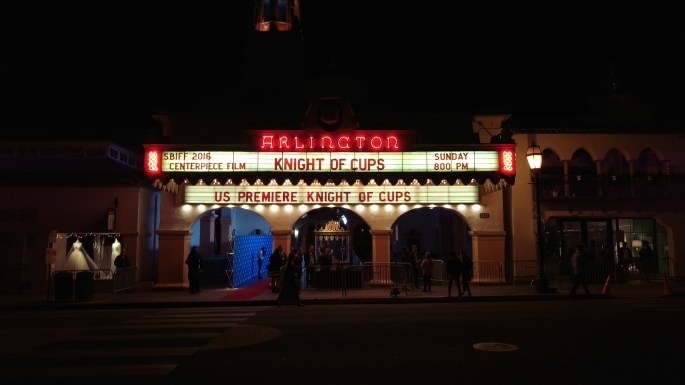

 Podcasting Them Softly is honored to present a chat with veteran actor
 Podcasting Them Softly