David Cronenberg’s The Dead Zone

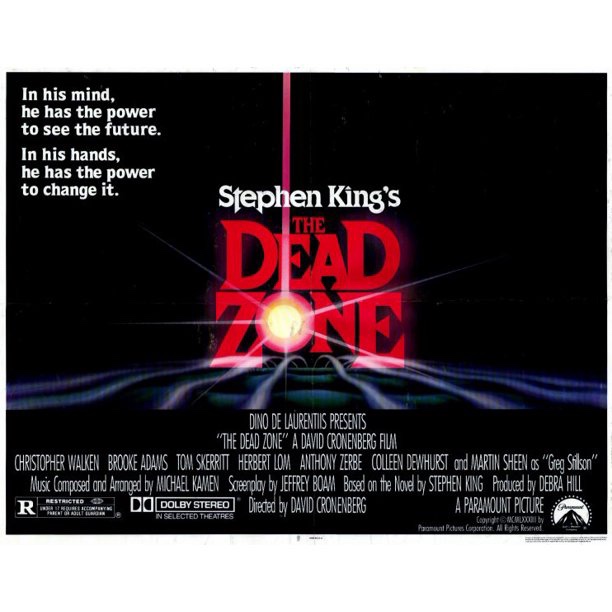
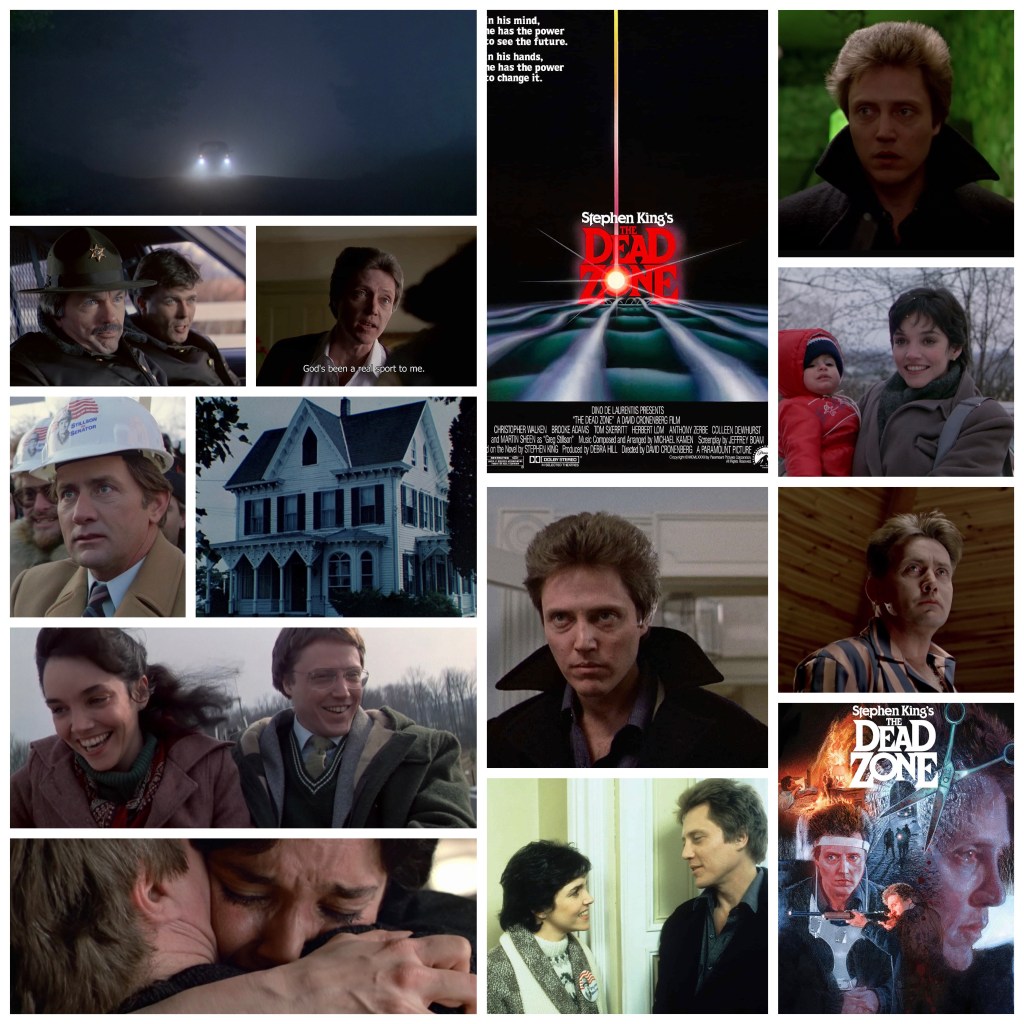
The Dead Zone is the combined efforts of three artists who can only be described overall as a trio of the most extreme storytellers of their day, Stephen King, Christopher Walken and David Cronenberg. It’s a bold, counterintuitive and brilliant move on all parts to then make this a restrained, humane and warm-hearted piece of compassionate thriller filmmaking, despite having the aura of a classic horror film. Christopher Walken gives one of his best, most soulful performances as Johnny Smith, a mild mannered schoolteacher who is blessed/cursed with the powers of spooky clairvoyance after a cataclysmic car wreck leaves him in a coma for five years. He can now sense the future, past and ill fated destiny of others around him based on touch, an ability that can save many lives but also has a draining effect on his own spirit forces. As he helps the local sheriff (Tom Skeritt) track a vicious serial killer, tutors the neurologically challenged young son of a rich businessman (Anthony Zerbe) and has growing suspicions about an overzealous, obviously sinister politician (a smarmy as hell Martin Sheen) running for senate, he tries his best to reconnect with the former girlfriend (Brooke Adams) who remarried during his coma and pick up the pieces of his life. Walken is excellent and reins in his usual eccentricities (apart from one brief, shockingly hilarious outburst) for a subtle, restrained and heartbreaking portrayal akin to his award winning turn in The Deer Hunter. Johnny isn’t a warrior, cop, leader or hero, he’s just a quiet schoolteacher who finds himself thrown into this extraordinary situation and has to deal, and Walken’s shy, awkward and otherworldly presence brings this to life wonderfully. The film is shot in rural Ontario during wintertime and as such there’s an icy, eerie blanket of small town atmosphere over everything, made thicker by a beautiful Michael Kamen score that lays on the orchestral swells and quirky, spine chilling experimental cues in perfect musical symbiosis. This is King at his kindest, with an ending that although is appropriately bleak, still has a sorrowful heart to it and not his often cynical, hollow hearted touch. It’s also Cronenberg at his most character based, ditching the body horror to explore the psychological strain a phenomenon like this would exert and taking a long breath in his otherwise hectic, gooey career to compassionately explore a character alongside Walken who is a dark angel revelation as Smith. Sensational film.

-Nate Hill

The Final Girls

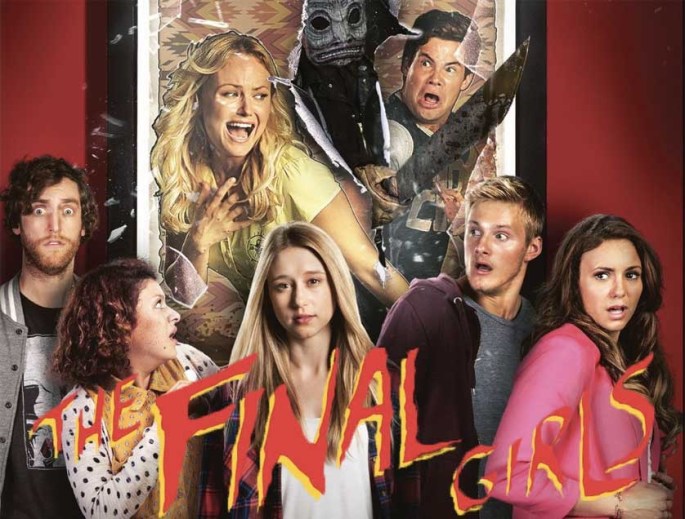
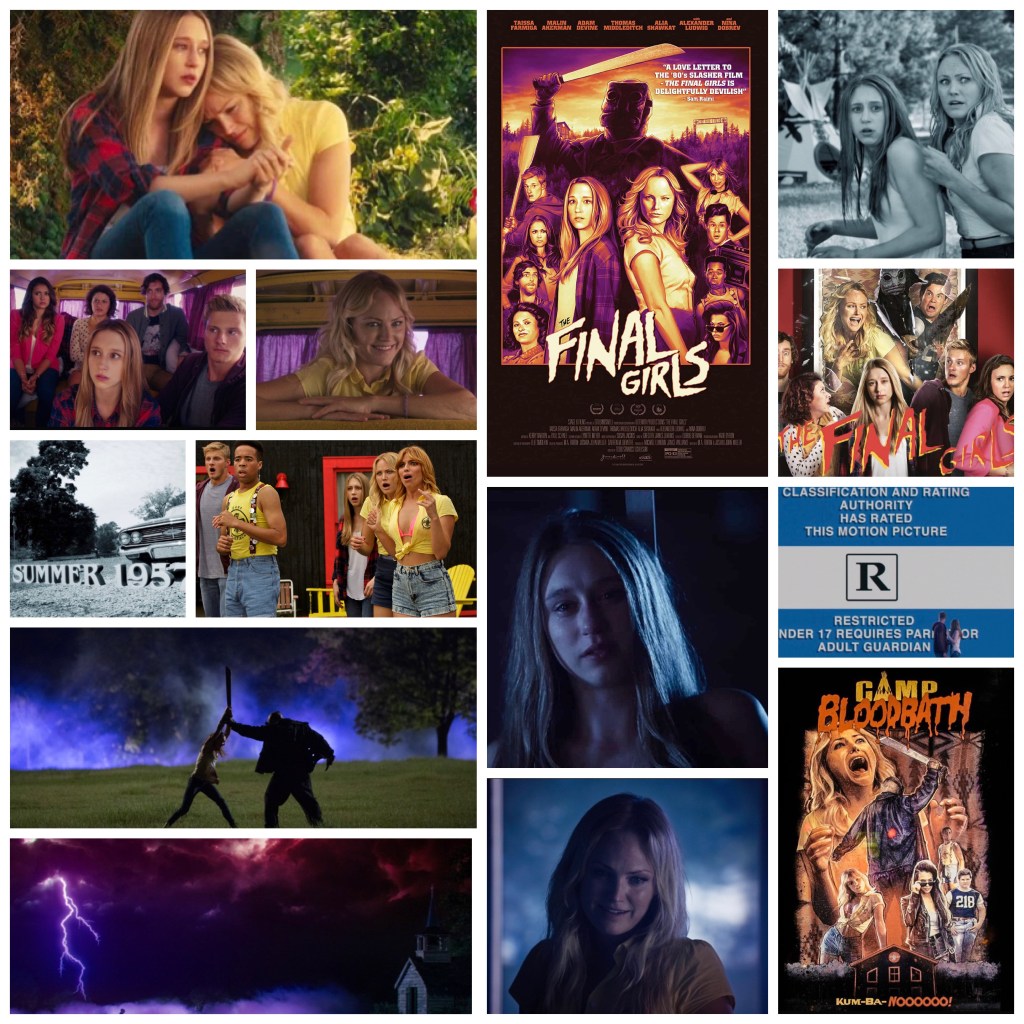
The slasher sub-genre of horror has consistently and gradually become self aware as it has evolved, reshaping it’s archetypes, going spectacularly meta and immersing the audience in self commentary whether it’s well known blockbusters like Scream or obscure indie treats like The Rise Of Leslie Vernon. The Final Girls is as detailed, referential, loving, meta and rewarding as they come with a disarmingly affecting emotional weight to it I did not expect. Playfully skewering summer camp slasher outings like Friday The 13th and Sleepaway Camp, it stars the lovely Taissa Farmiga as Max, a teen girl whose mother Nancy (Malin Ackerman) is killed in a brutal car wreck. Nancy was once a Hollywood scream queen and starred in the very popular Camp Bloodbath franchise, a claim to fame that she always resented and a legacy that Max now wants nothing to do with. At an anniversary screening of the first Bloodbath film Max and her friends find themselves somehow transported into the film itself through the screen by some sort of magical inter dimensional slasher voodoo, the same kind of cinema themed mysticism that brought that one kid into the Schwarzenegger movie world in another vastly under appreciated meta flick, Last Action Hero. In this pristine 1980’s world they find sunny campgrounds, a glassy lake and knowingly corny writing (the movie counsellors are priceless) and the killer himself, who is set on a preordained murder spree of these characters which include, as a panicked Max learns, her own mother. So begins a breathless, clever and often very funny deconstruction of the classic slasher narrative as these modern kids quite literally interrupt it midway and aggressively rearrange the formulaic turns we’re so used to experiencing beat by beat. There’s an epic, adderall fuelled striptease set to She’s My Cherry Pie, endless tongue in cheek jokes and references that get turned on their head, some wild, colourful and borderline psychedelic set design and cinematography in the ‘movie’ world too. What really makes this such a great film and a strong piece is the deeply heartfelt mother daughter relationship between Max and Nancy, acted stunningly by both. Farmiga is an unbelievable otherworldly talent and, dare I say, more mesmerizing onscreen than her sister Vera, one long stare from her could shatter down walls built by anyone, she makes Max a wounded yet resilient spirit. Ackerman gets shafted a bit as the ‘hot blonde’ archetype but she is far more talented than she gets credit for and does a delicate balancing act here between obligatory campiness with pockets of very candid realism peppered in for a gem of a performance. Now, myself being someone who has used both film and music to cope with the death of a parent, I can tell you that this film is almost too real and near transcendent at accomplishing that theme onscreen. It’s essentially a story about Max working through the unimaginable hurt, and very long lasting pain of losing her mother presented in a mature and heartbreaking way, reflected through the prism of a fun, self aware horror comedy and I think the overall idea and execution are genius, really. Add to the fact that the song that Max and Nancy share as ‘their song’ is Bette Davis Eyes by Kim Carnes which was one of my dad’s favourites so you can say that, for me, this cut really deep (slasher pub heavily intended). A masterpiece, streaming on Netflix now.

-Nate Hill

James Gunn’s The Suicide Squad

James Gunn has always been a delightfully rambunctious, perennially irreverent filmmaker whether he’s exploring the realm of sentient alien slugs, sad-sack superhero wannabes or comic book property, which he gets to do once again in The Suicide Squad, one of his very best films yet. He feels more at home in the world of DC than he does in Marvel and it’s not just the larger playground that a hard-R rating gifts him, although that is a *huge* factor given his stylistic tendencies as an artist and his roots in horror, which are on gooey display here as well. The DC stable, particularly villains, just has this dark, perverse edge to it that Marvel can’t match and in creating a maniacal palooza of second tier baddies in a subversive, heavily violent extravaganza he has found a groove and achieved an aesthetic that for the entire two plus hour runtime I wasn’t bored by once. Some of our familiar favourites from the other Suicide Squad naturally return including Harley (Margot Robbie, resplendent in the role of her career), Captain Boomerang (Jai Courtney), Rick Flagg (Joel Kinnaman) as well as welcome new additions like Bloodsport (Idris Elba), Peacemaker (John Cena), Ratcatcher (Daniela Melchior), Savant (Gunn totem Michael Rooker looking like he walked in from a Rob Zombie flick) the scene stealing Polka Dot Man (David Dastmalchian), impossibly adorable King Shark (Sylvester Stallone) and of course Viola Davis as their game warden Amanda Waller, the cunt to end all cunts. Their missions here include the overthrow of a South American country, constant bickering, shocking team casualties, betrayals, clever skewering of American patriotism, a giant alien starfish, bountiful loads of gratuitous and blessedly gory violence and a clever balancing act between lighthearted, frothy banter and a darker undercurrent of thematic heft that sneaks in the back door and lands with an effective, grounded touch. Obvious comparisons will be made to the 2016 Suicide Squad and I’d like to sideswipe that other than to say I love both films, they’re both very different and the 2016 is what it is, it has its reputation. I do believe this to be the stronger film but I think they both have their place on my shelf, they are M&M’s and Skittles, Pepsi and Coke, or Warheads and Airheads to reference a junk food as obscure as the characters on display here. Gunn has made a rollicking, badass, bizarre yet strangely accessible piece of pop art nutso comic book madness here with many standout moments including an emotional monologue by Ratcatcher (she’s the soul of the film), some stunning technicolor gore effects that call to mind Lovecraft and Carpenter, an Easter egg hunt of many hidden film and literary references, a ballsy, nihilism laced opening sequence wherein some of the characters brutally live up to the title of the film, one instance of Waller *finally* getting a modicum of what she deserves, some painfully on the nose political satire and, in my favourite sequence the film has to offer, a brilliantly placed and paced opportunity for Robbie’s ever awesome Harley to work through the trauma of her past and absolutely TAKE DOWN toxic relationships like the badass boss bitch we all know she is. A wonderful, weird, wild and fantastic film.

Jenn Wexler’s The Ranger

Park rangers are always kind of benign, often goofy and only vaguely threatening figures in cinema, they’re not quite cops, not quite tradesmen and the archetype for writers has always been a blurred line. Jenn Wexler’s The Ranger brazenly shakes that up and draws a firm delineation in the campfire dirt here for an utterly ruthless, absolutely fantastic grindhouse romp that packs a punch to the gut and a kick to the nuts. Teenage punk runaway Chelsea (Chloë Levine) has fuzzy memories of an encounter with a strange park Ranger (Jeremy Holm) when she was young at her deceased uncle’s cabin, briefly before being carted off to the foster care system. Years later and she has fallen in with the wrong crowd, a group of heavy metal brats who inadvertently kill a cop and drag her on the run, eventually ending up in the same national park her uncle’s cabin is in. Naturally, the Ranger is still there too and has made it his personal mission to hunt and kill anyone who wanders into his jurisdiction which now includes Chelsea and all her friends. This is a grisly, fucked up, jaggedly stylish exercise in knowingly lowbrow horror in the tradition of stuff like Cop Car, Wolf Creek and The Hitcher where one archetypal madman roams the enclaves of his realm and stalks anyone who ventures there. Holm is a twisted revelation as The Ranger, possessive of the kind of stalwart, clean cut, Kennedy-esque aura that is all the more unnerving when we see just how cuckoo bananas mentally deranged and wantonly homicidal he is. I appreciated a really fascinating psychological dynamic between he and Chelsea as well, a mysterious mental link that goes back to her childhood near the cabin and is revealed bit by bit in hazy hallucinatory flashbacks. Set to a brain melting nebula of heavy metal and synth music that clashes wonderfully with the wilderness palette, acted to the nines by Levine and Holm (the rest of the teens verge on camp but that’s half the fun) and wound tightly into a blood drenched, visceral mind-game mentality that’s just scrappy enough around the edges, this is a rip-snortin indie worth it for any fan of raw, torqued up exploitation horror, streaming now on Shudder.

-Nate Hill

Renny Harlin’s Deep Blue Sea

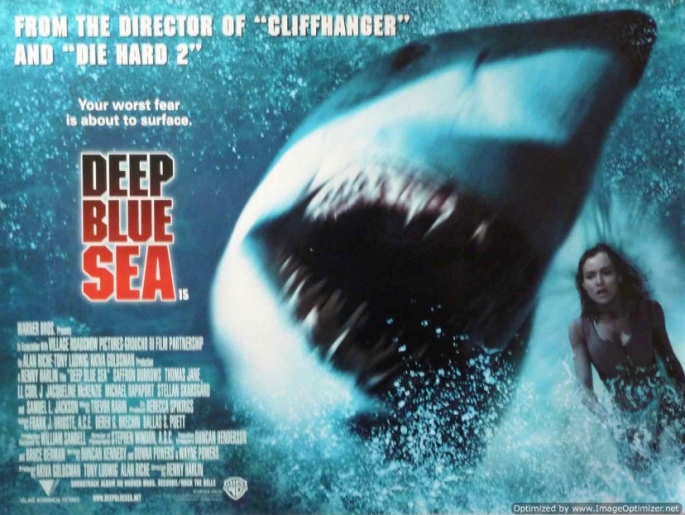
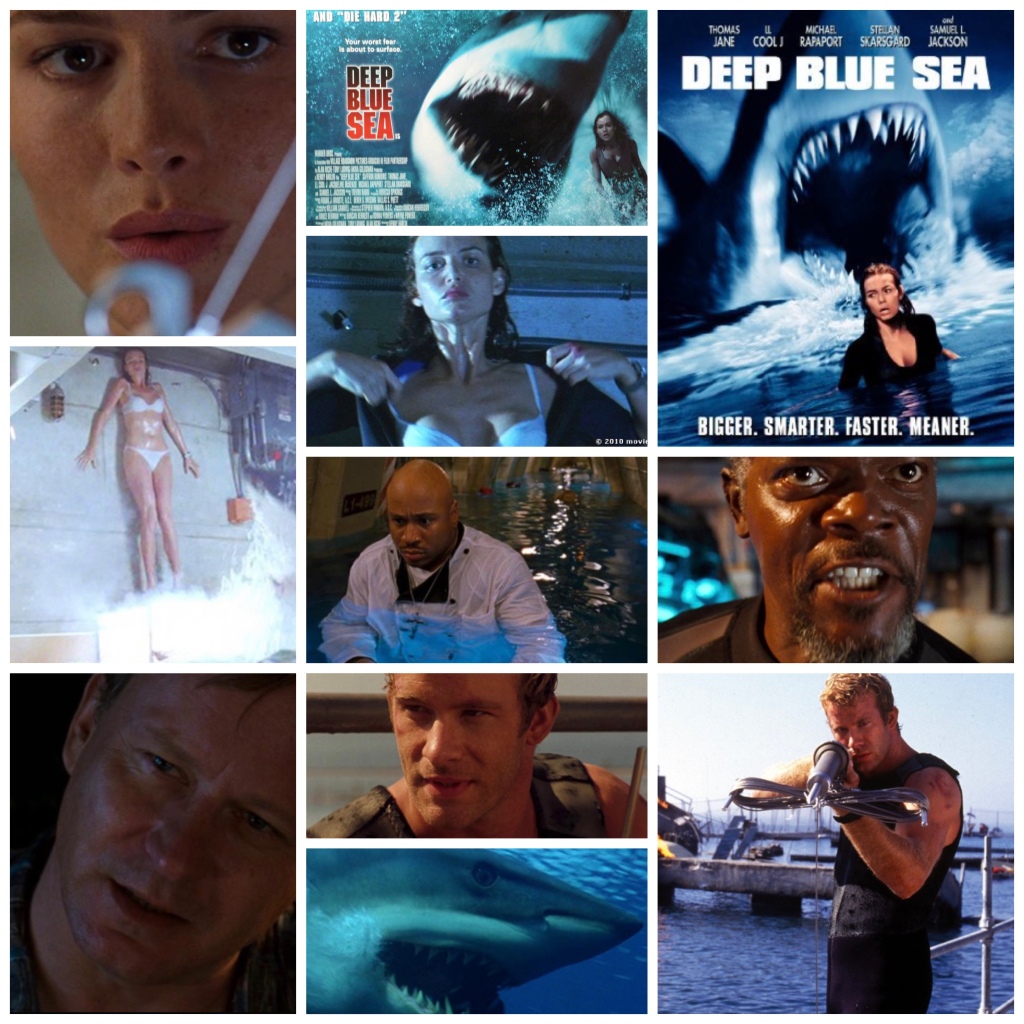
Renny Harlin’s Deep Blue Sea is about as loud, silly, gory and hilarious as you’d expect a ‘killer smart shark’ flick to be and is for the most part a lot of fun, even if it sometimes dissolves into eyeball melting pandemonium. The premise is actually a good one: a brilliant and obligatorily sexy scientist (the lovely Saffron Burrows) has developed a potential formula to treat Alzheimer’s using genetic material from shark brains, and she’s gotten a high level executive (Samuel L. Jackson) to convince his CEO boss (a brief, contemplative cameo from Ronny Cox) to sign off on funding, pending an inspection visit to her test facility out in the ocean. There we meet others including shark hunting guru Thomas Jane, gruff scientist Stellan Skarsgard, oddball cook LL Cool J and grunt Michael Rapaport, all who make great cannon fodder for the marauding sharks once they decide they’re too smart to be lab rats for these people anymore. There are some great gory kills here and the timing of them is sometimes genuinely shocking and inspired, including one death scene that is straight out of the book of nihilism and dark humour 101 and had me laughing hard. It’s basically a decent B movie souped up with Hollywood effects, tons of explosions and while it has the misfortune of being released when CGI wasn’t too great (it shows), it also has the advantage of being made at a time when shark horror films weren’t over saturated and done to death like they are these days and as such feels somewhat fresh, especially given its additional premise of sentient sharks. It’s fun, engaging and a bit cacophonous in some instances where it could have employed more stealth and suspense, but overall a good example of the shark sub genre.

-Nate Hill

Burnt Offerings

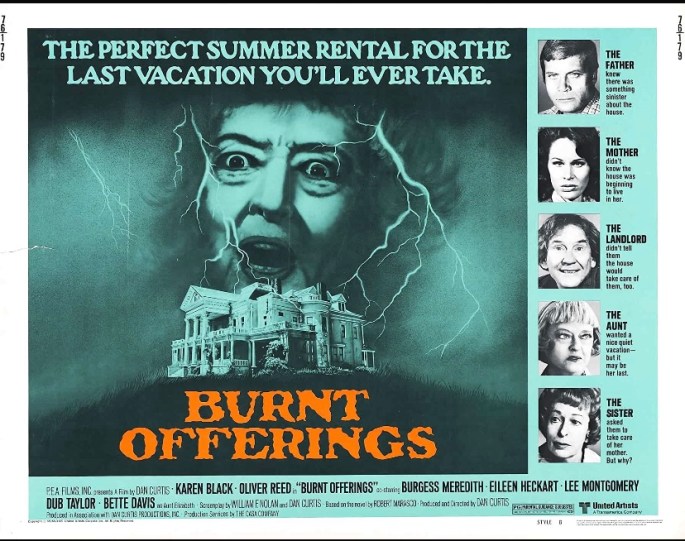
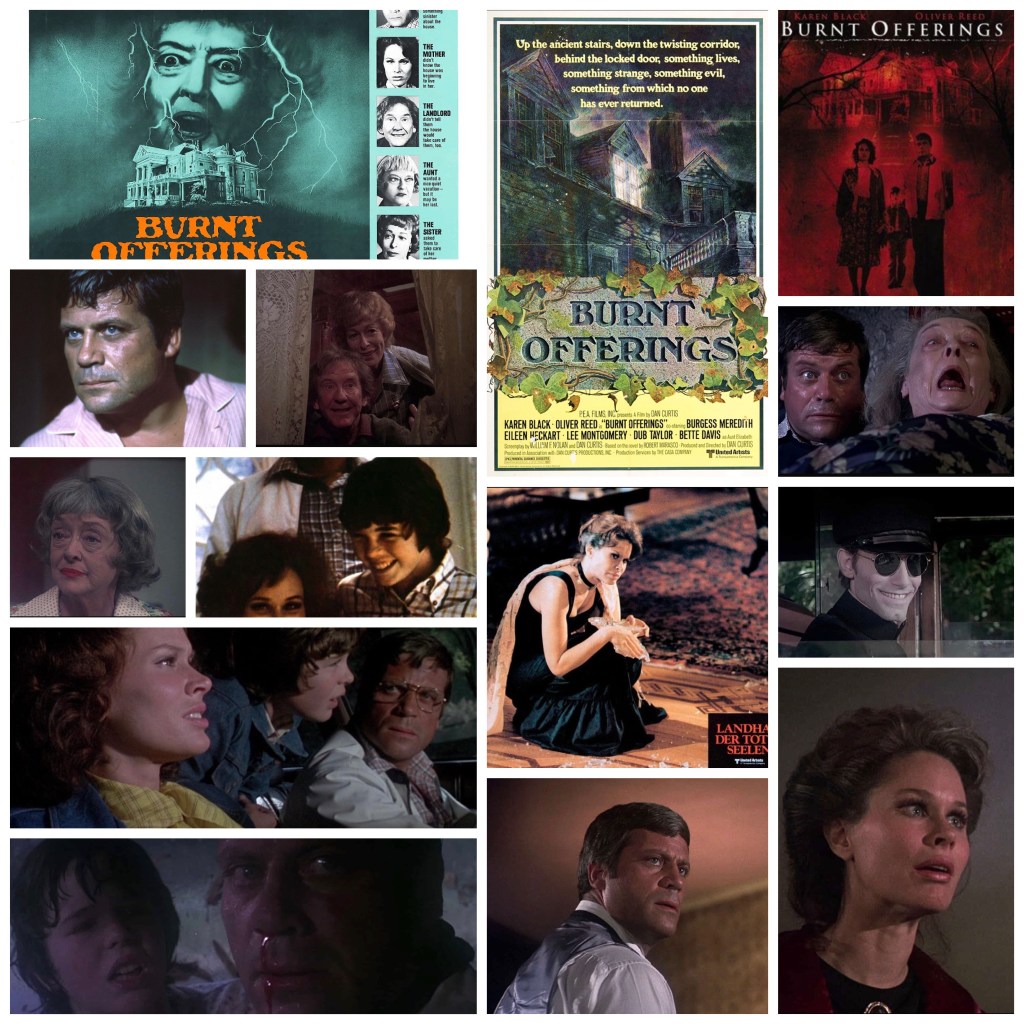
Burnt Offerings (that stellar title deserves a much better film) doesn’t do much as far as innovation goes in the haunted house genre but it’s serviceable enough as an atmospheric diversion and benefits from a very strong and frequently cuckoo bananas performance from the great Oliver Reed as a family man and writer who moves his wife (Karen Black) and son (Lee Montgomery) into a suspiciously creepy manor in the English countryside in a sort of caretakers capacity. Now we all know from collective cinema experience how ill advised it is for writers to move their families into empty large buildings with threatening auras, but hey that’s half the fun. They should have especially known better here though because they’re hired to house sit the place by the weirdest people imaginable, two creepy old goats played by a half mad Burgess Meredith and Eileen Heckart, and let me tell you if these two tried to hire me to look after their weird empty English house I’d run the other way, but then we wouldn’t have a story I suppose. The film hinges on a dynamic that consists of Reed trying to be steadfast and responsible but slowly succumbing to some Jack Torrence level madness while Black’s ineffectual wife blathers on in ditzy mania and the poor kid is stuck between them. There’s a highly effective sequence in the manor’s pool where playful, benign roughhousing between father and son turns unexpectedly violent and grim very fast and is a nice example of tension building and infused menace on Reed’s part. Bette Davis shows up in a rather forgettable role and there’s a spooky grinning valet driver who may or may not be a ghost that sows seeds of narrative and tonal unrest too. It’s nothing fancy, nothing new or noteworthy but as far as routine, atmospheric haunted house flicks with esteemed actors go, you could do worse. Streaming now on Shudder.

-Nate Hill

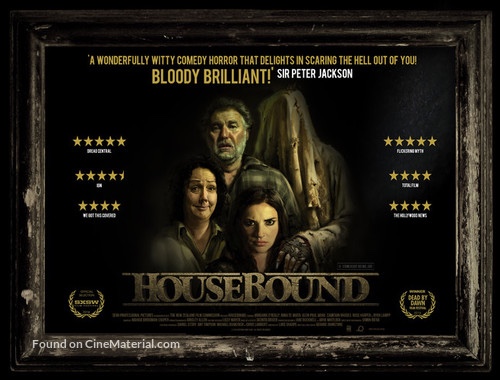
Gerard Johnstone’s Housebound

From early Peter Jackson to early Taika Waititi and many in between there has always been a steady low hum of horror output from New Zealand and Gerard Johnstone’s Housebound is a gorgeous little example of kiwi genre gold, an airtight, creaky would-be haunted house jaunt that knows how to be genuinely spooky while splashing just the right doses of dark humour in here and there and leading the audience down a breadcrumb trail of mystery that’s fun to discern alongside the main character. She’s called Kylie (Morgana O’Reilly) and as we meet her the NZ court system has finally reached its last straw as far as her methamphetamine and booze fuelled delinquent behaviour is concerned, placing her under ankle bracelet adorned house arrest with her weak willed mother (Rima Te Wiata) and meek stepfather (Ross Harper) in a rural enclave. The strained family dynamic is a sheepish joy to watch as this brat with a (deeply guarded) heart of gold makes life hell for her parental unit, but there’s something else in the house just waiting to make life hell for the three of them and soon weird sounds abound, creepy movements are observed and it becomes apparent that they aren’t alone. The cool thing is that the location scouts and set builders have created a house atmosphere that feels legitimately dusty, cluttered, oblong, weary and actually *lived in*, which isn’t always the case in haunted house outfits. Reilly is engaging and likeable as Kylie, even when she’s being a pain in the ass we never get the sense that this girl is truly a bad egg, just a lost and confused one who needs a rather intense outlet to channel her anger and pent-up negative energy into, and what better than a sly, possibly supernatural home invasion? I can’t go into too much detail about the central mystery and origins of the poltergeist shenanigans other than to say it’s a fun ball of yard to unravel alongside Kylie and goes to some narrative pitstops that are often fun, shocking and surprising. It’s goofy, it’s gory, it’s very well written and acted, it’s got tons of humour, a little heart, heaps of cobwebbed atmosphere and is just a great damn time at the horror movies. Streaming on Shudder now, highly recommended.

-Nate Hill

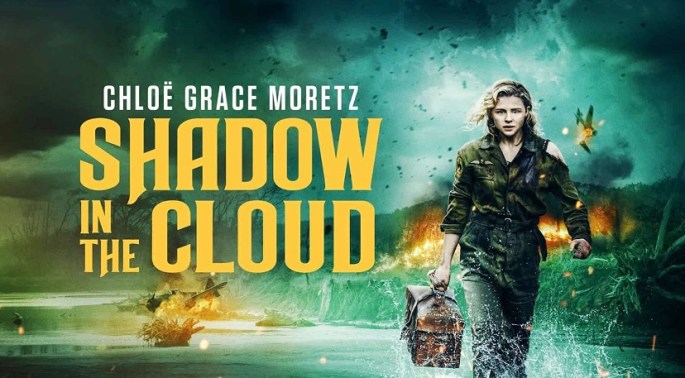
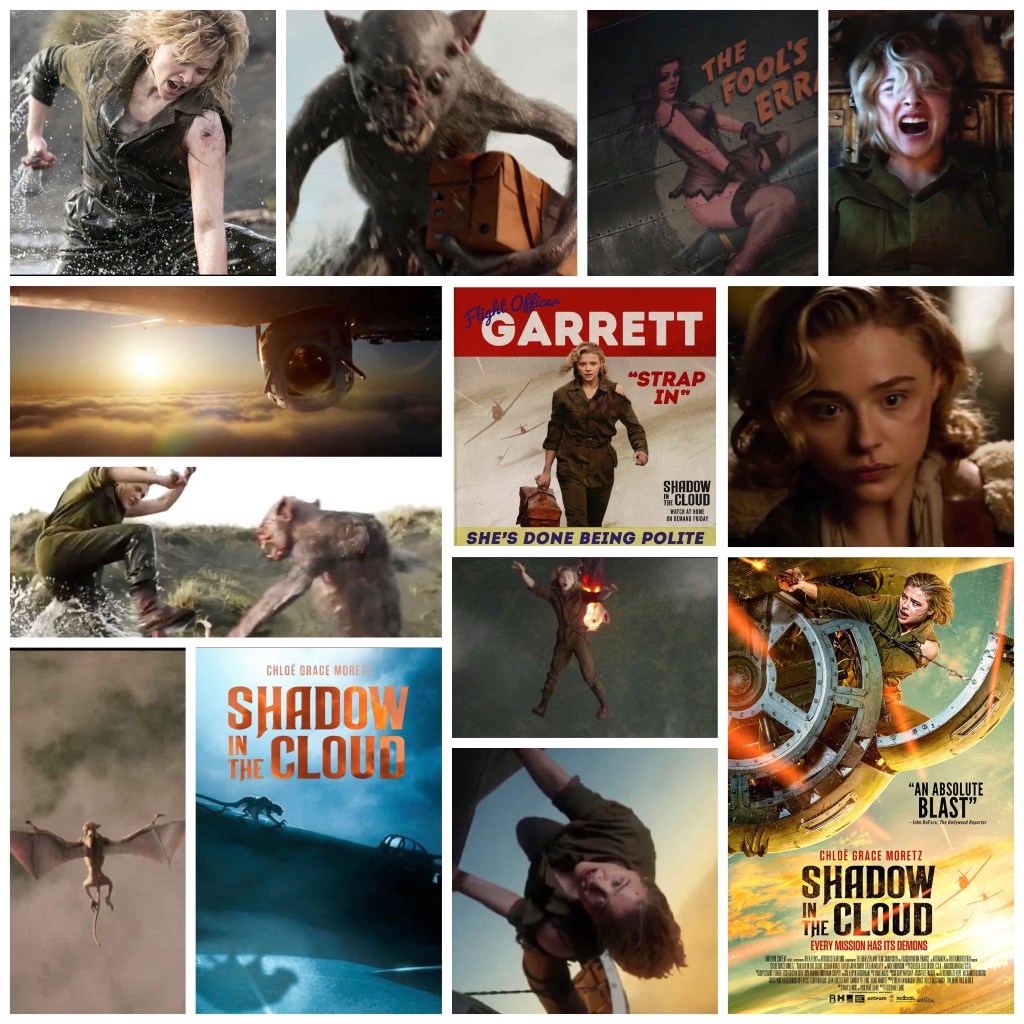
Roseanne Liang’s Shadow In The Cloud

Some concepts just beg to not be taken seriously and in the case of Roseanne Liang’s Shadow In The Cloud we have Chloe Moretz as a WW2 fighter pilot fighting a nasty sky gremlin while also contending with Japanese planes trying to shoot her down and some incredibly sexist fellow officers who outnumber her ten to one. Surefire recipe for camp, right? Well… kind of, but what makes this film so much fun and so successful is that despite an outrageous premise it manages to feel like a real story and not some high flying Grindhouse lark. I haven’t seen Chloe act in some time so I kind of forgot how talented she is but she gifts this character with cunning, grace, badass physicality and genuine grit. As she boards a fighter plane last minute filled with all male officers and is sent straight to the hull turret, it starts with her being belittled and mocked by them, escalates into a breathless dogfight with enemy aircrafts and finally goes supernatural bonkers when this bizarre bat/rat/alien sky gremlin shows up and tries to kill everyone. The film clocks in tightly under 80 minutes and almost has that old timey radio play feel, especially in the first act when she’s alone in the turret, the camera focuses solely on her for a sequence and we only hear everyone else on the radio, thus some of the action left to our imagination just like entertainment mediums of that day. There are some flat-out spectacular action sequences here including Chloe firing up the turret gun and ruthlessly mowing down a Jap plane with brutal precision, a hair raising forced crash landing, a hilariously unbelievable yet absolutely thrilling instance where she falls out of a hatch and plummets a few hundred feet only to be BLOWN BACK INTO the plane by the force of another one exploding below and finally a bloody, ultra-violent hand to hand mortal kombat smackdown with the ugly little bastard gremlin that is laced with adrenaline torqued choreography. It’s just a damn fun film, Chloe has a blast in the best role I’ve seen her do in years, the score by Mahuia Bridgman-Cooper ditches usual war film orchestral notes for something sleek, electronic and rhythmically modern and just overall is badass, gnarly, r rated, rollicking action war horror hybrid good times. Streaming now on Netflix.

-Nate Hill

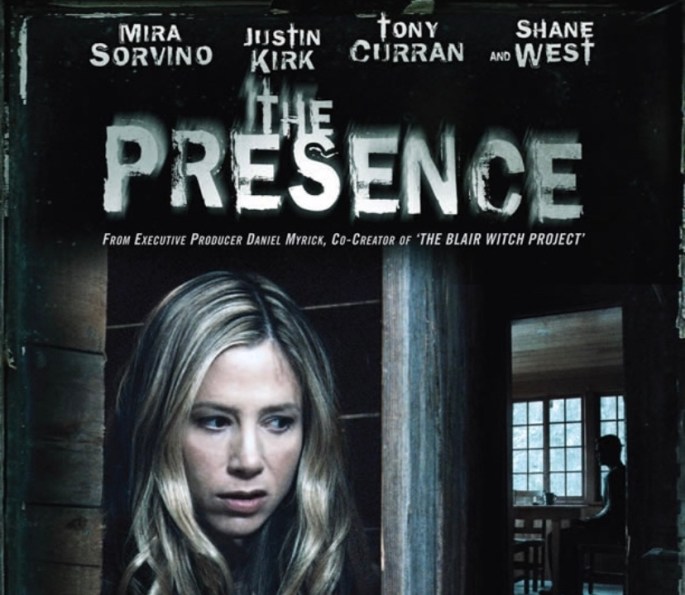
Tom Provost’s The Presence

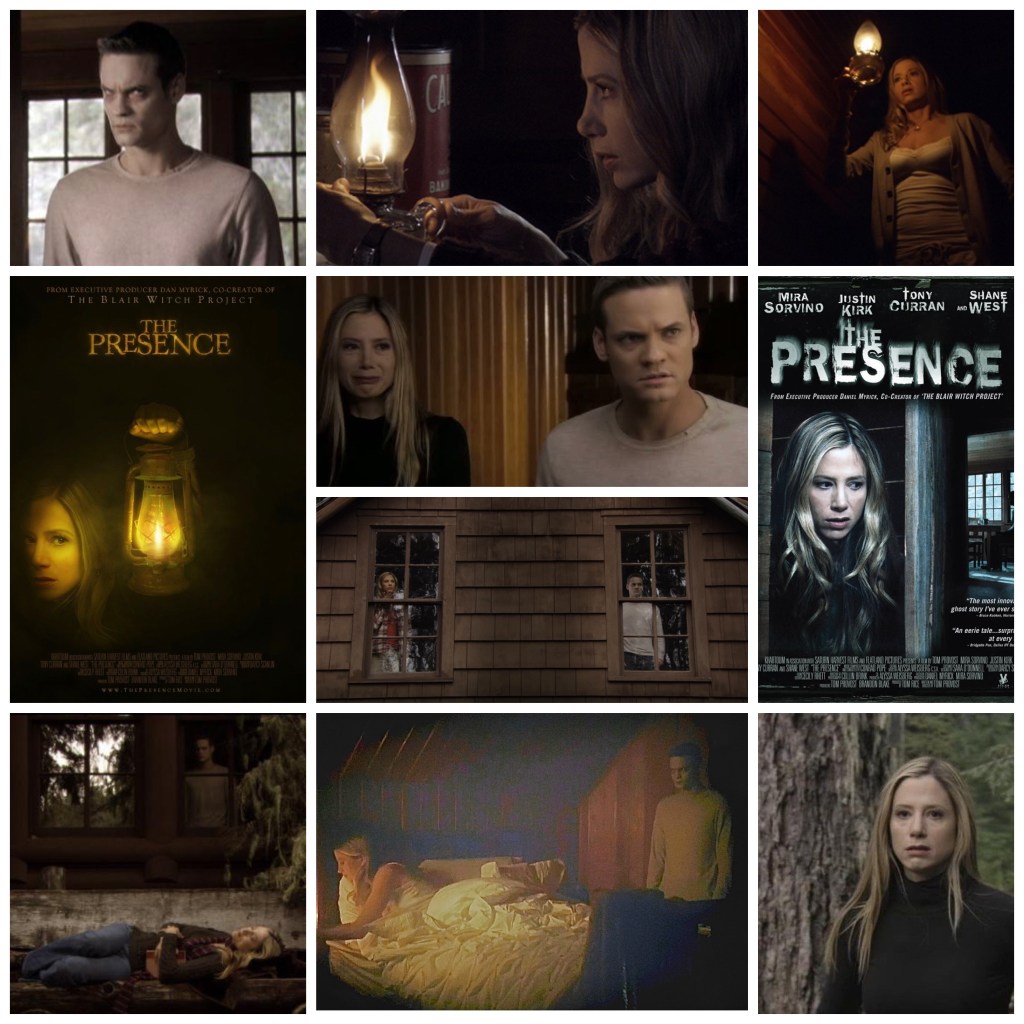
The Presence is one of those horror films that sets itself up so perfectly, so evocatively and effectively drew me in so well in the first act that it was profoundly frustrating when the rest of the film kind of loses its way, to some degree anyway. Sometimes simplicity is key and films start off with a setting and aesthetic so pure and distilled they don’t realize their story would just be more powerful if they stuck with that instead of shoehorned over-complication that muddies up an otherwise pristine experience. The first third of this film sees a haunted looking Mira Sorvino as an unnamed woman at a cabin by a lake (cue some lovely Oregon scenery), on solo vacation to wrestle with some personal demons. From the first few frames we learn there is in fact a ghost also in this cabin and about the grounds, a mute and mostly still figure played by the gaunt, angular presence of Shane West, who we remember as the boyfriend in A Walk To Remember. There’s a hushed, hypnotic aura as Mira goes about her chores around the cabin in silence, sleeps alone and wanders the grounds of the island seemingly both searching and at rest, while West’s pale-faced spectre observes her in sentinel stillness from various spots. Then all of a sudden her boyfriend (Justin Kirk) arrives from the city and, like a vacuum, all the atmosphere is sucked out of the frame as a level of dialogue ridden dramatic heft shoves its way into an otherwise unique experience. There is tension between them almost immediately as the ghost continues to observe, she is clearly not excited to have him around and he presses a marriage proposal on her that seems rushed to her. Then as if that whole angle wasn’t enough clutter, another strange supernatural being shows up personified by Scottish actor Tony Curran as some kind of demon who influences both Mira and the ghost while wearing a black suit that seems jarringly out of place amidst the otherwise earthen, elemental tone and the whole thing just speeds up way too fast. There’s also a subplot involving a vaguely sinister shopkeeper (Muse Watson) who delivers supplies to the island by boat, and this ongoing romantic tension that permeates the atmosphere. One aspect I did find fascinating was that Mira’s character was sexually abused by her father as a child and part of her journey out to this childhood property is to confront the memory and trauma of that. But why all this Faustian narrative diarrhea that feels forced into the script somehow? The opening act is SO effective, so eerie and well wrought, why couldn’t we have just coexisted with her and the ghost and the trees for 90 minutes as she grapples with her traumas among a peaceful yet unnerving nature environment? This is all of course just my reaction to the film and some may have gotten a kick out of the ‘whispering demon’ angle but to me it felt like a crippling element to an otherwise engaging and immersive setting and premise. Shame, because the first third is really something worth watching, right up until the boyfriend shows up and the dialogue starts.

-Nate Hill

THE TOBE HOOPER FILES: EGGSHELLS (1969)

Opening on a flock of birds gathered in a great tree against the orange Texas sky right before they launch themselves out and flutter away, Tobe Hooper’s Eggshells announces itself is a movie about transitions. From the leaving of the nest to the building of the nest and everything in between which even includes, according to my wife’s observation during a recent late-night screening, a bird-like mating ritual played out with colorful balloons, Eggshells experimentally flits from one episode to the next, weaving a somewhat familiar but uniquely envisioned, impressionistic tapestry of a transitional generation navigating an America in similar flux.

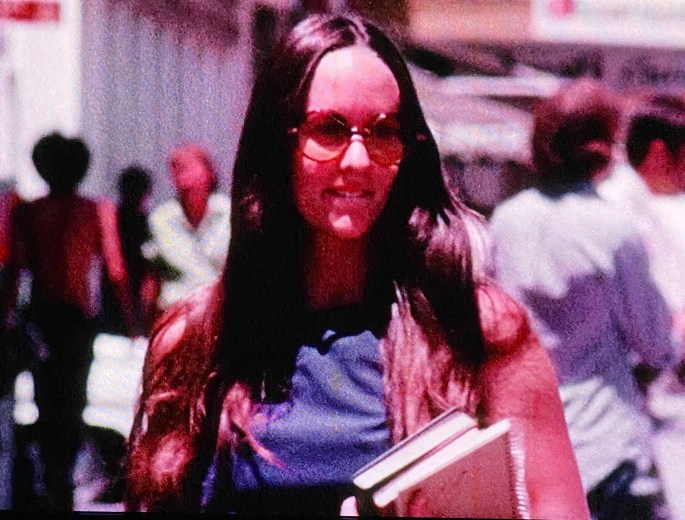
While the film is a free-floating examination of four different couples on either side of the line of unionized domesticity, the crux of the story concerns Mahlon (Mahlon Forman), a young girl who has left her dusty Texas home to the University of Texas in Austin. There, she engages and moves in with David (David Noll), Amy (Amy Lester), Toes (Kim Henkel), and Ron (Ron Barnhart), a group of hippies who live together in a house that becomes possessed by a spirit which enters the house and resides in the basement.

This being 1969 and an independent movie beholden to no oversight, Hooper, working as director, co-producer, writer, special effects supervisor, and camera operator/cinematographer, employs a great deal of cinematic masturbation to get his story across. This is not a complaint, mind you, as most all of it is very clever and some of it pretty awe-inspiring. But the film is very experimental and surreal, ditching traditional narrative for sensory engaging visuals which helps it work wonders in retrospect. If Hooper would have been more concrete and straightforward in some of what he’s trying to say here, it may come off now as quaint or, worse, stupid. But by keeping it experimental at heart and execution, the film challenges the audience to work for it just a little bit and he keeps just enough of it opaque so it will be forever mysterious and charming.

Right from the outset, Hooper aims to show Texas as a place that’s engaged and Austin as a place that’s progressive, inserting a shot of the clock tower where Charles Whitman created much wreckage to reclaim it for the good. If the aim of the Allman Brothers was to show the relaxed and integrated virtues of The New South, Hooper wanted to do something similar for Texas through cinema. In an montage featuring the student war march which is mostly smiles and handshakes with the cops, Hooper preaches an infectious brand of optimistic peace and continues to leak goodwill throughout the rest of the film even if the film subtly deals with the natural tension that occurs with major shifts in life.

What’s kind of astonishing is that although this film only tangentially touches the paranormal as to render that portion of the film forgettable, the movie’s aesthetic is 100% the same as The Texas Chain Saw Massacre, Hooper’s sophomore film that would come five years later. As in that film, Hooper’s ability to articulate the seasonal specificity of that part of the country is utter magic. The heat waves, the thick humidity, and the dusty, dead clumps of vegetation at the feet of still-brilliant green trees are instantly familiar to the region and Hooper’s love for old architecture and victorian-style homes, always hinting at something “else” hidden within, are also palpable.

Hooper likewise captures a natural mood and cadence between his characters that feels so true that it’s almost heartwarming, achieving a kind of southwest Cassavetes vibe in his moments in which the players naturally bounce off of one another with he kind of halting and overlapping thoughts that occur during normal conversation. This also means that Eggshells bears direct resemblance, and was no doubt an influence of sorts, on Slacker, Richard Linklater’s 1990 ode to college town denizens, as the ever shifting points of view and overlapping narrative style shrinks Linklater’s portrait of the whole town of Austin down to the residents of one house where Amy and David hold court while shiftless roommates like Toes and Ron seem to exist in different phases of maturation.

But what of the spirit mentioned before and what does it mean? With what’s given in the narrative coupled with Hooper’s well-done and economical in-camera special effects, it seems to guide the characters into a certain kind of enlightenment like the monolith in 2001: A Space Odyssey, a filmwhich most definitely was an influence on a young Tobe Hooper. And, for certain, the road forward to which it points is a wonderful one even if there is a natural resistance in taking it. The ending suggests that time is up for these folks as we’re headed into a new frontier so they move into spiritual form to influence the next generation. But as the yin to Poltergeist’s yang, Eggshells is the canary in the coal mine as it subtlety warns these free-minded characters who are beginning a new life of pseudo-conformity to avoid getting too comfortable. For a complete submerging of those ideals that makes them unique just might come back to haunt them later.

(C) Copyright 2021, Patrick Crain