Spike Lee’s OLDBOY

Image result for oldboy poster 2013

For a film directed by Spike Lee, written by Mark Protosevich, and starring Josh Brolin, Elizabeth Olson, Sam Jackson, and Sharlto Copley, OLDBOY gets a lot of unwarranted and obnoxious criticism. Of course, the original film is terrific, and a game changing cinematic explosion; as is this film. It’s a reinvention of the remake wheel.

Those who have seen the original film, or know quite a bit about it, know the beats. They know the twists and turns. The remake offers something new and refreshing as it builds upon what made the original film great, only to accentuate it. The third act big reveal is darker, the main character has more of a backstory, and there are newly formed characters that flesh out the story.

Related image

Josh Brolin has rarely been better. He gives a transformative performance as the deplorable Joe Doucett. Within the first few pages of Protosevich’s script, he not only manages to make Doucett unlikable, he makes you loathe him. Yet as the film closes its second act, we begin to root for him, waiting for him to rise up and get his revenge. Brolin is fantastic, he physically and mentally transforms, and it is a marvel to watch.

Sharlto Copley still remains one of the best actors who has yet to reach a broader audience, and he turns a chilling and demented performance that is even more transgressive than the root of the antagonist’s motivations in the original film.

Part of one’s cinematic journey is acceptance. More times than not remakes are immediately cast out of a cinephile’s pallet. Especially when that remake is a film that the highbrow’s hold so sacred and dear as if they were the first to discover it.

Image result for oldboy 2013

The beauty of the remake is that it takes the source material very seriously, even rooting a lot of what is on screen from the original Manga graphic novel. The film isn’t a shot for shot retelling, nor is it a lazy attempt to capitalize on a sexy foreign property; it’s a parallel retelling of an ultra violet and taboo story that most often Hollywood is afraid to touch.

While some may not particularly care for the film, at the very least they should appreciate the craftsmanship and seriousness this film was given and spend less time trying to score points with like minded peers with tunnel vision regarding the original film.

KINO LORBER PRESENTS CHRISTIAN MARQUAND’S CANDY — A REVIEW BY NICK CLEMENT

1

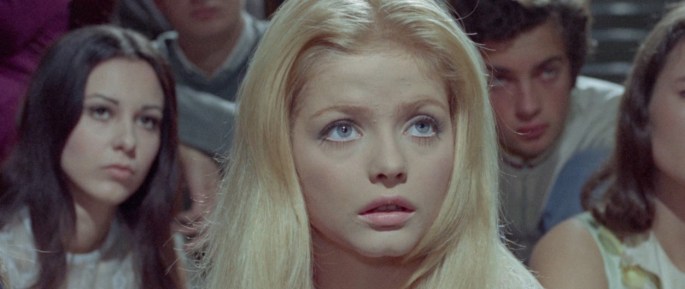
Candy, released in 1968, is a completely crazy little film that offers up so many odd-ball surprises that it’s nearly impossible to describe the bizarre culmination of all of its psychedelic pieces. Directed by prolific actor Christian Marquand and adapted by the brilliant Buck Henry from the 1958 novel of the same name by Terry Southern and Mason Hoffenberg, the film charts the sexual exploits of an alien in teenage disguise, who wanders from one strange encounter to the next, with danger, satire, and off-the-wall-humor mixed into the proceedings. I’ve definitely not seen anything remotely like this one, which at times feels like a farcical precursor to something like Under the Skin, but of course minus that film’s sense of bracing modernity and serious existential themes. The lead role was taken on by Ewa Aulin, who was a former Miss Teen Sweden, and it can’t be denied that she was most certainly extremely photogenic, and perfectly cable of projecting the blank-slate stare and empty emotional behavior that was no doubt required by the filmmakers.

2

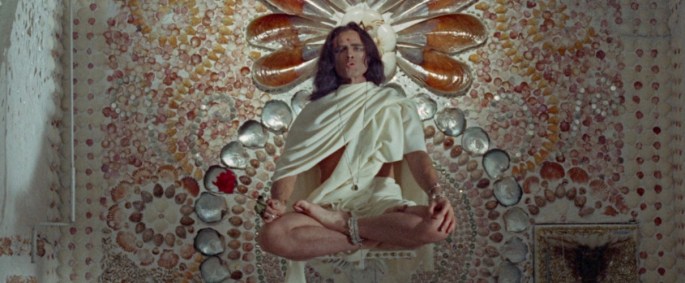
The supporting cast is just ridiculous, with every single actor behaving in a maniacal, over the top, or oddly threatening manner which increases the strangeness factor; look out for Marlon Brando (as a phony Indian guru!), Richard Burton, James Coburn, Walter Matthau, Ringo Starr, John Huston, John Astin, Charles Aznavour, Elsa Martinelli, and Enrico Maria Salerno, with cameos from Sugar Ray Robinson, Anita Pallenberg, Buck Henry as a mental patient, and many more. Dave Grusin’s groovy music sets the stony-acid-retro vibe, Dean Tavoularis’ funky art direction adds lots of flavor, and the too-cool cinematography by Giuseppe Rotunno keeps everything visually interesting and distinctive. Kino-Lorber released Candy on Blu-ray last year, and the picture and audio quality are both strong. There’s also a very funny and informative 16 minute interview with Henry who re-counts the film’s asinine production, as well as trailers, radio spots, and a interview with film critic Kim Morgan. For some reason, I could see Candy playing really well on a double bill with An American Hippie in Israel, or Duke Mitchell’s unintentional masterwork Gone with the Pope.

3

KATHRYN BIGELOW’S DETROIT — A REVIEW BY NICK CLEMENT

2

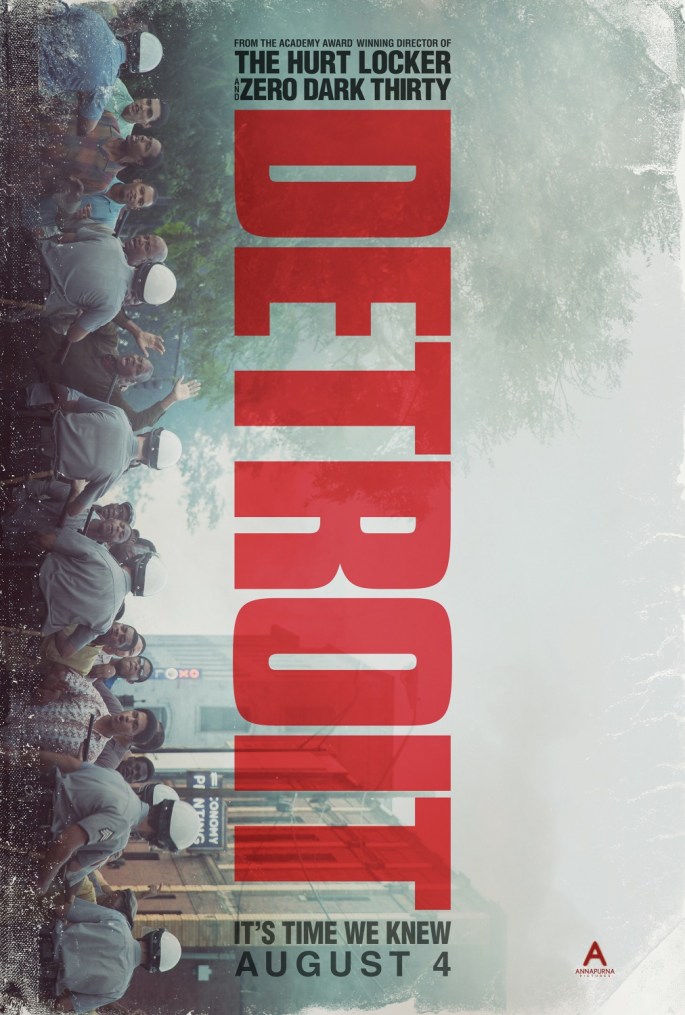
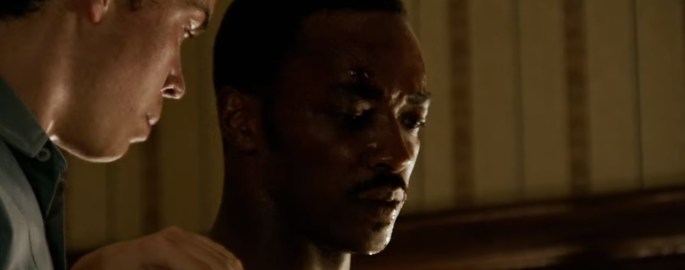
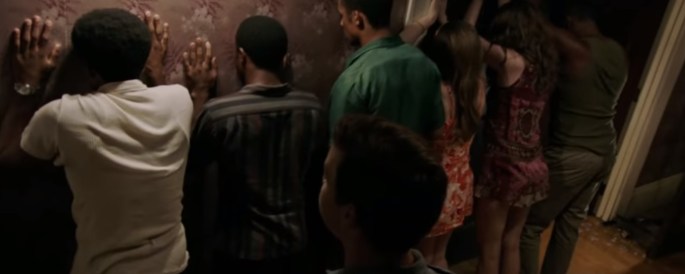
I was so ready for a hug and to see some smiles from my 20 month old son after viewing Kathryn Bigelow’s devastating and purposefully harrowing docudrama Detroit. Working again with screenwriter Mark Boal (they previously created the one-two punch of The Hurt Locker and Zero Dark Thirty, which are two of the best topical thrillers ever), this time they delve into one of America’s most disgusting chapters of racially motivated violence, the Algiers Motel killings and the 12th street Detroit riots of 1967. After an unexpectedly gripping animated sequence that opens the film and dispenses with some societal context, the film gets right to business, and never lets up for a moment. Bigelow’s highly visceral aesthetic style is in full view during Detroit, with expert cinematographer Barry Ackroyd (United 93, Captain Phillips) get up-close and personal with the actors (everyone in the cast is dynamite) during the vividly staged riot sequences which comprise roughly the first third of the film, putting the viewer smack dab in the middle of the action, with a darting sense of spatial focus that both startles due to its seeming randomness, but feels visually coherent in the best way possible. William Goldenberg’s blistering editing makes every single scene count, with the brilliant sound work (those gunshots sound REAL…) adding further dimension to the stylistic package. This film takes a microscopic look at one event but places it in within a larger contextual sense, one that unfortunately feeds into the future.

detroit_xlg

On a production level, the film is simply tremendous, and because each performer was fully dedicated to their role, and because every craftsperson brought their A-game, Detroit feels both intimate and epic in the best way possible. Massive kudos for Megan Ellison’s continuous quest to produce (and now distribute) intelligent films made for adults who don’t care about seeing anyone in spandex. People have been complaining that Detroit is “one-note” and that the extended sequence inside the motel goes on for “too long” or that, rather absurdly, Bigelow and Boal “shouldn’t” have made the movie because “they’re white.” I am not going to entertain any of these idiocies with responses; if you can’t figure out that the ENTIRE POINT of the movie is to suffocate you in terrible and grotesque human behavior without full catharsis, well, I don’t know what to tell you. Bigelow and Boal want to force everyone – black, white, brown, purple, etc – to confront the vile thought processes that informed the senseless and pointless killings in that motel. This is the reason why Detroit exists – to outrage and to make links to our current society where African Americans continue to be targeted by certain law enforcement officers for crimes they didn’t commit. In our appalling Trump era, this film means even more than it ever could mean, so I guess it’s no surprise that the vast majority of ticket-buyers turned a blind eye to Detroit on its opening weekend.

3Detroit is frustrating, and compelling, in the same way as David Fincher’s Zodiac in that there’s no emotionally satisfactory ending, and both Bigelow and Fincher, in their respective films, ratchet up the anxiety and never stray too far from the facts of the situation. In many respects, and rightfully so, Detroit, also like Zodiac, resembles a tightly constructed horror film, because, let’s be honest, the situation that unfolded in that motel was nothing short of horrific for the people being terrorized and murdered. It was Bigelow and Boal’s bold decision to be fully unrelenting with their approach, and I applaud them for it, even if it meant that the filmmaking made me upset and uncomfortable.  I totally understand, accept, respect, and embrace poetic license on the part of filmmaker, and conjecture when needed. It’s abundantly clear that Bigelow and Boal did their research, and since the story that they’re telling has no happy ending, I’m glad they didn’t try to manufacture something that would have felt false. This movie is supposed to knock the wind out of you (I felt gut-punched walking out of the theater) and it’s supposed to make you angry (this is a very grim and volatile piece of work that rarely offers any easy answers). I’m sure I’ll see other films that will entertain me more this year, but I doubt I’ll be as galvanized by any one piece of storytelling the way I was with Detroit.

1

One Man’s Hero


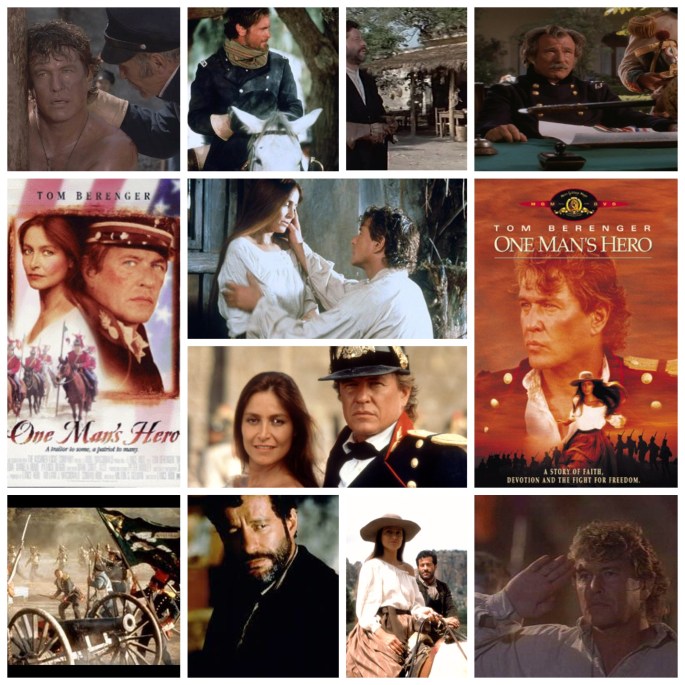
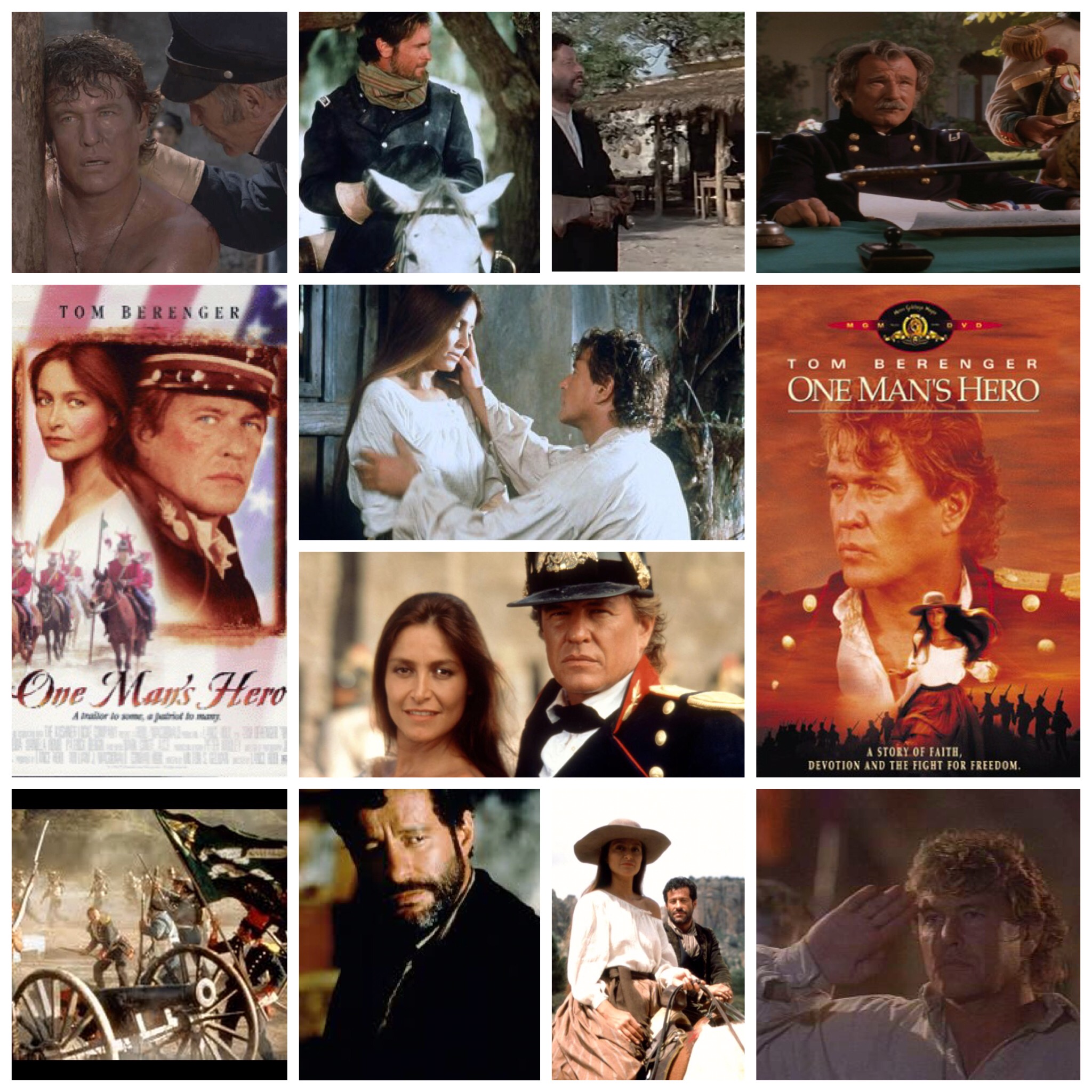
One Man’s Hero takes place during a conflict that doesn’t get all that much coverage in Hollywood, the Mexican American war. With a sweeping Patriot-esque vibe and a world weary starring turn turn from Tom Berenger, it’s an affecting tale that whether or not is based on truth, still packs an emotional whallop. Berenger is Riley, an Irish American who leads his mostly immigrant troupes through racial prejudice beset on them by their own American superiors, just one more obstacle thrown in with the already taxing war itself. Defecting from the troops, Riley is commissioned to lead his men on the opposing force, banding together with fiery, disillusioned Mexican revels leader Cortina (Joaquim De Almeida) and fight for acceptance and survival while navigating both sides of the conflict. Although there are a few impressive battle sequences staged here and there, the film is more about the private and personal wars fought amongst the ranks themselves, the notion that one army isn’t always just focused on the task and can get caught up in internal conflict, which often, including in this case, leads to unnecessary tragedy. Berenger and Almeida go at it fiercely in a love hate companionship constantly tested by the war and their mutual affection for beautiful fellow freedom fighter Marta (Daniela Romo). Underrated Patrick Bergin shows up in a severely powdered wig, Stephen Tobolowsky plays yet another one of his loathsome, letcherous roles and the late great James Gammon is the perfect embodiment of crusty yet compassionate General Zachary Taylor. Not a title that crosses many people’s vision when discussing war films, but a really solid effort despite a lower budget, a story that needed to be told and a star turn from Tom to remember. 

-Nate Hill

Christopher Nolan’s DUNKIRK

Image result for dunkirk christopher nolan

DUNKIRK may just be Christopher Nolan’s most anticipated feature. He roared out of the gate with his Batman trilogy, while making THE PRESTIGE and INCEPTION before completing his Dark Knight trilogy, and then delivering a science fiction film so great that it can only be compared to 2001 A SPACE ODYSSEY. And with Dunkirk, he releases a film with an incredibly lean runtime; yet it is a master class in filmmaking. It’s taut, gripping, and nerve racking.

The best decision Nolan has made in his career lies within the film. Never once are German’s show in the film, all we see are the bomber and fighter planes, and machine gun fire. The entire film is told through the viewpoint of the English and through Nolan’s seminal nonlinear timeline.

Image result for dunkirk kenneth branagh

It’s told by land, through the viewpoint of an English soldier as well as a wonderful turn by Kenneth Branagh as an admiral stationed on the dock at Dunkirk awaiting a fleet of boats to rescue the troops. By sea, through the eyes of Mark Rylance, a well to do Englishman taking his boat across the channel to transport troops. And finally, by air through the guise of Tom Hardy as a spitfire pilot who is running out of fuel while trying to stop the Nazi bombers from killing more men on the beach.

DUNKIRK arrives as Nolan’s best film, but in particular the finest job that Nolan has done as a director. It’s a filmmakers film. Whilst all the actors do an incredible job in the film, there is not a single performance that steals a scene, there isn’t a single actor that chews up the scenery. Nolan assembles a flawless cast, chalked full with the likes of Branagh, Hardy, Rylance, and Cillian Murphy who navigate the film with a plethora of unknown actors that embody the soldiers awaiting impending doom on the beach.

Image result for dunkirk tom hardy

The film is propelled forward by its story, by the events of the narrative. Sure, Michael Caine’s voice cameo, Hardy being a total bad ass in the spitfire, Rylance is the stoic old man who is on a mission for his country, and Kenneth Branagh is perfect in his Laurence Oliver role – and Hans Zimmer’s score is perfection, but none of that is as apparent as the story of hope and determination of the British people.

Perhaps one of the strongest, and least talked about, aspects of DUNKIRK is that it is rated PG-13. Nolan proves that filmmakers don’t need to add more CGI blood or exploding body parts to a film just to get an R rating to make the film feel intense and what life is like during wartime. Nolan proves that you don’t have to make an adult film with an R rating to be effective and engaging or to appease those who flamboyantly pine for an R rated adult film.

Peter Hyam’s Narrow Margin 


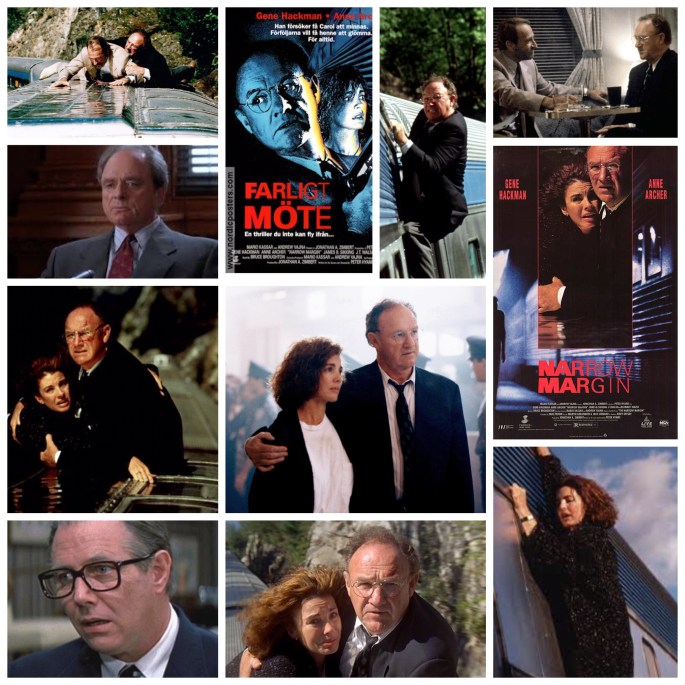
Peter Hyams Narrow Margin is a sleek thriller that attempts to blend courtroom intrigue with a single location white-knuckler, which it does.. mostly successfully. A better way to put it would be that it sandwiches a cat and mouse game set on a speeding train between an intro and epilogue both set in the decidedly more complicated realm of legal escapades. We open as an unfortunate lawyer (J.T. Walsh in a too brief cameo) is assassinated by the mobster scumbag (Harris Yulin, creepy as ever) he had shady ties too. A terrified Anne Archer hides in the shadows, witness to the murder, and therefore a valuable asset to the dogged prosecutor (Gene Hackman) who is trying to bring the kingpin down. The two of them are ambushed on a routine transport via helicopter and escape onto said train, and here’s where the narrative cops out just a little bit. Almost the entire rest of the film is spent on the train, an extended diversion of a set piece that steps in for what I thought would be a more cerebral battle of wills between these factions, in court and out. It’s not a huge deal, I was just expecting a little more, and the bits at either end of the film stand as my favourite sequences. Hackman plays stubborn like no other, having both literal and figurative tunnel vision here, the only one thing he cares about being the life of his witness. They’re harried at every turn by corrupt officials of many kinds, and pursued by a mystery woman (Susan Hogan, my acting mentor in college no less), while the train hurtles through the gorgeous Canadian wilderness, captured pristinely by Hyam’s lens as he dutifully does his own cinematography, the dynamo. It’s a thrilling little piece that benefits from Hackman’s spirited work, the photography and editing backing it up nicely.  

-Nate Hill

DAVID LEITCH’S ATOMIC BLONDE — A REVIEW BY NICK CLEMENT

1
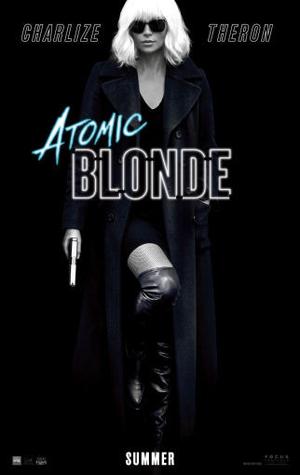
What a shame that audiences, and males from the age of 17-100 in general, would rather play tiddly-winks and video-games or whatever else it is that they’re doing than go out and support something as ridiculously cool and sleek as Atomic Blonde. This movie both IS and ISN’T what they’ve been selling in the propulsive ads. YES: You get extra-sexy Charlize Theron locking-lips with other gorgeous women and shooting lots of people in the face. BUT: You also get a plot that’s more in line with Tinker Tailor Soldier Spy than a routine Bond/Bourne mission (Atomic Blonde positively trounces Spectre, and I found it even more enjoyable than Jason Bourne). All of this should excite anyone who enjoys watching R-rated action films and beautiful women fooling around with other beautiful women. In all honesty, the action genre has sort of been leading up to this gigantic piece of cool-blue silliness, and because the director David Leitch (John Wick, the upcoming Deadpool 2) and writer Kurt Johnstad (300, Act of Valor) have such an uncommonly game star in Theron, who was seemingly up for anything, the entire film takes on both a satirical bent and a traditional explosion of slickly choreographed fighting sequences that have been shot and cut for maximum visceral impact. The film is based on the 2012 graphic novel by Sam Hart and Antony Johnston, and there’s certainly a neo-superhero vibe to the entire piece, just as you’d find in the John Wick films and The Raid and its unrelentingly insane sequel.
2
We’ve seen this plot before (a list of undercover operatives goes missing and bodies start dropping and nobody can be trusted) but it doesn’t matter, because the scenery is so wild, the atmosphere is so sexed-up, and the action is totally insane, especially during one particular set-piece, which shouldn’t be totally spoiled, except to say that it’s the best of its type in a very long time, and the most violent piece of action scenery from Hollywood in many years, coming close to certain parts of The Raid 2. Everyone in the having-fun-and-collecting-a-paycheck supporting cast are all aces, especially James McAvoy as Theron’s sketchy contact, John Goodman as an FBI agent, Til Schweiger, Eddie Marsan, Toby Jones as Theron’s handler, and the gorgeous Sofia Boutella as Theron’s love interest. The convoluted but still coherent plot is more dense than you’d expect, but it essentially serves as a clothes-hanger for the action-sequences. But because all of it has been done seemingly for real, and because Theron seems so committed (she produced and developed the project for five years), the entire piece feels less cynical than one might imagine. When I first heard of this film, I couldn’t believe what I was hearing – an ultra-violent spy thriller with Charlize Theron kissing girls on the side? And yes, while the heterosexual gaze is quite in evidence during this film, there’s something both progressive and illuminating about its wants and desires as a piece of wide-audience entertainment. But I guess it scared too many people off, as the box-office results haven’t been too impressive, despite solid critical support.
ABL_Tsr1Sht19_1Name_RGB_1
Aesthetically, the film is lightning-quick and exceedingly photogenic, with all department heads getting a chance to show off in a big way and yet on a somewhat limited budget (reports indicate that $30 million was spent bringing this tale to life). Jonathan Sela’s smart widescreen lensing opts for long-takes and spatially-aware wide-shots which allow the viewer to understand where all of the various threats are coming from, while also creating a balletic-mystique that harkened back to some of the bravura camerawork found in John Woo’s Hard Boiled. Sela has also shot Transformers: The Last Knight, John Wick, and Law Abiding Citizen, and will be calling the shots from behind the camera on Deadpool 2. The nearly 10-minute one-take fight must be seen to be believed. The pulsating musical score by Tyler Bates (Watchmen, Guardians of the Galaxy) amps up the tension, especially in tandem with the razor-sharp editing by Elisabet Ronaldsdottir (John Wick, Contraband), who opts for clean-cutting instead of an overly-frenetic approach to the mise-en-scene. The cold-war setting also gives the film a chilly, silvery-blue visual palette, with production designer David Scheunemann (working again with Leitch on Deadpool 2, art director on Inglorious Basterds and Cloud Atlas) giving the film a crumbling texture which makes thematic sense within the time period. It’s a fabulously designed movie, and if you’re looking for some fantastic summer movie fun, look no further than Atomic Blonde.
3

Prieto’s ‘Kidnap’ Is A Timely Film

Halle Berry demonstrates time and again how magnetic her presence is on the silver screen.  She made her feature film debut in Tony Scott’s The Last Boy Scout in 1991.  She has won an Academy Award for her lead performance in Monster’s Ball and has been a Bond Girl, the epitome of actresses the world over.

It is safe to say that she is an established actress and entitled to make her own passion projects.

Unfortunately, the ‘passion’ and ‘project’ did not congeal in her latest film, Kidnap.

As the film opens, we meet waitress Karla Dyson who is as witty as she is stressed.  She is hurried, with a sense of purpose while her son Frankie sits patiently at the counter, waiting for his mom to be relieved so that they can spend the day at the park.

Knate Lee’s script starts out quite strong as we get glimpses into Karla and Frankie’s lives.  Karla is painted as a tough-as-nails mom while Frankie is bubbly and outgoing.  They are struggling through a bitter custody battle following Karla’s divorce from Frankie’s father.  Karla has a rather frank conversation with Frankie about making friends with his dad’s girlfriend.  Lee uses this point to paint stability in the fractured family while Prieto’s use of home videos over the opening credits goes to reinforce how far Karla will go to protect Frankie.

Once they get to the park, Karla becomes extremely distracted leading to the crux of the film’s story.  The interesting thing about the actual kidnapping is that Lee and Prieto intentionally force us to watch it along with Karla.  Circumstances force Karla to chase after the abductors.  As solid as the chase is, it is fraught with unnecessary camera angles.  Within these camera angles, Berry projects her way through the chase, demonstrating her determination, but it falls short.  It is important to note that Berry’s performance is as strong as it has ever been and her determination shined through.  In addition to her performance, her hair stylist deserves kudos too.

Lee introduces so many characters and story threads that come figuratively out of the swamp that they either get jumbled up or get lost amongst the never-ceasing chase.

Speaking of the never-ending chase, director Luis Prieto manages to put the tension into overdrive fueled by a red Chrysler Town and Country ripping through the Louisiana Bayou.  Someone at Chrysler is probably figuring out just how to market the Town and Country’s brains over the brawn of a third generation Ford Mustang.  Or else they’re trying to reassure worried moms that their products really can’t maneuver as quickly as depicted in the film.

Prieto and cinematographer Flavio Martinez Labiano find ways to distort the image with odd camera angles making it appear as if they were trying to extend Karla’s perseverance, but instead became distracting.  Labiano did manage to capture a number of gorgeous overhead and aerial shots really enhancing the Louisiana Bayou that is very rarely seen.

The stunts really shine here and Andy Dylan’s stunt team does deserve recognition.  It’s very rare for a film to contain so many driving stunts, even with the budget this film had.  The non-driving stunts also had a physicality about them that rivals a number of action movies.

Kidnap is a valiant effort to tell a modern take on the state of families and society in general.  While it is very clearly a B-level movie, Berry’s convincing performance carries the film so far before it completely deteriorates, overwhelmed by a projected chase and a number of missed opportunities.

Kathryn Bigelow: Five Favorite Films

In their continuing series, Kyle and Ben sat down this week to discuss their five favorite Kathryn Bigelow films.  When you’re simmering over the controversy that is sure to arise from her latest film Detroit, reflect on this journey through her earlier works.

1200.jpg

Near Dark

960.jpg

BEN: It’s funny.  I hadn’t seen this film prior to this year, but I’m glad I got to experience it on a theater screen.  Bigelow’s take on vampires is every bit as fun as Schumacher’s The Lost Boys.  Where Schumacher intentionally brought in a sexual overtone, Bigelow demonstrated her action chops while managing to combine a dramatic story.  Her characters feel real, thanks to her relationship with James Cameron.  Many of the actors he successfully used in prior films make an appearance here including Lance Henriksen, Jeanette Goldstein, and Bill Paxton.  Their respective performances really drive the dangerous side of vampirism.  Adrian Pasdar is Caleb, who unfortunately falls in love with Mae (Jenny Wright) and as their love grows deeper, Mae’s dark secret comes to light.  Tim Thomerson, who made a splash in smaller movies like this, plays Caleb’s dad.  His relentless concern is really the driving force in this film.  I thought it was a lot of fun to see Thomerson and Henriksen square off in the finale.  The film is dated and cheesy, but it cemented Bigelow’s status as a cult-action director with interesting stories to tell.

KYLE: I don’t think it’s cheesy so much as a product of its time.  Bill Paxton gives one of the best performances of his career in this.  I love how it fuses the western genre with the bloated vampire catalogue to create an unforgettable experience.  It’s also shot remarkably well given the time.  One of my favorite parts is that the word “vampire” is never said, yet the viewer instantly knows that this is a vicious band of predators.  This was also Bigelow’s feature debut and it is the template for all of her films.  She’s a filmmaker who is interested in relationships and characters, and how the often overlooked ingredients are usually glossed over in favor of spectacle.  It’s what makes Near Dark work so well.  My only complaint is that the finale is a tad…abrupt given the setup, but regardless, this is a cult classic for all time.

Point Break

1300bef086df7be0993d1419961b5a66da70ca0666f3df6a526dd3c24c4e75bd.jpg

BEN: I was too young for this movie, but the allure of this film was just overwhelming.  It still is.  Based on W. Peter Illiff and Rick King’s story, Bigelow’s action sense combined with dramatic tension truly drive this poetic cult classic.  Where she tried to bring in a troupe of actors in Near Dark, here she starts fresh with Keanu Reeves, Patrick Swayze, Gary Busey, and Lori Petty.  The story is amazing, Donald Peterman’s cinematography is truly unmatched as he had to combine a wide range of shots from aerial jumps to bank heists and a lot of foot chases with handheld cameras.  As dramatic and action-oriented as the film is, it is just plain fun.  The actors all looked like they had a blast, especially Gary Busey:  “I don’t know why the agency has to have me train some snot nosed quarterback punk named Johnny Unitas.”  I could go on gushing, but you get the idea.

KYLE: Quintessential 90’s action.  The homoerotic (over)undertones are pure bliss.  I think one of my favorite things is the aesthetic.  Bigelow takes the surfer, California subculture, and builds it into a living organism.  I love how she takes classic crime and noir tropes and updates them for the 90’s.  It is also a testament to her skill how she is able to use both Reeves and Swayze’s well known flaws to her advantage.  This is a wonderful example of a director understanding the limitations of her cast and using them as strengths.  Busey is the standout, bringing his usual captivating insanity to bear and his performance is wonderful throughout.

Strange Days

fiennes-bassett-strange-days.jpg

BEN: Before Virtual Reality exploded, Bigelow gave us Strange Days.  I hate to say this, but I don’t remember the movie very well.  I know I saw it when it first came out on home video and I know that the cast is a veritable who’s who.  I remember it being a bit noir-ish in its Sci-Fi approach.  Ralph Fiennes really lit the screen up while Angela Bassett just drove the story.  I also remember Matthew Leonetti’s camerawork, especially the POV shots during the SQUID sequences.  This was Bigelow’s biggest commercial failure at the box office and from what I understand it nearly derailed her career.  I guess I need to see it again.

KYLE: I think this is Bigelow’s greatest film.  The entire intro sequence is some of the best camerawork I’ve seen in her films.  It is most definitely a neo-noir and probably the best science fiction noir since Blade Runner.  I also see a lot of parallels with Detroit, which I’m screening tomorrow.  Fiennes is just outstanding as the underdog and I love how there’s not a lot of action.  His chemistry with Bassett is remarkable, and as you mentioned, she’s the center of this formidable machine.  Juliet Lewis and Tom Sizemore are also amazing additions, with some of the best performances of their rocky careers.  It’s also a great dystopian film that is extremely relevant of the current climate in America.

The Hurt Locker

maxresdefault.jpg

BEN: As with James Cameron, Bigelow started to form her own troupe of actors, namely Anthony Mackie and Ralph Fiennes.  She also would continue to use real-life situations, as she did in Strange Days, to influence her future narratives.  And, thus we begin her working relationship with Mark Boal, a freelance journalist who used his real-life experiences to write the script.  Set during the Iraq War, The Hurt Locker features Jeremy Renner, David Morse, and Guy Pearce as part of an Explosive Ordnance Disposal team who are trapped by insurgents.  Boal’s story and Bigelow’s direction focus on the psychological trauma which results from the stress of combat.  The film would go on to win best director for Bigelow and best picture for the film, a distinction that Bigelow holds as the first and only woman to have won both.  Barry Ackroyd’s cinematography firmly places us in the middle of the action without losing the sense of perspective.  It’s been awhile since I’ve seen this one too.  I guess I’m due for a revisit.

KYLE: My favorite scene is when Renner and Mackie are trapped by snipers and Mackie is on the Barrett.  When Renner gives him the capri sun to drink, virtually ending their feud through an act of camaraderie is something you don’t see often in war films.  That is the genius of this film.  On the surface it’s a war film, but truly, at its heart, it is about the trauma that our armed forces experience every day when in combat.  The cinematography is outstanding.  You are, as you mention, right in the thick of things.  I remember not breathing for the duration of my screening and I was thinking about the film, about its implications on modern warfare, for days after.   While it’s not my favorite of hers, I think it might be her best made film.

Zero Dark Thirty

zero-dark-thirty-2012-04.jpg

BEN: And this is why I enjoy these conversations, Kyle.  Your insight into these films is spectacular.  Our final film is a doozy and it created such a firestorm over its authenticity with the federal government at the time of its release that Julian Assange probably could have leaked it and it would have attracted less attention than Bigelow received for Zero Dark Thirty.  Again written by Boal, who used information he had gleaned from a speech given by former CIA director Leon Panetta during a ceremony is the story of a fictional CIA agent played by Jessica Chastain who is on the hunt for Osama bin Laden after gaining new intel which spurred on the real-life incursion which brought the Al-Qaeda Emir down.  Jason Clarke, Joel Edgerton, James Gandolfini, Edgar Ramirez, Mark Strong, and Kyle Chandler co-star.  Greig Fraser’s cinematography in the desert is amazing as are his nighttime shots, especially the hand-held action during the final raid.  Thirty represented Megan Ellison’s first major production credit as her Annapurna Pictures independently financed the movie.  This film created quite a controversy with audiences as well, but it was well-received and was recognized with Bigelow’s second directorial Oscar nomination.  Chastain would win the Best Actress Golden Globe and cemented her work in A Most Violent Year, Interstellar, The Martian, and last year’s spectacular Miss Sloane.  She is as tough as they come.

KYLE: I think Jason Clarke was robbed of a supporting nom.  His scene with the monkeys is heartbreaking, and a simple, quiet symbol of the madness of covert warfare.  Chastain is cold, but intimidating in every scene.  I love how the entire film is an extended procedural, with the payoff being the hand held madness of the compound raid.  Hand held apparently plays a big part in Detroit, and I can’t wait to see it.  I think the aspect of this one that works so well is how it is very removed.  Outside of the chilling intro, with actual calls from victims in the towers, the entire film is sterilized; presenting a possible narrative on how the most wanted man in the world was captured.   This is Bigelow at her finest.  Meticulous, artful control and searing, unapologetic presentation.

BEN: Thank you for the amazing insight, Kyle.  A pleasure as always.  Next week we celebrate the life of Jeanne Moreau and a special review of Jaques Demy’s The Umbrellas of Cherbourg.

KYLE: I’m looking forward to it!   Also, a shout out to K-19: The Widowmaker.  While it didn’t make the list, it’s a fun film for sure.  See you next week!


960 (1).jpg

ANDREW BERGMAN’S THE FRESHMAN — A MINI-REVIEW BY NICK CLEMENT

3

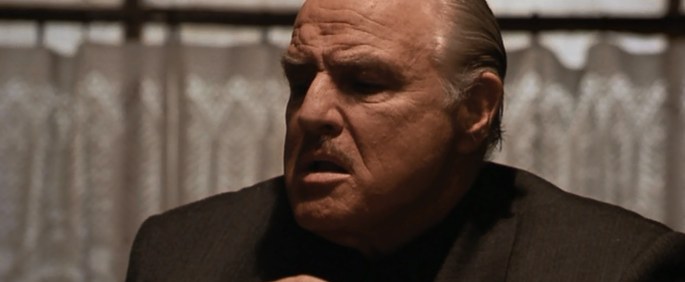
I could watch the hysterical comedy The Freshman any day of the week; it’s just one of those comfort-zone comedies that hits its targets, doesn’t over-extend itself, and knows how to land joke after joke with sly comic timing from everyone in the stacked cast, most especially Matthew Broderick and Marlon Brando, in what’s easily his funniest performance outside of The Formula. Written and directed by Andrew Bergman (Soapdish, The In-Laws, Blazing Saddles, It Could Happen to You, Honeymoon in Vegas, Striptease), The Freshman was released in 1990, and was a solid hit with both critics and audiences, but I get the sense that this one really caught on in the Blockbuster-era. It also looks very handsome because William A. Fraker was calling the shots as cinematographer, and he basically did nothing but excellent work his entire career. Also, TriStar Pictures POWER and scene-stealing Bruno Kirby POWER. And let’s not forget about that damn Komodo dragon! And honestly, it’s worth repeating – Brando is a RIOT in this movie, cleverly sending-up his immortal role from The Godfather, with everyone in the cast totally in on the joke and running wild with it. If you’ve not seen this one in a while, it’s definitely worthy of rediscovery.

1