Undercover Blues

Undercover Blues is about as light, breezy and fluffed out as a film can get, to its own detriment in fact. I love a good lighthearted comedy but unfortunately this one tries to be so carefree and leisurely that it comes across as… well just that, something that feels like it’s trying too hard to achieve it’s vibe instead of just naturally arriving there. Dennis Quaid and Kathleen Turner play former spies who are on vacation in New Orleans, trying to escape the espionage life for awhile so they can raise their baby. When a chance encounter with a hopeless mugger named ‘Muerte’ (Stanley Tucci in a performance that has to be seen to be believed) puts them in the spotlight of their former boss (Richard Jenkins) they are tasked with finding and taking down an easily distracted Euro-trash villainess (Fiona Shaw) who is selling plutonium rods to terrorists.. that’s the loose version anyways, the film doesn’t really have much of a grasp on the reins of its own plot. Pretty soon two dogged detectives are after them, played by Obba Babatunde and the always scene stealing Larry Miller who is doing a voice/accent here that is so bizarre he sounds like he walked out of the looney toons. There really isn’t too much romantic chemistry between Quaid and Turner save for one brief scene and for all their cavalier swashbuckling and attempts at charisma they seem curiously lifeless. Tucci is anything but though as this ridiculous petty criminal, barking out childish threats with a priceless Spanish accent and spicing up the proceedings with his coked up manic energy. Watch for familiar faces including Tom Arnold, Jan Triska, Marshall Bell, Dennis Lipscomb, Saul Rubinek, Chris Ellis, Olek Krupa and a very young Dave Chapelle. I wish I liked this more but it just didn’t have substance or anything to grab ahold of. It’s fine to have easy breezy, fluffy action comedies but there’s still gotta be an interesting story, strong character dynamics and a genuine sense of danger or I’ll just lose interest. This was a great big meh. If you want to see how an effective lighthearted New Orleans caper with Quaid is done, check out The Big Easy with him and Ellen Barkin, an absolutely wonderful romance cop flick that feels genuinely laidback without having to try SO damn hard to convince us it is, like this pot of watered down gumbo.

-Nate Hill

THE JACK HILL FILES: BLOOD BATH (1966)

If I were a filmmaker, I would kill for the ad campaign American International afforded to Blood Bath. One could stare for hours at its gorgeously macabre one-sheet which overflows with all kinds of promise for the brave audience member who would dare pay a ticket to witness the horrors ahead. Maidens being lowered into a pit of boiling blood while others are chained to a wall amid a mass of skeletons and cobwebs all behind a wrought-iron portcullis? Who’s not up for that ride?

Naturally, it being an American International production, only some of the ad campaign for Blood Bath was going to be true. There’s certainly a pit into which maidens caught up in suspended net traps could be lowered but, unfortunately, they’d literally get a wax bath as there is no blood in sight. Nor, now that you mention it, are there any other maidens shackled to the walls. And you can totally forget the skeletons. Not sure what’s going with them in that one-sheet.

In fact, fuck the skeletons. One could hardly be faulted for not being sure what’s going on with anything in Blood Bath at all. For instead of it being the next feature in Jack Hill’s career after his remarkable debut, Mondo Keyhole, Blood Bath was a salvage job given to Hill and Stephanie Rothman, another budding young talent in Corman’s universe. A true Frankenstein’s monster of a film, Blood Bath, stands out less as a crucial piece of either Hill or Rothman’s resumes and more as its own summer college course on Roger Corman and how he could take a convoluted, middling art-heist thriller named Operation: Titian and turn it into three other movies, two of them vampire films.

I shall not spend the day going through the howzits and whyzits of the Roger Corman School of Preserve and Recycle that would chronicle the history of Operation: Titian and how it wound its way into first becoming Portrait of Terror, then Blood Bath, and, finally, Track of the Vampire. That story will never be better laid out than in author Tim Lucas’s fascinating and painstakingly detailed, feature-length video essay, The Problem With Titian, included in Arrow’s deluxe Blu ray release of Blood Bath. Just understand that Roger Corman was a man who was going to realize the maximize value of an investment, no matter what he had to do to realize that value and without the slightest regards to how ugly the vehicle that delivered the value looked. For, if he did, we would not be talking about Blood Bath at all and, instead, how Operation: Titian is a fine thriller that’s overly complicated and disjointed but not without some nice lighting and gorgeous Dubrovnik locales. The end.

But we’re here to talk about Blood Bath, the third attempt to make something out of Operation: Titian and, up until then, the most radical of the repurposing of the original footage. For out of Blood Bath’s paltry running time of 62 minutes, no more than 8% of it originates from Operation: Titian. Instead, it keeps a few moments of exterior architecture shots and reuses a few shots of Titian’s prowling, cape-adorned figure for its own needs, but all sprinkled throughout a fairly new narrative curiously of extensive reshoots by Hill and, later, Rothman.

Blood Bath chiefly rethinks William Campbell’s madman from Operation: Titian and Portrait of Terror. Where he was but an imposter to the Sordi name in those two films, he is part of the actual Sordi lineage in Blood Bath. In Titian and Portrait, Sordi was the patriarch to a cursed clan and commissioned the artist Titian to paint a portrait of his doomed wife. In Blood Bath, Sordi is transformed into an artist of historical note; just as popular as Titian but whose name was destroyed with his work when he was burned at the stake as a heretic. And according to Lucas’s video essay, Hill’s original film had Campbell succumbing to an obsessive madness which caused him to kill the models that would pose for him. Obsessed and possessed by the spirit of Melitza, Sordi’s black magic-riddled lover from the past, Campbell’s mania would eventually spin out of control by the end of the film as the spirits of his victims would emerge from their wax cocoons and overtake him in a moment that would predate Hill’s Spider-Baby by a couple of years and William Lustig’s Maniac by many more.

Some of this footage still exists in Blood Bath. But what also exists is a bizarre, left-field graft in which the Sordi lineage was ALSO cursed with vampirism, thus allowing William Campbell’s mad-artist to also dissolve into a prowling, cape-adorned (see above) vampire (who, it should also be noted, looks nothing like William Campbell). New characters are added to the mix as the vampire story, wholly a concoction of Rothman’s, created a new branch in the narrative that needed some exposition. And it goes without saying that Stephanie Rothman’s contributions to the film, no matter how well-intentioned or commercially necessary, sink the film. And this is even more the case with Track of the Vampire, the longer television cut of Blood Bath. Adding even more incongruous pickup scenes to the already wobbly story and placing Patrick Magee’s character, who appears rather puzzlingly only in corpse form in Blood Bath, back into the mix (through the magic of poor ADR and editing, he is transformed from the lethal art thief in Titian to a cuckolded husband in Track), Track of the Vampire is the sad, final end to the long journey of Operation: Titian.

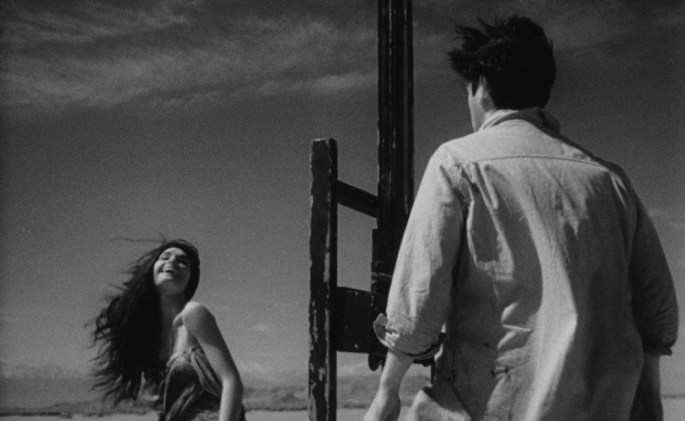
Audiences looking for anything resembling a traditional Jack Hill film will likely find little to mine in Blood Bath. As mentioned before, the film’s ending has a surprisingly creepy vibe that is in line with Spider-Baby and the appearances by Sid Haig and Karl Schanzer all give it a lighter touch and familiar feel than what was served up in Operation: Titian or Portrait of Terror. Additionally, Hill’s dreamy, impressionistic desert flashbacks give the film the same kind of artistic edge found in the grime of Mondo Keyhole. But, unlike that film, there is a lack of interesting or strong female characters here. There is a hint of sexual progressiveness in Lori Saunders’s ballet dancer, Dorean, who wants to sleep with Campbell’s Sordi in the worst way, but he is impotent, a factor in his mania. This harkens back to the characters in Mondo Keyhole but without any kind of satisfying payoff in terms of the Dorean character. In Mondo Keyhole, the female protagonist broke free of her untenable and unhealthy relationship with an abuser and simultaneously found herself in a wild, celebratory orgy of free love. Here, Dorean gets rescued by Karl Schanzer’s character as if she were just a cliched damsel in distress.

In the end, Blood Bath was an assignment for the two fledgling filmmakers more than it was a movie. Both Hill and Rothman would go on to craft bigger and better things; Rothman moving on to make The Student Nurses, one of the better “Nurse Movies” for Roger Corman, and The Velvet Vampire, a fun AIP attempt at making a Jess Franco film. Hill would reassemble some of the cast for Blood Bath and move almost immediately to Spider-Baby which would become the granddaddy of all “backwoods family” horror films and further cement his legacy as a master of genre cinema with a little more on his mind than most.

(C) Copyright 2021, Patrick Crain

Stephen King’s Mr. Mercedes

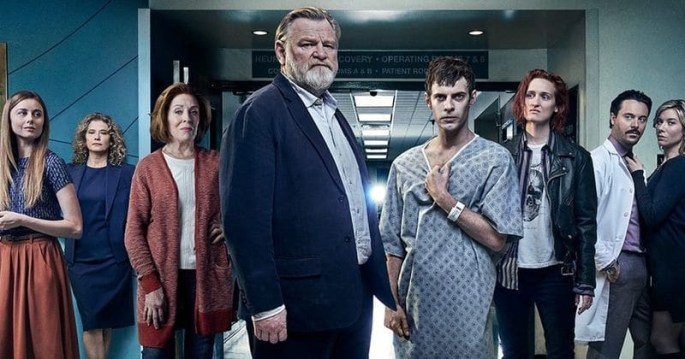
I had been dimly aware for some time that a Stephen King book called Mr. Mercedes had been adapted into a series, and I was vaguely versed in the plot being about a detective hunting a serial killer who kills people with the titular automobile. What I *didn’t* know was that this is a whole trilogy based deeply around the detective character, a cantankerous old school Irish cop named Bill Hodges played by Brendan Gleeson in what has to be the performance of his career. What I most definitely did not expect is what a deep, dark, psychological sprawl this saga was going to be, it’s much much more than just a cop versus killer thing and goes to places of boundless imagination, starkly nauseating horror, effective humour and the kind of development and dynamics that have me deeply missing these characters now that I’ve finished the whole series run. Hodges is a retired detective in a run down, really sad suburb of Ohio who never caught a demented maniac called Mr. Mercedes, who brutally ran the car through a crowd of people at a Jobs Fair and killed several including a mother and her newborn. That’s the kind of crime that haunts an entire town, with Bill at the epicentre of it all, and when the killer starts to taunt him, send him mocking emails and threaten those around him he loves, the hunt is on again. I’m not sure what I can say about all three seasons without spoiling too much so I’ll keep it vague but I do want to outline some of these wonderful characters. Bill isn’t alone in his fight and as the story unfolds he very organically puts together this team of family, friends and people he cares deeply for that all help in some way to bring this monster down. They include his neighbour, computer genius and lawn mowing guru Jerome (Jharrel Jerome), his other neighbour and longtime high school teacher Ida (Holland Taylor), his former partner on the force Pete (Scott Lawrence), the wonderful, anxiety ridden and cosmically intuitive Holly Gibney (Justine Lupe) and many, many others. The killer himself is a twisted up piece of work named Brady Hartsfield (Harry Treadaway) and this isn’t a spoiler as the show starts off showing you exactly who he is and how he operates, a sad little freak with a booze soaked mom (Kelly Lynch at her most disheveled) who likes to bang him, he’s someone you could almost feel sorry for if he wasn’t such a little snot-fuck psychopath. Stemming out from Brady are some equally despicable antagonists including damaged goods asshole Morris (Gabriel Ebert), revered author and mean spirited local legend John Rothstein (Bruce Dern) and many other characters dotting the collective moral compass played by the likes of Mike Starr, Brett Gelman, Nancy Travis, Jack Huston, Glynn Turman, Mary Louise Parker and Star Trek’s Kate Mulgrew as quite possibly one of the most reprehensible villains King ever dreamed up, just the vilest bitch ever. I love a good King story because he often starts off with a concept so simple, so primal, so elemental, and builds from there to places you could never have dreamed: a gunslinger travelling across a desert, a writer caretaking a derelict hotel for the winter, or a cop hunting a vehicular mass murderer. The first season shows us exactly that, and by the time the show ends you’ve travelled worlds both inside and outside the mind, met hundreds of characters of every variety and experienced a story not limited to the bounds of what’s considered narratively traditional but exists outside the box in every sense of the term. He’s also uncanny at creating, devolving and nurturing characters that you care deeply for; his writing and Gleeson’s performance as Bill Hodges is one for the books, just this brittle old Irish goat with a pet tortoise in his backyard, a heart of gold in there somewhere beneath all the whiskey fury and years of hurt and frustration who learns to find himself again and take down some true evil, not only one of the finest characters I’ve seen put to the screen but a true force of good and one of the key lynchpins of light and love in the expansive Stephen King multiverse. Sensational experience from beginning to end.

-Nate Hill

THE RUSS MEYER FILES: WILD GALS OF THE NAKED WEST (1962)

Russ Meyer has a true ebb and flow when it came to his nudie cuties. For every advance forward, there was a trepidation followed by a slight retreat. Eve and the Handyman improved on The Immoral Mr. Teas in a fundamental way by ditching the multitude of women in favor of one central female character. Erotica, Eve and the Handyman’s follow-up, cycled backwards in terms of subject matter but found some fresh and creative photographic advances that would serve him well throughout the remainder of his career.

Wild Gals of the Naked West was Meyer’s next film in his nudie cutie cycle and his penultimate effort in the subgenre (excluding 1964’s Europe in the Raw, a film better classified as a nudie travelogue). Moving back towards the strengths of Eve and the Handyman while also beefing up the comedic bits strung along the length of the film, Wild Gals of the Naked West is probably Meyer’s most successful blend of his type of raucous comedy in the service of a mostly plotless phantasmagoria of tits and ass.

From the jump, one of the clearest differences between Wild Gals and the Naked West and the nudie cuties that came before it is the absolutely gorgeous photography that populates the opening narration. Beginning with a brew of stunning horizons and landscapes interspersed with quickly-cut dutch angles, Meyer shows the high level of his talent by taking us out of the muddy cricks and swimming pools of his previous work and expanding his visual world outward to capture some truly painterly compositions of the western vistas. Meyer cleverly maneuvers around the film’s microbudget by utilizing symbols and western iconography to stand in for the lack of action; the first-person perspective used in the ghost towns and broken down structures feel like the spirits of the past that are somehow still alive.

In fact, so beautiful is the opening to the film that it finally draws attention to one of the biggest elephants in the room when it comes to Meyer’s work; in short, this is the first film in his filmography where watching it creates a general sadness when you realize that, due to Meyer’s lack of care in the preservation of his own work either during his natural life or in a testamentary capacity, these movies will likely never get upgraded beyond their current full-frame video scans and will eventually be lost to time due to almost-certain deterioration of the original material. It seems unthinkable that this is truly the case but… well… there’s a reason Martin Scorsese fights so hard for film preservation.

Not quite a series of episodes as his previous three features, Wild Gals of the Naked West tries for something that resembles a plot. Sure, it’s simple and padded out by copious post-credit narration before the wraparound framing device involving a storyteller is introduced, but the bedrock of many of Meyer’s themes he’d take with him into his Gothic period begin to sprout and take form just as some of his more sophisticated framing devices began to pop up in the previous year’s Erotica. In Wild Gals of the Naked West, we are spun a tale by a fourth wall-demolishing old man (Jack Moran), still living among the ghosts of a dilapidated western town that fell into rack and ruin due to too much goodness. But it wasn’t always like that, according to our faithful raconteur. Hell, once upon a time, the town was so marinated in sin that they dared not even give the location a proper name.

And it is here is where the basic story comes into play as the film functions as a before and after, the tipping element being the introduction of a do-gooder Stranger (Sammy Gilbert) who descends on the town with designs on pulling a reverse High Plains Drifter by painting the town virginal white. Set up in the front half with wanton hedonism at a breakneck pace only to be knocked off in the back half as The Stranger executes his righteous morality, Wild Gals of the Naked West unwittingly figured a way for Meyer to indulge in as much bawdy sexuality as he wished as long as he laced it all with a light dose of trite morality. Given how much play both the dopey, square-jawed hero and the tongue-in-cheek pontifications on freedom, ethics, and what-have-you factored into so much of his later work, it’s not inappropriate to see Wild Gals of the Naked West as one of Meyer’s most substantially consequential nudie cuties; the yang to Eve and the Handyman’s yin.

The film is additionally blessed by being well-acted and the imagery is wildly modernistic in its approach, both of which cause the film to really pop. And even if the film’s numerous running gags seem limited and finally run out of gas, the film never drags and it makes a real effort to rise above its throwaway title and to try and wring something a little more creative out of the nudie cutie than what was the standard, mediocre fare at the time. There is a pure visual joy in juxtaposing the authentic exteriors with the Chuck Jones-adjacent interiors where painted backgrounds resembles the angular impossibilities in Jones’s background cel art. Again, this lays some early groundwork for Meyer to work with later during his “Bustoon” period of the seventies which would be chock full of Looney Tunes inspired action replete with fully animated buildings that rock and undulate to keep up with the action happening inside of them.

And there’s more in Wild Gals of the Naked West that speaks to Meyer’s actual thematic concerns that would continue to pop up throughout his work. The masculine hero being a sexual impotent, the celebration of just a splash of hedonism in a balanced life, and the dismissal of male authority figures such as members of law enforcement (Meyer’s old man, a cop, walked out on the family when he was a child) and religious leaders are all rolled out in this seemingly innocuous piece of fluff.

With just one more nudie cutie and a trip to Europe to go before he began his personal narrative films that made up the Gothic portion of his career, Russ Meyer was looking more and more like a talent ready to break away from the confines of his own creation and into something a little more substantial. Wild Gals of the Naked West was a pit stop to that goal but, in terms of Meyer’s cinematic education, it ended up being a more substantial one than anyone thought it would be.

(C) Copyright 2021, Patrick Crain

THE ROBERT ALTMAN FILES: SECRET HONOR (1984)

Locked behind security gates with cameras that pepper his estate like so many rose bushes, an exhausted Richard Nixon slowly retreats to his private study with a package in his hand. He first moves toward the fireplace where he pours a brandy and sits as the portrait of George Washington looms above him. Nah… no time for this. Nixon is on a mission and only Chivas Regal is going to do the trick. After pouring a fresh one, he changes into his smoking jacket and moves slowly to the box as if we’re watching a weird pantomime of Mr. Rogers Neighborhood. However, that illusion is broken when the box opens and we see a fully loaded revolver. The stage is now set. For if a gun is introduced in the first act, as the old adage goes, it has to go off on the third. Richard Nixon is going down and for the next 90 minutes (actually 80 as it takes him a bit to conquer simple technology), he’s going to plead his case into a tape recorder for anyone who would want to listen.

Shot on the stage at the University of Michigan where director Robert Altman was employed as a theater professor, Secret Honor is the filmmaker stripped down to the studs and it stand as one of his most triumphant cinematic achievements of the 1980’s. Where his previous two adaptations of the stage plays Come Back to the 5 & Dime Jimmy Dean, Jimmy Dean and Streamers, each reduced the size of both location and cast, Secret Honor is nothing more than 90 minutes of Richard Nixon (Philip Baker Hall in a roaring, commanding, and mesmerizing performance that put him on the map) bouncing off the the wood paneled walls of the study in the cocoon that is Nixon’s post-presidency compound.

Secret Honor isn’t a true tale, mind you and the opening crawl ensures that this is clearly understood. But this isn’t a dark political parable soaked in Greek tragedy and writ large across a 2.35:1 Panavision frame as Oliver Stone’s Nixon would prove to be ten years later. Instead, Richard Nixon is a sole, solitary, and pitiful creature whose tastefully decorated study acts as the prison of his own mind, squeezed into a 1.33:1 frame meant for television broadcasts of the time. Richard Nixon has a story to tell but to let it out would ironically destroy American’s faith in democracy.

So it’s a little surprising that Richard Nixon, dark prince at the center of the malignant rot that began to eat away at America in the late sixties, is presented as sympathetically as he is here. Like Oliver Stone’s film, Secret Honor reflects Richard Nixon as a stone cold zero who used politics and power to make himself a winner. This is underlined in Sharpie by the fact that Nixon didn’t run for office because he wanted to make a difference; he ran for office because a cabal of California businessmen ran him for office. Nixon was never a person with any true core principles, just an insatiable thirst to show those Ivy League punks and east coast intellectuals that he was no loser.

The Richard Nixon of Secret Honor is bathed in paranoid grievances built out of a horrific inferiority complex and the film tries to unspool his pathology in a way to mirror the Reagan Era, then in a bid for a second term. Oliver Stone would suggest that had Nixon not been impeached, Ronald Reagan would have never happened and I can’t help but wonder if Altman felt the same. Watching it in 2021, it’s hard not see Nixon, the dark historical figure who so rattled cognizant Americans, as little more than quaint in the rear view mirror of time but also as someone whose greasy heart of darkness led to the misdirected populism of the Reagan Revolution, itself a one-way slide leading directly to the Trump era. And while the conspiracy theories put forth in Secret Honor have nothing on the kind of stuff Oliver Stone would cook up later, they still point to an America run by a shadow government that’s in bed with numerous Asian governments to help facilitate the heroin trade. Wild stuff, for sure. But how different is it than the United States’s cozy involvement with dictatorial, South American regimes amid the cocaine wars of the 80’s?

Richard Nixon, more than any other President before Donald Trump, infused American politics with a dark sense of personal grievance. Unlike Trump, though, there was little in Nixon’s life that was handed to him without some kind of stark price tag. Like Carter, Reagan, Clinton, Obama, and Biden, Nixon truly came from nothing. The illness of his older brother, Harold, kept him out of Harvard and forced him to go to Whittier College. While pursuing his studies, he was firmly rejected by the schools’ various sports teams and upper crust societies. His future wife, Pat, balked at marrying him but he wore her down by driving her around on her dates with other men. Nixon was a pitiful and loathsome creature who would not take “no” for an answer and for whom every victory had to come at the utter destruction of his enemies all the while using self-pity and cheap political maneuvers to manipulate politicians of his same political party who otherwise loathed him.

Secret Honor shows a Nixon who ultimately found America rotten to the core. “Second rate mobsters and their PR guys,” he bemoans. And, soaked in booze and with his own self-loathing ego in full rage by the end of the film, he chillingly predicts a perpetual Nixon. You’ll never get someone like that down. It’s the American way, after all. And ultimately, he redeems himself by not killing himself and declaring a comeback. Fuck ‘em. As the credits roll over a mindless drone of “FOUR MORE YEARS!” there is little doubt that the dark scream is less about Richard Nixon and about the inevitable further downslide into Reagan’s mourning in America.

(C) Copyright 2021, Patrick Crain

Jeffrey Morris’s Oceanus: Act One

Sometimes you stumble across a gem of a short film randomly, one that has big name actors, a well told story, atmosphere and great production value that just happens to be only 20 minutes or so long instead of a feature. Oceanus: Act One is something I’ve seen hovering on IMDb for awhile and I’ve always been curious, and finally a quick google search led me to a Vimeo link.. I’m glad it did. This is the story of a futuristic deep sea exploration crew with a gigantic research base near the bottom of the ocean, their purpose to study potential communication and interaction with different species of whales. When a cataclysmic seismic event disrupts the day to day mission of one scientist (Megan Dodds) alone in a small vessel, she’s thrown vastly off course and must locate her colleague and husband (Sharif Atkins) in another craft, while their commander (Bruce Davison) back down at base tries to bring them in and they are all guided by the AI computer system running their equipment, voiced coolly and evenly by the great Malcolm McDowell. Not only do they find themselves off course of the mission, but when they attempt to breach the surface to get their bearings, they discover something so alarming and terrible it raises the stakes just about as high as they can go, and they find themselves faced with only one option: return back to their base on the depths of the ocean floor with busted navigation equipment and patchy radio communications. With courage, ingenuity and a little surprise miraculous help from some aquatic friends they must journey downwards to the only home they have left. This is all edited together with beautiful CGI, vividly colourful visuals and detailed design of the ships and underwater base, a wonderfully atmospheric electronic score by Jeff Rona that echoes the best work of Cliff Martinez and a sense of urgency, suspense, immediacy and most importantly, genuine wonder, as any film about the depths of the ocean should have. This is titled ‘act one’ and I see on IMDb that a follow up film has been in development for sometime, here’s hoping it finds the money and talent to become a reality because this first act is a blessing in the marine SciFi sub-genre. Available to stream on Vimeo.

-Nate Hill

The SuperDeep

The SuperDeep is a Russian SciFi horror flick that lives up to its title in the most literal of ways, considering it’s about a research term that descends down a borehole wayyyyy below the earth to investigate something that’s so far down there it’s closer to the core than it is to the surface. We meet microbiologist Anya (Milena Radulovic), who has a guilt ridden past but agrees to lead the group, which consists mostly of Russian military, on the condition that whatever they find down there, she gets academic credit for the discovery. What could go wrong? A lot, it seems, and when you’re in one of the most remote, unfamiliar frontiers in our realm, it’s tough to get help, find your footing in an otherworldly environment and simply survive. There seems to be some horrific microorganism that lives in the permafrost and has now thawed and gotten loose, a life form that uses fungal spores to spread into the air kind of like seed dispersal and as soon as a human breathes them in… well, it ain’t a pretty sight and the special effects team take FULL advantage of the opportunity for ooze, slime, goo and body horror of every orifice invading fashion. I had one complaint; the version I watched on Shudder only had dubs available, no subs, and baby I’m just not a fan of dubs, I wanna hear the actors talking in their real voices, I don’t care how exotic and impenetrable the language is. That aside, this is a wonderfully atmospheric piece with some truly standout moments of filmmaking and a beautifully eerie score that sets up atmospheric tension and world building terrifically. There’s a hair raising sequence where they free fall down into the earth for hundreds of miles in a few minutes time for a kind of prolonged ‘Hellavator’ experience that would have been a showstopper on the big screen. An almost black and white colour timed scene sees Anya fall through a fissure in the earth into utterly unknown territory in this kind of languid, near zero gravity airspace accompanied by a particularly surreal score cue for an almost indescribably artistic visual and auditory effect. The climax is haunting and disquieting where it could have been loud, gory and cacophonous, choosing awe and wonder over grisly spectacle. It’s a slower burn, a more relaxed take on classic stuff and obviously comparisons to John Carpenter’s The Thing will be drawn but this is its own beast, a neat infusion of mood piece, body horror, artistic expression and classic B movie aesthetics for quite the experience. Streaming now on Shudder.

-Nate Hill

THE CHARLES B. PIERCE FILES: THE LEGEND OF BOGGY CREEK (1972)

Come sit around the campfire and let me spin you a tale of a more innocent time. 1972, to be exact. The year when a G-rated horror film like Charles B. Pierce’s The Legend of Boggy Creek could make a killing and become an absolute phenomenon. Not only did it cement the areas in and around southwest Arkansas as the United States’s prime real estate for bigfoot creatures and those that would capture the poor beast, it began a rash of independent, regional filmmaking that found its way onto double bills and in drive-ins across the country. You may not believe the tale but one such exists about a small southern burg, some folks who lived there, and the millions of dollars they printed out of thin air with little more than some competent nature footage and a stone-faced delivery of what amounted to a sideshow carnival attraction.

Wikipedia lists The Legend of Boggy Creek as a “1972 American docudrama horror film” which is, in reality, a bunch of words doing some heavy lifting in the service of a subgenre that really doesn’t exist. Part travelogue, part horror film, and part documentary, had The Legend of Boggy Creek turned out to be an industrial film for the Arkansas Department of Tourism that simply escaped the lab and terrorized the southern drive-ins for years, I would have been neither surprised nor mad upon discovery of the fact. For this is a film that is so non-traditional in structure, so bereft of narrative, and so bankrupt of actual scares, that it will likely, and sadly, eventually be lost to time as it’s tough to imagine generations unfamiliar with drive-ins and the type of films programmed for them cottoning to it.

But to understand The Legend of Boggy Creek’s inexplicable success and to get into its skin, the viewer has to cast themselves back to a time in which the vaguest of urban legends could wind their way through the media of the time and become sensationally real. If you never sat with jaw agape while watching an episode of Leonard Nimoy’s In Search of…, never had Orson Welles scare the absolute shit out of you by telling you the world was going to end in short order in The Man Who Saw Tomorrow, or who bought every single thing, no matter how fantastic, either Real People or That’s Incredible! put in front of you, The Legend of Boggy Creek might prove to be less than effective.

But for those on the ground at the time, The Legend of Boggy Creek was really something. You may have noticed that I really haven’t mentioned much about the film’s plot and there’s a very good reason for that as the film doesn’t have one. Instead, the film acts as the memories of a little-seen narrator (voiced by Vern Stierman) who recounts his time as a boy in the tiny town of Fouke, Arkansas, a blip on the map that is about forty-five or so miles south of Texarkana. A town with little more than a main street and numerous winding roads that lead back into a dark thicket of swampland and creek canals, Fouke would be a town you’d likely miss if not for its legend of the Fouke Monster, a giant, hairy creature who lives deep in the bottoms and emerges on occasion to terrorize the inhabitants of the town and all points surrounding same.

Like Oliver Stone’s JFK, the film throws a ton of information and anecdotes at the audience but ultimately presents a very weak case for its subject matter. When it’s all boiled down to the brass tacks, the Fouke Monster could just be an elaborate grift by the various members of the family Crabtree, a seemingly endless number of people who pop up throughout the film to make mention of their encounters with the monster. The film (almost laughingly) wants us to believe that about three different Crabtrees had some kind of encounter with the monster but never told one another for fear of disbelief, running counter to my experience with the way families communicate in rural parts of the country. Yes, I’m sure that over many drunken hunting trips, fishing excursions, and family get-togethers, not a one of them ever uttered a peep about their encounter. It’s actually easier to think that the Fouke Monster might have come about in conversation over a case of Coors and a dwindling fire pit in the same way the Amityville Horror scam was cooked up by deadbeats George and Kathy Lutz and underwritten by the terminally unserious Ed and Lorraine Warren.

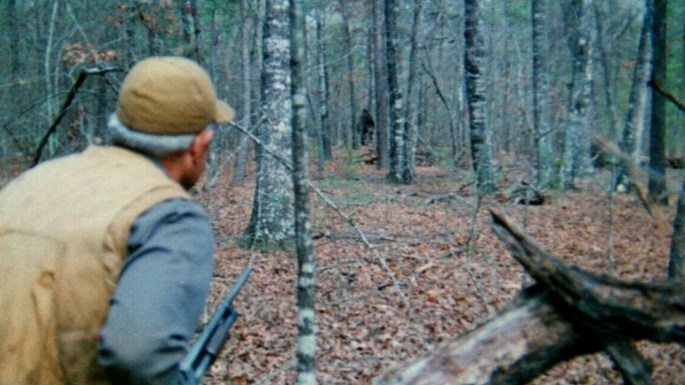
Of course, veracity is hardly the point here. The Legend of Boggy Creek is really just a relaxed and lazy carnival ride and the more ingrained one is with this part of the country, the more tactile the experience will be. And it’s not without its moments of effectiveness. Some of the dusky shots surrounding the run down and rustic shacks still inhabited by people have an eerie stillness to them and Pierce does a good job keeping the creature mostly hidden by brush and quick edits. Disguised as a horror film, it is just as much a celebration of a tiny American community on the brink of extinction that has likely been given a 75 year lease on life due to this film.

Does shrinking this film down to television screens and forever anchoring it in living rooms diminish its power as a film? Certainly. But the film’s influence has a shadow that has been cast so long that it’s almost forever rooted itself as a piece of American folklore in that part of the country. The Fouke monster has spread into the southwestern part of Oklahoma where Bigfoot tourism creates no small amount of tax revenue. And could there be something to the notion that The Legend of Boggy Creek was one of the first films to graft a flimsy true and supernatural story onto film, thereby creating an entire phenomenon? Where the people who owned the actual Long Island Amityville house eventually had to remodel it to ward away tourists who would forever stop and snap pictures of it, Fouke has welcomed the attention. For the main highway into town has been renamed the Monster Parkway and there is most definitely a Monster Mart just to the north of the Boggy Creek Cafe.

“I’d still like to hear his lonely cry just to know that there is still a little bit of wilderness left and there are mysteries that remain unsolved,” the film’s narrator pleads at the end. Despite the cottage industry The Legend of Boggy Creek has created in its corner of the world regarding swamp monsters and the like, it never really creates the notion that there’s anything mysterious going on in Fouke. But what it has proven is that, no matter how sophisticated a society we become, there will always be plenty of carnival marks. And, for the sake of our sense of wonder, that’s not at all a bad thing. God bless America.

(C) Copyright 2021, Patrick Crain
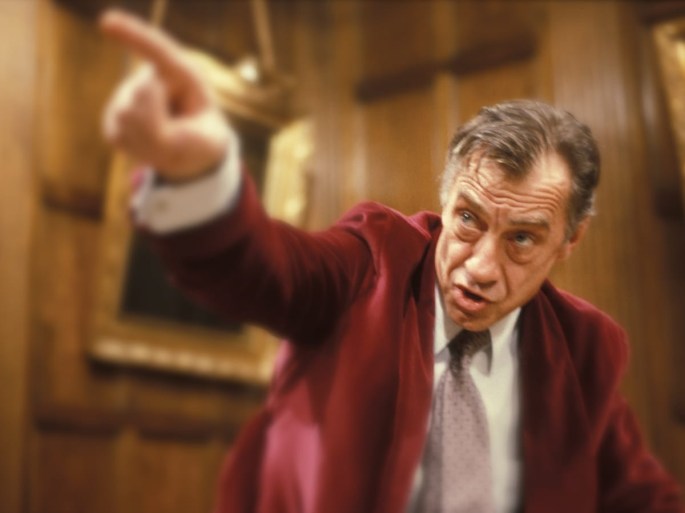
THE ROBERT ALTMAN FILES: STREAMERS (1983)

After the critical success of his cinematic adaptation of Ed Graczyk‘s Come Back to the 5 & Dime Jimmy Dean, Jimmy Dean, Robert Altman set his sights Streamers, the last in playwright David Rabe’s trilogy of pieces surrounding the Vietnam war. Self-financed and shot on the quick in Dallas, Streamers almost means to be the y-chromosome mirror of the distaff 5 & Dime, jumping right into the center of a drab Army barrack in 1965 that doubles as a Petri dish of different corners of masculinity, either real, imagined, or put on. Like 5 & Dime, the tensions between the characters in Streamers are mostly sexual, though a strong dose of racial politics is thrown into the pot, causing it to be more explosive, even if it results in a less engaging and satisfying film.

To be sure, mirroring is crucial throughout Altman’s filmography but it becomes incredibly important during his 80’s period where he was able to get layers and dimensions in limited settings by raising the dramatic stakes and casting his characters off one another. This often leads the characters to either look at themselves in the past or, more importantly, see themselves as they really are in the present. This was driven home quite literally with a mirror prop in 5 & Dime but it’s just as prevalent here as Streamers is about a group of trapped men as they await their deployment to Vietnam. Billy (Matthew Modine) and Roger (David Alan Grier) are pals who bounce off of each other quite well but their friendship is stressed just by the fact that one is black and one is white. Across the room bunks Richie (Michael Lichtenstein), an openly gay soldier who senses a certain uncertainty in Billy, who reacts to Richie’s provocations in ways that causes the audience to sense the uncertainty, as well. Added to this mix is the combustible Carlyle (Michael Wright), three months into his service and already on the brink of a psychotic collapse, and the perpetually soused Cokes (George Dzundza) and Rooney (Guy Boyd), commanding officers damaged by so much carnage seen in World War II, Korea, and now Vietnam, that all they can do is stay drunk and wait for death to take away the pain.

Despite Rabe being a downmarket Harold Pinter when it came to making opaque observations, and a certain archness to some of the performances in the film, there is a great deal that works in Streamers. In choosing the material, Altman certainly was able to save a few bucks due to its appropriately stripped-down and uncluttered set (this was probably the easiest paycheck production designer Wolf Kroeger ever earned) which adds to the heavy pall of ennui and almost maddening claustrophobia. Additionally, cinematographer Pierre Mingot’s fluid camera refuses to be nailed down in the third row and, instead, floats alongside the bunks and up their metal railings mostly acting as an observer of listeners rather than an optical mechanism, revealing more about the characters than if they were center-framed delivering a monologue.

And as barren and solitary a set that it is, the barrack functions as both pinball machine and narrow hallway of time. Much of the dynamism occurs when Carlyle saunters into the room and bounces off each and every character as if they were bumpers, all the while Cokes and Rooney are always perched at the end of the barrack, segregated further, representing the destiny of each and every one of these men that will survive the dehumanizing machine of war.

The majority of the performances, too, are aces and spot on. Modine and Grier display an uncomfortable rapport that is much different than the unease felt whenever either are dealing with the absolutely excellent Lichtenstein. Each character’s baggage gets tossed on top of the other until the whole thing collapses when the weight of Carlyle is added. A swaggering mix of rage, sadness, menace, and down-low vulnerability, his character is the wild card who drags the ugly truth out of all of the other characters. But as played by Michael Wright, the character becomes the most boorish and stage-bound; a dynamic performance full of rage and emotion but played to the back row and lacking in the subtleties befitting a screen performance. As it sits, he’s definitely the focus of attention whenever he’s on the screen but the audience ends up spending too much time watching him chew his way through whatever scenery there is. This, by the way, is not on Wright, who would go on to do amazing work on Oz, but, instead, it’s on Altman who had a responsibility to calibrate his actors to match the size and scope of the material. Though tackling the material for the big screen can’t be seen as anything but brave in 1983, it appears that, with Wright, Altman caught a fish too big for the boat in which he was sailing.

Earlier, the word “trapped” was used to describe the situation of the men and it is used both figuratively and literally as Streamers is best approached as a a work about men who are trapped. They are trapped in the service, trapped in a war, trapped in their own minds, trapped in bodies that are failing, trapped in bodies that are responding in ways that upset them, or trapped in a socioeconomic nightmare not of their making. For all the talk and introspection, when the credits roll, the men will have made choices and will be trapped even further. Same as it ever was.

(C) Copyright 2021, Patrick Crain

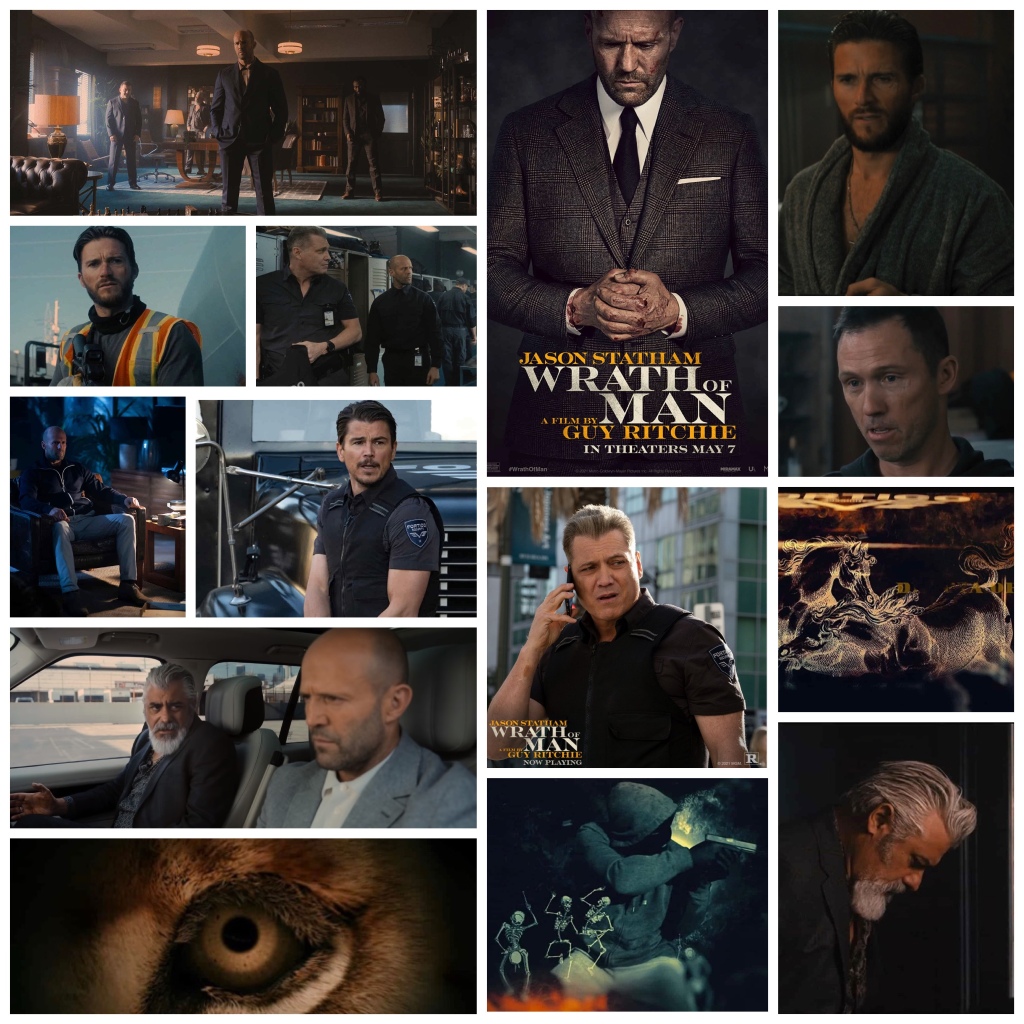
Guy Ritchie’s Wrath Of Man

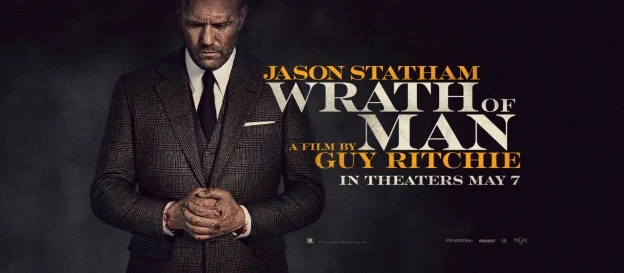
Wow man, Guy Ritchie isn’t fucking around with this one. What I mean by that is, his body of work in film thus far is marked by rambunctious characters, robustly flavourful dialogue, cartoonish mayhem, jubilant humour and just an overall house party vibe. His new heist/revenge/horror film Wrath Of Man is a jarring, impressive and welcome change of pace that plunges headlong into an aesthetic wrought with darkness, grim portent, ominous atmospherics, ruthless violence and nary a trace of whimsy to be found; Playtime is over. Jason Statham is Ritchie’s perennial muse and his gives what might be a career best performance here or at least their finest collaboration, playing a mysterious individual named H who infiltrates a no nonsense armoured truck syndicate as one of their employees, silently and lethally carrying out some dark agenda that is revealed beat by beat, flashback by flashback, scene by meticulously edited scene in a carefully calibrated nesting doll of a narrative. His coworkers are a varied bunch of assholes, tough guys and eccentrics including the top dog and natural born leader Bullet (Holt McCallany) and a dysfunctional pretty boy played by Josh Hartnett, who I was very happy to see in something again and does great cast just about as against type as possible for him. The supporting cast extends into very solid work from Andy Garcia, Jeffrey Donovan, Laz Alonso, Eddie Marsan, Post Malone, a scene stealing Darrell D’Silva and a vicious standout turn from Scott Eastwood who is looking so much like his dad these days it’s getting scary. I don’t want to spoil too much in terms of narrative because this is one serpentine, labyrinthine piece to work through and although the overall story isn’t the most complex or revolutionary endeavour, it’s in execution, tone, atmosphere and mood that Ritchie and his team do something thoroughly extraordinary. Statham makes H a truly elemental force here, like Keyser Soze, Hannibal Lecter, Michael Myers or The Devil himself he just exudes this inky menace and doom soaked ethos that fills the screen in every frame. One of the film’s strongest features is its dark, grinding, methodically rhythmical score by Christopher Benstead, full of guttural, agonized strings and stabbed by jagged notes in between the chords, standing out in the vividly stylized and blessedly old fashioned opening credit sequence and accented by several key soundtrack picks including a haunting, ghostly rendition of Folsom Prison Blues playing alongside one of the most visceral sequences. The film works as an action heist flick as it has many propulsive, bloody shootouts and chases but what really makes it something special, and for me the best of the year so far, is the time it takes in between beats, the measured, steady and grisly slowed down sequences that immerse you in its world using score, trademark colourful Ritchie dialogue albeit of a dark variety this time, hellishly overbearing, dreamscape-esque atmosphere of danger, anger and slowly burgeoning, ultimately cataclysmic vengeance. Absolutely sensational film.

-Nate Hill