
We’ll be presenting a retrospective review of Nicholas Meyer’s riveting “Horatio Hornblower in outer space” adventure in a few weeks. For now, enjoy these screen caps sharing the feelings we have for this gem of a sci-fi film.
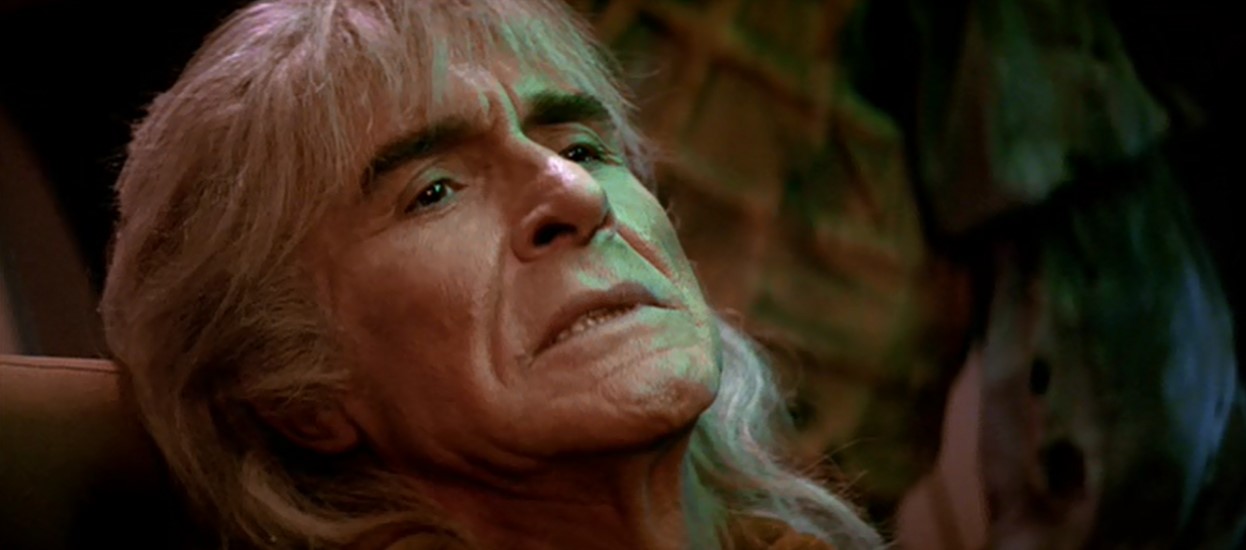


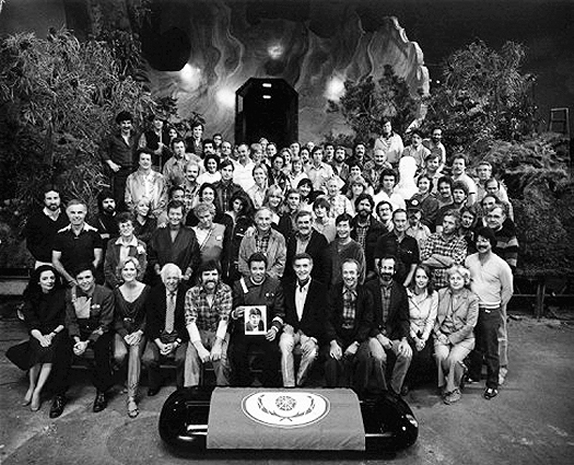

We’ll be presenting a retrospective review of Nicholas Meyer’s riveting “Horatio Hornblower in outer space” adventure in a few weeks. For now, enjoy these screen caps sharing the feelings we have for this gem of a sci-fi film.

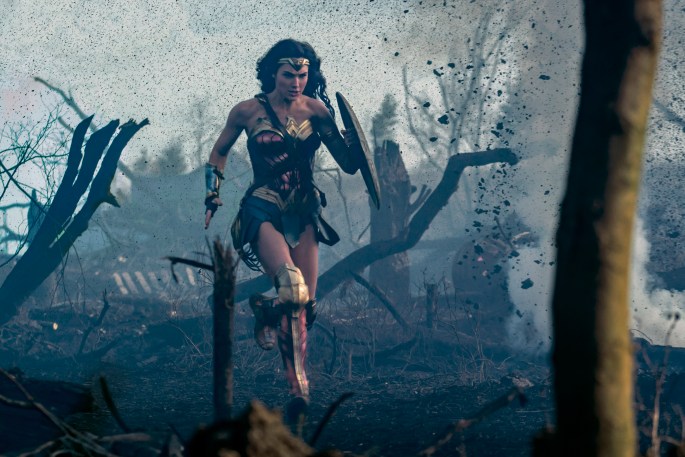
The road’s been rocky for the fledgling DC comic books extended cinematic universe (tagged with the clunky acronym DCEU), with a dark, violent Superman reboot, a controversial introduction of everyone’s favorite Gotham City orphan all grown up, and a deplorable studio hack job forced on David Ayer’s antihero romp. One of the shining moments agreed on by almost all fans was the inclusion of Wonder Woman in Batman v Superman: Dawn Of Justice, raising expectations for a solo adventure that’s finally being released to the world this week. There’s some very good news for Time Warner, DC and anyone else who’s paying attention, which is that actress Gal Gadot continues to make a riveting heroine. Every minute she’s onscreen, you can’t take your eyes off her; heroic, beautiful, strong, and warm, she’s a marvel and the long wait to see the character front and center on film is rewarded by the casting and performance alone. As for the rest of it, your enjoyment will vary depending on how interested you are in slipping on the fraying comfort jeans of the now typical superhero origin story.
Set in a nostalgic milieu that occasionally borders on Captain America: The First Avenger copyright infringement, Wonder Woman starts with our heroine’s journey from the magic island where her Amazonian tribe, created by Zeus himself, lives in a literal bubble to the raging battles of World War I going on everywhere else. The door to the real world is opened by a man, but at no point are we ever led to believe anyone has the presence and agency that Gadot’s Diana Prince has. The screenplay does a wobbly but noble job of ruminating on the role of male aggression and violence in the world, offering Wonder Woman up as a have-your-cake-and-eat-it-too alternative to their historically destructive tendencies by engaging in the destruction at a higher level than any of the boys have ever been capable of. Director Patty Jenkins does a fairly good job of trying to embrace and squeeze the most of the quiet moments, sometimes nailing the burgeoning romance between Diana and Chris Pine’s Steve Trevor but other times allows explication scenes to drag for no particularly apparent reason. She does manage to simultaneously ground and celebrate this historic character, who arrives at a lovely ‘why we fight’ philosophical end point by the final reel that feels honestly earned.
The film does suffer from a variety of familiar beats, with standard bad guys (spoiler alert for the historically challenged, there are Germans and they’re up to no good), a predictable twist that ends in one of the more disconcerting bad guy casting jobs the genre’s ever seen, and of course a series of fight sequences that roll out with a scheduled regularity that one can set their watch to. But those action scenes, clearly influenced by the hand of co-writer and producer Zack Snyder, crackle and pop with every bit of proud slow motion swagger and high speed collision you’ve come to expect from big budget comic book fare in the digital age, and it’s fairly apparent that most if not all of these going forward are going to end with the inky darkness of night, punctuated by fire. But again, Gal Gadot commands the frame from start to finish, so it’s tough not to be caught up in her confident jaunt through her first full film.
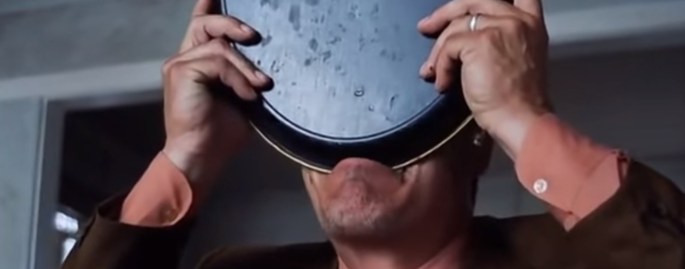
The skunky stench and hazy after-effects of marijuana can be found all over Paul Thomas Anderson’s hysterical, bewildering, utterly zonked-out shaggy-dog detective movie Inherent Vice. Based on Thomas Pynchon’s much celebrated novel, this is a wild, ridiculous, totally blazed piece of work that had “cult-classic” status written all over it the moment it was released in theaters a few years ago. Different and yet similar to obvious inspirations such as The Big Lebowski, The Big Sleep, and The Long Goodbye, Inherent Vice likely annoyed many who went in looking for something more traditional, but at the same time, was probably “just-right” for many others. There’ll be no real middle ground with this one. You’ve got to be interested in watching a perpetually stoned, lackadaisical, possibly hallucinating lead character that can’t seem to get out of his own way. The cast is peppered with tons of stars (Reese Witherspoon, Owen Wilson, Benicio Del Toro, a debauched Martin Short in one of the best scenes in the film) but Phoenix owned the picture. Coming on the heels of his exquisite and varied work in both The Master and Her, he delivered a totally different performance in Inherent Vice, cementing his chameleonic quality to any role he takes on, investing every performance with integrity, intensity, and odd charm. He’s long been one of my favorite actors and I can’t wait to see him in the new film by Lynne Ramsay that just premiered at Cannes.
The “plot” of Inherent Vice can be followed, but I’ll admit that it’s taken me a few viewings to fully digest everything that this film has to offer, as great movies allow for constant exploration. Because Phoenix’s character is essentially an unreliable narrator, and because everyone he comes into contact with screws with him in some way, there’s this sense of randomness to the plot that won’t be to everyone’s liking. Inherent Vice is more about the crazy characters and the druggy aroma and the floral dialogue and stony voice-over and the minutiae of the time period – those looking for an “air-tight” plot need to go find something else. It’s also about the collision of two subcultures, and how America, in particular Los Angeles, was rapidly changing during this time period. Josh Brolin absolutely nailed his supporting role as an angry LAPD officer who clashes with Phoenix multiple times throughout the story. And there’s some of the bravest nudity I’ve ever seen from an actress on the part of the lovely and talented Katherine Waterston, who injected her character with an earthy sensuality that you don’t normally see on the big screen. Inherent Vice carries a distinct visual atmosphere, with master shooter Robert Elswit’s purposefully hazy and scratchy cinematography being just the right tonal fit for the offbeat material. The on-location shooting adds to the cool-factor, and the play-through soundtrack is completely groovy – Can POWER!
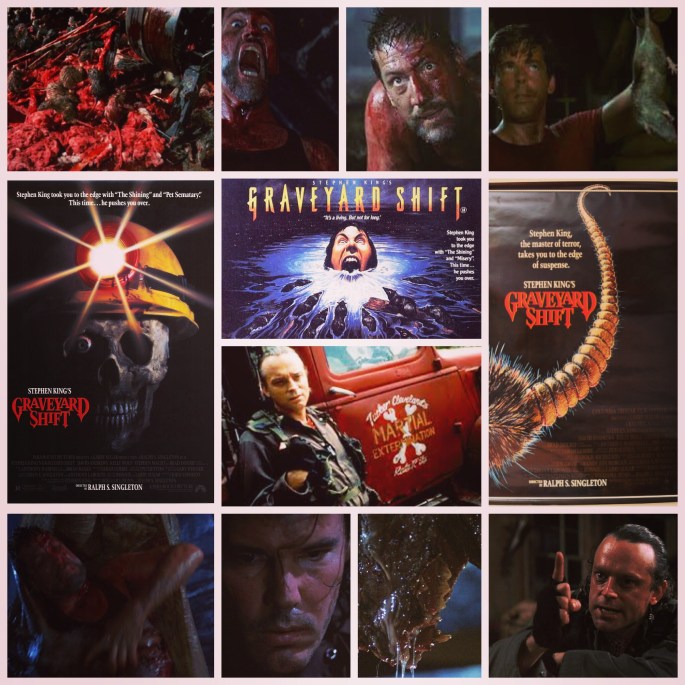
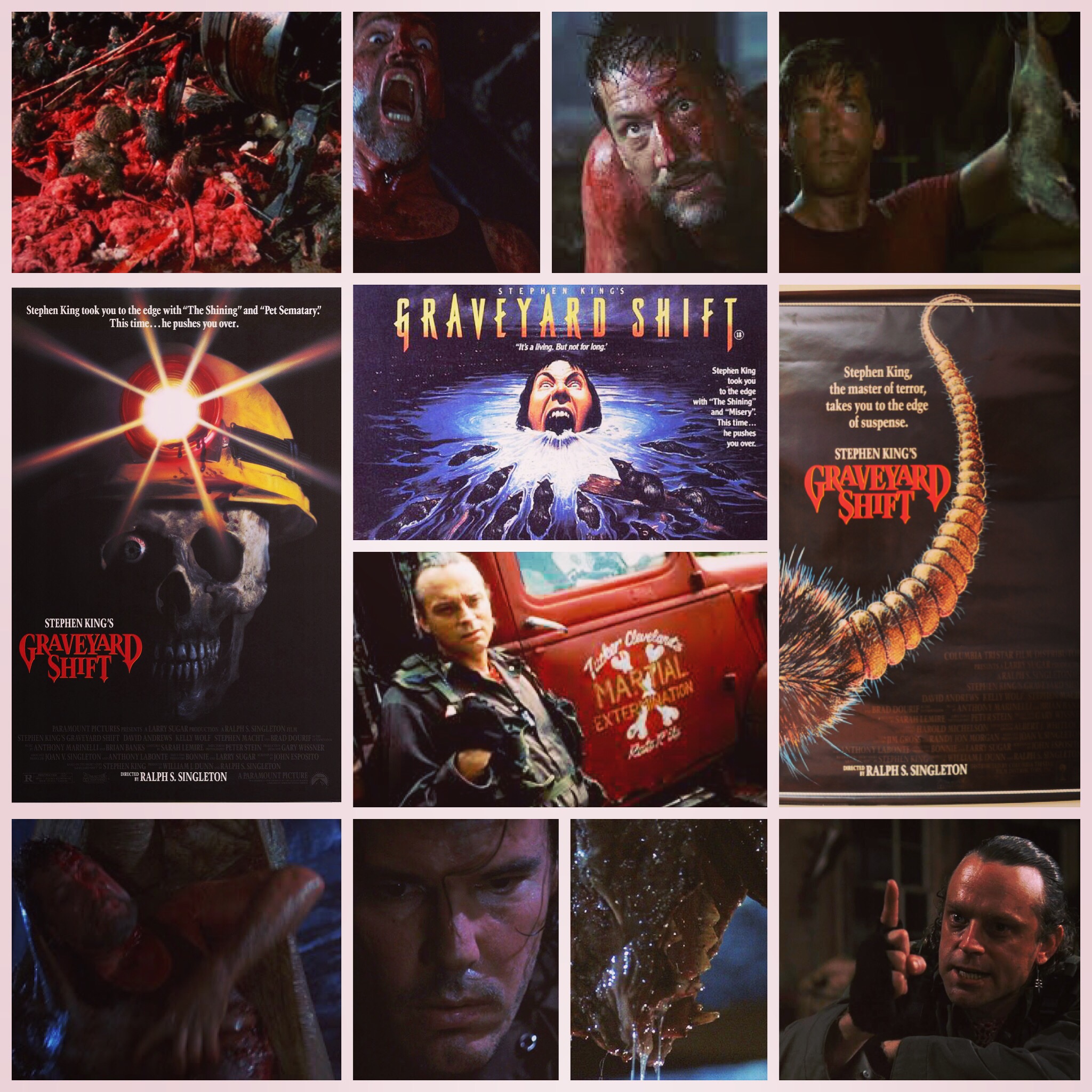
Stephen King’s Graveyard Shift is curiously one of my favourite adaptations of his work. I say curiously because it’s not a very tasteful film, let alone even a good one. It’s simple schlock and awe, goo and slime for 90 minutes straight, every human character either an unsettling nutcase or cardboard stock archetype. There’s just something so Midnite Movie-esque about it though, a sense of fun to its gigantic, hollowed out mess of a textile mill in which some kind of vile denizen stalks a night crew that pretty much deserves everything they get. People wander about, squabble and are picked off in ways that get steadily more gruesome until the final reveal of the monster in some overblown puss-palooza of a finale. What more do you need in your bottom feeder helping of horror? Steven Macht is the sleazebag who runs the mill at his tyrannical whim, while David Andrews is the closest thing you’ll find to a stoic protagonist. Andrew ‘Wishmaster’ Divoff shows up as a stock character, but it’s Brad Dourif who chews scenery and ends up the only memorable person as the world’s most simultaneously intense and incompetent exterminator, a bug eyed little weirdo who freaks people out with extended monologues about Viet Nam when he should be perusing corridors to find whatever’s lurking there. The monster itself, if I remember correctly, is one big pile of grossly misshappen, poopy prosthetic puppetry, as is often the case in early 90’s King fare. Would you want it any other way? Simple, efficient and impressively gory is what you’ll find on this shift.
-Nate Hill


G-Men From Hell is.. well, pretty much exactly what the title suggests. Based on a comic book, I think, it concerns two melodramatic 1950’s FBI Agents named Dean Crept (William Forsythe) and Mike Mattress (Tate Donovan) who are gunned down by mysterious assailants, and sent off to the inferno to rot, only they aren’t finished their business earth-side, and escape using some magic dimension opening crystal. Once back in the realm of the living, they set up their own private detective agency, forced to keep up their good deed quota in order to prevent from being dragged off again. The Devil (Robert Goulet, hilarious) is furious and dispatches an agent of his own to retrieve them. Meanwhile, a relentless and fairly nutty police detective (Gary Buddy) is also hot on their trail. Busey, as usual, flips the script into the dustbin and does his own warped thing with the dialogue, making scene partners visibly try to hold in laughter and bewilderment, proving once again that any film he appears in will never get boring. Forsythe and Donovan play it like Looney Toons in noir mode, two campy gumshoe performances that are so knowingly tongue in cheek that it almost seems like a stage play. Cameos include Bobcat Goldthwait, David Huddleston, Kari Wuhrur, Charles Fleischer, Frank McCrae and Vanessa Angel. I feel like the whole thing is just a bit silly to work, even as one big riotous in-joke, but it’s a colourful diversion nonetheless, and any film with that title deserves a watch as an ode to it’s sheer commitment to blatant inanities. Please excuse the pitiful lack of high def photos in my collage, whoever was in charge of screen caps and production stills on this should be shot in the face.
-Nate Hill
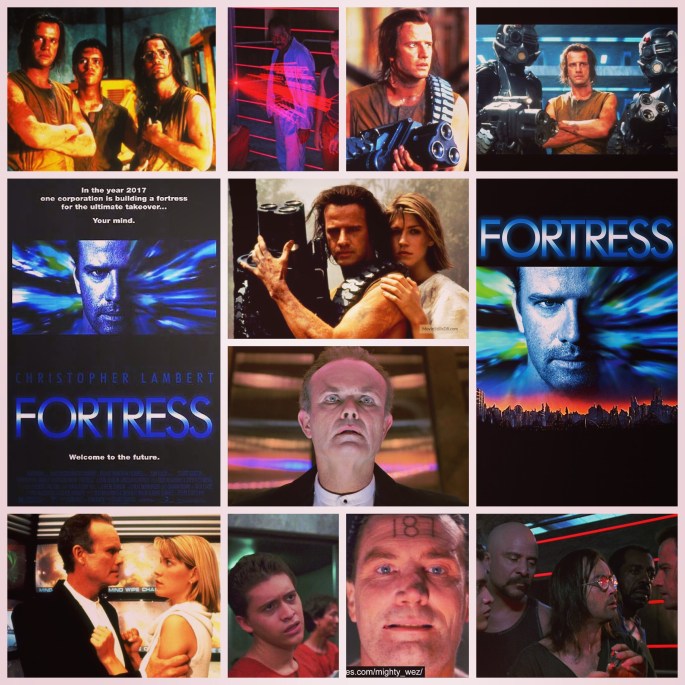

Stuart Gordon’s Fortress is one of the more overlooked dystopian sci-fi thrillers of the 90’s, and despite somewhat being a B-movie, it holds its own in pretty much every department. Quality story, terrific acting (even from the king of stilted delivery himself, Christopher Lambert) and a story with more depth than the poster or marketing might suggest. Lambert plays an unfortunate man on the run with his wife (Loryn Locklin) in an America of the future where having more than one child per mother is prohibited. They’re both nabbed trying to make a break for Mexico, locked away in a horrific prison called Fortress, a place where science has run amok and all kinds of neurological and biological experiments are performed on the inmates under the steely direction of evil Director Poe (Kurtwood Smith). Fortress is an unorthodox nightmare where basic rights are replaced by those of cattle or worse, and no one is safe from micro implants, mind alteration and all sorts of fun stuff. Lambert plans an elaborate escape with the help of various inmates including Vernon Wells, the late Tom Towles, Jeffrey Combs and Clifton Collins Jr., all putting in excellent and varied performances. The scene stealer is Kurtwood Smith though, who is usually cheeky, psychotic or sarcastic in his work. Taking on the type of role that typically goes to a Malcolm McDowell type guy, he tackles a character that is the farthest thing from sympathetic you could find and sort of turns that on its head, making him seem very much human in one galvanizing piece of acting work. You can label this type of thing second tier or low budget, write it off or not take it seriously, but the fact remains that many of these efforts are works of art in their own right, beautifully crafted adventure stories set in universes more vibrant and imaginative than our own, stories just to the left left of normal and full of schlock, machines, creature effects and smoke machines. Gordon is a master in this arena (remind me to tell you about Space Truckers one day), a creative force to rival Roger Corman and the like. Fortress is my personal favourite in his stable, and one shouldn’t underestimate its entertainment value and ability to hold up decades later. Oh and also, this suffers from an adorable condition I call Blade Runner Syndrome™, in which the far off year the film’s timeline exists in has been caught up to by our own trajectory, making the films future look like our past. This film’s specific year? 2017, as you’ll see in the poster above. That means that right now, Lambert and Smith are duking it out in that clandestine compound somewhere out there. Cool thought.
-Nate Hill
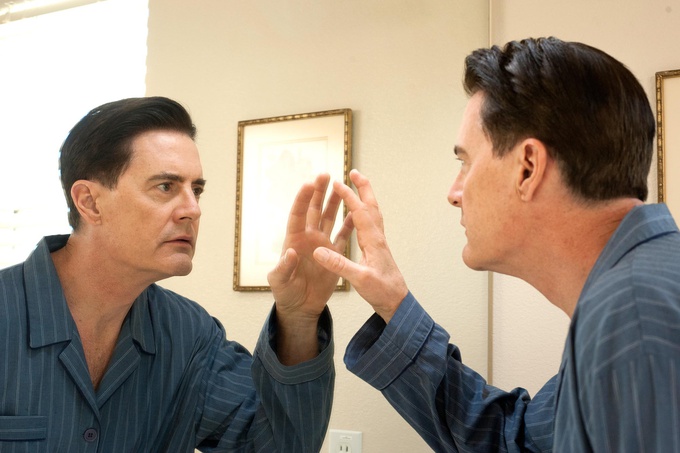
Tim is joined by Twin Peaks Fanatic blogger/Blue Rose Magazine contributor and all around TP superfan Mya McBriar to discuss episodes 3 and 4 of David Lynch’s outstanding new work.
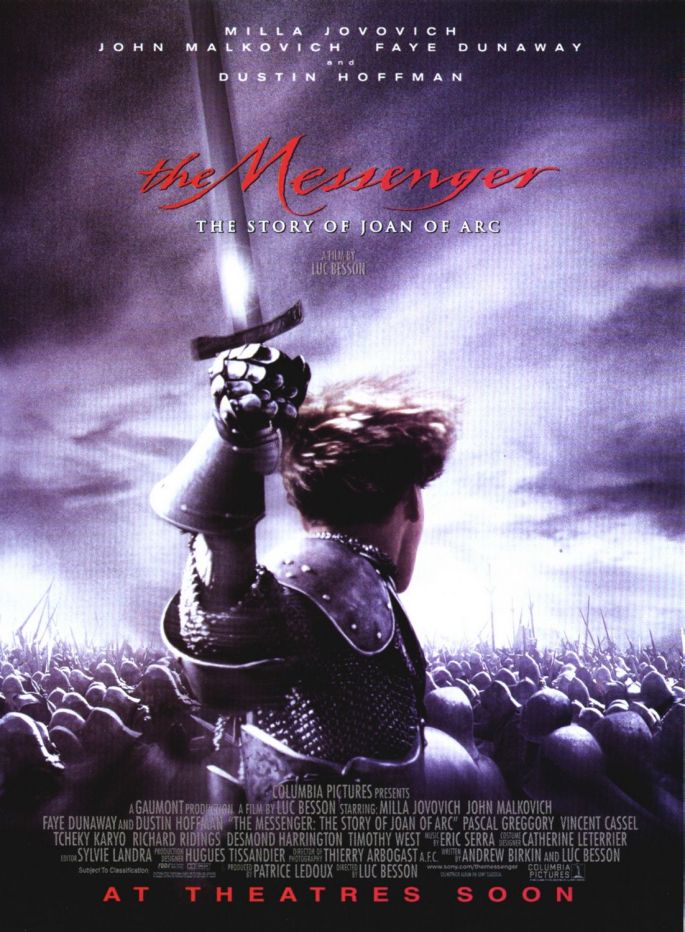
‘The Messenger: The Story Of Joan Of Arc’ (1999) dir. Luc Besson
I’m a big cheerleader for this film. I think this is a remarkable achievement. I find Besson’s direction and intentions pure and Jovovich is incredible in the title role. The post modern way in which screenwriter Andrew Birkin and Luc Besson tackle the story gives the film a real timeless quality and a sharp contemporary message. And the cinematography by Thierry Arbogast? Get out of town! Absolutely gorgeous!
Now, there are a couple of awkward moments in the film. Things that seem out of place for one reason or another. They are small and inconsequential save for one that I feel should be addressed. I do not believe this film does itself any favors by treating the murder/rape of Joan’s sister as a black comedy sketch. I think this damages the film at the very start and it takes a minute to recover from it. It is also entirely made up. Joan Of Arc did not have a sister brutally raped and murdered by the English. I’m sure Besson had his reasons but…
The Church is presented as an unwieldy political monster here – draconian and far reaching as well as hypocritical and rigid in its discipline. Its intentions anything but noble. The French Government learns of a peasant girl gaining notoriety for her religious visions and decides to use her in a shrewd attempt to reignite a flagging nationalism. Joan was a natural when it came to myth making and the French monarch saw in her a great opportunity. While Joan Of Arc’s devotion to the cause was intense and blinding, the character she created for herself was one to be manipulated by far more calculating minds. To the people, the Maid of Orleans was a symbol of many things – hope, a resurgent France, proof of God’s existence…but to the French Government and the Church – she was a tool. And a tool they used wisely.
The cast that appears in this film is glorious. Jovovich is assisted on all sides by the likes of Dustin Hoffman, Faye Dunaway, Vincent Cassel and John Malkovich and they all give incredible performances.
At the end, she burns. We know Joan doesn’t make it out alive. There’s a mock trial and political shenanigans. But Joan’s victory in this film isn’t the military campaigns, her legend building or ability to inspire religious simpletons. In a clever, revisionist move the filmmakers paint Joan Of Arc’s greatest triumph as her ability to finally forgive herself. She finally comes to understand that the voice she’s been answering to is not God’s but her own. She does not need God’s forgiveness for her sins. She simply needs her own forgiveness to find peace.
Let’s face it. People look themselves in the mirror and tell themselves vital lies every day to keep them going. And some of these lies are larger than others. Joan’s vital lie was her unwavering belief that everything that occurred to her had a religious explanation and thus justified her extreme behavior. This prevented her from seeing the larger picture and it is that narrative that ultimately brought her down. She failed to understand her role in a world of boundaries, governments and alliances.
The filmmakers ask us to accept that Joan Of Arc is neither saint, opportunist, lunatic, do-gooder, or glory seeker but instead a highly passionate and confused teenager made up of all these things that happened to come together at the right time and place to create an enduring piece of history. In her final hours she finds absolution from within, freeing herself at last. She does not burn as the ambitious and over zealous Joan Of Arc. She burns as the simple peasant girl from Orleans who wanted to confess and having finally done so, could embrace her fate.
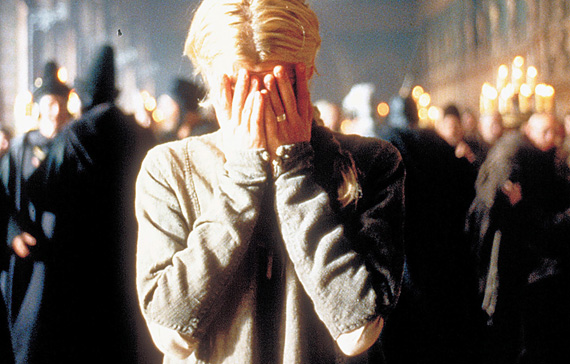

The 1990 crime film Miller’s Crossing is one of my favorite films from the Coen brothers, a neo-noir gangster movie that gets better and better with each viewing, fully showcasing the Coen’s estimable gifts as storytellers and stylists, with bracing and dark wit balanced by stark violence, creating a rich, dense cinematic world that unfolds with sinister calm. Starring Gabriel Byrne, John Turturro, Marcia Gay Harden, Steve Buscemi, Mike Starr, Albert Finney, Jon Polito, and J.E. Freeman, the plot hinges on rival gangs and how one man navigates the tricky and duplicitous waters of engaging with both sides. Shot with formal precision by Barry Sonnenfeld (he also shot Raising Arizona and Blood Simple for the Coens) and judiciously edited by Michael R. Miller (Raising Arizona, Orgazmo), the film boasts a superb musical score from Coen-mainstay Carter Burwell (Fargo, Being John Malkovich), with everyone in the ensemble delivering pitch-perfect performances. Despite not finding a supporting theatrical audience, Miller’s Crossing has become a cult favorite in the years since its big-screen release, and one of the better offerings this genre has provided in decades. Look out for Sam Raimi and Frances McDormand in small roles, while the nods to Dashiell Hammett ground the film with a literary quality that kicks it up another notch.
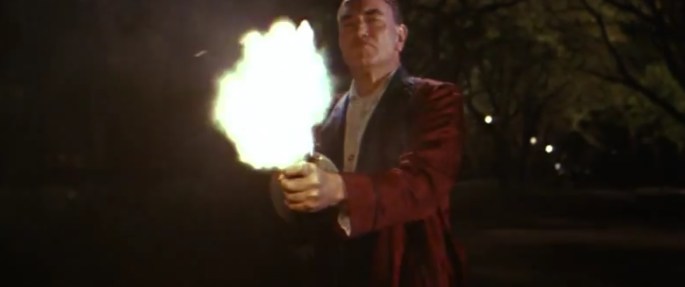


It’s anybody’s guess how ones like 13 Moons slip through the cracks, but in this case it was probably a case of nonexistent marketing and no effort put into a proper release. Despite having a cast that’s speckled with all kinds of big names, character actors and cameos, it has the appearance of barest of bones indie digs, and looks suspiciously like it was filmed bootleg/guerrilla style. I’ve not a clue what the story behind it’s conception is, but it’s a brilliant little flick that you won’t find anywhere these days, but deserves a look. It’s one of those moody, nocturnal L.A. set ensemble pieces in which a group of eclectic characters wander about, intersecting in various subplots until it finally comes together in the third act. This motif is overdone these days, and I just have to throw a jab at Paul Haggis’s Crash, which has aged like Kraft Dinner left for a week in the Florida sun, but my point is that they either work or topple over like a jenga tower buckling under the weight of each character and scenario. This one is so low budget it looks like it was shot on an etch a sketch, but thankfully the story is powerful, emotional, hilarious and strange enough to make a lasting impression. Steve Buscemi and Peter Dinklage are two sad-sack clowns who wander the nightscape, and in fact the image of absurdly out of place clowns roaming the lonely streets of NYC, getting caught up in a raucous night out involving a man (David Proval, an underused talent in the industry) and his young son who is dying of cancer and desperately seeks an organ doner, while his mom (Jennifer Beals) looks for them. Meanwhile there’s an insane clown played by Peter Stormare who’s running about, and when I say insane I do mean it. Stormare is always a little zany and flamboyant, but his work here takes the cake and whips it at the wall. It’s easy for actors to be uninhibited in indie fare like this, free from the prudence of studio chaperones, and he knows this, his character eventually playing a key role but most of the time careening around like a bat out of hell set loose in New York. The cameos are fleeting and fascinating, and one wonders who was buddies with who and pulled what favours to swing their appearances, but it’s nice to see them irregardless. Sam Rockwell and Michael Parks are fun as two bartenders, real life ex-hoodlums Danny Trejo and Edward Bunker show up briefly as.. hoodlums, and watch for quick turns from Pruitt Taylor Vince, Michael Badalucco and others. The film is thoroughly indie that no one has, or probably will ever see it, and my review probably adds to the scant half dozen or so write ups that are out there. Sadly many little treasures like this exist, unbeknownst to most. 13 Moons is a sweet, scrappy, somewhat star studded little piece that is well worth anyone’s time, if they love a good story in an oddball of a package.
-Nate Hill
 Podcasting Them Softly