BARRY SONNENFELD’S GET SHORTY — A REVIEW BY NICK CLEMENT

2

After an auspicious start as a hot-shot cinematographer on films such as Blood Simple, Raising Arizona, Three O’clock High, Big, When Harry Met Sally, Miller’s Crossing, and Misery, Barry Sonnenfeld switched to full-blown director, with a bunch of mixed-bag credits throughout the last 25 years. From where I sit, Get Shorty is easily his best film, and one of the finest Hollywood comedies ever crafted. The remarkable cast included a perfect John Travolta as a Miami mob-enforcer turned wannabe Los Angeles player, Gene Hackman in a wily and hilarious performance as a has-been B-movie producer scoundrel, the alluring Rene Russo as Hackman’s ex who falls for Travolta, Dennis Farina (“They say the fucking smog is the fucking reason you have such beautiful fucking sunsets”), David Paymer, James Gandolfini, Danny De Vito, Delroy Lindo, Jon Gries, and many more familiar faces and character actors. Released in 1995, this came hot on the heels of Pulp Fiction, and became a box office success and critical favorite. This is an endlessly re-watchable film with snappy dialogue courtesy of tremendous screenwriter Scott Frank (Out of Sight, Minority Report, The Lookout) who adapted Elmore Leonard’s novel, excellent visual design from shooter Donald Peterman, a jazzy soundtrack, and splendid acting from a top-flight ensemble. I wish there was a new movie like this one coming out this weekend.

1.jpg

Terry Gillian’s The Imaginarium Of Dr. Parnassus


Terry Gilliam films almost always feel a bit slapdash and chaotic, it’s just the guy’s calling card to have a modicum of organized mayhem filling the fringes of whatever project he delivers. With The Imaginarum Of Dr. Parnassus, that is probably the case more so than any other film he’s made, and despite letting the clutter run away with itself a bit too much, it’s still a dazzling piece. Of course, your movie will always have a disjointed undercurrent when your lead actor passes away halfway through production, but that’s just the way it goes, and Gilliam finds a fascinating solution to that issue here. Imaginarium is in many ways a companion piece, in spirit, to The Adventures Of Baron Munchausen, a film he made decades earlier, both containing a sort of baroque, Da Vinci-esque splendour and sense of fantastical wonder. Christopher Plummer hides behind a gigantic Dumbledore beard as Parnassus, a magician extraordinaire who travels the land with his daughter (Lily Cole, that bodacious Botticelli bimbo) and circus troupe, including Verne ‘Mini Me’ Troyer. Years earlier he made a pact with the devil (Tom Waits, an inspired choice) using his daughter as collateral, and now Old Nick has come to reap the debt, causing quite the situation. The story is a hot mess of phantasmagoria and kaleidoscope surrealism thanks to the Imaginarium itself, a multi layered dimension-in-a-box that accompanies them on their travels. Things get complicated when they rescue dying lad Tony (Heath Ledger) who somehow ties into the tale as well. Now, this was Ledger’s very last film, its future left uncertain after his passing, but help arrived in the form of Johnny Depp, Jude Law and Colin Farrell, swooping in to play doppelgänger versions of Tony as he bounced from one plane of the imaginarium to another with Cole in tow, always one step ahead of Waits, who is a rockin’ choice to play the devil, smarming and charming in equal doses. It’s kind of a huge melting pot of images and ideas hurled into creation, but it’s a lovable one, the fun you’ll have watching it reasonably eclipses lapses in logic, plotting and pacing. 

-Nate Hill

M. NIGHT SHYAMALAN’S SPLIT — A REVIEW BY NICK CLEMENT

3

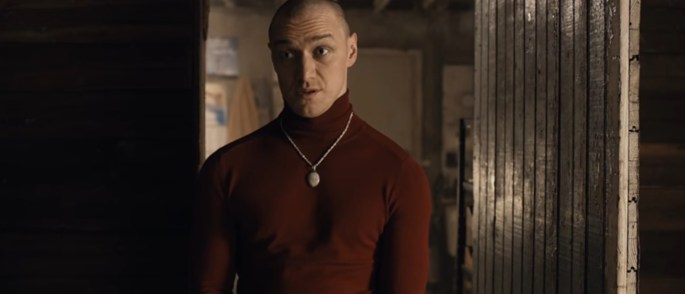
Split is creepy genre skewering from writer/director M. Night Shyamalan, and without spoiling the movie for those who haven’t yet had it spoiled, it’s the sort of picture that works as one thing for most of its running time, before morphing into something else by its conclusion; was this always the intention?  James McAvoy is totally wild and completely on fire in the leading role, or should I say, multiple leading roles as a guy battling intense multiple personality disorder, and possibly something else, while the trio of young actresses playing the captured girls are all excellent. There’s some great use of cramped-quarters camera placement by the inventive cinematographer Michael Gioulakis, and West Dylan Thordson’s unnerving music sets a hostile atmosphere that’s maintained all throughout the picture, despite it being a bit too long in the tooth; had this been a lean and mean 90-minuter I think it might’ve been more effective. But this is another low-budget success for Shyamalan, who seems to have recaptured his early-career groove.

2

I’m also not sure how smart or classy it was of Shyamalan to use sexually/emotionally exploitive content within the parameters of a silly genre flick; aspects to this film are sort of icky and surprisingly crass and ultimately unnecessary when thought about in retrospect. At least for me. Because this is another trick-narrative from the king of modern trick narratives, there could have been multiple ways for the story to develop, and I’m sort of at a loss to understand why he felt that certain thematic elements were necessary, especially when there’s  very little emotional payoff in these instances. Still, it’s lots of mostly ridiculous fun (if not as enjoyable overall as Shyamalan’s previous picture, the superb and totally wicked black comedy/horror item The Visit), Haley Lu Richardson continues to be extremely photogenic, and the reveal during the final scene will certainly make lots of people giddy with excitement over the various possibilities of what’s in store for this particular cinematic universe…

1

Once Bitten

Once Bitten

1985.  Directed by Howard Storm.

bitten

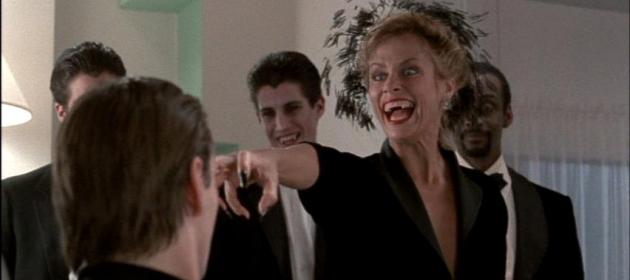
Howard Storm’s only feature film, and Jim Carrey’s first leading role, Once Bitten is a libidinous romp through 1985 Los Angeles.  Featuring riotous levels of sexual camp supplemented by a surprisingly fresh take on the male coming of age convention; this is ’80s cult trash of the highest order.

Carrey plays a good natured teen desperate to consummate his relationship with his longtime girlfriend.  Relationship frustrations send him and his friends on a nightclub crawl in which he encounters a ravishing 400 year old seductress with designs on his virgin blood.  The script bounces between the comedic irreverence of the decade, the inevitable sexual changes of puberty, and the ramifications losing one’s virginity.  Carrey’s odyssey, punctuated with subtle makeup effects by Richard Arrington, uses Vampirism as a simulated STD while commentating on how the loss of innocence serves as a transition.  Once Carrey’s Mark is in the Vampire’s grasp, everything, from his wardrobe to his relationships changes, and Carrey does a remarkable job at harnessing the subtleties of the plot and the slapstick antics of the action.

Once-Bitten-Jim-Carrey

Adam Greenberg’s fluid camera work captures the gothic interior of the vampire’s lair with sweeping shots of whitewashed rooms that are offset by the vibrant colors of the city.   Lauren Hutton’s turn as the sultry Countess boasts some memorable lines; however she is eclipsed by Cleavon Little’s turn as her dapper Renfield, Sebastian, bringing a genuine laugh every time he’s on screen.  Jill Ohannsen’s costume design is the highlight, showcasing the vampires in gaudy black ensembles and the humans in abysmal conglomerations of the MTV era.

There are cringe-worthy moments of pure machismo that may offend sensitivities, but these are sprinkled throughout a film that generally wants to have fun with its material.  The film was critically maligned by most upon its release.  Thankfully, the years have been kind, with Shout Factory doing a stellar blu ray release in 2015.  Once Bitten is a unique film because it hovers just beneath the excess of other sex comedies and never slips into the violence of other ’80s vampire films that would become icons of the genre.

394864-1_1920x1080_534872131647

Available now on STARZ streaming or on blu ray from Shout Factory, Once Bitten takes a simple premise and revels in its absurdity, exploring serious themes of casual sex, disease, and social expectations and twisting them into the realm of melodramatic satire.  If you’re looking for a fun trip down memory lane or merely looking to waste some time with a low commitment comedy that boasts a handful of hilarious sequences and a scene stealing performance by Little, Once Bitten won’t disappoint.

Recommend.

once-bitten-blu-ray-movie-title

-Kyle Jonathan

London Boulevard 


Pains me to say this, but London Boulevard is a whole lot of nothing. Like, a disgraceful amount of nothing when you step back and look at the talent involved. I read a review on IMDb saying that “every element of this film is so right, but how did it end up so wrong?”.. Sad to say, I couldn’t agree more. This is one unfocused, meandering, royal catastrophe. Where does the blame lay? Who can say, really.. I don’t want to lay it on the director, even though his only other feature, Mojave, was pretty dismal, but he’ll find his groove. The cast is capable and willing, none of them totally phoning it in. No, I feel like it’s the script, a botch job of a story consisting of scenes mired in a never-ending doldrum where nothing ever really goes anywhere and the characters get caught up in the purgatorial nonsense of it all. Colin Farrell is a tough guy who is hired to act as pseudo-bodyguard to a reclusive, neurotic film star (Keira Knightley), after which all sorts of freak occurrences and oddball Brit-bag characters get in the way. He’s got a wayward sister to protect (Anna Adriel), a volatile partner in petty crime (Ben Chaplin) a nosy DI on his trail (Eddie Marsan) and all these chess pieces converge upon the arrival of London’s most fearsome crime boss (Ray Winstone), who has a bag of bones to pick with Farrell for a number of different and equally muddled reasons. Winstone tries to pull him back into the game with vague homoerotic intimidation, Knightley wistfully wallows in depression with her druggie friend (David Thewlis, looking like he forgot to read the script) and hides from paparazzos, the story clumps along missing every beat and wasting a decent score as well as some stylish flourishes on events that no one seems to care about, least of all the audience. Perhaps that’s why Farrell scowls his way through the whole thing, and not in a smouldering, potent way either, more like a confused, begrudging participant in a pointless exercise. They really should have gotten their shit together a little more with a cast and budget like this, found a better script and given us something worth seeing. Instead we’re given the cinematic equivalent of a pocket of lint, promising on the outside before we look in, ripe with potential but filled with nothing remotely worthwhile once we look inside. Shame. 

-Nate Hill

BEN WHEATLEY’S FREE FIRE — A REVIEW BY NICK CLEMENT

3

Thoroughly inconsequential and better off because of that, Ben Wheatley’s wickedly entertaining Free Fire is a film of no redeeming social value, and completely awesome fun during all of its extra-tight 85 minute run time. This film is EXACTLY as advertised: 15 minutes of set-up, and 70 minutes of violent, trigger-happy action with loads of black comedy thrown skillfully into the mix. Feeling like a Quentin Tarantino film stripped of his occasional pretension and bloat, this scuzzy, morally bankrupt little flick operates in guns-blazing mode with a massive smile on its face, with a bevy of colorful characters spouting off vulgarity-laced one-liners at each other. The premise is simple: an arms sale has gone awry due to a rather ridiculous but compelling off-screen incident, the two parties open fire on each other inside of an abandoned and derelict warehouse, and nobody is truly safe at any point during the raucous narrative.

1

Wheatley co-scripted with his wife, Amy Jump, and it’s obvious that they are a terrific creative team. Armie Hammer and Sharlto Copley steal the show, Brie Larson has fun kicking some ass, and everyone else clearly had a ball with the down and dirty material. Laurie Rose’s excellent widescreen cinematography opts for inventive camera placement with a sense of heightened reality, with Jump and Wheatley’s razor-sharp editing never wasting a moment. While not as thought provoking as Wheatley’s A Field in England, as downright twisted as Kill List, or as subversive as last year’s descent into societal hell High-Rise, the boisterous and purposefully obnoxious Free Fire exists simply because its creators wanted it to exist, and sometimes, cleverly made throwaway items like this can be both enjoyable for the audience and important for the filmmakers as a way of pushing towards something more substantial or groundbreaking.

2

KEDI (2017) – A REVIEW BY RYAN MARSHALL

Much like the feral felines that amount to its core, “Kedi” is as pleasant and fleeting a documentary as you are likely to see in 2017, which is to say that it’s thoroughly charming and big-hearted if not particularly confrontational. As a nice tonic, it goes down easy – effectively anthropomorphizing the animals without placing them above or below their human counterparts – and as a debut, it shows confidence and restraint in equally promising measures.

Istanbul, the largest city in Turkey, is home to thousands of street cat, and yet, as we are meant to see here, they are far from neglected in this environment. We spend much of the time on ground level with seven specially selected subjects as they navigate the urban landscape, fending not only for themselves but also for their offspring, and the beautifully constructed footage speaks for itself. Cinema is certainly no stranger to the cat, and this may be as close as we’ve ever been to understanding their point of view.

kedi2[1]

Of course, the primary focus – aside from the aforementioned – is the connection that the good people of the city feel between themselves and the tricky little devils which surround them, thus providing the irresistible cuteness with a welcome undertone of inspiration, optimism, perception, and what-have-you. Although the beasts aren’t bound to any master, there are those who feel a longing for them when they’re gone; one man even found solace in the animals after an intense midlife crisis.

So you see, as wild as they may at first appear to be, there’s more humanity to the cats than there is in most actual people; a familiar message which simply cannot be reinforced enough. They collectively represent a simpler, freer lifestyle that one can’t help but envy, and it’s one that the gorgeous cinematography represents in the most positively delectable manner.

kedi3[1]

While there’s no shame in a feel-good affair with little complication, there are enough glimpses of something more tragic and understated that might leave a certain kind of viewer wanting more. It’s often so slight that it almost seems to approach emptiness, and on a technical level, it’s somewhat inconsistent; as mentioned before, the photography itself is impressive, but the excess of drone B-roll and occasionally distracting visual effects are certainly less appetizing in comparison.

Ultimately it gives off the impression of the uncomfortable marriage of innovation and the unprofessional; the sign of a film with simultaneously a lot to say and not quite enough up its sleeve. Even so, where those for whom the subjects are furry friends are concerned, this is damn near essential. Reservations aside, the filmmakers (a husband and wife duo; Charlie Wuppermann and Ceyda Turon, respectively) should certainly be commended for their efforts, as even the softest breeze requires a significant amount of care and consideration. There are less productive ways to spend a mere eighty minutes, as well as less adorable company.

John McTiernan’s Nomads


John McTiernan’s Nomads is one of the best, and most unconventional horror flicks that you’ve never seen. Nestled so far back into the 80’s that it stands as the mile marker for Pierce Brosnan’s first onscreen leading role, it’s a beautifully tense, atmospherically crafted fright flick that’s been lost to the hazy aeons of time. Unique in it’s ambiguity, this is a film bereft of bells, whistles, gore effects or even obviously spooky apparitions, relying solely on mood to impart illusory menace that’s never shoved in your face of spoon fed. Brosnan plays a French (hon hon) archeologist who begins to suspect he’s being followed by a group of unruly urban punks which, upon further introspection, could possibly be the malevolent spirits of a now extinct tribe he discovered years ago. It’s a vague, very weird concept, but it just somehow works, the presence of these grimy streetwalkers inciting palpable fear at the thought that they’re not what they seem at all. Opposites are at work here; by showing nothing, the filmmakers tell us and make us feel everything that is unseen, daring us to imagine what these mysterious beings might actually be, unsettling us further by having them appear in such benign (relatively speaking) form. It’ll frustrate many, but those tuned into the film’s eerie frequency will get the same chill down their spine that Brosnan perpetually walks around with, harassed no end by these meanies. The actors for these things are all especially chosen as well, each coached beautifully by McTiernan to act just normal enough to blend into the derelict fringes of an urban environment, while giving their demeanour an unnerving esoteric aspect, until they seem like a cross between mute versions of the Near Dark gypsy vampire clan and spectral coyotes. Brilliant concoction of subtle horror, clammy tension and gorgeously layered atmosphere.

-Nate Hill

LAURENT BOUZEREAU’S FIVE CAME BACK — A REVIEW BY NICK CLEMENT

1
From where I sit, this is essential viewing. Currently streaming on Netflix and based on the best-selling book by Mark Harris, the mega-engrossing three part documentary series Five Came Back traces the valiant efforts of John Ford, William Wyler, John Huston, Frank Capra, and George Stevens and their front-line, balls-of-steel filming of WWII and its many battles and facets. Director Laurent Bouzereau assembled some of our finest modern filmmakers, including Steven Spielberg, Paul Greengrass, Francis Ford Coppola, Lawrence Kasdan, and Guillermo del Toro to narrate the episodes, all of whom bring intelligence and reverence to the material and these extraordinary men who put their lives on the line to show the world what was going on during one of the most life-changing events in the history of humanity.
2.jpg
Meryl Streep’s elegant narration is a natural fit with the info-packed material, while Thomas Newman’s thoughtful musical score hits all of the right emotional marks. The filmmakers reviewed over 100 hours of newsreel and archival footage, as well as over 40 documentaries and training films which were created by the Big Five who are up for discussion. I’m fascinated by Hollywood’s relationship with war-time narratives, and this documentary was illuminating, sobering, and extremely entertaining. Extra tidbit: there are 13 WWII-era documentaries discussed by name during Five Came Back, and Netflix is also streaming all of those works as well. For history buffs, cinema buffs, and anyone who values the world around us, this is a MUST SEE.
3

SHAWN LEVY’S REAL STEEL — A REVIEW BY NICK CLEMENT

1

High-concept yet made with a refreshing lack of cynicism, the 2011 should-have-been-blockbuster Real Steel operates as a slickly designed fighting-robot movie that actually pauses for a real and honest story about a father and son trying to reconnect; this is old-school Amblin territory and producer-director Shawn Levy (Stranger Things) really nailed the tone. Written by John Gatins (Flight) with previous drafts done by Dan Gilroy (Nightcrawler), Les Bohem (Dante’s Peak), and Jeremy Leven (The Notebook), the film was adapted from Richard Matheson’s short story, and I really respected how this wasn’t yet another excuse to “blow shit up real good,” but rather, the creative team told an engaging narrative with fleshed-out characters and included an emotional pull that’s undeniable. It also helps when Hugh Jackman is your star; this guy is never not “on,” and in Real Steel, he dropped one of his best performances as a father who knows he’s capable of being a better person but still wants to be a total bad-ass.

2

On a technical level, this movie is utterly seamless, with photo-real and totally eye-popping visual effects that were spliced with practically built robots on-set, with an end-result that’s truly spectacular on a conceptual level. The robots fights were inventively shot by cinematographer Mauro Fiore (Avatar) and not over-cut by editor Dean Zimmerman (Stranger Things). And what makes this movie really work is that the filmmakers never overstuffed their plot with needless scenes of idiotic destruction and pointless time-wasting. The action scenes pop but they don’t overtake the scenario, and again, Jackman is so wining in this role that it becomes a movie that’s hard not to root for. Costing $110 million, Real Steel grossed $300 million worldwide, with only $85 million of that coming from American ticket buyers, which is a massive shame as this film is SO much better than so many of the other four-quadrant offerings that have been barfed up on screen of late. I actually wouldn’t bemoan a sequel.

3