BRAD BIRD’S THE IRON GIANT — A REVIEW BY NICK CLEMENT

3

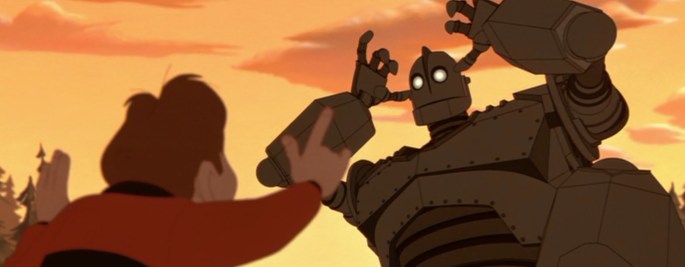
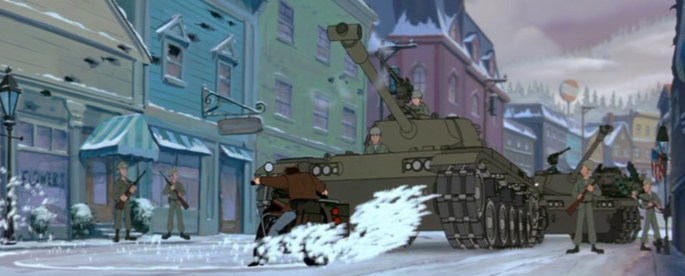
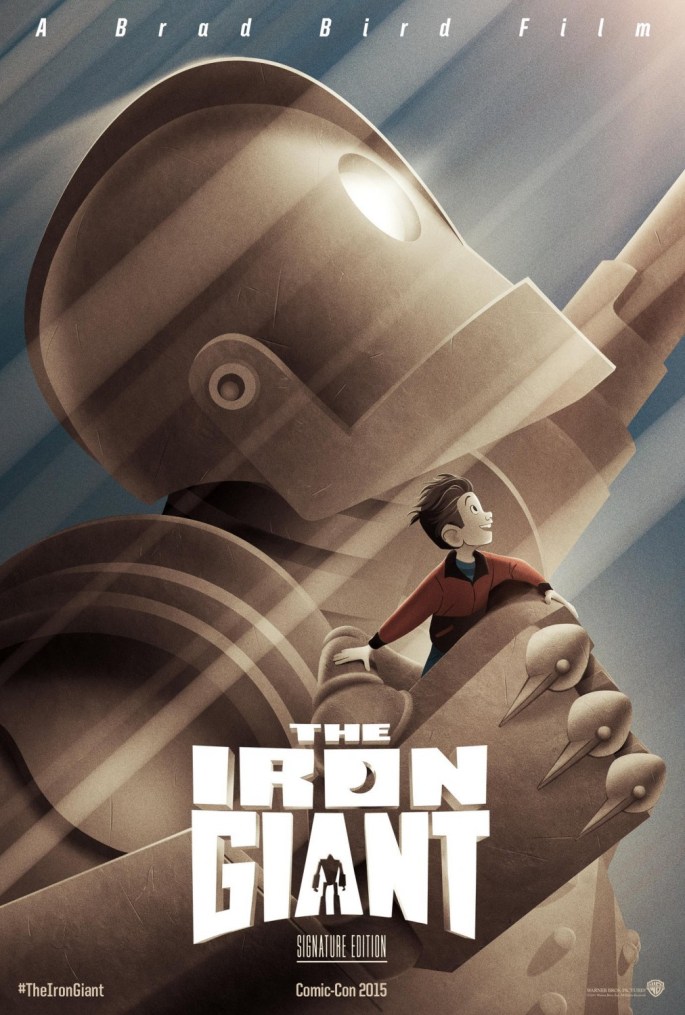
Brad Bird’s wonderful film The Iron Giant has a ton of honest and genuine heart to match its retro animated style, and despite not finding a blockbuster theatrical audience, has become both a cult and family favorite for those looking for a film with a serious message and that still packs prime entertainment value. Released in 1999, The Iron Giant’s thoughtful screenplay by Tim McCanlies (based on the novel The Iron Man by Ted Hughes) is its greatest asset, and when combined with Bird’s astute visual sense, this Cold War-set fable about a boy who meets and saves a giant robot from outer space really takes flight as one of the more memorable hand-drawn pictures of the last 20 years.

iron_giant_ver3_xlg

The voice-work is fabulous, with Vin Diesel’s imposing voice work a perfect match for the titular character, while Elie Marienthal, Jennifer Aniston, Christopher McDonald, Harry Connick, Jr., John Mahoney, M. Emmet Walsh, James Gammon, and Cloris Leachman all delivered fantastic vocal support that never felt at odds with the vintage aesthetic that Bird and his collaborators presented to the audience. Michael Kamen’s superb score pulls on the heartstrings and provides sonic adventure in equal measure. Filmmaker Joe Johnston assisted in the design of the robot.

2

There’s a sense of innocence to both the narrative and the aesthetic that I’ve always found refreshing, and it’s no surprise that Bird’s live-action features (Mission: Impossible — Ghost Protocol and the underrated Tomorrowland) feel like films that embrace the anything-can-happen vibe that an animated film brings to the table. I’ll never understand why Warner Brothers would have spent the amount of money that they did on this film (reportedly between $70-80 million) to then just half-heartedly release it with a minimum of advertising outside of the key summer weekends or closer to the holidays.

1

Rogue One: A Star Wars Story by Ben Cahlamer

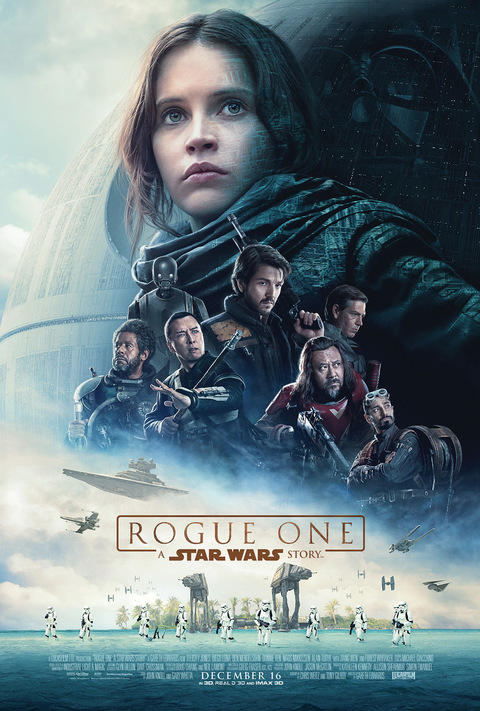
War.  Over the course of our history, we justify war to obtain that which we might not have access to, but need to survive.  In the eyes of others, we use war to protect the few resources we have from others. In the end, the more motivated group will overcome the meek.  For those standing up because it is right, it doesn’t mean that we must always bow down to the pressures of the powerful.  Sometimes, we find enough courage and conviction within our own morals to rightfully take back that which has been usurped. This is the basis for Gareth Edwards’ newest, but flawed entry into the Star Wars universe, “Rogue One”.

Word has reached the Rebellion that a cargo pilot defected with a message indicating the presence of a planet-killing weapon being developed by Imperial forces.  Wanting to authenticate the message, Gyn Erso (Felicity Jones) is coaxed into helping the Rebellion.  Joined by Cassian Andor (Diego Luna), they ultimately undertake a risky mission to retrieve the plans for this weapon.

The story, written by John Knoll and Gary Whitta (“After Earth”, “The Book of Eli”); screenplay by Chris Weitz and Tony Gilroy (the “Bourne” series)  is fun, but ultimately flawed as it tries to develop new characters while remaining relate able to the existing universe.

It was evident that the intention was to create a dark, espionage-style thriller within two threads:  the first to assemble the team, while the second to actually commit the deed.  The challenge is that the story starts off so slowly and disjointedly that by the time we get to the second, more impressive hour, we simply shouldn’t care.  The story does tie up its own loose ends, but it also creates more problems than it actually solves.

The characters service the script effectively.  However, the majority of the character’s motives were demurred by the action-oriented narrative.  Felicity Jones’ Gyn clashed with Diego Luna’s Cassian Andor.  Although their backgrounds are not similar, they do ultimately share the same path.  It isn’t until the second hour that we see Gyn become a leader.  Mads Mikkelson’s Galen was sharp; his purpose clear and he was able to parlay with Ben Mendelsohn’s Orson Krennic:  their egos each got the better of them, but their paths and functions were also very clear.  Donnie Yen’s Chirrut Imwe is a fun character, his presence a welcome, if sometimes irritating diversion while Jiang Wen’s Bazel Malbus looked stellar on the screen, but his purpose was ill-defined.  Although he grew the most and had the most to lose, Riz Ahmed’s Bodhi Rook was the most essential of the supporting characters.  Forest Whitaker always looks great on screen, however here his character only serves as a bridge and ultimately, an ineffective bridge between the first and second acts, and while the levity was welcome, Alan Tudyk’s K2SO was a bit over the top becoming repetitive, even in the third act.

Fortunately, the wizards behind the camera truly work their wonders in most quarters.  Costume Designers David Crossman and Glyn Dillon effectively bring us back into the Star Wars universe as does Doug Chaing and Neil Lamont’s stellar production design.

From the stages of Pinewood Studios outside London to multiple locations spanning Iceland, Maldives and Jordan, cinematographer Greig Fraser (“Zero Dark Thirty”, “Foxcatcher”, “Lion”) really stood up to the challenges in front of him, giving the film the visual grittiness it needed while conveying the timeless sense of the space battles that have come to be a trademark of the Star Wars universe.  In a key scene, Fraser’s use of lighting serves to throw off the viewer just enough to allow the special effects technicians to do their magic making the scene that much more effective.

Continuing in the grand tradition of delivering a visual impact, Industrial Light & Magic’s work on “Rogue One” is, without exception, the highlight of the movie.  From traditional model effects work to CGI landscapes, John Knoll, who also served as one of the film’s executive producers, was up to the task.  Without going into too much detail, he and the talented folks at Scanline, Hybride, The Third Floor and Disney Research are to be commended in the look and feel of the movie.

Michael Giacchino provided a more militaristic score, using some of John Williams’ existing themes while largely creating new music for this adventure, which works effectively.

As brilliant as the technicians behind the scenes were, editorially, the pacing and tone of the movie fell flat.  It took no less than three credited editors, John Gilroy, Colin Goudie and Jabez Olssen to bring the full narrative into its final form.  In a slightly lesser role, Stuart Baird was brought in to massage it even further.  Where the script narratively fumbled, the editing could not recover it fully, washing out characters and moments.

“Rogue One” brings together two separate parts of the Star Wars universe in an interesting and diverse way.  Its darker tone is welcome however the jumbled narrative and editing bring it crashing down.  Despite it being fun, its flaws are too numerous.  It is Recommended.

Ben Cahlamer, an aspiring film critic, is a new contributor to podcasting them softly.  Although he spends his time helping hotels to price their rooms, he appreciates the finer nuances of films.  He has been an avid Star Wars fan since he was born, having seen Return of the Jedi on the big screen three times in 1983 and continues to look forward to the future.
SEAN ELLIS’ ANTHROPOID — A REVIEW BY NICK CLEMENT

anthropoid_ver2_xlg

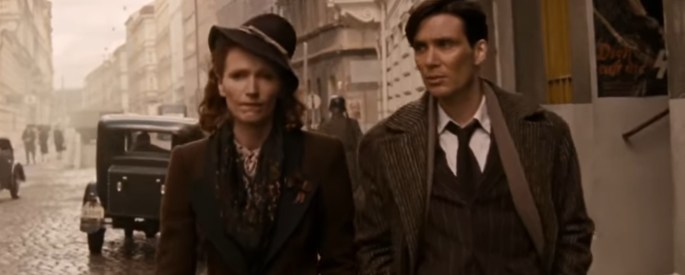
Released in limited theatrical markets last August, the rather stunning WWII espionage thriller Anthropoid deserved a much higher profile. Co-written, produced, and directed by Sean Ellis (the brilliant Metro Manila), who also served as his own astute cinematographer and nimble camera operator, this riveting piece of work tells the true story of Operation Anthropoid, which centered on the assassination of Reinhard Heydrich, one of the chief architects of the Nazi’s Final Solution, and the harrowing battle that took place in the immediate aftermath. The always focused Cillian Murphy and fast-on-the-rise Jamie Dornan (similarly gruff and commanding in Netflix’s The Siege of Jadotville) are both excellent as the Czech soldiers who are sent into their occupied homeland with a dangerous mission in tow, and because I didn’t know anything about this particular story, I was continually left guessing as to how it would all play out, and if the dangerous plan would be successful.

1

And from what I’ve been able to read about the production, Ellis and his creative team went to great lengths not to fudge the facts, making this story even more remarkable and sobering. Every film that’s based on actual events has to consider how to balance authenticity with poetic license, and in this sense, Anthropoid feels extremely well-calibrated. Ellis and co-writer Anthony Frewin keep the action moving for a tight two hours, with expert editor Richard Mettler’s judicious cutting keeping a fast but coherent pace, ratcheting up the intensity during the film’s bloody and forceful action sequences, especially during the protracted finale. The final 20 minutes amount to something of a tour de force of filmmaking, showcasing a large-scale shoot-out that gets up close and personal with the combatants on both sides, never shying away from any of the grim truths that the situation presented.

2

Reportedly shot for $9 million and looking like it cost much more than that, Anthropoid’s production values are very robust, with Ellis’ tactile, hand-held camerawork producing the appropriate amount of necessary anxiety to heighten the already precarious mission, while the musical score by Robin Foster never overplayed anything, instead subtly ingratiating itself into the proceedings. The strong supporting cast includes Toby Jones, Charlotte Le Bon, Harry Lloyd, Anna Geislerova, and Bill Miner. Shot entirely in Prague and in many cases at the actual locations of the events depicted, Anthropoid never feels anything less than extremely confident about itself, with immaculate production design and art direction courtesy of Morgan Kennedy and Radek Hanak, respectively. Currently available on Blu-ray and via HD On Demand streaming options, it’s a shame that Anthropoid has quietly slipped by so many viewers, as it’s well worth checking out.

3

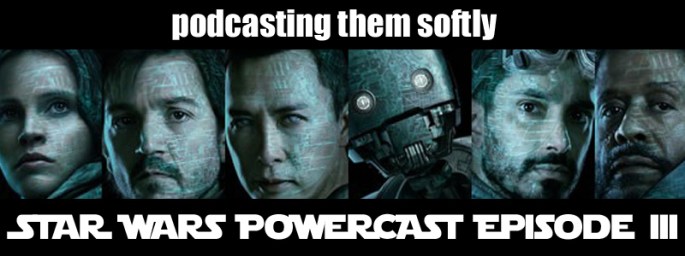
STAR WARS POWERCAST EPISODE III

star-wars-powercast-3

ATTENTION SPOILERS.  SPOILERS.  SPOILERS.  Frank and Tim FINALLY did another STAR WARS podcast.  This time we speak about the new standalone film, ROGUE ONE: A STAR WARS STORY.  We dive in deep about the emotional impact, the cinematic influences, and where Disney takes the STAR WARS brand from here!


MATTHEW ROSS’ FRANK & LOLA — A REVIEW BY NICK CLEMENT

3

Matthew Ross, a former reporter for Variety and editor of Filmmaker magazine, has crafted an intense psychosexual drama with Frank and Lola, a film that might not necessarily be as believable as it wants to think that it is, but at the same time, features extremely strong performances from Michael Shannon and Imogen Poots, with an interesting and sturdy supporting cast filling out the edges, including Michael Nyqvist, Justin Long, Rosanna Arquette (fantastic!), and Emmanuelle Devos. Currently available via HD Video On Demand platforms and playing in extremely limited release, Ross’ downbeat and provocative film hits some disturbing notes of male jealousy and female rage, all filtered through a seductive visual style thanks to bold lensing by Eric Koretz and drum-tight editing by Jennifer Lilly and Rebecca Rodriguez.

2

The story centers on a hot and heavy relationship that builds between Shannon and Poots, and then comes crashing down when she strays, but for reasons that aren’t exactly so clear. I’m not sure if all of the story ingredients meshed perfectly; the film takes an interesting detour into revenge territory that was more emotionally interesting than logistically plausible. But Shannon is such a magnetic actor, with the ultimate thousand-yard stare that it becomes impossible to look away when he’s on screen. The sexy and alluring Poots yet again demonstrates range as an actress, giving a heavily internalized performance with moments of cathartic explosion that propels the sad and potentially dangerous narrative forward. This is a film that explores a relationship that becomes defined by infidelity and tragic events from the past, and how two people attempt to look to a better future together, all the while knowing that permanent damage has likely already been done.

1

Netflix’s The OA: A Review by Nate Hill 

I always try to find unique and original projects when choosing films and shows to watch, for we live in a time where many titles you see out there are sequels, nostalgia reboots or spinoffs. These aren’t bad things per se, but it’s also important to break new ground and produce organic material, something which Netflix has a fairly glowing track record for. Tapping the creative well that is the mind of young female director/actress/producer Brit Marling, the platform has given her the chance to tell one of the most striking, beautiful and altogether astonishing pieces of work I’ve ever seen from the long form storytelling format. Earlier this year, Stranger Things knocked me flat, and recently Westworld has captivated my attention and imagination. But The OA has done something different for me; stirred my soul in a way that few creative pieces can, with a story so unpredictable that it starts to feel like the forces of nature at work, forking off into tributary sections of narrative that you would never, ever have been able to to surmise ahead of the reveals. 

  Now, something I’ll say right off the bat: This won’t be for everyone, and I predict many confused, bitter reviews. Such is the case with work that requires effort and clarity of attention from the viewer, as well as the key ingredient: objective thinking. This is both a scientific and spiritual story, bereft of any religious implicatioms, incredibly vague, esoteric and at times left open to interpretation, or clarification we will get from a second season, fingers crossed. 

  It starts off simply enough, with the return of a girl named Prairie (Marling) to the home she disappeared from seven ears prior. Mysteriously cured of childhood blindness and very secretive of the events which have befallen her, her loving parents (Scott Wilson and Alice Krige in knockout performances) are just happy to see her again. It’s here the story turns off it’s headlights and hurtles blind into the night, going to places you’d never have thought it would, let alone be explored in a mainstream network series. Marling and Co creator Zal Batmanglij (yes that’s his real name) have outdone themselves in the originality department, presenting ideas and questions so far from the norm of what we’re used to that their story really and truly feels unique from anything else we’ve ever seen. Marling is incandescent in the role, which requires her to go to some fairly tricky places in terms of acting, handling it with the shimmering grace of an angel. It’s difficult for me to say anymore because I want you to open up this gift of a story on your own, without anything to go on, but I must mention her co star Jason Isaacs, who plays a scientific man involved in her disappearance. He’s obsessed in a feverish, sick way, and in any other actor’s hands the character may have come across as too villainous or intense. Isaacs is an unheralded genius of the craft though, and despite the callous nature of the role, he seems more human, more grounded than most. 

  I really can’t tell you much more at this point, and what I’ve said so far is much less than I usually do in reviews, as far as plot goes. This is one to binge watch, one to let wash over you like a blanket of stars, and one to think long and deep about as soon as the credits of the last episode make themselves known. For the thinkers, the wonderers, the ones who ponder what’s out there and what may be in store for us way down the road of the cosmos, The OA is a blast of nutrition for the soul.

Why ROGUE ONE is the Most Important STAR WARS Film to Date.

ROGUE ONE: A STAR WARS STORY is the most important film to enter the STAR WARS canon to date.  While the initial reaction and hype has this billed as one of the best films of the series; that’s a bit of a loaded statement.  Yes, the film is fantastic, it’s unlike anything we’ve seen from the cinematic universe before, but after the shock and awe wears down; it will still be a top tier film, but somewhere behind EMPIRE STRIKES BACK and A NEW HOPE.  ROGUE ONE is important for an array of reasons, but most importantly the films serves as a bridge between the film series as well as other mediums of the STAR WARS canon.

bail

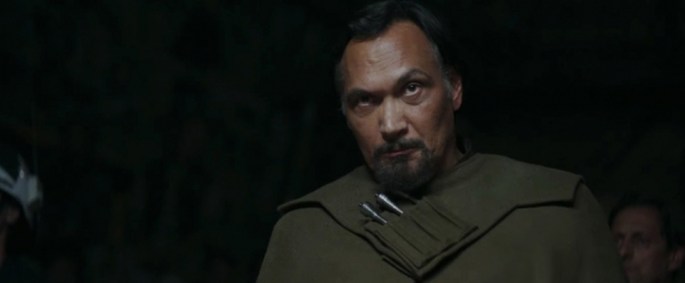
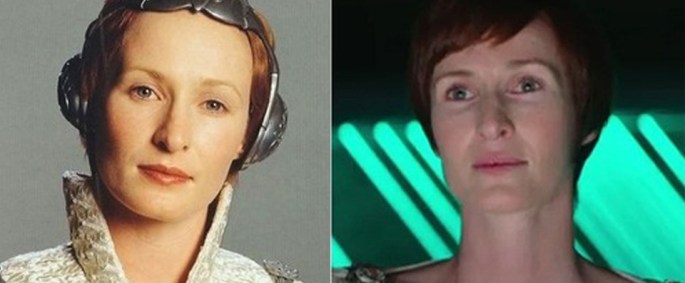
Jimmy Smits’ reprisal as Leia’s father and Rebel leader highlights a very important purpose.  Smits authenticates the prequel trilogy for those diehard fans that have disdain and immediately dismissal of them.  Smits as well as the reprisal of Genevieve O’Reilly as Republic Senator and successor to Bail, Mon Motha, legitimizes aspects of the prequels, as well as Disney further proving that they are not going to shy away from Lucas’ “controversial” trilogy.  O’Reilly would have been easy to recast, most of her scenes were cut from REVENGE OF THE SITH, and she isn’t particularly a well-known actress to the populous outside of STAR WARS diehards.  Both of these characters biggest roles can be found within the CLONE WARS series, were both parts are voiced by different actors.

Both these actors are great in their respective roles, and are given much more to do than any of us originally thought.  Smits has his most lengthy role to date, as does O’Reilly; and they are both important aspect of Disney’s bigger picture of what they plan on doing moving forward beyond the safe haven of the saga films.  Along with Vader and the CGI reconstructed Peter Cushing as Grand Moff Tarkin, the most important job these actors had was anchoring the film within the universe that so many of us hold so dear.

mothma

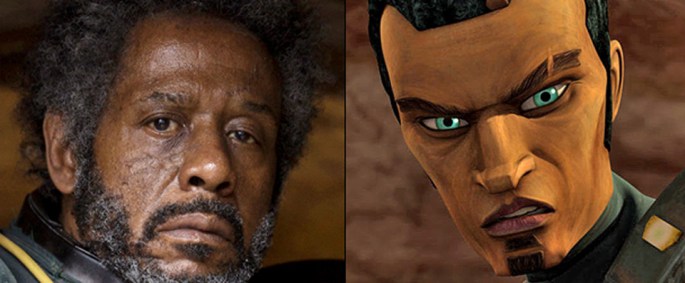
Forest Whitaker’s turn as Saw Gerrera, the Colonel Kurtz esque defrocked Rebel, might be the boldest move yet by Disney.  The origins of Gerrara lay within George Lucas’ concept for a live action STAR WARS show titled UNDERWORLD, an unproduced project that was originally announced in 2005.  Gerrera then made his first appearance in a four episode arc of the fifth season of animated series CLONE WARS.  Gerrera was a very grey shaded resistance fighter who used whatever methods possible to fight off the Separatists.

When it was first announced that Whitaker was playing a character we’ve already seen in the SW universe, rumors swirled of Captain Panaka from THE PHANTOM MENACE, Dash Rendar from the non-canonized novel SHADOWS OF THE EMPIRE.  Then it was quickly announced who he was playing, and many of us quickly booted up Netflix to rewatch the four episode arc.  So, why did Disney do this?

saw

Validity.

By doing this, Disney opens the door to make cinematic crossovers.  Bring characters to screen who we’ve seen before in novels, animated TV shows, or comics.  It was heavily rumored that bounty hunter Cad Bane was going to make an appearance in ROGUE ONE.  That ended up not being the case, but I imagine we’ll see him and other fan favorites (Ahsoka, Hondo, Thrawn) make cinematic appearances in the near future.

Lastly, the inclusion of Gerrera was a very nice and symbolic gesture to the creator, George Lucas.  In reality, Gerrera is an inconsequential character in the SW universe.  His part in the film could have just as easily had an original name with no prior connection, and it would not have lessened the impact of his character in the slightest.  For as ridiculously controversial the creator, George Lucas, has become amongst SW diehards, Disney showing him direct tribute with the addition of Saw Gerrera was an incredibly gracious gesture.  After all, without George Lucas, we wouldn’t have ROGUE ONE.

STEVEN SODERBERGH’S OUT OF SIGHT — A MINI-REVIEW BY NICK CLEMENT

2
Out of Sight remains one of eclectic filmmaker Steven Soderbergh’s most entertaining films, with all sorts of humor and sexiness and crime movie genre tropes running up against each other and culminating in a tasty brew of artistically-minded commercial cinema. Released to outstanding reviews but lukewarm box office back in June of 1998, Scott Frank’s hilarious and beautifully constructed screenplay (an adaptation of Elmore Leonad’s novel) was a perfect match for Soderbergh’s jazzy directorial style, with Elliot Davis’ darting camerawork and the sharp editing patterns of Anne V. Coates in complete aesthetic harmony. George Clooney’s magnetic lead performance was bolstered by a supremely awesome supporting cast including a never-better Jennifer Lopez, Dennis Farina, Michael Keaton, Don Cheadle, Luis Guzman, Steve Zahn, Ving Rhames, Isaiah Washington, Catherine Keener, Nancy Allen, Viola Davis, Paul Calderon, and the rather brilliant Albert Brooks. The soundtrack by David Holmes is an all-timer, the chemistry between Clooney and Lopez was palpable and juicy, and the film’s mixing of comedy and violence is smart, artful, and sophisticated.
1

Sam Raimi’s A Simple Plan: A Review by Nate Hill 

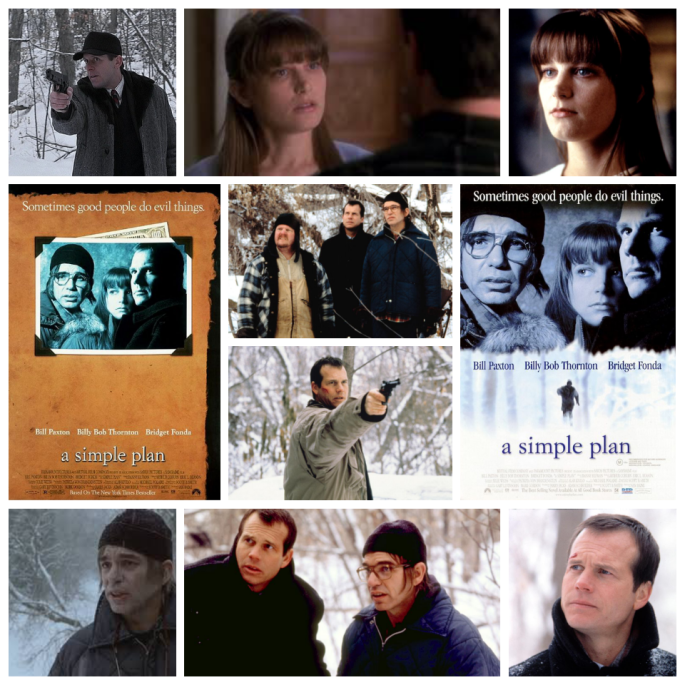
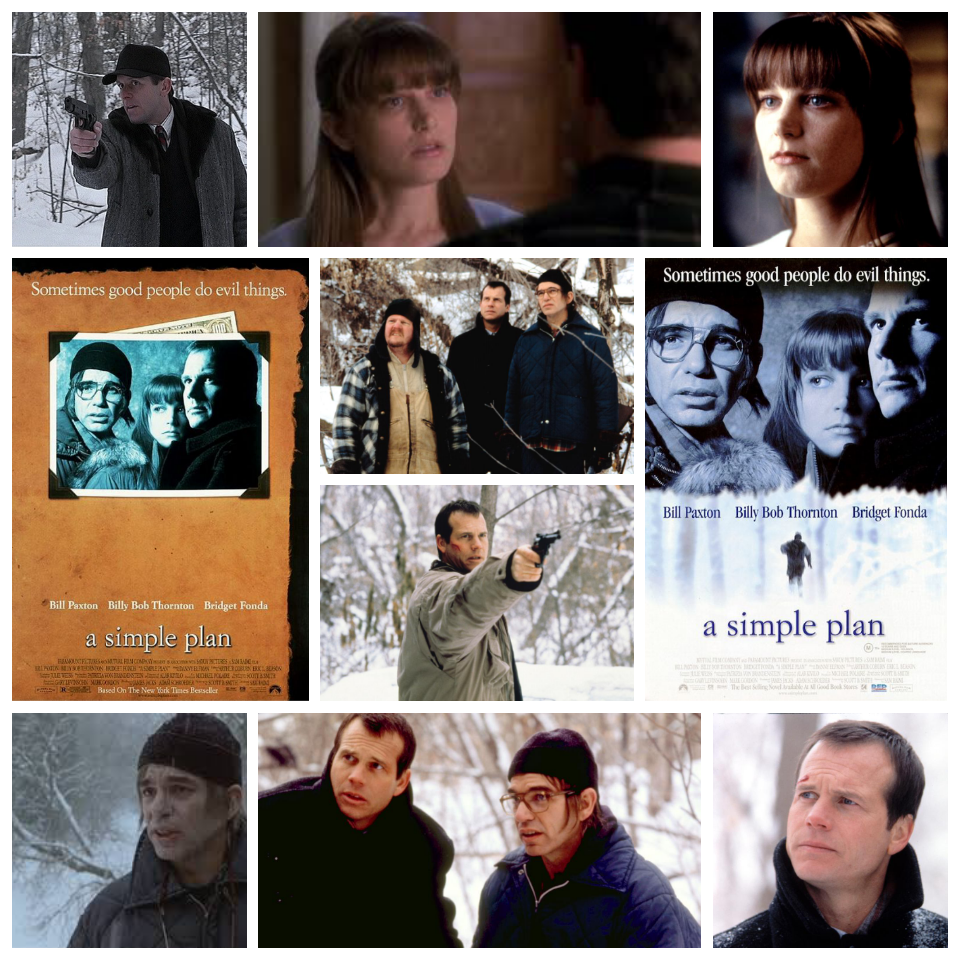
Crime doesn’t pay, and money is the root of all evil. There are countless stories of people who forsake such principles and venture down a dark, destructive path, but none quite so biting and tragic as Sam Raimi’s A Simple Plan. What haunts the viewer so much is not the fact that these characters suffer through horrific turmoil resulting from the promise of money, it’s that these are nice, good natured, everyday folks. These are the people next door, the blue collar, salt of the earth Americans, and it’s harrowing to see the downward spiral they fall headlong into. Bill Paxton is the mild mannered hardware store owner, Billy Bob Thornton his unemployed, dimwitted brother and Bridget Fonda his wife. Three regular people who could be any of us, until they find the money. Out in a snowy rural landscape, millions of dollars in cash is discovered by them, and that’s where the trouble begins. The three go to great lengths to keep their secret hidden from the local authorities, and eventually become paranoid, deceitful and hostile towards each other, leading to some truly heartbreaking outcomes. It’s not enjoyable watching these poor people go through this, because this isn’t some exploititive crime genre exercise. Although shades of noir are present, this film is set in the real world where human beings are neither good nor bad as a template, but have complex capacity for great evil or compassion. When something like the money gets in the way, though, that potential for malicious behaviour is dialed up considerably, and the resulting calamity looks something like what we see here. What’s scary about the whole thing is that it’s essentially their own fault; yes, the money turned up, and yes, its presence is what drives this wedge among them, but the money isn’t sentient, it doesn’t wish ill will, it’s simply *there*, leaving the characters to make decisions regarding it, decisions which in this case lead to their despairing downfall. What’s more, money is our own creation, not some outside influence eating away at them. This is surprising output for Raimi, who is the guy we know for rambunctious horror and genre pulp, but he shows a skilled and subtle hand with the down to earth material, letting his story be a window into a cold world of feverish greed, a world where plans are, in fact, anything but simple. 

MIKE NEWELL’S DONNIE BRASCO — A MINI-REVIEW BY NICK CLEMENT

2

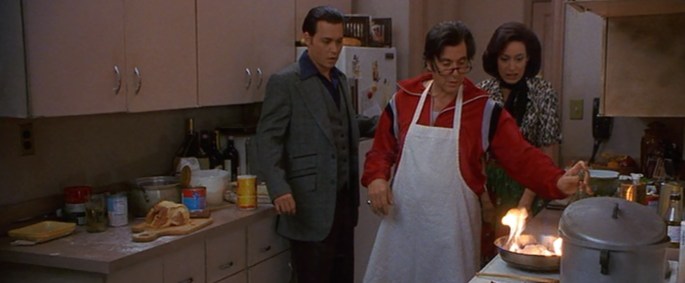
Released in 1997, Mike Newell’s gritty and superb organized crime drama Donnie Brasco features a top-flight turn from Al Pacino as an aging, low-level, worker-bee gangster with sadness behind his tired eyes, and Johnny Depp in one of his better performances as an undercover FBI agent who gets in too close for comfort with a particularly nasty set of violent mafia-men. Paul Attanasio’s intelligent, fact-based, and propulsive screenplay wasted not a moment in kicking the story off in high fashion, with Newell never overtly trying to replicate any other genre entry that has made this milieu one of the most popular in cinema history. A hit with critics and a solid box office performer, this is the type of movie that has gained an even more solid footing in the years since its release, as it’s a non-nonsense and very sturdy piece of filmmaking with some zesty supporting performances (Michael Madsen and Bruno Kirby in particular) and a few extremely memorable sequences, with an ending that leaves an emotionally conflicted lump in your throat.

1