Ten Actors Who Are Perfect For a Quentin Tarantino Film

Many of us love Quentin Tarantino films for a multitude of reasons; the story, his use of popular music, his dialogue, and especially his casting.  He resurrected the careers of John Travolta, Pam Grier, Robert Forster, Jamie Foxx, David Carradine and introduced Michael Fassebender, Christoph Waltz, Samuel L. Jackson, and Uma Thurman into the mainstream of cinema.  Along the way he has also brilliantly used Kurt Russell, Michael Parks, Michael Keaton, Robert De Niro, Michael Madsen, and many other great actors that have given some of their best performances in a Tarantino film.  There are so many actors that Tarantino should work with, so making a list of just ten is nearly impossible.  But this is my dream list.  Some are more realistic than others.
 

bisset-qt

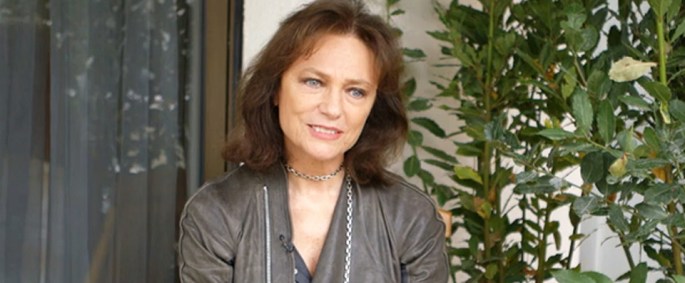
Jaqueline Bisset

                Most recently, Bisset gave a show-stopping performance in Abel Ferrara’s WELCOME TO NEW YORK.  Not only was it great to see her work with such compelling material, but it was also incredible to see her work with Abel Ferrara, a director that’s transgressive works wouldn’t normally attract an actress of that clout and cinematic reputation.  She gives a fierce performance in the film, and I could only imagine what she would be capable of in a Tarantino film.

crowe-qt

Russell Crowe

                Russell Crowe is in prime career transition.  His days of the young, muscular cinematic asskicker are long gone.  He’s currently floating between the mentor, the heavy, and the middle-aged leading man.  His performance in THE NICE GUYS is one of his best in recent memory, and his turn in LES MISERABLE is one of the most underrated performances within the last ten years.  He’s more than suited to headline or sidestep back into a Max Cherry-esque role.
ddl-qt

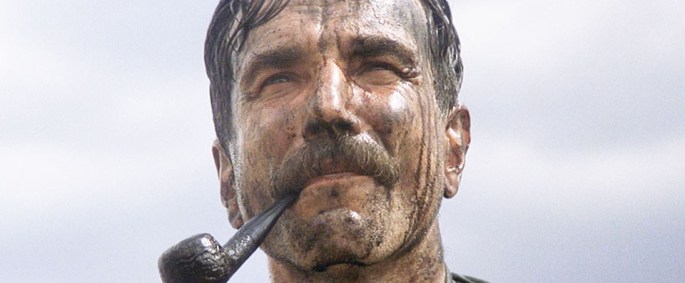
Daniel Day- Lewis

                It’s widely noted that one of the only roles that Day-Lewis has ever sought out was the role of Vincent Vega in PULP FICTION.  First of all, I can’t imagine what DDL would have done with that role, and secondly, I can’t imagine Tarantino, hot off his indie hit of RESERVOIR DOGS telling the studio and DDL no, I’m going with John Travolta.  Day-Lewis can take a role, even in some of his more mediocre films, and knock that role out of the park.  He’s showy when he needs to be, and knows when to reign in a performance to make it so slight and subtle.  Imagine what he could do with the colorfulness of Tarantino’s dialogue.
 fonda-qt

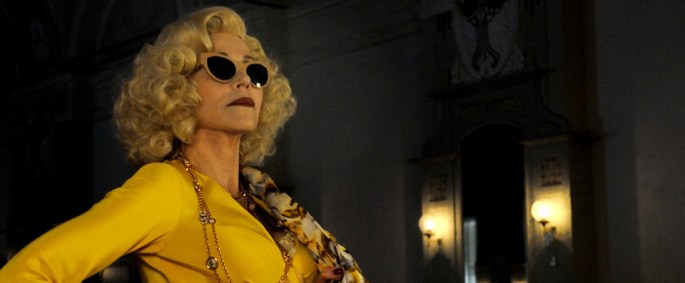
Jane Fonda

                Whatever is left of cinematic royalty, it’s Jane Fonda.  Throughout the years, she has continued to stay relevant in both film and not television with Netflix’s GRACE AND FRANKIE.  Recently, she gave a briefly pulverizing performance in Paolo Sorrentino’s YOUTH.  Casing Fonda would not only be a callback to some her earlier performances, but she would also bring an air of golden movie star cache that we rarely see on film anymore.

ford-qt

Harrison Ford

               Let’s face it, Harrison Ford is one of the biggest movie stars of all time.  He is Han Solo, Indiana Jones, Rick Deckard, Jack Ryan – yet for the past twenty years or so, he hasn’t been as compelling as he used to be.  Yet, his return as Han Solo in THE FORCE AWAKENS is one of the best things he’s ever done.  The return was phenomenal, thrilling, and heartfelt.  His performance was organic, and there wasn’t one moment in the film where it felt as if he were phoning in the performance.  Ford has had quite the ride as a movie star, and his persona would go a hell of a long way inside of a Tarantino film.
gibson-qt

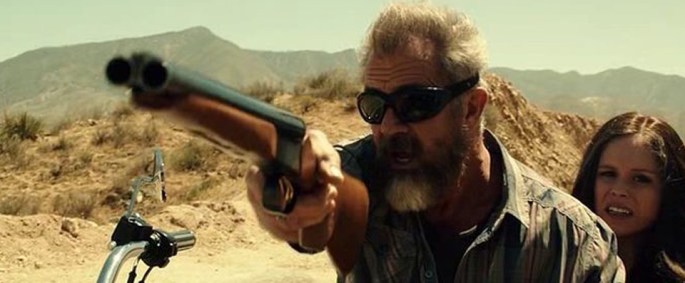
Mel Gibson

                If there is any actor at this moment in time who is due to make a cinematic resurrection, it is Mel Gibson.  His most recent leading turn in BLOOD FATHER shows, without a doubt, that his screen presence is still an unstoppable force to be reckoned with.  His smaller roles in MACHETE KILLS and THE EXPENDABLES 3 further prove that he and Tarantino are a perfect match.  Regardless of how outlandish or low key that theoretical role would be, Gibson would absolutely kill it.

slang-qt

Stephen Lang

                Stephen Lang is much like Daniel Day-Lewis.  He’s a cinematic chameleon.  Decade after decade the guy has disappeared into so many memorable roles in so many memorable films.  Most recently, Lang has taken a career transition as a muscular badass in James Cameron’s AVATAR and this year his gives a tour de force performance in Fede Alvarez’s DON’T BREATHE.  He owns Michael Mann’s PUBLIC ENEMIES, outshining both Johnny Depp and Christian Bale.  Mann knew exactly what he was doing casting Lang, bringing in a skilled actor to bring the film to an absolute stop during the final moments of his epic gangster saga.  The merging of Tarantino and Lang is a cinematic match made in heaven.
mendelsohn-qt

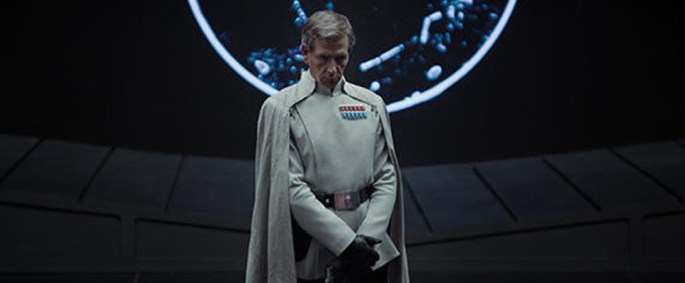
Ben Mendelsohn

                I can’t think of many current actors who has been in so many great films in such a short time span.  KILLING THEM SOFTLY, THE PLACE BEYOND THE PINES, ANIMAL KINGDOM, SLOW WEST, and his next two films are polar opposites: UNA based off of the transgressive and acclaimed Broadway play, BLACKBIRD and ROGUE ONE: A STAR WARS STORY where he is cast as the evil Imperial Director Orson Krenick, the man in charge of the Empire’s military.  A lot of Tarantino’s work is cast in moral ambiguity, and there isn’t anyone better at playing that, than Ben Mendelsohn.
vaughn-qt

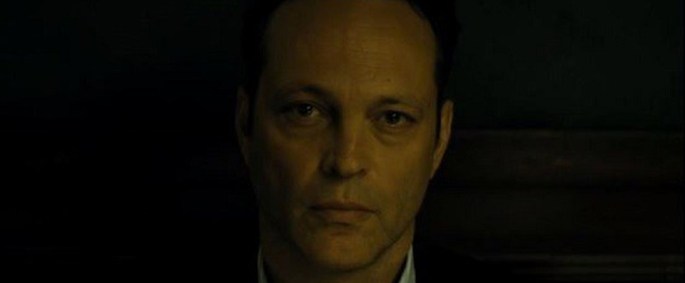
Vince Vaughn

                Thankfully, Vince Vaughn has successfully shaken off his prolific comedic career and has heavily vested himself back into dramatic works.  The amazing second season of TRUE DETECTIVE reset Vaughn’s path as an actor.  His next film is Mel Gibson’s long anticipated World War II film, HACKSAW RIDGE where Vaughn plays a rough and tough commanding officer.  After that, Vaughn is going to be in BONE TOMAHAWK director S. Craig Zahler’s  BRAWL IN CELL BLOCK 99 that sounds as dark and gruesome as BONE TOMAHAWK did.  Vaughn, who can play both humor and drama would be an excellent mesh with Tarantino’s words and look of his films.
weaver-qt

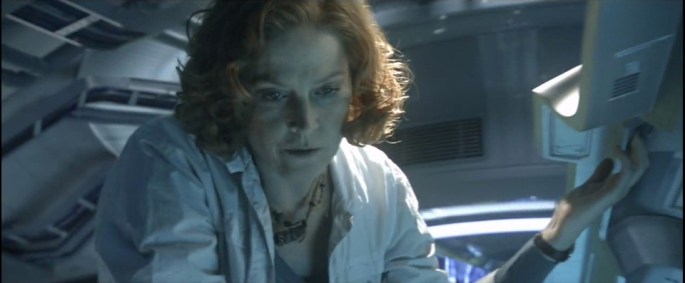
Sigourney Weaver

                Whether she’s killing aliens or emotionally breaking Kevin Kline, or romancing Bill Murray; Weaver has always had a unique and powerful presence on screen.  Her work is always solid, regardless of the end result of whatever project she is working on.  She belongs to the same class of actresses like Pam Grier, Daryl Hannah, and Jennifer Jason Leigh – those actors who had at one point were A list actors due to not only their sex appeal, but also their carefully crafted performances.  Whether she’d be a femme fatal, or a badass hero – she would fit perfectly into Tarantino film.

CLINT EASTWOOD’S SULLY — A REVIEW BY NICK CLEMENT

1

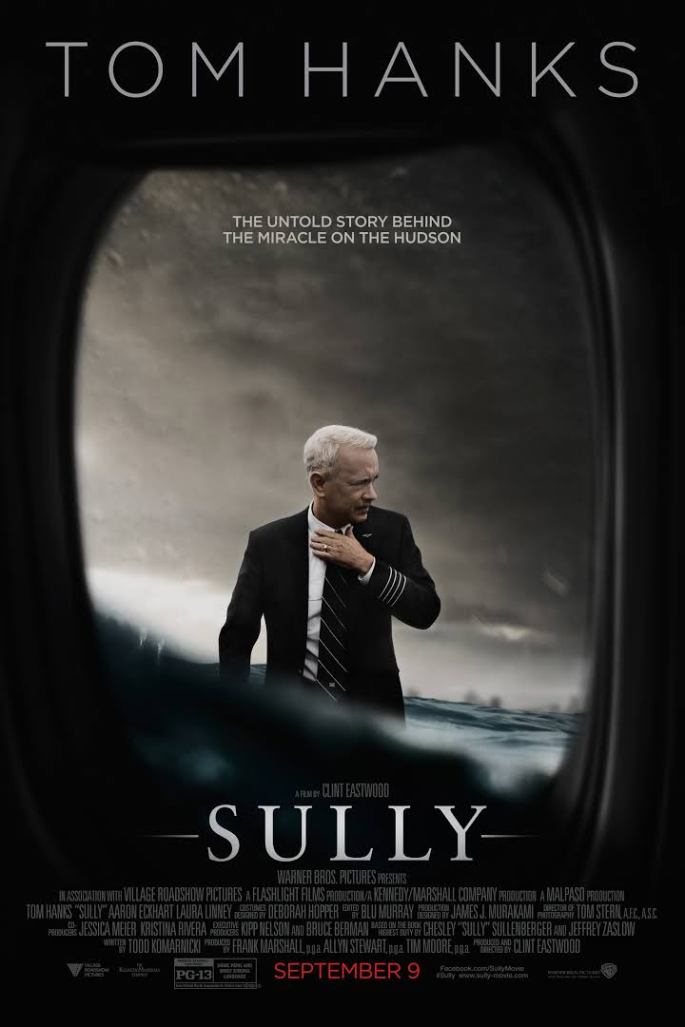
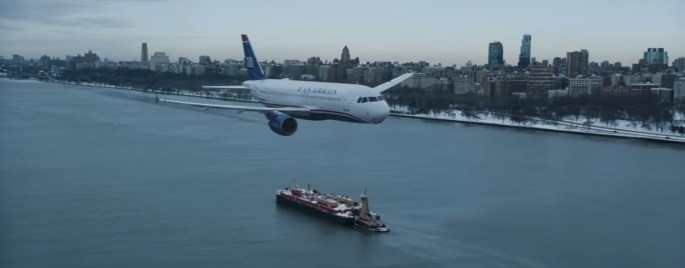
It’s too good to be true, the mere notion of what Captain Chesley Sullenberger did on that particular day in January 2009, but due in large part to pure movie magic, we’re now able to get a first-hand glimpse of the terror, confusion, heroism, and stroke of miracle that took place on the Hudson River. Clint Eastwood’s bold new film, Sully, is a monument to humble American professionalism, a tribute to a man and to a city in general that feels both modern and old-fashioned in equal and appropriate measure. As written by Todd Komarnicki, the film wisely places a narrow focus on its narrative, never overreaching, concentrating mostly on the immediate aftermath of the event, while allowing for some smart uses of flashbacks in order to bolster the notion that Sullenberger was just about the only man fit for this particular emergency. And of course, the entire film is anchored by the amazing Tom Hanks, who yet again crafts a compelling portrait of a regular man thrust into circumstances beyond his control; this is a companion piece, of sorts, to his intense performance in Captain Phillips, and similar to that great piece of true-story entertainment, Hanks’ confident work informs every aspect of the film, allowing himself to become consumed by the material. What is it like to have 35 seconds to make a decision that will affect the lives of 155 people? What’s it like to sit in that cockpit and see the Hudson River a few feet underneath the gear of the plane? What is it like to be faced with the unprecedented, the seemingly impossible? That’s what’s at the heart of this emotionally gripping and soul-stirring film, and because the ending is a happy one, we’re able to bring that knowledge to the cinema as a comforting device. And yet the film still destroys you on an intrinsically human level, because when you boil it down, any one of us could have been on that plane on that day, making one last phone call or sending one last text message, and coming to terms with our fate.

2

Komarnicki’s tight script keeps a sense of discipline that feels in line with its subjects; he was able to balance the humanism of the story while still respecting the miraculous nature of the entire event. We’re not hard wired to wake up in the morning, and be expected to glide-land a commercial airliner on a massive body of water. So, it was smart of Komarnicki to let his script document the incredulous responses that waited for Sully after the event. Eastwood’s no frills directorial style is actually more visually flamboyant than usual, with some incredibly bold individual shots, while it’s very clear that he wastes no time with any aspect to the process. And I wish I could understand how the CGI was done in this film. Taking a page out of the Michael Bay playing field of the photo real image, the audience is treated to numerous shots of the plane that you know just can’t be real. And yet in every sequence, it never looks anything but thrillingly tangible; why does this movie look flawless at $60 million when every week some lumbering $200 million+ CGI-laden monstrosity is thrown up on screens looking like Playstation 2 leftovers? And the way that the technicians recreated that chilly morning on the water with wrap around green screens while filming in a flooded parking lot in Burbank with the hull of a plane dropped in the water – utterly spellbinding while feeling totally authentic. I am a firm believer in only doing this sort of effects work if you’re going to pour over each element, each detail. This is something that was clearly done by Eastwood, his estimable cinematographer Tom Stern, and many other visual consultants.

1

And when it comes to the cinematography of Sully, Stern and Eastwood did something nobody had done before, by shooting in 65 mm IMAX for the duration of filming. The depth of field and striking level of clarity in certain moments is breathtaking. The overcast January skies were perfectly recreated, with an excellent use of desaturated color. This is one of those movies that just grabbed me by heart and mind from the opening seconds (which are startling and absolutely horrifying to consider…) and had me in its grasp for 95 minutes. The fleet editing by Blu Murray, a longtime Eastwood associate, keeps a pace that’s quite different from recent Eastwood efforts; there’s a bracing and direct quality to Komarnicki’s script that’s amplified by the measured directorial style and the extremely precise timing of each scene and moment. And to end the film on the note that it does, well, that moment of levity really hits hard and is a welcome relief from all of the stress and anxiety experienced by all of the characters. It should be noted that Aaron Eckhart is quietly fantastic in his role as the co-pilot; I was amazed by the grace under pressure that both men exhibited during the ordeal, and because this film was clearly designed around lots of research, it all feels totally believable. Hanks should be considered a national treasure at this point, always bringing a steady and sturdy level of gravitas to his roles. Of late, by taking on high profile men of action in films that aim to report the facts, he’s become the go-to-guy for unassuming efficiency with a dedication to doing one’s job. It’ll be a while before I can totally shake this movie out of my system, as the images have seared themselves into my cerebral cortex, and the feeling of overwhelming compassion that one feels for all of the first responders who came to the rescue is something I wasn’t prepared to take on. Recalling Oliver Stone’s vastly underrated World Trade Center, Eastwood’s film pays tribute to everyone who came together on that day, and who helped to save a group of strangers that never expected to be in the position that they found themselves in. Sully is a film that feels vital and important, and a reminder that human beings are still capable of greatness in ways that could never be predicted.

3

Christopher Nolan’s Insomnia: A Review by Nate Hill 

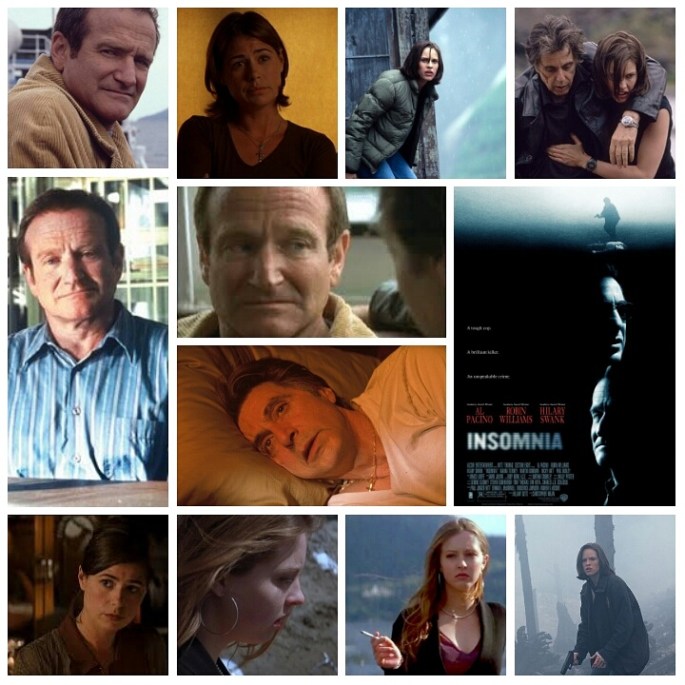
Christopher Nolan has a monumental filmography full of lofty cerebral ideas, superheroes mythic in nature, and incredibly complex morality plays. The one time he hit the road in a straight line is Insomnia, a fairly standard cat and mouse thriller given the obvious boost of having Chris at the helm, as well as two actors who get dangerously out of control, in the best possible way. Al Pacino plays Will Dormer, an L.A. cop who treks out to small town Alaska to solve the mystery of a murdered local girl. The twist: they’re in the region where it’s daylight for a month straight, and if that’s something you’re not accustomed to, it’ll throw you way off. It’s fascinating to watch Pacino roll in sharp as a razor and completely in control, then observe his lack of sleep eat away at the frills of his perception and start to play tricks on his weary mind. The film has one of those narratives that gives us a heads up as to who the killer is nearly right off the bat, in this case personified by Stephen King esque novelist Walter Finch, played by a vastly creepy Robin Williams. He and Pacino do an eerie dance through the foggy local geography and small, gaunt townscape, Pacino looking for clues and proof while trying to hold onto his sanity, and Williams unnervingly playing a macabre mind game, perhaps only for his own amusement. There are shades of Vincent Hanna in Pacino’s work here, the extremely stressed out LA detective from Michael Mann’s Heat. One gets a sense of the same world weariness and feral ferocity of that character, especially in a heartbreaking monologue to the local innkeeper, played by underrated Maura Tierney, who is brilliant in the scene that requires her mostly to listen, a much harder task than delivering any page of dialogue. As for Williams, he’s never really done anything this specific before. I mean, he’s played freaks and villains all across the board, but none quite like Walter Finch. He’s detached in a way that still clings to a humanity he may have lost through so many years writing stories that only happened in his head. He’s both dangerous and rational, and when those two are fuelled by emotional trauma… watch out, because there’s damage to be done. There’s further work from Hilary Swank as Will’s partner, Nicky Katt, Emily Perkins, Martin Donovan and edgy Vancouverite Katherine Isabelle, who just excels in anything, here playing the murder victim’s troubled best friend. 

 Now, this film is based on a chilly Swedish thriller of the same title, starring Stellen Skarsgard in Pacino’s role, and Williams nowhere to be found, naturally. I connected with Nolan’s version far more, the original seeming rather bland and lacking personality, but it’s got a huge following and a Criterion release, so what the hell do I know, go see for yourself. I do know that nothing stands up the hairs on my neck quite like the portentous back and forth between Pacino and Williams here, the icy inaccessibility of the central mystery and the feeling that there’s always something bubbling just below the surface of a seemingly civilized interaction. Barring Memento, which even rose to flights of fancy, this is the most down to earth Nolan has ever been in his exploration of the psychological landscape. Dreams, outer space, damaged memory and morality are for another day here. It strips away any of that, leaves it’s characters stranded in a misty, threatening environment that mirrors their own starkly layered perception, and sits back to observe. Rats in a maze of the human mind, if you will. It’s an important film in Nolan’s career for this very reason; a departure from ambitions grandiose in nature, a vacation from fantasy, and a forceful glimpse at two men with minds holding on by just a thread, like a spider’s web, beaded with dew in perpetual sunlight that refuses to set and give them solace. A masterwork of tension, with few instances of release. 

OTHER PEOPLE: A Review by Joel Copling

Rating in Stars: **** (out of ****)
Cast: Jesse Plemons, Molly Shannon, Bradley Whitford, Maude Apatow, Madisen Beaty
Director: Chris Kelly
MPAA Rating: NR
Running Time: 1:37
Release Date: 09/09/16 (limited)

Its almost clinical mastery of tone is captured in the opening sequence of Other People, in which the mother of a family of five has, just seconds previous, succumbed to the human curse known as cancer. Her husband, son, and daughters are sprawled across her body, weeping openly for the loss they have just suffered, and then the phone rings. No one, of course, answers it, just as no one would capture this moment with a camera, because courtesy dictates the death must be treated with respect, but it does eventually go to voicemail. The caller is a friend, just checking in after years of not having heard from the woman now lifeless in bed, until the call is interrupted by a menial drive-thru transaction. I’m sorry, says the friend, for the inconvenience of hearing that interaction.

Director Chris Kelly’s screenplay hypothesizes a lot, both good and unintentionally humorous, about human nature in that opening sequence, and he spends the remainder of the film’s 97 minutes, which rewind to the makeshift beginning of the story, confirming those hypotheses. This is a film about the kind of good in people that is inherent, that is not always apparent on the surface, and that is shared by everyone (and anyone) who has had this shared experience. Losing a parent is a universal occurrence, except that for David  (Jesse Plemons) it comes as just one awful thing about the awful year he’s been having.

He’s a comedy writer on staff for Saturday Night Live (an autobiographical element of Kelly’s life that makes one wonder what else might have been borrowed for the purpose of this drama), but he’s also been trying to sell a pilot spec script for a comedy program that will be shown on one of the big, prime-time channels. That thread resolves itself in exactly the way one might expect from the news that this is shaping up to be the worst year of his life. Not only that, but he and his ex-boyfriend Paul (Zach Woods) have called it quits, with David’s part of the lease on their apartment about to end. Some resentment about David’s close-knit, traditional father Norman’s (Bradley Whitford) inability to accept David’s sexuality and choice of partner seems to have led to this.

And then David’s mother and Norman’s wife, Joanne (Molly Shannon) announces her illness, which is an inoperable cancer. Focus shifts onto David’s attempt to help his only major support system before the inevitable. Plemons is terrific as David, never offering an affectation of a queer individual or becoming anything less than completely authentic in his portrayal of a man under the heaviest strain, and Whitford, in the film’s trickiest role, must build a portrait of a confused man intimidated by his wife’s condition and his son’s “lifestyle” until a particularly heated exchange levels the playing field. Kelly’s screenplay has compassion for both men, refusing to make Norman a broad caricature as thoroughly as Whitford does.

Shannon is heartbreaking as Joanne, a woman who successfully puts on an air of strength she musters from her very intestines, even as she loses her hair and voice. The most painful scene here is a PTA meeting in which she must either use another person to speak louder than she can, the woman’s sense of dignity evaporating all the slower as the exchange goes on and then moves to the outside. Shannon is at the film’s aching but beating heart. This is a phenomenal film about family, about the strength of the bond within that family, and about the understanding that, through thick and thin, blood is blood. It is a great film.

MARTIN CAMPBELL’S THE MASK OF ZORRO — A REVIEW BY NICK CLEMENT

3

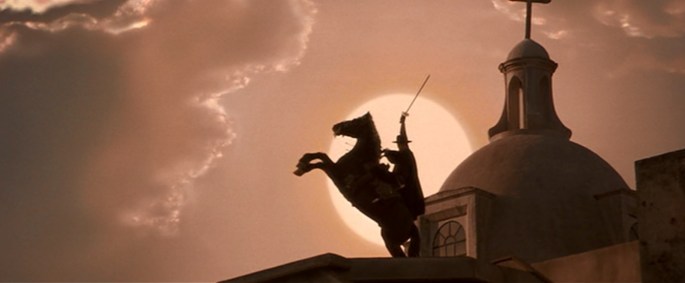
Real-deal swashbucklers are hard to find these days, and outside of the Pirates of the Caribbean franchise and a few period pieces with some sword-play elements, I can think of few recent efforts from this most venerable of genres. That’s why Martin Campbell’s rousing and fully entertaining The Mask of Zorro should be rediscovered, as it provided a welcome blast of widescreen fun in the theaters during the summer of 1998, becoming a big worldwide box office hit, and has really yet to be replicated since (the lackluster sequel didn’t come close to matching the charms of its predecessor). Starring Anthony Hopkins as the original and now retired Zorro/Don Diego de la Vega, the incident-packed narrative cooked up by credited screenwriters John Eskow, Ted Elliot, and Terry Rossio finds Hopkins trying to track down his long lost daughter (Catherine Zeta-Jones), while training his hot-headed successor (the perfectly cast Antonio Banderas), and trying to foil the villain (Stuart Wilson), a devious politician who has one too many delusions of grandeur. Shot with a striking sense for action in bold and beautiful 2.35:1 widescreen by the great cinematographer Phil Meheux (The Long Good Friday, Campbell’s Bond reboot Casino Royale), the film’s numerous set-pieces are absolutely dazzling and remarkably CGI-free, stressing real stunts, real explosions, and some seriously superb sword fights.

2

The road to the big screen for this particular incarnation of the character was a long one, with producer Steven Spielberg at one point considering the helming duties, before courting directors Robert Rodriguez and Mikael Salomon for the job, with Sean Connery initially cast in the role that eventually went to Hopkins. Campbell was then offered the film, who ended up passing on the Pierce Brosnan Bond adventure, Tomorrow Never Dies (he had rebooted the series with Goldeneye a few years before). Producer David Foster and writer/director David S. Ward were both brought in for uncredited rewrites. Shot on location in Mexico City, the film conveys an epic sense of sweep while still retaining the proper intimate moments between the characters, mixing action and romance in equal measure, and allowing for Banderas to totally steal the show with his patented brand of roguish charm. Zeta-Jones, who was lit like an absolute goddess in tons of soft light, is nothing less than radiant in her part, which was written with zest and wit and with plenty of opportunity to surprise. James Horner’s robust musical score supplied terrific accompaniment in every scene, while the physical production itself is truly a marvel to look at, with production designer Cecilia Montiel and costume designer Graciela Mazón both delivering hugely impressive work in their departments. Bottom line: This is just a really, really fun movie. An Amblin Entertainment production.

1

TONY SCOTT’S DAYS OF THUNDER — A REVIEW BY NICK CLEMENT

3

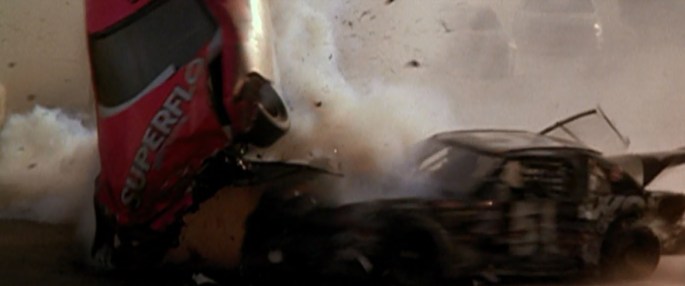
Days of Thunder is basically Top Gun with race cars, and while it didn’t do nearly the same box office as the Naval aviation saga, it returned director Tony Scott to the chair of a big-budget studio action picture after his more artsy effort, Revenge, and showcased his clear eye for visceral intensity within his action sequences. Again collaborating with iconic producers Don Simpson and Jerry Bruckheimer, Days of Thunder is shamelessly corny and ridiculously entertaining in equal measure, a movie with some of the best race car scenes ever captured on film, truly demonstrating to the viewer just how dangerous stock-car racing can be.  Cruise essentially replicated the character of Maverick but instead of being in a cockpit for most of the movie he’s in the driver’s seat of his car, taking a character that the audience is familiar with and shaping it with some new and interesting beats and flavors.  Scott shot the hell out of every single racing sequence and all of it is 100% real (remember – CGI was still a few years away).  And it truly feels it.  There is an authenticity to the race sequences that feels vital, and the blunt-force impact of Ward Russell’s classically masculine widescreen cinematography cannot be ignored, as it conveys the grit, smoke, and fire of the track, as well as the richly textured, sun-dappled, and heavily atmospheric imagery that Scott would become so famous for. This is a gorgeous film in nearly every instance.

days-logo

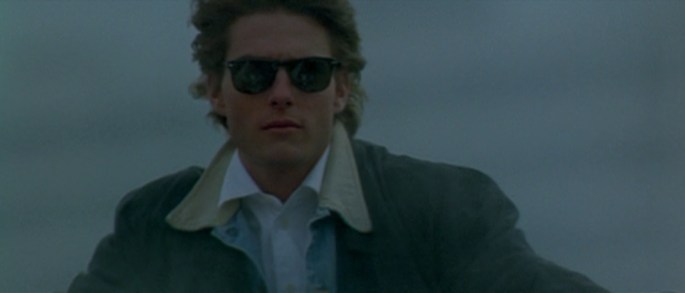
The film also marked the big American break out performance of Nicole Kidman, who would hook up with Cruise off-screen, resulting in one of the most celebrated Hollywood couples of all time; their chemistry in Days is palpable and their courting sequences are genuinely cute. The dynamite sound work on Days of Thunder is a sonic clinic on the process of layering effects, dialogue, and music, mixing the revs and roars of the engines with the screams of the crowd and the interaction of the race teams.  One of the film’s signature moments has to be Cruise’s entrance to the race track; pulling up on a motorcycle, rocking a leather bomber jacket, and cutting through some classic Tony Scott fog-machine-produced-mist, Cruise was in pure bad-boy mode in Days of Thunder. And then there’s the opening credits, which are perfectly edited to Hans Zimmer’s pulsating musical score (his first solo feature job), with Scott and Russell’s camera catching quick glimpses of race track life, which really sets the stage. The macho supporting cast includes John C. Reilly, Robert Duvall, Michael Rooker, Cary Elwes, Fred Thompson, and J.C. Quinn, while legendary Chinatown scribe Robert Towne is credited as the screenwriter. Few movies have conveyed the same sense of speed and danger that Days of Thunder managed to achieve, and as a result, this is a great flick to watch with some friends while drinking some beers on a Saturday afternoon, with the surround sound cranked way up.

1

I stole this interview from Rick Overton while he was taking a pee-pee: Remembering Willow by Kent Hill

This slideshow requires JavaScript.

We had travelled beyond the boundaries of our village, all the way across the great river to the Daikini crossroads. Only when we arrived in our new home did we discover that the town had no cinema. Sure they played movies occasionally at the town hall, but it was annoyingly infrequent. The town did boast, however, one of the largest video stores I have ever seen.

I so in many ways I was not cinematically going to starve.

It’s funny I don’t recall Willow playing in many cinemas, in or around where I lived at the time of its release. I do remember the first day I saw it though, on video.

I rode past the video store on my way home from school and the copy I had reserved was waiting for me. I was so jubilant and hurriedly shoved the tape into my school bag and cycled home as fast as my little legs would carry me.

Settling down in my room, I shut all the curtains, closed the door and readied to immerse myself in the experience. That’s, when it all wrong. A friend of my mother’s arrived bringing with her, her two consistently painful children. They stormed in, and of course we were always expected to be generous and courteous to visitors.

“Why don’t you let them watch the movie with you,” said Mum.

“Oh why not,” said I, through gritted teeth.

Now, for the record – I hate it when people talk during a movie. My wife I exclude from this, but every else be forewarned. And these kids were on a mission this particular afternoon; to squeeze any and all enjoyment I might have had watching a movie I and waited fervently to witness since I first saw a short featurette that appeared during James Valentine’s The Afternoon Show which was a kids cartoon extravaganza here in the great Down Under back in the day. And how one could not be excited? From the creator of Star Wars and the director of Cocoon was coming a tale of wizards and warriors, of swords and sorcery. Man, that was all this growing boy was looking for as part of his complete breakfast back in those days, let me tell you.

So my first viewing was trashed, but, thanks to the advent of the VHS, I could watch movie later that evening in my fortress of solitude and really enjoy it, minus the meddlesome harridan and her brood.

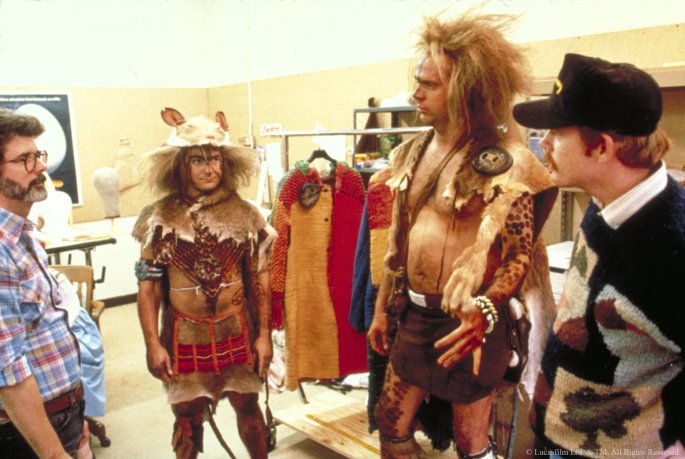
And O what bliss, what joy, what rapture. Willow was everything I had hoped it would be. A grand, sweeping adventure carried along by James Horner’s splendid score; my third favourite of his behind Krull and Wraith of Khan. Great direction by future Oscar winner Ron Howard, beautiful photography for Adrian Biddle, top work (and as ever cutting edge wizardry) from the magicians at ILM, stunning locations including New Zealand before all those Hobbits came out of their holes.

Then there was the great ensemble cast lead by the ever delightful Warwick Davis, the enigmatic charisma of Val Kilmer, his future wife Joanne Whalley, the great Billy Barty, Gavan O’Herlihy, Patricia Hayes (who I loved in A Fish Called Wanda and of course, The NeverEnding Story) as well as terrific baddies in Jean Marsh (Return to Oz) and General Kael Pat Roach (named for the notorious film critic and played by the guy who delighted in pummelling Indiana Jones).

There were two other cast members that I enjoyed. The comic relief you might call them. The R2D2 and C3PO of Uncle George’s fantasy offering. They were Rool and Franjean, played by a duo of very funny/talented performers in the form of Kevin Pollak and Rick Overton. He was too early for flapjacks on Groundhog Day and was being abducted by aliens in The High Crusade – but he did make a little time for yours truly the other day to chat about the making of Willow.


KH: How did you come to be cast in Willow, and where does it rate among the films you have done?

RO: On the matter of shooting Willow, I had just worked with Ron Howard on another movie called Gung Ho with Michael Keaton. Ron brought me in because I had shown him my stand-up comedy when we were filming the previous one. He even asked me who I thought I would work well with that I suggested Kevin Pollack. I think I can honestly say that it rates as one of the most fun times I’ve ever had shooting a film. Kevin and I help towards the most amount of special-effects matte shots of little people put into a film since the Disney film, Darby O’Gill And The Little People.

KH: The shoot took place in places like England and New Zealand. As your work had to be enhanced by effects, did you get to go to the locations?

RO: We did not get to go to any locations because the effects shots were all done in postproduction. Those took place in San Rafael California where Industrial Light and Magic used to be before having moved to the Embarcadero in San Francisco later on.

KH: You worked well together with your foil Kevin Pollak, but i suppose he might argue you were his foil?

RO: Often, Kevin Pollack would try to make me laugh right before I take so there lots of outtakes. As you hear the first AD on the set call out “Quiet on the set, rolling…” Kevin would lean in and whisper “Take me home and make me stink…” And I would bust up laughing for the take.

KH: On Warwick Davis’ commentary of the film, he says he is often asked in connection with Willow, what is or was Val Kilmer like. So what was Val Kilmer like if indeed you interacted with him at all?

RO: Because we were in postproduction, we did not get to interact with Val Kilmer. We did get to interact with Warwick Davis briefly.

KH: It must have been something seeing the finished film, are there any amusing anecdotes you can share?

RO: I wonder if it’s still available, I haven’t seen it since it was on cassette.

We might have been the very first to do a fake behind the scenes reel where we use the green screen of us offstage, still dressed as brownies, sitting in tiny folding chairs that fit us but in front of what would be place behind us later as a Barbie dream house with crew people walking past and dropping candy wrappers on us as we get an interview about the importance of our roles in the film.

KH: Have you stayed in contact at all with any of the cast and crew since?

RO: Haven’t been in touch with most of the folks on that film lately. Kevin is perhaps the one I see the most.

KH: Looking back, what are your thoughts on the film and its enduring nature?

RO: There are several morals in the story, but one is to follow your heart and what you know was right even when it isn’t easy or there could be jeopardy. Be brave.

It was the hobbit before the hobbit was committed to a large budget. Another layer of significance is that the process of Morphing was invented for the film and has been used everywhere since. There was lots of innovation to come out from the team that made Willow. It didn’t do as well at the theatres as it deserved, but subsequently has been a perennial favourite for many at Thanksgiving since. And still rents at a healthy rate.

KH: The moral of the story, if you will, is that you can succeed no matter how small you are or how insignificant you believe you are – is that something that you think stayed with viewers?

RO: Willow is about loyalty – loyalty to friends, loyalty to community, loyalty to what is right overall. The part that doesn’t have to do with your size is the size of your will to do what’s right – and Willow’s will was mighty.


Well that was Rick Overton dear readers. If you’ve not watched the glory that is Willow in a while, maybe it’s time to rediscover it. If you have never seen it then please go and check it out, it is a truly grand adventure with a marvellous cast and crew that came together superbly.

Well that’s enough outta me, now, that way, to the lake!

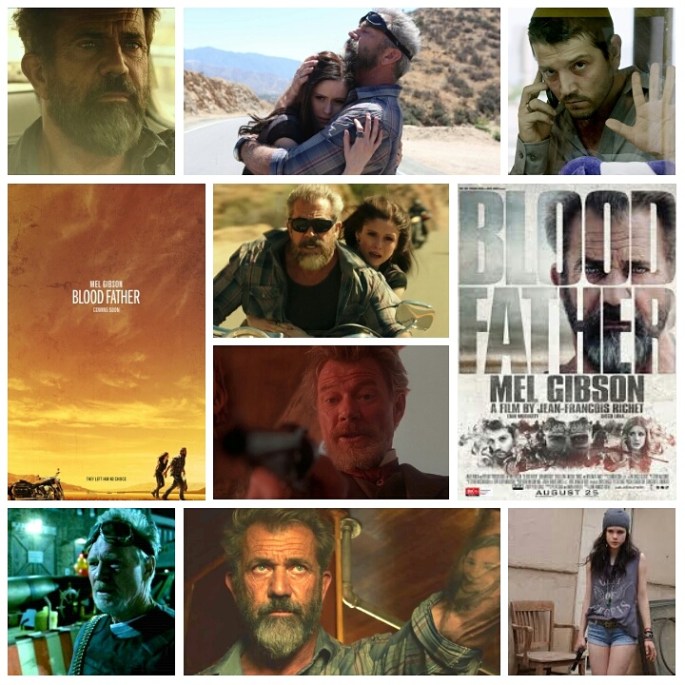
Blood Father: A Review by Nate Hill 

Blood Father is the best I’ve seen from Mel Gibson in years. Between extended cameos in the Machete and Expendables franchises and the underwhelming Get The Gringo, there just hasn’t been a film in a while that I thoroughly enjoyed and felt that cinematic rush I used to feel when watching his older, classic stuff. This has it all: a rough, rugged story line, an older, grizzled and disarmingly jacked up Mel, and a surprising rose of an emotional core that’s embedded in a violent bed of thorns which serves as our narrative. Later in his career Mel has been playing older, meaner versions of antiheros from his past, and one gets the comforting feeling that any of these jaded brutes could be the unofficial versions of those very same characters. Desert dwelling excon tattoo artist John Link could easily be an older Porter, the protagonist from my favourite Gibson film, Payback. I’d like to think that such parallels are deliberate on the filmmaker’s part. Whoever he is, Link has a long and checkered past of broken bridges and incarceration, etched like a road map onto his shaggy visage. When his troubled teenage daughter (Erin Moriarty, terrific here as well as this year’s Captain Fantastic) re-enters his life on the run from her psycho cartel brat of a boyfriend (Diego Luna), the fire in Link is kindled. Taking her on the run, he goes into ultimate protective dad mode and let’s the old forges of violence burn bright once again, in hopes of finding some kind of redemption. William H. Macy hangs around as Link’s AA sponsor, but the real supporting gem comes from legendary Michael Parks as Preacher, a vile neo nazi scumbag and former associate of Gibson’s. He’s icky and repellant, but coos with Park’s patented purr and steals his sequence of the film menacingly. The action is down and dirty, reigned in by an obvious small budget, but that comes as a welcome gift in a genre hampered by big style fireworks that smother story. Not here. The crucial part of it is Link and his daughter, and their glib back and forth that just hides the pathos we get to see in full bloom near the end. We wouldn’t give a damn about the whole deal if their relationship, and the actor’s chemistry, didn’t work. Gibson and Moriarty knock it out of the trailer park. I couldn’t give a laminated shit about whatever Gibson did or said to piss so many people off. That’s seperate from the work he does and should be treated as such. Everyone who stifled and shunned him professionallly for something which occurred in his personal life should be flogged. Nevertheless, I hope we get to see more stuff like this from him moving forward. He’s a bit older, a bit more rough around the edges, but goddammit he’s still our Mel. 

SUNSHINE – A REVIEW BY J.D. LAFRANCE

sunshine

In some respects, Danny Boyle is Britain’s answer to Steven Soderbergh – a filmmaker who moves effortlessly from independent to studio films and works in a variety of genres: gritty drug drama (Trainspotting), kids film (Millions) and edgy horror (28 Days Later). Like Soderbergh’s Solaris (2002), Boyle has tried his hand at science fiction with Sunshine (2007). It was critically lauded in England as a thinking person’s genre film but was met with mixed critical reaction in North America and lackluster box office.

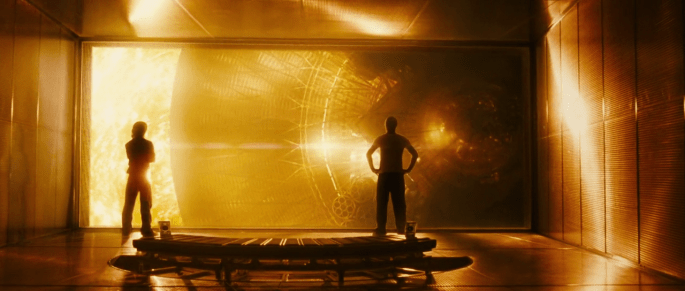
Sometime in the far future, our Sun is dying. The Earth is in the grips of a solar winter and the only chance we have for survival is to reignite the star. A spacecraft called the Icarus II, with a crew of eight and carrying a nuclear bomb roughly the size of Manhattan, will hopefully kick-start the Sun and save humanity. On the way there, they pick up a distress beacon from Icarus I, an earlier expedition with the same mission but that had mysteriously disappeared en route. Do they alter their course and check out the ship in the hopes that they can use its bomb and thereby doubling their chances? The decision lies with the ship’s physicist, Dr. Robert Capa (Cillian Murphy) and it is one that will affect the entire crew in ways they can’t yet imagine. Through a series of intense situations brought on by unforeseen complications, there’s a real possibility that the Icarus II may not make it back alive and the characters have to realistically deal with this chilling realization.

Sunshine starts of as an intellectual science fiction film a la 2001: A Space Odyssey (1968) and then shifts focus to an engrossing mystery involving the Icarus I and shifts again to a slasher film reminiscent of Event Horizon (1997) for the last third. This last shift has drawn the most criticism from reviewers and does test the film’s credibility. Do the filmmakers really need to add even more danger for the protagonists to face? Isn’t the fact that they are heading straight towards the Sun with limited resources and crew challenging enough?

Sunshine does an excellent job showing the dynamic between the crew members and how it gradually breaks down when things go horribly wrong. Crew member turns on crew member and an oversight or miscalculation has catastrophic effects. The cast is uniformly excellent and refreshingly absent of big name movie stars. Instead, we get solid character actors like Cillian Murphy (The Wind That Shakes the Barley), Rose Byrne (28 Weeks Later), Michelle Yeoh (Crouching Tiger, Hidden Dragon), and Cliff Curtis (Bringing out the Dead). Some of them are cast wonderfully against type and others, like Chris Evans, show previously unseen depth.

It is also nice to see the characters solving problems with reason and intellect that actually makes sense. That’s not to say that Sunshine is all brainy posturing. There is plenty of intense, visceral action that is emotionally draining much like Boyle did with 28 Days Later (2002). As he showed with that film and his debut, Shallow Grave (1994), he certainly knows how to ratchet up the tension.

This is also a visually impressive film as Boyle not only shows off the usual iconography of the genre – spacecraft, spacesuits, etc. – but doesn’t fall into some of the more tired clichés, like aerodynamically-designed spacecraft and evil computers. He also doesn’t telegraph who lives and who dies which gives the film an edgy unpredictability. At times, it feels like Sunshine wants to be the 2001 for the new Millennium but then the slasher film elements creep in and it resembles a more traditional thriller. It’s too bad because up to that point, Boyle’s film is a very smart, thought-provoking piece of speculative fiction.

PTS PRESENTS WRITER’S WORKSHOP with TODD KOMARNICKI

komarnicki-powercast

komarnickiPodcasting Them Softly is thrilled to present a discussion with screenwriter Todd Komarnicki, whose new film, Sully, from director Clint Eastwood, lands in theaters this weekend! This was an enormous treat to speak with Todd about his writing process, the development of the film, his experiences with the cast and crew, and this rather miraculous true story in general. And as fans of Clint Eastwood in general, it was fascinating to find out more about the legendary director and how he operates. Todd’s other writing credits include the James Foley thriller Perfect Stranger, and he was one of the producers of the blockbuster holiday classic Elf. He’s also prepping a project as both writer and director called The God Four, with Michael Douglas, Jai Courtney (Suicide Squad), Natalie Dormer (The Counselor), and Brenton Thwaites (Son Of A Gun). We hope you enjoy!