ABDELLATIF KECHICHE’S BLUE IS THE WARMEST COLOR — A REVIEW BY NICK CLEMENT

1
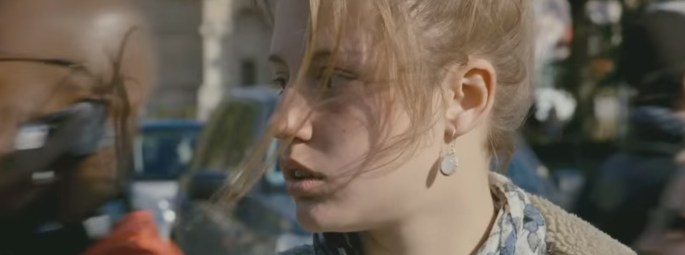
Blue is the Warmest Color is one of the most romantic movies I can think of, often times transcending what we normally expect from a “love story,” and on numerous occasions becoming something else entirely – a direct peek into another person’s soul. The film operates as a raw and incredibly open glimpse of a woman experiencing a sexual and spiritual awakening filled with both her innermost desires and deepest uncertainties, while unfolding with aesthetic grace and narrative simplicity, and is guided by two of the most fearless performances that I’ve ever seen from any actor or actress in my lifetime. Adele Exarchopoulous and Lea Sedoux are absolutely astonishing in Blue is the Warmest Color, allowing the audience to get to know them in ways that are rarely allowed, and letting their love affair blossom in a way that feels both unexpected and strangely familiar.
 
2
Writer-director Abdellatif Kechiche favors naturalism above all else, and he’s clearly fascinated with the daily minutiae of everyday life. As his camera fixes its stare on his characters, you get the sense that he’s a filmmaker who’s constantly searching for that perfect moment of clarity, that one particular beat where you can say to yourself that you’ve captured life at its purest on camera. This film reminds you that love is irrational and unexpected, and hits us in various forms and shapes and sizes, at any moment that it chooses, and that when we’re least expecting it, our lives can forever be altered by just a glance at the right, or wrong, person. Blue is the Warmest Color is also a well-observed study of human behavior, and how we act and react in a variety of situations and contexts. What does it mean to love and what does it mean to know when your love isn’t enough for another person? Are we allowed to choose how we feel, or is everything predetermined no matter how spontaneous we try to be?
la_vie_dadele_ver2_xlg
Every kiss in this film is felt, every bite of food or sip of wine is tasted, and every moment is savored as if it might be the last. The sexuality on display will leave many people speechless; you become privy to two people exploring the boundaries of themselves and one another, and in those deeply personal moments, you feel as if you’re in that room with them, a curious observer to something private and extraordinary. Everything in Blue is the Warmest Color feels real, which is why I immediately responded to it, and have found myself drawn back to its various mysteries and charms, despite the leisurely pace and hefty run-time. There’s a lover’s quarrel that feels as scary and as intense as any cinematic fight has ever felt, or at least that I’ve seen, and it’s shockingly believable and phenomenally sad because every verbal sling feels like an honest dent in the armor. This is a heavy duty piece of cinema, a work unafraid to go to some emotionally draining places, but because all of it feels so honest and refreshingly alive, even the most harrowing moments are counterbalanced by something uniquely graceful and optimistic. Available on Criterion Blu-ray.
3

Excerpt from Conquest of the Planet of the Tapes: Straight to Video III : When hell came to Frogtown by Randall Frakes

Some wise screenwriter once said, “Most of what follows is true.” I am here to dispel the myth about the making of one of the most bizarre B-movies ever put out on video or shown to death on USA Cable network.  I am a screenwriter who has worked successfully in the industry for the last forty years, collaborating with James Cameron on most of his movies, most especially TERMINATOR, TERMINATOR 2, ALIENS, TRUE LIES, and on all the AVATAR sequels, mostly as a story consultant.  But how I got my start is with a well-regarded B movie from the late 80s that had a torturous birth.

Cast your mind back to the ancient days, just post STAR WARS, I know, an eon ago! I had just finished being a story consultant on the first TERMINATOR script, helping James Cameron get his grounding on the story.  I had visions of following in the footsteps of Howard Hawks (as did John Carpenter), and Stanley Kubrick (as did Christopher Nolan), and Edward G. Ulmer (as no one deliberately did!)  I wrote several scripts, one of which Mr. Cameron decided was going to be his next movie after TERMINATOR.  But it turned out that my very unique and unusual sci-fi epic was too similar to a movie that had just been made and was about to be released (“Enemy Mine”) and therefore that deal vaporized.

A friend of mine who made zero-budget movies, a wild and crazy guy named Donald G. Jackson (responsible for a truly insane series of movies called ROLLER BLADE) had worked with me on his first movie, and had just sold his wrestling documentary I LIKE TO HURT PEOPLE to New World Pictures.  It was the day of the mom and pop video store where they would pay nearly a hundred bucks for a movie to put on their shelves.  I LIKE TO HURT PEOPLE was tremendously successful, making nearly a million in profit for New World, so naturally, they asked Don what else he had in his bag of tricks.

He hemmed and hawed, and then said let me get back to you.  He raced over to my house and explained.  He had a one page menu list of what he thought New World was looking for in a zero-budget movie: wrestlers, tits, ass, action – the usual formula for direct to video action movies.  I studied his menu list of story elements and all of a sudden, I saw the whole movie, complete in my head, like from a zap of lightning.  That had never happened before or since.  So I told Don I could write this script in less than a week.

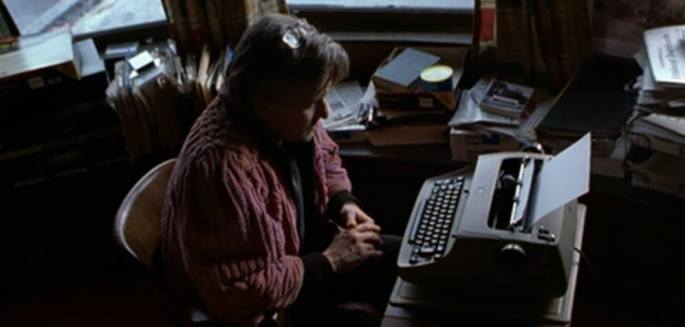
Amazed, he said, “Okay, I’ll pay you five hundred dollars if you can do it in less than a week.  New World wants an answer right away.”  “You’re on,” I said, and sat down and started writing what became HELL COMES TO FROGTOWN.  He sat next to me day by day, until on the afternoon of the sixth day, I pulled the last page out of the typewriter (yes, it was typed on an IBM electric typewriter—the kind with the replaceable balls!).

He rapidly read it and said it was good enough to take to New World, which he did that afternoon.  A few days later, they rang him up and told him he had a deal.

They wanted to have him direct the script I wrote, made for $300,000, to be shot in 16mm, with no stars, for direct to video release.

Hooray!  Break out the beer and dance around the room power punching the air, right?  Not right.  This was just the beginning of my nightmare.  Because as co-producer, we now had to actually make the movie from the script I had written, and for a paltry sum, calling in all the favors we could from other people we knew who were rising up in the industry from the days of working special effects with Roger Corman.

We got the kid who had helped design the Predator suit for PREDATOR to create the frog masks and suits for a tiny sum.  We got a guy who built movie vehicles to create a fantastic motorcycle with a roll cage for next to nothing.  The bike could be flipped and would always come upright.  And we got a contract with the stunt rider who could make this cycle fly, slide, flip and roll for the major action set piece at the beginning of the movie where main character Sam Hell is captured.  We certainly earned our right to produce this low-budget weird movie.

But the first thing New World did is assign a co-producer to watch how we spent the money, and he had several ludicrous and pointless changes to the script he thought we should make.  This guy was younger and less experienced than us, so we had to get him out of the mix.  To do it, I challenged him to a coin toss.  I told him if he won, I would drop out as producer and he could take over and be sole producer.  He thought about it real hard, and then chickened out, and refused to flip.  I told him that was a forfeit and, humiliated, he dropped out as producer.

We started casting the movie.  A remarkably beautiful actress with little experience but a strong screen presence was cast for the lead role of Nurse Spangle.  But the head office, home video division, said no.  We needed a known star.  On our budget?  Really?  I called a meeting with the executive in charge and went over the budget again, asking if they would up it if we could get a known commodity to play Spangle.  They said yes, so we went after Sybil Danning (who was deservedly hot at that time) and even Pam Grier, who would have elevated the movie with her on screen charisma.  But the head office didn’t like those choices either.

Meanwhile, the script was being passed from New World Division secretary to secretary, and because of the way I wrote the male lead, as vulnerable and romantic, instead of a robotic killing machine, they thought it was funny and charming, despite its crass exploitational elements.  These wise women all realized this was a comedy send-up of Mad Max and the Planet of the Apes movies, with a trace of disguised feminism as well.

So, finally, the head of New World Pictures, who was Robert Rehme at the time, asked his secretary why she was laughing so hard.  She explained she was reading this really hilarious script from the video division that was being passed around.  He asked to see it, took it home where his wife read it and found it worthy, and then he read it.

The next morning we get an ominous call from the President of New World Pictures.  I’m thinking it has something to do with the coin toss challenge to that kid producer, and that they were going to assign us a new guy, probably someone worse.  In a way, I was right.

Don and I walk into the somber offices and sit across the large mahogany desk where the imposing Mr. Rehme (producer of HUNT FOR RED OCTOBER and THE OMEN, and dozens of other iconographic Hollywood hits) starts talking to us about our little project.  “I’ve got good news, boys,” he began, and then informed us that he had decided that the script was too good to be tossed off as a direct to video feature and that they wanted stars and a bigger budget for a national theatrical release.

I was staggered, not expecting that at all.  I could say nothing.  Don was fidgeting in his seat, because he was smarter than me about the real world of Hollywood power plays and knew what was probably coming.  And then it did come…

After telling us that our budget was going to be increased by a factor of five, an unheard of event in Hollywood history (the budgets usually get decreased just before going into production), he added his insurance policy.  “Of course, we are going to have to assign an experienced line producer to watch how you spend the money, and a co-director to ensure you stay on schedule.”

Don just glanced at me.  I said we needed to think about this before consenting to this alteration in our deal, which surprised the heck out of Mr. Rehme. It was his turn to be staggered.

Walking away from Rehme’s offices, Don and I muttered our misgivings to one another.  I asked Don if we could renegotiate a substantial hike in our pay, would he accept a co-director on the project he had initiated.  He thought about it for a few minutes, and then said yes.

So the next few weeks saw me in a contentious negotiation with the head of business affairs at New World.   I kept pushing our fees up and up, while giving little in return, which frustrated the Business Affairs lawyer, who kept threatening to cut off all negotiations and cancel the deal.  For some reason, I was young, dumb and courageous back then, and didn’t really care if they canceled the deal.  In fact, I almost wanted them to, because producer Brandon Chase had somehow gotten a copy of FROGTOWN from a spy at New World and was making overtures to us to buy the script outright.  We wanted to stay on as producers, and New World would agree to that, Chase would not.  Chase was the producer of several excellent low budget movies at the time, such as the successful and beloved SWORD AND THE SORCERER and the less-admired but profitable ALLIGATOR.  FROGTOWN probably would have been made better by Chase.  But then, we would have no control over the content.  So we stuck with New World Pictures, through more weeks of contentious back and forth with their lawyer, until finally, they agreed on a substantial pay hike and some other concessions.  In return, we agreed to become pay or play producers, which essentially meant that we were producers will no real power, reduced to advisors, who could influence the film making process only by argument and inspiration, but not by contractual authority.  However, no matter what, we still had to be paid our full fee, which at the time was substantial for first-timers.

Pre-production began in earnest, with several producers added on top to slow things down and muddy up the creative waters.  The line producer was more than competent, but not very creative, all his ideas designed to lower demands on the budget, rather than what I was doing, which was find cheaper ways to achieve the same screen effects.

And then a “friend” of Arnold Schwarzenegger came on board as a “production executive” which in this case meant adding stupid and unnecessary complications to the project, and cutting out the B-movie heart of the project, bending it more toward an ABC afternoon special.

All during this, my pot was beginning to boil.  So I wrote a memo to Robert Rehme and cc’d it to all the production heads.  The memo went through all the divisions of New World Pictures like crap through a goose.  What I wrote, in the most polite terms mind you,  is that the current producers and co-director were inefficient, uncreative and ruining the movie and that Rehme should make radical changes to correct the problem or we would have a turd instead of a good movie on our hands.

Rehme thought about it and did make a radical change… he fired me off the picture.  I was banned from the set as a troublemaker and so I walked away from the production, wiser for my mistakes, and smarter because I was already developing alternate methods of negotiating to defend the content of my scripts.

A week after that, I get a call from Don, telling me they want me to come back and shoot some second unit footage because they are so far behind.  All right, I cared about the movie and thought that in some small way, my contribution might help save it.  So I came back and shot some second unit footage the way I imagined the entire film should be shot: hand-held, down and dirty, Robert Rodriguez style.

So all my footage winds up in the movie, but looks out of place because it doesn’t match the TV movie style of standard master shot/over the shoulder close-ups, etc.

I had little input on the editing or the scoring of the movie. Two things that I think killed any chance for the movie to be an impressive piece of B-movie making.  And then the ultimate blow… the film is screened for cast and crew at the Cary Grant theatre on the old MGM (now Sony) lot.  Grant must have been turning in his grave.  It was worse than I thought.  The film just laid there like a smelly egg laid by a constipated dinosaur.  Slow, tedious and boring, rather than funny, fast and delightful.

One of my closest friends, who had been suffering through my momentary elevation from unknown struggling writer, like him, to a writer co-producing his first movie, summed the evening up best by coming up to me and whispering, “Sorry, Randy, that they fucked up your script.  Better luck next time.”

Now completely depressed, I couldn’t even have fun spending the large fees I had gotten for co-producing and writing, because I was too depressed to buy anything.

I wasn’t completely ungrateful, because the trailer guys managed to cut together a really funny preview that sold the movie very well, and had the kind of energy and pace the film itself lacked.  I could see how the film could have worked with a more inspired and energetic director and crew.

But another kick in the pants was waiting for me… the next day I was told that not only is New World not releasing the movie to a thousand theatres as promised before the screening, but that it was not going to receive any theatrical distribution at all.  Straight to video.  Didn’t surprise me. I wouldn’t have released it to a thousand theaters either.  But it wasn’t because the film was so bad.  It was because Rehme and his minions had run New World Pictures into the ground and were declaring bankruptcy.  Therefore there was no money for prints and advertising.  They couldn’t afford to release the movie in a thousand theaters!  Still, I was convinced we could have made a better-looking and faster-paced movie for $300,000 (which was indeed proved out when Don later co-wrote and directed the first sequel to FROGTOWN for less than $100,000 and it had just as recognizable actors in the cast, and looked like it had more production value… although it was almost totally incomprehensible storywise, it at least proved we could have made a better looking film for five times less than what was spent).


Then, an odd thing happened that truly surprised me.  Although the execution of the film was not good, the ideas, the concept, was so outrageously insane and silly, that FROGTOWN began to become a cult hit.  First on home video, and then when an edited version was shown endlessly on USA Cable Network.  Over the years its reputation has grown.  Rotten Tomatoes gives it a good rating.  Most reviewers get that it is a send-up of other cheesy rip-offs of Mad Max and the Apes movies.

And strangest of all, talks are afoot to remake the movie!  Go figure.  The audience is the final arbiter of any film.  They will love it or hate it no matter what formula you use to make it.  And although no one is ever going to confuse FROGTOWN with a work by David Lean, or even David Cronenberg, it still has its enthusiastic fans for being one of the weirdest post-apocalyptic movies of the late 80s.  An Australian rock band calls itself HELL COMES TO FROGTOWN, and the animated FAMILY GUY TV show’s third episode in their fifth season was titled HELL COMES TO QUAHOG.

All this is to celebrate the recently deceased Rowdy Roddy Piper, who I initially did NOT want to play Sam Hell, but whose performance made me eat my words and embrace him as one of the few things about the completed film I actually liked.  And his performance in my film led to him starring in John Carpenter’s THEY LIVE, and continuing making at least a dozen passable B movies.

All this is in tribute to Roddy, may he rest in peace, and to show you how difficult and soul-searing it is to make even what a lot of people think is a piece of crap movie.  And this also salutes Don Jackson for coming up with the initial outrageous concept, and for trying his best to save the movie from the Coneheads who flubbed the opportunity to make something that could have been better executed, and also a way for me to thank the loyal fans who saw past the errors and compromises and flabby filmmaking to see the fun and frolic of the ideas in the movie and embrace it as one of their favorites.  Pray that if there IS a remake, that it far exceeds even my humble vision for it.  You fans, man, you really rock, and thank you for seeing past the creative limits of many B movies and giving them a chance to entertain you in their own clumsy fashion.  I’ll tell you one thing, out of lack of creative vision and desperation, a lot of your favorite B movies are currently being remade by Hollywood, pumping obscene amounts of money into them and killing their low budget charm in the process.  But there are always the originals.  Vive la Originals!

Read more great filmmaker commentaries in Straight to Video III, as well as great fiction from hot new authors who have created there own ultimate B movies. Straight to Video: Collect them All. Visit Amazon.com!
 

Yes Man: A Review by Nate Hill 

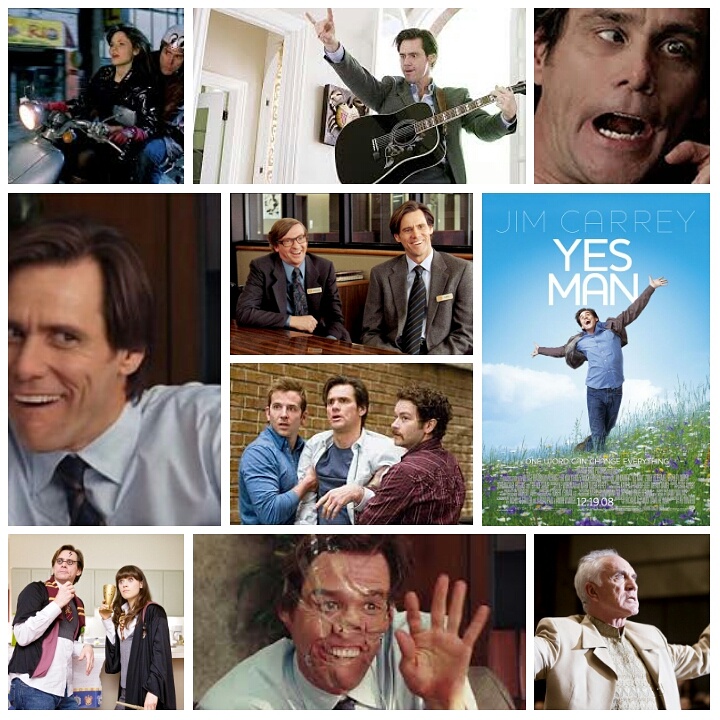
Yes Man is a loaf of fluffy, inconsequential Wonderbread amidst a career of denser comedic pumpernickel  for Jim Carrey. Most of what he does has weight to go along with the laughs, and if it doesn’t it still has a raunchy bite that always hits below the belt. This is one of the few times he treaded lighter, a tone which can also be found in Fun With Dick & Jane, but that’s just not a good movie. Yes Man has merit in fits and starts, and it’s harmless fun for most of the ride. Carrey plays the consummate negative Nancy here, a guy who spends the better part of his time turning down offers, cancelling plans, avoiding people and saying no to everything. This all changes when he goes to a dodgy seminar preached by batty self help guru Terence Stamp. Inspired by his slightly odd teachings, he challenges himself to say yes to everything, and I mean everything, for one whole year. This gets him into all sorts of trouble, and steers him to the obligatory 180 shift in his character arc, and his own enlightenment. Guzzling red bulls after an all night club bender, guitar lessons, sexual favors from his experienced elderly neighbor (Fionnula Flanagan), driving a homeless dude (Brent Briscoe) to the middle of nowhere and giving him like two hundred bucks, life is just more fun when you say yes to everything, as Carrey quickly finds out. He also meets cutie pie Zooey Deschanel, whose initial amusement towards his lifestyle quickly turns to exasperation when his affirmative nature gets just a biiit too crazy for her. It’s all in good fun, and while most of it isn’t memorable or super noteworthy, there is one particular scene that makes the entire film worthwhile: Carrey has an awkward kiwi of a boss (Rhys Darby) who is constantly inviting him to cosplay parties. The moment he accepts is a symphony of quirky mannerisms, scotch taped facial grimaces and absurdity that is pure Carrey and could be used to sum up his career in half a minute. Watch for work from Danny Masterson, Spencer Garrett and Bradley Cooper. Like I said, it ain’t gonna rock your world like many of the iconic, beloved Carrey films, but it’s an amusing diversion with some scenes that do bring it home. 

CURTIS HANSON’S WONDER BOYS — A REVIEW BY NICK CLEMENT

1

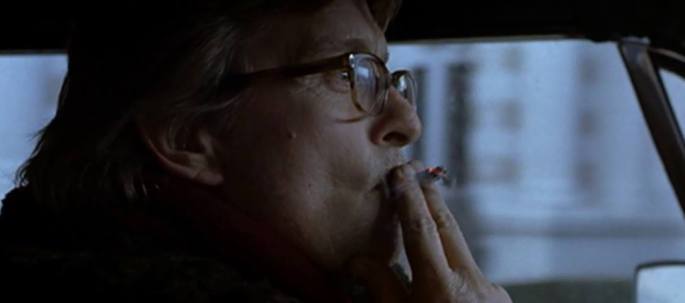
I love the lived-in beauty, the quiet tranquility, and the super stony vibe of Curtis Hanson’s terrific drama Wonder Boys, which features one of the all-time best performances from Michael Douglas as a pot-smoking college professor/writer’s blocked novelist whose younger wife has just left him. He’s having an affair with the Dean’s wife (the lovely and pointedly funny Frances McDormand), there’s a lustful young student who has him in her sights (eager and adorable Katie Holmes), he’s got a hounding, unfocused, rapscallion of an agent to contend with (witty and charming Robert Downey Jr.), and the closeted writing prodigy who is looking for a mentor needs to be broken out of his tightly wound shell and comes looking for help (Tobey Maguire, rarely better). Based on Michael Chabon’s novel, Steven Kloves’ generous, warmhearted, and deeply funny screenplay is filled with fabulous literary allusions, and perfectly balanced all of these fantastic characters, giving them all a chance to shine, while providing Douglas with the opportunity to be vulnerable and scruffy and sloppy and affable — an all-around good guy — a side to him as an actor we rarely get a chance to see, because let’s be honest – he’s a terrific cinematic prick!

2

Hot off the critical and commercial success of L.A. Confidential, Hanson probably had the pick of the litter when it came to a follow up project, so it speaks volumes to his humanistic character and as a sensible filmmaker and honest storyteller that he went with something as low-key and unassuming as Wonder Boys. This film, released in 2000, is one that’s constantly filled with surprises, and while a critical favorite, it died a terrible and tragic death at the box office. I’d like to think that over time people have caught on to this film’s odd, specific, and brazenly marijuana-infused charms, as it’s one of those small gems that gives off that contact high feeling while you watch it. Cannabis is a character in this film, not something that’s to be giggled over by immature dopers with nothing interesting to say. The linkage of pot to the process of writing – and how it can both help and place a burden upon an artist – is explored to great, subtle degree in Wonder Boys. The film also features an absolutely incredible soundtrack, with Bob Dylan’s fantastic and melancholy tune “Things Have Changed” rightfully taking home the Oscar for Best Song. Everything about this movie makes me smile, and I really, really hope that it gets the Blu-ray treatment that it deserves, because Dante Spinotti’s beautifully hazy cinematography deserves better.

3

Ben Stiller’s The Cable Guy: A Review by Nate Hill 

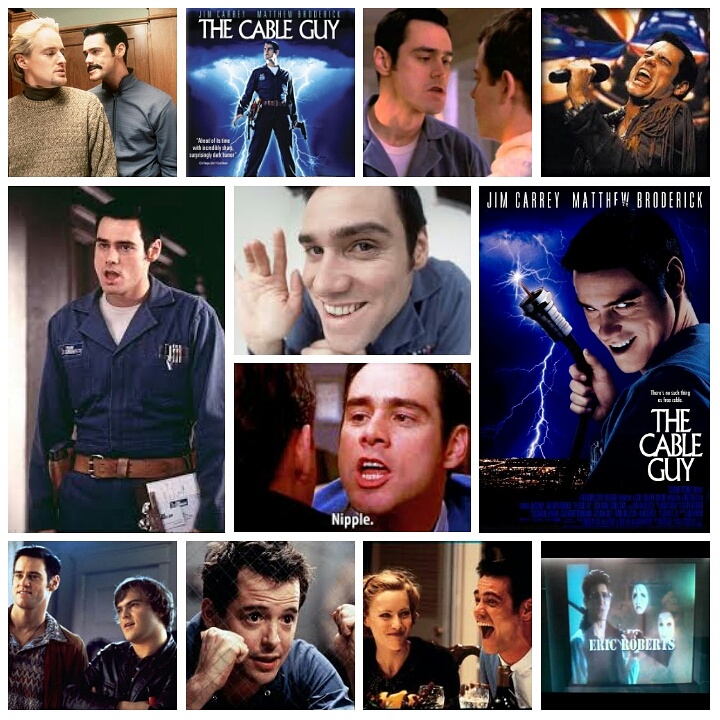
What do you get when you combine acid tongued social satire, unnerving physical comedy, borderline horror/stalker elements, endless pop culture references and an abrasive yet pitiful protagonist from your worst nightmare? Ben Stiller’s The Cable Guy, that’s what you get. And yes, before the hands go up, I do consider Jim Carrey’s lonely, disturbed TV repairman Chip to be the protagonist of the film, mainly because he’s eternally more interesting than Matthew Broderick’s bland, lifeless performance as the poor average joe who becomes victim to his ‘friendly’ courtship. Chip is one part neglected child, two parts borderline psychotic with a dash of manic obsessiveness and a pinch of terrifying delusional behaviour. Doesn’t quite sound like a comedy, does it? It almost isn’t. Stiller’s vision is so pitch black that it takes a few well timed sympathetic beats from Carrey, infused with his googly charm, to make it work. It’s mostly a walk on the scary side though. Broderick has the misfortune of having Chip show up to look at the television, and the guy takes an immediate, unsettling shine to him, going to great and terrible lengths to solidify an unrequited bromance that is a complete one sided fabrication. Stalking, interfering, framing him for god knows what, roughing up a smarmy gent (Owen Wilson is hilarious) who horns in on his girl (Leslie Mann) are but a few of the life shattering misdeeds that Chip carries out, all under the pretense of the buddy system. He’s essentially Frankenstein’s monster that has grown up from a child left to his own devices, fuelled by a lonliness which has long since pickled into something sad and destructive, both to himself and others around him. Carrey plays him like a champ, never cheaping out or holding back, always willing to go there and show us the extreme degrees on the temperature of the human personality. Damn, I make it sound so dark, don’t I?  It is, but at the end of the day we’re talking about a comedy starring Jim Carrey and directed by Ben Stiller, so there’s still the inherent comedic vibe that both of them bring, just drenched in tar this time around. Call it character study, stalker drama, a lifetime movie gone horribly awry or anything in between, whatever it is, it’s some stroke of demented genius and holds up well today. Watch for Jack Black, Ben Stiller, Janeane Garofalo, Andy Dick, Joel Murray, David Cross, Kathy Griffin, Charles Napier, Bob Odenkirk, Kyle Gass  and a pisser of a cameo from Eric Roberts as himself in a facepalming television melodrama. 

Ace Ventura: Pet Detective: A Review by Nate Hill 

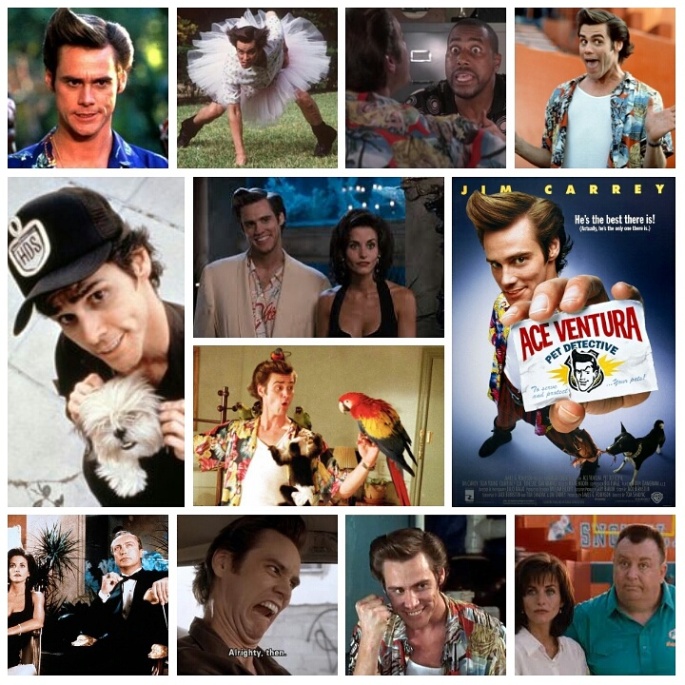
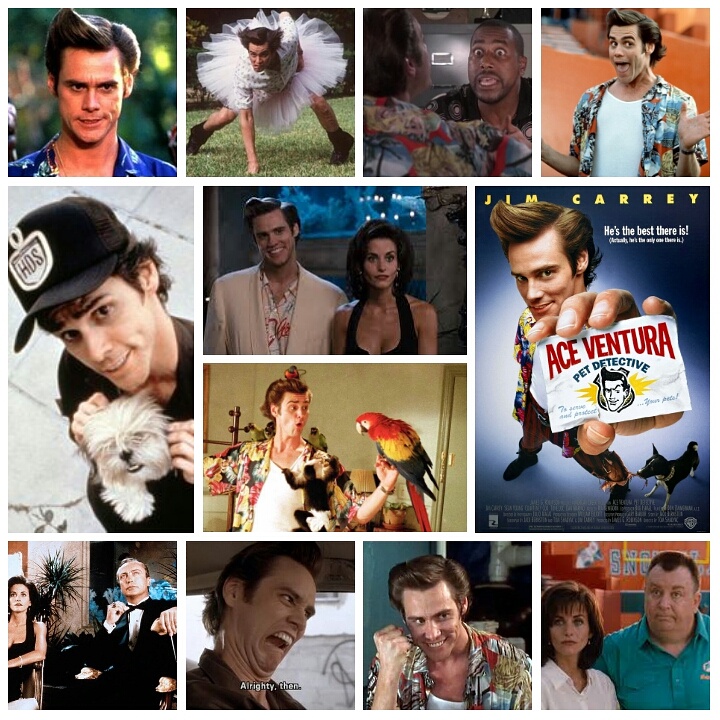
Ace Ventura: Pet Detective shouldn’t really be as funny as it is. It’s random, head scratching and just deeply juvenile, and happens to be one of the funniest films ever made. Why? Jim Carrey. The man is spun gold on camera, and he sells every outlandish minute of this gonzo Looney Toons goofball of a flick. It really wouldn’t work without him. I mean, could you imagine, say, Dustin Hoffman, or John Travolta trying to pull of this kind of malarkey? Ok, I did just laugh really hard picturing that, so it would be funny, but only in an embarrassing way. No, it had to be Carrey, and he’s an engine of unbridled comic mania the entire way through. One acting technique involves basing your performance off of the mannerisms of an animal, and I’ve heard that he chose a cockatoo as the blueprint for Ace. The head bobs, squirrelly movements and that epic, instantly recognizable ocean crest of a hairdo. Makes sense, and I couldn’t unsee it after hearing that. Ace is probably the most eccentric, beloved character Carrey has ever fashioned, and for good reason. He’s like a cannon loaded with jokes, quips, pop culture references, personal space invading antics, a complete lack of inhibitions, a treasure trove of rubber faced muckery and a deep love for any and all creatures of the animal kingdom. Those are pretty much all of the qualities one should look for in a human being. I say that now, but I feel like after spending ten minutes with the guy I’d look for the nearest exit. Ace is on the case, when he’s not goofing off, which is always. Somehow he finds time to search for the missing mascot of the Miami Dolphins, an actual dolphin named Snowflake. The story dimly unfolds in the background of all his tomfoolery, and includes Dan Marino, a suspicious billionaire (Udo Kier, whose exasperation at Carrey’s behaviour looks very un-faked), and an ice queen of a Police Chief played by Sean Young, with an arc that  goes to some pretty disturbing places for this kind of light fare. He also finds time to have hot jungle love with Courtney Cox,  and speak to people through his asshole like a deranged Muppet, among many other things that will have you questioning why you’re watching it, only to realize it’s like your twentieth viewing and you have no plans to ever stop. It’s Carrey’s show, and he takes it into orbit, never letting the mania subside for a nanosecond. He’s borderline certifiable, which comes in handy when he has to infiltrate a mental facility, because the guy halfway to belonging there anyway. There’s just so many cherished little moments, mannerisms and scenes that don’t ever get old, for those of us that love this character. Carrey shaped the landscape of comedy a lot during this portion of his career, and the mile markers that he released stand tall and undiminished to this day, bringing hilarity to all. The sequel is genius too, and one of those rare follow ups that is just as solid as the first. 

SEMI-PRO – A REVIEW BY J.D. LAFRANCE

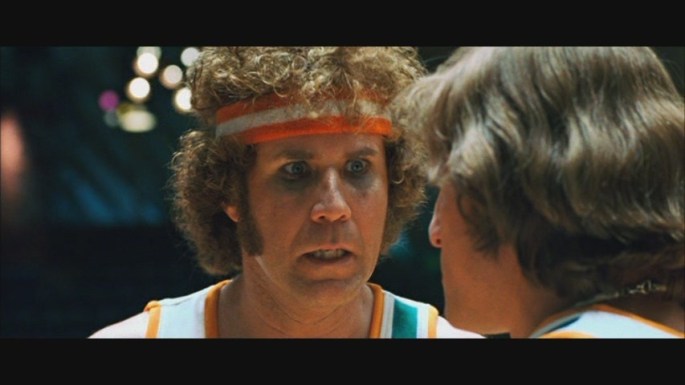
Will-Ferrell-in-Semi-Pro-will-ferrell-11769585-853-480

Semi-Pro (2008) proved that Will Ferrell is no longer bulletproof at the box office. The film was not well-received by the critics (nothing new for Ferrell) but failed to connect with his fans like Anchorman: The Legend of Ron Burgundy (2004) and Talladega Nights: The Ballad or Ricky Bobby (2006) did. On paper, Semi-Pro must’ve seemed like a sure-fire hit: mix the dumb guy humor from Anchorman with the underdog sports team of misfits from Slap Shot (1977) and sprinkle all sorts of popular culture references from the 1970s. So what went wrong?

Jackie Moon (Ferrell) is the ever-confident, terminally clueless owner, head coach, and star player (if you can call him that) of the Flint Tropics, an ABA basketball team that might be dissolved when the league merges with the NBA. Only the four best teams will make the cut, which is not good news for Jackie’s team. They are awful, averaging an attendance record of 91 people a game. The lone exception on the team is Clarence “Downtown” Malone (Andre Benjamin) who actually has a shot at making it to the NBA. The Tropics are so bad that one of the local commentators reads the Classifieds section of the newspaper during one game.

In order to improve the team’s chances, Jackie trades their washing machine for Ed Monix (Woody Harrelson), a physical player not above punching out his opponents. The Tropics certainly have their work cut out for them. Not only do they have to start winning on a regular basis but they also have to average 2,000 people every home game. So, Jackie thinks up all kinds of hair-brained schemes to fill seats, including jumping the team’s cheerleaders on roller-skates and wrestling a grizzly bear.

For the first half of Semi-Pro, the comedic beats, or rhythm, is just not there. At the very least, it is inconsistent. Many jokes fall flat and are just not funny. The two color commentators Lou Redwood (Will Arnett) and Dick Pepperfield (Andrew Daly) steal every scene that they are in with their raunchy repartee (much like Jason Bateman and Gary Cole did in Dodgeball: A True Underdog Story). Then, a funny thing happens in the second half. The film actually gets better. There are a few serious moments, mostly dealing with Monix and his ex-girlfriend (Maura Tierney), and once the Tropics get their act together, the film picks up momentum.

Will Ferrell plays the same type of character we’ve seen in countless films – the clueless confident guy with a touch of arrogance. To be fair, he’s got it down to a science now, but it is getting a tad predictable. One gets the feeling that Ferrell is trying to recapture the magic of Anchorman, complete with the 1970s setting. Unfortunately, Semi-Pro is nowhere near as funny despite an excellent premise. Aside from Will Arnett as his usual snarky self, Woody Harrelson is quite good as a washed-up former NBA player looking for redemption and hoping to rekindle his relationship with an ex-flame.

Semi-Pro isn’t a total train-wreck by any stretch and it does have its genuine moments of hilarity but doesn’t quite deliver as well and as often as it should. If you can make it through the first half of the film, where the filmmakers struggle to find the right mix of humor and drama, you’ll be rewarded for a much more satisfying second half that pays off your patience for sticking it out.

PTS PRESENTS: WRITER’S WORKSHOP WITH PETER CRAIG

CRAIG POWERCAST

Peter CraigPodcasting Them Softly is thrilled to present an exciting chat with the extremely talented author and screenwriter Peter Craig. Peter collaborated with Ben Affleck and Aaron Stockard on the screenplay for the blockbuster crime movie THE TOWN, and hitting screens this weekend is his latest project, the Mel Gibson action thriller BLOOD FATHER, which finds Gibbo back in total ass-kicking mode, with the film serving as an adaptation of Craig‘s original novel. Other co-screenwriting credits include THE HUNGER GAMES: MOCKINGJAY PART 1 and 2 for director Francis Lawrence, which he tackled with writer Danny Strong, as well as drafts for the hotly anticipated sequels to both TOP GUN and BAD BOYS for super-producer Jerry Bruckheimer. He’s an accomplished novelist, with titles that include THE MARTINI SHOT and HOT PLASTIC, while the future holds some interesting big screen work, with an adaptation of Homer’s ODYSSEY, an adaptation of Lynsey Addario’s memoir IT’S WHAT I DO for producer Steven Spielberg, and a really cool sounding submarine action film called HUNTER KILLER with Gary Oldman and Gerard Butler. This was a serious treat and total honor to be joined by Peter for a discussion on his work – we hope you enjoy!

ROBERT ALTMAN’S BUFFALO BILL AND THE INDIANS, OR SITTING BULL’S HISTORY LESSON — A REVIEW BY NICK CLEMENT

1

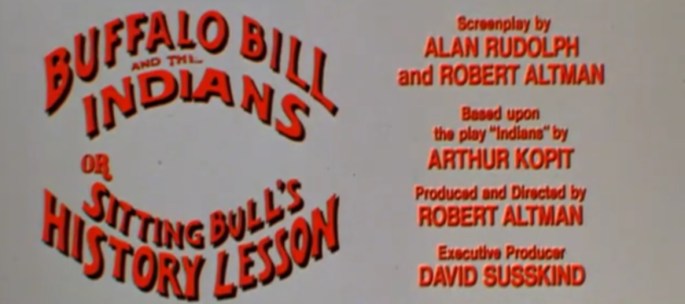
Only Robert Altman would have had the wily nerve to release his cynical, ultra-revisionist Western oddity Buffalo Bill and the Indians, or Sitting Bull’s History Lesson on the bicentennial anniversary of the United States. Casually ripping apart the longstanding and totally absurd notions of white nobility and the violent Native American savage, this is a darkly comical, defiantly strange movie with a careening tone and a hazy, sometimes murky visual style that relied heavily on long shots with multiple characters in the frame, all of whom were talking at once, without any close-ups to establish whose voice belongs to who. Shot by Altman regular Paul Lohmann, I can think of few other films that walk, talk, and breathe like this one, and in tandem with Peter Appleton and Dennis M. Hill’s adroit editing, Buffalo Bill and the Indians, or Sitting Bull’s History Lesson displays a dreamy vibe that just has to be experienced for full effect. Altman’s bold and challenging use of sound and overlapping conversations has always been a point of discussion, but in this film, it may have reached its apex in terms of the use of multiple and simultaneous audio tracks.

4This rascally effort features an eclectic supporting cast, including Will Sampson, Harvey Keitel, Geraldine Chaplin, Burt Lancaster, and Ned Buntline, with everyone allowing the irreplaceable Paul Newman ample room to run away with the movie in various spots. He was absolutely terrific here playing Buffalo Bill, taking the myth out of the man, and layering him in tragic, alcoholic glee. Co-written by Altman with frequent collaborator Alan Rudolph and adapted from the play Indians by Arthur Kopit, the film took on an episodic, farcical approach to the material, and arriving immediately after his much celebrated Nashville, my guess is that critics and audiences didn’t know what to do with Altman’s newest at the time of its release. Focusing on the wild, behind-the-scenes antics of the famous travelling Wild West Show, which was organized by Buffalo Bill and became a massively successful source of entertainment despite showcasing staggeringly inaccurate historical recreations, Altman and Rudolph were able to lay waste to the traditional idea of the hero in the wild West, presenting Buffalo Bill as a larger than life clown and drunkard, only interested in self-satisfaction and purveying a false sense of self-importance and legend. This is a phenomenally ambitious, wholly original, and totally unique item in the legendary filmography of one of America’s greatest and most influential filmmakers.
2

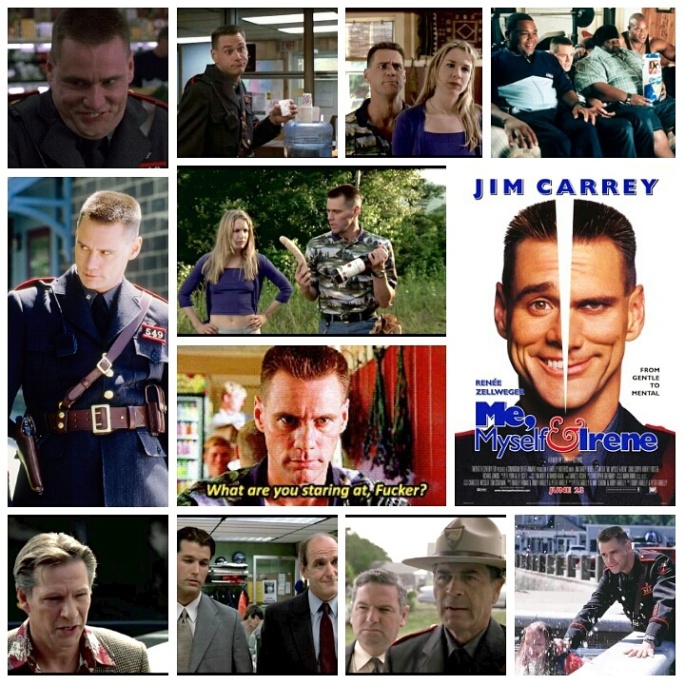
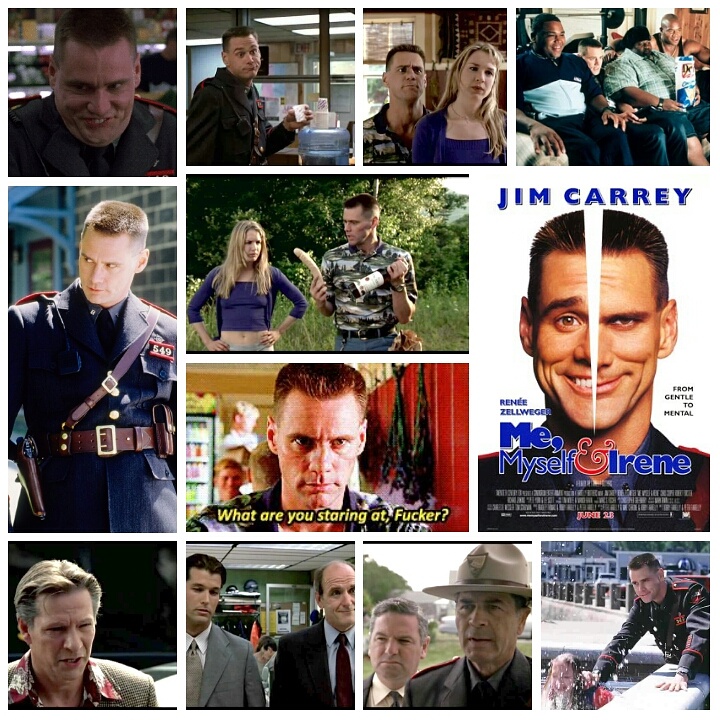
Me, Myself & Irene: A Review by Nate Hill 

Probably the most ridiculous outing the Farrelly brothers have ever taken us on, Me Myself & Irene cares not a whiff who it offends, how many eyes are rolled or how badly the scales of humour are tipped, or rather yanked, in the direction of extremely bad taste. With the exception of Stuck On You where they played it safe, every dirty little flick in their career is a testament to the utmost raunch in film, the very definition of lowbrow humour and never not flat out totally hilarious. Obesity, dates gone wrong, Amish people, conjoined twins, bowling, physical disability, they’ve tackled every scatalogical venture you could dream up. This time it’s mental illness, in a completely unapologetic depiction that will leave most people red faced, either from fuming or laughing their asses off. Jim Carrey plays Charlie, a meek little pussy who spends one day with his newlywed bride, before she’s whisked away by a black midget played by Tony Cox, who gets all the black midget roles, that little bastard. Charlie has a knack for never standing up for himself, and letting anyone walk all over him. He’s a Rhode Island State Trooper with no balls to back up his badge, and is pretty much the laughingstock of the town. All this bottles up and reaches a boiling point, resulting in a classic Carrey meltdown of rubbery expressions and spastic gutteral incantations. Emerging from the mess is Hank, Charlie’s abrasive, dysfunctional and borderline psychotic alter ego, a result of what the film imagines multiple personality disorder just must be like. Hank causes all hell, and the first time he shows up is the funniest bit in the film, an extended montage of hair raising antics that oddly seems to sum up the Farrely’s career. Charlie/Hank then get caught up in some intrigue involving beautiful Renee Zellweger, back when she was still Renee Zelweger. The scattershot story is just a playground for Carrey though, and this is some of the edgiest R rated mayhem he’s ever caused, guaranteed to arch the backs of some of the more, shall we say… *sensitive* folks we have to deal with running around these days. Charlie has three loudmouth black sons that were dumped in his lap, and they’ve now grown into profane geniuses who love their pops to bits, and it’s here the film finds its only bit of heart amidst the crass vulgarity. The baddies are the classic slimy Farrely cretins, a dirty cop played by Chris Cooper, and an unsavory golf club owner (Daniel Greene). Robert Forster makes a welcome appearance as Charlie’s Trooper boss, and keep a look out for Anthony Anderson, Cam ‘Sea Bass’ Neely, Richard Tyson, Lenny Clarke, and the always hilarious Richard Jenkins. Like I said, this is likely the lowest rung of the ladder in everyone’s career, but it’s a splendidly offensive, colorfully trashy piece of gross out bliss, and definitely the dirtiest of the Carrely team ups. Where else can you see Jim stare a five your old kid down and growl “What are you staring at, fucker?”