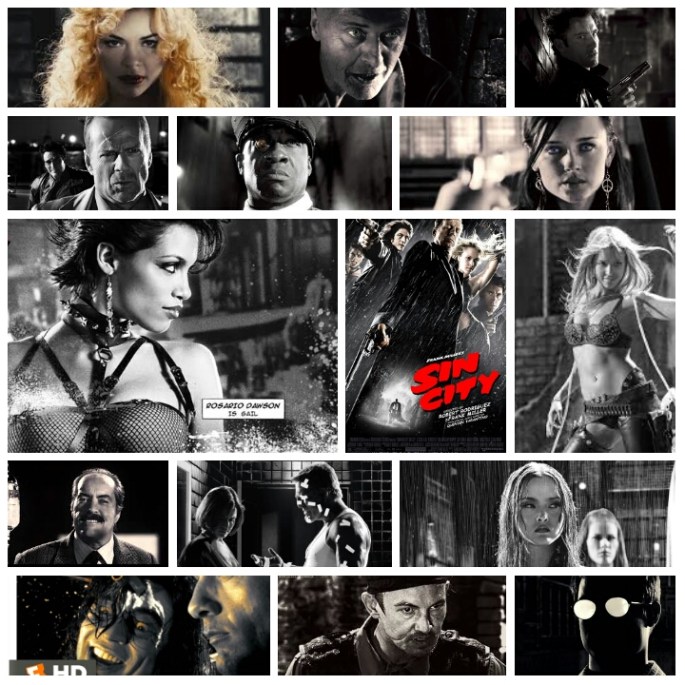
Sin City: A Review by Nate Hill 

I remember seeing the edgy character posters for Robert Rodriguez’s Sin City hanging on the movie theatre wall when I was younger, having no idea what Sin City was or any knowledge of the books, but thinking they looked incredibly cool and enticing. Then the trailer came out, and it was all I could think, talk or breathe about for months leading up to its release. I was obsessed. When opening weekend arrived I got my dad to take me, and spent two unforgettable hours of cinematic nirvana in a dark auditorium that was packed to the gills with fans old and young alike, each basking in the delectable black, white and colour speckled glow of the piece unfolding in front of us. I had never seen anything like it, and it blew my system into sensory orbit like nothing had before. Around this time I was just discovering a lot of Rodriguez’s and Tarantino’s career, poring over pulp and crime thrillers from all across the decades as my love for cinema expanded, and this was something I just knew would be special as soon as I saw that first provocative teaser poster. The innovation and artistic ambition used by the ever resourceful Rodriguez and his team led to gleaming critical reception, a massive box office hit and one of the most gorgeous pieces of art in the motion picture realm. His decision to simply lift the still frames out of Frank Miller’s graphic novels was something that not every director would be able to go along with, let alone wrap their minds around (director’s are a finicky lot who always have thir own bright ideas, even when the source material is already gold). Rodriguez was so in love with the books that he envisioned them onscreen just the way they were drawn, and that’s pretty much what you get in the film. The pre-credit sequence sets the dark, vibrant, moody and impossibly lurid setting of Basin City, a rotting heap of corruption  where almost everyone is either corrupt, sleazy or just outright evil, and even the ones that aren’t deal out some pretty heinous bouts of violence themselves. The prologue involves girl in in a red dress (Marley Shelton) conversing with a mysterious, well dressed man (Josh Hartnett). The scene takes a turn for the dark and tragic, we zoom out as Rodriguez’s self composed gutter lullaby of a score grinds into motion, and the glowering opening credits trundle by, a moment of a pure joy for anyone watching. The film is separated into three central vignettes, each from a different volume of the comics. The first, and strongest, features a sensational Mickey Rourke as Marv, a hulking bruiser built like six linebackers and basically impervious to anything that could kill a human being. After a heavenly night with hooker Goldie (Jaime King), he wakes up to find her lying dead next to him, not a mark on her. This gives his set of talents a purpouse beyond bar fights and roughing up abusive frat boys, and he wages a war of ultraviolence in her name, to his grave if he must. There are some villains in these stories that seem to be dredged up from the very bottom of the last pit of hell, just the worst of humanity’s many deplorable qualities. Marv eventually runs into evil arch bishop Cardinal Roark (a devious Rutger Hauer) and insane cannibal ninja sicko Kevin (Elijah Wood will haunt your nightmares)., on his bloody quest. Rourke’s genius even shines out through 12 pounds of prosthetic makeup slapped all over his mug, and he captures the wayward warrior soul in Marv, a restless anger and old school, Charles Bronson esque charm by way of Frankenstein’s monster. His work is a great way to kick off the first third of the film, and the gravelly narration hits you right in the film noir nostalgia. The second segment is a lot more lively, with far more people running around, sans the melancholy of Rourke’s bit, and instead emblazoned with a war cry of a story starring Clive Owen as Dwight, a hotshot tough guy who gets on the wrong side of seriously scummy dirty cop Jackie Boy (a growling Benicio Del Toro having a ball) who likes to beat up on waitress Shelley (Brittany Murphy). Dwight pursues him to Old Town, a district run by lethal militant prostitutes lead by no nonsense Gail (Rosario Dawson can use that whip and chain on me anytime). Then everything goes haywire (I won’t say why), and Michael Clarke Duncan gets involved as a weirdly articulate, golden eye sporting otherworldly mercenary named Manute. This middle section is the one that feels most like a comic book, where as the other too have more of a noir flavor, like their old Hollywood roots. The third and most depraved chapter (which is no light statement in this town), sees aging Detective John Hartigan (Bruce Willis) lay his life down in order to protect young Nancy Callahan from a terrifying pedophile child killer (Nick Stahl) who is the spawn of despicable US Senator Roark (Powers Boothe sets up a cameo of the pure evil he would go on to exude with his much larger role in the sequel). Jessica Alba plays the adult version of Nancy, now an exotic dancer and once again in danger from Stahl, who now has some… interesting changes to bis appearance, courtesy of genital mutilation from Hartigan years before. It’s one demented set of stories that would be almost too much to take in the real world, but this is Sin City, a realm that exists in the darkest dreams of Raymond Chandler and his ilk, a seething netherworld of stunningly beautiful women, ghastly corruption and terror,  and good deeds that go unheralded in the night, bloody retribution perpetrated by antiheros and tragic scapegoats who know damn well what a pit of hell their town is, and that nobility is but a drop in the bucket of injustice they wade through on their way to violent exodus. The cast list goes on for miles longer than I’ve mentioned so far, but look out for Alexis Bledel, Carla Gugino, Michael Madsen, Jude Ciccollela, Nicky Katt, Nick Offerman, Tommy Flanagan and Devon Aoki as Miho, a deadly little hooker assassin who can turn you into a pez dispenser with her razor sharp katana. The level of violence on display throughout the film is so far over the top that after a while it seems almost Looney Toons in nature. Throats are slashed, heads are removed, testicles are ripped off, skulls are crushed and all manner of maiming and murder inflicted. What made it acceptable with the ever gay MPAA though is the fact that mic of it exists in the black and white mode of visual storytelling, and only a few instances of actual red blood seen.  That goes for more than just the violence though in terms of color. Amid the sea of stark black and white there are beautiful hidden gems of colour that you have to train your eye to find. A pair of green eyes, a crimson convertible cadillac, the sickly yellow pallor of Stahl’s mutated skin. That’s but a taste of the patchwork quilt of visual artistry you are treated to here, and has constantly been emulated in either work since, but never quite effectively as here. That’s the idea of it though, a heavily stylized piece of hard boiled neo noir that exists simply to plumb the very depths of darkest genre territory, do justice to Miller’s books with a laundry list of wicked actors, a bonus scene directed by Quentin Tarantino and a story that’s pure noir to its bloodstained bones.
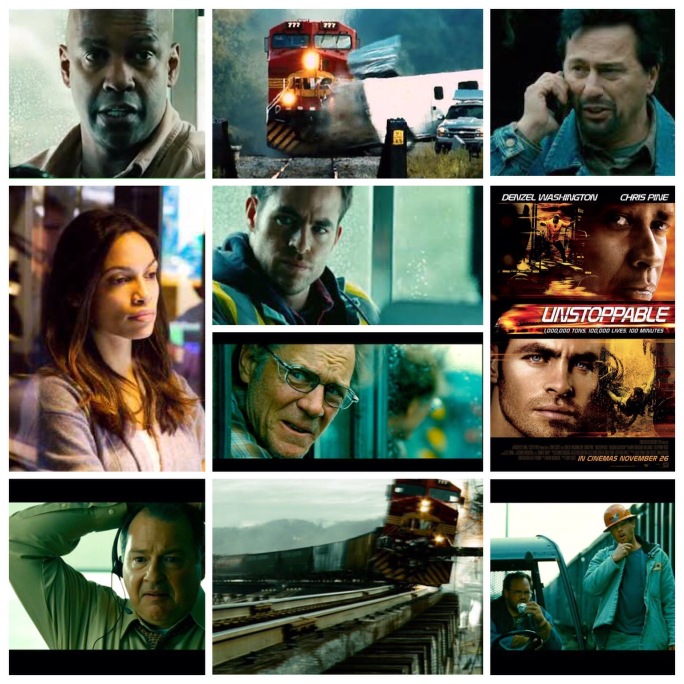
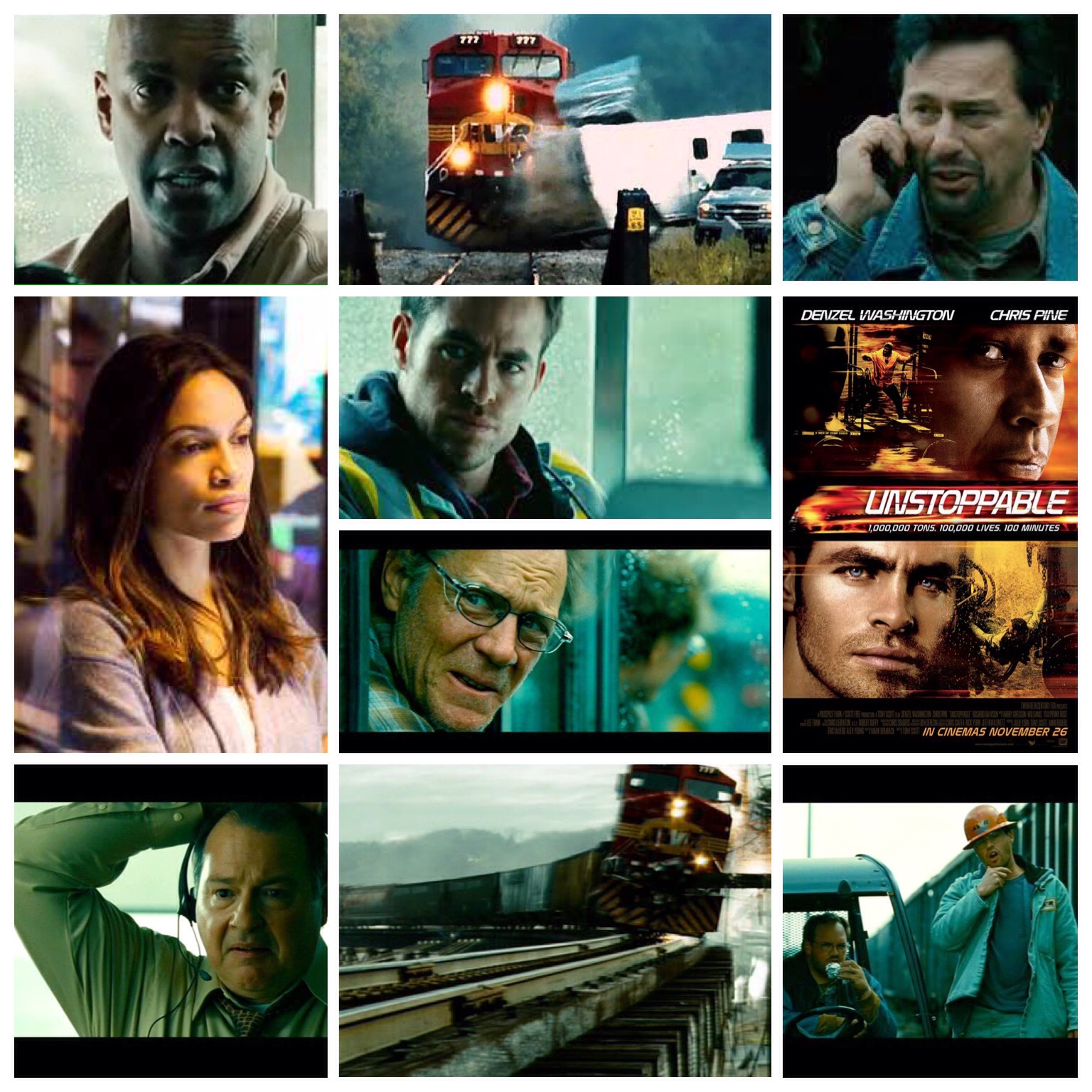
Tony Scott’s Unstoppable: A Review by Nate Hill


Tony Scott’s Unstoppable was the maverick’s last directorial outing before his heartbreaking and untimely death. It’s ironic because the film’s title is a descriptive term I would have applied to the man’s career, life and approach to filmmaking. But it was not to be. This is some swan song of a film to go out on though, a pleasing juggernaut of an action drama that greases the tracks and goes full steam ahead. Any film about trains run amok will inevitably be compared to the 1984 masterpiece Runaway Train, and although this one is vastly different in both story and tone, they just seem to be sister films. The mournful, resolute nature of Jon Voight’s character in it just seems to echo the sadness surrounding this film, and the fact that it was Tony’s last. But that’s just my strange intuition talking. The film itself isn’t really melancholy or downbeat, in fact it focuses largely on human triumph in the face of gross error. There is in fact a runaway train on the loose here, but the stakes are upped when we find out that it’s packed to the brim with highly toxic and flammable chemicals, and hurtling unchecked towards a densely populated metropolitan area. Denzel Washington is the Everyman veteran railroad worker, in danger of having his job devoured by greedy corporate development and ready to have a meltdown. Chris Pine is the hothead rookie swaggering through his first month on throb, and together they have to deal with the disaster, and prevent any further outcome. Rosario Dawson is the frantic control station operator, trying to coach two other workers (Lew Temple & Ethan Suplee) and help as best she can. Kevin Dunn is the abrasive company CEO, unwilling to get his hands dirty and callously looking for the first readily available solution, even if it results in mild casualties that he doesn’t have to witness. It’s all been done before, no doubt, but not by Scott, and you can never write off a formula, trope or act n cliche as dead until the maverick has had a good crack at it. The scenes involving the train are breathless and edited with a glass shard explosiveness, never to shaky or chaotic, always in control and bursting from the frames like the speeding locomotive they encompass. Look out for Jeff Wincott as Pine’s older brother, as well as Kevin Corrigan, T.J. Miller and David Warshofsky as well. It’s not a bad little flick for a director to put the final seal on his career with, and stands as a wrecking ball of an action flick. I just wish we got to see more from the guy. RIP Tony. 

B Movie Glory with Nate: Fire With Fire

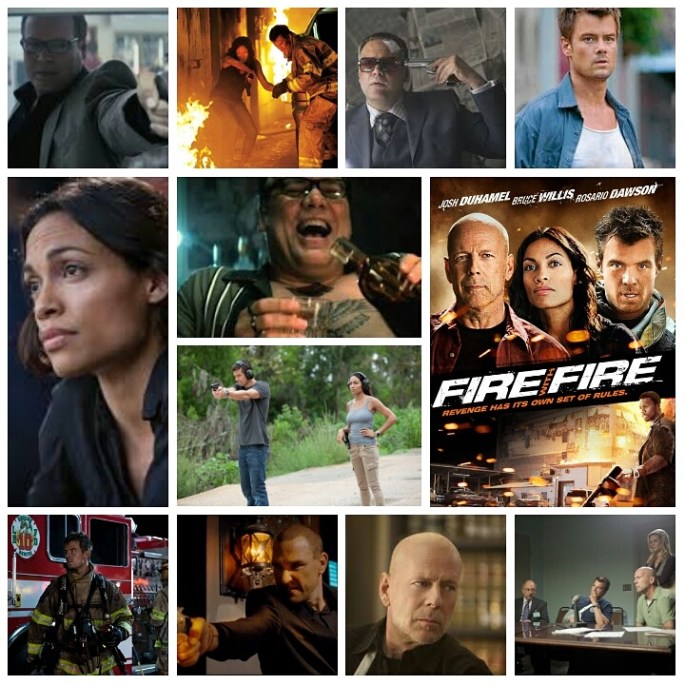
Fire With Fire is one in a long string of recent direct to video flicks that Bruce Wilis seems oddly intent on appearing in. Some are cool (Catch 44), some are halfassed (The Prince) and some are just plain poo (Set Up). This one falls in the first category. It’s an overblown and unbelievable little thriller but it has a great cast on it’s side, and when you score Vincent Donofrio for your villain role, you’ll always at least have some merit. The story is pure B movie: a studly firefighter (Josh Dumahel) ends up seeing something he shouldn’t and gets on the wrong side of a vicious neo nazi psychopath (Donofrio) and his crew. Just his luck though, as his foxy girlfriend  (Rosario Dawson) happens to be an FBI agent working on a task force headed up by a gruff senior operative (Bruce Willis). Willis has been trying to nail Donofrio and his gang for years, and he finally has a handy little firefighter witness to testify. Donofrio won’t stop though, making their lives hell as he shakes their shit up right left and center. He’s a hell of an actor, especially when playing the baddie (his turns in The Cell, Daredevil, The Salton Sea and Men In Black are legendary), and this loose cannon weirdo white supremacist nut job is one more to add to the canon. Duhamel does his classic laid back pretty boy thing, Dawson is tough and oh so attractive as always, and Willis dials up the grumpy metre for a nice little jaded turn that i actually really enjoyed. Vinnie Jones lends his mug to the role of second in command, 50 Cent shows up (wherever Willis and Deniro go in B movie land, he unnervingly seems to tag along), and watch for more work from Quinton ‘Rampage’ Jackson, Julian McMahon, Richard Schiff, Arie Verveen and Kevin Dunn. I like the chaotic formula employed here: a bunch of characters running around, large cast, flashy violent spectacle, flamboyant villain. It almost seems like a 70’s genre piece, and I’d love to have seen a hand drawn, retro style poster with a bunch of stuff sprawled together in a mural like those old school flicks used to do. It sure would beat the generic, vanilla design they went with and I feel like the film deserves more. Great stuff. 

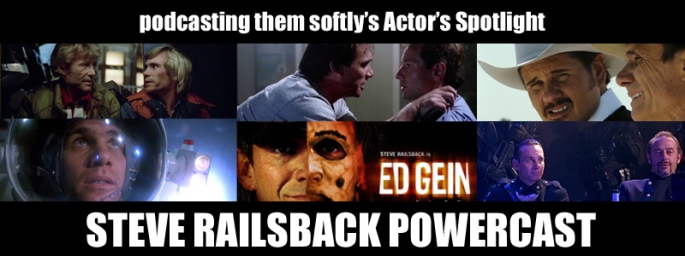
PTS PRESENTS ACTOR’S SPOTLIGHT with STEVE RAILSBACK

RAILSBACK POWERCAST

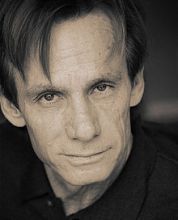
Steve_RailsbackWe are incredibly proud to present our podcast with veteran actor Steve Railsback.  Steve has been in everything, from Richard Rush’s THE STUNTMAN, to Toby Hooper’s LIFEFORCE, Todd Solondz’s STORYTELLING, Rob Zombie’s THE DEVIL’S REJECTS, HELTER SKELTER, BARBWIRE, ED GEIN, IN THE LINE OF FIRE, and an important arc as Duane Barry in THE X-FILES.  Steve gives a candid, hilarious, and heartfelt account of his incredible career speaking at length about working with Elia Kazan, Richard Rush, Clint Eastwood, and how Chris Carter specifically courted him for the role of Duane Barry.  We hope you have as much fun listening to this as we did recording it!
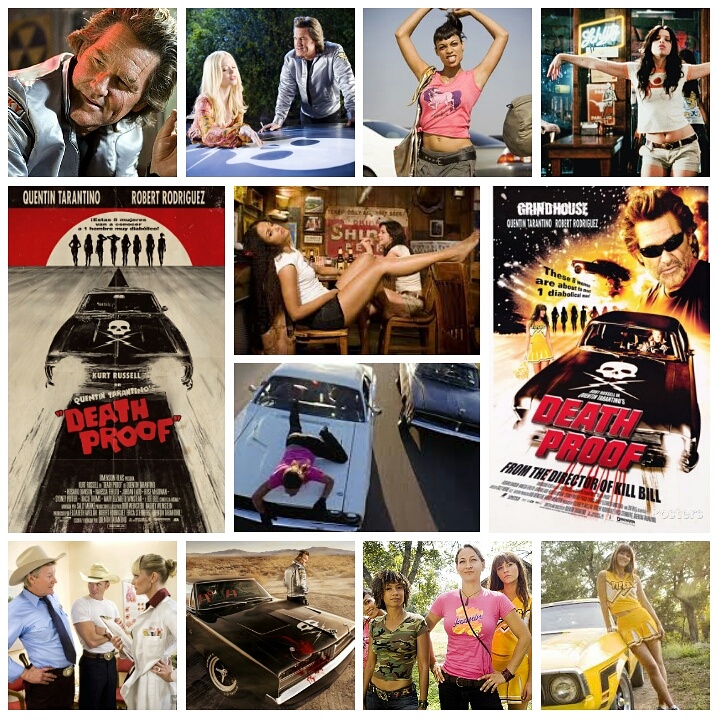
Quentin Tarantino’s Death Proof: A Review by Nate Hill 

Death Proof is… not the best flick in Quentin Tarantino’s career so far, but an entertaining little ride through the B movie corn nonetheless. It’s Quentin playing in the sandbox, and although he tends to fling it about too energetically in spots, and dawdle around listlessly in others, one can forgive such pacing issues when you consider how much fun it is for the most part. It also helps that his Grindhouse effort is heaps better than his pal Robert Rodriguez’s painfully lame Planet Terror, but that’s a whole other chestnut. Death Proof works mostly thanks to the bubbly, endlessly sexy performances from an extensive roster of irrisistable cbicks, and one gleefully evil bit of work from genre legend Kurt Russell, having a devilish blast as Stuntman Mike, a psychopath who batters helpless chicks to death as he rattles them around in his specially rigged vintage muscle car, primed for murder and ready to burn rubber straight to the ER. A fair chunk of the film is spent simply observing these girls talking, bickering, socializing and indulging in idiosyncratic pop culture banter that’s a facet of the Q Man himself. He loves to project his own affinities onto the written page and use them as backbones for his characters, and although that may be one of the core elements of screenwriting in itself, it’s always a little more pronounced with QT. Writers are books, but he is a popup book, always a tad more garish than the rest of the kids on the playground. I don’t wanna say that such lenghthy swaths of running time spent on girls chilling out isn’t fun (it’s captivating, especially with this bunch), but it is essential to the Grindhouse vibe they set out to emulate? A minor quibble, but a quibble all the same. To their credit, the girls are simply terrific. The first bunch include Rose McGowan’s angelic and short lived Pam, Sydney Poitier’s spunky radio DJ Jungle Julia, and Vanessa Ferlito’s wiseass Latina. The first act sees them run into Stuntman Mike in a roadhouse bar owned by Tarantino himself, who just can’t resist casting himself in his own shit lol. Oh well, at least he didn’t try an Australian accent this time around. The second time act we meet Rosario Dawson, stuntwoman Zoe Bell and cutesy pie Mary Elizabeth Winstead, all in the crosshairs of Mike’s radar, but this time he may be in way over his greaser hairdoed head. The vehicular mayhem is traditionalist and non CGI, and quite honestly a spectucalr firework show of blood, glass, metal and scorched asphalt. I just wish there was more of it, man. Sure, the character building with the gals is awesome, but it eclipses the action in gross proportion. A little balance between talky talky and vroom vroom would have been appreciated. Russell is a hoot in a role that was originally going to be played by Mickey Rourke. He just has that knowing gleam in his eye and good ol’ boy charm that makes it work so well, especially in a naughty little fourth wall break that shows you just how much Mike enjoys his sick little game of bumper cars. There’s characters that bleed in from Rodriguez’s side of the fence, including Michael Parks as the seemingly immortal Texas Ranger Earl Mcgraw, and Marley Shelton as his daughter. It’s a valiant effort, with plenty of Mad Max style merit and a seriously smoking lineup of luscious ladies. I just feel like he over fed certain ingredients to the pot when cooking this one up, and neglected others in areas. Still though, even average Tarantino is brilliant, and this one glows, if for a few dull spots. 

A Chat with actor Chris Ellis: An interview by Nate Hill

Very excited to bring you my latest interview, with actor Chris Ellis! Chris has an epic and wonderful career, appearing in many films including Armageddon, The Island, The Dark Knight Rises, The Devil’s Rejects, The Guest, Catch Me If You Can, Transformers, Wonderland, Planet Of The Apes, October Sky, Mr. Bean, Con Air, Wag The Dog, A Little Princess, Crimson Tide and many more. He’s a true gentleman, a hard working performer and a great guy. Enjoy our chat!


Nate: How did you first get into acting? Was it something you always wanted, or did you stumble into it?
Chris: From age 5 while watching the Mickey Mouse Club on early television, I warbled, “Hey diddley dee, that actor’s life for me.”
Nate: I’ve heard you referred to as a character actor before. What is you opinion on the term, and would you categorize yourself as such?
Chris: A male character actor is one who never gets the girl because he is not pretty enough – too bald, too chubby, too southern. I have played such roles throughout a lengthy, undistinguished career. Just once I wanted to kiss the girl.

Nate: The Dark Knight Rises: How was your experience working on this film, with Christopher Nolan and such an epic scene on that bridge?
Chris: You have the advantage of me, sir, as I have never seen that movie. More to the point, I have never read the script, though I understand I appeared in it in the early, middle and late sections. The reason I never read the script is that I was never shown any part of it other than the pages containing my own dialogue, and those pages were drastically redacted such that I was able to see the immediate cues for my dialogue and nothing else. At one point, after shooting a scene over my shoulder, the camera was turned around on me for a reaction shot. My query as to what I might be reacting to and how was answered by Nolan so: “That is on a need to know basis and you don’t need to know.” He fleshed out that response by suggesting I react as if I were “reacting to the sight of two guys talking.” No one I know who saw the movie hinted that I never looked as if I didn’t know what the hell was going on, but in fact no plot point was ever made known to me, nor any suggestion of the long arc of the movie. On the other hand, I got paid well, travelled to Pittsburgh, New York City, and Nottinghamshire in England. In all three places I had lots of time off in which to wonder what the hell the movie was about and to do lots of sightseeing. Any time, Mr Nolan.
Nate: I’ve noticed that you work with Michael Bay very frequently. Are you two pals, or has that just been coincidence? How has you experience been on his films, Armageddon/The Island etc.?
Chris: I worked with Bay on Armageddon, Transformers, and The Island. He is said by some to lack gentility and sophistication, and I have seen him on sets demonstrating a want of courtesy to actors who permit him to do so, but if you want a big action movie grossing a billion dollars about exploding planets and trucks turning over in high speed traffic mishaps, he is your boy. If you want art, go to the Lemmle Theatre in Santa Monica. I do this for a living. I go to museums for art. 
Nate: The Devil’s Rejects: such a wild and crazy film. Very memorable part as the goofball cop. How was your experience on that set, working with Rob Zombie and William Forsythe?
Chris: One day I mentioned to my theatrical agent that I had always been a fan of horror movies, by which I meant the classics of that genre, mostly from the 1950s and 60s. Very next day he called me with an offer for “a horror movie by Rob Zombie,” of whom I had never heard. I wouldn’t call The Devil’s Rejects horror – more like a Charlie Manson wet dream, but Zombie was the soul of gentility on the set. He is covered in tattoos, many of them visual renderings of famous horror movie characters from a simpler time, and when I worked with him he kept his wallet attached to his person by a length of chain sagging with languor between the wallet and his belt loop. This is a fashion accessory I associate with the Donald Trump demographic but which was belied by Zombie’s gentle and quiet spirit. 
Nate: What are some of your favourite roles you have played in your career so far?
Chris: Last year I played a judge on a TV series called Murder In The First. That was my dream job, as it involved sitting in a comfortable chair all day long on set, frequently unshod, and with an improving book in my lap to which I could refer between the words, “Cut!” and “Action!” I quite enjoyed yet another incarnation of Sheriff Cracker von Peckerwood in a 2000 movie called The Watcher, not least because I was given a rather wide berth by the director and screenwriter in making the dialogue my own. Also, it was a character with whom I felt a comfortable intimacy. The same applies to the character I played in the movie Armageddon and in one episode of the TV show X-Files. Playing Deke Slayton in Apollo 13 was probably the actual thrill of a lifetime because we all believed while working on that movie that it would become a significant movie (which it remains) and because I remembered Deke while he had been part of the Soyuz/Apollo mission in 1975. But, I hope it will not appear to be taking the liberty of rodomontade to utter the hope that there never has been a time of stepping onto a movie set without breathing a prayer of inarticulate gratitude for the consummation of a lifetime’s desire.
Nate: How was your experience on Catch Me If You Can?
Catch Me If You Can was a joy to work on, first because the script is superb, and because it gave me the chance to work with Spielberg who is a gentleman non pareil and who offers every artistic freedom to everyone on set. When I worked with him, at the completion of each set up, he would ask to the crew as well as to the cast, “Does anybody want to try another one? Anybody want to try something a little different? We have the time, so let me know if you’d like to do anything else with this shot.” Of course he has a very competent crew surrounding him, so his movies are apt always to come in one time and under budget, so it was a joy to work with such freedom.
Nate: Do you have a favourite or preferred genre to work in, or is it all equally enjoyable? Just once I’d like to kiss the girl, but as I say, every time I step onto any kind of set I remind myself that I am not laying roofing tar in Phoenix during the summer. If you ever hear me complain about any circumstance of my livelihood, you are invited to come where I am and kick me in the nuts.
Nate: What is next for you? Any upcoming projects, cinematic or otherwise that you are excited about and would like to mention?
Chris: Nope. Mostly what I do for a living is wait for the phone to ring. My family and I are now on vacation, but soon as I get home I will be slouching toward the telephone hoping to god it rings.

Nate: Thank you so much for your time Chris, it’s been a pleasure, and keep up the awesome work!

ALLISON BERG & FRANK KERAUDREN’S THE DOG — A REVIEW BY NICK CLEMENT

1

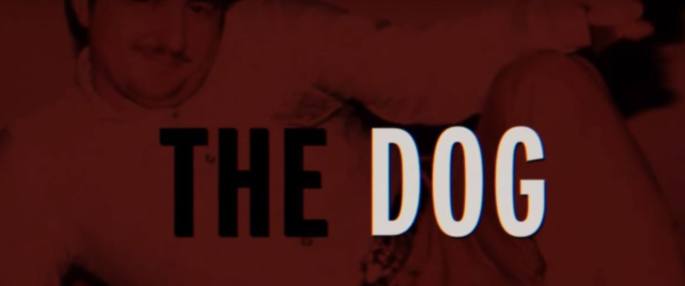
Fabulously entertaining, oddly moving, compulsively funny, more than a tad sad, and ultimately illuminating, Allison Berg and Frank Keraudren’s The Dog is one of the best documentaries in recent memory. Focusing on the wild antics of sex-obsessed bank robber John Wojtowicz (the real life inspiration for Al Pacino in Sidney Lumet’s classic Dog Day Afternoon) and how he arrived at the idea to rob a Chase Manhattan in order to pay for his lover’s sex-change operation, the filmmakers have crafted a highly engrossing time capsule back to 1970’s NYC as the explosive Gay Rights Movement began to take shape. Incredibly informative yet never dry due largely in part to Wojtowicz’s bold, brazen, brutally open, extra vulgar, and deeply honest personality, The Dog utilizes classic film clips, a dynamic soundtrack, and well-researched archival footage that helps to paint an unpredictable portrait of a tortured soul. And just wait until you meet Wojtowicz’s brother and mother – you can’t make this stuff up. The final act of the documentary turns unexpectedly poignant and tragic, and it’s then that the film turns into a powerful statement of never giving up on your dreams and how you should never let anyone tell you that you can’t do something. Make no mistake, Wojtowicz was a complicated man, a convicted criminal, serial lover, scoundrel, crusader, momma’s boy – a true lover and fighter. It’s fascinating all around and it’ll make you crave a viewing of Dog Day Afternoon by its conclusion.

2

THE BOURNE LEGACY – A REVIEW BY J.D. LAFRANCE

bourne1

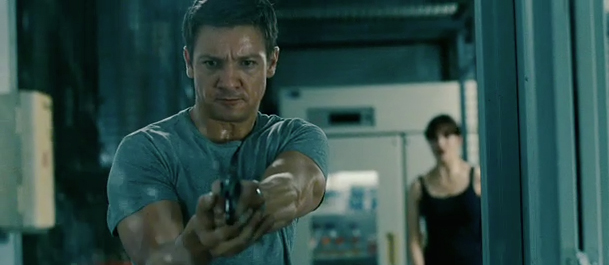
With The Bourne Ultimatum (2007) came a satisfying conclusion to the popular spy franchise as its protagonist finally came to terms with who he was and how he came to be a government-trained assassin. Never one to let a lucrative franchise die, Universal Pictures soon started to develop yet another installment. However, Matt Damon and Paul Greengrass – Ultimatum’s star and director respectively – felt that there was no more story to tell and bowed out, leaving the studio with quite a dilemma. So, they went back to the architect of the series, screenwriter Tony Gilroy. He had written the first draft for Ultimatum before two other writers were hired while he tried his hand at directing. He had made waves in the press about not being particularly thrilled with the direction the third film had taken and so I’m sure he saw The Bourne Legacy (2012) as a chance to make this franchise his own and no doubt itching to bounce back after the lackluster box office of his last film Duplicity (2009).

The problem Gilroy faced was getting people interested in a film no longer starring the series’ beloved lead actor. However, he wisely cast a completely different actor with Jeremy Renner (The Hurt Locker) who, thankfully, doesn’t play a rehash of Jason Bourne. Gilroy also wisely acknowledges what came before by having the ending of Ultimatum overlap with Legacy. In doing so, this installment isn’t a remake but rather a reboot/sequel hybrid that exists in the same world created in the first three films.

After Jason Bourne exposed the United States government’s top secret operations, Blackbriar and Treadstone, the CIA bigwigs enlist retired U.S. Air Force Colonel Eric Byer (Edward Norton) to cover their tracks. This involves eliminating all operatives in other clandestine undertakings, chief among them Operation Outcome. It is one of the Department of Defense’s black ops programs that provides agents with green pills that enhance their physical skills and blue pills that enhance their mental capabilities. One by one, these agents are killed except for Aaron Cross (Renner), who’s been on a training exercise in the remote wilderness of Alaska.

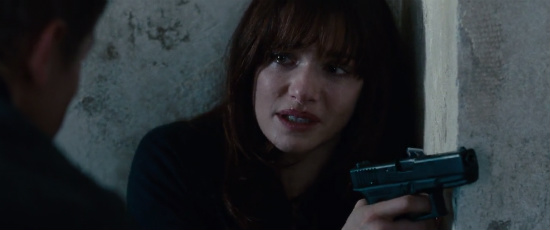
The CIA also tries to kill the scientists that researched the pills by brainwashing one of them (Zeljko Ivanek) to shoot his co-workers, save Dr. Marta Shearing (Rachel Weisz) who narrowly survives. This is a chilling scene as Gilroy ratchets up the tension with the killer coldly gunning scientists down like some kind of mild-mannered (yet frighteningly lethal) Manchurian Candidate. Naturally, Byer and his crew create a cover story for the media of just another crazed rampage by a lone gunman. As it turns out, Marta originally administered Aaron’s meds and so he seeks her out to get more pills and get some answers, while Byer tries to kill them. Once they are on the run, Gilroy cranks up the paranoia factor as simple tasks like boarding a plane are a nerve-wracking experience as any fellow passenger could be an incognito government operative sent to kill them.

Aaron Cross is a much chattier character than the taciturn Bourne and, unlike him, Aaron knows exactly who he is. Once a good soldier, he now questions what he’s doing and why he needs to be dependent on these pills. This latter dilemma manifests itself more and more as the film goes on with Aaron conveying, at times, the desperation of a junkie looking for his next fix. With The Bourne Legacy, Renner completes a trifecta of high-profile action films that include Mission: Impossible – Ghost Protocol (2011) and The Avengers (2012). The supporting roles he had in those two films were just warm-ups for Legacy where he finally gets to headline his own big, Hollywood blockbuster and pulls it off.

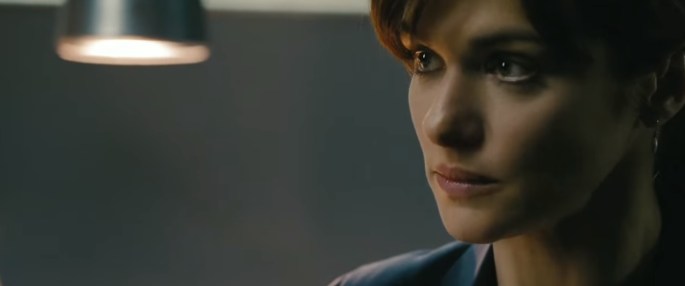
Rachel Weisz’s Marta is not the damsel in distress she initially appears to be as the scientist quickly acclimates to her predicament – being on the run with Aaron – and even helps him take out the occasional bad guy. Not surprisingly, Aaron and Marta’s relationship is initially an abrasive one as he demands more pills and answers from her, but she soon realizes that without his help she will most certainly wind up dead before the day is out. It is an uneasy alliance that you would expect from two people thrown together in a desperate situation but over the course of the film they learn to trust each other. Weisz plays a convincing scientist, adept at spouting the technical jargon that comes with the role, but she also has some touching scenes with Renner as his character becomes as dependent on her as she is on him. The Bourne Legacy is a nice change of pace for the actress who hasn’t been in an action-oriented franchise since The Mummy films.

Interestingly, the idea of drug-induced government operatives eerily echoes, albeit on a much larger scale, a storyline in the fourth season of the television show Buffy the Vampire Slayer. Buffy falls in love with a college student by the name of Riley who is actually a pharmaceutically-enhanced government agent, and much like in the Bourne films, this top secret operation is eventually exposed and then covered up by the government. Once Riley realizes the true nature of the operation, he goes rogue and even begins to feel the detrimental effects of the drugs he was on – his pain receptors shut down and he must seek treatment. Sound familiar? Now, genetically enhanced government operatives are nothing new. Comic book superhero Captain America is also enhanced through genetic engineering but the similarities between The Bourne Legacy and this storyline from Buffy the Vampire Slayer are quite striking.

For those not crazy about Paul Greengrass’ frenetic, often disorienting hand-held camera action sequences in The Bourne Supremacy (2004) and Ultimatum, will be happy to know that Legacy is, by and large, devoid of them. Gilroy shows a good sense of geography and skill at choreography during these scenes, in particular, a dynamic and tense battle in Marta’s home between her and Aaron and a team of assassins sent to kill them. With this sequence – and others – Gilroy creates a real sense of danger and scary intensity as one feels that Aaron and Marta’s lives are really at risk.

The-Bourne-Legacy-3

The Bourne Legacy could be seen as an opportunistic cashgrab by a studio afraid to let a lucrative franchise lie dormant but I don’t think Tony Gilroy sees it this way. In addition to delivering a rousing spy thriller, he raises some interesting questions about the culpability of pharmaceutical companies that research and create performance enhancing drugs and this is touched on in an early conversation between Aaron and Marta where he chastises her for claiming ignorance over the true purpose of the drugs she helped create, pointing out that they control him. Gilroy’s skill at writing smart dialogue comes into play during this scene and throughout the entire film as he creates an intelligent and exciting thriller that opens up the world he first helped create in The Bourne Identity (2002). That being said, he doesn’t deviate from the template established in the first film as our heroes are tracked with state-of-the-art surveillance technology by government officials barking orders in a control room all the while the protagonists traverse the globe looking for answers and evading the bad guys. While, Legacy is not as good as the first three films – Matt Damon was just too good at eliciting our sympathies and, at the time, those films were a fresh alternative to the Bond franchise – it is very well done and a promising start for a new series of films with a new protagonist to root for.

JOSHUA OPPENHEIMER’S THE ACT OF KILLING — A REVIEW BY NICK CLEMENT

3

An enormously troubling “documentary,” Joshua Oppenheimer’s bizarre and surreal The Act of Killing is unlike anything I’ve ever seen. And that’s always a good thing. But, with subject matter as sad and as disturbing as this, it’ll take a particular type of viewer to want to bear witness to it. This is one of those “I’m glad I saw it once but I’m really glad I never need to see it again” type deals. Strong medicine as they’d say. Focusing on the 1965-66 U.S.-assisted Indonesian genocide of up to 2.5 million “communists” at the hands of Suharto, the film is a boundary and medium pushing provocation designed to repel and fascinate in equal measure. Because the movie primarily consists of grotesque re-enactments of the various slaughters, re-enacted by the very death squad members and gangsters who carried out the killings, this tactic lends the project a distinct vibe that becomes something of a tutorial horror show.

2

The various murderers, still free to this day and some still holding strong political or military influence within the country, confess to their crimes directly to the camera, most of them proud of what they did, talking about how they were inspired by violent Hollywood movies, never fully reflecting on what it was that they actually were doing. That is, until the end, where one of the executioners, dressed and playing a tortured prisoner during one of the bits of staged madness, goes through what one might consider as a “mild crisis of conscience.” To put it lightly. It’s a sight that I’ll never forget, as I’ve never seen someone seemingly choke up their own rotten soul. Exec-produced by Werner Herzog (naturally) and Errol Morris, The Act of Killing is a film that stares at true evil directly in the face, and because nothing seems to be learned by these “human” monsters, the end result feels as hopeless as it does spellbinding.

1

TONY GILROY’S THE BOURNE LEGACY — A REVIEW BY NICK CLEMENT

1

I know it’s an unpopular opinion but I think The Bourne Legacy is pretty damn awesome. It doesn’t carry the same visceral “shaky-cam” aesthetic as the previous entries, but on its own terms, this is an effective and subtly stylish movie made by one of the chief architects of the series. Those first 20 minutes are heady brilliance, and I loved how writer/director Tony Gilroy connected the last act of Ultimatum to the very start of his universe expanding continuation, taking all of the elements that we’d come to expect from this run-and-gun template, and bringing something — GASP! — new to the table in terms of story and character. Jeremy Renner was a perfect addition to the franchise, and it seems a shame that this film didn’t do an additional $50 million domestic, as we’re unlikely to see any more hybrid tales with his Aaron Cross character. Super-hot Rachel Weisz was smartly cast as his scientist ally, and on a purely superficial level, it must be said, her haircut and glasses combo in this film are nearly painfully sexy. The story was so well done and exciting that I never missed Matt Damon at any point, as Gilroy was able to pay respect to the previous films while charting a new course of action.

3

Oscar Isaac, who at one stage was Gilroy’s top pick for the lead role, got some terrific moments in that ominous log cabin, while the entire snow-set prologue was a refreshing and dynamic way to begin the film’s dense narrative. There’s also that glorious shot that spans the length of Ed Norton’s conference room table desk, where you see all of the various black-op programs that the government is involved in — Blackbriar, Treadstone, Outcome — I eat all of this stuff up. Norton, Stacy Keach, Scott Glenn, and Corey Stoll all added reliable support. I’m not sure why so many critics had so many beefs as it really feels like nitpicking for the sake of nitpicking. The final chase provides the visceral thrills, the chilling mid-film set piece with Željko Ivanek was startling and eerie, and Renner’s steely determination complimented the introverted work that Damon brought to the previous adventures. Robert Elswit POWER all over this movie, there’s a superb score by James Newton Howard, and Gilroy’s brother, John, handled the tight and crisp editing. This is a very underappreciated actioner.

2