Paul Verhoeven’s Robocop: A Review by Nate Hill 

  
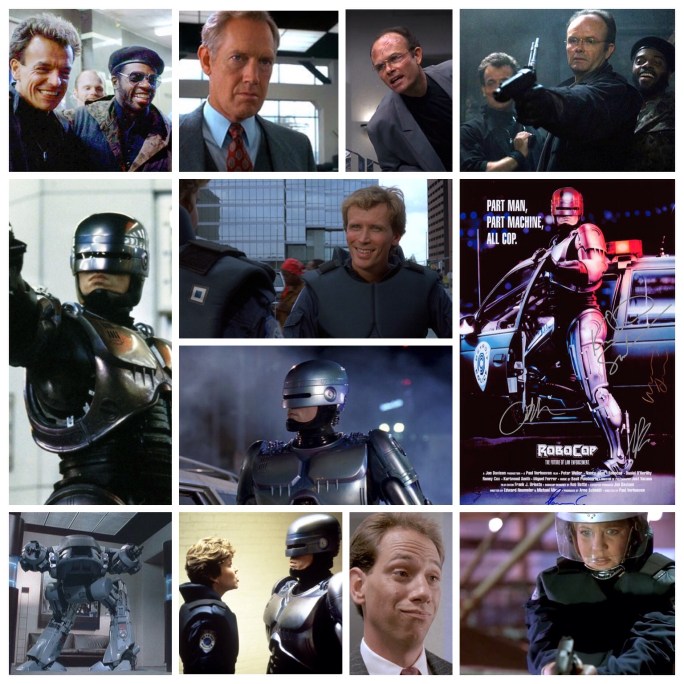
“Bitches, leave!!” I direct that sentiment towards anyone out there who thinks the remake of Robocop can hold a candle to Paul Verhoeven’s brilliant, incredibly graphic and bitingly satirical 1987 classic. Everything that was special and amazing about the original was absolutely pissed on with the remake, and it kills me that I run into people my age these days who aren’t even aware that the remake IS a remake, and think it’s the original Robocop. Ugh. Get out. No, this is the real, steel deal, accented by Verhoeven’s blunt approach to characterization and overly ultraviolent, near Cronenberg-esque flair for carnage. Peter Weller only gets to act as regular joe police officer Alex Murphy for a brief and chaotic prologue, but makes the most of it with his deadpan delivery and piercing gaze. Murphy is assigned to a precinct in the heart of Old Detroit, a district so corrupt, rotten and infested with crime it literally resembles a war zone, and cops wear heavy riot gear on their beat. Paired Nancy Allen, he beelines it for a suspicious truck leaving the scene of a heist. Only one problem: this particular truck happens to belong to evil arch criminal Clarence Boddicker (Kurtwood Smith) and his merry band of psychopaths, who are armed to the teeth with heavy artillery. Cornered in a warehouse, Murphy is brutally, and I mean fucking brutally dispatched by Boddicker and his gang, shredded by a hail of gunfire that turns him into raw hamburger meat. What’s left of him is quickly swooped up by corporate, and used in a high tech, absolutely silly program run by coked up suited opportunist Bob Morton (Miguel Ferrer). His idea has gotten in the way of nefarious plans put in motion by the top dog of the company, a maniac named Dick Jones played by Ronny Cox in a frighteningly funny turn that makes you terrified in between fits of giggles. Once Murphy has been through Morton’s wringer, Robocop emerges, an epic, unstoppable android enforcer who lays waste to criminal scum all over town, until traces of Murphy’s consciousness bubble up past the circuit boards and he gets his own agenda. Jones is determind to take him down, along with Morton, undermining The Old Man (Daniel O’Herlihy), the acting CEO. For a film called Robocop that came out in 1987 you’d think were in for a cut and dry action cheese fest. Not with Verhoeven at the helm. The Dutch madman is never one to play it safe (a refreshing trait among European directors) and pulls out all the stops here for a bloody good time that pauses ever so slightly to nudge you with its cynical side that just loves to bash social convention into oblivion. The effects are so 80’s you’ll swoon, especially when Jones’s own robo creation shows up in clanking, drunken stop motion that you can practically reach out and touch. Smith is a homicidal wonder as Boddicker, the smarmy fury and unrestrained behaviour hijacking every scene he’s in. Leland Palmer himself, Ray Wise plays Leon Nash, his equally dastardly second in command, and a host of gnarly character actors back them up, all of which have curiously guest starred on Fox’s 24 at various points in time, including Weller too. The level of fucks given with this film goes into the negative region of the thermometer, and to this day few studio films have been able to boast such disregard for discretion or lay claim to a sheer love of bombastic villains, a blatant lack of subtlety and a willingness to take things to cinematic infinity, beyond and back again just so they can throw a few more bullets into the mix. Accept no substitutes.
Indie Gems with Nate: A Broken Life 

A Broken Life stars Tom Sizemore as a hopelessly depressed dude who has the notion of killing himself, after he spends a whole day going around to visit the various people in his life, tie off loose ends, make amends and right some wrongs. It’s a concept that could get silly, theatrical and self indulgent, but it’s handled swimmingly enough here, mostly thanks to Sizemore’s honest work that doesn’t really mug for emotional payoff or squeeze pathos where there’s nothing to mine. This is probably because he’s usually the hoped up maniac who is putting other people in the morgue, and like I always say, casting actors against type brings out the best intuitive nature. He’s also the lead, which means he gets to bring more than just a supporting dose of his power here, assisting the film greatly. He’s joined by his assistant  (Corey Sevier), who records the whole thing on a video camera, adding to the already indie flavor. His adventures include a visit to his old boss (Saul Rubinek) who mistreated him years earlier. Sizemore and Rubinek have faced off before in Tony Scott’s True Romance, in kinetic fashion. Here they’re just as electric, but reign it in a bit as the material requires, crafting one of the film’s most effective scenes. Other ventures include a reunion with his estranged ex wife (Cynthia Dale), and frequent run ins with a sagely homeless man (Ving Rhames) who spouts a lot of benevolent wisdom that seems to be profound and nonsensical all at once. These type of films either work or they don’t, plain and simple. They’re either giant mopey ego balloons or terrific little eleventh hour character studies that come from a place of honesty. This one has a few off key notes of the former, but fpr the most part glides smoothly along the tracks of the latter category, thanks to Sizemore’s committed performance.  

Michael Cimino’s DESPERATE HOURS – A Review by Frank Mengarelli

DH 2

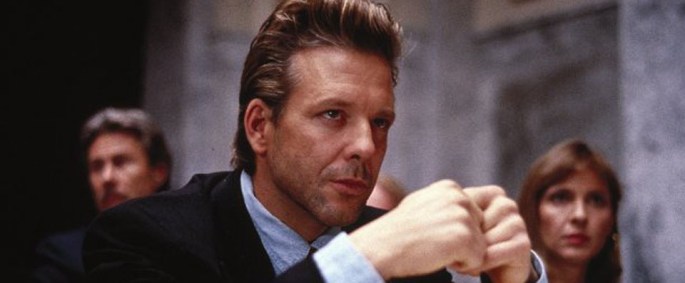
Remakes are rarely a good idea, particularly if you’re a semi defrocked filmmaker and your headliners are Mikey Rourke who’s self-infliction was becoming more rampant in the late 80’s and early 90’s and a pre-SILENCE OF THE LAMBS Anthony Hopkins who’s star was on the fade.  Back all of that up by remaking a seminal Bogart film and releasing it to critical annihilation and an uninterested box office and we are left with a film that doesn’t find its audience until decades later.

Michael Cimino’s DESPERATE HOURS is a remarkable film.  It’s angry and brooding, wonderfully shot by Doug Milsome, and features two fierce performances from Rourke and Hopkins.  Mickey Rourke gives one of the finest performances of his career as Michael Bosworth whose freakishly high IQ wrapped along with his sociopathic tendencies makes for a fantastic villain and a very showy performance from Rourke.

Rourke is an escaped murderer on the lamb, he holds up in Hopkins’ house, where his family gets held captive by Rourke and his two lackeys.  Hopkins slowly pits Rourke’s paranoia and anxiety against him and his crew, slowly manipulating and faking them out at every turn.  Seeing Rourke and Hopkins go head to head in a fight between alpha males is worth the price of admission alone.

We all know about the rise and fall of Michael Cimino, and while the tide has completely turned on HEAVEN’S GATE, Cimino’s back catalog is more than deserving of being revisited.   DESPERATE HOURS isn’t a perfect film, but for anyone who loves dark and brooding films, this film is perfect for you.

OLIVER STONE’S BORN ON THE FOURTH OF JULY — A REVIEW BY NICK CLEMENT

born_on_the_fourth_of_july_xlg

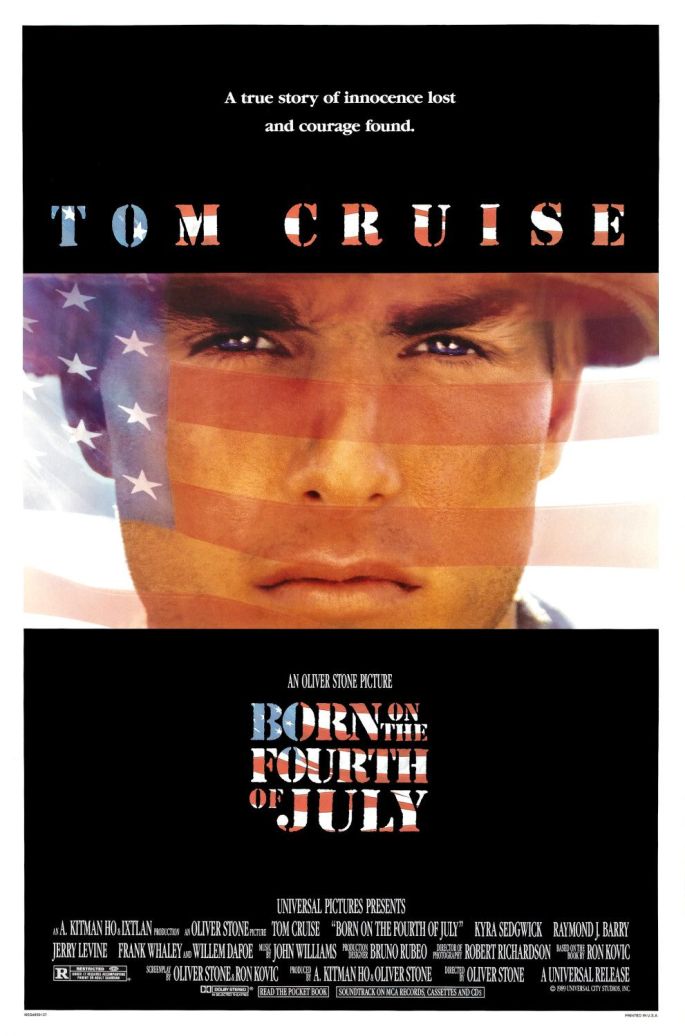
This is an overwhelming cinematic experience, and one of many masterpieces for Oliver Stone. Tom Cruise went long and deep here, easily delivering one of his best and most passionate performances. This entire film singes the senses, with every single craft contributor working at the very top of their class. Robert Richardson’s mesmerizing widescreen cinematography created hellish epic landscapes of war-time fury that’s both nightmarish and slightly surreal, while still nailing the intense intimacy of the domestic sequences. Every performance from the ridiculously stacked supporting cast was dialed-in and extra heartfelt. Stone wanted everyone to FEEL SOMETHING with this one, from his actors to his crew to his audience, and in that sense, this film is similar to Michael Cimino’s The Deer Hunter. And while that film is more than likely a bit more uncompromising, I can’t help but feel that both of these fiery works share many artistic sensibilities. The score by John Williams skillfully added layers of sadness to an already bleak yet oddly triumphant narrative. A reminder of how horrible war is for all participants and a shattering indictment of the way America treated its many Vietnam veterans, Born on the Fourth of July scalds the viewer, on purpose and by design, and in doing so, likely registers as unforgettable cinema for anyone who encounters it.

SIDNEY LUMET’S POWER — A REVIEW BY NICK CLEMENT

8

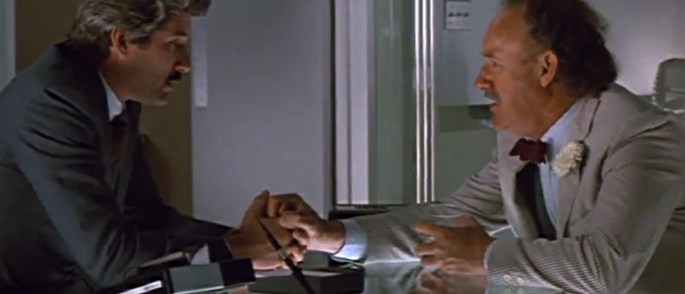
Sidney Lumet’s totally cracking 1986 political drama Power. I feel like my cinema-viewing life has been leading up to this moment. How had I not seen this terrific movie sooner? I’ll resist my temptation to get super obnoxious with this mini-review, but holy shit this movie rocks it – hard. You’ve got sleazy mustache Dick Gere playing a crafty, cynical, and overworked political consultant/campaign strategist who knows how to handle the media and is working for an Ohio business tycoon with Senate aspirations, Gene Hackman as his old friend and one-time mentor with traditional values who gets back-stabbed, Kate Capshaw doing near-nudity in her role as Gere’s hottie girlfriend, Julie Christie as Gere’s dreamy ex-wife who might be more lethal than him, Denzel Washington in a fiery supporting turn as Gere’s arch rival, JT Walsh in a small but crucial role, Fritz Weaver, E.G. Marshall, and Beatrice Straight. The barbed screenplay by David Himmelstein took aim at the media with tremendous gusto, paving the way for something like the even more hard-nosed Nightcrawler or the similar-feeling but decidedly more playful Our Brand is Crisis.

2

Lumet’s on-point direction was well served by frequent collaborator Andrzej Bartkowiak’s crisp and clean cinematography, while the film is bookended by a pulsating opening credits sequence and a beyond engrossing final montage that puts one final nail in the coffin; Andrew Mondhshein’s tight editing kept the pace fast and energetic. And c’mon, Gere’s character’s name is PETE ST. JOHN, and he’s rocking one of the ULTIMATE nose-ticklers without a shred of irony. There’s one absolutely fantastic scene between Gere and Hackman where the two men discuss their past and their potentially rocky future, some nice interplay between Christie and Gere, and a general sense of knowledge and understanding of the themes and ideas at play. In many respects feeling remarkably prescient 20 years after its original release, where it was met with indifference from both critics and audiences, my guess is that Power is even better now than it was when it first unspooled for disinterested viewers.

5

Adrian Lyne’s Jacob’s Ladder: A Review by Nate Hill 


Few supernatural horror films tap into the abstract realm of the unconscious quite as effectively as Adrian Lyne’s Jacob’s Ladder. There’s a select group out there who have done it as well (Tarsem Singh with The Cell, Hellraiser and Silent Hill come to mind), but there’s just such an abundance of generic, or ‘vanilla’ horror out there. It’s not that that kind of stuff isn’t great, I just like to see something strive for a little more, stylistically speaking, go for something truly elemental and out of the box in its attempts to elicit fright. This one engraves nightmares of an inexplicable variety into your perception, images and sounds made all the more disturbing by the fact that we never really know what is going on with our protagonist, a Viet Nam vet named Jacob (Tim Robbins), a decent dude with a sketchy past who spends his days as a postal worker in NYC. Jacob is plagued by waking nightmares, visions of demons, confusing allusions to his past and a son (a pre Home Alone Macauley Culkin) who may have died, or never existed at all, all combined with a general sense of dread that almost seems to crawl out of the screen and choke the viewer. Jacob is dating a co worker (RIP Elizabeth Pena), who isn’t equipped to deal with whatever is going on with him, and his only friend seems to be his doting chiropractor Louis, played by an excellent Danny Aiello in a performance that is a ray of kindness and light in an otherwise ice cold atmospheric palette. Jacob begins to suspect that he and his platoon may have been victims of illegal weapons gas testing, and are now suffering the psychological fallout, or perhaps that his plight goes much deeper than that. It’s a disorienting state of mind for him, and in turn puts the viewer in a similar daze of eeriness and uncertainty, with not a concrete clue or answer in sight until the film reaches its devastating final moments. Ving Rhames, Pruitt Taylor Vince, Eriq La Salle and Matt Craven are just as haunted as his fellow Nam buddies, Jason Alexander has an energetic bit as a lawyer, and watch for Kyle Gass, Orson Bean and Lewis Black in early smaller roles. This film has put a hazy emotional and visual filter over my perception for years, and each time I give it another visit I get goosebumps from the horrors within, especially on a crisp recent blu Ray. There’s one sequence in particular which I won’t spoil with details, except to say it should be front and centre on the demo reel for the entire horror genre in cinema, a harrowing journey into a hellishly creative interzone of undefinable fear that still serves as the blueprint for some of my bad dreams to this day. A fright flick classic.

B Movie Glory with Nate: The River Murders 

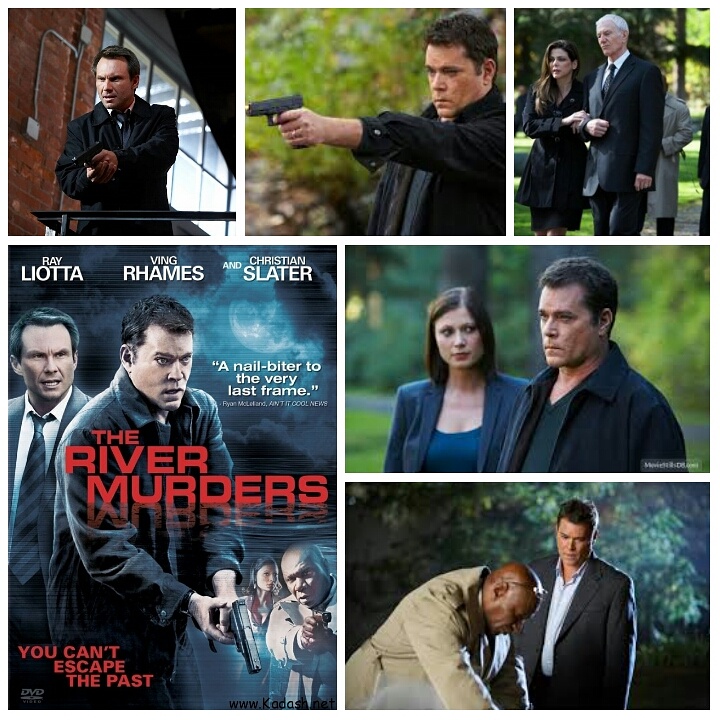
The River Murders is a fairly entertaining thriller vehicle for Ray Liotta that tries hard to be in the same grisly territory as stuff like Sev7n, and winds up looking pretty silly in its efforts. It takes place on a rural community in the Midwest, where a serial killer is leaving bodies for authorities to find. Detective Jack Verdon (Liotta) does some digging and finds that that himself and the killer may have met before in the past, making it personal. This causes unrest for both the department and Verdon’s mental state, prompting the arrival of an overzealous Federal agent (Christian Slater, annoying as hell here), and the concern of his captain (Ving Rhames). It’s fun watching Liotta spin out of control, and the film climaxes with reasonable intensity, but showcases nothing unique or noteworthy. Raymond J. Barry has a nice bit as Liotta’s father too. 

GINA PRINCE-BYTHEWOOD’S BEYOND THE LIGHTS

1

Honestly – everyone in the Academy should be FLOGGED for not having nominated Gugu Mbatha-Raw for her towering performance in Beyond the Lights a few years ago. Seriously – it’s time to dismantle the Academy. They’ve all had their chance to be relevant and they’ve consistently blown it year after year. Despite some conventional beats and a few predictable moments, I absolutely loved this film overall, I cried nearly half-a-dozen times, and it’s more conclusive proof that Mbatha-Raw is not of this planet – her supernatural beauty combined with pure, raw acting talent is a combination that is impossible to resist. And, just as a bonus, she’s an amazing singer, and she grabs you from the first frames (which is nearly impossible as the film opens with an extra sultry music video that gets the pulse racing) and never lets go, delivering more than one powerful ballad, and then late in the game, with her emotional guard down, does a solo number, sans instruments, in one take(!), that’s positively spellbinding to behold. I’m smitten, I’m anxious to see what she does next, and I’m starting to think that after her stellar work in Belle, and how she changed her look so often in Beyond the Lights, that she might have the same chameleonic quality that some of the best actors and actresses possess, instantly making her a must-follow talent for me as a viewer.

5

Beyond the Lights was written and directed by Gina Prince-Bythewood (who previously crafted the excellent Love & Basketball), and it tells the story of Noni (Mbatha-Raw), a Rhianna-esque pop star making the transition from back-up star on another artist’s album to a full-fledged music icon, and all of the rocky roads that lead her to stardom. Her domineering mother, Macy (an excellent Minnie Driver who was also robbed of Oscar consideration), wants nothing more than for her daughter to explode on the scene, constantly pushing Noni to the extreme, never truly thinking about the consequences. One night, after the Billboard Music Awards, Noni attempts suicide by jumping out of her hotel room window, but she’s heroically saved by a dashing, idealistic cop named Kaz (the extra-buff and appealing Nate Parker, who memorably co-starred with Richard Gere in Arbitrage) who has political aspirations and a wise father (Danny Glover, slyly cast as a police captain) who is always looking out for his son. Prince-Bythewood sort of structures Beyond the Lights as a new-fangled Notting Hill, in that the film is about a mega-star finding romance with a “regular person,” but she throws twists into the formula to keep things fresh and interesting. And while she dabbles in melodrama maybe a bit too often, there’s a level of sincerity and an emotional openness that I admired about this film; as previously mentioned, my eyes enjoyed tearing up with this one. When a movie works it works and this one does for the full two hour run time. Will Noni and Kaz make it as a couple? Will Noni be able to escape her demons? Will Kaz be able to handle his new found fame as the boyfriend of a popular musician?

3

Beyond the Lights is a sexy movie, with glitzy, mobile, and stylish photography all over the place, as cinematographer Tami Reiker basically made camera-love to Mbatha-Raw and Parker, showcasing his impeccable physique on more than one occasion, and the extra-hot Mbatha-Raw in a variety of scantily clad dresses and outfits that will raise the most jaded of eye-brows (Sandra Hernandez’s costume design is spot-on). You believe that these two gorgeous people could be a couple, and they share an instant, palpable chemistry that’s totally required for the genre. But let’s be honest, capturing the two of them in a constant state of semi undress or rhythmic action goes a long way in keeping the film humming along at a fast pace. And without spoiling it entirely, when their first love scene occurs, the way that Prince-Bythewood integrates it into the story goes a long way in making it one of the best love scenes in recent memory. It’s not about the nudity or the graphic nature, but more about the heart behind the act, and how one character is looking out for the other. And I also really liked how the film tackled the notion that the overly sexualized female is a bad thing for women of all ages, and how Driver’s character never thought twice about exploiting her daughter in an effort to advance her career. It’s a sad fact in that industry and the way Prince-Bythewood blends social commentary with romantic fairy tale is deft and assured. And what’s a music-based movie without catchy songs? On this level the film also succeeds, and I was further blown away to learn that Mbatha-Raw sang on more than one occasion. Beyond the Lights is a massively enjoyable movie and one that holds up on repeated viewings.

2

The Tournament: A Review by Nate Hill 

The Tournament is just about as awesome as action movies can get, and just about as bloody too. I love films involving assassins, contests, games, violence and such. The Running Man was clearly a huge influence on this one, right down to the inclusion of a larger than life game show host, here played by Liam Cunningham. Liam plays a shadowy nut job named Powers, and every four years he arranges an elaborate and incredibly destructive Olympic games for contract killers and psychos alike. Every time he hosts it in a new city, using hidden cameras and explaining away the damage with disasters and attacks. If this sounds so very 80’s, it is. We’re in throwback city here, with a touch of modern tone not unlike Joe Carnahan’s Smokin Aces. The reigning champion is Joshua Harlow (Ving Rhames), a brutal warrior who has been coaxed back into the game with revenge on his mind. Each assassin is fitted with a tracking device so they can track each other, an idea which goes haywire when a civilian accidentally gets stuck with one and ends up in the cross hairs. The civilian in question is a drunken priest (lol) played by Robert Carlyle, who has no idea what’s going on and suddenly has a dwindling life expectancy. He catches a break when a lethal but sympathetic female competitor (beauty queen Kelly Hu is an angel of physicality) takes pity and decides to help him out. They’ve got quite an armada to cut through though, including a rowdy cockney whacko (Craig Conway) a parkour master (Sebastian Foucan), an ex Spetsnaz freak (Scott Adkins) with a habit of blowing shit up left right and center, and lastly a Texan pretty boy lunatic played cheerfully by Ian Somerhalder. He’s so evil they just had to include a bit where he shoots a stray dog in the face without batting a perfect eyelash (animal lovers, you’ve been forewarned). All this mayhem is taken in by Powers and his sickening audience of wealthy kingpins, who sit in a great big boardroom and bet on the outcome of the carnage. Cunningham is a blast of devilish charm as Powers, an amoral villain of dark showmanship and sociopathic class. Between exploding heads, grenades ripping through the streets of London, frenetic hand to hand combat, colorful personalities, over the top depictions of bad human behavior and a general sense of hedonistic, slash and burn glee, this is one for the books. 

L.A. Confidential: A Review by Nate Hill 

  
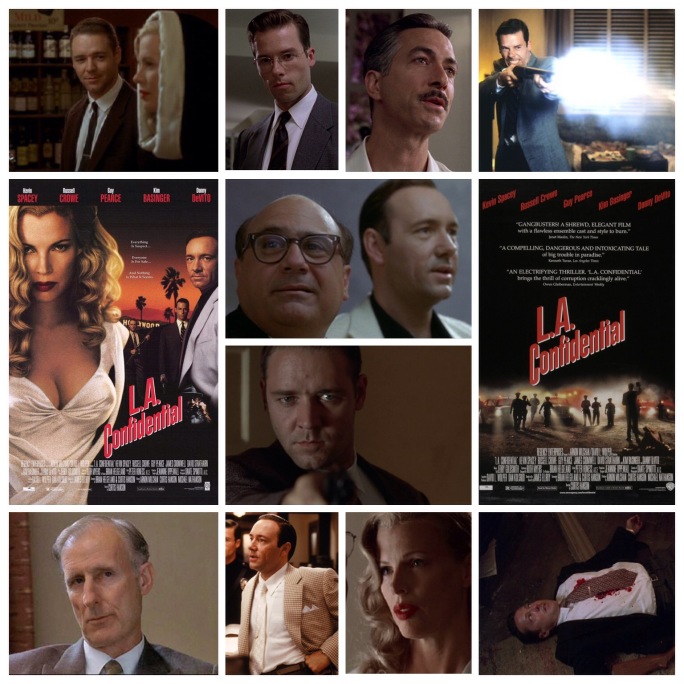
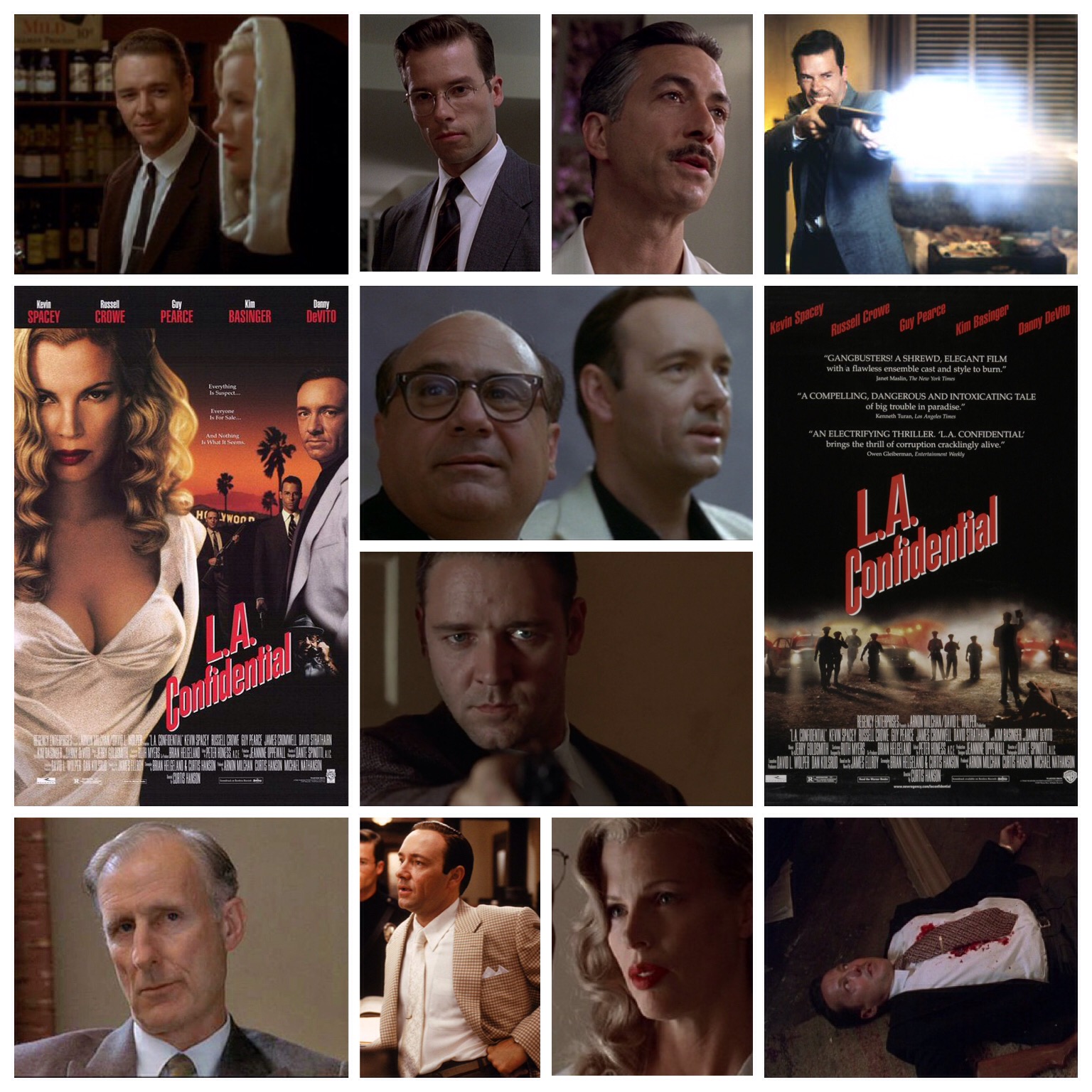
The finest Los Angeles film noir to ever come out of Hollywood, Curtis Hanson’s L.A. Confidential is a serpentine wonder, a two and a half hour parade of hard boiled detectives, sultry dames and shady dealings, all wrapped up in a multiple murder story that kicks everyone’s arc into gear, taking you places you didn’t think you’d see some of these people go. ‘Triple homicide at the nite owl’, barks the headline of a gossip rag run by a sleazy Danny Devito, and indeed the crime scene has everyone buzzing, from the shirt tuckers in the highest ranks of the LAPD, to the burly brass knuckle wearers on the brutish task force. Something is amiss with the case, and Sgt. Edmund Exley (Guy Pearce) is a dogged straight arrow with a nose for corruption. He isn’t quite the formidable force needed to barge down certain doors or break certain bones though, and that’s where Det. Bud White (Russell Crowe) comes into play. The two are initially at each other’s throats following a cleanse of many of the department’s corrupt officers, spurred by Exley himself. It soon becomes clear that they have no choice but to work together, in order to smoke out the evil source of the crime, which may be closer to home than anyone thought. Crowe and Pearce were not the stars they are now back then, but came up from the farm league in sensational style, barging onto the Hollywood scene in shotgun toting, shit kicking style. Kim Basinger won an Oscar for her poised, complex turn as a call girl who works for a pimp named Pierce Patchett (a glib David Strathairn), an eccentric who pays surgeons to deck his girls out to look like movie starlets. My favourite performance in the film comes from a diabolical James Cromwell as Captain Dudley, a dangerous rogue who you don’t want to cross for fear of his unpredictability. Kevin Spacey is all style and self loathing as Jack Vincennes, a media mogul of a cop who advises on TV shows and hogs the press limelight like a boorish politician. The supporting cast is all across the board, including work from Simon Baker, Graham Beckel, Tomas Arana, Ron Rifkin, Brenda Bakke, Jack Conley and an amusing cameo from Paul Guilfoyle as Mickey Cohen. Adapting a novel by the great undisputed king of LA noir, James Ellroy, Hanson weaves a deadly web of sensation, intrigue and steamy goings on that never follows a readily discernable pattern of narrative, and constantly has tricks up it’s sleeves. Remember Rollo Tomassi.