PTS Presents Writer’s Workshop with DANIEL WATERS

WATERS POWERCAST

ba965028-fbd5-4a62-9008-9d6f9378a819Podcasting Them Softly is beyond thrilled to present a chat with the tremendous screenwriter and filmmaker Daniel Waters. His legendary writing credits include Heathers, Batman Returns, Demolition Man, Hudson Hawk, and The Adventures of Ford Fairlane, while he’s directed two features based on his own scripts — the underrated Happy Campers and the dark romantic comedy Sex & Death 101 with Simon Baker and Winona Ryder. He also collaborated with his brother Mark Waters, the director of Mean Girls, on 2014’s Vampire Academy. Daniel has one of the most unique and idiosyncratic voices to ever work in the big-budget blockbuster arena, and clearly Heathers is an eternal classic that so many generations of audiences have latched onto as a key title. We hope you enjoy this informative and passionate discussion about Hollywood, the art of screenwriting, and our collective love for movies in general. And hey, maybe you’ll finally find out what those three seashells in Demolition Man were really meant for!

MARC FORSTER’S STAY — A REVIEW BY NICK CLEMENT

1

Having an impressive visual style as a filmmaker is very important to me as a movie lover. Without it, we’re left with nothing to admire with our eyes, and since film is a visual medium first and foremost, when a script isn’t perfect, the material can be saved when the filmmaker has a distinct vision. Here’s one movie that not enough people are familiar with: Marc Forster’s extra-trippy thriller Stay. I’m not sure if it’s an entirely successful motion picture, but so much of it is so interesting, and it’s a near constant marvel to experience on a conceptual level, with one scene transitioning effortlessly and seamlessly into the next, giving off an extremely heightened, dreamlike quality which results in a movie that feels as if it’s been created in one long vertiginous take, sort of like Birdman on a bad acid trip. Released to extreme critical hostility except for a few passionate supporters, this mind-bender quickly disappeared from the handful of theaters it was dumped in during the fall of 2005, ultimately grossing less than $5 million domestically(!), and that’s a shame, because it’s one of the most stylish films that I can think of, with a whammy of an ending that’s both powerful and unique. Taking influences from Vertigo, The Occurrence at Owl Creek Bridge, and with Forster even going on record at one point in saying that the works of Nicolas Roeg heavily inspired his aesthetic on Stay, this is a film that’s been art directed to within an inch of its life, and vigorously directed with an elaborate and dynamic aesthetic that propels every single shot. This is a work that continues to fascinate me on almost every level, but I can’t stress enough how intoxicating I find this film to be from a visual stand point; it’s a true wowser that’s flown so far under the radar as to almost make me sick.

The film’s brilliant cinematographer Roberto Schaefer, who has shot almost all of Forster’s always eye-catching work, must’ve had intensive meetings with his editor, Matt Cheese, as the filmmaker constructed the film to feel like a fever dream puzzle, with each shot interlocking with the next, using dissolves and morphing techniques to constantly startle the viewer and make them aware of the fact that nothing is as it seems within the tricky narrative. What’s also fantastic about Stay is that the intense visual style is in service of the story being told. Screenwriter David Benioff crafted a narrative that I’m not 100% sure I totally understand, even after multiple viewings, but I’m fine with that, because I enjoy getting the chance to discover new secrets that this film seems to be constantly holding up its sleeve. This is a tough one to explain. Watch the trailer. Or read Roger Ebert’s ***1/2 review; he boils it down better than I could ever attempt. The film stars Ewan McGregor as a paranoid psychiatrist suffering from odd dreams, a baby-faced Ryan Gosling as his suicidal patient, Naomi Watt’s as the doctor’s reluctant girlfriend and ex-patient, and Bob Hoskins, having a ball with a devilish glint in his eyes, as a blind, possibly unstable friend of McGregor’s who indulges the doctor in games of chess. Stay discusses various themes all revolving around life, death, the dream state, true love, and what might happen when we depart this planet. The film has the same weird, eerie quality of Denis Villeneuve’s ultimately superior head-scratcher Enemy, but even when Stay is possibly a bit to convoluted for its own good, there’s no denying that it has been made with supreme technical skill, and that there’s plenty to dissect even if all of the pieces don’t quite add up on first or second or third or fourth or fifth viewing.

3


B Movie Glory with Nate: Sin


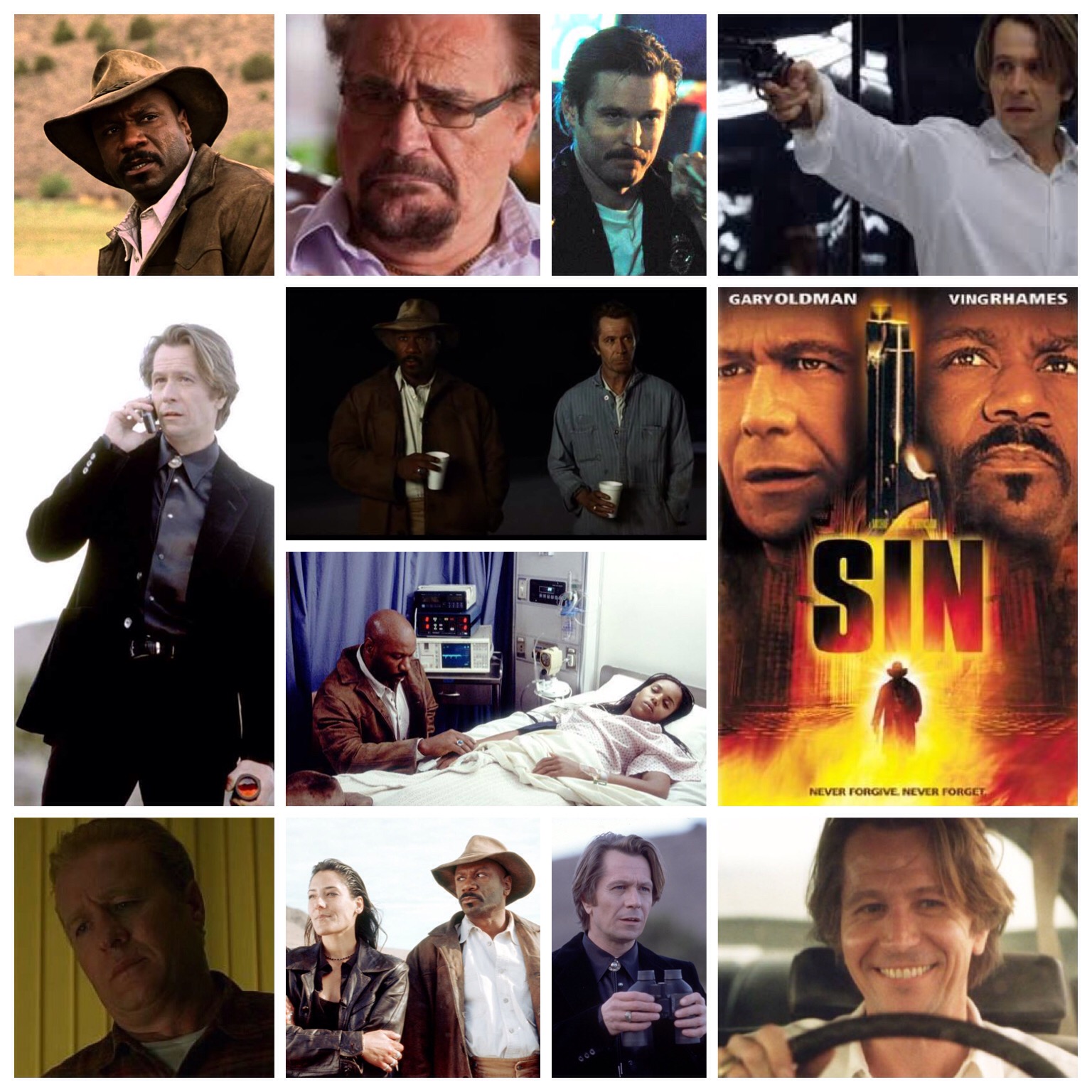
Sin is known as the B movie that Gary Oldman did, and he himself has bad mouthed it on occasion. Back then though, this was the only kind of movie like that he had to explain away. These days he has quite a few more of this type in his filmography, so he can’t really talk. It really isn’t the best movie, and functions as well as its limited budget and mediocre script will allow, but I must say there are a few moments, ones with stars Oldman and Rhames, that are just killer, and one in fact that borders on greatness. Rhames plays Eddie Burns, an ex cop or military man who lives estranged in the country, until the organized gang rape of his sister (Kerry Washington) coaxes him back into Reno Nevada. This heinous crime (a scene which borders on exploitation, to be honest) is orchestrated by Charlie Strom (Oldman), a nasty pornographer and drug kingpin who has a decades old bone to pick with Eddie. The film has some lonely atmospherics to it, the eventual confrontation between the two playing out in a poetic, if contrived fashion. For all the two bit moments in the script (and there are a lot), there’s one showstopper of a scene between Rhames and Oldman, that is reminiscent of Michael Mann’s Heat, and is quietly but surely affecting in its sadness. Brian Cox blusters through as Eddie’s former police boss, Bill Sage hangs out for a bit as a detective, and the one, the only Gregg Henry appears as a sleazy informant who feeds Rhames Intel. He also gets the best line of the film, exclaiming “I haven’t even had my morning fattie” after being rudely awakened Rhames. Watch for Alicia Coppola, Daniel Dae Kim and Arie Verveen as well. There’s some genuine ambition in the script, delving into the complex moral conundrum that exists between protagonist and antagonist, and how the two archetypes aren’t always so clear cut. Conscience and lack thereof is explored as well, with surprising results. I won’t lie and say it isn’t just a trashy b movie, but I won’t pretend there wasn’t some moments and aspects which I greatly enjoyed. It’s somewhere right in the middle. 

DANNY BOYLE’S TRANCE — A REVIEW BY NICK CLEMENT

2

This one made a nickel when it was released, my nickel actually, and I’ll never understand why it was left out to dry by the studio. Trance is an intense movie, fever dream-esque in almost all respects, and aggressively stylish from first frame to last. This was a major mind-teaser from exuberant and hyped-up filmmaker Danny Boyle who was in major Nicolas Roeg territory here, spinning a thematically complex and visually audacious tale with the help of screenwriters John Hodge and Joe Ahearne and the extraordinary cinematographer Anthony Dod Mantle. Shot with bold and super-saturated colors and edited with sensational zest by Jon Harris, this is one of those films that is so outlandish, so movie-movie, that you just have to sit back and relax and enjoy the incredibly wild show. When all is said and done, I don’t believe ONE THING about this picture, and yet, I absolutely love it, because it takes me on such a trippy journey that half of the fun is seeing how the filmmakers are constantly messing with my senses. Trance features a trio of engrossing performances from James McAvoy, Vincent Cassell, and Rosario Dawson, all of whom subvert your expectations and take their potentially duplicitious characters into surprising directions. Violent, sexy, and always potentially dangerous, this is a propulsive thriller with a final act that truly makes your head spin. Repeated viewings are a must, for multiple reasons.

1

Derek Cianfrance’s BLUE VALENTINE – A Review by Frank Mengarelli

“You made a promise to me, okay?”

Steeped in fiery passion and offset by raging resentment and animosity is the quagmire that is Derek Cianfrance’s spellbinding portrait, BLUE VALENTINE. 

The film is one of the most realistic portrayals of a new and growing love that eventually unravels in an emotionally catastrophic way.  There isn’t a good guy or a bad guy, there are just two people who have drifted apart over time.

Ryan Gosling and Michelle Williams duel throughout the entire film.  Each respective actor is continuously making the other one better, breaking new waves as they reach deeper within themselves to catapult their performance in a real and heaetbreakingly honest way.

Derek Cianfrance has quietly become a master filmmaker.  His vision is taut, compelling, and grounded within the secret horrors of reality.  His aesthetic and technical choices are paramount to his finished product.

The film was shot in one part 16mm for flashbacks and then one part digitally for present day.  The editing duties were split between Cianfrance’s two collaborators Jim Helton and Ron Patane whom edited the two timeframes in the film separately.

The film ends with a pulverizing gut punch.  For one of the characters, there is no more forward momentum; all is lost.  And then the film’s closing credits happen.  The credits are the most powerful closing credits since THE CHINA SYNDROME.  Editor Jim Helton constructs a closing sequence of still frames of Gosling and Williams young and in love, freeze frames encapsulating moments in time of over romanticized memories and faded dreams.

THE LIFE AQUATIC WITH STEVE ZISSOU – A REVIEW BY J.D. LAFRANCE

the-life-aquatic-with-steve-zissou-1024x435

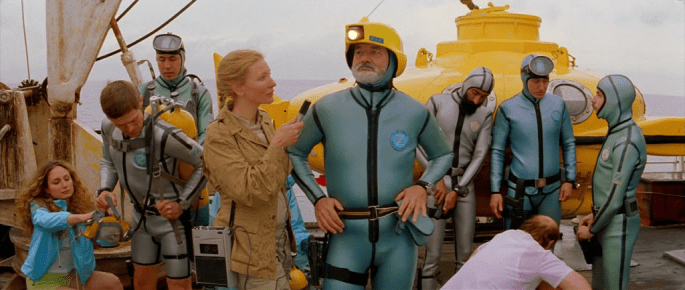
There’s always a certain amount of trepidation when a filmmaker like Wes Anderson, known for making intimate and personal films, starts making movies on a more ambitious scale – bigger budgets and movie stars in an attempt to appeal to a larger audience – that he will lose all of the qualities that made his movies so interesting in the first place. Easily his most accomplished film, The Life Aquatic with Steve Zissou (2004) merged his stylized dialogue and quirky characters with elaborate sets and action set pieces in an exotic locale.

After his best friend is eaten by a Jaguar shark, famed oceanographer Steve Zissou (Bill Murray) vows revenge. The problem is that the fish is endangered and he’s having trouble raising money for the expedition. He also meets Ned Plimpton (Owen Wilson) who may be his son by a woman he met 30 years ago. So, he convinces the young man to join his expedition in an attempt to make up for three decades of neglect.

Ever since Bottle Rocket (1996), Anderson’s movies feature a water motif in some form or another, whether it is Anthony and Inez’s first kiss in a swimming pool in Bottle Rocket or Max Fischer’s desire to build an aquarium in Rushmore (1998). With Life Aquatic, Anderson finally realizes his fascination with water head on by crafting an homage to Jacques Cousteau.

Life Aquatic also continues Anderson’s thematic pre-occupation with flawed father figures and their sons. There is the burnt out Mr. Blume and Max in Rushmore and Royal and his children in The Royal Tenenbaums (2001). In Life Aquatic, Steve tries to reconnect with Ned in the hopes that they will bond while hunting for the Jaguar shark. Like Blume and Royal, the world seems to have forgotten about Steve. He’s washed up and hit rock bottom now that his best friend has been killed.

The film also continues Anderson’s structuring of his movies into segments. In Rushmore, the story was broken down into months serving as acts in a play, with Tenenbaums, it was chapters as in a book and now with Life Aquatic it is days as Steve’s mission is being filmed for a new documentary. This structure reinforces the magical, almost-fairy tale feeling that Anderson creates in every one of his films by drawing attention to itself as a fanciful tale.

Bill Murray turns in another excellent, low-key performance as the melancholy Zissou. With his beard and gruff, macho attitude, Steve comes across as a Hemingway-esque figure with a dash of Cousteau. And yet, no matter how extravagant things get, Murray always keeps things grounded with his sparse performance. Over the course of his career, the comedian has been gradually refining his style of acting. He gained fame in broad comedies like Stripes (1981) and Ghostbusters (1984) but has fine-tuned his style to a less-is-more approach with movies like Rushmore and Lost in Translation (2003). His turn in Life Aquatic is just the right blend of comedy and pathos.

Most films don’t warrant much thought or discussion, but Anderson gets more and more interesting with each new effort. They are filled with so many fascinating little details crammed in each and every frame, repeated thematic motifs and minor characters who often wander in and out of the background of scenes. His movies are magical, existing in their own unique worlds and bursting with ideas that are almost too much to absorb in one sitting. As was the allure of David Lynch’s short-lived T.V. show, Twin Peaks, one of the appeals of Anderson’s films is that we want to be in these quirky worlds he creates and we want to know his characters. We want to lose ourselves in his universe and the beauty of DVD is that they allow us to revisit the worlds of his movies any time we want.

Anderson is not only more ambitious in terms of structure and scale but also with the visuals of Life Aquatic. Shot in Italy, he utilizes the striking landscape of the country for a sun-kissed warm color scheme of yellows and browns. There are also the striking images that linger long after the film ends: the glowing jellyfish on a beach at night and the stop-motion animated fish (by Nightmare Before Christmas’ Henry Selick) and portrays them so vividly and in an exciting way.

Anderson’s career had been building up to this film. With The Royal Tenenbaums, he was able to juggle a large cast of name stars while still maintaining his artistic integrity. With Life Aquatic, he continued to use stars but upped the ante in production values and scope. However, he did not lose the intimate feeling that all of his movies possess. No matter how ambitious or big the scale, his films have hand-crafted feel to them. One gets the feeling that Anderson cares about every detail and every aspect and it is this personal touch that makes his movies so unique.

Joe Carnahan’s Narc: A Review by Nate Hill

image

Joe Carnahan’s Narc is a proper old school ass kicking crime picture, and a blistering one that pulls no punches in the grit department either. Carnahan is clearly in love with the rugged action/genre pieces from the 60’s and 70’s that he grew up with, and every film he has made so far in his career has been reflective of that, starting with this excellent debut. He comes charging out of the gate as fast as his lead character breathlessly pursues a perp through a run down suburban neighborhood, a sequence of pure visceral brilliance that sets the tone and let’s us know he means business. Jason Patric plays Nick, an under cover narcotics officer with a decorated past and the scars to show for it, working the dankest streets of motor city Detroit. When a recently slain fellow officer’s case is reopened, he is picked to investigate, joined by the deceased cop’s former partner, Lt. Henry Oak (Ray Liotta). In this case, nothing is what it seems, agendas are hidden well, and violence constantly simmers just below the surface of every interaction and exchange of dialogue. This is especially the case with Liotta, who gives a staggering career best performance as a cop on the edge of sanity, justifying his heinous actions on the body of his slain friend. No one knows how to lose their cool like Ray, but here he is downright terrifying, a wild eyed monster and the epitome of the guy not to trust, lest you be driven down the same destructive path. Nick uncovers more secrets than he ever wished to know, and it all comes full circle in an angry, pulse rocketing confrontation that serves as one of the best blow ups in the genre, and goes to show you don’t need a huge epic gunfight to cap off your story with style and intensity. Carnahan wisely keeps the fireworks man to man, and intimate in nature, proving once again what intuition he has in the director’s chair. Chi Mcbride is always reliable, here playing the gruff police captain, and Busta Rhymes proves yet again that he’s one of the few rappers who can actually act, giving a pretty damn committed performance as a thug. Liotta owns this one in pure beast mode, but the team effort is what makes it so special, and a crime classic. Carnahan and Co. have done something timeless for crime films, and raised the bar on the intensity level one can attain when everything is in place, and firing on all cylinders. A powerhouse of a film, and a mini masterpiece. 

ROGER MICHELL’S ENDURING LOVE — A REVIEW BY NICK CLEMENT

enduring_love

Despite trading off of some of the more durable genre conventions of the stalker-thriller, eclective and underappreciated filmmaker Roger Michel’s gripping and exquisitely mounted film Enduring Love more than stakes it claim as one of the most provocative and stylish genre entires in recent years. Released in 2004 and starring a pre-007 Daniel Craig as a man who becomes inexorably linked to a mentally fractured and obsessive individual (Rhys Ifans in a chilling, unhinged performance of quiet determination), the nightmarish narrative centers on a tragic hot air balloon accident and the lives of the people who are impacted by the calamitous event. This incredibly scary sequence, as shot by the extremely skilled cinematographer Haris Zambarloukos (Locke, Venus), is thrillingly staged, as the piercing quality of the visuals leaves nothing to the imagination. After the life changing accident, Joe Penhall’s terse screenplay jumps back and forth between studying Craig’s emotionally strained relationship with his girlfriend (the always excellent Samantha Morton) and the sense of uneasiness that begins to grow as he realizes that Ifans is a man on a mission. And because Ifans is so eager to assert himself into Craig’s orbit, the film is able to hone in on the uncomfortable and inevitable fact that nothing good can come out of this perilous situation, as the story builds to an expected moment of shocking violence that doesn’t necessarily play out as fully expected. Adapted from Ian McEwan’s novel, this is one of the more icy and nasty psychological thrillers that I can think of in recent years.

EASY RIDER – A REVIEW BY J.D. LAFRANCE

easyrider1

The critical and commercial success of Easy Rider (1969) scared the hell out of the Hollywood studios at the time of its release. Executives thought that they knew what the public wanted to see: safe comedies like Pillow Talk (1959) or the Frankie and Annette beach party movies. Along came this counter-culture movie that featured contemporary rock ‘n’ roll music, two hippie protagonists and a nihilistic ending. And audiences loved it. All bets were off on what audiences wanted to see and so the studios began hiring young producers and directors who in turn cast their friends and contemporaries in their films. As a result, Easy Rider ushered in the last great decade of American movies in the 1970s.

After selling their stash of cocaine, Billy (Dennis Hopper) and Wyatt (Peter Fonda) decide to ride their motorcycles from California to Florida (by way of the South) where they plan to live off the money. They travel the back roads of America and encounter all sorts of people: suspicious small-townsfolk, an oppressive sheriff and a rancher and his large family who invite them to a meal. The deeper they go into the South, the more resistance they meet because of how they look.

Easy Rider is a fantastic snapshot of the times. It signaled the end of the not-so idyllic 1960s, where having long hair could deny you a room in a motel because the manager didn’t like the way you looked. The hippie commune that Billy and Wyatt briefly stop at is not all peace and love. Some of them are suspicious of the duo. There is conflict among the members and it becomes obvious that they suffer from many of the same problems that plague the outside world.

Time running out is a constant theme throughout Easy Rider. When Billy and Wyatt start their journey, Wyatt throws away his watch. Later on, he finds a discarded pocket watch just before they leave the commune. Also, as they are leaving, the hitchhiker they pick up warns Wyatt that time is running out. It eerily foreshadows the film’s disturbing finale and gives a feeling of impending doom that hangs over the entire film.

Peter Fonda plays Wyatt as the quiet, more introspective character, while Dennis Hooper’s Billy is a talkative, let-it-all-hang-out type. Wyatt is more trusting of people and Billy is more paranoid and guarded — he is constantly thinking of the money they have stashed in their bikes and is very protective of it. They make a good team with their strengths and weaknesses complimenting each other. However, their dynamic is given a jolt once Jack Nicholson appears as George Hanson, an ACLU lawyer who gets Billy and Wyatt out of jail. Nicholson showcases his trademark easy-going charm in all of the scenes he’s in. His stoned rap (during one of the camp fire scenes) about UFOs and “the Venusians” is funny and oddly poignant. Later on, he talks about how the country has been divided and says, “It’s real hard to be free when you’re bought and sold in the marketplace.” His speech anticipates the greed-obsessed ‘80s. People forget that Easy Rider really put Nicholson on the map and led to an impressive string of film roles in the ‘70s.

Laszlo Kovacs’ beautiful cinematography really does a stunning job of showcasing the expansive landscape of the U.S.: the imposing mountains in California, the vast canyons of Arizona at sunset with pink and red hues in the sky and the deep green foliage as Billy and Wyatt get closer to New Orleans. Kovacs would go on to shoot such great films as Five Easy Pieces (1970), Shampoo (1975) and Ghostbusters (1984).

easyrider2Easy Rider’s nihilistic ending would go on to inspire similar-minded road movies in the ‘70s, like Monte Hellman’s Two-Lane Blacktop (1971), Vanishing Point (1971), and Terrence Malick’s Badlands (1973). Easy Rider’s legacy is impressive. It paved the way for the Movie Brats (Coppola, Lucas, Scorsese, et al) in the ‘70s, which was the golden age of American filmmaking where the director was king.

MICHAEL CUESTA’S KILL THE MESSENGER — A REVIEW BY NICK CLEMENT

1

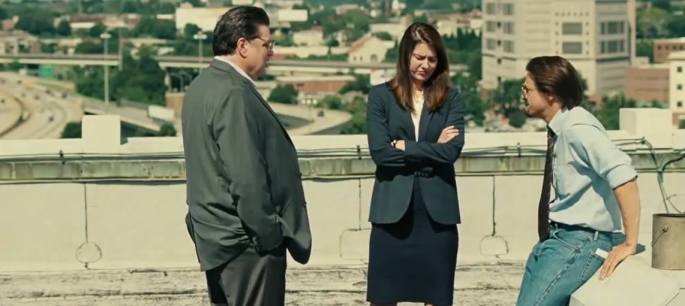
Disturbing, engrossing, and totally underrated, 2014’s political thriller Kill the Messenger should have shocked and appalled all who saw it, but due to a crummy release strategy with zero marketing support offered up by the releasing studio (Focus Features) who seemed disinterested in their own film, this scrappy, true-story journalism thriller got buried at the theaters despite solid critical notices. Jeremy Renner is Gary Webb, a reporter for the San Jose Mercury News, who back in the mid 90’s was responsible for writing a series of controversial articles which implied that the CIA ran a drug smuggling operation to support the Nicaraguan Contra rebel army in an effort to fund their war. The ghettos of America, South Central Los Angeles in particular, became over-run with crack-cocaine, creating havoc and instability and an alarming death rate. CIA officials were tasked with using informants to keep the drug trade going, even going so far as to renting an apartment to store all of the cash that was coming in from the drug sales. Webb begins his quest to uncover the truth after he’s handed some sensitive government-approved information and he’s off and running, heading down to Nicaragua to meet with potential sources, all the while trying, and failing, to secure one legit source from within the CIA to verify what he’s learned. The movie painfully displays how Webb’s family life began to suffer as a result of his dogged determination, and the unwanted advances of nefarious government types who routinely try to keep information suppressed and Webb off track with his story. One of the many unsettling messages that this film repeatedly drives home is that the notion that the CIA will do anything to protect their interests; the way they smeared Webb’s life and career was disgraceful, and it’s no surprise to learn that Webb’s life was effectively ruined as a result of him just doing his job.

2

Efficiently and energetically directed by Homeland’s Michael Cuesta and absorbingly written by Peter Landesman (the writer/director of the equally underappreciated Concussion), the film has a terrific supporting cast including Rosemarie DeWitt, Oliver Platt, Ray Liotta, Andy Garcia, Mary-Elizabeth Winstead, Michael Sheen, Barry Pepper, Tim Blake Nelson, and Michael K. Williams. But this is Renner’s show all the way and he’s absolutely fantastic in the leading role of Webb, displaying an idealistic yet never foolhardy approach to his job, all the while trying to maintain his home life and the demands of his profession. Sympathetic, doggedly determined, and always trying to make the best out of any potentially compromised position he’s in, this is easily one of the best performances Renner has delivered since his breakout turn in The Hurt Locker. It always seems like Renner gives juicy supporting turns but then gets overshadowed by the flashier performances that surround him. But not here. He owned every single frame of this movie. Sean Bobbitt’s ground-level camerawork kept a sense of intimate paranoia while Brian Kates’ fleet editing contributed to the quick but coherent pace by exuding nothing but forward momentum. And it has to be said – people should have been sickened by the revelations of corruption that Webb’s work brought about, and a movie like this one should have acted as a rallying call. Feeling very much like a product of the 70’s in terms of documenting social injustice and something tangible and topical without dipping into excessive melodrama or implausibility, it’s no real surprise that general audiences weren’t interested or shocked by what they saw, if they did see it. It’s a further reminder of how complacent we’ve become on the big issues, old or new, that surround us every day.

3